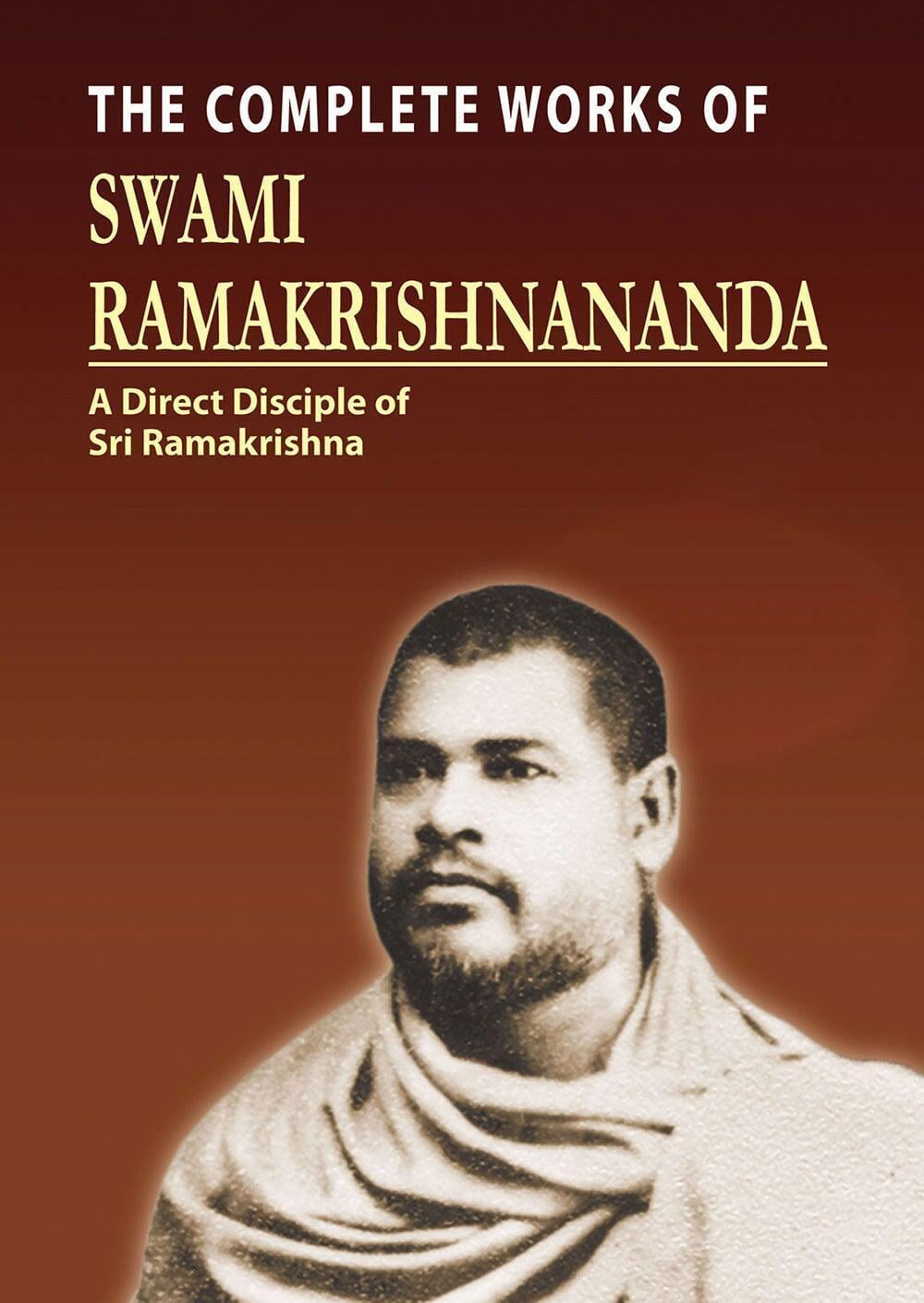
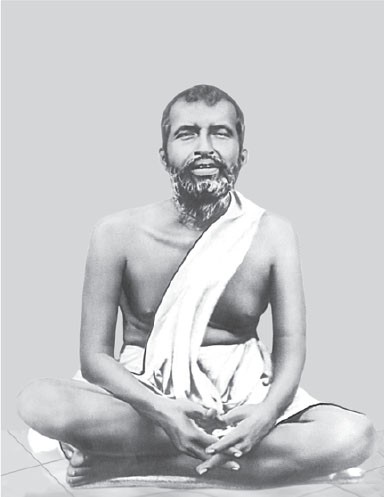
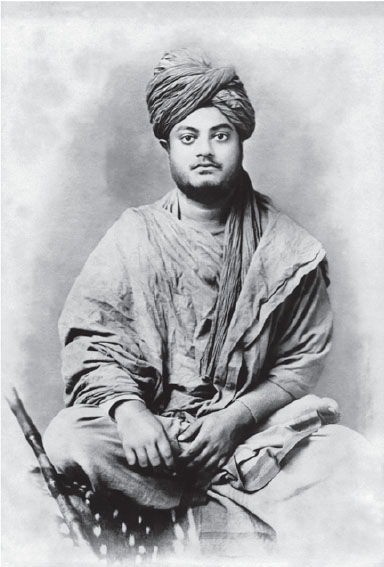
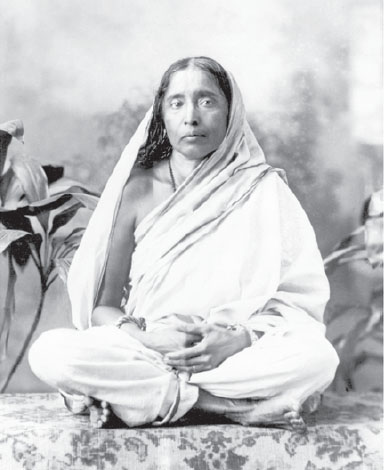
Being a direct disciple of Sri Ramakrishna, Swami Ramakrishnananda popularly known as Shashi Maharaj worked tirelessly to spread the message of Sri Ramakrishna and the ideal of renunciation and service in different parts of South India. His unparallel devotion to Sri Ramakrishna, pure life, saintly personality and love and concern for others are objects of meditation. These three volumes contain the collection of lectures, writings, and letters of Swami Ramakrishnananda.
AMONG the numerous lamps that Sri Ramakrishna ignited in the form of his monastic and householder disciples, Swami Ramakrishnananda was one. Affectionately known as Shashi Maharaj, Swami Rama krishnananda was born as Shashibhushan Chakravarty on July 13, 1863, at Ichapur in Bengal.
Shashi was born in a family of worshippers of the Divine Mother. He was the eldest son of Iswar Chandra Chakravarty (1837-1902) who was a great devotee of the Divine Mother. Shashi Maharaj’s mother, Bhavasundari Devi (1846-1925), was an ardent devotee of Divine Mother.
Though not much is recorded of Shashi’s boyhood, he grew up in a spiritually enriching atmosphere. He was a strict vegetarian all through his life.
At the Feet of Sri Ramakrishna
AFTER finishing his education in the village school, Shashi went to Calcutta for higher English education. He lived with his cousin Sharat (later, Swami Saradananda), who was almost of the same age.
He passed the Calcutta University Entrance examination, and, as he was a brilliant student, won a scholarship. He passed his First Arts examination from Albert College, then entered the Metropolitan College (now Vidyasagar College) for his B.A. His special subjects of study were Sanskrit, English literature, mathematics and philosophy.
Shashi first heard about Sri Ramakrishna from Keshab Chandra Sen, the well known Brahmo Samaj leader. Shashi and his friends said to each other, ‘If Keshab Chandra Sen, whom we honour so much, shows such great reverence for this Paramahamsa, there must be something extraordinary in him.’
Shashi’s spiritual yearning was growing and he looked for a guide. One day, in October 1883, Shashi, Sharat, and some of their friends went to Dakshineshwar to visit Sri Ramakrishna. They found the Master seated on his small couch. He received them cordially and asked them to sit on a mat spread on the floor.
On the very first day Sri Ramakrishna recognized that Shashi and Sharat belonged to his inner circle. The Master said to M. once, ‘When God assumes a human body for the sake of His devotees, many of His devotees accompany Him to this earth. Some of them belong to the inner circle, some to the outer circle, and some become the suppliers of His physical needs.... The Divine Mother used to reveal to me the nature of the devotees before their coming. In a vision I saw that Shashi and Sharat had been among the followers of Christ.’ Shashi and Sharat started visiting the Master frequently and performed spiritual disciplines according to his instructions.
Swami Ramakrishna
Sri Ramakrishna was diagnosed as having a serious throat disease and in 1885, he was moved to Shyampukur Street in Calcutta for undergoing medical treatment. After a month, on the advice of doctors, he was shifted from smoggy Calcutta to a clean, quiet country-house Cossipore garden house.
Shashi followed the Master like a shadow. He was the very embodiment of service, and firmly believed that service to the guru was the highest form of spiritual practice. He practised no other spiritual discipline, knew no other asceticism, travelled to no holy places. Forgetting his personal comforts, he was always ready to serve the Master. His life was a glowing example of dasya bhakti (devotion with attitude of a servant). Sri Ramakrishna also equally loved him and despite his illness, took great pains in moulding Shashi’s spiritual life.
Sometime in the middle of January 1886, when the elder Gopal expressed his desire to distribute twelve pieces of ochre cloth and rosaries to some monks, Sri Ramakrishna suggested to him to present these to his young disciples. Gopal offered them to the Master who himself distributed them among his young disciples. Shashi got an ochre cloth, the garb of a monk, from the Master.
Sri Ramakrishna passed away on 16 August 1886. It was hard for Shashi to believe that the Master had left the physical form. With tearful eyes, he sat near the funeral pyre, with a palm-leaf fan in his hand and remained motionless with grief. Later, he collected the ashes and bones of the Master and put them in an urn. He placed the urn on his head and carried it to the garden house where it was kept on the Master’s bed.
After the Master’s Passing
SHASHI reluctantly returned home, but soon came to the Baranagore Math that was set in motion by Naren and other disciples. He set up a shrine in a room upstairs; the Master’s relics were brought from Balaram’s house, and a picture of the Master was placed on the altar. The articles that the Master had used at Cossipore were also preserved in the shrine room.
For eleven long years, from 1886 to 1897, Shashi kept a constant vigil over the Master’s relics, seldom visiting any holy place or leaving the Math overnight. He performed the Master’s worship as one serves a living human being. His daily routine was like this:
He would get up at 4:00 a.m. and after washing would enter the shrine to rouse the Master from his bed. He would then offer a twig for a toothbrush and water to rinse his mouth. Next he would offer some sweet made of coconut and a glass of water for breakfast, and tobacco to smoke. Later he would pick flowers, sweep the shrine, wash the vessels used for worship and make the necessary preparations for worship. He would then go to the nearby market to buy the groceries. After returning from the market, he would help the cook cut vegetables, and then he would go to bathe in the Ganga and bring holy water for worship. Afterwards, he would do puja and offer cooked food to the Master. In the evening, he would conduct arati. It was a divine sight to see him conducting the evening arati.
In December 1886, Shashi and some other disciples went to Antpur, the country home of Baburam (later Swami Premananda). Inspired by Narendra, they took informal monastic vows during a nightlong vigil around a sacred fire (dhuni). Later they discovered that their vigil had taken place on Christmas Eve. A month later, they took formal monastic vows by performing the traditional viraja homa in Baranagore Math. Narendra gave the name Swami Ramakrishnananda to Shashi, knowing that Shashi’s devotion to the Master was second to none.
Not only did Shashi Maharaj attend to service of Sri Ramakrishna, he played a pivotal role in the monastic life of the Baranagore Math. While other brother disciples meditated or busied themselves in spiritual practices, Shashi Maharaj looked after their physical needs. Swami Vivekananda paid glowing tribute to Shashi Maharaj’s dedicated service and devotion thus:
‘Shashi was the main pillar of the Math. Without him, life in the monastery would have been impossible. Often, the monks would be lost in prayer and meditation with no thought of food, and Swami Ramakrishnananda would wait with their meals or even drag them out of meditation.’
In February 1892, the Math moved to Alambazar in North Calcutta. Shashi Maharaj continued his vigil and worship of Sri Ramakrishna here.
Shashi Maharaj was learned and devotional; he was not a gloomy ascetic. After dinner he would dramatically read Mark Twain’s The Innocents at Home and The Innocents Abroad. He would roar with laughter as he read them and the others would laugh along with him. He enjoyed solving mathematical problems; sometimes after his noon rest he would work on the mathematics on a slate or piece of paper. He also translated the teachings of Sri Rama krishna from Bengali into Sanskrit verses and got them serially published in Vidyodaya, a Sanskrit journal.
Swami Vivekananda
In February 1897, Swami Vivekananda returned to Calcutta from the West. At Madras, when devotees requested Swamiji to start a permanent centre, Swamiji had said, ‘I shall send you one who is more orthodox than the most orthodox Brahmins of the South and who is at the same time incomparable in performing worship, scriptural knowledge and meditation on God.’
In March 1897, before going to Darjeeling, Swamiji called aside Shashi Maharaj and said, ‘I have given word to my friends that I shall very soon send one of my brother disciples there. I have selected you. You are to go to Madras and found a monastery there in the name of our beloved Master.’
Shashi Maharaj neither raised any objection nor pleaded any excuse. Leaving aside his eleven years of vigil over his Master’s remains, he quietly obeyed the leader, and in the month of March itself, along with Swami Sadananda, a disciple of Swamiji, left for Madras by a steamer.
Founding of the Madras Math
SWAMI RAMAKRISHNANANDA arrived at Madras on 17 March 1897. He was warmly received by a group of devotees and admirers of Swami Vivekananda at Madras.
Swami Ramakrishnananda was accommodated at Flora Cottage situated on the Ice House Road. Later he was shifted to the Ice House, which was then owned by Sri Biligiri Iyengar, a wealthy devotee of Swami Vivekananda. Swamiji had stayed at Ice House for nine days on his return from the West in 1897.
Sri Iyengar placed the ground floor of the building at Swami Ramakrishnananda’s disposal. As in Baranagore and Alambazar, Ramakrishnananda set up a shrine at this new residence and installed a small picture of the Master that he had brought with him and started his seva.
Besides ‘seva’ in the shrine, his service was extended to preaching of the Master’s message in different parts of the Madras city. His preaching activities consisted of weekly classes on the Gita, the Upanishads, and Bhagavata, at the invitation of different religious organizations in the city.
Shashi Maharaj followed this formidable schedule of classes, with minor alterations, for years. He would travel to different places in the city in a Jutka, a narrow, inconvenient horse-drawn carriage which was in vogue those days. He had to travel a mile and a half from Ice House to hire a Jutka. Added to this was the fact that he was his own cook and servant, as there was no one to assist him.
Some of his classes were very well attended, but some were not. It is mentioned in his reminiscences that there were occasions when he was the only person present for the lecture. But least perturbed by it, he would meditate for an hour at the place, and return.
Another activity that he added to his schedule was the annual celebration of Sri Ramakrishna’s birthday. This was an elaborate two-day event, consisting of puja, homa, hari-katha, sankirtan, a public meeting, and feeding the poor.
Shashi Maharaj’s life was full of hardships and difficulties. The financial condition of the just founded Math was far from satisfactory. But he would rarely speak of these difficulties to the devotees. He always turned to Sri Ramakrishna who was a living presence for him. Once a group of devotees heard him angrily speak to the portrait of Sri Ramakrishna thus: ‘You have brought me here, old man, and left me helpless. Are you testing my powers of patience and endurance? I will not go and beg hereafter for my sake or even for yours. If anything comes unasked, I will offer to you and share the prasadam. Or, I will bring sea sand for offering to you and I shall live upon that.’ On all such occasions, mysteriously, some devotee would arrive with provisions, and the offering in the shrine to Sri Guru Maharaj would be made as usual.
Sometime in 1899, Shashi Maharaj came to know many details of the life and teachings of Sri Ramanujacharya and thus was conceived a series of articles on Ramanuja’s life that he contributed to the Bengali monthly Udbodhan published from Calcutta. The articles were published from 1899 to 1906. In order to verify the authenticity of the information provided in the articles, he visited Sriperumbudur and Kanchipuram.
In 1901, when Swamiji wanted Shashi Maharaj to come to Belur Math for giving him definite guidelines for the work at Madras, Shashi Maharaj took Brahmachari Vasanta with him. Swamiji initiated Vasanta into sannyasa in the first week of January 1902 with Shashi Maharaj chanting the sannyasa mantras during the ceremony. Vasanta was named Swami Paramananda. He came back to Madras and was under Shashi Maharaj’s care till 1906 when he was sent to New York to assist in the Vedanta work there.
Before leaving Belur Math, Shashi Maharaj had given four hundred rupees to Swamiji as his contribution to Belur Math. This deeply moved Swamiji.
On his second visit to the West, Swami Vivekananda arrived at Madras on June 24, 1899 along with Swami Turiya-nanda and Sister Nivedita.
At Shashi Maharaj’s request, Swamiji had brought Ganga water for use in the Madras Math, in a large porcelain jar. Unfortunately, owing to the plague in Calcutta, Swamiji was not permitted to alight from the ship. Shashi Maharaj thus went in a boat near the ship and placed in a basket sweets and other eatables meant for Swamiji. The basket was drawn up and in the same basket the jar containing Ganga water was sent down. It is said that Swamiji tied the jar with a rope so tightly that Shashi Maharaj could not untie it. Hence Swamiji also sent down a knife to cut it. (The jar is still preserved in the Ramakrishna Math, Chennai and the knife is kept at the Ramakrishna Museum at Belur Math).
Before returning, Shashi Maharaj made the boatman go round the ship three times and said, ‘Let us at least make a pradakshina of the two great souls whose feet we have not been able to touch today.’
Swami Vivekananda passed away on July 4, 1902 in his room at Belur Math. Swamiji left his body at around 9 p.m. At the same time, unaware of these developments, Shashi Maharaj was meditating at the Ice House in Chennai. Shashi Maharaj called Swami Satchidananda, who was staying with him then, and said, ‘I saw Swamiji standing before me and he said to me, “Look here, Shashi, I threw away this body like spitting out spittle,” and he spat twice or thrice.’
Both swamis could not figure out the meaning of that vision, and neither of them got any more sleep that night. The next day, Shashi Maharaj received a cable from Belur Math bringing the sad news of Swamiji’s Mahasamadhi.
A memorial meeting in honour of Swami Vivekananda was held at Pachaiyappa Hall on July 29, 1902. Shashi Maharaj was one of the speakers in the meeting. He said, ‘The world outside needs the light of wisdom of our Rishis quite as much as we do in India, and I am anxious to see an Ananda Mandir (a memorial in Swamiji’s name) rise somewhere in a conspicuous part of the city from where that light may be made to radiate in ever increasing brilliance to all near as well as distant...’
As a sequel to his appeal a committee of the Ramakrishna Vivekananda Home was formed which created Swami Vivekananda Memorial Fund ‘to perpetuate his memory in Madras.’
Expanded Work and Travls
KALIPADA GHOSH, a disciple of Sri Ramakrishna, invited Shashi Maharaj in 1903 to Trivandrum. Kalipada Ghosh was employed as the local agent for M/s John Dickinson & Co. Ltd. Shashi Maharaj stayed at his house and took part in the Birthday Celebrations of Sri Ramakrishna which included feeding a large number of poor people. During that occasion he delivered a lecture on the subject ‘Unity in Variety.’
Swami Ramakrishnananda’s name as an able preacher of the message of Sri Ramakrishna began to spread. Invitations for lectures and visits began to pour in. Vedanta Society of Ulsoor, Bangalore, invited him in 1903. When he reached Bangalore Cantonment Railway Station, in July 1903, at six in the morning, he was accorded a royal reception. He was taken in a procession of some 4000 people, which included 53 bhajan parties, through the principal streets of the cantonment area.
During his twenty days’ stay at Bangalore, Shashi Maharaj gave twelve lectures and gave several private interviews. His lectures were very well attended and he roused great enthusiasm among his listeners. He spoke at various colleges and temples in the city. At Bangalore, he had an audience with the Maharaja Krishnarajendra Wadiyar, the well-known ruler of Mysore State.
In October 1903, Swami Ramakrishnananda visited Mysore for three days. He gave a talk in Sanskrit at the Sanskrit College. Soon after he came back to Madras, he was invited to speak at Sholapur (now in Maharashtra) and he accordingly went there in July 1904. He gave a lecture on ‘Happiness’ at Rippon Hall at Sholapur.
At the invitation of devotees, Shashi Maharaj visited the ancient port town of Machilipatnam (now in Andhra Pradesh) in August, 1904 and inaugurated Vivekananda Mandira—a temple built in memory of Swami Vivekananda, built under the aegis of Hindu Matha Bala Samajam, an organisation founded in 1890. The Temple continues to be a place of religious and cultural activities.
Shashi Maharaj visited Tirunelveli (in Tamil Nadu) from 25-31 December 1904. He was accorded a befitting welcome at the Tirunelveli railway station and was taken in a procession to the Math. Later he visited the Tirunelveli town at the request of devotees and spoke at the Nellaiyappar Temple which was attended by more than 3,000 people.
After returning to Madras, in January 1905 he went to Kerala where he inaugurated Sanatana Dharma Vidyalaya (for boys) at Alleppey on January 18, 1905. He spoke at Theosophical Society, Ernakulam and at Maharaja’s College.
At the invitation of Akshaya Kumar Sen, a lay disciple of Sri Ramakrishna, and motivated Ramakrishna Seva Samiti at Rangoon, Swami Ramakrishnananda went to take part in the the birthday celebrations of Sri Ramakrishna.
A group of devotees employed in M/s John Dickinson & Co. Ltd. (of which Kalipada Ghosh was the local agent) had been worshipping Sri Ramakrishna at their place in Topiwala Chawl on Grant Road, Bombay, and were keen to have Swami Ramakrishnananda for the annual celebrations.
The birthday celebrations of Sri Ramakrishna were held on April 1, 1905 at Famji Cawasjee Hall with Sir Balakrishna in the chair. Besides the address on these occasions Shashi Maharaj delivered three lectures in Bombay, at one of which Balagangadhara Tilak, the great patriot and political leader, presided. Tilak pleaded for starting a permanent centre of the Ramakrishna Mission at Bombay but this materialised only two decades later.
Placing the Math on Firm Foundations
DURING the early years, Shashi Maharaj had a very hard time in Madras. He had very little assistance. The financial condition of the Math was far from satisfactory. He stayed at the Ice house (now called Vivekanandar Illam or Vivekananda House, a sub-centre of Sri Ramakrishna Math, Chennai) till 1906. Four years after Biligiri Iyengar who owned the Ice House passed away in 1906, the Ice House building was put up for an auction. Biligiri was a great support for the upcoming Math and, though before passing away he willed some money to Swami Ramakrishnananda, his loss was irreparable.
It seems a few well-wishers of the Math—notably Dr. M.C. Nanjunda Rao—tried to bid, but when the amount rose beyond their means, they had to withdraw.
When the building changed hands, the Math was temporarily shifted to an outhouse of the Ice House. Fortunately, around this period, sometime in July 1906, a plot of land at Mylapore was donated by a devotee, Sri Akula Kondiah Chettiar. Swami Abhedananda, a direct disciple of Sri Ramakrishna, who was on a visit to Madras, laid the foundation of the new Math at Mylapore. The work started towards the end of March 1907 and the one-storey building was completed by the beginning of November of the same year.
To Shashi Maharaj Sri Ramakrishna was a living presence. He felt His presence and his actions revealed it. Soon after the construction, the new Math building developed cracks and began to leak. One night as it began to rain Shashi Maharaj went into the shrine and to his surprise found it leaking right over Master’s portrait. Anyone else would have removed the picture to a safer place and gone to sleep but for Shashi Maharaj the Master was a living presence. To remove the photo thus would mean to disturb the Master’s rest. He spread an umbrella and held it over the Master’s portrait and stood there all night until the rains subsided.
After some time, owing to the poor quality of construction, the Math building became unfit for use. Several years later, a new building for the Math was raised on the adjacent plot of land. Swami Brahmananda, the first President of the Ramakrishna Order, laid its foundation in 1916 and later inaugurated it in 1917.
Starting of the Students’ Home
SWAMI RAMAKRISHNANANDA had a very tender heart which overflowed with compassion for the poor, the lowly and the lost. Once he came across an orphan boy from Mysore whose parents had died of plague. He took him to the Math and fed him. But the Math itself was under financial strain and the strict religious regimen of the Math was not conducive to the boy’s education. As things would have it, Sri Ramaswamy Iyengar, an ardent follower and friend of Swami Rama krishnananda, offered to arrange for the boy’s board and lodging, by turn, in his friends’ homes. Several months later, Ramu (as Ramaswamy Iyengar was called affectionately) himself came across four boys from Andhra sitting on the roadside. They had come from Guntur, believing they could pursue their studies at Madras, but were harshly disappointed.
Soon after, through Swami Ramakrishnananda’s initiative, a free hostel for boys (now called Ramakrishna Mission Students’ Home) was started in a small house in Mylapore. Now the Home has grown into a large institution with 700 destitute and orphan students studying in it.
Starting of a Primary School, Chennai
SOMETIME in 1906, under the inspiration of Swami Ramakrishnananda, a few residents of George Town, in North Chennai, started a primary school for girls under the name ‘National Girls School’. In order to raise funds for the school maintenance, it is said that Swami Ramakrishnananda would walk through the streets from Chintadripet to George Town, carrying a large wooden box in his hands. Whatever collections he would get was deposited in the school account maintained at the local post office. The wooden box that he used is preserved at the Chennai Math.
Sri Ramakrishna Math took over the school in 1921. In 1981, the school was moved to its present own building at Basin Bridge Road, Mint, Chennai. The school is at present called ‘National Primary School’.
The Math at Bangalore
IN August 1904, Shashi Maharaj went to Bangalore at the invitation of Vedanta Society, Ulsoor. He delivered three lectures and left Swami Atmananda, who had accompanied him, to organize a permanent centre in the city. Swamis Atmananda, Vimalananda, and Bodhananda carried on the work in succession till 1906, under Swami Ramakrishnananda’s guidance.
In 1906, Swami Ramakrishnananda accompanied Swami Abhedananda on a short visit to Mysore and Bangalore. They stayed at Mysore from 7-12 August. Besides two public talks by Swami Abhedananda, the schedule consisted of a meeting with the Maharaja of Mysore.
On 20 August 1906, as per Shashi Maharaj’s plan, Swami Abhedananda laid the foundation for the Bangalore Math on a two-acre plot donated by the Dewan of Mysore, Sir V. P. Madhav Rao.
Swami Ramakrishnananda played an important role, as in the case of Madras Math, in raising funds for the new Math at Bangalore. He went from house to house, often accompanied by Sister Devamata, to collect the necessary funds. Sister Devamata was an American lady who met Swami Vivekananda in 1899 in New York. She came to India and spent a few years.
The construction of the Ashrama building was completed by the end of 1908 and its opening was performed on January 20, 1909 by Swami Brahmananda, the first President of the Ramakrishna Order.
One may also mention here that under the guidance of Swami Ramakrishnananda several groups of devotees were formed under the name ‘Vivekananda Society’ in many places around Madras such as Vaniyambadi, Arasampatti, Krishnagiri and Dharmapuri.
Swami Ramakrishnananda’s public lectures and weekly talks were quite well received. Subsequently, some of his students took initiative and brought out these lectures and talks in book form.
With Brother Disciples and Holy Mother
SWAMI RAMAKRISHNANANDA’S loving concern and deep spirituality drew many brother disciples and admirers of Sri Ramakrishna to Madras.
Swami Subhodananda visited Madras on his pilgrimage to South India in 1897. Swami Trigunatitananda, another direct disciple, visited Madras on his way to America in November 1902. Swami Ramakrishnananda, accompanied by Swami Paramananda, went to Colombo in 1906, to receive Swami Abhedananda, a brother disciple, who had arrived from America. They together visited many places in Sri Lanka before reaching Tuticorin on their way to Madras.
Holy Mother Sri Sarada Devi
In 1906, Swami Premananda came to South India for a pilgrimage with his mother. Swami Ramakrishnananda made all arrangements for them and even travelled with them.
In January 1903, Swami Sadananda, Sister Nivedita and Brahmachari Amulya (later, Swami Shankarananda, the seventh President of the Ramakrishna Order) came to Madras and were deeply impressed by Shashi Maharaj’s preaching activities.
Swami Ramakrishnananda strongly believed that the whole of the South would be sanctified by the touch of the blessed feet of Holy Mother and Swami Brahmananda. He therefore worked hard to arrange for their visits on a grand scale, in spite of insufficient funds.
Swami Ramakrishnananda went to Puri in mid 1908 to escort Swami Brahmananda, who was sojourning at Puri then, to Madras. Swami Brahmananda and Swami Rama krishnananda arrived at Madras by the end of 1908. After staying some days at Madras, Swami Ramakrishnananda accompanied Swami Brahmananda on a pilgrimage. First, they went to Rameshwaram, and stayed three days as the guests of the Raja of Ramnad. On the way to Madras from Rameshwaram, they halted at Madurai to visit the famous Meenakshi temple, and stayed for three days.
In February 1911, Holy Mother came to Madras and stayed for a month in a two-storied house that Swami Ramakrishnananda had rented opposite the Math.
Swami Ramakrishnananda arranged for Mother’s pilgrimage to Madurai and Rameshwaram and accompanied her and her party. About her visit to Rameshwaram, Holy Mother would say later, ‘Ah! Shashi procured for me 108 bel leaves made of gold to worship Shiva at Rameshwaram.’
On their way to Chennai, the party also visited Madurai. Holy Mother visited the Madurai Meenakshi Temple, Mariamman Teppakulam (temple is located on an island in a pond), and the old palace of Nayakas. Swami Ramakrishnananda accompanied Mother to all these places.
Holy Mother, along with Shashi Maharaj and other companions, arrived at Bangalore on March 24th, Friday, by train from Madras. Her visit was the result of earnest efforts to bring her to Bangalore by Swami Nirmalananda, the then President of Bangalore Ashrama.
Holy Mother’s arrival at Bangalore was marked by large gatherings of people who came to pay their respects to her on different days. An interesting incident took place during this time:
It was evening time. After a daylong shower of radiance, the sun was about to set. The sylvan and silent landscape of the Ashrama dotted with flowering trees, shrubs and chirping birds added charm to the atmosphere. Accompanied by two or three of her companions, Mother came out of her room and, in order to have a better view of the setting sun climbed the large, gentle sloping horizontal rock situated behind her room. The sublimity of the atmosphere must have inspired her to sit down for a while on the rock. Indeed it was a great moment.
When Shashi Maharaj learnt of her going to the rock, he said with a surprise: ‘Indeed! Mother has become Parvatavâsini (a dweller of the mountains, an allusion to the Divine Mother Parvati). He, then, hurried towards the place. As he was stout and climbed the low hillock in rapid strides, he began to pant. But undaunted, he went up straight to the Mother, prostrated before her, and chanted the three well-known verses from the Devi Mahatmyam (Chandi) which are used as mantras for the salutation of the Divine Mother: And then Shashi Maharaj prayed ‘Kripa! Kripa!’ Holy Mother caressed his head, as though pacifying a pleading son, till he felt himself fully blessed. Swami Nirmalananda, who had come along with Shashi Maharaj, requested Mother to perform Japa, which of course she did, before returning to her room.
Since then, that sacred hillock has come to be known as Holy Mother’s Rock.
Last Days and Passin Away
SHASHI MAHARAJ’S life was short but eventful. For fourteen years, he worked hard to spread the message of Sri Ramakrishna and Swami Vivekananda in South India.
Soon after Holy Mother’s departure for Calcutta, sometimes in April 1911, he became seriously ill with diabetes and tuberculosis. Due to overwork and lack of proper food, he had literally worked himself to the point of death.
At the request of the devotees, he moved to the Bangalore Ashrama for a change and rest. Unfortunately, the bracing climate of Bangalore did not help him. Hence, Swami Brahmananda and Swami Saradananda asked him to go to Calcutta for better treatment. Swami Ramakrishnananda left Bangalore for Calcutta in June 1911 via Madras.
When Swami Brahmananda, who was then at Puri, learnt of Shashi Maharaj’s coming, he went to the railway junction at Khurda Road near Puri to meet him. At the station, Swami Brahmananda entered the compartment and was shocked on seeing Ramakrishnananda’s emaciated body. Maharaj asked him to follow the advice of the doctors implicitly. This was their last meeting.
On 10 June 1911, Swami Ramakrishnananda arrived in Calcutta. He was accommodated in the Udbodhan Office and was placed under the treatment of noted physicians. In spite of the best treatment possible and careful nursing, his condition gradually deteriorated.
Sometimes he would forget his suffering and would passionately talk about the Master for a long time. When the attendant would ask him to keep quiet, the swami would reply, ‘When I talk about the Master, I lose body consciousness, and even the death-pain becomes insignificant.’ During his last days he became inspired when he talked about Christ, and he would relate how Sri Ramakrishna had regarded him as Christ’s companion in his previous life. He also recalled how the Master received the vision of Christ while he was in samadhi, and the very body of Christ had entered into his own. Even in delirium Ramakrishnananda would utter the divine names: ‘Durga, Durga; Shiva, Shiva; Sri Guru, Sri Guru.’
On the morning of his last day, Pulin Mitra, a famous singer and disciple of Swami Brahmananda, came to see him. Swami Ramakrishnananda expressed his vision in a Bengali line, Pohala dukha rajani (the night of misery is over), and asked Pulin to take it to Girish Chandra Ghosh, the great dramatist and disciple of the Master, to compose a song. Girish recalled: ‘By the grace of Sri Ramakrishna, I completed the composition immediately. Pulin Mitra sang it before him. He was greatly moved and was satisfied with the composition.’
Pulin sang this song for a long time and Swami Ramakrishnananda listened with rapt attention. It seemed that the song gave him peace because it tallied with his vision. After this he desired to hear another: A Song of Samadhi composed by Swami Vivekananda. Pulin sang that also.
Swami Ramakrishnananda was in an ecstatic mood that whole morning. Doctor J.N. Kanjilal checked him and found him in better condition. He drank a little sanctified water that had been offered to the Master, and for the last three hours of his life he was in samadhi. At 1:00 p.m. he began to perspire, his face flushed, the hair of his body stood on end, and his gaze was fixed between his eyebrows. Swami Ramakrishnananda left his body while in samadhi at 1:10 p.m. on Monday, 21 August 1911. His body was cremated on the bank of the Ganges at the southeast corner of the Vivekananda Temple.
When the news of Shashi Maharaj’s death reached Holy Mother, she remarked with tearful eyes: ‘Alas, Shashi is gone. My back is broken.’
After receiving the sad news at Puri, the grief-stricken Swami Brahmananda exclaimed: ‘The guardian angel of the South has passed away. The southern side is, as it were, covered with darkness.’
The Hindu community of Madras convened a memorial meeting and paid their homage to Swami Ramakrishnananda, who had sacrificed his life for their spiritual development. A large gathering was held on 4 September 1911 at Pachaiyappa Hall in North Madras. Eminent citizens of Madras paid glowing tributes to Swami Ramakrishnananda’s committed and selfless service to the cause of religion and education.
Swami Ramakrishnananda was a perfect combination of the various approaches to God. He was a jnani par excellence but his approach to the Ultimate Reality was full of the nectar of bhakti. His extraordinary life is a living illustration that God-consciousness can be lived in this very life itself. The institutions that he founded are now flourishing centres of learning, religious fervour and service, and he lives on through the inspiring story of his life and personality.
IN this world we love nothing so much as our own egotism. Nothing is so dear to us as our own self. Therefore it is said in the Upanishads,
‘Do not think that you love your wife for the wife’s sake, you love your wife because by loving her your own self is pleased; you do not love your children for the children’s sake, but because your own self is pleased by loving them you love them etc.,’
So the love for your own self is above all other loves. Other loves are secondary, love for your self is primary. Why do we love our own self more than anything else in the universe? To answer this question we must know what we love and what we do not love. We always love beautiful things. We love a handsome man or beautiful woman, not an ugly one. We love sweet words, not harsh words, we love good dishes. We do not love to be out on a burning desert, but in the cool shade of a widespreading tree. In short, we love what harmonizes with our self; we do not love what does not agree with our mind. What harmonizes with my nature, that is what I love.
Thus we see that what has the power to make us happy, we love. What has not the power to make us happy, we hate. We do not like a harsh tongued man or woman, we do not like ugly sights, because they have not the power to make us happy. Now, if there is a man who can make me happy and there is another who can make me more happy and there is a third who can make me most happy, will I not love the last most of all? If then my love is based on the power to give me pleasure, I must love myself most, because I have the power to give myself most pleasure. So I must be the source of all anandam. From myself comes the greatest happiness, so I must be the most pleasing thing to myself in the whole universe. For this reason the love towards myself is primary.
From this it follows that I am the abode of the highest bliss. Therefore, I am anandam. Because, I exist, I am also Sat and because I know that I exist, I am Chit. Hence I am called Satchidanandam. When Brahma first began to create, he created the four firstborn and they at once found out that all that they wanted was inside themselves. Outside was darkness, doubt, fear, everything changing and how can a sane man expect happiness from something which is constantly changing? So they knew that they could never find happiness outside themselves. So when Brahma wanted them to create they said: ‘No, we do not want to create, that will be forgetting our own self, that will be forgetting our own blissful nature, that will be forgetting our all-knowing nature. Why should we create that which will make us forget what everyone is seeking after?’ In this world people are all like the musk deer, who when the musk forms at the navel, smelling the delicious fragrance, think, it must come from some hidden flower and go searching here and there for it, when from themselves comes the odour that maddens them. So man goes hither and thither seeking eternal bliss which can only be found inside himself ‘Why then should we make such foolish people,’ these firstborns asked, ‘who will never know where bliss can be realized, where purity can be realised and where knowledge can be realised? This is a wretched sort of business.’ So they would not create and Brahma had to bring forth a second set of seven children, from whom came all the people of this world.
You see, therefore, because I am the abode of all bliss I love myself; also because I am the source of all knowledge. There is still another thing—I love myself because I am eternal by my very nature. This can be proved. I am tasting, touching, hearing, smelling and seeing everything around me, so long as I am in the wakeful condition. But I do not do this always, for sometimes I fall asleep. Then I do not taste, touch, hear, smell or see. I do not even remember. When I am asleep, although I may love my wife very much and she may be by my side, I do not know her existence; I do not even know my own existence.
You may say then that I am not existing in the dream condition or in sounds-sleep. But that is not the case, because when I wake up, I say, ‘I have been sleeping soundly,’ which shows that I remember that I was not doing all these things, tasting, touching, seeing and hearing. To know this I must have been wide awake at that time; so I was not dead. My eyes were not seeing, it is true, my ears were not hearing, my legs were not walking, my mind was not remembering, but I must have been there, in order to report to my friend that, at that time ‘I had no volition, no perception, no action.’ Therefore you see that in these three conditions, dream, sound-sleep and waking-state, you are existing and conscious.
In this big life between birth and death, the senses rise and set, the mind rises and sets, your body rises and sets, but you never rise or set. In an unbroken steady flow, you are flowing on, from your birth to your death.
Thus you see that behind all things changing, there is something which does not change and as the laws of nature are uniform throughout, you draw your own conclusions from this, just as when you taste one mango, you conclude that all mangoes will have the same taste. You analyse your own body and mind and you find that both are constantly changing. Time was when this body could not go from one place to another, it had to have a nurse to carry it. Then it began to run and jump, then to take gymnastic exercises; and now gradually it is beginning to wane. The power is being taken from the eyes, from the ears, from the nose, from the legs, from the waist, from the mind. So you find the body in constant change and the mind constantly restless. Hence you pronouce that the nature of the body is to change and the nature of the mind is also to change. But go behind and you will find that you never change.
Now, what is meant by change? If the Government changes, it means the going out of one party and the coming in of another. In the climatic changes, it means that it was cold and has become hot or the reverse. Change therefore means the birth of one and death of another. Substitute the words birth and death for change and you can say, ‘Since I am changeless, I must be birthless and deathless.’ So I must be eternal. Hence, I am not only blissful but also eternal by my nature.
‘That I am existing, of this I cannot entertain any doubt.’ Suppose I doubt it, to do this a doubter is necessary; and if I doubt the existence of this doubter, still another doubter must be here and if I doubt this one, there must be another. So the doubter must have to be there, it must continue to exist. Now doubting and thinking are synonymous. You think so long as you doubt. For instance, you see a rope and you take it for a snake; then you think—it may be a rope after all, but the wind moves it and again you think—it may be a snake and at last you see positively, that it is a rope and you are satisfied. So long as there was any doubt in your mind, you kept thinking; the moment you ceased to doubt you stopped thinking about it. Hence Descartes has said, ‘Cogito, ergo sum’ If I doubt my own existence, I must think; and if I think, I must exist. Since furthermore, being can never come out of non-being, if I am being, I must be eternal.
Whoever is born of woman must have to die, but I have just found out that I cannot die. Then if I am eternal, I cannot be the body. Who am I then? I must be merely a dweller inside the body and the time that I dwell here is what we call life. But if I am different from the body, I cannot have the same nature as the body. If I am eternal and the body is perishable, the body and I must be diametrically opposite in nature and what is true of the body cannot be true of me. What is born of the body, can never be born of me; so if desires are born of the body, they cannot be born of me. Then I must be wantless; so I must be the richest man in the whole world, for even an emperor is not free from wants. Go to Indra himself and you will find that he has some desires. Everyone has wants, but I have no want whatever, so I must be the richest man. If I am without want or lack of any kind, I must be perfect. Perfection needs no addition; so being perfect, nothing can be added to me. I am all-full. And if I am wantless, I must be unlimited and hence I must be infinite. If I am infinite, I must be infinitely conscious and if I am infinitely conscious, I must be all-knowing. And since knowledge is power, I am all-powerful. But all these conditions are true of me who am only a dweller inside the body; they must be all inside and not outside in the world.
He has freed himself from slavery, who knows that all things that he wants are to be found inside himself and not outside; for then all want ceases and want eats into man, not only in this life but in all lives to come. If then everything you want is inside, is it not foolish to keep all things that interest you outside yourself, your friends, your pleasures, your pursuits, all outside yourself? So long as you do this, you will never get rid of your miseries. This world is nothing but a gilded sepulchre.
This is what is called philosophy. After analysing, the great sages found out all this; so they betook themselves to mountain caves or into the heart of jungles and by going inside they discovered the fundamental truths of the universe. From this analysis of their own nature, the Vedas have come into existence. From such discoveries in the spiritual realm we have got all our scriptures. But leave that aside just now.
Coming back to our original subject, if I ask: ‘Who are you?’ You will reply, ‘I am Ms. So —and—So, son of Mr. So—and—So, a Brahmin, a Vaishnava or a Smarta, I am tall or short, fair or dark, etc.’ And you are thinking, ‘If I do not get food, starvation will kill me; if I do not get water, thirst will kill me; If I do not get air, suffocation will overpower me.’ Now to jump suddenly from this habit of thought to that other pole, that you are infinite, is not possible in a moment. So long as you love these men whom you call father, brother, friends and these ladies whom you call mother, sister, wife, daughter, you will have no consciousness of that other aspect of your nature and you will think, it is a mere idle speculation of philosophy. You will say, ‘I am feeling hungry at this moment, how can you say I have no hunger? I am just now suffering from a bad headache, how can you say that I am not the body?’ But can you convince me that you are three and a half cubits in length? Then I will come to your side.
Intellectually, it is easy to grasp this idea that you are infinite, but when it comes to practice, it is very difficult, for you to think that you must earn your living and that you must earn this man to get a position or that one for some other favour. Because you cannot jump from one pole to the other all at once, there must be gradations. There was once an opium eater who went to a doctor to be cured of his habit. ‘My dear fellow,’ the doctor said, ‘You have been in the habit of taking such a large quantity of opium everyday; it will not be possible for you to give it up all at once. But do this, weigh the quantity you take each day with a piece of chalk on the other scale, but before you put the chalk on the scale always draw a mark on the floor.’ The patient did this and at the end of six months, he found that the piece of chalk had been reduced to half its original size and of course also the quantity of opium taken. At the end of a year there was no chalk left and he had completely broken himself off the habit.
So gradually everything can be done. Where there is a will, there is a way. If you want to do anything all at once, you will not succeed. Suppose a man has been in the habit of telling one hundred lies a day. That teacher who says to him ‘Telling lies is very bad, you must not tell any more,’ will not be of any use to him; but the teacher who will say, ‘You are in the habit of telling one hundred lies a day; very well, begin by telling only ninety-nine, then reduce it to ninety-eight and so little by little you will overcome the bad habit,’ he alone will be able to help him. This is the way all great teachers do. When a drunkard, who used to come to our great Master Sri Ramakrishna, would ask him, ‘Should I give up my drinking?’, he would reply, ‘No, why should you give up your drinking? Go on just the same, but before you drink, offer the wine to God.’ Then this man would go away thinking, ‘Here is a man who holds out a hope to me and yet does not ask me to give up my drinking.’ So he goes on, but he offers up what he takes to God and this thought of God gradually drives away all impurities and he cares less and less to drink. For this reason Sri Krishna says in the Gita, ‘Even if a man of unholy life is devoted to me, you must regard him as a Sadhu. But you may object, ‘He is very wicked; how can I regard such a man as a Sadhu?’ Because, Sri Krishna says, he has formed a good resolve, so quickly doth he become righteous and attaineth to peace. He who is devoted to Me is sure never to be undone. So when Sri Ramakrishna asked these men to offer what they drank to God, they began to acquire the habit of offering other things also to God. Then they began to inquire about this God to whom they were offering and thus their mind was turned more and more towards God and less towards sensual pleasure. In this way Sri Ramakrishna cured many drunkards. This is always the way that a true teacher proceeds. No one will say to a baby, you will have to walk four miles for your food; it is equally beyond the strength of an ordinary man to become perfect all at once.
The duty of a true teacher, therefore, is not to resist nature, but to give nature its course and gradually turn it. If you wish to stop a train, you must do it gradually; otherwise you will overturn the cars and kill many people. Stopping by degrees is successful as well as natural. So, great teachers never ask a man to become perfect at once and in this respect our scriptures are the wisest. Swami Vivekanada taught in the West that other religions give one coat for all. But it is not possible for one coat to fit all men and in the same way one religion cannot suit all people. Christ taught, ‘If a man strikes you on the one cheek, turn to him the other.’ This is all very nice, but who can follow it? Only a Christ. So although He was an Avatara-Purusha, He was not as good a teacher. He taught that you must not cast pearls before swine, but He himself actually did it.
A true teacher always goes down to the level of the taught. Suppose a graduate of Oxford goes to inspect schools and gives a problem in integral calculus to the scholars, would you consider him a good teacher? No; a teacher who can never let himself down to the level of the taught is not a true teacher. This blame you can never lay at the door of Hinduism. It has a religion for the Sattvika nature, for the Rajasika nature and for the Tamasika nature. Every man differs in his powers; therefore, each should be taught in his own way. Hinduism is not one religion. It is a combination of religions. It is for all the past, for all the present and for all the future. For this reason it is called Sanatana Dharma. Just as a mother with several children knows what dish will suit each one best and prepares that for him, so Hinduism is like a mother. She knows what each of her children requires, so she has cooked different dishes to place before the different ones. Somewhere she says, Sacrifice meat before the Mother’; and to another she has said, ‘You must not injure the least living being’. If a man drinks wine, if a man eats flesh, this is according to nature, but if a man can abstain from these things, he is the higher man.
This is the way we should teach. We should not blame anyone, but we should lead everyone up gradually. Ninety-nine per cent of people cannot pull on in this world without fish and flesh. All over the world man is eating fish and flesh. Only in India we find some few and those chiefly the Brahmins of Southern India, who are strict vegetarians. So the Hindu Scriptures say, ‘It is alright to eat flesh, but sacrifice it to the Mother.’ This is why foreigners who are not conversant with the teachings of our Scriptures do not understand and misrepresent our religion. But Hinduism blows both hot and cold from the same mouth. Yet it is not contradictory. It is intended for all people in all countries in all ages. Therefore, a true Hindu never finds fault with any religion. As Sri Krishna says in the Gita: ‘By whatever path you seek to reach Me, by that path you will attain me.’ This is how the Hindu Scriptures have taught, ‘I am the only path. I am the only way’. Because people have misunderstood this, they have thought the special Saviour whom they follow to be the only one. Thus Christian believers believe that Christianity is the only way and Mahommedans have insisted that believing in Muhammed is the only way. But Hindus, who have had a broader teaching, should never condemn any religion.
You should, however, never give up your own religion. Sri Ramakrishna used to tell this story: A man was sinking a well and dug twenty cubits down when a man came and said, ‘Who told you to dig here? Just a little farther down you will strike a rock. Come with me, I shall show you a better place.’ So the man followed him to the new spot. But after he had dug some forty cubits another man came and exclaimed, ‘My dear fellow, you will never get a drop of water here. Come, I will show you a place where dig a few feet and you find water.’ The man again followed him and went down this time eighty cubits, but found no water. Thus he dug in all one hundred and forty cubits, which, had it all been in the one spot, would surely have brought him water. In the same way, we should not go from one religion to another. Suppose I take up my religion. God may not come at once, but after a few years, if I am sincere and determined, He is sure to come. If a man sticks to his own religion and practises it sincerely, I am sure He will realize God in this life.
For a man to believe that he is the chosen child of God to whom alone God has revealed the truth is absurd. God is not so limited. He is constantly revealing Himself to all men. It is right, however, that you should stick to your own religion and love that, but without condemning any other, just as a daughter-in-law in a house loves her mother-in-law and father-in-law and all her other relatives, but the greatest love of her heart is always for her husband.
This is what Sri Ramakrishna came to preach and when these ideas were proclaimed at the Parliament of Religion at Chicago, they were accepted by all the civilized nations of the world.
Every man in this world is born with a teacher and if you follow his teaching with earnestness, even in this life you will be able to realize infinite perfection in yourself.
BHAGAVAN Sri Krishna in describing to Arjuna His infinite nature says that ‘Whatever special greatness, power or beauty you see manifested anywhere, know that to be a product of a part of My splendour.’ It is only given to a Hindu born in this blessed land and brought up in the traditions of the Sanatana Dharma, the privilege of recognising the Child of Devaki as the very incarnation of the Lord. But as a matter for regret, many persons educated along occidental lines doubt even the very existence of a higher power, that shapes and moulds our destiny, not to speak of those unfortunate souls who feel no compunction of heart to put forth themselves as rank atheists. A little examination makes it clear that atheism or agnosticism creeps only in those hearts too low and narrow to hold higher ideals. Oh man, if you had the power of doing anything you desire, I shall not be sorry to recognise you as God. If none had the power of binding you, if you had the mettle in you to cross the bounds of death and enjoy ambrosia bliss for ever, if you had the energy in you to satisfy thBHAGAVAN Sri Krishna in describing to Arjuna His infinite nature says that ‘Whatever special greatness, power or beauty you see manifested anywhere, know that to be a product of a part of My splendour.’ It is only given to a Hindu born in this blessed land and brought up in the traditions of the Sanatana Dharma, the privilege of recognising the Child of Devaki as the very incarnation of the Lord. But as a matter for regret, many persons educated along occidental lines doubt even the very existence of a higher power, that shapes and moulds our destiny, not to speak of those unfortunate souls who feel no compunction of heart to put forth themselves as rank atheists. A little examination makes it clear that atheism or agnosticism creeps only in those hearts too low and narrow to hold higher ideals. Oh man, if you had the power of doing anything you desire, I shall not be sorry to recognise you as God. If none had the power of binding you, if you had the mettle in you to cross the bounds of death and enjoy ambrosia bliss for ever, if you had the energy in you to satisfy the craving for knowing all, to clear the weeds that hide the path to knowledge, if for the time, with no effort, you could command all conveniences to satisfy all the desires of your heart, then He whom we address as God, is none but your honourable self. But think for yourself once and you find that you are just the very antithesis of all these suppositions. Do you want to see in you unparalleled beauty? But your personality has neither grace nor excellence in it. Do you dream to be a millionaire? But alas! you are the child of poverty. Had you the power, you would not have ushered your existence in this world through a peasant’s hut. You would have preferred to grace a rich man’s mansion rolling in the luxury of wealth and convenience. You would never have depended on this fragile despicable body, heir to a thousand ills of life. You would surely have welcomed a strong and beautiful frame. At times you are born blind and lame of body— a very picture of misfortune itself. You want to rule over every one. Not to speak of others, your sons and beloved partner in life, dearer to you than your own self, thwart you at every step and never want to live in obedience to your commands. Powerless as thou art, is it not a stroke of lunacy that fills your imagination with such empty hopes? That Eternal Power, the Divine Mother, binding all, Herself ever free, energises you and me and the whole world at large. In course of time even the most powerful and famous Emperor has to lay down his head on the lap of Death to have his eternal rest. His funeral pyre consumes with him all his cherished hopes and desires. None can control the Time Spirit. ‘Kalo hi duratikramah’ The rich become poor in no time. The despised beggar of today, is tomorrow worshipped by all. Can anyone ever dream of controlling the Kalasakti? Yet the moment man forgets this irresistible power and feels freedom for himself and dreams ‘Konyosti sadriso maya’ — ‘who is there equal to me’—that very instant he becomes blind with ignorance. This Time Principle is a true phase of the Divinity. In Time, creation, existence and dissolution take place. So the sastras call the Kalasakti the mother of Brahma, Vishnu and Siva. She is also none other than the Brahman of the Vedantists.
Wherever you note a greater manifestation of this Kalasakti, there God expresses Himself intensely. Those who have read the Bhagavatam can understand that in Sri Krishna this power was working in an extraordinary degree. No power could ever bind Him, but he could shake the foundations of the most powerful sovereignty of the day. After establishing His own power he has given out the secret that whenever virtue subsides and vice prevails, He, the Lord, incarnates to help mankind. When Arjuna got frightened on seeing His real form he requested Him to tell him who He was. The Blessed Lord in reply said, ‘Kalosmi lokakshayakrit pravriddhah’. ‘I am the all consuming time’. The Lord says again, ‘Ritepi tvamna bhavishyanti sarve’, I protect none but persons like you devoted to Dharma’. This makes it clear that the Lord is devoted to Dharma and the establishment of righteousness is His ideal. The working of the Kalasakti makes this clear. Some are of opinion that in the three previous yugas— Satya, Treta and Dwapara—Dharma was protected; but in the present age the foundations of Dharma do not rest on a sound basis. We find so much of irreligion prevailing now. Nevertheless, even in this age, though you may find here and there persons, notoriously unrighteous in character, who have become rich by foul means, still even they would never like to be counted as irreligious. Like a ghost that stalks only in the darkness of the night, adharma never has the courage, nor will ever attain the strength to show its face in the naked light. Even now the spirit of the Great ones rules the land. Even now the Rishis and seers, the custodians of Dharma, the various incarnations of Vishnu, the influence of the great Sankara, the incarnation of Siva, of Ramanuja, the incarnation of Sesha and of Madhva, the incarnation of Anjaneya, the Spirits of Zoroaster, of Jesus and of Mohammed and the very expresssion of true knowledge and divinity in Buddha Deva command the respect of the world. They exercise their influence on the various nations and empires of the present world and will for ever continue to do so. So, there is no doubt in saying that Dharma alone stands unaffected in the course of the working of the all-consuming Kalasakti. Time never takes its toll from Dharma and is partial towards it. He, in whom this Dharma expresses itself to a great extent, is acclaimed by the world as the incarnation of God. The Lord has spoken through Arjuna to a world at large that wherever there is a fuller manifestation of power, He is present there. Even now the appellation of Bhagavan is given to him who is specially endowed with all such graces. Humanity falls at His feet and worships him as God. Anyone going contrary to the rules and precepts of these Great ones, stands outcasted before society. He is anathematized in the present life and the future is dead to him. He leads a degenerate life sunk in all evil propensities. The mean-minded heart is the region of all sorrow. The purified heart is the seat of happiness. Three things are said to be very difficult to obtain, i.e. manushyatvam, mumukshutvam, mahapurushasmsrayah.It is very difficult to get a human birth, an earnest yearning for God and lastly the company of holy men. Those unfortunate beings unblessed by a Mahapurusha, never attain peace at any time. The Mahapurushas occupy a unique position. They breathe the spirit of the Kalasakti. The whole universe manifests in time and is sustained in it. The Kalasakti rules the world; so too the mahapurushas. Their words are the Sastras. Their sacred utterances form the Vedas, the Puranas and the Bible, the Koran, the Tripitaka and the Zendavesta and for all times they guide the evolution of humanity. They infuse hope and courage in the hearts of humanity that suffers from the wails of samsara. They have cleared the path for men to reach the real goal of life and themselves treading in it, have shown a practical way out. We cannot describe their greatness. They are our real fathers. Our earthly father is only instrumental in our coming to this world. But our Divine Fathers give us perpetual benediction, hence they are called our Gurus. The Divine Mother takes their forms and presents Herself before us, as our Gurus and we worship them with the words:
When the Kalasakti is angry with us the guru can help, but when the Guru is displeased with us no power can help us:
‘‘गुरौ रुष्टे न कश्चन’’
At the present age in whose blessed heart the Divine Mother has enthroned Herself? By surrendering to whom do hundreds of weary souls hope to gain deliverance? Who is that Great One to free the ignorant, now, from the grip of atheism and agnosticism? On whom the eyes of all aspirants fall, in this present age of the decadence of Dharma? Where is that loving Guru whose paternal words moisten the parched soul and blossom the heart to celestial light? Who is that Enlightened Personage, whose devotion and wonderful spiritual experiences, in the garb of an illiterate man, command the universal reverence of the so-called educated world? Who is that Mukta Purusha who hiding his real personality, works through the illustrious Swami Vivekananda and with His light of wisdom illumines the whole world?
Really the life of Sri Ramakrishna is unique in all respects. We have heard from him that to gain spiritual wisdom, worldly means are of no avail; Sri Krishna has also given the selfsame advice:
‘‘या निशा सर्वभूतानां तस्यां जागर्ति संयमी ॥’’
The very life of Sri Ramakrishna illustrates this truth. We cannot grasp this through the intellect. For what the world recognises as good, is bad in His eyes; and that which succours to ordinary man’s well-being was the cause of all misery to him. It is very difficult to take any measure of his greatness. To understand him a little, it is absolutely necessary to examine a few incidents of his pure and exalted life. We have already mentioned that wherever there is an extraordinary exhibition of power, God is present there in a special sense. Now it is possible for you to question, can an illiterate Brahmin, paid rupees ten for his priestly office, have so much power in him to exact the worshipful reverence of the whole world? You may say that such is not the case. Yet, the life of Sri Ramakrishna hidden from public eyes a decade back, has begun to influence the modern world perceptibly. There is hardly one at present who is unacquainted with his name or desists to pay homage to his greatness. What may be the reason for this? In reply we can only say that his illiteracy and poverty are the very qualifications that have made his name so widely known. To achieve the end, the means are necessary. The goal is reached through the path. But does it need any proof to proclaim the greatness of one who has achieved the end without the usual means, who has reached the goal without betaking to the ordinary paths. One can gain a battle with all equipments for it. But does it not require superhuman power, to defeat a host of enemies armed with all the implements of war single-handed without any material to fight. He who achieves this, is universally recognised as Divine. In the modern age, the certificate for erudition is gained through reading books. The more one has read, the greater is his name as a scholar. It will not be exaggerating the truth if I say, that Sri Ramakrishan’s book-knowledge was practically nil. He used to call a grantha a granthi—that which binds. Scholarship tickles the vanity of man, binds him to worldliness with knots of egotism and pride. In his youth, Sri Ramakrishnapicked up the acquaintance of a learned pundit. He used to attend with eagerness all his learned conversations. He (the pundit) used to explain the truth that the Jagat is false and Brahman alone is true. So, Sri Ramakrishna had inferred that the pundit was free from attachment to the world. But, the very same pundit having got some blows from the world betook to officiate as a purohita. This shook away all his faith in the pundit and thence forward he understood that true wisdom and bare book knowledge are poles asunder. He lost all his respect for scholarship. In after life, he used to compare the pundits carrying on heated discussions on Vedantic problems, with kites that mount up high in the heavens, but have still their eyes on the carrion below. Their lips may voice forth the great truths, but their hearts are soaked in worldliness. One of his disciples once relinquished his seva only to find more leisure to push on the study of some Parsi texts. In loving terms, the Master admonished him, ‘Dear one, such studies distract the mind and dims one’s devotion to the Lord.’ These words brought the disciple to his senses.
The mind gets, preoccupied with various disturbing thoughts, by too much study. The real imagination of man is vitiated. If any study helps to build up this imagination, well and good; but on the other hand if it stifles all originality in man, then away with it.
Thus giving up all studies, the master dived deep into the recesses of his own heart in search of Truth and finding that rich treasure mine began to distribute its wealth to all alike day after day. The scholar, the illiterate, the prince, the peasant and all considered themselves blessed in drinking deep the words of advice from the perennial fountain of his wisdom and realisation.
We have studied that the Upanishads speak of two kinds of knowledge (vidya)—para and apara i. e. the primary and the subsidiary. The knowledge got by studying Vedas and Vedanta is only the subsidiary one, but para vidya, or the ripe knowledge has been designated as superior wisdom. This takes one to the very footstool of the Lord. We could not well understand, then, the full import of these differentiations. Sitting at the feet of Bhagavan Sri Ramakrishna, we were able to grasp a little of the nature of that knowledge which the Upanishads speak of as superior. With the help of this para vidya Sri Ramakrishna attracted towards him the scholar and illiterate alike. This phenomenon we have not witnessed any where else in the history of the world and this is the special characteristic that has marked out the Master’s life as superbly divine.
Now-a-days one will not be respected unless he is rich—wealth makes even an illiterate fool respected by society. The impossible becomes possible through wealth. The modern world worships at the altar of wealth; but Sri Ramakrishna considered this wealth, as the very root cause of all mischief and misery. He spurned even the very metals out of which coins are shaped. He could not touch any material made of metal. At their very touch his hands and fingers used to go out of joints, as it were. This extreme detachment attracted towards him very wealthy persons, who considered it a privilege to be of service to the Master some how or other. He never wanted money, but it came to him unasked. A close study of his life makes these points very clear.
It is necessary to amass wealth for future use, for we cannot be certain when we may be stranded in want, but Sri Ramakrishna would never think not only of the morrow but of the very next moment. One day he went to a garden house of Srijut Sambhu Mallick, a devotee of the Master. There the Master used to take a stroll now and then into the garden and rest for a while in the drawing, room of the bungalow and treat his host with interesting talks. On one such occasion the Master was suffering from colic. Srijut Mallick suggested to the Master to use a little opium. And unnoticed by the Master he tied a little opium on the Master’s cloth. It was broad daylight. The Master took leave of his host but alas, he could not find his way. He was groping in darkness, as it were. He had already taken a mistaken path, when Sambhu Mallick reminded him, ‘Sir, the path does not lie that way’, the Master replied, ‘I feel everything covered up as in the pall of mist. Have you put anything in my cloth?’ Sambhu Mallick then told the truth. The Master could walk well only after the opium had been removed from his cloth. The attitude of the Master against amassing anything was so strong. Such being his nature, others had to look after him. The Divine Mother brought him many attendants and devotees who spared no pains to look after his comforts. His life was a fulfilment of the Lord’s promise:
अनन्याश्चिन्तयन्तो मां ये जनाः पर्युपासते ।
तेषां नित्याभियुक्तानां योगक्षेमं वहाम्यहम् ॥
‘Whoever renouncing all other considerations meditates on Me, ever contented, I look after them and arrange for all their comforts’. The true import of these words we could understand only by seeing the life of the Master.
In this world, attachment is the cause of all worldly happiness. The attachments of love makes worldly life so sweet. One who has no attachment or bondage has necessarily to become a beggar in the streets. Even he has to care for his torn rags, for fear of losing it. Therefore, bondage and attachment in some form or other are real signs of worldliness. Sri Ramakrishna used to get frightened at the very mention of the word bondage. Bondage keeps one tied to mundane interests. Freedom can never be had in bondage. Bondage never allows the lotus of the heart to blossom. Those who are eager to drink deep the waters of wisdom and roam about in the intoxication of divine ecstasy should never allow bondage to enslave them. The Master used to count bondages in all shapes with such repugnant feelings, that it was often difficult for him to put on, even a piece of cloth round his waist. Somebody else had to do it for him, since society demanded this as a matter of decency. His very behaviour was like that of a child of five years. So his Divine Mother looked after all his needs.
The Divine Energy that moves this universe. Sri Ramakrishna knew as no other than his Mother. Like the babe that never for an instant would leave the lap of its mother, the Master was never separated from his Mother. Remaining at all times in the loving care of the Divine Mother, he enjoyed fearlessly the bliss of maternal caress. In this world of samsara, where can unstinted happiness be found but at the feet of the Divine Mother? So he used to bring to the presence of his Divine Mother any aspirant after truth. Really so long as we look upon women as mothers they too will reciprocate the true filial affection. They will regard us as their own pet ones. But the moment we cast lustful eyes on them, that second the sexual impulse will predominate in us. Marriage brings us the responsibility of looking after the wife. The wife can then never regard us with the devotion of a mother to its child. In fact, all that burden of care falls on us instead. The freedom and cheer of youth no more gleam in the face. We begin to suffer from the cares and worries of a family life for the rest of our life. Wrinkles on the face disfigure its love-lines and peace for all times bids farewell to us. Pointing to a calf the Master used to address his disciples, ‘See, how beautiful it is, how it enjoys life. But the moment you throw a rope on its neck, it loses all its buoyancy and freedom of movement. So too the bond of marriage is for man. It chains you to misery and freedom and happiness fly away from you.’
Freedom and independence are the roots of happiness. These endow man with extraordinary strength and beauty. Sri Ramakrishna never lost these. He could not limit himself in any manner. His heart was as broad as the skies. He could sympathise with all the various religious sects of the world. He used to say, the Lord can never be described by ‘this or that.’ The great ones, Suka, Janaka and Narada enjoying one drop from that divine ocean of bliss got such divine intoxication. The Master used to say, ‘I have known Him, as with form and without form, also even beyond all these. No one has known His real nature. All the religious paths of the world are only so many ways to attain Him. You proceed on the path you have chosen and in course of time you must reach the same eternal goal.’
In Sri Ramakrishna there was no taint of egoism. He could not utter the words, ‘my and mine’. In places where these words have to be used he would only use the Bengali word, ‘ekhankar’ meaning ‘belonging to this’, pointing to his body. If he wished to say, ‘This is not my opinion’, he would only say, ‘This is not the opinion of Her who inhabits this body.’ Since he had no egoism in him, all the thoughts and actions of his person he used to attribute to that of his Divine Mother. From this, we can understand that She who took up the body of the Master was none else than the Mother Kali. She incarnated in the form of Bhagavan Sri Ramakrishna and showered blessings on humanity. Reader, I have given you a slight idea of the Ramakrishna Ideal. Poor and insignificant as I am, my words can never describe even a little of His greatness. If you really search after Truth, I can give you no better advice than to be acquainted with the life of the Master. In the degree your desire for Truth is satisfied, you will be saturated in bliss, you will in truth feel a wonderful energy coursing through you, you will be literally transformed into bliss and remain blessed for ever.
e craving for knowing all, to clear the weeds that hide the path to knowledge, if for the time, with no effort, you could command all conveniences to satisfy all the desires of your heart, then He whom we address as God, is none but your honourable self. But think for yourself once and you find that you are just the very antithesis of all these suppositions. Do you want to see in you unparalleled beauty? But your personality has neither grace nor excellence in it. Do you dream to be a millionaire? But alas! you are the child of poverty. Had you the power, you would not have ushered your existence in this world through a peasant’s hut. You would have preferred to grace a rich man’s mansion rolling in the luxury of wealth and convenience. You would never have depended on this fragile despicable body, heir to a thousand ills of life. You would surely have welcomed a strong and beautiful frame. At times you are born blind and lame of body— a very picture of misfortune itself. You want to rule over every one. Not to speak of others, your sons and beloved partner in life, dearer to you than your own self, thwart you at every step and never want to live in obedience to your commands. Powerless as thou art, is it not a stroke of lunacy that fills your imagination with such empty hopes? That Eternal Power, the Divine Mother, binding all, Herself ever free, energises you and me and the whole world at large. In course of time even the most powerful and famous Emperor has to lay down his head on the lap of Death to have his eternal rest. His funeral pyre consumes with him all his cherished hopes and desires. None can control the Time Spirit. ‘Kalo hi duratikramah’ The rich become poor in no time. The despised beggar of today, is tomorrow worshipped by all. Can anyone ever dream of controlling the Kalasakti? Yet the moment man forgets this irresistible power and feels freedom for himself and dreams ‘Konyosti sadriso maya’ — ‘who is there equal to me’—that very instant he becomes blind with ignorance. This Time Principle is a true phase of the Divinity. In Time, creation, existence and dissolution take place. So the sastras call the Kalasakti the mother of Brahma, Vishnu and Siva. She is also none other than the Brahman of the Vedantists.
Wherever you note a greater manifestation of this Kalasakti, there God expresses Himself intensely. Those who have read the Bhagavatam can understand that in Sri Krishna this power was working in an extraordinary degree. No power could ever bind Him, but he could shake the foundations of the most powerful sovereignty of the day. After establishing His own power he has given out the secret that whenever virtue subsides and vice prevails, He, the Lord, incarnates to help mankind. When Arjuna got frightened on seeing His real form he requested Him to tell him who He was. The Blessed Lord in reply said, ‘Kalosmi lokakshayakrit pravriddhah’. ‘I am the all consuming time’. The Lord says again, ‘Ritepi tvamna bhavishyanti sarve’, I protect none but persons like you devoted to Dharma’. This makes it clear that the Lord is devoted to Dharma and the establishment of righteousness is His ideal. The working of the Kalasakti makes this clear. Some are of opinion that in the three previous yugas— Satya, Treta and Dwapara—Dharma was protected; but in the present age the foundations of Dharma do not rest on a sound basis. We find so much of irreligion prevailing now. Nevertheless, even in this age, though you may find here and there persons, notoriously unrighteous in character, who have become rich by foul means, still even they would never like to be counted as irreligious. Like a ghost that stalks only in the darkness of the night, adharma never has the courage, nor will ever attain the strength to show its face in the naked light. Even now the spirit of the Great ones rules the land. Even now the Rishis and seers, the custodians of Dharma, the various incarnations of Vishnu, the influence of the great Sankara, the incarnation of Siva, of Ramanuja, the incarnation of Sesha and of Madhva, the incarnation of Anjaneya, the Spirits of Zoroaster, of Jesus and of Mohammed and the very expresssion of true knowledge and divinity in Buddha Deva command the respect of the world. They exercise their influence on the various nations and empires of the present world and will for ever continue to do so. So, there is no doubt in saying that Dharma alone stands unaffected in the course of the working of the all-consuming Kalasakti. Time never takes its toll from Dharma and is partial towards it. He, in whom this Dharma expresses itself to a great extent, is acclaimed by the world as the incarnation of God. The Lord has spoken through Arjuna to a world at large that wherever there is a fuller manifestation of power, He is present there. Even now the appellation of Bhagavan is given to him who is specially endowed with all such graces. Humanity falls at His feet and worships him as God. Anyone going contrary to the rules and precepts of these Great ones, stands outcasted before society. He is anathematized in the present life and the future is dead to him. He leads a degenerate life sunk in all evil propensities. The mean-minded heart is the region of all sorrow. The purified heart is the seat of happiness. Three things are said to be very difficult to obtain, i.e. manushyatvam, mumukshutvam, mahapurushasmsrayah.It is very difficult to get a human birth, an earnest yearning for God and lastly the company of holy men. Those unfortunate beings unblessed by a Mahapurusha, never attain peace at any time. The Mahapurushas occupy a unique position. They breathe the spirit of the Kalasakti. The whole universe manifests in time and is sustained in it. The Kalasakti rules the world; so too the mahapurushas. Their words are the Sastras. Their sacred utterances form the Vedas, the Puranas and the Bible, the Koran, the Tripitaka and the Zendavesta and for all times they guide the evolution of humanity. They infuse hope and courage in the hearts of humanity that suffers from the wails of samsara. They have cleared the path for men to reach the real goal of life and themselves treading in it, have shown a practical way out. We cannot describe their greatness. They are our real fathers. Our earthly father is only instrumental in our coming to this world. But our Divine Fathers give us perpetual benediction, hence they are called our Gurus. The Divine Mother takes their forms and presents Herself before us, as our Gurus and we worship them with the words:
When the Kalasakti is angry with us the guru can help, but when the Guru is displeased with us no power can help us:
‘‘गुरौ रुष्टे न कश्चन’’
At the present age in whose blessed heart the Divine Mother has enthroned Herself? By surrendering to whom do hundreds of weary souls hope to gain deliverance? Who is that Great One to free the ignorant, now, from the grip of atheism and agnosticism? On whom the eyes of all aspirants fall, in this present age of the decadence of Dharma? Where is that loving Guru whose paternal words moisten the parched soul and blossom the heart to celestial light? Who is that Enlightened Personage, whose devotion and wonderful spiritual experiences, in the garb of an illiterate man, command the universal reverence of the so-called educated world? Who is that Mukta Purusha who hiding his real personality, works through the illustrious Swami Vivekananda and with His light of wisdom illumines the whole world?
Really the life of Sri Ramakrishna is unique in all respects. We have heard from him that to gain spiritual wisdom, worldly means are of no avail; Sri Krishna has also given the selfsame advice:
‘‘या निशा सर्वभूतानां तस्यां जागर्ति संयमी ॥’’
The very life of Sri Ramakrishna illustrates this truth. We cannot grasp this through the intellect. For what the world recognises as good, is bad in His eyes; and that which succours to ordinary man’s well-being was the cause of all misery to him. It is very difficult to take any measure of his greatness. To understand him a little, it is absolutely necessary to examine a few incidents of his pure and exalted life. We have already mentioned that wherever there is an extraordinary exhibition of power, God is present there in a special sense. Now it is possible for you to question, can an illiterate Brahmin, paid rupees ten for his priestly office, have so much power in him to exact the worshipful reverence of the whole world? You may say that such is not the case. Yet, the life of Sri Ramakrishna hidden from public eyes a decade back, has begun to influence the modern world perceptibly. There is hardly one at present who is unacquainted with his name or desists to pay homage to his greatness. What may be the reason for this? In reply we can only say that his illiteracy and poverty are the very qualifications that have made his name so widely known. To achieve the end, the means are necessary. The goal is reached through the path. But does it need any proof to proclaim the greatness of one who has achieved the end without the usual means, who has reached the goal without betaking to the ordinary paths. One can gain a battle with all equipments for it. But does it not require superhuman power, to defeat a host of enemies armed with all the implements of war single-handed without any material to fight. He who achieves this, is universally recognised as Divine. In the modern age, the certificate for erudition is gained through reading books. The more one has read, the greater is his name as a scholar. It will not be exaggerating the truth if I say, that Sri Ramakrishan’s book-knowledge was practically nil. He used to call a grantha a granthi—that which binds. Scholarship tickles the vanity of man, binds him to worldliness with knots of egotism and pride. In his youth, Sri Ramakrishnapicked up the acquaintance of a learned pundit. He used to attend with eagerness all his learned conversations. He (the pundit) used to explain the truth that the Jagat is false and Brahman alone is true. So, Sri Ramakrishna had inferred that the pundit was free from attachment to the world. But, the very same pundit having got some blows from the world betook to officiate as a purohita. This shook away all his faith in the pundit and thence forward he understood that true wisdom and bare book knowledge are poles asunder. He lost all his respect for scholarship. In after life, he used to compare the pundits carrying on heated discussions on Vedantic problems, with kites that mount up high in the heavens, but have still their eyes on the carrion below. Their lips may voice forth the great truths, but their hearts are soaked in worldliness. One of his disciples once relinquished his seva only to find more leisure to push on the study of some Parsi texts. In loving terms, the Master admonished him, ‘Dear one, such studies distract the mind and dims one’s devotion to the Lord.’ These words brought the disciple to his senses.
The mind gets, preoccupied with various disturbing thoughts, by too much study. The real imagination of man is vitiated. If any study helps to build up this imagination, well and good; but on the other hand if it stifles all originality in man, then away with it.
Thus giving up all studies, the master dived deep into the recesses of his own heart in search of Truth and finding that rich treasure mine began to distribute its wealth to all alike day after day. The scholar, the illiterate, the prince, the peasant and all considered themselves blessed in drinking deep the words of advice from the perennial fountain of his wisdom and realisation.
We have studied that the Upanishads speak of two kinds of knowledge (vidya)—para and apara i. e. the primary and the subsidiary. The knowledge got by studying Vedas and Vedanta is only the subsidiary one, but para vidya, or the ripe knowledge has been designated as superior wisdom. This takes one to the very footstool of the Lord. We could not well understand, then, the full import of these differentiations. Sitting at the feet of Bhagavan Sri Ramakrishna, we were able to grasp a little of the nature of that knowledge which the Upanishads speak of as superior. With the help of this para vidya Sri Ramakrishna attracted towards him the scholar and illiterate alike. This phenomenon we have not witnessed any where else in the history of the world and this is the special characteristic that has marked out the Master’s life as superbly divine.
Now-a-days one will not be respected unless he is rich—wealth makes even an illiterate fool respected by society. The impossible becomes possible through wealth. The modern world worships at the altar of wealth; but Sri Ramakrishna considered this wealth, as the very root cause of all mischief and misery. He spurned even the very metals out of which coins are shaped. He could not touch any material made of metal. At their very touch his hands and fingers used to go out of joints, as it were. This extreme detachment attracted towards him very wealthy persons, who considered it a privilege to be of service to the Master some how or other. He never wanted money, but it came to him unasked. A close study of his life makes these points very clear.
It is necessary to amass wealth for future use, for we cannot be certain when we may be stranded in want, but Sri Ramakrishna would never think not only of the morrow but of the very next moment. One day he went to a garden house of Srijut Sambhu Mallick, a devotee of the Master. There the Master used to take a stroll now and then into the garden and rest for a while in the drawing, room of the bungalow and treat his host with interesting talks. On one such occasion the Master was suffering from colic. Srijut Mallick suggested to the Master to use a little opium. And unnoticed by the Master he tied a little opium on the Master’s cloth. It was broad daylight. The Master took leave of his host but alas, he could not find his way. He was groping in darkness, as it were. He had already taken a mistaken path, when Sambhu Mallick reminded him, ‘Sir, the path does not lie that way’, the Master replied, ‘I feel everything covered up as in the pall of mist. Have you put anything in my cloth?’ Sambhu Mallick then told the truth. The Master could walk well only after the opium had been removed from his cloth. The attitude of the Master against amassing anything was so strong. Such being his nature, others had to look after him. The Divine Mother brought him many attendants and devotees who spared no pains to look after his comforts. His life was a fulfilment of the Lord’s promise:
अनन्याश्चिन्तयन्तो मां ये जनाः पर्युपासते ।
तेषां नित्याभियुक्तानां योगक्षेमं वहाम्यहम् ॥
‘Whoever renouncing all other considerations meditates on Me, ever contented, I look after them and arrange for all their comforts’. The true import of these words we could understand only by seeing the life of the Master.
In this world, attachment is the cause of all worldly happiness. The attachments of love makes worldly life so sweet. One who has no attachment or bondage has necessarily to become a beggar in the streets. Even he has to care for his torn rags, for fear of losing it. Therefore, bondage and attachment in some form or other are real signs of worldliness. Sri Ramakrishna used to get frightened at the very mention of the word bondage. Bondage keeps one tied to mundane interests. Freedom can never be had in bondage. Bondage never allows the lotus of the heart to blossom. Those who are eager to drink deep the waters of wisdom and roam about in the intoxication of divine ecstasy should never allow bondage to enslave them. The Master used to count bondages in all shapes with such repugnant feelings, that it was often difficult for him to put on, even a piece of cloth round his waist. Somebody else had to do it for him, since society demanded this as a matter of decency. His very behaviour was like that of a child of five years. So his Divine Mother looked after all his needs.
The Divine Energy that moves this universe. Sri Ramakrishna knew as no other than his Mother. Like the babe that never for an instant would leave the lap of its mother, the Master was never separated from his Mother. Remaining at all times in the loving care of the Divine Mother, he enjoyed fearlessly the bliss of maternal caress. In this world of samsara, where can unstinted happiness be found but at the feet of the Divine Mother? So he used to bring to the presence of his Divine Mother any aspirant after truth. Really so long as we look upon women as mothers they too will reciprocate the true filial affection. They will regard us as their own pet ones. But the moment we cast lustful eyes on them, that second the sexual impulse will predominate in us. Marriage brings us the responsibility of looking after the wife. The wife can then never regard us with the devotion of a mother to its child. In fact, all that burden of care falls on us instead. The freedom and cheer of youth no more gleam in the face. We begin to suffer from the cares and worries of a family life for the rest of our life. Wrinkles on the face disfigure its love-lines and peace for all times bids farewell to us. Pointing to a calf the Master used to address his disciples, ‘See, how beautiful it is, how it enjoys life. But the moment you throw a rope on its neck, it loses all its buoyancy and freedom of movement. So too the bond of marriage is for man. It chains you to misery and freedom and happiness fly away from you.’
Freedom and independence are the roots of happiness. These endow man with extraordinary strength and beauty. Sri Ramakrishna never lost these. He could not limit himself in any manner. His heart was as broad as the skies. He could sympathise with all the various religious sects of the world. He used to say, the Lord can never be described by ‘this or that.’ The great ones, Suka, Janaka and Narada enjoying one drop from that divine ocean of bliss got such divine intoxication. The Master used to say, ‘I have known Him, as with form and without form, also even beyond all these. No one has known His real nature. All the religious paths of the world are only so many ways to attain Him. You proceed on the path you have chosen and in course of time you must reach the same eternal goal.’
In Sri Ramakrishna there was no taint of egoism. He could not utter the words, ‘my and mine’. In places where these words have to be used he would only use the Bengali word, ‘ekhankar’ meaning ‘belonging to this’, pointing to his body. If he wished to say, ‘This is not my opinion’, he would only say, ‘This is not the opinion of Her who inhabits this body.’ Since he had no egoism in him, all the thoughts and actions of his person he used to attribute to that of his Divine Mother. From this, we can understand that She who took up the body of the Master was none else than the Mother Kali. She incarnated in the form of Bhagavan Sri Ramakrishna and showered blessings on humanity. Reader, I have given you a slight idea of the Ramakrishna Ideal. Poor and insignificant as I am, my words can never describe even a little of His greatness. If you really search after Truth, I can give you no better advice than to be acquainted with the life of the Master. In the degree your desire for Truth is satisfied, you will be saturated in bliss, you will in truth feel a wonderful energy coursing through you, you will be literally transformed into bliss and remain blessed for ever.
ADOPT adequate means for the end you; seek to attain. You cannot get butter by crying yourself hoarse, saying ‘There is butter in the milk.’ If you wish to make butter, turn the milk into curds and churn it well and then you will get butter. So if you long to see God, practise spiritual Sadhanam (devotional exercises); and then you will see Him. What is the good of merely crying ‘O God, O God?’
A thief enters a dark room and feels one by one the various articles therein. He lays his hand, first on a table and, saying ‘Not this’, passes on. He comes in contact with some other object—a chair, perhaps—and again saying ‘Not this’, he continues his search; until, leaving behind article after article, he lays his hand on the box containing the treasure. Then he exclaims ‘It is here’ and his search ends. Such is the search after God.
If a single dive into the sea does not bring to you the pearl, do not conclude that the sea is without pearls. Dive again and again and you will surely be rewarded in the end. So if your first attempt to see God proves fruitless, do not lose heart. Persevere in the attempt and you are sure to obtain the Divine Grace at last.
SWAMI RAMAKRISHNANANDAJI Maharaj, who was Sri Ramakrishna’s apostle to the South, had composed in Sanskrit an exquisite garland of his Master’s teachings. These were published in the (now defunct) Sanskrit monthly VIDYODAYA (Bhatpara: The Oriental Nobility Institute) of Sept-Oct. 1896. A simple running translation of the excerpts from there, are presented to our readers:
1. May you have a yearning for the service of Lord Hari similar to the strong longing of a miser towards wealth.
2. The blindness caused by vanity, infatuations disappears when real knowledge.. manifests in the heart, just like the falling off of the petals from a flower when the fruit starts growing.
3. How can Brahmajnana (Self-realization) I dawn as long as our hearts are clouded by the darkness of desire?
4. The impurities, accumulated in the mind as a result of Karma in the course of thousands If births, vanish at once due to even a bit of God’s grace, just as a room full of darkness for thousands of years becomes flooded with light the moment a lamp is lighted therein.
THE child of Nature, fashioned by God’s own hand, as it were, like Adam before his fall, Sri Ramakrishna incomparably combined in himself the sweetly amiable and divinely naive nature of Sri Rama, with the keen sagacity and profound wisdom of Sri Krishna. He began His all-purifying, all-gracious and all-comforting godly career, more than a decade and a half before the middle of the nineteenth century (1836), carrying with him the holy mission of universal love and sympathy. Born of an orthodox brahmin family, in a certain wayside village of Bengal named Sri Kamarpukur, bred by a father who was extremely rigid in all his pious observances and scrupulously particular about his high caste, it would have been but natural for him to turn out to be a religious aristocrat; but, as ‘the child is father of the man’, the future teacher of universal tolerance, sympathy and love showed as a boy all these godly characteristics more than those which were transmitted to him through heredity. He was the leader of a band of little playmates who were of many castes, from the highest to the lowest, with all of whom he used to go to the neighbouring mango grove covering a large tract of land only about a furlong and a half from his house; and there, like the cow-herd boys of Sri Brindavan, they played their innocent plays of childhood, when all caste distinctions being unknown, they felt themselves as the different limbs of one body, of which Gadadhara (Sri Rama krishna’s name in boyhood) was the head and the heart.
Let us try to have some glimpses of this singular individual when he was a child. That childhood is extremely impressionable and perfectly retentive in nature, is best borne out by the fact that during the first two or three years of its life the little child retains almost a whole language in its memory and the impressions which it then receives are its life-long companions. Moreover, being filled with an exuberance of vigour and life, it imbues the whole universe also with that vitality and thus lives and moves amidst an environment of living and conscious entities, unlike its grown-up self to which the world becomes partly animate and partly inanimate and hence more prosaic. How a dry leaf, fluttering and moving from one place to another in a breeze sometimes gets a scolding from such little cherubs for not keeping quiet and behaving properly; how sometimes, one of those little angels, bestriding a stick regards it as a real horse and such is the strength of his imagination that he finds even more pleasure in riding on it than a thoroughbred equestrian finds in riding his actual horse: he will tend it with all the zeal of a horseman, now taking it to the pond to make it drink water feeling it to be thirsty, or giving it fodder thinking it to be hungry, sometimes petting and caressing it or sometimes whipping it to bring it to order; these are facts very well known to all of us. The child moves in the world of reality. To it everything is serious. What we regard as toys and trifles, are to it the most serious affairs. Human life begins with such seriousness. The child is always happy, because the damping and debasing spirit of Nil admirari has not yet taken possession of its infant soul and it has not learned to regard anything as trifling and insignificant. It can thus be pleased with those things which appear to us to be most commonplace and uninteresting. How happy is that period of our life! Conscious of its weakness, the child is naturally prone to ask help from others and since everything is real and living to it, it asks help from all, animate or inanimate, friend or foe, high or low, good or bad, such distinctions not yet having taken possession of its universally sympathetic soul. As it has not yet tasted the fruit of the tree of knowledge, for Satan has not yet succeeded in tempting this Divine Adam or Eve, it directly communicates with God every moment of its life and draws all its inspiration from that universal source. Can such a holy being be anything short of an angel? Thus it is always merged in the Bliss Divine and becomes a source of pleasure even to those who merely glance at it.
Such is childhood. And the child of whom we are going to have some glimpses had those divine characteristics in an extraordinary degree as we are shortly to learn from the incidents connected with this portion of his life.
Bengal, from very ancient days, has been the home of strolling players, who go to play from village to village, if only a moderate sum is paid to them and whose themes are always connected with some of the incidents mentioned either in Ramayana, Mahabharata or any of the eighteen Puranas. Music is the principal attraction in all these theatrical performances. In dramatic representations and pantomimic shows, it only takes the second place. However, these latter have the greatest charm for the young generations. Thus it is clear that through the performances of these strolling players which are couched in the most popular language, young and old, although they may be illiterate, get a fair knowledge of all the holy anecdotes of their scriptures. Every village boy is acquainted with the lives of Sri Rama, Sri Krishna and the five Pandavas. The managers of these theatres themselves take the leading parts in the performances and when some of them happen to be real devotees, the effect which they create in the minds of their audience leaves a lasting impression. Such people are, therefore, very popular and their influence on the naturally impressionable and highly imaginative minds of young boys, is also very great. As long as the performance lasts the juvenile hearers live in real Brindavan, Ayodhya, Indra-prastha, or Hastinapura. They carry the impressions, thus produced, through their life. Young Ramakrishna always used to be present whenever any such performance took place either in his village or any neighbouring one. Along with his highly imaginative and impressionable nature, he had a very strong and retentive memory, so it was but natural for him to retain whole pieces in his memory.
The sun was shining brilliantly upon a grazing herd of cattle totally unmindful of the beautiful scenery around that was resounding with the shrill and sweet voices of two rival cuckoos and sweetly perfumed by the fresh-blown mango flowers from the neighbouring grove. A group of merry little boys was to be seen eating luncheon beneath one of these big and shady trees with spreading boughs. Some of them were dancing, some hallooing and some playfully robbing the luncheon of others, to be robbed in their turn and thus the whole scene appeared like a perfect Arcadia. The boys were of all castes and amongst them was Sri Ramakrishna, giving them a beautiful song. Suddenly he stopped and asked his companions to perform the play which they had lately heard in the neighbouring village, representing the feelings of the cowherd girls when they were separated from Sri Krishna who was then living in Mathura. The party at once consented. Young Ramakrishna became Radha and others took the parts of her attendant maids, one of whom was called Brinda. Radha, in the anguish of separation from her Beloved was restless and her attendants feared that it might cost her, her life even: so they deputed Brinda to go to Sri Krishna and tell him about the wretched plight to which she had been reduced. Before starting, Brinda asked Radha what she had to tell Sri Krishna and the latter not being able to tell anything, simply uttered the name of her lover and fell into a swoon. At this stage the theatre suddenly broke up, for Sri Ramakrishna actually fell down senseless, tears trickling from his eyes and indistinct names of Sri Krishna coming out from his lips, till that also ceased.
As has been pointed out, this child had an extraordinary impressionable nature and when he was playing the part of Radha, he was so much impressed with the sentiment of love towards Sri Krishna and felt the pang of separation so keenly, that he actually forgot it to be a mere play. He was living in real Brindavan, in the capacity of real Radha and thus how could he live for a moment without the Beloved? The surrounding scenery too contributed much to waft him up to that blessed land where Nature always sits as a beautiful queen upon her verdant throne of eternal spring. His poetic turn of mind was so much impressed with the beautiful representations of Sri Brindavan and the melting incidents connected therewith, made by the strolling players and rural narrators of Puranic stories, that he lived, moved and had his being, as it were, in that blessed land the greater part of his life, just as John Bunyan is said to have been constantly living and moving in an apocalyptical atmosphere. The slightest suggestion would at once bring out the hidden fire and then he would forget where he was, entirely breathing at that moment the healthy and hilarious atmosphere of rural Brindavan. In most cases, this forgetfulness amounted to total unconsciousness of the environments and the result was that he would fall down in a swoon. Thus people took him to be subject to epileptic fits, not being able to comprehend the profundity of his mind.
As he was quite unmindful of the world around, it was natural for him to have a liking for Sannyasins, who are similarly unconcerned with their surroundings. Once his mother presented him with a new cloth and dressing himself in that, he went to pay his respects to the Sadhus, who on their way to Jagannath, had that day become the guests of the rich landlords of the place, the Laha family. Seeing them attired in small strips of cloth, he had also a fancy to dress himself in that fashion, so he tore his new cloth into pieces and selected two out of them. Attiring himself with them, he appeared before his mother, asking her to see how he had become a Sannyasin. Of course, the mother was very much annoyed at this, as no mother ever wants to imagine her darling going away from her to the hills and jungles to lead a precarious life by begging from door to door. He was rebuked for this rash behaviour and then coaxed and caressed by her with redoubled fondness and fervour.
As he was very amiable and beautiful to look at in his childhood, he was a darling to the women of almost all the families of the village. They loved to entertain him with nice dainties whenever he used to make his appearance before any of them. Even some wealthy old pious men, such as Mr. Manick Bannerji and Mr. Dharmadas Laha regarded him as a divine being, because of his natural love towards God, which indeed was much more than was to be expected in so young a child. People of his own family looked upon him with some regard, which in modern language may be styled as superstitious, because with his birth, poverty left the family which enjoyed competency ever afterwards.
Sri Ramakrishna was now five years of age. His father wanted to send him to the village school, kept by a pedagogue. Accordingly he was admitted there. Within a very short time he made friends with all his school fellows with whom, after the close of the school, he used to play and sing in his sweet voice those songs which he had learned from the strolling players and thus he attracted their hearts towards him. They always loved to hear him sing and used to perform together some pieces they had lately heard. They indeed were very happy in having Sri Gadadhara as their companion. When, in a few days, it was known by all his school-mates that he could sing and recite well, the news also reached the pedagogue’s ear who one day after the end of the school hours asked him to sing. He did so and it was so charming, that every day thereafter the teacher would not leave him without hearing a song or two from his sweet voice. Thus he became the darling of his master who never scolded him for being unmindful of his lessons. His literary attainments in consequence extended to a child’s primer only and his mathematical knowledge only to simple addition. The first primer in village schools, before the introduction of the modern system was called Sisubodha, in which, after learning the alphabet, the boy was made to read the story of charitable Karna, the life of Prahlada etc., written all in poetry. Prose writing in Bengal is a later introduction, first brought into vogue by Christian missionaries. Nowadays Bengal has a very grand literature in prose, but sixty years back prose was not so highly honoured as now and people in the villages stuck to the old style, even though in cities like Calcutta primers in prose were used for the boys according to the English method. Gadadhara had a great fancy for the life of the boy devotee Prahlada and he would read it with great fervour before an appreciative audience often and often. There was in the village a person, named Madhoo, a weaver by caste, who loved to hear Gadadhara read about Prahlada; so after the close of his school Madhoo used to take him to his own house and make him read the life for the edification of himself and many illiterate men and women, who used to collect round the young reader whenever he opened his book there. He was seven years of age at the time.
The father now left this world, leaving the charge of the family upon Ramkumar, his eldest child. A year or two passed away, then the time came for Gadadhara to be invested with the holy thread and initiated into the mysteries of the religion of a Brahmana. The boy should choose a lady of whom he should beg first as his Godmother, that being the custom. To choose her from the Brahmana caste is the duty of a respectable brahmin boy especially in the case of Gadadhara, as his family was known to be the most orthodox. But Gadadhara preferred to choose a pious blacksmith’s widow, named Dhani, as his Godmother, at which every member of his family protested. But the young boy would have his own way, for his universal nature revolted against the idea of looking down upon a really pious and honest lady, simply because she was of low caste and regarding every Brahmana as an incarnation of piety and purity although he might behave even worse than a pariah. His appreciative nature was always ready to recognise true merit wherever it was to be found and so is it strange that he should have a great liking to give precedence in offering Bhiksha to this pious lady? People are everywhere caste-ridden, not only here in India, but all over the world, the difference being that here caste is sanctioned by religion and in other lands it is regulated by the natural likes and dislikes of man who always regards leniently the misdoings of relatives and rich and partly by social customs. Oftentimes the real merit is overlooked, because the man or the woman happens to be born of a low caste, although in the long run, goodness triumphs; as is evinced by the Brahmana’s worshipping the pariah saints here in South India. It is clear nevertheless that the casteridden men of the world are always very slow to recognise merit in a man of lower caste, but true and sterling merit will shine of itself, in spite of its having been overlooked at first. A broad and universal heart like that of Sri Ramakrishna, however, could not help recognising goodness wherever it was found. So although his relatives and friends all combined against his choosing Dhani as his God-mother he was inexorable. He shut himself up in a room and did not take his meal almost for a whole day, till his second brother, Rameswar, promised that he should have his will, even to the detriment of the prestige of the family which had been enjoying the unsullied reputation of being the purest and most orthodox family of the place. Sri Ramakrishna was satisfied and came out of his closet. He was invested with his holy thread and Dhani became his God-mother.
During funeral ceremonies, it is a custom in Bengal to invite together the learned men of the surrounding places in a meeting hall to hold discussions on religious subjects. Once when such a meeting was held in the mansions of the Laha family Sri Gadadhara, like young Jesus, discussed with the wise men in such a way, that they all admired and blessed him saying, ‘This extraordinary child will turn out to be an extraordinary man hereafter.’ So he was looked upon as a precocious and promising young boy by almost all the people of the village some of whom used to regard him as more than human. One illiterate shell-cutter, by name Chinna (Srinivasa), sometimes used to take him to a solitary place to worship him with flowers and other offerings such as, sweetmeats, etc. and the simple man actually used to weep before him in true devotion, finding in him, as it were, his ideal God! By this we can understand the influence which he unconsciously used to exercise around him even in his boyhood.
Among his several boyish pastimes I will mention here two more. He was a very good artist and could form such nice images out of clay that they actually fetched him money when exhibited in the market. He used to spend that money in entertaining his poor playmates. That his natural gift in this direction was not of a common kind may be easily understood by the fact that even the veteran painters, clay-moulders and other artists used to take his opinion about the correctness of their paintings and images.
He had great imitative power and could copy every movement of any man or woman. When he used to attire himself in a female dress, none could detect him. Even his own girl-playmates could not recognize him when, disguised as one of them, he would come to talk with them. How wonderingly they would look at him when he would reveal his true self to them! He used to enjoy the fun very much. In this way he endeared himself to all men and women.
We have already said that his literary attainments were of a very rudimentary character. When he was seventeen years of age, i.e., in the year 1853, he copied a portion of the Yuddhakanda of the Bengali Ramayana written by Krittibasa, wherein the date of its completion has been mentioned, which is the 19th of Ashadha of the Sana, 1256. The copy is being carefully preserved in the Belur monastery (near Calcutta) which is now under the presidency of Swami Brahmanandaji. It is written neatly in the roundhand of a boy, without much care being paid to the correctness of the orthography. By this even a superficial observer can judge of his literary merits.
During this period of his life he used to learn wrestling and with his supple limbs he could assume any posture he liked to the astonishment of the by-standers. He could easily take most of the eighty kinds of postures which the Hathayogis struggle and practise so much to assume.
He was nineteen years of age when his brother Ramkumar, who was a profound Sanskrit scholar and who had a ‘tol’ or free school in Jhamapukur of Calcutta, wrote a letter to him from the metropolis asking him to come over there. Although Ramkumar was poor, he did not take any fee from his students, as it is regarded by all the orthodox scholars of the old school a sin to sell knowledge.
From what has been already said, it is clear that Sri Ramakrishna was little indebted, if at all, to any human being for his education. His mental development came naturally; and if any one could claim to have been his teacher, it was Nature herself. He was a minute observer of human nature. Mixing with all classes of people, he knew the characteristics of all, keeping his own individuality intact. This wide experience was useful to him in his later days by supplying him with ample materials for his everappealing, impressive and beautiful parables, illustrations and sayings. The world in which he lived was always beautiful like Sri Brindavan, for it reflected his own pure heart wherein the divine shepherd made his permanent residence. So his coming away from Kamarpukur to Calcutta may be compared to Sri Krishna’s departure from Gokula to Mathura. When his brother wrote him to come to Calcutta, he had a two-fold motive, one to give him some Sanskrit education, which he had been altogether neglecting and the other, to make him a useful member of the family by finding an appointment for him. Sri Ramakrishna always respected his eldest brother and so, on the receipt of the letter, he started for Calcutta where altogether a new scene and a new field of action opened to him. He came out of the lap of Nature, to see the false imitations of art; but as he had too much of the former in him, the latter could not deceive him by her false glamour and his optimistic nature gave little way as he could not be pleased with seeming beauty and bliss. Although he was not in the habit of confining himself to books, in obedience to his brother’s desire he began to read the first Sanskrit grammar with him. This he continued for a few days. Once when he was sitting alone in the verandah of his room, he saw a man well-versed in Nyaya and Mimamsa, whom he had known before, carrying something in a napkin and through familiarity he asked the pandit what he was carrying in his cloth. Being answered that it was a little rice and green banana which he had earned from the neighbouring mansion by performing the priest’s function there, Sri Ramakrishna at once began to reflect, that if so much learning could bring nothing better than such a trifle, what was the necessity of taking so much trouble in getting by heart all the difficult aphorisms of grammar, logic etc., till a man becomes old? Did not the common porter of the street earn his daily bread, although he might not know to read a single letter? He would not have such knowledge. It was not worth a pie and from that moment he gave up all idea of pursuing his studying the grammar as usual and when he explained, Ramkumar laughed at him, thinking him a foolish young lad; for it was and still is, a notion amongst all learned scholars, that knowledge is merely an intellectual pastime and it is not necessary that every one should follow the teachings of the sages who want us to regard the world as false and Brahman alone as real. So it was natural for Ramkumar to take him to be an inexperienced boy who knew little about the world, but who would only learn from further experience. He asked him to give up all his wild views and continue his studies, but Sri Ramakrishna told him decidedly that he was not going to learn what could never take him beyond all wants and that he would try to get such knowledge, knowing which, all his physical, mental and spiritual wants would leave him once for all. Ramkumar laughed still more, but as he was a loving and very good brother, he did not press his request very much and allowed him to have his will for some time, believing that time itself would teach him a better lesson.
Sri Ramakrishna was now left free. He used to go occasionally to Mr. Digambar Mitra’s big mansion in the neighbourhood with his brother who was honoured and patronised by Mr. Mitra and many other wealthy people of the place on account of his excellent character and profound scholarship. The sweet voice and amiable character of Sri Ramakrishna at once made him a favourite of all the members of Mitra’s family and especially of the ladies who loved to hear him sing his devotional songs often and often. The spirit of Kamarpukur began to revive a little.
There was a very wealthy lady named Rani Rasmani, at Janbazaar, Calcutta, who was famous for her keen intellect, sagacity and piety. She wanted to dedicate a temple to the Goddess Kali; so she purchased a big plot of land on the Ganga at Dakshineswar, a village about four miles north of Calcutta. Although she was born of a low caste, she desired that good Brahmanas should help her in this noble undertaking by accepting her gifts and becoming priests to the Goddess. With this intention she sent men to different centres of learning in and outside the metropolis, to ask the opinions of the learned Pandits about her project and she was puzzled to find that each and every one of them told her that as she was a sudra lady, she could not expect good Brahmanas to partake in the intended ceremony and festival. She was really disgusted and did not know what to do. At last she came across Ramkumar and asked his opinion about it and he after deep deliberation asked her to write down the property in the name of her Guru who was a Brahmana and all the difficulties would thus be removed. For in that case the property coming to belong to a twice-born, no good Brahmana should have any objection to partake in the festival. This pleased the Rani exceedingly and she immediately did as she was advised. The property which cost her more than twelve lakhs of rupees was written in her Guru’s name.
It was on the day of the bathing festival of Sri Jagannath in the year 1855, that the inaugural ceremony began and one of the biggest temples, which had been built on the spacious land, was formally dedicated to the Mother of the Universe, the Goddess Kali. Innumerable men and women flocked from all directions and were sumptuously entertained, but the orthodox Brahmins refrained from coming there, although there was no good reason for their behaving so except the social custom. As no other Brahmin sympathised with her, Ramkumar was requested to be the high priest to the Goddess and he readily agreed. His brother followed him on the inauguration day and amongst all the feastings he alone remained fasting, not liking to partake of a sudra’s food and he appeased his hunger by taking a quarter anna worth of popped rice in the evening. It was as if the hereditary orthodoxy made its appearance for the first time although only to die after a while. When the ceremony was over he expressed his sorrow at his brother’s accepting the service of a sudra. But when Ramkumar quoted several passages from the scriptures to show that he was all right, Sri Ramakrishna was perfectly satisfied and began to take his meals there along with him.
Many Brahmins at home criticised Ramkumar of accepting the service of a sudra and when Ramakrishna returned home after a few days, they all began to shower their invectives against the indiscreet and improper action of his brother. He heard all this but kept silence, perfectly at peace within himself as to his brother’s unimpeachable conduct. After staying for a few days at home, during which he paid a visit to his nephew, Hriday, at Sihar, a village five miles from his town, he returned to Dakshineswar and stayed with Ramkumar.
One day he took a little clay from the bank of the holy Ganga and fashioned out of it, such a beautiful image of Siva riding on a bull that it attracted the admiration of all the people who saw it. Mathuranath Biswas, the son-in-law of Rani Rasmani and the manager of her estate, was walking up and down the garden at the time. He also saw the beautiful image and was so much charmed by it, that he at once wanted to know who the artist was. On being told that the younger brother of his high priest had done this, he at once wanted to see him and requested Ramkumar to bring his artist brother to him.
As soon as Mathuranath saw Sri Ramakrishna he was so charmed with his sweet personality that he desired to employ him as a priest along with his brother and an opportunity soon presented itself.
By the side of Kail’s temple, there is a Vishnumandira in the same compound and a Brahmana was employed as the worshipper of the God. Through his carelessness, he one day broke the leg of the image and a great commotion took place throughout the temple precincts. The news also reached the Rani at Janbazaar. She was sorely displeased with the carelessness of her priest and did not know what to do with the broken image. She asked the advice of many pandits who unanimously told her to throw it away and replace it by a new one. Sri Ramakrishna’s opinion was also sought and he simply asked the Rani to enquire of the Pandits how they would advise a lady if her husband’s leg got broken or fractured. Would they advise her to throw him away, or keep him under the treatment of a good doctor until he got completely cured? Of course, the wise men had to give preference to the latter procedure, at which Sri Ramakrishna asked the Rani if, in worshipping the holy image, she had been worshipping her real husband or merely an idol. The sagacious Rani at once understood the force of his argument and asked him to cure the broken limb, having heard of him previously as a skillful natural artist. He mended the broken limb in such a way that none could detect that it had been broken at all. The Rani was very much pleased at all this and she requested him to be employed as a permanent worshipper of the God, to which he said he would consent provided his nephew Hriday be allowed to live with him in the temple. The Rani at once complied and Sri Ramakrishna was employed as a priest of the Vishnu temple, while Hriday became an adorner of Kali’s holy person. Within six months, however, the former was transferred to Kali’s temple and Ramkumar had to take charge of Vishnumandiram. When Mother Kali was put under Sri Ramakrishna’s care, a great spiritual storm was gradually beginning to gather strength within him. He was naturally fond of his Mother Goddess and when at Kamarpukur, he had been in the habit of worshipping Her with his playfellows: that had been one of the several favourite plays of his boyhood, now he had Her actually before him, as his own beloved Eternal Mother. It was no longer a play, but a serious affair to him. His joy knew no bounds at first. Early in the morning he used to rise from his bed, take a flower-basket in his hand and gather the choicest flowers from the spacious garden surrounding the big temple. He would make the most beautiful garland out of them and adorn his Beloved Mother with it. When he sat down to worship, he knew not when to stop; such was also the case, when he waved the holy light before the Goddess. To him She was not a stone image, but a living Mother and could a loving and dutiful child like him feel anything but intense bliss in Her sweet company? He used to sing songs to Her, songs that had flowed out of the pure heart of a former saintly and beloved child of Hers, Ramaprasad, so that She might be pleased. Every moment of his life passed in the thought of how to please Her. Sleep forsook him in the night, when his mind tried to devise the best way of worshipping his beloved One. If the day were a little hot, he would stand by Her side fanning for hours together. He used to prepare betel leaves with finely cut nuts, in the most exquisite manner, so that his Mother might be perfectly pleased in chewing them. For the first few months he forgot all about himself and was filled with his Divine Mother. When he sat down to meditate upon Her, space and time were completely overlooked and he used to lose himself in Her.
His brother got frightened at all this and thought he might run mad, if he went on in this strain. So he sent him home to be married after finding out a suitable bride for him. He was duly married to a girl of five, named Srimati Saradamani Devi and stayed in his native place for a few days and then came back to Dakshineswar. He was at that time aged twenty-three. After his return, he wanted to commune with his Mother more deeply. For this reason he wanted an enclosed and solitary place. On the northern side of the big garden there was a vast banyan tree covering a large plot of ground, which during those days remained almost unfrequented by men and was called Panchavati. He wanted to have an enclosed place near it where he could safely meditate unmolested by any, but as he was very shy he did not make his intention known to any one, although he desired it very much. He was sitting one day at this time under the shade of the big banyan tree, facing the Ganga, which was then in its full tide, when he saw a bundle suddenly thrown over the bank by the rushing waves. There was a gardener working nearby. He asked him to see what the bundle contained and when it was untied, to his astonishment he found all the necessaries for fencing an enclosure, such as bamboo, pieces of wood of equal length, a big bundle of rope and even a knife. He asked the gardener, who had a great regard for him, to enclose with a fence the plot he had already planted with tulasi and the good man readily complied with his request. Every night he used to go there to meditate and experience the transcendental conceptions of a yogi, as described in the Svetasvataropanishad (II. 11).
‘Before a man realizes Brahman he experiences these visions within himself, viz., smoke, fog, wind, fire, firefly, lightning, crystal, lunar and solar lights.’ Within a very short time he realised the highest perfection of Yoga by becoming one with Brahman, transcending all these visions, for nothing could be difficult for an ardent spirit like his. During this period he first saw a vision of a most beautiful girl whom he came to know as Sita, the devoted consort of Sri Ramachandra. The sweet damsel came before him smiling and asked him what he wanted, for She was ready to give him whatever he desired. Sri Ramakrishna asked nothing but true devotion towards Herself who was the Mother of the whole universe. At this Sita was exceedingly pleased and merged into him. Referring to the miserable condition of his body, in later days the great sage used to tell us that because he had first seen Sita whose whole life was almost a life of misery he also had to fare no better than She.
After this he had many visions of Gods and Goddesses, all of whom used to lose themselves in him. His daily worship of Kali used to be conducted with more fervour and devotion during these days. He was more impatient to talk with Her, to see Her take food from his own hand. He wanted to put life into the stone image of the Goddess and make Her move and talk and play with him as a living Mother, for he thought, was She not the all powerful Creator of the Universe? Why then should She not grant him this favour? Was it too much for Her who could create and destroy all in a moment? Had She not previously revealed Herself to Her fortunate devotees, such as Ramaprasad and others? Why in his case should She remain silent? Was there any defect in his devotion towards Her? Why did She not point it out to him then? Thus he used to question Her, while streams of tears would flow from his eyes. Not being able to bear separation from Her, he would sometimes beat his head against the ground and rub his mouth upon it till blood would come from the wounded parts. In the madness of desperation once he snatched the sword from Her hand and wanted to kill himself with it, when the charming figure of the Divine Mother appeared before him and sweetly consoled him saying, ‘My dear child, I will come to thee whenever thou wilt call me.’ At this the terrible storm within him ceased.
When his intense zeal to see his Mother made him so mad, not being able to understand the profundity of his devotion, the temple people used to tell all sorts of stories against him to the Rani and Mathuranath, both of whom had fortunately more sense to appreciate him. So the tale-bearers could not injure him any way. But he used to be so much out of himself that it was found altogether impossible for him to carry on the temple worship systematically. In going to worship the Mother, sometimes he would place the flowers upon his own head, not knowing himself to be in any way separate from Her. Sometimes realising Her to be permeating all living organisms, he would feed cats and crows with the offering intended for the Goddess. These were indeed acts of extreme sacrilegiousness in the eyes of superficial observers; and so Mathuranath employed Haladhari, his cousin, as the priest and allowed Sri Ramakrishna to do whatever he liked, When he was thus free, Sri Ramakrishna’s devotion towards the Goddess Mother increased a thousand-fold. For days and nights he used to stay beyond the plane of his senses and his loving nephew Hriday tried his best to make him eat a few mouthfuls of food every day. But some days he could not succeed in making him swallow even a single mouth, so fully unconscious he used to be of his environment. Before his realization of the Divine glory, his restlessness was such as cannot be described. His brain used to burn with a peculiar kind of unbearable heat, to cool down which he used to apply the cold mud of the Ganga to his head for hours.
The second brother Rameswar was living at home to look after the domestic affairs, so Ramakrishna was left without a guardian except his faithful nephew and attendant Hriday, who loved him with intense devotion, followed him everywhere like a shadow and but for whom the preservation of his body would have been impossible. This we have heard from his own mouth. So, can we be too grateful to Hriday who served him with unstinted devotion for thirty years?
That Sri Ramakrishna always required a man to look after and watch him, can be easily gathered from the facts already stated. He was almost wholly careless of his body and unconscious of his environment. Frequently, he used to fall into trances when he would be totally unconscious, even of his body. Hence, Hriday used to look after him always.
At this time he was attacked with dyspepsia and therefore went to his native place for a change, accompanied by his devoted nephew. His former playmates lost in him the old jolly friend and most of them took him to be mad, as he became very much reserved and loved to frequent the cremation ground. But soon he got cured of his dyspepsia and came back to Dakshineswar. He now wanted to try the means prescribed in the Tantras through proper forms for the attainment of the favour already received from his Divine Mother. A middle-aged Brahmin lady, well-versed in all Puranas and Tantras, came at this time to the place and seeing Sri Ramakrishna, at once understood his exalted spiritual state and said that she had at last found out the man for whom she had been searching a long while. She had learned from some super-natural source that three great souls would make their appearance in Bengal at that time. She had found out the two she had been destined to serve and the third she had now got in Sri Ramakrishna.
He too was very happy in getting her opportune help, for she not only dispersed the anxiety created in his mind by people who took him to be mad, but helped him considerably in his intended project to try Tantrika means for the realization of his goal. He went through many difficult processes very successfully through the help of this wonderful lady and by the time he was perfect master of the Tantras, she disappeared.
It is a curious thing to note that whenever he wanted to try any of the several paths leading to Truth, he always used to get an expert guide whose unexpected and well-timed arrival made all things very easy for him; and no path, however difficult, would take more than three days for him to travel through. When he was trying the Tantra paths many eminent followers of Tantra used to come to him of their own accord. During this period he was once attacked with an insatiable hunger and the wonderful Brahmana lady cured him of it by always keeping before him large quantities of various kinds of food, the constant sight of which gradually cured him of his unnatural appetite. At one time his body seemed to him to be merged in Divine glory and such was the beauty of his person then, that people used to regard him with wonder.
When he finished the Tantrika paths, another wave rose in his mind which made him restless for realising Sri Ramachandra and enjoying His Divine beauty. A Sannyasi who was a devoted worshipper of Sri Rama, came at this time and set him in the path. Sri Ramakrishna realized this ideal by seeing the object of his intense devotion. The Sannyasin used to worship an image of baby Rama he had with him. He presented this to his glorious disciple who saw in it the living God and daily adored and worshipped It with so mush fervour that he could never part with It, carrying It always with him wherever he went. He used to regard It as his darling and himself as Kausalya; and such was the intensity of his feeling, that he was always living and moving in company with his beloved.
Then he became restless for Sri Krishna. Sometimes like Yasoda he would anxiously wait for his darling with butter in his hand, sometimes he would look towards Him as his beloved companion and friend, like the shepherd boys of Gokula and would be restless for his company, sometimes he would anxiously wait for the much-longed-for union with the beautiful swain of Brindavan, the abode of all charm, all beauty and all perfection, till in the intensity of his fervour and devotion, he at last brought the Infinite Lord of the Universe before him in the most charming person of sweet Sri Krishna. This incident reminds us of his beautiful saying wherein he says that as formless water can be frozen and thus given a shape by the application of intense cold, similarly the formless and Infinite God of the Universe can be condensed and given a shape through the intense devotion of a true lover. During this period of his life many Vaishnava saints used to come to him to help him on and would be helped instead.
Once Mathuranath was insisting upon God’s inability to violate or withstand the natural laws before Him, to which Sri Ramakrishna objected and said that, being all-powerful, God could do whatever He liked. Mathura was not convinced, but rather argued that God could never produce two kinds of flowers in a single plant. For some business, Sri Ramakrishna went out for a while. Coming back he asked Mathura to follow him, who doing so, was brought before a flower plant on one branch of which there were two flowers of different sorts. Mathura was then convinced. This and many other wonderful incidents in connection with Sri Ramakrishna, made Mathuranath his ardent devotee and follower. For his comforts he never hesitated to spend any amount of money. He regarded him as his God. Rani Rasmani’s devotion towards him was also very intense. She examined him in several ways and was thoroughly convinced of his divine nature.
After this, Sri Ramakrishna wanted to realize the goal of a monistic Vedantin and a Sannyasin named Totapuri, opportunely came at the time to help him, sent as it were, by some unseen power. Guided by him, he was able to realize in three days the highest Samadhi, in which all idea of duality was lost. Totapuri was astonished to see him realize within so short a period the most exalted state of superconsciousness which is altogether inaccessible to most men and which took him forty years to attain. He therefore could not help regarding him as an extraordinary being; and although he had come there to stay only for three days, as he was on his way to Gangasagar, he remained for eleven months with his disciple.
During this period Sri Ramakrishna used to live nearly always in that transcendental plane of super-consciousness, completely separating himself from his body, which on account of this appeared nothing better than a dead one, so much so, that even birds used to come and sit upon it to pick up the grains of rice from the head where they had been put in while offering worship to the Highest Self. His hair become matted. He was irregular in his bath and forgetful of his environments the greater portion of the time.
Thus his frequent trances began to increase in their duration, so that at last he could not come down to the plane of his five senses. Hriday was unable to succeed in making him eat anything for days and days together, and everyone was naturally anxious for his life. Most people gave him up for lost. Another Sannyasin made his appearance at this crisis. He at once found him out to be in the highest Samadhi and being a Yogi himself, he knew how to bring him down. The treatment, which he thought would cure him, was of a very rude character, for it consisted in dealing heavy blows upon his person by means of a short and thick club. The Sannyasin without any delay, proceeded to his business and began to strike him heavily with the club and excessive physical pain, thus created, brought him down to semi-consciousness for a while, when a little food used to be forced into his mouth. Sometimes no amount of beating would bring him back to consciousness. In this way it went on for some months and the Sannyasin too was almost becoming hopeless when, to relieve his anxiety and that of all his friends, as well as for the good fortune of posterity, his body was spared, as it were, by an attack of a very acute kind of his old dyspepsia, which brought down the mind to his body.
He now found that all the various paths described in the Hindu scriptures, although they might sometimes appear as diametrically opposite, ultimately led to the same goal. He did not rest satisfied even here; he wanted to see whether other religions of the world, such as Mahommedanism and Christianity, were not also different paths. So he first tried the former with the help of a Mahommedan teacher residing in Dumdum. He gave up going to Kali’s temple and behaved altogether like a Muslim and at last he found that to be as good a path to realize the truth as the others he had previously tried. Once, as he was walking in an adjacent garden belonging to a wealthy gentleman of Calcutta, named Babu Yadunath Mallik, he saw that a tall airy figure was approaching him and he at once knew Him to be Jesus, who came and was merged in him, making him transcend all his senses and taking him to the same goal at which all other religions, aim. Thus he was able to know, beyond all doubt, that there were as many paths as there were religions. As one water, although it may be termed differently by different people, such as jal, pani, tannir, water, aqua, etc., equally slakes the thirst of all, similarly one God, although He is differently viewed by the different nations of the world, equally fulfils the desires of all.
The sage now started for his native place with Hriday. This time he was neither reserved nor fond of seclusion. The old jollity had again come back to him. His friends began to flock round him; with all of them he talked kindly and with great joyfulness of spirit. But his friends could not regard him as their old Gadadhara, for with all his playfulness, there was a certain solemnity about him which awed and kept them at a respectful distance.
After a few days he returned from Kamarpukur to the temple of Kali. At that time the wife of Mathuranath was seriously ill. The best physicians of the metropolis had given her up for lost. Mathuranath was distressed and when he heard that his Baba (the name by which Mathuranath called Sri Ramakrishna) had returned, without any delay he came from Janbazaar to Dakshineswar to pay his respects to him. Sri Ramakrishna knew the trouble of his heart and kindly told him not to be frightened by what doctors had told, for his wife would be cured shortly. Mathura was exceedingly glad at this, for he had infinite faith in the words of his Guru and his joy knew no bounds when within a very few days his wife recovered.
During this period of his life Sri Ramakrishna used to spend most of his days with Mathura in his Janbazaar house. Both husband and wife regarded him as their God. One day the wife expressed her intention of making pilgrimages to all the holy places of Northern India and Mathur asked the opinion of his master, who readily consented. When Mathur humbly asked him to accompany them, he gave his consent to that. At this he ordered all his servants to make the necessary preparation for the journey.
Within a very few days the big party started on pilgrimage. A railway carriage was especially reserved for Sri Ramakrishna. Hriday followed him to take care of his person. They soon reached Benares. After paying his respects to Sri Visvanath, Sri Ramakrishna went to visit Srimat Trailanga Swami, the famous mauni or silent Sannyasin who disappeared a few years ago. When the Swami saw the sage of Dakshineswar, he motioned to him to sit down and presented him his snuff box, thereby indicating his great regard for him. Sri Ramakrishna asked him whether God is one or many to which the Swami replied assuming the posture of meditation and raising one finger, thereby indicating that when a man is silent and has no concern with the world, there is only one God to him. Then putting his fingers upon his mouth and pointing in all directions he thereby implied that when a man talks and is thus concerned with the world, many must be his God.
Thence the party went to Allahabad. The party after a few days started for Brindavan. Here Sri Ramakrishna used to fall into trances frequntly. He had now come to real Brindavan, every grain of dust in which had been hallowed by the holy feet of Sri Krishna and the shepherd girls. He often used to roll in the dust, in order to purify himself and then he would be at once transported into the charming circle of Sri Krishna and His shepherd boys and girls whom he would enjoy and play with for some time and then come back to his body. There was at the time a great woman saint named Gangamata at Brindavan. She regarded herself as one of Sri Krishna’s shepherd girls and it is said that she obtained the much longed-for object of her devotion after a great struggle. When Sri Ramakrishna went to her hermitage to pay his respects, she at once accosted him as Dulali, meaning Radha, the chief of the cowherd girls. She took him to be a woman disguised in the body of man and did not feel any shame before him. She was so very pleased with his company, that she did not want to part with him. In the meantime, his trances were so very frequent that Mathuranath thought, unless he were soon removed from Brindavan, he might go out of his body once for all. So he hastened to start back for Calcutta.
On their way from the metropolis the train had halted near Vaidyanath for a while. There Sri Ramakrishna was very much affected by the sight of many poor, emaciated human figures and told Mathuranath that unless he gave them food and clothing he would not leave that place. There was nothing which the noble-minded son-in-law of Rani Rasmani could not do for him. With all his party he got down there and ordered food to be prepared and served to as many poor people as could be found. Thousands and thousands of these poor wretches began to flock from the surrounding countries hearing through tomtom about it. When Sri Ramakrishna saw that all the poor people had been given food and clothing, he was perfectly satisfied. The whole trip cost Mathur more than a lakh of rupees.
All his struggles were now ended. He had realized his goal. At this time his wife had been staying in Dakshineswer and she having attained womanhood it was the duty of Sri Ramakrishna to accept her as his wife according to the law; but instead of doing that he one day went to her and worshipped her with flowers and incense, regarding her as the Mother of the Universe. Sri Saradadevi looked upon him as her child and thenceforward began to regard him as more than divine.
After coming back to Dakshineswar, Sri Ramakrishna used to go to pay his respects to such people as were revered and honoured by many for their noble and unselfish character; for he believed them to have a little of divinity in them and so by honouring and worshipping them, he virtually honoured and worshipped God. From his boyhood he had a taste for hearing religious plays and making Bhajana; so invited or uninvited, he used to go and grace such gatherings with his holy presence. There was a great Vaishnava saint, named Bhagavandas living at Kalna. He went with Mathuranath to see him. He heard from many people about the religious fervour of Babu Kesabchandra Sen and naturally wanted to see him; so one day, accompanied by Hriday, he went to visit him in a certain garden at Belgharia, two miles east of Dakshineswar. Keshab had come there with his party for a picnic. After having taken their meals they were resting, when Sri Ramakrishna made his appearance. As soon as he saw the leader of the Brahmo Samaj, he fell into a semi-conscious state, which he always used to have when he came in contact, for the first time, with a man of exalted character. After looking at him for a few seconds he smiled and said, ‘Friend, I see your tail has dropped.’ All except Keshab, hearing this uncalled-for and incoherent remark from the stranger, took him to be a madcap and laughed at him. But Keshab checked them and with true humility, which was natural to him, asked Sri Ramakrishna what he meant by his remarks. The sage replied, ‘As when tadpoles drop their tails then alone they become amphibious, i.e., they can live both on land and in water; similarly you have dropped the tail of ignorance and that is the reason why you can live both in and out of the world.’ Hearing this all admired him and felt ashamed of their former rashness. From that time onwards Keshab became very much attached to him. He paid a return visit one day to Dakshineswar and Sri Ramakrishna accorded him a very loving reception. Gradually Keshab’s reverence towards him increased so much that he would not sit before him on any seat, but would wait for hours and hours together hearing the sweet and ennobling words.
It was Keshab that first published his name in his paper called ‘The New Dispensation’. The English-knowing public thus came to know about him and high officials, clerks and students began to flock round him. When Sri Ramakrishna heard that Mr. Sen had published his name in the newspapers, he was very much displeased, for he did not care to have any name or fame for himself. He used to say to his Divine Mother, ‘Mother, let all name and fame be Keshab’s, but let my intense devotion always flow towards Thee.’
Many young students from schools and colleges, reading about him in the paper went to see him and he always used to talk kindly with them. He especially loved young boys, for he said, ‘As a fruit that has not been pecked by crows or other birds is the best offering to Gods, similarly the young men whom the ravens of sensuality and world-liness have not yet preyed upon, are more fit to be offered to God than others. Religion should be practised even from boyhood, for a tender branch can be bent in any direction, but such is not the case with a strong and grown-up one.’
Among the students who flocked round him he liked Narendranath most of all, for he saw in him the future great man and so accorded him the highest place; this student is now known as the great world-honoured Swami Vivekananda. Sri Ramakrishna had the peculiar power of knowing everything about a man at first sight. According to him very few people are destined to realise true religion in this life. Unless the desire for sensual enjoyment completely leaves a man, which can only be possible to him if he has been satiated with all such contact-born pleasures in his previous births, he is not qualified to realize the grandeur of truth. So, although innumerable boys used to come to him, he selected only a very few and initiated them into the mysteries of higher religion, which will always remain as dark to the worldly-minded.
He used to instruct his disciples according to their different qualifications and tendencies. Some he would ask to meditate upon God without any form, some he would tell to have strong devotion towards God with form, such as Siva, Vishnu, Krishna, etc., as to him all religions of the world were different paths leading to the same goal, God, who may be known differently by different people, as God, Allah, Jehovah, Iswara, etc. He always used to advise the follower of a religion to stick to his particular path. As an illustration he used to give this parable: Once upon a time a man wanted to sink a well and someone advised him to dig in a certain spot and he did so. But after sinking fifteen cubits, when he found no water coming out, he got disgusted. In the meantime, another man came and laughing at his foolish attempt advised him to dig in another spot which he knew to be the best. So the man went and resumed his labour there. This time he went down twenty cubits, but no water was found. A third man came and asked him to try in another and better place which he would point out to him. He followed him and a certain spot was shown to him. He went on sinking and sinking till thirty cubits were reached and in utter disgust he was going to give up the task, when a fourth man came up to him, smiling sweetly and said, ‘My child, you have laboured much indeed, but being misdirected, all these labours have been of no use to you. Very well, kindly follow me and I will take you to a spot where if you only touch your spade to the ground, water will fiow out in torrents.’ The temptation was too much for him and so he followed the fourth man and did according to his advice. He went on digging expecting every moment the gushing out of water till he patiently sank twenty cubits, but alas! no water came. Then utterly discouraged he gave up the task altogether. By this time he had sunk eighty-five cubits. But if he had the patience and perseverance to sink half the number of cubits in one place, he would surely have been successful. Similarly, men who cannot stick to their own religion and always hastily court one religion after another, at last turn out to be atheists in their old age, giving up religion altogether.
Every religion is perfect in itself. Therefore a man should stick to the religion in which he is born, without hating the votaries of other religions deeming them to be destined to go to hell, while he alone being the favoured child of God is intended for Heaven. As an illustration of this he used to tell us the parable of a daughter-in-law. As in a house-hold the good daughter-in-law honours and respects her father-in-law, mother-in-law, her own father and mother and loves her relatives and friends, but her special love flows freely towards her husband, with whom alone she shares her bed; similarly a man should honour and respect other religions, but stick to and practise his own religion with chastity of spirit.
The latter portion of Sri Ramakrishna’s life was spend in imparting these noble truths to whomsoever he used to come in contact. He has now allotted this task to his disciples, the chief among whom, the Swami Vivekananda, is nobly carrying out his Master’s behest preaching his gospel of universal tolerance and sympathy to all men and women of the world. This is the grand mission which we have brought from him, my dear friends, for your acceptance and salvation.
I need not dwell upon the latter portion of Sri Ramakrishna’s divine life. I hope I have sufficiently brought him before you to give you a rough view of the Divine Man, as well as the universal doctrine which he came to preach. According to him we must combine orthodoxy with liberalism. The spirit of the age is such as it refuses to think that Truth can be the monopoly of a single individual or nation. Science has taught us this grandest lesson and so in Sri Ramakrishna we see the marriage of religion with science.
And this is exactly the spirit of Hinduism or the religion eternal, one of whose grandest exponents sang:—
‘Whoever comes to take refuge in Me through whatever path, I exactly suit Myself to his requirements. All people follow My path alone, O, Partha.’
This universal doctrine is exactly compatible with the infinite nature of the Lord of the Universe. So bigotry, narrow-mindedness and fanaticism have nothing to do with true religion. Let the blessings of Sri Ramakrishna be upon all of us on this aupicious day to enable us to realise the Truth Eternal by saving us from the foul clutch of narrowness and bigotry. Let us all profit by the noble example of his glorious life, through His grace.
Sir Ramakrishna represents Truth and as Truth is not bound in time and space, so the great Saint of the modern age is not limited temporally or spatially. His life has now only begun and it is destined to shine through all men and women of the world in the near future, when, as Swami Vivekananda says, on the banners of all religions will be written, ‘Help and not Fight, Assimilation and not Destruction, Harmony and Peace and not Dissension,’ when all men and women will learn to regard one another as brothers and sisters and thus live harmoniously allowing everyone to view, worship and love the Infinite God of all, according to his own capacity and choice. Let us all struggle our best to bring about the existence of such a blessed time, as soon as possible and make Sri Ramakrishna shine in all in his perfect glory.
THE message of Sri Ramakrishna may be summed up in a very few words. He says that all religions are but different paths leading to the same goal. It requires no little effort on the part of men to understand this. Although it is the simplest of all assertions, still it is the boldest; for no religionist will admit its truth. Religion, as it is practised, is altogether different from religion, as it should be practised. There is no religionist now a days who does not hold that the religion he believes in and practises is the religion and that all other religions are irreligions. This is the case not only with Hinduism, each sect of which wants to prove that it alone stands for truth and that the other sects only preach nonsense, but also with Christianity, Islam, Buddhism, Jainism and other religions. When such is the case with all the religions of the world, to say that these are but different paths leading to the same goal—God—may appear on the face of it absurd. Yet this is the message which Sri Ramakrishna has brought to the world.
This morning my aim will be to prove rationally that even such is the fact. In order to do so, I shall take each religion, analyse it and point out to you that every one of them leads to the same goal. Let me begin with our own, the mother of all religions, Hinduism.
The Hindus are divided into very many sects; there are many systems of religion here. For instance, there are over twenty-five commentaries on the Vedanta Sutras and each commentary has its own following. The principal systems are those of Sri Madhvacharya, Sri Ramanujacharya and Sri Sankaracharya. I can point out to you that these philosophies, although they differ considerably in their method of expounding the universe, are still one and the same in their practical method; they point in the same direction and towards the same goal.
Let me take up the system of Sri Madhvacharya. According to this great philosopher, three things—matter, soul and God—are eternal, self-existent and uncreated. The souls have been placed between matter on the one hand and God on the other. The souls are good, bad, or mixed and being infinitesimally small, they are very weak. Now religion begins with these souls. With matter on the one hand and God on the other, where are these souls to go? Their natural inclination is to go towards matter. ‘God has created the souls in such a manner that they have always got an outgoing tendency; for He has placed all their senses outside’ (Katha Upanishad). They see that happiness alone can make them perfectly satisfied and that their highest goal is the realization of eternal happiness. But they seek happiness only through the senses and the senses readily please man. Now, however much a person may crave for eternal life, if he identifies himself with the senses and through them with the body, he is bound to feel misery when the body is miserable and die when the body dies. Though it is a fact that the soul is eternal by its very nature, yet it forgets this on account of its foolish identification with the body.
In the verse, Nityah sarvagataa sthaourachaloyam sanatana, the soul has been described as everlasting, immovable, motionless, eternal and existing everywhere. This is the monistic definition. But according to Madhvacharya’s system, the soul is Anu or infinitesimally small. These souls are many and they find place in the all-pervading Soul of God and cannot be counted. Being so very small, their powers also are necessarily limited and insignificant. They have some strength, but more weakness. Therefore they have no power to know their own eternal nature. For this reason there should always be one infallible being by the side of such helpless and weak souls to guide them properly. This infallible soul goes by the name of Guru or spiritual preceptor. The duty of every individual is to be directed by such Gurus. Sri Madhvacharya says, ‘I am that Guru’.
The natural propensities of every individual are towards matter. By a process of correct discrimination, the tendency of the soul may be directed towards that which is not matter, i.e., towards spirit. Man is attracted by the charm of matter. It is out of matter that his body and all things that are attractive and charming have been brought into existence; also the bodies of parents, wife, children, friends and countrymen have come out of matter. Out of matter has come into existence all beautiful scenery; and all savoury dishes are produced out of it. Now if it is difficult to give up one’s own wife, children and friends and one’s love for these, it is difficult to give up matter. Every formal entity is material; hence matter-worship is natural to man.
But this worship of my body and all other bodies will never give me that which I desire most. Why do I serve a certain man? Because by serving him I expect to get something I want. Every service is prompted by some such private gain. We want to live and we hate death. Even the most healthy and sensible man will certainly become the victim of old age one day, however careful he might be in preserving his health. These are plain facts and yet they are not perceived. Yudhishthira said, ‘What is most wonderful in this universe is that every day thousands and thousands die and still people seem to think that they are an exception to the rule.’
Thus you see that whatever might be our natural propensities, we are led to an entirely different way of valuing things when we analyse our environment. We find that this so-called life, this combination of body and soul, is not so desirable a thing. I am naturally deathless. Love of matter does not enable me to love God. In my true nature I am only a dweller in this body; the body and myself are not one and the same. It is because I forget this fact that I identify myself with the body, bring myself down to the most material condition and regard myself as a being three and a half cubits in length, full of weakness, physical and mental.
Such analysis can direct the mind of man towards his own real nature and towards Him who is his real friend through eternity. Madhvacharya says that though the universe is made up of three factors—matter, souls and God—still these are independent existences. Our goal is God. Real happiness and real wisdom, He alone can give. In order to go to Him we must go away from the world. We belong to God and not to matter, since we are spirit. How are we to go to God? This world, this universe, is infinite in every way. Its age is eternal and its extent is infinite; even the swiftest locomotive engine can never take me out of space. But in order to go to God, I must go out of the world, because God is extracosmic. How? Here all Aryan philosophers agree. Sri Madhva says: I am distinct from the world; so I can separate myself from it by closing the gateway of my senses. Thus I can go towards God. Let me analyse a portion of the world to find out its nature, for it is like understanding the nature of the ocean by analysing a few drops of its water. Take, for instance, the chair before me; it has form, hardness, etc; and form, touch and taste exist so long as there are eyes, skin and tongue, by which we perceive them. In this way, if the world is full of phenomena, no phenomenon can exist without the corresponding sense of perception. I, too, must be one of the factors by which all these have come into existence. If I can separate myself in any way from these then the world of phenomena will vanish.
But Madhvacharya also believes in the indestructible nature of phenomena when he localises them in the eternal and infinite mind of God. Coming down, however, to the individual mind limited by space and time, he admits their destructible nature. The matter behind all these may be eternal. But phenomenon in itself is not eternal, for it can be split up into two factors. The moment you get rid of phenomena, you get rid of the universe. How? Sit down in a convenient posture, relax your limbs, shut your eyes and sit steadily: thus you can get away from the external world. This is very easy, but there is another world, the mental world, which is the shadow of this world and the recorder of all the past and the future. For the past world and the future world are all in the mind. It is not so difficult to get rid of even the present world. How then to get rid of the past and the future world? Yet you have to go beyond all this in order to reach God. So Madhvacharya says that you must bring your mind under your control. Even the mind cannot reach Him. God is infinite. For man who regards himself as possessing a form, it is difficult to love God who is formless. But when he remains absorbed in the thought-world, he totally forgets name and form. Only when man gets away from the world does he come in contact with spirit. It is naturally difficult for him to give up the world and all its enchantments. It appears to him as something next to impossible. But it is an illusion. So Bhagavan Madhvacharya has asked all his disciples to search after God beyond the world, beyond one’s own mind, but not beyond the skies; for you can never go beyond the skies.
Now let us come to Sri Ramanujacharya. He also holds the same view. But according to him, matter, souls and God are inseparably connected; whereas according to the dualistic system of Sri Madhva, they are separate and as such the soul can completely separate itself from the other two. This is the difference. All the innumerable souls make up the mind of God. God is the central point. He is intra-cosmic and not, as in Madhva’s system, extra-cosmic. He is Antaryamin, the in-dweller. He is in cosmos. He is behind every atom, also in the atom. In spite of this difference, the practical philosophy here is the same. For, whether God is extra-cosmic, or intra-cosmic, He is not the cosmos. So if you are to go to God and get what you really want, you have to go away from the world. You can cut off your connection with the world; for you come in contact with it only through your senses, through the organs of knowledge and through the organs of action. If you want life and wisdom, God alone and nothing else in the universe can give you these. He is the proprietor and you are the property. Since all that you want can be had from God, seek Him. Thus you see that though these philosophies differ in theory, they are one and the same in practice. They say, ‘Go back to your mind; nay, even go beyond your mind.’
Let us now come to Sri Sankaracharya. His philosophy is of course different from the other two philosophies. According to him, the world of phenomena or the universe is something which cannot be defined exactly, since it is constantly changing. It has some sort of reality, which cannot be called existent or non-existent; for if it has any real existence, it can never become non-existent, as in that case something will have to be nothing, which is absurd. But, as a matter of fact, every moment it is dying and giving birth to a new state of affairs; so it cannot be called existent or non-existent. Nor can it be both simultaneously; for how can a thing be permanent and impermanent at the same time? Sankara uses the term maya to indicate that such is the nature of the universe. So much regarding the known. Coming back to the knower, the self, indicated by the first personal pronoun, if I put such a question as Who am I?—the answer at once comes that I am a man of many wants. This is because I wrongly identify myself with the everchanging body. Sankara has proved in several ways the perfect nature of the soul analytically; I am not my body. It is mine. I am not identical with it. This individual is made up of three factors—the body, the mind and the self or ego behind the other two. The first two are changeable; the third is changeless, for there has been no break in the self-identity from babyhood to the present time. Now change means death of one and birth of another, exit of one and entrance of another, end of one and beginning of another. Hence changeless means beginningless and endless, or in other words, eternal. So the ‘I’ behind body and mind is eternal. Sankara shows again that, that which is eternal must also be infinite and he thus proves the infinite and eternal nature of the soul. He also proves the unity of the soul. There cannot be two infinities. My self means the real Self behind the body and the mind. This is true with regard to every other creature. Behind the body and behind the mind of every one the Self is one. This is Advaita Vada or the monistic system. ‘Oh beloved, when there was no creation, there was only one Soul existing, one alone without a second.’ These individual souls are the shadows of that one eternal Soul. The Self is not outside me, it is inside. ‘That which words cannot describe, where the mind cannot reach, that is the all-blissful Self.’
It may be noted here that the individual soul has been regarded by other philosophies as smaller than the smallest, whereas Sankara has proved it to be bigger than the biggest. Two extremes meet. Now it is a fact whatever is smaller than the smallest is the same as bigger than the biggest. Such is the teaching of the Upanishads. If we dive a little deep, we find no difference. Sri Madhvacharya and Sri Ramanujacharya can be understood by all. Sankara can be understood only by very thoughtful people. But they all take us to the same goal, the same perfection, through the same processes. They do not differ in practical life.
Now let us go out of India to Palestine, where God first revealed Himself to Moses. According to this great seer, God is only one. Out of Him all souls and the whole universe have come into existence. His thought has brought into existence everything. Moses did not believe in the eternity of the other two existences, matter and soul. Only God is eternal. The duty of every man is to worship Him, to know Him as the author of his being. To go to Him, you must go away from all. He has brought into existence the universe, the angels and all the other souls. Our primary duty should be to go to Him, by moving away from these. God must be obeyed and meditated upon. He speaks through His prophets and through the conscience of all human beings as the one internal monitor of all. So the more you go inward, the more you go towards God and the less you commit blunders. His is a religion of devotion. God helps all those who are devoted to Him. He formed man in His own image out of the dust of the ground and breathed into his nostrils the breath of life and man became a living soul. Moses preached Karma or work and not so much of Jnana or knowledge; that is, he preached obedience to the commandment of God and not a whole-souled devotion to Him. But as he taught the service of God above all and the distinctness of God from His creation, according to his sytem, too, we must go away from the world in order to serve Him, i.e., we must go inside ourselves.
Then Christ came and preached Jnana, or that wisdom which teaches men to know God as the greatest thing and to love Him with the whole heart, mind and soul, as the highest duty. He did not preach Karma so much as Moses had done before him. Moses was more Rajasika or active, according to our view, than Christ. Christ was Sattvika; he was much more introspective than Moses. Moses realized God outside himself (in a bush). But Christ realized the Kingdom of Heaven inside himself. If that Kingdom is inside you, God is inside yourself. You must then go inside yourself to love Him with all your mind, with all your heart and with all your soul and must worship Him enthroned in your heart. The process taught both by Moses and Christ, therefore, was also the same as that taught by Sankara and others. You must go inside yourself to realize God.
The same thing was preached later by Mohammed. Mohammed was a great devotee of God. He could not reconcile himself to the religion which was then in vogue in his country. He used to go to the Syrian markets with the images of gods and he would reflect within himself, ‘How can these be God? For He cannot be created by man.’ Later on, when he was employed as a shepherd by Khadija, while his flocks were grazing, he used to meditate upon God and pray to Him for illumination in the cave of Mount Hara near Mecca. One day, by the grace of God, illumination came, when in a moment he went to the seventh heaven, led by the angel Gabriel. It is said that although he blindfolded himself with seven layers of cloth, still he could not get rid of the light of illumination. This story shows that Mohammed’s light was that of inner illumination, that is, his inner mind was illuminated by wisdom. From that day onward, words of wisdom came out of him, which the wisest men of those days could not utter. When we study the Koran, we cannot fail to hear the direct words of God pouring out of the heart of Mohammed, the illiterate prophet. He was not at all educated in books, still his words were so impressive, so chaste and well-chosen, that the idea of God using him as His mouthpiece is forced upon one. This is very clear proof that real knowledge is to be found inside the self, beyond the region of the individual mind, as there alone can the universal mind of God sit supreme above all the minds of His creatures.
From what has already been said, we come to know that there is only one path, the path of introspection, of going back inside one’s own self, to realize the highest truth. There is no other path. And when Christ said, ‘I am the only path,’ he was perfectly right; for by Christ we understand not the man, but the human embodiment of God. Yes, man shall have to merge his individuality in the ocean of Divinity in order to attain to Christhood or sainthood, or to become the Son or the other self of God. That Son of God was born not only in Jerusalem, but He comes everywhere. ‘Whenever there is the decay of righteousness, O Bharata and the exaltation of unrighteousness, then I incarnate Myself.’ The infinite God becomes formful, an Avatara Purusha or incarnate Divinity.
Now let us again come back to India and analyse a new sort of religion, which is generally regarded as atheistic. I mean the religion of Buddha. Although ordinarily it is understood to be intensely rationalistic, still its goal is the same as that of Hinduism. As Swami Vivekananda said, Buddha was only a rebel child of Hinduism. He was a Hindu at heart. When he was young he observed that life was subject to decay and misery and he wanted to find out a life which would be eternally blissful and perfect. So he ran away from his palace and in the solitude of the forest he began to seek a path to eternal life which would enable him to escape death. He almost abstained from taking any food and reduced himself to a skeleton. One day he heard music somewhere at a distance. The purport of the song was that this living body is a vina and that if it is stringed with sufficiently strong strings and tuned to a proper pitch, it would produce blissful music. But the strings would snap asunder if they are overstrung and would produce no music if kept loose. This was a very good hint to him. He determined to give up his austerities and his first need was to eat something. It so happened that just at that time a lady was waiting for him with a golden dish full of pudding. She prostrated and placed it before him and went away. He ate it with good relish and threw away the golden pot in the stream. Evening set in. Silence prevailed all round. He saw a mower and from him he obtained a bundle of tender grass. After making a cushion-like seat by spreading the grass over the ground, he looked towards all directions. Then he stepped on the seat and sat there with this determination: ‘Let my body get dried upon this seat; let my skin, my flesh, my bones be destroyed here. I am not going to rise up from this seat without realizing that wisdom for which I have been struggling for many lives.’ Then he closed all the organs of his senses. In the first part of the night terrible noises were heard by him. In the second part wild beasts threatened to fall upon him; and grim figures of ghosts and spirits tried to terrify him. But he knew that these were all the work of Mara, the Prince of Darkness and he heeded them not. The enemy of man then tried to appeal to his softer nature. He appeared before Buddha in the form of his old father, weeping and crying: ‘O my son, I am now so poor and helpless; come to my help. Do you not love me?’ Buddha calmly said, ‘Mara, this is all your doing.’ Then appeared the form of his weeping wife with her darling child on her lap. Ah! those appealing eyes! Even a heart made of stone would melt away to see them. But Prince Siddhartha, as the Buddha was then known, did not lose his equanimity, knowing fully well that this too was the work of Mara. In the third part of the night he found that all the powers were coming to him, the power to go to all the Lokas or spheres, as also the eight Siddhis or miraculous powers. The Gods from the highest spheres came down to invite him to their places, but he did not listen to them. In the fourth part of the night he pierced through and transcended, all the spheres and then he entered into the one unbroken and absolute wisdom which is characterised by eternal peace and bliss and by total extinction or nirvana of ignorance. Daybreak, in the meantime, had ushered into the physical universe the all-glorious sun, while the all-illumining sun of wisdom lighted the heart of Buddha with the ravishing splendour of nirvana. The inner and the outer universe were both bathed in blissful light. There was profound gladness everywhere.
Buddha was so much enamoured of the tree under whose shade he had realized nirvana that he went round it many a time in gratefulness. When the first wave of his transport had passed off, he began to think whether to keep the all-blissful wisdom confined within himself, or proclaim it to all people and make them enjoy it as well. His all-loving soul preferred the latter course. He resolved to preach and make known everywhere what he had realized. His first proselytes were some ungrateful disciples who had left him at a time when he needed their help very much, during the period of his severe austerities. For when the peaceful Buddha slowly emerged from the wilderness, he first saw them at a distance. They also perceived him coming towards them and one of them said, ‘I will never offer him a seat.’ Another said, ‘I will not give him even a pitcher of water.’ Still another said, ‘I will not care to talk to him politely.’ Slowly and silently Buddha approached them. Then he who said that he would not offer him a seat was the first to offer him one; and he who said that he would not give him a pitcher of water was the first to bring him water. Strangely enough, they had to do exactly what they did not want to do. He preached first at Gaya, then at Varanasi and then at other places.
He preached the same goal that was preached by Sri Sankaracharya, Sri Ramanujacharya and Sri Madhvacharya,—the eternal peace, the unbroken bliss and the complete annihilation or nirvana of all miseries. To do this you have to go inside yourself, where neither language nor thought can ever reach. He did not preach a personal God, but he preached Karma. Good Karma brings good results and bad Karma bad. Hence, give up all bad Karmas. He was a preacher of good Karmas and so indirectly he preached God. There is no Karma or action without a Karta or actor. Hence if he preached good Karma, he must also have preached a good Karta. Here all our works cannot be perfect. No man is perfect. So he who is absolutely good must be God. If Lord Buddha held out an ideal of good Karma, he must also have held out an ideal of good Karta. How to realize that God who is indicated by the abstract term, ‘good Karma?’ By performing good and unselfish actions and thus placing oneself in harmony with the Law. Here also the theme is the same. Man should be introspective, if good actions must proceed from inside him. The more you go inside yourself in meditation, the more you minimize attachment towards sensual pleasures and gain the power to realize nirvana. This is what Lord Buddha preached.
In expounding Hinduism and Buddhism to you, I have expounded Jainism and the systems of Nanak, Kabir, Dadu, Laotze and others as well; for they are more or less analogous to them, Let us now take Zoroastrianism. Here also the method of realization is the same. Ahura Mazdah is the living God of the whole universe. He is full of all good qualities. He is the eternal enemy of Ahriman, the power of darkness. He is the light that lights the soul. Our duty should be to realize that light in ourselves and give up all association with Ahriman, the blind power that leads men astray.
Thus, after analysing the various religions of the world, we see that, although they proceed from different personalities and may apparently differ, they all lead to the same goal. Similarly the one God has several names— Isvara, Vishnu, Allah. This is what has been realized by Sri Ramakrishna Deva. The experiences of that sage, who, you know, was an illiterate man, harmonize with the perfectly rational interpretation of the religious experiences of the world. We have no right now to regard the religion in which I am born or you are born as the religion and all other religions as no religions. It is not possible for me here to analyse properly even one religion. Study deeply and see for yourselves the truth of what I have tried to expound. After what has been said, it is beyond doubt that every religion is a path leading to the same goal—God. There are as many paths leading to God as there are individuals in the universe. Every man has to select his own path.
Every man has the same longing for eternal happiness and wisdom, or in other words, for the realization of God. Hence religion, which is impartially disposed towards all beings like a mother towards her children, is bringing eternal peace to the low as well as the high. This is clearly exemplified in our own Sanatana Dharma, the mother of all religions. Ours is a universal religion. Its greatest expounder, Sri Krishna, has declared, ‘Whoever seeks to realize Me in whatever manner, I enable him to realize Me in that manner.’ Thus the ideal of every religion is perfect in itself and the method of realization is in every case similar. Born as we are in such a grand, universal religion, it is our duty to regard other religions as we regard our own. Our religion includes the religious experiences and the religious consciousness of the whole world throughout all times. Hence, by honouring all religions only we can be true Hindus. But it is better for a man to die in the religion in which he is born than to leave it to take up another religion. We must not go against the grain of our nature, for nature has been described as a kind mother who gradually leads the baby to the goal. To go against Her would be committing the worst of all blunders. This is what has been preached by Sri Ramakrishna Deva. He has asked the Christian to be a true Christian, the Mohammedan to be a true Mohammedan, the Visishtadvaitin (qualified non-dualist) to be a true Visishtadvaitin, the Advaitin (monist) to be a true Advaitin. He says, ‘Whoever is true to his own religion will ultimately reach God.’
WHEN Sri Ramakrishna gave up His body did He feel any pain? On the contrary I think that was the most blissful moment of His life, for there was horripilation all over His body. I myself saw it. Every hair stood up on end. He never really felt much pain. He never lost His cheerfulness. He used to say that He was all well and happy, only there was a little something here (pointing to the throat). On that last night He was talking with us to the very last. For supper He had drunk a whole half glass of payasam (gruel) and seemed to relish it. There was no doubt a little heat in the body, so He asked us to fan Him and some ten of us were all fanning at once. He was sitting up against some five or six pillows which were supported by my body and at the same time I too was fanning. This made a slight motion in the body and twice He asked me: ‘Why are you shaking?’ As if His mind were so fixed and steady that He could perceive the least motion. Swamiji Vivekananda took His feet and began to rub them and Sri Ramakrishna was talking to him, telling what he must do. ‘Take care of these boys’, He repeated again and again, as if He were putting them in his charge. Then He asked to lie down. Suddenly at one o’clock He fell towards one side, there was a hoarse sound in the throat and I saw all the hairs stand on end. Swamiji quickly laid His feet on a quilt and ran downstairs as if he could not bear it. A doctor, who was a great devotee and who was feeling His pulse, saw that it had stopped and began to weep aloud. ‘What are you doing, you fool?’ I asked, meaning that he was acting as if Sri Ramakrishna had really left us. We all believed that it was only Samadhi, so Swamiji came back and we all sat down, some twenty of us and began repeating, ‘Hari Om! Hari Om!’ all together. So we waited until between one or two the next day. Still the body had some heat in it, especially about the back, but the doctor insisted that the soul had left the body and about five it had grown cold, so we placed it on a very beautifully decorated cot and carried it to the cremation ground.
I remember every incident of that last day. He seemed very well and cheerful. In the afternoon He talked for fully two hours to a gentleman who had come to put Him some questions about Yoga. A little later I ran some seven miles to bring the doctor. When I reached his house, he was not there, but I was told that he was at a certain house. So I ran another mile and I met him on the way. He did not want to come but I dragged him away just the same. He gave Sri Ramakrishna some medicine saying: ‘I am sure this will cure you’ and Sri Ramakrishna scolded His Mother a little saying, ‘How long shall I have to take this Ushistam?’
We all thought He was very well because He ate so much more supper than usual and He said nothing of going. In the afternoon He had asked Yogin1 to look in the almanac and see whether it was an auspicious day and Yogin said that it was a very auspicious day. Also He had been telling us for some time that the vessel which was floating in the ocean was already two-thirds full of water, soon the rest would fill up and it would plunge into the ocean. But we did not believe that He was really going.
1.1.8 THE HOLY BIRTHDAY CELEBRATION OF SRI SRI RAMAKRISHNA IN MADRAS
SWAMI RAMAKRISHNANANDA WROTE FROM MADRAS ON 10TH MARCH (YEAR?)
THE Birthday ceremony of Bhagwan Sri Rama krishna was celebrated day before yesterday with great rejoicing and mirth. Prasada was distributed among five to six thousand poor people. All day long nearly six hundred devotees and friends happily engaged themselves in various work such as welcoming people, distributing prasada, paticipating in holy songs etc.
Devotional songs were sung in front of Sri Sri Guru Maharaj from early in the morning till about 11 am. One music group came from Mylapore (a locality in Madras) and another one from Triplicane. Such deep devotion impressed all those who had assembled and as the day progressed they were simply swept away in the stream of devotion. The two groups apart, various other singers had also come and sang very sweet songs. Later, the Brahmins were served food followed by feeding the poor. This carried on till about three in the afternoon.
After that a Kathak (One who gives talks) by the name of Venkatachalam gave a nice and interesting talk on Draupadi’s Bastraharan. The place was full to the brim with people. The talk ended at about halfpast six in the evening and at about the same time the last batch of poor people finished their meal. Later Venkat Ranga Rao, a devotee of Sri Ramakrishna delivered an interesting lecture on Sri Sri Guru Maharaj. Prof. Rangacharya presided over the proceedings and lucidly explained the importance and neccesity of monks. He said Sri Sri Ramakrishna Deva was the Embodiment of the Sanatana Dharma (Eternal Religion)
At about eight, vesper service was done and prasada was distributed and the day long festivity ended. The crowd had almost melted away, at that time arrived a famous Karnatic musician by the name of Dhani with veena in her hand. She expressed her keen desire to play on the veena. Very few people were still there and they readily agreed to hear her. She played on the veena for nearly an hour. She enchanted everybody by playing on well-known Kanada Raga, which was a favourite one of Sri Sri Guru Maharaj.
विवेकवैराग्यविशुद्धचित्तं योऽसौ विवेकी तमहं नमामि ॥ १ ॥
I Salute that Viveki (discriminating one), whose mind was purified by renunciation and discrimination and to whom it was only play to separate the eternal from the non-eternal and concentrate his mind on the former.
विवेकजानन्दनिमग्नचित्तं विवेकदानैकविनोदशीलम् ।
विवेकभासा कमनीयकान्तिं विवेकिनं तं सततं नमामि ॥ २ ॥
I Salute always that Viveki whose mind was ever merged in the bliss born of discrimination, whose pastime was to bestow the power of discrimination on others and who wore that attractive effulgence which the power of discrimination had bestowed on him.
ऋतं च विज्ञानमधिश्रयत् यत् निरन्तरं चादिमध्यान्तहीनम् ।
सुखं सुरूपं प्रकरोति यस्य आनन्दमूर्तिं तमहं नमामि ॥ ३ ॥
I bow to that boundless Bliss embodied, who was the repository of truth and knowledge and who scattered joy and beauty wherever he went.
सूर्यो यतान्धं हि तमो निहन्ति विष्णुर्यथा दुष्ट जनान् छिनत्ति ।
तथैव यस्याखिल नेत्र लोभं रूपं त्रितापं विमुखीकरोति ॥ ४ ॥
Just as the sun dispels darkness, just as Lord Vishnu destroys the wicked, so his enchanting personality destroys the threefold misery of man.
हिताय नृणां नरमूर्तिमन्तं विवेक आनन्दमहं नमामि ॥ ५ ॥
I Salute Vivekananda, the great Sannyasin and Teacher, the supremely pure, who was honoured by the whole world and who became embodied for the good of mankind.
नम: श्री यतिराजाय विवेकानन्दसूरये ।
सच्चित् सुख स्वरूपाय स्वामिने ताप हारिणे ॥
Salutation to the sage and seer Vivekananda, the prince among Sannyasins. Salutation to the embodiment of Sat, Chit and Ananda and the remover of all sorrows.
The Three Systems of Vedanta Philosophy and the Syncretic Philosophy of SRI RAMAKRISHNA
A TRANSLATION of his Sanskrit talk, under the title ‘Dharma Samanvaya’, given at Mysore Sanskrit College, on 8th October, 1903. Translation by Swami Atmapriyananda, Vice-Chancellor, Ramakrishna Mission Vivekananda University, Belur Math, district Howrah, West Bengal.
The Blessed Guru’s (spiritual preceptor) lotus-feet [be our only] refuge!
Choicest Scholars [assembled here],
It is by the gracious kindness of the Blessed Lord alone that such a meeting, between an insignificant person like me and noble persons like you, takes place. It is only through noble association (holy company) that yearning for Truth arises [in one’s heart] and the Truth also becomes revealed. [Again,] it is only by the knowledge of Truth1 that absolute cessation of people’s threefold sorrow2 takes place; and [then comes] the acquirement of supreme spiritual beatitude. Desire (hankering) grows from attachment to the ignoble; but then, desire perishes through holy company. There is this saying too: ‘Through holy company, there comes aloneness; through aloneness, there is freedom from delusion; through the freedom from delusion, stillness of mind; [and] through stillness of mind, comes liberation-while-alive.’3 Hence, need it be said that holy company alone throws open the door to the gateway of liberation (moksha)?
In the present age, three exponents of philosophical systems were born in this land of Bharata (India). All of them appeared in the south [of India], thus lending it grace and adding to its lustre. Sri Shankaracharya, the veritable embodiment of Shankara (Mahadeva Shiva), was the first among them. This great soul conclusively resolved that ‘Brahman [alone] is real, [and] the world unreal (mithya)4. The individual soul (jiva) is verily non-different from Brahman’ The Immutable (Imperishable) Supreme Brahman alone is eternal, omnipresent, unmoving, beyond space-time-causality, the embodiment of Existence-Awareness-Bliss (sat-chit-ananda); on the other hand, the world, having originated from space-time-causality, is non-eternal. By the phrase mithya the meaning approved by Sri Shankara ought to be accepted everywhere, [namely that it is an object] endowed with beginning and end, impermanent like [the pairs of opposites] cold-heat, joy-sorrow and so on; but [it ought not be regarded as] void (emptiness or sunya).5 That Brahman alone is the real nature of the individual soul (jiva). This individual soul, overcome by beginningless error, identifies himself with the body and is consumed by delusive notions like ‘I am bulky’, ‘I am aged’, ‘I am blind’, ‘I am hump-backed’, etc; also, identifying himself with the mind, he is seized by false ideas such as ‘I am happy’, ‘I am sad’ and so on. Failing to realise his own real nature, he (the individual soul) falls sure enough into the well of samsara (transmigratory existence), which is thronged with defects like birth, death, old age, disease and sorrow and which is brimming with the water of desire mixed with the poison of sense-objects. He then experiences endless miseries of various types and thereafter is devoured by Time, the cause of universal decay. Although swallowed up by Time, he falls into the very samsara and undergoes repeated experience of endless misery on account of his own karma (actions). If, at some point of time, on account of the full ripening (fruition) of his good karmas, he [perchance] comes in contact with noble souls (holy men), then he attains the [wealth of] spiritual aspiration from them [in the form of] the fourfold sadhana-s (sadhana-chatushtayam)6; and gives up his ignorance by and by. Just as darkness vanishes with sunrise, even so his endless misery, born of delusion, then gets dissolved. Knowledge (jnana) can never be attained without service to the holy. The Blessed Lord has also declared [in the Gita]: ‘Know that through prostration, inquiry and service. The wise ones who have realised the Truth will impart the Knowledge to you.’ On realising [his] true Nature and comprehending the Self (Atman) as Indivisible, Existence-Awareness-Bliss, unburnable, incapable of being moistened or dried, Eternal, Omnipresent, Fixed, Unmoving and Ancient, he does not return to the well of samsara. Such was the logical conclusion arrived at by Sri Shankara after having thoroughly reflected upon, in the light of reason, the scriptural texts of sruti,7 smriti,8 purana,9 itihasa,10 and so on.
As time passed by, the knowledge of Truth failed to arise [in the hearts of] those coming under his (Sri Shankara’s) traditional fold—the followers of the path of non-dualism (Advaita)—because they gave up holy company and [consequently] did not attain the fourfold practice (sadhana-chatushtaya). Therefore, on account of delusion and ignorance, they fell down to impure, degraded states, through a complete miscomprehension of the meaning of the Great Sayings (mahavakyas)11. Without correctly determining the meaning of the Great Sayings (mahavakya s) like ‘That thou art’ (Tattvamasi), ‘I am Brahman’ (Aham Brahmasmi ), etc. through the [Vedantic] process [technically called] bhagalakshana,12 they resorted merely to the word13 and [thus] arrived at a contradictory meaning. [Erroneously] thinking this individual self, who measures but three-and-a-half cubit,14 who is full of sorrow, born of ignorance (ajnana), bound by the fetters of attachment, a transmigrating object and conditioned by name and form, to be the Imperishable, Unattached, Supreme Self, they give up all injunctions and prohibitions; and behaving like sub-human beings, they [almost] became animals in human form. In order to fully rescue them from the ocean of the world (samsara) which is fraught with death, the Universal Teacher and Father, Lord Vishnu, in keeping with his own promise [made in the Gita], namely, ‘Whenever there is decadence of Dharma (righteousness, virtue) and upsurge of Adharma (unrighteousness, evil), I incarnate myself’, manifested in the form of Sri Ramanuja in Mahabhutapuri15 and in the form of Sri Madhvacharya in Udipi16. Seeing people
(i) devoid of the discrimination between the real and the unreal,
(ii) attached to the enjoyments of the fruits [of actions,] and things here and hereafter,
(iii) without the six [spiritual] treasures like sama (inner control), dama (outer control), etc. and
(iv) with no longing for liberation,17 and thinking that they are not qualified18 for the [highest Advaitic] knowledge of oneness of the jiva (the individual spirit) and Brahman (the universal Spirit),
both of them [these two Acharyaś] severely censured, condemned and ridiculed the adoration of Brahman without qualities that was prevalent at that time.
श्रीमद्रामानुजेन ईश्वरस्य नित्यमेव चिदचिद्विशिष्टत्वं प्रतिपादितम् । अतएव तन्मार्गगामिनां विशिष्टाद्वैतवादीत्यभिधेयः । अनवधिकाशेषकल्याणगुण समन्वितो हेयगुणरहितो निखिलभुवनजन्मस्थितिभंगादिलीलो विष्णुरूपधरो भगवान् शेषितया निर्णीतः, आब्रह्मस्तम्बपर्यन्ताः चित्सङ्घाः शेषत्वेन प्रतिपादितास्तेन । शेषाः सान्ताः भगवतो नित्य किंकराः मोहवशात् विषयभोगवासनावशाच्च ते श्रीमद्भगवत्कैङ्कर्यं विहाय कामकिंकराः सन्तः पुनः पुनः मृत्युसंसारसागरे पतन्ति । सत्कर्मपरिपाकात् भगवत्कृपया यदा कामकैङ्कर्यं विहाय ते स्वीकुर्वन्तो भगवद्दास्यं निरहङ्कारतां गच्छन्ति, तदा स्वानामणोरणीयस्त्वं विभोश्च महतो महीयस्त्वं परिज्ञाय तस्मिन् परानुरक्तिवशात् तन्मनस्कास्तदालापास्तद्विचेष्टाः सन्तः परमानन्दभोगभाजो भवन्ति । तदा मामुपेत्य तु कौन्तेय पुनर्जन्म न विद्यते इति श्रीमद्भगवद्वाक्यात् न पुनरावर्तते न पुनरावर्तते।
Sri Ramanuja propounded that Iswara (God) is eternally qualified by the sentient19 and the insentient. Hence his followers are called vishishtadvaitins. His determined conclusion [about the nature of Iswara] is that He, the Lord (Bhagavan) in the form of Vishnu, is endowed with unlimited, endless auspicious divine qualities, [absolutely] devoid of any kind of [mean] qualities that are worthy of being discarded, is engaged in the divine play of projection, preservation and breaking down of the entire universe is the seshin (lit. One who possesses a part or a reminder). [On the other hand], the aggregate of chit [and achit]20 from Brahma to a blade of grass, was considered to be sesha (lit. part or reminder). These seshas21 are limited, are eternal servants of the Lord; [but] on account of delusion and of hankering [created by unconscious mental impressions] for sense objects, they become slaves of desire, relinquishing their [divine relationship to God as] His servants and fall again and again into the ocean of samsara (transmigratory existence) which is fraught with death. On account of the ripening (fruition) of good karmas and by the grace of the Lord, when they, giving up slavery to desires, accept servantship of God and become egoless, they then realise that they are smaller than the smallest atom while the Great Lord is greater than the greatest; under the spell of supreme attachment and devotion to Him and with their minds absorbed in Him, discussing Him and striving for Him, they enjoy the highest bliss. Then, in deference to the Blessed Lord’s saying [in the Bhagavad-Gita]: ‘Attaining Me [the Supreme Lord], there is no rebirth’, they do not undergo reappearance;22 yea, [verily] they do not go through the round [of birth and death].
The sage Sri Madhva also propounded [the doctrine of] servantship of God. He also established that the connection between the insentient [matter], sentient [souls] and [the Supreme] God is eternal. This great sage did not acknowledge that God is qualified by the sentient [nature] and the insentient [jivas or souls].23 Restraining sensual passion and unsteadiness of mind, if any one can, by God’s grace, give up the attachment to sense enjoyment as well as slavery to desire and devote oneself to the service of God, then will occur the absolute cessation of all his miseries. Such a blessed soul attains the Supreme Goal of life. Having [thus] attained the feet of God, he does not undergo reappearance;24 yea, [verily] he does not go through the round [of birth and death].
All these three great men25 determined conclusively that non-return [to the relative existence] along the path of samsara that is fraught with death is the goal [of human life]. [But] when it comes to determining the means of attaining that goal, though all their diversity of opinion as to the different paths gets perspicuously manifest, all of these, nevertheless, are capable of leading [one] beyond the universe26 in order to attain the Lord of the Universe. For, absolute cessation of threefold sorrow is possible only by attaining Him, Whose is capable of going beyond the world? In the words of the Upanishads:
‘One who possesses supreme devotion to God, [and] as much devotion to the Guru (spiritual preceptor) as to God—to such a great soul does the [real] significance of these [profound] sayings get revealed.’
[As Bhagavad-Gita says:]
‘Those who are devoid of vanity and delusion, who have conquered the blemish arising from attachment, who are always [poised] in [their own inner] spiritual essence, who have turned away from desires, who are freed from all the pairs of opposites like joy-sorrow etc.—such persons of unclouded vision reach That Eternal (Everlasting) State.’
Who is a world-conqueror? He who conquers his senses; for the world is sense-born. [As the Upanishad says:]
‘The sense-objects are superior to the senses; the mind is superior to the sense-objects; the intelligence (buddhi) is superior to the mind; the Mahan Atman (Cosmic Intelligence or Mahat) is superior to the buddhi; the Unmanifest (Avyakta) is superior to Mahat; and the Supreme Person (Purusha) is superior to the Unmanifest. Nothing is superior to the Purusha—He is the Pinnacle; He is the Highest Goal.’
Following the above step-by-step teachings of the Upanishad, one goes beyond the world27; such a one, who is outwardly calm, inwardly tranquil, who has withdrawn his senses away from restless action and has achieved self-conquest, [having gone beyond the world,] attains the Supreme Abode of the Lord—a state ‘from which speech along with the mind turns back, unable to reach It’.
It is only sense-control attained either through one’s own strength or by God’s power, either through devotion or by knowledge that bestows freedom from all bondage fraught with misery; this is not merely the view of our sages, but even the religions of foreign origin share the same view. On account of the variations in the qualities of sattva, rajas and tamas28 among the various human beings, the paths are different; but the goal is one. [As is said in the Sivamahimna Stotram:]
‘In the matter of the various scriptures (sastras) such as the three Vedas, sankhya, yoga, saiva-sastra, vaishnava-sastra, etc. since there is diversity in tastes like ‘this is supreme’, ‘that is beneficial’ and so on, people follow many different paths—straight as well as tortuous. But then, You alone, [O Lord,] are the ultimate destination for all human beings, just as the ocean [is the final resort] of all waters.’29
Although these paths appear different according to different tastes, the truth or correctness of them all is evident on account of their leading to one common goal. Just as radii [of a circle] originating from various points lead to the one common centre, all the various religious paths too lead to one God who is All-Mighty—who projects the universe out of Himself, preserves it and absorbs it finally into Himself; who is the Universal Preceptor; the Father of the moving and the unmoving; the shining Sun that destroys the darkness of all misery; the Supreme Lord residing in the hearts of all beings; the Agent of all [actions]; the Indwelling Spirit whose abode is the cave [of every heart]; and who fills everything. The Lord too says [in the Bhagavad-Gita]:
‘In whatever manner they approach Me, in that very manner do I favour them. O Partha, human beings follow My path in every way.’30
Just as a chameleon changes its colour by its own will and sometimes remains colourless, even so God too manifests Himself in various forms for the sake of favouring His devotees. Simultaneously, He is both with form and without form, He is both the agent as well as non-agent; for it has been declared by the Lord [in the Bhagavad-Gita:]
‘Although I am the agent of that, still know Me to be a non-agent and changeless.’31
Devotion (bhakti) makes Him easy [of attainment]. [As has been declared by the Lord in the Bhagavad-Gita:]
‘By taking shelter under Me, even those born in unfavourable circumstances,32 [like] women, vaishyas and sudras reach the Supreme Goal.’33
‘What to speak of the holy Brahmanas as also of devout royal sages! Having attained this ephemeral and miserable world,34 do adore Me.’35
One should not say that this path of devotion (bhakti-marga) exists only in India and nowhere else; for the religionists of foreign origin too follow the devotional path. Even among the Buddhists, devotion to the Buddha is [commonly] seen. Jayadeva has acknowledged the Buddha as a Divine Manifestation in his hymn [on Ten Divine Incarnations]:
‘O Compassionate One! Aha, you censure all those Vedic texts pertaining to sacrifice that enjoin killing of animals. O Lord Keshava, of Buddha-form! O Lord Hari, victory be unto You!’36
For this has been already propounded in puranas (Hindu religious texts) like the Bhagavata. Therefore, all religions are capable of leading to the Blessed Lord. By this, one should not forget [the Gita teaching] that:
‘Perishing in [the performance of] one’s own calling (svadharma) is better; [for] the calling that alienates oneself is fraught with fear.’37
This being so, one who accepts the truth and validity of his own religion only, considers other religions to be untrue and invalid and [further] tries to prove this to be so, such an ignoramus is pitiable indeed. He is indeed blinded by egotism, intoxicated by arrogance and deluded by ignorance with [the proud feeling]: ‘who is there equal to me?’ He [thus] considers only himself as God’s most beloved. Desiring to redeem these hypocrites, these narrow-minded people on earth, these cruel ones whose bodies are smeared with their brothers’ blood, these human brutes, Sri Ramakrishna, who was the highest spiritual preceptor of the great Swami Vivekananda, a king among teachers, an incomparable embodiment of knowledge and devotion, supreme Person, verily incarnated Himself at the present time, glorifying the land of Bengal, ‘for the good of the many, for the happiness of the many.’ This great soul thoroughly established and expounded the inevitable necessity and [fundamental] validity of various religions to suit different tastes and therefore meant for the followers of different paths, on account of differences in qualities, namely, sattva, rajas and tamas. He clearly perceived the universality of the Religion Eternal (Sanatana Dharma) and its applicability to all persons at all times on account of its being the religion of eternal principles. Narrow-minded persons of gross vision consider even this eternal, universal religion of Vedic origin to have been promulgated by the Creator God only for the sake of fulfiling the needs of some particular sect; and not for the protection of all. It is only the lack of scriptural knowledge which is the cause of this narrowness. If only one would study the scriptures thoroughly and contemplate [their inner import], one can never relish this erroneous conclusion.
Knowing that you are all great scholars, well versed in all scriptures and sensitive to others’ sorrow, I, a servant [of scholars], have come to you. It is only due to lack of scriptural study that the present-day descendents of the Aryan race, whose [forefathers] were desirous of universal welfare, have now become small-hearted and narrow-minded; [thus] they are now in a pitiable state. Thinking that right understanding will dawn on them only by your grace, I appeal to you for [scriptural] study and teaching for them. [For] knowledge increases only by giving it [freely to others]. Those of perverse knowledge are pitiable. Seeking your benign blessings, I now hold my tongue and rest [in peace].
Notes and References
1. Original Sanskrit: tattva-jnana
2. All possible forms of sorrow or misery are classified into three:
(i) adhibhautika, relating to beings—e.g. sorrow arising from ferocious animals, hostile neighbours, wicked people, etc.
(ii) adhidaivika, relating to natural causes (beyond our control)— e.g. misery arising from natural calamities like earthquakes, lightning and thunder, floods, etc.
(iii) adhyatmika, relating to one’s own body or mind—e.g. misery due to serious physical diseases, mental illnesses like depression, dejection, psychotic disorder, etc.
3. Ref: Shankaracharya’s moha-mudgara, the famous poem beginning with bhaja govindam...
4. Because the world is an object—impermanent and changing.
5. This is to obviate a likely misconception due to Buddhistic philosophical school of sunyavada, who equate the unreal with non-existent void (emptiness).
6. Sadhana-chatushtaya is the fourfold practice necessarily to be cultivated for an aspirant seeking Vedantic realisation. These are:
(i) nitya-anitya-vastu-viveka: discrimination between the real and the unreal;
(ii) iha-amutra-phala-bhoga-viraga, dispassion for the enjoyment of the fruits [of action], here and hereafter;
(iii) shat-sampatti, the six treasures: sama (control of inner organs), dama (control of the outer organs), uparati (withdrawal of the senses from outer attractions), titiksha (forbearance), sraddha (conviction about the reality of things spiritual), samadhanam (meditative absorption);
(iv) mumukshutva, deep longing for the ultimate Freedom.
7. Sruti refers to Vedas (including Vedanta or Upanishads).
8. Smriti means books giving codes of conduct and other laws.
9. Puranas are mythology, which teach moral and spiritual principles through stories.
10. Itihasas are historical epics.
11. Mahavakyas or Great Sayings are identity statements (according to Advaitic tradition) that assert the absolute non-difference of the individual spirit and the Universal Spirit. They are said to be four in number, each belonging to one of the four Vedas. They are:
(i) Tattvamasi (‘That thou art’— Sama-veda)
(ii) Aham Brahmasmi (‘I am Brahman’—Yajur-veda)
(iii) Ayam-atma-Brahma (‘This Self is Brahman’—Atharva-veda)
(iv) Prajnanam Brahma (‘Consciousness is Brahman’—Rig-veda)
12. In rhetoric, lakshana is one of the powers of a word, meaning ‘indirect application or secondary signification’. There are three types of lakshanas, of which bhagalakshana is one. In bhagalakshana, one seeks to find the inner meaning of a word by renouncing one part of its primary signification and retaining the other part. Hence, it is also called jahad-ajahallakshana, which literally means a lakshana, which gives up (one part of the primary meaning) and does not give up (another part). Mahavakyas are identity statements that assert the identity or oneness of the individual spirit and the Universal Spirit. The meaning of the mahavakyas should be determined, therefore, through bhagalakshana. For example, in the mahavakya ‘tattvamasi’, there are two words: tat meaning the Universal Spirit and tvam meaning the individual spirit. The primary meanings of these words are, respectively, Iswara and jiva. Now, Iswara is the Universal Spirit or Consciousness (Brahman) conditioned by macrocosmic ignorance (samashti-ajnana), while jiva is the individual spirit or Consciousness (Atman) conditioned by the microcosmic ignorance (vyashti-ajnana). Now, the process by which the actual inner meaning of a word is determined is known as sodhana. The identity statement can be understood only through the application of bhagalakshana: first, by tat-pada-sodhana, we determine meaning of tat to be Consciousness or chaitanya, by giving up one part of the signification of the word tat, namely, his conditioning by samashti-ajnana while retaining the other part, namely, Consciousness; similarly, by tvam-pada-sodhana, we determine the meaning of tvam also to be the same Consciousness or chaitanya, by giving up one part of the signification of the word tvam, namely, his conditioning by vyashti-ajnana while retaining the other part, namely, Consciousness. Having done this tat-pada-sodhana and tvam-pada-sodhana through bhaga lakshana, the meaning of the whole sentence, the maha-vakya is revealed as one of identity: As pure, unconditioned Consciousness (Chaitanya), the individual spirit and the Universal Spirit are identical, non-different. Non-duality or Advaita is thus established.
13. Without understanding the actual inner meaning of the word through sodhana.
14. Because the self is encased in such a small-sized body at the time of birth. The idea is that these people of perverted understanding confuse the Atman with the body.
15. Also called Sriperumputur, now in the State of Tamil Nadu.
16. Udipi is now in the State of Karnataka.
17. In short, people without sadhana -chatushtayam (the fourfold practice), which is the sine qua non of all Vedanta sadhana. Only a person endowed with sadhana-chatushtayam is considered an adhikari (qualified aspirant) for the practice of Vedanta.
18. Which is why these two great Acharya-s condemned Advaita-jnana (Non-dual Knowledge) as being inappropriate for such unqualified and unprepared minds.
19. The respective Sanskrit equivalents of the philosophical terms, sentient and insentient are chit and achit. Chit is the jiva or individual soul, while achit is the jagat, the world of matter. Sri Ramanuja contends that God (Iswara) is qualified (vishishta) by jiva and jagat and that the jiva-jagat-Iswara is one whole which is non-dual (without a second). That is, this whole, consisting of parts within it (technically called swagata bheda), is qualified (vishishta) by jiva and jagat and as a whole, it is non-dual. Hence the name vishishtadvaita (=vishishta + advaita) given to Sri Ramanuja’s philosophy.
20. Chit and achit have been explained in the earlier paragraph.
21. The universe of sentient beings (jivas ).
22. That is, they are not born again; they do not go through the cycle of birth and death.
23. Unlike Ramanuja whose qualified non-dualism doctrine propounded that Iswara (God) is qualified (vishishta) by jiva (chit) and jagat (achit), Madhva says that the three are eternally related.
24. That is, they are not born again; they do not go through the round of birth and death.
25. The three Acharyas, namely, Shankara, Ramanuja and Madhva.
26. That is, beyond the world or relative existence.
27. That is, the world of duality and relativity.
28. These three guna are characterised respectively by serenity/tranquillity, passion/activity and dullness/inertia.
29. Sivamahimna Stotra, verse 7.
30. Bhagavad-Gita, 4.11.
31. Bhagavad-Gita, 4.13.
32. The modern phrase is ‘hereditarily challenged’. Unlike the Brahmins, the lower castes were handicapped by lack of exposure to higher spiritual culture. But this will not in any way stand in the way of their attaining the supreme goal of human life, namely, the highest
spiritual fulfilment or realisation—such is the assurance of the Lord.
33. Bhagavad-Gita, 9.32.
34. Shankara interprets this as follows: ‘Having attained this human life which is a means to Liberation, do your worship, devote yourself to Me.’
SWAMI RAMAKRISHNANANDA composed in Sanskrit some select teachings of Sri Ramakrishna and got them published in Vidyodaya, a Sanskrit monthly (now defunct). The following is the description of the monthly given in the Sanskrit book Sri Ramakrishna-upadesha-sahasari, with Hindi translation, by Sri Bhandarkar (Sri Trambak Sharma Sahityacharya of Varanasi (published by Ramakrishna Shivananada Ashrama, Barasat, West Bengal), its introduction to the book (written by Swami Apurvananda):
Vidyodya—Sanskrit-Masik-Patram
The Sanskrit Critical Journal of the Oriental Nobility Institute edited by Pandit Hrisikesh Sastri, Bhatpara, 24 Pargana [West Bengal]. Printed by BN Nandi at the Valmiki Press, Calcutta. Annual subscription including postage: 3/2 rupees, for India. Single copy: 0 - 4 -0 [anna].
Written under the title Sri Ramakrishna-upadeshavalih, these nearly fifty teachings of Sri Ramakrishna were published in three installments—in Ashad (pp. 144-147) and Bhadra (pp.193-199) in 1896 and Magh (pp.11-16) in 1897.
At that time Vidyodaya was in its 25th and 26th year (in 1896 and 1897) of its publication.
The Sanskrit-Hindi book mentioned above states that they had obtained the original publication from the National Library, Calcutta.
Later these were serially published in Prabuddha Bharata (the English monthly published from Advaita Ashrama, Mayavati, near Lohaghat in Uttarakhand) from January to December 1978 issues with translation by the editor of the then Prabuddha Bharata, Swami Balaramananda.
In the following text, however, we have followed what is given in the Sanskrit-Hindi book that has detailed prose notes on the first four verses. The first four verses have been taken from the Prabuddha Bharata (January 1978 issue). Except for the English translation of the prose connected with first four verses (which has been freshly done), the English translation of all the other verses was done by Swami Ramakrishnananda himself. The translation of the first four verses prose has been taken from the Prabuddha Bharata since they were not, in all probability, translated by Swami Ramakrishnananda.
Reproduced here is the whole text of Swami Ramakrishnananda’s Sanskrit composition without any editing.
Today all educated people know Sri Ramakrishna’s name and his glory. Endowed with a mind absolutely unattached to lust and greed, this great man’s edifying teachings will greatly benefit everyone. With this faith, we have resolved to serially publish his teachings which are full of anecdotes conveying much wisdom, beauty and simplicity. May our resolution be fruitful—this is our prayer.
वियत्तले सूर्यविभाप्रभावात् यथा दिवा खे न विभान्ति भानि ।
विभुन्तथा मोहबलाददृष्ट्वा निरीश्वरं केऽपि वदन्ति विश्वम् ॥ १ ॥
Just as, by day, the sky appears starless to men due to the overwhelmingly brilliant light of the sun; in the same way, not being able to perceive the all-pervading Reality in this world, blinded by the power of ignorance, worldly men say, the world is Godless.
During the day, in the sky, due to the influence of sunlight, no a single star is visible. But to conclude that there are no stars in the sky is not a right decision. In the same way, due to the influence of maya, one does not see God in this movable and immovable world and hence there is no God—such a conclusion is also a delusion.
इदं जगत्पूर्णमपीशशक्त्या कस्तां विजानाति विना सुचेष्टाम्? ॥ २ ॥
Can the abundance of salt in sea-water be known by anybody without tasting it a little? Similarly, can anyone experience the presence of the all-pervading power of God in this world, without purifying the mind by earnest spiritual practices?
The seawater is full of salt. One does not come to know this by looking at the sea; one has to taste the seawater. In the same way, this world is full of God’s Power but one cannot understand by looking at the world; one has to make special effort and do spiritual practices.
दृष्टिस्तथा यात्यपि पण्डितानां निरर्थकेष्वर्थयशःसु नित्यम् ॥ ३ ॥
Just as a vulture soaring high in the sky, has all its attention focussed on the rotten corpses below; so, the mind of worldly-minded pundits always seeks delight in the vain and vulgar pleasures of this world, like money, name, fame, etc.
Vulture flies high in the sky but its eyes are fixed on the rotten and decaying dead bodies only. In the same way, one finds although there are many Pandits who are well-read in scriptures and highest Vedanta, yet they are busy with insignificant things such as fame, name and money.
सद्भावान् समनुष्ठाय विमलानन्दभाग् भवेत् ॥ ४ (क्रमशः)
Once some fisherwomen, carrying a basketful of fish, went to sell fish to a far away village-market. The whole day went off in selling and purchasing. With empty baskets on their heads, they headed towards their houses. After walking through some fields, they reached near a village. Just then, sky became overcast with clouds and strong winds began to blow. Clouds began to thunder. Lighting began to strike. Like sharp arrows, rain began to hit and dense darkness of night began to fall. Searching for a shelter with anxiety, the eyes’ of fisherwomen, by God’s grace, fell on the house of a flower seller. They rushed to flower seller’s house. Fortunately, the flower seller was a devotee of God and kind. Seeing those fisherwomen in trouble, he took them to a portion of a house in his garden and asked them to spend the night there. The first part of night got over. The rain and wind almost stopped. Thunder almost stopped. Like pieces of crystal, stars began to shine in the sky. Pleasant wind began to blow gently. Putting all people in the lap of sleep, the sweetness-filled night, as if, had incarnated on the earth. Gentle wind, fragrant with the fragrance of flowers, tenderly rocked the member of flower seller’s family to sleep but due to the smell not experienced before touching their nostrils and by not getting the smell of rotten fish which they used to get in their houses, the fisherwomen were not getting sleep. They were changing sides on their beds. At last, one of them said, ‘Sisters! By giving shelter in a flower-seller’s house, the Cruel Creator has put us in trouble. We am not able to close my eyes even for a second.’ Hearing her words, her companions said, ‘What misery God has put on us by putting in such a dirty place.’ Like this, not able to sleep, the one fisherwoman who was most intelligent of them all, came out with a solution and said, ‘Sisters! I will tell one solution. By following it, all of us can sleep peacefully.’ Hearing her words, other women companions asked with great eagerness, ‘Tell us what that solution is!’ she replied, ‘All of you wet your fish-baskets with water and then keep them under your head. The smell of a rotten fish will surely bring good sleep.’ Listening to her suggestion and by pondering over the truth of her statement, all followed her suggestion. By getting the stench of fish, which removed the frangrance of flower, they soon fell into deep sleep and began to snore.
By the help of this story, Bhagavan Sri Ramakrishna Deva has shown the primacy of one’s nature and temperament born of repeated actions and thoughts. Due to his long habit of bad company, a wicked person cannot bear the company of a holy man; his inclination towards bad company only attracts and charms him. The one who is attached to lust and greed cannot give up his attachment and make his mind absorbed in the Pure Satchidananda, who is the embodiment of Ever-existent Parabrahman.
Therefore,
4. Whatever men and women practice all their lives, becomes their confirmed nature and they always follow this inherent nature of theirs; they even give up good things due to their bad habits. It is, therefore, advisable for intelligent men and women to practice spiritual disciplines with earnestness and be sharers of pure divine Bliss.
1896 (भाद्र) Pp.193-199
कृपणेषु यथाऽर्थेषु स्पृहास्ति बलवत्तमा ।
तथैव तव लोभोऽस्तु श्रीहरेः पादसेवने ॥ १ ॥
As a miser has a very strong yearning for gold, even so be thy yearning for the service of God.
फलोदये क्षयं यान्ति यथा पुष्पदलानि वै ।
ज्ञानोदये तथा ह्यत्र मानमोहमदान्धताः ॥ २ ॥
As when the fruit grows from the flower, the petals thereof disappear of themselves, so when true knowledge comes, vanity goes off.
हृदाकाशमदं यावत् वासनातमसावृतम् ।
ब्रह्मसूर्योदयस्यास्मिन् तावद्वै सम्भवः कुतः ॥ ३ ॥
So long as the clouds of desire cover the broad expanse of our heart, how can there be any possibility of the sunshine of true knowledge?
तावत् गुञ्जति भृङ्गोऽयं यावत् पुष्पं न गच्छति ।
पुष्पलिंगनमासाद्य निःशब्दो मधुपःतदा ॥ ४ ॥
तथायं पण्डितस्तावत् वादतर्कपरायणः ।
पाण्डित्यघोषणायोच्यैः शास्त्रार्थकथनोत्सुकः ॥ ५ ॥
शास्त्राणां प्रतिपाद्यस्य सर्वेषामीश्वरस्यतु ।
यावन्न लभते भक्ति पादपङ्कजयुग्मयोः ॥ ६ ॥
यदा तु तत्कृपालेशात् तद्भक्ति लभते पराम् ।
तदाऽऽलोकननिर्वृत्या निश्चेष्टो जायते तदा ॥ ७ ॥
4. So long as the bee is outside the flower it emits a buzzing sound, but no sooner it is inside the flower, than it becomes at once silent.
5. Similarly, the learned man so long wants to show his pedantry by big high sounding arguments on scriptural texts, as long as he does not realize the Almighty, the end and aim of all Shastras.
6. When through His grace he at last sees disperse, the sun shines in all its glory, so when Maya goes away, the Lord is revealed everywhere.
7. [When he attains true devotion through His grace, then, being satisfied by His vision, he becomes quiet.]
चित्ते मायापरिच्छिन्ने विभुर्नैव विकाशते ।
रूपं मलसमाच्छन्ने दर्पणे किं प्रकाशते ॥ ८ ॥
8. When the mind becomes covered and soiled with ignorance, it does not reflect God. Does a mirror covered over with dirt ever reflect any image?
यथा घनघटाकाशे सूर्यमावृत्य तिष्ठति ।
महामाया तथैवेह विभुमावृत्य वर्तते ॥ ९ ॥
मायायां विगतायान्तु विभुः सर्वत्र भाष्यते ।
जलदेऽपगते सूर्यो यथा सर्वत्र दीप्यते ॥ १० ॥
9 & 10. As the clouds cover the sun in the sky so Nescience hides and conceals the Lord. As when the clouds disperse, the sun shines in all its glory, so when Maya goes away, the Lord is revealed everywhere.
तरङ्गसंकुलेऽम्भोधौ चन्द्रबिम्बानि खण्डशः ।
खेलन्तीव यथा चन्द्रं सम्विभज्य सहस्त्रशः ॥ ११ ॥
तथा सुचञ्चले चित्ते संसाराबद्धचेतसाम् ।
पवित्रेऽपि ब्रह्मभावाः क्षणमायान्ति यान्ति च ॥ १२ ॥
11 & 12. As in the troubled sea surface the broken images of the moon are reflected and made, as it were to dance, so in the unsettled, though pure, mind of a worldly man the partial images of God appear at times.
सहस्त्रवत्सरव्यापि तमःपूर्णगृहोदरम् ।
सर्वत्र द्युतिमद्भाति दीपयोगाद्यथाञ्जसा ॥ १३ ॥
मनोमलं किल्विष्याख्यं सहस्त्रजन्मसञ्चितम् ।
श्रीहरेः करुणालेशात् तथा तूर्णं पलायते ॥ १४ ॥
13 & 14. As the darkness of thousand years suddenly vanishes from inside a room by striking a lamp, so the accumulated impurities of thousand births at once vanish from the mind by a particle of Divine grace.
त्यजन्ति सात्त्विकाः सर्वर्ं कथं गोविन्दमानसाः ।
धनं धान्यं यशोमानं पुत्रदारगृहादिकम्? ॥ १५ ॥
विस्मृत्य निखिलान् भोगान् विहाय जीवितस्पृहाम् ।
पतङ्गोऽयं यथा याति प्रदीप्तज्वलनं प्रति ॥ १६ ॥
यथापि मक्षिका तूर्णं तुुछीकृत्य स्वजीवितम् ।
परमानन्दमास्थाय मधुभाण्डे निमज्जति ॥ १७ ॥
तथेतररसान् सर्वान् विस्मृत्य सम्विहाय च ।
श्रीविष्णुमुपगच्छन्ति भगवत्परमायणाः ॥ १८ ॥
15 to 18. Why does a devotee, whose mind is filled with God, give up all lucre, name, fame, home, wife and children? As an insect, forgetting its enjoyments, cares little for its life and springs into the flame, or as a fly, caring a fig for its life, falls into the honey-pot with great glee, even so a devotee, who has made God his sole refuge, goes unto Him forgetting all other minor enjoyments.
जलं यथा भिन्ननामभिः ब्रुवते जनाः ।
‘ओवॉटतिति’ वा केचिद् ‘आकोवा’ इति वा परे ॥ १९ ॥
‘पानीति’ वा वदन्त्येके त्वभिन्नं सलिलं भुवि ।
तथैवं सच्चिदानन्दं नामभिर्बहुभिः पृथक् ।
वदन्ति भिन्नपुरुषा ‘अल्ला’ ‘गॉड्’ ‘जिहोवे’ ति वा ॥ २० ॥
19 to 20. As one water is called by some jala, by others aqua, by some others pani, so one God is called differently by different men as Allah, Jehova, Ishwara, etc.
अधुनैव मया दृष्टः कृकलासो मनोहरः ।
वृक्षशाखाग्र-भागेऽस्मिन् रक्तवर्णः समुज्ज्वलः ॥ २१ ॥
पत्रान्तरं प्रविष्टोऽसौ इदानीन्तु न दृश्यते ।
किं भ्रातः स त्वया दृष्टः सरटो भृशमद्भुतः ॥ २२ ॥
भ्रातर्मयापि दृष्टोऽसौ नूनं पीतो न रक्तभाक् ।
तस्य तद्वचनं क्षुत्वाऽब्रवीत्तं प्रथमोऽध्वगः ॥ २३ ॥
21 to 33. ‘Even now I have seen a beautiful chameleon of a bright red colour, which has just now hid itself amongst thick leaves of the fore-branch of that tree. Have you too seen this strange creature, brother?’ Said one of the two travellers to the other, to whom the latter replied, ‘Oh yes, I have already seen it, but it is not red, but yellow!” The first wayfarer hearing this replied,—’Are your eyes affected with jaundice, brother? Why do you then think yellow what is red even like the red lotus?’ At this joke the other replied,—‘Friend, I am neither jaundiced nor my eyes are misleading. Had I seen red what is yellow, then of course my eyes would have been at fault. The Lord, in the beginning created the chameleons yellow, but this red chameleon must now be your own new creation.’ When they were thus quarrelling between themselves, a third joined them in their way, upon which both of them eagerly asked him at once, ‘Brother, if you know right, tell us truly whether the chameleon is red or yellow.’ Hearing them, the third answered smiling.— ‘Both of you are right as it is of various forms. Sometimes it becomes green and thus, assuming leaf colour, it becomes almost imperceptible amongst the leaves and there the keen-eyed creature waits for the insects destined to be its preys. It assumes diverse forms to suit itself to procure its food. The learned therefore always call it “Bahurupa” (of various forms) by observing its nature.’ Even so, the unthinking men, knowing very little of the few different aspects of the Infinite and Universal Lord, eternally quarrel amongst themselves. You two, therefore, should give up bigotry after this, broaden your views without reviling others’ religion, for all such petty quarrels proceed from vanity and ignorance.
हृल्लग्नशुक्रे च तथोर्ध्वरेतसा-मादर्शवत् सर्वविभुः प्रकाशते ॥ १ ॥
1. As a pane of glass, being smeared on one side with mercury, reflects images of whatever is put before it, so the heart of an abstemious man, who has never wasted his seminal fluid, beign smeared with semen, reflect the image of God like a mirror.
वाष्पालोका यथैवेह पुरवर्त्मगृहादिकम् ।
नानारुग्भिद्योतयन्ति ह्येककोषात् समागताः ॥
नानाजातिकुलोद्भूता अवतारास्तथा भृशम् ।
सर्वान् देशान् भासयन्ति ह्यद्वयेशात् समागताः ॥ २ ॥
2. As all gas pipes, proceeding from one common central store, light the different streets and houses of a town with varied intensities, so the Avataras, proceeding from the one, Almighty God and taking their births in different countries of the world among different nations, shed light of the intelligence throughout the world.
यथा स्पर्शमणिं स्पृष्टवा लोहः काञ्चनतां गतः ।
स्थापितो यत्र कुत्रापि विकृतिं नैव गच्छति ॥
तथा सद्गुरुसंसर्गाद् यदा निर्मलतां व्रजेत् ।
शुभान्वितो जनः कोऽपि न पुनः किल्विषी भवेत् ॥ ३ ॥
3. When iron is once converted into gold with touching of the philosopher’s stone and afterwards you may place it anywhere you like, it will remain always gold. Similarly, when a fortunate man becomes pure after coming in contact with the Sadguru, he may then live anywhere he likes and remain pure for ever without being soiled at all.
यथा स्पर्शमणेः स्पर्शात् तरवारो ह्ययोमयः ।
हिरण्मयत्वमासाद्य न तु रूपं त्यजेत् स्वकम् ॥
तथापि पूर्ववत् नान्यद्धिसितुं क्षमते त्वसौ ।
तथा हरिपदस्पर्शात् कश्चित् पुण्यवतां वरः ॥
निर्मलत्वं समासाद्य पूर्वदेहं समाश्रयेत् ।
तथाप्यसौ पुनर्नेह गच्छेद्वै रिपुवश्यताम् ॥ ४ ॥
4. Although an iron sword, being converted into gold by the touch of the philosopher’s stone, does not change its form, yet it loses the power of inflicting any mortal wound, like before. Similarly, when a great righteous man becomes internally pure with the touch of the feet of the Almighty although he does not change his former shape, still he is never again led by any evil thought.
अयस्कान्तगिरिर्गुप्तः समुद्रसलिलान्तरे ।
विश्लेषयत्ययःकीलान् पोतेभ्यः क्षणमात्रतः ॥
तथा हरिकृपाकर्षान् नरो विगतबन्धनः ।
तत्प्रेमार्णवगर्भे वै ह्यात्मारामो निमज्जति ॥ ५ ॥
5. As a loadstone rock, hidden under the occean, drowns down vessel by drawing from it all its iron nailings, so when the mercy of the Lord draws asunder arid undoes all the worldly ties of a man, it then drowns him at once in the ocean of divine love, full of eternal bliss.
सिद्धकन्दमूलादीनि भजन्ते मृदुतां यथा ।
असिद्धानि यथा तानि सन्त्येव कठिनानि च ॥
निष्ठुरोऽपि तथा सिद्धः पुरुषो जायते यदा ।
कोमलत्वमवाप्नोति काठिन्यं सम्विहाय सः ॥
असिद्धः स्वल्पसिद्धो वा स्वभावाद् विकृतो भवेत् ।
मृषाचारी मृषाभाषी सुदुष्टो जायते ध्रुवम् ॥ ६ ॥
6. When brinjals, potatoes etc. become boiled or siddha, they then become soft, similarly when men become siddha or perfect, they then became-soft in their nature; while like the unboiled or halfboiled vegetable the imperfect men of the world are hard in their nature and merely increase the number of hypocrites and the wicked. (Here is a pun upon the word “Siddha” which means both “boiled” and “perfect”).
स्वप्नमन्त्र-हठकृपा-नित्यत्वादि-विभेदतः ।
सिद्धाः पञ्चविधा ज्ञेयाः पृथ्वीशोभाविवर्धनाः ॥
स्वप्नकाले यदा कोऽपि मन्त्रं प्राप्य तु चेतनम् ।
तेनैव सिद्धिमाप्नोति स्वप्नसिद्धः स उच्यते ॥
गुरुदत्तं शुभं मन्त्रं सर्वसिद्धिप्रदायकम् ।
यो जप्तवा सिद्धिमाप्नोति मन्त्रसिद्धः स एव हि ॥
हठात् पाप्य धनं दीनो भवेत्तूर्णं धनी यथा ।
दुष्टोऽपि साधुतामेति सहसैव क्वचिद्भुवि ॥
दीर्घकालतपस्याभिर्यत् फलं प्राप्यते नरैः ।
मुहूर्तेनैव तत्प्राप्य हठसिद्धः स जायते ॥
दीनं हीनं यथा दृष्टवा धनी कृपापरायणः ।
तस्यापनयति क्लेशं धनदानेन सर्वथा ॥
वीक्ष्यकञ्चिद् दीनचित्तं दुराचारं नरं तथा ।
करोति सात्त्विकश्रेष्ठं गोविन्दो दीनवत्सलः ॥
तस्यैव नरदेवस्य सर्वपूज्यस्य वै तदा ।
कृपासिद्ध इति ख्यातिर्भवतीह धरातले ॥
कुष्माण्डालावुवल्लीनां यथा फलोदयात् परम् ।
पुष्पाणि सम्भवन्तीह फलानि च ततः परम् ॥
तथा ये नित्यसिद्धास्ते जन्मसिद्धा भवन्ति वै ।
तेषां त्वाजन्मसिद्धानां कर्तव्यानीह सन्ति न ॥
तथापि तेऽनुतिष्ठन्ति यानि कर्माणि सिद्धये ।
तान्येव लोकशिक्षार्थं नित्यसिद्धास्त एव हि ॥ ७ ॥
7. There are five classes of perfect men according to their inspirations, as they get them either through dreams or by repeating certain symbolic words or by mere accident or through the grace of God or by their own inherent perfection. These men are the ornaments of the Mother Earth. When in the state of dream a man hears some living words which enliven and illumine him and thus make him perfect, he is called a ‘Svapna-Siddha’. When by the repetition of certain holy symbolic words, fallen from the lips of his spiritual guide, a man attains perfection, he is called a ‘Mantra-Siddha’. As a pauper suddenly becomes rich by getting some hidden treasure, so when a wicked man suddenly becomes good and perfect, he is called, ‘Hatha-Siddha’. As when a wealthy man, taking pity upon a poor helpless wretch dispels his poverty and dejection by enriching him through his munificence, similarly when the merciful Lord taking pity upon an immoral and wicked man with satonic principles, makes him one of His best devotees, then that all-honoured man-god is known throughout the world as a ‘Kripa-Siddha’. As the pumpkin creeper brings forth the fruits first arid then the flowers, similarly when a man is perfect, even from his birth and when having no duty to perform he works merely for the good of mankind by becoming an exemplary character, he is called a ‘Nitya-Siddha’.
यथा दूरतो हट्टकोलाहलोऽयं
अबोध्यः सदा भाति सर्वैर्मनुष्यैः ।
समीपे तु वाणिज्यकार्योत्थ-शब्दाः
क्रयाद्यर्थमुत्थापिता भान्ति नित्यम् ॥
तथा सृष्टिकाण्डमनन्तं विलोक्य
ह्यनीशं स्वतन्त्रं वदन्तीह मूढाः।
सुधीः सूक्ष्मदर्शी तु जानाति नित्यं
विधातास्य नेता प्रभुर्विश्वकर्ता ॥ ८ ॥
8. From a distance a busy market appears to be full of noise and turmoils, but at a near view everything there appears to be in perfect order and bargaining and transactions seem to be carried on with nice precision. Similarly shallow and superficial judgement cannot find any system in the infinite workings of the world, but when one dives deep into its mysteries he finds there a well-ordered system moving on under the guidance of one infinitely intelligent power, known as God.
ALTHOUGH joy always gives way to pain and pain, in its turn, is followed by pleasure here, still when a man is under the influence of one or the other, he is led away to believe that his days of prosperity and happiness, or of anguish and misery, will have no end. This is the reason why a man of the world is enabled to enjoy to his heart’s content the little portion of pleasure which Nature doles out to him, with her miserly hand, in this sea of troubles; this is the reason why life has become so dear to him; this is the reason why the contact-born pleasures, although they are transient and ephemeral, mirage like and uncertain and therefore, properly considered, should be unattractive, nay, repulsive, still have so much charm for the whole human race; and this also is the reason why a man in anguish and agony becomes so restless and hopeless, deeming there will be no end of his misery. It is only given to a philosopher to meet calmly these two opposite powers which rule and guide the destiny of man. The ordinary man wakes to see the real state of affairs only at the time of transition, that is, when his day of prosperity and bliss is giving way to the night of misery and vice versa; at such a period of anxiety as to his future lot, the idea of the ephemerality of the world brings in him a momentary desire to renounce it, momentary, because this neutral period does not last long.
A similar transition, sudden and unexpected, fell upon the lot of a newly-married couple, who were simple and beautiful, yet, noble and majestic to look at, soft and delicate, yet determined and resolute. It came to them while they were being driven homeward in a royal carriage, richly decorated with all precious gems and ornaments, followed by a large retinue of people wearing gaudy gala dresses and carrying or leading the marriage dowries in the shape of vast masses of gold and silver, pearls and diamonds, splendid chariots, gold-caparisoned horses and elephants. Devaki, the wife and Vasudeva, the husband, formed this couple, the central figures in the procession. The charioteer was no less an attractive figure than these two, for not only was he the most gorgeously dressed of all in the company, but a golden diadem, set with all sorts of precious stones, adorning his head, as well as his commanding look, unmistakably pointed him out to be the ruler of the land, although he was on the driver’s seat. Yes, he was no less than Kamsa himself, the most absolute and tyrannical monarch of the period, the bare mention of whose name was sufficient to send a thrill through the hearts of all good and peace-loving people. The newly-married girl, Devaki, was his own sister and he loved the sister with more than a brother’s love and that is the reason why, on that day, when he was sending her to her husband’s house, he wanted to drive the carriage himself as a token of his fraternal love.
Devaki and Vasudeva were really very happy and they thought themselves very fortunate in having the dreaded monarch of the surrounding territories, as their driver. A soft breeze, accompanied with the fragrance of flowers, was soothing them; birds were singing merrily on the branches of the trees; the rising sun was sending forth his balmy rays, which served to thaw away gently the sloth which cold night had made to settle upon the joints and limbs of all living beings. Everything was pleasant all around.
Suddenly the face of Nature changed. The birds stopped singing; the sun was obscured by a cloud; the soft breeze became a gale carrying dust and dirt along with it and throwing them right upon the face of the procession; rooks began to caw harshly; and similar other omens were wanting to augur an imminent danger. An unaccountable fear suddenly gloomed the minds of all in the procession, which, just a few seconds before, had been the merriest concourse of all light-hearted individuals. At such a time, an unseen voice was heard from above which was only intended for the royal driver and which ran thus: ‘O thou foolish one, whom art thou driving so merrily? Wouldst thou not know that the eighth issue of her womb shall be the cause of thy death?’ At this the terrible Kamsa sprang up from his seat, drew his sword and was about to kill his sister on the spot, had not Vasudeva interposed, falling upon his feet, on behalf of his newly-married wife, reminding him that not Devaki, but her eighth child would be the cause of his death. So he requested Kamsa, most humbly, to spare her life, she being fully innocent of the future regicide and promised, since he had fear from her issues, that each and every one of them would be given over to him and he might do whatever he liked with them. Kamsa felt the force of the reason and agreed to the proposal of Vasudeva and accordingly, instead of killing her or driving her to her husband’s house, he returned to his palace. The dejected and weeping couple, heading the mournful procession, gradually proceeded to Gokula, where Vasudeva had his house and there they got down. Vasudeva’s friend, Nanda, the shepherd king, came to see him and his new bride, in great joy, but when he saw them weeping and heard about the cause, his joy turned into sorrow. However, he began to console his friend by advising him to abide by the will of God. Vasudeva was wise and so he took his friend’s counsel and completely surrendered himself to divine dispensation.
Besides his newly-married bride Devaki, Vasudeva had another good wife, named Rohini and with these two loving and dutiful wives he somehow managed to live in as much peace and comfort of mind as he could command in such an unlucky and appalling circumstance. In course of time, the first male child was born to Devaki; and Vasudeva, true to his word, sent the news to Kamsa and immediately it was carried off by the servants of the demon to him, who instantly killed it with his own hand. Six children were thus killed by the cruel king, who foolishly wanted to avert the course of fate. In the case of the seventh child, somehow or other the womb appeared to be fruitless, although it was really transferred, through divine agency, from Devaki to Rohini who in due course of time, brought forth a child that, on account of its transference from one womb to another came to be known by the name of Sankarshana.
The love of a mother towards her child is natural and intense to a degree that makes her regard her own life as nothing when the life of her child is in danger. We can, therefore, slightly imagine the extreme torture and violent agony that Devaki had to undergo, when each and every one of her six children were carried away and put to death before her very eyes, as it were, by her monstrous, demon-like and tiger-hearted brother.
Now when the time for the birth of her eighth child was approaching, Kamsa ordered Vasudeva and Devaki to be cast into his prison and accordingly both of them were thrown into the same dungeon, bound with the same chain. Both the wife and the husband knew not what to do. Every minute of their life they called upon their only hope, their only Deliverer, God, the solace of the unhappy. But God proved to be as heartless, inert and silent to them, as the stone walls of their dungeon. In the agony of desperation they therefore naturally concluded that even the last hope of the miserable, which lay in asking for refuge at the lotus feet of the all-merciful Providence, had been denied to them; that the accumulated evil actions of their past lives had baffled even the all-powerful grace of God to send them only a ray of comfort; and that they would have to bear the burden of their unbearable lives even to the last. Oh! what were they to do? No solace knew that unhappy couple, whose hearts were as pure as snow; who, even in that extreme state, in that gloomy dungeon of the monster, never blamed God nor disbelieved in Him, but blamed the actions of their own past lives. Restless and hopeless were they indeed!
But, however much the clouds may thicken and hide the sun from our view for days and days together, still none of them shall ever be able to take away the sun for ever from us, although in such gloomy days we may become very restless, fear another deluge, or imagine a dissolution of the entire creation. Even in the gloom of clouds, there are flashes of lightning. Even in the utter darkness of hopelessness there are occasional glimmerings of hope, which keep the miserable man alive by making him hope against hope. And in this case, as the innate piety and devotion of the distressed couple never forsook them, they found a peculiar kind of rest in God even in that restlessness of anguish. Ardent prayers, proceeding from the very bottom of their souls, incessantly flowed out of their hearts; and the Almighty Lord of the Universe, in His own mysterious way, was infilling their souls with infinite power of endurance which kept the fragile vessels of their delicate frames steady and safe in that gloomy and stormy sea of life.
Even the all-enduring mother Earth could not bare the tyranny, oppression and lawlessness of Kamsa, which her innocent children were sorely troubled with and our Puranas go on to say, that she actually wept before the Lord and made her complaints known before His divine Majesty in so telling and appealing a manner, that the all-merciful Father of the Universe thought it fit that He should not make any more delay in redressing the grievances of those who solely depended upon Him for their support. He thought that the time was ripe when He should come down to take His birth in the womb of Devaki, as her eighth child who, as had been foretold, was to kill the tyrant Kamsa and thus save the earth from all her troubles.
Kamsa, too, was not careless in providing against the impending danger which was to come about very soon, as the time of the birth of the eighth issue of Devaki was fast approaching. All the world was anxiously expecting the birth of the child, both the good as well as the wicked, the former wanting to relieve themselves from the tyranny of the latter and the latter wanting to relieve themselves from the fearful child by putting Him to death and thus making an end of Him. The Satanic Kamsa left no stone unturned to get the earliest notice of the birth of his dreaded enemy; innumerable watchful and faithful servants were employed to keep strict watch upon the innocent and distressed couple all day and night.
As the time of her giving birth to the Saviour of the earth was drawing near, Devaki, as also her consort, Vasudeva, were sorely troubled in their hearts. Their natural affection for the child in the womb blinded them to the fact that, instead of being destroyed, it was destined to destroy the tyrant and his party. Although occasional remembrances of the divine promise served to dispel much of their gloom and thus soothe and encourage them at times, still, on the whole, their lives were extremely miserable, especially as Kamsa was unrelentingly cruel and harsh to them at this time.
The restlessness of Kamsa’s mind also reached its acme; every minute he was expecting the birth of the child; sometimes through fear he would suspect his most faithful servants and imagine that they might take pity on the child and hide its birth from his knowledge. So he would himself come into the prison, to see whether everything was all right, would frown at and revile the terrified and shivering couple, exhort his people to be more vigilant than ever and promise a great reward to the man who would first show the child to him. He could not sleep in the night. The slightest noise would awake him, making him think that one of his servants was bringing the new-born baby to him. He would start up from his bed, run towards the door or look through his windows towards the prison to see if there was any stir or commotion. He began to see visions of the child everywhere, coming with mace and discus to kill him. To divert his mind he would look towards his favourite trees, laden with fruits or flowers and out of them his dreaded enemy would step forth with mace and discus. Thence he would cast his eyes to the beautiful moon to find some comfort there, but the cruel moon, instead of giving him any solace, would open her heart to reveal to him the very same man with the mace and discus and pained at the sight, he would turn his eyes to other objects of Nature, each and every one of which, as if conspiring against him, would bring forth nothing but that dreaded form. Then he would shut his eyes, thus wanting to free himself from the detestable sight; but out of that darkness would come rushing forth his enemy with the same weapons to kill him and then he would not know whether to open or close his eyes. He was almost mad and, even his most favourite queens shuddered to approach him, as he used to be mad with rage with no cause whatsoever. Most deplorable indeed was his condition at this time. In his food, in his drink, he would see and shudder at the figure of his much-dreaded enemy and extreme fear thus served to make his mind concentrated on the one object of his fear, which imperceptibly transformed his inner man into that object.
On the other hand, the sorrowful and helpless couple lost all hope of saving their child from the hands of the watchful guards, who were every minute enquiring of the husband how it was faring with Devaki, who was then under labour. It was a rainy and stormy midnight. The wind was howling furiously and incessant rollings of thunder and flashes of lightning made the hearts of the poor couple and the watchful guards shudder. For weeks together these guards had not been allowed to enjoy good sleep and under the influence of liquor, which they had freely used on that night to keep their spirits up and the soothing effect of a cool and strong breeze, they all fell fast asleep, forgetful of their charge.
Devaki was about to usher into the world its Saviour and she, along with her husband, bewailed her lot and beat her breast and forehead saying, ‘O darling, be not born of me to be smashed to death by the wretch. O God, what a hard lot we have! Why do you not come to help us when we are going to be drowned in this shoreless ocean of misery? Are we not Your servants? Prop of the poor and helpless! Come, come to our rescue. Delay no more; it is too much for us; we cannot bear any more.’ And with this, both the wife and the husband fell into a swoon. In the gloom of that unconsciousness, suddenly a light flashed and before that light those thick, dark layers of the clouds of misery, the accumulated effect of several past years, vanished all at once and the sun of gladness and peace, in the shape of a smiling and beautiful youth of sixteen, holding mace and discus, conch-shell and lotus in his four hands, rose above the horizon of their mental firmament, shedding benign and nectarean lustre over their souls, healing all their mental wounds and cheering and exhilarating them with His sweet smile. As the hungry emaciated Esquimaux, after living in his snow house for weeks and weeks together and spending nearly all the food gathered there before he entered it with his family to pass away the longest night on earth, when that night is almost spent and the equally longest day is approaching, leaps up with joy and springs out of his den, trap in hand, to hail the gladdening light of the Aurora Borealis; so the hearts of Devaki and Vasudeva leaped with joy at seeing the enchanting face of the smiling and sweet-looking lad that came running towards them and thus charmingly accosted them:—‘Father and mother, weep no more. I have come at last to your rescue and to the rescue of all the good. Earth shall have to complain no more. The days of the wicked have been numbered. The wretched Kamsa is not to hold his sceptre long. He has no power to kill me. I am too subtle and too strong for him. Open your eyes and see me as your child. Carry me, father, to the house of your friend Nanda in Gokula. His wife, Yasoda, has given birth to a daughter just now. Exchange me for that daughter. Bring her back to this dungeon leaving me on the lap of Yasoda, who will be sleeping at the time. Nothing shall bar your path.’ With this, the soul-solacing charmer vanished. The gloom again set in; but their hearts were lighter and they opened their eyes to see the most charming baby ever a parent was blessed with. They forgot their wretched condition for a while, looking at the smiling baby playing with its tiny limbs. The mother kissed the sweet face and forgot her danger. Then they awoke to realize the real state of affairs and both the husband and the wife shuddered. The sweet instructions of the fascinating lad in the vision then flashed into their minds. Vasudeva clasped the child at once in his bosom to start for Gokula, but he found that his legs were fettered, along with those of his wife, by the same chain. He did not know what to do. In his madness, he gave a jerk and his legs were released! He sprang upon his feet and ran towards the door of his dungeon. O! the massive, iron-barred doors were locked with three-fold locks; but the sentinels were all asleep and therefore fearlessly he gave a push forward and the gates were unlocked and flew open of their own accord, making a grating sound which chilled the heart of the father lest the sound should wake the sleeping sentinels. He ran forward like a mad man, but alas! there was another gate equally massive and similarly locked, with sentinels snoring beside it. His first experience had made him bold and hopeful; so he gave this too a push and of its own accord it flew open. He ran through it. Five more equally strong, bolted and locked doors he similarly passed and the sleeping sentinels knew nothing of it. He was now a free man. God’s sky was over his head. The free breeze was blowing over him to take away the fusty smell of the dungeon off his person. It was raining heavily. Pitch dark clouds enhanced the darkness of the night. He wrapped the baby in a portion of his own dirty cloth to save it from being drenched completely in the rain. But what course was he to take to reach his destination? It was darkness all around. Not a single thing was visible. He was at a standstill. Suddenly the lightning flashed and he was able to make out something about his way. So he went on with difficulty, finding out his path with the help of the occasional flashes of lightning. Although it was raining in torrents he found that, somehow or other, he and his child were not drenched in anyway. He thanked his God for this.
At last he came near the brink of the river Yamuna, which heaved and flowed so rapidly with innumerable eddies and whirlpools, that it dried up the blood in his heart to imagine fording the river at such an hour of the night and in such weather, for no ferryboat was available at the time. He did not know what to do and was almost hopeless. Just then a jackal was seen to get into the river and it began to walk over the water to go to the other side. Vasudeva took the creature to be a Godsend and soon followed it. The water did not reach his knees. But, alas! through his carelessness the child dropped into the river! He began to search for it in vain, the rapid current had carried it away! ‘Ah God! why do you play such pranks with me, wretched as I am! O where am I to find my child?’ Thus saying he began to beat his breast and forehead in utter agony of despair and lo! the child was floating right under his nose! He took it up, clasped it firmly in his bosom, kissed it again and again and followed the path pointed out by the jackal. At last he reached the other side. He thanked God and ran towards Gokula, reached there and then it was not very difficult for him to find out the house of his friend Nanda, the shepherd king.
To his astonishment he found the door of the house open, as if ready to receive him. He at once entered into the compound. The house had been frequented by him before, so he could easily search out the room of Yasoda, whom he saw sleeping there along with her maids and playing on her lap, was the newborn baby about whose birth, as it were, she and all in the room were fully unconscious. A moment only was needed for him to place his own child upon the lap of Yasoda and take her child up and clasp it in his bosom instead, although it rent his heart to do so. But what could he do? There was no alternative. He rushed with her (it was a female child) into the street; from there ran to the Yamuna, crossed it and hurried to the prison of Kamsa. The gates which had been left open by him were still open and the sentinels were still sleeping beside them. Without any delay he passed through the seven gates and as soon as he reached the side of his anxiously waiting and weeping consort and presented her with the stolen child of another, the gates shut, bolted and locked of their own accord, just as they had been before. Oh how beautiful the child looked! As amidst the gloomiest clouds, the merriest lightnings play at hide-and-seek, beautifying the whole nature with their glory as they now and then peep out of the clouds, unmindful of the terrible rollings of the thunders, the roar of the hurricane and the thick piercing showers of heavy rains, accompanied with pelting hailstones that devastate the fated earth, so the tiny baby smiled and played and laughed on the laps of the weeping parents, in whose hearts the hailstorm of misery was making havoc, unmindful of their wretched and hopeless condition and her own ill-fate, as she was destined to be smashed to death half an hour later.
Morning approached and the guards of Kamsa suddenly woke up from their deep sleep; they were terribly afraid for their undutifulness, but when each one saw that all of them had committed the same guilt and he was not the only offender, they regained the colour in their countenance and rushed to look into the prison. They saw the child and although the parents would not allow them to have it, they snatched it away from them and went directly up to their master and offered it to him.
When Kamsa saw that it was a female child, he came directly to the prison to inquire whether any stratagem had been played by the parents to deceive him, to save the promised male child. After strict inquiry, he could not get the least scent of the actual fact that had taken place. So when Vasudeva imploringly asked him not to kill a female child, for it could not do him the harm which he might only expect from a male issue, he roughly answered him, ‘You wretch, do you take me to be a fool that you want to play tricks upon me? This enemy of mine can assume all forms and do you think I am going to save Him because He has taken up the garb of a female?’ So saying he went away with his guards to put the baby to death which, all this while had been smiling, playing, nay, even sometimes laughing in a weird manner that made the heart of the monster tremble. There was the stone before him. He firmly caught the legs of the tiny baby, which was as merry as it could be, lifted it up in the air and down he wanted to smash it upon the stone; but lo! it slipped out from his firm demoniac grip, laughing the merriest laugh a baby had ever laughed and assuming in the air a bigger form with eight hands, looked tauntingly down upon Kamsa, laughing still the more ‘Wretch,’ cried the strange girl, ‘Dost thou think to avert the will of the Almighty? Lo! thy destroyer is flourishing in Gokula in the house of Nanda.’ So saying she vanished and Kamsa trembled. For some time he remained like one stupefied and then his own Satanic nature raged in full fury and he sent spies at once to Gokula to see whether Nanda had got a child or not. In his seeming goodness, the result of intense fear, he ordered his guards to keep his sister and brother-in-law in simple imprisonment, take off their chains and supply them with their necessary wants, thinking it to be useless to torment them anymore, as the end for which they had had to undergo such inhuman treatment from him, had been baffled by God. The birth of the Saviour dispelled three-fourths of His parent’s troubles, who now hoped that their child might still be saved to release them from bondage at some time in the near future. Their hearts were lighter and they thanked the Lord for it.
Early in the morning all at Gokula came to know that a beautiful prince had been born the previous night to Nanda, their beloved king and their simple hearts were filled with unbounded joy. They hurried to see their king and congratulate him on this joyful occasion carrying on their shoulders their modest presents of curd, butter and condensed milk. As soon as they saw Nanda, these simple-hearted shepherds began to dance in joy in the courtyard of his house, unmindful of breaking the pots containing their presents and thus wasting them, some of which now actually flowed out of a few broken pots which they had carelessly dropped down on the floor in their ecstasy. The contents of these pots whitened and made the compound slippery and muddy. Who can describe the incessant laughs from all around occasioned by the sudden fall of a newcomer laden with pots filled with the aforementioned presents, in their merriment breaking still other pots on their heads or shoulders and spilling the contents on the floor making it more muddy and slippery? Some rushed towards him, on the pretence of giving him a helping hand and smeared his whole body and face with the mixture of curd, butter and mud; and he too was not a man to remain silent and indifferent to all this and in his turn he smeared the bodies of the whole company with the same mixture. So the merry struggle in besmearing one another now became universal. Some ran into the kitchen, begged a large quantity of pasted turmeric, intended for colouring and seasoning the curries, made it liquid by mixing it with some curd, rushed into the compound and throwing it upon the whole congregation, made them all look yellow. The inventors of this mixture were highly praised for their skill and ingenuity by those simple-minded rustics. All of them now began to dance; some brought tambourines, cymbals, lyres and flutes and began to play upon them and all of them danced and sang in chorus the praises of God; thus what began in pure merriment, ended in solemn rapture. When they felt tired, all of them went into the neighbouring, swift-flowing Yamuna with its clearest and most limpid water, bathed and washed off all their dirt there and returned to their simple King’s modest palace, where a simple, but hearty and substantial repast was awaiting them. Thus ended the rustic festival of Nanda and his simple subjects, which even up to this date, is observed by almost all the Hindus of India.
When Kamsa heard, through his spies, that a male child was born to Nanda, he sent a female demon to poison the child. She assumed the form of a very fair young lady, poisoned the nipples of her breast and went to Gokula. People took her to be a lady of a high and wealthy family; and when she directly went into the inner compartments of Nanda’s palace, no one resisted her. She went straight up to where Yasoda was sitting with the sweet-looking baby on her lap and congratulated her in having such a beautiful child, whom she longed to take upon her lap only once, if the good mother would kindly permit her, so that she might imprint a kiss upon the sweet face of the fairest child she had ever seen. The simple mother was too good to offer any resistance to such a loving request and the next moment the child was on the lap of the demoness who, not only kissed it several times, but thrust the nipple of her breast into its mouth in order to suckle it, as she averred. Although she could impose upon the simple-minded shepherd girl, she could not hide her evil intention from the view of the all-knowing God of the Universe, who in the form of a baby began, as soon as the nipple was thrust into his mouth, to suck it so much, that at last he began to suck the very life out of her; and in the meanwhile, she had carried the baby away from the house, within the twinkling of an eye and Yasoda could not suspect any danger from her. The wicked demoness seeing herself thus outwitted and in fear of losing her life, assumed her real form, which was most ugly and terrible to look at, as big as a palmyra tree. But all her powers were too small to save herself from being sucked out of life by the seeming baby. She fell down dead on the roadside of Gokula, uttering a loud cry, terrifying all the people there by the cry, as well as by her hideous and gigantic figure. The name of the demoness was Putana. The baby in the meanwhile was playing on the carcass of the hideous monstress. In search of her child, Yasoda ran out of the house like one mad. She was running towards the terrible monstress, when a shepherd girl, with the baby in her bosom, came hurrying towards her and gave the child to the mother, narrating all about the wonderful incident, how she had found her baby laughing and playing upon the breast of the dead demoness! Whoever heard this, wondered what kind of a baby this must be. The advent of the demoness in their peaceful retreat created a great anxiety in the minds of all the people there. They no longer doubted that she must have been sent by the wicked king Kamsa, to kill Nanda’s child, as by this time every one cursed him inwardly for destroying his own sister’s children. They, therefore, naturally concluded that the arch-demon had taken a fancy to put their innocent king’s child also to death, he being a bosom friend to Vasudeva. Henceforth, the shepherds of Gokula determined to be particularly careful in admitting any stranger in their peaceful town, little deeming that the wicked demons were too wily, subtle and cunning for them.
Once the baby was placed under a cart laden with pots filled with curd and other things. A demon imperceptibly settled upon the cart and broke it in no time, intending to crush the child to death, but not a single plank, pot or anything fell upon it and the huge demon lay dead on the spot being kicked to death instead by the seeming baby. Once the mother Yasoda was caressing and fondling her pretty little child by clasping it on her bosom, but suddenly it grew so very heavy that she could not keep it there and was forced to place it on the bare floor of the compound. A demon, finding this opportunity, wanted to carry it high up in the air, then dash it against a rock and thus make an end of its life. Accordingly, in the form of a whirlwind, he swooped upon it and wanted to lift it up. He succeeded in doing so for a while by firmly clasping it to his bosom, but no sooner did he rise up a little higher in the air than it became so heavy that the demon fell down upon the ground under its weight and roaring like thunder, was crushed to death in the centre of the town. People rushed towards the spot where he fell and were astonished to find that the new-born child of their king was crawling with its smiling face upon the huge carcass of a hideous monster! They at once took it up and ran to give it to its weeping mother, who was madly running hither and thither to find her child. Their gladness knew no bounds when the shepherds restored the child to her and no woman could be so grateful to her benefactors, as she was, on the occasion, to those kind friends.
Several such incidents are mentioned in the Puranas as having taken place in the early life of our hero, who successfully put the demoniac authors of them all to death and who began to increase in stature and strength, beauty and majesty rapidly. Some people like to look upon these demons as mere disastrous accidents which the baby of Yasoda, somehow or other, escaped; and these getting their colour from the hands of the poets, have been manufactured into demon stories. Modern science has taught such critics that the universe is made up of eighty elements which have certain fixed characteristics of their own. Those characteristics are always the same under the same circumstances and go by the name of Natural laws. Atheists, Sceptics and Agnostics, therefore, find no necessity of admitting a God as the Creator of the universe, since those eighty elements and the laws which they obey are sufficient to explain all phenomena. They have reduced the whole universe and its working to a combination of dull, dead and inert matter and material forces. No intelligent power is behind all these, to order and regulate them. The aimless, thoughtless stream of creation is eternally flowing between its two banks of cause and effect, upon the bed of space and time, coming from and going to the unknown and unknowable; and the self-consciousness and intelligence of man, what are they? They are merely the effects of the combinations of certain elements in certain proportions. Death dissolves the body, as well as the self. However rational these conclusions may appear, which I leave to my audience to refute, there can be no doubt that they are extremely uninteresting, dull, prosaic and undesirable. The universe, in that case, is nothing more than an automatic machine, a soulless active organism. But as we cannot imagine the existence of an automatic machine unless it has been previously arranged or set in order by an intelligent being, nor of a soul-less body having life in it, similarly it is impossible for us to imagine the existence of such a world. As in a living being life depends for its existence upon the soul, that is, with the entrance or exit of the soul in the organism, life also will have to enter into or go away from it; similarly the cosmic life must depend for its existence upon a soul behind, but for which no life can exist. This is our honest conviction; and this was also the conviction in those old and hoary Pauranic days, when people were honest believers in a universal Soul, whom they called God. This God used to peep out to them through all glorious phenomena, through all beautiful and charming manifestations of Nature. Hence the sun, the moon, the lightning and thunder, the fire, the sublime mountains like the Himalayas, the wide and long winding rivers with pure and limpid water, like the Ganga, the gigantic trees which lift up their innumerable, massive and leafy branches to reach the heavens, like People trees, the majestic king sitting upon his brilliant throne, the glorious sages sitting above kings, potentates and emperors, upon their thrones of eternal peace and bliss placed upon the adamantine rock of Truth and whatever is great, glorious, good and extraordinary, were to them the manifestations of the Divine Soul behind the universe. As every limb of a living man is filled with the man, similarly every important and impressive phenomenon in Nature was filled with that Divinity, in their eyes. That being the case, is it not natural that the innocent and pure-hearted people of the period and especially the inhabitants of Gokula, before whose eyes these incidents took place, should not look upon these extraordinary disasters in the early life of our hero, as mere accidents which he accidentally escaped, but as the workings of some superhuman evil powers which he was able to put down with his own superhuman divine power? The modern critics may pity the innocent convictions of the people of those old days, but if we compare the old with the modern views, we can in no way envy the knowledge and improvement which Natural Philosophy has given to our modern civilized men and women. It has taken away much of the poetry from our hearts and has thrown us into a dull, dead and inert world, where a small amount of precarious and transient sensual enjoyment is the only charm for us. By trying to take away our God from us, it is also trying to deprive us of an all-loving, all-protecting, all-gracious and all-good Father, Mother, Master or Friend and throw us upon the mercy of unflinching, changeless, heartless and soul-less laws of actions. If modern progress and civilization can give us nothing better than this, can we rightly feel any pride by imagining that we are happier and better than the innocent people of those ancient days, who always felt themselves protected and safe under the parental care of an all-merciful and all-loving Power? If it is a fact that we create our own world, so that a happy man lives in a happy world, a miserable man lives in a miserable world, a saint lives in a world of saints, etc., then undoubtedly the happy men of those good old days were living in a safer and happier world. Their world was a picture of their own bright hearts.
Now to return to our hero, the commonest incidents of his early life being extraordinary and superhuman, he was naturally looked upon by all the inhabitants of Gokula as some divine being. Many such incidents are described in full in the glowing chapters of Srimad Bhagavatam. I will content myself by merely mentioning them for the present, referring my indulgent audience to those chapters for more detailed information.
Once upon a time his mother wanted to examine his mouth, to see whether he had swallowed some earth or not and as soon as he opened it in obedience to his mother’s behest, she saw the whole universe contained in his mouth! At one time he was very naughty and so Yasoda wanted to bind him with a rope, as a punishment; she exhausted all the ropes in the house, but her child could not be bound! At last when he saw that his mother had become very much tired and exhausted, he allowed himself to be bound by her to a wooden mortar and she went about her household affairs. As soon as his mother left him, he began to crawl in the compound with the mortar at his back. He went out of the gate to a place where there were two big trees growing side by side so near each other that the gap between them could hardly give room for the baby to crawl through, while the mortar being too big, he had to give a hard pull to drag it after him. This brought down both trees with a terrible crash, leaving him however unscathed; and out of them came two celestial beings who began to worship and praise the baby as God incarnate. When he was a little bigger and could walk and run about freely, one day a woman came to sell some nice fruits. Our little hero wanted to have some fruits and so he brought from his home some paddy, as much as could be contained between his tiny palms, to purchase the fruits with. The woman was so much pleased with the beautiful look of the child, as well as his sweet manners, that, although the grains were no remuneration even for a single fruit, she accepted them and filled his two palms with the best fruits in her basket. The child ran away overjoyed with those fruits. When the woman looked into her basket to adjust her fruits, to her great astonishment, she found that all those grains had been converted into precious gold and diamonds! All such incidents impressed the idea of the child’s divinity upon the minds of the inhabitants of Gokula, but their natural affection towards him made them frequently forget his superhuman character and filled them with great terror as to the safety of that little wonderful soul from the incessant attacks of the demons sent by Kamsa. Thus frightened, Nanda, their chief and Upananda, his brother, convened a meeting where they proposed to shift their habitations from Gokula to a more distant place called Sri Brindavana on the Yamuna which was most beautiful and attractive to look at, for Nature had spared no pains to make it vie with heaven itself. No sooner was this proposed than it was unanimously carried out by all and the next day the shepherds of Gokula with their families, children, cattle and various furniture, headed by Nanda, left the place and went to Sri Brindavana, the Paradise on earth. Sri Krishna was five years of age at this time.
Within a few days the natural beauty of their new town was enhanced by the skilful hands of Art; and houses, streets and temples, as well as a large concourse of cowherds with their families and cattle, now gave life to the place which formerly had been the haunts of sweet singing birds and roving beasts. There was a hill, called Govardhana, very near it and everything around was so beautiful to look at, that mother Nature seemed to have taken particular care to adorn and beautify it to give a suitable reception to her Lord and Master, who was living in Nanda’s house in the form of a baby. And so, when the cowherds of Gokula shifted to Sri Brindavana, all Nature sang forth the sweetest praises to the saviour of the earth through the throats of her sweet-singing and beautiful-looking birds, while her murmuring Yamuna, the whispering breeze and blossom-laden trees with their offerings of flowers, all unitedly worshipped and began to chant hymns softly in honour of the divine boy of Nanda. Within a very short time they found the place perfectly comfortable and led the happiest of lives in that sweet Arcadia, like gods in Heaven. Nanda’s child went by the name of Sri Krishna, but his parents used to call him Gopala.
He was very brisk in his early boyhood, nay sometimes naughty. He used to steal the butter intended for offering to God and eat it himself. He found a peculiar pleasure in teasing the shepherd girls who, sometimes, used to come in a group to complain to his mother against him, but when the mother offered to chastise him, they would request her to forgive him that time, for although he used to tease them, they could not help loving him— he was so beautiful and charming.
We have already seen how the seventh child of Devaki was transferred to the womb of Rohini, Vasudeva’s first wife and how on account of this the child was known as Sankarshana. This child too was very fair and charming to look at and for this reason he was called Rama. Although Yasoda’s son, Sri Krishna, was unruly and disobedient to others, he was fully obedient to Rama, his elder brother. Rama was more robust in constitution and was very plain, simple, fearless and bold; while Sri Krishna was more cunning and intelligent and very delicate and fragile to all outward appearance, although, in reality, none was equal to him in strength, either of body or mind. He loved and honoured his elder brother more than any one here in this earth. These two boys, along with other shepherd boys of the same age, used to tend a number of calves in the neighbouring pasture ground of Sri Brindavana. They were the merriest group of little boys. The calves used to graze in the pasture, while they spent their time in playing, whistling, hallooing and merry-making until they felt themselves hungry. Then they would lead their little drove to their homes where their mothers’ had been anxiously waiting with food in hand, looking towards the path to see whether their darlings were coming or not. As soon as they saw their mothers’ they would run towards them and sometimes they used to narrate some terrible disasters that had befallen them in the pasture ground, as well as the narrow escape which, but for Rama and Krishna, they could not have effected. For, indeed, the wicked Kamsa used to send frequently one demon or another to kill Sri Krishna. These, in all their disguises, were sure to be detected and put to death by him or sometimes by his elder brother, Rama. When the mothers heard these incidents from their children, they used to clasp them in their bosoms, determining never to send them any more to the pasture ground and thanking God for His kind care in protecting their helpless ones, little deeming that so long as they were with Rama and Krishna, there could be no danger to them.
The fond mother Yasoda, too, would never consent to send her child to the forest lands which were beset with so many dangers for him. But as soon as the morning sun sent life and vigour into the limbs of these cherub like shepherd boys, they could not bear the idea of remaining confined in their houses and begged and importuned their mothers to send them to the pasture grounds with their calves, until the latter were prevailed upon to do so.
The studied, strategic approaches of the demons sent by Kamsa, which Rama and Krishna with their playmates had to encounter every now and then in the forests, we cannot honestly explain away as mere accidents exaggerated into demon stories, without torturing the texts and hiding the plain and clear meanings behind the strained and farfetched interpretations of some of our critics. Even such arbitrary explanations cannot throw any light on most of these incidents, as we find them in the Puranas and therefore these reckless critics have to take recourse to the theory of later additions and interpolations. Such guesswork can never give any satisfaction to a man even of an average understanding and so instead of launching ourselves into the shoreless sea of such baseless judgments, it is better to look at them as they are, although they may appear in the present state of our knowledge to be mere impossibilities, remembering the instructive and beautiful saying which Shakespeare puts in the mouth of his hero Hamlet, ‘There are more things, Horatio, in heaven and earth than are dreamt of in your philosophy.’
I do not advise any man to believe anything blindly, but what I want to say is that it is always better to reserve judgment as long as one cannot properly convince others, as well as himself, as to the real state of affairs that took place in those Pauranical days, the only means of knowing which are from these Puranas. Science has proved many impossible things to be possible and is it a wonder then, that what we cannot understand now and deem altogether impossible, may appear to us clear as daylight in some near or remote future? So let us narrate the incidents in the life of Sri Krishna, just as we find them depicted in the glowing pages of Srimad Bhagavatam and other Puranas and try to understand them in our modern light as much as we can. That will be doing justice to our ancient holy sages, to whom many profound Occidental savants give due respect and honour now-a-days, unlike our remarkably shallow critics who never scruple to send them down to the lowest level of hemp-smokers and thus illustrate the proverb, ‘Fools trample where angels fear to tread.’
When we ponder upon the supernatural birth of Sri Krishna, when we consider the tyranny which the good folks had to undergo from the hands of the wicked at the time, when we consider the series of those miraculous incidents that followed him at every step after his birth, when we consider the irreligious and immoral attitude of the generality of the people and at the same time, when we look into the past history of the world and see that whenever tyranny, irreligion, or immorality was rife in any part of it, that could not last long, because a deliverer was sure to come to the rescue of the suffering millions, we cannot but conclude him to be a saviour of the oppressed, deputed by God to look after the welfare of His children. And because divine power was acting through him, therefore all his works were extraordinary and as such, ordinary people in vain rush to understand them with their puny intellects. To understand a great man we must ourselves be great; to reach a fruit on the highest branch of a tree, we must have to raise ourselves or something else to that level, if we want to get that fruit at all. If our critics want to understand Sri Krishna, let them at least imbibe a little bit of His infinite greatness. He is known as Hrishikesa, or lord of the senses; so let our critics raise themselves above their senses, let them be proof against all sorts of temptations and then they will be able to understand some of the extraordinary incidents in his life. Blinded by passions and desires, if a man attempts to know anything about the passionless doings of a saint’s heart it will be as fruitless as a blind man’s attempts to know what takes place in the Vimanam or inner sanctuary of Sri Parthasarathi. Many demons were sent by Kamsa to make an end of our hero, but instead of being able to kill him, they themselves were put to death by him, although in stature and strength they appeared to be thousand times bigger and stronger than he.
Bhagavan Patanjali, in his Yoga aphorisms, states what an infinite power mental concentration on the part of a man or a woman can bring him or her. The scattered wind, like the scattered rays of the sun, has not much strength in it, but as the concentrated rays of the sun through a lens possess burning power, so the concentrated mind of an individual can burn down his barrier of ignorance and enable him to see all. Concentration not only confers on a man mental power, but also superhuman physical strength, as we know from the aphorism Baleshu Hasti Baladini, i.e., when the mind is concentrated upon the strength of an elephant, lion, storm, thunder or any manifestation of the highest physical force, it imperceptibly imbibes the strength therefrom and when the concentration is perfect, he becomes as strong as an elephant, a lion, a storm, etc. And he alone is qualified for such concentration who has not lost his individuality or masterly nature by being an abject slave to his senses, that is, who has become a Hrishikesa or Lord of the senses; and as Sri Krishna was known by that name, showing that he was a master and not a slave to his passions and appetites, can there be any doubt that he was a Yogi of the highest type and as such, all powers, whether mental or physical, were at his command?
Apart from the attacks which he had to encounter constantly from the demons sent by Kamsa, he had to resist sometimes the celestial powers arrayed against him to test his divinity. Once when he was tending the calves with his companions in the forests of Sri Brindavana, a demon in the disguise of a big snake devoured all of them. But the indestructible Sri Krishna rent his throat and killed him on the spot and gave life to his senseless companions after he had extricated them from the stomach of the demon; and it was not very difficult for him to do so, as, being a born Yogi, he had full command over the elements, so that he could transform poison into nectar. This power of the Yogi is called Yatrakamavasayitvam, or the power of getting fulfilled whatever he desires, which is the result of his victory over all sensual enjoyments. Brahma, the Creator, was seeing all this from a distance and he himself wanted to test the power of Sri Krishna once more. So he stole the calves of the shepherd boys as they were all on the bank of the Yamuna, taking their tiffin which they had brought from their homes and had kept hanging upon the branches of the trees. When they could not see their calves, all began to weep and Sri Krishna at once ran to see who had stolen them. As soon as he left them, Brahma stole also the shepherd boys and shut them up with their calves in a mountain cave where he kept them sleeping. In the meantime Sri Krishna searched every nook and corner of the forest, but he could not find any calf; then he returned to the place where his companions had been, but finding none of them, he concentrated his mind and found out that this was all the stratagem of Brahma. Without showing the least sign of uneasiness he at once created out of his mind all the shepherd boys as well as their calves; and when he returned home on that day, with all his mind-born play-fellows and calves, none of the shepherds and shepherdesses knew anything about the stealing of their darlings. They began to love their children more than before and they did not know why.
The very sight of their children used to give them the highest bliss, which comes to him alone who realises the glory of his own real Self. This on-flow of love on the part of the shepherd girls towards their children is an undeniable proof of Sri Krishna’s being the Soul of all souls, the Self of all selves with whom all souls are eternally united, whereas the connection with our earthly children is only throughout this life and hence temporary. Thus our love towards our children, although it seems to be natural, is really acquired and based upon the wrong notion of ‘I and Mine’ instead of the right one of ‘Thou and Thine.’ This natural outpouring of love towards Sri Krishna can only be accounted for in His being the Soul of our souls or in other words in His being God Himself.
This state of affairs went on for a year; and when Brahma saw this power of Sri Krishna, he marvelled and admitted his superiority in being able to create out of his will; for he had hitherto thought himself to be the only creator. So he appeared before and bowed down to Sri Krishna, who, in the meantime, had shown him some other instances of his divine power. Brahma then asked his forgiveness in not being able to recognise Him as the sole Lord of the Universe.
If we, with Brahma, admit him to be the God-incarnate, then there can be no doubt in us as to his creating shepherd boys and calves out of his mind. But in this sceptical age such a faith is hard, nay, almost impossible to expect from our so-called educated young men who talk much but do little; so let me quote here the opinions of our ancient philosophers as to whether such a creation, on the part of a higher man, say, a Yogi, is possible or not. None of our ancient sages or philosophers ever doubted Bhagavan Patanjali when he enumerated his own experiences in his own philosophy, named Patanjala Darsana and we have no good reason why we should doubt him now for we are in no way better thinkers than they were, as has been admitted by many profound Western philosophers. Patanjali’s opinions being the opinions of all the theistic and atheistic philosophers of ancient days, quoting him is as good as quoting all of them. What the author of the Yoga philosophy says, requires a little practice on the part of the hearer to fully comprehend. If a boor from the inland, who has no idea of the topography of his land and who has never seen a sea before, comes by rail and is made to stay shut up in one of the houses of Triplicane here, at a little distance from the sea, can you convince him that there is a vast ocean lying there a few steps from this place? His view being bounded by the four walls of the room, he will have full right to deny or doubt your assertion and he will actually do so. But if you just take him out for a walk and bring him face to face with the ocean, he will then be convinced of his ignorance. Since mere wrangling can bring about such a doubt even as to the existence of this vast, tangible ocean of ours, is it then strange that mere foolish talking can bring nothing but scepticism in our minds, if we do not prop up our theories with a little bit of practice?
Bhagavan Patanjali says, that as by blowing with our mouth upon some burning cinders we can create many sparks out of them, similarly a Yogi, by blowing upon his own egoism with the breath of his own intense desire, can bring about the existence of other minds out of that egoism, which are fully dependent upon him. When a Yogi acquires such a power, if he then wants to enjoy many things simultaneously, he can create as many individuals as he likes out of himself and enjoy several things simultaneously with them, they being fully dependent upon and in no way different from him. The two aphorisms which contain this view run thus: Nirmanachittani asmitamatrat, Pravrittibhede prayojakam chittam ekam anekesham, i.e., New minds are created purely out of egoism and although those minds may be many and their tendencies may be various, still they are fully subservient to the mind of the Yogi.
So we can have a glimpse of how Sri Krishna created the shepherd boys and their calves out of himself. When Brahma saw all this, he worshipped the seeming shepherd boy and woke up all his play fellows and their calves from that long sleep, restored them to him and taking his permission, went away to his own sphere. His mind-born shepherd boys and calves, in the meantime, were assimilated in him and the parents of his friends knew nothing about it.
After this Sri Krishna put to death a demon, who was called Dhenukasura, in the palmyra grove, a little distant from Sri Brindavan, because the latter would not allow any one to eat the sweet fruits of those trees. Once when he was tending the calves with his playmates on account of excessive heat, they all felt thirsty and went into the Yamuna to slake their thirst. As soon as the shepherd boys drank the water, they all became senseless as the water was poisoned with the poison of a big snake, named Kaliya, who lived with his family in that part of Yamuna which, on that account, was called Kaliya’s lake. Sri Krishna at once saved the lives of his friends by his divine power; and tormented the snake so much that he was glad to leave the place with his family. Once the forest was on fire and all his playmates and calves were surrounded therewith and he saved them by putting down the fire.
When he grew up to be a big boy of nine or ten years, he argued with his father about the efficacy of yearly worshipping Indra, the king of gods. He saw that all the shepherds were intent upon celebrating their annual festival and were making grand preparations for it; but he convinced his father that it was wrong to worship a minor god, leaving the all-pervading, eternal and one God of the whole universe. For his part, he said, it was better to celebrate the festival in honour of the hill, Govardhana, which supplied their cattle with good grass, sheltered their town from storm and in several other ways was a real friend to them. Led away by his advice, Nanda ordered the shepherds to take all the preparations intended for Indra’s festival upon the hill and there celebrate it, not in honour of the king of gods, but of the hill itself. That year they had a grand festival on the Govardhana. This so much enraged Indra that he wanted to destroy the whole of Sri Brindavan with all its inhabitants by an incessant downpour of heavy rains and hailstones, accompanied with a devastating hurricane. As soon as the rains began to pour down, the shepherds got so much frightened that they did not know what to do and were almost hopeless of their lives. Sri Krishna saw all these things and knew them to be the doings of Indra; and he wanted to teach him a lesson. So he, without any effort as it were, lifted up the hill Govardhana and placed it upon the tip of the small finger of his left hand, requesting all the shepherds and shepherdesses to take their shelter under it. For a week he remained in that posture sheltering all his relatives and friends and cattle from the all-destroying hailstorm and rain. When Indra saw the superhuman power of the seeming shepherd boy, he came to know who he was, stopped the rain and asked his forgiveness for the blunder which he had committed in not knowing Him to be the conqueror of external as well as internal Nature, whereas he (Indra) was only the lord of the outside universe.
Beauty is the only thing which attracts a human mind here. By the word beauty, we must not understand the beauty of form only. Beauty is sensed and perceived by each one of our six senses; eyes perceive the beauty of forms; ears, the beauty of sounds, such as melodious and musical voice; tongue senses the beauty of taste; nose, the beauty of smell, such as the fragrance of flowers; the skin, the beauty of touch, such as the soft breath of a cool and mild breeze, the sweet embrace of loving friends; and the mind perceives the beauty of thought, such as a thoughtful dissertation by a profound and skilful writer. Any one of these beauties has full power in it to attract a perceiving man. None of us here perhaps has seen with our eyes Mr. Gladstone, the grand old man, but still many of us love him, simply because we have perceived his beauty with our mind in his broad and liberal views, as depicted in the columns and pages of our newspapers and magazines. The man who possesses one of these six kinds of beauty, commands the love and respect of the whole humanity. The most beautiful person, the best musician, the best cook, the best perfumer, the best manufacturer of all kinds of luxuries that give the highest enjoyment to our flesh, the greatest hero who protects our life and property and those whom we hold most dear from the ravages of marauding hosts and wins for us new territories, the best thinker, wit, humorist, all have been commanding the love and respect of the whole humanity ever since the creation. Since we can exact the love and admiration of all people, if we can have one of these beauties at our command, is it not natural for the man who possesses all these beauties simultaneously, to be loved, respected, honoured, nay, deified by the human race?
Such was the case with Bhagavan Sri Krishna. He was the most beautiful man, the best musician, the greatest thinker and orator—as we know him from his Gita—the mightiest of all and giver of all comforts. Our Puranas, as well as the great historical epic, Sri Mahabharatam, reveal to us all these characteristics about him. Is it then a wonder that he commanded the love and respect of almost all the people of the time with the exception of a few vain and wretched individuals who had no eye to see any beauty anywhere save in themselves? By his victory over his senses, he attracted the minds of the all-renouncing sages who, on that account, loved to call him Hrishikesa. He won the hearts of his parents by his obedience, dutifulness and sweetness of appearance and manners, which enhanced their natural affection towards him a thousandfold. He won the hearts of his friends by his unbounded love towards them, as well as by constantly protecting them from all dangers. He won the most intense love of all the young shepherd girls by his unparalleled personal beauty. His all-protecting power won for him the regard of all his neighbours, nay, of the whole humanity. It was therefore, natural for him to be regarded as God-incarnate, even if we do not take into account the signs and miracles that accompanied his birth. Some people, even up to this time, regard him, not as a part and parcel of God, or as a means to reach the highest God, but as-God Himself. How this has come to take place, how these people are not losers in any way and how they look down upon all other ideas of God save that of their own ideal, Sri Krishna, we shall next consider.
Many people there are who think that those believe in a God with form, are nothing better than mere brainless fools. To confine the infinite God in a finite human form is as impossible as to confine the water of the whole ocean in a tiny one-ounce bottle. They hold God to be all pervading and therefore formless and they pride themselves on being believers in one, formless, eternal and all-pervading God and look down upon those who believe in God with form. Let us see how far this faith honestly tallies with their practice. Now, by God everyone understands the creator, preserver and destroyer of the universe, the King of kings, the Emperor of emperors, the all-powerful, all-merciful, all-gracious and all-knowing Father of the entire cosmos. This is the universal idea of God.
Now if a man be sitting alone in his room, being left to himself, he can do anything and everything that he likes, there being no one to criticise or find fault with him. So he thinks himself perfectly free. But after a while his servant announces to him from outside that a certain gentleman wants to have an interview with him. Then if he has thrown down his cloth on account of excessive heat, he picks it up, puts on a shirt, combs his hair, stands before his looking glass and sees whether everything is all right and then tells his servant to bring in the gentleman. To see a gentleman, he must have to be a gentleman himself, so that he may please him and be favourably looked upon by him. In so doing he has sacrificed his independence and tried his best to suit himself to the taste and liking of his gentleman visitor. Now, suppose the visitor to be the wealthiest, most kindhearted and most honourable man in the province, then although he may naturally be a very conceited and capricious sort of man, still he altogether banishes all his conceits and caprices, becomes a perfect gentleman, tries to look humble and amiable, so that he may gain some favour and good opinion from him. For the time being his old self is banished and a new self which may be liked and loved by his honourable visitor, takes its place; that is, he raises himself to the level of the honoured self of the gentleman, or he becomes a little Mr. So and So. For, what does a man really like and love? His own self. In the Upanishads we learn, ‘Do not think that a man loves his child for the child’s sake, but he loves his child because by loving him his own self is pleased; so, virtually, he loves his own self.’ Really, if by loving his wife, children, relatives, or friends he had to undergo and experience any kind of pain, either physical or mental, then no one could love his wife, children, relatives, or friends. So whenever a man loves his wife or children, he virtually loves his own self in the form of his wife or children. Hence, it is clear, that whenever I try to be liked or loved by another, I will have to transform myself into him or her and then he or she will be able to love me.
Now every one wants to be loved by his God, for from God alone he gets whatever is good and enjoyable here. So if he wants to be loved by God he must have to be a little bit of a God Himself, otherwise there is no hope of his being loved by God. That is the reason why our Scriptures enjoin, Devobhutva devam yajet, i.e., worship God by being a God. That is the reason why there is no essential difference between God and His devotees, except in the point of power, God being infinitely powerful and a devotee possessing only a little power. That is the reason why in the most orthodox temples of Southern India Pariah devotees are worshipped by the most orthodox Brahmanas who, if they smell a Pariah two miles off, must bathe and purify themselves by uttering the holy names of their Gods.
If this be the case, the worshipper of a formless God must have to imbibe a little bit of the nature of his God, that is, he must have to be formless himself, so that he may be liked and loved by his God Who is formless and if he wants to be formless, he must have to go beyond his body. By going beyond his body he must have to go beyond the world, which is only perceivable by the body. By going beyond the world, he will have to cut off all concernments with his beloved wife, loving children, his most beautiful buildings and gardens, his name, fame and honour, his desire to ameliorate the condition of his people, in short, anything and everything which he, at present, holds very dear. Since such is the case, let him go and consult with his better half and if her ladyship allows him and if he himself finds it feasible, let him cut off all concernments with her and with anything and everything which he holds most dear and thus if he can get beyond his body, he will really be a worshipper of the formless God. If not, he is merely a vain talker. His idea of an infinite formless God is nothing more than one’s idea of infinite and formless space. If he is ready to consider this blank space as his God, I pity the poor man. He has not yet learned the rudiments of religion.
Now as regards confining an infinite God in a finite body, I will only have to remind my critic that no one has ever been able to confine his mind in a human frame three-and-a-half cubits in length; and as mind is more akin to the real man than the body, so virtually no man in this earth is confined in his body. Mind is now here; I can at once send it to the sky, the sun, the moon, or the stars, nay it can be made to embrace the entire celestial sphere. As the sun is not confined in his luminous disc alone, but permeates all space, as it were, through his rays similarly no human being is entirely confined in his body. Since it is impossible to confine an ordinary human mind fully in a body, is it not much more impossible to confine the Divine Mind of God in the body which He assumes either playfully or for the sake of some of His devotees? So it is foolishness to think that if we invest our God with a body by so doing we can ever limit Him. Nothing can limit the limitless God although He may appear to be limited in a body. If Sri Krishna had been entirely confined in His body, it would have been impossible for Him to show His universal form to Arjuna.
Now, therefore, he who honestly believes in a God with a beautiful form, the very fact of his God being beautiful naturally attracts his whole soul towards Him. He almost becomes mad after Him and forgets all other duties in the service of his Master. In the life of the author of the Sri Krishna karnamrita, we find that when he was young, he was mad after a dancing girl, so much so, that the dancing girl herself, being struck with his intense love towards her and knowing herself to be quite unworthy of such pure devotion, reminded him, that if he had but directed this devotion towards the source of all beauty, the most loving Sri Krishna of blessed Brindavan, he would have been one of his most favourite devotees by that time, which remonstrance, going directly home to his heart, made one of the greatest devotees and best poets of him. Since a common earthly beauty has power to madden a man, is it at all wonderful that the divine beauty of God, the Creator of all beauties more than maddens that fortunate devotee who has been able to see and realize it? God is almighty and all-gracious. This is unanimously admitted by almost all the religions of the world. Now, therefore, if a sincere devotee, honestly believing in the words of his Scriptures, believes that his God is the most beautiful of all beautiful beings and so believing if his incessant prayer to that God is for only a sight of that beautiful form of His, can that God, if He be all-powerful and all-gracious, remain silent to the prayers of that sincere man? In the Gita Sri Krishna says, ‘Whoever wants to see Me in whatever light or form, I fulfill his desire by assuming that form’; and this assertion is exactly compatible with His all-gracious nature.
Now, therefore, suppose a devotee sees the beautiful form of His Beloved can he ever imagine turning his eyes away from such beauty? Can he ever like to destroy that beautiful form of His and regard Him as formless? No. As an insect gets infatuated by seeing the glory of a burning flame and will rather die in it than turn itself away from it, so the devotee who is once blessed with the sight of the divinely beautiful form of his God, can never imagine thinking Him otherwise. He then does not care to know anything about your Monism, or Qualified Monism, Dualism or Pluralism, about your knower, knowledge, or known; all your ‘isms’ and all your philosophies appear to him to be as merely so much prattling; but he enjoys His Beloved forgetting all other concernments, even as a bee sitting upon the bosom of a honey-laden flower drinks the honey and forgets every other thing. He does not regard that form of his God as a means to an end, as a step to take him to the brink of shoreless and shapeless infinity, but as an end in itself. Therefore he naturally regards his God either as his eternal Master, or Friend, or Beloved, nay, sometimes he looks towards Him with an intense affection such as that of a father or a mother towards his or her dearly beloved child.
The shepherds and shepherdesses of Sri Brindavan found such a God in their beloved Sri Krishna. They could not regard him as a human being, on account of his supernatural actions, superhuman powers and extraordinary beauty, so they naturally regarded him as nothing less than God. Yasoda and Nanda regarded this God as their sweet darling, the shepherd boys as their own sweet companion and friend, the young shepherd girls could not help regarding him as their own beloved, the sages, who knew him to be an Incarnation of God, regarded him as their master, while some others, knowing his inner self to be beyond the reach of all activities either physical or mental and therefore resting in eternal peace, gained eternal peace in him. Blessed were indeed the inhabitants of Sri Brindavan who had such an easily reachable God among them!
There are many Vaishnava philosophers who regard Sri Krishna to be the highest God, higher than Brahma the creator, Vishnu the preserver and Siva the destroyer; for they say that these latter gods have certain duties to do and as such, they should be regarded as servants and not gods and servants, to whom? To Sri Krishna who with flute in his hand merrily sings away his time leaving the duties of creating, preserving and destroying to their hands. Can the loving servants who surround a master, ever bear to see him working in their presence? The desire of a good servant is to see his master never troubled in any way. So how can the innumerable devotees who surround God, ever bear to see their Beloved bound in chains of duty? Hence we must have to conclude that God is beyond all duties and if that God ever does any work, it is simply playfully. This is the reason why these Vaishnava philosophers regard the Sri Krishna of Brindavan as altogether different from the Sri Krishna of Mathura and Dvaraka, who is a worker and not a master and therefore who is regarded as the Incarnation of God while the Pastoral Sri Krishna is regarded by them as God Himself.
Our hero was now in the prime of youth. Goddess Beauty, charmed, as it were, with his attractive person, resplendent with divine glory, wanted to make it her permanent abode and so she left her various habitations, such as the full moon, the full-blown lotus, the smiling dawn, the dewy flowers, the variously coloured rainbow, the rippling and murmuring streamlets, the golden-plumed and sweet-singing birds, the pure and spotless hearts of the sages and sundry other charming abodes, all of which were ashamed of themselves and completely put into the shade, when they looked at the all-beautiful swain of Sri Brindavan. Is it strange then that this irresistible charm of his person should win for him the hearts of all the young maidens of the place? They were really mad after him. There was in that sweet Arcadia a shrine of the goddess Katyayani, who was celebrated for Her infinite grace and mercy towards Her devotees who used to get all their desires fulfilled through Her. On one auspicious day, these maidens therefore naturally went to the shrine of the goddess and each of them inwardly prayed to Her that she might have the charming son of Nanda as her husband and took the vow of fasting that whole day before Her and worshipping Her with flowers and offerings. After fulfilling their vow, in the evening, they all came in a group to the Yamuna to refresh themselves with a bath in her cool and limpid water. With this intention they took off all their clothes, kept them upon the bank and went into the river like so many Eves of Eden, as the place was perfectly solitary. They bathed and played in the water for a while and in the gloom of twilight, all left the water and went to take their respective clothes, but alas! None of them was to be found there! They timidly gazed hither and thither and at last one of them cried that her own beloved, for whom she had fasted the whole day, had carried all their clothes away and climbed up a tree nearby. In shame, some of them went back to the water, others requested, begged and importuned him to return to them their clothes as the night was fast approaching and they must go back to their homes, so that their elders might not rebuke and scold them. At this, the rustic charmer smiled and from his high place thus addressed them, ‘I know, O! Ye girls, why you have fasted today, for nothing can be hidden from my view; and to test your love towards me I have done this unseemly deed, for which I hope, you will forgive me. It is not mere playfulness that has induced me to take your clothes away from you, but an intense desire to teach you what it is to love. Love is complete self-forgetfulness. A lover should be so much filled up with his or her beloved, that he or she should not have any other idea in his or her mind. How can the fear of shame, contumely, reproach, or scandal find any place in such a lover? Love is fully unselfish and therefore has nothing to do with carnality. I hope that you may be blessed with such a divine love towards me!’ And with this he returned them their clothes and vanished.
Some may ask, why Sri Krishna selected such an awkward and unseasonable time to preach his short sermon on love to the shepherd girls? In the third chapter of Genesis we find that when Adam and Eve were in their pristine purity, before their fall, although they were really naked, still they did not appear to be naked and unseemly to each other. As soon as they disobeyed their Father in heaven and allowed themselves to be led away by the wily temptations of the arch-enemy and thus learned to split up their one idea of goodness into two, such as good and evil, seasonable and unseasonable, attractive and awkward, etc., then they thought fit to cover their nakedness with big leaves of trees, that they might appear in a more becoming way before their Father; for, at that time, even to think of going in their former child-like simplicity before the Most High, brought the blush of shame on their countenance. Just before this, they were above all carnality, purer than even the gods. But when they lost that glory, they had to labour like all their future progeny, to most of whom, unfortunately, they bequeathed more of what they got from the prince of darkness than what they got from their legitimate and eternal Father. As Sri Krishna was above all idea of carnality, he could do nothing which might bring shame to him and as he wanted the shepherd girls to get the real love which is above all sensual motive and as their minds were at that time filled with an intense love towards himself, he rightly hoped that his words would be fully impressive and effective. So he is not in any way blamable for his conduct, which in an ordinary man of the world could not but be culpable.
On one autumnal night, when the full moon was raining showers of nectar upon the thirsty earth in the shape of her balmy rays, when a soft and mild breeze was engaged in carrying to Him the sweet fragrance of fresh-blown flowers, when the murmuring Yamuna was singing sweetly all His divine glories, when the lilies opened their soft and white bosoms to be kissed by the wooing breeze when the two soft-natured sisters, Sleep and Repose, had paid their nocturnal visits to almost half the population of Sri Brindavan, Sri Krishna was sitting alone near the forest side, on the bank of the Yamuna, with his flute in hand. Seeing the beauty all around and excited by it, he began to play the sweetest tune on his flute. The willing breeze carried the soothing melodies everywhere; at last it brought them to the ears of the buxom shepherd girls who were altogether maddened by them. One of the girls was suckling her child, she left it there upon the cradle, unmindful of its weeping and ran to meet her beloved; another was distributing food to her elders, she left her task partially done and ran out; a third was in her toilet room and her toilet was only half finished, but regardless of her ludicrous state, she ran; a fourth was cooking for the family and she left the food, almost ready, upon the oven and ran; a fifth was with her husband and she left him on the bed and ran; in short, all young girls, whoever heard that voice, in whatever condition they were, unmindful of that, maddened by the melodies, hastened towards the bank of the Yamuna, where they expected to see their beloved. Although their parents, brothers, elders and husbands scolded and rebuked them for it, they did not care at all; shame and reverence were sacrificed at the altar of an attraction that far exceeded all worldly considerations. Each one, when she was starting from her house, thought of meeting her beloved alone on the solitary and breezy bank of the Yamuna pleasantly lighted by the balmy rays of the moon. But all of them met half way and in a group they at last reached the side of their beloved.
When, in that late hour of night, Sri Krishna saw all the young girls of Vraja (another name for Sri Brindavan) assembled round him, he was put into a very false position. But at last he thought that perhaps some fresh calamity had befallen the shepherds and for that reason they had come to ask his help. So he asked them why at that late hour they had come there; and also inquired if attracted by the sweet sound of his flute they had come to see and hear him play. But seeing no sign of anxiety in their faces, which must have been there had there been any real calamity, he concluded that it must be the melody of his flute, as well as his personal beauty, that had caused them to leave their homes at such a late hour; so he reprimanded them for taking undue liberty with their husbands and elders and exhorted them to love and honour their partners in life, to look after their children, to serve their superiors and mind all their household duties. He also told them that even if one’s husband be blind, or lame, or dumb, or even a leper, he should be served, respected and loved by all chaste women if they desired eternal bliss hereafter. So He wanted them to go home.
At this the shepherd girls began to weep and then with a little indignation, the outcome of unrequited love, told Him, ‘O Beloved! how can it be possible for us to return to our homes? All our senses have been enchanted by your sweet person, the abode of divine beauty. Our whole soul has been centred in you. You have stolen all our powers of motion and now you ask us to go. How can we go at all? It is impossible to recede a single step from your fascinating presence. Can a bird, fascinated by the glowing eyes of a snake, go back to her nest? She will die in the mouth of the viper, but the very idea of returning home at the time is simply impossible for her. Infatuated she forgets her consort, as well as her young ones anxiously waiting for her return; and so is it with us.’ They then became silent. Sri Krishna took pity on them and played and danced with them. At this, the girls were very much puffed up. They thought themselves to be the most fortunate women in the world and began to strut like peacocks. Thus vanity entered their minds and Sri Krishna immediately disappeared in order to dispel their vanity and test their love towards him.
When the helpless Gopis found out that their vanity had cost them their own beloved, they became actually mad and as all other ideas had vanished from their minds save that of Sri Krishna, they lived, moved and had their being in him alone. All their thoughts, therefore, naturally dwelt upon his doings and personal beauty and strength. Some Gopis even identified themselves with their beloved and thought themselves Sri Krishna and caught hold of and pulled some others, thinking them to be demons sent by Kamsa. In this way they enacted the manners and doings of their beloved, forgetting their homes, relatives and children. At last feeling themselves exhausted, they began to search after him. They began madly to ask the earth, the trees, the plants, the flowers, whether they had seen their dear one. At last they detected his footprints, along with those of some one else, whom they concluded to be a good, humble and fortunate shepherd girl, his especial favourite, whom he had taken to a solitary place to enjoy her company, leaving all of them to their vanity. After searching for a while, guided by those footmarks, they heard and descried a girl weeping loudly at some distance. They hurried to the place and inquired the cause of her lamentation. The girl narrated how Sri Krishna had taken her away from their company when he had seen them puffed up with vanity, how he had adorned her with flowers, how they had walked and walked together in the solitary forest, how feeling tired and infatuated with vanity herself, she had requested him to carry her through the forest, how he had stooped down and put forward his shoulders and requested her to get upon them and how as soon as she had wished to do so, he had vanished, leaving her all alone in that solitary forest to weep in vain for him. The other girls took pity on her and all went together to the bank of the Yamuna; there they sat down, forgetting all about their homes and families and began to pray to Sri Krishna, with such fervour and devotion, with such an infatuated love, with such an intense yearning of their hearts, to forgive them and once more appear before them, that he at last had to appear. He found out that it was not lustfulness, but something very much higher and nobler than that, which had moved the shepherd girls to take such a rash step and had made them forget all fear, all shame, and all earthly concernments. So this time, instead of pitying them, he had a great regard for them. He decorated his naturally beautiful form with a garland and looked most charmingly beautiful; then through his Divine Power, which I have already explained, he created as many similar forms out of himself as there were Gopis and took each one of them by her hand and began to play and dance with all of them simultaneously, each one having her beloved by her side. They played and danced and kissed and embraced each other until they were completely tired. At last they went into the Yamuna, played in the water for a while, took a pleasant bath and came up perfectly refreshed. After this, they went away to their respective homes, where they were not suspected by their husbands of spending the whole night outside, since through the Divine Power of Sri Krishna, their husbands had found them by their sides all through the night.
This incident in Sri Krishna’s life goes by the name of Rasalila. Critics are not wanting who find a great flaw in his character in this portion of his life; but they commit a great mistake in classifying him as human. After what we have learned in our previous discourse, about this Godman’s life, is it reasonable for us to class him with ourselves? Almost every incident in his life is superhuman. In such a case, how can we reckon him as man? And since he was not man, we must not judge him from our standpoint. What is bad for us must be good for him. The food of a baby is milk; if I force it to eat highly seasoned and thickly buttered solid food, it will die. It is a crime to give such food to a baby. But for an adult, it is healthy and invigorating and instead of being a crime, it will be a work of great merit on my part, if I can daily supply a young man with such food, for thereby I will give him life and health. So what is criminal in one case is meritorious in another. What is culpable in a man, may be laudable in a God. If an extremely rich man who has ample money to spare without entailing on himself any loss, injury or harm, drives away a starving beggar who asks only a two-anna bit of him to buy some food with and thus appease his hunger, how do we generally regard such a mean and monstrous being? We never condescend to utter his name even—so hateful and detestable he appears to us. If Sri Krishna had not met the intense cravings of the shepherd girls, while he possessed ample power of meeting all such demands, which was almost nothing to him, he would have been similarly blamable for his heart-lessness and cruelty. We have seen how worldly charms had no influence over him, how instead of being a slave to his senses, he was master of them. The great sage Suka Deva, describes him as Aptakamah and Atmaramah, i.e., having no want, or perfect and finding sole enjoyment in his self and self alone. Such a being could never be affected in any way by associating or coming in contact with all sorts of temptations, since they had lost all their charms for him. As the God Rudra can digest all kinds of poison, as fire can burn down all things, similarly the mighty Shepherd Boy of Sri Brindavan by His superhuman power, could trample down all temptations without any effort. But as a man or a woman should not imitate Rudra in taking poison, so he or she should not imitate Sri Krishna in so freely mixing with the youthful beauties of the other sex, who should be regarded by him or her as so many poisoned udders which are always very charming and harmless to see at a distance. A charmer like him can get no injury in freely playing with them, but ordinary people, if they even attempt to do so, are sure to die at the very outset.
I hope these considerations have amply proved that it is death for a man to imitate the doings of God. We should always abide by the lessons they teach. In the Taittiriya Upanishad, among the counsels given by the sage to his disciples, beginning from ‘Tell the truth, do your duties, etc.’ We find this advice also, ‘You should follow those examples of ours which will do you good and not others.’ Those who have gone beyond all material or earthly convictions, have no law, mandatory or prohibitory, to bind them. As long as a man has any connection with society, he is bound to obey the laws of it. The simplest form of society is what is composed of two individuals and even in such a society one individual must have to respect the feelings of the other, although very few may be the restrictions in such a case. As the society becomes more and more complex, or composed of various individuals with diverse tastes and sentiments, the restrictions increase more and more in number. A member of such society must have to obey all those laws that are intended for its good, such as morality, civil and criminal codes, hygienic laws, etc. Since a real sage has gone beyond society, he can be restricted by no law, being perfectly free. Even if he be in society, it can have no place in him, as water can never find any place in or moisten the lotus leaf, although it has been there ever since its birth. Hence he should not be regarded as a member of society, although he may be in it and we should not judge him from our social standpoint. Although Sri Krishna was immersed in the company of young ladies, still none of them had any place in him. Such great beings—doing, do not, eating, eat not (Gita v. 8, 9). Some one may here step forward and say that it is a very easy thing to be a sage; by leading a reckless life, any man may become one. These people commit a great mistake. We can never accuse the true sages of leading lawless and therefore immoral lives. Rather they are the personified images of morality. For what is morality? When a man’s desires and appetites do not go beyond a certain limit, we call him moral. But these sages have altogether no desire or appetite. How can it be possible for them to be immoral at all? There is a chance of a moral man sometimes becoming immoral, as he has not given up his desires which are apt to tempt and bring down even a God from heaven; is it, then, a wonder that however morally strong a son of man may be, he is never proof against temptations? But as darkness can never approach the sun, similarly temptations can never approach the real sages who are far greater than gods. A man should follow a great man, for being a man, all his ways must be human and not superhuman; therefore, instead of being harmful, the imitation of such men will do him ample good. But in the case of those people who can in no way be regarded as men, we must not follow them in all their ways, for that will be harmful, nay, sometimes fatal to us.
That the love of the Gopis towards Sri Krishna was not carnal is best attested by the fact that those Gopis who were not allowed to go out of their homes by their elders, thus shut up in their rooms, immediately gave up their bodies through an intense love towards their beloved, which took their spirits at once to his feet by drawing their minds away from all earthly concernments. Hence death, instead of being a fearful thing, as is the case with all ordinary mortals, was merely a plaything to them. They could court it at their will. Such is the indescribable power of genuine love. The personal charm of Sri Krishna was, no doubt, a cause of great attraction to them at first, but this very thing served to make them totally unmindful of themselves and ultimately took them away from all their bodily concernments. Can we style such a love as carnal?
Some people want to look upon the whole of Rasalila as an allegory. According to them the Gopis represent the Sattvika devotees who do not want to parade their piety and devotion who, when they want to pray, do not go to a ‘synagogue’ but shut themselves up in their rooms and there pour forth their whole soul to God. They do not allow others to know anything about their devotion and these people constantly take them to be common men of the world, although like the needle of a compass their minds are always directed towards the magnetic pole of the lotus feet of God. Although the shepherd girls were engaged in all their household duties and appeared as so many dutiful wives and mothers, still their whole souls were filled with Sri Krishna every moment of their lives.
Thus Rama and Krishna lived in Brindavan for some time more, killing still other demons sent by Kamsa, till the latter wanting to meet the two brothers personally, so that he might put them to death by the combined power of many puissant athletes, invited Nanda and his subjects to a grand annual festival in which splendid wrestling matches were the special attraction for the people. Akrura, the messenger, came accordingly and took Rama and Krishna in his chariot, while Nanda and his subjects followed in their own carriages with ample presents for Kamsa. When the chariot of Akrura came to the place where they should cross the Yamuna to reach Mathura, the city of Kamsa, Rama and Krishna got down from the carriage to take a bath in the river as it was noontide. Vaishnava poets say that when the pastoral and playful Sri Krishna of the blessed Brindavan plunged into the Yamuna to bathe, he rose no more and in his place came up Sri Krishna, the Defender of the Vedas and the Brahmanas, the greatest statesman, orator and hero of the period, the most serious and practical philosopher the world has ever produced.
In so short a time to tell even a few incidents in the life of our hero fully, is simply impossible. To comprehend and grasp a single event in his life may require the labour of a whole lifetime. Hence, it is impossible to draw even an outline of his character in such a small discourse. It is high time for me also to stop. So, for the present, let me be satisfied with presenting to you an unfinished sketch of one of the most glorious beings whom our mother earth has ever given birth to. This is the anniversary of that auspicious day which ushered into the world one of its greatest luminaries, who still continues to give light and knowledge to the whole humanity through his immortal song divine, the wonder of all ages, the solace of all hearts, the guide to the realm of Truth, the light in the darkness of ignorance, the essence of the Upanishads, the death-destroying nectar, I mean the Bhagavad Gita. Therefore, I feel myself highly fortunate to have been called upon to lisp out a few words concerning his glorious life with my deplorably limited capacity, in a meeting of his devotees and in the vicinity of his temple. May He send us His ever fruitful blessings for ever and may we never forget His Holy Feet!
‘NECESSITY is the mother of invention’ is a very old saying. Indeed when we are in extreme need of anything, the intense desire, thus created in us, finds out a way to its fulfillment; and the man or the woman who is fortunate to discover or invent that way first, is held in very high estimation by the whole of humanity. Hence people, who regard this world and its concerns to be all in all, give all those honours to worldly men and women which the pious men give to God. Columbus, James Watt, Franklin, George Stephenson, Edison and many others command more respect in the West from many than even God Himself: for very few can believe in things which transcend the senses, such as, after-life, eternity, God. But however the scientific positivist may overlook the teleological side of the phenomenal universe, there is an innate faith in almost all men and women in a Being who transcends, rules over and guides all phenomena. Although sometimes materialism, or worldliness confines the views of the denizens of this planet to the earth and earth alone, it has no power to obliterate the nature of man, which always aspires after-life and bliss eternal, as well as after perfect knowledge of all things and whose immense appetite can never be appeased by anything short of them. Even an idiot hates to be known as such and always wants to pass as one in no way inferior to his neighbours. No man hates anything so much as death and no man wants to be miserable. This clearly points out the nature of every human being, which is eternally blissful and omniscient or Satchidananda.
Now if man is essentially eternal, he can have no connection with the body, which has a beginning and an end. If he is eternally blissful, he must have nothing to do with the body again, which, being permeated with nerves, brings him both pleasure and pain. If he is all-knowing, how can he be confined in a body, as the objects of his knowledge are scattered all over the infinite space and as in order to know them he must have to come in contact with them, so he must have to be unconfined or limitless? Thus Reason has carried us so far as to show that the real man must be without any form and hence without any name.
But whatever reason may tell us, we are born with the idea of form and name and all the people of the world deem these to be indissolubly connected with them. It is not strange therefore that every man and woman thinks himself or herself to be three and a half cubits in length, made up of bones, muscles, flesh, blood, brain and the nervous system. The infinite has shut itself up in a nutshell and deems itself to be as such. It has become a man or a woman and the man thinks that his capacities are few and limited. His mind can contain only a few ideas, his body can carry only forty pounds of weight or so. Can you convince him by way of argument, however cogent and irrefutable that may be, that he is infinite? Even if he understands, does he like to give up his conviction that he is a bodied being? No doubt, body gives him pain, but sometimes it gives him pleasure also. It is by means of his body alone that he can regard the beautiful girl there as his wife, the charming, sweet and cherub-like children playing on the lawn as his own offspring. Is not the earth beautiful with her fine scenery, her sweet singing birds, her sweet smelling flowers, her luscious and charming fruits and her fine breeze carrying balm for all fatigue and tiresomeness? And how without a body can all these things be enjoyed? So keep aside your philosophy, O wise and allow man to enjoy the beautiful. You say that the world is not all beautiful, there is deformity side by side with beauty. But do you not know that that stands as a set off to enhance the beauty of the beautiful all the more? He requires evil side by side with good, to appreciate and enjoy the beauty of goodness, for otherwise it would be insipid and unattractive. Thus man cannot leave the world for the sake of his wife and children, as well as various other charming things which ever active Nature is constantly bringing forth to fascinate him. He has been charmed by Nature and therefore he can easily swallow without grumbling all those bitter doses, which she makes him incessantly drink along with occasional doses of pleasure, which she offers him with a niggardly hand. But the man does not know the deceit till too late, when death comes and knocks at his door to give him the unexpected and sad warning that it is time that he should take his last farewell from all those whom he has been thinking as his nearest and dearest friends on earth. ‘To go away from here? Why, is this not my home? Men only go away from places of sojourn to reach home; why should I be called away from my home?’ says the man. But Death is deaf to all this and says, ‘Be ready, there is no more time.’ ‘Is this not my home then?’ and the man shudders to think upon it. There is his wife weeping and the children are looking towards him with bewildered and sorrowful gaze. A writhing pang thrills his heart and chills his body, till in agony of despair he gasps out his last breath and leaves the body for ever. He dies a dupe to Nature, the mother of all deceitfulness, fair all outside, but bearing venom within.
Such is the life of the man of the world and who is not a man of the world? Everyone thinks that his home is here and everyone therefore is always unwilling to leave it. Forgetful of the utterly precarious nature of his life, forgetful of the one certain fact of his final departure from here, the man of the world behaves like a mad man in thinking that to be his own, which really does not belong to him. The all-deluding idea of ‘I and mine’ impels him to fight against his brother-men for a small scrap of land, for every trifling thing and sometimes bloodshed and murder are the result. The thought of ‘I and mine’, is the cause. He does not consider that what he thinks to be his now, belonged to some one else before and is going to belong to some one else hereafter. So how can that be his, which has come to him by accident and which is to go away from him by accident? Today a man is poor, tomorrow he becomes rich and a few days afterwards he again becomes poor. Where has the money gone? It came of its own accord to him and it left him of its own accord. So how can he rationally think that money to be his, since whatever belongs to him must depend upon him, whereas the money is totally independent of him. A man may be learned and vastly qualified, still he may be poor; and on the other hand, a man may be nothing better than a dunce and still he may be a millionaire. Therefore, the great Bhishmacharya says, ‘Man is slave to money, but money is slave to none’ and still he is under the illusion that money belongs to him, it is his property and he has full right over it. What a delusion!
But this delusion every man inherits from his father and his father has inherited it from his father and so on ad infinitum. Hence, delusion is the only patrimony we can be proud of and what a wretched pride it is! To what an abject condition it reduces us. Upon this delusion are based all our social rules and regulations nay, all our higher moral ideas too are based upon this idea of ‘I and mine.’ ‘Do unto others as you would that they should do unto you,’ means, regard all as yours. It broadens your idea of ‘I and mine’ no doubt, but it does not save you from the hand of illusion. You have come from the unknown and to the unknown you are destined to go. You are merely a stranger to this planet and like a stranger you will have to leave it sooner or later. This is the bare truth devoid of all false ornamentation. Has a stranger any right to claim as his own the property that belongs to his host? So you have no right to call anything yours here, if you want to be saved from the hand of illusion.
This is what the wise advise us to do. But it is very easy to advise and most difficult to perform and in this case, it is altogether beyond the power of a man to carry it out practically. As we cannot imagine a triangular circle, so we cannot imagine a world without the idea of ‘I and mine,’ which is the only pivot upon which the eternal wheel is revolving. From the lowest to the highest all men are imbued with this one idea. Hence, a man can never save a man from the hand of illusion.
Is there then no Salvation? Is man always destined to be a plaything of this unconquerable demoness, the illusion, this Maya? This history of the world sometimes presents us with the lives of a few rare individuals who are altogether of different type from the ordinary men of the world. They never find any satisfaction from the teachings of human teachers. Human aspirations and ideals do not satisfy them. Lust and gold have no charm over them. Nature with all her loveliness can never fascinate them. The idea of ‘I and mine’ has no place in them. They do not condescend to travel through the paths taken up by the multitude of men who surround them. An altogether unthought of and new path each one of them must have to prepare for himself (and for those who will be willing to follow him) to satisfy his mental craving, for no earthly food can ever satisfy his hunger. He finds fault with the existing system of religion and education. He puts down the vanity of the pedants, wants to turn the course of society and if he takes it into his head, sometimes wants to rebuild it. People look at him wonderingly and ask ‘what sort of man this must be?’ He claims no human teacher. Whence has he learned all his queer ways? He must have learned them from some unknown teacher, or it may be, he has learnt them from himself. He is his own teacher. But what a tremendous power he has, to set at naught the combined power of the whole human race ranged against him to put down his new theories and principles! How can they classify him as one of them? He must require some higher, nobler and better stuff to be formed as a man.
Thus naturally all men regard him as something superhuman or Divine and of their own accord they invest him with the title of the ‘Incarnation of God.’ As his training and education have not proceeded from the school of the senses, they must have flowed from some supersensuous region and hence naturally he must have many supersensuous experiences, which to us may appear as miraculous and hence incredible, still which we cannot rationally deny, seeing that he owes not a little to any of our books, scientific or religious, but that he brings altogether new ideas and principles for our acceptance. The man who is fondly imagining that he is only three and a half cubits in length and who never wants to regard himself as anything higher than that, lest by so doing he may be unmindful of the charming Deity who presides over his life, his fair partner whom he regards as his better half, such a man may deny, like a frog in the well, that there can be anything higher and nobler than what his five senses present to him. He may quote the philosophy of Comte to support his pet views which are absolutely limited within the four corners of the earth; but no sane man, amenable to reasoning, can ever deny the existence of many more worlds than what he is destined to see with his five senses only for a short period of time. If the real man is eternally blissful and omniscient, as we have seen previously, then the opinion of the apparent man of three and a half cubits in length may be safely dispensed with, although the modern civilized man, standing upon the highest rung of the ladder of our dying century, may encourage his extremely narrow and dogmatically sceptic ideas.
The number of such Divine Beings who have graced this earth of ours from time immemorial, is so few that they may be counted on our fingers. They always come to give and tell us something new and they leave the earth, increasing her intellectual and spiritual wealth a thousand-fold more than what it was previous to their advent. In remote days, Buddha came to astound the ruling Brahmanas, who were eating and distributing the chaff of religion, altogether forgetting the sweet and life-giving kernel within, with his redoubtable force of argument, based upon the adamantine rock of pure reasoning and also succeeded in converting to his views many of them, who were amenable to reason. Later on Jesus came upon the Pharisees and Sadducees, who were solely concerned with the form and not with the spirit of religion. He carried the good message of Love Divine to all people of all ages and Himself died as a sacrifice to his cause. Then Sankara came to denounce the horrible and abnormal practices of the abjectly downfallen representatives of the once glorious Buddhism and succeeded in bringing about a better state of society by reinstating the Religion Eternal, accepting Lord Buddha as one of the Incarnations of God. Later on Ramanuja came to rectify the absurd customs and spiritless practices of the so-called followers of Sankara and gave to the people a new form of religion which they could better appreciate and grasp. The great Madhvacharya followed in his wake, to make religion more concrete and easily appreciable and accessible to all classes of people. Later on came Sri Gauranga with his sweet religion of Love and gave us the key to unlock the most beautiful and sublime life of Sri Krishna, representing all sides of human nature coupled with the superhuman. This grandly Divine personage (Sri Krishna) flourished in remote antiquity many hundreds of years previous to the advent of Lord Buddha and blessed the mother earth with a religion, which in its broad universality far surpasses all other religions and which is a true representation of the Religion Eternal, intended for all men at all times. But for Sri Gauranga, the life of this Divine Being would remain a sealed thing to many who find great difficulty in reconciling his apparently contradictory characters. Sri Gauranga’s life was a reproduction of some of the grandest phases of the inimitable life of the most glorious of all those divine personages who have blessed this fortunate planet of ours.
From what has already been said, it is clear that these divine personages must experience many supernatural phenomena and must possess much supernatural knowledge and power, their minds being always directed beyond the senses, beyond all names and forms. So not limited by their bodies and thus not confined by time and space, they are sure to be all-permeating in all times and hence eternally omniscient. Their lives have no beginning and no end, because they never identify themselves with their bodies in which they feel that they are dwelling for a time. Therefore since they are eternal, they are still living.
But the question may come, is not every man similarly eternal? Then what is the speciality of these beings? The only speciality is that they know they are eternal, whereas the man of the world does not know it, although he is really so. And the difference is vast, one is wise, the other is ignorant; one is light and the other is darkness; and hence one must be the leader or guide and the other must be led or guided, as the one has eyes and the other is blind.
It is only natural for a man of the world, therefore, to commit all sorts of blunders, if he is vain enough to believe in his own deplorably limited mind. If he does not allow himself to be led by one or the other of these Divine Incarnations, woe is sure to befall him in the meandering paths of this world of misery, where Nature like a siren deceives all passers-by and leads them to destruction at last.
The lives of all those glorious individuals whom the world, of its own accord has had to recognise as nothing less than Divine Incarnations, always present to every reader a series of incidents which are human, strangely interwoven with what is superhuman; and thoughtless people, who always boast of the superior character of their intellect, hold that all the superhuman incidents are later inventions of the followers of those great men, for according to them, nothing superhuman can ever exist. After what we have been saying all along, does not this dogmatic assertion on their part sound like that of the frog in the well which held that there could be nothing bigger than his well? Really such people are to be pitied. They do not want to harbour any idea which is more than human and therefore they do not want to see in these Godmen, anything more than model men who lived, laboured, suffered and enjoyed as all people do and who preached nothing but how to live in this world happily, how to get the greatest amount of good here with the least amount of labour, forgetting all the while that the lives of these Godmen were the standing protests against the lives lived by men surrounding them, that they drew none of their inspiration from their environments, but that it came from within themselves or from some unmanifested Power, to find fault with all those social and religious practices that were in vogue around them. These hasty people forget that these Incarnations were born to guide and not be guided and hence their experiences must be of a far superior nature to those of others, to whom many of their actions must appear therefore to be more than human or miraculous. The attempts of those who want to paint such men as nothing better than ordinary men, are as good as to paint the sun, without his glory, to describe beauty without a form, to enjoy a piece of music without melody, to relish a dish without taste. As light is inseparably connected with the sun, so the superhuman is inseparably connected with the human in them. Thus, if we totally disbelieve in the miraculous portions of their lives, we cannot do so without raising suspicion in the minds of all good and unbiased reasoners regarding our sanity. It should be our duty therefore to present the lives of these Godmen as we find them depicted in our Books, instead of omitting, altering, twisting and torturing the texts to suit our limited mental capacities. With this preface let us proceed to our subject and really benefit ourselves by studying the divine character of Bhagavan Sri Krishna, whose Incarnation was solely for the material and spiritual welfare of the earth.
The king in his palace was restless after sending Akrura to bring Rama and Krishna from Brindavan. He was expecting them every moment with feverish excitement. The townspeople on the other hand, were very happy over the coming festival; they had attired themselves in gala dresses and had formed themselves into little groups ‘drowning their merry talk in incessant floods of laughter.’ The whole city of Mathura was very gay, expecting to receive in its bosom ere long the two brightest gems on earth. The stories of the unprecedented personal beauty and prowess of the two brothers had long ago been carried by the breeze of rumour in all directions. Hence Rama and Krishna were not unknown to the citizens of Mathura, who, of their own accord, were decorating their houses and streets to give them a suitable reception and were every moment expecting their much longed for arrival. Kamsa also was restless for them, but how different was the anxiety in the heart of the king from that in the hearts of his subjects.
One was ordering the decoration of the arena, selecting the biggest and maddest of elephants and the most bloodthirsty, ferocious and powerful of wrestlers to meet and ruin the two brothers, with a secret understanding that the latter should never be allowed to escape alive. While the citizens, on the other hand, were beautifying their city, anxious to meet them out of pure love and reverence towards them. One was restless with pain, while the others were restless with expectant pleasure. These two opposite feelings were not hidden from the all-seeing minds of the two brothers and they were ready for the occasion.
Akrura also revealed to them the full purpose of the demoniacal monarch, for although he was a confidential courtier of Kamsa, still he was a great lover of Sri Krishna whose glory was not hidden from him. When he got down into the Yamuna to take a bath after the two brothers had finished theirs and were comfortably seated upon the chariot, Akrura who had been looking at their beautiful and innocent forms and inwardly admiring them, also saw them in the river when he took his first plunge in it and not being able to make out how within the twinkling of an eye the two could leave their seats in the chariot and come into the river, he immediately raised his head from the water and directed his eyes towards the chariot only to see in great wonder that they were sitting there as before. He thought it might be an optical delusion and with totally unprejudiced mind he took a second plunge, but the matter was not mended in any way and he saw before him the two brothers smiling at him in the waters. He again raised up his head from the water and looked towards the chariot only to see them sitting in the same postures as before. He made a third experiment, the result was the same. A fourth, fifth, sixth experiment and many more experiments afterwards only brought about the same result. Then he naturally concluded that they must be the Incarnations of that ‘eternally glorious Being who permeates fire, water and all the universe’; and at this thought his heart melted into an intense reverence towards them and spontaneously he sang their glory in this way: ‘I bow down to Thee, O Thou the abode of all beings, Who art the cause of even the cause of the universe, Who art the first Being, the eternal One and from the lotus of Whose navel Brahma, the creator of the universe, has taken his birth.’
So Akrura knew them to be the One Infinite Spirit; disguised in human forms, the most attractive that ever were born of women, only to draw the minds of all men and women of the world, who are always mad after the ever shifting and ephemeral beauties of nature, toward themselves. Infinite we are all indeed, but this idea of ourselves has been totally sealed from our view by the nameless power of Ignorance, which never allows us to go beyond names and forms and which was totally driven out and discarded by the glorious light of Eternal Knowledge in Rama and Krishna. Although fire is latent in all firewood, mere fuel can never save us from the effect of cold, says Bhagavan Sri Ramakrishna, but only that fire which is patent can save us from cold and can be of service to us in sundry other ways. Rama and Krishna had their fire patent in them and hence they could guide all people safely through the dark and meandering paths of the world. Not being confined to their bodies they had the power of illumining the minds of all people. Akrura’s mind was illumined by them and that was the reason why he could see in those young men the all-ruling Spirit of the universe. But could they not similarly illumine the mind of the demoniac king Kamsa? Was there no other way to save the world from his tyranny than by killing him? Were they not partial to Akrura in this way? We cannot say so. The sun shines equally upon all, says Sri Ramakrishna. He does not stint his rays towards a man because he is wicked and does not pour forth all his glory upon the head of a man because he is saintly. He shines equally upon the flower and the filth, upon the transparent, as well as the opaque. But the transparent things alone can imbibe and reflect his glory, whereas the opaque ones have no power in them to be illumined. As, on this account, we cannot say the sun to be partial, so we have no reason to lay that blame at the door of Rama and Krishna.
Kamsa was a tyrant. He threw his own aged father into prison and usurped the throne from him. He was an advocate of debauchery, lustfulness and all sorts of horrible and immoral practices. If any good man dared to stand in his way, he used to get rid of him by at once extirpating him. All good men either ran away from the monster, or were killed by him. He was never in any way conciliatory to his nearest and dearest relatives, if they happened to be good and God-fearing. So, most of them avoided him and preferred to live in distant places beyond his reach. Can the world go on with such a demon as its ruler? And since he was impregnable to all good and godly sentiments, the only way to save the earth from his tyranny was to root him out like a weed that is a bane to the useful vegetation. The father who spares the rod and spoils the child does not do the duty of a father. The government by letting go all the culprits without punishing them, will be no government at all, for ungoverned vices in that case will swallow up society in no time. Hence to protect his children from the hands of the wicked, God must have to come now and then in this world to destroy the latter and protect the former. Without such Divine Incarnations, the world would have been destroyed long ago. Hence the occasional advent of such men is an unavoidable necessity, if God wants to preserve His creation.
And God wants to preserve His creation, for no father wants to see his favourite child murdered before him by the relentless hand of a lawless ruffian, if he is a father at all and if he has power to save. God never wants to destroy His creation and as Rama and Krishna were the Incarnations of that God, it was their duty to see all the good men of the land protected and the evil doers scattered, even as the chaff is scattered by the winds. As long as the two brothers graced our earth, they were entirely engaged in weeding out directly or indirectly the useless and baneful plants from the beautiful garden of creation. So crossing the Yamuna with Akrura, when the buxom, jolly shepherd boys reached Mathura, the memory of Sri Brindavan with all their merry pranks there was totally washed off, for now they directed all their energies to effect the weal of the oppressed. They were at once changed men. They looked around them and found that their dresses and ornaments were not at all in keeping with their environments. So they wanted to change them and then proceed to their task. There was the royal dressmaker’s place displaying the gaudiest and best of apparel intended for the use of the royal family and without much ado they asked the man to let them have suitable dresses. The dignity of the man being thus offended, because he was no less a personage than the great king Kamsa’s servant, he wanted to thrash them for their impertinence and then hand them over to police, but like lambs before lions he and all his party lay dead at their feet. They selected their favourite dresses; Rama attired himself in blue and Krishna in yellow and thus enhancing their natural beauty by means of art, they walked through the streets of the city. They saw a humpbacked woman carrying charming garlands and fragrant sandalwood paste for Kamsa and they asked her to adorn their bodies with them. Charmed with their beauty, the woman, who was naturally kindly in her disposition although her exterior was totally deformed, at once decorated their beautiful persons with the choicest garlands and so tastefully smeared them with the sandalwood paste, that they looked like angels come down from Heaven to see the grand festival that was going to be celebrated on that day in the city. As a reward for her goodness Sri Krishna, with a single touch, transformed her deformity into the choicest beauty.
Was it not partiality on the part of Sri Krishna to kill a dutiful servant, because he did not comply with his unlawful request and to reward the undutiful maid servant, because she obeyed him? The highest duty of every man is to love goodness and godliness wherever these may be found and the worst crime which a man can commit is to abet and advocate unrighteousness, ungodliness, perfidy and inhumanity in others or to perpetrate those evil actions himself. As has been seen, Kamsa was the personification of evil and therefore whoever loves and honours him, loves and honours evil and being nothing better than evil itself, he should share the same fate with the evil-minded Kamsa. With the exception of a very few low-minded people, none in the city had any love or regard for that monster and all were only praying to God to relieve them from the hand of such a tyrant. As a response to their incessant prayers God had come down in the form of Sri Krishna to save them. Such was also the case with Kamsa’s maid servant, who being naturally good, could never love and regard the demon in her heart of hearts although fear made her outwardly loyal to the tyrant and she got the reward of her goodness.
Attired in such beautiful dresses, decorated with most beautiful garlands, the brothers attracted naturally the minds of all men and women of the city who could not take their eyes away from their beautiful persons. They now reached the gate of the arena and as soon as the manilas of Kamsa saw them, according to their master’s advice, they directed the most ferociously mad elephant, Kuvalayapida, against the two brothers who in no time, put the animal to death. Then came forward the two best of wrestlers Chanura and Mushtika, to meet and wrestle with them and ultimately to kill them; but their villainy cost them their lives, for no sooner did they meet the two brothers than they were killed. This enraged Kamsa and he ordered Nanda, the shepherd father of Rama and Krishna, to be thrown into prison and Vasudeva, their real father to be killed and the brothers themselves to be driven away from the city. But Sri Krishna was too quick for him. He sprang upon the dais where Kamsa was sitting upon his throne with his nefarious courtiers and catching him by his hair, brought him down to the arena and in a moment killed him. The villainous friends of Kamsa, who took arms against the brothers were similarly served and the all-conquering hero with his brother Rama at that time appeared to his own parents as a boy, to the wicked as an all-ruling and terrible victor, to the wise as the Highest Truth, to the good as the God of the Universe, to the Vrishnis, his own caste people, as their all-comforting, ideal God.
When the tyrant with his party was thus killed, peace was restored in no time. All people became happy and Sri Krishna’s first duty was to bring his aged father and mother, Vasudeva and Devaki, as well as the father of the tyrant, Ugrasena, out of the prison. He restored the throne to Ugrasena, because he was far above the petty desire to rule over a kingdom, being above all desires. He bowed down to his real father and mother, Vasudeva and Devaki, who at first could not recognise him and his brother. He told them who they were and their bliss knew no bounds, so much so, that they fell down senseless. Being restored to their senses, they embraced their children and bathed them in tears of love. They narrated the cruelty of Kamsa to them and were very happy to hear that the tyrant had been put to death by their own children. All their troubles were ended once for all. The rest of their life they lived very happily with their darlings.
Then came a very sad scene. When the shepherd father and mother of Sri Krishna, Nanda and Yasoda, heard that their darlings were claimed by Vasudeva and Devaki, they were beside themselves with sorrow. When the shepherd boys and girls heard that Sri Krishna was not going back to Sri Brindavan with them, it was worse than a death-blow to them. To return to Gokula without Rama and Krishna was something they could not believe, nay, even imagine. When Sri Krishna himself came and told Nanda, Yasoda and all the shepherd boys and girls, his playmates and companions, all of whom came with him to see the grand festival and present their annual tribute to the tyrant Kamsa, that he could not leave his aged father and mother to go with them to Gokula, it was as if a thunderbolt fell upon their heads. They did not know what to do; so fondly did they love him and Rama. Sri Krishna tried to console them as much as he could and promised to come back to them after seeing his aged parents, whose eyes had become almost blind with incessant weeping for them in the prison of the tyrant but who were comforted now and happy after many years of uttermost misery. He told them that it was the first duty of every child to bring comfort to his parents, which he had been neglecting by leading a merry life in Brindavan, altogether unmindful of the extreme agony of his parents whom Kamsa had been torturing with all manner of villainous means. So, he could not leave them now on any account. Nanda and Yasoda, who always used to regard him as their darling did not expect such an answer from him, when they wanted him to accompany them to Gokula. They were astounded at the reply. His playmates looked towards him with wistful supplication. They could not talk but only looked at him with eyes blinded with tears. He kissed his parents, he kissed his friends and told them that ere long he would join them at Gokula, after seeing his parents happy and the shepherds with vacant minds directed their unwilling steps towards their homes, as if they were going to some foreign land. Vaishnava poets have lavished all their arts in describing this extremely pathetic scene, so much so, that even a heart made of steel will have to melt in the warmth and fervour of their description.
After seeing Nanda, Yasoda and all the shepherds cross the Yamuna, Rama and Krishna returned to their parents. They made them very happy and lived with them for some months. But they felt ashamed to confess to the Pandits that they had not as yet known a single letter of the alphabet; so they asked their parents’ permission to go to Varanasi to prosecute their studies there at the feet of a certain sage, named Sandipamuni. Unwillingly the parents consented and the two went directly to the sage who was very glad to admit them as his disciples. Rama and Krishna, with other Brahmacharins, lived with and served their Guru, who took particular care of them. They used to go to the neighbouring forest with other boys to bring fuel for cooking and sacrifice; sometimes they used to go out to beg rice and other edibles for their teacher and were perfectly pleased with that abstinent life. They were so very intelligent that they were able to learn within six months everything which the sage could teach. When after finishing their studies they wanted to give their teacher some remuneration for his kind care and love towards them, the wife of the sage asked that her dead child might be restored to life and brought back to her from the abode of Death where it had been taken away a year before, for she knew that Rama and Krishna were not ordinary individuals. They fulfilled her request by, restoring her own child to her and with the permission of their teacher they returned to Mathura, versed in all schools of philosophy and the Vedas. Their parents got back their life, as it were, on seeing them.
Kamsa was the son-in-law of the most powerful monarch of the period, Jarasandha, the king of Magadha or Bihar. When Kamsa was put to death by Sri Krishna, his two widowed wives, the daughters of Jarasandha, went away to their father’s palace and informed him about the wretched lot to which they had been reduced by Sri Krishna and wept and entreated him to punish the wicked man, the cause of all their sorrow. Jarasandha, as the head of a vast army, blockaded Mathura, but his army was routed by the limited number of Ugrasena’s army, through the commanding skill of Sri Krishna. But Jarasandha was not a man to be put down easily and so he attacked a second time, but Sri Krishna was again able to repel him with all his forces, nay, he was successful in routing him with all his army in many succeeding attacks, which in all-numbered seventeen.
In studying the life of Sri Krishna, we will find that he was never aggressive. He always defended himself against the aggression of others. He was altogether averse to shedding human blood unnecessarily. He was always for peace at any cost; but when war was inevitable, he taught his adversaries that he was more than a match for them, till of their own accord most of them used to surrender, while the obstinate were sure to be ruined completely. This clearly proves his humane and all-protecting nature. He could feel for all. After killing Kamsa, he lamented for him. For such a soft-natured man war was altogether distasteful, as innumerable men were to be offered as sacrifices to it. So when Jarasandha repeatedly attacked Mathura, he concerted a successful plan to avoid further attacks from that redoubtable enemy. In the hilly island of Dvaraka he ordered a town, as well as a fort to be built. When that was completed, he removed Ugrasena’s capital to that place, well protected by the hill fort of Raivataka; but it was not without considerable difficulty, as at that time he was simultaneously attacked on both sides by Jarasandha on the one hand and on the other hand by Kalayavana, a non-Aryan king who, being a friend to the king of Magadha, was instigated by him to attack the Yadavas at Mathura. Sri Krishna wanted to shed as little blood as possible; moreover he did not like to meet the innumerable forces of the two armies with his limited number of men. So he went alone in disguise to the camp of Kalayavana and stood before the latter, who easily detected him and ran after him to catch him. Sri Krishna was a better runner than the king; so although they went far away from the camp, still the latter could not overtake him, till he entered and hid himself in a cave. The king followed in search of him and saw a man lying on the floor. He took him to be Sri Krishna and kicked him with his foot. The man who was a great sage named Muchukunda, thus kicked, suddenly, got up and looked at him with eyes burning with anger and at once reduced him to ashes. Sri Krishna came back to Mathura, while the death of Kalayavana so disheartened his army that it left the project of attacking Mathura and returned to its own territory. Then it was not difficult for the Yadavas to meet and rout Jarasandha’s troops. When thus the enemies were routed, all the Yadavas, led by Sri Krishna, went to their new city Dvaraka and there lived peacefully ever afterwards.
After this, proposals for the marriage of Rukmini, the most beautiful daughter of Bhishmaka, king of Vidarbha, were being made. Sri Krishna asked that king for the hand of his daughter. This accomplished lady also had a great love for Sri Krishna. But Bhishmaka, instigated by Jarasandha, did not comply with his request and wanted to give his daughter in marriage to a cousin of Sri Krishna, named Sisupala, who was his inveterate enemy. The day of marriage was settled and all the kings were invited to it except the Yadavas. So Sri Krishna wanted to take her away by force, because that kind of marriage, which went by the name of Rakshasa Vivaha, was highly esteemed by all Kshatriyas in those days. When on the day of her marriage Rukmini was going home from the temple after performing her worship, Sri Krishna suddenly came up to her and took her upon his chariot. As soon as Bhishmaka and all the royal guests saw this, they came upon him, but he successfully defended himself and his bride against innumerable odds and at last succeeded in taking her home safely, where they were married in great pomp. The married couple were indeed very happy for they loved each other very ardently.
Naraka, the king of Pragjyotisha, was another wicked king, like Kamsa, who defied all the gods. He was believed to be the son of Mother Earth and had sixteen thousand daughters. Indra, the king of the gods, once personally came and complained to Sri Krishna against this king, stating that he had stolen the earrings of Aditi, the mother of all the gods. Sri Krishna promised to recover them from the demon. He went and killed Naraka and married his sixteen thousand daughters, while the Mother Earth herself came with the earring and presented them to the victor, informing him that this Naraka was his own son in one of his previous Incarnations and then she disappeared.
This is a supernatural incident which many people may not believe. It may also have an allegorical meaning which is at once palpable. To be free is the nature of the soul and hence it is perfectly happy in that state, being in its own natural element. This blissful state goes by the name of heaven. Therefore, whatever destroys the liberty of the soul must be regarded as opposite to heaven, i.e., hell or Naraka and what is that? Desire. It is a fact that desire binds the man to earth. Whence does this desire come? It comes from the contact of the soul with the earth or of Purusha with Prakriti. Sri Krishna killed this desire and converted the innumerable miseries, the offsprings of it, into highest enjoyments, by making them his subservient handmaids or obedient wives. Indra represents the unseen Guru who revealed to him the extent of mischief which this desire is capable of making, so much so, that even gods are not safe from its hands.
After this Sri Krishna killed another demon, who went by the name of Bana. Then he fought against the king of Paundra, named Vasudeva, a term which, besides the obvious meaning Vasudeva’s son, also means the universe, i.e., God. This king proclaimed that he was the real Vasudeva or the Incarnation of God, whereas Sri Krishna, the son of Vasudeva, was a nobody. So Sri Krishna challenged him to fight. They met and the latter with all party was killed in the battle.
Yadu was the eldest child of Yayati, but being cursed by the father, he did not succeed him on the throne, which Puru, the younger son, occupied after his father’s retirement. Yadu however ruled over some other territories and his descendants went by the name of the Yadavas. These Yadavas were subdivided into several dynasties, such as, Vrishni andhaka, Kukura, Bhoja, etc. Sri Krishna belonged to Vrishni’s family and Kamsa and Devaki belonged to the Bhoja dynasty. Most of the Yadavas were living in Dvaraka ruled by Ugrasena and led by Sri Krishna, who was always kind to his relatives.
Satrajit, a Yadava living in Dvaraka at the time, got a very precious jewel which Sri Krishna suggested to him to present to the king. But lest there should be any misunderstanding amongst his relatives on account of the jewel, Sri Krishna did not press his request too far. Satrajit loved the jewel very much and did not like to lose it and so, fearing lest Sri Krishna might take it back from him, he gave it to his younger brother Prasena, who, one day going to hunt, was killed by a lion in the forest. In this way the jewel was lost and Satrajit meanly thought that Sri Krishna must have killed his brother to get the jewel and spread such a rumour. At this Sri Krishna was sorely troubled. He wanted to relieve himself from the calumny by recovering the jewel and went to the place where Prasena was killed and by the blood marks of a lion’s paws, he found out the cause of his death. He also detected the bloody marks of a bear’s paws side by side with the lion’s at a little distance and concluded that the lion must have been killed by the bear. He followed the footmarks of the bear and was thus led to his den where he fought with him, subdued him and recovered the jewel from him. Not only that, the bear, who went by the name of Jambavan and who had fought for Rama against Ravana in former days being pleased with Sri Krishna’s might and coming to know who he was, offered his beautiful daughter Jambavati in marriage to him. After returning to Dvaraka he gave the jewel to Satrajit, who too gave his most fair-looking daughter Satyabhama in marriage to him. So Sri Krishna married many wives, but, as we have seen, the sixteen thousand daughters of Naraka may be regarded as an allegory.
At this time Drupada, the king of the Punjab, invited all the kings of India to win the hand of his daughter, Draupadi, the paragon of beauty, by showing their skill in archery. All kings flocked from all directions to win the beautiful girl. Duryodhana, the king of the Kauravas, who had usurped the throne from its rightful owner Yudhishthira by sending him away with his four brothers to a distant place to be killed in a nefarious manner, also came with all his relatives and friends desiring the band of Draupadi. There were with him the best of warriors and statesmen, such as, Bhishma, Drona, Karna and many others. A target in the form of a fish, was placed high up in the air. It could be seen with great difficulty through certain holes made through the intervening barriers and to hit it the archer should look down in a vessel filled with water, placed just beneath to descry the shadow of the target and thus send forth his arrow with his head downwards. All the kings and warriors failed. Then Drupada asked the warriors of all castes to try, with the promise that whoever should succeed, he would get his daughter. None rose up, until a young, stalwart and beautiful Brahmana came up to the bow. People hissed at him, taking him to be a madcap, but he succeeded in hitting the mark and winning the fair lady for whom so many kings had assembled. When the Brahmana took the hand of the girl and tried to take her to his home, he was attacked from all sides by the assembled kings. He was more than a match for them and with the help of another bigger and stouter Brahmana he succeeded in driving away all the kings in no time. Sri Krishna was present on this occasion; he was merely witnessing, but took no part in the proceedings. When he saw the two strong Brahmanas drive away all the Kshatriya warriors, he at once found out who they were. He concluded that they must be the heroic children of Pandu, whom rumour announced to have been killed by the villainy of Duryodhana. In order to verify his conclusion, he followed the two heroes and saw them join three other fair-looking young Brahmanas. The five together, taking with them the newly won bride, went into a potter’s house situated in a village called Ekachakra not very far from Drupada’s capital and presented the bride to an elderly lady, saying, ‘Mother, we have brought a daughter to you.’ Sri Krishna’s conclusion was confirmed and he appeared before them, kissed and embraced the four and bowed down to Yudhishthira, the eldest brother stating that he was their cousin, Kunti their mother being the sister of his father Vasudeva. It was a very happy meeting. Sri Krishna took leave of them for the night after bowing down to Kunti and Yudhishthira and next day he brought with him enormous wealth and offered it to the Pandavas. In the meantime, Drupada knew everything about them through his son Dhrishtadyumna, who also had followed them in disguise and seen and heard what had passed between them and Sri Krishna. So, early in the morning he came and took them to his palace, where in the presence of all the Yadavas headed by Rama and Krishna, the marriage was grandly celebrated. Although Arjuna, the third of the Pandavas, won the bride, still through Kunti’s desire the five brothers married her jointly. This was against the custom, but the mother’s words were more than a law to them. Moreover in this particular instance, it was sanctioned by the sages, who were the lawmakers.
When the blind king Dhritarashtra, the father of Duryodhana and uncle to Yudhishthira, heard that the Pandavas were still living and were married to Draupadi, he with the advice of his pious ministers, such as Bhishma and Vidura, brought about a reconciliation between the Pandavas and his own wretched and abominable children. The Pandavas were given half of the kingdom. They made their capital in a place called Khandavaprastha by the side of a forest which went by the name of Khandavavana. Within a very short time Yudhishthira, with the help of his four heroic brothers became one of the most powerful monarchs of India. They conquered the surrounding territories and brought enormous riches from all lands and made their city one of the richest and most beautiful ornaments of the earth. Sri Krishna made the third of the Pandavas, Arjuna, his dearest and most confidential friend and always loved to live and move in his company.
The Pandavas were living very happily in their kingdom. Sri Krishna was staying at Dvaraka. For some reason, Arjuna wanted to make a pilgrimage to all the holy places of India and he started from Khandavaprastha for that purpose. He saw many holy places, bathed in many holy rivers and lakes. At last he reached Dvaraka where he was received very kindly by his friend Sri Krishna. He was staying there with him for some days and spending his time very happily, when one day he saw a beautiful girl coming from the temple after performing her worship. She was the sister of Sri Krishna, named Subhadra. He was charmed with her beauty, but tried to suppress his feelings. As nothing could be hidden from Sri Krishna, he asked him the reason of his absentmindedness and when Arjuna was hesitating to give it out, he of his own accord advised him to take the girl away by force from before all her relatives, when the time of her marriage should come; for that kind of marrying a lady by force was highly esteemed by all the valiant Kshatriyas of the period. For a brother to advise a stranger to take away his own sister by force seems to us very unnatural and monstrous. But when we consider the standard of morality in those days, when we consider that Arjuna was held in very high estimation by Sri Krishna and that it is the duty of a brother to see his sister married to a great and noble-minded hero, we can never blame Sri Krishna for advising Arjuna in that apparently unseemly manner.
Arjuna followed his friend’s advice and, getting permission from Kunti and Yudhisthira through messengers, he took away Subhadra by force before all her relatives during the time of her optional marriage. All Yadavas took arms against him. He, with great dexterity, defended his newly won bride, as well as himself against innumerable odds and safely escorted her from the battlefield. Sri Krishna, at last, brought about a reconciliation between Arjuna and the Yadavas and the marriage was formally celebrated with great pomp in Dvaraka.
Arjuna lived very happily for some time there and at last, taking Sri Krishna and his newly married wife with him, he returned to Khandavaprastha, where Kunti, Yudhishthira and the other Pandavas were anxiously expecting them. The whole city was full of happiness over their presence. Such was the charm of Sri Krishna’s personality, such was the amiableness of his character, such glory he used to diffuse wherever he went, such words of wisdom he used to pour forth to all people who used to come to him for advice, such a master of humorous expressions he was and consequently such a boon and jolly companion he proved himself to be, that whenever he came to a place it was at once invigorated with fresh life, peace and happiness always following in his wake and whenever he left a place it used to appear like lustreless sun. So was it strange that incessant festival should go on in the noble city of Yudhishthira during his stay?
When one day Sri Krishna and Arjuna were walking by the forest, the God of Fire appeared before them and requested them to help in burning the wood as he was very hungry. He had tried several times previously, but Indra, to whom the forest belonged, had always prevented him from doing so by pouring incessant showers of rain upon him. If they would kindly prevent Indra from doing this then he could appease his otherwise insatiable hunger by eating up the big forest. They took their bows and arrows and told the god to burn the forest. The fire raged terribly on all sides and all the denizens of the forest began to fly away towards all directions, but Sri Krishna and Arjuna prevented them from doing so with their arrows and offered them as sacrifices to the god. There was a demon whose name was Maya also living in that forest. When he saw that fire was coming to swallow him up, he wanted to make his escape, but Arjuna prevented him and when he came and took refuge at his feet, he was allowed to go wherever he liked. Indra in the meantime seeing that the fire had again encroached upon the territory, began to rain in all direction but Sri Krishna and Arjuna prevented the rains from falling down upon the forest. At this Indra got very much enraged and darted a big hill against the two in order to smash them under it, but they reduced it into powder. Indra tried to hurl his thunder against them, but he was prevented from doing so by an unseen voice, stating that Sri Krishna and Arjuna were the Incarnations of two ancient sages, Nara and Narayana and therefore they should not be served in that way. Indra desisted and became their friend. The hunger of Fire was appeased.
The demon who was saved by the kindness of Arjuna wanted to do some service to him; Arjuna did not like to be rewarded for doing his duty and when the former insisted upon doing something, he asked him to do some service to his friend Sri Krishna. So to him he turned expecting an order and Sri Krishna asked him to build a big court-hall for Yudhishthira, unprecedented in its beauty, grandeur and richness, as he was the chief architect of demons. Maya complied with his request and built such a grand court-hall for the pious and holy king Yudhishthira, that its like had never been seen by any man before.
This incident in Sri Krishna’s life is also very supernatural and many people may regard it as nothing better than a grandmother’s story. The chief cause of their arriving at such a conclusion is a strong belief in the dull, inert, inanimate and unconscious nature of all matter and material forces. They do not believe that there is an intelligent Force behind every particle of matter to regulate, guide and keep it in its proper place. But let us see how far their position is tenable. Those people who admit the independent existence of the phenomenal universe commit a great mistake by admitting form, touch, taste, smell and sound to be existing independent of the organism and consequently of the man behind the organism. Their argument is that space and time and consequently the universe contained therein can exist independent of man. If a man dies, does the world die with him? The world is eternally living for others. But suppose others also die away, where then is the world to remain, the world which is solely made up of forms, touches, tastes, smells and sounds, which can never exist independent of living and conscious human organism to perceive them? You may still insist that something must exist independent of the organism, the something must be unknown and unknowable; but the world is known and knowable. Hence independent of the organism the world or universe cannot exist and we are only concerned with the universe. So the universe is a compound made up of man and not-man, Spirit and Matter, Purusha and Prakriti. As an atom of water is never an atom, but a molecule consisting of one atom of oxygen and two atoms of hydrogen, similarly a particle of the universe is never an indivisible atom, but made up of one atom of matter and one atom of spirit, if we can use such expressions. This clearly proves that the entire universe is permeated with an all-intelligent Spirit, which is therefore all-powerful, as Power and Intelligence always go hand in hand. As the known and knowable universe is resting on Space and Time which is infinite, it is also eternal and infinite and the all-permeating Spirit must necessarily be eternal and infinite. This all-intelligent, all-powerful, eternal and infinite Spirit goes by the name of God; as an individual man thinks himself to be limited in his physical and intellectual power, small in stature and short in life, he cannot but worship, honour and always pray to that all-powerful Spirit; because he is filled with many desires, he wants to get those desires fulfilled and he naturally and with good reason hopes that if God wills all his desires may be fulfilled in no time. For this reason he wants to please God by worshipping Him, or solely confides himself to His kind care and protection. He realises that the more he loves Him all his cares and anxieties leave him, till at last, knowing Him to be the best of all friends, he directs his whole soul towards Him and thus knows Him to be the nearest and dearest to his heart. He forgets all earthly concerns and floats in the ocean of Bliss Divine and forgets his individuality. He who wants to keep his individuality cannot grasp the infinite nature of God, for how can the finite contain the infinite? So he worships God in every glorious phenomenon, such as Sun, Moon, Fire, Lightning, Rains, etc. and God, Who is all-permeating and all-powerful, fulfills the desire of these people by manifesting Himself through these phenomena. Many such incidents we read of in our Upanishads to have taken place. When a man has learned to see God in everything, to him nothing in Nature can be any more dull, dead and inert. Everything appears to him to be living in God. Sri Krishna and Arjuna were such men. They were not like us living in a dull, dead and material world, so we cannot gauge the extent of their knowledge even if we try. Hence, we should not find fault with them if they are concerned with such things, or connected with such incidents, as to us appear supernatural and incredible. Beings like Sri Krishna, as we have already noticed, are made up of other stuff than what we are made of. So, the laws that hold good with us will not hold so with them. Hence, we should always reserve our judgments regarding them if we do not want to be rash.
We have already heard about Jarasandha as one of the most powerful monarchs of the period and as an inveterate enemy to Sri Krishna. He was in no way inferior to Kamsa in lawlessness, debauchery and all sorts of vices. He was so cruel-hearted that desiring to be proclaimed the Emperor of India, he wanted to offer as sacrifice one hundred kings and for this reason he was already able to procure eighty-six of them whom he kept in prison like so many cattle. Sri Krishna wanted to save the lives of all these kings, but in order to do that, Jarasandha must be put to death. He did not like to shed the blood of others on account of Jarasandha’s villainy. So, not wanting to meet him in a battlefield, he took Bhima and Arjuna with him, went directly to Jarasandha half disguised, asked him for a duel and told him, he could select any one out of the three. Jarasandha preferred Bhima, seeing him to be stouter and stronger than the other two, for he was a good wrestler. So, a wrestling match took place the next day and continually lasted for fifteen days, until Jarasandha was killed by Bhima. Sri Krishna placed the young son of the dead monarch upon the vacant throne of his father and thus saved the lives of eighty-six kings and brought peace and purity to the earth.
His next work was to install Yudhishthira, the pattern of all virtues, as the sole Emperor of India, in the presence of all kings. This ceremony goes by the name of the Rajasuya Sacrifice. The four Pandava brothers, Bhima, Arjuna, Nakula and Sahadeva, at the head of large armies, went in four different directions to invite the friendly kings and subdue and then invite the unfriendly kings in the coming festival. They succeeded in inviting all the kings of India and they were all present in Khandavaprastha on the appointed day, with enormous tributes. A grand meeting of the assembled kings and sages took place on the installation day under a spacious pavilion, erected for the purpose and in that meeting it was proposed to offer a token of especial regard to the wisest and the best of men. Yudhishthira, advised by Bhishmacharya, unhesitatingly offered it to Sri Krishna. At this, Sisupala could not suppress his long-standing malice against his former rival. Before all the kings he began to abuse Bhishma and Yudhishthira for selecting such a wretched and unworthy man to represent the wisest and best of men. He wanted to instigate the assembled kings to put a stop to the sacrifice. So, Sri Krishna fearing a general commotion that might prevent the inauguration of Yudhishthira, cut the matter short by killing the culprit on the spot and all things went on smoothly afterwards. Yudhishthira was formally proclaimed the Emperor of the whole of India in the presence of all kings. Thus, Sri Krishna succeeded in establishing the kingdom of righteousness by making Yudhishthira the Emperor.
At the end of the sacrifice, when all the kings had gone away to their respective territories, Duryodhana with his party went to his own capital of Hasthinapura. But the fire of envy, after seeing the enormous wealth of the Pandavas, began to corrode his heart. He planned to ruin Yudhishthira in a very base manner. Sri Krishna had gone to Dvaraka and a few days after, Yudhishthira was invited by Duryodhana to a match at dice. The five brothers, with their wife Draupadi, went to the court of Dhritarashtra. The match began and Yudhishthira lost everything, one after another, nay, even his four brothers and worst of all, he lost his own wife Draupadi, who, as soon as her husband lost her, was dragged to the court before the assembled kings and courtiers by the ruffian-like brother of Duryodhana, although her condition at the time was such that no man ought to have gone even near her. The abominable wretch wanted to strip her of her cloth, but she was saved by the miraculous intervention of Sri Krishna, who made her cloth, with which she was vainly struggling, endless, so that the more the villain drew the cloth away from her body, the more her cloth proved to be endless, till completely foiled in the attempt he sat down exhausted amidst the loud maledictions of all good men.
This miracle bettered the lot of the Pandavas a little and the dice match ended in banishing them with their wife to the forest for thirteen years, the last year of which they should live in perfect disguise, for if, at that time they were detected by any one of Duryodhana’s party, they would have to live in the forest for thirteen years more. Sri Krishna came to them when the Pandavas were living in the forest to console them. The very sight of him dispelled all their gloom. Then he took leave of them and went back to Dvaraka.
Once Duryodhana requested the hot-tempered Durvasa to be a guest of the Pandavas, with his hundreds of disciples after a day of fast. He complied and came to Yudhisthira one midnight with his disciples asking for food. They were saved from the Brahmana’s curse by the miraculous intervention of Sri Krishna, who, when they went to wash themselves in a neighbouring brook, after ordering food, so overloaded their stomachs that Durvasa did not dare meet Yudhishthira and ran away out of the forest.
Sri Krishna came once more to them, when they were staying in the forest of Kamyaka. The Pandavas passed the thirteenth year in such perfect disguise in the court of Virata, the King of Matsyadesa, that none could detect them. At the expiration of the year, after totally routing Duryodhana, who as the head of a vast army, had come to rob Virata of his cattle, the Pandavas revealed themselves. Virata was very much pleased and gave his daughter Uttara in marriage to Arjuna’s son, Abhimanyu. Sri Krishna had brought the bridegroom from Dvaraka where he had been staying while his father and uncles were living in the forest. All the Yadavas had also accompanied Sri Krishna on this happy occasion. The news reached the court of Dhritarashtra that the Pandavas had fulfilled their promise. A sudden consternation took possession of the heart of Duryodhana and his party. In the meantime Sri Krishna as the head of all the Yadavas, started for Dvaraka, after advising Yudhishthira to send overtures of peace to the court of Dhritarashtra. He preferred to settle the affairs of the Pandavas and the Kauravas as amicably as possible, not desiring to stain the earth with the blood of her children in unnecessary warfare. Yudhishthira however learned through his spies that Duryodhana was not at all for peace, but was collecting forces to give them a sound beating. So, he also sent his brothers to different kings requesting their help in the impending war which seemed almost inevitable. Accordingly, Arjuna went to Dvaraka to ask for Sri Krishna’s help. Duryodhana had taken his seat upon a throne placed near the former’s head. Arjuna came in and took his seat near the feet of the leader of the Yadavas, who got up after a little while and saw Arjuna first and Duryodhana next. So when help was asked by both of them, he wanted to help both. To one party he wanted to become an adviser merely and the other he offered to help with nine hundred thousands of warriors each one of whom was as good as himself and he first asked Arjuna to choose one or the other of the two alternatives, as he had seen him first. Arjuna preferred to have him as an adviser and Duryodhana was perfectly pleased to have the nine lakhs of best warriors and gladly returned home.
Sri Krishna and Arjuna after this, came to Yudhisthira at the court of Virata and at the latter’s request. Krishna went to Hastinapura as an ambassador, to try a reconciliation between the two parties. The Divine Ambassador was received kindly by the blind king and his pious ministers, but his wicked son and his evil-minded ministers, such as Karna, Dussasana and Sakuni wanted to imprison him although he was in the capacity of an ambassador. This plot was revealed and Sri Krishna, not deigning to accept Duryodhana’s invitation to a dinner at his palace, preferred to go to Vidura’s hut and dine there. Although he tried his best to bring about peace, Duryodhana, who did not want to part with even that portion of land that may be taken up by the point of a needle without fighting, was inexorable. So, Sri Krishna had to come back to Yudhishthira. On his way, he met Karna and revealed to him the secret of his birth, stating that he was the eldest son of Kunti, born of the Sun-God when she had been a virgin and if he preferred to come over to the side of the Pandavas, the pious King Yudhishthira and his four heroic brothers would make him the emperor of India, after killing Duryodhana. Karna declined, for although he was a great friend to the wicked king, still he was famous for his charity and truthfulness. This is called the policy of Bheda or ‘divide and kill’. In India Sama, Dana, Bheda and Danda are the four policies which were in vogue amongst her politicians. Sama is Peace, Dana is Concession, Bheda is Division and Danda is Force. Sri Krishna tried the first three to the best of his power but he did not succeed. We have seen that he never liked to shed human blood unnecessarily. In him, heart and brain, feeling and intellect, were wedded together.
He returned to Yudhishthira and conveyed to him the bad news. The two vast armies, composed of all the best warriors of India and numbering about eighteen Akshauhinis, of which eleven were on Duryodhana’s side and seven on Yudhishthira’s, met in the memorable field of Kurukshetra. On the eve of the battle Arjuna, seeing that he would have to kill his nearest and dearest relatives in the war, got very much dejected, so much so that he determined not to fight and asked Sri Krishna’s advice about it. Sri Krishna, who preferred to be the charioteer and adviser of Arjuna, pointed out to him the error, that he was preferring pleasure to duty. The wicked should be killed, if they could not be brought round by any other means and the cause of the righteous should be supported even at the cost of one’s own life. Arjuna had forgotten this golden rule and that was the reason why he did not want to fight. A man should sacrifice all personal comforts for duty’s sake. It was the duty of a Kshatriya to support a righteous cause and by not wanting to do so he was going to prove himself an undutiful man. Moreover, according to the sages, the man can never be killed, it is the body, the dwelling house of the man, that wears out like a cloth. That is what is called death. The man himself is infinite and perfect and hence inactive and desireless. Men who realise that calm and inactive nature of self go by the name of wise men and the path which they take to realise this goal is called the Path of Wisdom, or Jnana Marga. But no man can stay even for a moment without being active. With his food and drink he imbibes activity. Therefore it is not at all easy for him to give up activity all at once, that being his very nature. It is as good to advise him not to breathe, as to ask him to give up his activity. So a man should act without looking at the result and that can only be done if he can get rid of the idea of ‘I and mine,’ that being the cause of all his bondage. But as every man is always actuated by some motive in all his actions, to act without looking at the results is next to impossibility. Actions, done with motives, breed desires which bind a man; therefore, if a man wants to get rid of bondage ‘to work he should have the right, but not to the fruits thereof’ It is not a very easy affair, as has just now been seen. So this path, which goes by the name of the Path of Action or Karma Marga, is as difficult to be followed as the previous Path of Wisdom.
Man lives by desires alone and without giving up desires there is no salvation for him, for life is nothing but a slavery to the senses. So a man should practise to die even before his death, that is, he should be dead to all passions and appetites and to all earthly charms. To do that, there is another path, the Path of Yoga, in which he should try to collect and concentrate all his vital energies in the middle of his eyebrows, forgetting all worldly concernments. When no thought agitates his mind, when he forgets that he has a body, when he is conscious of nothing but perfect calmness, at that time he experiences within himself a peculiar kind of intense bliss which transcends the five senses and which can be grasped only by the clearest intellect. That is what is called the perfection of Yoga. That is not a very easy affair for the men of the world who cannot even form the idea of giving up the earth and whose idea of happiness is indissolubly connected with form, touch, taste, smell and sound. Then is there no path for a man of the world to enable him to realise perfection?
In answer to this Sri Krishna told Arjuna something like this: ‘Yes, there is a path which is a secret and because you are a beloved friend of mine, I am going to impart that secret to you. Many are the births that have been passed by Me as well as you; I know them all, but you know them not. The reason is, I know that I am merely a dweller in the body, whereas you have identified yourself with it; hence you are confined in it, while I knowing Myself to be formless, am perfectly conscious of My infinite nature. Being nameless and formless, all names and forms are Mine. I am the sun, I am the moon, I am all the gods, I am the one God of the universe, I am all-knowing and all-powerful. I am the Creator, Preserver and Destroyer of the universe. There can be nothing bigger and greater than Myself. Although I am doing all things, still I am not the doer, for, being perfect, how can I want to do anything? I have no want in Me. I have no beginning and no end specially or temporarily. I am above all time and space. I am one without a second, then who can be greater than Myself? I am pleasure and pain, sweet and sour, good and bad, still I am none of all these. Again, goodness, love, purity, morality and whatever is ennobling and exalting are nearer to Me than badness, hatred, impurity and immorality and whatever is ignoble and debasing; for these latter, making a man more sensual, narrow-minded and selfish, take him away from his real and divine nature and hence keep him aloof from Me. Whereas the former, making him less sensual and more unselfish, gradually disentangle him from the meshes of body and at last merge him into Me who am beyond all material concernments. Hence whatever is good, pure and moral is a portion of My own infinite glory. In short I am all whatever you see, nay even beyond that.’
Arjuna, his attentive and obedient disciple and friend, asked to be blessed with a vision of his Divine Form and through His grace was able to see the universe in Him. Not being able to bear the intense glory of the sight, he prayed to Him to assume his previous form in which beauty and sweetness had been blended together. Sri Krishna complied and became a man again. Then he asked his friend: ‘Am I not beautiful and all-attractive? Is it at all difficult for a man or a woman to love Me? And does he or she gain or lose by loving Me? Whoever wants to see Me in whatever light, can I not fulfill his or her desire? Am I not all-powerful? So the best, easiest, most attractive and most efficacious path is to love Me. He who has learned to love Me, Arjuna, has learned whatever should be learned, for I am the giver of all knowledge, all bliss and all life. He is the most intelligent and dutiful of all men, who has given up all other duties to love Me, who has surrendered himself entirely at My feet, for I will save him from all miseries. This is the path of love, intended for the saint and sinner, the wise and unwise alike. This is the path for all to realise perfection which is My own Self. So fight without any scruple, fight not for yourself but for Me who am righteousness itself.’
Arjuna fought and with the help of Sri Krishna’s sage advise and the mettle of his heroic brothers, won the great battle of Kurukshetra, where evil was sacrificed at the altar of good. With the death of Duryodhana, the Incarnation of evil, righteousness was again brought into prominence, the world got back its long-lost peace, the wicked people had to seek out the nooks and corners of forests and mountain caves, the good were no longer in fear of tyranny of evil doers, the whole aspect of nature assumed a beautiful form and joy flowed forth from the hearts of every living being in the earth, air and water. Sri Krishna felt that his task was done; and his next duty was to place Yudhishthira, the pure, on the throne of India.
But that saintly man, after the victory, was so much overpowered with compunction for the loss of all his kinsmen and friends who had been the greatest and most warlike men of India, that the very idea of sitting upon the throne after having shed so much noble blood he could not entertain and he requested Sri Krishna, his four younger brothers, the sage Vyasa his grandfather and many other sages and Brahmanas who had come to request him to be formally inaugurated as the emperor of India, to allow him to lead a secluded life in some solitary corner of a forest in the hills. After a good deal of remonstrance, he was at last prevailed upon to sit upon the throne by his advisers who had showed many clear and undeniable reasons based upon the authority of the Scriptures.
Thus Sri Krishna, the king-maker, made Yudhishthira the emperor of all India and established the empire of righteousness, where peace, prosperity and happiness throve in abundance under his benign influence. India was saved from the tyrannical rule of the wicked and placed under the care of the mildest and holiest of men, the Incarnation of purity, Yudhishthira, the bare mention of whose name purifies a man.
The day after the inauguration Yudhishthira got up from his bed early in the morning and having said his prayers, his first duty was to go to the place in which Sri Krishna had been sleeping to enquire whether he had rested well and offer his worship to him. He saw him sitting upright on his bed, deeply meditating and waited for his coming back to the plane of his senses. When after some time Sri Krishna opened his eyes, Yudhishthira wanted to know from him what absorbed his mind so much if it was not a secret. At this his loving friend and guide replied, ‘I have been all this while with Bhishma in the battlefield. The great and sage-like hero has been meditating upon me on his bed of arrows with a whole-souled devotion and so I had to go to him. The time is approaching when Bhishma, the man of terrible vow, will leave this earth, making her really poor as regards the highest wisdom, the greatest heroism, the most profound learning, the most absolute purity of thought and deed and the most unparalleled abstinence. Mother Earth will have to lose in him her brightest ornament in a very few days. The great son of Santanu is waiting for the sun to take up his northern course from the Tropic of Capricorn, as that time, when light preponderates over darkness is considered very auspicious by all the holy men who want to give up their bodies, desiring the most exalted condition of final emancipation. He will still protract his unbearable life for fifty-six days more, lying at full length on the sharp ends of shining arrows piercing every inch of his body, one of which is more than enough to kill the strongest and most hardy warrior, as death can never approach Bhishma unless he wills it. So, my beloved, seize this rarest opportunity of learning from him all that is worthy to be learned, clear all your doubts and get rid the dejected condition of your mind which has upset you so much. Let us all go to him now and sit at his feet to learn and continue going till the last day of his stay with us here.’
Thus addressed by his greatest friend and adviser, Yudhishthira’s heart filled with gratitude to Sri Krishna and he at once replied: ‘Thou all-knowing consoler of all the souls in the universe, what can be more desirable than this? How fortunate is our great-grandfather that he will have the much longed-for sight of thee, to whom he is so much devoted, during the last days of his unequalled and inimitable life! Blessed is the son of Ganga, blessed are we, too, in having such a friendly saviour as thy supreme self, one without a second.’ So saying he at once ordered all the chariots to be brought which would take them to the battlefield of Kurukshetra. Sri Krishna and the five sons of Pandu, headed by Yudhishthira, then got into their respective chariots followed by a large retinue of the surviving warriors and tributary kings and reached their destination in a short time. They left their chariots at a distance and walked solemnly in silence towards the tent of Bhishma, passing through horrible sights of putrefying and unsightly dead bodies, severed heads and limbs of warriors preyed upon by all sort of grim vultures and ravens. Approaching the side of Bhishma, Sri Krishna, the leader of the party, accosted him with these words: ‘Noble son of Ganga, do you preserve your mental equanimity on this bed of arrows piercing the most vital parts of your body? None but you, O Bhishma! can bear this intolerable pain even for a moment and you are calmly continuing your life in this manner awaiting the return of the sun towards the north which still requires fifty-six days more! The Pandavas have come to offer their worship to you. They want to learn of you the duties of kings and the four stages of life and many other things to clear their doubts and illumine themselves, as with your life will end all purity, knowledge and wisdom. How do you feel?’
Bhishma seemed enlivened by these sweet words of him who was the only one Lord of his heart, which was filled up with infinite bliss at the sight of Sri Krishna and tears of joy began to trickle down from his eyes. He said: ‘Hail, consoler of my Soul, thy charming voice can bring back life to the dead! How have I been longing to be blessed with a sight of thy sweet self! The flesh is paining unbearably, the arrows are finding their way into the very seat of my vitality, the tongue is parched with intense thirst, the whole body is burning as if with fire, my brain is reeling and I have no command over my thoughts. It is not possible for me to talk even for a few minutes.’ At this Sri Krishna said: ‘May you be blessed even at this moment with clearness of mind, may your memory come back to you with all its brightness, may all the pains of your body disappear at once, may you have peace and bliss within yourself and may this state continue till you attain your final emancipation.’ The moment Sri Krishna uttered these words, Bhishma was free from all his pains and he said: ‘How happy I feel now, Sri Krishna, made so by you! Such is thy infinite love towards thy servants. Thou wantest me, an insignificant servant of thine, to teach the sons of Pandu, O thou all-knowing Lord of the entire creation! Who am I before thee? Even the firefly is something before the sun, but I am not even that before thee. Do teach them thyself. What do I know? What can I teach?’ At this Sri Krishna said: ‘If the full moon is charmingly sweet and refreshing, it is but natural for it, it cannot but be that, it has no special merit for this. So, if I the Omniscient One, the Lord of all, speak words of Wisdom, that is not at all wonderful, but if out of the mouth of a man come words of illumination that dispel ignorance from those who desire to know the truth, then it is really wonderful! I want to make you my mouthpiece. May all the glory be yours, my dearest devotee and remember my words that as long as this world will last, so long the teachings which you are going to impart to the Pandavas will continue to be the guiding star of all humanity.’ Bhishma, hearing this, said: ‘Lord as thou commandest, so thy servant is ever willing to do. I am a tool in thy hands. Direct me as thou wiliest. I am ready to teach them. Come, my boys, come near me and ask me what you want to know.’ At this, the Pandavas, headed by Yudhishthira, prostrated before him and Sri Krishna said: ‘The eldest of the Pandavas is pierced with great compunction remembering that he had to kill all the best men of the land in order to get back his throne. This thought weighs so heavily upon him that out of sheer compunction he feels greatly ashamed to make his appearance before you. Console him with sweet and encouraging words, dispel his gloom, so that he may not think that he has done an undutiful act by doing the duty of a Kshatriya.’
At this, Bhishma called Yudhishthira to his side and told him: ‘My dear boy, I know you from your boyhood to be perfectly pure, wise, charitable and loving even towards your enemy. How can anything bad be done by you? You are, moreover, always guided by the Supreme Being in His human Incarnation, whom you regard as your greatest friend on earth; how can you, my beloved children, ever do anything wrong? So be not scared by an imaginary evil which has no existence whatsoever. Go, my boy, rule the empire with righteousness, showering peace and bliss all over the land.’ Thus consoled, Yudhishthira touched the holy feet of his great-grandfather with all his brothers and bowed down his head in obedience. Sri Krishna then said: ‘Bhishma, we shall all be regularly coming to you every day to learn of those truths which you only can give out and none else. Today we leave you with these sages that never leave your side either in weal or in woe and in whose company you always find that consolation which pure and saintly persons alone can ever expect to have. May all glory, peace and bliss be yours.’ So saying, Sri Krishna with the Pandavas and their retinue came back to Hastinapura. Thereafter for fifty-six days the same party continued going and listening to the invaluable instructions of Bhishma, who at the end of that period attained salvation and recovered his lost glory in Heaven as the greatest of the eight Vasus, after having explained to the perfect satisfaction of Yudhishthira and all others the various duties of humanity in all stations of life.
Yudhishthira now was on the pinnacle of his glory, surrounded by Sri Krishna and his four unconquerable brothers. He ruled his empire with so much ability and love for all his subjects that in a few days peace was restored everywhere. There was no famine or untimely death. Everywhere the lands yielded the richest of crops, the most beautiful and sweet smelling flowers and the most luscious and juicy fruits. The climate everywhere became very pleasant and salubrious. Timely showers of refreshing rain clothed the earth with the most abundant vegetation and the whole land attired itself in the most gaudy dress as if to show that its rightful owner had come to take charge of her.
Thus it went on for a few days, then again the gloom returned to the mind of Yudhishthira and made him very miserable. As he sat on the imperial throne he was again sorely troubled within himself when he remembered the amount of bloodshed which he had to cause in order to get that towering sovereignty. Being naturally very softhearted, he could not think it proper on his part to enjoy all the regal luxuries which had been so dearly bought with the noblest blood of the land and once more he wanted to retire to the forest and lead a secluded life as an ascetic. Then Sri Krishna sweetly pointed out to him his fallacy by telling him: ‘There are two kinds of diseases, O king, physical and mental. When the body is affected with undue heat or cold then physical disease sets in and troubles the man so long as the abnormity is not toned down. Mind, on the other hand, is subject to three kinds of dispositions, pleasurable, painful and dull. When a man is overmuch happy, miserable or dull, then he suffers from mental disease the cure of which lies in toning down the sentiments to their normal nature by bringing their opposites before the mind, as undue happiness can be toned down by remembering that happiness is ever followed by misery and so on. In curing the mental diseases the man must himself have to try, he cannot get any help from external sources. No friend can help him out of it. You have forgotten that you have only done the duty of a Kshatriya by destroying the wicked and all those who helped them. That is the reason why you are falsely troubling yourself with the idea of your sinfulness. Before, with the help of your heroic brothers and other kings, you fought with and defeated Bhishma and Drona, but now you will have to fight your own battle, by your own mental strength. Friends, servants or weapons will avail you nothing in this struggle; you must have to win the battle yourself. Be not led away by your false imagination.
‘I can point out another remedy to you that will eradicate this mental gloom, which every now and then comes to trouble you. Already Vyasa advised you to perform the Asvamedha Sacrifice and I also ask you to do the same, as there is no greater purifying agency for a king than this exalting ministration to all the gods, as well as the Supreme Lord of the whole universe.’ Yudhishthira kept this injunction of his friend and Guru in his mind.
The sweet and instructive words of Sri Krishna restored peace in his heart and he began to rule the world with his brothers thereafter as a loving father rules the happy household, sitting upon the imperial throne of Hastinapura.
When peace was thus restored throughout the whole of the Empire, Sri Krishna and Arjuna took several pleasure trips to many of the holy places and solitary hills with swift-flowing streamlets adorned with picturesque trees on both sides. They spent their time in friendly conversation and various other amusements. At last they arrived at Khandavaprastha and lived for sometime in the unrivalled court-hall of the former capital of Yudhishthira, built by Maya. There one day Arjuna asked Sri Krishna to repeat to him all those divine instructions which he had imparted to him on the eve of the great battle of Kurukshetra, as he had forgotten most of those teachings. At this his friend lovingly reproved him a little for his holding them so lightly, as he had not given proper attention to what should have been the most important thing for his serious consideration. He told Arjuna that he could not now repeat them to him, as they had been revealed to him in a certain exalted state of divine communion. But he would try his best to illumine him by discoursing upon a kindred subject to which he should pay particular attention if he wanted to save himself from the miseries of repeated births and deaths.
This discourse goes by the name of Anugita or a sequel to the Gita, in which he reproduced to him all those godly and saving instructions which once a divine Brahmana had imparted to him. Then he told him the allegory of a Brahmana and his wife. In the course of that figurative story, he narrated a beautiful incident of one ancient king, Alarka who, after conquering the whole of the earth, fortunately found out that one powerful being still held his powers very lightly and that was his mind which continued to lord it over him. So he wanted to bring it under his control and thought, ‘Through my incessant success, my mind has become very much puffed up. Thus it has become restless and does not obey me at all. If I can conquer this mind then I shall be really a conqueror, so let me direct all my sharp-edged weapons against it.’ Thinking thus, the king pointed an arrow against his mind, at which the latter told him, ‘All such weapons, Alarka, cannot hurt me in any way, rather they will pierce your own vital parts and kill you. You rather try to find out some other kind of weapons with which you may subdue me.’ Then the king directed the arrow towards the nose, as he thought, ‘This nose smells many fragrant things and then creates in me eternal desires to smell them again and thus makes me a lifelong slave to desires, so I must get rid of it.’ Then the nose told him the same words as the mind had said to him. So he directed his arrow against the tongue, thinking, ‘This tongue tasting sweet things, always longs after them and as its hunger is insatiable, I must kill it.’ At this, the tongue told him the same words as the nose. Then he directed his shining arrow against the skin on similar pleas, at which it also replied to him like its predecessors. Then the ears and the eyes were about to be similarly served, but they put a stop to his project as their comrades had done. Then Alarka thought, ‘I must destroy this evil counsellor, Buddhi or determinative faculty, which like a false friend, always advises me wrongly.’ Buddhi also told him what the mind and others had told and then Alarka finding his steel weapons useless, began to find out that weapon which would give him dominion over all his senses. He began to search for it within himself, since no earthly weapon could kill them. The more he was thus self-centred, the more he found himself to be gaining mastery over the mind and then it occurred to him that Yoga or mental concentration was the only weapon which could give him complete mastery over the mind and senses. Thus knowing, within a very short time he was able to conquer all his senses with the sharp-pointed and well-aimed weapon of Yoga and attained the highest perfection at last. Wondering at his success, he sang this sweet song: ‘O how foolishly we employ the greatest portion of our lives in searching after the fulfillment of our sensual appetites, going out of ourselves. Now I have found out, there is nothing like being self-centred, if a man wants real happiness.’
When this long allegory ended, Arjuna asked his friend who the Brahmana and his wife were, to which Sri Krishna replied: ‘My mind is the Brahmana and my Buddhi the wife; and I myself am Krishna, the all-knowing God.’
Then Sri Krishna brought in another allegory about a certain Guru and his disciple, replete with abstruse Vedantic Truths expressed in the most concrete form and thus made the truth easy of comprehension even for the ordinary mind and when Arjuna asked who the Guru and the disciple were, the poet-philosopher replied, ‘I am the Guru and my mind is the disciple.’
After spending sometime in Khandavaprastha Sri Krishna wanted to go back to his own territory and so he and Arjuna came to Hastinapura to ask permission of Yudhishthira. The king unwillingly consented, or who would like to be separated from such a friend? So Sri Krishna, accompanied by Satyaki, his ardent admirer and attendant, started for Dvaraka. On his way he met and worshipped in the deserts the great sage Utanka who almost always remained within himself and therefore did not know what had been going on in the external world. He had been a friend of the Kauravas and the Pandavas. He also knew that Sri Krishna had gone to bring about a reconciliation between the two quarrelling cousins and he had a great faith in the divine power of the son of Vasudeva. So, as soon as he saw him, he asked whether peace had been restored between the two parties and when the latter told of the entire dissolution of almost all the best kings and warriors of India his anger knew no bounds, so much so, that he wanted to curse Sri Krishna for neglecting to bring about the much-desired peace, as that would have saved the lives of so many of the best children of India. At this Sri Krishna asked him to forbear for a while, until he narrated the real state of affairs and convinced the sage that the peace could not, nay, should not have been brought about as the harmful plants had to be weeded out of the earth so that the good ones might thrive and prosper. Utanka was himself again and then knew that Sri Krishna was the Incarnation of God and asked him to show to him His universal form and the latter, being pleased with him, showed him the same form which He had shown to Arjuna.
Sri Krishna, after this, went to Dvaraka and there lived with his parents, relatives, family and friends for sometime, dispelling all their sorrows and griefs. Dvaraka became the scene of incessant festivals. Thus it continued for some months when one day a messenger from Hastinapura brought the news that Yudhishthira was going to celebrate the Asvamedha sacrifice and most eagerly wanted the company of all the Yadavas headed by Rama and Krishna, on that important and holy occasion. As soon as the news came from the messenger, it spread like wild fire throughout the whole of Dvaraka and grand preparations were set on foot by all the Yadavas to go to the capital of Yudhishthira. With the exception of the old and the disabled, all marched towards Hastinapura, till, on an auspicious day, the gala party reached its destination amidst loud acclamations of intense joy proceeding from an immense multitude headed by Yudhishthira who had been anxiously waiting for them.
The party entered the most beautiful of all cities amidst showers of sweet-scented flowers, smeared with the sandalwood paste, falling from the soft, delicate and lily white hands of young and fair-looking damsels, whose restlessly joyful eyes began to feast upon the full-blown beauty of Sri Krishna, after paying him the charming tribute of loving smiles playing upon their sweetly ruddy lips. All the streets had been sprinkled over with perfumed waters and strewn with fragrant flowers. The smell of burning incense had sweetened the whole atmosphere. Temporary gates of green foliage had been erected in several places where musicians were playing and singing some charming melodies. Sri Krishna, with all his retinue, entered the city amidst such fascinating environments. His advent increased the splendour of the festival a thousandfold and the earth far superseded Heaven, the dominion of Indra, in having for her lord, the lord of the whole universe.
The other four Pandavas were not present, as they had gone to subdue the surrounding territories. As soon as Sri Krishna arrived Uttara, the wife of Abhimanyu, gave birth to a dead child. He gave it life and thus showered bliss over the sorrowing members of the royal family. Shortly after the four Pandavas came from four different directions, bringing with them enormous wealth from the conquered territories and when they saw Sri Krishna and heard that he had given life to their only descendant, their joy knew no bounds.
The sacrifice was performed in the grandest and best manner possible. Yudhishthira, the Incarnation of righteousness, was now in the highest pinnacle ofhis glory whither he had been raised through the irresistible will of the Lord of the whole universe, Bhagavan Sri Krishna. After this, the two divine brothers went back to Dvaraka to shower peace and blessing there for many days to come. Let us leave them here in their sweetest and most benign aspect.
He, the soul of the entire cosmos, the Divine Sri Krishna has given us the best and most universal religion. He has brought out and popularised the grand truths of the Upanishads in such an easy and attractive manner, that all men at the present time recognise the greatness and universal sympathy of his all-embracing heart. He could equally feel for all, a saint as well as a sinner. He is the best exponent of the Religion Eternal whose infinitely broad nature he has so clearly brought out that it will always stand unparalleled amongst all the religions of the world. Can we be too grateful to him? Blessed indeed is that man who has learned to worship Him with the flowers of faith, regard and love, for he has not only made himself one of the happiest individuals here but has earned and kept in store for himself eternal happiness hereafter. May the blessings of Sri Krishna alight upon all of us on this auspicious day of his nativity and enable us to love him. May He accept us as His children. May we regard Him as the only support of our life, through His infinite grace and loving kindness. May peace and bliss be showered upon us from His unstinting and all-bestowing hands of Infinite Love!
WE Understand by God a being that is infinite in every way, infinitely powerful, infinitely lovely, infinitely conscious; and because He is infinite, He can never be finite. Then how is it possible, for Him to incarnate, to be in the flesh? Sri Krishna says to Arjuna, ‘Although I can never diminish Myself, although I am Lord of the whole creation still with the help of My Prakriti I have the power to incarnate Myself.’ Here we must understand what is meant by Prakriti. It must be a peculiar power that can make the infinite appear as finite and the Lord says that it is with the help of this power that He incarnates. What is this Prakriti, then, by the help of which God comes in the flesh?
This Prakriti some philosophers have explained as Maya or forgetfulness. Prakriti means creative force, Latin Procreatrix; and creative force means that power which brings something into existence, which makes something imperceptible perceptible, sensible, conceivable. What is tangible, sensible, conceivable and perceptible must be limited because conceiving, perceiving, etc., are all done by mind, which is limited, through the senses which are limited. We cannot state everything at once, we cannot see or hear all at once. Mind is bound on all sides by ignorance and if you compare your knowledge with your ignorance your knowledge seems infinitesimal. Now, it is impossible for the limited to conceive the unlimited. Therefore, that which is conceived must be limited. Then how can that power which is limited make the limitless appear limited? It does not seem possible, yet this power in God has the peculiar power to make the impossible possible, the limitless appear limited. So this power is known as Maya, forgetfulness, mistake, taking one thing for another.
Again Sri Krishna qualifies Prakriti with another word—‘My own.’ That is, ‘this peculiar power is My own property. She is not free. I have complete mastery over Her. It is with this power I make Myself manifest.’ So you see that although Prakriti is inside God, always with Him, still not having any independent existence, She cannot be regarded in any way as distinct or separate from God. But if this power makes Him forget His infinite nature, She must be more powerful than God. This, however, is not the case. God says that She is His property and She only has the power to bind Him when He tells Her. Just as a servant is called to wrestle with the master; he may even seem more powerful than his master and apparently defeat him, but the moment the master tells him to go away he must obey. So Maya is the servant of God and must keep a respectful distance except when God calls Her to wrestle with Him. God does not get overpowered by Maya. Because He has ordered Her to bind Him She has done so; but when God tells Her to go away, She must go like the servant.
Although this delusive nature is in Him, She has no power of Herself to bind Him. Our master, Sri Ramakrishna, used to say that the poison of the cobra is most deadly, yet that poison although in the cobra, does not hurt it. Similarly, Maya is inside God, but can never interfere with the nature of God any more than the poison can injure the cobra. Say, a king wishes in a drama in his palace to play the part of a sweeper. He may dress and act just like a sweeper but he knows all the time he is a king and can throw off the disguise at any moment he chooses. So God plays the part of a Creator that He may have the fun of creating, preserving and destroying. That is the method He always follows when He wants to create and this is God’s relationship with Maya. God is infinitely powerful, so He has the power to put down the irresistible power of Maya.
But what is our relationship with Maya? We are Her slaves. God is the Master of Maya and we are slaves of Maya. We are bound under Her. Then how to get rid of Her? Because we are Her slaves, She has the power to destroy us, to crush us. But She has no power over the soul. Soul is by nature indestructible, so She cannot destroy that. She is able, however, to overpower it and make it think that it wants to be born several times. Is there no way to get rid of it? This all-delusive power which deludes Sishya as well as Guru is irresistible. You cannot be destroyed by Maya, but she can make you miserable through eternity. Will any one like that? No one will like to commit blunders all his life; yet Maya is that delusive power which will always make us commit blunders. We cannot love Maya, yet She is our absolute master. Then how are we going to get rid of Her? Only by the help of God can we hope to get rid of Her. Therefore He says ‘This, my slave, holds in Her hands three strong ropes by which She ties all people to the earth; only by My help can you get rid of Her’. A baby wants to go upstairs, but it cannot do so; what can it do? It can only call to the mother to take it. So we must call on God. Therefore He is constantly telling us not to be proud, not to be vain; to confess that although we know what is right, we have no power to do it. So we must say to God, ‘I confide myself absolutely to Thy care’. At first, vain proud man thinks, ‘I must resist Maya. I must conquer Her’. But he learns that it is impossible, just as it is impossible for the astronomers to conquer the heavens.
We want to know all about this earth, so we evolve chemistry, mineralogy, biology and all the other physical sciences but we come to a place where nature says, ‘Thus far and no further.’ The result is agnosticism, atheism. So when you try to resist Maya, She will deal you blow after blow and the more you resist Her, the more She will subdue you. This man is weak. So long as you think you are Mr. So and So you are weak and it is not possible for this weakling to fight against Maya. But there is another side. If you know that you are eternal and indestructible, then you are not body, you are spirit; and that Self is beyond the reach of Maya, that Self is one with God. If you can identify yourself with this real Self of yours and throw away your self, then you can go beyond the dominion of Maya and this path is known as Jnanamarga. ‘Sword cannot pierce Me; fire cannot burn Me; water cannot wet Me; air cannot dry Me,’ this is what it teaches.
If this is a fact, how can I identify myself with this body? So the Jnani tries to throw the body off. But when hunger comes, all this idea flies away. There are men, however, who still hold to this ideal even in the face of hunger and thirst; but these are extraordinary men and we cannot hope to be like them. We are ordinary men; we cannot hope to resist hunger, thirst, etc., This man is too weak to resist Maya. So God says to such people, ‘Giving up everything, take refuge at My feet’. Those men who can resist the demands of the body can afford to wage an incessant war against Maya and come out victorious. But they are very few. For the others, they can only take refuge at God’s feet for they have not yet learned to resist their senses. That man who is never overcome by hunger or thirst is so rare that perhaps we have never seen such a man and have only heard of one that he was born and lived at a certain time. For the rest of us, we can only take refuge in the Lord.
But God is so immensely powerful, how can we who are poor weaklings approach His Majesty? If an ordinary man wishes to approach Edward VII will he be allowed to do so? So if I ask God, will He come to my help? This is the question. There is no fear as to this, for God is like none of our kings or emperors. God is infinitely loving. He is our real Father, our real Mother. Will not this real father and real mother do everything for us? The difficulty is, we do not go to God. When we are in trouble we go to a doctor or to someone knowing more than ourselves. We never think of going to God. We think of Him as someone who is far off in a heaven where we cannot reach Him. But that blessed man who believes that God is near and who always flies to Him in all his difficulties, he knows that God can always be reached and that He will never fail to help. The thoughtful man will find out that his condition here is the most pitiable. He wishes to live, but he is forced to die; he wants to be happy, yet there is always something which brings him misery. Such a man, knowing his own danger and the infinite love of God, is sure to go to God. So God says: ‘That man who, giving up all other helps, at once comes to Me, I at once come to him, I take care of him, I provide for him.’ And this is exactly consistent with His nature, for He is infinitely loving. That question therefore, whether God will come to our help or not He Himself answers; for He says, ‘If you seek Me in all times, I shall surely come to your help.’
This is not only the case with Krishna. It is said in all Scriptures. ‘Call upon Me in the day of trouble and I shall deliver thee.’ And this is the only way for us, caught as we are in this cage of flesh and unable to extricate ourselves. That blessed man who has never separated Prakriti from God, he never cares for Prakriti but jumps to God. When a man worships Prakriti as the Mother of the universe, that is not blind Prakriti, that is a soulful Prakriti, which is God Himself.
But science never gives you this Prakriti. It gives you a dead soulless Prakriti, because science has separated Prakriti from God. But that man who has not separated Her from God, worships Her as Mother, knowing that She is God.
What kind of devotion takes us to God? The child’s devotion to the mother. But you say, this is not rational. How long do you reason? So long as you have not arrived at a conclusion. Why does the baby go to the mother? Because it has reasoned out that the mother is the best friend it has. And why do you go to God? Because you have previously reasoned out that God will help you and no one else can. So, as the baby goes to its mother, you will go to God.
Science is the struggle of man in the outer world; religion is the struggle of man in the inner world. Science makes man struggle for truth in the outside universe and religion makes him struggle for truth in the inside universe. Both struggles are great, no doubt; but one ends in success and the other ends in failure. That is the difference. Religion begins where science ends. The whole scientific method is based on observation and experiment; but the moment man realizes that there is something beyond observation and experiment, he will give them up and leave science. Science will always have to deal with finite bodies and God is infinite. Scientific method is the ordinary method, for science is based on observation and experiment, and observation and experiment are based on the senses; therefore science cannot go beyond limited being. But God is limitless.
The question then arises: can we ever understand Him? Of course you can understand Him, because you are He. He is inside you. You have got yourself all mixed up with this Maya and so you imagine that you cannot understand Him. But He is the easiest thing for you to understand. He represents your natural condition.
IT IS TRUE that I am one from head to foot, but here I am called eyes, here I am called ears, here I am called feet; and although I am one self, that which the feet can do, the eyes cannot do; what the eyes can do, the ears cannot do; what the ears can do, the nose cannot do. Therefore, being one yet I am many. It is one self that is manifesting itself as eyes, as nose, as feet or hands. There is one self at the centre and all these are emanating from that centre as radii. Similarly, although God is one, still He is manifesting himself in many forms. From the outside standpoint, He is one who has ramified Himself into many. From the standpoint of the circumference, the radii are many: from the standpoint of the centre there is but one. Thus God is appearing both as one and many. Often when a man looks at one object, it seems to him to be several; and when one thus appears to be many, it means a deranged vision. So, from the standpoint of Truth there is One; from the standpoint of falsehood or Maya, there are many. A rope lies on the road and one man mistakes it for a snake, another for a wisp of hay, a third for something else. The object remains one and the same; the ideas about it may be innumerable. In the same way God is One, but the ideas about Him are many.
A MAN who realises God will have to be realising Him throughout eternity. No power can make him forget Him.
Every portion of the universe is bristling with omniscience. To an ordinary man this appears to be a dead, soulless universe; but that man who has the inner eye opened can see that this whole universe is palpitating with life, because it is God’s body.
In India Nature is to us our mother, our father, our friend and companion. We have been able to commune with this Nature as our own mother and so we boldly give out that the whole universe is living. Those poor western thinkers think that when a nation is in a baby condition, it has a tendency to personify everything; just as a baby sees a leaf flying in the wind and takes it to be living, saying: ‘No, no, leaf, you must not move like that, keep still’; and that is the reason why in the Vedic period they saw mountains, rivers, etc., as living entities. But this is a great blunder on their part. A baby is very pure and for that reason it has some insight into the workings of nature. A Paramahamsa (Great Soul) has also been compared to a baby. But while a baby through its ignorance sees everything as living, the Paramahamsa sees everything as living through his wisdom.
Having thus found out that everywhere is God, the wise men have given this good news to people who have not the power to see God for themselves. But ordinary people cannot grasp this idea easily. It is too difficult for them, this idea of the Supreme Lord existing everywhere. So God has been broken up piecemeal, as it were; but not really broken up. As a man looking at you from the outside, does not confound your eyes with your ears, or your ears with your nose; so this one God is broken up into many forms of Deity, through which the ignorant man may reach the one God; and each one may choose that one which is best suited to him.
WERE those who wrote down the Vedas Incarnations of God?
They had realized God and he who has realized God is the same as God Himself. They were the embodiment of purity and so they were able to perceive all Truth.
Is it because God has given His Message once for all and does not need to repeat it that there are no such Rishis (Seers) today?
God is always giving His message, but now there is no one to hear it. We are all like walls. Does any man talk to a dead wall? So God does not talk to us because we are filled with impurity and Tamas (heaviness). But, let this dead wall become living and at once God will speak to it.
The life the sages lived in those days in their hermitages was very wonderful. These hermitages were in the most hidden nooks of the forest. They were large villages, perhaps a thousand souls and those who lived in them were all so wonderful that sometimes the little children were Atma-jnanis (knowers of the Self). They had no anxiety as regards food, for one-sixth of the King’s revenue was always set apart for the maintenance of these people; and it was paid not in money, but in kind. So they were able to devote all their time to deep meditation.
The wives were as great sages as their husbands. The young people were allowed simple enjoyments, but the life was very strict and each had his or her fixed duties to perform. Their wants, however, were very few. When one of these sages came to a court, the king would at once come down from his throne, take the dust-stained mendicant and place him on it and then sit at his feet to learn. Such was the great reverence they had for their sages.
What is the difference between the Rishis who had realised God and an Incarnation of God?
The Rishis were Incarnations of purity. They were Sannyasins (those who had renounced everything for the sake of Truth) and they preached renunciation to every one. But when an Incarnation comes, He recognizes that very few are fit to become Sannyasins; so He preaches the householder’s life to a householder and out of a thousand householders, He may make perhaps two Sannyasins. He has the power to see what kind of life each man is fit to live. These Divine Teachers are living examples of Truth and to attain Truth we must sit at their feet.
If you will study all the personal religions, you will find that they all preach renunciation. Renunciation is their fundamental teaching. Christ says: Give up all and follow Me. Mahommed says: Allah is the one God and you must worship Him alone. Buddha says: Give up all desires; that is the only way to salvation. Zoroaster says: Renounce Ahriman (the principle of evil) for Ahura Mazda (the principle of good). This is the whole theme of the Upanishads. You must renounce to attain freedom. All Vedanta is built on this principle of renunciation.
The Vedas are not mere poetical imaginations. They represent the actual experience of the Rishis, who merely wrote down what they themselves had seen. The Upanishads are the most wonderful books. One should learn Sanskrit merely in order to study them. They are a concise statement of all the great truths of the universe. Every line is the expression of a mind that has realised.
In the West they preach to masses of people and that is what is understood as religion there. But, in India one man whispers one or two words in the ear of another in a solitary place and this is religion according to the Hindus. Man receives religion through the Mantram. The spiritual power is transmitted through the Sacred Word; and this must be made known to none. The wife must not tell it to the husband or the husband to the wife. It is the person’s individual property. So religion in India is altogether an individual thing. It is for this reason that Swami Vivekananda says there must be as many religions as there are people. This is literally true. As one coat cannot fit both you and me, so one form of God cannot suit all. In the West they give one God and expect Him to suit everyone, but in India every man is given the aspect of God fitted to his peculiar need. That is the meaning of the thirty-three million gods about which you hear; and it is the Guru or spiritual teacher who determines what aspect of God is specially suited to the disciple.
GOD being infinite and infinity being absolutely one without a second, there cannot be more than one God. The souls of all other living beings (Jivatmas) all throughout the creation, must have to be finite and as such none of them, whether celestial, terrestrial or infernal, can have the power to know and explain God, for how can the finite ever know the Infinite? The finite mind having no power to fathom the infinite mind, it is not possible for any created being to know the ways of God.
Compared to infinity the finite quantity, however big it may be, must be infinitesimally small or zero, as the former must be infinite times bigger than the latter. So compared to God, all souls, celestial, terrestrial or infernal, are perfectly insignificant and as such they are absolutely under His control. Thus the souls, not being free and not knowing to guide themselves, on account of the limited nature of their minds, should be guided by God, their omnipotent and omniscient Master, if they want to get rid of death and countless woes; and their highest wisdom should consist in allowing themselves to be guided by God and not by themselves.
But how to know the mind of the Lord? The souls have no power to know it, as we have already seen. Hence, God of infinite Love has revealed a part of Himself in the Vedas and the different Scriptures of the different nations of the world, such as The Bible, The Koran, The Zendavesta etc. Obedience to the Vedas and the Scriptures constitutes the different Dharmas or Religions of the world. He who is obedient to God is thus called dharmika or religious.
Since God must have to be His own interpreter, when men misunderstand the Scriptures and thus misbehave, He must have to incarnate Himself in order to establish religion.
These Incarnations are the Gurus or the true Teachers of the world and being the manifested embodiments of God, by obeying and worshipping them, we obey and worship God Himself. The Scriptures can be rightly explained only by these Gurus or visible Gods. Thus God only can lead a man to God and no one else.
When God feels the necessity to incarnate Himself, He comes down (avatarana) to our level to be accessible to us and hence an Incarnation is called Avatara. As long as He stays with us here, He conquers all the enemies of the good and right-minded people by the power of His irresistible personality and infinite wisdom and establishes religion once again on the adamantine basis of truth. Before He leaves this earth and rises up to His own infinite glory, He imparts His illuminating Power to His disciples wherewith they become the true Gurus or Teachers of humanity. These Gurus again in their turn impart their guru-power to their disciples who thus become the Gurus of humanity and this imparting the guru-power goes on from generation to generation until it becomes very much attenuated and is not able to cope with the rising powers of irreligion on all sides. Then God again incarnates to establish religion and this is going on throughout eternity.
From what has been said above, it is clear that the Guru is the same as God; He is the visible and tangible God indispensably necessary for the salvation of man, as God only can lead a man to God and no one else. So, gurus must not be confounded with mahatmas who are but highly evolved souls and are, as such, blind and imperfect. How can the blind ever lead the blind? Guru has been defined in the Scriptures not only to be the Creator, Preserver and Destroyer of the universe but also the One Absolute Being beyond Space, Time and Causation. So, by obeying and worshipping the Guru we obey and worship God Himself. Guru is not an intermediate being, distinct and separate from God, but God Himself graciously assuming a human form for the salvation of man. Sri Ramakrishna Mission therefore teaches the indispensable necessity of a Guru, on the part of one who wants to realise salvation in this life and in so doing it only confirms the truth, that God only can lead a man to God and no one else.
In India the followers of the Religion Eternal (Hinduism) therefore invariably have Gurus to take them to God. Every Hindu family has a Guru who imparts in secret the soul-saving instruction, usually consisting of one or more holy names of the Lord, to each grown-up member of the family when he or she is found to be eligible for it, with due religious ceremonies to make it more impressive to the disciple. The particular member who gets the instruction and thus becomes a disciple is enjoined to repeat it within himself or herself with a whole-souled devotion in a solitary place every morning, noon and evening, after having purified the body either by washing or bathing. If the disciple can afford to increase the number of repetition, he or she will thereby approach the Ideal nearer and nearer and will thus be able to reach the Goal sooner.
When most of these Gurus, of the various families misbehave and so lose the reverence of their disciples, then the time comes to usher into the world another Incarnation of God.
In this rationalistic age men of culture in every civilized community have grown less and less credulous and hence they have begun to question the saving powers of these Teachers, most of whom have lost their spiritual nature and degenerated themselves into carnality and corruption. How can they who are too weak to stand the onslaughts of sensuality themselves ever have any power to save others? Those who fall a prey to all sorts of temptations are too worthless and abominable to be of any help to others. Thus looking down upon them who represent religion, they have begun to lose all faith in the religion itself and that is why we find amongst the educated population of the world rank disbelief and irreverence, nay, even atheism. These men are ready to obliterate even the least trace of religion which they regard as a bundle of superstitions and the sooner it is destroyed, the better for all humanity, they think.
In India, after the introduction of Western education, complaints were raised against the existing system of Hindu Religion. The so-called educated Hindus began to regard the various ceremonies in connection with their religion to be superstitious and they wanted to have a religion devoid of all these and the result was various reform movements such as Brahmoism, Arya Samaj, etc. The family preceptors lost their hold upon the educated, although a few of the latter and almost all illiterate men stuck to them. The few educated persons who still entertain great reverence for the Gurus say: ‘What though the ways of our Gurus are bad? We do not want them but the instructions of which they are the medium. These instructions flow directly from the throne of God and hence have the power to lead us to Him.’ Such persons are already infused with faith and reverence and it is these that help them mostly in deriving the highest benefit from the teachings of such Gurus, by enabling them to overlook all the shortcomings of the latter. But such men are very few and the generality of men now-a-days demand purity and spirituality from a Teacher under whom they are to place themselves; and since these are not found in most teachers, they have been leading life without any religion and instead of worshipping God, are worshipping themselves and one another. ‘This world and this life are all in all. There is no afterlife, no God to whom we are going to be responsible for what we do. Let us eat, drink and be merry as much as we can. We should treat others kindly as we want kindness from them. Society is our God, as we get all help from it and not from any invisible Deity. Faith in such an invisible Being is sheer nonsense and rank superstition. We shall have none of them.’ This is how they have disposed of God and religion and hence according to His own promise, the Lord of the Universe has incarnated Himself as Sri Ramakrishna for all nations and all religions. The time needed Him and He could not remain indifferent to the call of His many children who ardently prayed to Him for help, not knowing what to accept and what to reject.
NO man who has not true love towards God can be religious. Religion begins when attraction towards God is greater than attraction towards the world. Our Master, Sri Ramakrishna, used to say that there are two loadstones in the body, one below and the other above. The mind is like a piece of iron in the middle. If the lower loadstone is the stronger, the mind will be drawn downward; if the upper loadstone is the stronger, then it will be attracted upward. In most people the lower loadstone is all clear and able to attract the mind, while the upper one is so covered with the dirt and dust of Tamas (ignorance and impurity) that it cannot exercise the least power of attraction. Remove the dirt and dust and at once the mind will be drawn to God. In all men of the world the attraction is downward towards sense-pleasure and worldliness. If this lower loadstone ceases to attract, it is because some stronger attraction is being exerted and that attraction is God. The attraction upwards, towards God is called religion; the downward attraction, towards the world, is irreligion. Therefore no man can begin to be religious who has not a strong love towards God.
You cannot mix these two attractions, however. As light cannot be mixed with darkness, so God cannot be mixed with Mammon. The attraction towards the world means egotism, attraction towards God means self-surrender. The very existence of egotism shows that man is a bond-slave to the world. For, what is the world? It is sense pleasure, it is money, it is name and fame. We see something that attracts us and we say: ‘I must have that; it must be mine.’ But there are perhaps a hundred others who also want the same thing, so we begin to fight for it. Thus competition and struggle come. Out of this struggle rises the idea of my right, my property, my advantage; hence an ever-growing consciousness of ego. But this is an active aggressive condition, while the first condition of being attracted is to have a sense of complete surrender. The iron is wholly passive when it is drawn to the magent. So long, therefore, as a man is struggling for his rights and believes he is the actor, he cannot feel the attraction of God. Only when he becomes perfectly surrendered does he begin to be drawn upward. When he says with full conviction: ‘I can do nothing of myself; Lord, do Thou act;’ then that upper loadstone begins to exercise its power.
As long as we keep asking: ‘Lord, shall I do this or that? Shall I go here or there?’, we may be sure that we cannot know the Divine Will; because this means that our egotism is in full play. If, however, we can let go completely and say: ‘Lord, do whatever Thou wilt, I belong to Thee. Guide me wholly according to Thy wisdom;’ then at once God will show us the way. Whenever we pray to God in right earnest He is sure to come to us. The trouble is, we pray to so many others beside God. We pray to the doctor to give us health and to the shopkeeper to give us food or dress and in among the rest we pray to God to give us spiritual light and knowledge. When we look to Him alone and pray to Him and to no one else, He never fails to answer our prayers, if we make them really intense.
Actually very few of us believe in God all the time. How do we know this? Because we allow anxieties and fears to arise in our minds. If we really have faith in God and in His infinite power and goodness, we can never feel fearful about anything. God is the only one who can free us from desires and fears, hence He is called the Purifier. What makes the mind impure? Desire. Free the mind of all desire and at once it becomes pure. A man, however, who has no idea of God can never get rid of desires. He will rather say: ‘Desire is the only thing that makes life pleasant. If I have no desires, what difference will there be between me and the wall? It is desire alone that gives me enjoyment. If I had no hunger, I could not enjoy good dishes; if I had no thirst I could not enjoy a refreshing drink. For every desire in me I find a satisfaction in the world. I have hunger, there is food; I have thirst, there is water; so it is through desire that I enjoy the world.’ Believing this, he will never be willing to give up desire.
The lover of God, on the other hand, sees that instead of bringing enjoyment these desires are the source of all his miseries. He understands that in God alone can he find the satisfaction of all desire, for He is infinite bliss and all other pleasures are finite and perishable. Anandam or bliss is the best definition of God; and if God is bliss, then no man is an atheist, because everyone is seeking a happiness which has no break and that happiness is God. The real Ideal of every human being is Satchidanandam— Eternal Life, Infinite Knowledge and Everlasting Joy; for all men wish to live forever, to be all-knowing and to have eternal bliss. But God alone is all-life, all-knowledge and all-happiness; therefore God is really the Ideal of every living being.
Sri Ramakrishna used to say: ‘First let a man know his infinite nature, then let him play with the finite. First seek God, then the world.’ Or, as Christ taught: ‘Seek ye first the kingdom of heaven.’ Let God shine alone in His glory. Now we let the ego shine above Him and we throw God into the background. We make Him the last consideration. We seek matter first and spirit afterwards. We should reverse the process. Our hearts also must be free from any ulterior motive. If we love God for what we can get from Him in the world, we really love the world, not God and we can never be true devotees. The true devotee loves God just for the joy of loving Him, because God is his Beloved.
SELF-EXISTENT bliss comes from God alone. The little happinesses of this world are only reflections of that perennial bliss. But like that great happiness, these little happinesses are born of Sattva or the state of pure serenity. Rajas, the state of excessive activity and unrest, the human state and Tamas, the state of darkness and ignorance or the brute state, can never give happiness. Whenever happiness comes, it means that a little of the ultimate bliss is reflected in the mirror of the mind. The mind, however, must be pure, otherwise there can be no reflection. An impure mind can never be happy. When the mind is pure, that is, when it is free from all sorts of debasing desires, then alone is it fit to think of God.
Man can realize God only when Sattva predominates in him. If he is able to persist for some time in the state of Sattva, then he begins to gain a clear picture of Divinity. The sense plane is the plane of Tamas; the intellectual plane is the plane of Rajas; but God is beyond these two planes. He has no form, therefore He cannot be touched, He cannot be heard or smelled. He is also beyond the reach of our intellectual faculties. Only when a man can go beyond all these ordinary perceptions of the senses and the intellect, can he realize what God is; and only he who lives, beyond all touches, tastes, forms, who is absolutely pure, from whom the last taint of impurity has been washed off, can become truly one with Him.
Until we attain the state of Sattva or balance, we cannot worship God truly. And if we wish to get rid of fears and make ourselves perfectly free and happy, there is only one way—we shall have to worship the Lord of the Universe. He alone is pure. He alone is free and blissful. Those who wish to free themselves from the bondage of the material world, do not care to worship the minor aspects of Deity who give only what is to be had in the universe. True seekers after freedom are not concerned to have their desires satisfied. They want to go straight to the Supreme, or to the Incarnations who are direct manifestations of the Supreme.
If, however, a man believes in a perfect, all-good God, how can he believe that an evil universe can come out of such a God? All that is prepared out of sugar must be sweet, so all that comes out of God must be good. Hence these great souls never find fault with the universe, because to find fault with the universe is to find fault with God. However men may revile or persecute them, they do not care. Always they worship God and care for nothing else.
There were three Alwar saints in Southern India. Each wished to pay respect to the other, because great devotees are always glad to bow at the feet of other devotees. The same thought came to them all and each set out to find the other. They were overtaken by a terrible storm and had not even a piece of cloth to protect them. One found a little hut where there was just room to lie down. He was very jaded by his long journey on foot; and as soon as he went in, he stretched himself out to rest. The second Alwar, however, also came that way and saw the hut. He looked in and finding a man there already, he inquired whether there was room for him. Although the first Alwar was very tired, he replied: ‘Where one can lie down, two can sit’; and he sat up to make space for the newcomer But soon the third Alwar appeared at the opening of the hut and asked the same question. The other two, rising quickly, answered: ‘Where two can sit, three can stand.’ So they stood huddled together in the narrow shelter; and because they were all so happy and free from selfish concern, so indifferent to poverty and hardship, God appeared to them. A bright light shone forth from each face and by that each recognized the other. Joyous shouts of praise broke from their lips and a wonderful hymn was composed which is preserved in India to this day.
It was the Sattvika condition of these holy men which made it possible for them to perceive the Divine Presence. They showed what state a man must be in, to see God. He must never complain. He must see the good in everything. He must be an optimist and never find fault with God’s universe. Those who wish to get rid of all miseries and attain freedom must worship God with a contented heart, devoid of all fault-finding. They who worship the minor aspects of Deity in order to have their desires satisfied will always stay in the universe. They may go to heaven for many years, but then they will have to come down again. They are like the bull tied to the oil press. They must go round and round, as if bound on a wheel. But they who worship the Supreme, not to gain anything, but only because they love Him, they go beyond this universe and reach that place from which they never have to come back.
You cannot love God and Mammon at the same time. You cannot worship both at the same time. If you worship the Gods or minor aspects of Deity, you cannot realize the Supreme Lord. In order to realize God, you must worship Him with the whole heart and the man who has realized God is perfectly happy. Even if he should go to hell, he would be in heaven; for he lives in God and where God is, that is heaven. He carries God with him wherever he goes, so he has heaven everywhere. Saints and sages make holy places holy because they carry holiness with them in their heart. Such men live in their own heaven.
‘THE very mention of whose (Divine) name purifies us and illuminates the hearts of all those who have the desire to hear the Lord; because He is always the Friend of the good.’ All the miseries that are to be found in the hearts of men He destroys. Miseries are always inside man and not outside. We think they are outside, but this is not the fact. If you take a log of wood, cut it, burn it, it will not mind. Why? Because it is not conscious. But take a man, insult him, hurt him and he will feel it. Why? Because he is conscious. Where is this consciousness? Inside. And where inside? It is centred in the heart, not in the brain. A man may have his brain injured, still his consciousness continues, although his mind may be deranged; but injure the heart and at once consciousness leaves the body. This shows that the chief seat of consciousness is in the heart. Now, good and evil, victory and defeat, profit and loss, only exist when we are conscious of them; that is, they exist in consciousness, therefore they must be inside.
The ordinary man of the world believes that all miseries are outside him and beyond his control. For that reason he is so miserable. But when man has no attachment for earthly things, when he realises that behind the world there is an Almighty Power, who is all-friendly, then his mind will be directed more and more away from the world and towards this all-powerful and all-friendly Being. He will seek out those people who will talk to him of God; and he will try to go to those places where men have realised God. These are called holy places because of the holy men who have lived there. As a man goes more and more to such places and talks more and more with such men, the love of the world will gradually leave him and he will come nearer to God.
Since, furthermore, he is a conscious being, he must work in consciousness and through this he finds that good and evil are inside. He sees that he is only happy because he is conscious that he is happy; and he is unhappy only because he is conscious of being unhappy; that in consciousness all evil exists, in consciousness all happiness exists; so he learns to go within himself for everything. God teaches him that if the mind can be detached from the outside world, then no evil will exist for him. Matter is the cause of all misery, of all misfortune. The less we have to do with matter, the better it is for us. As the man’s mind becomes pure, he learns this lesson. God purifies his mind and he sees all within himself. He also sees himself in all beings. God with reference to His creation is finite; He is infinite as to His mind and as to His consciousness. God never sleeps. He is always conscious. So in this world we also only know different states of consciousness—the waking state, the dream and the sound sleep state. Thus we are conscious and God is conscious and it becomes evident that if we want God, we shall have to search Him out in our inner consciousness. We must always seek consciousness in consciousness. Just as we must seek a bird among birds, not among beasts; in the same way we must not search for God in unconsciousness. What is unconscious? Matter is dead and unconscious, therefore God must not be sought in matter. We must seek him in consciousness, that is, inside our own self.
You may say that God may be found outside; but in reality world does not exist apart from your consciousness. You may be very devoted to your father and mother, but you fall asleep and forget them. Why? Because he who knows them has gone away, the conscious self has gone away from the senses, from the mind; therefore the external world no longer exists for him. When that conscious self comes back to his senses and his mind, you remember them. Therefore you see that consciousness alone really exists for you, all else is forgotten.
The soul alone is beginningless and endless. That world which you expect to continue to exist after you leave it, exists in the universal mind and that universal mind exists in the universal consciousness. But the small world which exists in your individual mind dies with you. There are two parallel creations, as we can show. What takes place in the universal creation may not take place in your creation. Suppose, for example, that a man has gone away to Bengal. Now in God’s creation his only child dies, but he does not know of it for fifteen days. During the time the death does not exist in his creation at all. He still thinks of his child as living, eating, playing in just the same way as when he was with it. Then the news reaches him and the moment that he hears of it the child dies in his world. This shows that there are two distinct creations. The consciousness in the universal mind, however, is the same as that behind your individual mind. They are not separate, for the infinite consciousness is one; so if you can make your individual mind merge into the universal mind, then you will no longer be able to distinguish your mind from the universal mind. When a devotee or Bhakta, therefore wants to go to God, he does the same thing as the Jnani, who seeks to go behind his own consciousness to God’s consciousness.
At present we live in the external world and we believe that all our happiness and misery exist there. But when we begin to search inside, we find that all things exist within ourselves; that all consciousness is there. This is what is called introspection. Introspection is searching for God within. The more we practise this, the nearer we come to God. At first a man may not understand it practically; but the moment he realizes his own nature, he will see that he is self-existent and independent of the external world. Then he will say: ‘I cannot have come out of matter, I am spirit. I have come out of spirit and to spirit I must go back. And where is spirit? Inside. Therefore to go to spirit I must go within.’ He sees that all his environments are material, while he is spiritual; so he ceases to depend on his environment; and as he detaches himself from his environment, with it his sense of ‘I’ and ‘Mine’ vanishes.
Such ideas little by little destroy his attachment towards the world. Then gradually as with the sword of non-attachment all the ties of the world are cut off he goes deeper into his own existence and finds God. At that moment his individual world disappears, he merges into God’s creation and becomes one with Him. Suppose there are two fields, one higher than the other. The upper field is full of water. Now if you cut a channel the water will flow naturally into the lower field, until the water rises to the level of the upper field. Then the surfaces are no longer two, they become like one unbroken body of water. So when the devotee goes to God and draws only inspiration from God, then God’s thought flows naturally into his heart and there remains no difference between him and his Lord. For that reason Sri Ramakrishna teaches us that God and His devotee are one and the same.
God cannot be seen by all men. Being infinite, He cannot be perceived by the senses, but if the devotee merges himself in God, God’s thoughts become his thoughts and he cannot commit any blunder. Then people begin to come to him for counsel, because what he says is regarded as God’s word. These are called the Saints and Seers, because their mind is one with God’s mind. The moment a man becomes a little introspective and tries to go to God, God at once comes to him, purifies him of all past Karma and makes him one with Himself. Thus the Bhagavan (Lord) and His devotee actually become one.
By associating with the holy and pure, the mind grows pure, attachment for the world decreases and attachment for God increases until the world slips off entirely. Then as oil flows from a bottle in an unbroken stream, so the whole thought flows to God without any break. All restlessness of body goes; all sense desire disappears. The mind is no longer disturbed or changed by these. It no longer concerns itself with the outside world. It becomes quiet and serene, as if the innumerable struggles of many lives had come to an end. When it thus grows calm and peaceful, when there is no wave or ripple on its quiet surface, in such a pure unruffled mind the true nature of God is seen. At that time, when a man realises God inside himself, all fetters of the mind are broken asunder, all troubles disappear, all doubts are cleared off and man’s lifelong struggle ceases. But this is only possible when he is not held by any attachment to the world. When he realises everything, he gets everything. By loving God and having non-attachment to the world all things come to him. For this reason wise men make it a point to love God above all other things, because that alone can bring peace to the mind and nothing else. They strive therefore to cultivate devotion towards God in order that they may realize Him and attain to peace.
OUT of the formless the formful has come into being. By formful existence we mean the universe, for this universe is a universe of innumerable forms. But it has come into existence out of the infinite One, which is the formless One. Now every figure has one or more boundary lines and what has boundary lines must be finite. How then can this formful existence, which is finite, come out of the formless which is infinite? For we have just seen that out of the formless have come all these forms. The great Sri Ramakrishna used to tell us that such things are not impossible. This whole world of the senses is made up of formful things, but the memory of them is formless. Physical phenomena are always formful, but ideas cannot be formful. Even according to Western philosophers, every idea is formless or ‘unextended’, as they say. For instance, there is a cat there and I see it. I look again and it is no longer there, but I remember that it was there. Now that memory, the idea of cat is formless.
In my mind is all that I have been tasting, touching, smelling, seeing, hearing and doing since my birth. But this mind of ours is said to be atomic in its nature. This is the view of many schools of philosophy. Kapila, for instance, as well as Nyaya, says that the mind is atomic. It can think of only one thing at once; it can never think of two things at the same time. An atom is that which cannot be divided and the mind is atomic because it also cannot be divided and all that is indivisible must be formless. Hence memory, being in the mind, must be formless. In my memory furthermore are stored up all the impressions of all the lives that I have been living from time without beginning—not only of this universe, in which I am living now, but of many universes which existed before this universe was created, for the chain is endless. Just as a wave rises up and goes down to rise up once more, so this creation rises up, goes down and rises again.
This is how this creation has been going on from time without beginning; and since I am a denizen of this creation, I too have been going on from time without beginning for no Hindu philosopher will hold that Atma was ever created. So long as this creation runs on, I also am going on with it, because I am a part of it. So in this mind are existing all the memories of all these creations. All the big things as well as the small things are existing in this mind; and since what is in the mind must be unextended all these memories must be unextended and hence formless.
Then once more the question arises: ‘How out of formless existence has formful existence come?’ Now if our ideas are formless, then since everything comes out of an idea, all forms come out of the formless. For example, you want to build a house. You have an idea, a formless idea of a house, next you draw this out on paper and at last you build the house, which has definite form. In the same way, out of the formless idea of creation have come out all these formful entities. There cannot be two infinities, for in that case one will have to limit the other; so there must be one God, there cannot be two and out of Him must have come all this universe and ultimately it will merge into Him. But He is formless. Formless means infinite, as well as that which is infinitesimally small. Therefore in our scriptures the same God has been described as smaller than the smallest and larger than the largest. How can these two things be applied to the same God? Yet it is a fact. You know that extremes meet; extreme cold, for instance, has the power of burning.
What is the definition of God? God is one. He is absolute unity. And that which is absolutely one must have to be unextended. Why? Because extension is always the distance between two points. You cannot form any idea of extension without two points, one here and one there. Extension rests on the idea of here and there. Since therefore every extension is between two points, the idea of extension presupposes two. But by the definition, God is absolutely one, one without a second. He is homogeneous, elementary, simple in His nature; so He cannot be two. Besides God there is nothing. He is all God, all spirit. Sri Ramakrishna used to say that sugar candy is sweet everywhere; you may bite above, below, on this side, on that, but everywhere it is equally sweet. Similarly God is the same everywhere. If then the idea of extension is based on two and God is absolutely one, He must be without extension. In that case He must be a geometrical point, which, as described by Euclid, has neither extension nor magnitude. He is then smaller than the smallest. But at the same time, He has no boundary line and what has no boundary line must be infinite. Hence where there is no extension, that must be a point of infinity and thus we see that God is both smaller than the smallest and larger than the largest. These you must have to conceive within yourself. When a man disentangles himself from the gross body, when he disentangles himself from the subtle body and when he disentangles himself from the causal body, then only can he realize his true nature; and then he finds that he is pure existence, consciousness and all-blissfulness. All these are one and the same. They are not three different entities. When the idea of existence is there there is consciousness; and because you love to exist, so the idea of happiness or bliss is also there. One cannot remain without the other two.
This can only be realized by a man who goes beyond all limitations. Man is not really so fragile, so weak as he imagines himself to be. But for this little machine of a body the universe would not exist. But for man there would be no universe. A sleeping man looks a dead body, but the man is inside; still it is a fact that the legs cannot walk, the eyes cannot see, the ears cannot hear. But although he may not be in the legs, he may not be in the eyes or ears, yet he is there somewhere inside the body. Nevertheless, while he is sleeping, his wife may be lying by his side, but he is forced to forget his wife; and not only his wife, but the whole universe, his own body and his mind even. That he has gone away from all the Indriyas is a palpable fact, for he does not see, hear, act or remember. Thinking, feeling and memory are the functions of the mind; seeing, hearing, tasting, smelling, touching are the functions of the sense organs; walking, talking, working with the hands are the functions of the organs of action. But since he does not think, feel, or remember, see, hear, taste, touch, or smell or act, it is evident that he has gone away from all the Indriyas. And not only from them, he has gone away from the very memory of the universe. When he is awake he can remember, though he may not think or see or act. When he falls asleep, however, he no longer even remembers. Only when the man comes back to his mind, he begins to remember the universe; when he comes back to his senses, he begins to perceive the universe; and when he comes back to his body, he begins to move about and act. The universe was there when he was sleeping, but only when the man lives in his senses and his mind can the universe exist for him. And if he does not exist in his mind and senses, not only the universe but the memory of it does not exist for him.
Thus we see that this machine of the body and the mind is the most wonderful thing in the entire creation, for it is the prop on which the whole universe is resting.
‘Days and months are passing away, summer and winter are passing away, still man thinks that he will live for ever and is building all sorts of airy castles.’ So our philosophers say, there is no knowing when death may overtake us, this life then must be very precarious; and if this life and body are so precarious, how much more uncertain must be that which is resting on this body. How precarious therefore is this universe which is based on the body! What constitutes the universe? Wife, children, money, name, fame. These make up the universe of nearly every man.
But you must go out of your body every twelve hours nolens volens, for you are driven out by sleep. This shows that you do not really own this body. If you did, you could do what you pleased with it. As a matter of fact, however, this body has not come to you out of your own choice; for if you had selected your own body, would you not have taken one that was beautiful and healthy and to your liking? Then if you have not been able to choose, the body must have been given you by some one else. And who is that? God. He is then the proprietor of this body. It belongs to that power which moves us whichever way it wills without regard to our choice. None can gainsay that Power. He is irresistible. Having a body which I cannot call my own; having an egoism which is a slave to that Power, for I have not my will against It; when I thus study my environment and my own condition, I see that I am not free. Every creature is bound hand and foot. None can withstand that Power.
Then what are we to do? I resent it if any one calls me a slave and I retort, ‘Your father is a slave.’ Yet when I look at myself, I cannot deny that, although I do not like slavery, still I am a slave. Then what must we do? Our greatest struggle must be to get out of this slavery. To do this there are two ways. One is, we can make friends with that Power. He is so vast that He says of Himself in the Gita, ‘Only on one portion of Myself this little garden of the universe is grown.’ If you want to be free, you can satisfy and please Him. How to do that? Well, you can obey Him. Nearly all the men of the world are fighting against that Power—like little ants trying to pull down the Himalayas. A little ant, having drunk some toddy, becomes intoxicated and thinks it can pull down a mountain! In the same way the whole world has become mad drinking the liquor of illusion. We take ourselves to be so great, whereas in reality we are zero, if not a minus something. Yet we are always quarrelling with God. I have lost something and I find fault with Him. One whom I love dies and I blame Him. I am not satisfied with His dispensation and I feel that I could govern much better than He. Such is the attitude of all the men of the world towards that Power.
When, however, I have been able to understand that I am nothing, I go to Him and say: ‘O God! Take this body; it is not really mine, it is Thine. Take this mind; it is not mine, it is Thine. Take this soul; it is Thine, not mine.’ Every day I am calling this body mine but what do I do? I mix a little rice with soup and throw it into the mouth. But do I know to manufacture it into blood, bone, muscle and tissue? Has any scientist ever been able to manufacture a drop of blood? Do I know how the food is digested or how it is carried by the blood or how the lungs breathe? No. What we are doing is really the cooly’s business and there is an architect inside who directs all our movements. When food is wanted, he makes it known in the form of hunger and something solid I must get, if I beg, borrow or steal. A little water is wanted, he makes it known in the form of thirst and I must find fresh water. And what do I get for it? I eat something and the sense of refreshment again brings me a little pleasure. It is for that you are doing all this cooly’s business. But know your own position. Know that you are only coolies obeying God’s commands, then that madness which is the cause of all miseries and which makes you forget God, or even say there is no God, will leave you. Then when God sees you recognizing Him as the Master, He will become a most loving Master.
Almost all men of the world have usurped the throne where God should sit. On that throne where God should be, a most worthless slave has been given place. That is the ego. When you know this, then drive out the ego. When you do this and become the slave or servant of God instead, you will realize your eternal nature. Join yourself with God. Heretofore you have been joining yourself with your wife, your children, your relatives and friends. But when you will realize that God is your real relative, that He is your father, mother, friend, then you will go to Him; and as a relative of a Brahmin must be a Brahmin, so a relative of God must be God. Being one with God, all fear of death will go, peace will come to you and you will taste true Anandam. So the moment you unite yourself with God, you will realize that you are Satchidanandam, that eternal life, all-knowledge and all-bliss are yours.
The path which I have been describing to you is the Bhakti-marga; but there is another, the path of discrimination, which is not altogether opposite to Bhakti. In this path a man begins by discriminating what is eternal from what is non-eternal and he finds out that all is non-eternal in this universe. Then he asks, Who am I? I am Mr. A or Mr. B. But Mr. A and Mr. B must be born and must die, while I am not born, I do not die; therefore I cannot be Mr. A or Mr. B. Then he finds out, ‘Since my body dies and is born, while I who am a dweller in the body am birthless and deathless, then I must be separate from the body and all these titles—that I am a Brahmin, the son of Mr. So-and-So, that I am a man or a woman, rich or poor—cannot belong to me. Hence this ego cannot be the same as myself. Am I then the mind? No; the body is an instrument in my hands, so is the mind. I am distinct from both body and mind.’
When the man who is following this path sits down to meditate ideas come to him and he says, ‘I am not these ideas, for they are inner phenomena in no way different from outer phenomena and I am beyond all phenomena.’ Then he gives up action of the legs, he closes all his Indriyas and he goes back to his mind. Here a very terrible struggle is before him. This mind which has been pampered through millions and millions of births will not be controlled. But where there is a will there is a way. If he has determination and perseverance, in the end he will succeed, but it cannot be done in a day. He must have to practise persistently. Then he should have no desire for sensual enjoyments because he had analysed the whole universe and found it wanting; he must be beyond all enjoyments.
This is the other path; but in this a man must struggle by himself. Therefore Sri Krishna says: ‘A man must meet all sorts of perils in this path, so it is better to take refuge in Me.’ If an ignorant man tries to drive an engine, you know how dangerous it is; so say to God, ‘I do not know how to run this engine, please, God, do Thou do it for me.’ Why should you try to run this machine of a body when you can place it in the hands of a perfect driver? Let God drive the engine. Say: ‘Lord, I am incapable of running this machine of body and mind; do Thou do it for me. Come and occupy the vacant throne in my heart. I will never again pollute it by my presence. Do Thou take it, Lord.’ When a man can thus surrender himself completely at the feet of the Lord, then God steadily leads him to the land of bliss.
IF you analyse the universe, you will find that it is made up of five things, sounds, forms, tastes, touches and smells. When you look at a table, you see that it has a particular form, that it is hard, that the wood of which it is made has a particular odour and so on. In the same way, the sun has a particular form which differentiates it from everything else. Can you imagine a formless sun? Now all these five elements are dependent upon what? Upon the senses. If you had not eyes, forms could not exist for you; if you had no ears, sounds would, not exist for you; without a tongue there would be no tastes for you and without a nose you would not perceive odours.
If then this universe is made up, as we said, of five things, of innumerable forms, innumerable sounds, innumerable tastes, touches and smells and if these are dependent upon the five senses, then the universe cannot exist independent of the senses. By the senses, however, we do not mean the eyes, the ears, the nose or tongue. These are only the seats of the senses and the senses are independent of their seats, just as a king is independent of his throne, or as an astronomer is independent of his telescope. These outer sense organs are merely the instruments, they have no power in themselves. That which enables the eyes to see, that is the real sense; without that the eyes perceive nothing. And what is that? It is with the help of mind that we taste, hear, see, smell and touch. But mind has no power to think of itself. There must be some one to think through it. This someone is not mind, but mind belongs to him. Mind is only an instrument in his hand.
This can be proved at the time of sleep. When a man falls asleep, he no longer feels, thinks, sees or hears. He may have been very hungry, but the moment he falls asleep, he forgets that he is hungry. So is it with all other sensations. Therefore, we say that at the time of sleep man has gone away from his senses and his mind. But has he gone away from his body? No. If he should leave the body, then the body would be dead. But if he has left the mind and the senses and is still in the body, where does he reside? When a man sleeps, he does not live in his legs, he does not live in his eyes or ears, he does not even live in his brain. We see this because they have all ceased to act. But he must have to live somewhere. Then where does he? It is said that he lives in the heart. If while a man is sleeping, you put your hand on his heart, you find that he is working there. As he wakes up, he comes back gradually first to the mind, then to the senses and then to the outside world. Thus we see that man is really independent of the mind, of the senses and of the body.
If we wish to know the real man, we must not look for him in the body. We must go beyond the body and the senses. We must even go beyond the mind. Then if he is beyond the body and the senses, he must be formless. What is the definition of form? What do you learn in your geometry? Form is something which is denned by lines, is it not? So we usually believe that a man is three and a half cubits in length, that he is stout or thin, etc. But the real man, as I have just told you, is beyond all these. We must never identify the astronomer with the telescope. He may have a body, but the body is limited and he is not. Mind also is limited. You may know many things, but there are many more things you do not know. If you compare what you know with what you do not know, what you know appears insignificant. Wherever there is mind there is knowledge. If you are unmindful at this present moment, you will not know what I am saying. But mind cannot go everywhere. It may travel round the earth, but it will not be able to go to the countless stars and planets that fill space. Therefore, since it cannot go everywhere, it cannot know everything and so it must be limited.
But you are distinct from body and mind, hence you must be formless and unlimited. That real self of man is God. He is the Father, He is the Mother, He is the only one Existence, out of which all phenomenal forms have come into being. If He goes away, the universe will cease to exist, just as when you go away from the mind in sleep. So He is the real Self. But although he is our real Self, it is not very easy to go to Him. We learn this from analysis; to realise it, however, is very difficult, the most difficult thing in this world. Therefore, this knowledge comes only to one in millions. I have already pointed out to you how very difficult it is to go inside. It is natural for us to go outside. It is easy for us to see forms, to hear sounds, to taste, touch and smell; but we must struggle hard to turn and go inside. Therefore, because it is more natural for us to go outside and since we must go inside to realise God, it is very hard for anyone to reach the feet of the Lord.
When sleep comes, it is easy enough for man to go beyond the senses and the mind; but to do it voluntarily is, as we have seen, the most difficult thing. When you sit down in meditation, even if you are able to go away from the senses your mind will be restless. You will not be able to hold it still even for a moment and you will find, yourself its slave. You will be at the mercy of this restless wayward mind. If, however, God can give us all we want, then it is most desirable that we should go to Him. No king can give you all that you want. He may be very powerful, but he cannot save you from disease or death. No man in this world can do that for you. Yet you wish to live, you wish to be healthy. He who can save you from death and disease must be a Saviour. Where to find such a Saviour? To find Him you must have to go beyond the mind and senses.
God in His infinite love wants to make you happy and healthy. For this reason you call Him Father, Mother, Friend. Yet we find it impossible to go to Him. But He has such infinite love that He comes to us; yet, just as a blind man cannot see the forms about him, so we do not see God. He has come to us in the form of our mothers and fathers, in the form of our teachers, in the form of our Sastras, but especially in the form of the Avataras.
WHAT is the necessity of Divine Incarnation? God is infinite. He is absolutely one and unlimited. Then why should He incarnate at all? When He is limitless, how can He confine Himself in a form which is limited?
This human body is a peculiar thing. It seems to be only three and a half cubits in length, whereas in reality it is unlimited. For what is a living body? It is a conscious entity. Without this consciousness, the body would be as dull, as dead and unconscious, as is any dead object. So, consciousness alone gives value to it. Otherwise it is absolutely worthless. A living body therefore means not only the body, but consciousness as well. Now this consciousness which shines through the five organs of senses, through the five organs of action and through yourself is inside the body, not outside. If you stick a knife into your body you feel pain, but if you put it somewhere else, is there any sensation of pain? This shows that the seat of consciousness is inside the body.
Every one imagines that when he is sleeping, he is unconscious, but this is not a fact. When a man is awake he is conscious, in dream he is also conscious, so in the wakeful as well as in the dream condition he is conscious. When he sleeps soundly, however, he thinks that he is unconscious; but this is not so. If you can remember a thing, you must have been conscious of it when you experienced it. Memory always means recalling a past experience. If then when you wake up, you remember that you have been in sound sleep that proves that you were conscious. That you are able to recall the experience of sleep shows that there was consciousness at that time. When a man experiences the absence of all sensations, perceptions etc., that is what we call sleep. But consciousness is still there. Nor is the man outside his body. In the three conditions of sleep, dream and waking, the man is always inside his body; and in all three, consciousness is there in tact. From birth to death it is always present in a living man. But the mind is not there and the senses are not there in deep sleep. If a man takes your book away at that time, you do not know it. Only when you wake up do you see that it is gone, which shows that your powers of perception were absent.
Throughout the whole lifetime of a man therefore consciousness is present. Mind does not always exist, senses do not always exist, body does not always exist, but consciousness always exists. It is consciousness that enlivens the senses and the mind. It is consciousness which enables the senses to perceive and sense all things. Now this consciousness which is distinct and separate from the senses and the mind, has the power not to be confined by the mind, or the senses or the body. When it is not confined by these, it is in its liberated condition—uncon-fined. This consciousness is therefore really limitless; and we can make this out in sound sleep, for at that time it has separated itself from body and mind and so is unconfined, infinite; it must exist inside the body. It can never be outside, for the moment it goes outside, the man drops down dead. Now, consciousness being infinite and unlimited and being also an essential part of man, then man must be finite and infinite at the same time. He is finite as regards his body, he is finite as regards his mind and he is finite as regards his ego; but he is infinite as regards his consciousness. It is therefore possible for him to be finite and infinite at the same time. How much more must it be possible for God !
There is this difference, however, between man and God. Man has forgotten his infinite nature. He thinks he must have a certain amount of food, of air, of heat, to make him live. In his mind he is less limited but still compared with infinite knowledge the amount he can possess is infinitesimally small. Still we must admit that he who lives in his mind has expanded himself infinitely more than he who lives solely in his body. But what is the number of the second class? At least 99 percent of humanity. The great majority of men believe that they are weak or strong, hungry or well-fed, ill or well. For suppose, however, there is a poet or a philosopher. What does he do? He shuts himself up in a room and becomes so lost in his thought that he forgets his body. Such a man is honoured and respected by all men because they know that he is much wiser than they; and it is to the feet of such that we go to sit and learn. Yet again compared to infinite knowledge, what this man knows is infinitesimally small; and the knowledge of the average man is still less. Nearly every man imagines that he is three and a half cubits long and that at the death of his body he must die. And because he wants to live, he hates death. This is not the case, however, with one who lives more in his consciousness; and such a one is known as an Incarnation of God.
Man identifies himself more with his body and mind. He believes himself to be finite and his consciousness limited. That is the reason why Arjuna said to Sri Krishna: ‘You are of my age and yet you say that you knew that which happend before I was born,’ and Sri Krishna replied: ‘Many lives have elapsed of yourself and Myself, Arjuna. You know them not but I know them all.’
‘Because you confine your consciousness by your body and by your mind, you know few things and you do not know about the whole of the past. You only know what has taken place in this lifetime. Because you have identified yourself with this body and mind. Therefore your extension is limited and your life is limited. But I have identified Myself with My consciousness, therefore My extension is unlimited and My life is unlimited and I can know all time.’ This must have been Sri Krishna’s explanation of the affirmation which He made to Arjuna.
The Incarnation of God has the power to separate Himself from body and mind consciously and He does it from His birth. Suppose you consciously separate yourself from your shirt that is one thing. But during sleep someone takes it from your body, you do not know it. So in the same way when you are asleep, someone separates you from your body and mind. That power, which has forced you to lose your consciousness, has mastery over you and that power is sleep. Sleep, however, never overpowers an Incarnation of God. He is always wide awake. Therefore, He has mastery over His body when he is wide awake; He has mastery over His mind when He is dreaming and He has mastery over his consciousness in sound sleep. Hence He is always the master. He is the master of the wakeful condition, of the dream condition and of sound sleep. He sleeps only when He wills. We often try to keep awake but we fall asleep. With an Incarnation of God, however, that is not the case. For that reason He is called Hrishikesha or Lord of the senses.
As in you infinite consciousness is enlightening your body and your mind, so in the tiniest animal-cule, that same consciousness is enlightening its body and mind. Just as there may be a very small creek filled from the big ocean, so behind all these finite consciousnesses there is the infinite ocean of consciousness. From the highest being, Brahma, to the lowest blade of grass, all living organisms are a peculiar mixture of that which is finite and that which is infinite. In the same way when God incarnates, He too becomes finite and infinite. But He only appears finite. He never identifies Himself with the finite. Man thinks himself finite, so his body is finite, his mind is finite and his consciousness is finite. But because God never identifies Himself with His body and mind, although He appears finite, He is really infinite; although He appears limited in powers, He is really omnipotent. Therefore Sri Krishna says to Arjuna: ‘Because men cannot recognize My infinite nature, they treat Me like an ordinary man; but I am always infinite, although I may appear finite.’ When Sri Krishna said: ‘I am all this,’ Arjuna asked Him to show His universal form and then He manifested His Divine side.
This then is the difference between an Incarnation of God and the ordinary created beings of the universe. Man is always consciously finite and unconsciously infinite, while an Incarnation of God is consciously infinite and finite.
There are also other marks which distinguish an Incarnation of God from a Mukta-Purusha.
By sitting at the feet of a true teacher, by serving him, by worshipping him, the disciple realises his perfect nature. Such are called Sadhana-Siddhas.
Then there are those who become perfect by a dream. In a dream a man sees some great Soul who gives him a Mantram. When he wakes up he remembers that Mantram and repeating it he becomes perfect. These are called Swapna-Siddhas.
There are certain Nitya-Siddhas who incarnate with God. Because they are, as it were, courtiers of God, companions of God and are constantly with God, they must be perfect; and when God comes, they come with Him. There is a creeper on which the fruit comes first, then the flower. Nitya-Siddhas are like that. They are born with wisdom and that helps them to distinguish right from wrong, good from evil, profit from loss. Then being able through this wisdom to know what is right, what is good, what is real profit, they begin to struggle for these and this struggle is the flower.
You can easily make out Nitya-Siddhas and differentiate them from an Incarnation of God, because they always sit at the feet of an Incarnation and never claim to be equal to their Master.
An Incarnation of God is always perfect. Baby Sri Krishna showed the whole universe in His mouth to His mother. Apparently He was a helpless and weak baby, but He killed the most powerful demons even in His babyhood.
He was a peculiar mixture of weakness and strength, of that which is absolutely finite with that which is absolutely infinite.
There is another thing which distinguishes an Incarnation of God. An ordinary man, if he wants to learn, must go and sit at the feet of someone, but an Incarnation never needs a teacher. He never has a Guru. He gets all His illumination from within Himself. Illumination comes to man by the co-operation of his mind, body and external world. He analyses the world with the help of his body and mind, weighs it in the balance of reasoning and finds it wanting. Thus giving up the world on account of its hollowness he realises truth within himself. But the Incarnation of God never cares to analyse the world in this way. He never worships as others do. He comes to teach a new religion, to teach men how to worship; so how can He comply with the manners of those around Him? How can He move like them, live like them, worship like them? For that reason people criticise and misunderstand Him at first. He comes as a teacher and not as one who is taught by the ordinary methods of the world. Take our great Master, Sri Ramakrishna. Most men must read books, most men must go to school; but without reading books, without going to school, He was able to know everything; while those who read books and who go to school really know nothing. So He came to teach that if a man wants to realize his infinite all-knowing nature, he must not make much of books, but must go within and read the book of his own inner self. Then only will he realize his perfect nature.
If, however, you should not send your boy to school, if you should not have him read books, people would think you mad because we are ordinary mortals; whereas an Incarnation is absolutely independent. He looks to no one for help. For this reason people at first think Him insane; but when they realise His greatness, they come and sit at His feet. Every Incarnation has His friends and His enemies, but His friends far supersede His enemies.
After what you have heard just now, it will be easy for you to distinguish an Incarnation of God from those who are not. All men may be classified under four heads; first, ordinary men of the world; second, Siddhas, who are not born perfect but struggle and realise their perfect nature afterwards and who are distinguished from an Incarnation by this struggle. Then come the Nitya-Siddhas who always accompany the Incarnation, just as fragrance always accompanies the flower or as rays accompany the Sun. An Incarnation is always independent. He never struggles to realise the Truth. Illumination comes to Him from within without any effort. Sometimes He seems to struggle for realisation but that is intended to teach men how to follow the path leading to perfection. He comes down here to guide His erring children and hence should have to behave in such a way as to set a good example to them.
WHENEVER God comes in the flesh to remedy the evils of the world, we call Him an Avatara. He came the first time in the form of a fish (Matsya). Why? Because that was the only form that would suit Him, for at that time there was a great deluge. The whole world was covered with water and as man would be very weak in water and unable to do much, in order to do good, He had to take the form of a fish. This was the way it came. People had all taken to false paths. They were committing all sorts of blunders. They were so very perverse that even if a good man went to them and said, ‘My dear friend, do not take to that path; this is the right path,’ they would not even care to listen. Suppose a boy is doing wrong and you go to him and say, ‘Please do not do that.’ If he does not listen to you, then you say, ‘If you do not do that, I will give you some sweetmeat.’ Then you find that somebody is encouraging him and you try to separate him from that man. At last, if he will not hear you, you deal him some blows. This is what our Scriptures tell us: First, Sama (conciliation); second, Dana (concession); third, Bheda (division); and fourth Danda (coercion). That is, first try sweet words, then concession, then division and if that does not succeed then beat him.
In those days people were so very perverse that sweet words had no effect and they were all so equally perverse that no one could divide them. So the last resource was to punish them by taking away that wicked nature, just as the doctor wishes to take the feverish nature out of a patient by giving him bitter medicine. God is the greatest doctor in the whole world, so when He finds His children all going wrong, He wishes to remove their evil nature. To do it at that time He had to take away their bodies and minds because with such wicked bodies and minds they could not be happy. He intended therefore to destroy all such perverse people by a deluge. But there was one family that was very pious and had never gone astray. That good man went by the name of Manu. Manu, his children and grandchildren were all good and they were all going along paths that would lead them to salvation. So God wanted to protect this family because they had not a perverse nature to be taken away. What did He do?
One night when Manu was performing his Sandhya, or devotions, he found in his pot a little fish. When he had finished his Sandhya, he saw that it had grown so large that it was almost as big as the vessel, so he put it in the tank. The next morning it was as big as the tank and it asked to be taken to a larger place; for this fish could talk; so some of the children carried it to the river. Then the river became too small and it asked to be taken to the sea. When it was put into the sea, it said to Manu: ‘There is to be a great rainfall, so you and your children build a ship for yourselves and put into it also a pair of all the different living beings on the earth.’ This Manu did. As soon as he had filled his ship with pairs of all living creatures, it began to rain and it rained and rained until all the land was covered and everything was destroyed except Manu and those in the ship. The fish had warned Manu that there would be terrible hurricanes and told him that in order to hold his ship steady and save it, he would better tie it to its tusk or horn, for this fish had a tusk or horn above its nose. Then when all the perverse people were destroyed, the rains ceased, the water gradually dried up and Manu with his family came out of the ship.
God had to come in the form of a fish because the land was going to be flooded and no other form could have been of use to Him. But do not think that as a fish He had only a fish’s brain. This fish-body was only a coat. It was a wise man in a fish’s body. The dress may vary; you may use one kind of dress at one time and another kind at another time, but still you are always the same man. So God is the same God whether He takes the form of a fish or any other form. At that time the fish’s form was the one that best suited His purpose, so He came as a fish.
This clearly shows His infinite love towards His children. We are apt to think that it was very hard for God to kill so many people. But actually He did not kill anyone; He merely took away from His children that which kept them from being happy. If you have an old torn cloth, full of the germs of disease and if someone makes you give it up and offers you a new one, do you feel that he has done you harm? So God only took away their bad clothes, as it were, in order to give them better ones. But you may say, when we destroy a man’s body, we are looked upon as the worst kind of people. This is because we can only destroy, while we cannot give another body. God, however, can give something in place of what He takes away. He merely does away with an old cloth in order to give a new one. When we take life, we are like highwaymen, who strip a man of everything and leave him with nothing. Such a robber is blamable. But suppose a man comes to you and asks how much money you have and how many you have to support, then he sees that your cloth is ragged and dirty, so he does away with it to give you a fresh one and offers you some money, saying, ‘What you have is not enough for you, take these,’ is he like a robber? No, he deprives you of a little in order to give you more. So God, because He loves us so dearly, takes away a small thing to give us a greater thing.
But because we cannot do what God does, because we cannot replace the old dress by a better one, we must never harm anyone. Every man is a mirror in which we see our own actions reflected. Just as when we stand in front of a mirror and make faces, we see the reflection making faces, similarly as we treat others so will they treat us. If I wish to be treated well by you, I must treat you well and in the same way, if I do not wish to be treated cruelly by you, I must not treat you cruelly. For this reason, kindness, sweet temper and gentleness have been advocated by all the Teachers. If I wish to receive kindness, I must be kind. If a man robs another man of his possessions, that is treating him cruelly and so he will be treated similarly in return.
The same thing is true in our relation with lower animals. The Sanskrit word ‘Mamsa’ means flesh of animals. And flesh can only be got by killing and that killing is extreme cruelty. I have just said that when you are extremely cruel, you will have to stand the same treatment. ‘Mamsa’ means ‘He will eat me whom I am eating now.’1 Hence good men never wish to eat flesh, because they know that in order to satisfy their palate a little, they will have to deprive a living being of its life. A good man is kind to all; he never treats any living thing harshly.
There is only one God. Everywhere is the same Self. God is living in the hearts of all living beings, so by giving pain to any living creature, you actually pain God. By giving pain to another you really give pain to yourself, because there is only one Self; and by maltreating another you maltreat yourself. The smallest animalcule has just the same right to live as you, because God dwells in all. Since we cannot give life, we have no right to take life. Therefore, we must never imitate God. He is inimitable. We must only try to obey His Commandments which make up the Sastras or Scriptures. If God sees His child with a dirty, perverse body and takes it away to give him a clean good body, that is an act of mercy; but if we take away that body, it is a wicked act because we cannot give a good body, in exchange. If we wish to live a happy life here, we must make others happy.
Very few people can control the mind; but only by controlling it can you go beyond it. Suppose there is a bull in your way, you will have to control it and push it away before you can go through the gate. Mind is like a mad bull at the gate of God’s temple. It is such a big bull, such a strong wayward bull, that even so great a warrior as Arjuna said, ‘To curb it I regard as difficult as to curb the wind.’
So you see that it is no joke to control the mind; yet to go to God we must have to control the mind. But God is such an infinitely loving Mother that, because we have no power to go to Him, He comes to us, His little children. He has already come, as I told you before, as our father and mother, as our Scriptures, also as the Gods in our temples. Sometimes it happens, however, that these cease to be of use to us. Father and mother become perverse, teachers and Scriptures no longer help us; we even get no help from Gods in the temple and man does not know which way to go. Then God Himself has to come. He again brings forth new teachers, explains the Scriptures properly and collects around Him devotees who will know how to represent Him. Then He goes away. Always it is like this.
When no one cares any more to read the Scriptures, when no one cares any more to go to the temples and perverse teachers come forward to tell us that all our books are false, our ways of doing things are wrong, then God must come. The Christian missionary tells us that our fathers were fools and our grandfathers were greater fools and that our Scriptures are all false. He does not care to look at these Scriptures himself. He merely condemns them and people listen because they do not care to think for themselves. They believe what is told to them and throw away their Sacred Books. They give themselves up to the enjoyment of the senses and believe that life on this earth is all in all. They pooh-pooh religion and regard it as irrational and foolish. Then, when the teachers have all become perverse, when His preachers have become useless, God Himself comes and shows that the Scriptures are truer than science itself. He shows certain wonderful phenomena at which people stare. These same people, who, because they were unable to think for themselves, were led to believe the perverse teachers, now say: ‘Here is a man who, by what he does, shows that our ways and beliefs are false. Here is a man who is able to take people to God and we have been disbelieving in God. Here is a man who can prove experimentally as true what we have been thinking to be mere false theory.’ So their belief comes back, they get the power to discriminate, between the real and the unreal and they find that the real side of themselves is not the body, or that which is related to the body.
This body of ours is born and in course of time it will die. Some may live one hundred years, some less; but generally it is said in our Scriptures that man lives for one hundred years. That which lives a limited time is unreal; but man, being real, must live for an unlimited time. This body which lives for a limited time is only an instrument in the hand of Self, which is the dweller in the body. The Self sometimes takes up this instrument in order to taste, touch, smell, see and hear. Do you read your books all the time? No. So in the same way, sometimes we use the body and sometimes we do not, as when we go to sleep. When a man goes to sleep he does not use his legs, he does not use his hands or his eyes or his ears; he has laid them aside, as it were, just as you may read a book for a number of hours, then you grow tired and lay it down. Book is also an instrument like the body.
These things the great Teachers come to teach us. This man-form of God comes to point out to us that we are only a dweller in the body, that the body is only an instrument. And when an instrument is broken, what do you do? You throw it aside and get a new one. When a book is torn or a knife is broken, you throw it away; so when the body becomes useless, the soul throws it away and gets a new one. You see sometimes that even a new body gets torn or hurt so that it is of no further use, just as a new book may get torn and the soul must also throw that away. Ordinarily, however, the body grows useless when time has taken the power from the eyes, from the ears, from the tongue, from the mind. Such a body must then appear absolutely useless and the soul has the tendency to throw it away and take another with a new pair of eyes, with new ears, new tongue, new nose and so on.
The next question that comes is: If the soul is beginningless and endless, it must have had other bodies and after this one it must have still others; for when a man throws away this body, he still has many desires and so long as these desires are not satisfied, the soul will not rest. As long as these desires remain, therefore, he must have to take up other instruments and that instrument is the body. So long as you desire enjoyment, so long as you have the desire to go to many places, so long as you wish to know more, you must get other bodies; because without the eye you cannot see beautiful forms, without the ear you cannot hear sonorous sounds, without the nose you cannot perceive sweet odours and without the tongue you cannot taste good dishes. Until every desire is satisfied you will have to take another body. How long do you eat? As long as you are hungry. When your hunger is appeased even the best dishes do not tempt you. In the same way, so long as you have this hunger for enjoyment, for knowledge, for life, you will continue to take other bodies. Each body is like a mouthful; and as, when you eat, you go on taking mouthful after mouthful until no hunger remains, so you will go on taking body after body until all hunger for enjoyment, for knowledge and for life has gone. When you will be able to say, ‘All enjoyments are mine, all life is mine, I am self-existent, self-luminous, I cannot die, I am beginningless and endless,’ you will not care for more bodies. If you know this, what need have you for another instrument? When you have known all, enjoyed all, when you have a life that is endless, you will have no further use or desire for a body. Then you will be free from repeated births and deaths. This is the state called Mukti.
This lesson also, the great Teachers come to teach. But when people forget this, they become perverse and immoral. They begin to think that there is no life after this, so ‘let us eat, drink and be merry,’ they say. ‘What is the use of these temples? Let us throw away the Gods and build a factory here. Why believe in the Scriptures? Why listen to the teachers?’ Such perverse people believe that with the death of the body they die. ‘Everything is transitory,’ they declare, ‘I also am transitory, I also am fleeting.’ When this becomes the case, all people live lives worse than the brutes do. At such a time God incarnates, the Infinite becomes finite. In order to become perceptible and accessible to all His children He assumes a form. And what kind of form? The most beautiful, the most charming. You always hear that the Avataras were all very beautiful. You may say that a fish is not very beautiful. But utility was the question there. If a man comes to you and gives you something that saves your life, does he not seem beautiful to you? So when that fish came with infinite love to save the world, he could not seem other than beautiful, just as the father will seem more beautiful to the baby than anyone else, although he may be very ugly to look at. Why? Because he satisfies all its wants. So the Saviour alone is truly beautiful.
1. मां स भक्षयते यस्मात् भक्षयिष्ये तमप्यहम् ।
एतन्मांसस्य मांसत्वं अनुबुद्धस्व भारत ॥
‘Because he is eating me now I shall also eat him.’ Know, O descendent of Bharata (Yudhishthira), this is why flesh is called ‘Mamsd Mahabharata, Anusasana Parva, II 6, 35.
THE next form that God had to take was that of a tortoise. The tortoise is the ugliest of all animals, but because it saved so many souls from death it could not but seem very beautiful. It came about thus. All living beings were subject to death, as they are now and they hated it very much. Even the gods wished to escape from death and every one was asking how it could be done. The gods held a great conference in the north polar regions, situated on the northern axis of the earth. You know there is a line running from the pole star through the centre of the earth and its two poles, which does not move. The pole star, you know, does not move. If you observe the heavens, you will see that all stars and heavenly bodies are moving round this line which is called the celestial axis. This line alone is fixed and every other particle of which the universe is composed is describing a circle round this fixed unchanging line. In that secluded and least changing spot, the gods had their meeting. The gods are the least changing among living beings. They do not die as often as we do; they only die at the end of a cycle, so they need a more fixed place to dwell in and heaven, their abode, is therefore situated somewhere around this celestial axis. Hence it was at the North Pole that the gods congregated to consider how all people might avoid death. Everyone was very much troubled on account of the fear of death and for this reason the gods were trying to find out the means of escaping it. Vishnu, the Protector of the universe, came forward and said to them: ‘My friends, I can tell you how to avoid death. Churn the ocean steadily for certain period and out of it nectar will come; drink that and you will escape death.’ ‘Very well, Master,’ they all said, ‘we are very thankful to you.’ But what did the Lord mean?
When you churn, you separate the grosser part from the finer or more essential part. As for example, the more essential part of milk is butter, which comes out in churning. So when the Lord Vishnu advised to churn the ocean, He meant to separate the essential from the non-essential part; and how was that to be done? By incessant activity, not by stagnation. Stagnation is always death, so you must create commotion by incessant activity. Therefore, the Lord said, churn the ocean, stir it up; thus separate the essential from the nonessential and then you will avoid death. This advice of the Lord Vishnu was communicated to all the inhabitants of the universe and everyone was so happy to think of escaping death that all wished to help in the churning. Now there is a race of demons who are extremely powerful. They are the stepbrothers of the gods, their common father being Kasyapa. These also, wanting to be immortal, came forward to help in churning the ocean; so demons and gods joined together to accomplish the task.
To churn, however, a big churning stick was needed, for the ocean was not like little water contained in a vessel. There was a big mountain, Mandara by name, which extended many hundred feet above the earth and many hundred feet under it; that alone would make a good churning stick. But they all declared they were too weak to uproot it from its base. So, the Lord said: ‘Tell that most powerful and pious snake, Ananta, who holds the whole universe on his head, to take it up.’ Ananta then lifted it up and carried it to the ocean. All found, however, that if it was placed on the earth, by its very weight it would enter into the earth again and they did not know what to do. Then the Lord said. ‘I shall support it for you: just place it on My back. What is it to Me to hold this mountain, when I have created the whole universe and support it?’ So He assumed the form of a tortoise, a form which alone could suit the purpose and they placed the mountain on His back.
Next a rope was necessary. Where to get a rope, long and strong enough? There was a great snake called Vasuki and the Lord said, ‘That will do for your purpose’; so they wound that snake round the mountain. The gods took the tail and the demons the head and they began to churn. As they churned, millions of aquatic beings had to perish on account of the rapid revolution of the peak Mandara. Trees and plants and big boulders began to fall from it and were torn or broken to pieces and violently whirled with the frothy water. The demons had to suffer much because they had caught hold of the head side of Vasuki, which now and then began to throw out puffs of poison because of the tremendous strain upon its body. The gods did not suffer so much because they had caught hold of the tail end. After some time they all got tired; but in the meanwhile a considerable portion of the churned water had transformed itself into clarified butter or ghee, for it was the ocean of milk. Neither the gods nor the demons, however, were now able to continue further and they had to rest for a time. Then Vishnu filled their bodies and minds with fresh strength and again they began to churn.
Out of the churned ocean as first product came the most beautiful moon. The churning continued and Lakshmi (the goddess of beauty) robed in white came out of the newly-formed sea of ghee as the second product. Then came, one after the other, Varuni (the goddess of spirit and vigour), a spirited and beautiful white horse by name Uchchaishrava, a brilliant diamond by name Kaustubha, a wish-yielding tree called Parijata and a wish-yielding cow by name Surabhi. Then Dhanvantari (the god of health) came out with a big white jar full of nectar in his hand and went towards the gods. Next, a beautiful elephant, named Airavata, with four white tusks came out and Indra secured the noble animal for himself. At last Vasuki, who by this time was tired to death, vomitted an enormous quantity of poison that threatened to destroy the whole universe. At the request of the gods, Siva, the Father of all, swallowed the terrible poison and kept it inside His throat, which on that account became blue and thus saved the universe from destruction.
As soon as the demons saw the jar of nectar, some of them went and snatched it from the hand of Dhanvantari and secured it for their own party. At this all the gods began to complain. Vishnu then assumed the form of a charming, beautiful lady and went to the side of the demons to entice them. The latter were so struck by her unparalleled beauty that when she came smiling to them and begged of them the jar of nectar, they were only too glad to give it to her. She slowly receded from them to the side of the gods, quite unperceived by the demons, who have been infatuated by her irresistible charm. As soon as she reached the gods, she made them all sit down and distributed to them the nectar, which they began to partake of with great joy and thankfulness.
The demons at last found out that they had been deceived by the woman but it was too late. When the gods were thus enjoying the nectar, a demon by name Rahu, assuming the form of a god, also sat along with them. This was found out by the Sun and the Moon, who communicated it to others and Vishnu at once struck off the head of the demon before the latter could swallow the little quantity of nectar that he had put into his mouth. The big carcass of his body fell on the earth, while the head, having tasted the nectar, became immortal and has ever since been the greatest enemy of the Sun and the Moon, both of whom he swallows occasionally on new-moon and full-moon days, causing solar and lunar eclipses.
When the gods had taken their fill, the remainder of the nectar was kept with the moon and that is why the moon is so very charming and soothing. A terrible fight then ensued between the gods and the demons, which ultimately ended in the total overthrow of the latter.
From all this we must learn one thing. The ocean has been regarded to be the home of waters. And what is the tendency of water? To go down. And what is the lowest level of it? The sea level. Therefore all water has the tendency to go down to the sea. As the sea is the home of waters and water is the source of all life, so the sea is the root of all life. What happens if it does not rain for one year? People die by millions. What does this mean? It means that water is the source of life. The Sanskrit word ‘Jivand’ means both water and life. Hence water stands for life and churning the ocean means churning life. Lazy people never achieve anything. But that man who is active knows how to churn life and such a man turns out to be the greatest explorer, the greatest writer, the greatest scientist or the greatest artist. The lazy people must ever remain the bullocks of society. They will have to do such work as bullocks do. They want to do nothing and that is regarded by them as the highest ideal. The lazy man’s ideal is laziness. He thinks that that man is the happiest who has enough money to do nothing but eat, sleep and rest. Such people will naturally have to remain stagnated. They will never care to go anywhere or do anything. Churning the ocean means, therefore, making our life perfectly active and fruitful.
Life is made up of two forces—spiritual and material. Is man wholly spiritual? No. If he were, he could not be able to live in this world at all. Is he absolutely material? No, if he were, he would be no better than a chair or a table. He is spirit because he can taste, touch, smell, see, hear and has the power to know. He is material when he sleeps, rests and is inactive. What is man then? Man is a mixture of matter and spirit; and not only man, but every living creature up to Brahma. The spirit aspect is the knowing side of existence and matter side is that which comprises the form. Life thus is a mixture of matter and spirit. Hence if we churn life we separate matter from spirit. The ocean of life is a mixture of mortality and immortality and by its churning, that which is mortal and perishable is separated from the immortal and permanent. We should make our life perfectly active. We should make our eyes living eyes, our ears living ears, we should make all our senses, both external and internal living, all our faculties living. We should make the whole of our body living. We should never allow it to be lazy, or our mind to be lazy; we must make them all seek the highest ideal.
Again, of the changeable things that make up the earth, the mountain is the least changeable: and of all the changeable factors that make up the man, such as the body, the mind and the egoism, the last is least changeable. And just as a mountain is fixed very strongly on account of the gravitation of the earth, in the same manner egoism is firmly fixed in earthly attractions or desires, that is, it is deeply rooted in matter. In order to churn this ocean of life, we must make this ego the churning stick, by pulling it away from all wordly attractions and fixing it firmly upon the eternal basis of God (Kurma), knowing Him to be the source of all attractions, enjoyments and powers. We must do this by the infinite power of Viveka or discrimination (Ananta), which alone can clearly show what is real and what is unreal. We must equip our ego with patient application (Vasuki). The churning consists in the steady performance of our various duties of life. The ego should be made to have its regular rounds amidst all the duties of life and perform them with unabated steadiness and unswerving zeal, uniting all the physical, mental and spiritual powers (demons and gods) together. This is what is called churning the ocean of life.
And out of such churning what will come? As the first product of it, you, who are a god and not a demon, will get a clear and unbiassed mind which is presided over by the moon. Next, the goddess of beauty will favour you so that your appearance will be attractive (sattvic) and prone more to conserve than to dissipate the energies of the mind. Then you will be filled with vigour and spirit (‘Varum). Fourthly, your limbs will be as swift as those of a fine horse (Uchchaisrava). Fifthly, your heart will be illumined to a certain extent as if by the lustre of a priceless diamond (Kaustubhamani). Sixthly, on account of this you will gain the rare power of a Yogi to get whatever you want or to give whatever others want of you (Parijata and Surabhi). Then in a healthy body and mind will rise up that nectar of immortalising wisdom, contained in the receptacle of your heart robed in the white dress of purity or sattva. When the highest wisdom is realised all activities cease to exist. ‘Partha, all Karmas come to an end at the appearance of wisdom.’ (Gita TV, 33) ‘Just as burning flame reduces all fuel to ashes, so the fire of wisdom reduces all activities to ashes.’ (Gita IV, 37.) So wisdom threatens the life of the entire cosmos, which is ever active and hence, in order to preserve the Creation from destruction, Siva, the ever-auspicious Lord of the universe, keeps the resulting death (poison) confined in one of His eight ever-active forms, namely, earth, water, fire, air, ether, the sun, the moon and the sacrificer.
This nectar of wisdom, you, the god, alone will have the privilege to enjoy and not the demon of your physical self, which must naturally have to remain mortal as before. Incontinence (Rahu) assuming the form of Zeal (Abhyasa and Vairagya) may try to deceive you in order to pass for a god, but he is sure to be detected by your clear and bright senses (Sun) and unbiassed and healthy mind (Moon), although they may now and then fall a prey to Rahu, but only for a very short time. Your immense physical and mental strength, being inoffensive and non-injurious, will be directed like that of a good elephant (Airavata) and not like that of a lion.
With the death of your physical body, your mind and senses do not die. When you give up this body, you take along with you your mind and senses. This you know when you drink the nectar of wisdom. Before that your idea of death is most frightful. Because by death you mean the annihilation not only of your body and mind, but of your entire being! Hence, the desirability of churning this life which is made up of a peculiar mixture of spirit and matter.
In the universe or more correctly in the cosmic self, we find that solar eclipses take place when the moon passes between the earth and the sun, thus hiding the latter from our view. Moon is the mind and sun is the eye, representing all the senses of the cosmic self. So, during solar eclipse the eye (senses) of the universal self gets overpowered on account of the innumerable desires that make up the cosmic mind. Lunar eclipse again is caused by the shadow of the earth falling on the moon on full-moon days, or in other words, earth overpowering moon, as the object and its shadow are inseparably connected. Earth attracts everything towards it and it is never without its attractions. Thus during the lunar eclipse worldly attractions overpower the cosmic mind. Hence, both the eclipses mean temporary incontinence on the part of the cosmic self. The duty of an individual self is therefore to be particularly cautious not to fall a prey to the demon (Incontinence or Rahu) and in order to keep oneself safe from its evil effects one should pray, meditate, repeat the names of the Lord after a good and purifying bath and spend the time in a very holy manner, as there is a greater chance of one’s falling into incontinence whenever the Supreme Self is under its influence.
This I shall explain more fully.
To take up the question of eclipses mentioned previously:
What is an eclipse? We hear from our modern teachers that solar eclipse takes place when the moon crosses the line that joins the sun and the earth; and lunar eclipse occurs when the shadow of the earth crosses over the moon. But from our Puranas, which are the commentaries on the eternal science, the Veda, we learn that the eclipse is caused by a demon called Rahu. Most people think this latter view to be purely mythological or false. But let us examine the assertion before we hastily arrive at a decision.
If we study more deeply into the matter, we shall find that in reality both of these explanations are correct, only one is materialistic and the other idealistic. Modern science looks upon the earth as soulless. According to it, all the works of nature are carried on by purely mechanical forces, by dead blind forces; so modern science gives us a universe that is without life or soul, an inanimate and unintelligent universe. But the Veda or the eternal science tells a different story. It tells us that the earth is a living thing. I have a body and in that no one is living except myself. I am existing in the legs, I am existing in the eyes, it is I who exist in the ears, in the hands, in every limb and organ. Every portion of my body is pervaded by me. If I touch your leg I touch you, if I touch your head, I also touch you and no one else, do I not? In the same way, this whole universe is pervaded by a soul and in every part of it this soul exists. There is no part where it is not; and just as this body is pervaded by one soul and only one, so only one soul pervades the universe. Also, as the body works only so long as I am in it, as my presence is absolutely necessary in order that all the functions of my body may go on, similarly the presence of God is absolutely necessary in order that all these works of nature may go on. Here lies the difference between modern science and our eternal science. One gives us a dead, soulless universe and the other a universe pervaded with life and soul.
Now, which would you rather have, a dead body or a living body? Everyone would rather have a living body. Similarly, we would prefer to have a living universe. Take, for instance, our rivers, mountains, etc., the Ganga, the Yamuna, the Kaveri, the Vindhyas, the Himalayas; to us they are not mere streams of water, or mountain ranges, but we regard them as gods or goddesses, each representing the same Divine Being, but in different names. Every portion, we must remember, is pervaded by the same soul but we give different names according to the varying appearances and functions of the different objects of the universe. One part we call Kaveri, another Ganga, another Himalaya, but it is always the same soul under these different manifestations, just as the one soul manifests itself as hands, legs, ears, nose etc., in a man.
We must not forget that the same soul is everywhere; the same soul that is in the sun is also in the earth and the earth has the quality of attracting everything towards it. The sun is a sentient being, in the same way as our eyes are sentient so long as we live and we have seen that the sun is the eye of the Universal Being. So moon is the mind. What is mind? Mind is that which thinks; the organ of thinking is mind. How long do you think? So long as you do not arrive at a conclusion. You see a rope and you take it to be a snake, then you think it may be a rope. Suddenly, the wind makes it move and you conclude again that perhaps, after all, it is a snake; but you reason that the motion may have been due to the wind and so you go on reasoning until you come to what it actually is. So long as you are uncertain concerning the nature of the thing, you continue to think; but when you have once arrived at a definite conclusion, your thinking ceases. Mind is full of all sorts of doubts. While these doubts remain, you go on thinking; when all doubts are dispelled, then knowledge comes. Thus mind is the source of all changes, like the moon.
As you have pervaded this little universe of yours, this body, so this big universe is pervaded by the cosmic Soul. In this cosmos the moon sees indistinctly and the sun sees distinctly; just as in the microcosm, mind sees indistinctly and senses and Buddhi (determinative faculty) see clearly. Therefore we may reasonably conclude that what sees indistinctly here corresponds to that which sees indistinctly there; that mind corresponds to moon and senses and Buddhi to sun. For example, a man comes and tells you that there is a tiger in the street and you do not believe him; but when you go there and actually see the tiger, then you know that it is true. So the senses give you clear knowledge, just as the sun reveals all things clearly; and for this reason we say that the sun is the eye of the cosmic soul.
Now we are in a position to understand the solar and lunar eclipses according to the eternal science. When the mind is overpowered by earth and earthly attractions, this condition goes by the name of incontinence. When you are restless, when you want to satisfy this desire and that, when you are in search after sensual pleasure, you become incontinent. Your mind does not rest satisfied with ordinary lawful enjoyments; you pass the limits of morality and you become guilty of incontinence. In the same way, when the earth over-shadows the universal mind, the latter shares the same fate of the individual mind and becomes a prey to incontinence. This is the lunar eclipse. And what is the solar eclipse? We have a solar eclipse when the moon hides the sun from our view; and this means the cosmic mind over-shadowing the cosmic senses or overpowering them with all sorts of mind-born desires. But this is also incontinence, which goes by the name of Rahu; so it is Rahu who is the cause of both the solar eclipse and the lunar eclipse. We see, therefore, that modern science does not really contradict our eternal science; only modern science overlooks the living aspect. That is why there seems to be a difference.
When we study this universal Self, we see that the same eleven organs which we have in this body are also to be found in the cosmic body. Air is one organ of the Universal Self, water is another; so there are the five senses and the mind. The moon, as I have previously said, corresponds to our mind, the sun to the eye; so space is the ear and so on. You can perhaps scarcely understand how the ears whose function is to perceive sound can be only a diminutive form of space, which makes up the ear of the Universal Self. But how does sound come into existence? By union and separation—when two things are united as when I clap my hands, or when two things are torn apart, as when I tear a piece of cloth; and union and separation are only possible in space. Without space no union or separation can take place and without union and separation no sound can exist. Now, ears are ears because they perceive-sound by having the Knower behind and sound is sound because of the space, behind which also there is the Knower.
So, again, with the nose. There can be no smell without material particles. If you want to smell, it is no use to smell water or air. Sometimes of course you perceive odours in the air, but why? Because of earthly particles floating in it and the same is true of water. So we see that smell belongs to the earth and therefore without the earth there could be no nose, since nose has come from odour. The earth knows that it is smelling; it knows when it is smelling sweet and when it has a bad odour, for earth has the Knower behind. Therefore it is the nose of the Universal Spirit. It is not the nose which smells, but the Knowing Being who by means of the nose is able to perceive odours. The earthly particle knows that it has got odour, because it has the Knowing Being always behind it; for there is no particle which is not pervaded by that one living Soul. There are innumerable sorts of earthly particles and each one of them knows what smell it has. In the microcosm the nose is the place where you can perceive smell and in the macrososm the earthly particle is the place where the cosmic Soul has the perception of smell.
Take water next. Without water there would be no taste. If you put sugar on the tongue when it is perfectly dry, that is, when no saliva is there, you will not get any taste. Only when the saliva mixes with the substance, do you perceive whether a thing is sweet or bitter; so this shows that without the help of water we will have no taste of anything; as water on the tongue enables you to know what taste is, so in the cosmic Self also, water brings in the idea of taste. For this reason we say that water is the tongue of the Universal Self, as the Knower behind it always knows what taste it has.
In the same way the air is the skin of the Universal Self. By your skin you know what is hard to the touch and what is soft, what is cold and what is hot. Now, it is the air which carries heat and which carries cold and it gives you the idea of hardness and softness; so the air must be the skin of the Universal Spirit, who gets the idea of heat, cold, hardness and softness through it.
We thus find in the universe an exact correspondent for every part of our body. The hand is presided over by Indra, for the hand is the lord of strength. When an enemy attacks you, you at once raise your hand to strike; the hand is the storehouse of all strength. The legs are represented by Upendra, or the younger brother of Indra (Vishnu, the All-pervading One). It is from the legs we get the idea of extension by going from one place to another we make out distance. So Vishnu is the leg of the Universal Soul; and so on.
Wherever there is fire burning, wherever there is light, there is the language of God. Tongue is the cause of our speech. Now, what is it we call talking? You only talk to inform another of your intention. Speech is the vehicle of your mind. If there is no talking there is no illumination; as, if there were no lamp in the room, there would be no illumination. Without language, even if I have knowledge, I could not communicate it to you, neither you to me and there would be only ignorance. So we see, the language or Vak illumines just as the lamp illumines; and as I know that by talking I illumine, so the lamp also knows that it illumines, for there is the Knower behind every particle of it. So wherever there is light, there is the speech of God. As by talking you illumine others and are illumined by them, so wherever there is light there is illumination. Hence, when the sun and the stars, etc., came into existence, God began to talk.
We see therefore, that our senses in this little body have their prototypes in the universal body of God. From those big cosmic senses of God we have got these little senses. As from a big reservoir many little reservoirs can be filled, so all these senses, all these little organisms have come from that vast organism, the infinite body of God. From God’s infinite nose we have got this finite nose, from God’s infinite legs we have got these finite legs, from God’s infinite hands we have got these finite hands and so with all the senses and organs. We are the diminutive forms of that vast Being and just as looking at a little photograph we can form an idea of the person it represents, so by looking at man we can form some idea of God. We are very small, it is true, but by analysing one of these little gods we can know something of what the vast God is like. When you wish to know what the ocean is like, you cannot hope to have before you the whole ocean, it is too vast; but by seeing a small part of it you can know what the whole ocean is like. God is an infinite ocean, in which each man is a little wave; and just as by analysing one portion of water from the ocean you can form some idea of the water of which the whole ocean is composed, so by analysing a man you can form some idea of God. To know God, therefore, we must seek Him in man. And what man can one best study but his own self? Hence if we would know God, we must know Him by analysing and studying ourselves.
We see then that all men are miniatures or little photographs of God. But you may ask, why do all these photographs differ so much if they are all of one Being? A photograph of a finite being resembles him truly, because the finite man is always clear cut and definite; but in photographing the Infinite One, the photo must vary according to the standpoint from which it is taken, so each time you will get a different aspect. But however these various aspects may differ, in one aspect they all resemble and that is consciousness. The same consciousness is to be found in the crow, in the tiger, in the worm and in man. This one aspect is photographed everywhere. Appearances may vary, but the consciousness is the same. That consciousness is formless and out of formless being all forms can be manifested, as out of formless sugar you can make any figure you chose. God not having any definite form, all forms belong to Him. That cannot be the case with a definite entity, for it has its own definite shape. Hence, being formless, He has so many forms. But there must be a connecting link between the formful and the formless in order that we may compare them. That link is consciousness. In this both agree. So the photographs of the Infinite may vary in appearance, but they are all of the same Being, having the same consciousness.
Consciousness is always one. How do you know this? When I say of a thing, ‘I know it’, a particular feeling comes to me; when some one else says he knows, the same feeling comes to him. Consciousness or knowledge is always accompanied by satisfaction; unconsciousness or ignorance is always accompanied by dissatisfaction. In that feeling of satisfaction there is no difference between man and the lower animals. Hence consciousness is one, forms may be many; and that same consciousness of conscious Soul pervades all forms and makes them living. This is the teaching of our Scriptures.
Thus we see that the old idea of the cosmos was soulful, the modern idea is soulless. If you look toward the soul side, you do not see differences. Modern Science makes much of the form side, therefore it emphasises differences; while the old Aryan philosophers made much of the soul side and so they emphasised unity.
TODAY, I shall tell you something about the third Incarnation, that is, the Incarnation of Varaha (Boar). This is the Incarnation of sacrifice. You have seen how in the temples fire is invoked and lighted and that fire is regarded as the representative of God. Fire is the mouth of all the gods. If you want to offer anything to Siva or to Vishnu or to the Rudras, you throw it into the fire, repeating the particular name of the god to whom you wish to offer it. The Boar Incarnation signifies this process of sacrifice in order to propitiate God. It is a practical way of worshipping God—inviting Him to your hearth and home and giving Him choice things. When you invite someone to your house, you wish to satisfy him; and we wish to satisfy God because He gives us all that we want. To satisfy anyone, we must offer him what he wants to have; so to please God we must give Him what He likes. And what does He want of us? God wants of us Bhakti, love, devotion, purity, charity, truthfulness; these things God loves most. So if we wish to gain His Grace, these are what we must offer to Him. We must be pure, we must be truthful and full of devotion and kindness towards all.
To please God, we must offer as sacrifice, the sacrifice of self. Now we do everything to please ourselves; instead of that we must do everything to please the self of God. When we compare this self in us with the self of God, this self seems a very wretched thing. How full it is of jealousy, envy, immorality, unkindness! Whenever we see these traits in others we hate them, but we overlook them when they are within us; while in point of reality they are just as hateful in us and we should equally condemn them. Likewise, as we admire purity, unselfishness, goodness in others, so we should try to cultivate them in ourselves. In God we find all these high qualities in perfection. In man they are only imperfectly manifested; he may be sometimes good, sometimes bad. Our Master, Sri Ramakrishna, used to say that pure gold is too soft to give it perfect shape; some alloy must be added before it can be moulded. So if we wish to give a form to the formless One, we must add a little impurity, so to say; that impurity means matter. Thus it is that we always have this alloy as it were, in thinking of God as a person. Yet we desire to be perfectly pure and we must take refuge in that person in whom this ideal of ours is in a state of perfect manifestation. That person is God. Hence, we must always worship God.
In this body we can never be perpetually happy. Although it is our ambition to be ever-happy, ever-living and all-knowing, we find out that we can never realise this in life. But all this is ever realised in God. In Him we can hope to be ever-living, ever-happy. So we should try to satisfy God in every way. Why should I do so? Because He is my ideal Self. In Him all my ambitions can be realised, while in myself they can never be.
This is what is called sacrifice. When man lives for himself he is a brute: when man lives for God, he is a sacrificer and such a one is the true sacrificer. The man who lights a sacrificial fire and offers some oblation in it, does it only from time to time; but the man who constantly sacrifices himself in his heart is the real sacrificer. One who always does what satisfies not himself but God, constantly performs sacrifice, while the other only sacrifices occasionally.
The story of the Third Incarnation is this. When the Supreme Lord wished to create, there sprang out of His navel a lotus and from the heart of that lotus came forth His firstborn, Brahma, the Creator. At that time there was nothing else. Sun had not come into existence, nor the moon, nor the stars. There was only the lotus and in that lotus was Brahma sitting alone. But being the Creator, he was full of Rajas. Vishnu is Sattva; Brahma Rajas; and Siva, Tamas. Sattva means calmness, Rajas means incessant activity and Tamas, darkness. Because Brahma was an Incarnation of Rajas he was very restless and full of activity. He was extremely restless in his body and his mind was incessantly active. In him arose the desire to know whence he had come, so he sprang out of the lotus: but there was darkness everywhere. He went to the right side, he went to the left side, he searched above and below, but everywhere there was only darkness. Then, like an insect, he began to crawl down the stem; but for one hundred celestial years he kept on crawling without coming to the end of it, or learning anything of whence it had come. (The meaning of this is, that he made as much exertion as an ordinary man would in several hundred years!) He did not like this. No one likes to fail. But since he could find out nothing, he had to come up again and return to his seat on the lotus. As he was sitting there dissatisfied, he heard a voice saying, ‘Tapa, Tapa,’ that is, it meant to say, ‘Brahma, by using these limbs of yours, you will never be able to find out the end of your quest. To do this, you will have to master yourself (Tapa means controlling the flesh). You will have to control all your physical and mental energies.’
As long as a man will have the vanity that by his own self-exertion alone he will be able to do anything and everything, so long he will not be willing to obey a superior power and he will find out little or nothing. Only when he fails and then if some one comes with good advice, he will care to hear him. That was the case with Brahma. As long as he thought he could find out for himself, he did not hear the inner voice. But when he was unsuccessful, then he began to listen and was ready to accept the hint it gave. At once he stopped all external exertion, sat down and began to withdraw himself into his inner self. Up to this time he had not been conscious of his own inner self. He was conscious of the lotus, of its stem and of the surrounding darkness. But when he shut all these out from his mind and went deeper and deeper inside, he became conscious of his self and lost himself in himself. Then he perceived that he was infinite consciousness.
Infinite means without beginning and without end. It can be represented by only one figure and that is the circle, of which we do not know where its line begins or where it ends. But the circle is inanimate and here we are dealing with conscious infinity, as the self is conscious by its very nature. If we can find a living being, which can consciously form itself into a circle, that would, to a certain extent, represent our idea of infinite consciousness. What living being can do that? The snake. The snake is the only being that can form itself into a circle. Therefore it came about that when Brahma went inside himself, he saw a vast ocean of milk and in that he beheld this infinite consciousness (Ananta) in the form of a snake. At the centre of its huge, downy-soft coil Brahma discovered a most glorious and charming human figure and at once knew him by intuition, to be the Author of his being. This sublime Being was infinitely beautiful, infinitely charming, for everything about Him was infinite; and He was being served by the Goddess of Beauty Herself. His devotees were also there and they were infinitely loving and devout. Then as Brahma gazed at Him, he saw that He was looking towards him most graciously, most lovingly; and then that Supreme Lord said to him: ‘Brahma, I am the source of thy being. From Me thou hast come forth. I want thee to create the future universe and hence I have brought thee into existence. Thou art merely a tool in My hand. Never forget this in thy multifarious works of creation and never arrogate unto thyself the authorship of the slightest work that thou mayest do as an instrument in My hand. I impart to thee all knowledge and all power, necessary for creation.’
Thus Brahma was the first student of God and the knowledge which he received from Him is known as the Vedas. How did He impart this knowledge? By His mind. He merely willed to do it and illumination came to Brahma. So it is said in the opening verse of the Srimad Bhagavatam, ‘The first of all those who realised wisdom was illumined by God, by His mind.’ Brahma then remembered who he was and he then said to himself, ‘Yes, I have created worlds many times before and I can do the same now, as before.’
God again cautioned him, saying: ‘Thou knowest now who thou art. Remember, however, that thou art nothing, that all has come from Me. All this power is Mine, which thou art merely using as thy own. Nothing is thine, all is Mine.’ This is the teaching of God and this is what is known as the Bhagavatam. The whole of Srimad Bhagavatam is based on this central truth. So long as one has egotism one thinks within himself, ‘Who can be equal to me, I am the best, I am the greatest. All people should serve me and look to my comforts. I am the master and everyone should bow down before me.’ Thus blinded by vanity we entirely forget our abjectly helpless condition and regard the most precarious, the most ephemeral life of ours as the most permanent and real. But when man remembers God always, then he knows that without His permission not a blade of grass can move. The wind cannot blow, the sun cannot shine unless He wills it. When a man knows this, he is well-versed in Bhagavatam, which teaches that everything belongs to God and to no one else. This mind belongs to Him, this body belongs to Him, this whole organism is His. Whenever He wills, He can take away all these from you. If they belonged to you, you would have had some control over them, but you have none. Even your egotism is not yours; it belongs to Him. You have no command over it, neither have you control over your mind. Everyone wants to live, no one wants to die, leaving behind him those who are dear to him; yet when the call comes he has to go. Hence the teaching that we belong not to ourselves, but to God.
When Brahma remembered who he was, he was well equipped and ready to create. So he returned to the lotus and there he sat down and thought, ‘Now I will create.’ Then out of his mind came four children. But he was then full of the teaching of God so freshly imparted to him and this thought that all is God’s—‘Not I, but Thou,’—was still strong in his mind, so they all were born with this idea, ‘Not I, but Thou,’ and when he asked them to create, they replied: ‘Father, creation means forgetting God. Without egotism we cannot create, for to do anything we must, above all, have to think of our little selves all the time and that would make us forget God. So we do not want to take up this distracting function of creation.’ When his own children thus dared to disobey him there rose in Brahma a little anger and with anger came egotism and he began to forget that all belonged to God. Out of this state of mind he brought forth ten more children who went by the names of Marichi, Atri, Angira, Pulastya, Pulaha, Kratu, Bhrigu, Vasishtha, Daksha and Narada; and because they were the fruits of egotism they said when the father asked them to create, ‘Oh, father, we shall be glad to create’; and from nine of these children have come all the inhabitants of the universe, celestial, intermediate and infernal.
Marichi had a son by name Kasyapa, who married some of the daughters of Daksha. Chief among these wives of Kasyapa were Aditi, Diti and Danu. Now Aditi was very pious, devoted to her husband, very charming in her appearance and manners. She gave birth to twelve children who were designated as Adityas or gods, chief amongst whom are Indra and Upendra. Diti and Danu were very charming in their appearance but they were very proud and haughty and they gave birth to Daityas and Danavas who were demoniac in their nature. Diti brought forth two terrible and very powerful demons, called Hiranyaksha and Hiranyakasipu. How this came about I am going to tell you.
Once the four firstborn children of Brahma wanted to go and see the Lord. Being born perfectly wise and free from guile, they always look like little boys of five years and like little boys of that age they wear no clothes. So, in nature’s garb, they set out to go to the abode of the Lord, Vishnu. Just as in your own homes everything is arranged as you wish it, so in the house of Vishnu everything is according to His desire; every atom there obeys the will of the Lord. But somewhere or other there were two people there who were not in harmony with the will and mind of God. It is always pride and vanity which make one disobedient to the Supreme Will; and these people cherished a little vanity. Now when these four sages came to the abode of the Lord with their numerous disciples, these two persons were at the gate and seeing the naked sages they were indignant and would not let them enter. The Brahmanas, when they were thus opposed, thought: ‘Our minds are in perfect harmony with the Mind of the Lord: who are these two persons that they will not let us go to Him? No starving man was ever more hungry for food than we are for the Lord and they will not let us go to Him. These people are not fit to be here. They should go where pride and vanity have a place. They are ashamed of our nakedness because they themselves are impure; for, only those who are impure can see impurity.’ Not wishing therefore that egotism which is the cause of all evil, should remain in the realm of God, they said to them, ‘You are not fit to be here. You should go where pride and vanity belong.’ As they were saying this, the Lord Himself came and said, ‘I am so happy to see you, my dear devotees. These porters are indeed unfit to be here and I have been sending them away through your mouths for my mind and your mind are the same. They must go where they properly belong, in the realm of pride and vanity.’
So these people had to fall down and being full of egotism they selected Diti as their mother; and just at that time Diti also wanted two most powerful children from Kasyapa, her beloved husband; but he was in meditation then and when a husband is in meditation, the wife should never disturb him. Diti, however, was very selfish and so she went to her husband. Yet he did not get angry, he was too good for that; he merely said, ‘Diti dear, this is not the time to ask any boon, but since you wish two children you shall have them. Because they will be conceived in your selfishness and pride, they will, however, be very proud and terror to everyone.’ Diti was frightened and asked, ‘Please grant that at least in their family a true devotee of God will be born.’ This the ever-kind and ever-loving sage granted.
The two children were born accordingly, in course of time and they were so very strong that the very day of their birth they wanted to conquer the three worlds; so one of them, Hiranyaksha went to Indra and said, ‘I want to fight with you and conquer you. You must be my vassal.’ Indra who is the wisest amongst the gods, knowing the immense strength of the demon told him, ‘My dear friend, I cannot be a match for you. Varuna, the most powerful Lord of the Ocean, is the fit person for you. So you go to him and he will accept your challenge.’ Hearing this, Hiranyaksha at once went to the palace of Varuna under waters and demanded battle. Varuna also knew him to be too powerful to be a match for him and so he said, ‘Dear friend, there is none in the three worlds who can be a proper match for you except Vishnu. If you can ever meet him in battle he is sure to satisfy your intense desire for fighting.’ Hearing this Hiranyaksha wanted to pick up quarrel with Vishnu; so in order to provoke the Lord of the Universe he hit upon a plan. He thought: ‘Vishnu loves the earth very much. If I take it away and hide it, he will get very angry and will come down upon me and we shall have a good fight.’ So, he took away the earth from its place and hid it under the waters. When the gods saw that the earth was gone, they were disconsolate. Though they have the power to live in the air, yet they feed upon the food offered to them in the sacrificial fire; and when the earth was submerged in water, all sacrificial fires were extinguished. Brahma grew very angry at this and said: ‘This wicked child of Diti has kept the earth hidden somewhere under waters. Now where can I find place for my mind-born child Manu and his wife Satarupa?’ He did not know what to do in his anger, but the very next moment he thought, ‘Why should I be anxious, the Lord must have provided for this evil.’ When he was thinking thus, out of his breath came a tiny creature. It had the form of a little boar. In a minute it became as big as an elephant and then as big as a mountain! Now, Brahma and all the gods at once made out the big boar to be Vishnu Himself who had come in the form of a boar to lift the earth up from under the waters by means of his tusk and destroy the demon. The boar then plunged into the waters, met the demon, fought with him for a little while and killed him. He then placed the earth upon his gory tusk and lifted her up above, to the infinite delight of Brahma and all gods. Thus he made the earth see light again and bask under the benign smile of all the gods.
The earth was hidden in this impenetrable darkness of Rasatala and hence could not be discovered by the most powerful eyes even of the gods. Then the problem was, how to find her out? You should know that the eyes are not the only organs of perception. There are the nose, the skin, the tongue and the ears. Although you may not see any man you can make him out by his sound. You can find out the existence of sugar or quinine in a liquid substance by tasting it. You know of the wind by your sense of touch; and when all these senses fail, you can find out the existence of a thing by smelling it. In the present case the earth could not be seen, touched, tasted, or heard, so to say, hence the only sense that could find out her existence was that of smell. That is why God had to assume the form of that powerful and tenaciously steady animal, the boar, which is characterised by its highly developed sense of smell: and thus it was that He took His birth from the nose of Brahma.
This third Incarnation of God gives, you a clear idea of real sacrifice or Yajna. From this we learn that Brahma is the greatest sacrificer and our duty should be to follow him by making our ego subservient to the infinite Ego of God, as he did. Bhagavan Sri Ramakrishna has taught us that there are two egoes, one is unripe, the other is ripe. As all unripe fruits are distasteful, but when they are ripe they are very delicious in taste, so is the case with the ego in man, in its ripe and unripe states. Bhagavan Sri Krishna has put into the mouth of a man of unripe ego these words: ‘I have already killed that enemy of mine, I am going to kill the others also. I am the only Lord, all enjoyments are intended for me, I am perfect, powerful and blissful. I am wealthy and many people are there to look after my comforts, who is there that can be equal to me? I shall perform many sacrifices, make many charitable gifts and thus enjoy my life.’ (Gita XVI, 14, 15.) Hiranyaksha is an Incarnation of unripe ego, while Brahma is an Incarnation of ripe ego which says ‘Not I, but Thou.’ In everyone there are both Hiranyaksha and Brahma, but unfortunately the latter has been almost entirely put down by the former in many. This body of ours is the little world (microcosm) which Hiranyaksha has hidden in the outer darkness of ignorance (Rasatala) by making us identify our infinite and all-perfect Self with this short-lived and precarious body and thus plunging us in the ocean of darkness where innumerable ghost-like miseries, diseases, decrepitudes, despondencies, doubts and the arch-terrorist Death stalk with unimpeded fury, to the greatest dismay of the forlorn man. If a man can deny this animal ego and offer it as a sacrifice to the infinite Ego of the Lord, as Brahma did, then the Supreme and All-gracious Being is sure to come to his help, destroy his unripe ego and replace it by the right one. Hence this third Incarnation is called the Yajna-Murti of God, or the form of Him to which all sacrifices are to be made.
Egotism is an imitation God; Paramatman is the real God. The difference is like that between an imitation mango and a real mango. Take a real mango and you will find it full of juice and good to eat; but bite a clay mango and your mouth will be full of mud. Some people may struggle for false mangoes simply for its beautiful appearance, but they will sooner or later find out their mistake. So the fight between Hiranyaksha and Vishnu was a fight between the Paramatman and egotism. Egotism has sex. You think that you are a boy and that another is a girl; sex is to be found wherever there is form.
Egotisms are also innumerable, while Paramatman is sexless and is only One. Both are selves, but one is limited and the other is limitless and a finite form however large, compared to infinity, is like an infinitely small quantity or zero. So when egotism thinks that it can put down the Atman, it is like a little insect trying to put out a great fire. This was the case with Hiranyaksha. When he tried to destroy the Lord of the whole universe, he perished just like a little insect in an all-consuming flame.
O man! If you want to come from darkness to light, from the finite condition to the infinite, the only way is to put down all egotism within you.
WHEN Hiranyaksha was killed by Vishnu, the elder brother, Hiranyakasipu, was so enraged that he began to make Tapas so that he might fight Vishnu and revenge the death of his younger brother. He performed so much penance for years and years together that Brahma had to come down to him and say: ‘I am very much pleased with you. Tell me what you want. Ask of me a boon.’ Then Hiranyakasipu replied, ‘I want to be immortal.’ But Brahma said: ‘Take some other boon. It is contrary to the laws of the universe that any created being shall be immortal. Ask something else.’ Hiranyakasipu then said: ‘Grant, Lord, that I shall not die in the night and I shall not die in the day; no living being created by Thee, will have the power to kill me. I shall die by no weapon whatever. I shall die neither inside, nor outside of a house. I shall die neither on the surface of the earth nor above it. I shall not die either by living or lifeless beings. Make me as powerful and as great and unequalled as Thyself. Let me have all the powers of a perfected Yogi.’ Brahma answered, ‘All right, so let it be!’ Hiranyakasipu, after this, thought that he had made himself immortal because he had named all the possible conditions under which a man might die. He was therefore very happy with his boon and coming back to his palace, he began to harass the whole universe and at last conquered it.
Once during his penance, his army had been routed by the gods in his absence and his wife was captured by them. She was at that time pregnant, but they caught hold of her hair and were dragging her to heaven when Narada chanced to pass by them. Seeing this, he said: ‘Do not maltreat this innocent lady. A great devotee is soon to be born of her. Let me take her away to my Ashrama and take care of her.’ She was a very pious lady and Narada took her to his Ashrama in the forest. Now, she often used to ask Narada about the duties of a woman and as she served him with great devotion, Narada was very glad to answer her questions, so much so that he would talk on for hours and hours together until sometimes the lady, growing weary in body, would fall asleep. But although she would sleep, the unborn child in her womb did not sleep and it listened attentively to all Narada was saying. Now Hiranyakasipu, coming back successful from his Tapas, heard that his wife was safe in Narada’s Ashrama and he was very happy; so he came and took her home thanking Narada for his kindness. In course of time a child was born to her and he was called Prahlada.
Hiranyakasipu after conquering the whole universe, tried in every way to tease and anger Vishnu in order to provoke the Lord to fight with him. He would torment all those who were devoted to Vishnu, especially the Brahmanas and even the cows, for cows and Brahmanas are especially loved by the Lord Vishnu.
When Prahlada was five years old he was sent to the teacher’s house to study and the teacher was particularly enjoined never to let his pupil hear the name of Vishnu. But Prahlada was a very remarkable boy; for when he was in his mother’s womb he had heard all the stories told by Narada who as a matter of fact did not care to relate them so much for the mother as for this unborn child and it was really he whom he was teaching. Now, when the Guru began to teach Prahlada the alphabet, at the repetition of the first letter क (ka) he began to weep because it was the initial letter of Krishna’s name. The Guru seeing this asked, ‘What is the matter with you, my child?’ Then Prahlada said: ‘I weep because this first letter reminds me of my Master’s name.’ ‘Who is your Master?’ the teacher again asked. ‘Krishna, the Lord,’ the boy replied. The Guru reproved him with saying, ‘You foolish boy, do you not know that He is the enemy of your family? Never take His name. Remember that you have no master but your father who is the ruler of the worlds.’ When, however, the Guru went about his other tasks, Prahlada used to gather all the boys together and talk to them of the Lord and teach them to sing the name of God and then they used to dance and spend all their time in thus worshipping the Supreme Lord.
One day Hiranyakasipu wanted to see how his son was progressing, so he called the boy to him and asked, ‘Well, my son, what have you learned?’ And Prahlada said: ‘I have learned, father, that there is only one thing in life to do, that is to glorify the name of the Lord Vishnu.’ At once Hiranyakasipu grew very angry and sent for the teacher and asked: ‘What have you been teaching my child?’ ‘It is not my fault,’ the Guru replied, ‘we have done our best, but he insists on repeating the name of our enemy and on teaching the other boys to do the same.’ Prahlada said: ‘Yes, father, that is true. It is not his fault. I have done those acts myself by disobeying him.’ Though Hiranyakasipu was very angry, yet as a father he did not wish to hurt his son, so he merely rebuked him saying, ‘I will forgive you this time. Go back with your Guru and do not do those things again. Remember I am the only lord of the universe.’
After a time he again called Prahlada to him and put the same question. The boy made the same answer. This so much exasperated Hiranyakasipu, that he forgot himself to be his father and sprang upon him with his drawn sword, with which he dealt a terrible blow upon him. But the mighty sword got broken to pieces even at the touch of the soft body of his son! Thus baffled in his attempt to kill him, the king ordered Prahlada to be trampled down by an elephant. But this brutal act also proved fruitless, for although many elephants were made to trample over his prostrate body he could not be killed. Then he was given the most terrible poison to drink, but it proved nectar to him! He was then thrown down from a high precipice upon the craggy beach, but that proved a flower-bed to him!! Then he was thrown inside a big cauldron full of boiling oil and that heartless operation also proved to be a soothing bath to him!!! When in this way Hiranyakasipu found that nothing would kill his child, he got more exasperated and questioned him threateningly. ‘Where is thy God? I have punished thee so much, hast thou not still changed thy opinion? Where is thy God?’ Prahlada replied, ‘My God is everywhere.’ ‘You foolish lad, you talk pure trash and nonsense. I do not see your God as you assert. Here is a pillar. Is it not one?’ ‘Yes, father, it is a pillar, but in it there is God also.’ ‘Then show me your God,’ and he struck the pillar a powerful blow. It fell and out of it came a Man-lion, half-man and half-lion, so terrible in form that all the followers of Hiranyakasipu fell down senseless at the very sight of Him. But to Prahlada He did not appear terrible because he saw in Him his loving God and Father.
Now, Hiranyakasipu was so dauntless and intrepid that he did not at all get frightened at the sight of the terrible Man-lion. He unsheathed his sword and at once sprang upon Him and a terrible fight ensued between them. It raged for sometime furiously till the Lord had the better of him. He dealt such a terrible blow at Hiranyakasipu that he fell down senseless. He then lifting him up, placed him upon His thighs and tore him to pieces with His long nails and roared so loudly after destroying him that the whole universe shook with fear. Even the gods trembled to approach Him. But Prahlada, the little boy, was peaceful and calm. All the while, when the fight was going on, he was glorifying his Lord and thus remained rapt in the bliss of divine communion.
When Hiranyakasipu was killed, none of the gods dared to approach the terrible Man-lion-form of the Lord. Then Brahma asked Prahlada to go near and pacify Him. The pure and spotless boy-devotee at once obeyed and as an innocent and sweet child approaches his most loving father with great joy, so Prahlada went near the Lord. At the sight of His sweet devotee, all anger left the Lord and His heart glowed with the infinite love of a mother. He then taking the boy up in His arms kissed him fondly; Prahlada enjoyed the embrace immensely. Then all the Gods came forward and each and every one of them began to glorify Him with deep devotion. Then the face of the Lord assumed a benign form and He looked smiling around Him shedding peace and bliss every where.
So, we see that however a man may try to escape death by means of his intelligence, there is always some flaw which makes it possible for death to seize him. Hiranyakasipu was very wise; and how could, one believe it possible for him to meet death when we read all the conditions under which Brahma said that he should not die? But nothing is impossible for God, who is the Creator even of the creator. The intelligence of a created being will always be infinitesimal compared to the intelligence of God. Finite intelligence will always commit blunders, while Infinite Intelligence never will. Hiranyakasipu committed the blunder of thinking that he, as an embodied being, was infinite. He always compared himself with those who were inferior to himself and this increased his vanity; so it must always be unless we compare ourselves with those who are our superiors.
When Hiranyakasipu was killed, Vishnu asked Prahlada what he wanted. Did he ask for the throne of his father? No, he demanded but one boon from the Lord— that he might always have true devotion for His Divine Feet. Then Vishnu said, ‘I wish you to sit on the throne and rule over your own people.’ Prahlada obeyed and ruled very wisely. Although a Daitya by birth, he was really a god by nature; and so long as he reigned, there was no quarrel between gods and demons. Everyone was happy under his impartial rulership.
Now this history of Hiranyakasipu teaches a great lesson to us. Hiranyakasipu represents the highest development of egotism. The first personal pronoun ‘I’ was developed in him as far as it can be developed. He was so very powerful that he brought the whole universe under his control; but his egotism blinded him in regard to the fact that it was finite and perishable and an ego that is finite, compared to the ego of the Lord, must be infinitesimally insignificant, just as a firefly is absolutely lustreless before the noonday sun. This truth Hiranyakasipu could not make out because he was blinded by egotism, he was dazzled by his own strength. If we examine the ego, however, we shall see that this ego is one with the body. If I ask you who you are, you will say that you are Mr. so-and-so, a Brahmana, a student and so on. And if I ask you how much you measure, you will say that you are three-and-a-half cubits in length. So we see that we always identify this ego with the body. Ego and body exist in time, so both ego and body are limited in time. Hiranyakasipu was born out of a body and so he had to die. Being limited in time, he was limited in space also, because he did not occupy the whole of space. Thus, being finite, he could not be immortal and was bound to die.
God’s body is infinite and God’s life is eternal, while man’s body, however big it may be, compared to God’s body is zero. So the body and life of a human being, however big or long they may be, must seem infinitesimal when compared to the infinite body and eternal life of God. What sheer foolishness is it, therefore, on the part of a human being to try to wage war against God! It is like a little insect trying to fight an elephant. The latter is perhaps excusable, but when a finite, created being wants to fight the Lord of the whole universe it is the height of madness. In the same way a man may be cherishing the foolish idea that he can escape death, while death is all the time very near him.
Then, what is the duty of every man? The duty of every man is to worship God and that duty we can learn, not from Hiranyakasipu, but from his son Prahlada. How fragile he was, yet he was thrown into boiling oil, he was dashed down from a high precipice, he was trampled under the feet of an elephant! But God knew how to protect him because Prahlada looked up to God as his real Father and his real Mother. A little baby, when it is frightened, runs to its mother’s lap and there it feels safe. Why? Because to the baby the mother seems all-powerful and therefore it has all faith in her. If an earthly mother with her limited love can create such love and faith in the heart of the baby, how much love and faith will the eternal Mother awaken in Her infinite love. This love Prahlada was able to realise and so he was never afraid; he knew that infinite love always protected him.
He who is life itself, how can anyone take life away from Him? And Prahlada knew that his was the life of the Lord, so he knew that no one could take it away. Only He can take away life who has given it. The earthly father is foolish enough to think that he has given life to his baby but it is really God from whom all life comes. Are you able to guide the internal organs of your body by yourself, for instance? Do you know or feel what happens all the time in the different organs? How digestion goes on or how the blood is made to circulate or what makes them do so? You know nothing about it. All your skill lies in cooking and swallowing. Has any scientist ever been able to manufacture a single drop of blood? Even inside the body can you consciously make one corpuscle? No, you cannot. Then how can you say that you have the possession of your body? It is someone else who does all this and the body really belongs to Him. Man only eats, man only drinks; and this eating and drinking is merely a cooly’s business. When you want to erect a big building you hire a number of coolies to bring bricks, mortar and water but it is the architect who tells what is wanted to be done. So in this body, we are doing the work of coolies and there is an Architect inside who directs everything that is wanted therein. When He wants something solid to be put in He makes it known by giving a call in the form of hunger and we run to have some cooked food or so. In the same way, a call is sent for water in the form of thirst and we rush here and there to find water and drink it. So the One who gives the orders, who builds and preserves the house, the body is really His. He is the real father. We find therefore that it is not our earthly father and earthly mother who have brought this body into existence and sustain it, but it is God who has done so. He has given life to this body and so it, as well as everything else in the universe, belongs to Him.
This is the highest knowledge. This knowledge Prahlada had and so he was fearless and could not be killed. This knowledge Prahlada’s father did not have and therefore he had a mortal dread of death and vain were his attempts to escape from it. So must it be always, when we forget that God is our real father and real mother.
THE duty of every great monarch is to show his power, otherwise the neighbouring kings will swallow him up; so Prahlada had to go to subdue all the neighbouring princes and potentates, until like his father he had finally conquered the three worlds.
Prahlada was noted for his impartiality. He had a son called Virochana and once a quarrel arose between him and a poor Brahmin boy. Virochana said that those who are physically strong are the best men, for when a man is weak everyone can trample on him; hence the Kshatriya is far superior to the Brahmin. The Brahmin, however, replied, ‘No, it cannot be so, for what is this physical strength? Man’s real strength lies in the realisation of his infinite nature. Physical strength is temporary and may be destroyed at any moment.’ Virochana said, ‘See, you are a poor boy. You have to come to my father to beg food while I am the son of a king. Look how finely I am dressed. Wherever I go, hundreds of soldiers follow me. I never walk, I have the most beautiful horses to ride. Just see how great is my condition; do you think that it is less than yours?’ The Brahmin boy said: ‘Come, let us go and ask your father.’ So they went and asked Prahlada, ‘Which is greater, the condition of the Kshatriya or that of the Brahmin?’ Then Prahlada said, ‘You have committed a great blunder, my son, in insulting this boy. You must beg his pardon. The Brahmin is a knower of his infinite nature, therefore he is the real ruler and we are only his servants. He does not care for chariots and all such luxuries because he knows the hollowness of these. You are a moustached baby. You cannot walk, you are proud of your fine clothes, you always wish to be flattered, while this Brahmin is calm and quiet whether people insult or praise him. The true Brahmin represents the highest ideal and hence we must all honour him. Therefore, prostrate before him and ask his pardon for your blunder.’
So, we see that Prahlada was really a great soul. He was not only very impartial, but also knew how to respect the rights of others. Although he was actually the ruler of the whole universe, he never disturbed Indra. He lived at peace with both gods and men. Everything flourished in his kingdom and peace and happiness reigned everywhere. Then Prahlada passed away and Virochana ascended the throne. He ruled something in the same manner as his father but he was not a very great warrior and so he gradually lost control over the gods. He reigned a number of years and died leaving behind him a son named Bali. He was as strong as his grandfather. While Virochana ruled, the gods had gradually regained their independence, but Bali wanted to reconquer them and make them again his vassals. He once more gained ascendency over the three worlds and even drove Indra out of his heaven. Bali thought, ‘Indra has no right to heaven since my grandfather had it. It is the best place, why should we not go there and live? It really belongs to us.’ So he drove all the gods out of heaven and seated himself on Indra’s throne.
Thus he became the most powerful being in the three worlds and he thought that no one could be higher than he, so he ordered that all-sacrifices should be made to him. Then he himself wanted to perform a great sacrifice and when it was announced Brahmins began to flock from all directions. Indra, seeing this appealed to the Supreme Lord, Vishnu, to give him back his kingdom. Now Aditi had been making penance for many years to get God as son and Vishnu at last said that He would come to her. So, He was born as a child, but as a dwarf, very beautiful to look at, but very small.
In the meantime, Bali was preparing for his sacrifice. He said, ‘Everything belongs to me, so I will give to every one whatever he may ask.’ Thousands and thousands of people therefore were flocking to his capital and everyone came away satisfied with what he had received. Now, this little dwarf whose name was Upendra, which means the younger brother of Indra, had just been invested with his holy thread and when he saw that thousands and thousands were flocking to Bali, he said that he too wanted to go and get something for his father, something for his mother and something for himself. He asked some Brahmins to take him but no one was willing because they thought, he was such a little boy that he could not walk fast; therefore they refused, but he followed just the same. Then they found that although he was behind, yet they always saw him before them and they thought, ‘This little boy must be a very remarkable little boy.’ When they reached Bali’s court, he went in with the rest; and when Bali and his wife saw him, he was so sweet to look at, with such charming manners, that they began to love him. Bali at once called him and asked, ‘What can I do for you? Ask anything you like.’ The little dwarf replied, ‘I do not want very much—only as much land as I can cover with my three footsteps.’ Then Bali said, ‘This is such a foolish little boy. I can give him a whole empire and he asks for only this little bit of land. Has he no guardian with him to ask some bigger thing?’ But the dwarf insisted, ‘I will not take any more.’ So Bali said, ‘I will give it to you.’
Now Bali’s Guru, Sukracharya, looking at Upendra thought, ‘This infinitely charming being cannot be a created mortal,’ so he went into meditation and found that He was God Himself. Then he came to Bali and warned him, saying: ‘Be careful. This is no ordinary person. He will strip you of your whole kingdom. Do not offer to give Him anything.’ But Bali answered, ‘What can I do? I have promised and I must keep my word.’ Still Sukracharya insisted, ‘Why do you promise? Am I not your Guru? Why do you not obey me?’ ‘Yes, Master,’ Bali replied, ‘You are my Guru and from you have I learned always to keep my promise.’
In those days, it was customary, when anything was given, to pour water and say, ‘I gave this to you’, as if the water represented the thing given and when the water was poured, there the gift was definitely made and the ceremony was finished. But Sukracharya had a great love for his disciple and he could not bear to have him ruin himself. So he thought, ‘If I can only keep him from pouring water then the gift will not be binding.’ Assuming a minute form, he entered the spout of the pitcher and when Bali tried to pour the water, nothing came. ‘Perhaps there is something there,’ Upendra said and he took a stick and thrusting into the spout he put out one of Sukracharya’s eyes. Feeling the pain, Sukracharya had to come out. Then he said to Bali, ‘You have made me lose my eye, now you will lose everything. Wait and see.’ At once, the water flowed and Bali said, ‘I give you three foot-spans of land.’ At the moment the little dwarf who was the smallest of the smallest, became the largest of the largest. With one foot He cohered the nether world, with the other this world and then there was nothing left to cover with the third foot-span. Bali was overwhelmed but his wife said, ‘You are the luckiest of men. Give your head.’ So Bali bowed his head. Upendra placed His foot on it and he became the property of the Lord.
This is the idea that every man tries to realise— that he is the property of God. You are now thinking that you are the property of your wife, of your children, of your parents, yet when you repeat त्वमेव माता च पिता त्वमेव्र which means, ‘Thou art my mother, Thou art my father,’— you recognise that God is your real father and your real mother. Now I have been telling you that real means eternal, therefore God is your eternal father, your eternal mother; so that instead of belonging to these earthly relations you actually belong to God. He is your eternal companion, your eternal relation.
Bali realised this, the highest wisdom which everyone is trying to realise. Even Indra had not this realisation, for he still had a desire to rule which meant that he still possessed egotism, while Bali lost all egotism and surrendered himself wholly to the Lord.
What can we learn from all this? You see Bali was not at all introspective. People who desire many things in the outside world can never be introspective. So, like an ordinary man Bali was looking upon this dwarf as an ordinary man; but not so Sukracharya. He had the habit of going within himself, so he was able to perceive that although this dwarf was the smallest of the smallest, he was also the largest of the largest.
God’s ways are always mysterious. See how He took away Bali’s kingdom without shedding a drop of blood. But Bali was not an ordinary king. He was absolutely truthful. He could easily have refused to fulfill his word to the dwarf; but he had promised, so he would not draw back. By his truthfulness, however, he gained infinitely more than he lost, for he gained the boon of living in the eternal companionship of God. By losing his temporal wealth he got eternal wealth. Was he really then a loser? By losing the trash of this outside creation, he got the real wealth, a wealth that is perennial, whose possession will bring all happiness. Do you know the actual meaning of the word ‘wealth’? It means weal and weal means happiness. And what can bring greater happiness than this, to have the Lord of the whole universe as an eternal companion? Indra got back creation, but Bali got the Creator.
Thus, we learn one grand lesson from this: We must stick to truth. Through his truthfulness Bali earned this greatest blessing, the eternal companionship of God. Our Master, Sri Ramakrishna, used to teach us that there was no greater austerity than this, to practise truth; and if we but practise truth, we also shall get the Lord of the whole universe as our eternal companion.
THE next Incarnation is Parasurama or Rama with the battle-axe. In olden days there was in Northern India a very powerful monarch who went by the name of Gadhi. Gadhi was one day sitting on his throne when the servants announced a Brahmin. The Brahmin was brought in and given a higher seat than the king, for in those days the Kshatriyas always honoured the Brahmins. The king then asked the visitor, ‘What can I do for you?’ The man was poorly dressed but his face was calm, quiet and illumined as that of one who had realised the Truth. The Brahmin said, ‘I want only one thing of you, I want your daughter for my wife.’ This was a great shock to the king, who thought: ‘My daughter is so delicate, so used to luxury, to good food and the best of care; to go out into an Ashrama in the forest and live on herbs and roots with no one to serve her— how can she bear it?’ Such were the thoughts in his mind, but in order not to give a denial in the very face of the Brahmin, he pretended to consent, yet at the same time he tried to make such an impossible condition that it would be the same as refusal. So he said, ‘I will give my daughter to you if you can get me a thousand white horses, all with one black ear.’
How could anyone find these? At most one can get four or five such horses, but a thousand! Not even an emperor can do that. So the king said to himself, ‘The Brahmin will not be able to do this and my daughter will be left to choose her husband.’ But the Brahmin replied, ‘Yes, I can give you that.’ So he called upon Varuna, the Lord of the sea, obtained from him the required number of horses of that particular type and presented them to the king.
The king then said, ‘This Brahmin must be more powerful than an emperor, he must be as powerful as God Himself, for he can command a thousand such horses to be brought in this way.’ So he was happy to give him his daughter and they were married. The Brahmin’s name was Richika.
Now his (Richika) wife’s mother had no male child and a mother without a male child is no mother. She knew that her son-in-law was not an ordinary person, so she said to her daughter, ‘Ask your husband for a male child and at the same time ask a male child for me.’ So the daughter, whose name was Satyavati, went to her husband and did as her mother had told her. Richika said, ‘Yes, I will do it,’ and he prepared two lumps of what is called Charu (a milk-rice preparation) into one of which he infused the Brahmin spirit and into the other the Kshatriya spirit. Then he told his wife to take one and give the other to her mother and they would each bring forth a male child. Having done this, he went away. But the mother thought: ‘Naturally he has more love for his wife, so what he has given her will be better.’ Therefore she asked her daughter to exchange her share with her and as the daughter was very loving she consented. Thus, the lump that was meant for the daughter was taken by the mother. When Richika came and heard what had been done, he was much displeased and said to his wife, ‘As a result of this confusion, your son will be of a dire nature and your brother will be a pious Brahmin’ Then Satyavati who was frightened entreated her husband to rectify the mistake and the Rishi was pleased to say, ‘All right. Your grandson shall be of that terrible nature.’
In course of time, the daughter brought forth a child by the name of Jamadagni and the mother also brought forth a male child who was afterwards celebrated as Viswamitra. Jamadagni was a most pious and powerful Brahmin. He used to live in his hermitage with his wife, Renuka, the daughter of King Prasanajit. Although he was a Brahmin he had a fancy for archery and often practised with his bow and arrow. One day when he was thus practising and his wife was picking up the arrows for him, he shot one at a great distance and Renuka went to bring it back; but owing to the heat she could not bring it in time, for sometimes the arrows went several furlongs away. Only after she had rested under a tree for a while was she able on that day to bring the arrow back. In the meanwhile, her husband was waiting and when he saw her coming, he asked, ‘Where have you been so long?’ ‘Master,’ she replied, ‘I am so sorry, but the sun was so hot that I could not come more quickly. See, my feet and body are all scorched.’ Then Jamadagni grew very angry with the sun for thus troubling his wife and he raised his bow to shoot an arrow against him, but as he was aiming, the sun came to him and begged that he should not injure him. But Jamadagni said to him, ‘Why have you so troubled my wife? See, her body and feet are all scorched by your rays.’ Then the sun said, ‘I am very sorry, but I promise that she will not suffer any more.’ And he gave Renuka a pair of shoes and an umbrella, so that when she went for her husband’s arrows she would not be burnt by the sun.
Jamadagni and Renuka brought forth children, the youngest of whom was Rama. One day a king, whose name was Kartaviryarjuna, came to the hermitage in all his regal pomp and power to prostrate before the great Brahmin. Jamadagni said to him, ‘Sire, you are my guest today.’ But the king replied, ‘Oh, no! I have a big retinue with me. You cannot entertain them all. They are tired no doubt, but by a forced march we can reach home. So I need not trouble you, Master.’ ‘No, no,’ the Brahmin insisted, ‘I have a cow. She will give all that is needed.’ Then he took the cow by the horn and said, ‘Dear cow, today this king has come with all his retinue; please give them whatever they wish.’ And the cow gave to each whatever he desired. To the thousands of soldiers she gave the best dishes and money as well.
Seeing this, the king wanted to take the cow with him but Jamadagni objected, saying, ‘This is my daughter, I cannot part with her.’ Still the king insisted but the Brahmin would not let her go. Now this king had one thousand hands, five hundred on the right and five hundred on the left side, so that when he fought with his enemies he could shoot as many arrows at a time. This made him very powerful and when the Brahmin continued to oppose him, he dragged the cow away by force. Rama was not there at the time, but when he came home and found what had happened, he grew very angry and having a battle-axe in his hand he rushed to the palace and began to fight. He cut off all the hands of the king and killed him and his children. When he returned to the hermitage and told his father what he had done, the father said, ‘I am very sorry for what you have done. For a Brahmin’s chief virtue is forgiveness. Besides he was an anointed king. So you should expiate your sin by visiting places of pilgrimage with a devout heart.’
Now Renuka was sent to bring water for the sacrifice, but when she went to the lake she saw a Gandharva king playing in the water. The Gandharvas are half human and half god and very beautiful to look at and Renuka was so charmed by the appearance of this one that she stopped to watch him as he played in the water. This made her late for the sacrifice and as she returned to the hermitage she realised that she had committed a great sin, for there is no greater sin for a woman than to love another than her husband even mentally. So when she placed the water-pot before the sacrifice, she was filled with the sense of guilt and shame. Then the Rishi said, ‘This woman is unchaste, is there no one to kill her?’ All hesitated, for no one is willing to kill his mother; but Rama came and hearing his father’s question, he at once killed her. Then the father said, ‘Now kill all these disobedient children,’ and he killed them also. The father was pleased with his perfect obedience and said, ‘My son, you have done well. Now ask any boon you like.’ Rama replied, ‘Father, I ask but one thing. Make my mother and all my brothers alive again and may they totally forget this incident.’ So they were all brought back to life.
At that time the Kshatriyas were very proud and vain, for everything belonged to them, so they thought that they were the lords of the whole universe. One day, when Rama was away from the Ashrama and Jamadagni was in deep meditation, the sons of King Kartavirya, who all along had been burning with anger and determined to avenge their father’s death, came to the hermitage and began killing every one and finally killed even Jamadagni. The mother, wild with grief, kept crying, ‘Rama, Rama, where are you? Your father is killed, why do you not come?’ Then Rama came and when he saw the dead body of his father, he set out in anger and destroyed not only the royal line of Kartavirya but all the Kshatriyas, repeating the process twenty-one times. Then he returned to the hermitage where the dead body of his father had been entrusted to his brothers. Then he took the severed head, placed it on the body and duly performed a big sacrifice to please the Lord of the universe, after which he gave away the whole world to the Brahmin s. This completed the sacrifice and he went away to pass the rest of his life in meditation and austerity.
It is said that when Rama killed his mother, the axe would not leave his hand. It is such a sin to kill one’s own mother! He could not get rid of the axe by any means, until he at last took a bath in the sacred river Brahmaputra when the axe fell from his hand.
Long after, Parasurama had also an encounter with Sri Ramachandra when the latter was returning to Ayodhya after his marriage. He wanted to test the actual worth of the young Prince and was satisfied that his prowess was superhuman, nay, it was divine. Then he went back and buried himself in his Tapasya again.
Now, in what way did Parasurama serve the world by killing all the Kshatriyas? It is said that Mother Earth complains every now and then that the weight upon Her has become too heavy. When does she feel the heaviness? When Her children have become wicked, proud and think themselves greater than God. The more egotism rises in you, the more you think that God is nothing. Now, a pious woman like our Mother cannot bear the company of such unholy children, for she is a goddess and always knows that God is the one source of all power. Therefore she cannot bear the company of those who do not honour God, or who deny God, while she loves the company of the devotees of God. So when her children became proud and wicked, she prayed, ‘O God! Please rid me of these evil-doers, whom I cannot look upon as my children. Send someone to destroy them.’ And because she was a true devotee, God heard her prayer and came down with a battle-axe in His hand. If it is good to punish all evil-doers, then Rama did well. Whoever is proud, vain and egotistic cannot be moral; he is always an evil-doer.
WHEN God incarnates, they say the infinite becomes finite, but does the infinite really become finite?
The Great Teacher, whose life we are going to think about, has said: ‘Whenever religion declines and irreligion prevails, I body Myself forth.’
The soul of every man is infinite, so man is really infinite; but by reason of Maya we are regarding ourselves as finite. But if we are infinite, then what difference is there between us and Sri Krishna? Why are we not also Incarnations of God? What difference is there between an Incarnation and ordinary creatures of the world? There is this difference. Brahman is infinite and as such He can have no motion; for, that which is infinite cannot move from one place to another. But He has been able to combine Himself in such a way with matter as to appear finite. So He is both infinite and finite. He is both Saguna and Nirguna. Brahman is Nirguna, but Isvara is both.
Brahman does not act, He does not create the world; but His presence is essential to creation. He is passive; He does not actively create. Yet although He does not really create, His presence is absolutely necessary, just as I must be here in my body to make it possible for the hair on my head to grow. I do not grow the hair; I have consciously nothing to do with its growth; yet if I were not here, it would not grow—as we see in the case of a dead man. The head is still there and also the hair, but because he has left the body, all growth has ceased. Now just as man’s presence in the body is absolutely necessary to the growth of his hair, so God’s presence is necessary to the creation of the universe. Just like hair, the creation is growing, as it were, on Parabrahman; without Him creation is not possible and for that reason it is said the universe comes out of Brahman, lives in Him and will merge in Him again. ङ्कजन्माद्यस्य यतःङ्ख
Of this created world which lives in space, God is the first Being. He is time, He is space, He is causation. That is what we call God, but Brahman is beyond time, space and causation. Yet He says—‘When religion declines and irreligion prevails, I come.’ In commenting on this passage, Sri Sankaracharya, the greatest monist, says: ‘It is always possible for man to identify himself with Parabrahman; but it is never possible for man to identify himself with God, He can never become one with God the Creator, God the Preserver, God the Destroyer. Jivanmuktas, he declares, can have all powers save that of creation. Therefore, we see that God’s position is unique. He leads two sorts of lives—a life of absolute inactivity and a life of constant activity. Hence He is called ङ्कनिष्कलः सकलः प्रभुःङ्ख As you can never imagine creation without a creator, so a creator presupposes a creation, just as the father presupposes a son and the son a father.
Now, this God must incarnate for the sake of His children. They are like little boys and need to be corrected; so He must come and rectify the ways of His children. He comes therefore and leaves them an example. When God comes and lives as we live, only then can we know what God is like. We may imagine many things, but these imaginations must necessarily be imperfect, because they come out of the imperfect brain of an imperfect man. God has to come to show us really what God is like. Only so can we know truly what He is. And because the ordinary man can never make out God, He always comes with some one who will be able to understand His life and make it known to the world. Thus with Rama came Valmiki, with Sri Krishna, Vyasa. He first created Vyasa, then He came. So there must always be a precursor—as before Christ there was John the Baptist. Such a precursor must come to write out the life of the Incarnation and make it known to us, the harbinger of the Most High.
When we study the lives of these Incarnations, the first thing that strikes us is the extraordinary character of their birth. It is said that Buddha entered into the womb of His mother—so was it told of Christ. And we see why this should be; for out of lust this body is born. But God is absolutely devoid of lust, so how can He be begotten? In the case of Sri Krishna, it is said that He entered first into Vasudeva and thence went to Devaki and at that moment, although Devaki was a little advanced in age, it is said that her face shone like that of the most beautiful maiden. His birth too was miraculous. Indeed He was not really born, for just before His birth He assumed the form of a teacher and advised His father not to keep Him there, but to take Him to the house of Nanda. Also when He was born, although the gates were all locked, yet they opened before Him and Vasudeva carried Him out of the prison without the least difficulty. This points out that nothing can take place without the will of the Lord. Vasudeva and Devaki had everything to contend against. They were in the hands of Kamsa who had already killed six of their children and put them in shackles under special guards. But in spite of all these adverse circumstances, they were able to baffle all the evil will of Kamsa.
Sri Krishna began as a teacher, by teaching His father and He ended His life also in teaching. He taught by life and precepts, through love and counsel, at playground, society and battlefield. His whole life was a life of teaching and it assumed multifarious phases the like of which is not found in human life.
According to the followers of Lord Gauranga, the pastoral life of Sri Krishna is the most wonderful of all lives. In it are shown the babyhood and childhood of God. But some feel the latter part of His life, Krishna of the Gita, as more appealing. But for a full comprehension of the Incarnation, His life should be taken as a whole and not in parts. The first portion of Sri Krishna’s life represents the anandam side of life; the second portion, the sat side. In the pastoral life we see the anandam side preeminently expressed. Every one takes care of Him. His mother, His friends all look after Him; His ministers look after His kingdom and He merely enjoys. The Creator, Preserver and Destroyer have become His servants. When He killed Kamsa, He Himself took up the reins of His kingdom and assumed the form of the Creator, Preserver and Destroyer as it were.
That is the reason why this pastoral life of Sri Krishna is regarded by all yogis and sannyasins as the highest life. If anandam is the highest ideal, then this life must be the only one to satisfy them. When Arjuna, terrified by His universal form, put the question to Him: ‘Who art thou?’ He replied: ‘I have come to destroy the wicked. I am the old Destroyer.’ So Sri Krishna of public life represents the Creator, Preserver and Destroyer, while His pastoral life represents anandam—not that we find Him worn out with cares and anxieties in His public life, for He never was so. But His Brindavana life was absolutely free from all earthly cares. It was the life of a boy or of a Paramahamsa. ‘When a man attains the highest realisation, he becomes like a mad man or a little boy,’ and this is what all Paramahamsas aim at. Hence in that simple unconventional innocence and blessed display of exuberant joy the Paramahamsa finds his ideal amply realised.
In the infinite weakness of a baby, He manifested infinite power. As a little baby He had to destroy demons and perform many other feats of strength. The pastoral life of Sri Krishna is a curious combination of infinite strength and infinite weakness. When He grew up, He manifested an unbroken display of wisdom and power only.
But in His pastoral life it is all wonderful. No one could suppose that a baby could destroy a great demon. It was all a miraculous manifestation of infinite power. It is for this reason that few can understand this portion of His life, while everyone can understand His public life.
I have said that He was always a teacher. When He was only eleven years old, there was to be a great festival in honour of Indra given by the shepherds of Brindavana, but Sri Krishna went to His father and asked why such a festival should be held. He argued that it was much better to give it in honour of the hill Govardhana, which provided food for their cattle and so convincing were His arguments that all the people gave up their time-honoured custom and followed His advice. Then Indra became angry and caused a terrible downpour of rain, but Sri Krishna lifted up the hill Govardhana and for seven days held it on His little finger while the shepherds took refuge under it.
So, you see how extreme weakness is married to extreme strength in the pastoral life of Sri Krishna. In the Gita later He shows the same thing. ‘Many births of Mine and thine have elapsed. I know them all, but thou knowest them not.’
This is the difference between Jiva and Siva, between man and God. God’s infinite nature can never be overpowered, while the Jiva is almost eternally unconscious of his infinite nature.
In Gita, Sri Krishna was continually teaching through the medium of Arjuna, ‘You must worship God and Him only. The worshippers of the gods go to the gods.’
‘All lokas, even the very highest, are transitory. But, those who come to Me will never have to suffer in the fleeting life. The whole creation is non-eternal, full of miseries, even the Brahma-loka, so worship Me.’ ‘Even if a man is very immoral, even if he is very bad, yet if he worships Me, he should be regarded as a Sadhu.’ And why should he be regarded as a Sadhu? Because ‘in a few days he will leave all his evil ways and become righteous.’
Thus throughout the Gita, He is preaching this one thing, the worship of the one God. ‘Those who, giving up all other desires, worship Me, I look after them, I earn for them, I care for them.’ But how can we offer anything to God? Everything already belongs to Him, our egotism, our body, the whole world. So what can we give to God? We need not build a great temple. He Himself has built the greatest temple, which is lighted by the sun by day and by the moon by night. Then what can we offer Him? Fruit, flowers, water, all these belong to Him. One thing, however, does not belong to Him—a man’s mind does not belong to Him. If we can offer that then God will say, ‘Today I have got a new thing—I have got this man’s mind. It was given to lust and greed and to all kinds of pleasures, now he has taken it back from these and laid it at My feet.’
When a man does that, what does God do? He becomes the slave, the servant of that man. He will care for him as an infinitely loving mother. That is the reason why God does not give bhakti easily. He says: ‘Easily I give mukti, but seldom do I give bhakti, because by that I become a captive of My bhakta.’
Every one is a devotee in a sense, but most people are devoted to the things of this world. Blessed is he who is devoted to God, for his is the infinite joy of the immortal life. So, Bhakti is its own reward. Thus, we find the young boy of five years of age teaching the same thing as the grown up man on the battle-field of Kurukshetra. He was the same teacher throughout His life.
He was perfect. He did not come to get something. He came to give us something. So, He did not care to be a king. He only made kings. He won kingdoms for others, but He never desired them for Himself, because He is the only king, who was and is and ever will be.
Throughout the life of Sri Krishna we learn one grand lesson, that we must always have Dharma on our side; for God and Dharma are synonymous. Because God was on Arjuna’s side in the battle of Kurukshetra, he was found to be the victor.
He was the first teacher in this Kali Yuga who taught that one God must be worshipped. He was the first teacher who saw that the Karma Marga was too difficult for people. He Himself was the author of the Vedas, yet He knew it would not be possible for the degenerated men of this materialistic age to go through all the difficult ceremonies given in the Vedas. So, He taught that it was better to give up the Vedas. The people of the Kali Yuga are like boys in the primary department and cannot learn such difficult lessons; while the people of the Vedic period were adults, hence all those innumerable usages were enjoined by them. But because men of this age had become like babies, religion was entirely simplified for them. ‘Worship the one God, do not try to satisfy all these gods. Do not try to repeat all these scriptures. One mantram is enough. Only repeat one mantram.’ Not because He did not believe in the Vedas, but because He saw that the people of this age could not follow them. So He told them: ‘Give up the Vedas. Worship the one God and that God am I.’ ‘Whoever worships other gods, worships Me alone, only unconsciously. Therefore worship Me alone.’
The more you have egotism, the less you will have love and faith towards God. The less you have egotism the more you will have love and faith towards God. Therefore, He teaches, ‘Resigning every thing in Me follow Me in every way.’ Further, He declares ‘Ordinary fellows like Duryodhana and others insult Me by regarding Me merely as a man. But, I am not really a man,’ and that was shown in the eleventh chapter of the Gita, when He made known His universal form to Arjuna. So, although He was appearing as a man, He was not a man. This is apparent in no other Incarnation to such an extent. At all times God moved side by side with Him. He was not perfectly saintly only to satisfy saints. He did not simply preach, ‘If a man strikes you on the one cheek; turn to him the other.’ He did preach this, but only to a few. He said to others, ‘You are not fit to become sannyasins, so your duty is to fight.’ He came here to satisfy all humanity, while others have come to satisfy a few only. There is no man in the world who can find fault with Sri Krishna. He has given out the teaching which must satisfy all.
All are mad, some after money, some after enjoyments, some after name and fame and so on. Be not mad after the unreal, the transitory, but after the Real and the Eternal.
—Sri Ramakrishna
MODERN science starts with two hypotheses, or as it wants to have them called, two primary facts. Man is the one and the universe around is the other. What does it understand by ‘man’? An embodied being, a Mr. So-and-so having a certain nationality, a faith and a creed. In short, it understands by the word ‘man’ an ordinary man of the world with sound common sense. Man is he who sees, hears, smells, tastes and touches by means of his senses and thinks, feels and wills by means of his mind; and whatever he can observe and experiment upon by means of these senses, he regards that to be a fact, a reality. Everything has to come down to the level of his senses in order to be regarded as a reality, as they alone have the power of establishing the existence of an object by observation and experiment.
He, also finds himself to be full of various wants, nay, he finds his whole life to be a series of almost incalculable wants and to his great relief he finds out at the same time that the world around him has the power to remove them. But although he finds the world to be perfectly capable of removing them, he has to force it to do so. He has to fight with his environment in order to get from it all that he wants. By mere coaxing words he can get nothing out of it. He has to wage an incessant war with it to get all he desires. That is why Charles Darwin, the father of modern evolutionism, has described life as a ‘struggle for existence’; and he has pointed out that only the fittest survive amidst such a struggle. The poet also has described the world to be a battlefield in the following simple and forcible language:
In the world’s broad field of battle,
In the bivouac of Life,
Be not like dumb, driven cattle,
Be a hero in the strife!
Whether man wills or not, constituted as he is, he cannot keep quiet here, as that means death to him. He wants to gather power and he finds out that knowledge brings that much-needed power to him. Formerly electricity used to be regarded as only a destructive force. But now that men have been able to know something about it, they have been able to make it very useful, as carrier of their messages, as motor power for their carriages, as illuminer of their cities and towns. The knowledge of steam power has facilitated communication from one place to another with incredible rapidity; and thus they are very hopeful of getting almost all things necessary, from the knowledge of the universe, in the near future. That is why there is an incessant struggle going on between man and Nature: and as a result of such struggle, man has been able to evolve science or right knowledge about persons and things. Wanting to know about the heavenly bodies, he has evolved astronomy; wanting to know about the animal kingdom, he has evolved zoology; wanting to know about the vegetable kingdom, he has evolved botany; wanting to know the elements out of which the world has come into existence, the laws which govern everything around him, the constitution of his physical organism and the method of its working, the constitution of the world in which he lives and so on, he has evolved chemistry, physics, anatomy, physiology, geology and so on.
By studying matter he has found out its indestructible nature. Although the candle has been burnt out, by weighing the gaseous products of the burnt candle he has found out that not a particle has been lost. Thus matter, being indestructible, is real and all material bodies are, on that account, real as well; and as the universe is composed of material bodies only, it also must be real. By the study of this material universe we get whatever we want. Hence, its study is absolutely necessary. Speculation about the eternal nature of souls is useless, as, being immaterial, souls cannot be brought within the scope of observation and experiment. Now, what sort of a universe has been given to us by our modern science? Assuredly a soulless one. It is a universe that does not respond to our call; by sheer exertion, we ourselves are required to get out of it all that we want, both physical and mental. Again, the universe is so very infinitely vast and our capacities are so very deplorably limited, that it is absurd on our part to entertain any hope of knowing it as a whole and hence our knowledge about it will always remain undesirably partial.
The indestructibility of matter was not unknown to our most ancient sages. Kapila, Gautama, Kanada, Patanjali, Jaimini and many others knew its indestructible nature. By way of illustration, I should like to narrate to you the incidents that almost destroyed the dynasty of the Yadavas by bringing to an end the blissful career (Leela) of Sri Krishna and all his relatives, children and grandchildren. Knowing the all-powerful Rama and Krishna to be their saviours in all crises, their children and grandchildren became very proud, insolent and irreverent. They used to spend their time mostly in mirth and jollity. Of all the children of Sri Krishna, Samba was the most beautiful. One day some of the children of Sri Krishna dressed him as a woman big with child, an iron mace serving the purpose of his embryo and they took him to almost every house in Dwaraka to know whether the inmates who had known Samba very well could make him out in his new garb. And when they failed to recognize him, the jolly party had a very good laugh at their cost. As they were thus marching from one house to another, they came across the great sage Durvasa and such was their insolence and irreverence, that they took Samba even before him and wanted to know what child the seeming woman would give birth to. The sage, however, came to know all about the fraud by his spiritual insight and being naturally of a highly choleric temper, replied, ‘The child that this seeming woman will give birth to will bring about the destruction of all of you and the whole family to which you belong, you stupid and irreverent fellows!’ Then they were all taken aback and knowing that their irreverence and vanity had brought down the wrath of the Brahmana upon the whole clan, were sorely afraid and went directly to Baladeva’s house to be advised as to what was to be done to obviate the curse. Hearing all, Baladeva told them to rub out the mace on a stone and then there would remain nothing to be feared, as the mace, the cause of their anxiety, would itself not be in existence to bring any trouble to them. Accordingly, they went to a riverside and rubbed out the whole mace in a short time and threw away a very small residual bit of iron, deeming it quite harmless and returned home very glad. But they did not know that the very minute particles of the rubbed-out mace grew into a forest of reeds on the riverside and the remaining small bit of the mace was swallowed up by a fish which was afterwards caught by a fisherman. When its body was cut open, the little piece was found out by the fisherman and he gave it away to an archer who made an arrowhead out of it.
After a few weeks, Rama and Krishna together with their whole family had a grand picnic very near the place where the mace had been rubbed out. Wine was freely circulated amongst the whole party. At first, all were very jolly. Then they began to find fault with one another, which ended in a bloody quarrel. In the scuffle that ensued, they used up all their weapons and found nothing but the reeds that were standing hard by. They rushed towards them and each one plucked a reed wherewith to strike his opponent. Whoever was even slightly struck with one of them, had to fall down dead on account of the irresistible curse of the sage. In a few minutes, all died except Rama and Krishna, who had not taken part in the quarrel, but were simply sitting quiet to see the destruction of all the children When death brought silence over the whole place, Rama went out of his body by yoga, while Sri Krishna, seeing himself left alone, climbed a young fig tree and sat on a branch with one of his legs hanging down. His beautiful feet dangling from the branch were mistaken by an archer from a distance for a very beautiful bird of blue feathers and red breast and he shot at them that arrow whose head was made of the last remnant of the destructive mace. As soon as the arrow struck his foot, he fell down from his seat but did not leave his body at once, as he wanted to see his friend Arjuna so that he might leave instruction to him to take care of his old father, mother and wives.
The above narrative shows the indestructible nature of matter. However you may try to destroy it, it will baffle all your attempts to do so. Some years ago, scientists believed that they arrived at a final division of matter which could not be divided any more and which on that account, they named ‘atom’ (Gr. a ‘not’ and temnein, ‘to cut’); but after the discovery of electrons which are finer than atoms, that theory has fallen to the ground. Again, ethereal particles are regarded as even finer than electrons and perhaps some still finer particles may be discovered in the future, which will make even ether appear as coarse. Thus, however you may go on analysing matter, you can never reduce it to nothing. It will always remain something and baffle all your attempts to destroy it. Thus, modern material science has not been able to arrive at a final division of matter and so it has no firm ground to stand upon and as such, it is unreliable and empirical.
But, let us take up the conclusion of science and see whether we can make anything out of it. We have learned from it the indestructible nature of matter and also its ever-shifting, ever-changing nature. Every material form is liable to change. Heat expands and cold contracts it. It admits of any number of divisions. The big ones become smaller, the smaller still smaller and so on. So, it is constantly changing. Now, let us analyse the phenomenon of change. Whenever any form changes into another, the old form exists no more or dies and a new form comes to exist or is born; So the words ‘birth’ and ‘death’ may be substituted for the word ‘change’. Thus, we see that every material form has to change or die unceasingly on a background which is changeless or is without birth and death. On account of this birthless, deathless and eternal background, the ever-dying material form is saved from destruction, as it is inseparably united with it amidst all its vicissitudes.
Now, let us see what sort of a thing this eternal background is. Is it formful? No, as in that case it would also have to die like that which rests upon it. Hence, it must be formless; and as every form is limited, that which is formless must be limitless or infinite. The finite form exists on this infinite background but where does this latter exist? Does it exist in space and time? It cannot, since space whose existence depends upon the coexistence of things and time whose existence depends upon succession of events are not independent and have therefore beginning and end—or are, in other words, finite. How can the infinite one live in the finite? Space begins to exist after the coexistence of things and it ceases to exist when that coexistence ceases. Time begins to exist when two events occur one after another and ceases to exist when no such succession takes place. Again, when two things coexist they must be known to exist together, which means that one of them must be the knower and the other the known. There must also be the mind for this knowledge to arise. So, space conception must be in the mind. Succession of events bringing along with it two or more different ideas, also presupposes the existence of mind; for how can there be an idea without a mind to give birth to it? Hence also the time conception exists in mind. Therefore, both space and time exist in mind. But is mind limited or limitless? That it is limited, requires no proof and as such you cannot localise the limitless one in it. Now, what else is there that exists besides mind, space, time and the universe that has its basis in them? Only the Self; that alone remains. Is this Self limited or limitless? It is beyond the three Gunas (Nature’s dispositions or bondages)— Sattva, Rajas and Tamas—or the five Kosas (sheaths) comprising the three bodies—gross, subtle and causal. Having nothing to limit It, It is limitless. Here, therefore, we can localise the limitless background of limited material forms. But, you may say that two infinities may clash against each other. Hence they cannot live together as one and the same, but must live separately. Let us take your affirmation for granted and let us then-examine its validity. According to you, there are two infinities—one is conscious and forms the background of all individual selves; the other is unconscious and forms the background of all material forms. Let them be called A and B respectively. We have already shown that A and B are beyond space and time. So, where A and B are, there is neither space nor time. Let us, therefore, not imagine that A and B live separately just as you and I are doing. Between you and me, space, one of the greatest separating principles, Intervenes and therefore our separation is possible. If there remains no space between yourself and myself, we both will become one. But you may say that although we may thus seem to be one, still we keep up our two separate individualities and thus, if we eliminate space away from between A and B, they may appear as one though they are really two entities. To this we say, as far as space is concerned, you are perfectly right, but by hypothesis, we must have to eliminate time, another separating principle like space, from between A and B. In that case there should not be two distinct or mutually exclusive ideas conveyed by A and B, as two ideas coming one after another will keep up the idea of time, which we want to eliminate. Hence A and B must be absolutely one, or infinite must be absolutely one and being conscious of this oneness which is birth-and-deathless-ness, it is infinitely and eternally blissful. It is the one soul both of mind and matter, of the internal and the external universe. There is not a single material particle, however minute, be it an electron or an ethereal particle, which is not ensouled by it. That is why our forefathers used to find God everywhere throughout the whole universe. Although it is the one formless background of the whole universe, it appears differently in different forms. To an ordinary man, who distinguishes one object from another and one form from another, to whom the sun is not the same as the moon, the male is not the same as the female, it appears differently in different forms. Moreover an ordinary man of the world is concerned with forms which he loves most dearly. He loves the forms of his parents, wife, children, friends, neighbours and all the beautiful and charming forms wherever they are to be found. This is why that Infinite One, incarnating Itself as Teacher, has taught to the men of the world; Amongst the mountains I am the Himalayas... amongst the trees, I am the holy fig tree, etc. Whatever is grand and glorious, charming and majestic, know, O Arjuna, all that has come out of a part of My own infinite power.’ Thus we have been taught from time immemorial to worship each grand and glorious phenomenon in Nature as God Himself.
The old Vedic sages are looked upon with pity by Western scholars, as according to the latter, these babylike people had no idea of God and therefore had to personify as living gods the inanimate powers of Nature. After what we have learned just now, this commiseration on the part of Western scholars is absolutely groundless and if any man is to be pitied, it is he who has allowed his ignorance to drive the soul out of the entire universe and places himself inside a dead body making himself as soulless and dead as the body itself. The Vedic sage never personified natural forces. Personification is mere imagination. It is imagining life where there is really none. But if one sees a living being as living, there is no personification. The Vedic sage actually saw a living sun, a living moon, nay, a living universe. Did Prahlada imagine a living God in the stone pillar? If it were mere imagination, then of it nothing could come out, as imagination is entirely false. He saw the living God inside the pillar and so the living God had to come out of it to save His loving devotee.
Thus we have seen God to be eternal and infinite. Is He one with our souls? In that case, every one of us would be all-knowing like Him and there would not be any variety of souls. But that is not a fact. No man, as man, is, all-knowing. When he frees himself from the limitations of body and mind even in this life, by means of one-pointed concentration (yoga), he is then not a man; he is one with the Infinite One and hence becomes all-knowing. But an ordinary man who identifies himself with his body and mind, both of which are limited, can have only limited knowledge and that alone he has. Is he also limited in his life? So long as he identifies himself with his body, he has his birth and death. But he is not only an embodied being but also a thinker, i.e., he not only identifies himself with his body, but also with his mind. Moreover in his healthy or natural condition, he seldom identifies himself with his body; for the idea that he has got a body only comes to him when he is reminded of it by some local pain such as headache, colic, etc, or when the whole of it is burning, as it were, under a very high fever; or, in other words, the idea of his having a body only comes to him in his unhealthy or unnatural condition. In his healthy or natural condition, he feels as if he has no body. So the natural man is more a mind than a body. With the help of this mind he is able to discriminate the permanent from the impermanent, the real from the unreal and when he goes on examining and analysing himself with the help of it, he finds out that he is made up of three factors—he himself, his mind and his body. He again finds out that his body is very changeful. It is incessantly changing ever since its embryonic condition, throughout babyhood, boyhood, youth, manhood, etc. and he finds out also that his mind is changing along with it as well. But though his body and mind may be changing, he knows himself to be the same man—the one man who was once a baby, then a boy, then a young man and now has become a grown-up man. He knows he has not changed along with the changes of his body and mind; and so he finds out that he is the one changeless factor amidst the two other ever changing factors. Now, whenever we observe for a certain length of time a particular thing to be behaving in the same uniform manner, we cannot help believing that it will be going on in the same manner always, as there is an innate belief in the uniformity of Nature’s workings in every living being, not only in men but even in lower animals. This intuitive faith enables us to determine the nature of everything and makes the existence of science possible. Therefore when I see that I remain changeless, though my body and mind are incessantly changing all through my lifetime, I cannot help determining my nature to be changeless and eternal or without birth and death.
Man, by a little self-examination, is thus able to make out his eternal nature but he cannot realise his infinite nature until he transcends the limitations of his body and mind. This is the most difficult of all human achievements.
The next consideration is that if he is eternal, he must have been existing previous to his present life and that he is going to exist even after it. Was he invested with a similar body and mind in his previous state of existence? A little self-examination again on the part of every man will show him that he reaps only the fruits of his actions. His good actions bring forth good and desirable fruits, while his evil actions bring forth evil and undesirable fruits. Another fact to be remembered is that, as we have just now seen, the eternal and infinite Being, whom we call God equally existing everywhere, must be equally disposed toward all living beings. In Him there cannot be any partiality as, being infinite, His love towards all His creatures must be infinite. From such a God we can never expect any difference of treatment as regards His children. Then how to account for the various conditions of His children? We see that one is in very affluent circumstances, while another by him is starving even from birth; one is honoured and respected, another is insulted and vilified; one is happy, another is miserable; one is wise, another is an idiot; one is strong, another is weak. Since these different circumstances must therefore be the results of different sorts of action on the part of God’s children themselves, they must have been done in a previous state of existence; and as no action is possible without a body and a mind, the soul must have had a similar body and mind previous to the present embodied condition. Thus, my present body has resulted from a past body and similarly, my past body also was a result of a previously existing body and so on without end.
Our future condition of existence too must be an embodied condition like the present, as when we leave this body, we carry along with us innumerable unfulfilled desires which we try our best to satisfy in the present life but never succeed in doing so. These unfulfilled desires must, therefore, make us search for another living organism with which it may satisfy them and we must have to take up bodies after bodies until we shall be able to realise our all-perfect nature, free from all wants, all desires. Hence, reincarnation is an established fact. This is the discovery of the ancient science. Upon this fact, the whole of the Veda is based. This is the one distinguishing feature of the Vedic religion from all the other religions of the world except Buddhism and religions analogous to it.
We are now in a position to understand the ancient science or the Veda. Both science and Veda have come from roots meaning the same thing. The Veda or ancient science differs from modern science in regarding the external and internal universe to be pervaded by God. The ever helpful Veda, knowing the limited capacity of an ordinary human mind, has not brought forth for it a limitless God, but has given to it only that much of Him in His various manifestations which it can perfectly grasp, love and then realise. Man has got innumerable wants and the infinitely loving God also has innumerable powers to satisfy all those wants and even more. Behind each of His innumerable powers He exists and so each such power may be regarded as a separate god united in one Supreme Lord of the whole universe. This does not mean polytheism. Thus, for the benefit of all men, the Veda has brought God nearer home to them than any other scripture of the world. Modern science has localised consciousness, intelligence and many noble and ignoble qualities in men and men alone, depriving the whole universe of them. The ancient science, on the other hand, has seen the One, All-perfect, All-powerful Being, pervading and enlivening the entire cosmos as well as all the living beings that dwell in it. The votary of the modern science has to bring forth all his conscious energies out of his little limited self to subdue and bring the world under his control. The votary of the ancient science, not only helps himself but gets more help from the living God manifesting Himself through His creation in various forms, by subduing his egotism in order to acquire true knowledge and consequent blissfulness springing therefrom. Modern science has given only a limited life to man, bounded on both sides by birth and death while the ancient science, on the other hand, has given eternal life to him by showing death to be merely a gateway to another life and affirming that he existed and had several births before this birth and is going to have many more births hereafter until he realises his infinite nature. For men of higher capacities, too, the ancient science has reserved the worship of the Eternal and Infinite Being, while for some others it has reserved the highest wisdom which enables them to realise their oneness with the Infinite Being, taking them beyond the limitations of space, time and causation.
Thus we have been taught in the Isopanishad to see everything changeful in this universe, pervaded by one Supreme Soul and the opening verse of Srimad Bhagavatam teaches us that although the threefold manifestations of matter are in themselves changeful and fleeting, yet they appear to be real as the one Reality is behind them. From time immemorial, the phenomenal nature of the universe was known to our ancient seers. By studying and analysing some of these phenomena they arrived at the knowledge of one Supreme Being pervading the whole universe. Let us see how it was possible for them to do so. What is a phenomenon? Is it simple or elementary in its nature or compound? Because it is a mere appearance, it cannot exist independently of a knower to whom it must appear and besides, there must be something to appear. Then, out of their union, an appearance or a phenomenon becomes possible. Hence it is a compound and is made up of three factors, the seer, the object and that which brings about their union, or as they are called in Sanskrit, Adhyatma, Adhibhuta and Adhidaiva. We now see that no phenomenon can exist without a seer or soul. Hence no phenomenon is soulless, or in other words, every phenomenon is infilled with a soul and hence is alive. The universe is made up of innumerable forms, touches, tastes, smells and sounds, which go by the name of phenomena; and you are the one soul of all these which began to exist with your birth and which will cease to exist with your death. So, along with you, your world arose; and along with you, it will set. But, you know that the world existed before your birth and it will exist even after your death. Indeed you know it to be beginningless and endless, sometimes manifesting and sometimes dissolving itself, since one of its factors is the indestructible matter which, in Sanskrit, is called Adhibhuta, as we have just now learnt. If this beginningless and endless creation is also an aggregate of innumerable phenomena, it cannot be soulless. It must have a soul of its own, which must be beginningless and deathless, that is, eternal and as it must pervade the entire creation, it must be all-pervasive or infinite. This Eternal and Infinite Soul goes by the name of God, the eternal creator, preserver and destroyer of the universe. Hence, the universe is never Godless or soulless. It is the manifested and living form of the Deity, much more living and infinitely more powerful than the living body, either belonging to you or me or anyone else. We cannot dissociate Him from the universe, just as we cannot dissociate ourselves from our body as long as we deem ourselves to be men. Bhagavan Vyasa, after describing God as having the whole universe for His body, the higher-most heaven forming the crown of His head and the lowermost sphere (Patala) forming the sole of His feet and the intermediate spheres forming the different parts of his body, says in the course of His description that such a vast God lives inside man. You are not to look far for Him; and He alone can remove all your wants, clear all your doubts, give you eternal bliss and peace, save you once for all from the darkness of ignorance by lighting in the chamber of your heart the eternal lamp of wisdom. This is what the ancient science teaches us. Can we call it old and barbarous as modern science would have it called? We have been taught by modern biology that many thousands of years before, there was no man in this planet of ours. The blind soul was then encased in the protoplasmic body of amoeba which, in course of time, through a process of almost innumerable evolutions and surviving various struggles, has now evolved as man. Thus, according to it, the soul is emerging from utter darkness to more and more light and it will have to remain always limited being the gradual development of something perfectly limited. This conclusion is neither very rational, as we have seen, nor at all desirable. So, we should not look down upon the conclusions of the ancient science which teaches that the entire universe with all its living beings has come out of the infinite wisdom of God, the source of all life, light, peace and blissfulness. He, the Soul of our souls, is inside ourselves. From Him alone we can get whatever we want; hence we have to make friends with Him by loving Him more than we love the world with all its charms, that is, more than we love our earthly friends and relatives, more than we love all enjoyments of the senses, nay, more than we love ourselves.
Bhagavan Sri Ramakrishna once gave us a fine parable and that is this. One morning two young friends went out for a walk. When they had gone a certain distance, they came by a very beautiful garden and as the gate was open and there was none to prevent their going in, they were tempted to enter in. Everything was so very beautiful all round and everything appeared to be so very friendly, that they walked a considerable distance inside it, till one of them, who was of a calculating nature, told his other friend, ‘I want to estimate the value of this beautiful garden. I want to know the number of mango trees, coconut trees, etc., that it contains. So, dear friend, you please walk alone hither and thither for some time till I come back.’ So saying he left his side and when the latter found himself alone, he wanted to go more inside. He saw a gardener working at a distance and went up to him and began to make enquiries about the proprietor of the garden. The kind gardener told him about the infinite goodness of his master and said, ‘My master is always kind towards everyone who goes to him. He never leaves this garden. You can go and see him if you like. Please proceed a few steps forward and you will be able to see the nice little mansion where he always stays,’ Thus informed, the man thanked the gardener and hastened to the mansion and reached it in a few minutes. Entering it, he found the master, a beautiful-looking, simple and sweet gentleman, sitting in the front room, as if waiting for him. As soon as he entered, the proprietor got up and received him very kindly and asked him to sit down near him and he talked so kindly to him that they became friends in no time. The master took his new friend by the hand, showed him the many beautiful shrubs, plants, rare flowers and fruits, made him taste some very fine fruits, gave him a few fine and rare flowers to take home and asked him to come there often. After enjoying his company for some time, the young man took leave of him, expressing his gratefulness for the kind treatment which he had just received from the good man’s hand. On his way back, he saw his friend returning after a fruitless attempt to calculate the number of trees; for the garden was a very big one. When the latter saw his friend well refreshed and having some fine flowers with him and came to know about his new friendship with the proprietor of the garden, he could not help crying out, ‘Oh! What a fool I have been to have wasted my time in this way! You are really wise, my friend. Yours is the enjoyment, mine is mere trouble.’
From this parable we learn that the calculating spirit of modern science will never bring any definite knowledge to it and it will always have to remain in the same darkness, in spite of the very few partial victories over some of Nature’s forces, which it has won. So if we want to be really happy and really wise, if we want to escape repeated births and deaths, we should follow the path shown to us by the ancient science or the Veda. Blessed are they who obey the Vedic injunctions; for it is they that will be ultimately illumined and saved, after clearly understanding the hollowness of earthly as well as heavenly enjoyments. For a man, who wants to be eternally happy through the guidance of the Veda, finds after enjoying heavenly life for several times, that even heaven cannot be the permanent abode which he so much longs for and so in time goes to the higher teachings to be found in the latter portion of it. After following those teachings, he ultimately realises everything in himself and becomes perfect.
EVERYTHING in this world has got its own peculiarity which distinguishes it from every other thing. This peculiarity determines its tendency. The mango on the branch has a tendency to go down and the smoke which is hotter than the surrounding atmosphere has a tendency to go up as long as it is hot. But in such cases neither the mango nor the smoke knows its own tendencies, as both are unconscious. This unconscious tendency, virtue or quality inherent in things is properly the subject of modern science. But this morning we are to deal with conscious beings, tendencies which are inherent in conscious beings, tendencies which are cognised by the individual that possesses them. There are many people in the world who arrogate consciousness only to themselves and deny it to the lower animals. How can such people ever imagine trees and plants to have souls? But we have been taught by our forefathers that not only human beings, not only the lower animals, but even trees and plants have souls. They are conscious. We can determine the tendencies of lower animals as well as trees and plants by studying them; for, their tendencies are not very many. But when we come to determine the tendencies of man, we find a real difficulty; for the tendency of every man is different from that of his brother man. The tendencies of those who are moral are diametrically opposite to those of men who are immoral and so on; and thus when we want to determine the tendencies of all humanity, it appears to be an impossible task.
Looking at our religious faiths, we find out that some people belonging to a certain religion hold views exactly opposite to those of others believing in another religion. While some hold that God has forms, some others hold that it is a sin to invest Him with a form and all act according to their own convictions. But although when we try to study the various tendencies of human beings, we find it impossible to determine them, we arrive at such conclusions, only because we have not gone very near to the question. A village market appears from a distance as nothing but chaos, but when we come near it, it does not appear to be so. The dealers are selling their articles systematically and everything there seems to be in perfect order. A thing from a distance always creates some confused idea in us, but when we approach it and examine properly, we find that everything is systematic and well-regulated. Our great master Sri Ramakrishna tells us, ‘If you look at the sea from a distance, you will not be able to understand that the whole sea is full of salt. Because you cannot see the stars in the day, you cannot come to the conclusion that the sky is without them.’ So if we try to study anything from a distance, we are apt to misunderstand it and hence such a study always proves to be almost fruitless; but when we come very near the object, then we find that there is law and system behind it.
Man is active by his very nature. And what is the meaning of his activity? Why is he active at all! Activity presupposes want. Whenever we work, we work for something. And what is that thing which man wants? This is not a difficult question to answer; for, every one knows what he wants. Man wants to be happy and therefore whenever he wants happiness, he must exert himself in order to get it. So behind every activity in man we find there is want and when we try to find out what it is, we find that he wants only three things. Firstly, he wants to be happy; secondly, he wants to know all and thirdly, he wants to live for ever. These are the three wants and they bring out or call forth all his activities and latent energies. He wants to be happy and finds out that he is surrounded on all sides mostly by such circumstances that do not make him happy. So, he finds out that he must struggle against such environments to get the happiness that is lurking behind. In the same manner, his love for life makes him struggle for it. He wishes to live the longest term of life and therefore struggles to find out all those means that will enable him to live healthily for the longest period of time. Health brings happiness and ill-health makes him miserable. So, he wants to be healthy. He does not want to go away from the world, which he feels to be his real home. He again comes to know that knowledge is power and power will bring him happiness. Power will make him lord over and independent of, all untoward circumstances and so he wants to attain power through knowledge. Thus he has got an innate hankering after knowledge. All these wants make him constantly restless. He calls forth all his energies and with their help struggles to remove these wants. This struggle is what is called life. It is going on not only amongst human beings but also amongst the lower animals.
Now if we want to determine the nature of a certain animal, we do it by studying its likes and dislikes. Whatever it likes, we know, is natural to it and whatever it dislikes, we know, is unnatural to it. To find out our own nature is not therefore very difficult. What do we like most? We like happiness most and therefore to be happy is our nature. We like knowledge most and therefore to be all-knowing is our nature. We like life most and therefore to live is our nature and not to die. By studying our nature in this way, our old forefathers found out the true nature of the soul. Because the soul likes ‘to be’ and never ‘not to be’, ‘being’ or Sat is its nature. Because its nature is to be all-knowing, it is called Chit. Because happiness is its nature, it is therefore called Ananda. Thus it has been called Satchidananda. It is found not only in human beings but also in lower animals and even in trees and plants and so we have been taught by our great teachers, such as Sri Krishna and others, ‘God is living in the heart of all living beings and it is He who is determining all their movements.’ And if that Universal Soul is in lower animals as well as in trees and plants, their nature and human nature must essentially be the same. Wherever there is any conscious movement of any sort in the animal and in the vegetable kingdom, every such movement is either to get happiness or to acquire knowledge or to save life. But we are apt to, arrogate to ourselves all consciousness and all knowledge and we regard the lower animals to have only some instincts. If you just study their nature, we shall be able to find out for ourselves that it does not differ essentially from our nature.
The little ant is moving in hunger before me. Why? Perhaps it wants a grain of sugar that will make it happy and so it is searching for it. It goes and catches hold of a certain thing, thinking it to be the much longed for particle but, finding it to be something else on examination, gives it up and goes to another place. In this way it goes from one place to another, till at last it comes to the thing it wants—the little particle of sugar. The same thing is being done by a great yogi while he tries to realise his highest ideal, which he regards to be all-blissful. The little ant here is trying to get that little particle of sugar, the source of all bliss to it, rejecting many other particles which are not of sugar. This is called the process of ‘Neti, Neti’ or ‘not this, not this’, i.e., I do not want anything else but the object of my desire. The yogi in the mountain cave is also trying to fix his mind on that All-pervading Soul. He also says in his mind, ‘Let no other idea come to disturb me than the one ideal which I am trying to realise’ and in this way he is constantly struggling to realise it. The process is the same. Ananda or bliss is the only one thing which determines all our movements. If you try to injure the ant, it runs away because it wants to live and be as happy as you. Now in order to save its life and to make itself happy, it must have knowledge sufficient to distinguish happiness from unhappiness, life from death. So ‘knowledge’, ‘bliss’ and ‘being’ go hand in hand. But, the primary thing is bliss. For this we, human beings, along with other living beings, are struggling. And out of such struggles we have evolved all our sciences, with the help of which we are able to minimise the power of misery. So, we have seen that the same hankering after eternal bliss is actuating the movement of an ant. Nay, it is actuating the movement of plants too. The plant loves sunlight and it spreads its branches towards the direction of light. A certain western scholar of experimental psychology has lately found out that the plants also have the power to understand us when we praise or find fault with them. This psychologist had two plants very near his room and every day he used to bless a certain plant and curse the other. He found out after a month that the plant he used to bless was growing lustily, whereas the plant he used to curse did not grow properly. So, we see that the power of understanding is also there. The plants know how to feel happy as well as unhappy. In the Course of his teaching about the transcendental nature of the soul (Sat) the sage Aruni tells his son Svetaketu, pointing out a tree before him; ‘If, my boy, any one slightly injures the big tree before us by an axe or anything else at the root or in the middle or at the top, it will live and not die, but shed (tear-like) drops of juice. You should know from this that it is pervaded all over by the soul and lives happily drinking in profusion the life-giving water from the earth. If that soul comes away from one of its branches it dries up; if from another, that too dries up; if from a third that also dries up; and if from the whole tree, the whole tree dries up. Thus you should know the tree to be conscious and living.’ (Chandogya Upanishad, 6.11) Happiness always makes us expand ourselves, whereas unhappiness or misery makes us contract, as it were.
It is indeed a paradox to say that renunciation determines all our tendencies. Men greatly fear to renounce. They grasp firmly everything that they happen to possess. Renunciation is regarded as the exclusive duty of a sannyasin. A householder should not have anything to do with renunciation. But, I tell you that it is the only thing which determines the movement of all the living beings throughout the universe. We must have to renounce that which cannot give us happiness any more, in order to get something which makes us all happy. Everywhere, whether in the vegetable or in the animal kingdom; the law is the same. One thing in connection with this idea of renunciation is that it is regarded as very difficult and undesirable by most people. For, when they look at a sannyasin with shaven head going from house to house to get his meals (Bhiksha); and when they see that he has nothing to call his own, that he finds his house in a Chatram or under a tree and that he is looked upon with hatred and pity by most of the well-to-do people— the ordinary man of the world cannot help regarding such a life to be very undesirable, nay, fearful. That the sannyasin does not put on good clothes, does not get good food, nay, sometimes he has to starve and thus lead a very wretched sort of life, are facts which very few can relish. Every man has a desire for enjoyment. If you have got a certain amount of money, say Rs.10, in your hand and I ask you to throw it away, you would not do it, because money makes you happy. But if I assure you by saying, ‘I will give you Rs.20 if you do so,’ you will at once obey me; for by so doing, you will get twice as much enjoyment as the amount in your hand can give you. This is exactly what every one does when he renounces, be he a householder or a sannyasin. In the Chandogya Upanishad (7.23) Bhagavan Sanatkumara is exhorting Narada in this way, ‘That which is vast and limitless is the source of all bliss; there is no bliss in what is limited and little. The Infinite One alone is bliss; try to realise It.’
If you want to realize the highest knowledge, you must give up this little knowledge of yours which is another name for ignorance. We are not disposed to give up the little to accomplish a higher end, overmastered as we are by the nameless power of maya, which has the power even to delude God Himself. We find it narrated in Kalika Purana that when God incarnated as a boar, He lifted the earth from the nether worlds and thus made her fit for human habitation. After this grand achievement, He did not want to give up His boar’s body and had a sow for His wife. He had many children born of her and so much did He forget His own infinite and all-blissful nature due to engrossment in worldly life, that He never cared to go back to it for several years. At this all the gods did not know what to do. None but God Himself has the power to rule over His creation and, even He, forgetting Himself, was leading the life of a boar. Nor could these gods approach and ask Him to give up that wretched body; for what animal would ever-want to die and who amongst all the minor gods would be powerful enough to take the boar’s body away from the all-powerful Lord of the universe? So, Siva had to come and kill the boar with His trident after an arduous fight. That is why God in His Incarnation of Sri Krishna says, ‘This divine and all-powerful maya of Mine, no one can cross over.’ She represents the infinite power of the Lord and so makes the real appear as unreal and the unreal as real, pleasure appear as pain and pain as pleasure, light appear as darkness and darkness as light and thus ties every one to falsehood, making him completely forget the truth. In order to make ourselves more happy, more wise, we have to give up our old ways. Blessed are they who can thus give up, for by such renunciation alone a man can aspire to raise himself higher.
We have seen that we have lost sight of our real nature in the darkness of ignorance. This real nature is called Satchidananda. As every struggle, physical or mental, is intended to make us more expansive and more exalted, blessed is he who struggles. Laziness is that sleep which keeps us immersed in the utter gloom of ignorance and when a man has been able to shake it off and has learned to struggle with his environment, he is a true fighter. He wants to fight out his cause so that he may recover the lost castle of his glory, where alone he can expect to have all his ideals realized. Thus, he goes on struggling. He wants to live, but finds there is no life; for death is waiting for him. He does not like the idea at all and so struggles to avoid death with little or no success. He wants to know. The more he wants to have knowledge, the more he finds it impossible to realise it. His power is limited and the things he wants to know are innumerable and his life is too short for it. Still there is an infinite hankering after knowledge and life and he himself is not able to find a way out of this labyrinth of births and deaths. Then he puts this question to himself, ‘Is there no one to guide me? I myself am struggling in vain and the more I struggle, the more I find out that the goal is far away.’ Thus gradually his vanity is crushed out and he finds that his self-exertion is next to nothing. This was exactly the state of mind Arjuna found himself in, when of his own accord he placed himself entirely under the guidance of his friend and teacher Sri Krishna, saying, ‘I do not know how to guide myself, I take refuge at Thy feet. Regard me as Thy disciple. Please direct me as Thou wilt.’ This becomes the attitude of every man’s mind after he has struggled in vain for several lives to realise his goal. Then he earnestly searches for a true teacher and to his greatest satisfaction finds out that the teacher also is waiting for him.
It is a fact that whenever there is a feeling of want in any man, there is a corresponding object to satisfy it in the world outside him. If there is hunger here, there is food there ready for you. If there is thirst, there is water. Thus for any particular want of yours, the external world contains a corresponding object for its removal. When you find that it is not possible for you to guide yourself without the help of a teacher, you find that the teacher is also waiting for you. Now, this teacher is none else than the Lord of the universe Himself in human form. That is why He has been thus described in the scriptures: ‘The true teacher or Guru is Brahma the creator, Vishnu the preserver and Siva the destroyer. He is verily the unmanifested Infinite One or Parabrahman. Therefore we should always be perfectly devoted to Him.’ So, Guru is none else than God Himself. That is the way Sri Krishna teaches us in the Gita. ‘Whenever you want to know what you should do and what you should not, refer to the scriptures.’ Now the scriptures or the Vedas are God’s own words intended for the guidance of humanity. If, by God, we understand the all-pervading Being of infinite wisdom, He is the only being who can be infallible and so the Vedas which have come out of Him, as naturally and spontaneously as breath comes out of us, can be the only reliable books that can guide us rightly.
By the scriptures we do not mean only the Hindu scriptures that go by the name of the Vedas, but the scriptures of the Buddhists, the Parsees, the Jains, the Jews, the Christians, the Mohammedans, etc, each of which is believed by its votaries to be infallible, coming directly or indirectly from God Himself. In fact, if we make a comparative study of all the scriptures of the world, we find that they do not essentially differ in their teachings. The same promise to confer the highest bliss on all men and women is to be found in all of them. The same renunciation of the little, the limited, has been preached in all of them in order that one may realise the vast, the limitless. There are indeed some minor differences on account of the different tendencies and capacities of men, which demand for each individual a particular method of procedure; but every such method is intended to bring the highest bliss to each and every one of them. Thus the goal is the same and the more an individual goes near it, the more he finds that the differences are gradually vanishing away. Just as food satisfies the hunger of the body, religion satisfies the hunger of the soul. There are various sorts of food to satisfy the tastes of various men and women all over the world and a food that may give immense satisfaction to a certain man may be looked upon with horror by another, as the animal food which gives perfect satisfaction to millions of men is looked upon with horror by a strict vegetarian. But all foods, whether animal or vegetable, whether cooked in one way or another, serve but one purpose, the satisfaction of hunger and consequent rest for the whole body. The chemical composition of all food stuffs, however different they may be in appearance, in taste, in smell, in flavour, etc., must be the same; otherwise they cannot serve the same purpose. Hence, although they apparently differ, essentially they do not. Exactly the same is the case with all the different religions of the world. Essentially they do not differ, otherwise how can they serve the same purpose of bringing peace and bliss to all souls? Again, just as some men, who can digest and assimilate some particular sort of food which they have learned to take from their parents, nay, have inherited from them and thus have been to take from their babyhood, can neither relish nor assimilate any other sort of food, similarly some souls can only assimilate and thus be benefited by a particular sort of religion which they have inherited from their ancestors and not by any other. So it is not desirable that any one should give up his ancestral religion which is natural to him and embrace another, as thereby he would be placing himself in a wrong path—a path which being unnatural to him, will not be suited for him to follow with ease and success. Therefore, religions, which have come from God for the guidance of humanity, are the only right paths to be followed, paths which alone can bring the greatest amount of happiness here as well as hereafter.
Morality is based upon human experience. I must be kind towards you if I want you to be kind towards me; for I learn by experience that kindness, love, honesty, hatred, malice, etc., are all reciprocal. Man is an image of his brother man, reflected, as it were, in the mirror of creation. If you make faces standing before a mirror, the image also will do the same; if you smile or weep, the image also will smile or weep. If I am sweet and kind to you, you are sure to be sweet and kind to me. Kindness or unkindness in me brings forth kindness or unkindness in others. So I should be good, loving, kind, honest, charitable, etc., if I want that others should be so towards me and who is there that does not want to be kindly treated by others? Thus morality has to deal with this life only, whereas religion is based upon the eternal nature of man presided over by the one Lord; the one Soul of all souls.
A man may be moral although he may be irreligious and atheistic. The irreligious and moral man is a votary of his living organism, only in a little restrained sense, for the reasons given above, viz, he finds out that the enjoyment, which is the one aim of his life, can be had as long as his body is well preserved. The idea of death horrifies him and he tries his best to forget it by assigning the cemetery to a distant and unfrequented part of the village or town he lives in. On the other hand, the aspirations of a religious man are not confined to this life alone. The fear of death has not much hold on him. He shapes his present life in such a way as to make his future life more bright, more charming and more sweet. He also does not transcend the idea of his being an embodied being; he also expects all enjoyments through the instrumentality of his body; he also is a man of many desires like the moral man. But while the moral man lives in his little well of a life, which is of a very precarious nature, the man of religion sails through the ever-expanding river of life which flows on from time without beginning over a channel having innumerable turns of births and deaths, always taking him to places more and more illumined and bright, more and more peaceful and calm, more and more boundless and emancipating.
Thus the man of religion not only wants to be happy here but also hereafter and he finds in his scriptures that if he wants to be so, he should please and satisfy the gods by offering them those things which they love most. The gods are not different from the Supreme Being who is the creator, preserver and destroyer of the universe; but each of them is the manifested form of one of His innumerable powers. They are not the personifications of His powers. They themselves are persons emanated from Him, just as innumerable radii emanate from one centre. The limited mind of an ordinary man cannot comprehend the limitless. That is why the limitless One becomes limitedly manifested as each one of these gods. So we learn from the Gita (3, 11,12), ‘By offering oblations to the gods, glorify and propitiate them, so that thus propitiated they may shower their blessings upon you. Thus, mutually satisfying one another, you shall realise the greatest good. Propitiated by your oblations, the gods will bestow upon you many wished for enjoyments and hence the man who, without, offering these in grateful acknowledgment to the gods, enjoys them himself, is verily a thief.’ Thus, he who wants to be happy here and hereafter must worship the gods. Such a man directs the course of his life, not by the dictates of his senses but by the dictates of the Lord Himself. He becomes religious and with the help of that religion he is not only able to make himself happy here, but expects a far better sort of happiness hereafter. There are various injunctions in the scriptures to enable a man to lead a pure and pious life, by obeying which he acquires great excellence or merit, which is called in Sanskrit, Punya. With the help of this Punya, he, after this life, is exalted to a higher sphere of existence that goes by the name Svarga or heaven, where misery has no access at any time to break the ceaseless flow of sweet enjoyments and where everyone gets whatever he desires.
Is this Punya to last for ever? No. For what has been earned during a limited life must be limited and as such it enables the man to stay in heaven only for a limited period of time. If he wants to enjoy heavenly bliss for some more time, he must acquire fresh Punya by going down to the world and taking a human birth. This also he does not find to be quite satisfactory. He wants to be incessantly happy and not now and then only. He wants to enjoy happiness in an unbroken manner, but this is nothing but a struggle and this cannot be his ideal. So again he should struggle in order to recover his lost glory of unbroken bliss and peacefulness and try to realise that highest ideal where no more struggle is necessary and where he can say: ‘I have realised the Infinite One and nothing else there is for me to know. I have escaped the hand of Death once for all. Eternal peace and bliss is mine.’ So, the Vedas no longer satisfy him and he finds out the right path for himself in the Vedanta. In the Vedas the object of his happiness is somewhere outside him and he will have to struggle hard in order to get at it. But he learns from the higher scripture, the Vedanta, that the object of his happiness is nowhere outside but inside himself. It is a fact that there are certain things in the world outside, which bring out the inner happiness. Happiness is never outside the man, it is inside him.
He finds out the whole universe around him to be made up of two sorts of things, friendly and unfriendly. There are certain friendly things in the world and many more unfriendly things. In the presence of a friend we hide nothing, we reveal to him all the secrets of our hearts, which expand at his very sight; we reveal our true selves to him. But when an enemy comes, we hide our true selves before him; we shrink back in fear and wish him a speedy departure and feel relieved when he leaves us. Sugar is friendly to the tongue and so the tongue will expand at its very sight and receive it with all eagerness, as if a friend has come after a long absence; and through the experience is revealed the real nature of the Self, which is ever-blissful. But the tongue gets contracted and wants to reject the quinine, as if an unfriendly man has come. Thus at that time, the false self, which is never blissful, comes out and the man feels miserable.
We have seen before that the real man is Satchidananda or Existence-Knowledge-Bliss Absolute. If so, whence come all sorts of miseries to him? There is no trace of misery in his true nature. It comes from outside his nature. It comes from something which is unfriendly to him. He is spirit and out of spirit comes bliss. That which is not spirit is matter; so out of matter come all miseries. Hence, this is the conclusion—that bliss is to be found only inside ourselves. Try to realize it, if you want to get rid of all fear. The Upanishad also tells the same thing: ‘The highest bliss, Brahmananda, is beyond the reach of word and mind. He who realises it does not fear any more.’ Realize your true self and be free forever—free from the hand of ignorance, free from all miseries, free from all sorts of fears, even free from the fear of death.
Mind has a natural tendency to go outside in search after happiness and knowledge. So, it is in constant touch with the world. But, the world too is inadequate to help you realize that infinite bliss: for it is beyond the province of mind even. You have, therefore, to transcend the mind in order to realise Brahmananda. You must not allow the mind to lord over you; you must bring it under your perfect control. The path lies over the subjugated mind and when this path was pointed out to Arjuna, that noble and heroic prince had to confess his weakness and say, ‘Mind is restless, unruly, strong, difficult to manage. I think it is as difficult to control as the wind.’ In reply to this complaint, Sri Krishna said: ‘That the mind is uncontrollable and restless, is beyond all doubt. But by practice and by renunciation of sensual enjoyment, you can have mastery over it.’ So, you see, Sri Krishna did not preach any easier method to realise the highest ideal. ‘There is no other path, leading to salvation,’ says the Upanishad. You must constantly practise to concentrate your mind. Never give up in despair. The more you will be able to minimise your attachment for sensual enjoyments, the more it will be possible for you to concentrate your mind. As it is impossible to fill up a leaky jar with water even if you keep it under a water pipe for hours and hours together, so it is impossible to control the mind if you allow it to escape every now and then through the openings of your senses. If you allow your mind to drink unduly of the liquor of sensual enjoyments, how can you ever expect to make it calm and sober?
Once a great teacher taught his disciples in this wise: How can a bad world come into existence out of God who is absolutely good? What you regard as bad is not really so; only you do not know the use of it. The knife is not a bad thing; but if you hold it on the wrong side, you will cut your fingers, as babies do. We are apt to think that lust, anger, greed, the idea of ‘my’ and ‘mine’, pride and jealousy are enemies of man. They are not so, if we know how to use them. Instead of directing these so-called evil propensities towards the ephemeral things of the world, direct them towards God and you will achieve the great victory by realising Him, with the help of one of these. When any one of these ardent passions, directed towards God, is all paramount in your mind, all other propensities absolutely disappear from it and nothing but God remains there. If one loves God intensely, nothing but God can ever be there in one’s mind. He who is extremely angry with God must have him always in his mind, as it was the case with Sisupala. He who is intensely greedy for food, let him taste the nectar of wisdom—the food by taking which he will hunger no more. If the idea of ‘my’ and ‘mine’ is the cause of your bondage here, regard God as your own and thus, be free from bondage once for all. Be truly proud that you are the son of God and then you will be able to exalt yourself far above all the potentates of the world, nay, even above all the celestial beings who are not fully free from and are still partially slaves to, the enjoyments of the senses.
You know the infinitely loving nature of God He is infinitely kind towards all His children. He loves all equally. There is no partiality in His love; for infinite love cannot be divided. He is always ready to help every one who wants His help. Sanaka, Narada, Suka, Prahlada, Dhruva, etc, are as much His children as you are. They have been able to realise God. Why should you also not be able to realize Him? They were able to conquer their minds. Why should you also not be able to do the same? This sort of jealousy or emulation is not bad; rather it helps you to attain salvation. Valmiki was a highwayman and how could he subjugate his mind? Are you not far better than Valmiki before he came to be a sage? We have seen that the highest ideal can be realised by conquering the out-going mind and that can be effected very easily when you clearly understand the littleness of sensual enjoyments and the infinite nature of spiritual bliss. Then, it will not be difficult for your ever-ambitious mind to give up the little and aspire for the great—the infinite Lord of the whole universe, the Abode of all life, all wisdom and all blissfulness. Then alone will all your struggles end, for then alone will all your ideals be realized. Thus, we find that even the Vedas are to be renounced and the Vedanta is to be taken up by those who want to save themselves from all limitations. That is why Sri Krishna finds fault with the Vedas and teaches Arjuna accordingly: ‘The Vedas deal with the three limited forms of matter, but you, Arjuna, should go beyond all limitations.’ Indeed the threefold manifestations of matter, the calm and transparent (Sattvika), the ever-active and bound (Rajasika) and the opaque and inert (Tamasika) are all limited and hence he who wants to go beyond all limitations must give up the teachings of that science which teaches how to deal with persons, places or things which are limited.
Thus, we have seen that renunciation is the natural tendency of all living beings throughout the universe. The mind of every individual is ever-ambitious. It is ignorance that confines a man to pleasures that are limited, making him regard them as the highest. But in the daylight of wisdom, when the darkness of ignorance entirely disappears, the man is to know the finite as finite and the infinite as infinite. Such a man can never remain tied to the finite; he will naturally renounce the little in order to realize the vast and infinite life, wisdom and bliss. Man is a lover of beauty and so he will naturally love God who is infinitely beautiful. He is a lover of power and who is more powerful than God? Thus when man knows God to be the highest, the best, the most beautiful, the most powerful, the wisest, the most loving, the most nearly related—more than father, mother, wife, children, relatives, friends, etc—it is but natural for him to renounce everything for the sake of the Lord. And it is also a fact that wherever there is any conscious movement either in the animal or in the vegetable kingdom, it is a struggle to realize the highest ideal of eternal life, infinite wisdom and absolute bliss, or in other words Sachchidananda or God and until that is realized, this struggle, will be going on. Sometimes a man may imagine himself to be contented and peaceful, but he mistakes laziness for contentment and peacefulness. Perfect peace and bliss can only be had in God, who is always ready to accept you as His own child when you recognise in Him your true Father.
HIGH above us, there is the zenith which we regard as the highest point in the heaven and down below us there is the nadir which we regard as the lowermost point. But what we regard as zenith, the antipodes regard as nadir, i.e., what we regard as the highest point in space, the Americans regard as the lowest. So, we find that there is no point in space which can be definitely named as the highest or the lowest. But is there any point which humanity, as a whole, may regard as the lowest? If so, what is that point? We say it must be the centre of the earth, as it is regarded to be such by all humanity. Any point other than the centre is more distant from the one and less distant from the other side of the globe; and so, although every point in it is in constant motion on account of its ceaseless revolution round the sun, as regards humanity we may regard the centre to be a fixed point equidistant from all the points on the surface of the earth. We are more concerned with humanity than with any other thing in this universe, as in the welfare and progress of humanity, our own welfare and progress are ensured. Thus, the proper study for man is man himself. After we have found out a fixed point here, the other points are not hard to find. A point that is more distant from it than another should be regarded as higher than it. This lowermost point, the centre of the earth, is also the centre of earthly attraction or gravitation. Every particle of the earth gravitates or tends towards it. This unseen and irresistible force, seated there, unceasingly exerts its powers on all sides and keeps everything in its place. Every dull, dead material body on the surface of the globe has a tendency to go or fall towards it and thus man, who is neither a soul nor a dead body but a combination of these two, has also a tendency to go or fall towards it and he can only keep his body from falling down by means of the opposite force of self-exertion or soul-force. Whenever this soul-force in him is overpowered by the earth-force, as when he has an irresistible desire to sleep or when he has fallen a victim to any kind of impairing disease, he cannot hold erect his body, which, therefore, falls down either on a bed or on the bare ground. Let us call this force of gravitation or earth-force as material force and the soul-force as spiritual force.
The colour of matter at rest is like darkness. If it is a fact that rest is the natural state of a living being and restlessness the unnatural state—for a thing is restless only to find rest—then we can consider matter also to be in its natural condition when it is at rest and in its unnatural condition when it is in high motion. We learn from almost all the scriptures of the world that before creation there was darkness everywhere. The undisturbed and slumbering particles of matter were perfectly resting, as it were, at the time, after having gone through the arduous process of a previous creation or manifestation. When the all-powerful will of the Lord brought about disturbance amongst them, heat and light came into existence on account of the very high motion thus produced and out of the all-devouring darkness of ignorance the light of knowledge came forth illumining a portion of the limitless void. The light that came out of darkness following the all-powerful will of the Lord cannot be dull, dead and unconscious, as it came into existence out of the conscious will. And as the cause always enters into the effect, it was the light of knowledge—the conscious and living light. Thus we see that matter, darkness, ignorance, weakness and misery, are inseparably connected with one another, just as spirit, light, knowledge, power and bliss are in turn connected.
The whole earth rotates round its centre. But the centre having no such rotatory motion, may be regarded as fixed and motionless in respect to humanity, although it has its orbital motion in respect of the universe. Light may paint the surface of every material body with various colours, as violet, indigo, blue, green, yellow, orange and red, but behind the surface, every material body is perfectly dark in the case of the opaque and partially in the case of the transparent and translucent bodies. Hence the colour of matter at rest being dark, the central portion of the earth, which has the least motion in it, must be in utter darkness or Tamas.
We have already seen that man is a combination of matter and spirit. When matter preponderates in him, darkness, ignorance, weakness and misery naturally mark him as their own; his tendencies become Tamasika or materialistic. He almost entirely forgets his spiritual nature and identifies himself with his body. All his enjoyments come to him only through his body. With the disturbance of his body, he feels disturbed and when it is at rest, he feels himself at rest. In fact, he worships no other God than his body. With the body he feels himself to have been born, with its life he feels himself to live and with its death he expects to die or be no more. He loves whatever is material and formful and does not even believe in the existence of what is immaterial, formless or spiritual. He regards his soul to be one of the various manifestations of matter. Just as out of darkness light comes, similarly out of unconscious matter, conscious soul comes into existence. Hence, he dotes upon all earthly enjoyments and regards the world as the only reality and this life to be his all in all. He, therefore, wants to enjoy it at any cost as long as he is allowed to have it. He loves his father, mother, wife, children, relatives, friends and neighbors, because they make him happy. All his hopes, aspirations and ambitions are confined to this world and this life alone. Laziness and sleep being his two ideals, he does not want to earn his bread by honest labour and hence turns out to be a thief. Being absolutely selfish, he perpetrates all sorts of evil deeds to satisfy his passions, turns out to be a cut-throat and a villain and thus leads a very miserable life. Like an owl he loves darkness and hence, after his death, he is taken to the abode of darkness, otherwise known as hell, situated in a portion of the region round the centre of the earth, the Patalaloka, to suffer all sorts of miseries, till he is properly punished for all his past misdeeds, when he is again born in this world. However Tamasika a man may be, his inner nature being blissful, he cannot like misery; and so, he gradually hates that sort of life which brings misery to him. When he finds that weakness, the offspring of ignorance, makes him depend upon everything and reduces him to misery, he wants to be independent. He begins to rebel against Nature around, which refuses to give him all that will make him happy. Thus, by constant struggle, he becomes stronger and stronger. His old Tamasika or lazy nature, he gives up. The spirit in him tries to assert itself and does not want to be subservient to matter. A regular fight goes on between the spiritual and the material in him, which goes by the name of activity. He likes to earn his bread by honest labour and hates to be mean and cringing. He wages an incessant war against ignorance, knowing that knowledge is power. The mysterious world is before him. He wants to unravel its mystery. He wants to be happy and is able to make himself so by forcing Nature to yield him whatever he wants. This partial success in his warfare with Nature makes him very hopeful of a complete victory over her in the future and he struggles on right manfully. He loves to live and regards his life here as all in all. Earthly enjoyments, honours and glories become the ideals of his life and thus he identifies himself with his body. His materialistic tendency remains intact. He becomes Rajasika or passionately attached to worldly enjoyments and as such begins to be always active to get them. He has no leisure to put to himself such questions as, ‘Who am I? Am I one with my body? Am I to live after death?’
But when by constant activity and labour he is able to earn enough money to make himself perfectly comfortable, when he no longer feels the pinchings of want and when he can afford to give up labour and enjoy rest, his constantly active mind will not remain satisfied with the enjoyments of the flesh and the question will naturally come to him. ‘Who am I? Am I one with my body? If I am one with it, I shall have to die; but I do not want to die. How, then, am I to live for ever? How can I avoid death? How can I make myself absolutely free from fear of death and various miseries?’ and so on. He has now got leisure enough to think upon such problems and as a result of his constant cogitation, he ultimately finds out their solutions, helped by the scriptures. He has now become Sattvika. He does not like to live or remain in darkness any more. He wants light, more light and hence nothing but the higher regions which are ever illumined with the lights of myriads of heavenly bodies, can ever satisfy him. He does not like to live on earth where light and darkness are divided in the course of a year. The little pleasures of the flesh do not satisfy him any more. He wants more substantial, more permanent sorts of pleasure. His ideas get more and more expanded. He finds that he has no home on the earth and so he longs to go to the higher regions where the heavens are located, whither he is taken up at last by his natural tendencies.
The sages of ancient India have divided the lower regions into seven spheres, the lowermost being Patala where living beings that love darkness, such as Daityas, Danavas, Nagas, etc, like to dwell. These are Tamasikas by nature. The surface of the earth is the abode of humanity, where light and darkness, spirit and matter, knowledge and ignorance are incessantly fighting against one another and hence it is more like a battlefield than like a dwelling-house. Men are generally Rajasika in their nature. Above the surface of the earth and below the heavens, the mid-air is peopled by Siddhas, Charanas, Vidyadharas, Gandharvas and other beings. This is called Bhuvarloka, the abode of the demigods. Svargaloka, the abode of the gods, who are Sattvika in nature, is situated not on this side of the heavens where the stars, the sun, the planets and the satellites are situated, but on the other side of it, beyond the ken of the mortals. There are five heavens one above the other, the lowermost of which is ruled by Indra and inhabited by the gods. When a man finds the earth to be too little and inadequate for him, he propitiates the gods by means of Yajnas or sacrifies; they, in their turn, take him to heaven after his death, having showered upon him many blessings during his earthly life. When the desire for expansion grows strong, he feels the inadequacy of the sensual pleasures to be found in the lowermost heaven. Having thus outgrown it, he is lifted up to higher heavens, where sages who have conquered their senses live. Thus, he is gradually lifted up to Maharloka, Janaloka, Tapoloka and Satyaloka; the more he wants to shake off ignorance, the more he wants to expand himself. Coming to know the impermanency even of Satyaloka, he wants to realise that which is permanent, changeless and eternally peaceful and blissful. So at last he renounces that Loka also and thus saves himself from repeated births and deaths and attains final liberation. He rests perpetually in the infinitely blissful presence of the Lord of the universe—the one omnipotent and omniscient Being, the abode of all bliss—knowing Him to be the Soul of his soul, nay the one Soul of all souls. Thus gradually man evolves from Tamasika condition, till he realises perfection. This process is called Kramamukti or salvation by evolution. The highest region, that is, Satyaloka or Brahmaloka, is ruled over by Brahma the creator of the universe. Although he is ever active and is thus Rajasika in nature, still Rajas does not bind him; for he, the first born child of God, was also His first student. From Him he first learns that the individual soul is not the worker but is an instrument in His hand. He was the first to understand his inactive nature amidst all his activities, just as a witness sees another working, himself doing nothing. ‘He who sees inaction in action and action in inaction,’ says Sri Krishna, ‘such a man of great mental concentration is qualified to do all works.’ The first created being was thus able to be the creator of the universe. Just as a swan has the power to separate milk from water, Brahma had the power to separate truth from falsehood; therefore he is called Paramahamsa or the all-knowing swan. Being the first Paramahamsa, he is the leader of all future Paramahamsas and along with them he has found a safe abode in Brahmaloka. In that land of highest intellectual bliss, amidst all sorts of stupendous activities, Brahma is ever peaceful and calm. When, during the time of universal destruction, even his abode gets destroyed, the calm and peaceful lord of Brahmaloka remains beyond the reach of all-destroying time, as peaceful and calm as ever, absorbed in his own Supreme Self, Narayana, who eternally rests on Ananta or infinity.
But those souls, who do not want to have the least connection with any sort of activity whatever, who want to realise their own infinite nature, do not like to remain even in Brahmaloka, as that, too, is a place which is not permanent and not free from activities. Such souls merge their individualities in the universal soul of the Supreme Lord, Narayana and become one with Him, in the bond of Love. That is why Sri Krishna teaches Arjuna, ‘All the Lokas, beginning from the highest Brahmaloka, come again and again, but when a man comes to Me, he will have no rebirth any more.’ So, finding out our lower most point to be the centre of the earth, we at last find out the lowest condition of the soul as well as its highest. We have also seen that in order to be unconditioned and liberated from repeated births and deaths the soul will have to go where there is no creation.
A man going beyond creation, directly comes to the creator, as where there is no creation, there must be He who creates. Many people are apt to think that this idea of heaven and hell is merely mythological. Heaven and hell have no real existence. By heaven, we always understand a blessed condition and by hell, a miserable condition. These are only localised in two imaginary places, which go by the names of heaven and hell; and to support their view they adduce this reason. Let us take for granted the existence of heaven and hell. When I am sleeping, suppose two angels take me up to heaven and there in that sleeping condition make me live for years and years together. There also angels come and worship me while I am sleeping. After the lapse of that long period in the same state of sleep, I am brought back here to my old place on earth and made to wake up. Although I have been living in heaven for so many years, I have no idea of it after waking. Why? I was in heaven and still I was not in it; for I was not conscious at the time. Where then does heaven actually exist? It exists in my consciousness or in me. In the same manner, where does hell exist? Let us see, Suppose again I am sleeping and two men from hell come out and take me to hell and there I am punished in many terrible ways while I am sleeping. After some time I am brought, back to my old place. Although I have undergone so many punishments in hell, still I am not able to recall them; for I was not conscious at the time. Therefore punishments or miseries must be in my consciousness or must be felt by myself. Hence, heaven and hell exist only in myself and nowhere else.
The argument is all right, as long as man identifies himself with his consciousness. Does he ever do so? Let us see. This consciousness, in which all knowledge exists and but for which no knowledge can ever be, is the same as Brahman or Pure Consciousness in which the whole creation exists and but for which creation can have no existence, Brahman, being purely conscious, knows everything about the entire creation which exists only in It. Human consciousness, confined within the limitations of body and mind, can only illumine their inside and has no power to go beyond, just as a lamp inside a room only illumines the room and not outside it. When any one can get rid of these limitations, he becomes unconfined and all pervading, the same as Brahman, the Omniscient One. Sruti says, ‘He who knows Brahman, the purely conscious being, becomes one with It.’ When a man can identify himself with his consciousness, he becomes a purely conscious being, which is the same as Brahman. This is the most difficult of all achievements. None in the entire creation can fully get rid of the limitations of body and mind. That is why Sri Krishna says: ‘There is not a single soul in the world of mortals, nay, there is not a single god in the world of gods, who is free from the three ties of matter or Prakriti.’ Bhagavan Sri Ramakrishna used to say, ‘You cannot give a durable shape to gold without mixing it with some baser metal to form an alloy. Similarly, the Infinite Soul is naturally so formless that if you want to give a form to it, you have to make an alloy of it with matter.’ So long as this material impurity is there, the limitless soul will have to regard itself as limited. The moment this impurity is got rid of, the soul finds out its limitless nature and becomes free. So, before a man gains salvation, it is not possible for him to identify himself with his consciousness; he is bound to regard himself as formful, occupying a certain place in the universe. To such a man, therefore, the whole creation exists with its infernal, intermediate and celestial quarters, with all their sufferings and enjoyments. It is natural for such a man to believe in the higher and the lower regions and regard the earth as a stationary body round which all the heavenly bodies are moving. To him, therefore, all the various spheres of existence (Lokas) that we have just now described must exist, as he would look at everything in relation to himself, not as Pure Consciousness but as a formful being. Does any man regard his form as imaginary and false? Rather he ignores, not unoften, the very existence of his soul as distinct and separate from his body. He firmly believes himself to be a Mr. So-and-So, a Hindu or a Christian, a native of this country or that, educated or uneducated, rich or poor, tall or short, dark or fair and so on. He entertains no doubt as to his being all these. Thus it is impossible for him to give up the idea that he is formful and limited and even if he understands himself to be eternal, dwelling for a short period of time in his present body—the idea that he was living in various bodies before and is going to live in many bodies hereafter to satisfy his various and ever-rising desires, cannot but be an undeniable fact to him. And when he associates misery with darkness and happiness with light and when he knows the abode of darkness to be in the nethermost regions and sees that light or happiness comes from the higher most regions, he naturally aspires to go to the higher regions to be happy, as nothing else but happiness is what he wants. Thus the eternal yet limited souls must rise up continually to the higher regions, in order that they may be more and more happy. For such souls only, the universe with its higher and lower regions exists. Who can question the reality of the universe? Certainly not he who regards himself as limited in form, though he may know himself to be eternal in being.
Now, let us view the subject from the standpoint of the Absolute. No point can be definite or fixed in this indefinite space. The centre of the earth may be regarded as the fixed point only in relation to humanity. Whoever has got the least knowledge of astronomy can understand that the centre of the earth is not a fixed point. So, since there is no definite point in this universe, we cannot say which is high and which is low. Still the ideas are there; how are we to account for them? In answer to this question, we say that we get these ideas of higher and lower regions from our own body. We call that high which is towards the direction of our head. We call that low, which is towards the direction of our feet. This, the great seers of ancient India found out. Since apart from the body a man cannot have any conception of above and below, higher and lower regions are to be sought inside the body and not outside it. Head and heart, therefore, should be regarded as higher regions; navel and pelvic regions should be regarded as lower. And if misery is to be found in the lower and bliss in the higher regions of the macrocosm, the same must be the case with the microcosm. The ancient seers not only found out man to be the epitome of the whole universe, but came to know him to be the very root of it. Thus, they gave up their search after wisdom in the universe outside and concentrated all their energies to search it out in themselves, inside their own bodies—not with the gross, material knife of the dissection room but with the searchlight of their subtle, clear and unbiased mind. And with what result? The discovery of the highest truth, as eternal life, infinite bliss and all knowledge. In the body proper, consisting of the head and the trunk, they discovered six centres (Chakras), the six seats of the mind. The lowermost centre they called the Muladhara, the basis of all the other centres. Then above it, in respective order, there are Svadhishthana, Manipura, Anahata, Visuddha and Ajna. They found out that as long as the mind remains confined to the three lowermost centres occupying the pelvic regions and the navel, it undergoes all sorts of miseries which makes it very restless. Hell was thus localised in the two pelvic centres, Muladhara and Svadhishthana and earth was localised in Manipura, the third centre situated near the region of the navel. Almost all the men of the world along with all the lower animals remain confined in these three lowermost centres. So it is said that ‘eating, sleeping, fear and sexual enjoyment,-we have in common along with the lower animals.’ Is it not a fact that most of us lead this sort of animal life? We are apt to call men wise if they have read many books and understood them intellectually, even though they never care to follow the teachings and principles inculcated therein, but direct the energies of their minds to mean and selfish ends like any ordinary mortal, full of animal propensities. Sri Ramakrishna used to compare such people with vultures that soar very high, but always direct their eyes downwards in search of rotten carcasses of animals. The truly wise have thus been defined by Bhagavan Sri Krishna: ‘They should be regarded as wise who can regard a scholarly and humble brahmin, a cow, an elephant, a dog and a Chandala as one and the same (seeing the same Self in all).’ Sruti also teaches us, ‘This Self can never be realised either by the man who has the power to discourse upon philosophical subjects perfectly well, or by him who has an exceptional genius to call his own, or by one who has studied many scriptures. He alone is qualified to realize Him, who exclusively longs for Him and nothing else. Before him alone this Self reveals His own true nature.’ Look at a man who is starving for some days; he longs for nothing but food. When one has that sort of longing for God, He shows Himself to him. Such an example is not far to seek. You have all heard the name of our great Master Bhagavan Sri Ramakrishna. He hardly knew to read and write. But because the one longing of his life was to realise God he was blessed with the vision of the Lord and his soul got illumined with so much wisdom that nowadays he is regarded as a true guide to humanity all over the world. What is there in reading many books and learning everything by rote like a parrot?
Almost all our modern scholars study many books, more for earning money than for getting true wisdom. Moreover, the books which they read teach them, with pompous parade, agnosticism. What sort of wisdom can we expect out of such studies? Merely cramming the mind with some facts about the phenomenal universe which, looked upon as an objective reality, will always remain inexplicable, that can never bring peace and consolation to any soul that wants illumination of true knowledge. Thus the man of modern education is hopelessly thrown into the quagmire of doubts and dangers from which he can never expect to extricate himself. In his search after truth, he is everywhere checked by the irresistible mandate from the Unknown, ‘Thus far shalt thou go and no further.’ How can his limited ego ever expect to fathom the Limitless? Getting blinded by a false pride, the offspring of his ego, he loses all faith in the existence of the Lord of the universe and thus leads an irresponsible, graceless and miserable sort of life which more befits an animal than a rational man. Fully identifying himself with his body, he laughs at the very idea of renouncing the enjoyments of flesh and has no mind to go beyond the three lower centres of his body, the genitalia, the rectum and the navel. My experience is that faith is to be found more in the illiterate people than in the learned scholars nowadays. These three lower centres in the body make us seize with greed all the enjoyments of the flesh. So long as man remains confined in these centres, he becomes very-selfish and blind to the requirements of others. And because selfishness is the common characteristic of the lower animals, such a man does not outgrow his animal nature.
He who is able to rise beyond selfishness, who has the power to feel for others, who has a philanthropic turn of mind and has the milk of human kindness in him in profusion, can only raise himself up to the fourth centre, the Anahata localised in the region of his heart. The sufferings of others make him more miserable than his own sufferings. Such a man is called a man of great charity and generosity. Every one looks upon him with reverence and regards him as an extraordinary man. He is regarded as a god on earth. He never lives for himself. The Divinity in him has come forth and his face shines like that of a god. He sees God in every man and woman of the world and like an humble devotee, serves each and every one of them. His love does not remain confined to humanity only; he loves and serves even the lower animals, seeing the same God in them. Thus he goes on for some time till, by serving the children of God, his love towards Him increases and he comes to know His greatness more and more. When the knowledge of the infinite wisdom, power and love of God fully grows in him, he comes to know the insignificant nature and littleness of his own self which ultimately wanes away like the moon before the rising sun; and he then puts this question to himself, ‘Does not the whole world belong to the all-powerful and all-merciful Lord of the universe? Does He not know far better than myself to protect His children? Are not all His ways absolutely right? Who am I to correct and rectify Him? Does He require my help, because he, the all-powerful, cannot manage His own affairs Himself! Why are men miserable? Has God made them so? Man reaps the fruit of his past actions. That is why the blind, the lame, etc., suffer and get punished, because they did not behave properly in their previous lives. I should not be foolish again to interfere with His affairs; for He, the Lord of infinite love, knows far better than myself or any one else how to treat His own children kindly. My interference may only bring about a slight disturbance in the eternally unbroken harmony of His all-providing method in managing and governing His own creation.1 My primary duty, therefore, is to realise Him so that I may be blessed for ever and then if I am made to work, all my actions will be in entire harmony with His will and not till then. So I will have to make Him my own first, all else must come afterwards.’
When you go to worship Sri Ranganatha Swami of Srirangam, you find many beggars coming to you for alms. If you go on distributing money or food to them, the more you do so, more the beggars who will be coming to you; and there will be no end of them. While you are thus engaged, the temple gate has been shut and you come back home without seeing the Lord. Therefore, you should worship the Lord first and then come back to distribute alms to the poor.
Thus, the man of charity gives up all his philanthropic works as he detects his blind ego behind all his actions. He dives deeper and deeper within himself, in search of the Lord of infinite love and never stops till he realises Him in the region of his heart. What indescribable bliss comes to him when his soul is in direct communion with God! He finds his true father, true mother, true friend and true lover in Him and he can never turn his eyes away from Him. He has found out his true home at last. His mind cannot think of anything else at the time, his mouth cannot talk anything else than of his Beloved. He has gone up to the fifth centre, the Visuddhachakra, or the centre of absolute purity.
A man must be absolutely pure to go there. What is purity? It means ‘only-ness’ or singleness. When a man’s mind is occupied by the one idea of God, when he can talk only about Him and nothing else, he is said to be absolutely pure. God remains eternally bound to him, as the same Lord in His Incarnation as Sri Krishna has expressed himself: ‘Those people who give up all other thoughts and meditate upon Me with exclusive devotion, I serve such men of unbroken meditation by earning and laying by for them.’ When a man can make himself thus pure, then only he is qualified to rise up from the fourth to the fifth centre. When once he goes to this centre, he has no inclination to come down and if he is inclined to come down at all, he only descends to the fourth centre. So, he has to rise still higher and higher till at last he comes to the sixth centre, the Ajnachakra. He who rises up to this sixth Chakra sees God directly before him and gets so much merged in the ocean of love towards his most beloved One, that unless his previous Karma that has already begun to bear fruit drags him down, or unless he has previously determined to come down, he is never inclined to descend from that highest eminence. The absolute and all-cementing Love draws him nearer and nearer to Infinity, till after twenty-one days his limited self becomes unified with the Limitless; his individuality loses itself in the universal being of the Lord and becomes one with It. As long as he remains in this sixth centre, he does not commune with Him mentally, nor has he the power to speak of Him to anyone. He sees Him directly and infinitely enjoys the beatific vision. If his fruit-bearing (.Prarabdha) Karma or his previous determination makes him descend even from that exalted height, he can only come down as far as the fourth centre. (Whomsoever he commands at that time, shall have to obey, it may be a man or an angel. Hence the sixth centre is called Ajnachakra or the centre of commandment.) To elucidate this let me narrate to you a parable of Bhagavan Sri Ramakrishna.
Four friends once determined to search out the Land of Bliss and they were searching for it not for one life but for several lives, till at last in one of their lifelong searches they came across a very high wall. It checked their onward course and so they determined to scale it. Accordingly, they secured a considerable number of strong iron-spikes, which they began to drive fast partially into the wall, one above the other. Then one of them, placing his foot on the projected parts of the nails, began to ascend with the determination to come down after seeing what was behind the wall. But when he got up this way, he saw something inside, which made him laugh in ecstasy and not caring to come down to his friends, he jumped in. The second man of the party now went up by the same path with the same determination and shared the same fate with the first man. The third also never fared better. The fourth, thus left alone, now went up and saw to his great satisfaction, the Land of Bliss for which he had been toiling for so many lives. He also had a great desire to jump in like his other comrades, but then he remembered the almost hopeless plight of many people searching for the same place, who, being unable to find it, were on the point of giving up the search in despair. Remembering them, he resisted the temptation of falling in and slowly came down to carry this good news to the millions that were toiling for the same end.
From the above parable we learn that very few can resist the irresistible desire to be absorbed in the Lord, the Abode of Bliss. He who can come down from the glorious height is called an Incarnation of God. All great men of the world who are regarded as Incarnations of God by different nations, are men of the above description. They never care for their own enjoyment. Such great souls alone are qualified to do good to the world. They do not work out of necessity or compulsion like the ordinary man of the world. They work out of unselfish love for humanity; that is why the infinite and unmanifested Lord of the whole Universe is more appreciated, worshipped and loved in these manifested aspects of His. Men have erected countless temples, shrines, pagodas and churches in honour of these God-men, to whom they will have to remain eternally indebted for the immeasurable good they have done, undergoing all sorts of miseries inflicted upon them by those very ungrateful people for whose good alone they lived, laboured and died.
After having had a clear conception of the higher and lower regions in both their outer and inner aspects, the seers of old were able to achieve the grandest victory over death, ignorance and misery, by realizing the Sachchidananda—Existence, knowledge and Bliss Absolute.
By God we mean these three highest perfections, eternal Existence, infinite Knowledge and undying Bliss. Your struggles will never come to an end for lives and lives together, until you realise these. The seers of old were able to know their infinite Self by the irresistible strength of their will; you also can succeed in the same manner if you have as strong a will as they had. What has been done once, may be done several times over.
Says the Sruti, ‘If you know the highest truth in this life then you shall really live. But if in this life you do not know it, great shall be the number of deaths you shall have to fall a prey to.’ May the grace of the Lord enable you to realise the Truth even in this life!
______________
1. This attitude of the true spiritual man should never be confused with the callousness of the selfish man towards the sufferings of his fellow-creatures. The latter also may put forward all these arguments to hide his selfishness, but they have no force when advanced by him, in as far as they are not backed up with that higher faith of the truly spiritual man.
BEFORE we attempt to find out the locus of the soul, it is desirable to know something about it. What do we understand by the word ‘soul’? Many are apt to confound it with man. Man has a name and a form, a caste and a creed, a father and a mother, while the soul has no such thing. Man lives in the world, while the soul lives in man or in any other living organism, whether animal, celestial or infernal. Man has a birth and a death, but soul takes countless births and dies as many times. Hence man cannot be the soul. If I ask any man, ‘Who are you?’— he will spontaneously say, ‘My name is such and such; I am the son of Mr, so-and-so, etc’ Such an answer clearly shows that the first personal pronoun ‘I’ or the ‘ego’ is identical with man and not with soul. It rises with man and sets with him. Like man, it is bounded on both sides by birth and death.
But there seems to be an apparent contradiction to what we have just now said regarding the ego in the following statement of Sri Krishna, ‘But it is not a fact that myself, yourself and all these kings never existed before this life and that all of us are not going to exist hereafter.’ Here the ego has been made to develop the boundary lines of birth and death. But we must remember that the speaker, in this case, is not a man but God and since God is infinite, His body, mind, ego, soul and self must be infinite. Because there cannot be more than one infinity, God’s body, mind, ego, soul and self are all one. Later on we find Him distinguishing His ego from that of His friend. ‘Many births have elapsed of Myself as well as of yourself, O Arjuna; I know them all, but you know them not.’ Here Sri Krishna puts the impassable barriers of birth and death, between which lies the ego of man. Thus, the ego is identical with man and not with soul.
In order to correct Arjuna’s wrong notion about the soul that dwells in the body, Sri Krishna has described its nature in these glowing words. And in describing it we find Him using the masculine gender instead of neuter, as many sages before Him have done in the Upanishads: ‘As a man casts away his old and useless clothes and replaces them with new ones, so the soul that dwells in man casts away his old and useless bodies and takes others that are new. Him, the weapons do not cut, the fire does not burn, the water does not wet and the wind does not dry. He cannot be cut, cannot be burnt, cannot be wetted and cannot be dried. He is ever-existing, all-pervading, changeless, motionless, ever-living, unmanifested, inconceivable and always the same. This is how the sages describes Him.’
So from the scriptures we learn that the soul that dwells in man is not finite like him. It has been described as all-pervading ie, infinite; changeless ie, absolutely simple and not compound in its nature; ever-living, ie, ever-conscious or never unconscious; hence all-knowing, being infinitely conscious; and always the same, ie, perfectly satisfied, having no want to make it restless or miserable. Thus, we find it to be eternally blissful and all-knowing. But the moment we look towards man, we find him to be exactly the reverse of it. The soul, which makes the existence of man possible, which shines through his ego and mind and thus brings them into existence and, but for which the organs of sense and activity could not be what they are—in fact which makes up the whole of man and which is eternally blissful and all knowing as we have just now learned from the scriptures—is not to be found in its true colour in man at all; on the other hand, we find it to be entirely misrepresented by him. How can a man conscious only of his physical self ever identify himself with such an infinite soul? In so doing, he will have to deny the testimony of all his senses, he will have to go against all observations and experiments and very few people there are nowadays, who will be ready to sacrifice these undeniable evidences at the altar of the scriptures. So, naturally the question comes: Is there no rational proof to contradict the verdict of the senses and uphold the affirmations of the scriptures, regarding not only the true nature of the soul, but the very existence of it? In answer to this question, we say that the scriptures never contradict reason. It is a fact that the power of reason cannot reach some of the highest flights of the scriptures, where they deal with matters pertaining to the very being of the supreme, secondless and infinite Self, but it has full access to all the mysteries of creation that are not inconceivable by the mind, provided it has an inclination and a will to unravel them. Human mind being limited, it can only grapple with objects and ideas that are limited; but it is also a fact that with the help of the limited, we can reach the Limitless. Just as with the help of a river limited between its two banks, we can reach the limitless ocean, in the same manner, with the help of the individual soul manifested as man, we can reach the Infinite Soul, described in the scriptures. Let us see how we can do that.
Man passes through three conditions of waking, dream and sleep in twenty-four hours; in his waking condition he is conscious of the world around him, of events that happened, as well as of what are going to happen, ie, he is conscious of the past, the present and the future and whatever takes place or comes to be perceived or conceived by him in these three manifestations of time. So, in his waking conditions he is conscious of various phenomena, both physical and mental.
Consciousness is that illumination or light in man which makes him know the countless things and ideas which make up his outer and inner world and just as by one light many objects are rendered visible, so by one consciousness many objects and ideas are rendered knowable. But for that one consciousness nothing can be known. Just as darkness causes everything to be invisible, so unconsciousness makes everything unknowable. Thus all knowledge is based upon one consciousness, just as all radii are based upon one centre. Every man has a natural hankering for knowing more and more and therefore whenever he acquires fresh knowledge, he feels himself greatly satisfied. Since knowledge is possible only in consciousness, just as vision is possible only in light, the satisfaction which comes after the acquirement of fresh knowledge is possible only for consciousness and hence satisfaction and consciousness always go hand in hand. From this it can be safely deduced that perfect satisfaction comes to a man only when his consciousness is never opposed to and thus limited by, unconsciousness. Boundless or infinite consciousness is, therefore, inseparably connected with infinite satisfaction or bliss. The all-knowing alone is all-blissful.
Consciousness being distinct and separate only in relation to unconsciousness, it cannot be distinguished from itself, its one distinctive feature in all circumstances being its inseparable connection with blissfulness. As water cannot be distinguished from water, so consciousness cannot be distinguished from consciousness.
When man enters the condition of dream, the dream-world is before him and he is conscious of all those things that make up that world. His consciousness persists in that condition and is the same as that which exists in his waking condition. But we are apt to think that when he sleeps soundly, he becomes unconscious and that his consciousness, therefore, ceases to exist at the time. Let us examine the state.
It is a fact that memory is always connected with past experiences. Whatever we have seen, touched, tasted, smelt, heard of or known before, we can call back or remember and not other things; and in order to perceive and know anything, the conscious knower must be there. Whenever we wake up from sound sleep, do we not recall or remember that we have slept very soundly? The conscious knower must have been there to know it and then only remembrance or memory is possible. So, consciousness persists even in the condition of sound sleep and it is the same as that which exists in the states of waking and dream. In waking condition, the physical senses, mind, ego and consciousness all live and work together, but in the condition of dream the physical senses fall off and the other three persist, while in the condition of sound sleep, the first three fall off and only consciousness persists. Since the whole of man’s life is made up of these three conditions and since consciousness never ceases to be in all of them during his whole lifetime, consciousness runs on ceaselessly, one and the same all throughout, while the physical senses, the mind and the ego have breaks. These three rise and set like the sun, whereas consciousness neither rises nor sets but continues to be in one and the same manner all throughout and never changes. There is an innate belief in the uniformity of Nature’s works to be found in every man, which he can never shake off and which has made the existence of scientific knowledge possible. For instance, if a man dissects one human body and finds it to contain a certain number of bones, arteries, veins, muscles, nerves, etc., he cannot help concluding that all human bodies must contain the same number and thus he brings into existence the science of anatomy. Believeing in the uniformity of Nature’s works and examining a certain object in Nature for a few days, we at once deduce all those laws under which it acts. Thus if we examine the nature of consciousness for a few days, months and even decades, we find it to be changeless and so we cannot help arriving at the conclusion that its nature is to be one and the same always, i.e, to be changeless; and this is the quality of an eternal and infinite being. For if it were non-eternal, then it would have to be changeful, which is not the case and if it were finite, it would be liable to death, which cannot be, as we have just now seen. Thus consciousness in man is eternal and infinite, or as it is called in the Upanishads, Sat. On account of its being conscious, it is also called Chit.
Man again has an infinite love for his own being; he wants ‘to be’, or live. He never wants ‘not to be’, or die. Death is regarded by him as the greatest misery which he, therefore, wants to get rid of at any cost. That is why he wants to get rid of lions, tigers, venomous snakes, all ferocious and destructive animals and even men, by killing them. He loves that which makes him happy and wants to preserve it. Whatever has the power to make him more and more happy, he loves more and more. Hence, that which is the abode of all bliss he cannot but love most and what is that thing which he loves most? Assuredly he-loves himself more than all other things and that is why Yajnavalkya instructs Maitreyi, his wife, in this way: ‘Not for the satisfaction of the husband, but for the satisfaction of one’s own self, the husband is loved; not for the satisfaction of the wife but for the satisfaction of one’s own self, the wife is loved; not for the satisfaction of the sons, but for the satisfaction of one’s own self, the sons are loved; not for the satisfaction of wealth, but for the satisfaction of one’s own self, wealth is loved; not for the satisfaction of the Brahmana, but for the satisfaction of one’s own self, the Brahmana is loved; not for the satisfaction of the Kshatriya, but for the satisfaction of one’s own self, the Kshatriya is loved; not for the satisfaction of the blissful habitations of souls, but for the satisfaction of one’s own self, the blissful habitations of souls are loved; not for the satisfaction of the gods, but for the satisfaction of one’s own self, the gods are loved; not for the satisfaction of all living beings but for the satisfaction of one’s own self, all the living beings are loved; not for the satisfaction of the whole universe, but for the satisfaction of one’s own self, the whole universe is loved. Therefore, my beloved Maitreyi, one’s own self should be rightly known after it is heard of, well-understood and profoundly and repeatedly meditated upon; for by hearing about, understanding, deeply meditating upon and then realizing one’s own self, all this that is nonself is known.’ Thus, since man loves himself most of all, his self must be the abode of blissfulness or bliss itself, which in Sanskrit is called Ananda.
So the consciousness in man is Sachchidananda, or eternally all-knowing and all-blissful and this is what is called Paramatma or Soul of all souls. But who am I? Am I distinct and separate from my consciousness? Is not consciousness my very being? Because unconsciousness overpowers my consciousness during the time of sleep, I do not exist at the time; Hence I and my consciousness are one, identical and if consciousness is eternally all-knowing and all-blissful, why do I not feel myself to be so? In answer to this, we say that the ego indeed is not separate from consciousness, but it is only a portion and not the whole of it, as we have seen already. Consciousness is limitless, but the ego is limited and as such, its knowledge about itself must be limited. Thus, we cannot say that the ego does not know its true nature; in that case, it could not love itself above all other things, but the fact is, as we have already seen, it loves itself most of all and thereby proves its all-blissful nature. Again, we cannot say that it knows its true nature fully; in that case it could not have the least desire for any sensual enjoyment. For how can that which is infinitely blissful ever feel any want of enjoyment? So the ego knows and does not know its true nature simultaneously, just as the father of one of the boys who are chanting a portion of the Vedas in chorus, knows that his son’s voice is there in the sound, but does not know to distinguish it from the voices of the other children, which have drowned the voice of his son. Innumerable worldly concerns have been dragging this poor little ego towards themselves so much, that it has no power to come back to its home inside itself, but remains tied to the world outside with innumerable ropes of attachment. It has no time to think of itself even and how then can it ever know its true nature? As it is, it is a perfect misrepresentation of consciousness from which it has its being. Sri Ramakrishna used to illustrate this deplorable condition of the ego, in this way. The little child has got its whole mind to itself and that is why it is so happy all day long, spends its time in play and feeling tired, falls asleep. But when it grows up to be a boy or girl, it is sent to school. Then, a quarter of his mind, the boy is forced to give to his lessons for fear of being punished for his unmindfulness. When he grows up to be a man and gets married, half of his mind goes to his wife and when after some time he becomes a father, the remainder of his mind goes to his child and he has no mind remaining to be given to God. Thus, man cannot help becoming a devotee of the world instead of becoming a devotee of God.
It is apparently absurd, but really true, when I say that God is nearer to you than you are to yourself. Where are you at present? Where your mind is, there you must be. And where is your mind? Scattered all over the world and tied to it so firmly that you deem it almost impossible to bring it back inside yourself. And where is God? He is always there sitting in your heart, as we learn from all ancient sages. So God is always inside and you are always outside yourself, or in other words, God is nearer to you than you are to yourself.
So, though this ego is an offspring of consciousness, still by its association with the dull, dead, material world, it has imbibed the qualities of matter more than those of its progenitor. That is why it deems itself to be limited and absolutely imperfect in every way. It is a hungry, thirsty and passionate being and as such, is bound to be restless and active on account of its passions and appetites.
Many people are apt to confound this ego with Pure Consciousness of the Infinite Self known as Brahman and in order to save them from committing this egregious and fatal blunder, Sri Sankaracharya very carefully explains the four most famous texts from the four Vedas—‘I am Brahman.’ ‘Thou art that,’ ‘This Self is Brahman’’ and ‘Consciousness is Brahmari’. According to Sri Sankara, we should not understand the texts literally, as in that case absurd meanings will come out of them. How can ‘I’, ‘thou’, ‘this self’ and ‘consciousness’, all meaning ego and thus limited, ever be equal to or same as Brahman, who is infinite? And yet the Vedas declare this ego to be the same as the Infinite Self or Brahman. Then how to explain them? In the sentence, ‘This Devadatta is that man,’ we identify Devadatta with ‘that man’, meaning a man that we had seen before. Although the latter looked very differently from Devadatta on account of his beard and peculiar dress, which the gentleman before us has not got, yet looking at the sameness, of age, colour, height, gait, cut of the face, etc., we cannot help identifying both of them, rejecting the differences that subsist between them. Similarly, rejecting the differences of limitation and limit-lessness that exist between the ego and Brahman and looking at the same conscious nature of both, we are naturally led to identify both of them. Ego, free from all limitations, is the same as Brahman and so this limitless ego has been thus described: ‘This ego is not a man, not a god, not a Yaksha, neither a Brahmana nor a Kshatriya, neither a Vaisya nor a Sudra, neither a Brahmachari nor a householder neither an ascetic nor a sannyasin, but it is pure self-consciousness’. Led away by the false delusion of sensuality, as long as we shall allow this ego to be identified with our nearest and dearest relatives and friends, with body, mind and innumerable desires contained therein, so long it is limited and blind and it has nothing to do with the Infinite Self. Step by step it will have to rise up from its extremely limited and narrow state to less limited and broader conditions; till at last it becomes unconditioned, unconfined or limitless. As a tributary loses itself in and becomes one with, the river and as the river loses itself in and becomes one with, the ocean, so the ego should be made to lose itself in and become one with, the individual soul which takes bodies after bodies to satisfy its innumerable desires; and this eternal individual soul should, in turn, be made to lose itself in and become one with the infinite and Universal Soul or Pure Consciousness, eternally all-knowing and all-blissful.
Now, we have some idea of the soul that dwells in the body. It is clear that the infinite and Universal Soul can be localised nowhere. In Him all the individual souls, all egos, all minds, all living organisms, nay, the whole universe exist and He exists in Himself, as He is one without a second. He is absolute and unrelated, beyond space, time and causation, self-existent and self-conscious, pure and perfect, life itself and blessedness itself. But what is the locus of the soul that takes body after body in trying to unfold itself?
In the fourth Brahmana of the third Chapter of the Brihadaranyaka Upanishad, it is stated that in the beginning, before the creation, Self alone existed in the form of a man. Then looking around, He found none but Himself and finding Himself alone, He got frightened; then He reflected within Himself, ‘Since there is none besides me, from whom am I to fear?’ and then His fear left Him, as fear only comes from another and not from one’s own self. This is the absolute, the unrelated and the unconditioned Self who lives in Himself. Then it is stated in the same Brahmana, ‘He did not like to be alone. He wanted a partner and then a portion of His man-form transformed itself into a male-female form, half male and half female. He separated that newly transformed portion of His body from Himself and remained unmanifested. Then husband and wife came into existence out of that separated portion. The husband’s body was not whole but half, the wife’s body was not whole but half. Both together became full. The husband was the void and the wife made the void full. Yajnavalkya has taught this.’
We learn from this how the unrelated appears as related, the unconditioned appears as conditioned, the one appears as two, the whole appears to split itself up into halves, the self-existent unit appears to become two units mutually depending upon each other, the sexless appears as male and female. This is the beginning of creation. The male is the creator and the female is the creation; the male is the unmanifested background and the female is the manifestation of past, present and future—is length, breadth and thickness; form, touch, taste, smell and sound; speech, action, locomotion, evacuation and enjoyment; thinking, feeling and willing; creation, preservation and destruction; beginning, middle and end; In fact we cannot imagine creation without a creator, preservation without a preserver and destruction without a destroyer.
Where does creation exist? She exists in the heart of the creator, as we know that Lakshmi stays in the heart of Narayana. Where does the creator exist? He exists in the Infinite Self or Consciousness that goes by the name of Brahman. Where does Brahman exist? He exists in Himself. He is eternal, all-blissful and all-knowing. All-bliss and all-knowledge come from Him alone. He has got the monopoly of them. None else can give bliss and wisdom and if anyone else has the power to give a little of them he is only the apparent giver, the real giver being Brahman Who uses him as His tool. ‘Whatever is glorious, charming and sublime,’ He says in His Incarnation as Sri Krishna, ‘know that a portion of My power has brought it into existence.’ When God manifests Himself through a person, then alone He can make others happy and wise.
If He has got the monopoly of bliss and wisdom and life and if I and all men and women have an intense longing for them and if nothing else can satisfy us, then we will have to go to Him. How to go to Him? Where can we find Him out? Let us see. Horses are to be found in stables and not in nests, ie, horses are to be searched where horses live and not birds. Milk is to be found in milk and not in water. Salt is to be found in salt alone and not in sugar. So, if Brahman is consciousness, then He can be found only in consciousness and not in unconsciousness. Spirit can be found only in spirit and not in matter.
The world around me is material; Whatever is formful is matter and the world is made up of forms; so it is material. Hence, spirit or consciousness cannot be found there. But there are two kinds of forms which make up the world, the animate and the inanimate, the conscious and the unconscious. So, consciousness can be found amongst conscious or animated forms which go by the name of animals. And again, amongst animals some are less conscious and some are more. So, infinite consciousness should be searched amongst those animals who are most conscious. Such animals go by the name of man. Amongst men some are less conscious, some are more. So, infinite consciousness should be searched amongst men who are most conscious. Such men are the great teachers, the great Gurus, whom we call the Incarnations of God, Rishis, sages and seers—like Rama, Krishna, Siva, Suka, Sanaka, Narada, Vyasa, Vasishtha, Parasara, Valmiki, Buddha, Moses, Christ, Sankara, Ramanuja, Madhvacharya, Mohammed, Zoroaster, Jina, Confucius and many others. We must sit at the feet of one of such great teachers in order to realise infinite consciousness. Every man is born with such a teacher, for a man calls himself either a Hindu, a Buddhist, a Jain, a Christian, a Mohammedan, a Zoroastrian, a Confucian, a Judaist and so on. It is always desirable to be guided by one such great teacher. We inherit religious propensities along with many other propensities from our parents and ancestors and since almost each and every one of us is born with a certain great teacher whom his father and grandfather had inherited from their ancestors, therefore it is but natural for him to love, revere, worship and follow that particular teacher.
Now, let us examine in brief the teachings of some of those great teachers. First of all, let us see what the great Indian sages of yore have to teach us. Out of their pure and spotless minds the Upanishads, which are regarded as constituting the heads of all the Vedas, have emanated. So by quoting a few out of many similar passages from some of the Upanishads, we shall know the minds of these great sages.
‘He who realizes Brahman realises the highest. Therefore it has been said, Brahman is eternal, infinite and all-knowledge. He who knows Him hidden in the sanctum sanctorum situated in the recesses of his heart, he enjoys all that is desirable along with the all-knowing Brahman.’ (Taittiriya Upanishad, Brahmanandavalli).
‘That effulgent and inconceivable Being is very vast and at the same time subtler than the subtlest. He is most distant of all the distant things and at the same time very near; to those who know Him, He is hidden in the recesses of the heart.’ (First Section of the Third Mundaka, Mundaka Upanishad).
‘The inner Self, a manikin, as big as a thumb, resides in the hearts of all men. Him you should carefully separate from your body just as the middle blade of a grass should be very carefully separated from it. Know Him to be spotless and eternal.’ (Katha Upanishad, 6.17).
‘The Self, which is smaller than the smallest and bigger than the biggest remains hidden in the recesses of the heart of a living being. He who is free from all attachments realises through His grace the Lord who is majesty itself and is not reached by ritual.’ (Svetasvatara Upanishad, 3).
‘He is one, has all things under His control, is the Soul of all souls and makes His one self appear as many. Those wise people who see Him inside their own selves enjoy eternal bliss and not others.’ (Katha Upanishad, 5,12).
Thus according to the ancient sages Brahman is to, be realized in the region of the heart. Bhagavan Sri Krishna also teaches, ‘God lives in the heart of all living beings and He with the help of His maya directs the movement of all of them who are seated in the machines of their bodies.’ Every Hindu, of whatever denomination he may be, tries to see God in his heart, sitting in the posture of meditation, closing all his organs of sense as well as those of activity.
Buddha realized nirvana inside himself. Christ has taught, ‘The Kingdom of God is within you’ (The Bible, Luke, 17.21). Mohammed saw God in the seventh Heaven sitting in the cave of Mount Hara, closing his eyes and so he must have seen Him inside himself.
Thus from the teachings and realizations of great teachers we find that God is to be realised inside ourselves, in the region of our heart. So much we learn from them after hearing their teachings carefully and deeply pondering over them. Then the search should begin in right earnest inside my own ego. This ‘I’ may be very limited, may seem to be very blind, very helpless, yet it is nothing but a bit of Pure Consciousness and I have absolute mastery over it and it is one with myself. So if Brahman is to be searched in consciousness, the nearest one is my own ego. Hence I should not think poorly about myself, as through me alone Brahman can be realised.
That this ego is not one with my body or mind can be easily understood by studying the phenomenon of sleep. When I am awake, I am in every portion of my body. But when I fall asleep, I am not in any of my external organs, either of knowledge or of action. This requires no proof. Now if I were one and the same as my body, separation in that case would be impossible. How can I separate me from myself? I can always separate or distinguish me from that which is not myself. Hence the organs of knowledge and those of action, which make up the external portion of my whole living organism, are distinct and separate from me. But, this does not prove that I am distinct from my mind. The same mind is to be found when I dream in the course of my sleep. So, mind is there even in the condition of my sleep. But, I do not always dream when I sleep. There is also dreamless sleep, otherwise known as sound sleep. At that time I do not think, feel and will; not only that, I do not remember anything at all. Not only the world, including my own body as well as the charming forms of my wife and children, but even the very memory of it has left me. Both of them have slipped off from me. So the mind is not there. But where am I at the time? Have I left the body? If that were the case, the body would be dead. You may call the dead body of a man ever so loudly, the body is never going to be alive and conscious. But that is not the case with a sleeping man. He is somewhere in the remote corner of this body taking rest, just as a man desiring to take rest wants to avoid all sorts of disturbances and so leaves the street-side rooms of his house and goes to a solitary corner remote from the bustle of crowds that pass by in the street. If at that time a friend comes to see, having an urgent news to communicate to him, he will have to give loud calls before he can make him aware of his presence. But any amount of loud call or ringing the call-bell would never bring the man if he were not at home. In the same manner, you will have to give loud calls, nay, sometimes even push and shake him, in order to wake him up or bring him back to his mind and senses. Hence when I sleep, I simply take rest in a solitary place in some corner of my body. Let me try to find out that corner. It is a fact that I do not stay in any one of the ten external organs which make up the exterior portion of my body. It is also a fact that I do not live in my brain which is the instrument of mind, as I do not think, feel, will and remember anything. So I do not stay in the head, the hands and the legs. Then I must be living somewhere inside the trunk as I do not live in any of my sense organs. Even in waking condition I do not live in the alimentary canal as I have nothing to do with the digestion of my food. I know to cook all sorts of savoury dishes. I know how to put them into the cavity of mouth. I know how to relish and swallow them. But how, afterwards, living blood is manufactured out of the food stuff I know nothing about, not even the greatest scientist of our time. No man, however clever, has the power to produce one drop of living blood out of the most nourishing food. That power belongs to the creator who in, that capacity goes by the name of Vaisvanara (Gita, 15.14). What is my relationship with Him? It is just a cooly’s relationship with the master-builder. The cooly is ordered to bring bricks, mortar, lime, water, etc. and is paid for his services. The Master-builder of this body is inside me and His orders come in the forms of hunger and thirst and I am bound to obey Him and He pays my daily wages in the form of enjoyments of the palate. Hence the whole of the alimentary canal and the various supplementary organs such as salivary glands, peptic glands, the liver, the pancreas, the spleen, the villi, the lymphatic glands, the excretory organs, etc, are presided over by God even in my Waking condition and much more so when I sleep soundly. Thus in sleep my search after me confines me to the thoracic, as I have no place in the abdominal region. Again the organ of respiration mostly acts independently of my will even when I am awake. So in sleep it certainly acts independently of me and hence my search ultimately confines me in the heart, as I have no place in the lungs. Therefore when I sleep, I am made to hide myself in the recess of my heart for rest, away from the rest of the workshop of my body, which in my absence remains closed.
Physiologists regard the processes of digestion, secretion, excretion, respiration and the rest as due to a system of nerve-cells in the spinal cord termed the reflex centres and an efferent motor nerve, the whole constituting what is called the reflex arc. Actions which take place independently of the will of man inside the body, are all due to this reflex arc and thus most of these people think that there is no necessity of bringing in a God to preside over them. Such a baseless and absurd conclusion is the result of sheer materialistic fanaticism. The one purpose of self-preservation, individual as well as racial, pervades the whole life of man. Whatever he does physically and mentally, is done with a purpose and that is to make him live a happy life as long as he can and after his death, he wants his children and grand children to run the same course through all time. Every action done by him has a will behind it and every will presupposes a conscious being in whom it is centred. The actions that are done independently of his will inside his body serve the same purpose of preserving his individual and racial self and hence all those actions are purposeful and as such voluntary and therefore there must be a conscious Being in whom that volition is to be centred. Since they are done independently of the will of man, they must be done by the will of one who is higher than man, who is his preserver and master. This being goes by the name of God.
Now we have found out the real home of ego to be the heart. The other portions of the body are merely its workshop. We have also seen that it is independent of body and mind, as it can live without them in sleep— a condition in which it is absolutely helpless. In the waking condition it gets temporary victory over unconscious matter; in the condition of sleep the latter gets temporary victory over it; and so all throughout the lifetime of a man, the struggle is going on between ego and matter, each alternately getting victory over the other. But if we consider the case of ego a little more carefully, we shall come to know that matter has got the better of it. In the waking condition it is not so much helpless, as it is when sleeping. But does it not then identify itself with the body which is material, on account of its ignorance? Does it know that it is independent of its body and mind? Does it know its true home to be in the heart? It has no such idea at all. Hence identifying itself with matter, it has become more material and foolish than spiritual and wise. Such is the inveteracy of this ignorance, that more than ninety-nine per cent of humanity cannot even imagine themselves as independent of body even for a moment. Even men, who are wise and who have been able to distinguish theoretically the nature of the ego from that of the body, cannot practically separate the former from the latter. For although man’s true home may be the heart, he has totally forgotten it and so has made a home for himself in this place of sojourn, the world. Thus tied to his false home, the earth, he has no power to come back to his true home voluntarily. Only by the irresistible power of sleep, which makes him perfectly helpless and mostly unconscious, he is forced to go there every day for some hours. Of his own accord, he never cares to go and even if he cares, he finds that he has no power to go. Thus caught in the network of earthly attachments, he can never go out of the world and even after his death, he eagerly takes his birth in it, not for once, but for several times; for although he may imagine himself to be mortal, thereby his immortal and eternal nature can never suffer. With whatever intensity I may imagine a rope to be a snake, the rope is never going to be a snake on account of my imagination. So, man can never perish after death. He only follows the bent of his mind after he casts off his body and as his mind loves the world, to the world he will have to come again and again, as long as he has love for it.
Why does he love the world? Because he imagines that it has got everything in it to make him perfectly happy. Indeed, it has a very charming exterior. In it, he finds his parents, wife, children, friends, relatives, neighbours— almost all enjoyable things, like name, fame, respect, money, property, love and residence—all of which charm him so much that one lifetime appears to him to be absolutely inadequate to enjoy it and so again and again he returns to it and is again and again forced to go away from it by death. But he is not destined to taste the sweet fruit from this tree of the world always. Some very bitter fruits he has to taste, although he may hate them; and gradually his false dreams begin to disappear. It no longer appears lo him to be a heaven. Behind the so-called love, he finds selfishness; behind name, fame, wealth, etc, he finds anxiety and pain; behind his home, he finds impermenancy; behind knowledge, he finds insurmountable ignorance; behind enjoyment, he finds a greater quantity of misery; and behind life, he detects the most abominable and fearful apparition of death. He then begins to question himself ‘I love to live always; but where is that eternal life? I want to be always happy but where is that eternal enjoyment? I wish to know everything; but where is that omniscience? Certainly these are not to be found here. Then where must I search for them?’ He puts these questions to himself and all his fellowmen, but finds no answer. At last, the scriptures come to his aid. They tell him in unequivocal language that death does not end his existence, that he is not one and the same as his body, that he is a soul dwelling in the body; that he is eternal by his very nature, that this is not the only body in which he is dwelling and that he had dwelt in countless bodies before and is going to dwell in countless bodies hereafter. This he feels to be a very consoling news. The very idea that he is eternal by his nature, has removed a great load of anxiety and fear from his back. The helpless, weak, timorous, miserable, hopeless and little ego has developed itself into a soul. It is no longer a poor little thing. Death is no longer a great bugbear to him. He is full of hopes and aspirations, life has got a meaning to him; it no longer appears to him as meaningless and accidental. He thus feels himself immensely relieved.
The scriptures also point out to him a place where he can live for a very great length of time enjoying all sorts of desirable things, if he leads a life according to their injunctions. He does so and as a result he goes to those blissful abodes after finishing his term of life here. He goes to higher and higher abodes, each more permanent than the lower ones, till he reaches the highest, which, although more permanent than all the places below, is yet not eternal. Eternal peace and bliss, which he longs so much for cannot be found even in that blissful place which is called Satyaloka or Brahmaloka.
Where can we find eternal peace? The Vedas cannot illumine him on the subject. Beyond the five higher spheres, the abodes of all blissful souls, they have no power to go. But when he longs for illumination, the Vedanta comes to his help and tells him, ‘Everlasting peace and bliss, my boy, are to be sought inside and not outside yourself.’ He takes the hint and tries to go inside himself, but finds that it is more easy for him to be outside than inside himself. But because he has weighed the enjoyments of the whole universe in balance and found them wanting, he does not give up the attempt and the more he gets defeated, the more he takes courage, till at last he succeeds in going within himself in the recesses of his heart. The moment he goes there, all limitations fall off from him. He is no longer bound by his body and mind. He feels himself absolutely unconfined and free. He was searching for eternal life, all-blissfulness and all-knowledge outside himself, not knowing that all these are to be found only in him and nowhere else. He no longer struggles; all his struggles have come to an end once for all. He has realised God inside his heart, inside himself. The ego has reached the higher rung of the ladder of evolution and merged in infinite bliss, shouts forth, ‘Aham Brahmasmi’—’I am the eternal, all-blissful and all-knowing Brahman,’ and loses itself in and becomes one with Him.
This is how the ego realises salvation. But some souls there are who do not take up this method. They do not care to go to all the higher Lokas in order to know their hollow and imperfect nature. In this world and in this life, with the help of a true teacher and properly using their power of discrimination, they are able to understand what is real and what is unreal, what is eternal and infinite and what is non-eternal and finite and thus knowing their self to be the only reality amidst all the unrealities that make up the universe, the only eternal and Infinite Being amidst all the non-eternal and finite entities, try to dive deep within themselves and discover their own true nature. Although at first they have to experience almost insurmountable difficulties in conquering their minds, yet with the help of their intense devotion towards their Gurus, they gradually put down their ego and then their individuality which distinguishes them and keeps them separate from the Lord, the Infinite Soul of the entire cosmos. When they are thus able to put down their egos and individual souls by breaking down their limitations, the Universal Soul comes to take the place of the two. When the walls of egotism and individuality are thrown down, the enclosed becomes unclosed, the confined becomes unconfined, the limited becomes limitless. Nothing new comes into existence, only that which used to be regarded as limited is found out to be limitless and hence absolutely free.
The permanent seat of the ego is the heart. But as we have seen in our previous discourse, it is tied to the three lower centres of the body and as such has completely forgotten its true home. Thus tied down, it can only stay in the external portion of the body with which it fully identifies itself. In this way it sometimes becomes happy and sometimes unhappy, sometimes conscious and sometimes unconscious, sometimes pure, good, honest, calm, hopeful, loving, sweet and kind and sometimes impure, bad, dishonest, restless, hasty, harsh and unkind. Thus, it leads a very changeful and miserable sort of life buffeted by these pairs of opposites. It cannot be always happy, pure and good, although it may have a desire to be so. The only course left to it, if it wants to be permanently happy, pure and good, is to go beyond these pairs. Is it possible for it to do so? Let us see.
We have found out the true seat of the ego to be the heart, which it knows nothing about. It is simply seated there, in spite of its ignorance about the place and hence how can it have any control over it? But we have to say that it presides over the whole of the nervous system; for without it, the nerves are absolutely powerless, as we have seen it to be the case in the condition of sound sleep, when all the sensory and motor nerves are perfectly inactive. The moment the ego comes back to them, they are all able to work—the senses are able to sense, the organs of activity are able to be active and the mind is able to think, feel, will and remember. So the ego is the rightful master of the entire nervous system and if it cannot bring it under its control, the cause is to be sought in its own sheer weakness and nothing else. The ego has no control over the heart which works perfectly well even when it sleeps soundly. Who directs the movement of the heart at that time and through its ceaseless contractions and expansions, presides over the circulation of the blood all over the body? It is God. ‘When all the inner and outer organs of the body are sleeping, He who keeps awake and goes on producing things that they desire most, is the pure One. He is Brahman. He is described in all the scriptures as the one deathless Being. All the spheres exist in Him. He is beyond all, none can go beyond Him. This is what He is.’ (Katha Upanishad, 5.8).
Blood is the intermediate substance that unites matter with soul. The material world gets united with the soul through the medium of blood. Out of the world comes food and out of food God produces blood, stores it up in the heart, circulates it all over the body and thus fills all the organs with energy to do their respective functions.
Thus we have seen that God presides over the heart and all the vessels that emanate from it with their innumerable ramifications, the lungs and the whole of the alimentary canal and that the soul presides over the whole of the nervous system. When the ego lives in the three lower centres it goes by.the name of ‘man’, when it lives in the heart, it goes by the name of ‘soul’; and when it ultimately unifies itself with the Lord either by means of love or by means of discrimination, it goes by the name of Brahman.
Let us now see how the ego can rise up towards the heart. Sri Krishna says, ‘People who are attached to sensuality and power and whose minds have been thus misled by them, do not possess that one-pointed mind which is fit for concentration’ (Gita 2.44). All the nerves ending in our senses and organs of activity are clamouring for enjoyments which do not always come. Thus they make man very restless and miserable. All his physical and mental energies necessarily become outgoing and lie scattered all over the world to which they remain tied with countless ropes of attachment. That is why it is said by the same great teacher, Sri Krishna, ‘One man out of thousands struggles to attain salvation and out of many such great men who struggle to be saved, one knows My true nature.’ (Gita, 7.3).
If I am to make a vertical section of my body through its middle, one half will be almost exactly the counterpart of the other and the plane of section will exactly divide the spinal cord into two passing through its central canal filled up with fluid called cerebrospinal fluid. This minute canal of the spinal cord is continued throughout its entire length. The spinal cord is connected with the brain through the medium of the bulb (medulla oblongata) and it terminates below about the lower border of the first lumbar vertebra opposite to the navel. According to Padma Puranam (Swarga Khanda 27), the coiled up spiritual energy called Kundalini sleeps there in the man whose sensual propensities do not require her service. Tied to the three lower centres of his body he dissipates all his energies by his vain struggle outside himself in search after false pleasures, false life and false knowledge. When, after repeated failures and repeated experiences of various sorts of miseries, he is roused up at last to know that his senses are not his friends; that he should not give undue liberty to them; that liberty of his senses brings slavery to himself; that by subduing and controlling them he actually becomes more powerful than the greatest conquerors of the world, who, although they may have conquered vast territories, have not the power to conquer sensuality; and that the so-called pleasures of the senses preceded and followed by miseries, are really miseries in the garb of pleasures—then he successfully rebels against these false friends and comes out victorious and free. The world no longer appears to him to be the only real thing; it appears to him to be a vast golgotha, an endless cemetery and a horribly extensive crematorium and he laughs at the very idea of building a permanent home in this home of death. The ties of earthly attachments snap of their own accord and the man for the first time, knows what calmness is. The world slowly passes off from him like a dream. He no longer wishes to flow out of himself along the path of his motor sensory nerves on his right side and on his left. His central nervous system, consisting of the brain arid spinal cord and having on its right and left the roots of all nerves that carry him away to the land of ignorance and death, he naturally wants to avoid, as not only he has no liking for that land but looks towards it with abhorrence and fear. So he has no longer any leaning either to the right side (Pingala) or to the left side (Ida) of his cerebro-spinal system. He does not waver either towards this side or that and all his previous energies, which he used to dissipate before in vain search after pleasure, gather themselves up in the third centre (Manipura) where Kundalini (spiritual energy) lies sleeping and serve to wake her up. Thus roused up from her long slumber and equipped with those new energies, she begins her upward march in search after her Lord, the Infinite and Eternal Spirit, taking the man along with her. Thus the man is gradually lifted up through the minute canal (Sushumna) of the spinal cord towards the region of his heart. The more he rises up, the more all limitations fall off from him one after another, till at last passing through the centres (Chakras) known as Anahata and Visuddha in the path of the Sushumna, he gets into the sixth plexus (Ajnachakra), opposite to the region lying between the two eyebrows and almost loses himself at the sight of the infinite glory of the Eternal Spirit and then passing through a small foramen that pierces the piece of a piamater which forms a part of its roof, goes beyond the pairs of cerebral lobes which constitute the brain, the centre of almost all activities, to the peaceful abode of Brahma (the creator). When he thus passes into the subarachnoid region (Brahmaloka), full of cerebro-spinal fluid and a network of fibrous tissue, it appears to him like an inverted lotus of myriad petals on account of its hemispherical concavity. Under this lotus he sees the brain floating, in which he discovers Consciousness (Siva), seated; united in love with Energy (Sakti) and thus giving birth to Will that creates preserves and destroys. In this exalted position of a peaceful and quiet witness, he realises his all-perfect and infinite nature and thus becomes liberated.
This onward movement of the ego from the seat of Kundalini to the lotus of myriad petals has been found out to be of five kinds, either like that of an ant, a fish, a snake, a frog, or a monkey, according to the intensity of its desire to realise the goal.
Thus, we learn from our ancient sages: ‘One hundred and one canals have emanated from the heart. One of them has gone beyond the cerebrum piercing through it. When a man goes up by that he becomes immortal. Other canals, going in various directions cause repeated births and deaths.’ (Katha Upanishad, 6.16).
This is the usual method of realising the highest Truth. But the soul, being really infinite, cannot have any motion; for how can infinity go from one place to another, it having no outside and so nowhere to go to?1 Hence whenever motion is ascribed to the Infinite Being, we do it out of our ignorance of His true nature. But a jnani or wise man, who has been able to understand clearly his infinite nature intellectually, from whom all desires have fallen off and who has thus been left pure and single, has not to go from one place to another, from a lower to a higher centre. He knows that his true home is the heart where he unceasingly resides in the three conditions of waking, dream and sleep, whether he knows it or not. In the heart alone the Unmanifested Being of infinite power manifests Himself as soul and ego, both of which never go out of it really, although they imagine them to be outside it. ‘In the recess of the heart are both soul and God, for so the Vedas declare.’ (Brahma Sutras, 1.2.3.). But as no amount of imagination on my part can transform the rope into a snake, so, although I may imagine to be away from my heart, such an imagination can never take me out of it. The wise one who thinks in this way knows that he was, is and is going to be, inside his heart until he realises in this life his infinite nature which breaks all limitations of body, mind and heart. At that time he sees the whole universe within himself and not himself in the universe. He may live in the body or may not; there is nothing to bind him there. He has become perfectly free.
The nature of every man is divine and some day or other, either in this or in some future life, he is bound to realise his divine nature, as none can go against his own nature. The saying, ‘A fool hath said in his heart that there is no God,’ is perfectly true. For what is God? God is bliss. The great sage Bhrigu, under the instruction of his father Varuna, led an ascetic life. After leading such a life, ‘he came to know that God is bliss, as all these living beings are born of bliss, go in search of bliss and merge into it. This is what is called the wisdom of Bhrigu and Varuna’ (Taittiriya Upanishad, 3.6). There is no atheist who does not want to be blissful and if therefore God is bliss, even he is a theist and not an atheist, being at heart a seeker after bliss. Everyone is in search after happiness, but all are searching it in wrong directions—in trying to satisfy the cravings of their senses, in getting money, name, earthly power, etc. and so they are constantly restless. Says the Sruti, ‘Man does not live by his ingoing and outgoing breaths, but on account of Him in whom they exist.’ Again, ‘The manikin who sends the ingoing breath upwards and outgoing breath downwards is seated in the middle. Him all the gods worship.’ So the Lord sits in the middle, neither in the right, nor in the left, neither in front, nor behind, neither above, nor below. He occupies that central point in the heart from which He directs the centripetal and centrifugal forces that keep up the continuous onflow of life. That blessed man alone is qualified to realise Him, who is free from pride, ignorance and the evils of attachment, who always meditates upon the true nature of Self, has no earthly desire and is free from the pairs of opposites such as pleasure and pain, honour and insult, profit and loss. Sri Ramakrishna says, ‘As long as the bee is outside the lotus, so long it will have to fly round and round and buzz, but once it gets into the flower and tastes the honey there, both its wanderings and buzzings cease. So, as long as man remains outside the lotus of his heart, he has to wander in search of pleasure in vain, but once he goes inside it and tastes the nectar of Divine communion, all his wanderings cease once for all.’
1. ‘Says Sri Sankara: ‘The wise man, who, by realising himself to be Brahman, the absolutely one without a second, has rent asunder the ties of ignorance, etc. and who even in his lifetime has thus become one with Him, has not to move from one place to another. This we have just now learned from the Sruti which says, ‘In this life he realizes Brahman’, and also in another place the same Sruti says, ‘His vital energies never go out; having become Brahman, he only gets unified with Him.’ Again, in order to show in full relief the glorious result that comes out of the knowledge of the real and infinite Brahman, it is also said there that those who are worshippers of His finite aspect and are concerned with knowledge other than that of Brahman, as well as those who, on the contrary, are worldly-minded have to go from body to body. (Commentary, Katha Upanishad. 6.16).
THE GLORY AND THE METHOD OF CHANTING THE NAMES OF DEVOTEES
THE Vaishnavas of Sri-Sampradaya, when they sing the glory of their previous Gurus, Sri Ramanuja and others, feel themselves as pure as sinless divine beings through the influence of the holy ones. However thick might be the pall of gloom in the heart of the Vaishnava, however perturbed might it be with sufferings and misfortunes in this rough ocean of Samsara, all afflictions fly away as soon as he remembers those holy names. What is this due to? Sri Ramakrishna has given the answer to the question. As by a single stroke of a match-stick, the inside of a room where darkness has dwelt a thousand years can be instantaneously illumined and that thick darkness dispelled, even so by once remembering the name of any one who is as pure and effulgent as fire, all the deep-rooted mental agonies are put to flight. If such is the power of the mere names of those great ones, how great must be the influence of their real personalities?
But darkness cannot be possibly dispelled by striking the match-stick at the wrong end, even though one might continue the futile process for a hundred years; this would only be labour lost. Similarly, for uttering the names of the noble ones too, there are principles, without the knowledge of which mere repetition of names not only brings no merit but may even land one in atheism. What is that principle? Sri Gaurangadeva, the Incarnation of devotion, laid it down as follows:
He, who deems himself lowlier than even a blade of grass, is patient like a tree, craves not honour for himself but is always eager to offer it to others—he alone is fit to chant the name of Hari.1
‘Bhagavata, Bhakta and Bhagavan—these three are one.’ Therefore, the discipline which is essential for uttering the name of God is also necessary for uttering the names of those noble ones—the devotees of God. Why is it that there is no difference between the Bhakta and the Bhagavan? Because the heart of the genuine devotee is the eternal abode of God. The devotee is a slave of God and the doer of His behests. All the physical and mental activities of the slave are, in fact, the activities of the Lord Himself. The slave does not do or think of anything for himself. His deeds and thoughts are not his own but his Lord’s. The activities of my hands and feet, which are mere servants of my wishes, are counted to be my activities rather than those of my hands or feet. Even so, the deeds and thoughts of the slave should be counted to be those of the Lord rather than his own. Where then is the difference between the Bhakta and the Bhagavan?
Again, the Bhagavatas too are engaged in singing the glories of the Lord. And one can probe into the divine mysteries through the study of the Bhagavata. This is why Bhagavan Vyasa introduced in his Brahmasutras the aphorism1 which means that Brahman is revealed and realised through the Sastras alone. The Bhagavata, being permeated with the Divine, is verily another name for the Bhagavan. Singing the glory of the name of the Bhaktas is only for the steady, the humble, the pure and the tranquil-minded. It is not for those egotistic ones who deem themselves successful and omniscient merely because they have found some cheap means to sense-enjoyment through their intelligence—which is tossed about by numberless questions on all odd topics—and imagine themselves leaders and teachers of humanity just because they have read ‘modern’ science and philosophy which promise the mundane happiness. Nor is it for those whose entire quest has been, through infatuation for discursive knowledge, reduced merely to hunting for earthly pleasures; who, light-hearted as they are, think themselves to be the very ideal of all seriousness and gravity and are unclean with sullenness, puffed up with pride and insolence. For him who thinks, ‘Who is there equal to me.?’2 or ‘Who is there greater than I?’—it is impossible to be lowlier than a blade of grass, to be as patient as a tree. Such a man is avaricious for honour for himself; his throat is parched with a burning thirst for fame. How can such a man accord honour to others, see the virtues of others?
When a man has freed himself from the clutches of temptation, when he is no longer attracted by earthly pleasures, when he is carried far away from the tumults of social life and is driven deep into the secret cave of his own heart in search of the waters of peace and the bliss which is beyond speech and mind, when he has taken a plunge in the transmuting river of divine love flowing out of the fountain of the devotees’ hearts, then and then alone he becomes fit to take the Name and touch Immortality. Then alone, being aware of his own insignificance, he can think himself to be lowlier than a blade of grass, realise that the universe is permeated with the Divine and be ready to worship even the tiniest insect. Only then he deserves the title of real Vaishnava. Is it for such a Vaishnava to be perturbed by the rebuffs of the world? Knowing everything to be the sport of the Lord, he goes about at ease even as a lunatic or a lad, playing, laughing and dancing over the breakers of the ocean of Samsara. Such beings represent the Godhead in different forms. One can earn as much merit by singing their names as by singing the names of God. Such Vaishnavas do not belong to any caste; they are neither Brahmana nor Kshatriya, neither Vaisya nor Sudra. There is another eternal, transcendental caste which can be grasped through the purified mind and intellect alone. They belong to this noble fold. To chant their names, one has to observe the rule laid down by Sri Gaurangadeva. One with a heart full of devotion and faith can, with great ease and much benefit, chant their names. Though the Vaishnavas belonging to any particular caste may not all be real Vaishnavas in the sense mentioned above, yet they have their devotion, faith and natural confidence in Vaishnavism as such. This is why, when they chant the name of their previous Gurus, the light of that influence drives out from their hearts all the darkness of impurity.
So, let us also become fit to plunge in the nectar-ocean of Sri Ramanuja’s life by purifying ourselves by chanting with heartfelt devotion the glories of the names of the previous Gurus. In the Tamil language, the supreme devotees of Lord Vishnu are called ‘Alvars’. ‘Alvar’ literally means ‘one who sinks or dives deep.’ The Alvars dive deep into the ocean of the countless auspicious attributes of God and being overwhelmed by an insatiate longing for incessant communion with Him, remain immersed in the devout contemplation of His divine glories. They are the eternal and everfree devotees of the Lord who once at His behest came down in human form to demonstrate, both by precept and example, the nature of true devotion to the benighted and erring mortals below. Sri-Vaishnava tradition has fixed their number once for all as twelve, since their peerless devotion is deemed unapproachable to ordinary bound souls, however exalted be their illumination and purity.
2.1.1.2 POIGAI, BHUTA, PEY AND TIRUMAZHISAI ALVARS
THE sum total of that Jnana, through the help of which this beginningless and endless process of creation is going on in a well-ordered and unobstructed manner, is called the Vedas, which are necessarily without beginning and end. Therefore, He, from whom the universe originates, in whom it rests and finds its dissolution in a successive order, who is always fulfilling the desires of all created beings, who is the truth of all truths—that Supreme Purusha alone is truly the Vedavit or the Knower of the Vedas. That is why Sri Krishna says to Arjuna:
I am the Author of the Vedanta and the Knower of the Vedas as well.1
All beings are born of Him alone. He addresses Arjuna again to say:
In whatever way men worship Me, in the same way do I fulfill their desires; it is My path, O Son of Pritha, that men tread in all ways.2
Consequently, all religions that are in vogue on earth are none but the paths laid by God. Obviously then the devotees of Sri-Sampradaya commit no error when they claim that the doctrine of Visishtadvaita primarily came out of the lotusmouth of Padmanabha and that the entire Vedas preach that doctrine alone. It would, however, be wrong and narrow-minded to hold that none but the doctrine of Visishtadvaita is the true one. The pure-natured devotees, whatever might be the doctrine of their adoption, can never be narrow-minded. They can never be frogs in the well. Their natural humility enables them to discern the underlying principles of Reality. Knowing as they do how to pay respect to one and all, they are capable of seeing the beauty embedded within everyone. No wonder, therefore, that in different religions they see only their own chosen deities, in diverse apparels. Can such noble ones speak ill of any religion?
In pursuance of their example, as an invocatory rite, let us meditate on the blessed feet of Sriman Narayana and of the celebrated Acharyas:
I worship Sriman Narayana, who is ever determined to establish the genuine truth of Vedanta on earth and who shines in the midst of liberated souls and worthy preceptors.1
POIGAI ALVAR
I take refuge in Saroyogi, who was born of a golden lotus in the month of Aswina (October-November) under the influence of the asterism Sravana (twenty-second stellar mansion) in the Dvapara Yuga in the city of Kanchipura, who is the Incarnation of Panchajanya (the conch of Vishnu).1
In Kanchipuram, there exists even today a temple under the waters of the lake Devasarovara. Within that temple, the image of this Mahapurusha, known as Poigai Alvar, is enshrined in a recumbent posture with eyes closed in meditation. The conch which Vishnu, after slaying the demon Panchajana, got made out of his bones, goes by the name Panchajanya. This conch is very dear to Vishnu, because at its very sight the feeling wells up in Him that He is the chastiser of the demons and people of unclean minds and that He is the greatest friend of those whose minds are noble, clean and directed to the good of others. That very cage of bones, whose occupant (the demon) at one time employed many a missile to bring about His annihilation, is now, by its tremendous sound, drying up the heart-blood of His enemies. In the Kurukshetra, it was the thundering sound of this Panchajanya that rent through the heart of the Kurus, the earth and the heavens. In like manner, the Panchajanya fills the enemies of Vishnu with fear and robs them of their prowess. Such are its attributes. And where these attributes are present, one discerns the Panchajanya there. It is because the great Poigai sped like an arrow against the hearts of atheists and wicked people and by his sweet and moving speech threw them into convulsions that he is regarded as an Incarnation of Panchajanya.
To annihilate evil-doers, Bhagavan Vishnu holds the discus in one hand and the club in another. And to increase the joy of his devotees and the dismay of those who bear malice towards cows, the Vedas and holy men, He holds the lotus and the conch in the other two hands. These, being the unfoldment of the Vishnu-power, are verily the manifestations of Vishnu Himself. Wherever the manifestation of the Vishnu-power is noticed, there we acknowledge a partial advent of Vishnu. To do so is by no means irrational. They who unthinkingly ridicule this concept can only be told to reflect deeply over the subject. Now, let us worship the feet of the previous Acharyas again.
BHUTA ALVAR
I adore the saint Bhuta who was born in the month of Aswina (October-November) under the influence of the asterism Sravishtha (twenty-third stellar mansion) from within the blooming lotus as the manifestation of the (Kaumodaki) club at Mallapuri (Mahabalipuram) situated on the seashore.1
The earlier name of the place, Tirukadalmalli, a few miles southward from Madras, was Mallapuri, where Mahatma Bhuta Alvar was born. Because he used to make the atheists kiss the ground, people worship him as a manifestation of the mace of Vishnu.
PEY ALVAR
Him I adore, that celebrated Mahatma, who was born out of a water-lily blossoming within a well in Mayurapura, in the month of Aswina (October-November) under the influence of the asterism Satabhisha (twenty-fourth stellar mansion) as a manifestation of Nandaka (the sword of Vishnu).1
The southern part of the Madras City is known as Mylapore or Mayurapura. Even today one can find a well there from within which Pey Alvar was born. He is worshipped as the Incarnation of the sword of Vishnu, for he used to cut asunder the fetters of delusion that bind the infatuated. The word ‘Pey’ means a ghost. As he always used to be absorbed in God-consciousness, wandering along indifferent to all the concerns of the world, he looked like a ghost.
These three Alvars were born in the Dvapara Yuga, i.e., before 4302 B.C.2
TIRUMAZHISAI ALVAR
I worship Bhaktisara, who was born as the son of Bhargava in Mahisarapura (Tirumazhisai) in the month of Pausha (January-February) under the influence of the asterism Makha (tenth stellar mansion) as a manifestation of the discus (Sudarsana of Vishnu).3
The name of this great one is Tirumazhisai Alvar. He is renowned to have been born as the manifestation of the ‘discus’, because his ever-sharp discrimination would remove delusion root and branch. He was born in the last year of the Dvapara Yuga, i.e., in the year 4202 B.C., at the village Tirumazhisai, two miles west of Poonamallee. In olden times, this village was known as Mahisara. The only occupation of this great one was to pluck flowers and Tulasi leaves and offer fascinating garlands made out of them to Sri Govinda. Though he was no ruler of any kingdom, he was, is and will remain more honoured than any sovereign emperor. The flavour of his devotion was so captivating. □
2. These and other dates of Alvars as given here and elsewhere, pushing the same back to the B.C’s., are the traditional dates given in the verses of Sri Manavala Mamuni. Modern historians, however, place all the Alvars between the 5th and the end of the 8 th century A.D.
2.1.1.3 SATHARI, MADHURA KAVI AND RAJA KULASEKHARA ALVAR
SATHARI ALVAR
I worship Sathari, the Incarnation of the commander-in-chief (Vishvaksena) of the army of Sri Vishnu, who was born in the beginning of Kali Yuga as a son of Kari at Kurukapuri in the land of Pandya in the month of Vaisakha (May-June) under the influence of the asterism Visakha (sixteenth stellar mansion).1
Kurukapuri (Kurukur or Alvar Tirunagari) is situated on the banks of the river Tamraparani—the southern most river of India. Kurukur is situated near the town of Tirunelveli. The eastern portion of the southern part of the Deccan beginning from Trichinopoly right down to Cape Comorin used to be called Pandyadesa. The western expanse of the land beginning from the Cape and Trivandrum, inclusive of the Western Ghats up to Cannanore went by the name Malabar (Malayaladesa) or Kerala. North of this was the Kannada Province. West of the Kannada country is the Konkanadesa. The southeastern part of Konkana was known by the name Karnataka (Mysore Province). The eastern province from Trichinopoly to Nellore bore the name Cholarajya of which Kanchipura (Conjeevaram) was the capital. The expanse of the land on the north of the Godavari, from Nellore to Rajahmundri, was called Andhradesa. From Rajahmundry to Ganjam toward the east was known as Kalinga. To the north and to the east of Kalinga lay the Odradesa or Orissa. The current language of the Pandya and Chola provinces is Tamil; of Kerala, Malayalam; of Karnataka, Kannada; and of Andhra and Kalinga, Telugu. These four are known as the Dravidian languages which one has to learn to know of the devotees of South India.
Vishvaksena is the alter-ego of Narayana. He is the commander-in-chief of the Vaishnavi-sena (the army of Vishnu). Of moon-like shining complexion, he has four arms and is the destroyer of all difficulties. The Vaishnavas worship Vishvaksena in the place of Sri Ganapati and Sri Kartikeya. Being the dispeller of difficulties Vishvaksena is the Commander-in-chief of Lord Narayana.
Desirous of a son, Mahatma Kari, along with his wife, once went to the temple of Narayana where they offered worship and observed fasts. Pleased with them, Bhagavan Vishnu revealed to them through an oracle that He Himself was going to take birth as their son. Accordingly, Satharipu—Satharipu, Sathari and Sathagopa are synonymous—was born. He was of such a sweet and loving nature that whoever happened to exchange a word with him would love him as a blood brother. He was so dear to God that He once referred to him as ‘Our Alvar’ and his name came to be ‘Nammalvar’, the word ‘Nam’ meaning our. Another name of his was ‘Parankusa’, the iron goad; this he got by controlling the wild elephants of other systems of philosophy. Mahatma Kari, his father, was a rich landlord. Nammalvar was born in 3102 B.C., the first year of Kali Yuga.
MADHURAKAVI ALVAR
I take refuge in him, who was born in the month of Chaitra (April-May) under the influence of the asterism Chitra (fourteenth stellar mansion) as a manifestation of Garuda, the king of birds and who had great devotion to Parankusa Satharipu.1
Nammalvar had a very aged devotee who was known as Madhura Kavi Alvar, because he was a singer of sweet songs. He was born in the transition between the Yugas. Tamil scholars have pointed out 3224 B.C., to be his year of birth.
His birth-place was near that of Satharipu.
KULASEKHARA ALVAR
I take refuge in King Kulasekhara (the ruler of Kerala), who was born in Cholapattana (Tiruvanjikkolam) of Kerala, in the month of Magha (February-March) under the asterism Punarvasu (seventh stellar mansion) as the manifestation of the Kaustubha (the gem of Lord Vishnu).2
He was the composer of the Mukundamala. Rare indeed is a devotee like him. He was born on a Thursday, which was the twelfth day of a bright lunar fortnight in 3102 B.C. Vaishnavas worship him as the manifestation of the Kausthubha gem of Narayana because he was a radiant Rajarshi. □
2.1.1.4 PERIYALVAR, ANDAL AND TONDARADIPPODI ALVAR
PERIYALVAR
I TAKE refuge in Vishnuchitta (whose mind would ever remain permeated with Vishnu-consciousness) who was born at Dhanvinahpura (Srivilliputtur) under the influence of the asterism Svati (fifteenth stellar mansion) in the month of Jyeshtha (June-July) as the manifestation of Vishnu’s chariot, who was reputed as the father-in-law of Vishnu (his daughter being married by Narayana Himself) and who belonged to the Brahmana community called Purassikha (who wore tufts on their foreheads).1
The name of the daughter of this Mahapurusha was Andal. From her very childhood andal would keep herself occupied in the worship of Narayana and would say that she was going to marry none other than Narayana Himself. On her growing up, the father felt concerned for her marriage. But the daughter was determined not to marry any one but Vishnu Himself! The father, not knowing what to do, began to meditate on Narayana. Tradition says that on that very night Vishnu appeared before him in a dream and said, ‘Do not hesitate to offer Me your daughter, for she is Lakshmi Herself.’ The very same night the priest (Archaka) of the Vishnu temple was thus commanded in a dream, ‘Tomorrow morning you will go to Andal’s father’s house with all the necessary paraphernalia for a matrimonial ceremony and, getting Andal apparelled in beautiful garments, escort her here to My temple in a palanquin.’ The priest acted accordingly. Immense was the father’s joy when he heard this good news. Andal went in a palanquin to be married to Sri Purushottama. Countless people followed her. As Andal entered the inner shrine, Narayana received her with outstretched arms and embraced her. In that embrace andal dissolved and became one with that blessed image. None did see her any more. At the anxiety of her father, Sri Purushottama smiled and said, ‘From today you have become My father-in-law. Please go back home. Your daughter will always remain in Me.’ Overwhelmed with joy and thrilled to the core of his being andal’s father prostrated himself again and again before Vishnu, the sustainer of all, the Supreme Purusha and went back home. From that day onward he became famous as the ‘Periya Alvar’, which literally means ‘The Great Alvar.’ He was born in 3056 B.C..
ANDAL OR GODA
I worship Sri Ranganatha’s consort (Andal) who was born in a Tulasi grove in the month of Ashadha (July-August) under the influence of the asterism Purvaphalguni (eleventh stellar mansion) in Pandyadesa; who is the manifestation of Bhudevi (supporter of the Universe) and who is the superb artificer of language.1
Sri Lakshmi appears in three manifestations. Sridevi is Her first manifestation, as She sports in the heart of Vishnu. Bhudevi, Her second manifestation, is the delight of Vishnu’s vision. Niladevi, the third one, deems Herself blessed in singing the sweetness and glory of Narayana and remaining ever-overwhelmed and intoxicated drinking the elixir of His love. It was Bhudevi who incarnated in the form of Andal.
Periyalvar had one day gone to his own Tulasi-grove to gather leaves for the worship of Sri Vishnu. As tradition has it, while busy plucking the leaves, all of a sudden he was simultaneously surprised and moved by an upsurge of profound affection at the sight of an exquisitely beautiful baby lying on the ground, smiling and briskly plying her limbs. Having no children, he considered himself lucky to receive the gift of such a lovely daughter. A natural flow of love towards Narayana characterised this girl from her very childhood. She did not like playing with other children. One would often find her sitting before the temple and talking endlessly to herself. Sometimes she would be laughing and, at other times, in a fit of pique towards the Deity, shedding blinding tears and then, being assuaged, dancing and clapping her hands for joy. Again, when there was none to spy, she would steal into the temple, throw around her own neck the garland meant for Narayana and then put it back in its place. One day, noticing that she had put around her neck the wreath of Tulasi leaves which was meant for Vishnu, her father scolded her. No garland could be offered to Vishnu that day. At night, the Lord appearing in a dream said to her father, ‘Why, pray, did you not offer Me the Tulasi-wreath today? I derive greater joy out of things that have been touched by My devotee. Think not Andal to be a mere mortal.’ To his surprise, the next day Periyalvar found that the Tulasi-wreath worn on the previous day by Andal had not faded; on the contrary, it was looking brighter and more beautiful than a freshly made garland. Without any more hesitation he took the garland and set it on the image. Thrilled to witness the uncommon efflorescence of the Lord’s beauty that day, his heart was filled with great joy. As tears of love flowed down his cheeks, he became immersed in ineffable peace.
Even after she had come of age andal was that same simple child, that same loving heart, wholly given over to the Lord. Devotion to Vishnu formed itself, as it were, into an image in the person of Andal. The one hundred and seventy-three incomparable verses, composed by her in Tamil, with exquisitely mellifluous words drown the readers in the nectarine ocean of love and will for all time be counted the most precious treasures by the devotees of God. It was as if her love-laden heart melted and flowed as the sweetness of these verses.
‘Goda’, in Sanskrit may mean the giver of sweet hymns; one who was given by the earth; or the giver of garlands. In all these senses the name is appropriate to Andal. Because this sweet-speaking one was married to Sri Ranganatha she came to be known also by another name, Ranganayaki. She descended on earth in 3005 B.C.
TONDARADIPPODI ALVAR
I take refuge in that greatest of devotees known by the name ‘Dust-of-the-Devotees Feet’, who was born under the influence of the asterism Jyeshtha (eighteenth stellar mansion) in the month of Agrahayana (December-January) as a manifestation of Sri Vishnu’s Vanamala (the garland made of forest flowers) at Mandangudipura (near Tiruchirapalli) in the kingdom of Cholas.1
The great joy of this Alvar was the weaving of garlands for offering to Sri Vishnu. Hence, the devotees have concluded that he was an Incarnation of the blessed forest-flower-garland of Vishnu. Serving Narayana was his only work and with this the Lord was well pleased. He was born in 2814 B.C.
It is said that2 one day Sriman Narayana was praising this great devotee before Sri Lakshmidevi in glowing words that in the three worlds there was no power which could impede the unbroken flow of love from this devotee’s heart. The Mother of the Universe smiled at this and said, ‘There is nothing impossible for the glance of a woman.’ And to prove Her own words, She secretly directed one of Her attendants to remain ever within sight of this great devotee, and that, in her most ravishing dress. One day when, after plucking flowers from his own garden, Tondaradippodi was busy making a garland out of them, there appeared before him a bright-eyed maiden of exquisite charm with a celestial garland in her hand, who addressed him hesitantly, ‘Swamin, will you take pity on me and accept this garland woven by this servant of yours and put it round the blessed neck of Sri Govinda-deva? A stranger here, I wish to stay for some time. But I have none to call my own in this place. Being a noble soul, you are a kinsman to one and all. Emboldened by this thought, I am here at your feet.’ At the sight of that beautiful garland, the devotee naturally felt a longing to bedeck his Chosen Deity with it. And his heart too had perhaps melted a little at the sweet address of the maiden. So he accepted the garland with great eagerness. Henceforth, the maiden would every day present a garland for the Deity and water the plants in the garden like a servant. The modest and sweet behaviour of the young woman gradually lured the mind of the great devotee away from the path leading towards the blessed feet of the Lord. Brooding constantly over her, he progressively became bewitched by her. At last, instead of being mad for God, he longed for union with the woman. And she too employed all her wiles to infatuate him all the more. When finally he opened his mind before her, she demanded gold coins of him. The penniless Brahmana was at a loss and began to weep. That day he failed to go to the temple. Knowing the cause of the absence of His devotee, Narayana Himself went in disguise to the Brahmana and offering him His own golden bowl, said, ‘Why are you weeping? Take this and have your desires fulfilled.’ When in great glee the Brahmana hastened into the maiden’s room, lo! in her stead, there he saw his own Chosen Deity—‘Narayana and His consort Sri Lakshmi’. At this sight, the feelings of shame and self-contempt brought him near to death. And at last with profuse tears of love rolling down his cheeks, he muttered, ‘O Ocean of mercy! You have saved me today from falling into eternal hell. Boundless is Your kindness.’ Since that day, he lost himself in the love of God. Real wisdom had dawned on him. Never more could the glance of any maiden tempt him. □
2. The following is another popular version of the story:
It was Devadevi, a courtesan, who one day happened to observe, on her way, Vipranarayana (the previous name of Tondaradippodi), an embodiment of pure Sattva, toiling in his garden with great devotion, entirely oblivious of the external world. Though struck by his unique devotion and complete indifference to worldly concerns, she, in her mischievous way, thought that he was offering a challenge to her powers of captivating any one by her charms and wiles. She appeared in the simple guileless dress of a devotee and expressed to him her intense desire to participate in the glorious service he rendered to the Lord day after day. Vipranarayana agreed and she, true to her word, continued to help him in various activities for months. One evening as there was a continuous and heavy downpour of rain, she could not go home and was obliged to spend the night in Vipranarayana’s hut. She got the long-expected opportunity and made Vipranarayana yield to temptation. He was so much in the grip of lust that he spent the nights afterwards in her house only and squandered all his wealth in his pursuit of sense pleasure. But on the day he became penniless, he was mercilessly turned out of her house and he had to spend the night in dire distress. Unable to bear his sorrow, the merciful Lord Ranganatha in human form, calling himself a servant of Vipranarayana, took the golden bowl of His temple and offered it to Devadevi in her house in his master’s name. This made her admit Vipranarayana into her house to his great glee. But next morning, the Lord’s bowl was found to be missing and after a vigorous search it was discovered in the possession of Devadevi. She was summoned to the palace to depose before the king. She admitted that it was given to her by a servant of Vipranarayana. When Vipranarayana was next questioned, he pleaded complete ignorance of the whole affair, whereupon the king put him in prison. Again the agony of his devotee moved the Lord to appear before the king in his dream and reveal the part that He played out of compassion for His devotee. The king liberated Vipranarayana who, stung with remorse for his wretched part, expiated his sin by purificatory deeds. Soon he became his previous self again and, out of the fullness of his devotion and humility, came to be reckoned as ‘the dust of the feet of the devotees’.— Ed.
2.1.1.5 POIGAI, BHUTA AND PEY ALVARS MEET TOGETHER
AN interesting story is told about Poigai Alvar, Bhuta Alvar and Peyalvar. One day, the sky was overcast by thick clouds and it began to hail, while thunder roared. Violent gusts of wind added to the foulness of the weather and the fury of Nature. The rain and storm went on for two days incessantly. Not a single pedestrian was seen on the way. Even indigent and homeless people had taken shelter in mountain caves or hollows of trees to save themselves from the sweeping squalls and the cruel beatings of big hailstones.
At this time, on a vast lonesome plain, bare of even trees and creepers, a seeming madman clad in rags and shivering in the cold, became a plaything of the fiendish wind. All the malice of the storm beat on the poor man as if to tear his tatters by force away from him. But the man’s hands held his clothes securely round his shivering frame. The wind, failing in its purpose, began to utter angry groans. As if to help the gale, the clouds sent down a big hail-stone, aiming it at the crown of the poor pedestrian. As soon as the man let go his grip over his cloth to save his head with both the hands, the gusty wind snatched away the wrapper. Insolent nature expressed exultation by lashing winds, fierce lightning and crashing thunder. Nature was behaving with this patient wayfarer as if his was not a body of flesh and blood, as if he was an inert thing without any sense of pleasure and pain.As nature giggled forth when his wrapper was blown away by the wind, the wayfarer too squared the humour by laughing outright. Not sorry in the least, he expressed the great delight of his own pure heart by singing a song in the following strain:
O Hari, fickle by nature, You rush hither and thither.
To make others dance, You dance Yourself.
Some You fascinate by so sweetly smiling;
Others, like Gopis, You captivate with Your flute.
Though You have gorged the universe into Your belly,
You steal butter in order to allay Your hunger.
Unaware of Your trick, the fond milk-maidens
in their pique quarrel with Your mother.
Now You startle the simple cow-boy by disfiguring Your face with a frown.
Instantly You lock him in close embrace and kiss his face again and again.
Now You are awful, now captivating to the heart;
Sometimes You are volatile, sometimes You are absolutely inert.
Once You don regal apparel, then appear in tattered robes.
Who can ever describe You adequately?
By robbing me of my clothes You giggle aloft.
Cunning One, I have seen through Your craft.
Play on, my Lord, have jokes to Your fill.
Your eternal servant is delighted at Your delight.
Not in the least grieved at this dire adversity, the wayfarer wended his way dancing in joy. Though starving for two days and tortured as a plaything at the hands of the hail-storm, this great devotee began to dance in thrilling joy. Such was his unprecedented reaction to the troubles he had to undergo! But now as he seemed to feel a little exhausted, he proceeded towards a very small cottage noticed in the front. The doors being closed fast— and there did not seem to be anyone inside—it was impossible to enter inside the cottage. Attached to the cottage, however, there was a thatched terrace, where one could lie with great difficulty, curling up oneself like a dog. Exhausted as he was, the wayfarer laid down there. When he was almost succumbing to the soft touch of sleep— the assuager of all afflictions—there appeared on the scene another wayfarer in the same plight and asked the former one, ‘Good Sir, is there any resting place here for one driven by cold, rain, hurricane and hunger?’ ‘Do come, you are welcome,’ said the former, sitting up instantly; ‘there must be enough sitting space for two where there is lying space for one.’ The latter went in promptly to find himself seated by the former’s side for the much-needed life-saving rest. When the goddess of sleep was lulling them both in her soft lap with a view to steal away their afflictions, presently there appeared with quick steps a third shivering wayfarer in rags, extremely exhausted, driven as he was like the former two by the terrible gusts of wind and enquired, ‘Good Sirs, any space for a third man there?’ ‘Come, do come in,’ said the former two standing up eagerly. ‘Where two can sit, three can remain standing at ease.’ Gladly the third one drew in and being sheltered by their side, got relieved to a great extent of his weariness.
As soon as the third wayfarer had found shelter, all on a sudden the storm and rain ceased simultaneously. It seemed, as if only to endanger these three, the rain and storm had joined in conspiracy and brought about this foul day. The sky now became absolutely clear. The juvenile sun shot forth its celestial rays on all quarters. Meanwhile the first wayfarer visualised that on the lap of smiling Nature, was shining the Crest-Jewel of the Lord, holding in His four hands the conch, the discus, the club and the lotus, smiling sweetly and bewitching the mind. At this vision, he hymned the Lord in the following words:1
Dear Friend, pray, why this new dress again?
Erstwhile You were all furious intentness!
Delighted am I exceedingly to see Your fascinating figure.
Oh, how shall I propitiate You?
What wealth either is there on this earth?
The lamp of this earth holds a vast sheet of oil
On which the juvenile sun appears as the flame.
With this lamp I make You light-offering to my heart’s content.
Dear Friend, do please accept this worship of mine
And thus bind Your servant with the chord of Your love.
In his upsurge of joy, the second wayfarer too worshipped the world-bewitcher in the following strain:
Ah me! so sweet Your beauty, that
All my afflictions are at an end.
Melting my heart in the lamp of love and therein
Kindling the flame of wisdom, I perform
Your ecstatic worship. Do accept, dear Friend,
This offering of mine and thus enmesh me with the net of Your love.
Intoxicated by the supreme shining beauty of the Lord, the third wayfarer forgot all about worship. Drunk with love, he began to sing while dancing:
I have seen, I have seen, dear Friend,
I have seen You today.
Enmeshed in Your lustre, the sun weeps to be free.
The moon and stars hide their faces in Your exquisite beauty.
And I, Your eternal slave, am today totally beholden to Your feet.
While thus dancing, this God-lover lost his consciousness. Meanwhile, Hari, the enchanter of the hearts of Yogis, too hid Himself in the lap of smiling Nature.
The birds now began to sing His glory in their morning anthem. The three wayfarers had by now discovered each other’s identity and there ensued a love-squabble among them on the issue of worshipping one another’s feet. Each one of them had started from his Ashrama, desiring to see the other two. Then fallen into a strange cycle of events and driven by various providential events, they had at last suddenly gathered at one place and had the vision of God. After thus realizing the supreme ends of their life and attaining ineffable peace, they again took different paths towards their respective destinations. The names of the three wayfarers were Poigai Alvar, Bhuta Alvar and Pey Alvar.
______________
1. Another version of the episode is as follows:
The three devotees were spending their time in delightful conversations on God, His Divine forms, attributes, etc. Suddenly in the darkness they felt on their persons the pressure of the body of an unknown stranger in their midst. Suspecting that a fourth man had entered into their midst without notice and intending to find out who he was, Poigai with his song lit the lamp of the sun in the receptacle of the earth containing the oil of the sea; while Bhuta with his song lit the lamp of wisdom in the receptacle of love holding the oil of intense affection in which is soaked the wick of the mind melting in bliss; as the result of the illumination generated by both the lights, Peyalvar saw that the fourth person was the Supreme Vishnu Himself with a tremendous form and he sang in praise of Him. Then the other two Alvars also enjoyed the beatific vision.— Ed.
I take refuge in Munivahana known as Sripana, who was born in Nichulapura in the month of Kartika (November-December) under the influence of the asterism Rohini (fourth stellar mansion), who is the manifestation of (Vishnu’s) Srivatsa and who is foremost among singers (of the Lord’s glory).1
We have thus sung the glories of the names of the former Acharyas, most of whom, the Vaishnavas hold, were born either just before or at the beginning of the Kali Yuga. After springing forth from the lotus-mouth of Sriman Narayana and illuminating continually the hearts of the Gurus, the Vishtadvaita-vada (the doctrine of Qualified Non-dualism) has progressed up to the middle of Kali Yuga. Through what we call historical time, which is counted from the time of the birth of the Son of Mary, the Visishtadvaita-vada has been flowing uninterruptedly, illuminating the hearts of the devotees, sometimes in a discernible way and sometimes otherwise. The course of the stream that sprang from the will power of God cannot be held up anywhere.
Tiruppanalvar was born of a low-caste family. He used to pass his days even as a lunatic, always singing the glories of God to the accompaniment of Vina. So deep was his absorption while singing the name of the Lord that he would lose all outward consciousness. Once while singing the glories of the Lord in single-minded devotion, sitting on the bathing ghat in the Kaveri, in front of the gigantic temple of Sri Ranganatha, he was so much overwhelmed with ecstasy that he lost all outward consciousness. At that time an attendant of Sri Ranganatha-swami, Lokasaranga Muni by name, was about to return to the temple with the water for the holy ablutions of the Deity. Finding a man, presumably of a low-caste, across the way, fallen asleep as it were, when he was playing on his Vina, he called him aloud three or four times. But there was no response. At last he warned the man by throwing a stone at him from a distance. Called back to consciousness by the stone and realising that he had blocked the way of an attendant of Sri Ranganatha, he called a thousand curses on himself and, repeatedly begging pardon of the worshipper for his offence, ran away from the spot trembling all over in fear.
On the other hand, when Lokasaranga Muni approached the temple-gate, he found the doors closed from within. One by one, he called all the priests by their name. None was inside and so there was no response. Meanwhile all the priests of Sri Ranganatha had assembled there, outside the temple. They were all bewildered and terrified to see the temple door closed at this unusual hour. All the priests were standing outside the temple; then who could have closed the doors? They did not know. The bathing time of the Lord was passing by. All kept standing there in fear and wonder. Muni thought that he might have committed some serious offence because of which Sri Ranganatha Himself must have closed the doors and prevented him from entering the temple. With folded palms, he began to pray to the Lord seeking pardon for the offence. Tears of remorse began to roll down his cheeks. ‘My Lord,’ supplicated Muni, ‘deign to tell Thy servant what offence he has committed. He will try his best to expiate that.’ Praying thus for a long time, he heard some one speaking from within the temple, ‘Muni, today you have struck Me with a stone and I shall not allow you to come near Me any more.’ ‘When did I strike You, my Lord, with a stone?’ Muni enquired. The answer came from within, ‘The Mahapurusha who was chanting My name with the Vina in his hand on the bathing ghats of the Kaveri is verily My other self. If you circumambulate the temple carrying him on your shoulders, the doors of the temple will be opened, otherwise not.’ As soon as he heard this oracle, Muni ran like a madman towards the bathing ghat of the Kaveri. On finding Tiruppanalvar there, he rushed to him with folded palms in sincere contrition. Frightened at this sight, Tiruppanalvar fled to a distance and with folded hands submitted imploringly, ‘My Lord, I am a despicable low-born. I have certainly committed an offence. Do therefore punish me, please, by pelting stones from a distance. Do not defile your pure body by touching this Chandala.’ But Muni rushed toward him and seizing him forcibly took him upon his shoulders and, carrying him thus, circumambulated the entire seven-walled temple of Sri Ranganatha. Since then Tiruppanalvar came to have the name ‘Munivahana’.
2.1.1.7 TIRUMANGAI ALVAR AND HIS FOUNDING THE TEMPLE OF SRI RANGANATHA
I TAKE REFUGE in Kaliyam (Tirumangai) who was born in the month of Kartika (November-December) under the influence of the asterism Krittika (third stellar mansion) as a manifestation of Sri Vishnu’s Saranga bow and who was the crest-jewel among the poets accomplished in four kinds of poems and the writer of six Prabandhas.1
Tirumangai Alvar, born in the eigth century A.D., was a devotee par excellence. Even from his youth, going on pilgrimages and visiting the shrines of gods and goddesses were very dear to his heart. He was a natural genius, a great poet. During his pilgrimages, attracted by the loftiness of his personality, four accomplished persons with miraculous powers accepted his discipleship and began to travel far and wide along with him. The name of the first disciple was ‘Tola Vazhakkan’ or ‘the-polemic par excellence’. He came to have this name because none could defeat him in controversy. The name of the second disciple was ‘Taluduvan’, which means ‘The opener of doors’. He could open any lock by a mere puff-of his breath without the help of any key. The name of the third one was ‘Nizhalai Mithippan’ meaning the ‘shadow-catcher’. He whose shadow he touched with his feet would lose his power of movement. The name of the fourth disciple was ‘Neermel Nadappan’ or ‘walker on water’. He could stroll about on water just as he could on land.
After visiting many a place of pilgrimage, along with his four disciples, Tirumangai arrived at the temple of Sri Ranganatha situated on an islet in the Kaveri. At that time the temple—a very small one and a haunt of bats etc.—was in an almost dilapidated condition and surrounded by thickets and forests. Once by the day end, the priest would come there, offer some flowers and a little water to the Diety and then flee away thence for fear of hyenas and jackals. On seeing this plight of Sri Ranganatha, Tirumangai felt a strong desire to build a suitable temple for the Lord. And soon this desire became an absorbing passion with him. Himself penniless, he knew not whence to get the necessary funds for the purpose. After consulting his four disciples, he resolved to procure money by begging from the rich in different parts of the country. The campaign began; whenever he heard the name of a rich man, he would rush to him, explain his purpose and beg money for the same. But none of these rich men gave him even a small coin and, what was worse, they revealed their godlessness by calling him a thief.
The great devotee that he was, Tirumangai did not mind his treatment. But the thought that the Lord of the universe stood uncared-for in the forest, so to say, without service and worship and surrounded by hyenas and jackals, pierced his heart and caused him much suffering. As a soft earthen pot gets hardened by fire, likewise his naturally tender heart, passing through the fire of wrath, became as relentless as a thunderbolt. He at last, burst out before his four disciples, saying, ‘My boys, haven’t you seen enough of these rich men’s devotion to God? They will ever remain atheists and heretics! What then is our duty? Which is better—to lick the feet of these fiends, while keeping Sri Ranganatha in this plight, or to humble those rogues by building a temple of surpassing magnificence for the Lord of the universe, who is the cause of creation, sustenance and dissolution and the refuge of all?’ The disciples answered, ‘The service to the Lord is our duty, not subservience to these rogues.’ ‘Then get prepared,’ said the Guru. ‘From today, see to it that all the wealth of these avaricious men is spent in constructing the temple. These rich men, who are cruel by nature have been robbing the poor who work hard and are still without sufficient food. Come then, let us rob the rich and spend their wealth for building the temple and feeding the poor.’ The disciples were only too ready to carry out the bidding of the master.
Tola Vazhakkan said, ‘Revered Sir, it is not given to any one to defeat me in a wrangle. When I engage and enmesh a rich man and his attendants in argument and make them forget everything else, then you can, with your men, easily carry off his wealth.’
‘Revered Sir,’ said Taludhuvan, ‘with a mere puff of my breath, I can open any door however securely it might have been closed. The doors of the rich men’s treasuries are always open to me.’
Nizhalai Mithippan added, ‘My Lord, any one whose shadow I touch with my feet loses his power of movement. So, from today the wealth of rich wayfarers is yours.’
‘Revered Master,’ submitted Neermel Nadappan ‘the royal castles with moats around are always open to me, for I can easily walk over water. Therefore, from today, yours are all the treasures of kings.’
Helped by the miraculous powers of his disciples, Tirumangai soon became the leader of a big gang of robbers. And boundless wealth began to be stored up in some secret place of the island.
Spending huge sums, Tirumangai brought the best architects from different parts of the land and laid the foundation stone of the temple at an auspicious moment.
The sanctum sanctorum, encircled by the first ring of walls and crowned with a high steeple, was completed in two years. After thousands of architects, working day and night for two years, had finished the construction of the inner apartments, work on the first circle of the outer apartments began. Four years’ labour, day and night, brought its construction to completion. In this way, a band of more than a hundred thousand architects took six years for the construction of the second, eight years for the third, ten years for the fourth, twelve years for the fifth and eighteen years for the sixth ring of apartments. It took sixty years in all, to complete the construction of the temple. By now, Tirumangai had entered his eightieth year. And his four dear disciples were younger by one or two years only.
When the construction of the inner apartments was over, the kings of their own accord began to send him money, convinced that Tirumangai was a genuine devotee. Moreover, he was the ring leader of a gang of more than a thousand robbers. Such was his prowess that it struck terror even in the hearts of kings. Lest Tirumangai should one day come to plunder them of all they possessed, they helped him with men and money. He used to keep the architects satisfied with regular payments. With his farflung fame and powerful retinue, he was in fact the paramount ruler of the time, other rulers being either his subsidiaries or allies. Still, his habits and behaviour were extremely simple. Once at day-end, he took the food cooked by his own hands out of the doles he got by begging. Few men had achieved such mastery over their senses as Tirumangai had done. So intense was his love of God that there was no knowing when tears would gush out of his eyes. None in that part of the land suffered the pinch of poverty during the time of his ministry. Only the rich used to go about terror-stricken.
Now, the construction of the magnificent seven-walled temple was completed. Tirumangai rewarded the architects in generous measure. Not a coin was left in his purse. Meanwhile, some other people—a thousand in number—who were his accomplices in robbery came to demand money of him. He thought for long, but did not know how to meet their demand. In a flash, he took aside Neermel Nadappan and whispered something into his ears. Neermel soon got a huge boat brought into the northern stream of the Kaveri. It had been used for carrying blocks of stones for the temple. Nadappan entered into the boat and remained there for two hours and then reported himself to his Guru. Thinking that Tirumangai had turned insolvent, the robbers had, in the meantime, conspired to kill him outright. Just then Neermel Nadappan stepped in and addressed them as follows, ‘Dear brothers, hidden somewhere on the northern bank of the Kaveri lies a huge treasure belonging to our master; let us all go there and share the wealth among ourselves. The boat is ready. I shall take you there and show you the spot where the treasure lies hidden. You will apportion it as you please. Whatever you give us, we shall be pleased to take. We have been plundering the land for sixty years. Now, there is hardly anything left with the people. Come, let us pass the rest of our days happily, after sharing the treasures left in our hands.’ Pleased with these tidings, they all meekly followed Nadappan, abandoning their resolve to do away with the leader.
All boarded the boat. It was the rainy season. The deep waters of the Kaveri, which now stretched across a mile, were flowing at torrential speed, eddying and whirling with a terrific roaring sound. It was evening time. The sky being overcast with dark clouds made it look like midnight. The ship was now plying in the middle of the river. Along with his three other disciples, Tirumangai was standing on the southern bank gazing at the ship, which could be now discerned only very indistinctly. Suddenly there shot forth a horrible cry of distress from the bosom of the Kaveri. And then all was quiet. The boat could be seen no more. In the roaring, rough bosom of the Kaveri nothing else was noticed. After a short while, one man walking with steady strides over the water came near Tirumangai and bowed down at the feet of this devotee and former ringleader of robbers. The man was none other than the fourth disciple, Neermel Nadappan. Tirumangai heaved a sigh and said, ‘Rise up, my child. Sri Ranganatha has assuredly taken His children to His lap. Do not feel concerned for that. Leaving this earth behind, all of them have gone to Vaikuntha. Tell me, is not that better than continuing to live the life of robbers? Come, let us also pass the remaining days of our life in the service of Sri Ranganatha. That, for which we adopted the way of robbery, is now accomplished. We have no other duty now, but the service of the Lord.’
In the fulness of time Tirumangai and his four dear disciples attained the sanctuary of Vishnu’s feet.
The northern branch of the Kaveri, the place of the death of the thousand robbers, is still known by the name ‘Kollidam’ (Coleroon), i.e., ‘the place of murder’.
It is also said that, once while going to plunder the palace of a king, Tirumangai entered a temple therein. The image of Sriman Narayana stood installed in the temple.1 Finding the ornaments of the Deity, all studded with costly diamonds and jewels, Tirumangai removed all of them but one. He could take all the ornaments, but one diamond ring sat so close around the flower-like finger that all his attempts with his hand to remove it failed. Then he sought the aid of his teeth to take that out. When the teeth touched the finger of the Lord, divine wisdom flashed within him. Mad with the love of God, he sang a thousand slokas in His praise. Even today these hymns are reputed as ‘Tirumozhi’ (sacred utterances). □
______________
1. कार्तिके कृत्तिकाजातं चतुष्कविशिखामणिम् ।
षट्प्रबन्धकृतं शार्ङ्कंसूर्तिं कलियमाश्रये ।।
Divyasuristotram, 13.
1. Another version of the incident is as follows:
The Lord and His Divine Consort assuming human forms walked on earth along a street within the sight of the Alvar. Both of them were loaded with costly jewels from head to foot. Seeing them the Alvar stopped them and forced them to part with all their jewels, which they did willingly! A ring in the toe of the Lord was so tight that it had to be removed by the Alvar with the aid of his teeth. The Alvar made a bundle of all the jewels and proceeded to walk away with it, but lo! it was too heavy. Alvar suspected foul play on the part of his male captive and in a fit of rage addressed Him, ‘Have you kept me spell-bound with the aid of Mantras?’ Thereupon the captive replied, ‘Yes, undoubtedly. But I shall teach you that Mantra of divine power,’ and forthwith initiated the Alvar by giving him the sacred Ashtakshara. This initiation and the touch of the Lord instantaneously wrought a spiritual metamorphosis and Tirumangai, the robber, became Tirumangai Alvar.— Ed.
I ADORE Acharya Nathamuni, the greatest among the preceptors, who was born at Viranarayanapuram in the month of Jyeshtha (June-July) under the influence of the asterism Anuradha (seventeenth stellar mansion) as an Incarnation of Gajavadana (a courtier of Vishvaksena).1
About 908 A.D. the stream of Sri-Vaishnava spiritual tradition described in the early Chapters flowed with such force into the heart of a great devotee, Sri Nathamuni by name, that it promised to swell into a mighty deluge.
A scion of a good Brahmana family, Nathamuni had a son, Isvaramuni by name. In his youth, Isvaramuni— a man of rare beauty and brilliance—married and enjoyed worldly happiness for some time. But before long, he had to end his play in the world. His premature death was a heavy blow to his loving father, Nathamuni, who needed all the strength of his wisdom to bear the pain.
A beautiful child was born to the newly married wife of Isvaramuni. It was this child who afterwards became famous by the name Yamunacharya. Nathamuni, so the story goes, had visited the places of pilgrimage in Aryavarta along with his wife, son and daughter-in-law. Because the child had been conceived on the banks of the Yamuna near Sri Brindavan, he was named Yamunacharya by Nathamuni, who was the foremost scholar of his time.
After the demise of his son, he renounced the life of the householder and became a Sannyasin. People conferred on him the title ‘Muni’, because he used to lead as pure a life as the Munis of yore. He was also called ‘Yogindra’ in view of his attainment of perfection in Yoga. He wrote some books in which he systematised his philosophical views. Of these, Nyaya Tattva and Yoga Rahasya are and will ever be valued and venerated by all Sri-Vaishnavas.
YAMUNACHARYA
I worship that Yamunamuni who was born at Viranarayanapuram in the month of Ashadha (July-August) under the influence of the asterism Uttara-ashadha (twenty-first stellar mansion) and who was reputed to be an Incarnation of the throne of Sri Vishnu.1
Yamunacharya had lost his father at an early age. And his grandfather Nathamuni became a Sannyasin. Yamunacharya was, therefore, brought up with great difficulty by his old grandmother and his own mother. But through the boundless powers of his intellect, he was soon able to propitiate the goddess of fortune. At the age of twelve, he secured half the throne of the kingdom of Pandya!
Because Sri Vishnu alone was seated in his heart, the Vaishnavas worship him as the manifestation of Sri Vishnu’s throne. He was born about 953 A.D. in Madura, the capital of the Pandya kingdom. Though an orphan, he proved a prodigy and excelled all his fellow-students in mastering all the branches of study. His preceptor, Srimat Bhashyacharya, used to hold him in very great affection because of his proficiency in all the Sastras. His sweet nature captivated the hearts of all his fellow-students, who were only too glad to take lessons from him. □
WHEN at the age of twelve Yamunacharya was studying under Bhashyacharya, a Pundit of the Pandya court was making all the scholars of South India look pale before him by the lustre of his learning. In whatever assembly the all-conquering Pundit appeared, he would create a great uproar among scholars by defeating all rivals. So his name was ‘Vidvajjanakolahala’, which means ‘One who throws the learned men into convulsions.’ The Pandya king held him in high regard, as the invaluable ornament of his court. The invincible Vidvajjanakolahala used to extract, by order of the king, a yearly tax from the scholars whom he defeated. Yamunacharya’s Guru too had been paying him the tax. But owing to want of money, two or three years’ dues from him had fallen into arrears. One day a disciple of Kolahala appeared before the seminary of Bhashyacharya in order to realise the arrears of tax. On that day Bhashyacharya had gone out on some business, leaving Yamunacharya in charge of the school. All the other students too had gone home after their daily lessons. Yamunacharya was there alone seated on his mat. As soon as he appeared at the place, the disciple of Kolahala asked Yamunacharya in a churlish manner, ‘Where is your preceptor?’ At this, Yamunacharya enquired in a steady and calm manner, ‘May I know, Revered Sir, wherefrom you are coming?’ Kolahala’s disciple replied in a ruder manner still, ‘Don’t you know whence I am? If not, hearken! I am the most fortunate disciple of that large-hearted and noble-minded one, the lustre of whose learning illumines all South India. Well versed in all the Sastras, he is a terror to all scholars and destroyer of their pride. The Pandya king is his most obedient servant. By establishing his sovereignty over all learned scholars, he has reduced them to the position of his tax-payers. No one failing to pay him tax will be spared by the Pandya king. Methinks, your preceptor has lost his head and so he has kept two to three years’ tax in arrears. What does he mean? Does he want to face my invincible preceptor in a scriptural debate again? Is your Guru in the mood of a moth foolishly going to fall into fire?’
Closing his ears with his fingers for fear of hearing any more calumny of his preceptor, Yamunacharya told the disciple of Kolahala, ‘Fie upon you! How stupid you are! But what else could the disciple of a stupid one be! As by the fruit one can judge the quality of the tree, so by seeing you I know already the range of your preceptor’s learning. Undoubtedly the preceptor who teaches his disciples to be proud and instead of cleansing their minds makes them all the more dirty, is perfectly hollow within. Is he not an idiot who raises a hurricane to carry off a blade of grass? Why challenge my revered preceptor to defeat Vidvajjana-kolahala in a wrangle? Should a lion go to scare away a fox? You go and tell your pedantic teacher that one of the most insignificant of the disciples of the venerable Bhashyacharya wants to argue with him. If he is strong and bold enough, let him send me word without delay. I am here quite ready to meet him.’
Kolahala’s disciple was too indignant to give any reply. With eyes red and body quivering with rage, he rushed to his preceptor and described the incident exactly as it took place. Kolahala could not help laughing when he learned the age of his rival. All present in the court of the king said that the disciple of Bhashyacharya had only shown the pertness so natural in a boy of his age and that it was proper to admonish him for that. In order to ascertain if the boy did really mean what he said and if he was a normal or an insane creature, the Pandya king sent another man with the words, ‘If he really wants to argue, get him here without delay. He should be reprimanded forthwith.’
When the messenger of the king communicated the royal behest to Yamunacharya, he replied, ‘By all means, I am bound to obey the order of His Majesty the king. But as I am going to argue with a Pundit of Kolahala’s eminence, please submit to His Majesty that I expect to be escorted from here with the honour due to a scholar; that is to say, he may either send a conveyance here to take me to the court or send Kolahala here.’
The king and his courtiers were duly apprised of this by the messenger. After much discussion, it was settled that it was but meet to send a conveyance. Accordingly, a very costly palanquin was sent along with a hundred footmen.
On returning home, Bhashyacharya heard that his disciple had trodden on the deadly serpent that was Vidvajjanakolahala and he almost swooned as he had no more hope of life, since the Pandya king, though generous by nature, treated those who insulted his court Pundit with the utmost cruelty amounting even to capital punishment. But the disciple consoled Bhashyacharya saying, ‘There is no reason, Revered Sir, for you to be alarmed. You may be certain that, by your grace, I will smash the pride of Kolahala.’ As the conversation was going on, the king’s men appeared before the seminary with the palanquin. The boy Yamunacharya duly worshipped the feet of his Guru and mounted the palanquin, assuming the serious air of a great scholar. A great crowd had already assembled on the way.
It was an unprecedented thing for a boy to go to meet the chief Pundit of the royal court in a debate on the Sastras. Men, women and children hastened to have a glance of this wonderful lad. The Brahmana Pundits blessed him from the depth of their hearts, ‘Even as Vishnu dethroned and displaced Bali by assuming the form of a dwarf, so may you too return after laying low the insolent pedant! ‘A huge crowd followed his palanquin up to the palace gate.
In the meantime, in the royal court a difference of opinion arose between the king and the queen as regards Yamunacharya. The king said, ‘As a cat plays with a mouse, even so will Kolahala defeat and destroy the boy.’ ‘As a single spark of fire,’ replied the queen, ‘turns a mountain of cotton into ashes, so will this little boy bring Kolahala’s mansion of pride to the ground.’ The king cried out indignantly, ‘What would you wager to back your faith in this puny boy?’ The queen replied, ‘I would become the slave of your bond-slave.’ The king exclaimed, ‘You fond woman, forsooth a terrible pledge you have taken. I too promise that, if the boy defeats Kolahala, I will give away half my kingdom to him.’
When, the royal couple were thus wrangling, Yamunacharya alighted from the palanquin and courteously bowed before the king, the queen and the courtiers. Then being offered a seat opposite to Vidvajjanakolahala, he occupied it. Seeing his slight build and tender age, Kolahala said jestingly to the queen, ‘Ala Vandara? Is this the boy who has come to conquer me?’ She replied, ‘Ala Vandar—yes, this is he who has come to conquer you.’
At the outset, Kolahala began to put him simple questions on grammar and on books like the Amarakosa. When, however, he found that Yamunacharya answered these questions with ease, he went on to put really stiff ones. Yamunacharya answered them playfully and told Kolahala, ‘A boy as I am, you are slighting me. The great sage Ashtavakra defeated Bandi at the court of Janaka— was he then a boy or an old man like you? Do you judge the learning of a person by his size? Then a huge bullock would be a greater scholar than you are.’
Though Kolahala winced at this scurrilous language, he restrained his feelings and said laughingly, ‘Capital! You have given an apt answer. Now, you may put questions and I shall reply.’ The boy said, ‘All right, as you yourself wish, I will place before you three propositions. If you are able to refute them, I shall acknowledge defeat at your hands.’ ‘Come along, no use delaying,’ cried out Kolahala. The lad said, ‘My first proposition is this—your mother is not a barren woman. Refute it, if you can.’
‘Had my mother been barren, then my birth were an impossibility. But, it is a great shame to be unable to refute the boy. What am I to do now? ‘So thinking and not knowing what to do, Kolahala kept quiet like a dumb man. All the courtiers were astounded at this.
Notwithstanding Kolahala’s best efforts to conceal his state of mind, his flushed cheeks and drooping face betrayed his acute mental agony. After a short pause, Yamunacharya stated his second proposition with the following words, ‘Sir, can you not refute my first proposition by dint of your all-conquering intelligence? Then here is my second one: the Pandya king is supremely righteous. Please refute this.’
At this, Kolahala began to see darkness all around. He was at his wit’s end. With the king seated right in front of them, how could he say the king was unrighteous? Indeed, could he ever be so ungrateful as to call the king unrighteous? The boy would surely bring about his ruin, he mused. His countenance turned pale. He could not conceal his anger. At this moment, Yamunacharya released his third contention, ‘O scarer of scholars, here is my third proposition. I say that the great queen seated in front of us is as chaste as Savitri. Please refute this.’
Overwhelmed with anger and shame, Kolahala now burst out, ‘You chap, your sole motive is to muzzle my mouth. Can any loyal person ever say that the king is unrighteous or the queen unchaste? True, my mouth has been gagged, but that does not mean that I am defeated. Now, you must refute these sinister contentions of yours. If you cannot do that, you should, by order of His Majesty the king, lose your life; for you have through your insinuations cast aspersions on both the king and the queen.’ When red-eyed Koahala shouted this, those on his side exclaimed, ‘Bravo! Bravo!’ and the supporters of Yamunacharya shouted, ‘Kolahala has already been beaten hollow. He promised to refute all the contentions of Yamunacharya and now he is angry! ‘In the midst of this racket on all sides, Yamunacharya said with a smile, ‘Pray, be quiet, all of you. I shall refute all the contentions one by one. Please listen to me.
‘As to the first contention: It is said in our Sastras, that the woman who has but only one child, is to be considered barren. So, according to our Sastras, your mother who gave birth to only one son—even if he is a man of such great merits as you—is nonetheless considered to be barren.1
‘Secondly, in the Kali Yuga, Dharma is one-footed, while Adharma is three-footed. In our holy texts we read: A king who protects in every way his subjects gets a sixth part of their religious merits and a sixth part of their sins when incapable of protecting them properly.2 And in the Kali Yuga, irreligion predominates. However able a ruler the king might be, owing to the influence of Kali, the subjects are naturally irreligious and the king has to take his sixth share of the sins committed by them. Therefore on the authority of the holy texts, it can be said that the king has got to bear a heavy burden of unrighteousness.
‘And now to the third proposition:
‘Manu says: In his regal prowess the king is the veritable manifestation of Fire, Air, the Sun, the Moon, Yama (the lord of virtue), Kubera, Varuna and Indra.1 Therefore, the queen is wedded not merely to the individual, the king. But, along with that, she becomes the spouse of those eight regents of the various quarters as well. How then can it be said that she is chaste?’
The courtiers and the people were amazed and thrilled. In her great joy the queen exclaimed, ‘Alavandar, Alavandar!’ and took him on her lap. The king addressed him respectfully and said, ‘O Alavandar, to-day you have conquered proud Kolahala by your learning and skill. The star fades in the face of the rising sun. I surrender to you the pedant who has brought misery to so many scholars and who sought to bring capital punishment on you a while ago. You may deal with him as you please. And please relieve me of a pledge by accepting half of my kingdom as a prize for your victory.’ So saying, the king took him from the lap of the queen and seated him beside himself on his own throne. The people raised a tumult of victory.
It is superfluous to say that Alavandar forgave Kolahala. After getting half the kingdom, he, though a mere boy, ruled it with competence. Taking him to be a mere boy, some neighbouring rulers planned an invasion of his kingdom. On coming to know of this from his spies, Alavandar marched against them first. Forced to acknowledge defeat, they now thought themselves fortunate to be counted as his tributaries or allies. □
______________
1. एकपुत्रो ह्यपुत्र लोकवादात् ।
Manu-Samhita, IX, 61, Medhatithi Bhashya.
2. सर्वतो धर्मषड्भागो राज्ञो भवति रक्षतः ।
अधर्मादपि षड्भागो भवत्यस्य ह्यरक्षतः ।।
ibid. VIII,304.
1. सोऽग्निर्भवति वायुश्च सोऽर्कः सोमः स धर्मराट् ।
ALAVANDAR ruled the kingdom for a long time. Deluded by mundane pleasures, he forgot that this life was perishable. Though by nature a believer in God, he found little time to carry on his religious practices. However, under his rule, the subjects lived happily.
Meanwhile, his grandfather who loved him dearly passed away. Before breathing his last, he called Ramamisra or Manakkal Nambi, his chief disciple and said, ‘Please see that the boy, being immersed in the enjoyment of things temporal, does not forget his duty. I leave him to your care.’
When Alavandar reached his thirty-fifth year, the ascetic Nambi, remembering the last behest of his Guru, appeared at the palace gate to seek an interview with the king.
But seeing the gate crowded with the vehicles of tributary kings and troops of soldiers and finding that even the biggest aristocrats had to wait long before gaining permission to enter the palace, he, the shabbily dressed Sannyasin Nambi, gave up all hope of getting in through the main gate. Even if the sentries allowed him to enter in, it was clear he could not converse with the king, surrounded as he was by other kings and nobles and ever busy with royal duties. He had therefore to think of some other means to have an interview with the king.
Ascetics like the greens named ‘tuduvalai’, which is said to develop the quality of Sattva. After collecting some of those greens, Nambi approached the chief cook of the royal kitchen at the backdoor of the palace and said, ‘Dear brother, may Narayana bless you! May I entreat you to serve every day to our king, who is spiritually disposed, some preparation of these greens which develop the quality of Sattva? By this his life on earth will be lengthened and his intelligence quickened. I shall get you these greens every day.’ The cook was a pious man and knew the rare virtue of these familiar greens. So, he accepted them eagerly and promised to serve them every day.
For about a couple of months Mahatma Nambi supplied a quantity of those greens every day and the cook prepared various kinds of dishes and served them to the king. Alavandar used to take these preparations with great relish. Nambi came to know of this. One day he stayed away deliberately. On that day the king missed the ‘tuduvalai’ dish and asked the cook, ‘Did you not cook the greens today?’ The cook replied, ‘The Sadhu who used to get these greens did not bring them today.’ ‘Who is that Sadhu? At what price do you purchase these from him?’, the king enquired. ‘Your Majesty, I do not know the name and whereabouts of that Sadhu. He does not accept any payment. Out of love and regard for you, he procures the greens from somewhere and of his own accord. These greens develop Sattvic intellect and make for longevity. But I do not know why he did not come today.’ The king grew thoughtful and then told the cook, ‘If he happens to come tomorrow, bring him to me with due courtesy and honour.’ ‘Yes, Your Majesty,’ said the cook and went back to the kitchen. The following day, when the noble-hearted Nambi came with the greens, the cook told him most respectfully, ‘Revered Sir, His Majesty the king wants to see you.’ Without any hesitation, Nambi asked him to show the way. The cook took him to the king, who seated in a lonely apartment was then absorbed in musing over this very holy man. Now suddenly seeing Nambi presented before him by the cook, he was delighted and said, ‘Sir, I salute your holy feet. I am your servant. Please be frank with me. Tell me with what end in view you get these delicious greens every day for me and take no payment for them. How can I be of some service to you?’ Hearing this, Nambi said, ‘I wish to tell you something in private.’ The king immediately signed to the cook to leave and, after closing the doors of the room, offered a seat to the Sadhu. The Sadhu in his turn asked the king to take his seat and so he did.
Then Nambi said, ‘Your Majesty, it is long since your grandfather, the great-souled Nathamuni, went to Vaikuntha. I dare say you have not forgotten him. I am one of his servants. Before he breathed his last, he left with me an immense treasure to be handed over to you at the right time. Please accept the treasure and relieve me.’ Alavandar was very glad to hear of the treasure, for, at that time he was planning an expedition against a rebel king and needed money badly. He could well believe that his grandfather had left a treasure for him; for nothing was impossible for that great man. Therefore, he importuned Nambi, ‘Sir, you are really a Sadhu of great renunciation; for, without keeping the treasure yourself, you have been looking for the time to hand it over to me. Now kindly tell me where the treasure is.’ Nambi answered, ‘If you follow me, I shall take you there, where the treasure lies hidden. It is installed within seven walls between two rivers. A great serpent has been guarding it and at the end of every twelfth year a demon from the south sea goes over there to inspect it. It has been kept shrouded by the power of a Mantra. Through this Mantra aided by the power of a leaf, the treasure will be made visible and accessible to you.’ Eagerly the king said, ‘I am ready to go over there, with the four divisions of my army. Please be our guide.’ ‘It is not advisable that many people should assemble there. Your Majesty should follow me alone,’ interposed Nambi. For this too Alavandar was prepared. ‘I shall do whatever you bid me,’ he said ‘let us then proceed without delay.’ Accordingly the king followed Nambi after making all necessary arrangements so that the affairs of the kingdom might go on in a well-ordered way during his absence.
They proceeded northwards from Madurai. At noon, when he was resting somewhere, Nambi began to chant the Bhagavad gita. For long the king had been totally oblivious of the spiritual world. The sweet sounds revived his memory. The world seemed illusory. His home was on the other shore of the ocean of Samsara. Blinded by illusion, all this time he had been considering the unreal to be the real. He had been mistaking a tavern for his home. Thoughts of this kind naturally began to surge up in his mind. He began to relish like nectar the sweet chanting of the Gita. After Nambi had finished chanting, the king with folded hands entreated, ‘Revered Sir, if you see no objection, kindly make this servant of yours a rightful drinker of the nectar of the blessed Gita. As I listen to you, I feel like giving up all power and wealth and moving about with you in this world like a wayfarer. Indeed, I am a wayfarer here; my home is elsewhere. Take pity on me and make me a rightful enjoyer of the ambrosia of the Gita. From today I am your disciple.’
On hearing this, Nambi’s face lit up with a smile. He said, ‘O king, I am exceedingly glad to see my hopes fulfilled. It is not for you to become a disciple of mine, but for me to become one of yours. As desired by you, I shall explain the meaning of the Gita according to my ability. If there is no pressure of work, why not stay here and study the Gita for a few days? ‘The king replied, ‘Whatever the pressure of work, the study of the Gita is the first and the greatest duty; this I have realised while in your company.’ Accordingly, Nambi continued to expound the Gita every day. Alavandar forgot all about his kingly duties. The fortunate one who has once enjoyed the beauty of the Divine, instantly forgets the world. So the Gopis, separated from Sri Krishna, described the sweetness of His beauty as that which makes one forget all other attractions.1 The blessed Gita is only another form of the Godhead. The Lord Himself has said, ‘O Partha, the Gita is My heart; the Gita is My very quintessence.’2 It is the sweet butter that sprang from the churning of the ocean of Sri Krishna’s heart.
One may ask, if the Gita is really so captivating, why then are all not attracted by it? In reply to this we say that, as it is impossible to feel the sweetness of form, taste, smell, touch and sound without the help of eyes, tongue, nose, skin and ear, in the same way, to enjoy the sweetness of the Gita, a devout heart and a purified intellect are essential. How can a blind man find joy in the sight of the moon? After one has performed good deeds through many a birth, one attains the purity of heart which brings a spiritual disposition. Only such a devotee can taste the sweetness of the nectar that the Gita is. As Sri Ramakrishna says, ‘A bird may always utter the holy name of ‘Radhakrishna.’ But it has not the faculty to taste the sweetness of that name. So, when caught by a cat, it forgets that twin name, which is the only refuge of the entire universe and displays its natural fear, squawking out Kriyu, Kriyu, which is so natural with its species.’ Likewise, though many can freely recite the Gita from the beginning to the end, yet, as they do it like a bird, they do not reap any benefit therefrom. None the less, the chanting of the holy verses, which came out from the mouth of God, cleanses the heart to some extent.
But Alavandar, as we have already seen, had great powers of intellect. Being concerned with kingly duties for a long time, he had come to be dominated by Rajas, the active and passionate nature. But the Sattvika nature of peace and purity that characterised his father and grandfather had never been effaced from him; it was merely hidden under a Rajasik covering. Now thanks to the help and company of the great-souled Nambi, Alavandar got rid of the covering of Rajas. With his heart illumined by Sattva, he could grasp and comprehend the purport of the Gita in the right manner. Gradually the thought of kingly duties and delights faded from his mind. When Nambi sang with tears of love, ‘Be absorbed in Me, lodge your mind in Me; thus you shall dwell in Me; do not doubt it here and hereafter,’1 he exclaimed, ‘Alas, alas! all these days I have lived a beastly life, with my mind fixed on lust and lucre. Yet I was proud of my intellect. Fie upon my intelligence! Ah! when will that blessed day come when I shall lift my heart away from the mire and fix it solely on God? O my Guru, when will that blessed day dawn for me?’ And he became very disconsolate. Nambi consoled him with the words, ‘O king, your pure mind rests ever on the blessed lotus feet of Narayana. Only, like the clouds covering the sun, desire for worldly objects, for the time being, hid from sight that blessed image of God as effulgent as a million suns, that imperishable life of all beings. That cloud is about to disperse. The happy sun will shine again and dispel the darkness of your heart.’ Alavandar was pacified a little.
From his childhood, Yamunacharya had been brought up with great love and care. He did not know what was meant by suffering. After becoming a king, he had been living in luxury, greatly respected by his subjects. Because of his intellect, he was regarded as Guru by everyone. In this way, he had been ruling over others. He had none to rule over him. Now the attitude of servitude (Dasya-bhava) surged up in his mind. ‘The Mother could not wheedle him any more with the sucking toy.’
His heart was illumined with the light of pure intelligence. He mused, ‘How could he, who is carried hither and thither by desire, a slave of anger and lust, ever be a lord? What a blunder have I been committing so long, considering myself the master? A slave ought to be dressed like a slave. I shall give up this lordly dress and become a servant of the large-hearted Nambi.’ And to Nambi, he said, ‘Revered Sir, please make me your servant. After getting rid of slavery to lust and lucre, it would be the greatest glory for me to become a servant of a great man like you who has found in Narayana his sole refuge. Do, therefore, take pity on me. No longer do I desire to secure the wealth left by my grandfather. Please save me from servility to lust and anger by accepting me as your servant.’
Nambi’s heart was filled with joy to see the blazing fire of renunciation in the heart of Alavandar. But he said in a grave voice, ‘O king, can a large-hearted great man like you be ever a slave of the senses? You are the eternal servant of Hrishikesa. Your grandfather was among the foremost of the servants of God. You are born in that noble lineage. Today, I am seeing in you the manifestation of Mahatma Nathamuni. Blessed indeed am I.’ When Nambi stopped, Alavandar spoke in a voice choked with tears, ‘My master, please do not praise me. I am really determined to renounce the world and follow you for the rest of my life. In this life’s deathly ocean, without a helmsman like you, my poor raft will sink and the alligators of desire will eat me up. So be kind to me.’
Nambi began to read the eighteenth chapter of the Gita. Looking at Alavandar, when, in a celestial tone, he slowly sang the supreme verse,
‘Lay down all duties
In Me, your refuge.
Fear no longer,
For I will save you
From sin and from bondage,’1 the elixir of that divine promise revived his innermost being. Hope filled his heart. Gratefully he prostrated himself before Nambi again and again.
After finishing the reading, Nambi said, ‘Your Majesty, let us move on towards our destination tomorrow.’ Distressed at this, Alavandar said, ‘Please do not address me as ‘Your Majesty’. I am now a servant and a disciple of yours.’ ‘My good Sir,’ replied Nambi, ‘let me first fulfil my promise. Until I hand over to you the treasure of your grandfather, I cannot consider myself free from the debt.’ Nambi uttered this in such a serious tone that Alavandar dared not say another word.
The next day they resumed their journey. Four days’ walk brought them to the banks of the Kaveri. They performed their ablutions in the holy waters of the river and felt refreshed and blessed. Next day they crossed the Kaveri and set their foot on the holy island formed by the Kaveri in the south and the Coleroon in the north. Here stands the magnificent seven-walled temple of Sri Ranganatha. Nambi walked ahead, followed by Alavandar with folded hands. They proceeded towards the blessed temple of Narayana, in whom rests the universe of which He is the seed and the beginning. One by one, they crossed the six gates. Approaching the door of the seventh gate, Nambi looked on Sri Ranganatha and addressed Alavandar, ‘O Pure-souled one! There in front of us lies on Sesha, the treasure of your grandfather. He, whose feet are being served by Lakshmi; on whose navel-lotus is seated Brahma the creator; in whom lies coiled up the entire cosmos; who is the very quintessence of supreme beatitude and peace—He is the treasure of your grand-father. Being his grandson, you are the sole rightful heir to this treasure. Take it and free me of my debt.’
No sooner had Nambi uttered these words than Alavandar ran into the sanctum sanctorum like a madman and, stretching his own body before Sri Ranganatha, fell into a swoon. Alavandar accepted with joy the treasure left by his grandfather. Sri Ranganatha became his. Realising Him who is the Lord of the universe, Alavandar had no more desire to go back to his petty kingdom. He received initiation into the spiritual life from Nambi and spent his days in the service of Sri Ranganatha. Alavandar received from Nambi the Mantra of eight syllables which reveals the hidden treasure. Lifting the veil of delusion with the help of that Mantra, he felt the reality of Sri Ranganatha and worshipped Him every day with Tulasi leaves. Alavandar deemed himself blessed in being counted among the daily worshippers of the Supreme Person, upon whom the eternal serpent spreads its hoods as an umbrella, to worship whom comes once in twelve years Vibhishana, the king of the Rakshasas, who had found his only refuge in Sri Ramachandra.
In his later life Alavandar wrote four books in Sanskrit, viz., Stotraratna, Siddhitraya, Agamapramanya and Gitarthasangraha. In these books, the docrine of Visishtadvaita has been elucidated. He had ideas of writing many more books. But, his body gradually became disabled and it was left to Sri Ramanuja to fulfill his desires ere long. Sri Ramanuja was, as it were, the full efflorescence of Alavandar. □
I WORSHIP Bhagavan Sri Ramanuja, the Incarnation of Ananta, who took birth in the month of Chaitra (April-May) under the sixth lunar mansion in the Tundiradesa to establish the philosophy of Vishnu.1
Before drinking the nectar of Sri Ramanuja’s life, the promulgator of Sri-Sampradaya,
I worship the blessed lotus feet of Her, who is endowed with the three forms (of Sri Devi, Nila Devi and Bhu Devi), who dwells in a full-blown lotus, who is the beloved consort of the Lord and the friend of the entire universe.2
May we, through Her grace, be able to complete this work without impediment.
Wherever we turn our eyes in this world, we see the paradoxical combination of Bhava1 and Abhava,2 of the real and the unreal. By the play of Abhava on Bhava, the mirage of phenomenal existence, in its boundless variety, is being projected. Innumerable are the physical means invented and lines of thought adopted for securing food, drink and raiment by living beings, who, frightened by their Abhava (want), are anxious to be provided with them. Who knows in how many directions in space atoms are thrown about in the confusion caused by the conflict between heat and cold? Abhava is the root of the evergrowing tree of Samsara. We cannot hope to attain eternal peace unless we first get rid of Abhava. Therefore, all peace-loving beings, a mixture of matter and spirit as they are, seek first to get rid of the Abhava. The conflict between Bhava and Abhava is unending. This is Samsara. Does the ultimate victory in this battle belong to Bhava or Abhava? Bhagavan Sri Krishna says that we can easily get the answer to this question by pondering over the meaning of the word Abhava. ‘The Abhava never is; the Bhava never is not.’3 My friend, your fear of Samsara is, therefore, a mere delusion. For, what springs from the root of Abhava can never be Bhava. When you realise that all your struggles are against what is not, then you will give them up. That very day, you will earn the right to go to the abode of eternal peace. That very day, realising the fulfillment of yourself, you will know supreme joy. That day alone, you will be the real seer of Truth, for ‘only the seers know the distinction between Bhava and Abhava.1
To get rid of Abhava is the nature of all living beings. Everywhere in the world of sentient beings we see the presence of Abhava (want) followed by the attempt to satisfy it. The Jiva who is of the nature of Bhava always looks inimically at Abhava and is not ready to harbour it for a moment in his heart. He ever remains in the state of ‘fulfillment’. He is indestructible, beginningless, endless and eternal. This is the supreme truth about Jiva.
We have arrived at these conclusions about the Jiva through reasoning. Now, let us see, how the Jiva thinks about himself. Every Jiva considers himself to be a body. This is why he thinks that he is born with the body and dies with the body. So the Sruti says:
To the heedless ignorant person, the path of the hereafter is never revealed. He who thinks that this world alone is and there is no other, falls again and again a prey to death.2
In truth, there is no creature which does not fear death. None likes to die, for, ordinary men take death to mean the reduction of Bhava into Abhava or termination of life. This is why the Jiva who is of the nature of Bhava and so an enemy of Abhava, regards death with terror and aversion. This is also a proof of the Jiva’s everlastingness. Had the Jiva been by nature non-eternal or of the nature of Abhava, he would not cherish such fear and hatred for death.
Sri Ramakrishna has explained the baselessness of this fear by a beautiful simile:
Hari’s father brought him a tiger-mask which he was glad to receive. He put on the mask and went to frighten his younger sister Sarala. Sarala was at that time frightfully busy concerning the wedding ceremony of her doll. In the meantime, all on a sudden Hari sprang in front of her with a terrific roar. On hearing this loud cry and seeing the horrible face, the poor girl began to scream, ‘Mother, mother’ and looked for some means of escape. But, unfortunately, Hari was blocking the door. Helpless and trembling with fear, she began to scream still louder for her mother. Finding his sister too much frightened, Hari at once removed the mask. When Sarala saw that it was only her brother and not a tiger, she jumped upon him and when the excitement subsided a little, she embraced her brother and began to smile. Her fear gone, she resumed her play with a carefree mind.
In like manner, God—who is the Redeemer of Jivas from the troubles the flesh is heir to—also sometimes frightens them by putting on a horrible mask. Then you grow extremely anxious, thinking yourself to be in the grip of bad times. This anxiety is born of ignorance, because you cannot see the smiling face of the loving God within. At times you are so much troubled by the miseries of life; yet why are you reluctant to breathe your last? The reason is this: God, who also wants His fun once in a while, puts off the ‘tiger-mask’, reveals His Compassionate form and by thus gladdening your mind and heart, keeps you in fetters for ever. This is Maya. Therefore, Sri Krishna Dvaipayana Vyasa, the compiler of the Vedas, has said, ‘Maya is His sweet smile that bewitches the mind of all humanity.’1 Are there any parents whose hearts are not filled with joy by the celestial smile on the face of an infant? Which young man remains undistracted by the smile on the lips of a maiden? If mere mundane beauty has such power, the heavenly beauty of God is many times more powerful. The sages of olden times would always perceive His sweetness; they would always aspire and ultimately succeed in visualising His entrancing, joyful, ever-affectionate and superbly sweet Reality behind the wrathful and terrifying appearance. Their incessant prayers would rise to the feet of the Ruler of the universe in the following strain:
O Thou Lord of the universe! As the wind blows showering sweetness, as the ocean and the rivers are emanating sweetness, so may the paddy and barley spread sweetness over us by growing in abundance; may the nights and dawns, even the dust particles of the earth be full of sweetness; may the high and glorious sky like a father shower sweetness over us; may the stately trees bedecked with various fruits be sweet unto us; may the sun radiate sweetness; may all our cows be all sweetness to us by giving us very sweet milk.1
By his intrinsic nature man is bliss alone. In expectation of bliss, therefore, he takes refuge in God who is supreme bliss. Can you say whence comes joylessness from one who is naturally full of joy? True, darkness cannot be near light. But, as light appears as darkness to the blind, so too from lack of wisdom, the joyful one deems himself to be joyless. Ignorance is the mother of many a mistaken notion of the nature of Reality, but they cannot affect its essential strength. The joyful one remains the joyful one always. The rope continues to be rope; though it may look like a serpent, it never becomes a serpent.
But it is also to be admitted that as long as ignorance fills one’s mind, so long one will have to struggle incessantly to realise one’s true nature—one will not be able to rest a single moment. This restlessness is called life. A man, in whom this pulse of life is strong, will soon realise that eternity which is also joy. But one with a low vitality is overwhelmed with ignorance and will never find his true self. One has to drive away Tamas by the power of Rajas. And at last, one has to forsake both Rajas and Tamas to know one’s fulfillment in the light of Sattva and thus get beyond Samsara. This is the only way. ‘There is no other way than this.’2 A man labouring under Tamas is a plaything of sufferings incidental to life. Why does misery have such power over him? Because the perfect one is thinking himself to be imperfect through the influence of ignorance. The king who thinks himself a beggar suffers all the woes of poverty. Likewise, will man, who is Existence-Consciousness-Bliss Absolute, suffer when he thinks himself to be subject to birth, death, old age and disease. When Tamas is overcome by Rajas, Sattva arises and man is his joyful self again. God, with the tiger-mask on, does not frighten him any more. Then the universe appears all sweetness and bliss to him.
Misery is the constant companion of one steeped in Tamas. When a man is in the grip of afflictions, he tirelessly seeks to get rid of them. He then seeks the person through whose grace, he can get rid of them. Like a blind man unable to find his way unaided, he seeks refuge at the feet of some noble soul. Hunger drives a man in search of food, thirst in search of water, poverty in search of wealth; in like manner, the three kinds of sufferings which are incidental to life make him seek happiness and beatitude in God. One also finds that along with Abhava, entities denoted as Bhava and destructive of Abhava are also scattered all over the world. For example, everywhere and always there is food as well as hunger, water as well as thirst, wealth as well as poverty, happiness as well as misery. This is the law of nature. When the air of a region, made light through heat, goes up creating a vacuum, at once air rushes in there from all sides to fulfill that Abhava (want of air). That is how great hurricanes take place. All have experienced the fact that wherever there is Abhava, the remedy for it also comes in the wake. As in the world of matter, so too in the realm of spirit, the remedy comes only when there is Abhava. It can be understood clearly by a closer consideration of the world of spirit.
In ancient India, the path of Karma and the path of Jnana were both held in honour. Only those fully qualified were entitled to enter either of the paths. Righteousness or performance of one’s duties qualified one for the path of Karma; and the perfect control of all the senses attained through complete desirelessness enabled one to tread the path of Jnana. Everyone acknowledged this and accordingly acquired the fitness to enter the path either of Karma or Jnana. Everybody knows that the observance of duties is easier than the abandonment of desires. Is desirelessness ever attainable by man who is born with desire? Desire alone is Samsara. Desire may make his mind unsteady, but what of that? Unsteadiness is the very nature of the mind. Work which springs out of one’s very nature does not cause suffering; it is unnatural work that causes pain. So desire is rather productive of joy than affliction. Such are the ideas of the ordinary man.
Heavenly enjoyments are the summum bonum of desires. The Smriti says:
That which is free from the touch of the minutest tinge of suffering, which will not become a prey to afflictions again in future, which is the highest fulfillment of desire—that happiness alone is called heaven.1
If one desires heaven, one has to perform sacrifices.2 This is the main purpose of the Karmakanda of the Vedas. Pleasure-loving man does not want anything higher than that.
But, pleasing though this happiness is, it is not so always; for it is contact-born. The object of happiness, being something external, is not always within the complete mastery of any one. Again, there is no limit to man’s thirst for happiness; but earthly happiness is limited by a beginning and an end. Can the craving of man be assuaged by such happiness? Uninterrupted happiness alone can satisfy that craving. It will not do for his object of happiness to remain without; it must be realised within. That is to say, none but he who finds bliss within himself can become the master of eternal bliss. Bhagavan Sri Krishna has beautifully explained this in the Gita. To be able to attain to the state wherein one finds delight in one’s own self, one has to discard all desires which are of things external. Unless one gives up all contacts with the external, one cannot realize perpetual bliss, without which Abhava (want) cannot be got rid of either. Where there is Abhava there will be affliction.
Therefore, the only way to attain supreme bliss is to renounce desire. The ordinary man is unable to understand this. He cannot just comprehend how happiness is possible in the absence of objects of enjoyment. This is why the majority of people have liking for the ritualistic portion of the Vedas (Karmakanda). Karma enslaves one. Therefore, though the sacrificial rites prescribed by the Vedas are not now so much in vogue as of yore, one does not find any the least diminution of Karma in human society. The doctrine of Karma has been flowing uninterruptedly from time immemorial and will flow on. The type of Karma, however, may change.
In ancient times they would kindle a sacred fire on a level piece of ground covered with sand for a sacrifice and would pour clarified butter into it as an offering to the gods and the fathers and thus worship them. Afterwards they built temples of various designs and installing images of various gods and goddesses within them, conducted worship with fragrant flowers, incense, light and food offerings. As society changes, the mode and trend of Karma vary. The modes of Karma that were prevalent in the Vedic times are rarely found today. The present mode befits the present age. Though the aim of Karma is ever the same, the methods vary with the change of times.
But in the philosophical portion of the Vedas (Jnana-kanda), there has been no change whatsoever, for Jnana is essentially the same for ever. Self-evident laws like those of Euclid will always remain the same. The 108 Upanishads are the same today as they were in ancient times and will remain so in times to come. They all say unanimously, that through renunciation alone the great ones crossed the ocean of birth and death and attained immortality.1 Renunciation alone can destroy man’s delusion and enable him to realize supreme bliss.
From what has been said, it can be clearly understood why pilgrims on the path of Jnana are very rare in this world. If a person with overwhelming desire for Karma enters the path of Jnana, he causes great harm to himself and to society.
The basis of Karma is righteousness or observance of one’s duties. He who is averse to observing his duties has no right to enter the path of Karma. That a man is able to perform his duties is because he has to some extent gained mastery over his senses. The man led by his senses is always wilful. Sometimes in the past, the sacrificial priests and performers of Yajnas fell victims to sense-indulgence. The responsibility of carrying on the Yajnas being in their hands, they invented, in order to surfeit their stomachs and to indulge their senses, various violent sacrifices marked by use of wine and flesh and propagated them as sanctioned by the Vedas.
We have seen above that wherever there is Abhava (want), there is also provision for its fulfillment. According to this natural law, there arose at the foot of the Himalayas the Sarvarthasiddha Buddha (literally, the Enlightened One who has achieved the fulfillment of all ends), the personification of compassion and magnanimity. Growing disgusted with life marred by death, decrepitude, disease and afflictions, he became a mendicant in his youth. And at long last discovering the path to the abode of unalloyed peace, he led all afflicted mankind—even the lowliest— along that path and made them all rightful aspirants for immortality. All created beings, from Brahma the highest, down to an insignificant insect, equally found room in his expansive heart. Only these two seemed despicable in his eyes: The horrible image of the fabricated Sruti and the diabolic creator of the universe as innovated by the sacrificial priests. Therefore, after banishing both the ‘Sruti’ and ‘God’ of his times, he enjoined the performance of good deeds. Good and bad deeds will bear good and bad fruits. O man, therefore, do good deeds and you will live happily. Ignorant people call Buddha an atheist, for he did not recognise a Godhead. It is a thousand times better to be an atheist than to be a theist by acknowledging the sort of ‘God’ whom he refused to acknowledge.
Was Buddha really an atheist? Deeds are nowhere found without doers. He acknowledged good deeds and thereby recognized the doer of good as well. God alone, who is endowed with all auspicious qualities, is the Doer of Good. Then, how can we say that Buddha was an atheist?
His all-embracing and magnanimous heart wanted the supreme good of all creatures without any distinction. He could not pick and choose those who were fit to receive his doctrine. The righteous and the unrighteous, the young and the old, men and women, the rich and the poor, scholars and idiots, all were made by Him pilgrims on the path of Nirvana. But as dyspeptics cannot digest Pilau, those who were unfit, failed to assimilate His invaluable precepts. Thus His sacred and theistic teaching deteriorated into atheism and nihilism. ‘When truth, untruth, religion, irreligion—everything was a mere fib and there was no author for the universe, who then was to be feared?’ Labouring under such ideas, the followers of the Blessed One grew wilful and intractable. There was again Abhava (want) of happiness and peace in the world. The earth was tormented by the weight of the demoniac Buddhists. Therefore, in order to relieve the world, the all-good God incarnated Himself as the teacher of mankind, assuming the name Sri Sankara.
Bhagavan Sri Sankaracharya was then a mere lad of sixteen. But, as darkness cannot stay in the face of the rising sun, atheism or perversity could not stay before his bright face lit up with divine genius. Like the stars that fade at dawn, the wayward Buddhists disappeared from the Indian scene. The light of wisdom spread in all the four directions. The kingdom of peace was again established in Bharatavarsha. Sankara, the master of the Sruti, again unfolded the Vedic truth carefully to those who were fit. The banner of Sanatana-dharma was unfurled everywhere from the Himalayas to Cape Comorin. The gods and the manes were again delighted with the Mantras ‘svaha ‘and ‘svadha’. The Rishis—the very embodiments of wisdom—who were slumbering for long, were again roused up by the sacred chanting of the Upanishads. And the joy of Mother India knew no bounds.
After accomplishing his work, the Siva-like Sankara passed away, in his thirty-second year, to his own supreme abode.
With the passage of time, however, many of the so-called followers of Sankara’s creed, who had donned the dress of the Sannyasin but were servile to the senses, brought a great calamity on themselves and on society by perverting the Acharya’s exposition of the purport of the four Mahavakyas containing the very essence of the four Vedas. The dictum ‘I am Brahman1 was understood by them to mean that the physical man—who is three and half cubits in height, made up of seven kinds of secretions and subject to birth, death, old age and disease—is Brahman who is imperishable, beginningless, endless, all-pervading, omniscient, all-containing and the abode of supreme bliss. As water does not moisten a lotus leaf, virtue or vice, proper or improper conduct, truth or untruth—nothing can touch Brahman. So, they thought that, whatever they did, they could not receive any stain. Could there be a doctrine more devilish than this? Those who, unable to comprehend the supremely pure religion expounded by Sankara, laboured under such false notions, established once again the reign of evil ways, avarice, malice and untruth in India. Happiness, peace and truthfulness disappeared. The noble one who incarnated himself to bring about a change was Sri Ramanujacharya, the propagator of the doctrine of Visishtadvaita. Nothing of the nature of Abhava can stay in the domain of Bhava. Bliss, peace, truth, generosity, righteousness characterize Bhava; and affliction, want of peace, narrowness, malice, unrighteousness, untruth, avarice—these are characteristics of Abhava. It has been proved that whenever Abhava appears, its remedy also follows. In accordance with this law, the advent of Sri Ramanujacharya took place at the right time in the land of Bharata.□
1 & 2 In philosophical language the words ‘Bhava’ and ‘Abhava’ mean ‘being’ and ‘non-being’ respectively. In its ordinary sense, the word ‘abhava’ means want or privation. As in developing his thesis the author has used the words in different shades of meanings in varying contexts. We have-preferred to keep the original words in the translation.— Tr.
3. नासतो विद्यते भावो नाभावो विद्यते सतः ।
उभयोरपि दृष्टोऽन्तस्त्वनयोस्तत्त्वदर्शिभिः ।।
Gita, II. 16.
1. नासतो विद्यते भावो नाभावो विद्यते सतः ।
उभयोरपि दृष्टोऽन्तस्त्वनयोस्तत्त्वदर्शिभिः ।।
Gita, II.16.
2. न सांपरायः प्रतिभाति बालं प्रमाद्यन्तं वित्तमोहेन मूढम् ।
अयं लोको नास्ति पर इति मानी पुनः पुनर्वशमापद्यते मे ।।
THERE is a prosperous village called Sriperumpudur, thirty miles southwest of Madras. In that village there is a beautiful and spacious temple consecrated to Lord Vishnu. Within the sanctum sanctorum there stands only the Lord Sri Adikesava Perumal, with a smiling face casting gracious looks equally on all. On the other side of the temple court-yard stands another shrine, within which is seated with folded hands, in the place of the chief servant, the prince among ascetics (Yatiraja), Sri Ramanujacharya, the Commentator. A hero among devotees and a lover of them too, he is to Vedanta what the sun is to the lotus. In the front, a spacious tank of limpid water, rippleless like the pure heart of a devotee, reflects within it the entire temple. Besides, the natural beauty of the place is attractive. Shaded by various kinds of trees and creepers, sonorous with the sweet twittering of birds, lit up and fragrant with blossoming flowers and inhabited by happy, good, healthy people, the place abounds in peace, sweetness and beauty. The sight of it strikes one as if, the Consort of Lakshmi, incessantly engaged in the task of preserving the universe, sometimes gets tired and goes over here to rest with His most beloved servant.
More than a thousand years ago, a pious Brahmana, Asuri Kesavacharya by name, lived in this village. Sri Yamunacharya (Alavandar), after renouncing his throne and accepting the discipleship of Nambi, was at that time living at Srirangam as a mendicant. After the passing away of his Guru, Alavandar was accepted as the leader of the entire Vaishnava community of the time. His uncommon renunciation, dispassion, erudition, humility and steadfastness towards his Chosen Ideal were admired by all the Vaishnavas. All pious men considered themselves blessed in eagerly learning and memorising the sweet hymns composed by him. Truly speaking, in his hymns Mahatma Yamunacharya has dedicated himself to the lotus feet of God in such a candid manner and with such tremendous devotion and love that, on reading them, devotion springs up in the heart of even a heretic. Devoted Vaishnavas coming from all quarters deemed themselves extremely fortunate in being his disciples. Among them were one or two who, like him, adopted the life of Sannyasa. By living in his company and being engaged in his service, they gained a sense of perfect fulfillment in their lives.
Periyatirumalai Nambi (also called Sri Sailapurna), of advanced age, was Yamunacharya’s chief disciple. Towards the end of his life, he renounced the life of a householder and receiving Sannyasa from his Guru, continued to live with him. He had two sisters. The name of the elder one was Bhumi Piratti, Bhudevi or Kantimati; the name of the other was Periya Piratti or Mahadevi (called Sridevi or Dyutimati).
Asuri Kesavacharya of Sriperumpudur married Kantimati. And the younger Mahadevi was wedded to Kamalanayana Bhatta of the nearby village Aharam. The marriage of the two sisters being over, Sri Sailapurna devoted himself entirely to the meditation on God with a free mind and at last finding a great Guru like the Mahatma Yamunacharya, came to enjoy supreme bliss by living in his company.
Asuri Kesavacharya was very much attached to the performance of Yajnas and so the Pundits gave him the title ‘Sarvakratu’, which literally means the performer of all Yajnas. So, his full name was Srimad Asuri Sarvakratu Kesava Dikshita. After their marriage, the couple were living happily for many years at Sriperumpudur. But as no child was born to them, Kesavacharya began to feel concerned. At last the hope of getting a son by the grace of God by pleasing Him with the performance of Yajnas arose in his mind. For there is the scriptural statement:
‘The performance of the Yajna is the highest duty; it is pleasing to God. It grants all desires. So Yajna is the greatest refuge.’1
He decided to go to Sri Parthasarathi, the dweller of Vrindaranya on the shores of the sea, with a view to supplicate the Lord and perform sacrifices to that end. Accordingly, he, accompanied by his wife, appeared in Vrindaranya on the banks of Tiruallikeni2 or the lily-lake of Parthasarathi in modern Madras. There they performed Yajnas with the desire that a son might be born to them. The name of that locality of Madras is Triplicane, which is the English corruption of Tiruallikeni. What was reputed as Vrindaranya previously has now come to be known as Triplicane after the name of that lake.
The performance of Yajnas over, Kesavacharya had a vision of Parthasarathi in a dream. In his dream-state he heard the Lord address him and say, ‘O Sarvakratu, I am much pleased with your good conduct and steadfast devotion. Be not anxious. I Myself shall be born as your son. Instigated by evil motives and unable to know the purport of the teachings of preceptors, men are considering themselves to be the Godhead and out of pride they are becoming wicked, wilful and perverse. So, unless I incarnate Myself as an Acharya, they are doomed. Go back home along with your wife. Your desire will be fulfilled.’ Having dreamt such an auspicious dream, Kesavacharya’s joy knew no bounds. He told his wife everything and on the morrow they moved towards their own village.
About a year later, fortunate Kantimati gave birth to a son endowed with all auspicious marks who came to be known as Sri Ramanuja. He was born in 939 of the Saka era (4118 of the Kali era and 1017 of the Christian era) on Thursday, the 12th Chaitra, in the fifth day of the bright fortnight, when the sun was in the zodiac of Cancer in the year Pingala. His natal star was Ardra, the sixth lunar mansion. He belonged to Harita lineage and Yajur Veda. Being so born, he appeared before all like the newly arisen sun dispelling the darkness of ignorance. As his birth caused destruction of evil-mindedness and brought about an efflorescence of right understanding in men, scholars ascertain his year of birth with the help of the word ‘dhirlabdha’ (which literally means ‘knowledge has been attained’). In accordance with the rule ankasya vama gatih, that is to say, figures have to be valued from right to left, the word ‘dhirlabdha’1 presents three main letters, viz.
ध्(dh), ल् (I) and ध्, (dh). The nine letters beginning with क् (k), ट् (t) and य् (y) are indicative of the figures from 1 to 9. ध्(dh) being the ninth letter fromट् (t) indicates the figure 9. ल् (I) being the third letter from य्(y) indicates the figure 3, Hence by these three letters ध्(dh), ल् (I) and ध् (dh) the Saka era 939 is understood.
About the same time, the younger sister Mahadevi too became the mother of a son. A few days after the confinement, she came to Sriperumpudur with her newborn baby to see the son of her elder sister Kantimati. Each was extremely glad to see the face of the other’s child. In the meantime, the old Sri Sailapurna who came to know the news, also reached the place from Srirangakshetra with the intention of seeing the two newly born nephews. Both Kantimati and Mahadevi were immensly delighted to receive their brother after such a long time. The old Sannyasin too was very glad to see the two little infants endowed with all the auspicious signs. When he saw Kantimati’s son marked with the various divine traits, he was reminded of what Nammalvar had foretold as the future messiah of Srivaishnavism in his Tiruvoymozhi2 He had no longer any doubt whatsoever that this baby was that Incarnation of Lakshmana, the Anantadeva of Kali Yuga, about whose advent references are to be found in the thirty-second chapter of the Brihat Padmapurana, Naradapurana, twenty-third chapter of the Skandapurana1 It is also stated in the fifth chapter of the eleventh Skandha of Srimad Bhagavatam that great devotees of Narayana will be born in the Dravida country in the regions through which rivers like Palar, Kaveri, Tamraparni, Periyar etc., flow. Accordingly, he named the child Sri Ramanuja. And Mahadevi’s son was named Govinda. Afterwards, Mahadevi became the mother of a second son who came to be known as Junior Govinda.
The great sage Valmiki, the ancient poet, writes:
In the month of Chaitra under the ninth lunar mansion, when the sun had gone to the sign Cancer of the zodiac, Lakshmana and Satrughna were born.2
The month of birth and zodiac of Sri Ramanuja charya too are the same as those of the sons of Sumitra.
When the two babes were four months old, the mothers came out of confinement and taking the babes in their laps, made them see the sun. Afterwards, the ceremonies of rice-taking, the boring of the ear-lobes, the ceremony of the first tonsure, initiation in studies, investiture with the sacred thread etc., were also performed in due time. From his very childhood, Ramanuja gave proofs of the prodigious powers of his intellect. By hearing a lesson only once from the mouth of his teacher, he could grasp its meaning, however stiff it might be. For this reason, he was the beloved of all teachers.
It was not that the power of his intellect was only directed outwards like the needle of a compass, showing him the north and the south representing Dharma and Artha, the first and the second of the four ends of life. The cultivation of righteousness and the association with holy men were also very dear to his heart. He missed no opportunity of associating with holy men.
At that time, a great devotee, by name Sri Kanchipurna, was widely known to be the best of devotees living in the city of Kanchi. He used to go every day from Kanchi to Poonamalle, a neighbouring village to worship the deity there. Sriperumpudur is midway between these two places. So he would, every day, pass by Ramanuja’s house. Though a Sudra by caste, even Brahmanas used to revere him and pay him homage in view of his deep devotion to God. One evening, Ramanuja, on his way back home from his preceptor’s house, accidentally met this holy man and seeing the divine lustre of his face, quite naturally felt drawn to him. With great modesty, he requested him to take his meal at his house that night. At the sight of the celestial beauty and divine marks in the boy, he could not refuse the invitation. Finding this very holy man as his guest, Ramanuja could not contain his joy. After the guest had had his meal, Ramanuja went forward to stroke his guest’s feet with his hands as a gesture of devoted service. But the guest would not permit it. He said, ‘I am a low-born Sudra. Good God! How could you serve your servant?’ Saddened by this, Ramanuja said, ‘I would consider it my bad luck if I could not serve a noble soul like you. Pray, noble Sir, is it the wearing of the sacred thread that makes one a Brahmana? He who is devoted to God, he alone is a genuine Brahmana. You know very well how Tiruppanalvar, low-born though he was, came to be worthy of the worship of the Brahmanas.’
Struck by the devotion of the boy, Sri Kanchipurna could not consider him to be a mere human being. After long spiritual conversations, he enjoyed rest for the night in Ramanuja’s place and proceeded towards his destination in the morning. Since that day, both of them were bound together by the love which each bore for the other.
It has been hinted above that the previous Acharyas cited the authority of the Puranas for regarding Ramanuja as the Incarnation of Lakshmana. Even when we compare the character of the son of Kesava (Ramanuja) with that of the son of Sumitra (Lakshmana), we find many similarities. Lakshmana is indeed peerless in dutifulness, steadfastness to truth, devotion to Rama, mastery over the senses and righteousness. Sri Ramachandra was the only sovereign of the kingdom of his heart. He knew no other bliss than that of Rama. It is no wonder, therefore, that he stayed far away from the enticements of the world. We realise this when we bathe in the Ganga of the Ramayana, which springs up from Valmiki, the mountain and flows into Rama the ocean.1
When the golden deer, after deluding the daughter of Janaka, had also deluded Sri Ramachandra, Lakshmana cautioned the Chosen Ideal of his heart, in the following manner:
O Tiger among men, methinks the deer is none but the demon Maricha. When the kings go a-hunting merrily, this wicked one entices them by assuming many an illusive form and thus brings about their ruin. This dazzling form of the illusive deer, like the imaginary city of the sky, is nothing but the ruse of that conjurer. O Ramachandra, there is no doubt that it is a phantom; for, where on earth is to be found a strange deer of golden lustre like this?2
The be-all and end-all of Lakshmana’s life was only the service of Rama and Sita. After the killing of Ravana, his departed father Dasaratha, appearing along with the gods, blessed and admired him saying:
My boy, by serving Rama and Sita, the Daughter of Videha, unreservedly, you have earned both virtue and great fame.1
The summum bonum of Sri Ramanuja’s life was the service of the Lord Narayana. When, out of conceit, the base-natured leaders of society had robbed the human hearts of devotion to God, even as Sita was kidnapped by Ravana, then Sri Ramanuja, like the true younger brother of Sri Rama, fought to the end with the heretics for the recovery of the Sita of devotion and was ultimately successful in his mission. By installing Sri on the flank of Narayana, he brought back the goddess of fortune into the unfortunate land of India. In establishing the eternal relation of Narayana with Sri, he has only proved the word of Maharshi Valmiki. The ancient poet sings through the mouth of a panegyrist:
O King of the Solar Dynasty, prosperity and righteousness ever abide in you.2
As Lakshmana was Righteousness Incarnate, so too was Sri Ramanuja. Like the son of Sumitra, the founder of Srisampradaya also dwelt beyond the reach of fear and temptation. □
1. This expression is a chronogram decoded in the manner shown.— Tr.
2. It is said that Nammalvar was once brooding with some melancholy on the failure of his own mission on earth to reclaim mortals from ignorance and sin and God suddenly vouchsafed to him the vision of a distant glorious future when with the advent of a great Acharya the whole land would be ringing with the joy of a mighty spiritual awakening. This vision is described in a decad in Tiruvoymozhi, from which the following significant quotations have been selected, ‘Behold even Kali (the dark age) shall perish’ (5.2. 1). Kali Yuga disappears and the Devas enter the kingdom of earth. The great Krita Yuga (the golden age) begins and the flood of Divine Bliss is flowing. The hosts of devotees serving the sea-hued and cloud-coloured Lord enter running and singing and occupy all places.’ (5. 2. 3.)—Ed.
1. We have tried our best to verify these traditional references. But unfortunately we have been unable to trace them in the published editions of those Puranas. Probably those were found in some versions available only in manuscript.—Tr.
2. सार्पे जातौ तु सौमित्री कुलीरेऽभ्युदिते रवौ ।Valmiki Ramayana, I. xviii. 15.
1. वाल्मीकिगिरिसम्भूता रामसागरगामीनी ।
From Valmiki Ramayana, Dhyana-sloka (of Smarta Sampradaya).
AS Sri Ramanuja stepped into his sixteenth year, his father Srimad Asuri Kesavacharya wanted to get him married. And he was soon wedded to an exquisitely beautiful girl to the great delight of his parents, relatives and neighbours. The poor were happy over the sumptuous feasts. The festivities continued for a week. Kantimati and her husband were very happy to see the countenance of the new bride. After a month of such worldly bliss, afflictions appeared in the wake of joy. Struck down by a severe illness, Kesavacharya reached the end of his life on earth. Like a full-moon night overcast by clouds, the Acharya’s family passed from high delight to profound sorrow. Like the she-heron that was the cause of the burning pain for the ancient Poet Valmiki, Kantimati suffered agony. At the loss of his father, Ramanuja was also plunged in grief for a while, but by the strength of his wisdom he soon rallied himself. He regained calm and began to console his mother.
The funeral obsequies and the Sraddha ceremony were performed in due time, after which they lived at Sriperumpudur for a short time only. As both his mother and himself missed peace there, they decided to shift their residence to Kanchipuram. Accordingly, after constructing a house, Ramanuja together with his family came to reside there.
At that time in the holy city of Kanchi there lived a renowned professor, Yadavaprakasa by name, holding the doctrine of non-dualism. His scholarship captivated all and he had many disciples. Driven by his intense yearning for knowledge, Ramanuja too became his disciple. Yadava-prakasa was pleased with the graceful appearance of his new disciple and the lustre of genius in his countenance. In a very short time, Ramanuja grew to be counted his chief disciple and a great favourite.
But this affection did not last long. Yadavaprakasa was a rare genius. The doctrine of non-dualism as enunciated by him is even today renowned as ‘Yadaviya Siddhanta’. He was a rigid Advaitin of the type that would not acknowledge God with form. The universe is the changeful, ever-perishable cosmic form of God. But that imperishable Reality which is Existence-Consciousness-Bliss Absolute, beyond time, space and causation, which is at the back of cosmic form, is His supreme reality—that is what is to be accepted and known. Unlike the great Sankaracharya, he would not regard Virat as Maya or unreal appearance caused by nescience or snake-transformation (Vivaria) of a rope, or the cognisance in one thing of something else. In his eyes, the universe was not as unsubstantial as a mirage and totally insignificant. It is one kind of God’s own form which is ever changeful. It is unacceptable because it is perpetually unstable and the Supreme Form being eternally steady is acceptable. The Virat-seeing Atman is Jiva and the self-luminous (Svarat) Atman is Brahman.
Sri Ramanuja was all devotion, a personification of the attitude of service to God. So, the doctrines of Yadava could not be pleasing to him. Out of respect for his Guru, he would never make bold to show the defects in his teachings. He often wished to do so, but would as often check himself.
One day, when the other disciples had gone home for their midday meal after finishing their morning lessons, Yadavaprakasa asked his dearest disciple Ramanuja to massage his body with oil. Even then another disciple who had stayed back was putting questions to the teacher for the clarification of some abstruse passage in the morning lesson. While studying the Chandogya Upanishad, he had failed to grasp properly the meaning of the word ‘kapyasam’ which occurs in the earlier portion of the seventh Mantra of the sixth part of the first chapter. The portion of the verse reads as follows: tasya yatha. kapyasam pundarakame-vamakshina. Taking the word ‘kapyasam’ to mean the ‘nates of a monkey’ as interpreted by the venerable Sankaracharya, Yadavaprakasa explained the passage as follows, ‘The two eyes of that Golden Purusha are like two lotuses which are red like the nates of a monkey.’ On hearing this interpretation with the unbecoming and low simile, Ramanuja’s soft heart, tender by nature and softened by devotion, melted and as he was massaging, tears rolled down from the corners of his eyes like flames of fire and fell on the thigh of Yadava. Looking up at the touch of hot tears, Yadava understood that something troubled his dear disciple Ramanuja. When he asked in surprise as to what might be the cause of his affliction, Ramanuja replied, ‘Revered Sir, I have been sorely grieved to hear such an unbecoming explanation from a noble soul like you. How sinful it is to compare with the posterior of a monkey the eyes of the Supreme Godhead—who is endowed with all gracious qualities, who is the repository of all the beauty of the universe! From the mouth of a wise person like you I never expected this!’ ‘My boy, I am also very much grieved at your audacity,’ said Yadava. ‘Well, can you interpret the passage in any better manner?’ ‘By your blessings everything is possible,’ said Ramanuja. With a smile of derision the teacher said, ‘Fine, very good, then speak out your novel exposition. I see, you like to climb higher than even Sankaracharya.’ ‘Revered Sir, by your blessings everything may be possible,’ replied Ramanuja with great humility. ‘Instead of deriving the meaning ‘the nates of a monkey’ from the word ‘kapyasam!, we can construe it as follows: kam jalam pibatiti—kapih, surya: he who drinks water, i.e. the sun; and the verbal root as being indicative of ‘blossoming’, the word asa may well mean ‘blossomed’. In this way the entire word ‘kapyasam’ comes to mean ‘blossomed by the sun.’ So, that part of the Mantra will mean, ‘The eyes of that Purusha within the golden solar orb are as lovely as the lotuses blossomed by the rays of the sun.’
Hearing this exposition Yadava said, ‘It is not the direct meaning, but only a derived one. However, you have here shown much skill in exegesis.’
Since this incident, the preceptor took Ramanuja to be a staunch devotee of dualism and hence his affection for him waned a little.
Another day when expounding the Mantra satyam jnanam anantam brahma, which occurs in the Taittiriyopanishad (II.l), Yadavaprakasa said that Brahman is Truth, Intelligence and Infinitude. Ramanuja objected to that and explained the verse as follows, ‘Brahman is endowed with the quality of truth, is not endowed with untruth; intelligence is His attribute, not nescience; He is infinite, i.e., is not finite. He is endowed with the qualities of truth, intelligence and infinitude. It is by no means reasonable to hold that all these qualities are He Himself. These are His, but not He, as the body is mine, I am not the body.’ On hearing this exposition, the preceptor flared up in extreme wrath, ‘You presumptuous lad! if you don’t want to accept my exposition, why then come here in vain? Why not go home and open a school of your own?’ After collecting himself a little, he continued, ‘Your exposition is not in accordance with the views of Acharya Sankara or with those of any other previous master. So don’t trot out your impertinence again.’ Ramanuja was naturally very humble and also devoted to the teacher. During the hours of study, he would always try to be mute as far as possible. To contradict was not his intention at all. But what could he do, when he found truth being misrepresented? He had to contradict his preceptor, for truth was his very life. Though in the presence of other disciples, Yadava used to make light of his refutations, gradually there began to grow in him, a sort of fear of Ramanuja. He thought, ‘This boy may in time establish the doctrine of dualism. Now, how to get rid of him? He should even be killed for the preservation of the age-old doctrine of non-dualism.’ It was not due to his excessive affection for the doctrine of non-dualism but out of intense jealousy that he came to that brutal resolution. The poet has said:
‘Not to bear the prosperity of others is the nature of the (so-called) great.1 The lion echoes only the thunder of the clouds and not the howls of the jackals.’2
Needless to say that this cannot be the trait of a truly great one. To such a person ‘censure and praise are equal; he is silent and content with anything’.1 He has neither friend nor foe. He wishes the good of all. He is ever contented. He is full all around. The poet has spoken here about the worldly great whom we popularly call ‘big men’, who being driven by Tamas think about themselves, ‘Who else is there like me?’2 Yadavaprakasa was a big man of that category. No wonder, therefore, that out of malice he longed to see Ramanuja done away with! Though with the help of his great intellect, he had mastered all the intricate argumentations of the Vedanta and could clearly prove before all, that ‘Brahman alone is real and the universe illusory’, though the whole of Kanchipuram was aglow with the lustre of his name and he used to be worshipped as a second Sankara by his disciples, yet for want of spiritual practices, his knowledge was mere verbosity and so he could not save himself from slavery to desires.
One day, Yadava called his other disciples in secret and said, ‘Look here, my children, you don’t find any fault in my exegesis. But this impudent Ramanuja, every now and then, contradicts my expositions. What does it matter if he is intelligent? His mind is full of the heresy of dualism. How to get rid of this heretic?’
‘Revered Sir, it is enough if he is not allowed to come to the school,’ one of the disciples proposed.
‘Then, what our teacher is afraid of, that will come to pass,’ opposed another disciple. ‘That is to say, Ramanuja himself will open a school and propagate the doctrine of dualism there. Have you not heard that he has already refuted the doctrine of non-dualism by writing an elaborate commentary on the Mantra ‘satyam jnanam anantam brahma.’
It was a fact that meanwhile Ramanuja had grown to be an object of great affection in the circle of the elite by writing a lucid commentary on the above Mantra. After exchanging words in the above manner for some time, it was decided that there was no other alternative to putting an end to Ramanuja’s life. They began to conspire as to how it could be effected with ease and without anybody’s knowledge. In the end, Yadava said, ‘Let us all start on a pilgrimage to wash off our sins in the Ganga, the destroyer of sins. Intimate this our intention to Ramanuja and take good care to persuade him to accompany us; for the purpose of this pilgrimage is to get rid of this heretic. After doing away with him on the way, we can wash off the sin of murdering a Brahmana by bathing in the waters of Bhagirathi. And thus this thorn in the side of non-dualistic doctrine could be removed.’
Thus instructed by their preceptor, the disciples set out to induce Ramanuja to go with them for the holy bath in the Bhagirathi (Ganga).
It has already been mentioned that Ramanuja had a cousin by name Govinda. He used to love Ramanuja better than himself. When the Acharya’s family left Sri-perumbudur and came to live in Kanchipuram, Govinda also came over there and was living with them. Both Ramanuja and he were of the same age. So when Ramanuja became the disciple of Yadavaprakasa, Govinda also followed suit. They would very often go to and return from the school together. Ramanuja agreed to go on the pilgrimage. It is superfluous to say that Govinda also consented very eagerly to go with them.
At an auspicious moment, the band of disciples headed by Yadava started on the pilgrimage. Kantimati could not object to this meritorious act of her son, though separation from him was well-nigh unbearable. After a few days’ steady travel, Yadava came with his disciples to the Gondaranya at the foot of the Vindhya ranges. It was a totally unfrequented place. Thinking this time and place to be the most convenient, this villain of a preceptor asked his disciples to get ready for the savage task. Somehow, Govinda came to know of this. Simple-natured Ramanuja, however, had no inkling of this devilish conspiracy. How could his pure, affectionate and tender heart ever entertain the possibility of such a horrible idea? A holy man thinks every one else to be so.
One day, when Ramanuja and Govinda happened to go alone by themselves to some wayside tank for washing their feet, Govinda communicated to him all that he knew of the evil designs of their preceptor. He made it clear to his cousin that on the pretext of going on a pilgrimage, this band of rogues had resolved to murder him and said, ‘These villains will very soon kill you in this desolate forest. Therefore, leave them and hide yourself somewhere.’ So saying, he took leave of him and joined the other disciples. When on enquiry Yadavaprakasa discovered that Ramanuja was not to be found in the group of disciples, all busied themselves in searching him out. But none found a trace of him in that deep and lonely forest. They began to call aloud his name in all directions; but there was no response. At last, taking it for granted that Ramanuja must have been killed by some wild animal, they were well pleased. But knowing Govinda to be his relation, they began to show outwardly marks of great mourning. Yadavaprakasa delivered sermons on the evanescence of life and consoled Govinda with the words, ‘None is none’s’. Thus malice made Yadavaprakasa, the preceptor, into something worse than a beast. □
AFTER hearing the heart-rending news from Govinda, Ramanuja at first did not know what to do. The world seemed all darkness. When he looked around after some time, he saw that his dear friend Govinda too was hastening to join the disciples of Yadava, leaving him behind. It was scarcely half an hour then for the nightfall. This young man of eighteen, helpless, friendless, knew not what to do. He mused, ‘Let me call Govinda near me.’ He thought again that then the other disciples would come to know of it. Govinda became gradually invisible behind the trees. Then, all on a sudden, a great strength never experienced before, braced him up, as if some one from within spoke, ‘Why be afraid? The Lord Narayana is there.’ To save himself from the designs of his fellow-students, Ramanuja promptly left the path and entered into the deep forest southwards. Without looking back even once, he went on walking at top speed for about an hour. Now and then, when he thought he heard some one calling his name, he would quicken his pace all the more. At last, unable to proceed any further owing to hunger, thirst and exhaustion, he sat down under a tree. When it grew difficult even to keep sitting, he lay down there and forgot the entire world in the embrace of sleep, the remover of all pains. When he woke up he saw it was afternoon and the sun was declining to the west. But his hunger and exhaustion had left him. Feeling himself very vigorous, he thanked God. After washing his hands, face and feet, he was thinking where to go, when he found a fowler couple approaching him. The fowler’s wife came near him and asked, ‘Ah! my child, is it because you have lost your way that you are sitting alone in this lonely forest? You look like the son of a Brahmana. Where’s your home?’
‘My home is very far off from here. Have you heard of Kanchipuram in the South? I come from that place,’ replied Ramanuja.
‘How could you happen to come to this dangerous forest infested with robbers? No party of wayfarers dare frequent these parts even during the day-time. Apart from that, wild animals move about here fearless. I know Kanchipuram. We are also going in that direction,’ said the fowler.
‘Where is your native place, and pray, wherefore are you going to Kanchipuram?’ enquired Ramanuja.
‘We were born in some forest-village at the foot of the Vindhyas,’ replied the fowler. ‘Having lived all our lives as fowlers, my wife and I have set out on a pilgrimage for the good of our souls. We wish to go to Rameswaram via Kanchipuram. It is good we got a companion so good as you, who, it seems, have lost your way. Be not afraid. It would seem the Supreme Lord, who is the refuge of all, has brought us here for giving you protection.’
Though Ramanuja was at first a little unnerved to view the appearance of this dark, tall and red-eyed fowler, yet the sobriety and affection in his face, the sweetness of his words and the candid and affable speech of his wife, gradually dispelled all suspicions from his mind and he agreed to follow them. Not much of the day-time was left. The fowler said, ‘Let us quickly cover this forest region and find our resting place for the night on the banks of the broad subterranean river which flows by not very far from here.’ About an hour’s walk brought them to the banks of the river. The fowler collected some pieces of wood and kindled a fire. Then he levelled a piece of the uneven ground and asked Ramanuja to rest there. His wife and he then retired to the other side. The wife told the husband, ‘My dear, I am feeling very thirsty; can you look for some water near about?’
‘The night is almost come,’ said the fowler. ‘Now it isn’t advisable to quit this place, dear. Tomorrow you will quench your thirst with the limpid water of a good well near by. There are beautiful steps in the well.’
Early the next morning, Ramanuja got up and after finishing his morning duties, followed the fowler couple on their trek. Shortly, they came near the well mentioned above. Ramanuja got down the steps, washed his hands and face and quenched his thirst with the cool limpid water. Then he brought up handfuls of water for the wife of the fowler to drink. But, when he found that even after doing so thrice, the thirst of the fowler’s wife was not assuaged, he went down the well and brought up water for the fourth time. But lo! the couple had disappeared. He looked here and there, but nowhere were they to be seen. He could not make out how, within a few minutes, they went out of sight. Then it struck him that they were not human but divine beings. Lakshmi-Narayana had become his guide and protector in the guise of the fowler couple.
On seeing the towers of the temples and a cluster of houses in the vicinity, he thought that it might be some city. He enquired of a passer-by, ‘What is the name of this place, Sir?’
Looking at his face with wonderment, the passer-by said in a tone of surprise, ‘Are you descended from the clouds, eh? Can’t you recognise the reputed city of Kanchi? Your appearance shows that you belong to these parts; but you are talking like a stranger. Aren’t you the disciple of Mahatma Yadavaprakasa? I have seen you many a time in this Kanchipuram itself. Of course, you may not know of the well wherein you have washed your hands and face and by the side of which stands that big and venerable sal tree. Its water assuages all kinds of misery pertaining to the flesh. So people from various places come here, as they would do to a place of pilgrimage, with a desire to drink of its water.’
Saying this, the passer-by went away, without caring for a reply and Ramanuja, like one awakened from sleep and unable to make out anything, looked awe-struck. The next moment he remembered the fowler couple and understood clearly that the limitless grace of Lakshmi-Narayana alone was the cause of his deliverance. With his heart overwhelmed with love and tears rolling down his cheeks, he sang in adoration of the lotus feet of the blessed Lord Narayana:
Again and again I salute that Brahmanyadeva, that Govinda, that Krishna, who is the doer of good unto the cows and the holy ones and the universe at large.1
INTOXICATED with love of God, Ramannuja repeatedly circumambulated the well beside the sal tree and, perhaps in the hope that Sri and Her Consort might again bless him with their vision in the form of the fowler couple, he cast his glances hither and thither. About an hour had elapsed after the dawn. One or two women with water pots on their flanks were coming from the city for the limpid water of the well, from where Kanchipuram was just a mile away. With forests on the east, north and west, the place was sequestered. Hence, with open heart Ramanuja sang the endless glories of the Lord of his heart. He hymned the Lord in the words of Kunti:
Again and again do I salute Krishna, Vasudeva, who is the son of Devaki and the darling of Nanda and who is Govinda. I salute the One of lotus navel; I salute the One wearing the lotus garland; I salute the One of lotus eyes; I salute the One of lotus feet.1
Like Kunti, he prayed to the lotus feet of the Lord:
O World-teacher, may distress always befall us, for it is during times of distress alone that Your vision, which makes another birth impossible, is made possible. Those who, by birth in high families or possession of wealth, beauty or erudition think themselves to be immensely glorious, have no right to take Your name, for it is Your indigent devotees who see You face to face. O Lord, You are the only treasure of the devotees who have nothing whatsoever in this world to call their own. You being beyond Dharma, Artha and Kama, are ever in supreme communion with Yourself. There being no urge of desire in You, You are all-quiet; You are the giver of deliverance to all the Jivas; I adore You.1
As Ramanuja, lost in love of God, was filled with the Sattvic marks of tears, perspiration and tremors, there appeared near the well, three housewives with pitchers on their hips. At the sight of them, he checked his emotions and proceeded towards Kanchi.
Sorely sad at the separation from her son, Kantimati was weeping at home. She could not at first believe her eyes when all of a sudden, she found her son standing before her. Her doubts were dispelled only when Ramanuja prostrated himself at her feet and humbly addressed her, ‘Here I come, mother. All is well with you, I hope.’ After blessing him and offering him a seat, she enquired, ‘My dear child, how is it that you are returning so soon and alone? Where is Govinda? I am told it takes six months to return after the holy bath in the Ganga.’ When Ramanuja had narrated all from beginning to end, she was shocked to hear of the evil designs of Yadavaprakasa. Yet she was beside herself with joy, remembering the grace of the Lord and seeing the face of her son.
She immediately entered the kitchen to prepare offerings for the Lord Narayana. But so great was her joy that she did not know what to cook or what to do. As she went near the hearth, she discovered that there was no firewood left. For, two or three days earlier, the stock was over. Ramanuja was not at home and, since his going, the new daughter-in-law also was living in her paternal home. For whom then was she to cook? She would pass her days taking some fruits or roots offered to God. Thus, she had forgotten all about procuring firewood. Especially this day, her mind had grown very restless for Ramanuja and so she was sitting in a corner, shedding tears. Nothing of the household did she remember. She should now herself go to the shop to purchase firewood, for the maidservant had not yet come. She would not give any trouble to her son who had just returned after a long journey. When she was so musing, there appeared by the other door of the house, her younger sister Diptimati1 accompanied by her (kantimati’s) daughter-in-law and after saluting at her feet, enquired, ‘Dear sister, is it not all well with you? The maid-servant told us that you had abandoned food and sleep and were simply weeping day and night for your son. So, we have come to see you. Why do you worry? There is Lord Narayana. He will protect the boys. Many are the persons who are coming back after ablutions in the Ganga. Be at peace, dear! Until Ramanuja and Govinda come back, I shall stay here with you. I have brought our daughter-in-law also with me. After purchasing firewood from the shop, the maid-servant...’ Before she could finish, Ramanuja came and bowed at the feet of his mother’s sister. Diptimati was beside herself with joy to find her nephew before her. She lifted Ramanuja up from the ground and blessed him. Then on enquiry she came to understand everything about Govinda. Kantimati’s joy was at its zenith to receive her sister and daughter-in-law. At the unexpected return of her beloved, the shy bride, out of great joy, fell at his feet and washed them with tears. It seemed as if the Acharya’s house was transformed into a heaven for the nonce.
In the meantime, after the maid-servant had brought ghee, sugar, rice, greens, salt and firewood, the two sisters cooked a variety of offerings for Lord Narayana. As Ramanuja came out after making the offerings to Lord Narayana, he found Sri Kanchipurna waiting at the door to see him. He had heard of Ramanuja’s return from some people and so came to see him. Just as the sea, swelling with joy at the sight of the full moon, raises its high waves as arms to clasp the moon’s rays, so did Kanchipurna, with horripilation of joy, hold Ramanuja in his arms and as the young man tried to bow before him, forbid him to do such an act, contrary to custom. Ramanuja then requested him, ‘Great one, I am very fortunate to have your Darsan. Do kindly dine with us today. Everything is ready.’ Sri Kanchipurna agreed.
After the passing away of his father, Ramanuja’s home had never known such delight. Diptimati had, however, some reason to be distressed, for Govinda was away. But she loved Ramanuja as her own son and such was her faith in the Lord’s unfailing grace that, instead of feeling distressed in the least, she was the happiest person in that house. □
SRI RAMANUJA continued his studies at home. He spoke to both his mother and her sister about the Yadavaprakasa affair but asked them to keep it a secret. He himself did not reveal this to anyone else. After three months, Yadavaprakasa returned to Kanchipuram, along with all his disciples but Govinda. On enquiry about her son, Diptimati came to know as follows: After the disappearance of Ramanuja in the forest, the pilgrims continued their journey to Varanasi and reaching there, had the Darsan of Viswanatha and bath in the holy Ganga. They stayed there for a fortnight. One day, on going for bath in the Ganga, Govinda got from under the water a beautiful round symbol of Siva (Banalinga). Seeing this Yadavaprakasa congratulated him many a time and said, ‘My child, the Consort of Parvati has been immensely pleased with you. So He has come to you as this invaluable symbol in order to accept your service. By serving Him with the utmost care, you will attain both devotion and liberation.’ According to the words of his teacher, Govinda engaged himself in the service of Siva from that very day. Gradually his devotion grew so firm that coming near Kalahasti, he said addressing his preceptor and brother disciples, ‘I want to pass the rest of my life in the service of the Consort of Uma. This place is very pleasant and lonely. I shall live here and meditate on my Chosen Ideal. Please communicate this to my mother and her sister.’ So saying, Govinda took leave of them and went to the neighbouring village, Mangalagrama. He purchased a plot of land there, installed his Chosen Deity and by consecrating his life and mind to His service, got rid of all the fetters of the world.
Diptimati was overwhelmed with joy to hear of her son’s good fortune. She was not morbidly attached to her son like ordinary women. She too had very deep love for God. So, instead of feeling distressed for her son, she felt blessed, knowing herself to be the mother of a worthy son. With the consent of her sister, she went to Mangalagrama to see her son. Her joy knew no bounds at the sight of her son’s devotion to God. She held the son in her arms, blessed him and then returned to her sister.
Yadavaprakasa again started his work of teaching. At the sight of Ramanuja, he was at first a little frightened. But taking it for granted that he did not know anything about his murderous designs, he expressed feigned joy and told him in the presence of his mother, ‘My child, it is the greatest joy to me to see you once again. How to put into words the suffering we underwent for you in the Vindhya forests?’ Ramanuja bowed at his feet and said, ‘All by your grace!’
Yadavaprakasa had many virtues, but clinging fanatically to the doctrine of non-dualism, he was totally blind to the beauty and sweetness of other doctrines. But today, seeing Ramanuja’s humility and remembering his own monstrous behaviour, he felt mortally ashamed. Then he told Ramanuja affectionately, ‘My child, from today you should come to study with me. May God do good unto you!’ From that day onward Ramanuja resumed going to Yadava’s place for studies.
A few days later, the venerable Alavandar, accompanied by many disciples, came to Kanchipuram to have the Darsan of Sri Varadaraja. One day, while returning after the Darsan, Alavandar saw Yadavaprakasa, the lion of the doctrine of non-dualism, coming by the way, with his hand resting on the shoulders of Ramanuja and followed by a retinue of his other disciples. At the sight of Ramanuja’s spiritual lustre and incomparable beauty, the venerable Yamunacharya felt intensely attracted towards him and on enquiry, came to know that the young man was the author of that elaborate commentary on the Mantra ‘satyam jnanam anantam brahma (Brahma is Existence, Intelligence and Infinity).’ Alavandar was exceedingly pleased at this, but felt very much concerned to find him living in the company of the dry polemic that Yadava was and prayed to Sri Varadaraja in the following strain:
I take refuge in that boon-giving Deity by a fraction of whose grace the deaf hear, the lame move swiftly, the dumb speak, the blind see and a barren woman becomes the mother of a son.
O Lotus-eyed One, O Lord of Lakshmi, do You bring Ramnnuja to Your faith by bestowing Your grace upon him.1
Yamunacharya was pained to see the gracious form which gladdens the heart of the beloved of Vishnu by the side of the dry-hearted Yadava. Though he longed to talk with Ramanuja, he was forced to avoid him like sweet food smeared with poison. Old alike in wisdom and years, being now more than a hundred years old, the venerable Alavandar, the crest-jewel of the Vaishnavas, consoled himself with the thought that, if Providence chose, He would one day have an opportunity of seeing Ramanuja by himself. He then returned to Srirangam.
Apart from his erudition in Vedanta, Yadavaprakasa was a great adept in magic science (Mantra-sastra). He could cure people possessed by ghosts and Brahmarakshasas. In this regard he was widely famous.
Once the princess of Kanchipuram came to be possessed by a Brahmarakshasa. Exorcists were brought from all quarters. But none was able to cure the princess. Then, with great honour, was brought Vedantacharya Yadavaprakasa. But at his sight, the princess possessed by the Rakshasa burst into a loud laughter and said, ‘Ah Yadavaprakasa! your Mantras will be of no avail here. You are wasting your pains. Go back home.’ Disregarding her, Yadava uttered various Mantras for a long time, but was totally unsuccessful in producing any result. Thereupon the Brahmarakshasa interposed, ‘Why take pains in vain? You are inferior in strength to me. If you are resolved that I should be driven off from this shrine of the body of the princess, so tender and delightful to touch, then bring here your youngest disciple, the blessed Ramanuja, whose arms reach down to his knees, who has broad forehead and large eyes, who is the pleasure resort of the goddess of genius and the choicest blossom in the garden of youth.
As the thick darkness of the clouded new moon night is removed at sunrise, so at the advent of that great soul, I too shall be driven away; otherwise not.’
At the behest of Yadava, Ramanuja was instantly brought there. When he asked the Brahmarakshasa to get off from the body of the princess, it replied, ‘I won’t go unless you graciously place your blessed feet on my head. Do please fulfill this desire of your slave.’
At the behest of his preceptor, Ramanuja placed both his feet on the head of the princess and said, ‘Now, relieve the princess and go, leaving behind some proof that you have left her.’
‘Look, there I quit’, said the Brahmarakashasa. ‘As a proof, I go instantly breaking the topmost branch of the neighbouring banyan tree.’
At once the topmost branch of the banyan tree broke with a crash and the princess began to look around like one just awakened from a slumber. Afterwards, when she regained full consciousness and could grasp her plight a little, she hung her face in shame and went away to another apartment, surrounded by maid-servants.
When the king of Kanchi came to know of the recovery of his daughter, he hastened to worship the feet of Ramanuja and express his deep gratitude. From that day on, Sri Ramanuja’s name became famous in the Chola kingdom. We hear of similar incidents in the story of Jesus’s life also. Even now one hears, in many places in Bengal and other parts of the country, of women being possessed by spirits. Western doctors say that such persons suffer from a disease called hysteria, caused by nervous debility. Women being constitutionally delicate, it is they who generally become hysteric. It is the nerves which constitute the manliness in man. A man is weak or strong according as his nerves are weak or strong. By following such contentions one has to reach the conclusion that the annihilation of the nerves means the annihilation of the man. The followers of Charvaka in our land too reached the same conclusion a long time ago. But it is a wrong conclusion. The soul protects the body, not the body the soul; only from the presence of the soul are derived the liveliness and sanctity of the body. Through the body man experiences the pleasure and pain of the world. The desire-nature in man is ever eager to enjoy pleasure with the help of the body. This self when endowed with a gross body appears as man, animal, bird, worm, insect, etc. and, when bereft of it, assumes the forms of Devas, demi-gods, Brahmarakshasas, goblins and ghosts. The forms of the latter, being subtle, cannot be grasped by the five senses. What cannot be grasped by senses also exists. Isvara-krishna, the great author of Sankhyakarika, has settled the issue in a fine manner. He says:
(Non-perception may be) because of extreme distance, (extreme) proximity, injury to the organs, non-steadiness of the mind, subtlety, veiling, suppression and blending with what is similar. The non-perception of that (Primal Nature) is due to its subtlety, not to its non-existence, since it is perceived in its effects.1
The subtle body, when dominated by Sattva, becomes the body of a Deva, when by Rajas, the body of a demigod and when by Tamas, the body of a Brahma-rakshasa, a goblin or ghost. That is why it is possible for men of Sattvic temperament to go under the possession of Devas, for men of Rajas to go under the influence of demi-gods and for men of Tamas to go under the spell of ghosts.
After this incident, Yadavaprakasa continued as before his work of teaching. Every day Ramanuja and the other disciples would enjoy listening to his subtle expositions of the sacred texts. One day while expounding the two portions of two Mantras from the Upanishads, sarvam khalvidam brahma1 ‘All this is verily Brahman’ and neha nanasti kinchana2 ‘There is no diversity whatsoever here’, Yadavaprakasa was going to propound very beautifully and with considerable eloquence, the oneness of Atman and Brahman. All the disciples but Ramanuja were simply captivated by the dexterity of his exposition. After the discourse was over, Ramanuja expressed his own reflections over these two parts of the two Mantras in the following manner, ‘The interpretation of sarvam khalvidam brahma would have been ‘the entire universe is Brahman’ had not the following word tajjalan qualified the said meaning. As the universe is born of Brahman, is sustained by Brahman and dissolves into Brahman, so it may surely be said to be permeated with Brahman. Fish is born in water, lives in water and dissolves into water; so it may surely be said to be permeated with water. But as fish can never be water, likewise the universe too can never be Brahman. And neha nanasti kinchana does not mean that ‘there is no diversity whatsoever here’; but, as ‘the things of this Samsara are not existing severally, but as pearls strung on a thread form a garland, so the various objects threaded in Brahman have formed this universe’. Many have united and have only assumed the semblance of oneness; but by this, the manifoldness has in no way been impaired.’
On hearing this exposition, Yadava expressed great annoyance and said, ‘If you don’t like my expositions, then don’t come to me any more.’ ‘As you wish, Sir,’ said Ramanuja and after worshipping the feet of his preceptor in great humility, he took leave of him and abstained from going there again. □
NEXT day shortly after dawn, when Ramanuja was engaged in discussing the Sastras at his own place, Sri Kanchipurna appeared there. At the sight of him who was, so to say, an embodiment of ‘servitude to God’, Ramanuja’s joy knew no bounds.
He got up and offering him a seat, said, ‘Your coming here to-day is due to my good fortune. Boundless is the grace of Varadaraja. Finding this ignorant boy of His, lost and wandering helplessly in this forest of Samsara, He has sent you as my guide. Perhaps you have heard that the learned Yadavaprakasa has deprived me of the shelter of his feet; but now I see that it happened so only because I was to enjoy the cool shade of the great sandal tree that you are. You are my Guru; do accept me as your disciple.’
‘Ramanuja, my child,’ said Kanchipurna, on hearing this, ‘I am a Sudra and what is worse, an ignorant man. You are a Brahmana and a great scholar. True, I am old in years, but you are old in wisdom. Not being versed in the Sastras, I am passing my life in the service of Sri Varadaraja. I am your servant; you are my Guru.’
‘Sir, you alone are really wise,’ Ramanuja replied. ‘If the knowledge of the Sastras only brings about pride of erudition instead of devotion to God, then it is false knowledge; better is ignorance than this. You have verily tasted the real essence of the Sastras; other scholars merely carry the burden, like the ass that carries the load of sandalwood. Please do not forsake me; I take refuge at your feet.’ So saying, Ramanuja suddenly fell at his feet and began to weep.
Kanchipurna instantly raised him up from the ground and embracing him in deep love said, ‘My child, I am blessed to-day by seeing your devotion to God. From today, you will fetch a jarful of holy water from the well for the worship of Sri Varadaraja. Very soon will Varadaraja fulfill your desire.’
‘I shall carry out your behest most willingly,’ said Ramanuja and after getting a new jar from within the room, started towards the sal-well. Kanchipurna went towards the temple for the worship of the Lord.
Who is Sri Kanchipurna? He was born in Poonamallee. From his very boyhood, he had engaged himself in the service of Sri Varadaraja, who alone was his beloved, son, family and everything. He used to be always busy, his only concern being the service of Varadaraja. On summer days, he would be ever engaged in serving his most Beloved One with the soft, cool breeze of a fan dipped in water. He knew very well where the best flowers had blossomed and most delicious fruits had ripened. He would buy or beg them for the Lord of his heart. Most men believed that he was the eternal servant of Sri Varadaraja, who has come from Vaikuntha.
The people of Kanchi used to hold him in high regard and love. Humble and childlike, he was ever smiling. Whoever saw him had his own face enkindled by the light of joy. Misunderstanding, afflictions of heart, misery and indigence, fled at his sight. As the spring showers sweetens wherever it appears, so he radiated joy and peace wherever he went. Everyone took him for a friend, but found in him some transcendental qualities as well. He was always accompanied, as it were, by some invisible person. While converging with anyone, he would forget himself and listen to the person talking and smile on him with such sweetness that the beholders were wonder-struck. But none could call him insane, for his face was sweet and serene all the time. Who was that invisible person? Everyone would say in unison, ‘It is Sri Varadaraja Himself. He (Kanchipurna) converses with Hastigiripati1 and is, as it were, the mouth of the Blessed Lord. Through him Sri Varadaraja reveals His own intents.’ And yet, he called himself a Sudra and greatly revered the Brahmanas. Most Brahmanas would greet him with veneration and take good care of him. Only the few who fancied themselves to be very learned and who were professional expounders of Sastras held firmly that he was insane and an imposter. Yadavaprakasa was one of them.
______________
1. Another name of Lord Vishnu who is worshipped as Sri Varadaraja in Kanchipuram.
SINCE seeing Sri Ramanuja, Alavandar was ever thinking of him and praying for his welfare. The old man would every day supplicate at the feet of the Lord so that Ramanuja, whom he loved like a son, might give up his discipleship to Yadava and resort to the supreme path of Vaishnnavism. One day, praying for his welfare, Yamunacharya presented an offering of lovely verses to the lotus feet of the Lord of the three worlds. The fragrance of this poetic flower is still unfaded. It expresses his heartfelt ardour of deep devotion, of intense love. It has the purity and coolness of the waters of the sacred Ganga that springs from the feet of Vishnu and every letter of it is, as it were, soaked in nectar. The first few slokas are composed in adoration of the blessed feet of his own Guru and grandfather, Sri Nathamuni.
Adoration of God is more tasteful when done after the adoration of the blessed Guru, for, milk, though naturally sweet, is sweeter still when sugar is added to it.1
The entire hymn is as follows:
1. Obeisance to the saintly Nathamuni, who is an unfathomable ocean of divine love and a storehouse of knowledge and renunciation, unimaginable, marvellous and spontaneous.
2. Obeisance to that Master, Nathamuni, whose feet are my eternal refuge in this world and in the next and whose life marks the farthest limit in the field of man’s achievement of genuine knowledge and love for the lotus-feet of this Lord.
3. Obeisance again to Nathamuni, the paragon amongst holy men, who has become the source of and the sole authority on, the genuine traditions of Bhakti Yoga through his sacred precepts, which are verily the overflow from the ocean of knowledge and love of Achyuta that he himself was.
4. Obeisance to Parasara, chief among philosopher saints, who graciously composed the gem of Puranas (Vishnupurana) in order to give a correct presentation of the categories of the sentient, the non-sentient and Isvara together with their real nature, as also to expound the course and the means of the Jiva’s attainment of the two destinies awaiting it—namely, the life of involvement in the enjoyments and sufferings of Samsara and the path of freedom from it.
5. I reverently bow down my head to the blessed feet of Parankusa (Nammalvar), the first patriarch of our family, whose feet are bedecked with offerings of Bakula flowers and who is eternally united to us and all members of our clan with a bond of love dearer than everything else in life—be it father, mother, wife, sons or wealth.
6. I shall praise the lotus-feet of the Lord, which illumines my understanding and which gives significance to the Vedic revelation as its final meaning. They are the confluence of all aspirations, the treasure of our family and the tutelary Deity of our lineage.
7. And lo! obeisance be to me, the impudent fool of a poet, who is intent on singing the praise of His oceanlike glory, a single particle of whose spray it is not possible even for Siva, Brahma and the like to measure truly!
8. Or, in spite of my incapacity, I shall praise Him to the limit of my strength and to the best of my knowledge; for verily, even they, the Vedas and the four-faced Brahma, praise Him only thus! Pray, what difference is there between an atom and a mighty mountain range when both are submerged in the great ocean?
9. Moreover, this psalmist deserves Thy pity, not for an enhancement of poetical gifts, but for his great exertion in praising Thee. And exertion for the purpose is quite natural to me, who am dull-witted. So, O lotus-eyed One, being sure of Thy compassionate aid, I feel this effort of mine to be on the right lines.
10. O Lord! If Thou dost not cast Thy glance at these worlds, they cannot even exist, much less can they have any activity. It is not strange therefore that Thou, O Master, who art the natural friend of all creatures, cherishest those who have sought shelter in Thee.
11. O Narayana, who among the learned adherents of the Vedas does not admit Thy intrinsic Godhood endowed with unsurpassable excellences? For, even
Brahma, Siva, Indra and the supreme liberated souls are but drops in the ocean of Thy glory.
12. Who else but Thee is the splendour of even Lakshmi? Who else, the asylum of perfect Sattva? Who else, the ‘lotus-eyed’ par excellence? Who else, the supreme among the Purushas? In a subdivision of a billionth of Thy part, the wonderfully differentiated universe is complete with its twofold division of the sentient and the non-sentient.’
13. Who else but Thee preserves Prajapati (Brahma) and Pasupati (Siva) from adversities such as loss of the Vedas, heavy guilt and harassment by demons; bestows upon them the greatest of benefits; and renders Siva really Siva (the auspicious) with the sacred waters (Ganga) flowing from Thy feet on to His head?
14. In whose abdomen does the universe headed by Siva and Brahma rest? From whose navel has it sprung? In whom does it find protection? Who else but Thee sucks it up and projects it again? And who else is there that can even by mistake be taken as equal or superior to Thee?
15. Men of demoniac nature are not able (because of their depravity) to recognize Thee even through Thy easily accessible disposition, loveliness of form and divine deeds; through Thy supremely excellent Sattvika nature; through the scriptures authoritative on account of their being Sattvika in character; and through the precepts of the famous knowers of the truth of God.
16. Some, who are inseparably united with Thee in thought and feeling, perceive and realise Thy sovereign nature, which transcends the threefold limits (of time, space and circumstances), which can equal or surpass and which Thou dost keep shrouded from the view of all by the power of Thy Maya.
17. The cosmic sphere, all that is within it, its enclosures which are more than ten, the three Gunas, the Prakriti (primordial matter), the individual self, the Supreme Abode and the transcendental Divine Form—all these are manifestations of Thy splendour.
18. Submissive to devotion, bountiful, benevolent, guileless, pure, tender, merciful, blissful, firm, impartial, self-fulfilled and responsive to love and worship, Thou art by nature a veritable nectar-ocean of auspicious qualities.
19. The Vedas in their enthusiasm to ascertain the utmost bounds of each of Thy attributes, take but one of them, namely Bliss and seek to describe it by hundred-folding its manifestation in beings in an ascending order from Brahma onwards. But they do not progress much in expounding even that one attribute, in spite of their incessant efforts.
20. It is for the benefit of those that have taken shelter in Thee that Thou engagest Thyself in Thy sportive cosmic activities of creation, preservation, destruction and redemption and hast given out the teachings of Vedic revelation that are an expression of Thy unfathomable wisdom.
21. Obeisance again and again to Thee who art beyond the reach of speech and mind! Obeisance again and again to Thee who art the sole ground of speech and mind! Obeisance again and again to Thee of infinitely great powers! Obeisance again and again to Thee, the one ocean of infinite compassion!
22. Without steadfastness in right living, without knowledge of the self and without devotion to Thy lotus feet, I am stricken with absolute spiritual poverty and am wellnigh a lost soul. I, therefore, seek shelter in Thee, the most worthy refuge of sinful man!
23. There is not a despicable deed which I have not committed a thousand times. The time of fruition of these misdeeds having come, I—that heinous sinner responsible for them—am helplessly weeping and wailing in the dread of their consequences before Thee, O redeemer of men!
24. O Infinite Being! Drowning as I am in the expansive sea of Samsara, I seem to have atlast reached a shore on resorting to Thy feet. And in me, the most helpless of beings, Thou too hast found an object most suited for the exercise of Thy mercy.
25. The future cannot have in store for me any new form of misery that the past has not already inflicted. And besides, I can put up with my suffering, since suffering has become natural to me. But, O Lord, it does not befit Thy divine status that defeat and downfall should overtake one like me who has taken shelter at Thy feet!
26. O Supreme Lord! Even if Thou rejectest me, I can never relinquish Thy lotus feet. A baby eager to suck at its mother’s breast, will not leave her, even if she pushes it off in anger.
27. How can any other desire attract a soul that is absorbed in the bliss that Thy lotus feet afford? A bee settled in a honey-laden lotus feels no attraction for the (thorny and odourless) Ikshuaraka flower.
28. Whosoever joins his hands to supplication to Thee at any time, for any reason, even once, that act of supplication dispels at once all his misfortunes and fosters immense good; never does it go in vain.
29. A drop from the nectar-ocean of love to Thy lovely lotus-feet extinguishes in an instant the blazing forest fire of transmigratory existence and bestows supreme bliss.
30. When shall I perceive with my eyes those lotus-feet of Thine, my dearest treasure, which covered the worlds high and low in one sportive stride and which await eagerly the moment of the devotee’s surrender for destroying his afflictions.
31. O Trivikrama! When will Thy lotus-feet, bearing the marks of conch, discus, the wish-fulfilling tree, banner, lotus, hook and thunder-bolt, adorn my head?
32. Thee who art beautifully clad in shining yellow raiment, whose pure splendour is like that of a blooming flax flower, who art endowed with a depressed navel, slender waist, high stature and the characteristic resplendent mark of Srivatsa adorning the broad chest;
33. Thee who shinest with four auspicious arms, which reach the knees and have the rough scars of the bow-string and which bespeak their contact with the crest-lily, the ear-ornament and the loose curls of Thy beloved’s braids;
34. Thee whose conch-like neck is adorned with curls of hair and ear-rings hanging over lofty and large shoulders and whose face puts to shame by its lustrous beauty the brilliant splendour of the spotless full moon and of the lotus flower in bloom;
35. Thee who hast a pair of charming lotus-like eyes, gracious creeper-like brows, splendid lips, pleasant smile, soft cheeks, prominent nose and curls hanging up to the forehead;
36. Thee who art handsome with ornaments like the shining diadem, bracelets, garland of pearls, necklace, the (Kaustubha) gem, girdle, anklets and the like; with weapons like discus, conch, sword, mace and the excellent bow (Saranga); and with decorations consisting of garlands of wild flowers and beautiful Tulasi;
37. Thee who hast assigned Thy breast as the abode for Thy Consort Sri, whose birthplace (the ocean) is Thy beloved abode, in whose side-glance the entire universe takes refuge and for whose sake the ocean was churned and spanned;
38-40. Thee who art seated with Sri—who, though eternally comprehended in Thy Cosmic Being, continually generates in Thee uprecedented waves of Joy and who is well-matched with Thee and Thee alone in virtue, beauty and gracious deeds—on the great serpent Ananta, who is the sole repository of excellent knowledge and strength, within Thy Divine Abode (Vaikuntha), the inside of which is illumined by the circle of rays emanating from the clustered gems on that Ananta’s hoods—Ananta who is aptly designated by devotees as ‘Sesha’ (appendage) on account of the different forms he has assumed for serving Thee in different capacities such as residence, couch, seat, sandals, raiments, pillow and umbrella to keep out sun and rain;
41. Thee who hast at hand for Thy service Garutmat, who is Thy servant, friend, vehicle, seat, banner, a canopy and fan and whose figure is made up of the three Vedas and who shines with the scar-sign produced by friction of Thy feet;
42. Thee who approvest with gracious glance whatever communication is brought by Thy beloved chief of hosts. (Vishvaksena), who partakes of the remnants of Thy food and to whom Thou hast delegated the charge (of Thy sovereign authority);
43. Thee who art duly served by Thy companions who are suited to Thee, who are free from all the impurities arising from afflictions (such as nescience, egoism, etc.), whose sole delight consists in being spontaneously devoted to Thy service and who (constantly) wait upon Thee with the appropriate means of service;
44. Thee of powerful arms, who dost exhilarate Thy queen (Sri) with lovely and skilful sports which are enlivened by diverse new sentiments and emotions and which make time measurable in aeons pass like a fraction of a moment;
45. Thee who art the nectar-ocean of beauty and eternal youth, unthinkable, divine and wondrous; who art the splendour (Sri) of Lakshmi, the sole sustenance of the devotees, the possessor of all powers, the friend of the distressed and the wish-fulfilling tree of the supplicants—
46. When shall I delight Thee of such description with my service as Thy constant and exclusive servant for all time, having my mind freed from every other thought and filled with the satisfaction that my life is at last under the protection of a real Master?
47. O Supreme Lord! Fie upon me—an impure, immodest, audacious, impudent and self-willed fellow, yet desiring the rank of Thy servant, which even such spiritual worthies like Brahma, Siva and Sanaka will not even dare to conceive!
48. O Hari! Pray, make me Thine own out of sheer grace—me who am the repository of a thousand iniquities, who am fallen into the depths of the terrible ocean of worldly existence and who in utter helplessness have sought refuge at Thy feet.
49. With the quarters overcast with the clouds of ignorance, with the rain of sorrows constantly pouring, I have swerved from the right path, caught up as I am in the inclement weather of Samsara. O Lord! Achyuta! Deign to take notice of my predicament.
50. Hearken to this, my only entreaty before Thee! What I say is absolute truth without the slightest shadow of exaggeration. If Thou failest to show pity on me, Thou shalt perhaps never get a man hereafter to show pity on (or never get one more worthy of pity).
51. Therefore, without Thee, I am without the protection of a real Master; and without me, Thou art without a worthy recipient to bestow Thy compassion upon. Maintain this relation ordained by destiny, O Lord and spurn me not.
52. Whatever might be my circumstances with regard to the body and worldly conditions; whatever might be the type of character I am endowed with—I dedicate here and now to Thee that self of mine which is denoted by the term ‘I’.
53. O Lord! Whatever is mine and whatever I am— all that is verily Thine own. O Madhava! my intellect being awakened, I perceive them all to be Thy property already. That being so in the very nature of things, what have I got to offer unto Thee?
54. As Thou Thyself hast awakened in me this consciousness of being eternally Thine, so too, O Lord, grant me out of compassion, that type of Bhakti which makes one care for nothing else except for Thee and Thy service.
55. May I be born, be it as a worm even, in the homes of those who are solely devoted to the joy of serving Thee; but let me not be born, even if it be as the ‘four-faced Brahma, in the abodes of those who are otherwise disposed.
56. Grant unto me that fitness to be regarded with favour by those great souls who in their eagerness to have a single glance at Thy divine Form have abandoned as lightly as a blade of grass even the greatest of worldly enjoyments as also liberation from Samsara—men who are so dear to Thee that Thou brookest not even a moment of separation from them.
57. O Lord! I cannot even for a moment put up with anything that fails to subserve the purpose of Thy glorious service—be it body, life, happiness, the very self, or any other values universally sought by men. Such in truth is my feeling, such indeed my submission to Thee, O slayer of Madhu.
58. A repository of great sins—ominous, beginningless and irremediable and a veritable brute without any sense of purity or good conduct, I pray to Thee nonetheless as above. For, remembering again and again Thy unique excellences, I am free from all fear about the fulfillment of my prayer.
59. Steeped in Rajas and Tamas, now enthusiastic and now careless, I have willy-nilly made this pretentious composition of a hymn. Accepting even this crude collection of words, may Thou, O support of all the worlds, deign out of sheer mercy to educate even such an imperfect mind as mine!
60. To me and to all the worlds, Thou art the father, mother, beloved son, dear friend, well-wisher, teacher and the goal. I for my part am Thine—Thy servant, Thy attendant and a refugee at Thy feet. Having offered whole-hearted surrender to Thee, I am now Thy sole responsibility.
61. Though born in the exalted lineage of those who are pure and devoted, who have grasped the truth about the distinction between matter and spirit and who are therefore naturally endowed with wholehearted and unswerving devotion to Thy lotus-feet, yet, O Giver of shelter, the evil-minded man that I am, I keep sinking deeper and deeper in the darkness of ignorance.
62. I have been a transgressor, vile, fickle-minded, the breeding ground of envy, ungrateful, arrogant, lascivious, deceitful, cruel and most wicked. How shall I get out of this boundless sea of misery and serve Thy lotus-feet?
63. O the greatest of Raghus! Thou hast been, in Thy reputed way, kind to such a (villianous) crow, because he humbly bowed down before Thee. And O Krishna! Thou hast granted the blissful state of union with Thee to the king of Chedi, who had wronged Thee birth after birth. To one so merciful as Thee, say, what sin is there that is not forgivable?
64. If a man begs for shelter in Thee, saying even once ‘I am Thine’, he is worthy of Thy mercy. For, O Lord, remember this is Thy vow. But pray! am I alone excluded from the scope of this vow of Thine?
65. Having in view my grandfather, the self-possessed Nathamuni, who is the noblest example of pure and guileless love for Thy lotus-feet—pray, bestow on me Thy grace, regardless of my own conduct.
______________
1. भगवद्वन्दनं स्वाद्यं गुरुवन्दनपूर्वकम् ।
क्षीरं शर्करया युक्तं स्वदते हि विशेषतः ।।
—opening sloka of Sri Vedanta Desika’s Stotraratna-Bhashyam (Kanchipuram edition of Works of Vedanta Desika, Vol. IV, p.26).
A few days later, the aged Alavandar fell ill and became bedridden. Though overpowered by illness, he did not for a moment stop chanting the glories of service to God. Addressing his disciples again and again he said, ‘As the essence of the flower is the honey and of the cow, ghee, so the substance of the three worlds is Narayana. By taking refuge in Him one attains the four main ends of human life, viz., virtue, wealth, enjoyment and final beatitude.’ For the clarification of their individual doubts, the disciples—Mahapurna, Tirukkotiyur Purna and others—requested Nyasi-chudamani Tiruvaranga Perumal Araiyar, who was of the same age as Alavandar, to ask some questions of him on their behalf. At this, Tiruvaranga asked, ‘Revered Sir, Sriman Narayana is beyond mind and speech. How should then one serve Him?’
Yamunamuni replied, ‘One serves the Lord by serving His devotees. The devotee of God has no caste or race. He is the visible image of God. If you worship the image of Tiruppan Alvar, who came from a low family, that will be service unto Narayana.’ He further added, ‘The best among the devotees always worship the images of Narayana and His devotees with steadfastness and love. Notice how Tiruppan Alvar passed his life in single-minded service to Sri Ranganatha. Notice the supreme steadfastness of Kanchipurna in his service to Varadaraja! They are great men. By living like them you will earn felicity. “The way the great ones trod, that is the path.”’1
Then he looked at Tiruvaranga and said, ‘Tiruppan Alvar, the devotee of Ranganatha, is my only refuge; he will be my helmsman across this ocean of life.’
Hearing these words Tiruvaranga asked with an afflicted heart, ‘Have you resolved, Sir, to discard your body?’
Yamuna said, ‘Even if by the will of the Lord I am to give up the body, a wise man like you should not be sorrowing. Whatever happens by the will of the Lord is for the supreme good. After offering the ego at His lotus feet as a sacrifice, be free of all care for ever. Ego is the root of all miseries. Egolessness is the source of all bliss. Adopt the attitude, ‘I am His servant’. When this attitude is firmly established in the mind, one gets rid of the ego. Then a man can understand that he is not subject to birth and death, but is the eternal servant of Narayana. Then he no longer prays ‘O Lord, save me’; then he serves Him without any desire and his devotion becomes disinterested. Only then he becomes a real servant of God.’
On coming to know of Tiruvaranga’s absolute stead fastness in his service to Tiruppan Alvar, Yamuna was pleased and said to him, ‘You will soon attain disinterested devotion and become blessed.’
Mahapurna and Tirukkotiyurpurna were resolving mentally that as soon as Alavandar gave up his body, they would commit suicide. At that time another disciple said, with tears in his eyes, ‘In whose shelter can we live after your disappearance? Who will give us such encouragement in sweet words?’
To console him, Yamuna said, ‘My child, none of you need be anxious. Sri Ranganatha is there; He has given, is giving and will always give you shelter. Have His Darsan always. And now and then visit Sri Venkatesa (Balaji) of Tirupati and Sri Varadaraja of Kanchipuram. Srirangam is the abode of Narayana; Tirupati is the supreme Sloka that leads one to the lotus feet of Narayana; and Kanchipuram is the liberating Mantra.’
When Tiruvaranga asked whether they should cremate or bury his body, he did not give any reply, for by then his mind had merged in the lotus feet of God. Many of his disciples resolved to commit suicide after his death.
The next day, when Sri Ranganatha along with his innumerable devotees came outside the temple, the men and women of Srirangam thronged to see the Lord. The crossing of two roads was thick with people. The disciples of Yamuna too came to have the Darsan of Sri Ranganatha. At that time, a servant of the Lord, being divinely possessed, said, addressing Mahapurna and Tirukkotiyurpurna, ‘Give up your resolution to commit suicide. It is not approved by Me.’ So saying He put them in charge of Tiruvaranga, who brought them to Yamunacharya and told him all that had happened. Thereupon, the noble man of great wisdom said, ‘Committing suicide is a great sin. God is immensely gracious to you; so He Himself has forbidden you.’ After a short silence, he again said, ‘My last advice to you is this: You should offer flowers at the lotus feet of the Lord and follow the instructions of your Guru. You should attain the goal of life by destroying the ego through service to the devotees.’ So saying, he gave charge of all his disciples to Tiruvaranga.
Alavandar recovered once again and himself joined the festival of Sri Ranganatha one day. After taking the prasad of the Lord, he returned to the Math along with his disciples and as usual, inspired all by expounding the scriptures. One day, while he was thus engaged, there came in two Brahmanas from Kanchipuram. Hearing of his illness they had come to see him. He was very glad to meet them and enquired about Ramanuja. The two Brahmanas said, ‘After giving up his discipleship to Yadavaprakasa, Ramanuja is now studying the scriptures by himself and according to the behest of Sri Kanchipurna, he every day fetches a jar of water from the sal-well for the worship of the Lord.’ Yamuna’s joy knew no bounds on hearing this. Then and there he composed eight hymns of salutation to the Lord. And addressing Mahapurna he said, ‘My child, without any delay, please bring Ramanuja here. It is good to have him included in our group.’ On hearing this, Mahapurna saluted the holy feet of the Guru and started for Kanchipuram.
After a few days Alavandar fell ill once more and the disciples again grew very anxious for him. This time his illness brought him more suffering. Even in this state of illness, he took his bath and went to the temple, had the Darsan of Sri Ranganatha and after taking prasad returned to the Math. After the disciples had finished their noon meal, he sent some of them to fetch his householder devotees. When they had all assembled, he begged pardon of them all, for any offence he might have committed. ‘If it is possible for God to commit any offence,’ said all of them, ‘then it is possible for you too.’ After giving over the charge of Tiruvaranga and other disciples to their hands he said, ‘You should every day attend the service of Sri Ranganatha and take the consecrated flowers. As a result of this, your mind and intellect will become purified. And very soon you will have the vision of God. Be always devoted to your Guru and serve the guests.’ As they took leave of him, they were surprised to see this new mood of Alavandar.
After the householder disciples had taken leave, Alavandar sat in the lotus posture (Padmasana). He withdrew his mind and concentrated it on his heart. At that time his disciples were sweetly singing the glories of the name of God. The sound of the flute and other musical instruments made the singing sweeter still. A kind of heavenly bliss flushed the face of all, who were lost in devotion to God. Gradually, Alavandar raised his mind from the heart to the point between the eye-brows. Tears of joy began to flow from the corners of his eyes. The hair stood on end and the entire body trembled with joy. At last, by giving up the slough of the body through the aperture at the crown of the head, he got dissolved in the Supreme. The singing stopped all of a sudden. Tirukkotiyur Nambi and other disciples burst into loud lamentation. Some of them swooned and fell on the ground.
After a while, when the poignancy of grief had abated a little, the disciples along with Purna the junior, the son of Alavandar (before he became a monk), prepared for the obsequies. The body of the deceased was washed in cool pure water and fresh clothes were put on it before it was placed on a decorated bier. Then all started in slow pace carrying the body towards a spot close by the bank of the Kaveri. All men and women of Srirangam followed the body which was interred duly at a spot close to the southern bank of the Coleroon river in the north.
AFTER TAKING leave of his Revered Guru, Mahapurna started for Kanchipuram. He walked all day long, stopping at some house only for taking alms and passed the night on the outer verandah of some fortunate householder. Thus he reached Kanchipuram in four days. After having the Darsan of Sri Varadaraja, he saw Mahatma Kanchipurna, when it was already evening. Coming to know of the purpose of his going there, Kanchipurna asked him to take rest there in his Ashrama for the night. They passed the night in various agreeable talks and at daybreak set out for the sal-well.
On the way, from a distance they saw Ramanuja coming with a pitcher on his shoulder. Kanchipurna said, ‘I shall have to go to the temple now; so I take leave. Go yourself to Ramanuja and reveal your intentions.’ With these words he left. At the sight from afar of Ramanuja carrying a pitcher of water on his shoulder—a divinely lustrous god in human form—Mahapurna was delighted. Words in praise of God spontaneously came out of his mouth:
You are by nature powerful, magnanimous, good, guileless, pure, gentle, compassionate, sweet, sedate, impartial, blessed, beholden and a nectar-ocean of all auspicious qualities.
Gradually Ramanuja came near. In joy, Mahapurna did obeisance to the lotus feet of God with the hymn:
Salutation again and again to You who are beyond speech and mind; salutation again and again (to You) the only ground of speech and mind; salutation again and again (to You) of infinitely great superhuman powers; repeated salutation to the only ocean of boundless mercy.
He chanted a few more hymns of Yamuna. Ramanuja stood motionless, like a portrait drawn on canvas and listened intently to the chanting of the hymns.
Then, very politely and in very sweet words, he asked the adorable and aged Sannyasin, ‘Sir, who is the composer of these incomparable hymns? I salute him again and again. And you too have made this morning propitious for me; for, hearing these sacred verses from your pure mouth, I deem myself blessed. I salute you.’
Mahapurna said, ‘These slokas were composed by my master, Sri Yamunacharya.’
Hearing the name of Yamunacharya, Ramanuja asked with concern, ‘Sir, I heard that the Maharshi was ill. Is he better now? How long is it since you left the blessed shade of his feet?’
‘Right now I am coming straight from him. He had just recovered when I took leave of him,’ replied Mahapurna.
‘May I know what brought you here, Sir?’ Ramanuja enquired. ‘Pray, where do you intend to take your alms today? If there is no objection, do kindly make this humble one blessed, by taking alms at his house.’
‘Who is more blessed and fortunate than he of whom Maharshi Yamunacharya is thinking? O noble one, to you alone have I come at the behest of my master,’ replied Mahapurna.
‘That godly man has remembered one like me, meaner than the meanest!’ Ramanuja exclaimed in wonder.
‘My master wishes to see you,’ informed Mahapurna. ‘For that alone, he has sent me to you. His health has been much impaired by the repeated attacks of illness. For the present, he is a little better. So, if you wish to fulfill his desire, you should start immediately for his darsan.’
Ramanuja’s joy knew no bounds at this happy news. He said to Mahapurna, ‘Please wait a little; I shall place this pitcher of water in the temple and join you. We shall then set out for Srirangam.’
So saying, Ramanuja hastened towards the temple. Mahapurna was surprised to witness Ramanuja’s natural and deep devotion to Yamunacharya. He thought himself blessed for having conversed with this pure-souled devotee and sang:
May I be born even as a worm in the family of those who are attached only to the delight of servitude to You, but let me not be born even as the four-faced Brahma in the family of those who are otherwise disposed.
Presently, Ramanuja returned. He came ready to start on the journey. Mahapurna asked, ‘Should you not send word to your home? Should you not make arrangements for the smooth running of the house during your absence?’
‘First obedience to the behest of God and His devotees, then household duties. I am eager to see Sri Yamunacharya. Let us start right now,’ replied Ramanuja.
Mahapurna was overwhelmed with joy to hear these words. With deep love, he embraced Ramanuja warmly. Very eager as they both were to see the great soul, they began to walk very fast towards their destination. During daytime they would take alms and after nightfall would rest on the verandah of someone’s house. In this way, they arrived at Tiruchirappalli on the bank of the Kaveri in four days. Without any delay they crossed the river and were about to proceed towards the Math situated near the temple of Sri Ranganatha. Just then, seeing a great crowd in front of them, they asked, ‘Well, why such a crowd?’ Someone answered, ‘Sir, I don’t know what to say. The earth has been deprived of its most precious ornament. Mahatma Alavandar has attained the supreme abode of the Lord.’ Hearing this Ramanuja fell down unconscious and Mahapurna began to wail aloud, beating his forehead with his palm, ‘Ah, my Lord, to deprive a slave of yours like this! Is this why you sent me to Kanchipuram?’ A short while after, when he regained a little composure, he looked at Ramanuja who was lying unconscious on the ground. Controlling his own grief a little, he then fetched some water and sprinkled it over the young man’s face. When he slowly opened his eyes, he heard these words of consolation, ‘My child, what can you do? What was to happen must happen. All is but the will of Narayana. The great man for whose passing we are grief-stricken—he said, ‘All is but for the good.’ He told us ever to obey the will of Narayana. Let us go and have the last darsan of that pure form, before it is interred.’ Gaining self-control, Ramanuja followed Mahapurna. They saw the noble one in eternal sleep. Mahapurna fell at his feet and began to wash them in his tears. Ramanuja stood still. Tears rolled down from his eyes.
With fixed gaze, Ramanuja began to see that supremely pure and blessed form of the greatest among the Vaishnavas. The face was full of serene beauty. No black shadow of death had fallen on that pure frame. Ramanuja, with his eyes transfixed, kept gazing on that great one, as if the two were exchanging thoughts. All stood mute; no one in that great crowd uttered a word. With amazement, they beheld the communion of the living with the dead.
After a while, Ramanuja asked, ‘I find that the three fingers of the Maharshi’s right hand are folded and clenched. Were they like that during his lifetime?’ The disciples who were close by said, ‘No, his fingers used to remain straight. We cannot guess why they are so now.’ On hearing this Ramanuja declared aloud:
Remaining always in the fold of Vaishnavism, I shall protect the people deluded by ignorance, bestowing upon them the five samskaras, making them versed in the Dravida Vedas and devoted to the religion of surrender (i.e., by making them refugees of Sriman Narayana).1
As soon as he declared this, one of the fingers became straight. Ramanuja declared again:
Taking into consideration all the interpretations, I shall, for the well-being of the people, write the Sri Bhashya which will usher in good and establish the knowledge of Reality.1
As soon as he said so, another finger relaxed and got straightened. Ramanuja said again:
In order to pay off the debt to that gracious Muni Parasara, who out of compassion wrote the gem among the Puranas (Vishnupurana) in which he clearly lays down the nature of Isvara, jivas, the world and the way of their progress—I shall name one greatly learned Vaishnava after him.2
No sooner had he said so than the remaining finger relaxed and became straight. All were exceedingly amazed to witness this. It was clear that this young man was going to hold the position of Alavandar in times to come.3
Before the body was interred in the grave, Sri Ramanuja set out for Kanchipuram. When the disciples of Alavandar requested him to visit Sri Ranganatha, he replied, in tearful pique, ‘I don’t want to see that cruel God who did not fulfill my cherished desire and who has taken away the idol of my heart.’ After saying so, Ramanuja, absorbed in his own thoughts, started for his place without casting a look towards anyone and without heeding any request. From that day on, the lingering smile on his naturally bright face disappeared. He reached Kanchipuram in due time.
The thoughtful seriousness of a grown-up took possession of him in place of boyish fickleness. He spent most of his time in solitude. He would not speak any more with his wife so open-heartedly, always trying his best to avoid her company. He found some joy only in the company of Kanchipurna. □
______________
1. अहं विष्णुमते स्थित्वा जनानज्ञानमोहितान् ।
पञ्चसंस्कारसंपन्नान् द्राविडाम्नायपारगान् ।
प्रपत्तिधर्मनिरतान् कृत्वा रक्षामि सर्वदा ।।
Prapannamritam, ix. 68 (second half), 69.
1. संगृह्य निखिलानर्थान् तत्त्वज्ञानपरं शुभम् ।
श्रीभाष्यं च करिष्यामि जनरक्षणहेतुना ।।
Prapannamritam, ix. 71 (second half)-72 (first half).
2. जीवेश्र्वरादीन् लोकेभ्यः कृपया यः पराशरः ।
संदर्शयन् तत्स्वभावान् तदुपायगतीस्तथा ।।
पुराणरत्नं संचक्रे मुनिवर्यः कृपानिधिः ।
तस्य नाम्ना महाप्राज्ञवैष्णवस्य च कस्यचित् ।
अभिधानं करिष्यामि निष्क्रयार्थं मुनेरहम् ।।
ibid. ix. 74, 75, 76.
3. According to a slight alteration in the version, the three vows taken by Sri Ramanuja on this occasion were: (1) to show gratitude to Vedavyasa and Parasara by giving those names to suitable persons, (2) to pay a tribute of love to Saint Nammalvar by arranging for a commentary to be written on the Alvar’s hymns Tiruvoymozhi and (3) to bring out a Visishtadvaitic commentary on the Brahmasutras. All these vows were fulfilled by him in his later days.— Ed.
ABOUT six months before this mishap, Ramanuja had had to undergo another severe mental agony. Kantimati whose life was centred in her son Ramanuja, shook off her body and rejoined her husband. Rakshakambal, wife of Ramanuja, now became the mistress of the house. Very beautiful to look at and devoted to her husband, she had greater devotion to the observance of external cleanliness and ritual. But she took care to please her husband as far as possible by service and attendance.
Rakshakambal was not happy at heart, because of Ramanuja’s utter indifference towards his household duties since his return from Srirangam. But she tried hard to keep her innermost feelings a secret. She gave no expression to the anger flaming in her heart.
Ramanuja spent most of his time in the company of Kanchipurna. His face was ever serious, his mind unhappy. Seeing his plight, Kanchipurna once told him,. ‘My child, be not afflicted in mind. Be devoted to Sri Varadaraja. Continue to serve Him, as you have been doing, by fetching water for His worship. By His grace great good will follow. When the mission of Alavandar was over, he attained eternal peace at the lotus feet of Sri Vishnu. Now, exert yourself to fulfill what you promised before him.’
‘Please make me your disciple,’ Ramanuja supplicated. ‘Allow me to be at peace in the shadow of your feet.’ So saying, he prostrated himself on the ground.
‘Don’t you be so restless,’ said Kanchipurna picking him up. ‘You are a Brahmana. I am a Sudra. A Sudra has no authority to initiate a Brahmana or to receive his prostrations. The blessed Narayana will before long send an appropriate Guru for you. Have no worry.’ So saying, Kanchipurna proceeded towards the temple.
Ramanuja thought within himself, ‘Taking me to be an unworthy aspirant, he is refusing to bestow his grace upon me. However, I shall purify my soul taking the leavings of his meal. What is caste or sect to him who communes with Sri Varadaraja day and night? A glance of his can transform a pariah into one greater than a Brahmana.’ So thinking, he called on Kanchipurna in the evening and after much importunity persuaded him to agree to have a meal with him the following noon at his house. While accepting the invitation, Kanchipurna said, ‘Tomorrow I shall sunder the veil of Rajas and Tamas by taking food from a great devotee like you. Ah me! My great good luck!’
Back home, Ramanuja asked his wife to cook nice things the next morning; for he had invited Mahatma Kanchipurna for lunch. After getting up very early in the morning and finishing her bath, Rakshakambal began cooking. Before the sun was quite up, she had prepared rice and various curries. Ramanuja was very much pleased to see this and set out towards Kanchipurna’s Ashrama for fetching him for lunch.
The servant of Varadaraja, on his part, came to know of Ramanuja’s intentions and reaching his home by another way, said addressing Rakshakambal, ‘Mother, today I have to go to the temple very quickly. Be pleased to serve this son of yours with whatever you have cooked by this time. I can’t tarry a moment. Where is your husband?’
‘Revered Sir, he has gone to your house to fetch you. He will return right now; please wait a little,’ said Rakshakambal.
‘No mother, I can’t wait a moment,’ Kanchipurna said. ‘I can’t neglect the service of the Lord in order to gorge my stomach.’
At this Rakshakambal arranged a seat and drinking water without a word, lest the guest should go away un-served; and then, serving item after item, fed the invited guest with great care. After he had finished his meal, Kanchipurna himself threw away the leaf-plate at a great distance, cleaned the place with cowdung-water1 took some spices and after prostrating himself on the ground before Rakshakambal, took leave. The housewife gave away the remaining portion of the food to a Sudra, had the cooking vessels cleaned and after cleaning the kitchen, started cooking afresh for her husband.
Ramanuja returned home and found that his wife had started cooking afresh after taking bath for the second time and that not a particle of what was cooked already was to be seen. In surprise he asked, ‘Did Sri Kanchipurna come? Why are you cooking again? Where are those things you cooked in the morning?’
‘Mahatma Kanchipurna came,’ Rakshakambal replied, ‘I requested him to wait for you; but he did not agree to wait for a moment, as he had to go to the temple without delay for the service of the Lord. So, without waiting for you, I served him with all that I had cooked. After his meal was over, he himself cleaned the place and I gave away the remnants to a neighbouring Sudra woman and am cooking for you again after due ablutions. How can I feed you with the remains of what was served to a Sudra?’
Ramanuja, sorely grieved at this, said, ‘Ah, you foolish one! How could you behave towards Mahatma Kanchipurna as you would towards a Sudra? I was not lucky enough to partake of the Prasad of that great one. I am really very unfortunate.’ So saying, he slapped his head in despair and sat down at the foot of a tree outside.
Kanchipurna, for his part, while fanning Varadaraja addressed the Deity, ‘O Lord, what kind of action is this of Yours, pray? While I want to be left alone to pass my life in serving You and Your devotees, You are making a ‘big man’ of me! Ramanuja, the Incarnation of Lakshmana, the younger brother of Ramachandra, prostrates himself before me. Eager to take the leavings of my food, he invited me today to his place. While I should worship You and Your devotees incessantly, I myself am going to be made an object of worship! Permit me to go to Tirupati and serve the Balaji1 image of Thine.’
Varadaraja gave him leave. Kanchipurna went to Tirupati and spent six months there in serving Balaji. Afterwards, one day Lord Narayana told him, ‘I am suffering from extreme heat in Kanchipuram. Why don’t you go there and fan Me?’ At this Kanchipurna came back to Kanchipuram.
In the meantime, on one oil-bath1 day, when a Sudra servant, lean and emaciated, came to rub oil on Ramanuja’s body, he was moved to pity at his sight. He said to his wife, ‘If any cooked rice is left over from yesterday, please give it to this poor servant. It looks as though he has not had anything for the last three or four days.’
‘There is no rice left. Wherefrom am I to get rice at this early hour of the morning?’ replied the wife and left for taking her bath.
Ramanuja went into the kitchen and found that there was a large quantity of cooked rice left. He at once gave the servant all the rice and asked him to rub oil on his body after he had eaten it.
On hearing that Kanchipurna had returned from Tirupati, Ramanuja went to see him and was extremely glad to meet him after such a long time. The two friends experienced supreme peace of mind at the sight of each other. After some talk, Ramanuja said to the servant of Varadaraja, ‘Noble soul, a few doubts have been agitating my mind for long. If you will please remove those doubts after asking Sri Varadaraja, I shall attain peace. To whom but you shall I tell the tale of my woes?’
‘I shall apprise the Lord of this,’ replied Kanchipurna.
When Ramanuja went to Kanchipurna, the next day, the latter said, ‘My child, last night Sri Varadaraja told me this for telling you:
1. I am the absolute Brahman, the cause of Prakriti which is the cause of the universe.
2. O large-minded one, the distinction between Jiva and Isvara is axiomatic.
3. Self-surrender (at the lotus feet of God) is the only cause of liberation of those who strive after final beatitude.
4. The liberation of My devotees, even though they fail to remember Me at the last moment of their life, is sure to take place.
5. As soon as My devotees give up their bodies, they attain the Supreme Object.
6. Take refuge in Mahatma Mahapurna who is endowed with all virtues! Go soon to Ramanuja and tell him what I have told you.1
On hearing this, Ramanuja began to dance like a mad man. He fell prostrate towards the temple of Varadaraja. The six doubts which had long troubled his mind were now destroyed altogether. He had told none of these doubts to Kanchipurna. This great man was really the mouthpiece of Varadaraja. Not-withstanding all remonstrances, he lay prostrate at the feet of this Mahatma. And after getting up, without returning home, he straightaway set out for Srirangam to have his initiation from Mahapurna.
It so happened that, after the disappearance of Alavandar, no one else in the Math at Srirangam could explain the subtle import of the Sastras in such an exquisite manner. Tiruvaranga was in charge of the monastery. He was a great devotee well versed in the sacred lore; but he had not the old master’s dexterity in expounding the scriptures. He passed most of his time in worship; his devotion to the Lord captivated all. Though anxious to obey the biddings of others, he by his godly nature, commanded the obedience of all.
Both married and unmarried devotees used to reside in the Math. The wives of the married ones stayed outside the monastery, in the city. Sometimes they would come to the Math to worship the devotees of the Lord. Those residing in the monastery used to pass the day in the worship of the Lord and in singing His name. Almost a year rolled off in this manner. Afterwards, one day when all the devotees had assembled at his request, Tiruvaranga addressed them, in the following words:
‘Friends, it is one year today since Mahatma Yamunamuni, who was our very life, attained the final beatitude. Since his disappearance, no one could sing of the glories of God in such exquisite language or expound so well the subtle purport of the holy texts. Though that great soul had given the charge of looking after you to this insignificant servant of his, I realise that it is an extremely difficult task for one of so meagre strength. You may perhaps remember that, before giving up his body, the master wanted to see Sri Ramanuja of Kanchipuram and sent Mahapurna there to fetch him. It is that great man of pure Sattva, erudite, beloved of Kanchipurna and chosen by Yamunamuni himself, who alone is competent to bear this responsibility. Let some one among us go there and, after initiating him with the five purificatory rites (Samskaras), bring him here. He will propagate the doctrines of Yamunacharya throughout the land of Bharata. It is as if I see before me even now the scene of his taking vows and the slackening of the sage’s fingers at the place of burial.’
The assembled devotees unanimously approved of his proposal. Mahapurna was commissioned for initiating Ramanuja and bringing him to Srirangam. He was told, ‘If you find him reluctant for the time being to part from Kanchipurna, do not press him to come here. By the will of Sri Ranganatha, he is bound to come here sooner or later. Teach him the Tamil Prabandhas so as to make him proficient in the lore. For this you may have to stay there for a year. Take your wife along with you. He need not be told that we have sent you there for fetching him here.’
Thus instructed, Mahapurna and his wife started for Kanchipuram. After travelling for four days, they reached the town of Madurantakam. In front of the Vishnu temple there is a very big lake. When he and his wife were taking rest on the banks of that lake, Mahapurna found that Ramanuja himself came and worshipped his feet. He was beside himself with joy. Locking Ramanuja in a warm embrace, he exclaimed, ‘This is a most pleasant surprise, indeed! The grace of Narayana can accomplish anything. May I know what brings you here, my child.’
‘Indeed, it is the supreme grace of Narayana,’ said Ramanuja. ‘It was in search of your lotus feet that I left Kanchipuram. Varadaraja Himself has selected you as my Guru. Be pleased to purify me by initiating me into spiritual life without any delay.’
‘Let us go to Kanchipuram and perform the sacred ceremony in front of Varadaraja,’ Mahapurna replied.
‘Revered Sir, even a moment’s delay I am unable to bear,’ supplicated Ramanuja.
‘A man may be asleep, taking food, moving on the road; he may be a young man or a boy—death brings him under its control under all circumstances.’1
‘You know death makes no distinction between timely and untimely. With what expectations I went with you to see Yamunamuni! But alas! The great Ordainer would not let me have my wish then. Why trust Him now? Hence, this very moment, give me refuge in the shade of your feet, please.’
Mahapurna was glad beyond measure to hear these words full of the spirit of renunciation. He lighted a sacrificial fire under the spreading branches of the flowering and fragrant Bakula tree on the bank of the lake in front of Lord Vishnu and placed in it two metallic seals. One was inscribed with the sign of the discus and the other with that of the conch. When the two seals got heated, Mahapurna, uttering the Vedic Mantras, pressed on Ramanuja’s right and left arms the insignia of the discus and conch respectively. And at last, after meditating upon the feet of Alavandar, he uttered the Vaishnava Mantra in his right ear! Thus initiated, Ramanuja worshipped Mahavishnu and then started back to Kanchipuram accompanied by his Guru and his wife.
When Kanchipurna heard of the coming of Mahapurna, he went to meet him. There was great joy in the assembly of the devotees. At the request of Ramanuja, Mahapurna initiated Ramanuja’s wife Rakshakambal too with the insignia of the conch and the discus. Thus both the husband and the wife, after being initiated by him, took the leavings of Mahapurna’s meal. Ramanuja placed a half portion of his house at the disposal of Mahapurna for his residence and looked after all his comforts. And seated at the master’s feet, he studied the Tamil Prabandhas every day.
______________
1. A sanctifying Hindu custom obtaining even today, specially in rural parts.
1. The image of Lord Vishnu worshipped in the famous shrine of Tirupati.
1. In South India the time-honoured practice is to take a special weekly bath in hot water after anointing the body from head to foot with oil. This is what is known as oil-bath.
SIX months passed by in this way. One day while both Mahapurna and Ramanuja were out on business, Rakshakambal was getting things ready for cooking at home. After making all preparations, she went to the nearby well to fetch water. In the meantime, the wife of Mahapurna too had gone to the same well to fetch water for cooking. Both of them lowered their pitchers into the well and began to draw them up by ropes after they were filled with water. While so doing, a few drops of water from the pitcher of Mahapurna’s wife fell into that of Rakshakambal, who got wild with rage and said impudently, ‘Have you lost your eye-sight? Look what you have done by your carelessness. One pitcher of water is wasted. Do you think you can sit on my shoulders simply because you happen to be the Guru’s wife? Don’t you know to what superior lineage my father belongs? How can I use the water touched by you? But why blame you? Having fallen into the hands of this husband of mine, I have lost my caste and all.’
On hearing these harsh words, Mahapurna’s wife, who was by nature calm and modest, begged pardon of her. Though she was deeply pained at heart, she restrained her feelings and placing the pitcher on the ground, she cried silently. After a while, Mahapurna returned home. Seeing his wife in tears, he enquired and came to know everything. He said, ‘It is no longer the will of Narayana that we should stay here. So He has made you hear unkind words through the mouth of Rakshakambal. Do not grieve. All that the Lord ordains is for our good. Let us without delay go to have Darsan of Sri Ranganatha. We have not worshipped His lotus feet for a long time. That is why He has spoken unkind words.’
So saying and without a word of anger, the great man immediately started along with his wife for Srirangam. He did not wait for Ramanuja; for when he remembered the lotus-feet of Sri Ranganatha, he had forgotten everything else.
After his initiation, all the mental troubles of Ramanuja disappeared. Sanctified by the five purificatory rites of Yajna, Ankana, Urdhvapundra, Mantra and Dasya-nama, he began to consider himself blessed. He had attained peace of mind by the grace of Mahapurna, his supreme benefactor. No wonder, he looked upon his Guru as Narayana Himself. He would never take his meal without first taking the Prasad of the Guru. After getting up from bed, he prostrated himself before him. Then after finishing his morning duties, he would sit at his feet and study the Tamil Prabandhas. Within six months, he completed the study of the following Prabandhas: 100 composed by Poigai; 100 by Bhuta; 100 by Pey; 473 by Periyalvar; 143 by Andal; 145 by Kulasekhara; 216 by Tirumalisai; 55 by Tondaradippodi; 10 by Tiruppan; 11 by Madhurakavi; 1,360 by Tirumangai; 1,296 by Nammalvar. In all, he studied with Mahapurna about four thousand supremely sacred verses, the Nalayira, which were filled with the sweetness of devotion and had the power to destroy all afflictions. These hymns go by the celebrated name Divya Prabandha.
He had just finished the study of Tiruvoymozhi that day. So he went to the shop and purchased some fruits, betel-leaves, flowers and a new cloth for offering to the Guru as respectful terminal fee. He came home with the resolution of worshipping the Guru and his wife with the sixteen articles (Shodashopachara). But on entering the Guru’s quarters, he could find no one there. He searched everywhere and finding no trace of them, enquired of a neighbour, who told him that Mahapurna had left for Srirangam with his wife. Anxious to know what might be the cause of such an abrupt departure, he went and asked his wife, who said, ‘I had a quarrel with the wife of your preceptor this morning when we went to fetch water from the well. I did not say any very rude word. The great man was so much enraged even at that, that he left the place with his wife. I am told when one becomes a Sadhu, one sheds anger. It seems that he is a Sadhu of a new sort. Millions of salutations at the feet of your Sadhu.’ On hearing this, Ramanuja could not control his anger. He cried out, ‘O vile one, it is a sin even to look at your face.’ So saying he walked towards the temple of Varadaraja, in order to worship the Lord with the fruits, betel-leaves, flowers and new cloth he had purchased.
Some time after Ramanuja had left, a lean and hungry Brahmana appeared at the door and begged some rice of the housewife. Rakshakambal had not yet recovered from the shock of her husband’s words. She could not bear the oppressive heat of the hearth. Hence, she turned on the beggar with flaming eyes and cried out in a shrill voice, ‘Get off. Go elsewhere. Who is going to give you rice here?’
Grieved at heart and cursing his lot, the poor Brahmana walked slowly to the temple of Varadaraja. On the way he met Ramanuja returning from the temple. Seeing the emaciated frame of the Brahmana, he asked, ‘O Brahmana, it seems you have had no food today!’
‘I went to your house and asked for food. But, your wife said ‘No,’ and I am still hungry,’ replied the Brahmana.
‘No, Sir, you are not to go back,’ pleaded Ramanuja. ‘Please go with me to a shop. I shall give you a letter, with some turmeric, fruits and betel and a new cloth. With these, you will go to my wife and tell her that you were sent from her father’s house. Then you may be sure she will feed you with all attention.’ So saying, he bought those things from the shop and handed them over to the Brahmana. Then, under the signature of his father-in-law, he wrote a letter in the following strain:
‘My dear son,
My second daughter is to be married soon. Please, therefore, send Rakshakambal to my place along with this man. If you have no pressing business there, then I shall be very happy if you too can come. If Rakshakambal cannot be sent your mother-in-law alone will have to bear the full brunt of looking after so many relations.’
With that letter, he sent the Brahmana to his wife. He went to her, handed over the letter and said, ‘Your father has sent me here.’
Rakshakambal, filled with joy, received him with great courtesy and brought him water for bathing. In the meantime, Ramanuja too came home.
‘Father has sent this letter,’ said Rakshamhal very modestly and handed it over to him.
Ramanuja read it out to her and said, ‘I have some urgent business on hand. I cannot now afford to go with you. Hence, you may go alone to your father’s house with this Brahmana. If I finish my job, I too shall try to go there later on. Please convey my salutations to my father-in-law and mother-in-law.’ Rakshakambal agreed.
After the meal, she bowed at the feet of her husband and set out for her father’s place escorted by the Brahmana. And Ramanuja too left home and walked towards the temple of Varadaraja, praying, ‘O Narayana, grant this servant of Yours refuge at Your lotus feet.’
Reaching the temple, he prostrated himself before Sri Varadaraja and submitted, ‘My Lord, today I have become Yours in every way. Do please accept me.’ So saying, he procured some ochre cloth and a staff touched by the feet of Varadaraja and went to the banks of the old lake in front of the temple. After ablutions, he ignited the sacrificial fire and therein made oblations of the desire for wealth and wife. At that time, Kanchipurna, as commanded by Varadaraja, addressed him as ‘Yatiraja’ (King among Ascetics). He then accepted the triple staff (tridanda) of the Sannyasin as a symbol of keeping the body, mind and speech under control. Yatiraja, dressed in shining robes, now appeared as effulgent as the newly risen sun.
RAMANUJA TOOK SANNYASA after getting rid of his wife through a little dissimulation. Many may think that this was not right on his part. But it has been said:
Wealth should be preserved for warding off calamity; the wife should be protected even by losing that wealth; the Self should be always preserved even by losing the wealth and the wife.1
In obedience to this dictum he renounced his wife for the preservation of the Self. But one may say that it was not proper on his part to mislead his wife in that fashion. In some exceptional cases, it has been argued it is not wrong to tell a lie. It is futile to try to make a dunce understand that the sun is stationary and the earth is revolving around it. So they say:
One must bring under control an ignorant man by speaking in favour of his views and an erudite one by telling the truth.2
Sri Chaitanyadeva informed his mother Sachidevi alone and not Vishnupriya about his intended renunciation of hearth and home. The great Sakyasimha stole away from home, like a thief. He did not let his beloved wife know anything of his inner feelings. Both Vishnupriya and Gopa (Yashodhara) were exemplary in their devotion to their husbands. Yet, infatuated by selfishness they wanted to keep all to themselves the two great souls who were the common treasure of all and who were born for the good of all. Then, Rakshakambal was not quite so devoted a wife. Thrice she failed to carry out the behest of her husband. Ramanuja could not have divulged his inner feelings to her. A proud, self-seeking woman wishes that her husband should always remain engaged in her service rather than in the service of God. Ramanuja tried hard to sow the seeds of devotion to God in the heart of Rakshakambal; but seeing that the soil was barren, he waited for the time when he could help himself and her by parting from her. He knew that tears alone could wash away the sands of selfishness from her heart and hence his renunciation of hearth and home. As a result of this, on the one hand his mind, so eager to serve God, could remain blissfully absorbed in His meditation day in and out; on the other, the tears of repentance would moisten and fertilize Rakshakambal’s heart. So, Ramanuja did nothing wrong in taking Sannyasa in the manner he did.
What was the tradition that Ramanuja followed in adopting the fourth Ashrama? He did not follow the Advaitic tradition; for, from his student days, he had differed over that doctrine with Yadavaprakasa, his own Guru. He did not accept as his Guru any Sannyasin of the Order of Sri Sankara. The Eternal Lord Varadaraja Himself became his Guru; single-minded and spontaneous devotion to the Lord was the reason for his taking Sannyasa. Immersed in single-minded meditation on God, it became difficult for him to pay any heed to household affairs. Hence, he may be called a Sannyasin of the path of devotion.
All were surprised to hear of his Sannyasa. The wife was youthful and endowed with exquisite beauty and he himself was quite young and extremely handsome. Many took him to be insane, but some began to compare him with the Incarnations of God. From all directions, people poured in to see him. The inmates of the monastery of that place made him their head. His personal endowments and erudition were well known. So, by ones and twos disciples began to gather round him. One Dasarathi, a nephew of his, was the first to take initiation from him. Versed in the Vedas and the Vedanta, he was devoted to Vishnu. A large-hearted young man by name Kuranatha or Kuresa, of the lineage of Harita, became his second disciple. The power of his memory was incomparable; he would never forget anything he had once heard. When, Ramanuja, wearing the Urdhvapundra and seated along with these two disciples, discussed the scriptures with visitors, the sight was uniquely beautiful.
One day, when the old mother of Yadavaprakasa came to have the Darsan of Sri Varadaraja, she saw Ramanuja at the Math. Captivated by his gracefulness and scholarship, she thought within herself that if her son were to acknowledge the discipleship of this magnanimous person, he would surely know supreme peace. Yadava-prakasa knew no peace of mind ever since he behaved in that treacherous manner with Ramanuja. And his mother knew it. Viewing the divine greatness of this young Sannyasin, she considered him as a manifestation of Sri Varadaraja Himself and was convinced that if she could bring Yadavaprakasa to the feet of this high-minded person, it would do her son supreme good. Returning home, she expressed her feelings and importuned her son to act accordingly. Yadava, of course, would not dream of becoming the disciple of his own disciple. But he found no peace in this wrong decision. While absent mindedly loitering about, he suddenly came across Kanchipurna and asked him, ‘Sir, my mind is restless. Please tell me how this could be remedied. You are the mouthpiece of Varadaraja and so all-knowing.’
‘Go home today,’ replied Kanchipurna. ‘I shall tell you something tomorrow, after knowing the truth from the Lord.’
The next day, Yadavaprakasa heard from Kanchi-purna of the uncommon greatness of Ramanuja and of the benefits that could be derived by accepting his disciple-ship. Yadava then resolved to see Ramanuja at the monastery and have a discussion on the scriptures with him. He wanted to make sure that he was not acting like a fool. The previous night he was told in a dream by some divine being to become a disciple of Ramanuja. And the same words he heard again from the lips of Kanchipurna! But he was not the man to be beguiled by what he heard in a dream or from some other person. So after lunch he went to the monastery and was really charmed to see the transcendental effulgence of Ramanuja. Yet, who could easily place on the seat of the Guru him whom one has known as a disciple?
Seeing Yadavaprakasa, Ramanuja offered him a seat with great reverence. He was very much pleased at this courtesy. After some general conversation, Yadava said, ‘My child, I am very much pleased with your scholarship and modesty. I notice, you have worn the Urdhvapundra and have been stamped on your arms with the insignia of the lotus and the discus, which indicate that you think the worship of Saguna Brahman alone to be proper. Well, can you show any scriptural sanction for that?’
Whereupon Ramanuja said, ‘This Kuranatha is highly intelligent and has all the Sastras by heart. Please ask him. He can easily cite authority.’
As Yadava cast his glance at Kuresa, he said, ‘Revered Sir, the authority of the Sruti is the best. So I will cite from the Sruti at the outset:
The best among men wear the pure insignia of Vishnu’s lotus and discus on their arms to cross the ocean of Samsara. Some wear those ancient insignia on the body.1
Fire is pure; He is as beautiful as the thousand-petalled lotus. The lotus is like a circular instrument. He whose body has been burnt by the application of the said instrument heated red in fire has attained the state of the ultimate absorption of soul in the Divine Essence and hence the right to live in Brahmaloka.1
Like those who go to the abode of Vishnu, being marked by the insignia of discus etc., we too shall be impressed by the emblems of Vishnu and gain affluence here and hereafter.2
The Brahmanas, particularly the Vaishnavas, should wear the marks of the conch and the discus as they do the sacred thread.3
He who for the good of himself, wears the insignia (Urdhvapundra) resembling the footprint of Hari with an orifice in the middle becomes a favourite of the Paramatman, virtuous and liberated.4
‘Learned Sir, now I shall cite from the Srutis again to prove that Brahman is Saguna (with attributes):
Who (He) is all-wise and omniscient.1
He is endowed with various highest powers. Knowledge, strength and action are His natural attributes.2
He is devoid of any trace of sin; decrepitude, death, bereavement, hunger and thirst are not there in Him. Whatever He desires and determines never come to be false.3
Narayana is the Supreme Brahman. He is the Ultimate Reality.4
All these are nothing but Narayana Himself.5
He alone is free from blemish; is sinless, without change, without name, pure and revealer of everything.6
Narayana alone was. Then none of Brahma, Siva, Earth, Sky, Stars, Water, Fire, Death or Sun was there.7
We also read in our devotional literature:
Hari (Vishnu) is the Supreme Refuge, Hari is the Supreme Refuge. I say repeatedly, Hari is the Supreme Refuge.1
Thus Kuranatha continued to cite many a passage from the Vedas, Puranas and epics. Yadava was dumbfounded at the torrent of scriptural testimonies pouring forth from his mouth. And, even before this, he had felt drawn by their grace and modesty. Besides, remembering his previous outrageous behaviour, the words of his mother and the wish of Sri Varadaraja spoken by Kanchipurna, he could not hold himself any more. All on a sudden he fell at the feet of Ramanuja and, though prevented, clasped his feet firmly and said while weeping, ‘O Ramanuja, you are really the younger brother of Sri Raghava. Blinded by nescience, I could not see the truth about you. Please pardon my offences. Be you my helmsman and save me from this terrible ocean of the world. Here I take refuge in you.’
Ramanuja, unable to bear this sight, instantly picked him up from the ground and embraced him and removed all disquiet from his mind.
After getting his mother’s permission that very day, Yadavaprakasa took Sannyasa from his former disciple and considered himself blessed. Being purified by the five purificatory rites such as the wearing of the Urdhvapundra, Ankana and Dasyanama, he put on the ochre garment. And on being given the name ‘Govinda Jeer’ by his Guru, he experienced supreme bliss. His old aversion to the path of devotion was utterly gone. All his pride of erudition disappeared also. He became a different man altogether. His once dry eyes were now flooded day and night with tears of repentance. Instead of pride, humility now filled his heart. He became a really devoted Vaishnava. Seeing this superhuman power of Ramanuja, even those who had spoken ill of him now acknowledged him as an Incarnation of God. The aroma of his fame spread far and wide. Noticing the change in his former Guru, Ramanuja told him one day, ‘O large-hearted one, your mind has become free of dross. To wash out the sins of the past, you may write a work on the Vaishnava religion, delineating the duties of a real Vaishnava. Then you shall attain perfect peace.’
According to his behest, Yadava wrote in a short while the incomparable work, Yatidharmasamuccaya and offered it at the lotus feet of his Guru. He was above eighty at that time. A little later, he ended the play of his earthly life.
Sri Ramanuja, now without a rival, began to reign supreme in the realms of devotion and scholarship. □
______________
1. आपदर्थं धनं रक्षेत् दारान् रक्षेद्धनैरपि ।
आत्मानं सततं रक्षेत् दारैरपि धनैरपि ।।
Mahabharata: Udyoga Parvan, xxxvii. 18.
2. मूर्खं छन्दानुवृत्तेन याथातथ्येन पण्डितम् ।
Hitopadesa, Section IV, 106 (second half).
1. प्र ते विष्णोरब्जचक्रे पवित्रे जन्माम्भोधिं तर्तवे चर्षणीन्द्राः ।
IN truth, after the demise of Yamanucharya, the monastery at Srirangam was without a leader, so to say. Mahapurna and Vararanga were no doubt worthy disciples of that peerless Mahatma, but they and other disciples sorely missed the great soul, who knew the meaning of all the Sastras and was full of love for God. But in their hearts they cherished the fervent hope of filling the void. From the lips of their Guru they had all heard great praise of Sri Ramanuja. He repeatedly told them that Ramanuja was an Avatarapurusha. Mahapurna was commissioned to bring him to Srirangam. And this great devotee stayed at Ramanuja’s house for a long time and made him highly proficient in the Tamil Prabandhas. But now Mahapurna had returned to Srirangam along with his wife. As he left Kanchi quite suddenly, he could not bring Ramanuja along with him. In the meanwhile, when he heard that his godly disciple had taken Sannyasa, his joy knew no bounds. At once he hastened to the shrine of Sri Ranganatha resting on Ananta and prayed with folded hands, ‘O Protector of the helpless, Perfect One, Supreme Brahman, You bring about the perfection of all. Deign to bring Ramanuja to Your feet and fulfill our great want.’
When he prayed thus, his voice choking with emotion, he was commanded by the Lord Himself thus, ‘Mahapurna, My child, send Vararanga who is an adept in divine songs to Varadaraja, the Lord of Kanchipuram, who is very fond of music. When He is pleased to grant a boon to the singer, let him beg for Ramanuja. Without His permission, Yatiraja will never leave the precincts of His lotus feet.’
Thus commanded, Mahapurna sent Vararanga to Kanchipuram without any delay. There, Vararanga so pleased Sri Varadaraja with his songs that when he begged for Ramanuja, the Lord granted his prayer, though He found it very difficult to bear the separation of His beloved devotee. When Vararanga brought Ramanuja to the feet of Sri Ranganatha, great was the joy of the pure-minded Vaishnavas and all the citizens. Sri Ranganatha bestowed on him two mystic powers, the power to assuage maladies of the sufferers and to protect the devotees of God. Endowed with these two mystic powers, Yatiraja began to shine with celestial beauty. Vaishnavas who came in numbers from distant places considered themselves supremely blessed by touching his feet. On hearing his exposition of the glories of Lord Vishnu, all knew him to be the ideal Vaishnava.
At this time, Ramanuja’s mind grew restless for his dear cousin Govinda, who had saved him from the murderous plot of Yadavaprakasa; whose simplicity, devotion to God and erudition captivated his fellow-students and his own preceptor; and whose love made Siva accept his service in the form of Banalinga. He was anxious to make his dear friend a sharer in his divine bliss. He thought how he could bring him down from Kalahasti. After some time he remembered that Sri Sailapurna, the great Vaishnava, was living in Srisaila—not very far from Kalahasti—in the service of the Lord. If Govinda could be brought to the Vaishnava fold by him, then his purpose would be fulfilled. He wrote a letter to Sri Sailapurna, on receiving which that great devotee at once set out and encamped with his disciples, beside a large lake near Kalahasti.
Govinda used to come there every day to bathe and gather flowers. When as usual, he went there one day, he found a Vaishnava—white-bearded and of divine beauty—discussing Sastras with a number of disciples. Intending to hear what he said, he climbed upon the adjoining Patali tree to pluck flowers and from what he heard of his talk, a great devotion towards that Vaishnava arose in his mind.
When he was proceeding for ablutions after getting down from the tree, Sailapurna addressed him thus ‘Mahatman, may I know for whose worship you are picking flowers?’
Hearing that he was doing so for the worship of Siva, he said, ‘Good Sir, how could those enjoyable things like flowers be dear to one who has earned the name Vibhutibhushana by smearing Himself with the ashes of all desires, which he burned down knowing them to be the root of all the miseries of the world and who has made the cremation ground His home, being mad for the love of Narayana? These flowers shine well only at the feet of the beginningless Vishnu, who is the natural repository of endless auspicious qualities, from whose supremely pure heart-lotus was born this Samsara, the holy abode of all Jivas from Brahma to the blade of grass. I am surprised to see that you, an intelligent person, have picked flowers for the worship of Siva.’
‘Revered Sir,’ replied Govinda, ‘what you have said may be true; but I have great doubts in this matter. By the service of the Lord, we do good only to ourselves; no good whatsoever is done to Him by that. What can we give unto Him, who is the ordainer of the entire universe? He already possesses everything. What things can Sankara, who is the source of supreme good and the image of calmness, who saved the entire world by drinking off the poison Himself, desire from His own servant? Devotion is the only thing that is dear to Him. He wants nothing else from us. When we worship His lotus feet with flowers sprinkled with sandal-paste, our devotion increases; hence the necessity of worship.’
‘Mahatman,’ said Sailapurna, ‘I am pleased with your devotion and humility. What you said is true. Who can give anything to Him, who possesses all and is the Lord of all? Nothing but self-surrender can be done unto Him who in the form of a Dwarf destroyed the pride of munificence of Bali, the king of the demons. This absolute self-resignation is the supreme worship. Through the strength of this alone, he has made a captive of God in the form of a Dwarf. Behold this sport of God. You will be deprived of that sweet elixir if, instead of worshipping playful Hari, you worship Sankara, who is averse to play. Apart from that, you were born of a Vaishnava family; so you should follow the Vaishnava religion alone. Remember the words of the Lord, ‘‘Better is death in one’s own Dharma; the Dharma of another is fraught with fear.’’ ’1
‘Revered Sir,’ Govinda replied, ‘Why are you making a difference between Hari and Hara? The devotion like that a Ghantakarna is never commendable; such is the verdict of the Sastras.’
Every morning they would exchange words like this. At last Govinda embraced the Vaishnava faith. Sailapurna gave him initiation. After his initiation, Govinda went to Ramanuja and continued to live with him.
In South India, the quarrel between the Vaishnavas and Saivas is an every day affair. After seeing or addressing a Vaishnava, a Saiva takes a bath to deem himself pure and vice versa.1 The root cause of this seems to be that, bent upon practising steadfast devotion, many have gone to deplorable lengths. The vision of God cannot be had without steadfast devotion. This can be easily understood by reading the story of Upamanyu in the Mahabharata:2
Upamanyu was the son of a Rishi. One day while playing with his younger brother and children of other Rishis, he noticed the milking of a cow and at the sight there grew in him a desire to take milk-rice. Back home, he asked for milk-rice from his mother. Though there was no milk at home, out of affection, the mother served him rice mixed with decoction of pasted rice and said that it was milk-rice. Missing the sweet taste of milk in that, he said, ‘Mother, it is not milk-rice. I took milk with my father at a sacrificial ceremony. Ah, how sweet was that! This is not like that.’ ‘My child’, said the mother, ‘wherefrom shall we poor ascetics get milk? If you desire to take milk-rice, take refuge in Sankara, the Lord of all creatures, the God of gods. Through His grace one attains the four main objects of human pursuit, viz., virtue, wealth, enjoyment and liberation.’ ‘Where could I meet that Sankara,’ enquired eager Upamanyu, ‘and how does He look?’
‘My darling,’ replied the mother, ‘one can see Him face to face by practising austerity in the deep forest. The entire universe itself is His manifestation. He rides on a bull; white is His body; and He is gracious-looking. Just by seeing Him you will know that He is Sankara, for He is self-revealed. As the sun reveals itself and the universe simultaneously so too He reveals Himself to His devotees.’ Hearing this, Upamanyu at once took his mother’s permission and after worshipping her feet, left for the forest. He sought out a quiet, lonely spot having a supply of clean water and passed a year in severe austerity.
Pleased with his single-mindedness, the God of gods appeared to him, assuming the form of Indra mounted on the Airavata and said, ‘I am Indra, the king of gods. Pleased with your austerity I have come to grant you boons. Ask for the boons you desire.’
‘O king of gods! ‘said Upamanyu, ‘I have been practising austerity with the desire of having the vision of Siva. I do not ask for a boon from anyone but Siva. My salutations to you; be pleased to go back to heaven. I am ready right now to be transformed into a tiny worm or a tree with many branches at the command of Sankara, the Lord of created beings; but I do not desire to get the sovereignty and the wealth of the three worlds through the grace of anybody else. I am ready to become a worm or an insect at the behest of Sankara; but, O Indra! I do not desire the sovereignty of the three worlds given by you.’1
When, by thus putting him to test, the Lord of all creatures was convinced of the single-mindedness of his devotion, He appeared before him in His world-bewitching form and granted him the cherished boon. What is more, he blessed him with immortality, eternal youth and omniscience.
From this story one can easily appreciate the power of single-minded devotion. In the epics and legends, one comes across many tales like this. The devotion which is required for the worship of the formless, omnipresent and indwelling Spirit of all is called the ‘Jnanamisra-bhakti’ (knowledge mixed devotion). That intense ardour which one feels to know about the essential nature of Him, who is the creator, sustainer and destroyer of the universe, is known as knowledge-mixed devotion. The Vedas and other Sastras have originated from Him and He is to be known through them alone. When one devotes oneself to meditative life while practising the study of the scriptures, austerity, purity, contentment, continence and steadfastness in truth, in course of time one’s delusion is removed and one feels oneself blessed by realizing God.
The devotion to God with attributes is of another type. It is known as ‘Suddha-bhakti’ (pure devotion). This ‘Suddha-bhakti’ is of two kinds, ‘Vaidhi’ and ‘Raganuga’. The Bhakti (devotion) which gets unfolded through worship with various articles, Japa, Homa and meditation, practised according to the injunction of the scriptures, is known as ‘Vaidhi’. When this ‘Vaidhi’ devotion is inspired by deep love, it is known as ‘Raganuga’. As this devotion develops, God appears to be dear and near. The devotee regards Him as his master, son, friend, or sweetheart. There is no greater devotion than this, the supreme state of which is known as Prema. When the heart of the devotee is illuminated by love, he gets the vision of the Chosen Deity. Yasoda is the ideal of the attitude of parental love; Maruti of the attitude of a servant; the boys of Vraja of the playmate; and the Gopi-maidens of the sweetheart. Through the strength of this love and devotion, God, who is omnipotent, omnipresent, Existence-knowledge-bliss Absolute, assumes human form and acknowledges dependence on the devotee as a son, master, playmate, or lover. Single-mindedness and intense stead-fastness alone constitute its life-force. If the Sadhaka devotee is to become blessed, then he must control the vagaries of his mind and be absorbed in the contemplation of the Lord of his heart alone. This is the only way to attain the goal through love and devotion.
Owing to ignorance, people of one sect think that to hate another sect and subject its people to oppression constitute a part of their religion. Bhagavan Sri Ramakrishna realised and taught that different religions are but different paths leading to the feet of God. It is the duty of the followers of the Sanatanadharma to remember the words of Sri Krishna in the Gita:
In whatever way men worship Me, in the same way do I fulfill their desires; it is My path, O Son of Pritha, that men tread in all ways.1
This is the significance of the teaching of Sri Ramakrishna. Now one may ask, if all religions are true, whether one may achieve the end by adopting any religion. In answer to this, Sri Ramakrishna says, like Sri Krishna, that observance of one’s own religion is the duty. Through that alone, one can reach the goal.
To make this easily comprehensible, he gives an illustration:
A man is digging a well. When he has dug to a depth of ten cubits, another man comes and says, ‘Why are you toiling in vain? You are not going to get water here even after you have dug a hundred cubits. Come, man, I shall point out another spot.’ Accordingly the digger begins his work at the spot shown by him; but not a drop of water is to be seen even after digging twenty cubits. In the meantime another person appears and says, ‘Brother, who has given you the foolish advice to dig here? Dig a whole lifetime here, yet there is hardly any chance of getting a little drop of water. Come, I am going to show you a fine spot, where you will succeed with but very little effort.’ In pursuance of his words, he begins digging at the spot shown by him. The well has been dug thirty cubits, but where is water? At last, driven to despair and repeatedly cursing his own fate, the man desisted from digging. All was only fruitless labour. Had he done the digging of all these sixty cubits at a single spot, undoubtedly his toil would have borne fruit.
The same too is the law for striking the well-spring of religion. If one holds fast to one faith, in time, one will achieve one’s end through that alone. It is good to take recourse to one’s own religion (Svadharma), for that being ingrained in one’s nature, one can easily make progress by that. But to single out blemishes in another’s religion in order to follow one’s own is small-mindedness. Out of pride and delusion, mean people deny efficacy to any sect but their own. These bigots are the cause of all the troubles in the world. How then should a sincere seeker after religion behave?
In reply to this, Sri Ramakrishna says, ‘Just as the daughter-in-law of a house respects and obeys her father-in-law, mother-in-law, brother-in-law and others, yet remains most intimately associated only with her own husband, so also a really spiritual man regards and recognises all other religions; but his relation with his own religion is a special one, which he cannot have with any other. By so doing alone, he will attain pure devotion (Suddha-bhakti), through which he will realize God and become blessed.’
It was only to get unfolded this single-minded, steadfast devotion in the heart of Govinda through the observance of his own religion (Svadharma) that Ramanuja made him re-adopt the Vaishnava faith through the good offices of Sri Sailapurna. Boundless was his joy to have Govinda by his side. Before long, he plunged his friend in the nectar-ocean of bliss. The divine beauty of Sriman Narayana, the concentrated form of all that is beautiful in the entire universe, very soon dawned in Govinda’s heart, purified through love and devotion.
The Srirangam Math became, as it were, the gate of heaven whence were sprinkled the waters of peace on countless afflicted souls. How intensely Sri Ramanuja yearned to do good to the Jivas, is well illustrated by the incident which follows.
______________
1. स्वधर्मे निधनं श्रेयः परधर्मो भयावहः ।।
Gita, III. 35 (second half).
1. It may be said with some gratification that today, more than half a century after this was written, the relation between the two communities stands much improved, thanks to various wholesome forces.— Tr.
AFTER coming to Srirangam, Ramanuja was satisfied to look on Mahapurna as his Guru and he thereby forgot the sorrow caused by the passing away of Sri Yamunacharya. By his own behaviour Ramanuja set an example of the conduct of an ideal disciple, as embodied in this dictum: None else but he who holds his body, wealth, knowledge, raiment, activities, merits and life for his Guru is a real disciple.1
Ramanuja, who was indeed such a disciple, studied the Nyasatattva, Gitarthasangraha, Siddhitmya, Vyasasutra and the Pancharatragama, under Mahapurna. Captivated by his student’s incomparable genius, Mahapurna placed his own son Pundarika as a disciple under Ramanuja. To Ramanuja he said, ‘My child, at some distance from here there is a prosperous town called Tirukkotiyur or Goshthipura, where lives one Goshthipurna, a very pious scholar. It will not be an exaggeration to say that in this part of the country there is not another Vaishnava like him. If you aspire to learn the Vaishnava Mantra with its meaning, none but he can teach it to you. Go and receive the Mantra from him without any delay.’
Thus advised, Ramanuja at once went to Goshthi-pura and met Goshthipurna. When, after worshipping his feet, Ramanuja submitted his petition, the latter said, ‘Come another day, I shall see.’ At this Ramanuja became dejected and returned to his own place. After one or two days Goshthipurna came to Srirangam for the worship of the Lord on the occasion of the great festival there. Tradition says that one of the priests of Sri Ranganatha told him at the behest of the Lord Himself, ‘Give the Mantra with its meaning to Ramanuja, for he is the most worthy to receive it.’ At this Goshthipurna replied, ‘O my Lord, You Yourself made the Law that, this is never to be spoken by Thee to one who is devoid of austerity or devotion, nor to one who does not render service, nor to one who cavils at Thee.1 Purity of mind cannot be attained without doing tapas for some time. How is it possible for the impure mind to have the power to hold the Mantra? ‘At this the reply came, ‘Purna, you do not know his purity. You will be able to know afterwards that he is the saviour of all humanity.’
Ramanuja came again and approached the feet of Goshthipurna, but did not succeed. In this way he was refused eighteen times. So he concluded that there must be some serious impurity in him, by reason of which this greatest among the Gurus was not bestowing his grace upon him. And he began to shed tears in utter dejection and despair. When some people informed Goshthipurna of this, pity moved his heart. He sent for Ramanuja and gave him the sacred eight-syllabled mantra with its mystic meaning and said, ‘None but Sri Vishnu is aware of its glory. I know you to be a worthy recipient and so I have given you this. I don’t find a second person worthy of this, in this Kali Yuga. Whoever hears this will, after his death, attain liberation and go to Vaikuntha. So, do not give it to anyone else.’
Sri Ramanuja was exceedingly glad to hear the words of the Guru. The desire of his heart was fulfilled. Through the power of the Mantra, he attained the knowledge divine and his face shone with an unearthly beauty. Having attained supreme peace, he considered himself blessed. He prostrated himself again and again at the feet of his Guru and deemed himself the most fortunate among men.
He took leave of his Guru and proceeded towards Srirangam. All on a sudden a strange feeling arose in his mind. As he walked towards the high gates of the Vishnu temple of Goshthipura, he invited whomsoever he met on the way with the words, ‘Please come near the temple. I will give you a priceless jewel.’ Attracted by his joyous countenance, his eager words and his effulgent beauty, men, women and children followed him spellbound, as it were. Gradually, a rumour spread in the town that a prophet had descended near the temple and was giving away to men whatever they wanted. Within a short time, a large number of men and women of the town and the suburbs assembled there. At the sight of this vast congregation of people being swept by the wave of joy, the boundless ocean of love in Ramanuja’s heart swelled and heaved. He shared his joy with the two disciples, Dasarathi and Kuresa, who had come there, by embracing them. Then he climbed to the top of the temple tower and in a mighty voice addressed the gathering:
‘Brothers and sisters, you that are dearer to me than my life, if you want to get liberation from the torments and afflictions of this world for ever, then pronounce three times along with me the gem of the Mantra which I have procured for you. Do this and be blessed.’
At this all spoke out in a chorus, ‘Please tell us the Mantra; make us blessed; we are ready.’ Then Ramanuja— the Incarnation of Lakshmana, the only knower of the innermost feelings of the heart of Yamunamuni, the master of both the superhuman powers (Ubhaya-vibhutipati), the dispeller of afflictions, the beloved of all people, the ocean of the milk of kindness, the sun that destroys the darkness of despair—pronounced, in a stentorian voice from the depths of his joyful heart, the great Mantra ‘Om Namo Narayanayä (Om, Salutation to Narayana). This great assemblage received the Mantra as eagerly as hungry men receive a dole of food and pronounced it all together in a thunderous voice. They uttered the Mantra twice more in unison with Sri Ramanuja and then all became quiet. At that time, the earth appeared like Vaikuntha!
The faces of the children, men and women, were all flushed with joy. It seemed as if all misery had left the earth forever. Those who came with the hope of gaining money or fulfilling their worldly desires, forgot all about it and the world. In their joy, they felt like one who suddenly got a diamond, having come to gather pieces of glass. As the crowd began to melt away, men and women prostrated themselves towards Ramanuja in profound thankfulness and took leave of him deeming, themselves blessed. Ramanuja then got down from the temple tower along with his disciples and proceeded towards Goshthipurna’s residence with the intention of worshipping the redeeming feet of the Guru.
In the meantime, Goshthipurna had come to know of what Ramanuja had done and he grew extremely angry. When Ramanuja along with his two disciples approached him, he cried out in a shrill voice unable to control his rage, ‘Off with you, you vilest of men! I have committed a great sin in entrusting the precious gem to an untrustworthy man like you. Why again have you come here to plunge me in the great sin of looking at your face? A devil like you will find it hard even to get a place in the purgatory.’
Without being in the least frightened, but with great humility, Ramanuja said, ‘Mahatman, it was only because I was ready to suffer in hell that I transgressed your behest. According to your words, whoever might hear the said Mantra is sure to attain the highest end of life. Depending on that assurance, I have placed all the men and women of the city on the high road to liberation. All of them will be blessed by attaining the supreme goal of life. If an insignificant creature like me goes to hell and thousands of men and women are thereby enabled to go to Vaikuntha, this is a consummation that I, earnestly pray for. I have transgressed your behest, no doubt. May hell be mine for it. But as assured by you, may these thousands of suffering people attain the highest thereby! What could be more propitious and profitable than this?’
Just as all people are frightened when a mass of black clouds gathers overhead and it thunders and lightning flashes, but all fears vanish giving place to delight when a moment later a strong wind blows hard and clears the sky of the clouds—likewise all became alarmed at the sight of the angry Goshthipurna emitting fiery words, but when the closely reasoned and sweet words of Sri Ramanuja rendered the countenance of his Guru free of the slightest trace of anger, they regained peace of mind. On realising his own narrowness and the supreme magnanimity of Ramanuja, Goshthipurna embraced him in deep devotion. All who saw it were filled with joy and astonishment at the sudden transformation they witnessed and stood like painted figures, unable to utter a word. Goshthipurna then addressed Ramanuja with folded palms, ‘O magnanimous one! from today you are my Guru and I am your disciple. Undoubtedly, he whose heart is so vast, is born of the part of Vishnu, the Father of the worlds. I am a common creature. How can I grasp your greatness? Pardon my offence.’
Clasping the feet of his Guru and with his head bent low in modesty, Ramanuja said, ‘O high-souled one! you are my eternal Guru. The Mantra has attained such high sanctity only because it emanated from your blessed mouth. Charged as the Mantra was with the power of your illumination, it has enough efficacy to save all humanity; already today miseries of hundreds of men and women were burnt down. Though I have committed the sin of transgressing the behest of the Guru, I have become eternally blessed by receiving your embrace, which even the gods might envy. My most earnest prayer is that, regarding me as your son, your servant, you may grant me sanctuary at your blessed feet for ever.’
Supremely pleased with Ramanuja’s sweetness and humility, Goshthipurna entrusted to him his son Saumya-narayana as his disciple. With the permission of his Guru, Ramanuja along with his disciples started for Srirangam. After this incident, all began to look upon him as the Incarnation of Lakshmana himself.
2.1.2.16 RAMAUJA TRAINS HIS DISCIPLES AND HIMSELF RECEIVES TRAINING FROM HIS GURUS
RETURNING to the monastery at Srirangam, Ramanuja, the chief among ascetics, stayed there for a few days.When, at that time, his disciple Kuresa expressed his eagerness to know the mystic meaning of the supreme sloka,1 he said, ‘Well, Kuresa, my Guru Sri Goshthipurna has advised me thus in this matter, ‘To him alone, who, free of the taint of egotism and observing continence, will attend on his Guru for one year in a spirit of service, you may communincate the significance of the verse and to none else.’ If you spend a year in this way, I shall give you the interpretation of the verse.’
‘Magnanimous Sir,’ said Kuresa, ‘life is uncertain. How should I know that I shall live a year more? Please, therefore, deign to make me competent to receive the interpretation of the verse even now.’
‘It is laid down in the Sastras,’ said Yatiraja, ‘that one who fasts for a month attains the merit of observing Bramacharya for a year. Live one month on alms along, for living on alms and observing fast are the same.’ By so living for a month, Kuresa gained the interpretation of the verse.
His second disciple Dasarathi too approached him for the mystic interpretation of the supreme verse. To him he said, ‘My child, you are my relative, born of a good Brahmana family. So it is my wish that you receive the mystic interpretation from Sri Goshthipurna. Though there may be many faults in you, I won’t see them because you happen to be my relative. Do what I have told you.’ Dasarathi was a great Pundit and of that perhaps he was a little proud. That was why Yatiraja directed him to receive the interpretation from Goshthipurna.
As directed by Ramanuja, Dasarathi went to Goshthipurna. But even after he had been with him for six months, Goshthipurna did not bestow his grace on him. At last out of pity one day he addressed him, ‘Dasarathi, you are my relative and a great scholar; I know all that. But know for certain that scholarship, wealth and birth in a good family can bring pride in small-minded men alone. In a virtuous man, these, being the causes of self-control, bring good qualities, not blemishes. Understanding this fully well, take refuge at the feet of your own Guru. He himself will give you the interpretation of the verse.’
Thus instructed, Dasarathi hastened to Ramanuja without any delay and reported all that had happened. At that time, Attuzhai, the daughter of Mahapurna, reached there and spoke to Yatiraja thus, ‘Dear brother, my father has sent me to you. I shall tell you the reason at length; please listen to me. I have just come today from my father-in-law’s house. There, I have daily to fetch water for cooking, both in the morning and the evening, from a far-off lake. It is an impassable and lonely road; so fear and physical exertion overwhelm me. On my submitting this to my mother-in-law yesterday—let alone her sympathising with me—she, in a frenzy of extreme wrath, said, ‘Could you not bring a cook from your father’s house? I don’t command such means to employ a servant so that I may keep you sitting idle with one leg upon the other.’ Greatly aggrieved at this and all the time weeping, I came away to my father and told him everything. He said, ‘My child, go to Ramanuja, your spiritual brother. He will do what should be done about it.’
Accordingly I have come to you. So tell me what I am to do now.’
‘Dear sister, grieve not,’ said Ramanuja. ‘Here I have a Brahmana whom I am sending along with you. He will do for you the work of fetching water from the lake and cooking.’
So saying he glanced at Dasarathi. Knowing the wish of the Guru, Dasarathi gladly followed Attuzhai to her father-in-law’s house and did the work in the kitchen with much care and devotion. Six months passed in this manner.
One day, a Vaishnava was expounding a verse from a scripture and the assembled people were intently listening to him. Dasarathi too was present there. On hearing the exposition of the verse, he saw that the exponent had fallen into a dangerous error and that the listeners believed in his interpretation. So, he could not help contradicting the exposition. At this, the expounder angrily ejaculated, ‘Stop, you fool, where is a jackal and where is heaven! For a cook to speak on the scriptures! What authority have you to speak on the Sastras? Go to the kitchen to demonstrate your talents.’
Without feeling hurt in the least at this, Dasarathi, a great soul as he was, went on calmly expounding the verse. His exposition was done with such grammatical precision and in such beautiful diction that all were captivated and the exponent himself begged pardon by touching his feet and asked, ‘Why this profession of a servant for a profound scholar like you?’
He replied that he had become a cook to carry out the command of his Guru. When they came to know that he was Dasarathi, the great scholar-disciple of Yatiraja, in a group they went to Srirangam and supplicated, ‘O Mahatman worthy to be remembered at dawn every day! It is not needed any more that your worthy disciple be kept employed as a cook. He has not the slightest trace of pride in him. He is a veritable Paramahamsa. Please give orders so that in great honour we may bring him to your feet.’
Yatiraja was so greatly pleased with their words that he himself went along with them and after embracing Dasarathi affectionately, gave him his blessings. After he was brought to Srirangam, Yatiraja gave him the esoteric interpretation of the supreme distich and thus made him blessed. Dasarathi achieved his end through the service of the Vaishnavas; so he is renowned by the name Vaishnavadasa.
After this, in obedience to the behest of Mahapurna, Ramanuja studied again the Tamil Prabandhas under Sri Vararanga. When he had finished this course, Goshthipurna came to Ramanuja accompanied by Maladhara, a disciple of Yamunamuni and said, ‘My child, he is a great scholar and a disciple of Yamunamuni, our Guru. He knows the meanings of Satharisukta, the ‘Thousand Songs’ of Sathari, profoundly well. Learn all this from him and become blessed.’
And so did Ramanuja, according to the word of his Guru. It so happened, one day, that some interpretation of Maladhara did not seem quite proper to Ramanuja, who expounded the passage in a new way. The scholar, taking such conduct of the pupil to be audacity, left for his home. Coming to know of it, from hearsay, Goshthipurna went to Maladhara and asked, ‘Could Ramanuja assimilate the entire meaning of the ‘Thousand Songs’?’
In reply to this, Maladhara narrated all that happened.
‘Brother,’ said Goshthipurna, ‘don’t take him to be an ordinary man. None of you or I know the core of Yamunamuni’s thoughts so well as he does. The younger brother of Rama, Lakshmana himself, has incarnated as Ramanuja for the good of the Jivas. So, take his exposition to be the esoteric meaning coming out of the mouth of Yamunamuni himself, though you might not have heard it from his lips.’
Thus counselled by Goshthipurna, Maladhara again went to Ramanuja and continued teaching him. It so happened again another day that Ramanuja gave a different interpretation of a particular verse. But this time, instead of being annoyed, Maladhara listened to him attentively. He could never dream that even this verse could have such deep meaning. In great joy he circumambulated Ramanuja and prostrated himself before him. Maladhara then placed his son as a disciple under Ramanuja. After thus completing his studies of the ‘Thousand Songs’, Yatiraja resolved to learn the secrets of Dharma from Sri Vararanga. When Vararanga, the adept in divine songs, got tired singing and dancing before Sri Ranganatha, Ramanuja would remove his exhaustion and physical pain by massaging his feet and anointing turmeric powder on his body. Every night he would himself prepare condensed milk and serve that for his supper.
After six months had passed like this, Sri Vararanga cast his gracious look on him. One day, when Yatiraja was massaging his feet, Vararanga said, ‘My child, I know that you have been serving me with a view to take my all. Today I am much pleased with you. Come, I shall tell you my innermost feelings.’
So saying, he continued, ‘My child, what you are doing is the supreme pursuit of man.
It is Guru himself who is the supreme Brahman;
Guru is the greatest treasure.
Guru is the highest among all desirable things.
He is the most secure refuge.
Guru is the embodiment of the knowledge of Brahman.
It is he who is the supreme goal.
He being your teacher, there is none greater than he.
Know that he is the means to realise God and God Himself too is he.’1
On hearing this esoteric truth, Ramanuja considered himself blessed. All the wants of his mind were removed. With all his desires fulfilled, Ramanuja now became full of supreme joy. In his great work Gadyatraya, he gave some vent to that immense joy of his own heart. From this time onward, all began to worship him as Lord Ranganatha Himself.
Sri Vararanga had no issue. He had one younger brother, his dearest, by name Chotanambi. Him he made a disciple of Ramanuja. The great five—Kanchipurna, Mahapurna, Goshthipurna, Maladhara and Vararanga— were the most intimate disciples of Yamunamuni. Trained by each and all of them, Yatiraja now became as it were the second manifestation of Sri Yamunacharya; for the great sage was present in five parts in his own five disciples. Now these five parts were made one in the frame of Sri Ramanuja. The abundance of superhuman powers manifested in Yatiraja is proof of that. He had the special power of seeing God face to face and talking to Him; what is more, he could draw afflicted souls—souls burnt in the flames of worldly miseries—to the feet of God and remove all their miseries. This is why he used to be called Ubhayavibhutipati.1 The afflictions of even the most miserable souls would take to wings at the mere look of his lotus-face beaming with love.
______________
1. Sri Krishna’s supreme counsel in the Gita (XVIII. 66):
सर्वधर्मान् परित्यज्य मामेकं शरणं व्रज ।
अहं त्वा सर्वपापेभ्यो मोक्षयिष्यामि मा शुचः ।।
Relinquishing all Dharmas take refuge in Me alone; I shall liberate you from all sins; grieve not.
1. गुरुरेव परं ब्रह्म गुरुरेव परं धनम् ।
गुरुरेव परः कामो गुरुरेव परायणम् ।।
गुरुरेव परा विद्या गुरुरेव परा गतिः ।
यस्मात् त्वदुपदेष्टासौ तस्माद्गुरुतरो गुरुः ।।
उपायश्र्चाप्युपेयश्र्च गुरुरेवेति भावय ।
From Satyaki Tantra as quoted by Vedanta-D esika in his Rahasya-traya-sara. Chapter XXVIII.
1. The tradition has it that Sri Ranganatha, one day, out of joy, made Ramanuja the master of both the worlds (Ubhayavibhutipati)—the Leelavibhuti (this world) and the Nityavibhuti (the eternal world); so both were at his disposal and either could be conferred on any mortal by his sweet will.— Ed.
AS in South India, the Muslim domination took place in a comparatively lesser degree, one finds here a larger number of temples than in the North. One might almost say that, compared with the South, the vast expanse of land at the foot of the Himalayas, served by the ancient Rishis and purified by the Ganga and the Sindhu, is devoid of temples.
But, even though this part of the land is gloriously rich in works of art and architecture, nonetheless, in comparison with the wondrous work of nature, the snowy mountain of lofty peaks, the resort of monks and ascetics of the North, the glory of the South is like moonlight before the effulgence of the sun.
Be that as it may, if one wants to see the artistic skill of the ancient Hindus, one cannot possibly do better than go to the South, which was purified by the tears of Rama at the separation from Sita, the land which gave birth to the militia of Rama. Both in spaciousness and in height, the temples of this part of the country are mightily imposing. Sri Ranganatha’s temple at Srirangam is so very spacious that the worshippers of the Deity live with their families within the walls of the temple itself. And their number is so great that, in order to maintain peace, police is housed on one side of the temple premises. On another side of its vast premises, there is a hall, the ceiling of which rests upon a thousand pillars. When the British and the French were engaged in war in South India, the entire French army took shelter in one corner of this big hall! From this one can easily guess the massiveness of the temple.
All the priests of the temple are subordinate to one high priest, according to whose directions all have to work. So he virtually reigns over all others. Though one comes across some very devoted souls among the priests, it cannot, however, be said that all the priests took to worshipping the Deity out of devotion to Him. In many cases, the motive behind this service was money-making. This is why in society, the priests were slighted as ‘Devalas’.
The high priest who used to worship Sri Ranganatha at the time of Ramanuja was not a man of great devotion. He was a rich man who cared only for money. He was ready by hook or by crook to throw out any one who became an obstacle in the way of his making money. This high priest now found in Ramanuja such an obstacle. He noticed how the devotion and patronage of all people in Srirangam, high and low, was now going towards Ramanuja and not himself and how people had come to look upon him as a manifestation of Ranganatha Himself. He could not brook this in-road into the status and income he was enjoying as the high priest and therefore began to think of ways and means of getting rid of this dangerous rival. After hatching a plan, he one day went to Ramanuja and invited him to take alms at his place. Back home, he said to his wife, ‘Listen, I have invited Ramanuja for alms today. The idea of inviting this scoundrel is to poison him. If this wretch is allowed to live, we shall soon have to go about begging for a morsel of food. You know where the poison phial is kept. What more need I say? You are so clever; conduct the whole business cautiously.’
When with a smiling face she nodded understandingly, the gleeful priest kissed her and said, ‘It is only through the grace of Sri Ranganathaswami that I could get a wife of your mental make-up. Today, we shall get rid of this thorn. And then only we shall be able to sleep happily.’ So saying, the wicked man went towards the temple.
At noon, Yatiraja came to the house of the priest for alms. The wife of the priest received him with great courtesy, brought water for washing his feet and after carefully wiping his feet with cloth, offered him a seat. The heart of this sinful woman was made of stone, as it were. Yet at the sight of the guileless face and transcendent beauty of Sri Ramanuja, she was filled with a motherly love so intense that when she appeared before him with the poisoned dish, she broke forth into tears unable to check herself and said, ‘My child, if you want to save your life, go elsewhere and take your alms. If you take this food, you will die.’
On hearing this, Ramanuja sat for a time in a state of perplexity and thought within himself, ‘What great harm have I done to the high priest that he should think of treating me so horribly?’ Unable to decide anything, Ramanuja got up and proceeded towards the Kaveri with a vacant mind. It was nearing noon. The sands of the banks of the Kaveri were hot as fire itself. Seeing Goshthipurna before him on the banks of the river, Ramanuja went and fell prostrate on those hot sands at his feet, all the time weeping. After he had remained in that way for a long time, when Goshthipurna himself raised him up from the ground1 and enquired about the cause of his weeping, he narrated the whole story and asked, ‘O Master, I am weeping at the thought of the mental condition of the high priest. Tell me, how he could be freed from this great sin.’
‘My child,’ replied Goshthipurna on hearing all, ‘when you long for the redemption of this sinful soul, then there is no more fear for him. Very soon he will relinquish evil ways and enter on the path of virtue.’
The Guru and the disciple took leave of each other. On returning to the monastery, Ramanuja found a Brahmana waiting for him with various eatables. He took a little and distributed the rest among his disciples and without telling anything about the day’s incident to any one, continued to think of the priest and his welfare.
On the other hand, when, after returning home, the priest came to know that his wife had been unsuccessful in carrying out the plan, his perturbation knew no bounds. Considering that women’s hearts are naturally soft, he excused his wife and instantly hatched another plan to achieve his end. Ramanuja was in the habit of going to the temple every day after dusk for the Darsan of Sri Ranganatha. According to his wont, he went to the temple on that day too. The priest gave him the water that was used for the ablutions of the Deity. He drank it but understood that it was mixed with poison. But far from being frightened, he expressed great joy like one drinking something sweet and pure and addressing Sri Ranganatha said, ‘O Ocean of mercy! Great is Your affection for Your servant. How do I deserve this ambrosia? Blessed is Your grace.’
So saying, Ramanuja, mad with joy, went reeling out of the temple. The priest thought that the poison had begun to work on the victim and his steps were there-fore faltering. His joy knew no bounds. He expected that on the next morning the smoke from his enemy’s funeral pyre would rise in the sky. For, the poison which he had administered could promptly send ten stalwarts to the abode of death.
Instead of seeing smoke rising from the funeral pyre of Sri Ramanuja next morning, the high priest felt his heart pierced by a joyful chorus song1 sung by a hundred voices, and renting the sky. Rushing out of his home, he found that all the men and women of Srirangam were singing this song and dancing around the person of Sri Ramanuja covered with flowers. From the two eyes of Yatiraja were flowing tears of joy. He had lost all outward consciousness, his mind and heart being given over to the lotus feet of the Lord. At the sight of his celestial beauty and superhuman lustre, the Sattva Guna in the heart of even that demon of a high priest came to life. Thinking about his own evil thoughts and regarding Sri Ramanuja as deathless even like the gods, he shot through the crowd and fell at his feet. All looked in wonder at the high priest. Weeping bitterly, the priest said, ‘O Yatiraja, you are not a man; you are Vishnu Himself. You have assumed a body in order to destroy sinners like me. Why then delay, my Lord? Send me forthwith to the abode of Yama. I am the meanest among men, not fit to touch your feet. Inflict on me the due punishment for my dire sins and thus grant me expiation. Oh, Refuge of the lowly! why any more delay? Throw me soon under the feet of an elephant or into raging fire. I do not desire to live a moment more.’
So saying, he began to strike his head so hard on the ground that the place became soaked with blood. The people nearby tried hard to deter him. But, he became all the more disconsolate and beat his breast until blood came out and his entire body became smeared with blood. In the meantime, Ramanuja regained his consciousness and pacified him by placing his palm on his head. He said, ‘Brother, do not behave in this inhuman manner. Sri Ranganathaswami has pardoned all your misdeeds.’
‘So much of your grace even on such a depraved sinner like me!’ exclaimed the astonished priest. ‘Or it is natural for you to do so, as your form itself is made of mercy. To the vile Pootana who sought to kill you by suckling you at her poisoned breast, you vouchsafed the same divine Abode as to your mother! Is it not then natural that you should bestow your kindness on this murderous fellow too. O Refuge of the lowly! This great glory of yours will be proclaimed by men for all times to come.’
Overwhelmed with affection, Yatiraja began to pass his hand over his body. By the touch of his blessed palm, all the sufferings of the priest were removed. And a fiend though he was, he attained to divinity.
______________
1. A very interesting variation of this is as follows: While Sri Ramanuja was lying prostrate on the burning sands for some time, Goshthipurna was only a silent spectator. But Kidambi Achan, a disciple of Ramanuja, enraged at the attitude of Goshthipurna, fulminated against his stony heart and swiftly raised Sri Ramanuja from the ground. Looking at Achan with eyes beaming with approbation, Goshthipurna explained his apparently inhuman action by saying that he was simply looking for a person who truly loved Ramanuja and immediately asked him to be Ramanuja’s body-guard and cook food for him.—Ed.
1. भज यतिराजं भज यतिराजं भज यतिराजं भवभीरो ।
O you scared of worldly existence, worship Yatiraja, worship Yatiraja, worship Yatiraja.’
YAJNAMURTI, an all-conquering scholar from the South, returned home after defeating all the scholars of North India. He had taken Sannyasa on the banks of the Bhagirathi and when he heard that one Vaishnava Sannyasin, Ramanuja by name, had been refuting the Mayavada and propagating his own views, he hastened to Srirangam. A cart, full of books, followed him; for he would not go anywhere without his books.
Appearing before Yatiraja, he challenged him for a discussion with him. At this Ramanuja, the very image of quietness, said with a smile, ‘O Mahatman, where is the necessity for any wrangle? Here I accept my defeat at your hands. You are a scholar without a second. Victory follows you everywhere.’
‘If you acknowledge your defeat,’ rejoined Yajnamurti, ‘will that mean that you are accepting the flawless Mayavada, relinquishing the illusory Vaishnava doctrine?’
‘It is the Mayavadins themselves,’ replied Yatiraja, ‘who are made in the name of illusion. According to them arguments, reasonings, etc., are all Maya. How then can the doctrine of Maya be free from error?’
‘Whatever is there within the jurisdiction of space, time and causation, all that is Maya,’ Yajnamurti replied. ‘This is why the Mayavadins say that before transcending these three, one can never reach the real truth. What we hold to be illusion, that very thing you call truth. So how could we be in error and not you?’
Thus, the wrangle went on for seventeen days. On the last day, Yajnamurti refuted the arguments of Ramanuja. Sad at heart on account of defeat, Yatiraja returned to his own monastery. Standing with folded palms before the Deity in the Math shrine, he prayed:
‘O Lord, those Vaishnava scriptures, which enabled the previous Gurus to attain your blessed lotus feet, have in course of time become wrapped in the cloud of Mayavada. With the help of their abstruse arguments, the Mayavadins are deluding themselves as well as the infatuated people. The network of their reasoning bewilders even the great Mahatmas. O Abode of Bliss! How long will You keep Your children away from the shade of Your blessed feet?’
So saying, Yatiraja began to shed tears. That night, he had in a dream the vision of Devaraja who encouraged him with the words, ‘Yatiraja, be not anxious. The real glory of the path of devotion will ere long be declared in the world through you alone.’
Up from bed in the morning, he felt great joy in his heart. After finishing his morning duties, Ramanuja walked to the monastery where Yajnamurti was staying. At the sight of the celestial lustre in Ramanuja’s face, the Mayavadin was simply dumbfounded. He thought, ‘Yesterday Ramanuja returned to his Math with a pale face. But, today he is coming here like a god from the heavens. He comes here now, charged with some divine power. Futile it is to argue with him. It is better to take refuge in such a great soul. I have squandered my life in futile, dry reasoning. I have fattened my pride and starved my heart. When purity of heart has not been achieved, the knowledge of Brahman is a far cry indeed. But how flawless is this great man! Wrath or pride cannot come near him. His face is beaming with some unspeakable transcendent beauty. Many harsh words I have used, but he is not enraged. Meantime, I have been scorched countless times in the fire of wrath and conceit. I shall atone for this sin of mine by becoming his disciple. I shall destroy my ego root and branch and strive to taste the elixir of purity.’
So resolved, Yajnamurti, fortunate as he was, saluted Yatiraja with great devotion by touching his feet. Being a little embarrassed by this, Yatiraja said,
‘O Yajnamurti, does this conduct befit a great man like you? Why, again, are you delaying today to start the debate?’
‘O large-hearted one!’ replied the scholar, softened by modesty, ‘I am no longer the wrangler who had tried in vain for so many days to pierce you with ironical words. I will argue no more with a magnanimous person like you. I stand here before you, your eternal slave. Be pleased to cast your gracious glance on me. I am your disciple. Illumine my dark mind with the light of purity. ‘This Atman cannot be attained by mastering the Vedas; neither by intellect nor by much hearing.’1 By indulging in the pride of erudition, I have only strengthened my ego. Kindly make this stupid servant of yours blessed by granting him refuge at your holy feet.’
Ramanuja was not surprised at this transformation of Yajnamurti; for he remembered the words of his Chosen Ideal, which he had heard at night in dream. He realised that it was by His grace alone that this overbearing Pundit had come to wear such celestial beauty, being adorned by the jewel of modesty.
He said in a soft, sweet voice, ‘Blessed be the name of Sri Devaraja. His grace has melted even the stone! Yajnamurti, it is easy to give up all other vanities; but to get rid of the vanity of scholarship is not within human power. The grace of the Lord alone can make this impossible possible. By the power of that grace alone, you have today got rid of pride, man’s dire enemy. You are supremely fortunate.’
‘When it was given to me to see such a magnanimous soul like you,’ said Yajnamurti, ‘I am indeed fortunate. Now, please order me what I should do. I am an ignorant child of yours.’
Yatiraja said, ‘My child, it is said:
If an aspirant after perfect meditation is without sacred thread, all his actions will be fruitless; for him expiation is also prescribed. After receiving the sacred thread according to injunctions, he must observe Prajapatya (a kind of penance accompanied by regulated fasting) for six days with Gayatri. Till death he should not abandon sacred thread, the triple-staff, Kamandalu (water-vessel), strainer, loin-cloth and the waistband.1
‘According to the above exhortation, your first duty is to put on the sacred thread.’
Yajnamurti instantly agreed to do that. According to the injunctions of the Sastras, he wore the sacred thread. Then after he had put on the Urdhvapundra, he was marked with the insignia of the conch and discus by Yatiraja. As he gained his illumination through the grace of Devaraja, he gave him the name Devarajamuni and said, ‘My child, now your incomparable scholarship, freed from the clouds of vanity, has gained a new charm. Engage yourself now in writing books of good counsel for the benefit of humanity.’
In obedience to his Guru’s behest, Yajnamurti wrote two invaluable books in Tamil by name Jnanasara and Prameyasara and became an object of everyone’s affection. Ramanuja had a big monastery built for his stay.
A few days after this incident, four intelligent, quiet-natured, devoted young men, full of the spirit of renunciation, came to Ramanuja to be blessed with initiation by him. Yatiraja said to them, ‘Go to Devarajamuni and become his disciples. He is a rare Pundit. But scholarship is not the only ornament he has; rarely does one come across one so full of devotion to God.’
Accordingly, the four young men became the disciples of Devarajamuni. Far from thinking himself fortunate in thus being surrounded by disciples, he thought, ‘What a new bother here again for me! When, with great pains, I have been struggling to rid myself of vanity, here comes again the idea of ‘I am the Guru’ to make a fool of me!’
In his bewilderment, he appeared before his Guru and in great humility submitted, ‘My master, I am your child. Then why practise this cruelty on me?’
‘Why, my child, what is the matter?’ enquired Yatiraja.
‘Revered Sir,’ replied Devarajamuni, ‘through your grace I have been trying to shake off the demon of vanity. Why, pray, again are you throwing this worthless fellow into the arms of vanity? Kindly do not ask me to become a Guru. I have not attained the detachment of a lotus leaf on water. Make me rather a servant of yours and grant me a little place by your side. I have no need for a new monastery.’
Greatly pleased with his words, Ramanuja embraced him warmly and said, ‘My boy, I have done so only to test you. And you have passed the test. Stay by my side and pass your life in the service of Sri Devaraja, the tutelary Deity of the Math:’
Devarajamuni considered himself blessed to receive this order. He passed the remaining years of his life in the service of Sri Devaraja and Sri Ramanuja.
______________
1. नायमात्मा प्रवचनेन लभ्यो न मेधया न बहुना श्रुतेन ।
RAMANUJA then began to teach his own disciples Nammalvar’s Tamil Prabandha of 1,000 hymns, the Sahasragiti, which he had previously studied under Mahapurna and Maladhara. But, a superhuman genius as he was, to the amazement of his disciples, he very often began to give various new mystic interpretations. In one place of the Prabandha, the glory of Srisaila (Tirupati) is narrated as follows:
‘This Srisaila is as it were Vaikuntha on the earth. He who lives here throughout his whole life does verily live in Vaikuntha itself and in the end goes to Vaikuntha and finds refuge in the shade of the feet of Sriman Narayana.’
After finishing the study, he asked his disciples, ‘Who among you is prepared to go to Srisaila, make a flower-garden and serve Srinivasa with flowers and live there till death?’
Anantacharya, a very quiet disciple, replied, ‘My Lord, if you would kindly permit me, I shall go to the mount and make myself blessed.’
‘You are indeed blessed, my child. You have become the cause of liberation for fourteen generations of your ancestors and progeny. And, I too am blessed to have a disciple like you,’ said Ramanuja, well pleased with the disciple.
After worshipping the feet of his Guru, Anantacharya proceeded towards Srisaila.
After this, Yatiraja studied thrice over the Sahasragiti with all his disciples. The study over, accompanied by his disciples, he started for Srisaila. Singing the name of Hari served as their viaticum. On the first day of their journey they took rest after reaching Dehali, a town. Next day they walked towards a village called Ashtasahasra. In this village there lived two of his disciples, Yajnesa and Varadacharya. Intending to be a guest at the house of the former, a rich man, he sent ahead two of the disciples accompanying him to convey the news. When the two disciples hurriedly brought him the intimation, Yajnesa’s joy knew no bounds. He at once ordered the inmates of his house to procure all things required for according a fitting reception to Yatiraja and himself entered the parlour for supervision, all the time totally forgetting to extend any service towards the two tired messengers. Being pained at such behaviour of the owner of the house, they returned to Ramanuja and reported all that had happened.
Extremely sorry to hear this, Yatiraja decided to be the guest of the other disciple named Varadacharya. This second disciple was poor and pure-natured like Vidura. Every morning he went out with a begging bowl in hand and on returning home at noon from his round, worshipped Narayana with things got by begging. Thus he lived in perfect contentment with Lakshmi, his chaste, pious and exquisitely beautiful wife. Near about his house there were a few cotton trees and this was why people would jokingly call him ‘Karpasarama’. When Ramanuja together with his disciples entered the house of Karpasarama as guests, the husband of Lakshmi was out on his round of begging. Finding there no male member in the outer apartments, Yatiraja went inside the parlour and announced his arrival. Wearing a torn rag after bath, Lakshmidevi was then drying her wet cloth spreading it in the sun. And so unable to appear in front of her Guru, she clapped her hands and thus apprised him of her state. Instantly, Yatiraja threw in from outside his upper cloth. Covering herself with that, Lakshmi-devi came out in front of her Guru and was exceedingly delighted to see him. Even as one gone mad, she saluted him again and again and said, ‘Revered Sir, my husband has gone on his round abegging. Please, all of you, be seated comfortably. Please make me blessed by accepting this water for washing your feet. There is the tank in the front; please remove your weariness by taking your bath there. In no time I will prepare the offering for Sri Vishnu.’ So saying she entered the room. But there was not a particle of rice in the store. She began to wonder what she could do then. How could she be blessed by serving her Guru?
In the neighbourhood there lived a wealthy merchant, who had become enamoured of the exquisite beauty of Lakshmidevi. He had tried, through woman messengers, to tempt her with money, but with no success whatever. Lakshmidevi now mused within herself, ‘Why not I be blessed by serving my Guru, at the cost of this body of bones, blood and filth? It is said that a devotee by name Kaliyan served his Chosen Ideal by adopting the profession of a thief. God, being pleased with his service, said, ‘Even sin committed for My sake amounts to an act of virtue,1 Even an act of virtue done ignoring Me, amounts to a sin. Therefore, I shall now go to the merchant with the resolve ‘I will fulfill his desire’ and in return bring the things needed for entertaining the guests.’ Accordingly, she went out of the house through the backdoor. She entered the merchant’s big mansion with seven gates, crossed one door after another and then found herself in the private apartment of the owner. She saw him there and laid bare her heart in the following words, ‘O merchant, tonight I shall fulfill your desire. My Guru and his disciples have been pleased to come to my house as guests. Send without delay to our house all things necessary for their entertainment.’
The merchant was surprised to hear this. What could be a greater wonder! She, to win whom he had long attempted, she, whom he had given up as inaccessible, she had come to his house of her own accord! His joy was great. And at once, he sent various good things to his neighbour’s house.
Lakshmidevi busied herself preparing offerings for Lord Vishnu out of those things. She then invited her Guru and the disciples for the meal. They took the good dishes with great relish and blessed her profusely for her hospitality.
On his return home from his begging, Karpasarama was overjoyed to see his Guru and his disciples actually at his own place. Afterwards, when he heard that his wife had accorded them a very fitting welcome and had provided them with various rich dishes, his surprise was very great indeed. He was a poor man. He could not make out whence his wife could procure the many things needed for such lavish entertainment. He went inside the house and asked her about it. Lakshmidevi told him all from beginning to end and then with folded palms and downcast face, remained standing before her husband.
Far from being angry, Varadacharya danced with joy saying, ‘O I am blessed, I am blessed.’ Addressing his wife, he said, ‘O faithful lady, today you have given the highest testimony of your chastity. Narayana in the form of the Guru is the only Purusha and He is the husband of all Prakriti. What could be a matter of greater good luck than that you have in exchange of this body of flesh and bone been able to serve that supreme Purusha? Oh, how fortunate am I! Who says I am poor? How fortunate is he who has a lady like you as his consort in Dharma!’
So saying he held her hands in his own and led her to the presence of his Gurudeva and remained prostrate at his feet for a long time. When humble Varadacharya apprised Yatiraja of his wife’s action, Yatiraja and his disciples were surprised.
As enjoined by the Guru, the couple partook of the Prasada, rested for some time and then carrying the remaining part of the consecrated food, both of them went to the merchant. Varadacharya remained outside, Lakshmidevi entered the room and entreated the merchant to partake of the Prasad. He accepted the consecrated food with great eagerness. After taking the Prasad, the merchant was a completely changed man. His sensual desires had completely disappeared from his mind. He regarded Lakshmidevi as his mother and said with tears, ‘What a despicable act was I about to commit! As the hunter was turned to ashes when he went to touch Damayanti, so I too would have met my doom; but through your great compassion I have been saved this time. O Mother, forgive my many transgressions and make this beast, a man. And, pray, make me blessed by showing me the lotus feet of your Guru.’
The lady was astonished and delighted at his words. All her troubles were now over. Witnessing this glory of her blessed Guru, her joy matched her devotion. When she recounted to her husband all that had happened, the poor but pure-hearted Brahmana also experienced the same joy. Both of them came to their Guru along with the merchant and prostrated themselves before him.
The disciples grew all the more devoted to Yatiraja after this manifestation of his boundless spiritual power. Sri Ramanuja touched with his blessed hand the Brahmana couple and also the merchant. This brought an end to all their miseries. When the merchant expressed a wish to become a disciple of his, Sri Ramanuja initiated him and thus made him blessed. With a view to making the Brahmana couple happy and secure, he entreated them to accept the huge amount of money given to him by the merchant. At this the poor Brahmana said with folded palms, ‘Revered Sir, through your grace we have no want whatsoever. We are able to live by what we get by begging. Money is the root of all evil. It panders to the senses and draws the mind away from the lotus feet of God. Kindly do not order this servant of yours to accept money.’
Yatiraja was highly pleased with these words. He embraced this pure-hearted devotee and said, ‘Today, I have become pure by the touch of a Mahatma like you, so utterly desireless, so full of quietude.’
When every one present there was filled with this celestial joy, there came in Yajnesa, the wealthy disciple of Yatiraja. Having waited for his Guru at his house in great expectation, he became very much agitated when he learned at last that Yatiraja had accepted the hospitality of the indigent Karpasarama. In extreme excitement he thought, ‘What offence have I committed that Gurudeva did hot accept my services? Some mistake must have been committed; otherwise, why should he, whose only aim in life is doing good to beings, forsake me and make some one else blessed?’ So thinking like one who had committed a crime, he came in a mood of depression before Ramanuja and falling prostrate at his feet, began to weep. Yatiraja raised him up affectionately and said, ‘My child, have you been mortified by my not becoming your guest? The reason was your offence to the Vaishnavas (Vaishnava-paradha). There is no greater Dharma than service to Vaishnavas. And in this you have failed. When my two disciples, tired and thirsty after their journey, communicated to you the news of my arrival, you gave them no water to wash their feet; you did not even ask them to take their seats. You were so thoughtless and discourteous. That was why I would not accept your services. And what heavenly dishes this indigent Brahmana has treated me with! Could I get such things had I become the guest of one like you, so vain of his wealth?’
Very much wounded at these words, Yajnesa said, ‘O Gurudeva, this inhuman conduct of mine was not due to my blindness born of vanity of wealth; rather my exultation on hearing the news of your coming was responsible for it. I am indeed unfortunate.’
So saying, Yajnesa began to weep. Ramanuja consoled this repentant and simple-hearted devotee by promising to be his guest on his way back from Srisaila.
______________
1. मन्निमित्तं कृतं पापमपि पुण्याय कल्पते ।
मामनादृत्य तु कृतं पुण्यं पापाय कल्पते ।।
cf. a variant of the sloka, Prapannamritam, XXVII. 51.
2.1.2.20 SEEING SRISAILA AND THE COMING OF GOVINDA
THE next morning Ramanuja along with his disciples left the village Ashtasahasra for Kanchipuram. Reaching there at noon, they had the Darsan of Sri Varadaraja and considered themselves blessed. Then they met Kanchipurna and were much gratified. After a sojourn of three nights there, they went to the sacred Kapila Tirtha, where they finished their ablutions etc. and on that very day reached the foot of Srisaila. At the sight of the Mount, Ramanuja’s joy knew no bounds. For a long time, he remained transfixed gazing at this Vaikuntha on earth, while tears of joy rolled down his cheeks. He thought, ‘This is the holy place where Sri Hari Himself is residing along with His divine consort Lakshmi. Ah me! the heavenly beauty of this place! All the accumulated virtue of earth is here in the form of this hill. Upon this great mount of merit, Narayana and Lakshmi are residing. I shall not defile it by climbing on it with this sinful body. I shall look at it from here and be blessed by thus purifying my body and mind.’ Thus resolved, he stayed on at the foot of Srisaila itself. Hearing of the coming of Ramanuja there, Vittaladeva, the king of that part of the country, came to have his Darsan along with his courtiers. Yielding to his entreaties, the kind-hearted Yatiraja accepted him as a disciple after he had been put through the observance of the purificatory rites. As an offering to the Guru, Vittaladeva made a gift to Ramanuja of a vast tract of land called Elamandiya, which in his turn Yatiraja gifted away to the poor Brahmanas.
In the meantime, all the Sadhus and ascetics of Srisaila came to know of Yatiraja’s presence there and were naturally very eager to see him. When they heard that for fear of touching it with his feet, Yatiraja had resolved not to climb the hill, they came in crowds to him and in, great humility said, ‘O pure-souled one, if great ones-like you do not climb the hill for fear of touching it with their feet, then common people also will behave in the same way. They will say, “When such a pure soul as the great Ramanuja did not climb the hill for fear of touching it with his feet, then what of us?” Then even the priests too may not appear before the Lord. Therefore, kindly make up your mind to climb the hill without delay. Again, the hearts of great ones like you are the real temples of Sri Hari. There He is being always worshipped with the supreme nectar of devotion, which is the only object, dear to Sri Hari. Narayana is ever residing in that heart where there is devotion. This is why Yudhishthira says to Vidura:
‘Revered Sir, devotees like you, themselves being holy, sanctify holy places with Vishnu dwelling in their heart.1
‘The places of pilgrimage attain purity only because great ones like you go to them.’
Accepting these entreaties of the high souls as a command, Ramanuja along with his disciples proceeded to climb up the hill.
While climbing, he felt hungry and thirsty and became tired. Presently there appeared the aged, serenely wise Sailapurna, the great devotee, with Prasada and Charanamritam (sacred water) of the Lord from the top of the hill in his hand and entreated Yatiraja to accept them. Seeing that this saintly person had carried the consecrated food for him, Yatiraja exclaimed, ‘O Mahatman, why have you done this unbecoming act? How could a great teacher like you take all this trouble for an insignificant servant like me? A boy could have done it at your order.’
‘Yatipati,’ said Sailapurna, ‘I too thought so and accordingly searched for a boy; but finding none less in attainments than I, I myself had to carry this.’
‘Revered Sir,’ said Ramanuja, exceedingly astonished at the humility of Sailapurna, ‘today my inward eye has been opened. I am blessed to witness such humility.’
With a heart surging with intense devotion, he made obeisance at the feet of the illumined sage Purna and then along with his disciples, partook of the Prasada, which served to remove the fatigue of travel. After some more climbing, they found themselves in front of the temple of Venkatanatha. Sri Anantacharya, one of his disciples residing at the Mount, came and prostrated himself before him. Ramanuja was very glad to see him and blessed him profusely. Then after circumambulating the temple, he appeared before Sri Venkatanatha, the presiding Deity of the place and while shedding tears of joy overwhelmed by love, he lost his outward consciousness. It took a long time for him to regain normal consciousness. With great reverence, the priests of the temple gave him the holy water and Prasada, which he shared with his disciples in great joy. Then, he saw the other deities enshrined there and had ablutions in the holy lake. He felt very happy and camped there for three nights.
In the meantime, Govinda, the most devoted disciple of Sailapurna and Ramanuja’s own cousin, came and joined him. In great love and delight, Yatiraja embraced his boyhood friend and the saviour of his life. It has been mentioned in an earlier chapter that after being reconverted to Vaishnava religion by Sailapurna, Govinda went to Ramanuja. While living there with him, Govinda felt so intensely the parting from his Guru that Yatiraja could rest only after sending him back to his Guru. From that time onward Govinda had been with Sailapurna. Intensely devoted to the service of his Guru, he was by nature as simple as a child.
Coming down from the top of the hill at the request of Sailapurna, Ramanuja lived at his house for a year. Mahatma Purna would every day read the Ramayana with him, offering his own beautiful and profound exposition. During that one year, he finished studying the entire Ramayana under the guidance of this great man and in so doing, deemed himself highly fortunate.
While residing there, he was much astonished on one occasion to observe Govinda’s behaviour. He found Govinda arranging the bed of his Guru and then lying down upon it. Surprised and sorry, Yatiraja submitted the fact to Sailapurna. The latter at once called Govinda and asked, ‘You lay down on my bed. But do you know what happens to one who lies on the bed of his Guru?’
‘One who lies on the bed of the Guru suffers eternal damnation,’ replied Govinda calmly.
‘Why did you act like that, in spite of your knowing all this?’
‘I lie on your bed only to make sure that the bed has been made comfortable and that you would easily fall asleep. If by my going to hell, a little of ease and comfort can be ensured to you, I consider it more desirable than ensuring a place in heaven for myself.’
Yatiraja was amazed at this devotion of Govinda to his Guru. Ashamed of his ignorance in misjudging his cousin, Yatiraja begged pardon of him.
On another occasion, Ramanuja found Govinda thrusting his finger into the mouth of a snake and then forcibly drawing it out, which made the snake almost dead with pain. When after so doing and finishing his bath Govinda came to Yatiraja, the latter enquired in surprise,
‘Brother, why did you act like that? Is it not sheer madness to thrust your finger into the mouth of a poisonous snake? It is only through sheer luck that your blood has not become poisoned. By thus behaving like a lad, you not only ran a grave risk but that innocent creature too is lying there almost dead. How could you inflict pain on any creature?’
‘Brother,’ replied Govinda, ‘while eating something, the snake had a thorn stuck in its throat and it was tossing about in pain. So, I thrust my finger into its mouth and pulled out the thorn. Now, its pain is not so acute as it was formerly. Only because of exhaustion, it looks lifeless. After some time, it will be quite all right.’
Ramanuja was surprised beyond measure by this compassion to creatures. After this incident, his love towards Govinda became profound.
By the end of the year, when Ramanuja had finished studying the Ramayana and wanted to pay proper presents to Sailapurna, his preceptor, before taking leave of him, the large-hearted Guru said, ‘Ramanuja, my child, if you have any desire, please tell me. I will try to fulfill it, if it is not beyond my capacity.’
‘O Mahatman,’ said Ramanuja, ‘please give unto me your godly disciple Govinda. This is my only prayer.’
Hearing this, Purna at once made a gift to Ramanuja of his own dearest disciple. At this regaining of Govinda, Ramanuja’s joy was great.
Without any more delay, Ramanuja went to Sholingar (or Chola Simhapura) along with his disciples and was greatly delighted to have the Darsan of the Lord Narasimhadeva there. From there he went to Tirukkazhukundram where he visited the deities and had his ablutions and returned to Kanchipuram. After the Darsan of Varadaraja, Yatiraja went to Kanchipurna to whom he submitted an account of Govinda’s devotion to his Guru and his acts of mercy to creatures and then said, ‘O Mahatman, kindly bless my cousin and make him all the more devoted to his Guru and beneficent to creatures.’
‘Your desires will always be fulfilled. No harm can befall any one to whom you wish prosperity,’ said Kanchipurna, his face lit up with a smile.
Noting the wanness of the face of Govinda who was nearby, Kanchipurna said, ‘Yatiraja, for want of service to the Guru, the moon of Govinda’s face has turned pale. Why don’t you send him to Sri Sailapurna?’
At these words, Ramanuja asked him to go back to his Guru. Govinda took the shortest route and reached the residence of his Guru situated at the foot of the hill. On hearing of Govinda’s return, Purna did not even for once cast his glance at him. It was past noon and all had finished taking their meal. Purna did not call Govinda to the meal. The third watch of the day passed away. Govinda was sitting unfed at the outer gate. Unable to bear this, the soft-hearted wife of Purna told her husband, ‘You may or may not talk to Govinda; but ask the child to take his food.’
‘I am not in duty bound to feed the horse that has been sold away. He should now be brought up by his new master only,’ replied the husband.
On hearing this, Govinda, who was still unfed, came back to Kanchipurna and clasping the feet of Ramanuja said, ‘Yatiraja, you kindly don’t address me any more as your brother; I heard from the lips of my previous master that you alone are my master now. Order me what I have to do.’
Finding him tired because of the day-long fasting and long journey, Ramanuja first removed his exhaustion by making him take his bath and food. From that time onward, Govinda began to render service to his new master with the same zealous care and profound devotion as he used to do to Sailapurna.
They passed three nights at Kanchipuram. Then they all reached the village Ashtasahasra and accepted the service of Yajnesa. After passing one night there, Ramanuja returned along with Govinda to Srirangam. He had the Darsan of Sri Ranganathaswami, saw his own Gurus and then repaired to his monastery.
GOVINDA was not in the least aggrieved at the behaviour of his own maternal uncle Sailapurna. On the other hand, he came to understand that the idea behind such conduct of this great soul was to commit him fully to the charge of Ramanuja. Thenceforth, he applied himself to the devoted service of Yatiraja. Within a day or two he found out the requirements of the new master. With this knowledge, he would perform all work in such perfect order that the other disciples of Yatiraja would be struck with wonder at the sight. Once they praised him very highly for his efficiency in service. On hearing it, Govinda said, ‘Yes, my qualities do really merit such adoration.’ At this they took him to be conceited. When they brought this to the notice of Yatiraja, he called Govinda near him and said, ‘My child, they are praising your good qualities; but should you on that account become vain?’
‘Mahatman,’ replied Govinda, ‘after passing through three hundred and twenty lakhs of births, this deluded creature has attained human birth and even in this present birth, obtained after so many similar births as man, he went astray and was about to fall. Your excessive kindness alone was the cause of my redemption. Whatever good tendency I may have in me is due to you; for, I am naturally dull-witted and low-minded. Therefore, praise of any good qualities in me is praise of you alone. Hence, it was I spoke like that.’
Another day, early in the morning, Govinda was sitting without finishing his morning duties, like one bewitched, at the outer gate of a prostitute’s house. Scandalized at this, the fellow-students informed Yatiraja of his strange behaviour. He called Govinda near him and enquired, ‘Why were you sitting at the door of a prostitute’s house instead of attending to your morning duties?’
‘The woman was singing the tales of Ramayana in a very sweet voice. I was listening to the entire piece with a view to reciting the whole. This is why my morning duties have yet not been done,’ replied Govinda. All were captivated at his simplicity and natural devotion.
One day, Govinda’s mother, the sister of Sailapurna, came and said to Ramanuja, ‘My child, Govinda’s wife has now come of age; so, please ask him to abide by the duty to his wife (Sahadharmini); for he won’t listen to me. When I informed him earlier of this, he said, “You may bring my wife to me when I have finished my services to Yatiraja and have some leisure.” But, my child, up to this day I have waited in vain for his leisure. He would always be busy with some work or other.’
Hearing this, Ramanuja called him by his side and said, ‘My child, after relinquishing the quality of Tamas, lie down with your wife in the same bed.’
Govinda accepted the behest of his Guru. That night he laid down by the side of his wife and passed the hours in various spiritual talks. Dyutimati, Govinda’s mother, heard all about their conversations from her daughter-in-law and went to Ramanuja and told him about it. At this Yatiraja took Govinda aside and said, ‘I asked you to lie down with your wife in the same bed in order to preserve her Dharma. You didn’t act accordingly and why?’
‘Great one,’ Govinda replied, ‘you ordered me to lie down with my wife after relinquishing the quality of Tamas. I have acted accordingly. As soon as I relinquish Tamas, the Lord (Antaryamin) seated in the heart flashes forth. Where is the chance for sensuality and the like, born of Tamas, in the face of such manifestation?’
Ramanuja was amazed to hear that. He kept quiet for some time and then said, ‘Govinda, if such be the state of your mind, it is your duty to take Sannyasa without any delay. For if you remain in an Ashrama, you have to behave like an Ashrami, that is to say, you have to observe the duties of the stage of life to which you belong; such is the injunction of the Sastras. So, if you have established mastery over the senses, then it is proper for you to take Sannyasa.’
Supremely happy to hear this, Govinda said, ‘At this moment I am ready for it.’
Without any loss of time, Yatiraja, with the consent of Dyutimati, the mother of Govinda, first sanctified him with the fivefold purificatory rites such as stamping the insignia, Urdhvapundra, Nama, Mantra and Yaga. Then with the gift of the staff and the Kamandalu, he elevated him to the position of a Paramahamsa. Looking at the divine beauty of this new Sannyasin, with his face aglow with supreme knowledge, his lotus eyes filled with tears of love, a visible manifestation of pure knowledge and devotion, Yatiraja gave him the name Mannatha. Ramanuja himself used to be addressed by his disciples by that name. He gave to Govinda his own name because of his great affection for him. How can the loving Sannyasin Govinda the very embodiment of Dasya-Bhakti (devotion of servitude)—who was full of Sattva and who was childlike like Sanaka, beautiful like the morning sun, pure like the dew drop and fascinating like a full-blown flower—how could he adopt the ‘I am He’ (Soham) attitude, relinquishing that of servitude? When he would not agree to be addressed by the name of his master, Ramanuja translated the word ‘Mannatha’ into Tamil as ‘Emperumanar’; then joining the first and last parts of the word, made it Em-ar or Embar. And this came to be the new name for Govinda. The renowned monastery by the name Embar Math at Jagannatha-kshetra was built by Ramanuja and named after Govinda.
At that time, in all, seventy-four disciples were staying in the Srirangam Math of Ramanuja. All of them were learned, all-renouncing and highly devout souls. They knew by heart all the Vedas and the Dravida Prabandhamala. They used to be called Simhasanadhi-patis or Pithadhipatis. It would appear that the Gaudiya Vaishnavas gave the title Goswami to the disciples of Sri Chaitanya in imitation of them. We have mentioned before the names of Dasarathi, Kuresa, Sundarababu, Chotanambi, Saumyanarayana, Yajnamurti and Govinda who were his chief disciples. Surrounded by these disciples and expounding the essential principles of devotion as well as the Sastras, Ramanuja lived for some time in great joy in his own monastery.
ONE day, while describing the qualities of Yamunacharya to his disciples, Ramanuja remembered his own pledges. When by the side of the ground chosen for its burial, the dead body of that Mahatma was lying, there appeared Yatiraja and saw that three fingers of his right hand were clenched together. When Ramanuja took three vows, the three fingers gave up the clenched position and were stretched in the natural state. Recalling his vow, he said to his disciples, ‘I have bound myself by a promise to Yamunamuni that I would write the Sribhashya; but till now, I have done nothing in this matter. If the book is to be written, we shall have to take the help of the Bodhayana-vritti. It is hard to get Maharshi Bodhayana’s Vritti in this part of the country. In spite of much searching, I have not been able to procure a copy. I am told, however, that it is preserved with great care at the Saradapitha in Kashmir. Accompanied by Kuresa, I shall start for that destination even today. O devotees of the Lord, pray to Sri Vishnu that we may succeed in our search.’
Thus taking leave of the disciples, Ramanuja, accompanied by Kuresa, started for the Saradapitha, which they reached after three months of travel. He interviewed the scholars of the place and had long discussions on the scriptures with them. The scholars were amazed at his proficiency in the Sastras, his fluency and the depth of his wisdom and considering him to be a rare guest, accorded him great honour and care. When Ramanuja mentioned the Bodhayana-vritti, the scholars belonging to the doctrine of non-dualism thought that he should not be shown the book; for his conclusions had been approved by Maharshi Bodhayana. Now, if this great man got hold of this work, he would be in a position to strengthen his own doctrine all the more and become a formidable danger to the doctrine of non-dualism. Thinking thus, they said, ‘Revered Sir, the book mentioned, we did have here with us; but unfortunately, it has been eaten up by worms.’
Yatiraja was very much disheartened to hear this and thought that all his labour had been wasted. Tradition has it that when one day Yatiraja was lying down in a distressed state of mind, there appeared before him the Goddess Sarada and presenting the book to him with Her own hands, said, ‘My child, take this book and return home without any delay; for if they come to know of this, it will be impossible for you to take the book and go.’
So saying, She disappeared. Ramanuja considered himself blessed to receive the rare Darsan, grace and command of the Goddess of Knowledge Herself. Without loss of time, he took leave of the company of scholars and started towards the South.
After a few days the scholars of the Saradapitha, while rearranging the library, brought out the books one by one in order to scrutinise if any book was being eaten by worms. While thus examining the books, they failed to find the Bodhayana-vritti among them. They came to the conclusion that those two scholars from the South must have stolen it away. Some well-built men from among them at once set out to follow them. After walking day and night for a month, they overtook Ramanuja and Kuresa. When on enquiry they came to know that the Bodhayana-vritti was with them, without any word whatsoever, those small-minded men wrested the book from them and went away homeward. At this, the dismay of Ramanuja knew no bounds. But Kuresa said, ‘Revered Sir, be not distressed. From the time we started from Kashmir, every night, when you were fast asleep, I used to study that Vritti and now I have got the entire work by heart. Even now I shall sit down to write it out. And I hope to be able to finish writing it out in five or six days.’
Great indeed was Ramanuja’s joy on hearing this. Locking Kuresa in a warm embrace, Ramanuja said, ‘My child, may you be immortal! Today you have bound me in eternal debt by recovering this lost treasure.’
When the writing of the book was over, they returned to Srirangam without any delay. After narrating the tale of their travel to his own disciples, Yatiraja said, ‘Dear devotees of the Lord, through the strength of your devotion and the uncommon power of Kuresa’s memory, the Bodhayana-vritti has been procured. I can now refute the doctrines of these wrong-headed persons who think that the mere intellectual understanding of the great Vedic statements like ‘That Thou art’1 and ‘I am Brahman’,2 is enough for final beatitude of liberation. I have also to explode the views of those Jnana-karma-samucchaya vadins who admit the great efficacy of Yajna, Dana, Tapas and Karma along with the understanding of these statements. I have to establish that the purport of the Vedas and the Vedanta is the attainment of liberation through Dhyana, Upasana and Bhakti. For all this, I shall begin writing the Sribhashya. All of you, kindly pray to God that this work may be accomplished without any impediment. Kuresa, my child, you will be my amanuensis. But when some argument does not seem proper to you, stop writing and sit quiet. From that I shall know that I have to reconsider my view. And if I find it erroneous, I shall change it immediately.’
Thus was begun the writing of Sribhashya. In the course of taking down the entire commentary, Kuresa had to stop writing only once. One day, while describing the true nature of the Jiva, Yatiraja said, ‘In his essential nature, Jiva is eternal (Nitya) and a knower (Jnata).’ In other words the soul is that which is conscious or that which has cognition alone as its distinguishing attribute. On hearing this, Kuresa stopped writing. Notwithstanding his Guru’s repeated behests to write, he would not obey. Expressing his annoyance at this, Ramanuja said, ‘Kuresa, if you behave like this, you had better write the commentary yourself.’
But after this outburst, he thought again, ‘If Jiva is by his true nature eternal and a knower, then what is the harm in saying that he is an independent actor and enjoyer endowed with body-consciousness? But when Sri Bhagavan says, ‘An eternal portion of Myself having become a living soul in the world of life....’,1 the Jiva is dependent and never independent. Because the Jiva lives, moves and has his being in Isvara, he is always dependent on Isvara. And Isvara is the soul of the Jiva, eternally related to Isvara as His liege. Hence Isvara is called the Whole (Amsin or Seshin) and the Jiva the part (Amsa or Sesha).’ Thus concluding, when he propounded that the essential nature of Jiva is ‘Vishnuseshatvd’ along with ‘Jnatritva’—that is to say, the most essential characteristic of the soul is its conscious dependence on God (Vishnu) like a property on its owner or master, for being appropriated solely for His own purposes—Kuresa began to write again.1 Thus was written the commentary, Sribhashya.
After accomplishing this great work, Yatiraja wrote four more invaluable books, viz., Vedanta-deepam, Vedantasara, Vedartha-sangraha and Gita-bhashya. By composing the Sribhashya he fulfilled the second desire of Yamunamuni. He had previously fulfilled his first desire by reading with his own disciples the Dravida-prabandhamala and giving them the Dravidaveda which made it equal in rank with the Vedas. Now, naming his doctrine Visishtadvaita-vada, he considered himself blessed. □
______________
1. तत्त्वमसि ।
Chandogya Upanishad, VI. ix. 4.
2. अहं ब्रह्मस्मि ।
Brihadaranyaka Upanishad, I. iv. 10.
1. ममैवांशो जीवलोके जीवभूतः सनातनः ।
Bhagavad-Gita, XV. 7.
1. On another occasion he sent Kuresa to Goshthipurna with the question, ‘What is the chief characteristic of the individual self (Jivatma)?’ After some time Kuresa returned with the reply, ‘Remind him of what Nammalvar had said, “The slave is and He is.” Let him know that dependence upon the Lord precedes consciousness (Jnatritva) and every other characteristic of his.’— Ed.
AFTER he had finished writing the Sribhashya and other works, mentioned above, Yatiraja, accompanied by seventy-four of his chief disciples and other numberless followers, set out on a campaign of conquest. He first entered the kingdom of the Cholas and reached Kanchipuram, its capital, wherefrom, after taking the permission of Lord Varadaraja, he left for Kumbakonam. There he defeated the local scholars in dialectics on the Sastras and brought them into his own fold. Then Ramanuja appeared in Madurai, the capital of the Pandya kingdom. This city was, as it were, a fortress of the Dravidian scholars. He expatiated upon the Prabandha-mala before the assembly of the scholars as a result of which they all adopted his doctrine. There he visited the main shrine of the place where he experienced supreme bliss in having Darsan of the image of Sri Sathari. After a few days’ stay here, he proceeded to the city of Kuranga (Tirukkurungudi). Unbounded was his joy, when he saw the image of Vishnu enshrined in the local temple. Tradition has it that Sri Vishnu was very much pleased with Ramanuja’s incomparable deeds. What is more, the Lord, in a sportive mood, became a disciple of Yatiraja and thought Himself blessed in receiving the name Sri Vaishnavanambi given by His Guru. Next, he went to Kurukapuri (Kurukoor), the birthplace of Satharipu. There he visited the main shrine of the place and experienced great bliss in having the Darsan of the image of Sri Sathari and in reciting the great Vaishnava hymns.
Thence he went to Kerala, where in the capital Tiruanantapuram (Trivandrum), he saw Padmanabhaswami lying on Ananta and was filled with devotion. Next, he moved northwards. Gradually he passed through Dwaraka, Mathura, Brindavan, Salagram, Saketa, Badarikashrama, Naimisa and Pushkara and at last reached the Saradapitha of Kashmir. It is said, the goddess Sarada was very much pleased to hear his exposition of the Mantra ‘kapyasam pundarikaksham’ and gave him the title ‘Bhashyakard’.
It is not to be supposed that the scholars of Kashmir gave in without a fight. They went so far as to try incantations for putting an end to Ramanuja’s life. But, the outcome was contrary; those who took recourse to incantations were themselves about to lose their lives. At this crisis, the king of Kashmir fell at Ramanuja’s feet and begged his mercy and he cured them all. The king and scholars became his disciples forthwith. Here Ramanuja had a vision of God in the form of Hayagriva. At the command of the goddess Sarada, Ramanuja then went to Kasi, where he lived for some time and gathered many philosophers and scholars into his fold. Then he proceeded southwards.
Reaching Sripurushottama-kshetra (Puri) after a few days, he took rest for some time. He founded a monastery there and called it Embar Math after the name of Govinda, his own disciple. Out of fear of defeat the scholars of the place did not meet Ramanuja in any discussion, though the latter invited them. Ramanuja grew all the more eager to establish his doctrine there. He requested the priests of Lord Jagannatha to worship the Deity according to the Pancharatra Agama. When they refused to adopt any new doctrine, he appealed to the king for arranging a discussion. Being frightened at this, the priests took refuge in Sri Purushottama. It is said that, on that night, Ramanuja while asleep, was thrown by Jagannatha to Kurmakshetra, a hundred yojanas1 away from that place.
When he woke up, Ramanuja saw that he had come to a different place, where none of his numberless disciples was near him. On enquiry, he came to know that he was in Kurmakshetra. Knowing for certain, that it was an artifice of God, after his morning duties, Ramanuja went to the temple of Sri Kurmadeva and with deep devotion, worshipped that image of the Incarnation. Pleased with him, the Deity commanded him through His priest to wait there for sometime for his disciples and Ramanuja complied. Reunited with his disciples after a few days, he went to Simhachala. He stayed there for a few days after which he went to the Ahobila temple situated on the Garuda Mountain and established a monastery there. Then he came to Isali-ganga and worshipped Sri Nrisimhadeva. From there, he came by stages to Venkatachala or Tirupati. At that time, a quarrel was going on between the Saiva and Vaishnava communities concerning the Deity of the place. Ramanuja, by dint of his superhuman powers, established that the image could be none other than that of Vishnu and both the Vaishnava and the Saiva communities were satisfied. He stayed there for some time and then along with his disciples returned to Kanchipuram where, having the Darsan of Sri Varadaraja, he considered himself blessed. From there he came to Madurantaka en route to Viranarayanapuram, the birthplace of Nathamuni. He made obeisance to the place where the Mahamuni practised Yoga. At last returning to Srirangam, he had the Darsan of Sri Ranganathaswami and deemed himself blessed.
______________
1. A measure of distance equal to about nine miles.
UTTAMAPURNA, one of the worshippers of Sri Ranganatha, wrote a poetical work named Lakshmi Kavya. We are giving here an account of Kuresa’s life as narrated by him in this work.
Kuresa was a wealthy Brahmana of the Vatsya lineage. He was a resident of Kuragrahara, situated a couple of miles west of Kanchipuram. As he was the landlord of the place, he came to be known as Kuranatha or Kuresa, the lord of Kura. After marrying one Andal, who was quite a worthy helpmate to him, he engaged himself in spending his immense wealth in the service of the lowly and the helpless. From his very boyhood, he used to cherish great regard for Ramanuja. After Yatiraja had taken Sannyasa, Kuresa, along with his wife, became his disciple and would always be in the company of the master. He was a mighty scholar and had a prodigious memory, as we have heard before. Whatsoever he would hear or read once, he would remember for all time. It was with his assistance that Ramanuja defeated the great scholar Yadavaprakasa in the contest.
His spacious mansion would resound until midnight with the words, ‘take, give and enjoy’. Then the huge iron gate would be closed to be reopened early next morning. When Ramanuja left Kanchipuram and went to Srirangam, Kuresa lost all interest in wealth and possessions. It is said that when once Lakshmidevi, the Consort of Sri Varadaraja and Mother of the universe, on hearing the sound of the closing of the gates of Kuresa’s mansion, wanted to know the cause of that sound. Kanchipurna, describing the services of Kuresa to the poor, said, ‘Mother, from morning till midnight, the services to the lowly, the blind and the lame went on. After finishing all their work and with a view to taking rest for some time, the servants closed the gates of the Dharmasala. Every night we hear their banging sound while being closed.’
Desirous of seeing Kuresa, Lakshmidevi said to Kanchipurna, ‘My child, tomorrow morning, please bring this high-souled one to me. I would like to see him.’
Accordingly, early the following morning, when Kanchipurna saw Kuresa and told him the wishes of the Mother of the universe, he said, ‘O noble one, where am I, an ungrateful, evil-minded, sinful and fraudulent man and where is Lakshmidevi, the Mother of the universe, who is worshipped by even Brahma and Rudra? A Chandala, they say, has no right to enter the temple. I am more depraved than any Chandala. This filth of wealth has corrupted my heart and soul. How can I ever merit in this life the Darsan of Lakshmidevi?’
So saying and shedding profuse tears, Kuresa removed from his person all costly apparel and threw it away. Then wearing a tattered cloth, he walked out of his mansion, saying to Kanchipurna, ‘Revered Sir, I cannot transgress the command of the Mother of the universe. I shall get ready to have the vision of Her lotus feet. But this body and mind, sullied as they are by the filth of wealth, must be purified by ablutions in that lake of immortality, the water touched by the feet of the Guru. There I am going for ablutions. I do not know how-long I shall take to wash off this dirt. Who knows, by the blessings of noble ones like you, I may merit the vision of the lotus feet of the the Mother of the universe, even in this very life?’
Kuresa proceeded towards Srirangam. Andal too followed him. The only thing she took with her was a golden cup, in which, when her husband got thirsty, she might serve him drinking water. After covering a distance, they entered a deep forest. When fear crept into her mind andal asked her husband, ‘My lord, I suppose there is no cause for fear in this forest?’
‘It is only the rich that have cause to fear,’ replied Kuresa. ‘If you have no money or wealth with you, you have nothing to be afraid of. Come away.’
On hearing this andal instantly threw away the golden cup. The next day they reached Srirangam. When Ramanuja knew of the couple’s arrival, with great kindness he brought them to his monastery. When they had taken rest after bath and dinner, Yatiraja fixed up a separate house for their residence.
Kuresa began to live by begging. He considered himself blessed; for now he could always remember the gem of a Mantra given to him by his revered Guru, chant the name of God, discuss the holy scriptures and see the lotus feet of his Guru. Andal, who was engaged in his service, was also passing her days in great joy without thinking even once of the immense wealth which they had left behind. She was happy in the happiness of Kuresa.
One day, because it was raining till noon, Kuresa was unable to go on his round of begging. Hence, the husband and wife fasted all that day. Kuresa had no thought of his hunger. But Andal, whose only motive was service of her husband, finding her husband fasting, mentally prayed to Sri Ranganathaswami. A short while after, a priest came with various rich dishes of consecrated food, offered them to Kuresa and went away. Surprised at this, Kuresa asked his wife, ‘Did you mentally pray for anything to Sri Ranganathaswami? Else, why should He try to bind us again with those very enjoyments which we have left behind as we would the droppings of a crow?’ When, with tears in her eyes andal confessed what she had thought, Kuresa said, ‘We can’t help what is already done. But never do so again.’ So saying, he took a little of the Mahaprasad himself and then asked his wife to take the rest. He began to chant the Sathari-sukta again and again and thus passed the night.
Tradition has it that ten months after taking this consecrated food (under the star Anuradha, on the full moon night of the year Subhakrit of the Saka era 983) Andal gave birth to twins, both sons. Exceedingly glad on hearing this, Ramanuja at once sent Govinda to perform the Jata-karma.1 After the Jata-karma, he sanctified their body and mind by whispering into their ears the sacred couplet, ‘sriman-narayana-charanau saranam prapadye’; ‘srimate narayanaya namah’ (I take refuge at the feet of Narayana with Sri; salutations to Lord Narayana with Sri). Yatiraja affectionately presented the two babies with the emblems of the five weapons of Vishnu— Panchajanya, Sudarsana, Kaumodaki, Nandaka, Sarnga—which he got made of gold so that by wearing them on their persons the babies might be protected from the evil influences of spirits and goblins. After six months, Yatiraja named the elder one as Parasara and the younger, Vyasa. It was then also the time for naming the son of Balagovinda, the younger brother of Govinda. Ramanuja gave him the name Parankusapurna. Thus Yatiraja fulfilled his third vow.
From his very boyhood, Parasara gave proofs of incomparable genius. One day, when he was five years old, Sarvajna Bhatta, an all-conquering scholar, was passing through the street along with his many disciples, ostentatiously proclaiming his fame by beat of drums. Along with his playmates. Parasara was then playing in the dust of the street. He heard the drummer proclaim, ‘Here goes the universally renowned Sarvajna Bhatta accompanied by his disciples. All who dare to face him in polemics or wish to become his disciples may come to his feet without delay.’ On hearing this, the boy, with smiling face, appeared before Sarvajna with a handful of dust and asked, ‘Let me see if you can tell how many grains of dust I have in my hand? As you are a Sarvajna, you should know everything.’
The Pundit was much surprised to hear this question suddenly put to him by a boy. Discarding his conceit of all-knowingness, he took the boy on his lap, kissed his forehead and said.
‘My child, you are my Guru. Your question has brought me to my senses.’
Their birth being the result of partaking of the consecrated food of Sri Ranganathaswami, all believed that Parasara and Vyasa were His own sons. After the investiture with the sacred thread, while reading the Upanishads, Govinda was instructing them about God’s qualities—smaller than the smallest and bigger than the biggest.1 Parasara, a mere boy, asked him, ‘How is it possible for One to have those two contrary qualities?’ Govinda was surprised, but could not answer. According to the wishes of Yatiraja, a few days after the investiture with the sacred thread, Parasara was married to the two daughters of a relation of Mahapurna.
______________
1. A Hindu religious ceremony in connection with the birth of a child.
IT was the day of the great festival of Garuda at Srirangam. Hundreds of men and women from various places had assembled there to have the Darsan of the Deity. At the huge temple-gate all were waiting for Sri Ranganathaswami coming out seated on the shoulders of Garuda. The tumultuous sound of drums had been proclaiming in all directions, the victory of Lord Narayana. When all were very eagerly looking towards the spacious courtyard inside the temple, there was heard the chanting of the holy Dravida-vedas by hundreds of Brahmanas proceeding in rows. Thereupon all the uproar quietened down. The chanters of the Vedas were slowly proceeding from the inner courtyard to the temple-gate. A red streamer marked with the insignia of the conch, discus and Tilaka and supported on two bamboo poles was carried before them. The sounds of the Vedic chanting, which were as purifying as the waters of the onrushing Ganga, just freed from the chasm of the Himalayas, washed away the sufferings of the assembled men and women. The earth was, as it were, transformed into heaven.
After crossing the gate, the chanters of the Dravida-veda appeared on the street followed by gaily decorated elephants marked with big Urdhvapundras moving with majestic pace and waving their trunks. Behind them, came a number of bullocks with long horns and fat humps, each carrying two drums slung across their backs. Then followed a number of beautifully caparisoned horses, also carrying double drums beaten by drummers. At their heels, came a huge concourse of devotees, singing sweetly the name of Hari to the accompaniment of various musical instruments. Behind them, was seen Lord Narayana with His Consort Lakshmi mounted on the shoulders of Garuda, hymned by the Devadasis, surrounded by priests and carried by hundreds of devoted bearers. The pious men and women filled the firmament with shouts of joy. The Lord took rest for a while in the pavilion in front of the gate. Following Him, advanced with steady steps, a big crowd of Brahmanas chanting in a loud voice the Sanskrit Vedas. When Lord Narayana was seated in the pavilion, all movement stopped. During this time hundreds of devotees worshipped the Lord and made various offerings. Some broke coconuts and sanctified them in the presence of Lord Narayana. Others offered bundles of plantains and yet others waved lighted camphor before the Lord. After some time, the Lord left the pavilion and the entire concourse, beginning from the red streamer to the chanters of the Sama and the Yajur Vedas, surged forward like a mighty current. All had their eyes fixed on the Lord and His Consort, Lakshmi.
As the procession moved along the streets, the housewives on either side handed over flowers, camphor, fruits and betel leaves to the priests, who in their turn, offered them in the proper way to the Lord. Then, they gave Prasada to the devoted housewives and afterwards touched their bowing heads with the crown bearing the footprints of the Lord. With folded hands and heart filled with devotion, every one in that vast concourse fixed his eyes on the lotus feet of the Lord. The power of devotion was felt everywhere except in one spot, where a contrary attitude was noticed.
A handsome man—stalwart and broad-shouldered—was walking along, attracted by the current of men as it were. He had a big umbrella in his left hand but he did not use it to protect his head from the rays of the sun. The umbrella was held over the head of an exquisitely beautiful, large-eyed young lady. It was her lily-like face that he was shielding from the scorching rays of the sun. In his right hand, he held a fan which he moved to and fro for her benefit. All his mind, heart and looks were so fixed on her that he was not conscious of the rest of the world. He never thought how people would regard such behaviour. Though many whispered on seeing the couple, he did not notice this at all. Just as a bee sipping the honey at the heart of a lotus is absorbed in its own enjoyment and forgets the world, so too did this sturdy young man lose himself, drinking in with his eyes the beauty of this young lady. How then could shame, hatred or fear touch him?
After ablutions in the Kaveri and Darsan and worship of the Lord and with his left arm resting on the shoulders of Dasarathi, Sri Ramanuja, the redeemer of the fallen, was then returning along with his disciples to the monastery by the same street. Suddenly his eyes fell upon this strange sight. ‘My child,’ he said to one of his disciples, ‘go and call that man who is without shame and hatred and bring him to me.’ The disciple went and called him several times before he could be made to take notice. Slightly perturbed, like one suddenly aroused from sleep, by the sight of a Brahmana in front of him, he said with folded hands, ‘Sir, what is your behest to this servant?’
The Brahmana replied, ‘There stands Yatiraja and he wishes to talk to you. Please come with me for a few minutes.’
Hearing the name of Yatiraja, the young man took leave of his lady-love for a moment and followed the Brahmana. Presently he came before Yatiraja, prostrated himself before him and then stood in silence in front of him. Looking at him Yatiraja said, ‘What nectar have you found in that young lady that, giving up all hatred, shame and fear, you have made yourself the laughingstock of this vast concourse of men?’
‘Mahatman,’ replied the young man, ‘there are many beautiful things on earth; but of all these things the most beautiful are the bright eyes of that bewitching lady. When I look at them I go mad and cannot turn away my eyes.’
‘Is she your wedded wife?’ enquired Yatiraja.
‘No, Revered Sir,’ replied the young man. ‘Though she is not married to me, I have resolved once for all not to love any one else in my life.’
‘What is your name?’ asked Yatiraja.
‘My name is Dhanurdasa. I come from Nichulanagara. I am an adept in wrestling. The name of my lady is Hemamba.’
‘Dhanurdasa,’ said Yatiraja, ‘if I can show you a still more beautiful pair of eyes, then, tell me, will you give up this person and love the other one?’
‘Revered Sir,’ replied the young man, ‘if indeed it is possible that there are more beautiful eyes, surely I shall leave these and adore those!’
‘We shall see,’ said Ramanuja, ‘come to me this evening.’
‘As you command,’ said Dhanurdasa. He returned to the youthful lady and resumed his walk with her, holding the umbrella as before.
It was evening. Sri Ramanuja along with Dhanurdasa was crossing one after another the huge gates of the temple of Sri Ranganathaswami. Thus they passed through the five portals and appeared before the principal Deity. The priest received Yatiraja with reverence. Then with the burning of camphor he began the vesper services of Lord Narayana, the cloud-hued Consort of Lakshmi—who holds the world lotus in his navel, who is recombent on the couch of the serpent Ananta, the symbol of infinity and who is the destroyer of the fears of all and the abode of peace and tranquillity.
In the light of that camphor flame, the two large lotus eyes of the blessed Lord shone, causing supreme joy in the hearts of the devotees. From the beauty of those eyes, Dhanurdasa who was standing by the side of Yatiraja could not turn away his eyes. Tears of love flowed in an endless stream from his eyes and he experienced supreme beatitude. Hemamba’s eyes faded from the firmament of his mind like the stars at sunrise. After remaining thus immersed in beatitude for some time, he slowly regained his outward consciousness. Then, seeing Yatiraja by his side, he fell at his feet and said:
‘O large-hearted one, through your supreme grace, today, you have made this lascivious beast enjoy the bliss that even the gods long for and rarely gain. I am now your slave forever. Up till now I had forgotten the ocean and like a frog in the well cherished great love for the well. Turning away from the sun, like an owl of night, I was infatuated with the glow-worm. You, who have opened my eyes—you are my Master, my Master for ever!’
Sri Ramanuja, the redeemer of the fallen, raised up Dhanurdasa from the ground and embraced him in deep affection. Though a courtesan, Hemamba used to regard Dhanurdasa as her husband. When she came to know that her dearest one had seen the divine vision through the grace of Yatiraja, her joy knew no bounds. She too gave up her slavery to the senses and took refuge at the feet of Ramanuja. The boundless ocean of mercy, Yatiraja, graciously freed her too from the darkness of delusion and removing the bond of lust between the two, bound them together with the bond of love. Though now they lived together like husband and wife, yet lust could no longer touch them. Leaving Nichulanagara, they settled in Srirangam where they dwelt in a rented house in the vicinity of Yatiraja.
Because of his devotion to the Guru, dispassion, modesty, frankness and sweet speech, all men and women honoured him and Hemamba as the recipients of Yatiraja’s supreme grace. In order to uphold the excellence of his divine qualities despite his low birth, Ramanuja would hold the arm of Dhanurdasa with his hand, while returning to the monastery after taking bath, though, while going for bath, he would hold the hand of Dasarathi, a Brahmana disciple. At this his Brahmana disciples were grieved and some of them even hinted to him that his behaviour was unbecoming.
One night, when all the inmates of the monastery were fast asleep, Yatiraja tore off, from each disciple’s cloth hung out on lines for drying, a strip sufficient for a loin cloth. When the disciples got up in the morning and noticed that their cloths had been shortened, they began to utter vile and vulgar words against one another and continued quarrelling for hours. At last, Sri Ramanuja himself had to intervene to calm them down.
That day at nightfall, he called some of his disciples and said, ‘Look, today Dhanurdasa will be sitting here for a long time, talking with me. Meanwhile, some of you go and secretly steal away all the ornaments from the person of his slumbering lady-love. We shall see what effect the loss produces on Dhanurdasa and his beloved.’ According to the words of their Guru, the disciples went to the abode of Dhanurdasa at dead of night and found the young woman apparently fast asleep.
As she was awaiting the return of her husband, Hemamba had not closed the door. So the Brahmanas could enter the house easily. Taking her to be in deep sleep, they began, very cautiously, to remove the ornaments from her person. Hemamba knew what was happening. But lest the Brahmanas should flee in fear if she moved she remained still. When the ornaments on one side were removed, in order to give away those on the other side, Hemamba pretended to change sides, as one sometimes does while in deep sleep. At this the Brahmanas thought she was waking up. They took with them the ornaments already secured and going to Ramanuja, reported in secret all that had happened. Calling Dhanurdasa, Yatiraja then said, ‘My child, the night is far advanced; you should go home now.’ When the wrestler left for home with the words, ‘As you order, my lord,’ Ramanuja said to the disciples who had committed the theft, ‘You may now follow him close on his heels and listen to the words exchanged between the couple.’ The disciples acted accordingly.
Entering the house, Dhanurdasa noticed her appearance and enquired. ‘How’s this? You have jewels on one side. Where are the others?’
‘My dear,’ replied Hemamba, ‘owing, no doubt, to want at home, some Brahmanas have turned into thieves and have stolen some of my jewels. At that time, I was waiting for you, mentally repeating the name of the Lord, while lying on the bed. Thinking I was fast asleep, they carefully removed the ornaments from one side. In order to enable them to take the ornaments from the other side, I changed my side. But, thanks to my ill luck, they fled away in fear.’
On hearing this, Dhanurdasa felt sorry and rebuked her, saying, ‘Ah, it was a mistake to have changed your side! Your ego has not left you. You still seem to think, “These are my ornaments; I shall give them.” This wrong idea has deprived you of a good opportunity of getting rid of this filthy gold. Had you remained lying there still and steady, resigning yourself to the Lord, then taking you to be sound asleep, they would have removed all the ornaments. It is clear we are yet to root out entirely this sense of “I”.’
Recognising her fault, Hemamba said in tears, ‘O my dearest, bless me so that such egotism never more finds place in my mind.’
The Brahmanas returned to the monastery with this knowledge of the egoless state of this divine couple and they reported everything from beginning to end to Ramanuja. As the night was far advanced, Ramanuja asked them to go and rest. The following day, finishing their morning duties, the Brahmana disciples assembled around Yatiraja for study. Then, addressing all, he said, ‘You are adepts in the Sastras and proud of your Brahmanism. Tell me whose behaviour is more befitting a Brahmana—yours last morning when you found your clothes a few inches shorter, or that of Dhanurdasa and his wife last night when the jewels were stolen?’ They hung down their heads in shame and said in one voice, ‘Master, it was Dhanurdasa whose behaviour was worthy of a Brahmana. Ours was abominable.’
At this Yatiraja said, ‘Therefore, my children, know this, that it is the qualities of the head and heart which are the causes of good and not the caste.’1 ‘Relinquishing all your pride of caste, take pains to acquire good qualities. If caste becomes the mother of conceit, then there could not be a more formidable foe. But if it saves you from evil, you cannot find a better friend.’
The Brahmanas—who afterwards came to occupy high places in the monasteries—learned a lesson that day.
ONE day after this incident Ramanuja heard that Mahapurna, his Guru, had himself set fire to the dead body of a devotee who was a Sudra and all were speaking ill of him for that act not befitting a Brahmana. Desirous of knowing the truth of it, Ramanuja went to his Guru’s house. There he came to know that all the relatives of Mahapurna had abandoned him and for that reason, Attuzhai, his daughter, had to come from her father-in-law’s house and attend on him. When Ramanuja asked him as to why he acted like that, Mahapurna said, ‘True, my child, that was not proper according to the injunctions of the Dharmasastras. But what is Dharma? The path marked by the footsteps of the great ones is the real path of Dharma.’1 Remember that Jatayu, though born a mere bird, was cremated by Sri Ramachandra. Yudhishthira, a Kshatriya, worshipped Vidura, a Sudra. Why did they act that way? The answer is that a real devotee of God has no caste. Such devotees are the crown of all castes. With the upholders of Dharma like Ramachandra and Yudhishthira, no unbecoming conduct is possible. The devotee whose body I cremated was a thousand times more devoted than I. And I felt blessed that I served him.’
Yatiraja, who was exceedingly glad to hear this, prostrated himself at his Guru’s feet and begged pardon of him for his doubts.
One day when Mahapurna came and prostrated himself at the feet of Ramanuja, the latter did not show any embarrassment. The devotees seated by his side asked in amazement, ‘Yatiraja, your Guru bowed before you and you did not prevent him; how do you explain this?’
‘Sri Gurudeva behaved in that way,’ said Ramanuja, ‘in order to teach the traits of a real devotee; or, in other words, how a true disciple should behave before his Guru. So, I shall take refuge only in that path that has been shown by him; I won’t transgress it in any way.’1
When they asked Mahapurna about this strange conduct of his, he said, ‘In Yatiraja, I found my Guru Yamunacharya and therefore I prostrated myself before him.’ By saying this, Mahapurna revealed before them all the uncommon greatness of Yatiraja.
Ramanuja used to consider Goshthipurna as Narayana Himself. One day, seeing him meditating for a long time in a room with the doors closed, Ramanuja asked him when he had come out of his meditation, ‘Revered Sir, what is the Mantra and who is the Deity that you are meditating on?’2
‘The lotus feet of my Guru Yamunacharya—them alone I worship,’ he answered. ‘His name alone, I repeat and it removes all sufferings.’
From that day onward, Ramanuja began to consider his Gurudeva superior even to Narayana Himself.
After a few days, Mahapurna1 passed away. Though Ramanuja himself was very much grieved at this, he assumed courage and pacified Attuzhai and others of the family.
At that time the Chola King, Krimikantha by name, while residing in his capital Kanchipuram, resolved to see that the entire Chola kingdom embraced the Saiva doctrine. In the annals of India there have been very few kings so narrow-minded and cruel-hearted as he. He mused that if Ramanuja could be brought to the Saiva fold, the entire Chola country would become Saiva. In case he did not give up the Vaishnava faith, then even by putting him to death, the sovereignty of the Saiva faith was to be established in the Chola kingdom. Thus resolved, he sent a number of his stalwart emissaries to bring Ramanuja to Kanchipuram. When they came to Srirangam and served the order of the king, Ramanuja at once agreed to follow them and went inside the monastery to get ready. But Kuresa said to him, ‘The rumour is that it is only to put an end to your life that Krimikantha has sent these men to take you to Kanchi. Why should you go there? If your life is preserved, it will be for the good of the entire world. You show us the way to the feet of the Lord. For those like me, who are scorched by the flames of the world, you alone can give shelter. Let me go instead of you. Let me put on your ochre cloth, while you wear my white clothes and make your escape from Srirangam. Please get ready at once.’
Hearing this, Ramanuja pondered for a moment and then acceded to the request of Kuresa. Without any more delay, he dressed himself like Kuresa and finding Kuresa dressed in ochre robes, went out of the monastery in quick steps towards the forest westward. Govinda and the other disciples followed him one by one.
In the meantime, Kuresa, dressed in the ochre robes of his great Guru and taking his staff and water-pot, appeared before the king’s men, who thinking he was Ramanuja himself, took him to Kanchipuram and presented him to Krimikantha. The king received him well and took great care of him in the beginning. He knew that he was a man of great talents and of profound learning. For, when he was a boy of eight, while his sister was possessed by a ghost, it was Ramanuja who cured her. Therefore, considering Kuresa to be Ramanuja himself, the King said, ‘Revered Sir, please be seated. I have brought you here with the sole intention of hearing good talks on religious matters. The scholars of my court are also eager to converse with you. Please tell us what is the duty of men like us.’
‘O King and scholars!’ said Kuresa, ‘Lord Vishnu, the redeemer of all the worlds, is the only object of worship for all from the highest created being to the lowest.’
Krimikantha at once flew into a rage and said, ‘I had an idea that you were a great scholar and a devotee. Now, I see that you are an imposter; for, you worship Vishnu instead of Siva, the Guru of all and the destroyer of everything. Please give up this folly. With the help of the Sastras and reasoning, the Pundits here will teach you the supreme Saiva doctrines. Listen to them and be converted to the Saiva faith. Otherwise, there is no escape for you today.’
When Krimikantha stopped, the Pundits of the king’s court fell upon Kuresa, as a pack of well-trained hounds fall upon the leading elephant of a herd and try to tear him to pieces. Taking only one side of the Sastras, they talked at length. A long time passed in this way. At last, Krimikantha said, ‘You pedant, if you want to save your life, then acknowledge that there is none greater than Siva.’
‘Why, Drona is bigger than Siva,’1 said undaunted Kuresa laughingly.
Here the words ‘Drona’ and ‘Siva’ mean units of weight. The weight of about thirty-two seers is known as ‘Drona’ and one half of that weight is ‘Siva’. What Kuresa ridiculed was the Pundits’ attempt to set limits to God, who is limitless, immeasurable, without a second and unknowable. In other words, they were trying to establish their conclusions born of mean understanding, such as: God is this and nothing else; neither can He be anything else.
Kuresa’s intellect equalled his devotion. He had totally surrendered all—mind, life, knowledge, intellect, strength, body and soul—at the feet of Ramanuja. And here was the supreme testimony of his devotion to his Guru. He knew that going to the king was walking into the jaws of death. But he deemed it his good fortune to be able to give up his own life in order to save his Guru’s. The mind of a genuine Bhakta and Jnani is naturally free from all traces of fear. ‘Knowing the bliss of Brahman, man fears nothing.’1 Instead of being perturbed by the king’s threats, Kuresa was at that time feeling keenly the immensity of his good fortune and mentally thanking God with the words:
‘O Lord, remembering Your immeasurable grace on this poor child of Yours, I have partially grasped the import of the nectar-like words of Srimat Yamunamuni. Repeatedly do I bow down before you:
Salutation again and again (to You) Who are beyond speech and mind;
Salutation again and again (to You) the only ground of speech and mind;
Salutation again and again (to You) of infinitely great divine powers;
Repeated salutation to You the ocean of boundless mercy.
‘Even this powerful king and these learned scholars are not aware of Your endless glory. But You have kindly revealed it to this insignificant creature so that he has shed pride and grown humble. What greater good fortune than this is there?’
Anger raged in the minds of Krimikantha and his courtiers when they heard the words of ridicule uttered by Kuresa. The King ordered Kuresa to be bound and then said addressing his courtiers, ‘Take away at once from my presence this blasphemer against Siva and instantly pluck out his eyes. When my sister was possessed by a ghost, he exorcised her; for this reason, spare his life.’
According to the royal order, the king’s men took Kuresa to a secluded place and after subjecting him to varied tortures, plucked out his eyes.1 But this great one, notwithstanding the extreme pain he was suffering, was neither displeased nor angry with them. On the contrary, he uttered prayers to the lotus feet of the Lord for the good of his tormentors. He rejoiced at heart that he could save, from these indescribable sufferings, his Guru, who was dearer to him than his own life.
When, instead of surrendering oneself to one’s wife, son, body and home, one takes refuge at the lotus feet of Sri Hari, one enjoys bliss eternal. He who has succeeded in doing this, has risen superior to all miseries. Kuresa had renounced all his immense wealth, knowing it to be the root of all miseries and taken refuge at Sri Ramanuja’s lotus feet. We have mentioned before that his wife—his partner in Dharma—too had followed him on this path. The treatment which he received at the hands of Krimikantha gave him joy rather than pain. Kuresa therefore prostrated himself before his tormentors and said ‘Brethren, you are my true friends. Today through your grace I have got rid of those two rank enemies, the two eyes, which instead of taking the human mind towards its Creator, entangle it in illusory and perishable creation. May God bless you!’
Seeing his calm and joyous bearing and hearing his words of blessing, awe and devotion were awakened in the hearts of these fiendish men. They called a wayside beggar and ordered him, ‘Take this Sadhu by the hand to Srirangam, Here is some money which you may spend on the way.’ The beggar accepted the offer gladly and proceeded towards Srirangam with Kuresa.
It is said that a few days after this incident, Krimikantha died of some incurable disease. Though the king was a devotee of Siva, he persecuted Vaishnavas because he had not the knowledge that Hari and Hara were only different aspects of the one Godhead. Some Vaishnavas too were equally narrow-minded because of similar ignorance. □
______________
1. महाजनो येन गतः स पन्था ।
Mahabharata, Vana-Parvan, 314. 119.
1. गुरुणोक्तप्रकारेण वर्तनं शिष्यलक्षणम् ।
अतस्तेनोक्तमार्गेण वर्तेऽहं वै न चान्यथा ।।
Prapannamritam, LX. 35, 36.
2. को मन्त्रः किञ्चते ध्यानम् ।
ibid. XLII. 22.
1. According to a reliable version, Mahapurna did not die a natural death. He accompanied Kuresa while going to the court of Krimikantha and like Kuresa refused to sign the statement, ‘There is none higher than Siva.’ As a consequence his eyes too were plucked out by the king’s servants and both the blind Vaishnavas were turned out. The old Mahapurna, unable to bear the pain, laid himself down on the way in the open, his head resting on the lap of Kuresa and after speaking words of consolation to the sorrowing Kuresa, expired with his thoughts lovingly fixed on Yamunacharya, his Guru.— Ed.
1. द्रोणमस्ति ततः परम् ।
Prapannamritam, XLIX. 16.
1. आनन्दं ब्रह्मणो विद्वान् न बिभेति कुतश्र्चन ।
Taittiriya Upanishad, II. 9.
1. According to another current version, when the mandate to pluck out Kuresa’s eyes was issued to his courtiers’, Kuresa exclaimed to the astonishment of the king, ‘You need not take this trouble. I will pluck out my eyes; for they ought not to remain after seeing a sinner like you and thus becoming unfit for seeing my holy Guru, Ramanuja.’ So saying, he gouged out his eyes and contented himself martyr-like, with the thought that he was chosen by God to give his ‘Darsan’ (eye) for the sake of his ‘Darsan’ (philosophy).— Ed.
WHEN, on his part, Ramanuja had found secret asylum in the spacious thick forest west of Srirangam, gradually, one by one, his disciples began to gather round him. When Govinda, Dasarathi, Dhanurdasa and others came, they moved quickly westward into the denser regions of the forest. For fear of being detected and arrested by the spies of Krimikantha, they walked incessantly for two days without halting anywhere and at last reached the outskirts of the Chola kingdom. Meanwhile, they had neither eaten food nor slept nor taken rest on the way. Extremely tired, all of them sat down at the foot of a hill. Not only were they troubled by hunger, thirst and want of sleep, but their hands, feet and bodies were full of severe pain. The soles of their feet were pierced by thorns and were sore with blisters. They laid down on stones and fell into deep sleep.
Nearby was a village of the Chandalas. Though they belonged to a very low caste, their minds were not so low. Seeing the Brahmanas sleeping in that state, they understood that some untoward fate made them enjoy such blissful sleep at that place where no Brahmana was ever to be seen. Forthwith, they collected various fruits from the forest and placed them in the vicinity of the sleeping party. Then they collected bundles of dry wood and kindled a fire and waited with attention and devotion for their getting up. After some time, when they woke up, Ramanuja and his disciples felt refreshed to a great extent. When they found a number of Chandalas standing with folded hands at a distance, a heap of fruits near them and a pile of dry wood near the blazing fire, they understood that by the grace of the Lord they had come to a forest-hamlet belonging to these good-natured folk. Without any delay they took their bath in the nearby rivulet. They washed the fruits and offered them to Sri Hari and were supremely glad to eat them after the starvation of two days. While conversing with the people, Yatiraja came to know that they had crossed the boundry of the Chola kingdom.
After blessing the Chandalas and with the guidance of some of them, Yatiraja set out in search of some village and in the afternoon reached the house of one Brahmana. The master of the house was not present at home. But Chelan-chalamba, his chaste wife, thought herself supremely blessed at the coming of so many Vaishnavas to their house and notwithstanding the absence of her husband at home, received them in the proper manner and then entered the kitchen for cooking. On his return from begging, Srirangadasa, the master of the house, was extremely glad to find so many Vaishnava guests at his place. Soon his devoted wife prepared the offering for Sri Vishnu and invited their guests to take the consecrated food. They were only too happy to do the fullest justice to the consecrated food. They halted there and took rest for two days when Srirangadasa and his wife were initiated into the Vaishnava Mantra.
Then taking leave of the Chandalas, they started from there in the morning accompanied by Srirangadasa and at nightfall reached a place by name Vahnipushkarini and camped there for two days for taking rest.
Thence, Yatiraja took leave of Srirangadasa and came with his disciples to a village called Salagrama, where they became the guests of Andhrapurna, a Brahmana and a great ascetic. Seeing the dispassion and devotion of Andhrapurna and learning that he had not enmeshed himself in matrimonial ties, Ramanuja initiated him into Vaishnava faith and made him his personal attendant. From that day onward, Andhrapurna devoted himself entirely to the wholehearted service of Yatiraja. He would follow his Guru like a shadow. In him alone, he perfectly realised his Chosen Ideal, his all in all.
After a few days’ stay at Salagrama, they all came to Nrisimhakshetra. Desirous of seeing one Purna, a great devotee in the village Bhaktagrama, of whom Ramanuja had heard from Andhrapurna, he went to that village with his disciples and became his guest for a day. Later, being invited by Vittaladeva, the king of the country, he became his guest. This king was a Jain1 and used to serve thousands of Samanas2 every day. When his daughter became possessed by an evil spirit, he first brought many physicians. When they failed to show any result, he sought the help of the Jain monks, but they too failed to cure the princess. Meanwhile, when Vittaladeva heard that a few Vaishnavas had come to Purna’s house from the east, he sent some Pundits who duly invited and brought them to the palace, Ramanuja cured the princess by simply looking at her, at which Vittaladeva was much amazed. Thenceforth, he grew very devoted to Ramanuja. Wishing to hear of Vaishnavism from Yatiraja, the king prostrated himself before him and made his desire known. Now Ramanuja—who was all devotion, sweet-natured, ever eager to do good to the Jivas, endowed with superhuman powers, full of divine lustre, attractive to all hearts and like a thunderbolt to the rock of the Charvakas —expounded his doctrines with such easily comprehensible and captivating reasonings that the king repented of his own godless attitude and invited the Samanas to enter into a discussion with Yatiraja. A great assembly was called forth on that very day. Thousands of Jains gathered there. As Ramanuja commenced expounding the Vaishnava religion, some mean-minded Jain Pundits resorted to booing and cat-calls, but they were turned out of the assembly hall at the command of Vittaladeva. In a steady and serious voice, Yatiraja submitted all that he had to say before the assembly. As he finished his discourse, the foremost scholar among the Samanas rose up to contradict his doctrine. But, when without refuting the arguments of his opponent, he began attacking the Sanatana-dharma, Vittaladeva said, ‘Revered Sir, there is nothing so easy as speaking ill of others. You are a great scholar. Refute, if you can, with precise arguments, the doctrine expounded by your opponent. And if you cannot, then give up your false faith and be initiated into Vaishnavism.’
No reasonable argument came into the Jain scholar’s mind. He sat down pale-faced in the midst of the assembly. The other Jain scholars tried for some time to establish their own faith; but they too failed to do so. Then the king arose and addressed the assembly:
‘Members of the assembly, today you have all seen for yourselves that the Jain scholars have been utterly defeated by the Vaishnavacharya. What is our duty under these circumstances? To fall into hell ridden with all sorts of miseries by taking recourse to a false religion or to become blessed by earning supreme knowledge, which is the mine of all bliss, by taking refuge in a true faith? Any intelligent man will acknowledge that bliss is by far preferable to affliction; and knowledge, to ignorance. Let us all even today be initiated into the true faith by this large-hearted Vaishnava and become blessed.’
All but a few Samanas commended his view. And all were blessed with initiation by Ramanuja on that very day. The few Jains who could not be persuaded left his kingdom. King Vittaladeva was named by Yatiraja as Vishnuvardhana and was known thence by his new name. □
______________
1. In Chapter XLVII of the Prapannamritam, Bittideva (or Vittaladeva) is referred to as a Buddhist king. Perhaps in pursuance of this version, the author of this book in his original also refers to Bittideva as a Buddhist king. But in historical records this Hoysala king—who subsequently came o be known as Vishnuvardhana after being converted to Sri Vaishnavism by Sri Ramanuja—is referred to only as a follower of Jainism. Hence necessary alterations are made in the chapter.— Tr.
THUS Ramanuja converted Vittaladeva and thousands of other Jains to Vaishnavism. He lived in their midst for some time and then, accompanied by his disciples, went to Yadavadri. The present name of this place is Melkote. He set his foot on this holy ground in 1020 Saka era. In the morning of the fourteenth day in the month of Paush (Dec-Jan) in that year, Ramanuja, while taking a stroll in the Tulasi grove, came across an image underneath an ant-hill. Digging up the image and cleaning it, Ramanuja put it on a pedestal and all the assembled devotees there felt blessed to look at its life-like and captivating features. The old inhabitants of the place said, ‘In our boyhood we have heard from our elders that of yore an image known as Yadavadripati used to be worshipped here. But when the Muslims overran the place and desecrated temples and images, the worshippers hid the image of Vishnu in some secret place and then went away somewhere else. From that time onwards, the Deity has not been worshipped or any festivals celebrated. It must be that Yadavadripati has again arisen on the advent of one like you, to accept the services of His devotees.’
‘What you have spoken is right,’ said Ramanuja. ‘This is that Yadavadripati. At night He appeared to me in a dream and demanded service. Please join hands and see that a beautiful and magnificent temple is built and consecrated to Him. Let regular worship of Him be conducted from today.’
According to the behests of Yatiraja, his disciples and the village people built on that very day a spacious thatched structure and after installing the Deity therein, engaged themselves heart and soul in the Lord’s worship and service. A large and beautiful temple was built up there within a very short time. There was a big tank, by the name Kalyani near this temple and its limpid water was used for the ablutions and offerings of Yadavadripati. One day, while walking on the northern side of the tank, Ramanuja was very glad to discover white earth there; for the Vaishnavas used that earth for marking the Urdhvapundra. Until then they used to collect this earth from Bhaktagrama. But by that time the particular kind of earth being already exhausted in Bhaktagrama, Ramanuja had sent many people to search for that kind of earth at different places. But none had succeeded in doing so. He was therefore very glad to discover it in this spot.
In every temple in South India there are two images of each Deity. The name of the one is Achala-Vigraha (non moving image), which never goes out from inside the temple; the other is Sachala-vigraha (moving image), which goes out of the temple, being carried on vehicles during the times of festivals; it is also called the Utsava-vigraha. One day ‘Yadavadripati appeared to Ramanuja in a dream and said, ‘Ramanuja, My child, I am pleased with your service. But as I have no Utsava-vigraha here, I cannot go out of the temple to bless My devotees and free the fallen ones from sin. Therefore, hasten to bring My second image, named Sampatkumara, which is now with the Emperor of Delhi.’
Being thus commanded, Ramanuja, with a few disciples, set out next morning for Delhi, which he reached after two months. The then Emperor of Delhi was much gratified to see the lustre of his body, his scholarship and his personality and wanted to know the purpose of his visit. Ramanuja petitioned for the image of Sampatkumara and the Emperor granted his prayer. Ramanuja was taken inside the hall, where he found many of the Deities removed from the temples of India. Though Ramanuja made a thorough search, he did not find the image he wanted. Now, when the emperor showed an image which was very dear to his daughter, Ramanuja at once recognized it as Sampatkumara and with the consent of the Emperor, took the image and started along with his disciples towards the south.1
They walked day and night without any rest, for Yatiraja knew for certain that, if the princess wanted the image restored to her, the loving father might again take it back from him.
Now, when the princess came to know that some Brahmanas had gone away with the object of her greatest love, her grief knew no bounds. She was overwhelmed with sorrow and could not be consoled by her father. Day by day she grew sick with longing. Frightened at this, the Emperor ordered a regiment of soldiers, ‘Go immediately and bring back the image forcibly from the Brahmana.’ Then the princess said, ‘Father, with your permission, I too shall accompany them.’ The fond father acceded to her importunities. The princess, who was followed by a large retinue of maid-servants and men-servants, rode in a nicely decorated palanquin and had the command of the troop of soldiers. Meantime, Kubera, a prince in love with the emperor’s daughter, had been trying for long to win the favour of the princess and hoping to be betrothed to her. When he found the princess Bibi Lachimar going after the image like an insane woman, he too followed her.
Ramanuja and his disciples, walking day and night, had crossed the boundary of the emperor’s territories. Bibi Lachimar who was pursuing them was still far behind them. Ramanuja arrived at Melkote with the image of Sampatkumara and installed the Utsava-vigraha in a secret spot inside the temple. On his way, he was immensely helped by the Chandalas. Had they not carried the image all the way, Ramanuja might have fallen into the hands of the emperor’s soldiery. Hence the Chandalas were given the right to enter the temple of Yadavadripati for three days every year.1
Like the unlimited, non-dual and formless aspect of God, His concrete forms are also real. God sometimes descends on the earth in the form of an image, accepts the worship of devotees up to the end of a cycle of creation and fulfills the desires of their hearts. These holy images are called the Archavataras of Sri Hari. Like those of Amarnath, Kedarnath, Badrinarayana, Chandranath, Jagannath, Dvarakanath, Srinath, Omkarnath, Pasupatinath, Tarakanath, Srihinglajesvari, Kalikamata, Sri Ramanath, so too Yadavadrinath is an Archavatara.
Ramanuja was pursued by the emperor’s daughter while he was coming away with Sampatkumara, the Sachala or of Yadavadripati. To gross eyes, this image may not appear different from the other images; but Yatiraja, with his subtle vision, knew that it was Sri Vishnu Himself who incarnated in the form of the image and fell into the hands of the Emperor so as to be taken to the palace to be united with Bibi Lachimar, the supremely devoted princess and make her blessed. By the divine power of her devotion, acquired through many births, Bibi Lachimar could recognise Sampatkumara as her Chosen Deity and by accepting Him, got immersed in the ocean of beatitude. It was nothing strange that, unable to bear the pangs of separation, she should be ready to sacrifice her life in the quest of her Chosen Deity.
Without food or sleep or rest and with the vast regiment of soldiers following her, the Princess proceeded southward in pursuit of her dearest One. But when she crossed the bounds of her father’s empire and still could not recover Him, she resolved to give up her life. The pangs of separation tormented her heart and tears flowed from her eyes. The words of hope uttered by Kubera did not enter her ears. She only exclaimed, ‘My Lord! Ah, my Lord! ‘and thus gave vent to the agony of her heart. One night, without the knowledge of the soldiery, she entered the dense forest southward. Only Kubera followed her. All the while meditating only on her Chosen One, she proceeded further south. Kubera sometimes brought her wild flowers and fruits. She took a little to appease her hunger and thirst. When night fell, unable to discern the way, she would be forced to take rest. After thus travelling many days, she at last reached Melkote. As one with eyes does not require the help of any one else to see the sun, so the Princess, who was all devotion to Sri Hari and whose vision had been cleasend by the collyrium of knowledge, did not require the help of others to be united with Sampatkumara, who was dearer to her than her own life.
Thus was brought about their longed-for union. The river came to be merged in the ocean. She was satisfied like a hungry man with a pot filled with nectar.
Yatiraja and his disciples were amazed to see her intense devotion. Though born of a Muslim family, she was allowed to enter the temple; for, a genuine devotee has no caste whatsoever.
Now came to an end Bibi Lachimar’s journey in the wilderness of this world; her desires were fulfilled. The remaining days of her life were crowned with indescribable happiness born of communion with the Lord of her heart. At last her pure frame got dissolved in the body of Sri Sampatkumara.
Prince Kubera used to serve Lachimar like his own Chosen Deity. When the empress of his heart got dissolved in the body of Sampatkumara, he was not able to stay there any longer. He gave up all his Muslim ways, went to Srirangam and took refuge at the feet of Sri Ranganatha-swami. Not permitted to enter the temple, he stayed outside and took refuge at the blessed feet of Seshasayi Narayana with undivided devotion. If any one gave him anything, he would take a part of it to appease his hunger and thirst. Once, while absorbed in deep meditation, he heard a voice saying, ‘O the best among the Yavanas! I am here to grant liberation to Vaishnavas who take refuge in Me; and Lord Jagannatha is there to grant liberation unto the fallen ones.’1
Being thus ordered, this Muslim devotee started the next morning for Sri Jagannathakshetra. After a few months he arrived at Sri Puridhama where he was blessed with the divine vision of Sri Purushottama, the Redeemer of the fallen.
It is said that Mahatma Kubera was one day baking his bread on the oven when a dog came and suddenly ran away with the bread. At this, he ran after the dog with the pot of ghee in his hand, shouting, ‘O Narayana! wait a little, let me smear ghee on the bread; otherwise You won’t relish it.’ Kubera, with the capacity to see the same reality everywhere, realized the same Brahman in a cow, an elephant, a dog and a Chandala alike.
When one has shed body-consciousness, one is free from the pride of caste. In the body alone are found name, caste and Ashrama. It is the body to which one applies the terms Brahmana, Kshatriya, Vaisya, Sudra, Mussalman, Christian, English, French, Hindu and so on. Through the grace of God, Bibi Lachimar and Kubera had ceased to identify the self with the body and so they had no fetters of caste. And Ramanuja himself regarded them as great devotees. To this day the sacred image of that daughter of the emperor is being worshipped in some Vaishnava temples in South India. Such is the universality of Hinduism.
______________
1. It is said that when Sri Ramanuja saw Ramapriya, he called Him by His name and lo! the image jumped down from the couch on which the princess had placed him and walked towards Ramanuja who embraced the moving Deity with all the fondness of a parent finding his long-lost son. In commemoration of this event, Ramapriya was given the name ‘selvappillai’ (Sampatkumara)—which means ‘Darling’—by Ramanuja; even today the image of Ramapriya is called by that name.— Ed.
1. More than eight centuries ago when Sri Ramanuja granted this right to the ‘untouchables’, it was indeed a bold pioneering act of magnanimity. At present with the abolition of ‘untouchability ‘under Article 17 of the Constitution of India all Hindus irrespective of caste have equal rights to enter any public place of worship belonging to their religion. And according to The Untouchability (Offences) Act, 1955 (Act No. 22 of 1955) any person preventing another to exercise the above right is liable to punishment.— Tr.
AFTER Kubera, the illustrious devotee, had left for Srikshetra, Kuresa—who had lost his physical eyes but had his inner vision intact, who was a perfect image of devotion to the Guru—came along with his wife and son to a place called Krishnachala to perform the worship of Bhagavan Sundarabhuja and resided there for some time. While residing there, he thought himself blessed in composing the hymns to Sri, to Sundarabhuja, to Atimanusha and to Sri Vaikuntha. Desirous of touching the lotus feet of Yatiraja, his own Guru, he went from there to Yadavadri and appeared before him and fell at his feet. Sri Ramanuja raised him affectionately from the ground and embraced him warmly and said, ‘Today I have been purified and blessed by the touch of a great devotee. Ah! What an auspicious day it is for me!’
Kuresa shed tears of joy. He could not utter a single word. His wife and his son Parasara, too, experienced unbounded joy in the gracious presence of Sri Ramanuja.
After a few days, Ramanuja said to Kuresa, ‘My child, go to Kanchipuram and pray for your eyes to Lord Varadaraja who will surely remove your blindness. Krimikantha is dead. There is no more reason for fear. Do not delay.’
‘Be it so,’ said Kuresa at the command of his Guru and straight went to Kanchipuram. Arriving there, he went to Sri Varadaraja and surrendering body, mind and speech to Him, began to hymn the Lord. Pleased with his devotion, Varadaraja asked, ‘Kuresa, My child, what do you pray for? Tell Me your wish and I shall fulfill it right now.’
‘Lord, by Thy grace, may Chaturgrama1 obtain the supreme object,’ said Kuresa, the large-minded, with folded hands.
‘Be it so,’ said Sri Varadaraja.
Kuresa again fell to hymning the Lord.
‘Kuresa, what is your wish now? Tell Me; I shall fulfill that,’ Sri Varadaraja said again.
‘Lord, may those who are the masters of Chaturgrama attain the supreme object,’ submitted Kuresa.
‘Be it so,’ said Varadaraja.
Kuresa experienced unbounded joy on hearing this. Thinking himself blessed and quite forgetful of his own blindness, Kuresa went to his own place from the temple.
The master of Chaturgrama was that stone-hearted man who caused the plucking out of the eyeballs of Kuresa. Yet, Kuresa was happy and thought himself blessed by securing supreme bliss for his enemy. Is not such a one God Himself in the image of a Bhakta? This was why Sri Ramakrishna used to say: Bhagavan, Bhakta and Bhagavata—there is no difference between these three.
When Ramanuja at Yadavadri came to know from reports that Kuresa had deemed himself blessed on securing the supreme welfare of his arch-enemies and that he took no care to get back his own eyes, Ramanuja sent a disciple of his with the message, ‘My child Kuresa, I am pleased to hear that you are experiencing transcendental joy. But, in this, you have shown selfishness by keeping the joy to yourself. In order to make me supremely happy, you should now beg for your eyes at the feet of Sri Varadaraja. Don’t you know that you, your body and mind, are all mine and not yours?’
Hearing this message of supreme grace from his master delivered by his brother-disciple, Kuresa danced in joy and said, ‘Blessed am I today! Making this worldly-minded man an excuse, Yatiraja has to-day revealed the largeness of his heart. Instantly shall I go and do my master’s bidding.’
He hastened to the temple and standing before the blessed image of Sri Varadaraja, the fulfiller of all desires, began to hymn the Deity. Being pleased with Kuresa, Sri Hari said, ‘My child, Kuresa, with what prayer have you come again? There is nothing I shall withhold from you. Tell Me and right now I shall fulfill your prayer.’ Kuresa answered, ‘My Lord, some time ago, I had, through some wrong turn of my fate, lost two things dear to my master. May I, through Thy grace, get them back today?’
‘My child,’ said Sri Varadaraja, ‘may two divine eyes adorn your pure body and bring unlimited joy to your master. I am here only to see and serve devotees like you. As they solicit My vision and service, likewise, I too find joy in seeing and serving them. They are to me as the rays are to the sun.’
On hearing these words of Sri Hari, Kuresa experienced unspeakable joy and lost consciousness of the outer world. After some time, he came to know of the regaining of his eyes. Glad beyond measure, shedding tears of joy and looking with folded hands at the image in front of him, he said, ‘Lord, it is You who gave it ; it is You who took it; and now it is You who have given it back. O Playful One, how can an insignificant Jiva like me comprehend the mystery of Your sport? In the beginning, in the end and in the middle You are pure bliss. You create in joy; You sustain in joy; and that slumber of Yours, which brings about dissolution, that too is full of joy. Only those like me, who are blinded by ignorance, imagine this creation of Yours to be of the nature of misery and Yourself, the very essence of bliss, as the cause of that misery. Through Your grace, my ignorance has been dispelled today. How great is my good fortune! And how great Your grace!’
Mad with joy, Kuresa began to dance. All were surprised and blessed to see him regain his eyes and there was the awakening of deep devotion in every heart towards the Lord and His devotee.
News of this spread in all directions and all knew that Ramanuja and his disciples were endowed with superhuman powers. All the people of South India believed them to be the God-ordained reformers of religion. When Ramanuja heard about the supreme mercy of Kuresa towards his terrible enemies, he danced with upraised arms before all and said, ‘My attaining the supreme goal is now assured. For, when Kuresa has been able to secure Moksha for his enemies, then, it is certain that I too shall find liberation through his goodness.’
It is natural for the great and godlike to exalt the glory of their devotees.
______________
1. Chaturgrama literally means ‘four villages’; here it refers to a man who was probably the owner of a group of four villages well-known in those days, or to a descendant of that family. This man—called Naluran in Tamil—a disciple of Kuresa, was the minister of the Chola king, who gave the suggestion to the king that there was no use in getting signatures from all Vaishnavas indiscriminately in support of the king’s declaration about the pre-eminence of Siva and that the signatures of the two veteran Vaishnavas, Kuresa and Ramanuja, alone would best serve the purpose. It was at his instance that the king sent for Ramanuja and Kuresa to get their assent to his proposition. Later Kuresa in the guise of Ramanuja met the king and refuted his statement, for which he had to lose his eyes. Kuresa knew that it was his disciple who was responsible for his being brought before the king and yet he prayed to the Lord of Kanchi for the forgiveness of his disciple and his salvation. Thus Kuresa evinced nothing but love for even his greatest enemy.— Ed.
2.1.2.30 DIVINE QUALITIES OF THE DISCIPLES OF SRI RAMANUJA
Yatiraja left Yadavadri along with his disciples, en route to Srirangam, stopping on the way at Vrishabhachala (Tirumalirumcholai) in order to worship Lord Sundarabahu there. This place is situated near Madurai. Previously Andal had prayed in her hymn to Sundarabahu:
O Hari, if You would graciously accept my hand, I shall offer You a hundred jars full of sweet rice prepared with milk and other delicious things and a hundred jars full of butter along with that.1
The Lord fulfilled this prayer of Andal. But that immaculate woman, who was all love for the Lord, could not keep her word, for soon after attaining Sri Hari, she got dissolved into Him. So, in order to fulfill her pledge, Ramanuja offered to Sri Sundarabahu a hundred jars full of sweet rice and a hundred jars of butter. For having done this act befitting a brother, Ramanuja came to be renowned as Godagraja, or the elder brother of Andal.
From there Ramanuja went to Srivilliputtur to see the birth-place of Andal. After having the Darsan of the Seshasayi Narayana of that place, he entered the temple dedicated to Andal and considered himself blessed by worshipping and hymning her with devotion. There he stayed for some time and then moved to Sri Kurukanagara (Alvar Tirunagari). Thence, he went to other holy places. At long last he came to Srirangam along with his disciples and had the Darsan of Seshasayi Narayana. And then he entered his own monastery. The news of Yatiraja’s return brought back life as it were into men and women of the place.
On hearing of the return of his Guru, Mahatma Kuresa hastened to fall at his blessed feet. And so did his wife and his son Parasara. No matter in what state they were, when people heard of the return of Ramanuja, they ran at once to see him. The monastery of Yatiraja assumed a festive appearance. When Kuresa and Yatiraja met, they experienced indescribable joy.
Two years passed. Disabled in body now, Kuresa became confined to bed. Then one day, in the presence of Yatiraja, surrounded by devotees, while hearing the loud chanting of the Lord’s name, shedding tears of joy and holding to his heart the lotus-feet of his Guru, Kuresa passed away. All were immersed in grief. Tears rolled down from the eyes of Yatiraja. Controlling himself and consoling others with words of wisdom, he said, ‘Devotees of the Lord! Parasara, the son of Kuresa, is in fact the son of Sri Ranganathaswami Himself. From today accept him as your king. He will keep under his control the vast Vaishnava empire of the future. His devotion equals his father’s and the depth of his natural wisdom is incomparable.’
So saying, Yatiraja himself seated Parasara on the throne, placed on his head a crown of flowers, decorated him with garlands and asked all the devotees to utter words of blessings. Then he himself embraced him and transmitted the Vaishnavisakti in full to Parasara and thus made him blessed.
Kuresa’s sacred body was cremated on the banks of the Kaveri and the day passed in congregational singing of the Lord’s name. Thanks to the influence of Yatiraja, there remained no trace of grief in any one’s heart. And then followed month-long celebrations to which came from all directions hundreds of Vaishnavas, as also poor, blind and lame people, who happily took the Prasada of Sri Ranganathaswami and deemed themselves fortunate.
Thereafter, Yatiraja never left Srirangam. Many men and women came from far and near to see him. He was now sixty years of age. After this, he lived there for another sixty years in supreme bliss at the feet of Sri Ranganathaswami, surrounded by disciples and doing good to people. Andhrapurna was ever busy in his service. To him, Ramanuja was all in all, his only God.
Once Sri Ranganathaswami, with His retinue, came out of the temple to make His devotees blessed by granting them Darsan. Eager to see the Lord, all came out into the streets, laying aside the work on hand and began to worship the Consort of Lakshmi, the Lord of the three worlds, who was beautifully decorated with flowers and garlands and carried by bearers on their shoulders. With his disciples Ramanuja too came out from the monastery, saw the Lord and offered worship and felt blessed. At that time andhrapurna was boiling milk for Yatiraja. He could have easily taken it down from the oven and gone to offer worship to Sri Ranganathaswami. But he did nothing of the sort. Service to the Guru was for him the highest duty. When Yatiraja asked him, ‘We all went out to see the Lord and what were you doing alone inside the monastery all the time?’ Andhrapurna replied, ‘O Refuge of the lowly! If I went to see the Lord outside, the service to the Lord inside would suffer. How then could I go out and have Darsan of Sri Ranganathaswami? At that time I was engaged in cooking.’
All the disciples of Yatiraja were endowed with sterling qualities. The disciple named Anantacharya who had, by the command of his Guru, gone to live at Srisaila along with his wife, kept himself constantly busy in the worship of the Lord; for he knew that to be the only stay of the Jiva. While staying at Srisaila, he saw that the people of the place experienced great difficulty due to scarcity of water. So he resolved to dig there a lake with his own hands. He began the work of digging. His wife used to carry the earth in a basket and throw it far away. For many years, they kept themselves engaged in this work. Once, while his wife—then in the family way—was carrying the excavated earth with slow steps and throwing it at a distance, she felt tired. After carrying a few more basket-loads, she was utterly exhausted and sat under a tree. Soon she fell into a deep slumber. Tradition has it that, seeing this, Sri Hari, the Redeemer of the sufferings of all, assumed her form and began to clear out the earth in an earthen pot. He did this work so speedily that Anantacharya, who was busy digging the earth, got suspicious and looking up at Her, asked, ‘With your big body, you were at first carrying the earth with slow steps and now when you should feel tired, you are doing the work far more quickly. How is it?’
Thus questioned, God in the form of his wife looked in his face without giving any reply, smiling all the while. At this, Anantacharya, who grew more suspicious by this time, came out of the pit, leaving his work aside and found that his wife was fast asleep under a tree on the bank of a tank. Then, with glowering eyes and spade lifted in chastisement, as it were, he looked at the smiling dame and said, ‘You are the great conjurer. You are not satisfied even with deluding the entire universe with Your Maya? And You have today taken on this woman’s form to deprive this poor Brahmana couple of the merit of service. We are Your devotees. What power has Maya to do harm to Your slaves? Though You Yourself are all good, yet a harm caused to Your devotee is Yours as well. Now, what have You not suffered for Your slaves? It is well known that You had to get fried in burning oil and fall under the feet of elephants1; become a messenger and a charioteer of the Kshatriyas2; go in exile to the forest3; and become bound with a rope by the Gopi.1 Why, Lord, are You causing harm to us by disturbing our service and thus doing harm to Yourself?’
While uttering these words, Anantacharya, the great devotee, began to shed tears of joy at the vision of God. The spade fell on the ground from his hands. That smiling form of a woman assumed the all-perfect and supremely captivating form of Sri Krishna. Overwhelmed by joy at this vision, Anantacharya, who had been hymning the Lord, fell on the ground unconscious. Meanwhile, his wife got up from sleep by the grace of the Lord and had the vision of that world-bewitching son of Yasoda whom her husband used to worship. She too lost herself in joy and found her place by the side of her husband. Now the Lord too after revealing His profound grace to His devotees, became invisible behind the veil of Maya.2
Even today that lake at Srisaila dug by Ananta-charya and known as Anantasarovara proclaims the fame of the great soul.
What profound devotion Ramanuja used to cherish towards those who were broad-minded and pure-hearted is shown by the following incident:
Once a simple-hearted Brahmana of a devotional temperament came to Yatiraja and said, ‘I wish to purify my soul through service to you. You are the great Guru, the purifier of all. By serving you, I shall no more fall into the clutches of the three kinds of miseries and shall thus be saved from untold afflictions.’
‘O Brahmana,’ said Ramanuja, ‘you are right. There is no other way but service for the liberation of the Jivas. If you like to please me through service, let me tell you what you have to do while living with me.’
‘Revered Sir,’ said the eager Brahmana, ‘Kindly tell me. I am ready to do it.’
‘O Revered Brahmana,’ said Ramanuja, seeing the intensity of his earnestness, ‘I have resolved that I shall make myself pure by taking the water touched by a Brahmana’s feet and then sit for my daily worship. Fortunately, by the grace of Sri Hari, I have received a pure-natured Brahmana like you. Stay here and make me blessed by giving me every day the pure water touched by your feet. Only if you do so, you shall have done real service to me.’ The large-hearted, simple Brahmana agreed to this.
Every day he would wait for Yatiraja at the monastery. Every noon after finishing his ablutions in the sacred water of the Kaveri, Ramanuja would take the blessed water with which the feet of the Brahmana were washed and then take his seat to worship his Chosen Deity. One day, importuned by one of his disciples, after finishing his ablutions in the Kaveri, Ramanuja went straight to the disciple’s home to take alms. There, after finishing the worship of Sri Narayana, partaking the consecrated food and taking a little rest, he entered into spiritual talks with the devotees assembled. It was late in the night when he returned to the monastery. But Yatiraja found the noble-hearted Brahmana waiting at his fixed place. Astonished, Yatiraja asked him, ‘Great one, are you still waiting for me? I suppose you have had your meal?’
‘How can I partake of the Prasada before I have finished my service unto you?’ the Brahmana replied smiling.
Supremely pleased with the words of the Brahmana, Yatiraja said, ‘You are indeed blessed. You have attained the zenith of Dasya-bhakti. Through devotion you have for all times made God a captive of your heart.’
So saying, Yatiraja drank again and again the water used for washing his feet and gave it to his disciples also. Through the influence of Yatiraja, the Brahmana also became supremely blessed.
______________
1. कुरुषे यदि देव पाणिग्रहणमङ्कलम् ।
क्षीराद्यनेकसंयुक्तगुडान्नस्य घटीशतम् ।
समर्पये हरे तुभ्यं नवनीतघटीशतम् ।।
Prapannamritam, LIII, 3, 4 (first half).
1. The reference here is to Prahlada who was tortured by his father Hiranyakasipu, the king of the Asuras, in order to punish him for his devotion to Vishnu, whom he considered to be his enemy.
Vide Srimad Bhagavatam, VII.5
2. The allusion is to Sri Krishna who acted first as a messenger of the Pandavas to the court of Dhritarashtra in order to explore the possibility of an amicable settlement of the disputes between the Pandavas and the Kauravas; and then as the charioteer of Arjuna in the great war of Kurukshetra.
Vide Mahabharata: Udyoga and Bhishma parvans.
3. It was the Incarnation of Sri Rama who went in exile to the forest for fourteen years in order to fulfill his father Dasaratha’s promise to Kaikeyi.
Vide Valmiki Ramayana: Ayodhya-kanda.
1. Here it is again Sri Krishna who was tied by Yasoda for his childish mischief of breaking the churning pot and giving away the butter to a cat.
Vide: Srimad Bhagavatam, X, ix, 14-16.
2. An interesting variation of this episode which explains a very important custom prevailing in the temple of Tirupati up to this day is as follows: As the wife of Anantacharya was carrying the basketloads of earth and emptying them elsewhere, her returns were slow at first but later rapid. When she was questioned about it, she explained that a Brahmachari boy was helping her in carrying the load. Anantacharya, enraged at the boy’s meddling with his service uninvited, ran after the boy and gave him a poke under the chin with his crowbar and the boy ran away as if in fright. But the temple authorities found and Anantacharya too found later, that the Lord of Tirupati in the shrine was profusely bleeding in the chin. This they stopped by stuffing camphor into the wound. This is done even to this day and the camphor is distributed to devotees as Prasada.—Ed.
2.1.2.31 INSTALLATION OF HIS IMAGE AND THE PASSING AWAY
WHEN Ramanuja was about to leave for Srirangam the devotees in Yadavadri were sorely afflicted by the thought of the separation which was to follow. At this, Ramanuja got a stone image of himself made and after transmitting his own powers into it, handed it over to the devotees of the place and said, ‘My dearest ones, know this image of mine to be my very self. When you feel the desire to see me, you will get peace of mind by looking at this image.’
With these words he took leave of his devotees.
A short time after this, the devotees of Sriperum-budur, his own birth-place, made an image of Yatiraja and invoking life in it according to the Vedic rites, installed it inside a huge temple. It is said that at that time Ramanuja was seated in his monastery at Srirangam expounding the Sastras to his disciples. All on a sudden, he became silent and indrawn, his entire body was still, like an inert thing. And two drops of blood trickled down the corners of his eyes. After a time when he regained his consciousness, being questioned by the astonished disciples, Ramanuja said, ‘Today the people of Sriperumpudur have made me a captive of their love. After infusing life into the stone image, they have now finished the rite of opening the eyes of the image.’
Hearing this, the disciples, who had their beloved Guru in person with them, deemed themselves more fortunate than others.
Undoubtedly the devotees who were the residents of Srirangam were the most fortunate; for during the last sixty years of his life, Yatiraja did not once leave the blessed feet of Sri Ranganathaswami. Thousands of men and women from all quarters would assemble there to see him and to hear his nectar-like words of wisdom and devotion. Purified inwardly by seeing and hearing him, the assembled devotees would experience joy beyond expression and return home blessed. Within a short time, through the power of his teachings which could remove all miseries and afflictions, all South India appeared to be like Ramarajya, being drawn near to the feet of Sriman Narayana. Thus after living on the earth ‘for the good of the many, for the happiness of the many’ for twice sixty years, making the world an abode of happiness like Vaikuntha and bringing up his chosen disciples to the level of his own merits, this large-hearted Incarnation of Lakshmana, Bhagavan Srimat Ramanujacharya, the Ubhayavi-bhutipati, grew indrawn and silent in preparation to enter the Supreme Realm. When all the disciples came to know the cause of this indrawn mood of their Acharya, like helpless, hapless orphans, they began to shed tears. Some began to wail aloud. At this, the mind of Yatiraja who was so gracious to the devotees, grew unsettled and his meditation broke. Seeing the distress of his attendants, Yatiraja said, ‘My dear children, why on earth are you thus confounded, like ignorant ones? I do reside in your hearts for ever. It is not possible for me to be even for a single moment without you. Why are you under the sway of delusion and why do you behave like mere boys?’
In one voice spoke forth all the disciples, ‘O Lord, what you say is true; but it is unbearable for us to suffer the disappearance of your divine frame, which is the supreme purifier, the abode of all that is good, the destroyer of all afflictions and the fountain of ineffable joy. Out of pity for your children, do preserve your body for some time more.’
According to the prayers of the devotees, the great Acharya, acquiesced in the continuance of his life on earth with them for three more days. He then had all his devotees summoned near him and gave them seventy-four gems of instructions. They are infinitely more valuable than worldly treasures. The fortunate man who has made his own even a single one of these gems of instructions, enjoys happiness and peace not only in this life but also in lives to come.
Enriching his disciples with this real wealth, Yatiraja thus addressed them, ‘My children, all your ignorance now stands dispelled. You have fully realised that Bhagavata, Bhakta and Bhagavan are but one. How can then a real devotee remain separated from God? I am within you; you are within me, for ever. Grieve not over the disappearance of this perishable body.’
At this, Dasarathi, Govinda andhrapurna and a few other disciples said, ‘Those two feet at the touch of which ignorant men like us have been freed from nescience, the mother of death; that noble heart which is the abode of Sri, which is full of the milk of compassion for Jivas; that lotus face marked with the insignia of the feet of Sri Vishnu, from which has flowed the purifying Ganga of words; making all Bharata, Vaikuntha-like—can this all-powerful body of yours be considered perishable even after it has established the imperishableness of the Jivas who are imbued with the idea of perishableness? Our creature-bodies are perishable, your divine body is eternal. Therefore, deign graciously to ordain that we be not deprived of the sight of your blessed form.’
Being thus importuned by the devotees, that setting sun of knowledge, that delight of the devotees’ hearts, took pity on them and said, ‘Bring some skilled sculptors and order them to make a stone image of mine.’
In three days, the stone image of Yatiraja was completed. Then having had the image properly bathed in the-holy water of the Kaveri and installed on a pedestal, Yatiraja transmitted his own powers to that by breathing into the crown of the head.1 And then addressing his disciples said, ‘My children, this is my second self. There is no difference whatsoever between this and myself. Casting this worn-out body aside, here I go to reside in this new body.’
So saying Ramanuja, the large-hearted one, kept his head on the lap of Govinda and his two lotus feet on that of Andhrapurna and looking at the two wooden sandals of his own Guru placed before him, entered into the supreme realm of the feet of Lord Vishnu. It was noon on a Saturday, the tenth day of the bright half of the month of Magha of 1059 Saka era (1137 A.D.).
After a few days of the passing away of Sri Ramanuja, Govinda, the playmate of his childhood, followed him into the supreme realm. His other disciples, under the leadership of Srimat Parasara Bhatta, remained engaged in the work of preserving Dharma, living in the shade of Yatiraja’s life-like image. They did not suffer from the pangs of separation, for through the power of devotion they could always feel the presence of their Guru in their own hearts.
IF a resident of Aryavarta ever comes to Madras and from there goes by railroad to Rameswar, he will be astonished and thrilled simultaneously to see the glories of the temples of God standing like mountain tops with ornate decorations, expressing the art of the goddess of learning. When even the Muslim invaders did not start coming to India in hordes to shed the blood of the peaceful Indians, thus inflicting injury to the glorious and soft-hearted Mother of Rishis, the benevolent Mother India; when the western civilization was in the womb of the mother in the embryo form; when the path enjoined by the Vedas was the only one to be followed; when the Brahmins were not merely hereditary Brahmins but were possessed of same-sightedness and thus proved their castes as meaningful; when even the leader of the Sakyas was merged in the body of his ancestors; from that very dawn of civilization all these beautiful and immortal temples have been adding to the joy of all, like the freshly blossomed lotuses.
A close observation of the structures of the temples reveals that some excited lover of mankind has installed his own heart on an altar outside in order to wean the people from the dualistic world to the bliss of Brahman. Innumerable are the people that have become god-intoxicated at the mere sight of the deity as also the temples. Manikyavachakar, Mahatma Nanda, Tiruppan Alwar, Tirumangai Alwar, Nathamuni, Periya Nambi, Yamunacharya, Ramanuja and many such great devotees have spent their god-like holy lives in the precincts of the temples of Nataraja at Chidambaram and Sri Ranganatha at Srirangam. An insignificant soul like me can never describe in the right perspective, even a hundredth of the glory and beauty of those temples. He who wishes to have a glimpse of the heavenly glow on earth should see these huge temples with his own eyes—this is my humble request. Each temple is like a city of god. As soon as one enters the temple it appears that one has reached the heaven leaving behind the earth. Innumerable servants and maid-servants are engaged day and night in the service of each deity. Various types of propitious music blend with Vedic chants to give rise to a divine mood in the heart. Devotion comes of itself. The incessant and bewitching manifestation of artistic skill makes the mind blissful. The flower garlands hanging from the necks of the deities spreads a sublime fragrance in the air. The sight of the delightful faces of the servants brings great pleasure even in the sorrow-stricken heart. In some places, the chorus of sweet songs emerging from the heart of the lover of god seems to show a newcomer, the staircase leading to the heaven.
The temples are mostly surrounded by five or seven parapet walls. Inside the precincts of those huge walls resides the image of the Lord as the centre of the universal force. Just as the Atman dwells within the five sheaths called the annamaya, pranamaya, manomaya, vijnanamaya and anandamaya kosas, or beyond the seven planes, so also the Lord will be visible to be seated in all the temples of the Deccan within those five or seven walls.
These temples will appear as impenetrable forts in the eyes of the modern civilized society. In fact, during the battle of Karnataka when the English and the French, vying for supremacy over India, were engaged in fierce battle, the huge French army took shelter in the ‘thousand pillared court’ of the Lord Ranganatha. Almost in all temples, there is an enclosure containing a thousand stone pillars which stand as immovable as Mount Sumeru. More than a hundred thousand people can sit there together. It is doubtful if the entire Aryavarta contains one such huge court. Legend has it that one Nawab1 took shelter in the temple of Nataraja in Chidambaram in fear of the British. The British, coming to know that, bombarded the outside wall, but could not inflict any damage. The marks of shells bombarded still exist on the stone wall and Gopuram.
The word ‘go’ in Sanskrit has a number of meanings. The word ‘gopuram’ may mean both ‘the city of the earth’ and ‘the city of the heaven’. Since the way to the heaven passes through the city of the earth, the gateway of the temple is called the gopuram. The four gateways at the east, west, north and south directions stand like four mountain peaks. Expert artists have drawn and sculpted out the images of all animals and human figures, their activities, gestures, various states of existence, the gods and their divine sports with such skill, that one may take their works for the creation of Visvakarma, the heavenly sculptor. One does not feel inclined to believe that such strange creations have emerged out of human hands. The gateways at the second set of walls are a little higher than the first gateway; and the third set of gateways are a little higher than the second one. In this way, as one proceeds from the outer precincts to the inner, the temples seem to be lower and lowest. The sizes of the walls and their circumferences also seem to be reduced by stages. At last, as one reaches the centre of this huge palace of God, the most delightful shrine, called the Vimana or Garbhagraha, studded with gold and silver, adorned with gold pitchers and of medium height, will appear before one’s sight.
To see the temple properly, one has to observe all details for three or four days. There are five or six long lakes in the temple premises. The worship and bathing of the deities are performed with the sacred water from those lakes. Everyone believes that each of them is as holy as the Ganga. The devotees consider themselves pure by bathing and washing in those lakes. No one spits or rinses their mouth standing in that water. In places, the flower gardens, decorated with creepers, herbs and trees spread fragrance in all directions, thus adding to the beauty of the city of god. It seems as if the great Lord rests peacefully by entrusting the charge of supervision of the city on the smile-faced goddess of peace. All the good people on earth must visit these immortal sites if they are desirous of seeing the beauty un-parallel on earth, if they want to drench their minds with the water of peace, if they want to enjoy the bliss of heaven verily on earth, if they want to have a slight glimpse of the intellectual or the transcendent bliss of Yoga.
The Nataraja temple of Chidambaram is immensely large. The Brahmin owners of this temple are known as Dikshitar. Legend has it that these Dikshitars were spread over a thousand families and that the Lord Nataraja was born in their heritage. In recent times the number of those thousand families has dwindled. It is these Nataraja Brahmins alone that are engaged in the service of the Lord Nataraja day and night. It is these people again that are the owners of the temple in every way. The low-caste great soul Nanda, a pioneer among devotees and Manikyavachakar, a lover of God are like a couple of glazing gems of this temple. They would always circumambulate the temple singing songs in praise of Nataraja and compose so many beautiful verses with their hearts steeped in love of God. Noble people used to believe and worship them to be the moving images2 of Sri Nataraja.
The Dikshitars hold Chidambaram in such a high esteem that they never travel to other places. So, the beginning and end of their human life take place at Chidambaram only.
About the dancing image of Nataraja, legend has it that once Maheswari3 became so absorbed in dance along with her companions that Mother Earth was pained at the weight of their footsteps and took refuge in Sadasiva. When the latter failed to refrain Parvati from dance even with repeated requests, he himself started a terrible dance called tandhava, which paled the glamour of the divine goddess into insignificance. So, she became ashamed and stopped from dance. Seeing her stop, Mahadeva felt his purpose was fulfilled and stopped dancing.
The five elements4 are the five forms of Sadasiva. The air-form of the Lord lives at the place named Kalahasti; the water-form of Siva dwells as Jambukeswar at Trichirapalli. This temple is also very big. It is a strange fact that here the Lord always dwells within water. Here, the sanctum sanctorum lies inside the seven walls. Within the sanctum sanctorum there is a natural spring on the floor from which water flows day and night bathing the Lord of the three worlds. The priest performs worship of the image on water. The Lord Ekambareswar of Kancheepuram represents the earth-form of the idol of Mahadeva. The fire-form called Rudra lives in Thiruvannamalai. The huge temple of Chidambaram enshrines the ether-form of the Lord. When the only Mother Parvati and the only Father Maheswara of the universe take time out of their schedule of creation and sustenance and get merged in dance out of their own bliss, then the dissolution takes place. During this dissolution the universe consisting of form, taste, smell, touch and sound disappears leaving alone akasa. The image of Nataraja is the veritable representation of that akasa-form of the Lord. The priests here worship that formless form of the Lord.
In the Deccan the number of Siva temples as also their importance is more. The hill-temple of Tayumanavar at Trichirapalli, the temple of Meenakshi Sundareswarar at Madurai and the huge temple of Rameswaram in the Pamban Island are really very amazing sights. In the next issue we will try to satisfy the readership with a few stories related to these temples.
Foot Notes:
1. Muslim king.
2. In the temples of South India, two images of the deity are worshipped—one called the installed deity which is worshipped in the shrine and the other called the moving deity, a replica of the former, taken every day for circumambulation on the back of an embellished elephant.
3. Another name of Parvati, the divine consort of Shiva.
JOHN Smith, a peasant young man lived in the western part of the USA. He was the younger of two brothers. Their father died when they were young. The elder brother earned his livelihood by the supervision of agriculture and with the surplus of his income, he sent his brother to some renowned school on the eastern part of USA for higher study.
Within a short period, John Smith passed respectively the Entrance and F.A. exams by dint of his talent. But, when he was studying in the B.A. class, he came to know from a letter from his brother that since there was no yield that year, it was difficult for his brother even to sustain the family at home, not to speak of the study expenses of the younger brother. John Smith’s immediate reaction was disappointment for he had cherished the desire of passing the B.A. exam. Would he beg at the doors of the rich? But it is a very lowly profession. At last he hit upon a plan and jotted down on a chit—
Notice
Today onwards, John Smith undertakes to fulfill the following wants of the school students:-
1) Shaving, charge ten cents.
2) Polishing shoes, charge five cents per pair.
3) Sewing garment buttons etc. for nominal charges.
4) Groundnuts well baked for minimal price.
5) Resolving disputes and transcribing lectures in article forms for reasonable rates.
6) Mending and colouring hats for quite less price.
7) Study books can be purchased, sold or exchanged for reasonable prices.
8) Paper, pen, pencil, ink, blotting paper etc. are available at cheap rates.
9) The country-made products will be thankfully accepted in order to encourage the manufacturers.
10) All the above services will be available from 1-00 to 5-00 in the afternoon and from 7-00 to 10-00 in the evening.
11) Please do not forget the name of John Smith.
12) Please remember that all services—right from shaving up to resolving the intricate philosophies—shall be done at nominal rates. Hence, an increase in the number of consumers is expected by all means. All of you may kindly observe my service.
Before long the notice drew the attention of almost two hundred school students, some of whom roared in laughter, some took it for just a hoax. But none of them could come to a definite conclusion; curiosity piled up and when John appeared before them, they ridiculed him. When some of them approached John for a valid reason of such a notice, John simply pointed to the notice and went on with his work. That day the first half being off, John went to the market with ten cents in his pocket and purchased all necessary articles. To bake the groundnut he purchased an iron wok at very cheap rate. For the shaving work he bought a wooden seat too. He purchased in small amounts all the things mentioned in the notice and equipped himself fully for his new venture at 1-00 in the afternoon. Initially he felt a bit shy, but with a strong mind he crushed down all vain sentiments. When he opened the door of his workshop, he saw that twenty of his classmates were waiting for him outside. John welcomed them with a serious air, ‘Welcome Sirs, which one do you need—shaving or philosophical analysis, boot polish or baked groundnuts?’ His mates looked at him with wonder and then with roaring laughter entered the workshop to observe everything. As there were very few seats, all of them leaned against the articles. One of them enquired, ‘Well, John, are you kidding or have you really opened a shop?’ John’s brief reply came, ‘Please read the notice.’
At this someone picked up courage and said, ‘Well, then shave me.’ Forthwith John brought one beautiful seat from the ante-room; he had purchased it the previous day. His friends were all the more amazed to see it. John seated his classmate on that and started shaving like an expert barber. He had gained that experience at home in his childhood days by shaving his elder brother at times. His friends ridiculed him, they even cautioned their friend seated for shaving against possible hazards, yet John finished the work so impeccably that the onlookers were struck dumb. After the shaving was over, he asked in a barber-like tone, ‘Who else is ready for a shave?’ and addressed the earlier friend, ‘Kindly pay the due amount to the deserving person.’ Everyone broke into a peal of laughter at this. The first man paid him ten cents which he slipped into his pocket and waited calmly for the next customer.
His friends became suspicious about John’s financial condition. They did not know of the recent developments in his family; but when they realized that John was not doing all this jokingly, they assessed everything. Some of them started thinking how long would John carry on in that way. Such a job did not befit a gentleman. Perhaps within a few days John would have to wind up all business and start for his native place in utter disgust. But, the next two hours saw the workshop of John run so smoothly that even he himself did not expect that much. New friends flocked in groups. Baked groundnuts gathered so many customers that within a short while the whole stock ran out. Even papers and pens were sold beyond limit that day because there was an exam in one of the departments in the school.
After five in the afternoon John shut the door of his workshop. No customer could come in. Meanwhile he studied for some time, ate something, took an overview of the sale of articles and then opened the door at seven for a second time. This time it seemed the whole school had broken into his shop. Everyone needed something or else. The floor became filled with groundnut hulls; John was pleased to see that, since it was the sign of a bumper sale.
At ten o’clock at night he took leave of all, closed the door and was amazed to take an account of his work and sale. A careful scrutiny revealed that he had shaved seven schoolmates, at ten cents per head; he polished fifteen pairs of shoes at five cents for each pair; sold papers, pencil and ink worth six dollars and made a profit of one dollar twenty cents therefrom; earned a profit of two dollars from the sale of groundnuts. Deducting his expenses he made a net profit of four and a half dollars. Besides, three or four students came to him for painting their hats and an idle-type scholar had asked him to make a list of questions for debate. The scholar in question was the president of a debate house. Idle as he was, when he came to know that John Smith had put a notice to the effect of preparing such a list for some charge, why should he take the pain of preparing it by himself? Next day afternoon, this endeavouring young man became the cynosure of the whole school. Within a week he got so many customers that he had no leisure. Countless number of hats came for colouring, as also shirts for stitching buttons. The little faults in his works went unheeded and the students were satisfied. Groundnuts were being baked all day long. He acquired a great fame in polishing shoes. He earned good profits from shaving also.
The month of June came. The President delivered a heartening address on the lawn outside the school campus to the group of students that passed the B.A. exam John Smith was one among the listeners. The learned professor concluded his speech with these words, ‘One among your classmates has been struggling to pass this examination with such honesty and endeavour that it fills me with adoration. No one in this school has ever taken so much hardship and struggle which has paid him at last and he has passed the exam with honour. I respect that human nature which does not consider any physical labour as lowly or insignificant for an honest and educated person. I also desire that this fact may make a dent in your minds too. Hence I request you to cheer up John Smith, the ideal of humanity. In fact, he has become an ideal to be followed.’ No sooner did the President finish his speech than all the students rose to cheer up John Smith and asked him to speak something. John was overwhelmed at the love of his friends and teachers and stood up to say these few words, ‘Friends, I am not fit to be an object of such praise. I am possessed of a little ambition. As I am not capable of doing higher types of work, so I had to open a shop for shaving and other services. I congratulate you all for helping me in my endeavour. The President has showered on me so much compassion today that I have no words to give a fitting reply, especially because I am not an expert speaker. All of you please come to my home and I will try to entertain you with baked groundnuts.’ With these few words John Smith finished his speech and all others congratulated him.
The above story is not a concocted one but taken from real life. But if the young man’s real name is not John Smith, he should not be blamed for that.
ALWAYS believe that the condition in which you are at the present time is the very best condition for you. God is guiding all your movements, although you may not know it; God is guiding all my movements, although I may not know it. When we shall be able to see Him in each one of our movements, then every bit of trouble and anxiety will drop off from us and we shall be perfectly happy.... One man guides himself, another is guided. There is a vast difference between these two. The man who guides himself is fully responsible for his actions and must fall hundreds of times before he finds out his blunder. The man whose actions are wholly guided by a higher power, will never make any mistake. All his actions are sure to be good and he will be free from all sense of responsibility.
Can a man ever do as he likes? Never. Sometimes man thinks that he is doing as he likes, but in reality God is directing all his movements. Everything is done by God; nothing is done by man. Then, what is the use of man’s making any effort—even to be good or to realize God? You cannot help acting. Your very nature is to act. Can you remain perfectly quiet even for a moment? No, you cannot; because this body is born to act. Your hands, your feet, your eyes, your ears have a natural tendency to action. And as long as you must work, you will always want to do work which will bring desirable results. Now, good actions, virtuous deeds, unselfish work alone bring desirable results. Therefore, as long as you work, you will have to try to be good, to be virtuous, to be unselfish in order to get the desirable results you want; and since God is the most desirable result to be attained, you will always have to strive to realize Him. But you will have to get rid of this ego, you will have to drive out the first personal pronoun ‘I’, before you can realize that God is working through you. ‘When the self is deluded by egoism, then that foolish self thinks it is working,’ Bhagavan Sri Krishna says. God’s will is the only will in the whole universe. Your little will is only a reflection of that universal Will and only exists because that great Will exists.
If you want to get rid of this egoism, the way to do it is constantly to pray to God, to constantly feel His presence. The moment the sun rises, moon and stars at once disappear; so the moment you really feel His presence, you will not have to drive away the ego. It will disappear of itself. Your little glory will be lost in the infinite glory of God. Bring God inside yourself. This is the only way to forget the ego. For this reason people make Japa (repetition of a Holy Word), so that by repeating the Lord’s name, they may fill themselves with the idea of God, until they have disappeared and only God remains. Thus living always in the presence of the Deity, man’s mind will move nowhere else and then the ego will go away of its own accord. □
(ii) APRIL, 1914
REALIZATION of God cannot be gained haphazard. There is a regular method. You must first hear, then understand, then realize. You must know that the light is there, otherwise you may travel in the diametrically opposite direction to find it. Next you must hear from a teacher how to go to it. Then you must understand clearly what it is; and when you have understood, realization will follow. But for God to come, you must want Him and nothing else. Sri Krishna says in the Gita: ‘This Maya (outer phenomenal creation), with which I have covered myself, no one can pierce through. They only can penetrate it who take refuge at My feet.’ And again: ‘If you would gain wisdom or the knowledge of your infinite nature, you must go to one who has realized his infinite nature, serve him humbly, then set forth your doubts and you will be illumined.’ Destruction of ego can only be effected by humility. Bhagavan Sri Ramakrishna used to say that as water flows off from high ground and collects in the low places, so the grace of God runs off from the heart puffed up with vanity and gathers in the hearts of the humble.
Above all, endow your heart with devotion and your mind will naturally turn towards God. The story is told that one day in the forest Rama and Lakshmana stopped by a clear stream to rest. There they saw a crow apparently parched with thirst, yet each time it went to the water’s edge, it would turn and come back without drinking. ‘What a foolish crow this must be’, said Lakshmana, ‘to be suffering from thirst here on the bank of a stream of cool water and yet not drink a single drop.’ ‘Do not judge so hastily, my brother,’ Rama replied. ‘This crow is a great devotee of God, who is constantly repeating His name. Whenever he goes down to the water to drink, he remembers that, to do so, he must for an instant cease to take the name of the Lord and he cannot do that, so again he comes back without drinking. Such is the true Bhakta (devotee or disciple). He never thinks of himself. He is so full of the thought of God that his own self is forgotten. □
(iii) DESIRE
THIS heart of ours is like a mirror which gives a perfect reflection but which has been so thickly covered over with dust that nothing can be seen in it. The more you can rub off the dirt, the more will you be able to see yourself in it; when you have been able to remove the last speck of dust, you will get a perfect image of yourself. What is that dust which hides the image? Desire.
There was once a great Tyagi (one who is practising strict renunciation). He cared for nothing in the world, only he had a little love for his Kapinam (loin cloth). He kept it hanging on a tree and sometimes the rats used to come and gnaw it. This made him very angry. ‘What!’ he said, ‘I have nothing in the world but this Kapinam and the rats want to take that from me?’ So he got a cat to keep off the rats. But a cat requires milk, so he asked one of his disciples to bring him a cow. A cow, however, needs fodder, so he begged for a pair of bullocks to till the ground. Thus he added one possession to another until finally, unable to care for them all, he married a woman and became once more a householder.
Our Master, Sri Ramakrishna, used to say that just as when you catch hold of one end of the creeper which grows over the surface of still water, the whole thing will come; so if you have one worldly desire, that connects you with the entire universe. When I remember out of what I have come, that naked I came into the world, not possessing anything, then I see that all these accumulations are foreign; they can never really belong to me, nor can I take them with me when I go. Yes, naked I came and alone I shall have to go. This aloneness or singleness is what is called purity.
Selfish desire is always dangerous. Sometimes we think that we have wholly killed it out, but somewhere in our mind there lingers a small remnant and as from a spark left in the corner of the hearth may come a big fire, so out of that small remnant may spring a huge fire of desires. The only way to eradicate selfish desire is to love God with your whole soul, then all other desires will drop off.
Pleasure is a positive thing and pain is a positive thing. God did not give you these eyes and these ears and this body merely to be annihilated. He gave them to you that you might enjoy. When he gave you hunger, He also put the food there to satisfy it. When He gave the senses, He also put the Universe there to be enjoyed by them. But when a man finds out that these little pleasures of the flesh are nothing compared to the infinite pleasures of the spirit, then he wants to renounce; not, however, merely for the sake of renunciation, but because he has found something better.
Why should a man give up? Why should he be unselfish? Rather if he wishes to be selfish, let him be truly so. Let him not be satisfied with anything short of infinity. Let him not be content with the little finite things of this world. Let his ambition be infinite. Let him only give up because he knows he will get a great deal more. Let him give up this world, which can only bring perishable happiness, in order to gain God, Who can give him everlasting bliss.
God is the only Reality among all these unrealities. This world is vague, I am vague, you are vague, but God is absolutely real. This body will break and melt away, but God will never break or melt away. Everything else may change, but He never changes. He is always the same. That God is inside your own heart. Seek Him and all your desires will be eternally satisfied. □
(iv) THE DEVOTEE OF GOD
WHY should we worship God? Why should we be devoted to Him? Because, only by one-pointed love for Him can we realize all that we desire to realize; and if we worship Him with steadfast devotion, we shall gradually come to love Him. Our Master, Sri Ramakrishna, used to tell us the story of some fisherwomen who, being overtaken by a storm on their way home from market, took refuge with a florist. He put them in a room where he kept flowers for his customers and the air was full of fragrance. The fisherwomen tried vainly to sleep, but the sweet odour prevented them. At last, one of them suggested wetting their fish baskets and keeping them near their noses; after that they slept soundly. Because they had been associating so long with the strong smell of fish, the fragrance of flowers had grown unbearable to them. So, it is with us. If we remain always in the world, the company of God becomes unpleasant to us. If we want to make God our own, we must cultivate a taste for Him. Now, God has been supplanted by worldly desire and greed. To cultivate a taste for Him, we must read the sacred Scriptures and associate with such people as will increase our love for Him.
God is everywhere. He is in the heart and He sees when one is eager to realize Him, for He knows everything. So, Sri Krishna says that ‘when a man wishes to know something of Me (the Lord) and seeks Me sincerely, then I come at once and dispel all the miseries which beset his mind.’ God is always kindly disposed towards all, but He can only bestow His Divine blessings on those, the cup of whose soul is turned towards Him, not on those the cup of whose soul is turned towards the world.
Sri Ramakrishna used to teach us that the wind of the Lord’s Grace is perpetually blowing on all men, but some people have unfurled their sails to catch it and others still have their sails furled. The first make rapid growth, the others complain that God is unkind. ‘Here we are in mid-ocean and we make no progress,’ they say. They do not see that it is because of their own foolishness; that the same wind is blowing for all; that God is never partial, but His wind will only strike on sails that are spread to catch it.
Sankara uses the illustration of fire. One may be very close to the flame and thoroughly warm, while another a hundred yards distant complains of the chill. But that is not the fault of the fire. It is because the man stays far from the hearth. In the same way, God is always kind, always good. He can never be a God with thunder in His hand; that cannot be a true God, it is a tyrant’s God. Man is a tyrant and he wishes to intimidate men so he makes such a God. On the contrary, the moment God knows that someone wants to make friends with Him, at once He runs to him. He is running everywhere to His devotees; but most people say to Him: ‘I have other friends, I do not want your friendship.’ For that one, however, who wants His friendship, He quickly dispels all darkness and misery. That man becomes illumined and perceives his own beauty, his own glory.
Having attained illumination, he sees God everywhere and for this reason he never wants for anything. Suppose, you have a millionaire for your best friend, will he let you have any want? If he sees you with a torn cloth, will he not at once give you a new one? If he finds that you have not eaten, will he not at once order food to be brought? In the same way, when a man has made friends with God, his want of wisdom, his want of bliss, his want of life, he will get rid of at once. How can he want for life, when all life comes out of God? How can he want for bliss, when God is made up of pure bliss? How can he want for wisdom, when God is the source of all wisdom? Therefore, since God is his Friend, He will not let him want for anything. This, is why God says: ‘Between Me and my devotee there is no difference. My wisdom is his wisdom, My life is his life, My happiness is his happiness.’
Thus infilled with the Grace of God, the devotee’s mind never cares to think about anything else except God. Formerly he plucked flowers for himself, now he plucks them only for God. He does everything that he used to do, but now he does it all for God. His service becomes not for others, not for himself, but wholly for God. If he makes a charity, he does it because God’s children are there in need and he must serve them. Whatever he does, he does out of love for God. This is called true Bhakti or devotion. The whole tendency of the man is in the direction of God. He cannot do anything for himself, because his entire mind moves towards God and nothing else can attract him. □
(v) ON MEDITATION
MEDITATION means complete self-abandonment. To meditate successfully, one must get rid of this ego. You know, before a great glory all little glories disappear, so before the effulgent glory of God, this little ego will completely vanish, as the stars vanish when the sun rises. The moment you have given up everything and understood your own helplessness, at that moment God-vision will come. If you can reach this state and hold it even for a few moments, you will see how quickly God will begin to rise up in your mind; and when you will be able to remain in that state, God will always be present there.
But, you say, I cannot see Him with these eyes of mine, I cannot hear Him with these ears, I cannot touch Him with these hands, how then am I to perceive Him? You can never perceive Him in this way. These senses are made for the creation, not for the Creator. To go to the Creator, you must throw aside these instruments which take you directly to the creation. You must no longer seek the help of the senses or the mind. You must divest yourself completely of the offices of both. So long as you demand the aid of these, your ego is in full force and meditation will not come. When, however, you have been able to put down the ego and go beyond the mind and senses, meditation will come of itself. This is the easiest way to get it—by the practice of ‘Not I, not I, but Thou.’
God dwells in the heart of every man. He is the nearest thing to each one of us, but the mind has been dragged out so long by the things of this world that it is difficult for it to come home. Therefore, with the sword of wisdom one must cut asunder all these worldly attachments. People often say to me: ‘I find it so difficult to concentrate my mind. It goes to my business, to my household affairs and it seems impossible to hold it on God. Why is this?’ The answer is: ‘Because, your mind does not belong to you. You have sold it to your business, to your worldly affairs, how can you expect to command what is not yours?’ With a divided mind, you can never hope to gain the power of concentration and meditation and without these, the vision of Truth is unattainable. Christ said that only the pure in heart shall see God. Pure means unmixed, homogeneous one. The mind is pure therefore, when it is perfectly single, devoted to one object. The mind as we know it is merely a collection of desires, it is made up of desires. Get rid of selfish desires and nothing remains but the Paramatman or the Divine Self. There is no difference between the purified mind and the Self of man. So if you wish to see God, the only way is to get rid of all selfish desires, to make your mind single, for as Christ has said: ‘When the eye is single, the body is full of light.’
There are, of course, many different practices which will help you to gain control over your mind and senses, but all these practices, even the best, are in some measure mechanical. Endow your heart with devotion and your mind will naturally turn towards God, for what you love you like to think about. As a matter of fact, every man is loving God, for every man loves eternal life, all-knowledge, all-blissfulness and these are God. But few men know that they are loving Him, just as a man who has been hearing all his life of a mango but has never seen one, may actually be eating a mango, yet he will not know it until someone comes and tells him; so all men are loving God but unless some one comes and tells them, they do not know it. When, however, you realize that God is that which you are seeking everywhere in the universe, then it will not be difficult for you to love Him; all your thoughts will spontaneously flow towards Him and meditation will become easy. □
(vi) DESIRE FOR GOD
POVERTY in itself does not lead to godliness. A poor man wears an old torn cloth. Why? Because he cannot get a good one. The Sannyasin (man of renunciation) wears a poor cloth because he does not care to have a good one. The poor man’s ideal is not God. What is it? The poor man’s ideal is the rich man. He does not wish to give up—rather he wants to acquire. It is the rich man who has tasted all the enjoyments of the world and learned their hollowness, who is ready to renounce. How long do you chew a piece of sugar-cane? So long as there is juice in it. Only when all the juice has been extracted and it seems dry and tasteless, do you spit it out. In the same way, only the man who has enjoyed this world until it has grown dry and tasteless to him, is ready to throw it away. He who has learned the hollowness of all pleasures here, only such a man can give them up. Hence it is said: first Bhoga (union with the world), then Yoga (union with God).
Complete God-union only a Buddha or a Christ or a Ramakrishna may realize. You know what it says in the Gita: ‘Out of thousands, only one tries to realize Me; and out of the thousands who thus strive, one only perhaps attains Me.’ This complete identification with God comes perhaps to one man in hundreds of years. We see that from history. The rest of us cannot hope to reach it after thousands of life-times. Yet, we must not for that reason cease to strive for it. We must always keep God as our goal and that will pull us on. If a man aims at the sky, he may at least strike the top of a tree.
Man is a hero so long as he struggles. To conquer one’s passions is no joke. A man can do it only by getting something which gives him greater pleasure. The whole world is based on sense pleasure. To be able to give it up means that a man has found something better. As long as there is intense struggle, we may know that there are still desires which tie us to the world. We have not yet realized its complete hollowness. When that is done, the way is easy. For God to come, we must want Him and nothing else. We must be mad after Him.
Sri Ramakrishna had this madness. For twelve years, he did not know when the sun rose and when it set. He used to lie on the bare ground and cry for the Mother. He did not care for his body or try to preserve it. But God in the form of others came and looked after it. He did not stop to think: ‘Who will care for my body while I am in Samadhi (super-consciousness)?’ A calculating man can never realize God. He who gives up even his body to God, knowing that it does not belong to him and who recognizes his own powerlessness so clearly that he knows he is unable to care for it properly, he is the truly wise man. Can you say that your body belongs to you? You take a little rasam (pepper water) and mix it with rice and throw it into your mouth. But, do you know how it is manufactured into flesh, bone, blood and muscle? If you do not know, it cannot be this one whom you call yourself who does it; for all you do, you do consciously. He who does this, to him this body must belong and that being is God (the Divine Power in you). Then let Him take care of it, since it is His property.
Say to yourself: ‘Sri Ramakrishna saw God everywhere and talked with God; why then can I not see and talk with Him? He was a man and I am a man. It cannot need money, for he had no money. It cannot need learning, for he had no learning. It cannot need social position, for he had no social position. Therefore, when I have these facilities which he did not have, why can I not realize Him? It must be because I do not want Him as much as Sri Ramakrishna wanted Him.’ Now you want your family, you want five hundred rupees a year, you want a position and when you have these things, then you want God. But when you want Him and nothing else, when you are really mad after Him, then He is sure to come to you as He did to Sri Ramakrishna. Swami Vivekananda used to pray: ‘Lord, if to know Thee, I must live on filth, I am ready to do it.’ That kind of madness we must have.
If we pray to God in right earnest He is sure to come to us. The trouble is we pray to so many others, besides God. We pray to the doctor to give us health, to the shopkeeper to give us food, to another for something else and in among the rest we pray to God to give us spiritual light and knowledge. When we look to Him alone and pray to Him and to no one else, He is sure to hear and answer our prayers, if we make them really intense.
2.2.4 MEMORABLE UTTERANCES OF SWAMI RAMAKRISHNANANDA
Sri Manickaswamy Mudaliar
MAN is not three and a half cubits body.
Man is Samvid—Consciousness Absolute.
Mind is matter-mixed spirit.
Mind’s real nature is dull and inert i.e., jada.
Desire concretised is body.
Pleasure and pain are contact born.
Pleasure and pain are a contradiction.
Creation, preservation and destruction are done by Maya in the presence of God and not by God; just as the hair grows in the body not at the wish and instance of the man, but in his presence.
In the division of time as Present, Past and Future, the Present is Parabrahma.
Memory is always about the past things we have experienced and when we have experienced and when we say, we slept, well it is a thing of the past and therefore must have been experienced. In sound sleep, the mind was active, but it was not engaged in comparing thoughts as it does in the waking state but was witnessing darkness or ignorance.
Maya is like a varnished harlot appearing on the stage. The moment she is detected to be an old woman, she gives up her tempting coquetries.
A true Bhakta is greater than God for he is a giver and not a taker.
A Jnani is like a spring full of water; but a Bhakta is like an overflowing spring.
A Jnani wants to become sugar but the Bhakta wants to taste sugar.
A man fully under water cannot see the bank, but a man with the head above the surface sees it. So while immersed in Maya, what is outside it cannot be known.
Suppose there is a light in a room. So long as the doors and windows are open, it is visible to us. But the moment the doors and windows are closed, the light is not seen. It is thus clear that the light is inside the room and not outside. Similar is the world inside us. If the five gates, namely the senses, are shut the world is not visible outside. It is therefore inside. The knower can never be known.
The present birth pre-supposes previous existence.
If you grant and believe in your existence, you must grant the existence of all other things.
Mammon and God cannot be simultaneously worshipped.
Religion is not in churches, mosques or temples but in the mind.
You are first and then others follow.
Desire to be desireless is harmless.
Do not be overconfident that you can withstand the impact of the Karma in the company of women.
Who are you to set things right in the world? Does not God know when and how to do it?
To remove the eye-trouble, put on green spectacles instead of painting the whole world with a green paint. So, set the mind right and not attempt to right the world.
Behave like a bee and not like a dung fly. Respect and honour the rich not for his riches but for the punyam or meritorious acts which got him the riches.
EVERY bit of our activity presupposes some want and this conscious activity goes by the name of life. Where activity is conscious, that is what we call life; but when it is unconscious, as in a big engine or machine, we do not regard it as life. Only when activity knows that it is active, it is life. Every activity furthermore, is actuated by some want. What has made me active? The desire to get something. Why have you come here? Because you think that you will get knowledge or help of some kind. We never take one step forward without the hope of getting something or realizing something. All activity presupposes restlessness and restlessness comes from want. So long as that restlessness is in you, you will have to be active; you will try to satisfy the want in yourself.
But has man really any want? Great God-men like Sri Krishna, Incarnations like Buddha and Christ have taught otherwise. Their definition of man is ‘wonderful’. They say that he is birthless, deathless, free from want, all-blissful, self-existent, self-luminous. Even the trident of Siva has no power to destroy him. He is eternal and indestructible by his very nature. But if that is the definition of man, then what am I? I am also called a man; but I am only three and a half cubits in height; I am born, I die, I have many wants. Can you point out to me a single man from the poorest labourer to the greatest emperor who is not full of wants? Man is, indeed, a creature of wants. The moment the baby comes out of the womb, it cries. Why? Because it has a want. Man is born in want, he lives in want and in want he dies. Out of want he has come into existence, in want he lives and from want he dies.
Then, what is the relation of this man to that other man? How can the one be equal to the other? How can the one be united with the other? One is beyond all want, all fear, all birth and death; while the other is a man who is full of all sorts of fears and desires, who is born and who must die. How can there be any relationship between these two men apparently existing at opposite poles? Yet, there is a relation. This man who has birth and death, who is finite and limited, this very man points to his infinite nature. Man is always restless, always moving from place to place. Why? Because he is never satisfied, because nothing brings him permanent satisfaction; and this very fact that he is dissatisfied with his finite nature shows that it is not his natural condition. The fact that he has infinite ambition, that he has insatiable hunger for more and more, proves that he is infinite by nature and that is why he is always dissatisfied with whatever is finite.
Go to any man and you will find that he is discontented with his finite condition. Not one of you is really content. You may say that you are content with your one hundred rupees a month, but that is laziness. You must never confound laziness with contentment. Nachiketa shows us what true contentment is. Yama offered him wealth, a whole kingdom, beautiful women but Nachiketa knew that truth alone would satisfy him and he wanted nothing else. But if any one should offer you two hundred rupees instead of one hundred, would you not take it? That shows that you are not really contented with what you now have. If you analyze yourself, you will see that there is no end to your ambition. When will that ambition come to an end? Only when you can say: ‘I am master of all. The whole of universe belongs to me I want nothing. I have transcended death. I am responsible to none.’ Until this comes, your ambition will never leave you. You want to get rid of limitation and until you can say that you are limitless, deathless, immortal, you will not be at rest.
This is what is called Mukti or salvation. So, although this little man seems so diametrically opposite to that great man—that infinite man—yet this little man will never rest until he has become one with that infinite man, which shows that that is his real nature. If you take a fish and place it on the peacock throne of Shah Jehan, one of the emperors of India and bow down and worship it, will it be happy? No, it will rather say: ‘Throw me even into a cesspool, but do not keep me out of water’; because water is its natural element. In the same way, you are all restless after your lost nature.
There is no man who is not restless and restless for what? Restless for his lost nature, his infinite nature; and blessed is he who is restless and most miserable is he who is contented with his present lot. The contented man is no man; he is no more than a brute. You may keep an elephant tied all its life and it will not mind it if you give it some food. Men who are thus contented are no better than animals; ‘Eating, sleeping, procreating and getting frightened—we have in common with lower animals;’ and if we do not know to do anything higher and better than these, how can we distinguish ourselves from them?
Wherever there is discontent, you must know that there is the germ of greatness. Read the life of any great man, you will find how constantly active and restless he was, always seeking more and more. And those restful people, who have no ambition, they are destined to be coolies. They are just like those bullocks that turn round and round the mill all day but never leave the groove. When these people were at school they did not care to learn, they were quite content to be at the lower end of the class; but with them there were some who were restless, who were ambitious to learn; and they are the high officers and the men of importance today. Study the lives of all great men and you will see that they have become great because they were restless. Therefore, do not cease to be active.
Be never satisfied with a little. You are infinite, you are all-perfect and until you realize your infinite nature, you must not stop. Do not think that you are intellectually limited. You have the brain of a Socrates, you have the intelligence of a Newton. Only you have allowed a lot of dust and dirt to cover it over. Wipe away the dust, arouse your ambition, stir up your activity and know that all power is latent in you. You are not limited. No, you are as much limitless as any of the greatest sages of yore between whom and God, space and time never intervened.
Our Scriptures teach us that the greatest sin is to call a man a sinner. The moment you think yourself a sinner, weakling, you forget your infinite nature and identify yourself with the body and mind. This identifying yourself with the body and mind is the source of all your miseries. If you want to realize your infinite nature, throw off all association with your finite nature. Forget your body and mind. Disidentify yourself from your body and mind. You are constantly doing it in fact. Are you always thinking, ‘I am tall or short, I am dark or fair, I am lean or stout, etc?’ You only think all this when you stand in front of a mirror. What is the definition of health? A man is perfectly healthy when he does not remember that he has a body. Only when you have a headache do you remember that you have a head; only when you have a pain in the leg, do you think of your leg. You are spirit itself. You are life itself. Although your body sits upon you with so much power, still it cannot keep you from forgetting it. When you are enjoying a beautiful scene or beautiful music, you forget it; that is, for the time being you have transcended the body. This is your true nature and that is the reason why you are happy. When you are calm, quiet, lost in thought, you also do not remember your body and only when something comes suddenly to disturb this state, you call it pain.
In enjoyment thought expires. When you are thinking, when you have no consciousness of your body, where have you gone at that time? You have gone out of your body and mind and that is enjoyment. Enjoyment is your true nature, therefore you like enjoyment. Man is always restless after happiness and he is restless because some misery is pinching him. Man is constantly in search of enjoyment; and he is going from this village to that village, from this town to that town, from this country to that country, only to get his lost enjoyment; and this search after enjoyment is the same as the search after God, for God and bliss are the same. They are synonymous. Therefore it is said, ‘A fool has said, in his heart there is no God’; for out of God all happiness has come and everyone who seeks happiness seeks God.
Our definition of God is Ananda (bliss). There is no atheist who does not desire happiness and that happiness is God. Out of bliss has come the whole creation, in bliss it exists and into bliss will it merge. Out of God, we and the whole universe have come, in God we rest and to God shall we go. Hence, bliss and God are synonymous. So no man can say that he is an atheist, for every man believes in happiness and happiness is God. Every man, indeed, is after happiness and what happiness do you want? Happiness that knows no break. You may take this temporary happiness because it gives you a little pleasure and you want pleasure; but your ideal is happiness that never ends.
Happiness that has no break goes by the name of God. Happiness that has a break goes by the name of sensuality. You may be content for a moment with this limited happiness which gives you momentary enjoyment, but breakless, eternal enjoyment is your ideal and you must realize it. The man who hurries through his meals, rushes to office and works hard the whole day, is really in search of pleasure and believes that he can get it by earning money. And that man who is sitting in a corner, concentrating his mind, trying to forget his environment, trying to find God inside himself, he is doing the same thing.
Now, let us examine the two methods. One is really after money, because it will bring food, comforts and pleasures for himself and his family; so he tries to earn money and power because he thinks that if he has power he can force nature to bring him whatever he wants. But this method is very precarious. He may get money, but he may not be able to digest the food or enjoy the comforts it brings. I knew a millionaire in Calcutta who was able to take only barley water and thus he was not so well off as even his lowest servant, in point of enjoyment. Then if the man has wealth, how long will he be able to enjoy it? Only so long as the body lasts. We all know that there is nothing so uncertain in this world as life. To the baby in the cradle, to the youth and the old man, to the rich and the poor, at any moment death may come. And when we identify ourselves with the body, when we believe that by satisfying the body or by satisfying the mind, we satisfy ourselves, then we can understand how perishable happiness must appear.
Every man has to undergo six sorts of transformations. There was a baby in the womb and only because there was a baby in the womb, did a baby come out. When it is born it must increase in stature and so undergo all sorts of changes—it must become a boy, a youth, a man. Then what will follow? A gradual dwindling away. The eyes will lose their power, the ears will cease to hear, the hands and feet will grow less active, the memory will fail. This is the life-history of every living being; and such a being, who is tied to a body and whose mind is all doubts, how can he expect eternal life?
Yet no man wants to die. There is nothing man hates so much as death. But, if this be the only life we have, man cannot escape death, so he cannot hope to be happy. But, what is the definition of life? Life means being—to be. Death means non-being—not to be. Now we know that out of being, non-being can never come and being can never become non-being. So life cannot be transformed into death, nor death into life. Therefore if man is living, he cannot die. But where can he find that life which cannot be transformed into death? He must have to go beyond the body to find it; and if he goes beyond the body, he must go beyond the whole universe, for even upon this fragile frame of yours, the whole universe is resting. Upon the eyes the whole form-world is existing; upon the ears the whole sound-world is existing; upon the tongue the whole world of taste is existing.
The phenomenon of sleep will prove this very easily. So long as the eyes can see, forms will exist for you; so long as the nose can smell, odours will exist for you; so long as the ears can hear, sounds will exist for you; and so with every sense. Now what is the wakeful condition, when you are in your eyes, your ears and all your senses? Then there is a thoughtful condition when you are in your mind. But there is a condition when you go away from your senses, when you go away from your mind and that condition is known as sound sleep. Then a friend may come and sing a sweet tune beside you, but you do not hear him, because you are not in your ears. You are in your body, no doubt, but you are not in your ears or any of your senses. Yet although you are away from your mind and senses, you are still in your body; for if I give you a good push, you wake up. And what does this waking up mean? You come back to your mind, you come back to your senses. While you were asleep, your wife was there by your side, but you did not know it; and so was it with everything about you and with the whole universe. The condition, therefore, on which the whole universe is existent, is that you must be present in your mind and your senses. While you were asleep did any universe exist for you? Did any memory of it exist for you? No. So, although the little body seems so fragile and it is no doubt very fragile, it is the prop on which the whole universe is resting. To go away from the universe, therefore, it is evident that we must go away from the mind and the senses; and when you do that you find your eternal life. It was in this way that your forefathers realized their eternal nature. They did it by going away from their external senses and from their inner sense, the mind. And if you can do this, at once you will realize your eternal life. Then absolute bliss will be yours. This is salvation.
Thus you find that one method leads you astray and the other takes you to the goal. The method you are all following, earning money, etc is a false method, for you are worshipping this body of yours. It is the only God you worship. Because you worship this God, you love your wife; because you worship this God, you love good dishes, beautiful scenery, sweet sounds, etc. But when you serve a master you expect some wages. Yet when you work for this God, your body, what does it give you? It leads you to the thing that you hate—death. You have been serving this master for so many lives and each time he has rewarded you with death. Therefore, this cannot be a true service. If you want to give true service, which will bring you a true reward, serve the real God. Then you will get eternal life.
The path of service is inwards and not outwards. The path which leads you to realize life eternal is not the exercise of your outgoing energies, but of your ingoing energies. You must collect your energies and direct them inwards. Unless you do this, you are no better than the lower animals. The life real is inside yourself, not outside. But you must work hard to find it. You have been worshipping this God of your body for so many lives, it is not easy to begin to worship the true God at once. It is easier to conquer the whole world than one’s own mind. Hence, even so great a warrior as Arjuna had to admit that although he had conquered so many kingdoms, he was unable to master his own mind. Why? Arjuna was a hero, there was no doubt of it; but because he had never worked in this field, he felt himself powerless. And we are like Arjuna. But to realize your eternal nature in this life, you must take this path. ‘There is no other path leading to salvation.’
So you see that the path has been found which will make you the happiest of men, the wealthiest of men and the most powerful of men. Now, what is necessary? The will. Unless you have the will to follow it, it is useless to know the path. You may know how to cook all kinds of the best dishes, but unless you go to the kitchen and actually make some of these dishes, your knowledge is of little use to you. So, the mere knowledge that the path is inside will not help you. You must work hard and go there. Religion is therefore a thing that is absolutely practical. It has nothing to do with disputing and theorizing. That may come before you have the will to follow the path. But you may be the most ignorant man, still if you have an intense desire to go to God, you can go inside and reach Him without any learning whatever. Then, even the most learned will come and sit at your feet. Bhagavan Sri Ramakrishna was almost illiterate. He scarcely knew how to read and write, yet the greatest pandits used to go to him to have their doubts cleared. How was it that he was able to do this? Because, he had the intense will to realize God and he realized Him. His life is a standing protest against the view that a man can only know by reading books or by passing examinations. This is a very meagre idea of knowledge. After your lifelong struggle, you really know nothing. Socrates was the wisest of men, because he knew that he knew nothing.
Such a man not only sees God himself but he can make others see Him. Swami Vivekananda in his boyhood was constantly in search after a man who could say that he had seen God, otherwise, he said, how can I know that He exists? Whenever he heard of a great Sadhu or a great teacher, he would go and ask, ‘Does God exist?’ The man would answer, ‘Yes.’ Then he would put the question, ‘Have you seen Him?’ When he would answer in the negative, he would turn and go away. Nowhere could he find a man who said that he had seen God and for that reason he had come to the conclusion that God was a matter of imagination. Then, one day, he came to this prophet of Dakshineswar, to this illiterate sage; and asked him ‘Have you seen God?’ At once Sri Ramakrishna replied, ‘Yes,’ ‘Can you make me see Him?’ ‘I can,’ was the Bhagavan’s immediate answer. At last, Swamiji was satisfied; and this is the reason why in all his books he insists over and over again that religion consists in realization. Religion is indeed altogether a matter of realization.
You must see God. But to do it, you will have to work hard. First, you will have to overcome the old habits, these habits which have come by worshipping the false God through so many lives. You must conquer the mind and the senses. Unless, like Christ, you crucify this body and these senses, you cannot hope to rise—you will not be able to raise yourself from this dead body. If you would raise yourself, you must crucify the body and conquer the senses. This everyone must do. And the best means to it, Sri Ramakrishna gives. He says, if you would conquer your senses, you must regard God as the highest. If you are a lover of beauty, where can you find such beauty as in God? If you are a lover of eloquence who can be more eloquent than God, from whom all the Vedas have come into existence? If you are a lover of power, what being can be more powerful than God? Every man loves one of these and all these are to be found in an infinite degree in God. If you love a beautiful woman, her beauty will only last for a short time, but God’s beauty is perennial. So if you want perennial beauty, indestructible life, all power and all knowledge, you must go to God. But to go to God, you do not need any money, you do not have to buy a ticket. To go to Him, you do not need your legs; to see Him, you do not need your eyes; to hear Him you do not need your ears. He is inside you; and to reach Him, you have to shut up all these. To see Him you must shut your eyes, to hear Him you must close your ears, to go to Him you must give up all outer activity.
So, take the hint and go inside and realize Him. Then only, will you be a true man. But to do this, you must have intense will. If once, however, you recognize your real relation to Him, that He is your real father and real mother, your real friend and companion and do go to Him, you will be infinitely rewarded, for He will make Himself even your servant in order to care and provide for you; so if you are not mad, you can choose only Him, since from Him alone can you get the highest bliss and the highest wisdom.
THAT the Tamil literature has drawn much of its inspiration from the Mother of all languages, especially from her Photospheres, can be very easily made out if we just glance over the works of such great Tamil writers, as Thiruvalluvanaynar, Thathuvarayar, Manickavasagar, Thayumanavar, Thirugnanasambandhar, Appar, Sundarar, Veeray Alavanthar, Nammalvar, Thandavarayar, Thuray-mangalam Sivappragasar, Thirumular, Auvayar and a host of other eminent writers. The great author of ‘NANA JEEVA VATHAK KATTALAY’ is one of them. The book has been very ably commented upon by Mr. K. VADIVELU CHETTIYAR, Pundit, The Hindu Theological High School, Madras. Whoever wants to have an insight into the mysteries of creation as understood by the old Aryan sages and have some conception of the Vedanta Philosophy, should make it a point to go through this invaluable work. In a very short cornpass, the difficult subject has been handled in such a masterly manner, that it throws a great credit to the ability of the intelligent author. Those whose ignorance of language, does not allow them to read the Vedanta Philosophy in the original, will do well to read this little but perfect book which has been so lucidly commented upon by Mr. Chettiar. The reader will be more than paid for his labours. This is my honest opinion.
Swami Ramakrishnananda of Sri Ramakrishna Mission, Madras.
Introduction-2
THAT the sayings of SRI RAMAKRISHNA are the most lucid and popular commentaries on the Vedas and the Upanishads, nay, upon all the Religious systems of the world, is what every thoughtful man who has come through even some of them must have to admit. Their clearness and lucidity are next attested by their appreciation even by an illiterate man and their popularity is best known by the fact that they have been already translated into English, German, French and almost all the vernaculars of India. If any one wants to know that essential and central point upon which all the Religions of the world are based, just as innumerable radii are based upon one common centre, he should only have to go once through them and be sure to be convinced of the fact.
His is not a roundabout way of explanation. It is not couched in big, bombastic language of a pedant, it does not require a philosophical brain to catch its meaning, but the learned and the illiterate, the old and the young, the saint and the sinner, will find it equally interesting, lucid, convincing, ennobling and hope-inspiring even in the most despondent of hearts. Such a friend the world has seldom seen.
Srimad Bhagaved Gita is indeed another equally good comforter, but being now and then a little bit philosophical and very concise, it eludes the grasp of an ordinary reader and thus fails sometimes to comfort him. But Sri Ramakrishna, the Universal comforter excludes none. The most abject, the most dejected and downtrodden have always a friend in Him—a friend, whose ever-smiling face is sure to drive away the gloom, however deep it may be, from their hearts, even as the sun dispels darkness.
This being the fact, we cannot be too gruffy to the person who, by rendering this Great-man’s sayings into another language and thus breaking the barrier for those who do not know the original tongue (Bengal) in which they first made their appearance, has rendered an invaluable service to that particular section of humanity, in whose language that rendering has been made.
In this volume, the life of the great Saint is also given and so we have the double advantage of knowing His teachings as well as the exemplary life, illustrating those highly spiritual teachings.
Mahesha Kumara Sharma, therefore, has bound all Tamil-speaking people with an indissoluble tie of unselfish and highly beneficial service, which no amount of gratefulness on their part can ever adequately repay, by rendering into Tamil the invaluable sayings of Sri Ramakrishna. He has the peculiar advantage of possessing a partial knowledge of Bengali. He is a good English and Sanskrit scholar as well. So, he is best qualified to make this translation as much perfect as possible. The Tamil-speaking people can best express their gratefulness to him, by each availing himself of a copy of this invaluable Book.
Introduction-3
Preface To The Second Edition (of Inspired Talks)
THIS invaluable book is published for the second time. In this edition, I have added a few notes where Swamiji’s utterances may appear to be abrupt and unconnected. Some typographical mistakes also have been attended to and no pains have been spared to make it intelligible to all readers and free from all errors, as far as possible.
Swamiji is known all over the world as the greatest and most powerful exponent of the Vedanta in modern times. Many have felt the irresistible charm of his eloquence in India and abroad. In the present case, Swamiji did not stand before a vast and critical audience to conquer them by his irrefutable arguments based upon sound logic, his bewitching personality and his rare gifts of explaining the most abstruse subjects in a most perspicuous manner accompanied by his ‘cyclonic’ eloquence, but he was sitting before a few of his already conquered chosen disciples who had begun to see in him their only guide to take them beyond the ocean of ignorance and misery. There he sat in the glory of his own all-illumining realization diffusing the balmy rays of his inner light by means of his most sweet and musical voice, all about him, softly raising and opening the lotus buds of the hearts of his ardent devotees. Peace reigned all around him. Blessed indeed were those few fortunate souls who had the rare privilege of sitting at the feet of such a great sage and Guru.
The cyclonic monk was not there carrying everything before him. There sat the peaceful Rishi mildly disseminating the message of peace and bliss to a few ardent souls fully ripe to receive them. How illumining and solacing were those sweet words coming out of his holy mouth like the smiling and breezy dawn, coming out of the lap of the bright and ruddy east and driving away the darkness before her. If those words had the power to console a few souls, they must have the power to bring comfort to all souls and blessed by the mother-heart of that loving disciple who preserved those saving words and did not allow them to be lost in the abysmal womb of eternity. To mother Haridasi (Miss S. Ellen Waldo) the whole world should be grateful for these ‘inspired’ talks of Swamiji which have brought into existence, the present volume. There cannot be a better friend and a better guide to all humanity than this. Whoever will taste the nectar in it, is sure to know that death has no power over him. May every soul seeking for illumination, rest and peace, have recourse to it to end his or her miseries once for all.
2.2.7 STRAY TEACHINGS AND SAYINGS OF SWAMI RAMAKRISHNANANDAJI
Recorded by Sister Devamata
IN preparing the new edition of Sister Devamata’s book, Sri Ramakrishna and His Disciples, we were so fortunate to have in our archives, the original note book of the hand-written notes of Sister’s inspiring conversations with Swami Ramakrishnananda. Although the major portion of her notes were the foundation of the book, we thought that including the rest of the contents of the book would be invaluable and fascinating to both scholars and devotees.
1909
Guru Maharaj’s definition of a vegetarian and a meat eater was this:
He who eats beef and keeps his mind firmly fixed on God is a vegetarian; and he who takes nothing but vegetable food and keeps his mind towards his wife and children and wordly affairs is a carnivore or meat-eater.
It is the most difficult thing in the world to conquer the sexual appetite. A man may resist for a long time and then again be overpowered. If a man once becomes a householder, then he can no longer have any mind for God. Guru Maharaj used to say: ‘When a man is married, one half of his mind goes to his wife. When children are born, the other half goes to his children.Where is there any part left for God? The householder (worldly man) may go to the temple, but what does he do there? He prays: “Oh God, I need a pencil. Please give me a pencil! O Lord! I have no paper, please send me a sheet of paper.” But his love is in the pencil, not in God. It is because he knows that God has a great many large pencils in his store that he comes to Him. If tomorrow, the devil should have power to give more, he would leave God and go to him.’
Guru Maharaj always made a very great distinction between his householder disciples and his sannyasin disciples. He used to tell us: ‘There is a wide gulf between you. I praise the householders because they are able to think on God even now and then in the midst of their worldly concerns. But you must not mingle too freely with them.’
June 24
‘Predestination,’ ‘Predetermination,’ all these are words which foolish people coin and which mean nothing. Because we cannot see clearly, we talk of Karma and we think the circumstances of our life are vague, undetermined. But God, who is all knowing, who knows all the past, all the future, all of the present, can anything be unknown to Him? He can calculate in a trice just what will happen 100 years or million years hence. It is our ignorance that leads us to talk of free will, Karma etc. The world seems a chaos instead of a cosmos. (Parable of the Market). You see the hands of the clock—The big hand, unless something checks it, is free to turn round and round for 24 times in a day. Just so much freedom a man has. But, behind the hands there is a spring which someone else must wind and as long as He, winds it, the hands will move. In the same way, there is a spring in this body and as long as God winds it up the body will continue to act, but the moment He chooses to let the spring run down, at once, it will stop.
Q: But suppose a man, understanding that all is done by God, gives up all individual effort to reach Him?
A: I bow down to that man as God Himself. For the moment a man can give up absolutely and sit down quietly, at once his will becomes one with God’s will, his mind will be one with God’s mind and what difference can be there between him and God? But you will not be able to give up like that. As long as egotism is there, you will have to go round and round in the same circle, wherever you may be. Your motion will be revolution and not evolution. Only when you have thrown away all egotism, will your spiritual evolution begin.
A little boy, for instance, thinks: ‘If I can only pass my M.A. examination, then I shall know everything.’ So he works, year after year, until he actually becomes an M.A. But has he got rid of his doubts? No, he has rather increased them. Then he thinks: ‘If I can read all the philosophies and the Vedas, then I shall be able to clear away my doubts.’ He begins to read and as he does so, he makes rapid strides in knowledge, but he finds that it only leads him to greater ignorance. Then, at last, he sits down and giving up his individual effort, says: ‘I have tried on the outside and found the way barred by some unseen Power Who says: “Thus far and no further.” I have tried on the inside and the same Power has barred my way. I see that I can do nothing against the Power, so now I surrender myself to It.’ At that moment the man’s spiritual evolution begins.
Q: Then, why did Sri Krishna tell Arjuna to ‘rise, firmly determined to fight?’
A: Because, Arjuna was then an ordinary man of the world. He wanted lands, he wanted to rule. He really was perfect but he had taken body of a Kshatriya and for that reason, he wished to rule, but righteously. So Krishna taught him as such a man and therefore, the teachings are meant for ordinary people of the world. You can see the difference when you look at Buddha. He was a young man, only 20 or 21. He had a beautiful wife, a palace which was filled with every luxury for the body, a devoted father, yet he said: ‘All these are only traps set to ensnare me. I will not let myself be entrapped,’ and so he left it all. If Sri Krishna had been teaching him, he would have said: ‘Give up, renounce everything.’ Yet even with Arjuna, he thrust in a little of this idea everywhere. He said: ‘Yes, work all you want, but give up the results.’
It is so very difficult to conquer ego. In Guru Maharaj, there was absolutely no ego left. He could not use the first personal pronoun ‘I’. He would say: ‘Why do you not come here?’ (meaning to Him) ‘Mother will illumine you.’ For this reason, Guru Maharaj taught: ‘Let the ego remain, but as a servant of God.’
For the same reason a man is advised to take a Guru and obey him implicitly.
Once a scorpion got into a man’s blanket and he could not get at it to kill it. ‘Why do you not throw away your blanket?’ someone suggested. ‘I try,’ the man replied, ‘but the blanket will not leave me.’ So people say, ‘I try to throw away the ego, but it will not leave me.’
June 26
There is nothing that God will not do for His devotees. If a devotee should say: ‘Create a world for me,’
He would do it. So great is His love for them.
Sunday, June 27
It is the greatest relief when we get rid of egotism. It is as if a great burden had rolled off from us. At once, all our doubts, fears, anxieties, troubles disappear. ‘Naham, Naham; Tuhu, Tuhu.’ When the ‘I’ is gone, then nothing remains but God. Let Him exist alone in His glory. Why should I do anything? It is all He and He is perfect, full, complete.
Deny the ego. It is the cause of all your miseries. Think: ‘I am neither a man, nor a woman; neither a Brahmin, nor a Vaishya nor a Sudra; neither a Brahmachari, a Grihastha, a Vanaprastha nor a Sannyasin. I am none of these, I am pure consciousness alone.’
The moment you think you are the body you become unconscious; like a man who takes a glass of wine and imagines he is an emperor. Then, when he comes back to his senses, he says: ‘Oh! What a fool I was to think I was a person I dare not even approach in my conscious state.’ So man has become unconscious by drinking the wine of illusion, which makes him imagine that he is Mr. So-and-So, etc. Therefore it is said: ‘He who does not mourn for any loss, he alone can know the glory of the Self.’ (These are very high teachings—too high for the most people. That is the reason we are taught that the Upanishads must not be given to everyone.)
That man who can see a hundred items and rupees taken from him and feel that he has not lost anything, he only can know his true Self. For this reason, Christ taught: ‘If a man takes away your cloak, give him your coat also.’ That is, feel that nothing belong to you. Think: ‘These clothes have been put on this body by someone else. This body has been put on me by someone else. This mind has been put on me by someone else. I have nothing. I am absolutely naked. The finite is always clad. The finite is clothed by its surroundings, but the infinite is surrounded by nothing, so it must always be naked.’
In this state of pure consciousness, no ego can remain and man becomes perfectly happy. This egotism is the real hellfire. To be rid of it is mukti or freedom.
Guru Maharaj used to say: ‘First, let a man know his infinity. Then, let him play with the finite. First, seek God; then, the world.’ Or, as Christ said: ‘Seek ye first the kingdom of heaven.’
Let God alone shine in His glory. Now, we let the ego shine above Him and we throw God into the background. We make Him the last consideration. We seek matter first and spirit afterwards. Reverse the process.
If a Christian wishes to see a true Christian, he can find him only in Guru Maharaj. Christ’s teaching: ‘If a man strikes you on one cheek, turn to him the other,’ He perfectly exemplified. He would go to a house where people insulted Him, but He would bless them and come away. Those who would not bow before any man, He would bow low before them and despite themselves, they would have to bend a little. The first time he went to Keshab Sen, before Keshab knew who He was, Keshab merely nodded the head in English fashion, but Guru Maharaj prostrated at full length before him, which so shamed Keshab, that when He left, he could not help but bow a little lower. This was the way, Guru Maharaj taught. Later, when Keshab came to know who He was, that He was an Incarnation of God, he would kneel before Him for hours and hours together and when he prostrated, he never knew when to get up.
Q. Did Keshab Sen ever publicly acknowledge that he looked upon Him as an Incarnation of God?
A. No, that was his fault, but so far he declared: ‘If anyone wants to know what purity is, what true religion is, he will have to go to Dakshineswar and sit at the feet of Sri Ramakrishna Paramahamsa. He is the Incarnation of the New Dispensation, which I am preaching. I only preach it, but He is living it.’ It was this, which made so many of us go to see Him, for we said: ‘If Keshab Sen, who disbelieves so strongly in idol-worship, can speak thus of a Brahmin priest, a temple worshipper, then he must be an extraordinary man.’
Guru Maharaj loved Keshab very much. He used to say that He enjoys talking with no one so much as with Keshab, because he asked so many high questions. (At that time, Swamiji had not come to Him.) When Guru Maharaj used to describe different steps in spiritual life, Keshab would always ask: ‘And after that what comes? And again, after that?’ One day, Guru Maharaj was explaining to him the different stages of Bhakti. ‘First, God appears very great and the devotee very small. Then gradually, they become equal and at last, God becomes small and the devotee very big.’ Keshab amazed to hear this idea that the devotee can become greater than God, asked eagerly. ‘And then what comes?’ ‘Keshab,if I tell you,’ Guru Maharaj replied, ‘you will have to give up your teaching; all idea of teacher and student will disappear. Are you ready for that?’ ‘No,’ Keshab replied, ‘I do not wish to go beyond that.’ For, at that time, he was the guru of thousands who looked to him for guidance and he could not drop the idea that he must help humanity. He was one of the eternal workers of God and will always come when He incarnates. It was he who really made Guru Maharaj known to the world and Guru Maharaj told him he would have to come again. He used the parable of the gardener who digs about the roots of the rose tree and lays them bare in order that it may bloom more abundantly. So He said, God was merely taking this body that he might come again and do a still greater work.
Once, Guru Maharaj was asked to go to Girish’s theatre to see some performance. One of the members of Brahmosamaj while talking with Him said: ‘Keshab is such a great lover of God. He must be an Incarnation of Lord Gauranga. And Mazumdur is always his companion. He must be an Incarnation of Nityananda. Now where are you?’ Guru Maharaj clasped His hands, bowed His head and replied: ‘I am their servant.’ When Keshab heard of the conversation, he turned to the man and said: ‘You fool, how could you talk in such a senseless way?’
Never has the world seen such a wonderful man as He and blessed are we that we were allowed to see Him and touch His Holy Feet.
We never knew what purity was; we never knew what perfection was; we never knew what God was until we saw Him.
He was the embodiment of absolute truthfulness. He always said: ‘No man can hope to realize the Truth who is not absolutely truthful.’ Once, He had been invited by a certain gentleman to assist at a religious discussion. When the day came, it was pouring rain. With great difficulty, we procured a carriage two miles away from Dakshineswar and because of the heavy down-pour, the coach man asked three times the usual price, but Guru Maharaj said, ‘I have given my word, so I must go.’ He got in the carriage, drove four or five miles and when He reached the house, He found the gate bolted on the inside. He knocked, but no one came, so He repeated three times to the gate: ‘I have come, I have come, I have come.’ Then, he got into the carriage again and drove back to Dakshineswar, perfectly satisfied because He had kept His word.
His mind was so constantly turned towards God that even when He was eating, He would often not be conscious of it and we would have to tell Him when He had eaten enough. ‘Have I taken enough?’ He would ask; and if we said ‘Yes,’ then, at once, he would stop. Once, none of His own were with Him and when He asked some other man, who happened to be there, ‘Have I had enough?’ the man replied: ‘Yes.’ ‘Very well, I will not take any more,’ Guru Maharaj said. Just then, Hriday came in and seeing that He had taken only one half the usual quantity of food, he insisted on His eating more. Guru Maharaj, then saw He was still feeling hungry, but He said: ‘No, I have said I would eat no more and I cannot break my word.’
Sometimes, He would forget to breathe. He had practiced Pranayama so much and thus formed the habit of remaining for long periods without breathing, that He would, now and then stop breathing. So, He used to tell us: ‘Whenever you see that I am not breathing, please remind me.’ Sometimes, when He was sleeping, we would see that the breath had stopped. Then, we would have to push Him to wake Him up and tell Him: ‘Master, You are not breathing.’ ‘Oh, thank you!’ He would say and again begin to breathe.
Q. Did He not once remain unconscious for three days?
A. For 12 years. Throughout that time, He did not know when the sun rose or when it set. He did not know whether He had taken food or not. Occasionally, when a moment’s consciousness would come, He would feel as if someone was dwelling inside and He would ask: ‘Who are you? Why are you here?’ So completely had the Mother possessed Him! His body was especially manufactured to stand the shock of these Divine manifestations. It was not an ordinary body. He used to say: ‘If one-millionth part of the emotion I feel should come to an ordinary man, his body would break to pieces; just as when a mad bull gets into a small pool it tears and uproots everything there.’ He would compare His religious devotion to a mad elephant.
There were in all, nineteen manifestations in Him. Thus, when He would talk of Sita, He would become Sita altogether; so that there would be absolutely no difference between Himself and Sita. If true Vaishnava devotees came to Him, at once, He would become Lord Gauranga. He would act, speak and look like Him. So much so, that the devotees would prostrate before Him saying: ‘You are Lord Gauranga.’ Once, a Christian Quaker came to Him and as He talked of Christ, tears began to trickle down the man’s face and he fell down, clasping His feet and crying: ‘You are my Christ, Whom I have been seeking so long.’ In the same way, when Mohammedans came [Ed.Muslims], He would so completely identify Himself with Mohammed that they would see their Prophet in Him. Yet behind all these different manifestations, there was always the one Ramakrishna; just as from the one centre, many radii radiate and can be contracted into the centre again, all being contained in the one centre. So, He was the one central point from which all these manifestations went out and into which they again entered, all being contained in Him.
The Vaishnavas were in the habit of holding Bhajanam. Regarding Sri Ramakrishna as a Paramahamsa and a very holy man, they once asked Him to attend one of their meetings. In the hall where they met, there was a high seat covered with costly satin which was regarded as Lord Gauranga’s seat. It was their custom to begin their singing by invoking Lord Gauranga to come down and occupy His place. Otherwise, it would not be possible for them to praise the Lord properly. It was actually believed that He did come down and sit on the seat. On that day, when Guru Maharaj was present, as soon as they began their invocation, He immediately got up, went and sat on the sacred seat. Some people thought it all right, for He was known to be a very holy man, but others were very indignant. Seeing, however, that He was in Samadhi and also, perhaps, being afraid of the companion who was with him (Hriday Mukerjee), who being a very stalwart man always acted as His bodyguard, they did not dare disturb Him. Among these was a very great sadhu, Bhagavan Das, who expressed his disapproval very loudly. The meeting nevertheless continued and Guru Maharaj remained in Lord Gauranga’s place.
Sometime after hearing of the many things Bhagavan Das had said against Him, He expressed a wish to go to him. Mathuranath procured a barge and they set out but all the time Mathur Babu kept saying: ‘Why, Baba do you want to go to this man? He must be a very wicked person to talk as he has. Why should we go there?’ But Sri Ramakrishna answered: ‘Let us go.’ When they reached the place, instead of getting down Himself, He sent Hriday to see whether the sadhu cared to receive Him. When Bhagavan Das heard that He had come, he ran to the barge and prostrated before Him, rubbing his face in the dust and crying: ‘Oh, forgive me, forgive me, I did not know who You were.’ Guru Maharaj, at once, comforted him and restored peace to his mind. Bhagavan Das was a really great sadhu and he had the power, now and then, of entering into Samadhi. It seems that while he was in that state, it was revealed to him who Guru Maharaj was and when he realized what a great mistake he had made, he was inconsolable until Guru Maharaj came to him.
After that, he went round telling everyone: ‘He had a right to take the seat, for He is Lord Gauranga. He is an Incarnation of God.’
Never was there such a universal teacher born as He. Yet, He did not come with any pomp or paraphernalia. An ordinary temple priest, illiterate, not able to tie a cloth even, often naked, speaking a language at which we used to laugh, not always using words that were very polite, not those which a gentleman would use in his parlour. (It was this which led some people to say that He was not always decent in His speech). Once, when Jotindra Nagon spoke of Yudishthira as having told a lie, Guru Maharaj said: ‘You fool! Do you forget all his virtues and remember only that he once told an untruth and that on the advice of his Guru!’ Jotindra was a very rich man with a marble palace whom everyone courted and flattered and probably, in all his life he had never been spoken to like that.
After Keshab came to know that Guru Maharaj was an Incarnation of God and the greatest teacher the world has ever produced, he used to ask Him to come to his Brahmo Samaj and once He went. When Keshab saw Him enter, at once, he came down from his high seat and wanted Guru Maharaj to take His place there. But Guru Maharaj said: ‘No, no. Go on with your exercises as you always have them.’
When they were over, Keshab came and asked Him what He thought of the meditation of his congregation. ‘At evening time,’ Guru Maharaj replied, ‘the monkeys are very sedate and quiet, but all the time they are thinking: “There is a fine cucumber in a certain old lady’s garden. Tomorrow, I will go and steal it.” Or: “Today, I saw a fine gourd hanging by the wayside. In the morning, I will get it.” So, all these people are like that. They look very grave and pious, but they are, all the while, thinking how they can cheat and rob and make more money.’
When a sub-judge, one of the leading members of the Samaj was brought to Him, He said: ‘Oh! A wretched fellow!’ He would single out a modest clerk who did not dare approach Him and say: ‘Now, there is a good man.’ At such times, He was in the state where He could read the true nature of every man. Then He would come back to His ordinary consciousness, He would be much distressed and ask anxiously: ‘Have I said anything wrong? Oh! I beg your pardon.’
The Mohammedans [Ed.Muslims] say: ‘Mohammed is the only teacher. Only those who believe in him can attain salvation,’ but Mohammed could never have taught that, otherwise He would not have been Mohammed. Every great Teacher must be universal and recognize Truth everywhere.
June 28
Guru Maharaj’s ways were peculiar. Just by looking at a man, He could tell what he was fitted for. If He saw that he was falsely leading the religious life, He would tell him, ‘Go and get married.’ If He saw that a man was ready to renounce, He would not ask him directly to give up, but he would give such a direction to his mind that the man would, of his own accord, give up.
He used to say that by seeing even one corner of a man’s toe, He could make out just what sort of man he was.
July 4
Why has God created the universe? The only answer is: He has created it for me, not for Him; for He does not require anything. He has created it for me, not to make me miserable, but to give me the highest enjoyment, if I only know how to make proper use of it.
1) If you work without caring for the result, what does it mean? That you love something else more than that result. So, the results of your actions seem nothing to you. You belittle any result which might come to you.
2) But all those philosophical discourses on Karma which Sri Krishna gives in the beginning of the Gita are meant for those who have no feeling in their heart, who are dry and without Bhakti. Why are they dry? Because they are selfish and so they snarl and quarrel, just like the lions and tigers and hyenas. Lions and tigers and hyenas are the embodiment of selfishness. That is what makes them so ferocious. Selfishness makes us into such wild beasts and unselfishness will make us gods. These people have no forbearance, no control. If they are hungry and their food is not ready, they go peevish and restless, walking hither and thither, just as a lion will do, even, perhaps, eating its cub if no food comes. Such people can have no conception of Bhakti. They do not know what it is to love the ideal.
July 5
If a man loves God for what he can get from Him, he really loves the thing, not God. So, he can never be a true devotee. The true devotee loves God just for the joy of loving Him, because God is his Beloved.
The devotion itself, is its own reward. Such a devotee never really suffers. Look at Christ. He was spit upon, scourged. He had a crown of thorns on His head. He had to bear a heavy cross. Do you think He was suffering? No, He was rather glorying within Himself to think that He was permitted to bear all this for the sake of His Beloved. And Devaki and Vasudeva, in their prison before the birth of Sri Krishna, were not half as miserable as was Kamsa in his palace. There is a deep underlying current of intense enjoyment running through the heart of a devotee, throughout his whole lifetime, no matter what he may be called upon to endure. He who has true devotion in his heart, over him the physical universe has no power.
Someone, once asked Guru Maharaj, why the devotees of God had to suffer so much. He said that it was because this was their last birth and so they had to endure all the pains of their previous births.
Q. For Gopaler-Ma, Gauri Mata etc., this was their last birth, was it not?
A. Surely. They will not need to be born again and they will not fear to be born again. A true devotee is never cowardly. It is selfishness that makes coward of us. A real devotee is never afraid to be born again and again. He rather wants to come whenever God takes a human birth.
It was only on Sunday that there was such a crowd at the temple. On other days, Guru Maharaj was left alone with His few chosen ones. Not everyone could stay with Him; only those whom He chose to have. And why did He keep them? In order that He might, in one night, make them perfect. Just as a goldsmith gives shape to a lump of gold, so He would mould them so that their whole life would be changed and they could never forget the impression He had stamped on them.
He had peculiar power to discern, at once, whether a man was fit or not. Sometimes, people would come and want to stay with Him, but He would see that they were not fit and He would tell them, sometimes even rudely, but only for their own good, ‘You, go. Go home.’ When there would, now and then, be a feast and Guru Maharaj would be sitting in a row with His disciples, a man would sometimes come who was not really good, but who, by sitting with Him, wanted to appear good. Guru Maharaj would, at once, make him out. He would say: ‘This is a man who is not pure. He will spoil my children,’ and He would drive him out from the row.
No one could deceive Him or tell him a lie. Once Hriday Mukerjee wanted very much to go to see his wife and children, but there was none at the time to serve Guru Maharaj. So Hriday forged a letter and brought it to Him saying: ‘Oh! Mama, I have received such a bad letter. See, if I do not go, they will be in great trouble.’ Guru Maharaj, at once, said: ‘Oh, certainly, you should go.’ But on the day when he was to start, Hriday had a very bad motion; then, a second one which made him so weak, he could not move. After a third one, he was almost gone. Then Guru Maharaj came to him and said: ‘You rascal, you wanted to deceive me. You thought that by forging a letter you could get away. If you had gone I would have killed you.’ Then, Hriday clasped his hands humbly and said: ‘Oh! Mama, do not kill me. Forgive me. I did not know who you were.’
Another time, he thought he would imitate Guru Maharaj, so although he was a householder and should always wear his cloth and holy thread, he took them both off, like Guru Maharaj and sat down on His seat to meditate. Almost at once, a man came and poured a pan full of burning cinders over his body. He came running to Guru Maharaj crying: ‘Oh, Mama, see what someone has done to me!’ Guru Maharaj said, ‘But what have you done with your cloth and holy thread?’ ‘I took them off to meditate,’ Hriday replied. ‘You see,’ Guru Maharaj explained, ‘You did very wrong to imitate me. You are a householder. Go and get your cloth and holy thread and put them on. That one who poured the cinders over you was——.’
Such was His great power. Although He was so gentle, sometimes He would be so terrible that even one word from Him would make you tremble. He had control over the soul of every man. That power which enables you to fan me, that which is the source of your life, over that He had absolute control, for He was the infinite, just appearing as a man.
But, if any of His own made a mistake, He would check them in the gentlest, most loving manner, just as a loving father would his own son. He used to tell us that the difference between man and God was this: ‘If, for ninety-nine days, you have served a man well, but on the hundredth, you do some wrong to him, he will remember the one bad turn and forget the ninety-nine good days. But if you abuse God for ninety-nine days and for one day, you say something in praise of Him, He will forget the ninety-nine bad days and He will say: “Ah! Today this man had spoken something good of me.” Man forgets the ninety-nine good works and remembers the one bad one. God forgets the ninety-nine bad works and remembers the one good one.’
When He was alone with His special disciples, they would sing and talk and play together. If a visitor came, He would tell him: ‘Go and have bath, eat something, then rest awhile.’ Then about two, He would begin to talk and He would go on talking for five or six hours continually. He would not know when to stop.
Q. Did Guru Maharaj sleep well?
A. Usually. Sometimes, he would wake up at four in the morning and He would call those who are sleeping in His room: ‘What are you all doing? Snoring? Get up, sit on your bed and meditate.’ Sometimes, He would wake up at midnight, call Swami Vivekananda and others and make them spend the whole night singing and praising the Name of the Lord.
He was unique. Swami Brahmanandaji represents Him a little bit. Swami Vivekananda a little bit, but compared to Him, they are nothing. He was infinite and by His side, they all appear infinitesimally small.
July 6
It is good to go from place to place to worship holy men and women. Vedanta does not take away from us our reverence for others, although it teaches that everything is inside us and that nothing is outside; that we are infinite. Still, we know that what is true for us must hold for others also. If infinity is here, it is also there. It is everywhere. The only difference is in the manifestation. In the trees and plants, the manifestation is less; in animals, it is more; in man, still more. In the man who has realized God, it is full and so that man is God. In Sri Ramakrishna, the Infinite was fully manifested and hence, He is God. In Swami Vivekananda, at the end, it was also fully manifested and hence, He too is God. In me, it is less manifested and so I can go and worship those who show it forth more fully. Thus, Vedanta does not take away from us our humility and regard for others. On the contrary, it teaches us to bow down to God everywhere.
When we sit in deep meditation, the world may slip away from our memory and even memory itself disappears. But when we come back to the universe, we still have our duties, the duty of a child to the parent or of a disciple to the master. We must not bring one condition into the other. With the disappearance of memory, the universe also goes away, as in sleep; but so long as we remember, the world must exist for us and have some claim on us.
(To the Hatha Yogi)
These people (the Hatha Yogis) make much of life. They do not care for wisdom. They think that to live for four or five hundred years is a great thing. But they must be very sensually minded and of a low order of yogis. Shankara only cared to live for a little more than thirty years. It is for this reason that Ramanuja condemned Yoga altogether, because he thought it destroyed Bhakti; for to try to prolong life for the sake of itself does away entirely with the idea of self-surrender. Guru Maharaj was right when he said that the only path fit for this age was the path of devotion.
Just to live should not be our aim. Trees live for 500 years. Our aim should be to live in order to realize something higher—higher than life.
Q. Will not God come to a devotee until he is seized with such madness as Guru Maharaj experienced?
A. That is not necessary. God may come at any time He chooses to come. As Guru Maharaj used to say, ‘When the king wishes to visit one of his servants, he knows the servant will not have soft cushions and the proper things to receive him. So, the day before, he sends other servants to cleanse everything and prepare for his reception. So God, before He comes to the heart, sends His servants to make it ready for His coming. And who are those servants? Purity, chastity, humility, loving-kindness. Or again, as in the East, the red glow in the sky tell us that the sun is about to rise. So, just by looking at a man, one can tell whether God will soon come to him. Thus, by looking at Paramananda [Ed. Swami Paramananda, 1884-1940], one can see that God has already come to him a little. Otherwise, he would not be so steady, so fearless.’
God comes to him whom He chooses. So it is said: ‘Whom the Self or God chooses and, unless God chooses, a man can do nothing.’
Wednesday, July 7 (Boys’ class)
Tvameva Mata
Thou alone art my real father, Thou alone art my real mother...
Here, those things are taken which are the most important to us. God made all those. For what is it that makes life here desirable? It is because we have our father and mother, our relatives and friends to care for us. But, all these are contained in God, so it is really God who makes life desirable. But, there is one reason why to have God in our life makes it more interesting than to have earthly relatives and friends...What is meant by real father and real mother? Eternal. So, because God is an eternal Father and Mother, an eternal relative and friend, while these earthly relations are only temporary, He, more than anyone, makes life desirable.
When a man realizes this, he loses all fear and anxiety. But, you must not have any vague idea about God. You always have God by your side. Never forget that. He is actually there by you more truly than any earthly parent and so it is that no boy is really motherless or fatherless. He may no longer have his earthly father and mother, but he has God as his father and mother and friend. That man only may regard himself as an orphan who does not believe in God. Just as a blind man cannot see the sun, so there are people so blind that they cannot see God. But as, when the man regains his sight, he sees the sun, so a man who is spiritually blind, when he begins to see, will also see God.
You are Brahmanas. What does that mean? You live with Brahma. Brahma is your constant companion. If you once know this, then you are safe from all danger. No danger or evil will dare approach you, any more than darkness can approach the light.
August 31
Guru Maharaj never taught a vague religion or spoke in vague terms. He used to say definitely, ‘If you have only seen me two or three times, you are bound to be saved.’
Again He would say, ‘As the coin bearing the head of the Mohammedan [Ed.Mogul] Emperor is no longer current and people will only accept those coins on which are stamped the Queen or King Edward IV, so the old names of God—Rama, Krishna, etc. will soon no longer be current and only the name of Ramakrishna will pass everywhere. But by Ramakrishna, He did not mean a person. He did come as a person, no doubt, but He meant the universal spirit of this age. That was what He was. He was time... for He was Kali and Kali is time. So He was the past, the present and the future. But, He is that part of time which commands time. If evil comes, we are miserable. If good time comes, we are happy. He, on the contrary, is Master of time. Time comes and stands before Him with clasped hands and asks: ‘What shall I be? Shall I be mild or shall I be terrible?’ and She does whatever He dictates.
Ramakrishna was not Christ, but all that was in Christ was in Him and infinitely more besides. He was not Mohammed, but He was all that Mohammed was and a thousand times more. As in 100 rupees, five rupees, three rupees, eight annas are all included and yet the 100 Rupees are much more. So, in Him were included all the Avataras and great prophets. He was that which they all were taken together and infinitely more.
The eye of religion is very different from the eye of the world. The eye of religion sees the real man inside. The eye of the world sees the superficial man. The eye of religion goes far down beneath the surface and pierces the very heart of the man; but the eye of the world sees only the outside and so its judgment is most often wrong. It sees a man whose actions seem impure and calls him a wicked man, whereas he may be the purest soul. There was apparently no more wicked man in all Calcutta than G.C. Ghosh. Yet, Guru Maharaj saw him as perfectly pure. He went down below the surface and perceived that he was really a great Bhakta.
Guru Maharaj used to tell of two brothers, Brahmins. One was very neat about his dress, systematic and regular. He conscientiously performed his puja every day and was, in every way, a model member of society. The other was always dirty and unkempt, never worshipped or did japam and because his habit was to be out the whole night and to sleep most of the day, people thought him to be a drunkard or a profligate. One morning, he was sleeping across the entrance door at the hour when the brother was doing his puja. But try as he might, the pious Brahmin could not realize God in his heart as he could usually. At least, he asked the Lord what was the matter and the Lord replied, ‘There was a great devotee of mine on the way and I could not cross over him to come to you.’
The man knew that God meant his brother and he was much perplexed. ‘How can this boy who spends his nights with some dancing girl, who never meditates or performs worship, how can he be a great devotee?’ he asked. So, he determined to watch his brother and find out why the Lord had spoken thus. When night came and all were sleeping, he saw his brother stealthily leave the house and quickly he got up from his bed and followed him. The boy went to a solitary tank (pond), bathed very carefully. Then, he opened a hole in ground, took out a silk cloth which he tied about him. Then, he brought out all the puja vessels and, having performed worship, he began to meditate. All night he was meditating and meditating until the sun rose. Then quickly, he put back his things into their hiding place and started home. But his eyes were red. When he tried to walk, his head was giddy and he reeled from side to side. When he reached home, he dropped down anywhere and fell asleep. For this reason, people took him to be a drunkard.
This plainly shows that we cannot judge from appearances. But the worldly man always judges from the outside, because his own life is on the outside.
The householder’s life is governed by law. Law preaches bondage; religion preaches freedom. They are diametrically opposite to each other.
True education consists in the sacrifice of vanity and the manifestation of the God within.
In India, there are certain sects who believe that it is impossible to perform their puja without animal sacrifice. But, in reality, no Hindu can begin his worship without such animal sacrifice and the animal to be sacrificed is the ego. Until the ego is sacrifised one cannot hope to approach God.
(St Thomas Mount School, Sept 4, 1909)
Destruction of ego can be effected by humility. The low ground collects all the grace; not only what falls on it, but also what falls off from the wicked. God’s grace is on all, but some do not know how to receive it—and so it drops away from them.
If Mother [Ed. Sri Sarada Devi], Maharaj [ Ed. Swami Brahmananda] or Swami Premanandaji takes any one, then that person is saved, for they are the same as Guru Maharaj Himself. The self, for instance, in Swami Brahmanandaji is entirely annihilated. Whatever he says or does comes directly from Guru Maharaj.
Class Talk- Aug 1909
To whatever religion a man belongs, he has to worship the one God. Whatever is not God is called Satan. The two existences are God and anti-God.
What is Satan? If we want to know what Satan is, it is very easy for us. But, it is very difficult for us to know what God is. What is Satan? That which makes me forget my God. And what is that? Sensuality. These senses make me forget God and make me believe that all these things belong to me. Sri Ramakrishna used to say that God laughs twice: Once when the physician comes to the dying child and says, ‘I will cure him,’ while the Lord knows that He is dying by His will. The other time is when two brothers divide their property, saying this is mine and that is thine and the Lord says, ‘These foolish people do not know that all belongs to Me.’
All these ideas are satanic because they make one forget the Lord of the whole universe. So, some philosophers think that ignorance is satan and wisdom is God.
It is only out of vanity that man denies the existence of God. Such people make much of egotism and think that the human mind can unravel the mysteries of the universe. It is as absurd to suppose that this puny little mind can unravel all the mysteries of the universe as that an ant can overturn the Himalayas. This human mind is so weak, so slavish in nature, that you cannot imagine anything more weak or helpless. Does it remember what it did yesterday or when it was five years of age? Has it the power to go beyond this universe? No and it is subject to all sorts of temptations. It is led away, hither and thither, by anything and everything in the outside world. Can it always keep itself awake? No. It is often and often overpowered by sleep. It is also like a monkey with no power to keep quiet even for a moment. For this reason, one of the greatest warriors of India has said that to curb the mind is more difficult than to curb the wind.
What is the meaning of the word ‘restlessness?’ ‘Weakness?’ It is the weak man who is restless. The more a thing is restless, the more it is weak. The more a thing is calm and steady, the more it is strong. A little plant bends and quivers at every little breeze, but the Himalayas remain unmoved in the fiercest storm. Therefore, this constant restlessness of the mind shows its weakness, its flimsiness.
This life is so precarious. I am talking here this moment. Then, suddenly, I may stop. My body will become stiff and people will say that I am dead. So precarious is the life of this body. Having such a body to call my own, having such a mind to call my own, how can I be vain and proud? That man must be absolutely in the hands of Satan who makes much of this body and mind, who thinks this body and mind to be his own property.
Neither the mind belongs to me nor the body belongs to me. To whom then do they belong? They must belong to Him from whom they have come. I am not my own master. If I were, I could stay here as long as I chose, but the moment God calls, I must go away and leave my wife, my children, my property, all that I care for. So, nothing is mine. ‘Nothing belongs to me. All is Thine, O Lord!’ This is true wisdom. ‘All this is mine,’ is satanic. ‘All this is Thine,’ is of God. This every religion teaches.
The essential parts of all religions are the same. Religion may be defined as giving God his due. God alone is the proprietor of the universe, the proprietor of me. Giving up all to Him is religion. Wishing to keep all yourself is irreligion. This is satanic.
Throw away the idea of me and mine. This is satanic. Give up all to God. This is essential of every religion. This is what Christianity teaches, what Hinduism teaches, what Mohammedanism [Ed. Islam] teaches, what every religion teaches.
Human nature is all the same. Only dresses differ. What is in the dress? Naked I came from my mother’s womb and naked I shall go away again. But behind all dress, all ceremonies, is this one idea—to realize God. Christian, Mohammedan [Ed. Muslim], Hindu are all striving for this. Jnana-Marga, Bhakti-Marga, Karma-Yoga, Raja-Yoga, all lead to this. To realize God is the aim of every man. A beautiful woman may attract you, but God must be infinitely more beautiful. He is eternally young and infinitely beautiful, so He is infinitely charming.
The idea of all religions is God—God alone. As different rivers, taking their birth in different places, all flow towards the one ocean, so every religion leads to God. Hence, we need not find fault with other religions on account of their differences in external manners. That which makes up the external is the shell side. It is always rough and hard but it has one advantage: it preserves the kernel.
If, by morality, you mean all that takes man to God; and that all that takes man away from God is immorality, then every religion teaches morality.
There is social law and there is religious law. God commands us to punish those who disobey Him. Why should we punish them? To make them obedient servants.
Christ says when man strikes you on one cheek, turn to him the other. But this is meant for those who have given up the world. Householders must punish the wrongdoer to protect society. Otherwise, there will be general depredation; the good will be destroyed and the wicked will prevail. For instance, a man wants nothing but God. If someone asks him for his house, he will say, ‘Yes, take it. I do not want it.’ But that is only possible for a man who is a Sannyasin, who has given up the world completely.
Punishment is not a bad thing. If you do something which helps to rectify a man, you have done good to him.
We should not let the wicked thrive. In a field, there are always weed, but if you want to reap a good harvest, you must pull them out. A revengeful spirit, based on egotism, however, is bad. Satan always wants to revenge. God sent Satan down out of heaven because he was not worthy to remain there, but He was not angry with him. The attitude of God towards Satan is pity. The attitude of Satan towards God is that of revenge, jealousy, hatred. Those are always satanic who are revengeful. Vengeance is based on egotism, on malice.
We say that a good Jain, a good Christian, a good Mohammedan [Ed. Muslim], is a Hindu. Whoever is good is a Hindu. In whatever country he may stay, he is still a Hindu.
“Whoever wants Me, by whatever method, he reaches Me. My dear son, know that all paths have been chalked out by Me.”
This is Hinduism. What you see about you is not Hinduism. Just as all Mohammedans [Ed. Muslims] are not true Mohammedans [Ed. Muslims], so all Hindus are not true Hindus.
Wednesday, September 1, 1909 (Class Talk to Home Boys)
What is Truth? It is just which exists. Truth alone exists and that which is not true cannot exist. And what is that which does not really exist?
Just as in this world, many people are dying and many are being born, so, in the same way, worlds may be dying, but other worlds are being born. There are many who claim that the universe is never really destroyed. Just as, through the day, many objects are visible, but, on the dark night, they are still there, but cannot be seen. So Pralaya, some say, is like that. The universe is still there, but it cannot be perceived.
Matter is indestructible. Forms come and forms go, but that which is behind forms is indestructible and that indestructible substance is called matter. Just as now there is a meeting here. It began at 7:30 and will break up at 8:30. Then it will disappear. But, those who formed the meeting do not go. In the same way, the objects which constitute the universe come and go; but that which makes up those objects does not go. For this reason, forms are never real. Hence, from this we learn that that which has a form, as a form, is not real. Only the formless can be real. A form, according to geometry, is that which is bounded by lines. Hence, that which is not bounded by lines is formless and that must be infinite. Therefore, only the infinite is real and that infinite is God. Hence, God alone is real.
The self, which dwells in the body, is not the body; so the boundary line of the body is not its boundary line. But, it is true that every part of the body is animated by the self. If I touch your leg, or your hand, or your head, I touch you, which shows that you are everywhere in the body. Yet, although the self is inside, it is not confined by the body. At this moment, you have come away from your home, but you do not remember where you left your books there. This shows that the mind can travel outside the body. When you sleep, you go out of your body and your mind, so you are not bounded by the body or mind. Then, let us find out your boundary line. Now you exist, your body exits and your mind exists. These three make up you: body, mind and soul. I know something about the body, but I am not the body. So, what is true of the body need not be true of me. The mind, again, is that which wills, feels, thinks and remembers. But, I am not the mind, so the qualities of mind are not my qualities. Then, what is soul?
Every bit of desires makes up the mind. Soul is absolutely desireless. So long as you have not arrived at a definite knowledge about a thing, you keep on thinking. So, thinking shows the weakness, not the strength of the mind. The strong mind is that which knows everything and has ceased to doubt. Soul is that which has no doubt. It knows everything. Hence, soul is that which does not think, which does not will; for only who doubts, thinks and only he who desires, wills. He who is perfectly rich desires nothing. Willing, therefore, also does not show strength of the mind. It shows, rather, its weakness. Soul does not will because it is wantless and that which does not want, is perfect. Hence, because soul is wantless, it must be perfect.
Soul, again, can have no emotions. Soul has no anger, no pleasure nor pain, for all these emotions make the mind restless, but the soul is absolutely calm. There is no wave in it, because it has no emotion, no agitation. Feeling is rather a sign of weakness than of strength; for when a feeling sweeps over the mind, that shows that the feeling is stronger than the mind and so overcomes it. But, there is no feeling stronger than the soul. Hence, it is never agitated, it does not feel. As Krishna said, ‘As the ocean remains calm and unaltered though the waters flow into it, similarly a self-controlled saint remains unmoved when desires enter into him or her. Such a saint alone attains peace, but not the one who craves the objects of desire.’ [Ed. Bhagawad Gita 2:70] That undisturbed being goes by the name of soul. You may add to it and take away from it; you can never increase or diminish it.
Thus, by studying the body and the mind, you will see that they are limited; but as the soul is different from body and mind, soul must be unlimited. The body is born. First, it is a little baby; then, it becomes a boy; next, a youth; then, a man. So, you see that the body grows. In the same way, mind grows. The baby’s mind is very different from the boy’s mind or the mind of a full grown man. Thus, body has its growth and mind has growth. But, this does not indicate greatness; it, rather indicates weakness. The soul, however, is that which never grows. It never changes. The boy at the ‘payal’ school is not the same as the man. The same body is not here, not the same mind; but it is the same person. This shows that soul does not change. It is always the same. Therefore, you must know that you have no growth. If you do not grow, you do not change. If you do not change, you must be all-full, all-perfect. If you are all-perfect, you must be infinite.
If you hold the telescope before the statue of an astronomer, will it be able to see stars? No. Why? Because the statue is not living. Do the eyes, of themselves, know anything? Do the ears know anything? Does the mind know anything? No. Only when you come, does this organism begin to perceive, will, or remember. The mind can know anything only when you are there. The power of knowing is innate in you. Consciousness and you are synonymous. You are made up of consciousness. When this consciousness stands behind the mind, as the astronomer behind the telescope, then it begins to know. Then, the eyes, ears and other senses begins to perceive of themselves. The eyes cannot see any more than the telescope can see the stars.
Stories Told to Me
Brahma, the Creator, must always be very busy. He must have the greatest sense of beauty. He is source of all aesthetics. He must be a perfect artist, for He must know how to paint all these beautiful scenes and to arrange everything in such a way as to make the world charming to the senses. Vishnu, too, is always busy seeing that none of these beautiful things which Brahma creates are broken up.
But Siva says, ‘Why have Brahma and Vishnu made all this trash only to deceive people and to lead them astray? Very well, as long as I must exist with them, let me do my part.’ So, He breaks up a little part of the creation here by a famine or He destroys some other part by a plague and so Brahma and Vishnu are kept busy by Him, creating again what He destroys and breaks down.
That which everyone rejects, that Siva takes. For instance, the ash. When coal has been burned to coke and coke has been reduced to powder, that residuum, which is thrown away, He takes as his own. He says, ‘If this ash, which is the final essence of everything into which all this beautiful universe can be reduced, if I make that my property, that which no one wants...’
Everyone fears snakes, for they are the most dangerous living beings. If a lion or a tiger bites you, you may recover; but, if a venomous serpent bites you, you are lost. No one can save you. Yet, these snakes Siva takes as his ornaments and He looks very beautiful with them around about his neck and arms. Why does He choose them? Because His body, being made of ash, they then bite - and they cannot harm Him, for they only have power over flesh and blood.
Brahma and Vishnu remain always in the creation and must disappear with it, for the Creator must ever be joined to His creation and so must the preserver; but, Siva, as the destroyer, remains outside the creation and even when it is dissolved, He is, then, in formless condition, enjoying eternal peace. For this reason, He is called Shantanu Shivam. So, He is superior to Brahma and Vishnu because He can destroy their bodies, but no one can destroy Him. His food is poison.
Siva is the destroyer of what? The destroyer of death, so He must be deathless.
Brahma means creation
Vishnu means all-pervading
Siva means bliss.
Something cannot be all-pervading without space and space implies a creation.
But bliss can exist outside and independent of any creation.
THE universe, both inner and outer, has been the subject of modern science and philosophy. Chemistry, physics, zoology, botany, geology and astronomy treat more or less of the outer universe. Chemistry wants to find out the elements whose innumerable combinations have brought into existence the countless objects that make up the universe, while physics tries to discover those laws that regulate it. Zoology treats the animal kingdom, while botany deals with the vegetable kingdom. Geology tries to find out the inner formation and nature of our earth, whereas astronomy, in right earnest, seeks to know all about the heavenly bodies, their relative distances, the period of their revolving motions and so on. In fact, it wants to know all about the universe. Physiology enters inside our physical self. There it discovers how foodstuff is transformed into blood, how the latter is made to circulate all over the body by the contraction and expansion of the heart, how in the course of its circulation it meets the wants and excretes the waste of all the tissues and organs of our body. Psychology in turn treats our finer self, the mind. And philosophy finally dives still deeper and wants to know something about our souls and their relation to the universe.
So, science is struggling hard to unravel the mystery of creation; let us see with what success. It has proved beyond all doubts the indestructibility of matter. It has analysed the human mind and believes in the unextended immaterial nature. It has no definite answer about the nature of our souls. As regards a creator, it is either sceptic or agnostic. So far as this aspect of its researches is concerned, the result is not at all satisfactory. But in course of time, it may be expected to define more clearly its ideas respecting mind, soul and God.
Let us, however, see whether science at any time will be able to know all about the universe. All scientific researches are based upon ordinary sense perception, which holds the outer universe to be an independent existence, i.e, something quite independent of mind. Whether we are conscious of it or not, it exists. It also holds that we derive all our knowledge about it through our sense-organs and garner it in our minds. Now, it is also a fact that the universe is infinite in every way, for we can never imagine the limit of space in which it is located. If we start in a railway train with incredible velocity to find out the end of space in any direction whatever, it will not be possible for us to come to the limit even at the end of several years, for there will remain space enough to travel still further. Material particles being both infinitely scattered and indestructible, the universe which is made out of them must also be infinite and indestructible as well, although sometimes it may remain in a manifested and sometimes in an unmanifested condition. But it is always eternal and infinite in its nature.
Now, as regards our physical self, we are merely three and a half cubits in length. In regard to our mental self also, we are limited. We know many things, indeed, but there are many more things that we do not know. Hence, our minds are circumscribed on all sides by impassable walls of ignorance. But it may be argued that the mind has an infinite potentiality for knowledge; its power for expansion is infinite. That may be, but we must hold that as it stands at present, it is finite. Suppose it knows all about this world of ours in one day, about our moon on the second day, about some heavenly body every succeeding day. Still, even after the lapse of a million years, its knowledge about the universe must remain limited, since there will remain innumerable worlds still unknown, peopling the infinite bosom of space.
Now, a finite quantity, however big it may be, must be infinitesimally small when compared to infinity, as infinity must be infinite times bigger than that; and in higher mathematics, whatever is infinitesimally small is regarded as zero. So even with so much facility for knowledge, our information about the universe will always remain insignificant, not worth mentioning. It is also a fact that a partial knowledge of a thing is worse than no knowledge of it, since we are apt to mistake the part for the whole.
Once, four blind men wanted to have some idea of an elephant. So they requested the mahout to allow them to touch the animal and thus form an idea of it. The mahout was good enough to grant their request. The first man went and touched the huge belly of the animal and was satisfied with the thought that he knew the elephant. The second man went and touched one of its legs and came away content with his knowledge. The third man went and touched one of its ears and believed he had a complete idea of the elephant. So also the fourth man went and touched its trunk and came away satisfied. Afterwards, with the knowledge thus gathered, they began to compare notes regarding the nature of the elephant. The first man said, ‘I have known the elephant, it is like a big basin of water.’ The second man exclaimed, ‘How can that be? I have also touched it; it is like a big pillar.’ To this the third man replied, ‘Both of you are mistaken. I have also touched it; it is like a big winnowing basket.’ The fourth man laughed to hear all these and said, ‘Friends, you astound me by your novel ideas about an animal which I also have had the privilege of touching and feeling. I have known it to be like a very thick club, almost tapering to a point downwards.’ Each one stuck to his own idea and they would not be reconciled till the matter was brought and placed before the driver, who, on hearing the different versions, had a good laugh at them and at last said: ‘My friends, it is a pity that all of you have mistaken the part for the whole. Your idea about an elephant is, therefore, wholly wrong. It is better to confess one’s own ignorance about it rather than to declare that it is like a pillar, a basin of water, a winnowing basket, or a very thick club.’ Thus saying, he gave them a description of it and all the four were ashamed of their stubbornness.
This story illustrates clearly the scientist’s position regarding the knowledge of the universe. His finite mind, in spite of its potentiality, is quite inadequate to grapple with infinity; hence his idea about the cosmos will always be insufficient and vague and his incessant struggles to know it will always be fruitless, such a thing is never desirable and this is certainly not the method to acquire perfect knowledge of the universe. So we must give up this scientific or objective method based upon sense perception, if we want to have a true and perfect knowledge of it.
Going back as far as any written testimony carries us into the beginningless past, we first come across the name of a perfected and all-knowing sage in the Svetasvatara Upanishad, one of the principal Vedantic texts. In describing the all-powerful and all-gracious nature of God, this Upanishad says: ‘He saw Kapila, the most ancient among the all-knowing sages (Rishis) and first of all infilled him with powers.’ Thus Kapila was the first Rishi or all-knowing and perfected being. He was a man, for he was born like all ordinary mortals. How was it possible for him to become all-knowing? We have seen that it is not possible for any man to know all. Kapila, like others, found out that the objects which make up the universe are innumerable; yet he was, in a sense, able to count them all. As he was able to number the innumerable, the system of philosophy he propounded goes by the name of Sankhya, which is derived from the word ‘Sankhya’ meaning a definite number. The universe appears to be an aggregate of innumerable objects. But, he said, really there are only two objects. It is only when we look at the universe through ignorance, through a wrong method of perception, that it appears to be a collection of innumerable entities. Otherwise there are only two entities— Prakriti and Purusha, i.e, matter and spirit. These two are the uncreated, self-existent and primary beings. When they are combined together, the combinations and Prakriti number only twenty-four. The innumerable permutations and combinations of these first principles have brought this universe into existence.
Chemical science has found out that there are at present seventy-seven elements, but it is not certain whether these will continue to be regarded as such. Most of them may be found to be compounds. Kapila’s science is not empirical. It is perfectly certain and positive about the number of its first principles; so it appears to a superficial enquirer to be dogmatic. Kapila has given very clear and irrefutable proofs to establish the validity of his affirmation. He was the first to find out the phenomenal nature of the universe and analysed it in this way. What is a phenomenon? It has got three factors—Adhyatma (spirit), Adhibhuta (matter), Adhidaiva (the illumining principle which unifies the former two). The universe can only be perceived by the subject, the knower, i.e, there must be a subject and an object to make a perception possible. Now in order to look at the universe there must not only be the knower and the object, but also the illumining and unifying principle. If I wish to look at the picture in darkness, I cannot. There must be a light between me and the picture. I am the knower (Adhyatma), the picture is the object (Adhibhuta) and the light is the illumining principle (Adhidaiva). In the case of the eyes, the illumining principle is the light; of the tongue, water; of the nose, earthly particles and so on. Thus the universe can be known only by the help of the unifying principle standing between it and myself. So there are three factors to make a phenomenon possible, Purusha and Prakriti, self and not-self, spirit and matter and that which unites these two—in other words, the Adhyatma, Adhibhuta and Adhidaiva.
Further, I think of the universe only by means of my mind. Now, let us see where the universe actually exists. It exists in me. This is exactly what Kapila first pointed out. The visible universe exists in the seer; for the seer alone can see; the knower alone can know. He also answered the question whether it is desirable to have the universe continue to exist for our enjoyment. It is an undeniable fact that we are so constituted that it does not seem possible for us to do away with it. We are born with the idea that it is a reality. We seem to depend upon it for our food and other wants, for our happiness, nay, for our very existence. But, Kapila points out that these so-called natural cravings are the sources of our misery; they bring us innumerable births and deaths and accompanying troubles. So, we must get rid of the very idea of the universe. He has also shown the means of doing so. We have seen that according to him the universe is not an infinite entity, he has numbered the factors composing it. Therefore, it can be got rid of. It is a compound and not an element. Separate the components and it dissolves and disappears. Matter and spirit only remain. This is what is called the condition of salvation, Moksha It is the contact with matter that makes you appear to yourself as finite, although you are infinite. This is not desirable. Who would wish to lose his infinite power? If there is a chance of my becoming the lord of the universe, should I not claim it? How many are the candidates for acquiring limited powers! Much more should every one be a candidate for infinite power. You cannot know that you are limitless unless you separate your connection with the limited. Matter is limited and so also must be every material body. Matter is defined to be that which is limited and spirit to be that which is limitless. So if you wish to know that you are infinite (Vibhu), have no connection with matter. Do not think that your three and a half cubits of height constitutes your whole being.
This is Kapila’s great philosophy. He was the first to point out that the mind is not spirit or Self. Western philosophies identify the mind with the soul and seat it in the brain. Kapila pointed out that it is as much material as the living organism. Mind is that which thinks, feels and wills. This is the Western definition of it. But there can be no thought, feeling or will without a corresponding object; you know that there can be no transitive verb without an object and the three above-mentioned verbs are transitive. Thus the mind can never exist without an object i.e., without matter; hence it is material. It has consciousness, because it is permeated by the Self. We all know that there are two sorts of matter, the unconscious or dead and the conscious or living. Dull, dead matter is naturally unconscious. But this living organism of ours is conscious and yet we do not call it spirit. Similarly though the mind has consciousness, we call it material because it is inseparably connected with matter. Hindu philosophers, without one exception, look at the mind just as they look at this living body and regard it as one of the several organs through which the Purusha or the Self comes in contact with the world. Hence it is called the sixth sense organ. We have five kinds of sensations through the five senses. These sensations are named in the Sankhya system as Tanmatras. Mind, as the sixth sense, enables us to think, feel and will. The illumining or unifying principle of each sense must stand between the Self and the universe to make its conception possible.
Now, the universe is generally believed to be in space and time. Time is made up of past, present and future. The five senses are able to perceive the present universe. The universe of the past and the future is conceived by the mind. Thus, the senses and the mind are the six intervening agencies through which alone the soul is able to unite itself with Prakriti or matter. What are the results of this union? Knowledge, perceptions and sensations. And these are called phenomena. The universe is nothing but a collection of countless phenomena. Therefore, it is not a simple and self-existent entity. It is a compound. The moment it is split up into its factors it vanishes. It only rests between spirit and matter. But matter does not even know its own existence, while spirit knows not only its own existence, but also that of matter. Hence the conceptions of both matter and spirit, as well as of their countless unions, the phenomena, or the universe— all exist in the spirit or the self.
Kapila’s philosophy enables you to understand clearly how the universe has come into existence. The primary categories, Purusha and Prakriti, or spirit and matter, are in themselves inactive. Spirit is inactive because it is infinite. That which is finite can have motion from one place to another but the infinite has no outside and hence where can it go? There is another reason for its inactivity or peaceful calmness. Being perfection itself and thus having no want, it needs no activity. It is the feeling of want that actuates a man to work for its removal. Purusha is wantless and hence he is quiet. Prakriti or matter also is inactive; being inert and unconscious, it has no power to go from one place to another. Out of these two inactive entities, how has this incessant activity, this universe, come into existence? The universe is all motion. How can it spring from two motionless causes? How can it ever come into existence? In answer to this question, Kapila gives a very fine and apt illustration. The lame man cannot walk, the blind man cannot see; but if the lame man gets on the shoulders of the blind man, both can go wherever they like. Similarly, spirit, united with matter, produces all these countless activities that go by the name of the universe.
Spirit again is infinite. Now, suppose a rich man has been imprisoned and forced to live on thin gruel alone. Would he not rebel against such a sort of life and struggle hard to free himself from it? Even so is the case with every one of us. We are all infinite, but by some irresistible power we have been imprisoned in this material and mortal body! Hence life has become a constant struggle throughout, a struggle to throw away this unbearable limitation or bondage. Every one aims at a higher or more expanded form of life. For instance, the poor man wants to become rich, the rich richer. Infinite power is potentially existing in us. Some unaccountable, irresistible and foreign power has deprived us of our glory and imprisoned us in this filthy dungeon of a body. So, we naturally resent this and strive to break through this finite shell. This is life.
The universe is full of activities, creative, preservative and destructive. Kapila has thus explained how two inactive principles produce activity. But who brought them together? In answer Kapila says, ‘None’. The combination or union is from time without beginning. Thus he finds no necessity to believe in the existence of an eternal God, because none is required to bring about the union which is beginningless; and the moment we can disunite ourselves from matter, we become free, no Divine help being needed. He has written a few aphorisms to show the nonexistence of God. He says in one of them, ‘The existence of God cannot be proved.’ He brings the reason in the next aphorism, which says, ‘For God cannot be either free or not free’. A free, perfect and infinite God would have no desire to create, preserve and destroy. If he is not free, He is imperfect and finite and can have no power to create. Thus, there cannot be an external God.
This is putting one on the horns of a dilemma. When we attribute to God, the power of bringing together and harmonising all contradictions in Himself as when we say that He is finite and infinite, active and inactive simultaneously, this argument falls to the ground. Moreover, Kapila says that the union of Purusha and Prakriti is beginningless. Now, can we imagine knowledge without a knower, activity without an actor and unity without a unifier? Never. Hence, matter and spirit cannot come together without a unifier. If this union is beginningless and infinite, so also must be the unifier which is another name for God. Through His infinite and inconceivable power which goes by the name of maya, He brings about this union. ‘I make the souls forget their true nature by means of My divine maya. Maya limits even the limitless. None can go beyond it. Only those who surrender themselves to My mercy can cross over it.’ (Gita).
Thus even from Kapila’s philosophy we may arrive at an eternal God. He also holds that without a creator, a preserver and a destroyer, creation, preservation and destruction are not possible. So for each cycle there should be a Brahma, a Vishnu and a Siva. But his system upholds the plurality of souls and so he does not believe in one permanent Brahma, Vishnu, or Siva. According to him, these are posts that are filled by a fresh set of qualified souls in each cycle. He does not believe in the permanency of the person although he holds the post to be permanent. But as there cannot be more than one infinity, there cannot be more than one Purusha. Hence God must be absolutely one and eternal, of whom Brahma, Vishnu and Siva are different manifestations; so we cannot separate creation, preservation and dissolution. Whatever is created must continue to exist for some time and then disappear or dissolve. Thus, from Kapila we learn that the universe of phenomena is actually existing in the Self or the knower. It cannot exist in the unconscious Prakriti or matter which does not know its own existence; whereas a phenomenon must be known in order to be a phenomenon.
We also arrive at the same conclusion even if we study the problem from the modern scientific standpoint. Where does the universe exist? It is localised in space and time. Are they self-existent, or themselves localised somewhere? It is an undeniable fact that they exist only in your waking condition and not when you sleep soundly. When a man like Rip Van Winkle in the story sleeps even for several months, he does not know where he has been lying or how long. So space and time exist in your waking condition, ie, they exist when you are conscious or in other words in your consciousness. Now your consciousness is confined inside your body; for outside it, in the table or the chair, it does not exist. Hence the universe is inside your body, which is pervaded by your mind, which in its turn is pervaded by the Self. So, the whole cosmos is in yourself. Immanuel Kant has also pointed out that space and time are the two forms of the senses and the mind; they do not exist apart from them.
There is another way of arriving at the same conclusion. Suppose a big cannon is fired two miles away from you, there being nothing intervening between it and yourself. You see the flash and you know that almost simultaneously with the flash, the roaring sound is there. But you do not hear it. There is no sound for you. You hear it a few seconds after the actual occurrence. Now where does the sound take place? In the cannon, or in the ears? The auditory nerves within the ears carry the vibration to the brain centre, which carries it to the mind and that to yourself; and then you hear it. So the sound exists inside yourself and not in the cannon outside. Similarly forms, touches, tastes and smells exist inside your senses or in yourself. And so the universe, which is but an aggregate of innumerable sensations of forms, tastes and smells, exists inside your body, in your mind, or in your own consciousness, not outside. There is no such thing as space or time outside you.
Yet another method of arriving at this conclusion is this. You know that every object of inference really exists in the mind. There are two ways of looking at the universe—Pratyaksha and Anumana or direct perception and inference. You see the smoke on yonder hill; you see the smoke alone directly and you infer that there must be fire along with it. This knowledge of the fire is not based upon your direct perception through your eyes. The fire exists only in your mind. So is every matter of inference. How far does our direct perception extend? We see the beautiful birds winging their way through the air in all directions; we see the sun during the day and the shining starry world in the nights. Even beyond these there must be space; that is what we infer. The space beyond is conceived as made up of various concentric spheres, one surrounding the other which go by the names of Janah, Mahah, Tapah and Satyam. Of these, we are able to see directly only this side of Svarga or heaven, while the other side and the other outer spheres are invisible to us; we simply infer their existence. Now, whatever is inferred is in the mind. So, all the outer spheres are in the mind. But all the inner spheres, which make up the visible universe are inside the outer. So, the visible universe must be inside the mind or in yourself.
Again, who illumines all these? The sun. What illumines the sun? The eyes; for an eyeless man has no sun. What illumines the eyes? The mind. What illumines the mind? The self. So, the whole universe is illumined by yourself. But for you, there can be no universe. Thus you see that you cannot localise it outside yourselves; the whole of it exists in your own minds, your own selves. But at present our condition is such that we are forced to regard it as outside ourselves. After what we have already known, there is a possibility of our knowing all about the universe since it exists in our consciousness. Yasoda, the cowherd queen, chid her baby Sri Krishna, for having eaten clay. He denied it. She asked him to open his mouth and when he opened it, she beheld the whole universe there. A man, like Sri Krishna, has the whole universe in Himself. Thus, he is naturally all-knowing. And as knowledge is power, he is also all-powerful.
But let us now turn our attention to the ordinary man. What is his idea about himself and the world around him? Instead of regarding the world as subsisting in himself, he believes himself to be in it as one of its denizens and he is disposed to laugh at a man who says that the universe is in him. This is no wonder. So long as he identifies himself with his body, he cannot help thinking that he begins to exist with his birth and ceases to exist with his death. That is why he fears so much to die. He does not know that his body and not he, has birth and death, while he is really birthless and deathless. Such a one goes by the name of Jiva or mortal creature. Whether he knows it or not, his universe is in him and it begins and ends with him. This is called Jiva-srishti or the ephemeral creation of a mortal being.
There is, however, also the eternal and infinite creation, about which we learn from ancient history, geology, astronomy and all other sciences. Where does this universe exist? My little universe exists in my own little mind, Self. It cannot exist without a mind or knower, as the existence of a phenomenon is only possible in consciousness. This we have already seen. Now the eternal creation is an unbroken series of countless phenomena running on throughout all time and so it must be in an eternal and infinite mind or Self, which is God. Hence this creation goes by the name of Isa-srishti or God’s creation. When the finite man of three and a half cubits in length will gradually get rid of this wrong notion about himself with the increasing light of wisdom, when, disentangling himself from the meshes of his little body and mind, he will merge his pure Self in the infinite Self of God—then alone will the truth shine upon him, the idea of limitation and fear of death cease to trouble him and he will lose himself in the ocean of eternal peace and bliss by realising his perfect and infinite Self.
May God dispel our ignorance and enable us to know who we are!
LET US imagine a certain place beyond the celestial sphere which contains all the heavenly bodies, beyond the limits of what we understand by the term universe and let us suppose that the Lord of the universe appears there as he appeared to Moses, on Horeb, the mountain of the Lord. Let us suppose Him to will the entire sphere, in whose immense capacity all the innumerable stellar and solar systems are contained, to be reduced to the size of a pea, without any disturbance of the relative positions of all the heavenly bodies as well as of all the things that are in them—allowing all His creatures to be where they are, only diminished in size in regular proportion to the vast diminution of the whole, without the least motion and knowledge on the part of the living and sentient denizens of the universe. And let this even take place within the twinkling of an eye, since nothing is impossible to Him who has created the entire cosmos out of His own will.
Then, let us see what will happen with us here on earth. Of course, our mental phenomena of ideas will not suffer at all by this vast diminution, since they are without extension either to be increased or diminished. Now as to our physical bodies and the objects of our perception, so long as the relative positions of all the parts of our bodies and likewise of all the things under the cognition of our senses, remain the same, it is plain that no change will be recognised by us. This will become clear by the following illustrations:
Suppose a man looks through the wrong end of an opera-glass at the men and women passing along the street opposite to his room, how very much smaller they will appear! Then let him shut the doors and windows of his room to make it dark and after this let him look again for some minutes through the same wrong end towards the men and women of the busy street full of traffic. After a few minutes, the darkness of the room having barred his sight from his surroundings and thereby having prevented him from comparing the smaller things in the street with the actual things round him and his memory of these things having also failed a little by that time— the people in the street will no longer appear to him to be so much smaller; and if this operation be continued a little longer, they will almost appear to be natural men and women.
Or I shall imagine him to be enamoured of a fine picture drawn by a master hand. The mountain, the running stream, the trees, the men and women at play, the cattle grazing by the side of the brook in the picture— all will appear to him to be real and living. He forgets for the moment that all those things are depicted upon a few square inches of canvas. Why is this? Because the relative proportions of the mountain, the stream, the trees, the men and women, the cattle and all other things of the real world have been preserved in the picture by the expert painter.
The optical illusion regarding extension, although experienced by everyone, is yet greatly overlooked. When an object gradually wanes in size as the distance between it and the observer is increased, or when we see it magnified or diminished according as we see it through the right or the wrong end of a telescope—the infinite variety of forms which the same object then assumes, proves that there is no definite and permanent forms of extension. In the state of dream, when all our external organs are inactive, the mind creates a world for itself. We then see, feel, touch, move and do all sorts of things as in the waking state although our bodies do not move at all. In this case the space is purely a mental creation.
To return to our hypothesis. Although, like our own bodies, everything about us—above, below and around—has been immensely diminished by the supposed fiat of God, we cannot still help thinking that we are the same as before. Now, let us ponder over this change. Astronomers tell us that there is a countless number of stars so distant that their rays have not yet reached us here on earth since their creation. This immense distance is almost incomprehensible. All such stars are contained in what we describe as the celestial sphere. Therefore the vastness of this imaginary sphere is much more incomprehensible. Now to think of so vast a thing as reduced to the form of so small an object as a pea, without the knowledge on our part of this great change, is no doubt very incredible, although it is the case if the conditions stated are fulfilled.
Then what is space? Has it any real and absolute or independent existence? We have seen that it has only a relative existence and this relativity of its existence is altogether deceiving. Duality is the beginning of relativity. The moment two things or two ideas start up, relativity begins. Then we commence to differentiate one thing or idea from the other. Here is the beginning of knowledge and elementary reasoning. From this we proceed to more complex reasoning on coming across a variety of things or ideas till, for the sake of convenience, we name them differently by looking at their differences; and we retain these various ideas and names in our mind by the relative faculty called memory, the storehouse of our knowledge. So we see that relativity is the cause of our knowledge and that space is nothing but an idea of relation.
Let us consider the matter from another point of view. Let us go beyond relativity by considering unity. Let us imagine that all the infinite number of colours are blended into one single colour, white or red or anything else. Then because there is only one colour, we cannot give it any particular name to distinguish it from any other colour; for by hypothesis there is only one colour. Let us imagine a person observing under these conditions. He will see nothing, neither his physical body, nor the world external; for if he sees anything in the world, he must realise a variety of colour which, by assumption, there is not. It will be very much the same when in an inactive state of the mind we shut our eyes; then no idea of space is at all present in our mind. But we may imagine the observer to grope his way. His muscular energy produces locomotion and the length or shortness of duration of this muscular exercise can still give him an idea of locomotion. From his sense of touch he may yet have an idea of tension, for he can feel two or more distinct sensations in the different parts of his body. Now take from him the sense of touch. Then his two ears can furnish him with the idea, the waning and waxing of sound producing the conception of farness and nearness. But if we suppose him to be deaf also, his tongue can be of use to him; for if a little sugar is placed near the root of his tongue, while a particle of quinine is applied to its tip, two different sensations will be felt in two different places, thus giving rise to the idea of extension. Now let us consider whether the observer’s nose has anything to do with this idea. Yes, it has; for two different sensations of smell from two different directions may be experienced by holding before his nostrils two different flowers, one before each nostril. Thus we have seen that every one of our five senses, our muscular sense and our idea of time, have all to contribute to the idea of space and that this idea is altogether relative.
Let us lastly suppose the observer to be deprived of the power of smelling. What remains to make him conscious of extension? Nothing. In this state he can only be conscious of ideas stored up in his mind of memory, their succession producing the idea of time. Let him then rise above his memory; for it is in the power of every man to call up an idea in his memory or not, since it entirely depends upon his own choice. So, let us suppose him not to be ruffled by any idea called up by his memory. He is then no more a sentient being driven hither and thither by the storm of sensations, perceptions and ideas in the illimitable ocean of space and time. He is now above them, being consciousness itself enjoying beatific quietude—a purely absolute existence beyond relativity. Indian yogis call this state Satchidananda Brahman, that is, pure existence, pure consciousness and beatific calm. Here is the end of all struggles.
Now, let us consider the difficulties of attaining such a state. When a Yogi tries to concentrate his mind, he sits in a cross-legged posture, with his body erect, upon a level spot neither too high nor too low, shuts his eyes and tries to separate his mind from all his senses. So far it is easy. For a time he can baffle the delusion of space. But he finds a great deal of difficulty to struggle with time; for a long succession of random mental phenomena intrudes on his mental field. The cause of this disturbance is the ever active habit of his mind acquired by long association with the senses. Even after the carriage has been cut away from the running train, it moves a good distance by its own inertia. It requires an opposing force to check its course and it cannot be stopped all at once; if we attempt to do it, there will be great shock, which may damage the carriage. The best way, therefore, is to allow it to move along, only trying at the same time to retard its motion gently as much as we can. So also in this case. Allow the mind to oscillate between one idea and another for a time, then try to retard the oscillation by compelling it to oscillate in relation to one and the same idea. This can be done by the mental repetition of a single word, called mantra in Sanskrit and the best mantra in this case of mental concentration is the Pranava (Om) of the Vedas. The meaning of the Pranava is Satchidananda Brahman, where all struggles end; and hence the repetition of that mantra inclines the mind to and prepares it for, that blessed state. Any other mantra than the Pranava does not serve the purpose so well; for they require the help either of the throat, palate, teeth or lips for their articulation; whereas the Pranava requires the least physical exertion for its utterance and therefore is more suited for mental repetition. Hence it has been pronounced to be the best of all the mantras; and because it helps the attainment of eternal peace in Brahman, it has been highly extolled in the Vedas.
Now, when after several mental repetitions of the Pranava, the oscillation of the mind becomes less and less, there will be greater and greater tranquillity within till at length, if the process is steadily pursued, it reaches the blessed state. This cannot be done in a day. It requires a hard struggle of many days to end all struggles. You should repeat the process daily to cultivate the habit of calmness against your acquired habit of random activity. In doing so, you will find many difficulties; such as carnal appetite, desire for fame, the fear of being useless to society—all of which will try to deter you from your pursuit after truth and detain you in the mirage of space and time. Greed and lust are the two principal attractions in this world of ours and they will not easily allow you to tear off the bond of your lifelong slavery to them. ‘He alone can hope to attain the blessed state who can look down upon wealth and see in every woman the blessed image of his own mother,’ says Bhagavan Sri Ramakrishna. With a holy and meek heart devoid of all desires after carnal enjoyments, a man may aspire to break down the barrier which hides from his view the eternal mansion of Truth. There is no other way left for him. The balloon tries to ascend the sky but finds the ropes that bind it to the earth too strong to rend asunder with its limited power. untie the ropes and the balloon will merrily rise above the world. Such is the way to perfection in Yoga.
IN the state of reverie or dream, when we are the creators of our own world, we can imagine or dream of extended bodies and surfaces, such as the sun, the moon, the mountain, the river, the sky, the ocean and so on. But we can imagine only what we have perceived before and although we may combine anew the elements of the things previously perceived, we cannot create anything which we have not experienced in some shape or other beforehand. This shows that our mind has of itself a faculty of conceiving space, although the conception has been derived from something independent of our mind, namely, the objects of our perception. These objects are the cause of rousing the slumbering faculty of spatial conception inherent in our mind. In the case of reverie or dream, space is purely a mental form and hence must be without any extension. Now, let us consider it as perceived in our waking state. I have just tried to prove the relative nature of space and the non-existence of any permanent and definite form of extension. Just as space, in our reverie or dream, is purely of a mental nature and has its place only in our mind, similarly may it not be concluded that the infinite space outside and independent of us has its place in the infinite and independent mind of a Being whom we call God? ‘We are such stuff as dreams are made on.’ This conclusion is the only one which can reconcile the universally accepted belief that in the beginning there was only one omnipresent, omniscient, eternal, pure, independent, absolute Being, named God. Creation is the manifestation of His eternal will. It proceeds from His will. From Him proceed creation, preservation and destruction. Man is created in His image; and therefore, as he is merely the image of the real and is wholly dependent on Him, he possesses only very little power, either physical or mental and even that not for long. He is able to build houses, erect towers and monuments, span rivers by bridges, dig long-winding ditches, remove mountains, defy space and time by means of electricity and create worlds for himself by means of his fertile imagination so as to forget the real by his ideal creation. He is able to do all these things with that very little power which has been allotted to him. Nay, he can do more. If these things do not please him; if the world with its infinite charms cannot find any attraction for him; if the loving look of his wife, the sweet smile of his children, the pleasure and the power of luxury and of wealth, the allurement of name and fame and the many other things which this world affords, lose all their savour for him—then he can easily dispense with all these things, start for his true home and find eternal bliss in going up to Him from whom he came.
When the external world loses all its charms for a man, his mind naturally turns to itself. From that time the man is really entitled to study and think of philosophy; for then he will naturally devote himself entirely to unravel the mystery of his own existence, as there is nothing else to draw him away from such a pursuit. In this process of philosophical self-examination, he at once perceives that his physical and mental states have been changing from moment to moment in the course of his life and that nevertheless he has been feeling himself to be the same man unaffected by the variations in his mental and moral conditions. In doing so, he marks his own plastic nature. When his body was that of a child, he thought himself weak; when his body was strong, he thought himself strong; when his body was that of a youth, he felt himself to be young and so on. But all these different circumstances have not in the least affected his self-identity. He feels himself to be merely a spectator of the long-winding panorama of the outer life. He finds that what may be called his self, has the peculiar power of adapting itself to the conditions of the body. In a weak body it is weak, in a strong one it is strong, in a feverish one it is feverish, in a dyspeptic one it is dyspeptic and so on. But of itself it is neither weak nor strong, neither feverish nor dyspeptic; it is pure identity, the witness of all these and other states. He also finds that this self is neither a male nor a female, neither a brahmin nor a Sudra, neither a Hindu nor a Mussalman, neither a Christian nor a Buddhist and that it is neither of this nor of that class or nation or sect, because all these distinctions savour of externality and so belong to the external world. But this self is something internal which is unchangeable. He finds too that although his childhood, youth and manhood are no more, his self survives them all; so he finds his self to be the one unchanging entity in a changeful world, without any name or form, caste or creed, without fear or hope, pleasure or pain, free from all physical bondages. When it comes in contact with bodily frames, it acquires all the aforesaid and many other attributes although essentially and by nature it has none, as a pure crystal, without any colour of its own, takes on the colours of the things that come in contact with it. Ultimately he finds the self to be beyond the domain of space and time, absolute and so indivisible,1 full in itself and of the nature of pure Consciousness. Then he concludes that since this is true of his self, it must also be true of the selves of all other individuals like himself; for, says Sri Ramakrishna, ‘No one examines all the grains of rice that boil in a pot to see whether they are well cooked or not, the examination of a single grain is sufficient guarantee for all the others.’ Therefore he finds that his self is the Self universal, one and absolute. The selves of the highest and the lowest beings are one and the same essentially.
Now it may be asked: If in reality there is only one Soul in all, whence comes this diversity of souls in different individuals? We are born with the idea that every man has an independent soul. Yes, so it is; but that does not prove that there is any essential diversity of souls in individuals. It is indeed true that there are innumerable number of images of the sun reflected in ponds, lakes, rivers, seas and waves; but that does not prove that there are many suns. The sun is one, only it appears to be many when reflected in water or glass. Such is the case here. The universal Soul is reflected in every individual and from this springs the diversity. When a man comes to know this true Self, of which he is an image and becomes one with It, he finds himself reflected in all.
When he reaches that supreme state and gains a permanency there, he is one with eternal, omnipresent, omnipotent and omniscient Mind—the Universal Soul; that is, he finds himself to be the Brahman. He is then above all troubles and turmoils of the world; free from all its cares and anxieties, seeing himself in all and all in himself and feeling himself to be the one Soul of the entire creation. Now he exclaims with the great Maharshi Ashtavakra, ‘The universe has emanated from me, it is destined to end in me, as an earthen vessel loses itself in earth at last, as the waves die in water, as a golden ornament, losing its form, becomes gold in the end. O joy! I bow down to my eternal Self, which has no end even when all beings, from the highest to the lowest, with the entire universe, die. O joy! I bow down to myself, as I am alone without a second and even though I have a body, I neither come nor go; for I cover the whole Universe. O joy! I bow down to myself; for there is none abler and cleverer than myself, as the universe is held in my body, without even touching it. O joy! I bow down to myself who has nothing, or has all, that can be comprehended by thought and language.’
Now if such is the case with every man’s true Self, then the question naturally arises: What induces the Absolute One to forsake eternal bliss and court the infinite troubles and tortures of an ever-fluctuating world? What great attraction is there for Him to forsake the state of sweet quietude to be drifted hither and thither amidst the lashing waves of the innumerable turns of fortune and of events? What power is there that can obscure the omniscience and limit the omnipotence of the universal Mind? All do not give the same answer to this question. Some say that Avidya or Nescience has power to blind the eye of omniscience and curtail the power of omnipotence. She1 is an independent power coeval with creation and its sole mistress; for, all activities, both mental and physical, proceed from Her.
Now, let us see whether She is independent of or subservient to the Brahman. Since the self of man, however blinded it may be by the nameless power of Nescience, retains its original character in some degree, it will not be amiss, if we judge of the highest Self or Brahman by studying the characteristics of the lower self or humanity. It has been asserted that this Nescience is the only cause of bringing woe to the human self, otherwise free and absolute. But it is also true at the same time that She is the cause of all the pleasures and enjoyments, both physical and mental that a man enjoys here. All the different shades of feelings, pleasurable or painful, all sorts of desires and all kinds of intellectual activity proceed from Her; for Brahman or Pure Self cannot be all these or any of these. It is pure consciousness, pure existence and beatitude itself, without the least trace of activity, beyond space and time and so indivisible and absolute. Nescience begins with duality and reigns in diversity. She is the mother of Brahma,2 Vishnu and Maheswara, the authors of creation, preservation and destruction. She is the source of both good and evil, law and lawlessness, kindness and cruelty, sympathy and antipathy, pleasure and pain, heat and cold, activity and inactivity, motion and rest. Hence She is known as the personification of all force and is called Sakti. She is also called maya, that is mistake or illusion, because She blinds the eye of Self knowledge.
Now Brahman, being self-illumined, omniscient, pure and spotless, cannot be supposed to be in any way contaminated by this Maya; and so It is likened to a drop of water upon a lotus leaf, which, although in direct contact with the leaf, does not adhere to it. When a man realises the absolute independence of his self-illumined Self, then and not till then, this Nescience loses mastery over him.
Now, let us see whether or not this kind of conditioning of the Absolute Self or Brahman is brought about by Nescience against what may be called the will of the Absolute One. In the Upanishads, we find that the Absolute Being willed and became an active agent in the act of creation. In the Aitareya Upanishad, we find the following passage in the very beginning:
‘In the beginning, the Self, the one alone, was all this (universe). There was nothing else besides. He, the all-knowing, looked around and thought within Himself, “I will create the worlds,” and created these worlds.’ This plainly shows that the Absolute One willingly courted Nescience and that this Nescience was within Him in a latent state and that it depends upon the will of the Brahman to put Her down or bring Her out. In the Puranas we find that this Nescience is represented as the loving consort of the creative Brahman or Purusha; and She is the principal instrument in the act of creation. There the Brahman is no longer neuter but assumes male form and is called Brahma, Vishnu and Siva, while Nescience— maya—becomes the female partner of these three and is called Sarasvati, Lakshmi and Uma respectively. Even in the Brihadaranyaka Upanishad (1.4.3) we find the passage: ‘He divided Himself into two parts and they became husband and wife.’ So we see it stated that the Purusha obviously finds a certain sort of pleasure in conditioning Himself by courting Nescience or Prakriti, as a man, otherwise free, finds pleasure in conditioning himself by marriage. But still the question arises: Who will forsake omniscience to court ignorance, who will willingly deprive himself of the highest state of bliss to be drifted in the stormy sea of variegated circumstances? The All-knowing sometimes plays with Ignorance (maya) and sometimes likes to remain calm and peaceful as Vyasa and others have found (Brahma Sutras, 2. 1.33).
If we are really the absolute and eternal God, why are we not able to shake off at once the unbearable troubles and tortures of life, break down the barrier of Nescience and realise our own true blissful nature? To answer this, I have simply to remind you that however miserable we may be, few of us are willing to forsake this life and part for ever from those who are near and dear to us. This tenacious clinging to life is illustrated by the following story:
Once upon a time there lived a confectioner in a certain village of Northern India. He had his home in the outskirts of the village and next to it was his shop of sweetmeats—the best of all the shops in the village. It was the principal source of his income, some of which, after defraying the expenses of his family consisting of his wife and two little children, he laid by, day by day, without the least knowledge of any one.
One day, as he was sitting in his shop a little before noon, a good-looking sannyasin dressed in a tattered cloak came in to find shelter for a while from the scorching sun. After taking a little rest, he wanted to drink some water and the confectioner offered him a cup of cool water, together with some sweets. The sannyasin, after being refreshed, again asked him to mend his clothing, saying he could not sleep in the night because of the sting of mosquitoes that found entrance through the many holes of his garment. This also the confectioner did, for he was a very good man. After three hours’ labour he was able to give a definite shape to the garment, which was in a pitiably shapeless condition before. That night the sannyasin slept very soundly.
Next morning, when the confectioner was in his shop, the sannyasin appeared before him, now not to ask anything of him, but to requite him for the good he had done him the previous day. He could not do this in the shape of money, of course, for he had altogether forsaken both ‘wealth and woman’, but he offered him something higher than the world as he had a great power in him, having realized his oneness with the Higher Self or Brahman. Such holy men, although they have no attractions in the world and do not like to play a part here any longer, still stay here to guide and help other men. Now he saw that the confectioner had a great desire to enjoy the things of the world and so would not forsake the pleasures of life to realise the Higher Self. He wanted him therefore to go to Goloka where he would find enjoyments in abundance. But the confectioner mused for a while and then implored the anchorite thus:
‘O Master, who will not go to that blessed land? Men give up all wealth and honour and lead a strictly ascetic life in the forests for years and years with the hope of going to that abode after their departure from this world. O large-hearted saint, your munificence is without any parallel. But as you know all, you have of course seen these two little boys who have no friend here in this world, save me. It will make them altogether miserable if I leave them thus helpless. If you will kindly wait a few years, say eight, till they can earn at least a pittance for themselves, you will do me the highest favour.’
The sannyasin heard this and finding his attraction towards his children to be more than that towards God and heaven, took compassion upon him and agreed to come to him after eight years.
On the appointed day the anchorite came again, but the confectioner pleaded most piteously, ‘Revered sir, what an unbearable load of misfortune the Lord of the universe has hoarded for me. Look at my two boys. How wicked they have become! They have spent through liquor and bad company nearly all that I had laid by. Now I am bent upon getting them married and this may abate their thriftlessness by tying them to the family. As I require money for this purpose, I request your holiness to wait for another eight years.’
The good sannyasin heard all this silently. He knew that the confectioner’s love for his family was greater than his love for anything else and felt much pity for him. He departed, again promising to return on the same day after another eight years.
The years fled away and on the appointed day the sadhu reappeared to see in the place of the good confectioner’s shop, a wretched ill-thatched grocery, where the eldest son of the man was selling things of small value to the poorer class of the village. He approached him and inquired about the father.
‘Alas! Revered Sir,’ replied the son, ‘he is dead these seven years, leaving us in a sea of troubles. We are altogether impoverished. We have no more that fine shop. I keep this poor grocery and you can see my younger brother there in the field at work with the plough.’
The hermit heard all this silently. Then, as he could know all things if he willed, he understood that the father had again been born as one of the bullocks which were ploughing the field, guided by the younger son. He, therefore, waited till the husbandman unyoked the bullocks at noon. He then seized the opportunity, when no one was near, to enter into the bullock-shed and taking a little holy water out of his begging bowl, sprinkled it over the head of the ox, to remind him of his former birth, as well as of the contract between them. At this the ox bowed his head and began to complain: ‘Yes sir, this is the appointed day. Since nothing is hidden from your view, you can easily see the marks of poverty all round. All—all has been spent by those two fools, my luckless sons. A year or two more and they are sure to be starved to death. Sir, won’t you allow me, at this juncture, to plough for them a few years to see if they can improve their condition once more?’
The hermit heard this in silence. He found that no amount of lecturing could make him give up his clinging to life. Full of pity for him, he again agreed to appear after some years. After the lapse of the period, he returned and began to search for the shop, but could not find it. He then proceeded to the house of the old confectioner, but at the door he was attacked by a lean and hungry cur. He began to call aloud to the inmates of the house and when the eldest son appeared, inquired about the welfare of his family and at last, about the bullock too. The man answered. ‘Ah! sir, the poor creature died a year ago. What a fine animal he was! He ate but little and laboured from morning till night. Another ox of that kind is hard to get.’ Hearing this, the hermit, by his all-knowing power, came to know that the cur was no other than the old confectioner himself and was, therefore, so assiduous in guarding the remaining small property that he furiously barked at any stranger lest he should take even a straw from the dear home. So, he waited for an opportunity to remind him of his former self and the contract between them. Then the dog bowed his head and began to weep at his feet for his great misfortune and concluded by saying: ‘Revered sir, allow me even a few years more to see my unfortunate sons rally and guard the remnant of my property from the clutches of the thieves that infest this neighbourhood. I laboured much in my days to collect the little I have and now I cannot leave it to be a prey to thieves.’ The hermit heard his words in silence, but finding it useless to argue with him, again promised to return after some years.
The term elapsed. He again appeared there and found, in the place of the confectioner’s home, two huts lately erected. On inquiring, he learned that the two brothers had taken to litigation against each other and had been almost reduced to poverty. Slowly he proceeded to one of the huts where the sons now lived. But he did not find the dog there. Then he came to know by his all-knowing power that the confectioner had become a serpent and was living in a subterranean cave just below the site of his former room, coiling himself round a brazen jug which contained all the money he had secreted there. At this time the two brothers came out of one of the huts, quarrelling. When they saw the sannyasin, one of them exclaimed. ‘Lo! brother, all our misfortunes have been brought about by this ill-omened vagabond; for ever since he has been visiting us, we have been becoming poorer and poorer.’ And turning to the sannyasin, he exclaimed, ‘Now get away, you infernal messenger of misfortune, or it will be a very bad day for you.’ On hearing this, the sannyasin said, quite calm and unruffled, ‘Dear friends, have you become so poor? Do you want money? Then go and dig out the site of the room where your parents used to sleep formerly and whatever money you will find there, divide equally among yourselves.’
On hearing this, the two brothers were exceedingly happy and began to dig with all their might. When they approached the jug, the viper darted against them. They now thought that the Sadhu was a veritable rogue who wanted to see them die of snake-bite and accordingly then resolved to belabour him right and left. Knowing their purpose, the hermit said to them, ‘Do you think that I am a liar? Don’t you see the rim of the brazen jug there? It contains all the money you want. Kill the serpent and it is yours.’ On hearing this, they inspected the hole from a distance and saw the rusty rim of a jug therein. So desisting from their fell purpose, they directed all their anger against the snake and killed it at once. The spirit of the confectioner, thus finally set free from the last remnant of his earthly property, was in course of time raised to Goloka by the sannyasin’s spiritual power.
Such is the tenacity with which we cling to the world and life in it. This clinging is of a man’s own choosing. Even death cannot wrench him from it; on the contrary death only strengthens his attachment to life and the world by giving him a new and vigorous body. Death is only changing a worn-out body for a fresh one. Even when a man is disgusted with the world through misery and feels a strong inclination to give it up at once and for ever, it is often the feeling of utter helplessness and inability to mend his fortune that prompts him, rather than any conviction of his inherent Divinity. There may be no clinging for the time being. But if he can mend his fortune, will he not be glad to stay on here and enjoy all the bliss that this life can give? Even when he wants to die, his desire to play with Nescience and his clinging to life still lurk within him.
Few have the renunciation of a Nachiketas, whose story illustrates clearly what is meant by the complete cessation of all worldly desires. The story is known to every reader of the Upanishads.
The young brahmin lad, Nachiketas, in his very early years had the power of communing with the gods and made fair progress in the study of the Veda. From the Veda he had learnt that whoever makes a charity of useless things that may only prove a burden for the recipient is destined to go to the abode of darkness after death. Therefore, when he saw his father giving away some old useless cows, he was seized with fear about the future state. His father indeed had nothing else to give; for he had already given away all his property to the other Brahmins. So the boy pondered within himself, ‘Since I am also the property of my father and am not a bad boy after all, why should he not rectify his conduct by giving me away to some one?’ So thinking, he went to his father and made his thought known. At first the father took no notice of it, but the importunity of his son made him angry and he said, ‘I wish to give you away to Death; go, bother me not.’ Although the father was not at all serious, the boy was and he thought within himself, ‘Since I have been given away to Death, I should go to him.’ So by means of Yoga he betook himself to the abode of Death, but the latter was away. Nachiketas waited at his gate for three days and three nights and on the fourth day, when Yama returned, he went to the boy at once and expressed his regret at having kept him waiting so long. ‘But’, he said, ‘I shall make amends for this by giving you three boons for the three days.’ The boy got his two boons and for the third he asked for the knowledge regarding the condition of the Self after it has left the body. Yama did not wish to grant him this; and begged him to choose something else. But he was inexorable. Yama offered him the longest terms of life, vast wealth, big empire, fairy-like damsels, all property, all enjoyment. Still the boy was inexorable. He said, ‘The life which thou dost promise, however long, is nothing before eternity and all sensual enjoyments weaken man. So let all the wealth, all the beauty, all the music and dancing be yours.’ When nothing could tempt him, Yama taught him all about the Self.
How many of us can stand even a hundredth part of the temptation by which Nachiketas was tried? As all attachments are self-created, it is the self alone that willingly bears all sorts of pains. Self alone has the power to give up all attachments and know its own true essence. ‘Self alone is the friend or enemy of self,’ says Bhagavan Sri Krishna. The absolute independence of the true Self can be realised by a man who is blinded by Nescience, only when he sits at the feet of an enlightened Guru whose self has subdued Nescience. Now, therefore, it is plain that all the struggles and troubles of this world, in which every human soul has a share, are of its own making—that the Mayasakti, the power that deludes all souls, is nothing but self-deception on the part of the soul itself, that She is bound to leave it whenever the soul wants to throw Her away, no longer liking to play with its self-created appearances that go by the names of creation, preservation and destruction. So we see that this ever-changing eternal creation is nothing but a series of self-imposed struggles of the eternal Self who, for some reason, does not like to remain at rest within Himself.
______________
1. For if he thinks of dividing the Absolute, then it is no more Absolute but relative and also he cannot even imagine dividing what is beyond space and time. So he realises his Self to be Akhanda, that is, without any part, undivided.
1. What is philosophically described as Avidya or Nescience is the great Goddess or Divine Mother in a religious sense.
2. Brahma (mas.) of the Hindu Trinity is the Demiurge, the world creator. He is not to be confused with Brahman (neut.) the Absolute, of Hindu philosophy.
VEDANTA means the latter portion of the Vedas. So before we can understand the Vedanta, we must know something of the former portion of the Vedas, ie, the Vedas proper. The Vedas were originally one. Sri Krishna Dvaipayana, seeing the materialistic tendency and the mental inferiority of the people of the Kali age, divided the Vedas into four sections— Rik, Yajus, Sama and Atharva. The word Veda is from the root Vid, ‘to know’. So Veda means science, for the word science also is derived from ‘scio’ or ‘I know’. The modern age glories in thinking that it is exceptionally scientific. Let us compare modern science with that science which goes by the name of the Veda. Modern science treats of the whole universe and it has found out the indestructibility of matter. It has also taken up for consideration the human mind and the soul. But, unfortunately, its conclusions are not definite. Some plainly confess that it is not possible for them to know about the existence of the soul, while some others doubt and still others ignore it. They have given us this idea of the universe, that it is guided on all sides by blind forces. An unconscious, dull, material universe is the picture we have of our environment. It is a soulless, dead universe. This is the picture given by modern science.
Not so the Vedas. The Vedas also have taken up for consideration such subjects as the human mind and the soul and have arrived at definite conclusions. The Vedas have taken up also the subject of the universe. But they have found it a living universe, not dead—a universe permeated by an infinite Soul, all-powerful and all-perfect. But it might be said that this is a mere assertion and it might be asked, ‘What are the arguments to prove that there is such a thing as the soul, existing before and after this life and eternal in its nature?’ The first answer is that we must realise it; then there will be no need of questioning. There are also many rational proofs. One of them is the following: Try to imagine your own destruction. In order to do so, there must be one who imagines it. Try to imagine his destruction; in order to do so another person is necessary. Thus we cannot imagine our own destruction, cannot completely annihilate ourselves. So, it is impossible for us to be destroyed. ‘That I exists—as to this, what man can entertain any doubt? Even if there be any doubt, he who doubts is the self,’ This is what Sankaracharya wrote. Later on, Cartesian philosophy taught the same to the West. Descartes began to doubt everything; at last he found it impossible to doubt the doubter. Hence his memorable saying, ‘I think, therefore I am’. Thinking and doubting are synonymous; for when you arrive at a conclusion after doubting, you know clearly about the subject and then you cease to think. So, he established that I exists. Whatever exists is something. Whatever does not exist is nothing. Something can never become nothing. I was never nothing and can never become nothing. Being can never come out of non-being.
Again, studying man’s nature, we can see that he cannot but be immortal and eternal. When we study a living being, we study its likes and dislikes. Whatever it dislikes, is unnatural to it. Suppose you take a fish out of water and place it upon the peacock throne of the Emperor Shah Jahan. Would the fish be gratified? The fish would rather say, ‘Throw me into a pool of water.’ The natural abode of the fish is water and not land. Hence, it likes water and dislikes land. Let us take our likes and dislikes. Everyone wishes to be living, not dead; to be happy, not unhappy; to be wise, not ignorant or foolish. This clearly indicates that life and not death, happiness and not misery, knowledge and not ignorance, is the essence of our nature. Hence the Rishis of India have written that the soul is not transitory, that it does not disappear with the death of the body, that it is naturally blissful. It is Satchidananda, eternal, all-knowing and all-blissful. This is the nature of the soul. And it has been demonstrated in many other ways. The question arises: If it is a fact that you are eternal, all-knowing and all-blissful, how is it that you do not know many things? You are really eternal, all-knowing and blissful, but you have so far forgotten your true Self that you are not able to know it. You identify yourself with the body and believe in your embodied self so much that you never can dream of your infinite Self; you are even disposed to laugh at a man if he tells you that you are limitless. The soul is infinite; the body is finite. So when you identify yourself with the body through ignorance, your knowledge, pleasure and life also become finite. If you can separate yourself from your body and mind, then and not till then, will you be able to realise your true nature. Then you will be able to know all, to possess all and to realise that everything is within yourself.
So the Vedic philosophy is positive as to the eternal nature of the soul: but there are differences of opinion as to its size. Some say that it is infinite; others, that it is infinitesimally small; still others that it is not too big or too small, but of a middle size. As far as we can make out, however, from the Vedic texts our conclusion is that all sizes are possible with it. ‘It is smaller than the smallest and bigger than the biggest,’ says the Upanishad. How to understand this rationally? We know that two extremes meet. Extreme heat and extreme cold have the same effect. These are facts which none can deny. Again, by the word ‘biggest’ we mean the largest form imaginable. If there is any imaginable form bigger than the biggest we call that by the name of ‘the biggest’. So ‘bigger than the biggest’ must be unimaginable, or inconceivable. Similarly, smaller than the smallest is also inconceivable. Now all conceptions take place at a certain time, in a certain place and as an effect of a previous cause. Hence, that which is beyond the plane of conception must be beyond the plane of space, time and causation. It is a fact that things are separated by space, events are separated by time and causes are separated from effects by the law of causation; so when things are beyond the reach of these, three separating principles having nothing to divide them and thus make them many, they must be inseparable and hence one. So, that which is smaller than the smallest must also have to be bigger than the biggest. Hence, the two diametrically opposite qualities are applicable to the same being that goes by the name of ‘soul’. Since all forms exist between these two opposite poles and the soul is the basis of them, it necessarily follows from this that all forms belong to the soul. This also decides the question as to the number of souls. Being localised beyond space, time and causation, they cannot be many, but absolutely one, one without a second. Therefore the idea of the plurality of souls is based upon sheer ignorance.
When a positive quantity changes into a negative one with the gradual change of an angle or of the position of a luminous point, it must have to pass through a neutral point that is neither positive nor negative, or in other words, the zero point. When a man has some property he may be called a positive man; when he has not only no property to call his own, but on the contrary owes money to others, he may be called a negative man. But when he neither owns property, nor owes anything to anyone, he is said to possess nothing or zero. Hence the quantity zero is neither positive nor negative; and so when a positive quantity gradually changes into negative, it must pass through the neutral point of zero. For instance, when the pencil of light issuing from a luminous point placed at a distance from the principal focus of a double convex lens is incident upon the lens then the divergent rays of the luminous point traversing through the lens will all meet at a point called the conjugate focus, the distance of which from the principal focus will increase as the luminous point is brought nearer and nearer to the principal focus. When it is brought very near the principal focus, the distance of the conjugate focus will increase immensely; when it coincides with the principal focus, the conjugate focus will be infinitely distant from the former or it will be nowhere. But when the luminous point is removed a millionth part of an inch towards the other side of the principal focus, then the conjugate focus will give up its positive nature and at once shift its position from the positive to the negative side. This shows that there is no gap between infinity and zero and hence that which is bigger than the biggest is also smaller than the smallest.
When an angle increases steadily from a very low degree, its tangent also increases in value from a fractional to an integral quantity, till that also increases to a limitless quantity or infinity. But then, if the angle of ninety degrees increases by one-millionth part of a second, simultaneously the tangent changes from infinity to a minus or negative quantity. But as we have seen that no positive quantity can pass into a negative one unless it passes through the neutral quantity or zero, we are compelled to conclude that there is no gap between infinity and zero, or in other words, they are both one and the same. As zero is bigger than any negative quantity, we cannot call it nothing. A form or figure is that which is bound on all sides by one or more lines. Hence infinity, which is without any boundary line, must be formless. Zero also, being smaller than the smallest, is formless. Hence, infinity and zero are both one and the same.
In the Vedas, the individual souls are regarded as finite and at the same time eternal. These souls take their birth in higher or lower worlds according to the merit or demerit of their deeds. As long as these souls are not able to know their infinite nature, so long identifying themselves with finite bodies and taking upon themselves the weaknesses and imperfections of those bodies, they will have to drudge like slaves in higher or lower spheres of existence until the light of wisdom reveals their true nature. The study of infantile nature also points to the eternal nature of the soul. Every child is born with certain aptitudes and tendencies. Science teaches us that every habit and the tendencies born out of it are the results of repetition. The tendencies born with the child must have been acquired in a former life and in a former body; for in this life it cannot have acquired them. Again when a man dies, he dies with many desires unfulfilled and with the hope that they will be fulfilled in a future life. So, the soul incarnates to fulfill those desires. Death, therefore, is not actually death, as, when one suit of dress is worn out, you throw it away and get a fresh one, so you throw away your worn-out body and get another. To get rid of the body once for all is not an easy affair. The individual soul is full of innumerable desires. Therefore, it will have to take many bodies before it will be able to free itself from them. And it is constantly struggling not to be chained down to anybody.
But Jaimini, one of the greatest philosophers, says that the soul has not to throw away the body; for it is through the body that the soul enjoys everything. So, body is good. By performing properly certain works prescribed in the Vedas, the soul can acquire pleasure here and after it passes away from the world, in a place called heaven, where there is no misery and where man can realise whatever he wants. There is also a place of utter misery called hell. Where are these places? The same ignorance which makes you think that the world is outside yourself, also makes you think that heaven and hell are outside yourself. They are both really in man, in consciousness. Suppose that, when a man is sleeping soundly, he is taken to heaven and made to stay there for two thousand years in that same sleeping state and that then he is brought back to the earth. He would not then know that he had been to heaven, because heaven was not in his consciousness. So also if he is to know that he was taken to hell and punished, the punishment must take place in his own plane of consciousness. One exists really as long as one is conscious of one’s existence.
Now, Jaimini says that if enjoyment be the highest ideal of man, that enjoyment can be had in heaven by anyone who merits it, through the performance of prescribed works and avoidance of those that lead to hell. Then why should anyone struggle to shake off this body? His philosophy preaches Karma or ritualistic works preached in the Vedas. The Vedas, after studying the nature of the universe and of the souls that dwell in it, have arrived at a right conclusion as regards the method of action which each soul will have to follow in order that it may live very happily here as well as hereafter. Hence, these Vedas have provided a set of injunctions prescribing certain actions and prohibiting certain others. So the practical side of them specially treats of Karma or action and for that reason it is called Karmakanda.
We, in modern times, want an explanation as to how one can go to heaven by doing certain rituals. The Vedic philosophers have given the proper explanation. They discovered the nature of matter and of individual souls, which are eternally lorded over by an all-powerful, all-knowing, all-gracious and infinite Being who regulates every movement of the material universe. They say that this Supreme Being has invited all souls, from the highest to the lowest, to this banquet hall of infinite space. Souls are eternal; hence their hunger also is infinite; and nothing short of an infinite dish can satisfy such a hunger. The universe is that infinite dish, spread in the infinite hall of eternal space. The whole universe is really the food for all souls. There is hunger not only in our stomachs; there is hunger in our eyes, in our tongues, in all the other senses. The eyes hunger for forms, the ears hunger for sounds, the tongue hungers for tastes, the skin hungers for touches, the nose hungers for smells. And the mind stores up all these sense-hungers in the bag of memory and has its own hunger for prying into the mystery of creation. Thus the whole universe is necessary to satisfy all these hungers. The five organs of activity—the hands, the legs, the organ of speech, the generative organ and the rectum—have all their special hungers. So altogether there are eleven sorts of hungers.
Also we have three different moods. We are sometimes happy and jubilant, wide awake and fully conscious. This is called the Sattvika mood. Sometimes we are partially conscious and very active. This is the Rajasika mood. At times we are almost unconscious, idle and lazy. This is the Tamasika mood. Under the influence of these three moods, these eleven organs of ours come to have thirty-three sorts of desires or hungers. With such hungers or appetites, each soul is born. Some mysterious and irresistible power has brought all of them here to give them a good treat. If we examine our nature, we shall find out for ourselves that we have not come here according to our will, but in obedience to the will of an all-powerful Being whom it is impossible to oppose. If we were given the choice of selection before our birth, we would select better environments than those we find ourselves in. We are, every one of us, dissatisfied with our environments and endowments and want something better. Even the emperor, is not satisfied with the state of affairs in which he has been placed. So, some superior Power must have brought us here to serve Its own purpose more than ours. We are all hungry, thirsty and needy souls. We have already seen that thirty-three sorts of desires constantly trouble us; and it is also a fact that each sort has millions of objects in view. So the objects of our desires must be thirty-three multiplied by million, or thirty-three millions. And we are struggling to fulfill these limitless desires in a limited lifetime without any success.
In the course of my previous lecture on the universe, I showed that the universe can exist only in the mind and not outside, since it is not a simple, elementary entity, but a composite one, made up of three factors—the seer, the seen and the illumining or unifying principle. Besides the temporary and finite universe of an individual soul, having birth and death, there is also an eternal and infinite universe, which history and science hold out to us. Such a universe can exist only in an eternal and infinite Seer or Mind that goes by the name of God; and that God must be absolute, self-existent and one, because there cannot be two infinities. That absolutely one, all-knowing and all-powerful Being has brought us all in this big banquet hall and by His innumerable powers manifested as the minor gods, has been satisfying our innumerable desires for eternity.
Jaimini’s teaching amounts to this. Why should we want to leave or go away from this nice banquet hall? It is foolish to do so. Satisfy these gods and have your wants supplied. When you are feasting in a banqueting hall, you will not get what you want if you quarrel with those who serve the dishes. So, our duty should be to propitiate the gods who minister to our wants. The Vedas relate to the ways and means of doing this. Remain in the universe, please the gods and make yourself happy. You should not try to go beyond this. Why not?—one may ask. Because, we are not our own masters. We are in the clutches of a Being of irresistible powers that has brought us here. Let us see whether it is friendly to us or whether it wants to enslave us, poor souls, torn with hungers numbering thirty-three million. Looking towards ourselves, looking towards the infinite dish in the shape of the universe, we cannot impute any bad motive to that Being, as that would be simply blasphemy. It is the best and kindest friend we have, since It has taken our thirty-three millions of cravings into consideration and is incessantly meeting those desires with Its thirty-three millions of powers, each of which is perfectly able to satisfy a particular hunger of all the innumerable guests, who are dining in the infinite banquet hall of eternal space. Each such power, for this reason, goes by the name of god and thus we have got thirty-three millions of gods, all united in one Supreme Being, ministering to the needs of countless guests, who are eternally entertained with this ever-full and ever-satisfying dish of the universe.
Many people actually stop here and do not aim further. But to some, this slavery to the gods is revolting. They say: ‘Why should we be so dependent? We should be masters; we should be free. Are we really slaves? Will our hungers never come to an end? Are we to pray eternally to the gods for this or that thing? No, we do not want them.’ But how to get rid of all this? We must realise that universal God, in whom all these innumerable powers are centralised.
I am separate and distinct from my body and my mind. All desires are localised in my organs only and not in me. I survive the destruction of this organism of mine and so I am distinct from all these desires. To have desires or wants is to be a beggar. I do not like to be a beggar and I am not one; so my highest duty should be to go away from my senses, from my mind, from my gross, subtle and causal bodies, or from the five sheaths (Kosas) that enshroud me in ignorance. The moment we go away from these, desires fall off from us, just as the petals drop from the flower when the fruit grows. The soul has no hunger, no want. My true nature is all-blissful, infinite and perfect. This is the teaching of the Vedanta, or the latter portion of the Vedas. The Vedas stop with the universe; with the innumerable gods that rule over it and with the eternal struggles of the souls to get happiness here and here alone. But the Vedanta says that nothing exists outside yourself, that the whole universe is in you. God is inside you. He is the only solution to the otherwise insolvable problem of life and death. It is for Him that the human soul has been panting without knowing it. Imprisoned as we are in the body and the mind and in the maze of this phenomenal world, how can it be possible for us to find God? The real lord of ourselves is the Infinite One beyond all space, time and causation. All the worlds vanish when a man realises Him. He alone is my goal. He is in me, nearer to me than myself. My Beloved, for whom I have always been panting in the outside world, is in me. So let me dive deeper and deeper into my own self to find Him. This is the dualistic mode of realizing God, according to Vedanta.
Some people think that to realise God fully, one must rise from dualism to monism. This is not true in every case. The dualist, by his own method, attains the highest; he wants nothing higher. There are four forms of Mukti or salvation from misery— Salokya, Samipya, Sarupya and Sayujya. Salokya-Mukti fulfills the highest ambition of man by enabling him to live in the same place with God. Samipya brings the perfected soul very near God in the relation of His most beloved son or servant. Sarupya fills the mind of the perfected one with so much love for his Beloved that he sees, hears, feels, desires and thinks upon none but Him; so much so that his appearance becomes transformed into that of his Beloved. On the other hand Sayujya or Kaivalya merges the perfected soul in Divinity, even the least separation between the two being impossible. When any one of these is realised, man becomes perfect. Mukti means perfection. None will give it up after getting it, as each kind of Mukti is perfect in itself. Through Bhakti or devotion, Mukti is very easily realised. It gives the lover his Beloved. After finally reaching Him for whom the soul has all the time been panting and struggling, is there any more work for it to do? In Him it rests. Him it feels to be the highest. This is the final goal preached in the dualistic interpretation of the Vedanta.
The monistic method of realising God is almost the same. The monist also rebels against the slavery of passions and desires. The Vedas say that the soul is bound by three Gunas (ropes), Sattva, Rajas and Tamas. The monist breaks off all bondages one after another, till at last he realises his freedom. The very first lesson to Arjuna by Sri Krishna runs thus: ‘Go beyond the dualistic conceptions of pleasure and pain and of “I” and “Thou”. Know that you are changeless, infinite and perfect.’ In this way the monist discovers that there is nothing to limit him and then he realises the infinite nature of his self. To say that he loses himself even as the dew drop merges in the ocean, is only by way of helping the understanding. The monistic conception does not destroy the individual. On the contrary, the individual who was subject to birth and death, who was weak and ignorant, knows himself to be eternal, infinite and all-wise. Here there is no destruction of individuality. The man has been awakened from his false dream that he was finite. This is the Prabuddha or awakened condition, in which one realises that one’s true nature is eternally wise and blissful.
In the dualistic method, enjoyment is the ideal. In the monistic method, freedom is the ideal. By the first, the lover gets his Beloved at last and by the second, the slave becomes the Master. Both are sublime. One has no need to go from one ideal to the other.
THE Vedanta is regarded by both the monists and the dualists as the most infallible truth. But, while the monist looks at it with the eye of discrimination, the dualist views it more with the eye of emotion. Both are actuated by the feeling of fear and take refuge at the feet of the Lord. The one tries to ignore the existence of fear by regarding it as the outcome of ignorance; the other admits its existence and wants to be freed from it through the help of the all-powerful God. The path of devotion is taken by those who are emotional. This path is, therefore, more popular and more easily understood; for it is far easier to love and hate than to ratiocinate. So Bhakti, the path of devotion, is intended for all people and for all times.
Its philosophy is very simple. It starts with the idea of weakness. Every man must admit that he is weak. He cannot by himself get over his weakness. His inner nature detects the weakness, but he feels himself powerless to drive it away. To whom is he to go for help? Only to one who can save him from all weakness and all miseries. He sees that the highest earthly power cannot save him from old age, disease and death. So he looks up to that all-powerful, all-gracious Being and takes refuge at His feet. This is the philosophy of Bhakti. We must go to God. To do so we must go beyond the universe; for, living in the universe, we are forced to see the creation only and we lose ourselves in its inextricable meshes through the forms of all we love most dearly. Hence, God should be worshipped by all His devotees.
If we analyse this sort of love towards God, we see that it cannot be called real love. God is universally defined by all religions as the creator, preserver and destroyer of the universe. Because God is all-powerful and all-gracious and can save us from our weakness, it is desirable for us to worship Him. This is a purely utilitarian attitude. Can a sycophant ever have real love? The millionaire is loved for his money. It is not a personal love. When he has lost his wealth, he is disregarded by those who pretended to love him before. The powerful man is respected because he is powerful and not for his own sake. This, however, is no love. In true love, the lover should love his beloved even if he is in the worst condition. Sita’s love for Rama did not fail when he was exiled by his father; rather it increased a thousand fold. Those who worship God only for the utilitarian reason that He is all-powerful, cannot be called real lovers. Such devotion is based on prudence. Being weak and miserable and unable to direct himself properly, man must place himself under the guidance of the Almighty. Thus we have been taught to worship God, to meditate upon Him and to repeat His sacred name.
One of the greatest teachers of humanity, Sri Ramakrishna, has taught us that the glory of the Lord is not so much in His omnipotence, His infinite majesty, His irresistible will, as in His condescension to stoop to the level of His devotee in the capacity of one equal to or even inferior to him. Sri Krishna who is the human embodiment of the infinite One, says: ‘Those who give up all other thoughts and exclusively worship and meditate upon Me, I look after and provide for.’ Again he says: ‘Those who are more inclined to the world, such as women and the commercial and serving classes of people—even they realise the highest ideal, if they take refuge in Me. Even a man of very low propensities should be regarded as a holy man, if he worships Me with exclusive devotion. His ways are perfectly right. This man will soon become religious and realise eternal peace. So, O son of Kunti, proclaim before the world that My devotee is never thwarted in any way.’
How are we to reach Him? ‘Whoever will offer Me some leaves, some flowers, some water, that I shall accept, if offered with a heart full of devotion.’ It is to be noted that the condition demanded is—‘if offered with a heart full of devotion’. But is it not officiousness on the part of a man to offer that which does not belong to him? Does not everything belong to God? Flowers, leaves, sandal paste, even our own selves, the whole universe, all belong to God. Still they can be offered, if offered with devotion. There is one thing in us that does not now belong to God—love. This love I direct towards my wife, children and worldly things. It may even degenerate into lust and avarice. It is fully my property. Therefore the Lord says that if the offerings are made to Him with love and devotion, He accepts them.
The philosophy of Bhakti is not very abstruse. Plain, simple children like Prahlada and Dhruva could understand it; for love is the nature of every human being. On account of the intense love of His child-like devotees, who do not care to know anything about the infinite perfection of their Beloved, who dislike to philosophise about His conceivableness or inconceivableness, the formless infinite God becomes formful and appears as such before them. The devotees then realise what they regard as their only goal. Sri Ramakrishna Deva used to give us the following illustration. Water has no definite shape and so takes the shape of any vessel that holds it. But, intense cold sometimes makes it assume the shape of icicles and the like. Even so God, who is naturally formless and hence nameless, assumes a form for the sake of His devotees. Being all-powerful and all-gracious, He can have form or no form. ‘Whoever wants to realise Me in whatever manner, I fulfill his desire. All people are walking through paths marked out by Me.’ He, being all-powerful and all-gracious, can sacrifice everything for the sake of His devotees. He sometimes breaks His own word, to allow the devotee to keep his promise. Examples are not wanting in our books. Sri Krishna promised not to carry any weapon in the great war of Kurukshetra. He was helping the Pandavas with his sage advice only. He served those devoted ones in the capacity of Arjuna’s charioteer, simply watching and directing the course of events. Bhishma, the commander of the opposite party, was made to reveal some very important secrets to Arjuna through the strategic plans of Sri Krishna. At this, Bhishma vowed to make Arjuna’s charioteer break his promise next day. The battle raged with all fury on the morrow and the old veteran warrior, Bhishma, fought with tremendous fury, spreading havoc in the ranks of the Pandavas. Arjuna was pierced through and through by the sharp arrows of his grandfather. He felt exhausted on account of profuse bleeding. Sri Krishna marked it. He could not bear to see His friend reduced to this condition by the most veteran of all soldiers and cried out in wrath, ‘Thou son of Ganga, is this the way to fight with young boys? How cruel thou art! Now I am going to destroy thee and all thy army in a trice. Look at my irresistible power.’ So saying, He jumped from His seat, caught hold of a detached chariot-wheel and ran towards Bhishma to deal him a deadly blow. At this, the commander of the Kauravas threw away his bow and clasping his hands in all reverence, stretched forth his grey head to receive the blow, saying: ‘O Lord, the servant is ever ready to get such a rare boon from his eternal Master. Come, come and end my earthly existence, which is Thine and Thine alone. Take Thou what Thou gavest. For nothing is mine, all is Thine.’ Hearing this, Sri Krishna remembered His vow and returned to His seat smiling.
The love of God, therefore, is the surest safeguard for all people and all time. If we cannot help serving those who are stronger than ourselves in every way, it is always advisable to serve one who is the strongest in the whole universe. God is that one Being without a second, who is the infinite repository of all that is good or desirable and in whom no evil has any place. He is omnipotent and omniscient, without any equal or superior. Thus, if somehow or other we can make friends with Him, realizing Him either as Father or Master, our safety here as well as hereafter is ensured.
But, I am not disposed to call this true devotion. True devotion is selfless. Whether the Beloved is rich or poor, the devotee’s whole soul is for Him and no one else. He does not want anything from God. He does not care to know whether God is all-powerful or not. He knows Him to be his Beloved; that is all. He always wants to give something to God, but never wants to get anything from Him. The true lover of God must be more than perfect. For a perfect man may be self-contained and self-satisfied, he may not have the power of satisfying others; just as a reservoir of water, full to the brim, is self-contained and lives only in itself. Not so the perennial spring; which is not only full in itself, but also springs out of itself with overflowing munificence for the sake of others. A true devotee is like that. He lives not so much for himself as for his Beloved and for those who belong to Him.
The more we can love Him, the more we can make ourselves as pure and as glorious as His eternal Self. Hence this Bhaktimarga, or the path of devotion, is the easiest, best and most practicable of all paths. In order to be charitably disposed towards others, a man must be more than ordinarily rich, as only such a one can support himself and his family and many more with ease and not others. So in order to be a true lover of God, one must know one’s own perfect nature, which is beyond hunger, thirst and other wants. True love comes after the realisation of one’s true Self or Atman, which is perfect in every way. The knowledge of the Self makes a man realise his eternally blissful and all-knowing nature. It makes him quiet, peaceful and unconcerned with the universe. It takes him beyond space, time and causation. He becomes self-contained and self-satisfied. The thought of others has no place in him, for where he is, there is no one else besides himself. The knower, the knowledge, the known have all merged in an eternal and all-blissful consciousness. This is what is called perfection. But, we read in Srimad Bhagavatam: ‘Even perfected souls, who are wholly satisfied with themselves, who have nothing more to learn and who thus are silent, love the Infinite One, the Lord of the entire universe, disinterestedly. Such is His irresistible charm!’
Such people alone are qualified to have true love towards God. They want to get nothing because they know they are perfect and infinite. After knowing that alone, they can aspire to give something to God. This is selfless and pure devotion. The other is rational, selfish and dualistic and is based upon prudence, because a devotee wants to get the greatest profit with the least exertion. But, the true lover wants to gain nothing and is ready to lose everything. This pure love is nowhere else to be found except at Sri Brindavan, where all the lovers of Sri Krishna never wanted anything from him. The child Krishna was the favourite of everybody. His mother wanted to give the best things to her child. The cowherd boys wanted to bring Him the fruits they picked up. If you read the pastoral life of Sri Krishna, you will find true love of God described in all its glory by Vyasa in the tenth book of Srimad Bhagavatam. There God is made inferior to His devotees and not all-powerful. He begs of His devotees who are always ready to serve Him. He, the omniscient, commits blunders, to be corrected by them; such a love is the highest love or Parabhakti and this is the highest ideal. Wisdom only teaches that He is infinite and perfect— Satchidananda. But, this is more than wisdom itself; for after realising that, the lover plays with his God! An infinite being only can be the playmate of the infinite God.
We, Hindus, are criticised by other religionists as worshippers of idols, because foreigners do not understand our method of worship. This worship of God in His personal forms is the highest form of worship; for only that enables man to realise the highest love. Infinite God is not so glorious as finite God. Why? God’s nature is infinite; but when that Infinite Being is forced to become finite, there is some power which is greater than that of the Infinite One, the power of love. In His infinite nature God has several times appeared to several of His devotees. But God as a man, other nations and other religionists cannot understand. They bring in the aid of philosophy to understand Godhead and it teaches them that God can only be infinite and omnipotent and omniscient and all-gracious. But if He is all-powerful and all-gracious, He can be finite as well as infinite at any time; for His Mayasakti is inscrutable. With this power, He can become finite, infinite and even something more. Through it the One appears as many, the infinite appears as finite. This maya is also called Prakriti, the material cause of the universe. He is the Lord of this maya. Apart from this, He is the eternal One, always the same, beyond time, space and causation.
It is, therefore, possible for God to assume forms for the sake of His devotees. To pray to God for this or that thing is beggarly; such men can never become lovers of God. Our ancestors did not want to become beggars. If you go on praying in a church or a temple or mosque for this thing or that, you cannot love God. But loving God is the highest ideal. How to popularise this ideal? Indian devotees found a solution. Some realised Him as Vishnu, some as Siva, some as Rama, some as Krishna and so on. True love enabled them to realize God in His many benign forms. Why should they not worship God in those forms? Let us treat Him as our Friend or as our Master. Let us give Him a house, let us give Him everything that our friend or our master wants. In this way, instead of wanting anything from Him, we shall give Him everything. Such pure love born out of this method of worship, has borne good results always. Through this worship of the living forms of God, the great saints of India have come into existence. Lord Gauranga and his innumerable followers were all worshippers of such Divine forms. Here in South India the Nayanmars and Alvars worshipped these forms of God in their temples and became saints. In modern days the name of Sri Ramakrishna Paramahamsa is not unknown to you. He became a saint by worshipping such a Divine form represented as the Mother of the universe.
You can now understand that this worship of images in temples is not merely intended to enable men to concentrate their minds. Some think that the images have been introduced to enable the beginner to concentrate his mind. That may be true for some people. But, the highest purpose which these living Gods of our temples fulfill, is to develop pure, unselfish love. So we should not ignore these forms of worship, thinking them useless. That would be foolish. God as the infinite Being is the natural God. But God in His finite form is more than natural. Blessed are we indeed to have been born in a country where we have been taught to worship God inside ourselves, when we close our senses; or when we open our senses to worship Him in His universal temple, whose azure vault is our perennial sky, illumined by the glorious sun in the day and by the sweet moon and diamond-like stars in the night, whose floor is our mother earth dressed in green, where just at the centre stands this living temple of God, my fleshy tabernacle, at whose centre, the heart, the living Lord of the entire cosmos, is eternally enthroned, smaller than the smallest and at the same time bigger than the biggest. If on account of our countless daily avocations we are apt to forget Him, we are frequently reminded of His all-pervading Self by the innumerable spires of His temples, sanctified by His all-worshipful forms as well as by the devotion of His innumerable devotees.
[‘I take refuge in the sacred lotus feet of Sri Sri Gurudev’]
To
The most adorable holy feet of Sri Sri Mata-Thakurani [Holy Mother],
Ma [Mother],
Kali [Swami Abhedananda], myself and Vasanta [Swami Paramananda]—all are keeping well by your grace. Kali has delivered many lectures here. One and all people of this Lanka Island [Sri Lanka] have expressed their deep sense of reverence to Kali. Kali has given so many speeches here. In this country we visited a number of places where Kali’s lectures were scheduled.
Today in the evening we will be sailing for Toothukudi, a town situated to the South of India. Tomorrow morning we will reach there. The people of that place are ready to receive Kali cordially as well as to accord a respectful reception for him. Oh, Mother! Please shower your grace so that Kali may live long and he may be able to work for Sri Sri Guru Maharaj.
May your blessings be ever with Vasanta as well as for me.
Your son, Shashi
P.S. Kindly accept our innumerable sastang pranams at your holy feet.
Son, Shashi
Courtesy: Brahmachari Akshayachaitanya, c/f. Sri Sri Mayer Padapranta (Bengali), published by Udbodhan Office, Baghbazar, Kolkata, 3.840
Perhaps you have received my and Alasinga’s letters by now. Alasinga has written to you all about Brahmavadin.He is not well nowadays—physically very weak. Excessive labour is the reason. He wants to be free from the school for one year. Perhaps his leave may be granted. Alasinga said to me that he has taken a loan of Rs.2000 to publish Brahmavadin. The press is very poor. Without a machine, good work cannot be done. If you give him Rs.1000 or Rs.1500 as loan, then he can run the press very well and by doing many other jobs, he can make a profit and finally repay your loan. Then even if he stops all his school work, it will not be problematic. At Madras, Alasinga alone is our true friend. Alasinga and G.G. are undoubtedly very honest. If you yourself come here and make some arrangement, that will be of great help. Their sense of business is very poor. They have published Brahmavadin in a book form and that has increased the cost of publishing. But they have not increased the price of the magazine. What will happen then except that they will have to take a loan? If you can arrange a double crown printing machine and some good types, that will be of great assistance. That will reduce a lot of expenditure. Please do what you think best. It is good for Alasinga to take leave from the school because of his present condition of health. It is not possible to attend to Brahmavadin and school at a time.
Here the heat is unbearable. If you come here it will be a little painful to you. Will you send Basant? Now Alasinga’s brother is going about begging from door to door in this sun for meeting the expenses of the Math. Do you approve of begging? If so, you have to send somebody here. It will be very good if you send Basant, otherwise Haribabu. If Gangadhar knew English, he could do everything alone. Can Sarada give lectures? Give your suggestions. Send who do you think fit or whomsoever you can spare. If you do not help Alasinga, the poor man will not be able to do everything alone. Please send some money.
Accept my love.
Yours, Shashi
P.S.: A daughter is born to G.G.
*All asterisk-marked numbers indicate that the letter has been translated from Bengali.
Going through this letter you please give your suggestion to Haripada accordingly. Everything is going on well here with your blessing but it will be good if you can send a boy as early as possible because soon I have to go out for lectures. It will be impossible to continue the ‘Seva’ of Sri Sri Guru Maharaj if there is nobody in the Math in my absence. You know very well that I’ll not be able to move anywhere for lectures leaving His Seva.
Yourself and Baburam please accept my innumerable Sastang Pranams. Kindly convey the same to Sharat and others.
To The Swami Akhandanandaji, Ramakrishna Orphanage, Bhabda P.O., Murshidabad Dt., Bengal.
Sri Sri Gurupadapadma Bharosa
Triplicane 6.2.1905
My dear Ganges,
Your Diary will be sent in two or three days. How did you celebrate the Birth Anniversary of Swami Vivekananda? Here we were able to feed more than 3000 poor. Many Bhajans Parties came. The day passed off very grandly.
The great celebration was held here with much pomp and grandeur. Nearly seven thousand poor were fed on the occasion. Devotional songs, Hari Katha, lectures etc. were organised. The report from your place was also read. Hope you have received the diary by this time. Since the same was sent quite some time back, why didn’t you acknowledge receipt? I was afraid that there was some mistake in the address. We addressed our letter to Bhabda P.O. That may be the reason why you have not received our letters. Please inform us of the exact position. I shall go to Rangoon day after tomorrow. Make us happy with your good news.
To Swami Akhandanandaji, Sri Ramakrishna Orphanage, Bhabda P. O., Murshidabad Dt., Bengal.
Triplicane 8.10.1905
My dear Ganges [Swami Akhandananda],
Please accept my and Shukul’s regards and loving embraces on the occasion of Vijaya. Puja has been celebrated here properly. Please convey our affection and blessings to the boys of your Orphanage. It is raining here. Khagen, Haripada and one brahmachari are well in Bangalore.
Yours affectionately, Shashi
1. ‘Poush’ is the ninth month of the Bengali Calendar (from the middle of December to the middle of January.)
2. ‘Vek’ is the garb of an ascetic especially of a vaishnava ascetic.
Sri Sri Guru Maharaj once accepted a vek2 frow a person in Chatura Panda, the place near Radhakunda. He3 always used to carry a stick made up of bamboo twig. If sometimes Hriday took it away, he used to become so much grief stricken and remained restless until he could get it back. Guru Maharaj was practically unable to move even one step on foot in Vrindavan, sometimes used to take bath in yamuna sitting inside the palanquin itself.
Yesterday Hriday Mukherjee [a nephew of Sri Ramakrishna] came to the Alambazar monastery. I am reporting exactly what I heard from him about the Master’s visit to Vrindaban. The Master first landed at Mathura and visited Dhruva ghat and other important spots associated with Krishna. Next he went to Vrindaban and lived in a house near the Govinda temple. Mathur, Hriday and several others were with him. In Vrindaban, he was always in ecstasy and as a result he could not walk even a step. Consequently, a palanquin was engaged for his visits to the holy temples. The doors of the palanquin were kept open so that he could see the deities. Sometimes, out of excessive ecstasy, he would try to jump from the palanquin, but Hriday, who was walking alongside holding the rod of the palanquin, would stop him. Thus the Master visited Shyamkunda, Radhakunda and the adjacent temples with Hriday. Mathur did not go on that occasion.
Along the way the Master saw a flock of white peacocks ahead and called Hriday’s attention to it. He was so excited that he was about to jump from the palanquin. Later he saw a herd of deer and that also overwhelmed him. Mathur had provided Hriday with one hundred fifty rupees in coins for distribution. Whenever the Master came across a holy man or a Vaishnava, he would ask Hriday to give him a few coins.
He then went to see the Govardhan hill, where he ascended to the top. The priests helped him come down.
Gangamata [a woman saint of Vrindaban who lived near the Nidhuban] recognized the Master’s divine nature at first sight and at her invitation he lived with her for six or seven days. The Master was so drawn to the saintly woman that he did not want to leave. Mathur Babu, when he heard of this, asked Hriday to get the Master away from Gangamata at any cost. “How can we leave the Master here and return home with empty hearts?” Mathur said. So Hriday took the Master away from the Nidhuban against the will of Gangamata, who cried out in protest.
Thus he finished the visit to Vrindaban, went back to Mathura with Mathur and then left for Calcutta. While in Vrindaban he wore the garb of a Vaishnava. In my next letter I shall write further details.
Yours, etc., Shashi (Ramakrishnananda)
[Letter 9 from: Sri Ramakrishna and His Disciples and Days In An Indian Monastery, by Sister Devamata (La Crescenta: Ananda Ashrama), 1928 & 1927]
To Swami Yogeswarananda C/o. Dr.P.Venkatarangam, Incharge of the Hospital Ulsoor, Bangalore
Sri Sri Gurupadapadma Bharosa
Triplicane 16.9.1903
My dear Suresh [Swami Yogeswarananda],
Glad to receive your letter and post card. If Mr... does not come to any agreement, don’t allow him to use seal. We should be as one body. Mr. Narayana Iyengar should be the General President and Dr. Venkatarangam should be the General Secretary. Everything should be under their direct supervision.
We all wish you (a) very happy new year. Sri Maharaj is very much pleased to know something about you after such a long silence. Know his love and blessings. I shall show your letter to Mr.Varadachari as soon as I see him. You need not be anxious about it. Sri Gurumaharaj will do everything for you, only do His work. We shall be going to Bangalore on the 20th instant to open the new Math there. Hoping that you are all right. With my best love and blessings to you and all friends, I am,
To Swami Bodhananda Sri Ramakrishna Mission, Bangalore City
The Holy Feet of the Guru is our Only Refuge
Triplicane 10.3.06
My Dear Haripada,
I was extremely glad in getting your card. You have perhaps heard that Nirmalananda is coming back from America; maybe he has meanwhile reached the Math. This has led Kali Maharaj to seek another person for his assistance, though it is yet to be decided as to who should go. Raja Saheb [Raja Maharaj] will soon write to you. When you shall leave for Calcutta, Sukul and Basanta will go to your place. I will bring Yogin to Madras. Let a few days go by this way, afterwards if Tulsi Maharaj becomes willing to work in Bangalore, he may be brought there. I convey my love and blessings to you and, as also, Yogin. My love and blessings for Khagen as well, today I have received a letter from him.
I cannot tell you how happy I was to get your letter of Dec. 25th. What news can be more joyful than knowing that you have safely reached your destination! Please convey my love and devoted Pranams to Kali Maharaj. Trust he is keeping well. To Bodhananda, my love and blessings. I was relieved to note that you have received a letter from Sri Sri Mata Thakurani, conveying her blessings to you. There can be no doubt that through her blessings you will become an expert in everything and victorious everywhere. I send you my love and blessings. I always pray to the Mother for your well-being.
As requested by you, I have sent a copy of Lectures from Colombo to Almora. A hard-bound copy was not available, so a paperback has been sent. I am searching for a photograph of Niranjan Maharaj. I will probably not be able to send it with the books by this mail. I will send it by the next mail. When will the Gospel1 be published? The sooner, the better. An Indian edition is being published at Madras.2
I had written a letter to you a few days back. Didn’t you get it? I am not much used to writing letters. So please don’t mind if I do not reply or I delay in replying to your letters. But do write to me whenever you get time.
I returned to the Math only three or four days ago. For a while I went on a pilgrimage to the South with Baburam Maharaj, his mother, sister etc. I have just received from Puri a telegram of Baburam Maharaj. They have all reached there safely. I revisited all the places I had seen with Kali Maharaj. In this trip, I also visited Kanyakumari, Tirupati, Tirukazhukundram, Chidambaram, Kanjivaram etc. I had to lecture at these places.
This year Sri Swamiji’s birthday Puja and celebrations were observed with great eclat. We are still in the same cottage.3 I expect that the Math will soon come up on the land donated by Kondiah Chettiar. It looks as if we shall be celebrating Sri Sri Guru Maharaj’s birthday at the present site itself. The Tithipuja falls on February 14th and the Public Celebration will be on February 17th. There is hardly any time left. We are getting ready for the celebration.
Recently, Ramu4 almost got drowned in the sea, but was saved by Guru Maharaj’s grace. A friend of his was bathing in the sea with others on the day of the solar eclipse on the last Amavasya. Suddenly he fell into a hole and began struggling. He didn’t know how to swim. As soon as Ramu noticed this, he immediately swam towards him for rescuing him. He had even brought him a long way towards the shore, but a huge wave rose and parted them. No trace of that friend could be found. Alas, he died, the poor youth. Ramu somehow managed to get back to the shore with great difficulty. Men carried Ramu home and it took about a week for him to recover from his body pain. He had even fallen ill, but is well now.
Acknowledge the receipt of the books. I will not be able to send you Niranjan’s photograph this week. Shall send it next week. Write to me sometimes. All are keeping well here.
Yours affectionately, Ramakrishnananda
1.The Gospel of Sri Ramakrishna, which was eventually published by the Vedanta Society, New York, in December, 1907. Originally translated by M, it was thoroughly edited and remodelled by Swami Abhedananda.
2. This was brought out in the same year (1907) by the Brahmavadin Office, Chennai, retaining M.’s original translation. Its second edition revised by the author himself and freed from its Biblical terms of expression, was published by Sri Ramakrishna Math, Chennai, in 1911. An English translation of the Gospel by Swami Nikhilananda was brought out in 1942.
3. The ‘Ice House’ (now named ‘Vivekananda House’) in Triplicane, Chennai.
4. Sri C. Ramaswamy Iyengar (1871-1932), familiarly known as Ramu, played a very important part in the development of the Ramakrishna Movement in Chennai city from its very inception. With his cousin Sri C. Ramanujachariar, he was the main pillar of the Ramakrishna Mission Students’ Home at Mylapore, which has now grown into a noted institution training up poor and destitute boys to the highest values of life.
I cannot tell you how happy I was to get a description of your work in your letter. May you live long by the grace of Sri Sri Guru Maharaj and Sri Sri Swamiji and be blessed by spreading the message of Sri Ramakrishna all over the world—this is my constant prayer at His lotus feet. How is your health? You have written to me that nowadays your health is not so well. Hope now you are healthy and strong. I am very anxiously waiting to get news of your well-being. As soon as you get this letter, relieve my anxiety by sending me your good news.
All your friends in Madras were delighted to hear about your proficiency in your work. I think that some of them will express their appreciation in their letters to you by this mail. There will be no limit to the joy of Narayana Iyengar. A few days ago he wrote me a letter. In that letter he has tried to express several things: the great similarity between your features and those of the Buddha, that like Him you too are a lover of people and desirous of helping humanity. Make him happy by occasionally writing to him.
You are having to work very hard. You are still a child.1 It is not an easy matter to conduct four classes a week. Be very careful about your health. The body of every living being is the veritable abode of the Lord. Bhagawan Sri Ramakrishna is firmly and eternally seated on the altar of the heart in this Shrine. That is why negligence towards the body means lack of loving attention towards the abode of God and therefore towards Him too. So you should take particular care of the body. You are always under the benign protection of Sri Sri Guru Maharaj and Sri Sri Swamiji. What do you have to worry about? You are, by your very nature, pure. Whoever comes in contact with you will also become pure. Whenever anyone has seen you anywhere, he has immediately loved you. There can be no doubt that the people of America will love you and take care of you—you, who have such a stainless heart, guileless nature and a spirited personality.
Miss Glenn2 has great affection for you. She has recently written me a letter in which she has described you as a ‘pure, holy child.’ Really, nowhere in the three worlds is there anything more powerful than purity. One who is pure is loved by all. You have attained this purity through the grace of Sri Ramakrishna and Sri Swamiji. Guard it carefully. Although nothing is unknown to you, let me remind you of one thing. Purity is preserved in an untarnished manner only when one is able to regard all women as mothers. The human mind is very weak; under the snare of the senses, it regards one, who should be regarded as a mother, with other eyes. In this way it soon loses its ‘supreme treasure’ of purity and becomes truly destitute. I have said earlier that you are well protected by Sri Sri Guru Maharaj and Sri Sri Swamiji Maharaj. You have nothing to fear. However, one ought to be always careful. Just because He is protecting, one ought not to harbour other thoughts in one’s mind. Many fools forget their insignificance and weakness through the sway of lust. Then they start regarding themselves as regal, the possessors of all strength, equal to the Supreme Lord Sri Krishna; and imitating His ways, to what a pitiable state are they reduced! Let no one ever regard himself, even in thought, as the equal of that Inimitable, One without-a-second, the Supreme Being, Vasudeva. There is no sin greater than this. I have heard that women exert a great influence in America. If a weak man once falls into their clutches, he is lost for ever. But those who are initiated into the Matri-mantra of Sri Ramakrishna are always protected by all women as by their own loving mothers. You are aware of all this, still, I have again reminded you of it.
I was very happy to get the $10 (or Rs. 30/-and annas 10) sent by you. I also heard that you have sent $10 to the Math. But don’t bother about sending money like this. Then your poverty-stricken Indian friends will endlessly pester you for money. It is my wish that you should save the money that may occasionally be given to you by people for your maintenance. Let none of your Indian friends or foreign friends ever know that you have some money, or that you occasionally get some money. Because, ordinary people have greater faith and reliance on monetary strength, than on divine strength. People used to often pester Swamiji for money. He had written to me about it many times. I have carefully kept aside the money sent by you as a token of your love. I have written two letters to you and have sent you From Colombo to Almora.3 Remove my anxiety by letting me know whether you have received my previous letter and the book. How is your health nowadays? I am very anxious to know this.
2. More familiarly known as Sister Devamata; she was the assistant and first disciple of Swami Paramananda. She lived in India from 1908 to 1909 in close personal contact with the Holy Mother, Swami Ramakrishnananda and other direct disciples of Sri Ramakrishna. She has left behind two excellent memoirs as a result of her stay in India— Days in an Indian Monastery and Sri Ramakrishna and His Disciples.
3. The book “Lecturesfrom Colombo to Almora”comprising Swami Vivekananda’s Indian lectures.
I was very happy to get your letter and that of Kali Maharaj in the previous mail. I am alone here for more than a month and a half. Through the grace of Sri Sri Gurudev, my body is in good condition. I hear that within the next ten or fifteen days a Brahmacharin will come from the Math.1 Achyuta Rao does almost all the work. He is a fine, trustworthy person. Kasturi does the dishes. All is as it was before. I am in the same cottage. Due to shortage of hands, all the classes are temporarily suspended. Everything is going on well at the Math. Most Revered Sri Sri Mata Thakurani2 is well. She sends you her love and blessings. Although my health is not so bad, I cannot work as hard as I did in the past. I don’t feel like doing any work. I long to rest.
I was very happy to hear a description of your work. ‘I am the machine and God is the Operator’—be firmly established in this conviction. This alone is true knowledge and nothing else. Only when one attains the fullness of Jnana, does one feel this way. One, who has realized this, never takes a false step. When a person is guided by Sri Sri Guru Maharaj, is it ever possible for his mind to be inclined towards evil things? The special grace of Sri Sri Guru Maharaj is upon you. That is why He has given you such a clear sense of direction. I pray ceaselessly at His lotus feet for your supreme well being.
Please convey my love and Pranams to Kali Maharaj.3 He has asked me to write about my travels. But my physical and mental condition is such that, for the time being, I am unable to do anything. So I shall give the responsibility of this task to Dr. P. Venkatarangam. He will do this with great joy. Please convey my love and blessings to Sarada4, Motilal, Sushil5 and Haripada6. Maharaj’s7 health is not as well as it was before. That is why very soon he will go to Puri with Baburam8 for a change. Within seven or eight days the construction work of this Math will start.
Please remember me to Miss Glenn and all members of the Society.
With love and blessings,
Yours affectionately, Ramakrishnananda
1. Belur Math, the Headquarters of the Ramakrishna Math and the Ramakrishna Mission, in District Howrah, West Bengal.
I was very happy to get a couple of letters from you. Your mind is inherently pure, so bad thoughts cannot enter it. We came to know through Miss Glenn’s letter and yours, that you are working extremely hard. Once you were writing a letter and were prevented from continuing it by a headache. It is absolutely against the injunctions of Dharma to do physical or mental work excessively. Don’t do so. It is to educate oneself that one instructs others. It is in the Lord’s hands if people derive some benefit from it. One’s only duty is to imprint firmly good thoughts in the heart by constant good company and conversations on spiritual topics.
Sri Sri Guru Maharaj could never endure the two words: Guru and Karta (Master). If anyone called him either Guru or Karta, he used to say that God alone is the Guru and the Karta. Man, blind as he is, can never be competent to be a Guru. He who becomes a Guru has transcended his human limitations and has attained divinity. So long as that has not happened, let not anyone, through delusion, regard oneself as a Guru. If one does it, one misses the path and courts suffering. ‘Friend, as long as I live, so long do I learn’—I first heard this from Sri Sri Guru Maharaj. Far from becoming a great figure by giving lectures, many times a person becomes a beast by doing so. By developing great pride, one acquires animal-like lower propensities, becomes selfish and is immersed in the ocean of ignorance. It takes one a long time to be rescued from that state. Do not forget this through the praise of women. Some women become fascinated by external beauty, manners and gestures and eventually lure the one by whom they are fascinated. Of course, there are many women whose name is worthy of remembrance on waking in the morning;1 but when women and men come together, even pure-natured women and pure-natured men lose their personal purity. In other words, if you are with women, try your utmost to remain unaffected, like the lotus leaf in water, by taking refuge at the feet of Sri Gurudeva. The grace of the Guru is flowing through you in a special way. There is no doubt that it is He who will protect you from all dangers. God is not outside, He is within you. To know Him, one must go inside. Isvarah sarvabhutanam hrddese’rjuna tisthati—‘The Lord, O Arjuna, dwells in the hearts of all beings’ (Gita, 18.61).
It is not good to meditate excessively. Harm may come through that. It is better to do as much as one can endure. Kali Maharaj is a direct disciple of Sri Sri Gurudeva. He has become absolutely pure by the touch of the Master’s body and by serving him. It is impossible for him to take a wrong step. He is a great soul. It befits him to do daring things. But you must not imitate him. It is easy to cause affliction to another, anyone can do so; but he who can endure affliction is a great man, it is he who will eventually become blessed by attaining the lotus feet of God. Read, now and then, Swamiji’s lectures with great concentration. It is not good to be reading books always; read occasionally. I had written to you regarding the sending of money to India. That was only to save you from botheration, nothing else. You are a Sadhu; it is good that you have as little contact with money as possible. Remember the story of the kite and the fish.2 If anyone gives you some money out of love, then keep it with you. At times, it may be necessary. If you do this, then you will be free from worries over artha (money), which is often the cause of anartha (trouble).
All is well here by the grace of Sri Sri Gurudeva. The construction of the Math3 is almost completed. I will probably shift there after the Puja.4 Accept my deep love and blessings and convey the same to Haripada. Convey my Pranams and love to Kali Maharaj. Where is he now? My Pranams and love to Sarada Maharaj and to Sushil and to Motilal my love and blessings. Sometimes I get anxious for your letters, so write to me periodically and relieve my anxiety. May Sri Sri Guru Maharaj bring about your supreme welfare, may you maintain unbroken Brahmacharya like Sri Mahavir5 and do your duty and spiritual practices and attain victory in this battle of life—this is my only prayer at the holy feet of Sri Sri Gurudeva.
Yours affectionately, Ramakrishnananda
1. One generally takes the name of God in the mornings. Here it means that there are many women whose lives have been very pure and holy. In fact, an ancient verse of Indian tradition does prescribe the constant remembrance of the names of five holy women Ahalya, Draupadi, Sita, Tara and Mandodari-as a means to destroy the greatest sins:
अहल्या द्रोपदी सीता तारा मण्डोदरी तथा ।
पञ्चकन्या स्मरेन्नित्यं महापातकनाशनम् ।।
2. See The Gospel of Sri Ramakrishna (Chennai: Sri Ramakrishna Math, 1980), Vol. 1, p. 314
Your card and letter made me very happy. Accept my love and blessings. I have sent you by this mail the Gita, Chandi, the photograph of Sri Sri Mata Thakurani and the manual on the vows of Brahmacharya. Acknowledge their receipt. You will be successful in whatever you do with steady devotion to Sri Sri Guru Maharaj and Swamiji. Egotism can have no place in your mind. Do whatever is necessary to keep your body healthy. Relieve my mind by sending news of your wellbeing. Miss Glenn has sent me a long letter. She has written especially about you. Give her my love and blessings.
This time I am not able to write much because of hurry. I shall write more fully in the next letter. Convey my love and many many Pranams to Kali Maharaj. When you write to Haripada convey my love and blessings to him. My love and blessings to you too. Presently a boy named Rudrachaitanya is staying with me—a very good boy. Send him your blessings.
I am quite worried as I have not received your letter for a long time. Relieve my anxiety by informing me by return-post, of your physical welfare. Right now, all is well here through the grace of Sri Sri Gurudeva. It was terribly hot here for the past few days. We suffered greatly. Through the grace of Sri Sri Gurudeva, it is fairly cool now. The present inmates here are Rudrachaitanya—a boy from Cumilla,1 Achyuta Rao and myself. The construction work of the Math at Mylapore is almost complete. Within a month or two, we shall move there.
Please remain there with great care. The gaze of everyone here is particularly focused on you. Be particularly careful about women. You are steady, self-controlled and supremely devoted to God. It is impossible for you to miss your step. Even then I am saying these things to caution you.
At your request I am sending you the picture of Sri Sri Mata Thakurani and copies of the Bhagavad Gita, Sri Sri Chandi and a manual containing the vows of Brahmacharya. Acknowledge their receipt.
What do you all eat there? Eat whatever suits your stomach. Sri Sri Guru Maharaj used to say that if a man eats beef and yet keeps his mind always focused on God, he is a true vegetarian and a Sannyasin; and if, living on havishya,2 he is attached to ‘lust and gold’, he is more despicable and vile than a cow-eater. Eat, by all means, fish and meat if that suits your stomach; one ought to be particularly careful about one’s health.
Shukul3 is keeping well at Bangalore. Raja Maharaj and Baburam Maharaj are now in Puri.
Let me know what kinds of fruits and vegetables are available there. In my next letter I shall send you the English translation of the manual on Brahmacharya vows. Where is Kali Maharaj now? Please convey my love and Pranams to him. Convey my love and blessings to Haripada and others.
How do you like that country? One who can endure all hardships for the sake of Sri Sri Guru Maharaj and dedicate one’s entire life to his work, is a great soul and truly blessed.
With my heart’s love and blessings and awaiting your reply,
Received your letter of May 28th and noted all the news. I was a little anxious to get your news; now that your letter has arrived, the anxiety has left me.
One always faces opposition when one works. That is why Swamiji said, ‘No opposition, no success.’ You have written rightly: ‘It is good to receive sorrow and hardships; through pleasure, man attains to an animal-like state.’ Swamiji has concluded his advice on Karma Yoga with the following words: ‘He works best who works without motive, neither for money nor for fame, nor for anything else; and when a man can do that, he will be a Buddha and out of him will come the power to work in such a manner as will transform the world. This man represents the highest ideal of Karma Yoga.’1
A real Jnani regards dishonour as nectar and honour as poison. How many hardships had to be endured by Sri Sri Guru Maharaj and Swamiji! How many times were they subjected to insults! All this can be clearly understood if one studies their lives deeply. That is why Sri Guru Maharaj has said: ‘In the alphabet chart, there is only one letter for each sound symbol—like ka, kha, ga etc., but there are three sa’s. This is, as it were, the very first instruction of the Lord to all beings: “O man, forbearance is the greatest virtue in this world. He who forbears, lives; he who doesn’t, perishes.’’ ’2
The grace of Sri Sri Guru Maharaj and Swamiji is particularly evident in your life, since they are teaching you the virtue of forbearance. He (Sri Ramakrishna) used to say, ‘When blacksmiths want to give tarnished metal a particular form, they place it in the fire for a long time; when it becomes red-hot, they place it on the anvil and beat it hard with big hammers. After being beaten in this way, it acquires a form.’ You have infinite forbearance; how can you suffer? The tree offers shade even to the person who is cutting it. A true Sadhu should possess forbearance like that of a tree. That is why Sri Sri Gauranga Mahaprabhu has said:
तृणादपि सुनीचेन तरोरिव सहिष्णुना ।
अमानिना मानदेन कीर्तनीय सदा हरिः ।।
‘The Lord’s name is to be sung always by one who is humbler than even a blade of grass, with endurance like that of a tree and who being himself devoid of conceit bestows honours (on others).’3 If the mind is pure, joy and peace always abide in it. Be tulya-ninda-stutir mauni—the same in praise and blame and silent4 and continue to do the work of Sri Guru Maharaj and Swamiji. You will attain great strength and a long life and ultimately complete fulfilment.
Through the grace of Sri Guru Maharaj, all is well here. All of us should be grateful to Kali Maharaj. Had he not maintained his Brahmacharya for the last twelve years and enduring all hardships had remained in that country, where would be the present Vedanta Society? Everyone has faults; ‘without an alloy, no ornament can be made’, said Sri Guru Maharaj. So instead of looking at faults, let us see, as far as possible, the virtues in everyone. You know all this; it is superfluous to add anything more. Pay particular attention to your health. It is not possible to do any work when the body is ill.... . .The man, who can save himself from the trap of woman’s enchanting form, is truly brave— sa yuktah sa sukhi narah—‘He is steadfast (in Yoga), he is a happy man.’5 If you can live in that country for three or four years with unbroken Brahmacharya, great work will be accomplished through you.
I am selecting a verse from the Gheranda Samhita. This is for you to practice.
नास्ति मायासमः पाशो नास्ति योगसमं बलम् ।
नास्ति ज्ञानसमो बन्धुनाहङ्कारात् परो रिपुः ।।
‘There is no bondage greater than Maya; no strength greater than (that attained through) Yoga; no friend greater than knowledge; and no enemy greater than pride.’ In order to dispel this pride Sri Sri Gurudev cleaned latrines like a scavenger. ‘Let me be abused. What! Should I not be abused? Do I deserve to be worshipped? No. God alone is worthy of being worshipped. Only the “I” deserves to be abused. What virtue do I possess that people should accord worship to me? The “I” is the support of lust, anger, greed, delusion, arrogance and envy; verbal abuse is the just reward for this “I”!’ What crime had Prahlada committed? His only fault was that he loved to sing the glories of Hari; loved to meditate on His form; loved to repeat His name and how he was tortured by his father for this! You know how many physical tortures he laughingly endured: being trampled by an elephant, roasted over fire, thrown from a mountain top, being given poison, etc. A mere lad like him could endure so much; we should be able to endure easily at least a billionth part of his suffering!
I am enclosing herewith an English translation of the manual on Brahmacharya. Relieve me of anxiety by replying soon. With deep love and blessings,
Yours affectionately, Ramakrishnananda
1. Swami Vivekananda, Karma Yoga (Kolkata: AdvaitaAshrama, 1978) p. 131. This is quotedinEnglish by Swami Ramakrishnananda.
2. The three consonants (s, s, s) of the Bengali/Sanskrit alphabet are pronounced in the same way: sha. In this context, they stand for the Bengali word shahna, which means forbearance.
I was extremely pleased to get your letter and to know that you are giving many public lectures and conducting many classes every week. But keep an eye on your health. Through the grace of Sri Sri Gurudev, I feel much better than before; but still, very weak. How is your health nowadays?
Kindly convey my thanks to Miss Glenn for her letters. They are so very good that I wait for them with feverish excitement on every mail day. How are you all getting on there? Do you communicate with all our centres there? How are Trigunatita, Prakash, Sachchidananda and Haripada? Hope to hear from you every now and then. With my best love and blessings to you and all friends, I am1
Yours affectionately, Ramakrishnananda
1. This paragraph is written in English in the original.
A happy New Year to you and all our friends there. I was very happy to get the Christmas presents sent by you. I shall be greatly helped by the fountain pen you have given me. Whoever has seen the notebook, pen wiper, letter opener, calendar etc. that you have sent, has been delighted. May Sri Guru Maharaj bless you. Presently, every morning I deliver a public lecture at the new Math. Three lectures have been given already. Tomorrow I shall conclude with the fourth one. I am enclosing herewith a short programme of my activities here. All our friends here were amazed to hear about your work there. None had expected that you would be able to flourish so much in such a short time. It is all the will of Sri Guru Maharaj!
Each letter of Miss Glenn comes as a great boon to me. Her motherly love towards you is full of care for you and so deep that we seldom come across such rare examples. May God preserve her for the good of many, as well as, herself. Will you kindly remember me to all our friends? Please convey my love and greetings to each and every one of them. May the work of truth and purity thrive for ever and ever! May good men and women always shower blessings upon this benighted earth and make her better and happier.1
Pay special attention to your health. Convey my love and pranams to Kali Maharaj.
With love and blessings,
Yours affectionately, Ramakrishnananda
1. This paragraph is written in English in the original..
Your book, The Path of Devotion,1 is excellent and I am extremely happy to receive it. Strangely, the book arrived just on the birthday of Swamiji! On reading it, I felt as if Swamiji himself has been working through you. Through his grace, may you live long. The instructions in the book are priceless. Truth is its life, consciousness its substance and love its soul, a supremely pure heart is its birthplace and the Lord’s lotus feet are its goal. The pure heart from which it had its birth, through the Lord’s grace, may bring forth innumerable similar gems of books—this is my constant prayer at the lotus feet of the Lord. I hope Miss Glenn will bring with her many of these for sale. We are here awaiting her arrival. We shall take care to see that she does not suffer any inconvenience.
With love and blessings.
Yours affectionately, Ramakrishnananda
1. Now also available in its Indian edition, published by Sri Ramakrishna Math, Chennai.
You will be glad to know that I am here in Puri at Sasi Niketan and am very happy to be at the lotus feet of Rakhal Maharaj. The reason for my coming here is to take him to Madras to sanctify the Math, to Bangalore to establish a Math and to Rameswar and other places for pilgrimage. Sri Maharaj has agreed to come. We shall probably leave for Madras within a week. Only Raja Maharaj, Nirode, Krishnalal and Yogin are here at present. Yogin has received Sannyasa from Raja Maharaj and has been named Umananda. He is serving Raja Maharaj, who is very pleased with his service.
It will take another month for the work of the Bangalore Math to be completed. Sri Narayan Ayengar is trying very hard to expedite the completion of the Bangalore Math. He has extended an invitation to Rakhal Maharaj with an earnest request to open this Math.
Sister Devamata is keeping everything in readiness at Madras to accord him a suitable reception. She is glad to an infinite degree at the prospect of her seeing directly the most beloved child of Sri Ramakrishna Deva.1
How is your health nowadays?... Sri Raja Maharaj is very fond of you. His blessings are profusely being showered on you. You are most fortunate indeed! Sri Guru Maharaj and his children are very pleased with you. Therefore attain to fulfilment, doing His work with a fearless mind. Don’t harbour enmity for anyone. Always think that you are but a machine and He is the Operator. Even amidst sorrow and hardships, know that everything happens according to His will. This knowledge will free you from the clutches of all sorrows and trials. Do not let egotism raise its hood in your mind... No matter in what situation God places you, He will protect you well in every way. Know this and regard yourself as most fortunate. Do not delay in letting us know how you are leading your life there. Write to us at the Madras Math address. Make special efforts to work harmoniously with the assistance of all. If you find it impossible to work harmoniously with others, then write to us immediately. Attain your goal of life by doing your work according to the instructions of Swami Brahmananda. My ceaseless prayer to the Lord to grant you supreme well-being. What more shall I write? I await your reply.
Sister Devamata is doing perfectly well.
Yours affectionately, Ramakrishnananda
1. This paragraph has been written in English in the original.
I was very glad to receive your affectionate letter of 22nd September.
Maharaj conveys his love and blessings to you. He has been very gracious to you. Next Wednesday (28th October), he, Nirode, Krishnalal, Yogin and I are starting for Madras. Sister Devamata, Rudrachaitanya, Vairagyananda, Jiten (Visuddhananda, who has received Sannyasa from Sri Holy Mother), Ramanuja, Ramu and others are all awaiting our arrival in Madras. Sri Rakhal Maharaj is to open the Math at Bangalore. He will also go on a visit to Sri Rameswaram and other prominent temples of the South.
Don’t be anxious about Sister Devamata. Sri Guru Maharaj and his disciples have a special affection and love for her. She has innumerable virtues. Her minor faults will soon be rooted out by their grace.
Write a detailed letter to me to my Madras address giving all information about the work there. Sri Raja Maharaj is specially desirous of knowing about it. He will let you know what you should do after hearing from you. The mind of Sri Raja Maharaj has become united with the mind of Sri Guru Maharaj. Ah, what a wonderful state he is in! What inexpressible greatness! How fortunate you are to have received his affection!
I go quite often to have the Darsan of Sri Sri Jagannath and feel blessed by partaking of the Mahaprasada. The company of Sri Maharaj is gained through many merits. I feel blessed being in his company, which is rare fortune, indeed, even for the gods.
Convey my deep love and blessings to all our friends there. And to you my heartfelt love and blessings. I know, yours and mine is one inseparable heart. May you become a stainless Brahmacharin, an ideal Sannyasin and live long to do good to the world—this is my constant prayer to Sri Gurudeva.
By the grace of Sri Guru Maharaj we are all well here. Please convey my love and Pranams to all the revered Sannyasins there.
Devamata starts tomorrow to be with you. Even after receiving your telegram, the reason for her going is that if she is to go, the earlier the better, so that she may be helpful to you, if she is able to reach there before your work begins. By Sri Gurudeva’s grace, all is well here. Hope you too are keeping well physically and mentally through His grace.
Devamata is much benefited by her stay here for more than a year and a half. She is very lucky because paramaradhya (supremely adorable) Sri Holy Mother, Sri Baburam Maharaj, Sri Rakhal Maharaj and others have blessed her specially. You will know everything in detail from her. However, she is given to exaggeration. She appears to have some thirst for religion. Gradually she will become more religious-minded. But you must always behave with women very carefully. Do what you think best. Keep her and the other women in good humour by your sweet words and good behaviour. The name (Devamata) that you have given her has become quite well-known. Everyone here knows her as Devamata. You too should never address her as Miss Glenn. Call her Devamata. She feels very happy at that. Baburam Maharaj, Sri Master Mahasay and many others feel that she is a siddhagopi. Really, there is no doubt that she possesses much devotion to Sri Gurudeva. For this reason, Sri Holy Mother has showered her special affection and care on her. Hear of this from her.
Everyone here looks on you in a special way. Here all speak of your wonderful ability and expect much from you. So lead a very pure life. Preach the glory of Sri Gurudeva and Swamiji and make yourself blessed always. You will be all-conquering only if you do not fall into the trap of lust. Your highly pure and sweet nature can subdue even the very evil-minded ones. From your birth, you have inherited this power from Sri Sri Guru Maharaj. If you add to it, in addition, the power of unbroken Brahmacharya, it will be excellent—like a gem set on a gold foil.
Your books have been appreciated much in lndia. I cannot express in words how glad we were to know that by Sri Gurudeva’s grace your health is now much better than before. Through His grace, I am slightly better, but I do not feel strong as before. This is a preliminary sign of old age.
Accept my heartiest love and know it for certain that my blessings are always with you. Sri Sri Holy Mother has blessed you. Sri Rakhal Maharaj has also blessed you. I pray that by Sri Gurudeva’s grace, Devamata may be of some help to your work.
‘All the creatures in the world live on greed and lust; once these two are given up of what use is this world?’ He is a hero who has been able to control his tongue and lust. There is no doubt that you are such a hero... May Sri Sri Gurudeva and Swamiji bring about your supreme welfare.
All of us are very anxious hearing from Devamata’s letter the news of your illness. Take special care of your body. The body is the temple of God. When it is not taken care of, God is neglected. We all wish that if the extreme cold weather of Boston does not suit your health then, suspending the classes and public lectures this year, you should go elsewhere and pay attention to your health. Come to India for sometime if you wish. I will take special care of you here. Or if you do not intend to come here now, then go to some healthy place in America and stay there for some time. After you recover your health, concentrate on your work again. Paramaradhya Sri Holy Mother, Sri Rakhal Maharaj and Baburam Maharaj have blessed you greatly.
My health is much better than before. Now I am feeling good under the treatment of Dr. Nanjunda Rao. I hope to recover my former energy in another week’s time.
A boy named Surendra Vijay from Chittagong1 has taken Brahmacharya from Sri Holy Mother and he is staying with me. He is a good boy and has read up to First Arts. At present, Rudrachaitanya, Suren, myself and Achyuta Rao are staying at the Math. All the Swamis of Belur Math are keeping well. Sri Rakhal Maharaj is keeping well at Puri.
May Sri Sri Gurudeva bless you greatly. May you regain your health as quickly as possible is my constant prayer at His lotus feet. Accept my heartiest love and blessings.
Sri Sri Saptami Puja The Math, Belur P.O Howrah 21.11.1909
My dear Basanta,
I could not write to you by the last two or three mails. By Sri Sri Gurudeva’s grace I’m sure you are keeping well and Sister Devamata has reached you by this time. I have come to Belur Math to have darshan of paramaradhya Sri Holy Mother, Sri Baburam Maharaj and of devotees. On the way, I visited Sri Raja Maharaj at Puri. He is still staying at Puri. Nirode and Krishnalal are with him. Baburam Maharaj and others at the Math are keeping well. Paramaradhya Sri Holy Mother too is keeping well. Accept love and blessings of everyone here.
In Madras Math, Rudrachaitanya, one Madrasi Brahmachari and the old cook Achyuta Rao are staying. I will return to Madras just after Puja. I am much worried as I have not received your news for a long time. Probably your work has already begun. Do not exert too much. Do your duty only, the fruit is in His hands. He alone will attain to self-consciousness who is granted by the Lord. You and I are only the instruments. You will know all the news here in detail from Sister Devamata. Everybody in Calcutta loved her. She was also loved by all in Madras.
She has been leading a very pure and useful life here. She has won golden opinions from all sides. Please tender my love and blessings to her.1
Accept my heartiest love and blessings. Now and then I feel a strong desire to see you. Please remember me to all our friends.
Yours affectionately, Ramakrishnananda
1. This paragraph is written in English in the original.
The letter which I sent by last mail was written in reply to your letter of 23rd November. That is, I have already replied in my last letter to the points you had wanted to know before I received your letter by this mail. By this it appears as if your mind and mine are tied with only one string in the form of Sri Sri Guru Maharaj. Whatever rises in my mind, also rises simultaneously in your mind. There cannot be any other reason for this than what has been mentioned above.
If it is proposed to build a room for Sri Sri Guru Maharaj on the upper floor, it will be not less than three to four thousand rupees. You may probably have nothing in your pocket if you give this amount at a time. So if you collect that amount from your close friends, it will be good. I wish that some money always remains with you because, should you feel a strong desire to come to India, you can come easily without depending on the help of anyone. Of course, those who love you, do not keep you in want of anything and would continue to do so even in future. Still there is a great saying: sarvam para-vasham dukham, sarvam atma-vasham sukham—‘Dependence on others brings all sorrow and self-dependence brings all happiness.’ At one time, all the clothes of Sri Guru Maharaj had been torn and he had only a single cloth left. He could easily have got a hundred pairs of clothes by telling Mathur Babu. But instead of doing that, he tore his cloth into two pieces and carried on. Perhaps you have heard of this incident earlier. Asking anything from anyone brings humiliation. If we must ask for anything, then it ought to be from God. Or we should ask for it from those who are His devotees. Keep this in mind always.
This year you should not exert much and should not go to Boston at all. It is the foremost duty of everyone to take proper care of this temple of God in the form of the body. It is good that Devamata has gone to you. She has affection for you like a mother.
I received $25 and $50 sent by you. According to your wish, I have sent Rs. 15/- to paramaradhya Sri Holy Mother, Rs. 15/- to Sri Maharaj, Rs. 15/- to Sri Baburam Maharaj and Rs. 10/- for Guru Maharaj’s worship and the balance has been kept for use here. Thanks to nutritious food, my health has become much better than before. I will begin the class lectures again from tomorrow. In Christmas holidays, I will deliver the following four lectures at the Math: (1) 26th December, Sunday—Science, Modern and Ancient; (2) 27th December-Monday-Determination of Conscious Tendencies; (3) 28th December, Tuesday-Regions, Higher and Lower; (4) 29th December, Wednesday-Locus of the Soul. The lectures will start everyday at 8 in the morning.
Do not be anxious now to give lectures. First of all, become fit physically and then you may deliver as many lectures as you can.
Please remember me to Satyaprana (Miss Kissam). How loving and kind she is! She has taken the pains of writing to me often and often when you have not been doing well; how much relief she has thus brought to me! I shall ever remember her with profound gratefulness. I should have written a separate letter to her, but as I know that writing you means writing to her as well, I have not penned a separate letter for her. My loving greetings to her. Please tell Sister Devamata that I have sent her by this mail to the care of Miss Kissam, two cases of books containing 117 copies of Inspired Talks and 50 copies of the Gospel of Sri Ramakrishna,through Messrs. Cook & Sons. I shall send the receipt by next mail. I am also enclosing a few lines to her.1
Accept my heartiest love and blessings. May Sri Guru Maharaj bless you greatly.
Yours affectionately, Ramakrishnananda
1. This paragraph is written in English in the original.
Many thanks for your Rs. 1,000, which reached me yesterday. Let me know whether you have sent this money for my expenses or to build the upper floor of the Math, so that I may utilise the money accordingly. What more shall I write? May Sri Sri Guru Maharaj bless you greatly. Please pay particular attention to your health. Accept the love and blessings of paramaradhya Sri Holy Mother. The birth anniversary of Sri Swamiji has been celebrated in a solemn manner at many places in India. The people here are gradually understanding the greatness of Swamiji. What power has man to preach God? It is God who preaches Himself. And only he, in whose heart God manifests and sings His own glory, can preach Him. None else can do so. God manifests Himself only in the heart of one who has effaced his ego in every way and not in the heart of others. You do not possess any egoism, so He is ever-present in your heart. What an inexpressible bliss is experienced by him who does not possess any ego! He never loses memory out of lust and anger.1 Eternal peace abides in his heart. Knowing himself to be an instrument in the hands of the Lord, he rests content. He never takes a false step. Thus he relieves himself of pride, conceit, arrogance, jealousy, hatred etc. And what a great bliss he enjoys then!
By the last mail I have sent to you the book ‘The Soul of Man’. In this mail I am sending one copy of it for Miss Sherwood and to you five copies of a pamphlet entitled ‘Sri Ramakrishna Mission’. By the grace of Sri Sri Gurudeva, His birth anniversary was celebrated here with great grandeur. By His grace, my health is much better than before. None of you need be anxious for me. Perform the work of Sri Sri Guru Maharaj with a peaceful mind and make yourself and all others happy. Sri Rakhal Maharaj is at present staying at the Belur Math. He too is keeping good health. Paramaradhya Sri Holy Mother is now in her birthplace and is keeping well. Accept her blessings. Pay no heed to the criticism by other people. Perform your own duties. Then the very people who are criticizing you today will praise you some days later. Know it for certain that a servant of God never comes to grief.
We are all extremely happy to learn that by Sri Sri Guru Maharaj’s grace your health is improving gradually and you are feeling stronger. May you live long, may you serve Him continuously and live in this world with great joy—this is my constant prayer at His lotus feet. The more your love for God increases, the more you will feel the insignificance of sensual pleasures. You are being protected by Him, so no one can harm you. On this earth there is no friend more intimate than one’s own mother. So, if you can look upon all women as your own mother, then lustful tendencies towards them will not rise. This is the teaching of Sri Guru Maharaj. Never forget this precious lesson. He who hates women is still feeling the pinch of lust. So it is certain that one day he will go astray. But he who has learnt to respect and love all women as his mother would never be overcome by the demon of lust.
By Sri Guru Maharaj’s grace, may He grant your supreme welfare. Accept my heartiest love and blessings.
I did not receive any letter from you in the last mail. Hope you are keeping well by the grace of Sri Sri Gurudeva. I am now much better than before. Now it is not so hot here.
No worker has come so far from the Math. So I think I may not go to Bangalore soon for a change. Besides, even if I don’t go now, there is no harm. By Sri Sri Gurudeva’s grace, my health is much better now and the intensity of heat too has become less.
Paramaradhya Sri Holy Mother will be in Calcutta within three or four days. That is why the arrival of the boy who is due to come here is being delayed. He is at present moving with the Holy Mother and after escorting her to Calcutta he will start for Madras.
Hope you are enjoying your rest. There is no end to work. But it is not proper to labour superfluously. We work really for our own benefit. Only God can bestow welfare on others. Is it in our power to bring about others’ welfare? We are not able to bring about our own welfare, let alone that of others. Knowing this, the wise do not become conceited. Swamiji used to tell me always. ‘Sasi, never be perturbed, be at peace.’ Only he who is egoistic becomes perturbed. He cannot sleep because of his worries. A child of God remains always carefree as a child in its mother’s lap. Think always that you are in the Mother’s lap. She is constantly protecting you. So there is no cause for worry at all. The world is His empire. Preach His name and glory with a carefree mind and live forever in great joy.
A very happy New Year to you. Hope all is well with you. I didn’t get your letter by the previous mail. I think you must be very busy. The money you sent has reached here. From it, I have sent Rs. 15/- to Sri Holy Mother, Rs. 15/- to Sri Rakhal Maharaj, Rs. 15/- to Sri Baburam Maharaj and Rs. 10/- to Sri Sri Raghuvir (at Kamarpukur)1 all in your name. Nowadays with the exception of myself, almost all the devotees of Sri Sri Guru Maharaj are at Belur Math. By the grace of Sri Sri Gurudeva, they are all well. By His grace, I too am well in a way. At present, Rudra, Prakash, Dr. Hallock and I are here. Recently I sprained my left foot and suffered a little. I was bed-ridden for some days. By the grace of Sri Sri Gurudeva, I am well now. Paramaradhya Sri Holy Mother is now at Kothar.2 She is keeping well. She sends you her love and blessings. Also, accept the love and blessings of Sri Rakhal Maharaj and Sri Baburarn Maharaj. After distributing money to them all from the Rs. 76/- sent by you, I have kept the remaining Rs. 21/- here. I have received the 50 copies of The Path of Devotion sent by you. Inspired Talkshas not yet been received from the Press. I shall send it to you by the next mail.
Do not work excessively. I was very pleased to know that through the grace of Sri Sri Gurudeva your health is some what better. Don’t forget that through lectures etc. we are in fact improving our own selves. No one but God has the capacity to dispel the ignorance of man. He indeed is blessed who, regarding the praise of people as trifle, leads his life by doing the work sanctioned by Sri Ramakrishna.
Many thanks for Sister Devamata’s illustrated postcard with New Year’s day greetings. May she have a very happy new year to work through. I am so sorry that I am not able to write to her separately. But she knows my method of correspondence to be very irregular. I hope she will excuse me. My best love and blessings to her. Please tell her that we have settled with the Lawrence Asylum Press. Fortunately we have not to pay anything. She need not correspond with Mr. M-. He is not a very good man. My love and greetings to Miss Kissam and Miss Sherwood. A happy New Year to both of them.3
Don’t be too circumspect about your own expenses. You are all alone there. So don’t hesitate to spend money for your physical needs. By the grace of Sri Sri Gurudeva I have no wants here. Accept my heart’s deep love and blessings.
Yours affectionately, Ramakrishnananda
1. i.e., for the service of Sri Raghuvir, the family-deity of Sri Ramakrishna.
2. A place in Orissa where Sri Balaram Bose, a great lay devotee of Sri Ramakrishna and the Holy Mother, owned a huge estate. The Holy Mother was, on this occasion, the guest of Krishnabhavini Devi, the devoted widow of Balaram Bose.
3. This paragraph is written in English in the original.
I have come here for a change of air. The body was not so well. So I have come on the advice of the doctor. I feel much better since coming here. I did not write to you by the previous mail because my health was very bad. Also I did not get a letter from you by the previous mail. Hope by the grace of Sri Sri Gurudeva, you are keeping well. Accept my heart’s deep love and blessings. Don’t strain yourself excessively. My love and blessings to Sister Devamata, Miss Sherwood and Miss Kissam.
By the grace of Sri Sri Gurudeva, my health is much better after coming here. But the ailment from which I am suffering will take a long time to be cured. Besides, since the advent of the monsoon here, the weather is very damp. This is not good for my illness. So the doctors here are advising me to go soon to some other place. I think I will soon go somewhere else for a change of air.
Hope by the grace of Sri Sri Gurudeva you are physically and mentally quite well. By working too hard I have fallen into this present bad condition. My life should be a warning to all of you. You should never strain yourselves too much. You must do what will enable you to live long, preaching the message of Sri Sri Gurudeva and thus making yourself and the men and women of the whole world blessed.
I was very happy to read the programme of your lectures. Narayan Iyengar is presently on a tour. He’ll return in a day or two. When he comes I too will leave for Madras, because nowadays the climate of Madras is dry compared to this place. Never forget Sri Sri Guru Maharaj and Sri Swamiji. Lead your life keeping them as your ideals.
My love and blessings to Sister Devamata. I hope her eyes are not troubling her now. Please remember me to Miss Kissam and Miss Sherwood. Rakhal Maharaj has come down to Puri and is quite well. Accept his love and blessings. Sri Holy Mother is now in Jayrambati. Her love and blessings to you. Accept my heart’s deep love and blessings.
Yours affectionately, Ramakrishnananda
1. This is probably the last letter written by Swami Ramakrishnananda to Swami Paramananda. The doctors at Bangalore had diagnosed the Swami’s ailment as galloping consumption for which there was very little effective treatment in those days. Hard and incessant work at Chennai, insufficient attention to nourishment and rest and his diabetic tendency had all conspired together to bring upon him this fell infection. He left for Kolkata towards the middle of June 1911 and entered into Mahasamadhi on August 21, 1911.
To Brahmachari Srimat Rudrachaitanya, Sri Ramakrishna Mission, Brodies Road, Mylapore, Madras.
Sri Sri Gurupadapadma Bharosa
Sashi-Niketan, Puri 6.10.1909
My dear Rudra,
I have safely arrived here this morning. The journey was a very pleasant one. Mr.M.O.Parthasarathi Aiyengar personally came to the station and gave me food for four men. At Behrampur Mr. Jogiah Pantalu personally brought my supper. My compartment was not at all crowded all throughout the way. Virtually I travelled alone for a considerable part of the distance. Sri Maharaj is doing perfectly well. He has made kind inquiries of yourself, Narayana Rao, Ramanuja, Mr.Bala Subrahmanya Iyer, Rangaswami and all our friends there. I shall leave this (here) for Calcutta next Sunday.
You should be very careful. Do not overwork yourself much. My love and blessings to yourself, Narayana Rao, Ramanuja, Mr.Balasubrahmanya Iyer, Gopalan, Rangaswami and all friends. How is Rangaswami’s wife?
With my best love and blessings,
I am, Yours affectionately, Ramakrishnananda
Side Note:Maharaj is very much pleased with the betel nuts and the pair of clothes. The fruits have all reached safe. Side Note: Nirod and Krishnalal are here.
To Brahmachari Srimat Rudrachaitanya, Sri Ramakrishna Mission, Brodies Road, Mylapore, Madras.
Sri Sri Gurupadapadma Bharosa
Sashi-Niketan, Puri. 9.10.1909
My dear Rudra,
I shall leave this for Calcutta next Monday. I hope you are doing well with Narayana Rao. I mean to stay at the Math, Belur, for a week at the most and then leave for Madras.
With my best love and blessings to you and Narayana Rao,
I am, Yours affectionately, Ramakrishnananda
P.S. I hope the Seva is going on perfectly well. The seeds have reached us.
To Brahmachari Rudra Chaitanya Sri Ramakrishna Mission, Mylapore, Madras.
The Holy Feet of the Guru is our Only Refuge
The Math Belur P. O. 13.10.09
My dear Rudra,
I safely reached the Math yesterday. Yesterday evening I have touched the Holy feet of Mata Thakurani. Ma was asking about yourself and blessed you profusely. I got your remittance of Rs.10 from Mr. P.V. Vasudeva Rao which he gave for Sri Sri Ma. I will submit the money at her Holy feet when I would next call on her. Keep yourself away from grinding work. Sri Sri Raja Maharaj has conveyed his blessings to you and Sri Sri Baburam Maharaj has sent his special blessings too. All is well here. Know of my love and blessings.
Yours affectionately, Ramakrishnananda
Please convey my love & blessings to Ramanuja, Narayann Rao, Rangaswami, Mr. Balasubrahmanyam. Please remember me to Vasudeva Rao.
To Brahmachari Rudra Chaitanya Sri Ramakrishna Mission, Mylapore,Madras.
The Holy Feet of the Guru is our Only Refuge
18th Oct, 09
My dear Rudra,
I got your letter. You have to stay here during this Puja. Write to me the address of Swami Paramananda. Do not be lavish in celebrating the worship of Sri Sri Mother. Live very carefully. I convey the love and blessings of mine and all the Swamis to you. The love and blessings of the most Venerable Sri Sri Mata Thakurani is also conveyed.
To Brahmachari Sriman Rudrachaitanya, Sri Ramakrishna Math, Brodies Road, Mylapore, Madras.
The Holy Feet of the Guru is our Only Refuge
The Math Belur 28.10.09
My dear Rudra,
On the occasion of Vijaya I convey my embrace, love and blessings to you. On the next Sunday (31st October) I will start from here. I have obtained three parts of the Kathamritafrom Master Mahashya for you. We all are very pleased that you have worshipped Sri Sri Durga according to the scriptures. My love & blessings to Ramanuja, Ramoo, Rangaswami, Gopalan, Mr. Balsubrahmanyam, & all our friends, & to yourself & Narayana Rao. The climate of this place does not suit my health. Our Holy Mother will be coming to the Math tomorrow. I mean to travel directly to Madras. I shall let you know the exact date of my arrival there. With my best love & blessings.
To Brahmachari Rudra Chaitanya, Sri Ramakrishna Mission, Brodies’ Road Mylapore, Madras
The Holy Feet of the Guru is our Only Refuge
Udbodhan Office Calcutta 07.11.1909
My dear Rudra,
Tomorrow a Brahmachari, Srijukta Surendra Vijay by name, will be going to you. Most Venerable Sri Sri Mata Thakurani has given him Brahmacharya. Take care of him as if he is your younger brother. He will be reaching Madras on the next Wednesday noon. If possible, send Narayana Rao to attend the station. A couple of days following his arrival, ensure that Narayana Rao goes directly to the Belur Math.
I will be starting for Madras after the Kali Puja.
[Though the address page is unavailable, but, perhaps, alike the other letters of the same period it also went to the Madras Math]
The Holy Feet of the Guru is our Only Refuge
Bangalore 26.7.10
My dear Rudra,
Through the grace of Sri Sri Gurudev my health has become better since coming to this place. Currently it is heavily raining here and cold has considerably increased. I have become strict regarding my food etc. Dr. Hallock is affording special attention to my health. Tulsi is preparing various delicious dishes and feeding it to me. I think that with the grace of Sri Sri Gurudev I would be able to have a better health in a short while. Has there been no letter from Basanta in the last mail? Write his address to me. Does it rain at your place? Has the repairing work to the room of Sri Sri Gurunaharaj begun? Did Ramoo bring the group of masons and put them to work? Try in particular so that repairing of Sri Sri Gurunaharaj’s room is completed without delay. Repairing of the kitchen should come next. Both of you should take great care in your day to day life. Don’t while away time in futile talks. Make a chart for Prakash as to what he should read, i. e., give him regular lessons on Grammar and, alongside, the Sri Sri Chandimahatmya. This will also make you well conversant in reciting the Chandi. You too should read the Ramayana whenever time so permits. Begin reading from the Aranyakanda instead of the Ayodhyakanda and ensure that when I would reach there I must see that all the tasks are being complete. Jiten is serving me with great sincerity. Rest of the news here is all well. I convey my love and blessings to you and Prakash. Hope Sri Sri Gurumaharaj is being served in the most perfect way.
I am,Yours affectionately, Ramakrishnananda
[The letter continues]
My dear Ramoo,
The change has done me great good. This morning Rangaswami came to see me. He is such a nice man! I hope you are getting more boarders in the new Home that we have started. If not [,] don’t give the letter of agreement to Raoji. If it proves a sure success, we can take it up in right moment; otherwise it is better to give it up. I hope Mr. Panchapakesan Aiyar, Ramanuja Srinivasachari, Narayan Rao, & yourself are regularly coming to look after the boys of the new Home. How are Rudra & Prakash getting on. I hope you are supplying them with money for Math expenses. The weather here is very fine. Has the reparation of the Math buildings begun? The more you do it the better, as the raining season will make the buildings worse & dangerous. Please write a big letter in detail. The Editor of the Hindu has charged Rs.6 for the month. . . Please tell them to discontinue...
I am very glad to hear that Mr.Krishnaswami Aiyar, the Asst. Engineer, has kindly taken up the work of repairing. May God bless him with long life and prosperity. I hope the work will be completed in a fortnight, if not sooner. I have sent the second proof of the new book to Ramoo corrected. Please tell him to go through the corrections carefully and do the needful.
I am feeling better here. Dr.Hallock is taking particular care of me. It is raining here almost incessantly.
You must be feeling a good deal of inconvenience in bringing the Bhoga from the next room. But what can be done? Until the kitchen and the shrine are perfectly repaired you must have to bear with it.
Please send the betel nuts to our most revered President. Are you both all right in your health? My love and blessings to Prakash and yourself. My love and blessings to Ramoo, Ramanuja [Ramanujachariar] and all our friends. Are new boarders coming to join the new Home? If not, what should we do with it? Ask Ramoo whether it is not desirable to discontinue it.
From today’s mail I learn that Swami Paramananda is doing well at Boston. Please tell Ramoo [Ramaswami Iyengar] to send the second form of the new book as soon as possible and after making the corrections, let him order 10 like the first form. Tell him also to write a preface of the Book and send it over to me.
With my best love and blessings, I am,
Yours affectionately, Ramakrishnananda
My dear Ramoo,
Many thanks for your advancing Rs.110 for the repairing.
To Brahmachari Sriman Rudrachaitanya Sri Ramakrishna Mission, Brodies Road, Mylapore, Madras.
The Holy Feet of the Guru is our Only Refuge
Bangalore 8.8.10
My dear Rudra,
Through the grace of Sri Sri Gurudev, probably both of you (you and Prakash) are well. In the letter of Sri Sri Maharaj I came to know the acute shortage of men at the Math. This is why he does not want now to send Biswaranjan here. I too, thus, wrote him against sending Biswaranjan right at this moment. The books have reached here today. Day before yesterday the fruits also reached here. You could better have sent only fifty, because fruits are abundantly available here. But your fruits are really sweet and we are both eating and distributing the same. Money has come in my name from America which you are to redirect here. Ask Ramoo to send the rest of the proofs without delay. My health is comparatively better. Has the repairing work to the room of Sri Sri Gurumaharaj been over? When the room will sufficiently dry up, select an auspicious day and move Him to his room. How many days will be needed to finish the repairing of the kitchen? Are you both having a good health? How many boys have come to the new Home? Get the roof of the latrine thatched this time by coconut leaves as it was before during the time of Sri Sri Maharaj. By the grace of Sri Sri Gurumaharaj my health is fairly better now. I convey my love and blessings to both of you,
Yours affectionately, Ramakrishnananda
Live with care. I have written to Surendra Vijay. With love & blessings to Ramesh, Ramanuj and friends.
To Brahmachari Sriman Rudra Chaitanya, Sri Ramakrishna Mission, Brodies Road, Mylapore, Madras.
The Holy Feet of the Guru is our Only Refuge
Bangalore 10.8.10
My dear Rudra,
Send [the book] Sri Krishna to the Udbodhan Office. Send four copies of Inspired Talks as well. Write to them also that further copies as per their requirement will be sent when reprints of Inspired Talks will be made. Ask to make the cover of The Path to Perfection as is done for new books. Ramoo has not yet sent the rest of the proof. Please tell him to send it as soon as possible. Before he orders to strike if he kindly sends the whole book bound, as a sample, I can then judge what sort of a cover will be good for it. Do not write anything on the postcards sent by others. According to law this would attract a fine of fifty rupees. Use a new postcard if you have something to say. Don’t lose fifty rupees to save a single paisa. Hope that worship and homage to Sri Sri Gurumaharaj is being done in a meticulous manner. Has the repairing work at Sri Sri Gurumaharaj’s room been over? I am feeling much better. Yesterday I have received the money which Basanta has remitted. For you and Prakash I convey my love and blessings which also goes to Ramoo and Ramanuja as well.
Yours affectionately, Ramakrishnananda
My love and blessings to Narayana Rao. Where is he staying now?
[Though the address page is unavailable, but, perhaps, alike the other letters of the same period it also went to the Madras Math]
The Holy Feet of the Guru is our Only Refuge
Bangalore 12.8.10
My dear Rudra,
I became very much glad in getting your letter. Please tell Ramoo to take away the title ‘Vedanta Philosophy’ from the title page of the new book. Narayana Ayenger has arrived here today. He will leave tomorrow. Rest of the news here is all good. It seems that Devamata has at last sent me the two boxes of books. I convey my love and blessings to you and Prakash.
I hope Ramoo, Ramanuja, Mr. Panchapakakesan Aiyar, Srinivasachari, Narayana Rao and all other friends are taking particular care of the boys of the new Home. I am feeling far better and if the improvement continues steadily I may return to Madras in a fortnight. Please tell Ramoo to send me the whole book bound so that I may go through it once more, before he orders to strike. With my best love and blessings to all of you.
To Brahmachari Sriman Rudrachaitanya, Sri Ramakrishna Math, Brodies Road, Mylapore, Madras.
The Holy Feet of the Guru is our Only Refuge
Bangalore 8.8.10
My dear Rudra,
How is your health? Last night I saw in a dream as if your health is not exactly that good in shape. Be very careful in how you live. My health is gradually becoming better. On the day of the next Sri Sri Janmastami I may have to deliver a public lecture. The subject will be—Sri Krishna & His Teachings. How long it will take to start the repairing work of the house? Has Ramoo been able to get the necessary money for it? He has not yet sent me the last proof. When is he going to order to? The book should be published before Sri Jayanti. Hoping to hear from you soon [,] with my best love & blessings to you, Praksh, Ramanuja, & all friends.
To Brahmachari Rudra Chaitanya Sri Ramakrishna Mission, Brodies Road, Mylapore, Madras.
The Holy Feet of the Guru is our Only Refuge
Bangalore 3.9.10.
My Dear Rudra,
I think Sriman Surendra Vijay has at noon today reached Madras. Tell him that I got his three cards. Plague has begun its outbreak here. And with continuous rain and storm, cold is on increase. So I don’t think it would be good for him or you to come here, though the area where our Math is located has no possibility of any contact with plague. Let Surendra Vijay take rest over there for some days and, meantime, I also will start for Madras at the latter part of the coming week. Presumably, the repairing work would soon end. By the grace of Sri Sri Gurudev my health is no longer too bad. You all three should live with great care. I convey my love and blessings to you, Prakash, Suren, Ramoo, Ramanuja and all other friends.
[Address page is unavailable. Though, based on letter dated 3. 9. 10, it could be assumed that the addressee was in Madras]
(1)
The Holy Feet of the Guru is our Only Refuge
Bangalore 5.9.10.
My Dear Rudra,
I have received the 12 new books you have sent. We all became very glad in learning that Surendra Vijay has come. Hope you all are well. In the next mail, send 24 copies of the new book to Paramananda in his American address. Send 5 copies also to the Belur Math including one to Udbodhan for review. Arrange two copies to be sent to the Prabuddha Bharata for review. Please tell Ramoo to send the new book to those papers of Madras which are likely to review the book. We were very happy in getting the consecrated food of Sri Sri Jagannath, being brought by Sriman Suendra Vijay, that you have sent to us. Currently the climate over here has become too extreme. My health is much better than before. Inform me instantly as and when the repair work at the Math is over. My love and blessings to you, Surendra, Prakash, Ramu, Ramanuja and all other friends over there.
Yours affectionately, Ramakrishnananda
(2)
[Continuing with the above letter and addressed to Surendra Vijay]
My Dear Suren,
The amount of my delight could hardly be expressed as I learnt that you safely had reached the Math. What could be more joyous than that that Sri Sri Gurudev, by saving you from the mouth of the great devil of domestic life, has brought you here? Within a few days I will start for Madras. Here winter is gradually setting in with rain and storm almost continuing uninterrupted. With winter, plague also becomes evident and, hence, none should come here now. Reaching the Math I shall make adequate arrangements for studies and spiritual practices for you all. I will be especially attentive to ensure that you live in much more joyfulness than you had experienced before. By the grace of Sri Sri Gurudev none of you would ever have any discomfort. My love and blessings to you and to all the rest. I cannot express my boundless joy as I came to know that the Most Venerable Sri Sri Mata Thakurani and Shi Sri Raja Maharaj are both keeping well.
Yours affly, Ramakrishnananda
P.S. Addressed to which book should be sent to Paramananda:
To Swami Paramanandaji, 16, St. Botolph Street, Boston, Mass., U. S., America
To Brahmachari Sriman Rudrachaitanya, Sri Ramakrishna Home, Brodies’ Road, Mylapore, Madras
The Holy Feet of the Guru is our Only Refuge
Bangalore 6.9.10 Tuesday
Dear Rudra,
Here Dr Hallock is advising me to go back to Madras. My health is keeping well. Perhaps on the coming Thursday morning, September 8, I may leave here by the 6-50 Express and reach Madras around 2-30 pm. If it be possible, you or someone else may bring a car to the station. Arrange for a milkman as it had been before. Rest of the news here is good. My love and blessings to you, Suren, Prakash, Ramu, Ramanuja, et al.
To Brahmachari Srimat Rudrachaitanya, Sri Ramakrishna Mission, Brodies Road, Mylapore, Madras.
Sri Sri Gurupadapadma Bharosa
Bangalore 7.9.1910
My dear Rudra,
I shall take the morning express tomorrow and reach Madras at 3 P.M. or a little earlier, If it be convenient for you, come to the station with a carriage. Hoping that you are all doing well by the grace of Sri Guru Maharaj. With my best love and blessings to yourself, Prakash, Surendra, Ramoo, Ramanuja and all friends.
To Brahmachari Rudra Chaitanya Sri Ramakrishna Mission, Mylapore, Madras.
The Holy Feet of the Guru is our Only Refuge
Bangalore 14.5.11
My dear Rudra,
I have become extremely glad in receiving your letter. My health is much better than what it earlier was. But it would take time to get rid of weakness. Ask Atul so that he writes an affectionate letter to his father and brother. When Prakash returns from here, Basak should select a suitable day for going to Calcutta; because it is not good for you to live alone in the Math. I will be sending you the very boy whom Sri Sri Maharaj has sent over to me. It is very difficult to live alone; so many allurements may confront. I shall write to Ramoo separately. My love and blessings to him. I convey my love and blessings to you and Basak.
To Brahmachari Sriman Rudrachaitanya, Sri Ramakrishna Math, Brodie’s Road, Mylapore, Madras.
The Holy Feet of the Guru is our Only Refuge
Bangalore 24.05.1911.
My dear Rudra,
I am very worried without any letter from you for a long time. Hope you are keeping well and Sri Sri Guru Maharaj is being served in the most perfect way. Now you should tell Basak to go home. No more delay will be good. The purpose of religion could hardly be gained causing pain in the minds of the parents. My health is far better than before. But the cough is almost remaining the same, [though] slightly less. Currently rain is here on every day. This has made the climate slightly damp; [hence] this ailment would take time to heal. You continue the service to Sri Sri Guru Maharaj wholeheartedly; this will reward you in this life with the four objects of human pursuit. ‘Divine grace is unattainable without service.’ I convey my heart’s profound love and blessings to you. Please convey my love and blessings to Ramoo, Basak & all friends.
Swami Nirmal, B.Prakash and myself are going to start for Madras day after tomorrow evening and reach there the next morning. We shall start for Calcutta in the evening of the same day. I am feeling better. Hope to see you all soon in good health and spirits. Please convey my love and blessing to Ramoo and all friends.
[Even without the address page we may, based on letters of similar period, assume that the addressee was in Madras. Besides, here two letters are available on a single page — the first was written by Swami Ramakrishnananda, while the other appears to have been written on his behalf by Prakash]
(1)
To Brahmachari Rudra Chaitanya,
The Holy Feet of the Guru is our Only Refuge
[Udbodhan Office] 8.7.1911
My dear Rudra,
Repay the loans without delay. If there is no money for printing the Gospel then give it to Nanjunda Rao. Let Dr. Nanjunda Rao take charge of the printing and publishing of the Gospel. Never enter into debt. With my best love and blessings to you, Vishnuchaitanya, Ramu and others. Convey my love & blessings to Balasubrahmanyam against his timely help of Rs.10.
I am, Yours affectionately, Ramakrishnananda
(2)
Sri Sri Ramakrishna Jayati
Udbodhan Office 8.7.1911
Dear Rudra Chaitanya,
Herewith I convey the blessings of Revered Sri Sri Maharaj and my love and namaskar. Since I was extremely busy, I could not promptly give our news to you; Shashi Maharaj is now under Ayurvedic treatment and is presently keeping well. It is since 5 to 6 days that Tulshi Maharaj has gone for Bangalore and is now at Puri Dham in the company of Sri Sri Maharaj, soon he will leave that place. Convey the blessings of Revered Shashi Maharaj to Subramanya Iyer with acknowledgement for a sum of Rs.10 that the latter had earlier sent. Rest of the news is all well here. Keep us happy with your good news from time to time.
You and all my friends at Madras will be glad to hear that I am doing somewhat better than before. The Doctors here headed by Dr.Nilratan Sarkar are of opinion that my disease is of a very light nature and if proper care be taken it will be cured within a very short period. The sight of all the old devotees of Sri Gurumaharaj has removed half of my malady. I hope the reparation is going on in the Math. Please redirect all my letters to this address. I may be staying here for more than a month.
With my best love and blessings to you, Vishnuchaitanya, Ramoo, Ramanuja and all friends,
I am, Yours affectionately, Ramakrishnananda
P.S. Ramanuja’s fruits were excellent. The Oranges were all very good except one. My love and blessings to him.
Correspondence between Swamiji’s New York Students and the Swamis of the Alambazar Math.
On February 22, 1896, in celebration of Sri Ramakrishna’s birthday, Swamiji’s New York students sent a telegram to the Swamis at Alambazar Math. Although the telegram itself is no longer extant, its message was no doubt one of reverence and salutation and told (an American newspaper reported) of the rapid progress of the Hindu religion here. Swami Ramakrishnananda replied:
(To the Students of Swami Vivekananda) My dear friends,
Your telegram of the 22nd inst. duly reached us just at the time when we were engaged in giving a parting feast to one of our brothers, Swami Saradananda, who was on the point of starting for England as desired by the leader of the present unique movement tending to bring about the brotherhood of the whole human race, who is now amongst you instilling his broad & universal doctrine of ‘assimilation but no destruction’, ‘harmony & peace & no dissension.’ That the sudden & unexpected appearance of a news redolent with the ambrosia of love & affection increased hundredfold the solemnity & unmixed joy that reigned in our Monastery at that time is too apparent to be mentioned. It reached us at a time when our hearts were filled with a love that had for its field of action nothing short of the entire expanse of this world of ours & everything that is in it. Your salutatory note therefore served to animate with fresh vigour the already animated feeling of universal love stirred within us on the occasion.
Swami Saradananda started for Eng. to take his quarters with Mr. Sturdy in the str. Rewa of BISN line & to help Swami Vivekananda in his stupendous labours consequent upon propagating his gospel of love & charity. This new Swami, if it be the desire of his leader at a future date to transfer him to your quarters, is sure to gain your hearts in no time, not of course by those dazzling faculties, which especially mark out Vivekananda as a power among nations, but by his sweet & amiable character, diffusing peace & love wherever he goes. In him you will find a man who is void of all the vanities of the world. He is sure to carry out the onerous duty laid upon him with great credit. Indefatigable energy, the immense moral power that can easily surmount the gloomy & unfriendly environments, the keen intellect that can penetrate the deepest veil of what to others appears as mystic & altogether uncomprehensible, a heart which is the storehouse of love & affection for his fellowmen, a sweet voice & an expressive & amiable countenance, which are the fit agents to bring forth the sweet sentiments hidden under the bosom,—all these contribute to make the great revivalist of this highly advanced age, Swami Vivekananda, a fit agent of the Deity whose direct hand is his principal, nay his only stay, in a troublous sea of insincerity & private interests. That he has taken & upheld the cause of Truth, that his heart flows with the sincerest love for his fellowmen, that his extraordinary power, coupled with the divine grace is a sure sign of his ultimate success, are facts which none but the most blinded of bigots can deny. This auspicious telegram is a seal of our mutual love, by this India & America are joined together with the indissoluble tie of love, heart embracing heart. They are no longer two different entities, ocean may separate their physical selves, but essentially they have now become one. May the Lord, Who first breathed this idea of universal toleration in the heart of Bhagavan Sri Ramakrishna, & Who is now proclaiming this noble idea throughout the length & breadth of the world thro’ Vivekananda, the fit disciple of a great & unparalleled Master, keep us united thro’ eternity.
Wishing to hear from you, our other selves of America, every now & then as to the success of our noble cause, in the name of all our brothers here,
I remain, Yours ever with love, Ramakrishnananda.
P.S. The Sanyasin disciple of the Swami [Kripananda] sends very interesting letters to the Brahmavadin. We cannot adequately thank him for them. We look with eagerness in every fresh issue of the paper for the letter of K. We would be very glad if he (K) condescends to communicate with us directly.
Many thanks to your Highness for kindly enquiring after me in my illness.
Mohendra Nath is a very good boy and has nursed me nicely with his full heart.
I am extremely happy to see that your Highness takes so warm interest in the matter of Swami Vivekananda’s family. Before leaving India Vivekanandaji has highly spoken to me of your Highness; and when such a noble prince like your goodself feels always anxious to redress the family, I am confident that their troubles, will, very soon come to an end.
Very glad to learn that your little baby has recovered.
I am well, trusting your Highness and the little one in good health.
To. His Highness The Maharaja of Khetri. Your Highness,
It is a long time I have heard nothing from your Highness. I shall be happy to learn that your Highness is doing well with the little one. Since his start from India we have received no news of our much esteemed Swami Vivekananda. If your Highness has got any of his tidings, kindly bless us with the same, as well as that of your Highness.
Swamiji’s younger brother Mahendra Nath’s college has opened and he has set out with his studies very regularly; but I have seen him, some days ago, little embarrassed with care.
This year we have had very heavy rain during the last and present months to the utmost disadvantage and loss of the people. Now it has been somewhat abated.
How the young baby going on, I think it is pretty well.
We are all right here, trusting Your Highness and the Dear Darling in good health.
Your remittance of Rs.10/- for the great festival has timely been received by us. By the grace of Bhagavan Ramakrishna, who is akin to the Lord of this Universe, His Birthday festival has been celebrated with great éclat. Around five thousand people came to attend it; My words are inadequate to narrate how and when the last Sunday was over with soaring and mind pleasing sounds coming from thirty Sankirtan-parties chanting the name of god, melodies of flutes, all around merriments and joyful affairs of likewise nature. Sir, He who is self-evident needs no further revelation; He manifests himself on his own and dispels worldly delusion from human heart and opens up all closed eyes towards the path of knowledge. As these are all known to you, what more we could write you. State of our health is not bad here. All is willed by Sri Sri Gurudev. Pray you advise us of your well being.
For a long time we have heard nothing of our much esteemed Swami Vivekananda. If you have read any news of his, would you be kind to let us know at your early convenience. How is His Highness the Maharaja and his young Darling? God bless they are all well. My best wishes to H.H. and his Kumar. My blessings to you, my new friend.
I have not seen Swamiji’s younger since a month or so, as we were all busy with one of us for his suffering from the thread worm. At present he is gradually improving.
I trust His Highness is taking every possible care of his Swamiji’s poor family and helping it properly. I need hardly say anything on that point.
Hoping you are all well.
With blessings and prayers for His Highness and your good self—
Thanks for your kindly lending us the Swamiji’s letters. Read them all with pleasure and returned to Mohendra Nath for transmission to you. I believe you have received them by this time. If you have since received any news about Swamiji, please oblige us with the same. Swami Abhedananda has fully recovered from his sufferings. Now he can walk a few steps. Sent Mohendra Nath to Ghazipur for a change; he may come back by the end of the month. Heard that he is not getting well there. His disease, as I see, is not of irregular habits, but of mental cares and anxieties to shake off the present difficulties; and so long as they are not remedied, I don’t think he may continue his health and cheers.
My best wishes to His Holiness and his Kumar and all his dearests—to yourself too. I trust his young Kumar is doing very well and enjoying pretty good health. His Highness, I believe, is also in sound health with all his family. Hoping you are all right—we are all well here.
To Munshi Jagmohanlalji, Private Secretary to H. H. the Maharaja of Khetri
My Dear Munshiji,
I have the pleasure to inform you that after a long time received a letter from our much esteemed brother Vivekanandaji. He is still at Chicago and is doing well. You would be very glad to know that the American nation have highly appreciated him and are doing their best to serve him in all purposes. Thousands of men and women gather eagerly around him to hear what he says and follow him everywhere he goes. They love him, honour him and adore him as a Guru and don’t like at all to part with him. He says the cold there is in its extreme. The whole country i.e. North America is covered with snow from 2 to 5 feet. The rivers, lakes and even the violent and powerful fall of the Niagra (sic) are all frozen to stone, so that an elephant can easily pass upon them as if upon the land. So very cold that the ordinary Thermometer becomes frozen in the northern part of the country and people have to use Alkohol Thermometer (sic) instead. But the wonder is that they never drink water unless a piece of ice is put into the glass because the house they live in and the Railway carriage they travel are kept very warm by means of steam pipe. If one wishes to go out, he has to put on Salom Coat upon warm suit and woollen shoes upon the leather ones. Every thing is dear there too much. The rate of a cooly or servant is Rs. 6/- a day, one cigar 4 annas, one pair of ordinary shoes Rs. 24/- and a suit Rs. 500/-. The Americans, he remarks, are unrivalled in the world in ingenuity, luxury, making and expending money. At first he thought that he won’t be able to bear the awful cold there, but up to time he has done well, only pitý it is, that he has also to use heaps of warm clothes. The females there, he says, are the first in the world in acquirements, learning, independence and kindness; in fact they are every thing in the Society and are the incarnations of kindness and piety. There are thousands of this sex whose hearts are so pure as the white surrounding snow. We would be happy to send you the original letter, but sorry it is written to us in Bengali and many amongst us have not read it as yet. The Birthday ceremony of our Lord comes on the 1lth March 94, for which I tender you two invitation letters, one for yourself and the other for His Highness. We would be very happy if you please arrange to come down and join with us at this auspicious event.
We all wish that you once come and see what supernatural things occur that day. Thousands and thousands of men from the Calcutta Aristocracy and gentry resort at the place, the garden of Paradise, where our Lord lived, to forget the cares and anxieties of the world and enjoy peace, merriments and real happiness. Hundreds and hundreds of men in batches being forgetful of their selves, offering prayers, singing chorus songs in praise of the Greatest of the Great, Our Lord, meditating in His all absorbing love and all embracing principles of religious teachings and tolerations, worshipping and partaking of the feast which is treated by the public support. In a word, the whole garden seems to be animated with an uncommon Force; and the Lord although invisible to others seems to sit at every one’s heart, irrespective of creed and caste (Sic) and healing them, animating them and pouring joy, peace and bliss unto them. Won’t you come to see such a grand scene and grander things.
Saw Mohendra Nath the other day. He with his mother and youngers and other family members is doing well. He is busily engaged with his studies, every day revising a book. His Examn. will fall on the 26th prox. When His Highness is redresser of his Swamiji’s family, He knows the better means to help them, so I need not think any more on the point.
Trusting His Highness with his Kumar and the family is enjoying health, peace and prosperity. Hope you are well too. We are all right. With blessings and prayers for His Highness and good wishes to you.
Here is the text of printed invitation referred to in the second paragraph of the preceding letter and sent by Swami Ramkrishnananda to His Highness the Maharaja of Khetri for the celebration of Sri Ramakrishna’s birthday :
To His Highness the Maharaja of Khetri in Rajputana. Your Highness,
The birthday Anniversary of our Lord Ramakrishna Paramhamsa Deva will be celebrated on Sunday the 11th March 1894 at Rani Rashmony’s KALI-BARI, DAKSHINESWAR. Your presence and co-operation solicited.
Disciples. Baranagor Math Alambazar, 24 Parganas, Bengal. The 9th February 1894
P.S.—Spontaneous remittance to support this great cause, will be thankfully received by the undersigned.
The Birthday Anniversary of our Lord RAMAKRISHNA PARAMHAMSA DEVA will be celebrated on Sunday the 11th March 1894 at Rani Rashmony’s Kali-bari, Dakshineswar. Your presence and cooperation solicited.
Just now I received Rs.10 sent by you. It is hoped that this time the gathering of people will be much more. It would be a great pleasure if you come over here and participate in the great festival. Narendra is in Dibara now. Gangadhar is in Manaksar in Rajasthan. Tarak Swami is in Rameswardham. We shall be highly obliged if you kindly let us know the whereabouts of Srimat Swami Advaitananda. We request your presence.
Revered Sir and the utmost devotee of Sri Sri Viswanath [Pramadadasa Mitra],
The snuff that you had sent for Akhandananda has been received. I have offered a portion of the snuff to my Lord. The rest of it has been kept for our use. You really love us very much. Whenever we require anything, you send it to us as soon as you come to know of it. Your large and loving heart is always full of the nectar of peace. We do not know what other compliments we may offer you. We are penniless monks. May He who is our only treasure, akinchananam dhanam—constantly shower peace upon your heart. This is our only prayer to the Lord.
Sri Sri Gurupadapadma Bharosa Sri Sri Biswanathaika Saran1
Madras 1.4.1897
Respected Sir [Pramadadasa Mitra],
It is just a fortnight since I am in this city. Quite a good number of Guru Maharaj’s devotees are here. I am with them. I am now engaged in explaining the Gita to them. They all talk in the Dravidian language. It is therefore totally impossible for me to understand what they say. However, one advantage is that all of them are well-versed in English. I therefore explain and narrate everything in English. If you send me the English version of the Gita, I shall be much benefited. You may send it to the address of Alasinga Perumal. I convey to you my love and affection.
I have received your English Gita and loving letter in time. As your letter was received late, my reply was also delayed. I conveyed your regards to Alasinga and informed him about your receiving his letter. Your English translation of the Gita is beautiful. Your translation is very helpful for my work. We are ever indebted for your affection. Please accept my love.
Your well wisher, Ramakrishnananda
1. Sri Ramakrishna Math, Chennai, was housed at that time in the Ice House (now named ‘Vivekananda House'), Triplicane,where Swami Vivekananda was accommodated during his stay in Chennai, after his triumphant return from the West. The Math was later shifted to its present site at Mylapore.
To Mr.Krishna Iyengar Esq., Suboverseer, No.164, Sattampet Bangalore.
Sri Sri Gurupadapadma Bharosa
Triplicane 11.9.1897
My dear Mr. Iyengar [Narayana Iyengar],
Very glad to have your letter and much more glad to know that you have at last hit upon the right thing. Contentment is the only watchword here which can ensure us safe passage through all adverse circumstances. God is good. God does all. Therefore, He can do nothing but good; this is what all religions teach; abide by it and contentment and peace of mind will naturally follow. Know that I am always blessing you. May Bhagavan Sri Ramakrishna keep you safe and sound.
To Mr.Krishna Iyengar Esq., Suboverseer, Chintamani Waterworks, Chintamani, Kolar Dist.
Triplicane 2.2.1898
My dear Mr. Iyengar,
Very glad to receive your letter. Happy to know that you have altogether surrendered yourself at the feet of the Lord. Now that you have known the secret of a peaceful and blissful life, may you continue in that exalted state of mind for ever and ever. This is my prayer constantly to Bhagavan Sri Ramakrishna.
To Mr.Krishna Iyengar Esq., Suboverseer, Chintamani Waterworks, Chintamani, Kolar Dist.
Sri Sri Gurupadapadma Bharosa
27.3.1898
My dear Mr. Iyengar,
I got your letter, but finding no necessity for answering it I kept quiet. I am very much pleased to know that you have learned to resign yourself to the will of God. Life is a constant struggle. You must fight hard with the senses, the result being in the hands of God. To fight alone is your duty, whether you gain or lose, that entirely depends upon God.
Many thanks for sending sandalwood sticks for Sri Guru Maharaj. Today Mr.Biligiri has come back from Bangalore. I hear from him, that he has offered you a post fetching Rs.30/- in his Tumkoor Oil-mill. Nothing can be better than that. Why don’t you join at once there? I say it will do you much good. After consulting your wise father, do not fail to join the post at once. The Birthday anniversary of Sri Guru Maharaj is falling on 20th February, the public celebration being on the 24th (Sunday). Hoping to hear from you soon.
Your long letter duly reached me. I have just now gone through the whole of it. Youth is the time when senses are strong. You must try to be strong, so that they may not rule over you. Pray to God for help with a sincere heart. Lust is the chief enemy of young men. You should devote yourself always to work (both physical and mental), i.e. you must take good walks in the mornings and evenings; keep your mind always fixed upon Bhagavan Sri Krishna. Make it a point never to look at any woman lustfully. Be strong. Know that you are divine and consequently the lord of the senses. Why should you allow the senses to lord over you? A weak man is prey to all wicked people, as well as all wicked propensities. Physical weakness is as bad as mental weakness. Don’t allow a disease to take shelter in you... Do not tell the secrets of your life to anyone. That will produce no good but, on the contrary, may hurt you. Communicate with me every now and then. So goodbye for the present.
To Mr. Narayana Aiyangar, Assistant Commissioner, Saklespur, (Hassan District) Mysore Province.
Sri Sri Gurupadapadma Bharosa
Mylapore, Madras. 21.11.1907
My dear Mr. Narayana,
Sri Guru Maharaj has come to his new home at last on Sunday last. The change from Mr.Biligiri’s leaky cottages, to this newly built pretty-looking, commodious and comfortable home is so very salutary both to the Master and his servant, that both seem to be picking up new life, vigour, and strength. The hall in the middle can accommodate 300 persons on bent-wood chairs. The four rooms on the four corners of it are well ventilated and perfectly comfortable. I should like you to spend a few days with me here in the near future. The kitchen, store room and bath room are separate. The W.C. is outside and very snug. There are fifteen coconut trees and a bilva tree in the compound. Dr. Nanjunda Rao’s house is only a few steps from here. The best Siva temple in the whole of the town (Sri Kapaliswara) is not even a furlong off.
By last mail I received a letter form Swami Paramananda and Miss L.F.Glenn who gives a description of his work which is simply charming. We mean to publish it in the Brahmavadin and the Prabuddha Bharata. God’s grace has kept up his health, in spite of the tremendous work which has been placed upon his young shoulders. He always remembers you in his letters. Has the plot of land in which Swami Abhedananda laid the foundation stone at Bangalore, been purchased by you? Have the land in your possession and then the building will rise up in course of time. Our work being natural and living, grows like all living beings and does not spring up suddenly like an apparition, to die away the next moment. No growth is sudden but slow and sure. So you need not be in a hurry, about our Math at Bangalore.
Sometime ago you sent me Rs.50 to be spent for the clothing of our President and Swami Premanandaji and some good fruits to be sent to them, as well as, to our Holy Mother. I spent Rs.35 in that way for the two Swamis and sent Rs.15 to our Mother in your name for which she sends you her blessings through one of her sons: ‘Holy Mother sends her blessings to Mr. Narayana Ayyangar’. So you are really lucky. Hope to hear from you soon. With my best love and blessings,
To Mr. Narayana Aiyangar,B.A., Assistant Commissioner, Saklespur, Mysore Province.
Sri Sri Gurupadapadma Bharosa
Madras 5.12.1907
My dear Mr.Narayana,
Many thanks for you very kind letter. It has relieved me from a good deal of anxiety. I have written to Swami Atmanandaji all about your intentions and I hope he will never go against our wish. His main intention was not to pay Rs.7 every month as house rent. But you are perfectly right in suggesting that we should build first for God and then for man. It is not for us, but for the glorification of God that we should work. I am really full of admiration at your noble renunciation for the cause of Sri Ramakrishna. You have spent more than Rs.2500 for Him, which clearly shows your deep devotion. Of late, I have not been doing well. But, thank God, I am almost all right now. Herewith I send for your information a programme of Swami Paramananda’s work, which please return after you have done with it. Is not this wonderful?
By sister’s letter, you need not be anxious about her. She is far better than on the previous days. She will be herself again in two or three days. The very fact that she is able to write a letter shows that she has thrown out much of her fever. Sri Gurumaharaja’s work will go on slowly and surely. We are in very good spirit. The Dewan is not unmindful of us as his accompanying letter will show you. Please be careful about your health. It is such a precious thing. ‘Sariram adyam khalu dharma sadhanam’1 you know that full well. With my best love and blessings.
I am, Yours affly, Ramakrishnananda
1. Human body is the primary means of practising all virtues and duties.
Our most Holy Mother is going to start for Calcutta this evening. I hope you had a very pleasant journey last night with Dr.Hallock. Mother is highly pleased with your offerings. (a beautiful silver chomboo for Her, a beautiful little tumbler for Sri Raghuvira and another beautiful little chomboo for Radhu cost nearly Rs.35. The silk clothes (Sari) for two ladies could not be had here and so I have paid Rs.8 to each (Golapma and Mrunmayi) to buy the same stuff at Calcutta. I have paid also Rs.20 to Ramlal Dada.) Swami Nirmalananda has come here this morning; he will escort the party to Calcutta. Mother’s infinite love and blessings to you and yours. Please remember me to your very good and kind Father. My love and regards to him and our Mother’s blessings.
Many thanks for your beautiful mangoes. I hope that your newly started Vedanta Society is making gradual progress and that it has been ....by His Highness, the Maharani Regent of Mysore. Hoping to hear from you all the particulars.
I am, Yours truly, Ramakrishnananda
P.S. Our Swamiji Vivekananda is doing better in the Math, Belur, Howrah, Bengal.
To Dr.P.Venkatarangam, Hospital Assistant, Ulsoor, Bangalore.
Sri Sri Gurupadapadma Bharosa
Triplicane, 8.2.1903
My dear Doctor,
Many thanks for your seal. You should not change the name at all. I have sent the Swami Bodhananda to relieve the Swami Atmanandaji. The Birth Anniversary of Sri Gurumaharaj is to take place on the 12th of March, the Tithi puja being on the 8th.
To Dr.P.Venkatarangam, Hospital Assistant, Ulsoor, Bangalore.
Sri Sri Gurupadapadma Bharosa
Triplicane 6.5.1903
My dear Doctor,
I have not heard from you for a long while. How are you and yours? How are the Swamis Vimalananda and Bodhananda and the Brahmacharin? Please remember me to all my friends there. Only the other day I returned from Pudukotah and Trichinopoly. Mr.Chidambaram Aiyar, a friend of yours and many others at Pudukotah received me very kindly. I stayed there for five days and delivered seven lectures. At Trichi also, I had to deliver three lectures. Will you send some good mangoes for Sri Gurumaharaj? The Swami Paramananda is here with me.
Brahmachari Yogendranath starts this evening for Bangalore to stay with you, under your direct supervision. This requires a good looking after. He is a very good, laborious boy and through his kind care ... life.... Very pleasant to be with him. I shall be very happy ....
I safely reached here today. News at this place is all good. Basanta and Kali are both keeping well. Kali will shortly start for Calcutta. Tulsi, without coming to Madras, has left for America from Bombay. You may use footwear made of coir; there will be no harm in it. But decline if anybody wants to offer such footwear. The more we live in purity the better it is. Yogin has no dress to wear, ask [someone] over there to purchase two pieces of clothes for him. I convey my love and blessings to you both.
Yours, Ramakrishnananda
(2)
My dear Doctor, [Dr P. Venkatarangam]
Safely I arrived here this morning. Many thanks for all your kind troubles on my account. May Sri Gurumaharaj always bless you and yours. My love and blessings to all the members of the Vedanta Society, who all very kindly came to the station to give me a hearty farewell. You should be always very careful about your health. You should not take upon yourself very ...
You need not be anxious about Swami Yogeswarananda. He is soon going to be recalled. Our President is already aware of his extravagance and he does not like that such a man should represent our Mission. In the meanwhile, you need not hold any discussion with him about the merit of our much-honoured Swamiji.
He is a poor, pitiable creature. It is through Swamiji’s grace alone, he holds his present position and now he wants to belittle him - even him! Look at the treacherous nature of his perverted mind! Let him work as he is doing at present. His time has come and he must have to leave the place ere long.
Here is a very good news for you. Our President, the Swami Brahmanandaji has very kindly ordered the Swami Atmanandaji who is now staying at....and is one of the most beloved disciples of Sri Swami Vivekanandaji of loving and holy memory to work at Bangalore. Keep this to yourself and only give out to G.G. Why don’t you come away here tomorrow to see and join the Birthday Puja of Sri Gurumaharaj! I should indeed feel very happy to see you here, if you can manage to get leave from your hospital authorities. You should not worry yourself with the thought that the Swamiji and ...The same can be changed in any way by the will ...follows. If a man spits upwards the spittle will soil and dirty him. Rest assured in the all-graciousness of Sri Ramakrishna. Nothing can go amiss in His all-loving Mission. I shall soon mention the amount to be sent and to whom, when I meet you here. G.G. knows the Swami to come, Mr.Shukul.
To Dr.P.Venkatarangam, Hospital Assistant, Ulsoor, Bangalore.
Sri Sri Gurupadapadma Bharosa
Triplicane 8.04.1904
My dear Doctor,
Your loving letter is at hand. One thing I want to tell you and that is this. You should never be hasty in anything. It is very good, exceedingly fine, that Swami Yogeswarananda has left the camp. You should feel exceedingly happy that you have got rid of an internal disease from which you have been suffering so long. Now that you have got rid of it, do not be the prey to a fresh one, not coming from outside, but from inside you. Be calm and quiet. Restlessness is a disease in itself.
The Swami Atmanandaji is quite at home here. He is the most quiet man I have ever seen. So you need not be anxious about him. Let Mr.Narayana Aiyangar come for counseling with him and Mr.G.G. You should do what is advisable. Sri Ramakrishna Mission has been planted there and there is no power in heaven or earth which can destroy it. The attempts of all of you should now be directed to reestablishment of peace at your place. If the ... do not want to give you the articles, let them have them. Do not trouble yourself about them. Such little sacrifices you must have to make ... Know that Religion means charity, satisfaction and self-surrender to the will of the Most High.
I am now in the Math, Belur. As I had no leisure, I could not write to you, so you need not think that it is negligence on my part that prevented me from communicating with you. Hope you are all doing well. I mean to go back after a fortnight to Madras. In my absence the Swami Atmanandaji is looking after the Math affairs there. So he cannot be spared until I go back. I have confidence in you. I asked Mr.Narayana Aiyangar to see you when I last saw him at Madras. Did he come to you? Perhaps he could not find time.
Our President wants that Swami Atmanandaji should work at Bangalore. His love and blessings to you. How do I wish that you come over here and enjoy the company of the Swamis during my stay. But I think, it is not possible for you to get leave at present. We are always thankful to you for your honest and whole souled labour for the cause of Sri Ramakrishna. You are already blessed. May He bless you eternally.
We have settled to start from this place for Bangalore in the evening of Monday (15th) next and reach there on the morning of Tuesday (16th instant). Please send us the necessary amount, two second-class fares and one fare for third class, as Atmanandaji, one cook and myself are to go.
I have written to Mr.Narayana Aiyangar. You also write. Please inform Dr.Palpu about it and convey my love and regards to him. I am very sorry that I was not at home when he called upon me here. We require the cooperation of all our friends there. How is G.G.? I hope he is doing very well with his family. Please convey my love and blessings to him and tell him that I am going soon to meet him in his own place.
Please wait for us in the station. Hoping to see you all. With my best love and blessings,
I am very glad to hear that you intend celebrating the public festivals in connection with the Birth Anniversary of Sri Gurumaharaj and Sri Swamiji on a day to be fixed by His Serene Holiness, Swami Brahmanandaji, the Head of our most holy Mission. My thanks are due to all the wise members who have agreed to bring about such a good resolution. Please remember me to each and everyone of them, with my best love and blessings to all.
How have you succeeded in your examination? Are the results well? Although I did not write to you any letter, yet I prayed to Sri Gurumaharaj for your success, most fervently. I am anxious to know about the results. Please inform me about it, as soon as you know it.
The Seal is not with me. It is with Mr. Natesan, the publishers. I shall send it to you, as soon as I can get it back from him. I shall also ask him to send a copy of his new publication to our Mission there. Swami Atmananda is not doing well, the old complaint of chronic diarrhoea which has reduced him almost to a skeleton. We are getting frequent showers. How is the climate there? Is it very agreeable and healthy? Is there any plague there? With love and blessings.
To Dr.P.Venkatarangam, Hospital Assistant, Ulsoor, Bangalore.
Sri Sri Gurupadapadma Bharosa
Madras, 25.1.1905
My dear Doctor,
Many thanks for the money (Rs.10/-) you have so kindly sent for S. V’s dress. As Swami Bodhananda has not yet come, I am sorry S. Vimalananda can’t be spared before Friday. He will positively start on the evening of Saturday next and reach Bangalore City Station. Take him directly to the Math and give him some refreshment. Please see that he does not get over fatigued.
I have no objection in calling it ‘Vivekananda Mutt’. But people will, at present, misconstrue. . . that Yogeswarananda’s Math belongs to Sri Ramakrishna, our Math belongs to Swami Vivekananda and regard the . . .who has nothing to do with Sri Gurumaharaj, as a very intimate and important disciple of Him. For this reason, it is very objectionable. Moreover, we should not do anything without consulting Mr.Narayana Iyengar and the Swami present there. The voice of the majority should be granted. This is what Sri Swami Vivekanandaji ordered us to do. So my dear Doctor, I have no power in doing anything against the will of any member of the Mission. You consult with every one of them and do accordingly to the voice of the majority.
I wanted you to give me Rs.3 so that I may send a cook for the Swamis from this place. Please do it soon.
You should know and take down for your own use all those wholesome rules which Sri Swami Vivekanandaji drew out for all those who want to join Sri Ramakrishna Mission. Mr.Narayana Iyengar, Dr.Palpu like them most and you also will have to like them as soon as you come to know of them from Swami Vivekanandaji. Go to the Math and copy those rules down for your own private use. Show them to none. They are intended only for the intimate members of the Mission. Please convey my love and blessings to all the Swamis, the Brahmacharin, Mr.Narayana Aiyangar, Mr.Bal..., G.G. and yourself.
Many thanks for your kind letter. I shall write to the Math to keep Swami Vimalanandaji at Bangalore. We are all doing well. I shall be very glad to meet both Mr.Narayana Ayyangar and yourself here at the end of May. Please send some mangoes for Sri Gurumaharaj. Remember me to the Swami, Yogin, G.G., Dr. Palpu and all our friends. With my best love and blessings.
Many thanks for your mangoes. P. Muthuswamy Mudaliar came here this morning with some vegetables and your mangoes. God bless him and his would be wife. He is a very good boy.
Today I received a letter from Mr. Narayana Aiyangar. He is not sleeping over the matter. He and Dr.Palpu, both of them, are trying to establish Sri Ramakrishna Mission on a firmer basis. So, my dear Doctor, you need not be anxious for Mr.Narayana Iyengar.
Sri Ramakrishna can .. Bangalore .... He has taken possession of the hearts of men like yourself and so how can it be possible for any human effort to injure this cause.
Never mind for the opposite party. Never care to leave anything to do with their carping and caviling. Be firm as a rock, believing in the all-powerfulness of Sri Gurumaharaj.
I hope that your child also has come with Kanthaswami. I may go to see her. You are indeed very blessed, as you have a great devotion for Sri Gurumaharaj and Sri Swami Vivekanandaji.
To Dr.P.Venkatarangam, Hospital Assistant, Ulsoor, Bangalore.
Sri Sri Gurupadapadma Bharosa
Mylapore, 8.10.1908
My dear Doctor,
You will be glad to hear that I am starting for Puri tomorrow evening to bring our President over here. In the meantime you write an invitation to him, requesting him to purify your Ulsoor Ashrama.
Whatever a Godman like him touches becomes not only pure, but also gets the purifying power. He is not coming to deliver lectures here, but to give religion to those who need. What is there in hollow talks. Everyone can talk Religion, but where is he who can give it? Here is the man who can shower his blessings in an afflicted heart, who can give Religion and lead men to God. You need not be reminded of the absolute hollowness of the so called wisdom of the modern age. Man does not become really wise by reading books than by . . . whose earth-bound men do have not the power to soar in the infinite firmament of Truth, whose speculation end in agnosticism, secticism or atheism, whose baseless moral principles wanting in the backnone of Eternity are nothing better than jargons and whose ignorance keeps them confined in the limited . . . of a precarious life, bounded on both sides by birth and death. The enthusiasm which you have been showing for the noble cause of Sri Ramakrishna Mission should increase a thousand-fold now, as the living embodiment of that Mission, His most serene Holiness, is on the eve of coming to you to bless you all.
Along with your invitation letter, please send some money (Rs.25/-) to defray a part of his travelling expenses. He may reach Madras in less than a fortnight. I shall let you know as soon as we leave Puri for Madras. The citizens of Madras are going to accord a very hearty reception to him. Hoping to hear from you at Puri. I remain then,
To Dr.P.Venkatarangam, Hospital Assistant, Ulsoor, Bangalore.
Sri Sri Gurupadapadma Bharosa
Madras 8.02.1909
My dear Doctor,
Please send a consignment of vegetables and fruits, as you used to do for our most revered President once in a week. He is going to stay here for a month more and so he has given you and others opportunity to serve him for a few days more. Not knowing your present address, I am forced to write to you in your former address hoping the card will be redirected to you in due time.
To Dr.P.Venkatarangam, Fraser Town Dispensary, Fraser Town Bangalore Extension
Sri Sri Gurupadapadma Bharosa
Triplicane, 14.2.1911
My dear Doctor,
Please instruct the gentleman who sends the vegetables for our Most Holy Mother, not to send French Beans and squashes. In their place, let him send brinjals along with cabbages, cauliflowers, peas and fruits. Our most revered President and all the Calcutta authorities do not like our Mother going to Bangalore, as the place is infected with plague.
That is now settled. So you should not lose this opportunity of coming over here to prostrate before Her and offer Her your heart’s worship.
[Written to Sri Akshaya Kumar Sen, the author of Sri Ramakrishna Punthi]
To Babu Akshaya Kumar Sen C/O B. [Babu] Ramchandra Dutt, @ Yogodyana, Kankurgachi, East of Calcutta
By the grace of Lotus feet of Sri Sri Guru Maharaj
The post office seal bears the date 6th May, 1897,
Triplicane Madras,
My dear Master,
I am very glad to receive your letter. I am really immensely happy to hear that Tatwa Manjari is going to be published. I will try and write to you from time to time. You will receive your copy of Brahmavadin and Prabuddha Bharata in due course. Please send the exchange copy to their office. Please convey my deep regard to Ram Dada and Monomohan Babu, my pranam and love to you and other devotees. The work over here is continuing in its own stride. The local people here are highly devoted. It will be very nice if you can talk to Ram Dada and arrange to send the biography of Sri Sri Guru Maharaj written by him, please also send all his lectures and compilation of the words of Sri Sri Guru Maharaj. I intend to publish the English translation of some of those in Bramhavadin and other magazines.
The highest good, which we can think of, is unimpeded enjoyment based upon the knowledge of our immortal nature. However intensely happy we may feel occasionally, in this troublous life, fear of Death, which indeed is at the root of all other fears, limits, impedes and contaminates it a good deal. Although we may try our best to keep off the fearful and loathsome apparition of the mysterious, unscrupulous and irresistible Power which an ordinary man regards to be the type of unparalleled cruelty, he must have to fall a victim to it quite unexpectedly. Our physical and mental powers are fully inadequate to cope with it. Mind knows but little and the senses still less. Equipped with such puny powers our helplessness continues to exist as freely as ever. But do we actually like to remain in such a pitiably forlorn condition? Do we not like to be masters and not slaves? Even a born slave pants for freedom.
Liberty is the watchword of modern times, especially in the West. But what sort of Liberty the Occidental nations have struggled after and become masters to a certain extent, —Social and Political. But has it done them any good? The many concessions from the Ruling Powers and a good deal of latitude, that lay between these and their pet objects and made even mind subservient to them. All these have made them more or less selfish, which instead of broadening their sympathies have narrowed them down to their own particular nationality and country, brought in distrust amongst one another so that each nation looks at others with an eye of suspicion, nay even hatred. No peace can ever be expected in those societies under such circumstances and far less can we expect any mental peace, when a storm of conflicting passions are incessantly raging in the region of mind. It has given birth to Science, but that is merely empirical in its nature and soul on the other hand naturally aspires after Omniscience. Mind turned towards the world can never help it in this as its vision is confined within the narrow limitations of birth and death and the aspiration of the Soul is to soar beyond those limitations. Only the worship of Infinity, in whatever form it may be, can satisfy the potentially Infinite One and this is what is called Religion. This the Fathers of India, the parama Rishis, found out long before the dawn of modern History and hence they brought her down to the daily life of their children, as they knew fully well that nothing else could satisfy their infinite aspirations and a religion has thus been existing from prehistoric times which has been ever fully conscious of the absolute importance of her maternal care.
Of late the degenerated children of this holy land, the mother of sages, have given up the worship of the Infinite and almost exclusively taken up the service of the Finite, which has brought them down to such a pass. If we are to wake up again, the real national consciousness or the old religious consciousness must be revived. Some sort of national spirit has been roused up in the minds of our educated people now-a-days which is mostly Western in its character and no wonder as our modern teachers are not the hoary sages of our Motherland, but the young nations of the West. These energetic and adventurous people have imparted analogous tendencies to the minds of our revivalists and although they may give it a national coating the white man is behind the dress. A true born Indian can never be satisfied with merely some worldly advantages. His soul naturally aspires after something that transcends the limitations of senses, wants to pry beyond the grave. Hence Western imitation will not do. Our national character must be roused up by setting up before us the glorious characters of our national Heroes and Heroines.
Your noble attempt towards this direction should spontaneously elicit the highest praise from every true Indian whom you have placed under a great obligation by publishing the lives of great men and women of our motherland. The selections1 are very apt and inspiring. The presentation of Ramayanam in the words of Valmiki himself without adding one word of your own in the way of introduction or explanation in such a short compass has preserved the purity of the original without breaking the thread of the holy narrative in any way. It has indeed been done in a clever and skilful manner. All the other lives have been presented in the most attractive and instructive manner in the words of Vyasa himself. The whole book contains a galaxy of famous men and women of great devotion and purity. In short it brings back old India in her pristine purity to the view of modern materialistic generation to revive in a true national spirit and thus its usefulness is immense.
That God may preserve your life for a long time for the good of our dear Motherland is the earnest prayer of
Yesterday I have arrived here. I had a great mind to go to you, but I got so much tired, on account of incessant labour at Trivandrum, that I thought it desirable to give the body some rest.
I mean to see you all after a month or so and stay with you for some time, preaching the Gospel of Sri Gurumaharaj. The people of Trivandrum are on the whole great admirers of Sri Gurumaharaj and Sri Swamiji. They want a Swami to be permanently posted there. Our work is gradually, steadily progressing. Nothing can bar the progress of what God intends to make successful. It is His Mission and can there be any power that can dare withstand it? Hoping to see you in the near future. With my best love and blessings to yourself and all the members of the society.
Originally published in Prabuddhakeralam, the Malayalam monthly of the Ramakrishna Order (from its Thrissur centre), 92 years ago, this letter was reproduced in the same monthly in its June 2008 issue, with the heading, ‘The Way to Practice Yoga’. The original letter is not traceable. This is a translation from the Malayalam version (Courtesy: Prabuddhakeralam Office.)
Thiruvalikeni [Triplicane, Chennai] 14.08.1904
Dear friend Chokkalingam Pillai,
I was glad to go through your letter describing your mental state. It is extremely good that you want to become a genuine Yogi. But even before you try to become a Yogi, it is absolutely necessary to do certain things. Is it possible to build a house before the construction of the foundation? First, you have to do your duty to your soul and to your wife and children, if you have any. You have to do your duty to your relations, friends and neighbours. You have to be charitable, honest in earning wealth and truthful. Not only that; your soul and body itself should have intense devotion and love for God. You have to continue like this till you acquire all the virtues mentioned above. You should certainly know that people do not have the right to enter the house of Yoga till the body and mind become extremely pure. Yoga is not controlling the breath, doing pranayama or practising certain special ‘postures’. Annihilating all the desires in the mind is Yoga. Only pure-minded persons can throw out the results of evil desires from their mind. Therefore, my dear friend, you should always try to become pure-hearted by doing properly your duties to your parents, wife and children, friends and neighbours. First of all you should try to become an ideal householder. Only then you can truly become a Yogi. Otherwise, it will never be possible.
I am very glad to go through the report of your Sabha. May God bless it with long life of usefulness. I shall be very happy to be of any service to your Sabha,1 and if my name as patron can be of any use to it, I shall be very thankful to all of you for enlisting me as one. You need not be anxious about the funds, if you do your duty in connection with the Sabha with all love, honesty, purity and selflessness. The enthusiasm which you now evince for its upkeep should be perennial and steady and you will be able to create an interest for the institution in the minds of the generous-minded men. Thus you can easily get rid of all your financial difficulties. ‘Heaven helps those who help themselves’—do not forget this. You should know how to feel for His children’s welfare and then everything will come up very easily. The true worker never cares for name or fame; he is actuated by an unselfish love towards the future inheritors of the Earth, our little boys and girls.
I am very glad to know that you have taken up the education of the girls first. Our boys get some sort of education now-a-days, but girls are mostly neglected all over India. So our primary duty is to look after the education of our girls, the future mothers of India.
I should like to suggest to you something about the method of teaching which they should receive from the school. We should not make our girls imitate manners and customs that are altogether uncongenial to their nature. We should hold before them the highest types of womanhood such as Sita, Damayanti, Savitri and the host of illustrious ladies that form a galaxy of goddesses in our immortal Ramayana, Mahabharata and Puranams. The teachers should be made to narrate the life histories of those goddesses in human forms in the most attractive, simple and intelligent way. One hour may be fixed for such narrations at least twice a week, if not on every working day. They should be made to be perfect Hindu girls imbued with reverence for all our Gods and Goddesses, the manifestations of the one Supreme Being. The stories of Dhruva, Prahlada and all the great devotees of God should be described to them in the most impressive and charming manner possible. There is no use in trying to teach them some abstract things which young minds would not be able to grasp and which will hence prove absolutely uninteresting; then all efforts towards such directions would prove as fruitless as crying in the wilderness. I hope that these few suggestions will be of some use to your noble Sabha.
With the best love and blessings of our most revered President, His serene Holiness the Swami Brahmananda and of my humble self,
I am, Yours affectionately, Ramakrishnananda
1. Swami Vivekananda Sabha, Dharapuram, Coimbatore started in 1905, by one who had met Swami Vivekananda in Chennai.
I am very glad to receive your letter after a long time. It is indeed a good piece of news that you have managed to come out from the clutches of malaria. If you have unflinching devotion for Sri Sri Guru Maharaj you need not worry about any thing. It is out of your own virtue that you have received initiation in your dream from Sri Sri Maharaj. You are immensely fortunate. When I write to Sri Sri Maharaj I will remind him about Dulal. I understand that he will soon go to holy Puri Dham, as he is not keeping well.
The new almanac sent by you has arrived. I was thinking of writing to you about it, but it is very nice that you had already sent it. It will be of great help if you can meet Sri Upen Mukhopadhyay and arrange to send one set of ‘Shabda Kalpadrum’ for the Math here. Upen had promised to send me a set, please remind him about it. Please pardon me for being so late in replying to you, as I am all by myself here. By the grace of Sri Sri Guru Maharaj all is well here. Hope you all are keeping well. Please accept my affection and blessings and convey the same to Dulal. Please convey my regard and affection to Girish Babu and other devotees. To the monks of the Math I convey my deep regard and love.
Yours affly Ramakrishnananda
Please convey my love and blessings to Upen. My obeisance at the feet of Latu Maharaj.
Duly your previous letter and the present card reached me, but on account of other engagements, it was not possible for me to reply you earlier.
The idea that ‘I am Mr. Ramakrishnaiya’ is the cause of your repeated births and deaths. The more you can get rid of it the more you will be able to realize your spiritual nature.
The spiritual nature of man is entirely obscured by “I”. This first pronoun is at the root of all our miseries. Hence our primary duty should be to get rid of it somehow or other.
This can be done by the service of the great, by good works without caring for the results, by concentration or by discrimination.
The firs is the easiest and the best of all these means. If you can place yourself at the feet of a true teacher your egotism will gradually wear away by that very attitude of yours as a servant of your Guru. Humility is the best antidote for egotism; and this humility can be realized by a servant and not by a master. I hope I have give you sufficient hints to enable you to find out your spiritual nature.
Back of every one there is Infinity! There is infinite power latent in you. So be not diffident. You are sure to succeed in any path. The path of devotion is the best, as it is the most natural. Be devoted to God who is inside you. You are the most real temple of God. The outside temples are mere reminders of the real Temple. God is inside every living being. So by serving others you serve God.
I came to know about all the news in details from your letter. It is absolutely doubtless that whoever has taken refuge in Revered Srimat Swami Brahmananda will be blessed by attaining either ‘self realization’ or ‘God realization’ in this life itself. You also should not approach to any other Guru. Earlier you were used to get advice from one Guru and nowadays your mental peace is entirely lost as you have gone to another one. It is a sin in true sense to move anywhere else. Therefore, you have got a lesson from it. Never forget that the person who has taken shelter to the ‘Almighty Lord’ whole heartedly, will get inevitable victory in course of time. Do you have doubt in that? The result of this ‘doubt’ is suffering ultimately. Make it sure that a man without suspicion is the happiest one in this world. However, try to meditate on the sacred lotus feet of ‘Sri Sri Gurudeva’ all the time as much as possible, then only you can escape the hands of this horrible demon of suspicion. Accept my love and blessings.
To Mr.C.Venkataswami Naidu, Vivekananda Sangam, Sri Ramakrishna Mission, Puthur, Vaniyambady. [T.N.]
Sri Sri Gurupadapadma Bharosa
Mylapore, 19.7.1909
My dear Venkataswami,
You will be glad to hear that our most revered President is very glad to have received your Dhal. You have done the most laudable work in your life by sending some Dhal to the most revered President to serve whom should be the aim of every man who wants to realize God. The service which you have rendered to the Son of God is sure to bring all blessings to you here and hereafter. I hope you are doing well with your children, relatives and friends and your noble work is going on with unimpeded success. With my best love and blessings.
I am very sorry to hear that you are not at all in peace of mind, owing to some domestic and social troubles. As you are a very good, pious and thoughtful man, allow me to point out to you, that peace is one’s own mental property and hence you should never allow either household or social affairs to intrude into the holy precincts of your mind where only Parama Shivam should reign supremely, showering all peace and bliss upon you. Hoping that this will find you in good state of mind,
Action proceeds from inside, reaction proceeds from outside and work proceeds both from outside and inside, as it is a resulting combination of action and reaction. Neither action nor reaction bears fruit, it is the work or Karma that bears fruits. Action, reaction and work or Karma all being in the one self, they are united in the self and hence Karma affects the self that does not know how to separate itself from them. The wise alone knows how to separate the self from action, reaction and work or Karma and so they are not affected by the good or bad effects resulting from Karma. The ignorant not knowing how to distinguish themselves from them get affected by them and thus suffer only on account of their ignorance. The fire of wisdom, says Sri Krishna, destroys all Karma. So be wise and then no Karma will affect you.
I came to know about all the necessary infuriations from your letter. Please don’t be annoyed much for this Rs. 300/-. I’ll try my best to collect this amount to send to you. Kindly accept my respectful pranams & love and please convey it to ‘Jyatha Mahashay1 as well as Jyathai Ma, My love forever to all other boys.
Your Child Shashi
1. ‘Jyatha Mahashay’ means an elder brother of one’s father.
I received your letter in time. It is better to contact Swami Brahmananda at the Math in Calcutta instead of simply waiting there. It has been fixed that he2 will provide you that Rs. 300/- Be sure of it. Kindly accept my humble pranam and convey it to Jyatha Mahashay & Jyathai Mata. It is your blessing which is keeping me well here as usual. My love and blessing to all the boys. Please send the reply of this letter positively.
My joy knows no bound after going through the letter so affectionately written by you. Only due to your unconditional grace my mind was inclined to seek refuge at the holy feet of God instead of living a very worldly life. I am keeping here more or less well. These are all your blessing as well as the mercy of the almighty Lord. Relieving me from the dreadful bondage of ‘Samsara’, you yourself kindly appointed me to the holy service of God—it is only possible for a father like you. I felt very sorry hearing that you are running into a debt but it is my strong belief that the ‘Eternal Mother of the world’, Sri Sri Shyama Devi, to whom you have completely surrendered yourself, will never keep you in this indebted condition for a long time. Now and then she takes the test of her devotees in this way. Kindly convey my earnest pranams to ‘Jysthatata.3 From the [letter] of Charu, I came to know that he is getting fever few and far between. How is he now? ‘Brahmavadin’ has already been sent to the office adrress of Charu, perhaps he might have received it by this time. I have made a permanent arrangement so that he may get one copy of it as soon as a new issue comes out everytime. Kindly convey my Sastang4 Pranams to Maa5 & Jyathaima6 and others.
Charu, Satish, Naresh, Prakash, Ram, Nirad, Kohirod and all others — my love is due to them.
Yours affectionate Son Shashi
1. The Traditional way of exprening humility to a father by his son in ancient Bengal.
Swami Ramakrishnananda wrote as follows on 19.11.10 from Madras to V. Kunhikannan, Secretary of the Theosophical Society Lodge of Tellicherry, in answer to his questions and comments after reading the Swami’s book, The Soul of Man.
Mylapore, Madras 19.11.10
My dear Friend,
Please execuse me for this delay in replying you. Ill health and the consequent weakness are the causes. It is not possible for me just at present to answer all your queries. I should like you to read my The Soul of Man a little more carefully. Nothing has been said there as a matter of belief. I have simply asked my readers to use their reasoning powers to their fullest extent. Credulousness befits only a fool.
‘According to us, whatever is rational constitutes religion. We should not turn away with disgust from facts which we cannot relish. Heaven and hell are separate localities just as the earth is, but they exist only for those who believe in the objective reality of the universe or in other words, who are under the influence of Maya or delusion. To the wise men, neither heaven, nor hell nor earth exists. He knows that there is but one Truth and that is here and now. He sees the glory of his own Supreme Self and nothing else.
‘Our vision is but limited. There are many beings living beyond our ken. Microscopes and telescopes increase the power of our vision; there is another and far superior method to make our vision limitless and that is disentangling it from its seats, the eyes which are limited by their very nature. The eyes only circumscribe our vision and although they may be helped by microscopes and telescopes their limitations never leave them. If by means of instrospection, you can gradually separate the powers of your vision from its limited seats, the eyes, the optic nerves and the centre in the brain, you will make that power infinite and see Yakshas, Vidyadharas, Siddhas, Charanas, Kinnaras and many gods and demigods. The infinite caught in the network of the nerves appears to be finite. By means of mental concentration you can disentangle your senses, your mind and your self from it.
‘If you read Srimad Bhagavatam (an English translation will do) you can know the topography of heaven, hell and patala Lokas.
‘If by merely using some big and conventional technicalities I would make you understand all that I have said in the book, I could easily do that: but that would be making confusion worse confounded. The more we avoid big terms the better. We become so much the more natural thinkers in that way.
‘If you ever come over to Madras in the near future and kindly pay a visit to me, we can clear our doubts by talking to each other.
‘Till then you will have to remain satisfied with what little and unsatisfactory answers I have given to your queries. God bless you. The very fact that you are able to put such nice questions shows that you are alive. It is only idiots and perfected souls, that do not question. If there is a question, there is surely an answer to it. May the answers to all your questions come out from within yourself where the true searcher has his permanent abode. Appeal to Him and I can dare say, if you are really earnest, the answer will come.’
Many thanks for your kind card. I wish you, Dulal and all our friends a very happy new year. I wish a very happy new year to Srimat Latoo Maharaj. Please convey my love and pranams to him. Do not forget to send one Gupta Press Panjika of the next year as soon as it is available. Sri Raja Maharaj sends his best love and blessings to you, Dulal, Nandalal and friends. I hope Nandalal is better in his health. Please remember me to all my friends. Will you send me some . . .
I returned here last Monday. The Swami Yogeswarananda is with me. He is ready to go and work there if you can influence the gentries and students of the place and provide a steady income of at least Rs.15 or Rs.20, wherewith to meet his daily expenses. You should also see a suitable house wherein he can be lodged comfortably. I haven’t seen your house. If you think that to be a fit habitation, that will do for the present. Kindly try to influence His Highness and write to me the result.
I am exceedingly glad to read the contents of your letter. You are a true worker of God. May He bless you eternally. I have written to our President to be permitted to send over the Swami Yogeswarananda to you. As soon as I get permission from him, which he is sure to give, I shall inform you at once and ask you to send some money for his travelling expenses. I can dare say you will find in him one of the most learned and amiable Swamis, who is sure to be a great blessing to all of you. He is very well-versed in Sanskrit. He is an M.A. in Chemistry of our Calcutta University. So you can easily understand that his teaching will not be archaic in its nature; and he will make religion tasteful to those people even who have imbibed much of the western lore. Kindly tender my love and blessings to all our friends there and know yourself. My love and blessings to your wife and children.
Many thanks for your kind letter. Yes, you are perfectly right in thinking that the Swami Brahmanandaji does not think the time to be ripe for sending a Swami there. I am very much pleased to read that you have given up animal diet. If vegetable food is suiting your health, then it should be courted by all means. As for the progress which you are making in your meditation I entertain no doubt. One thing I mean to warn you about and that is this: you should not strain your brain in any way to keep up a certain image before your mind. Complete self-abandonment is at the root of all true meditations. Don’t exert your brain in any way. If images come and go, that does not matter. Let them come and go away, be a calm witness to the panorama of images. It is a matter of great gratification to me to know that of all my students and friends of Trivandrum, it is only you that still remember me. God bless you and yours.
With my best love and blessings,
I am, Yours affectionately, Ramakrishnananda
P.S. I am now at Bangalore. I came to deliver a series of lectures here. The people are very kind and very enthusiastic over our cause. They are going to open a permanent centre of our work here.
I am exceedingly glad to know that you have remembered me after so long a time. It is also very gratifying to note that you are progressing in spirituality. There is only one Guru for all of us, the people of modern days and he is great Swami Vivekananda of holy memory. Read his books over and over again and you are sure to be blessed here and hereafter. I hope yourself and your family and your children are all doing well.
Selfishness being the cause of all immoral actions and this being the age or epoch or cycle when it thrives more than anything else, we must have to be a little bit considerate before we deal out justice to others. When we judge others, we should place ourselves in their circumstances to know whether the same temptation which misled them could have misled us as well, although we might have the advantage of a better education and environment. In short, just should be always joined to mercy and then we can do real good to those who may come under our influence. Hoping this will prove a sufficient hint to everyone who wants to be just,
I am very glad to learn that you have been transferred on promotion to your new quarters and that you are steadily making progress in the introspective method. Your timely contribution of Rs.8 is exceedingly welcome as it is calculated to remove the hunger of many poor people at least for a day.
Many thanks for your kind contribution of Rs.5 for the celebration of the Birthday anniversary of Sri Ramakrishna. I hope yourself, your family and children are all doing well. You know we have got a new Home at Mylapore.
Many thanks for your kind contribution of Rs.2 towards the Birth Anniversary of Bhagavan Sri Ramakrishna Deva. I am very glad to hear that you are sticking to your spiritual culture and improvement. Heaven helps those who help themselves.
With my best love and blessings to you and your family,
I am indeed very glad to know that you have succeeded in paying your respects to our most revered President. You are a beloved child of God and that is why you have been able to achieve this grand success in life. The sight of a man like our most revered President is a boon in itself. He is a God in human flesh and you are lucky to see a God with your fleshy eyes.
With my best love and blessings to you and yours and to your friend who accompanied you,
Sri Ramakrishna Home, Brodies Road, Mylapore. 10th February, 1910
My dear Mr.Tambi,
I am very glad to learn that you have sent the Pappadams to our most revered President and you must have a letter full of blessings from him by this time. Hoping that this will find you in the enjoyment of good health.
Many thanks for your kind letter. I shall indeed be very glad to meet you. I hope Swami Nirmalanandaji is with you by this time. Will you kindly send some pappadams for our most Holy Mother as soon as possible?
Many thanks for your apples. Some of them have reached me in good condition and you will be glad to hear that I have offered them to Sri Guru Maharaj.
The packing this time was not good and the address also was not right. I do not live in Castle Kernan now. The people of Madras Presidency has erected a small Math for Sri Gurumaharaj at Mylapore and there I stay nowadays.
My present address therefore is:
Swami Ramakrishnanandaji,
Sri Ramakrishna Mission,
Mylapore, Madras.
Because you are a true devotee of Sri Gurumaharaj, the fruits which you sent with so much love and devotion could not be all lost. Some of them are in very good condition although the major portion has been perfectly damaged. God does not care for the quantity but he cares much for the love which the devotee must have in order to make his things acceptable to Him, however trivial those may be in point of quantity and quality. Devotion is the only condition which makes a thing acceptable to the Lord, which may appear to be merely a trash in the eyes of the man of the world. Hoping this will find you in the enjoyment of sound health with all your family.
With my best love and blessings to you, . . . and all the other members of your family.
Many thanks for your kind letter. I am sorry to tell you that I am not acquainted with any one at present, who can give those instructions which you have wanted of me. I thought of it communicating it to Mr.Alasinga, but, poor man, he has lost his two children within a very few days. However, I shall try my best to supply you with the necessary information, as soon as, I open my classes, which I have closed for this year; for in that case, I can inquire of some of my students who are merchants, about the valuable articles from the Himalayas. I am very glad to hear that you are all doing well. Through the grace of Sri Gurumaharaj I also am tolerably well. Here is a rumour that Swamiji is coming here very soon. But his health is not good and hence we entertain a good deal of doubt about his coming here soon. However, it is a fact that Miss Macleod with two Japanese friends are coming herewith the hope of seeing our Swamiji.
With my best love and blessings to Siddhadas, yourself and all your family,
Many thanks for your kind card. At present the Swami Atmanandaji lives in Bangalore. Sister Devamata and myself have come here for a change. The climate is very fine.
We expect to have our Math here in three or four months. We are daily going out to collect subscriptions. The Government of Mysore have granted three and a quarter acres of land. The building has begun on the site. It will cost nearly six thousand rupees for the present. Herewith I am sending you an appeal to the public for your information. I hope you are in the enjoyment of sound health with all your family, Siddhadas and all.
With my best love and blessings to Siddhadas and to you all,
I am, Yours affectionately, Ramakrishnananda
P.S. The address : The Swami Atmanandaji, Sri Ramakrishna Mission, Bangalore City, Mysore Province.
Your rice as well as Rs.5 have duly reached me. I will try to send it over to America in the next mail. Has Swami Niranjanananda reached there? Please kindly convey to him my best love and pranams and tell him that Alasinga is soon going there . . . Almora. He will take with him the photos he (Niranjan) wanted. Alasinga and his brother-in-law have intended to stop at your place on their way to Badri Narayana. It is all right with us here. Swami Sadananda is tendering his best love and asirvad to you all. My love and asirvad to yourself, Jairam, Gangi, Damu, Umanath, Gopi, Dhanlal and every other member of your family. My especial love and asirvad to Siddhadas. Every evening I teach Gita here. Write me every now and then.
Your loving and kind letter duly to hand. Much glad to learn the news of Swamis Saradananda and Abhedananda. Just now we have received a letter from Miss. Mary Phillips of America in which she writes, “Swami Abhedananda arrived in New York on the 6th of August. He has made a... laudable impression on all who have met him. We are delighted to have him here.” So I hope that our Abhedananda will find there a good field for work. How do you like the present form of the Brahmavadin? I like it very much. Mr.Goodwin is working very hard on account of the Paper. I will tender your compliments to him, Alasinga and others. What about our Swami V.? Does he communicate to you every now and then? It is tremendously hot here, but occasionally we are getting some heavy down pourings, which mitigates the severe heat. My classes are going on as usual. How is your health now? Are you perfectly cured? Have you regained your former strength? My love and asirvad to yourself, Jairam, Gangi, Dhanlal, Mohanlal, Damu, Amarnath and every one of your family. How is your child Siddadas? My love and blessings innumerable to him.
Swami Saradananda’s writings are much praised by many American papers. We have got some cuttings from America in which two of Sarat Babu’s lectures have been quoted. They are so very grand and nice! The next issue of the Brahmavadin will publish them and then you will hear them for yourself. Saradananda will keep the name of Vivekananda in the West. Hoping to hear from you every now and then.
With my best love and asirvad,
I am, Yours truly, Ramakrishnananda
P.S. Swamis Nirmalananda and Subodhananda are here. They are on their way to Rameswaram.
To Mr.Rangaswami Iyengar Esq., Sathya Layout, High grounds, Bangalore.
Sri Sri Gurupadapadma Bharosa
Triplicane 22.2.1901
My dear Rangaswami,
Many thanks for your ..., p..... and palace......., betel leaves, flowers and fruits all of which reached in proper time to be offered to Sri Gurumaharaj, on the 20th. The flowers arrived just in time, an hour before his Birth time. Everything passed off very grandly and satisfactorily. 300 Friends were entertained during the evening. The cooking was hearty. The pooja ended with the Homa ceremony at 12 p.m. in the night.
To Mr.Rangaswami Iyengar, B.A., Sathya layout, High Grounds, Bangalore.
Sri Sri Gurupadapadma Bharosa
Triplicane 10.8.1904
My dear Rangaswami,
As I was not at rest all this while, I could not answer your letter. So kindly forgive me. I have not here, been able to bring any relice of Sri Gurumaharaj. It was incessantly raining when I was there, so I could not enjoy the place so much. Everyone almost is suffering from malaria fever. So I was in a hurry to come away. I came via Sholapur. I have to go to Bangalore soon. I will meet you there.
To Mr.Rangaswami Iyengar Esq., Sathya Layout, High Ground, Bangalore.
Sri Sri Gurupadapadma Bharosa
Triplicane 6.10.1905
My dear Rangaswami,
Many thanks for your very good vegetables which have reached me in very good condition. May Sri Gurumaharaj bless you and yours for ever. The people of Bengal are now in an excited state. Wait and see whether it continues. You will be glad to hear that your son-in-law of Saidapet attend my classes there nowadays and one day I held my class in his house. He seems to be a very good boy. My love and blessings to . . . your son.
My best love and blessings to you,
I am, Yours affectionately, Ramakrishnananda
P.S. How is your wife? I heard that she had not been well.
Under the order of His Serene Holiness, The Swami Brahmanandaji, I herewith authorize Mr.S.R. Doraiswami Aiyar, B.A., to translate all our publications in Tamil for the benefit of the Tamil speaking masses, with the understanding that he will publish the said translations at his own cost and after realizing the money thus spent for printing etc., he will divide the profit into two equal parts one of which should be given to the Mission and the other shall be taken by him. This contract is made on the 16th day of this month of February, in the year 1909 A.D.
May Sri Ramakrishna bless this contract with all prosperity and success.
Many thanks for your very good letter of the 10th instant. I am glad to hear that you are going to send some yam to our Revered President, Swami Brahmanandaji, ‘Sasiniketan’, Puri, Orissa. I have also written to Mr. Sockanathan. I hope he will answer my letter this time. As a great admirer of Sri Swami Vivekananda, I hope you should be kindly disposed towards all men knowing that one Atman is playing different parts. What though some one vilifies you or those whom you love very dearly, you should know that ignorance is at the root of all such cavillings. When ignorance goes away the caviller will turn out to be the greatest admirer. Have all my love and blessings for all your tauntings and jeerings at any cost. I know it is ignorance that actuates you and when that will go away you will sing altogether a different song. Will you kindly write to Swami Brahmanandaji for a certain Swami whom he can spare to work in Ceylon? I have none to spare here. Have you sent the yam? The book will be sent very soon. Hoping to hear from you by the return of mail.
I know Swami Paramananda in person... any person. He is... seeker after truth. Don’t think... preference... he says that he was enlightened of the idea and the state of India at present by these . . . has come to Bangalore. I shall try to bring him to . . . if possible. Don’t think that I find fault with you for not sending fruits.
Nothing has pleased me so much today as your appeal to her Highness the Maharaniji of Mysore, for establishing a Vedanta Society, a Math and an Orphanage in the town of Bangalore. Your love and reverence towards our Sri Gurumaharaj and our most beloved Swami Vivekanandaji, have made me regard you as very own kith and kin, the same spiritual blood flowing in both of us. May God bless you with strength in your noble purpose.
Our Swamiji’s health, of late is not satisfactory, but through the grace of Sri Gurumaharaj he is now all right, perfectly cured. This is indeed a very happy news to all those who love our Swamiji intensely. You should regard me as one of you and whenever any service as I am capable of and will be necessary from me, with my whole heart I will respond to the call. May God crown your noble attempts with success.
With my best love and blessings to yourself, to Mr.President and all the members of your society,
I have carefully gone through your long but never-tedious letter and I am very much pleased to find you spending your valuable time so well, so unselfishly. The result is not in our hands. To work we have the right but not to the fruits thereof. Let us always work more for the benefit of ourselves than with the idea of benefiting others, as they belong to God and God makes them what they are. We cannot correct God, nor can we find fault with His method of work. That will be absolute foolishness. By serving others we actually serve ourselves—i-e. by expanding ourselves.
God comes before us in the form of the ignorant, the needy, the diseased, the destitute, the famished etc. so that we may serve Him in these forms and thus edify ourselves. The more you get opposition the more you become strong. “No opposition no success.” So thank them who oppose you.
Mr. . . . is a perfect gentleman having a great philanthropic turn of mind. If you join your noble energies with his, grand results will come out of such a union. Hence my ardent request is that you should work together. Work which is calculated to ennoble and enrich the worker, is invaluable.
And hence money cannot buy it. But money will come of its own accord to a true worker in course of time, when he knows the secret that work ennobles and enriches the worker more than any one else.
Hoping to hear from you soon, with my best love and blessings, I am,
Yours affly, Ramakrishnananda.
P.S.- Diverse engagements have retained an early reply.
I received your letter of the 16th ultimo duly, but several other engagements prevented me from replying to you earlier.
1. Bhagavan Sri Ramakrishna says, ‘God is like water. As water has no definite form and assumes the form of the vessel in which it is kept, so God has no definite form, He assumes all sorts of forms for the sake of His devotees.’ You are a man, therefore you love a human form. But God is the God of all living beings and therefore you should not confine Him to human forms only. If your father dresses himself as a foreigner he does not lose your estimation and reverence on that account. Hence whatever be the form of God, because he is your God, you should love Him always in all forms. But some particular form may be liked by some one. That particular form goes by the name of Ishtamurthi and as such a Vaishnava loves the Krishna form, a Sakta loves the Sakti form etc. Whatever form you like most, please worship Him in that form. But have always Bhakti for all His Forms. Just as a daughter-in-law in a Hindu family reveres all the members of the family, but only shares her bed with her husband, so you should have reverence for all the various Manifestations of the Deity, but your Ishtamurthishould be the only Lord of your life. It is very good that you have great reverence and love for Sri Ramakrishna. By worshipping Him you do not cease to worship Sakti for He Himself is the most beloved child of Sakti.
2. God’s forms are not allegorical. They are real. In Nirvikalpa Samadhi, there is neither the creation nor the creator. So let us keep that aside. The salt doll has lost itself in the ocean, who is to worship! But so long as there is individuality, there must be the personal God. God the creator is always personal; and each manifestation of Him is as real as Himself. Worship is possible only in reference to the personal God. I advise you to take up this course. In Nirvikalpa Samadhi there is no worship.
3. Most of His (Sri Ramakrishna’s) direct disciples have seen Him after His disappearance from mortal view. If you have a real longing to see Him, He is sure to satisfy you.
4. There is no tree without a root, there is no external without an internal world. Both are inseparably connected. The Personal God is realized just as you see your friends etc. in the wakeful condition. Senses are not overpowered but become wide awake.
5. You should worship both outside and inside yourself as He is everywhere. He is as much in the Image, as inside yourself. So worship Him everywhere, always regarding yourself as a servant or son of Him and thus distinct from Him. Unification only comes in the Nirvikalpa Samadhi where there is no worship, as I have already told you.
6. A whole-souled devotion is the only means to realize Him. This is the general, as well as, special teaching. In your case, have a whole-souled devotion for Sri Ramakrishna.
7. Read Sri Swami Vivekanandaji’s Bhakti Yoga, Inspired Talks, Sayings of Sri Ramakrishna and the Gospel of Sri Ramakrishna by M., one of His disciples etc.
8. A born dramatist can really appreciate and love Shakespeare. A born poet can really appreciate and love Milton. A Scotch Professor of Mathematics after reading Milton’s Paradise Lost exclaimed with disgust, ‘After all, what does it prove?’ So, if you want to love God really you must have to be a God yourself, i-e you must have to be a God in order to worship God. The idea of your being sinful should be absolutely thrown overboard. ‘It is a sin to call a man sinner.’ Thus Sri Ramakrishna has reconciled Dvaita and Advaita. If you understand this, Swami Vivekananda will not appear to you to be contradictory.
9. The Dualism which is based upon weakness is absolutely false and harmful. ‘God can never be realized by the weak’, says the Sruti. If I am God’s child I must belong to His cast and if He is perfectly pure, I am also perfectly pure. There is no difference between ‘Suddha Jnana’ and ‘Suddha Bhakti’, says Sri Ramakrishna; you are perfectly right when you say, ‘If we surrender ourselves at the feet of the Ideal and forget all me and mine it will be the same Advaita’; and so, where is the difference between them? Superficial thinkers only find the difference.
10. The Dualist says, ‘I belong to Brahman,’ and the Monist says, ‘I am one with Brahman.’ There is not much difference in these two sayings, for he who belongs to Brahman is one with Him as well. The Dualist will derive as much benefit from reading Sri Sankara’s commentary on the Vedanta Sutras as any Monist. This is my experience. Sri Sankara has brought God nearer home than any other commentator. You are right, ‘He comes when the lower self is crushed.’ This crushing of the lower self is the aim of both the parties.
11. By worshipping Sri Ramakrishna you do not cease to be a Sâkta, as Sri Ramakrishna is the manifested form of the Sakti who is your Kula Devata. Sakti, who is Infinite and hence Inaccessible, in order to be accessible to all has assumed the benign form of Sri Ramakrishna in this age. When she assumed the form of Sri Krishna in the beginning of this Yuga she gave Her reasons for Her repeated Incarnations through Him: Yada yadahi dharmasya glanirbhavatietc.
So work and live for Sri Ramakrishna and worship Him with your whole soul and thus attain salvation even in this life.
1. You shall not have to be a God, you are a God already. What is the use of imagining yourself to be a sinner? You are infinite, it is sheer Ignorance that makes you imagine that you are finite. It is not wrong to set a watch over your thoughts when you want to drive all weakening ideas from out of you. Say ‘no’, ‘no’ and there can be no snake-poison even in you. ‘I am not a sinner, I am God’s own child,’—he who believes firmly in this, knows, in course of time, that he is the child of God.
2. ‘Narabali’ means ‘Sacrifice of the lower self—that imagines itself to be weak and sinful.’ The sacrifice of the animal in one’s own self goes by the name of Narabali. And that can be done only by a true hero. ‘By whom is the world conquered? By him who has conquered his mind.’ It requires the greatest strength of mind. If you want to give up one bad habit, you must have to develop the corresponding good habit, which requires tremendous Rajas or activity on your part.
3. Read the discourse upon ‘Bhakti’ in ‘The Universe and Man’ from beginning to end very carefully and you will find the required answer.
4. Incessantly keep before your mind your sonship of God and everything will come up all right.
With my best love and blessings,
I am yours truly, Ramakrishnananda.
P.S.—Having not been well for the past few weeks I could not reply you earlier.
1. By ‘Brahma’ Swami Vivekananda means there personal God. You should look upon Sri Ramakrishna as God Himself. There is no difference between the Father and the Son, or Mother and the Son. If by worshipping a stone Image of God a man attains salvation, much more it is possible to attain salvation by worshipping a living Image of Him. Sri Ramakrishna is God Incarnate and hence God Himself. You cannot worship God directly, for you have no conception of Him except through such man-gods. If man-gods like Sri Ramakrishna did not take their birth here who could know anything about God? They are Columbuses in the land of spirituality. God never dwells somewhere beyond clouds, but in the hearts of all living beings. ‘The Lord, O Arjuna, dwells in the heart of all beings.’ -(Gita). Ordinary living beings do not know it. He who is able to know it losing himself fully in Him, he is the Personal God and as such Sri Ramakrishna is the Personal Deity of the present age.
2. There is no harm, on the other hand, much help can be derived in studying the Upanishads. In Kali Yuga, the caste distinction should not be made much of. You can worship God by worshipping His Incarnations.
3. It is very good to look upon God as Father or Mother.
4. Does not the child ask of the Father or the Mother whatever he wants, fully knowing that his prayers are sure to be answered? Just in the same manner you should also pray to your God for everything needful for your realization. Why do you want to be the son of God? In order to get rid of miseries of the world; so where is the difference between Bhakti or Jnanam?
5. Mornings and evenings are the best times for meditation and prayer. You can repeat any name of the Lord, you like most.
6. Your feeling of want will make you pray for what you want. Hunger makes one search for food, thirst makes one search for water, lust makes one search for a woman etc.
7. God is both the Father and Mother of you:
‘Thou art my mother, thou art my father, thou art my friend, thou art my companion; thou art my learning, thou art my wealth, thou art my all in all, Oh! my Lord of Lord.’ And Sri Ramakrishna is all these.
8. Complete self-surrender comes to him only who is free from Egotism, the most invulnerable enemy that man has to deal with. If a man actually places himself under the guidance of Sri Ramakrishna he is sure at once to be saved by Him. But very few, almost none, can do, it as every man is more or less egotist. If by vicarious atonement you mean complete self-surrender and I think that is its proper meaning, then there is almost none in the world qualified for it. Hence the other alternative is left. If I am here and if I like to be happy here, I must do that which will make me perfectly happy. I must be the son of God and then alone I can be absolutely happy, free from all fears, as God, the all-powerful and all-merciful, is to take care of me, I being His son.
9. ‘Verily, this divine Maya of Mine, consisting of the Gunas, is difficult to cross over; those who devote themselves to Me alone, cross over this Maya.’ - Gita. Maya is God’s Power, there is no difference between God and His power. Just as sugar cannot be imagined apart from its sweetness, milk cannot be imagined apart from its whiteness, so God cannot be conceived of apart from His Sakti (Power). We don’t pray to a powerless man knowing such prayers to be useless. God is all powerful and therefore we pray to Him. So whoever prays to God worships Sakti. Everyone is a Sakta in the world for who is there that does not worship Power?
10. Read those books over and over again; the meanings only come out by repeated readings. Read all the old books such as Ramayana, Mahabharata, Puranas and the Complete Works of Swami Vivekanandaji and of all the disciples of Sri Ramakrishna. Read the Sree Sree Ramakrishna Kathâmrita (Gospel of Sri Ramakrishna) written by M—all your doubts will be cleared.
YOU want me to advise you how to get rid of the entanglements of this world. Let me remind you that what has been brought about by myriads of births cannot be done away within a day. Yes, you are right. We should escape the snare of samsara even from this moment. For, who knows when death will snatch us away from the loving embrace of our family. But that does not mean we should make a sudden revolution in the course of our lives. The best way to success is to remain pleased in whatever state God has been pleased to place you, keeping your mind always turned towards Him, as a child always turns towards his parents for help.
Stay peacefully where God is pleased to keep you. Read and ponder upon the sayings of Sri Ramakrishna. ‘A plant’, says he, ‘should be kept under special guard by fencing around, lest goats make a feast over it. But, when it becomes a tree, hundreds of goats may take shelter under its spreading boughs.’ So, when a little faith and a spirit of renunciation shoot forth in one’s mind fortunately, one should preserve and nurture them with special care, by keeping aloof from all worldly men; but when they are once firmly rooted within, none can shake them at all.
The difference between a man and a brute mainly lies in this: a brute never wants to have his place changed as long as he gets food and shelter, while a man, a true man, is always attempting to get higher and higher. Incessant yearning for higher ideals is the characteristic of a true man.
Every one of us is trying hard to go to God, but the path of every one of us is different. Each must make one’s own way and undertake one’s journey with the help of those conveyances which God has allowed him to have.
Act, act in the living present,
Heart within and God overhead.
Pleasure and pain are the inevitable companions of every human being. When one comes, the other departs, but neither can remain long. Knowing this we must not be sent out of our wits under their influence.
Depend upon God entirely and do your duty. Always abide by the will of Him and take everything in the best light. You should not be anxious of the future. Whatever takes place here, on this earth, is for our good, for all things are disposed by God. In the meantime, it should be our duty to be dutiful.
Try to be dutiful to yourself. Be dutiful towards your wife and children, if you have any. Be dutiful to your relatives, your friends and your neighbours. Be charitable, honest, plain and truthful. Above all have an intense devotion and love for God, the Author of your being.
Lead this life, until it becomes one with your nature. For, you should know it for a fact, that unless a man is physically and mentally pure, he has no right to enter the holy shrine of yoga.
You need not be reminded of the absolute hollowness of the socalled wisdom of the modern age. One does not become really wise by reading books written by people whose earthbound minds have not the power to soar in the infinite firmament of Truth; whose speculations end in agnosticism, scepticism or atheism; whose moral principle wanting the basis of Eternity, are little better than jargon; and whose ignorance keeps them confined in the limited span of a precarious life, bounded on both sides by birth and death.
Never remain idle. Idleness is the progenitor of all evil thoughts. Be always vigilant in carrying out your duties. Shake off all dullness from you. Laziness is the worst of all sins. There is no royal road to perfection.
Sentimentalism is of no avail. You are, indeed, a very bad lover of God if you cannot bear some worldly troubles for His sake! Those affairs which are displeasing to you now will all prove your great friends hereafter. God is more intelligent than any of us. He knows what is necessary for you and where to keep you. If you resent His dispensation, you really resent His infinite love and grace. Obedience is divine, disobedience is satanic.
It is through sheer ignorance that we bring on ourselves all sorts of groundless anxieties.
Do not try to have everything done all at once. There is no power in heaven and earth that can withstand the strong current of spirituality.
Depend entirely upon yourself. Heaven helps those who help themselves. At the same time, cooperate with others. If help comes from outside, that is good; if not, that is also good.
Nothing can bar the progress of what God intends to make successful. Unless one passes through the school of adversity, one cannot properly be called a human. We learn much from our troubles.
When you have altogether resigned yourselves at the feet of God, you have known the secret of a peaceful, blissful life.
Contentment is the only watchword that can ensure us a safe passage through adverse circumstances. God is good. God does all. Therefore, He can do nothing but good. This is what all religions teach; abide by it and peace of mind will naturally follow.
All are not intended to become monks or nuns. Every one has a particular mission and so is sent here by God. Work in harmony with all. Blessed are the peacemakers for they shall be called the children of God.
Youth is the time when the senses naturally get the upper hand. You must try to be strong yourself so that they may not rule over you. Lustfulness is the chief enemy of youngsters.
Devote yourself to work, both physical and mental and keep your mind always fixed upon God. It is wise to fix the mind upon a certain object, if it cannot always be fixed upon God. The mind thus trained will not find much difficulty in fixing itself upon the holy feet of Him.
Know that you are a god and consequently the lord of the senses. Why should you allow the senses to lord over you? A weak man is the prey of wicked people as well as wicked propensities. Mental weakness is as bad as physical.
Let me remind you of certain passages from the Gita which console, invigorate and drive away despair from the minds of even the most dejected—
Sri Krishna told Arjuna,
‘Oh! dear friend, the man who does even the least of good deeds never becomes wretched in his after-life. He takes birth in the home of the holy and pious and begins a life of godliness.’
Hence, if even for a second you do feel or think a good thought, it is sure to be of great gain to you. Never give way to despair, for it is God Himself that consoles everyone promising,
‘Oh! Arjuna! declare it before all men that My devotee never meets with misfortune or destruction.’
Make Gita your constant companion. Be always of good cheer. Never allow sorrow or dejection to take possession of your soul which is ever free and blissful.
You need not complain that you are not successful in your attempts. So it is with almost all men. Only those who are already perfect, only a few mahatmas, can assert that they are thoroughly pure in body, mind and action.
To err is human. The only thing we should look after is never to forget loving Him, the Master of the universe. Therefore take heart and though you fall every now and then, try to rise up. Every child, before it learns to walk, falls down a hundred thousand times. I can assure you, God helps those who help themselves.
Know this for certain—however bad a man may be, even if the whole world forsakes him, God’s love towards him is as fervent as His love towards the most pious one. The child may grow into a murderer but the mother’s love remains undiminished. God is more loving and kind than all mothers taken together. Never lose faith in His loving kindness. He is always keeping watch upon the worst of sinners. Knowing this, be happy.
Be not displeased with yourself. You are the child of God and by being displeased with yourself, you are displeased with God’s child. Is it not bad? Honour yourself then, for you are the child of God. By creating you He has not committed any mistake—for He is above all mistakes. As such, He is sure to do something through you, something for which He has brought you down here, in this world.
The more your love towards God is increased, the less will your lustfulness be. Always try to walk along the proper path. Be truthful and good and have no sensual desires. Let this be your end and aim.
Struggle hard and if in the course of that struggle your foot slips and you have to fall several times, what does that matter? Rise up again and go on; struggle. Rest assured, you will conquer in the end. Never give up the struggle as long as you are not perfect, that is, as long as long as you are not what you wish yourself to be. May God save you from all dangers and keep you safe and sound.
Yes. You are right in your conclusion. We have to pull through our lives here, somehow or other, as a beggar or as a king. But this should be our end and aim—that we never forget God wherever we may be placed. This also is certain—wherever we are placed, He never forsakes us. It is He that moves us from one station in life to another. Knowing this be happy.
Every day I remember you and pray for you to my Sri Guru Maharaj. Since you have the photograph of Bhagavan Sri Ramakrishna, I cannot but advise you to look upon Him as God Incarnate. Pray before His photograph and you are sure to get your desires fulfilled. There is none kinder than He. Oh! whenever I remember His glory and greatness I become at once transported. Do not think Him to be not with you. He is always beside those who are good and as you are one of the very good children, I can say He is always with you, to save you from temptations.
His photograph is His living Self. Do not think it to be a mere photograph. It is His own living Self. Offer flowers and incense to Him, if they are available; if not offer the flowers and incense of love and a contrite heart. He loves a contrite heart more than the whole heap of flowers and incense the world can produce. Bhagavan Sri Ramakrishna will surely help you, if you only sincerely ask Him for help. He is the incarnation of love and mercy.
Do not infer from my irregular correspondence that I do not love my friends. Love is more mental than physical. I always ask the blessings of Sri Guru Maharaj to be showered on you and yours.
Bhagavan Sri Ramakrishna says, ‘As water has no definite form and assumes the form of the vessel in which it is kept, so God has no definite form’. But God is the God of all living beings and therefore you should not confine Him to human form only. If your father dresses himself as a foreigner he does not lose your esteem and reverence on that account. Hence whatever be the form of God, because He is your God, you should love Him always.
Of course some particular form may be liked by some one as his chosen deity. A Vaishnava loves the Krishna form, a Shakta loves the Shakti form and so on. Please worship Him in whatever form you like most. Just as a daughter-in-law in a Hindu family reveres all members of the family but shares her bed only with her husband, you should have reverence for all the various manifestations of God but your Chosen Deity should be the only Lord of your life.
It is very good that you have great reverence and love for Sri Ramakrishna. By worshipping Him, you do not cease to be a devotee of the Mother, for, Sri Ramakrishna is the manifested form of Sakti. Sakti who is Infinite and hence inaccessible, in order to be accessible to all has assumed the benign form of Sri Ramakrishna in this age.
You cannot worship God directly, for you can have no conception of Him except through such man-Gods. If man-Gods like Sri Ramakrishna did not take birth here, who could know anything about God? They are Columbuses in the land of spirituality.
There is no tree without roots; no external without the internal. You should worship both outside yourself and inside yourself, as He is everywhere. He is as much in the Image as inside yourself. So worship Him everywhere, always regarding yourself as His child or servant.
You are right... ‘He comes when the lower self is crushed’. The sacrifice of the lower self that imagines itself weak and sinful, of the animal in one’s self, goes by the name of human sacrifice. This can be done only by a real hero, for ‘By whom is the world conquered? By him who has conquered his mind!’
A religion which is based upon weakness is absolutely false and harmful. God can never be realized by the weak, says the Scriptures. If I am God’s child, I am of His cast and if He is perfectly pure, I am also perfectly pure. So, if you want to love God really, you must have to be a God.
You must become a God in order to worship God. What is the use of imagining yourself a sinner? You are infinite; it is sheer ignorance that makes you imagine that you are finite. Back of everyone there is Infinity. There is infinite power latent in you. So be not diffident. You are sure to succeed in any path.
Be devoted to God who is inside you. You are the most real temple of God. The temples outside are mere reminders of the real inner Temple.
It is not wrong to set a watch over thoughts when you want to drive away all weakening ideas from out of you. Say, ‘no,’ ‘no,’ and there can be no poison in you even if bitten by a snake.
‘I am not a sinner, I am God’s own child’—one who believes firmly in this, knows, in course of time, that one is the child of God.
If you want to give up one bad habit you must develop the corresponding good habit and this requires tremendous activity on your part. As Sri Krishna says in the Gita—
‘Verily! This divine maya of Mine consisting of the gunas is difficult to cross over; those who devote themselves to Me alone cross over this maya.’
Maya is God’s power; there is no difference between God and His power. Just as sugar cannot be imagined apart from sweetness, milk apart from whiteness, so God cannot be conceived of apart from His Power.
We do not pray to a powerless man, knowing such prayers to be useless. God is all-powerful and therefore we pray to Him. So, whoever prays to God worships Sakti. Everyone in the world is a worshipper of Sakti for who is there that does not worship power?
God does not dwell somewhere beyond the clouds. He is in the heart of all living beings.
‘God, Oh! Arjuna!’, says Sri Krishna, ‘dwells in the heart of all beings.’ Ordinary living beings do not know this. God comes before us in the form of the ignorant, the needy, the diseased, the destitute, the famished—so that we may serve Him in these forms and thus edify ourselves.
Does not the child ask of the father or the mother whatever he wants, fully knowing that his prayers are sure to be answered? Just in the same manner, you should also pray to your God for everything needed for your realization. Why do you want to be the child of God? In order to get rid of miseries of the world—is it not? So, where is the difference between devotion and Knowledge?
Allow me to point out to you that peace is one’s own mental property and hence you should never allow either household or social affairs to intrude into the holy precincts of your mind, where only God should reign supreme, showering peace and bliss upon you.
Of course, complete self-surrender can come only when one is free from egotism—the most invulnerable enemy of man. The idea that ‘I am so-and-so’ is the cause of repeated births and deaths. The more you can get rid of it, the more will you be able to realize your spiritual nature, which is obscured by ‘I’.
The first personal pronoun is at the root of all our miseries. Hence our primary duty should be to get rid of it somehow or other; this can be done by the service of the great, by good works without caring for results, by concentration or discrimination.
The first is the easiest and the best. If you can place yourself at the feet of a true Guru, your egotism will gradually wear away by that very attitude of yours as a servant.
If I am here and if I like to be happy here, I must do that which will make me perfectly happy, free from all fears. As God, the all-powerful and all-merciful is to take care of me, I, being His child, have no fears. God is both father and mother to you.
Thou art my mother; Thou art my father! Thou art my friend; Thou art my companion; Thou art my learning; Thou art my wealth; Thou art my all-in-all. Oh! My Lord of Lords!
THE Scriptures say that as long as man cares for powers he can never attain salvation. Evolution means rolling out; that is the inner powers become more and more manifest. Man is made in the image of God; he possesses all the powers of God, only in a miniature form. Development means getting more and more—increasing our power. But, say we have at the end of this year ten times more power than we have now; at the end of two years, one hundred times more and so on until we may have a million times more power than at the present time, still the quantity is limited and a limited or finite quantity, however great, compared to infinity, is infinitesimally small or zero. So, by the development of powers, we can never hope to attain to God; for, powers must always remain finite while God is infinite.
Can there be any conception that is not based on the experience of the senses? No. Every finite conception pre-supposes sense perception and for that reason they are all deceiving and false. Truth is the only reality. It is the only real thing of which all other things are qualities. All things are based on this one Truth; but it is not possible to conceive the Truth, for it itself is the conceiver. All these conceptions are mere reflections of the Truth; but because they have that little reflecting light of Truth in them, we take them to be true. We can never know Truth, but we can be Truth; for the finite can never know the infinite. However, we can no doubt have some intellectual perception of what Truth is; if that were not the case, why should we be so eager to know it ? To a simple mind, Truth is much more conceivable and forcible than to a mind which has been given a definite shape, by much reading and study.
Only a man can do a man’s work and only God can do God’s work. It is foolish for us to suppose that we can work for God. We can only be channels through which He does His work. What can we do for Him when He is all-perfect? We cannot help God. It is He Who is doing everything. It is He Who makes the baby weak, but it is also He Who gives a loving mother to care for it. So whenever He creates a need, He also creates the means to satisfy it. Work means self-amelioration. The ordinary work we do chiefly benefits ourselves and Swami Vivekananda was right when he said that the receiver should stand and permit, the giver should kneel down and give thanks that the needy man has given him an opportunity to unfold himself. This is no exaggeration. It is literally true, for what happens when you do good to another? You actually expand your own heart and grow more unselfish. But, suppose there were no needy people to help, what would happen then? You would become a selfish brute.
We are all fallen from our Divine state and we need to serve others in order to lift ourselves up out of this degeneration; so we should be grateful to those whom we help for making it possible through service, to raise ourselves out of this degraded state. That is the chief good that comes out of all we do for others. We make ourselves strong. We must not, however, waste any time in grieving over our shortcomings and failures. The idea that we have committed a sin is one which we should never dwell upon. The only sin is to call a man a sinner. Remember always that by our real nature we are pure, we are perfect, we are Divine. A man may mistake a rope for a snake, but any amount of imagination will not turn the rope into a snake. So, we may think that we have committed a sin, but nothing can ever change our real, pure, divine nature. That remains always the same and we are always that.
This was the peculiarity of our Master, Sri Ramakrishna. He never told us that anything was wrong. On the contrary, He knew there was nothing wrong in these enjoyments of the world, but by tasting them He felt sure that His children would come to realize their worth-lessness and then be satisfied only with higher enjoyments. He was not merely the protector of the good. He also was the protector of all the wrong-doers. He tolerated all sides. He was literally too pure to see iniquity. He only wanted all His children to be happy; and if one of us came with the least shadow on his face, He could not bear it and He would at once scold us.
We are like the bird on the tree about which the Upanishads tell us. The tree is full of hundreds of luscious fruits and the bird, seeing one, thinks, ‘Oh! if I could only taste that one, I am sure it would give me pleasure’; so he goes nearer and although he may have to thrust his head through thorns, still he takes a bite out of the fruit; but alas! he finds it very bitter. So with perhaps twenty or thirty fruits, until he is almost discouraged and is about to give up. Then, he happens to taste one that is sweet. This gives him new expectation and again he starts out searching for another sweet fruit, perhaps tasting ten or twelve bitter ones before he finds one sweet one. Only when no more taste is sweet to him, is he ready to give up.
How has evil come into the world? A man comes to sell sugar candy—a sugar man, sugar mango, sugar doll. A little boy looks at them and says, ‘Please father buy me that bird because I believe the bird will taste sweeter’, but in reality all are the same. In the same way man looks at the world and says this is good and this is bad, but as a matter of fact it is all made out of the same substance. One must get everything from inside or from Nature. Nature is God’s book and blessed is the man who knows how to read it. There is a vast difference between man-made books and God-made books. The first tells only relative facts and the second tells the absolute Truth. If we would know the Truth therefore, we must go directly to the book of Nature. God is the only existence that is real and all other existences are unrealities, behind which God exists as the Reality.
DO your duty, never grow anxious and do not think of the future. Whenever anxiety rises in you, you become an atheist; you do not believe in God and that He cares for you. If you have real faith in God, you can never grow anxious. No man, however, really disbelieves in God, for God is Anandam (bliss) and every one believes in happiness; otherwise why should every one seek it? Why do men marry? Why do they try to earn money or to get name and fame? Because, they believe that these things will make them happy, which shows that they have no doubt of the existence of happiness; and happiness is God, for He is the source of all bliss.
You think you are the son of Mr. So and So. This great blunder is the cause of all your miseries. You have not come from any man or woman. You are eternal, self-existent. This body is born, this body dies; but you are not born, you do not die. This is your false belief, which brings all your misery. So long as you believe this, fears and anxieties will come and then you are an atheist. How can you say you believe in God when you claim that this man or that is your father? Does any one say, my father is God? Christ could say that because He knew that God was his only father. You may say that you are a Christian or Hindu and you may think yourself religious; but you do not know the meaning of the word so long as your relation with man seems more real to you than your relation with God. Did not Christ say, ‘He who loveth father or mother more than Me is not worthy of Me?’
But if we depend wholly on God, does He always answer our prayers? Of course He does, if we know how to pray earnestly enough. A poor man goes to a rich man’s house, because he knows that the rich man can give him food. When he is told to go away, still he stands and waits. Even when some one insults him, he will not go, until at last he is given food. So we must pray to God. If no answer comes, we must still keep on praying and in the end God is sure to hear us. Sometimes there is a desire in our heart and God may counteract that desire to try our strength. We may long to be good, yet we are placed in the most evil environment and we may think God wants to lead us into temptation. But He does this to test our desire for goodness; and if we prove it to be intense, then He will yield and place us in a good environment. First, there must be a clear understanding of the present conditions in which we have been placed by God. It is a fact that we desire to be happy, but the things we covet for our happiness will make us happy only for a time, so we must learn to seek for happiness in the permanent and enduring. That this world is not truly real I can prove to you in a few minutes. All memory exists in the mind. The mind indeed is made up of memory. Therefore, all the past exists in the mind. Only the present exists in the senses. But how long does any sense perception last? Just the point of time when the object comes in contact with the sense organ; then at once it becomes a matter of memory. Now, this point of time, like Euclid’s geometrical point, actually has no magnitude. The present in reality is only such a point without dimensions. Man, however, because he wishes to live in his senses, magnifies this point and extends it to the ‘present age’ or the ‘present time’ or to ‘now-a-days,’ which means these few months or years. But actually the present has no conceivable existence and only the past and future have duration and as these exist in the mind, the whole of the universe may be said to live in mind.
When a man’s thought turns away from the universe, it ceases to exist for him. This is proved when he is in sound sleep. At that time, he goes away from his mind and senses. He does not remember that he has a wife or child, that he owes money, that he possesses a house or a garden. All these have ceased to exist for him. Only when he wakes up, does he gradually remember them and his anxieties return. This shows that these anxieties only exist in the mind and have no real existence outside. When a man once understands this, he ceases to care for this mirage of the mind, or for this mirage of the senses. The whole mirage of creation then appears to him hollow and meaningless and nothing in it can disturb him. When a man rises above his mind, he grows calm, quiet, free. This is his natural condition. Otherwise he would not feel at rest in it. We see when we wake from sound sleep how rested and strong we feel and ready for fresh effort. This shows that it is natural for us to live beyond our mind and senses; but the sense pleasures of this world have cheated us into believing that our real place is here.
IF we are caught in a labyrinth and some one comes and says, ‘I can show you the way out’, what do we do? Follow him. And the gratitude we feel is what we call worship and devotion. This person is the Guru and we should follow him implicitly, if we want to escape from the labyrinth. Sometimes, however, we think, ‘Why should I follow him? Let me find my own way.’ So we go off by ourselves. But he is always so patient and loving that he waits until we grow weary trying to find the way alone and come back to him.
The work of the Guru is done in a very few minutes. By a few simple words the Guru gives a new turn to the life—just as when a man is riding a bicycle, some one sees that the road he is taking will lead to danger, so he turns him round and starts him in another direction. The man keeps on pedalling as before and the bicycle keeps on moving, but now the man is moving away from danger instead of toward it. Similarly, the Guru sees that the direction you have taken is dangerous, so he turns you round. All your activities may go on as before, you may keep on pedalling just the same, but now you are riding in a safe direction. The Guru’s work is to give the turn in the right direction.
BY prayer alone can we hope to rid ourselves of egotism. But when we pray and still ego remains, is it because our prayers do not reach God? No; God hears even the feeblest cry of the heart, for He is everywhere; but He knows that we are not ready. Through constant, earnest praying, however, we gradually make ourselves ready. Could not God make us ready at once? Surely; but He is so infinitely loving, He does not wish to molest us. So long as He sees that we really want to rule ourselves, He does not come. Only when we have realized our own utter nothingness, when we feel ourselves more worthless than the dust there on the road and we say to God, ‘I am absolutely incapable of ruling my own life. Please come and occupy the throne. I give everything over to Thee.’ Then God comes and the ego goes away. We must not, however, bribe the mind. We must not merely pretend to be humble, like a man who is very meek before a great man but will lord over the servant in his own house because there he is the master. We must literally feel that we are no better than the Pariah. Sri Ramakrishna felt this, so he could go and sweep the out-house of a Pariah. He could become the scavenger of a scavenger. Only into such a heart does the Lord come. But the feeling must be absolutely sincere—no fraud or bribery. Socrates knew his own worthlessness and that was what made him a wise man.
At present we have too much faith in our own powers. And so long as this remains, the ego will sit on the throne and God will wait until we ourselves drive it off. Now, we only trust God partially. We think we can do many things better ourselves. We may say, ‘God, please write this letter’ but all the time we believe that we can write it a little better than He, so we do not entrust it entirely to Him. When, however, we can give up everything to Him, then we shall see how well He will serve us; for He says that of such devotees He actually becomes the servant.
Then is there any place for individual struggle? Individual struggle leads to self-surrender. Until that comes we have to struggle. My Master, Sri Ramakrishna, used to say that a man must keep on fanning so long as the breeze does not blow; but when that begins to blow, then a fan is no longer necessary. So a man must struggle until self-surrender comes to him. Arjuna asked the same question in the Gita:—‘If surrender is better than action, then why do you push me on to this terrible action, in which I shall have to slay my Guru, my own grandfather and my relations?’ And Sri Krishna replies, ‘You must work in order to learn that work is useless. If I tell you, you will not believe it. You must find it out for yourself.’
Only when we learn this, do we give up. So long as we think that anything can be gained by individual effort, we keep on working. Mani Mallik, who used to come to Sri Ramakrishna, once told us how for years he struggled to make his chandelier business a success; but all his efforts ended in failure, until one day after a last desperate attempt, it seemed as if ruin must overtake him. Then he sat down and began to weep, saying, ‘Lord, if it is Thy will to ruin me, let it be so. I have done all I could; now I turn everything over to Thee. Do with me whatever Thou wilt.’ At almost that very hour, affairs took a new turn and he became a prosperous merchant. A man must give up everything to God; then only he thrives.
That all this human effort leads to nothing, we see plainly enough in the world. The same struggle has been going on from the beginning of creation and it has kept the world just where it is. It has not been able to lift it one inch. Why? Because the world rests on lust and greed; lust and greed rest on the ego; and all this struggle comes from the ego. Swami Vivekananda was perfectly right when he said, ‘Work never helps the world; it only helps the man himself.’ And how does it help him? By teaching him that it is utterly useless, that God is the only worker.
The man who can throw himself at the feet of the Lord, saying from his heart, ‘Oh Lord! all this is Thine. This body, mind and soul belong to Thee. Of myself I am helpless, I am nothing. Do Thou take me.’ Then at once the Lord says, ‘Very well. I take you. Your body, mind and soul are mine.’ Then He makes the hands, His hands; He makes the feet, His feet; He makes the tongue, His tongue; He eats through that mouth, He speaks through those lips, He thinks through that mind, He acts through those hands and feet and that man becomes a living God.
But we must not have a hazy idea about God. Now we think that this wall is real, that that boy is real, but God is something vague and indistinct, far off above the clouds. This is altogether false. If there is anything hazy, anything vague, anything uncertain and precarious, it is we ourselves; and God is the only certain thing in the universe. Therefore, when we surrender ourselves to God, we must know that He is a real Being. If we place a picture or an image on our altar, we must not think of it as a picture or an image; we must feel that God Himself is there. This we must clearly understand. Otherwise self-surrender will never be possible for us; and through self-surrender alone can we hope to reach God. The moment we can surrender ourselves completely, at that very moment humility will come, realization will come, God-vision will come.
The man who has realized God will never lack anything. Does he need a coat? A coat will come to him. Does he need shoes? Shoes will come. Has he need of money? Money is sure to come. For that reason, Christ said, ‘Seek ye, first the kingdom of heaven and all these things will be added unto you.’ This is literally true and it has been verified by history. A carpenter, a cowherd boy, a poor shepherd lad in the deserts of Arabia, a mendicant; who cares for these? Yet they rule the world and have infinitely more name and fame and all that worldly men are striving for than any emperor. A man by working very hard may gain a little fame for himself; but how short a time it lasts! While these men, who gave up everything for the Lord and felt no other attraction than God, are honored and worshipped by the world; for is not even an emperor proud to say, ‘I am a Christian, a worshipper of Christ?’
All your anxieties and troubles spring from egotism. Surrender yourself completely and at once they will all disappear. Then, a smile will always play on your lips, your face will be shining and your mind will be calm and peaceful.
GOPAL-MA was left a widow at the age of eight. She began her life of devotion even then and always thought of herself as the mother of the Baby Krishna. Whatever she did, she did for her Gopala (the name of Baby Krishna). If she cleaned her room, she thought that it was Gopal’s room which she was cleaning; if she prepared a meal, she did it for Gopala; so she grew up with the idea of Gopala firmly fixed in her mind. One day she was cooking as usual, but the fire would not burn, the wood was heavy with moisture and there was an adverse wind which blew the smoke into her eyes. Finally, when the bit of rice and curry was done and she was about to pour it out on the leaf, the same adverse wind blew away the leaf. Then she began to scold God for making everything so bad for Gopala. As she was talking, a little boy brought back the leaf, held it out flat on the ground until she had put the food on it and then disappeared. She began to feed her Gopala; but suddenly she began to ask herself who that little boy was and she realized that it was Gopala himself. From that moment she became mad. All day and night she kept crying, ‘Where is my Gopala?’ ‘Where is my Gopala?’ She could not sleep or eat. Only at night would she prepare a little food for Gopala and everyone thought that she had really become mad.
One day some of her friends, thinking to distract her mind, told her that they were going to see a great soul called Sri Ramakrishna at the Temple of Dakshineswar and asked if she would not come with them. As it was contrary to the Scriptures to go to a Sadhu empty-handed, she collected the little rice, dal (pulses) and curry stuff she had and joined them. But when they reached the Temple, the others had such rich presents of fruit, flowers and other things to offer that she was ashamed of her little bundle and hiding it, she took her place in a far corner of the room. As soon as the other presents were offered, however, Sri Ramakrishna walked back to where she sat and said to her:
‘I am feeling very hungry, can you not give me something to eat?’
‘Oh Sir,’ she replied, ‘What can I do? I am a poor woman. I have no money. What can I get for you?’
‘But what is that?’ he asked, pointing to her little bundle. With shame she opened it and showed him.
‘Oh,’ he said, ‘Will you not cook it for me? The kitchen is right over there.’ And he himself took her and showed her where it was.
Shyly, she began to prepare the food, thinking all the while, ‘How can I offer it to him! I have no ghee (clarified butter), nothing to make it tasty.’ But, just as it was ready he came eagerly to inquire if it was done and she laid it before him. ‘You would better feed me,’ he said to her. She mixed the rice and curry and as she put the first mouthful into his mouth, she saw her Gopala.
‘You are my Gopala,’ she exclaimed. Sri Ramakrishna, then finished the food, declaring that he had never tasted anything so good; and to everyone he kept saying, ‘I have eaten real nectar today.’
From that moment Gopal-mother’s grief vanished and she was perfectly happy. Occasionally, she would come to Dakshineswar with some rice and dal and vegetables and a few pie worth of fire wood, cook for Sri Ramakrishna and go away content. The rest of the time she spent serving her Gopala at home and making Japam (repeating the Name of the Lord).
One day after Sri Ramakrishna had passed away, some of his disciples went to see her and found her room full of mosquitoes and other troublesome creatures. Although she did not appear to mind them and kept on repeating the Name of the Lord, it distressed them to see her in such discomfort, so next day one of the disciples carried her a mosquito curtain. That night when she sat down to repeat the Name, she found her mind constantly wandering to the curtain, thinking whether a cockroach or a rat might not be eating off a corner of it. Seeing this, she said, ‘What! This wretched curtain thus to take my mind away from my Gopala!’ and without ado she made it up into a bundle and sat down again to her devotions with the mosquitoes all about her.
The next morning we were just getting up at the Math, when Gopal-ma appeared. She had walked all the way (at least five miles) and must have started at three o’clock. She laid the bundle down.
‘What is it?’ someone asked.
‘It is the curtain you gave me yesterday. It takes my mind away from God. I don’t want it,’ was her answer; and nothing could persuade her to take it back.
JNANA (wisdom) and Bhakti (devotion) are inseparably connected. There is a constant hankering in the mind of every man to know. Man’s desire for knowledge is almost insatiable; and only when he will be able to say, ‘I have known all, nothing is left to be known,’ will his desire for knowledge be satiated. That is to say, nothing short of omniscience will satisfy him. Wisdom means that effulgent condition by which all things are known. Man does not bring this wisdom into existence. It is there all the time. Wisdom lives in the heart of every living being, but we do not perceive it because thick clouds of ignorance obscure it. The five koshas or sheaths (body, senses, mind, intellect and the sense of ‘I’) are the five clouds that hide the Truth. Some people claim that these clouds can be dispelled by Jnana or wisdom alone, that by sheer denial of the unreal we shall be able to realize the Truth. They hold that by wisdom without Bhakti or devotion one can know God. Let us see, whether it is possible without Bhakti for a man to know the self-existent, self-luminous Principle or God and to be able to identify himself with That.
What is this ‘I’ which we speak of? First, we identify ourselves with the body. But the ‘I’ existed before the body. Suppose a man comes to realize this, will he then be able to know God? No. Even if he recognises that he is separate from the body and goes from one body to another, he must still be a limited being, for only a limited being can go from one place to another. Is it possible for the infinite to move from place to place? No; infinity is everywhere and hence cannot move from one place to another. And true wisdom is infinite. Now this ‘I’ who is Mr. A. today, who was Mr. B. in the past and will be Mr. C. in the future, is it possible for this ‘I’ ever to realise infinite wisdom? No; for as we have said, it goes from one body to another, so it must be finite. But, you may claim, it is constantly increasing, developing, growing in knowledge; therefore it might end by knowing as much as God Himself. This is not possible; for even after many cycles the amount of knowledge it has must be a finite amount; hence compared to infinity it is infinitesimally small and so cannot realize infinite wisdom.
Then how shall we be able to realize it? It is not possible for this limited ‘I’ to know all; yet there is always the hankering to become omniscient. How shall we satisfy this desire? Evidently this is not the proper method, since it is not possible for the finite mind to know the whole of the universe, because eternally it will remain finite. The sages, however, teach us that the limited, individual ego is not man’s true nature. The ambitious soul of man will not be satisfied with a part only. Man will not be at rest until he can say, ‘Nothing remains to be known. I have known all.’ Then how can it be attained, this wisdom? The dualists say it cannot be reached. God, the eternal, omniscient One, is eternally there and we are eternally here. The only thing we can do is to make friends with Him. ‘He is infinitely powerful; I am weak. If I go against His will, I shall suffer; so I must be careful not to displease Him. How can I obey Him? He has certain laws given in the Scriptures. If I follow these laws, then gradually love will rise in my heart and I shall glory in obeying the Lord. I shall be glad to do whatever He asks of me. Even if He wishes me to kill my son, as in the case of Abraham and Isaac, I shall gladly give him up to Him, believing that God has only taken His own child.’
The man who has reached this state of mind will not find fault with anything that happens in the universe, because all happens by God’s will. So, submitting himself constantly to the Supreme Will, he becomes identified with God, although he keeps himself separate from the Lord as a servant is separate from the master. A servant is in reality only a projection of the master. A man wishes to do more than one body can accomplish, so he buys another body and mind to do his work. They belong to another, but they are really used by him as if they were his own; so master and servant are not really separate. Yet they are also not really one and the same. They are related as a man’s hand is to his body. The hand forms a part of the body, serves it and acts only as it wills, but it is still distinct from it. This is known as Bhakti or devotion. It is reached by annihilating egoism, by destroying the self-willed nature of man.
Sri Ramakrishna used to illustrate this relation by the story of two fields—one higher than the other. The upper field is filled with water, the lower one is dry. The owner, to water the lower field, makes a channel through which the water may flow. The water flows freely so long as the level of the water in the lower field does not rise as high as that of the upper field. When the level is the same, the flow ceases and they become like one body of water. Then every ripple on the surface of one is communicated to the other. So it is with the true devotee. When he rises to the level of God, the two become one and the same; and the waves of God’s thoughts go through the mind of the devotee. Our master used to tell another story of three dolls, one of stone, one of cloth and third of salt. All three were great friends. One day they wished to take a sea-bath. The first went into the ocean and came back unchanged. The second after going in could hardly drag itself out of the water; and once on land, it smelled of the sea, tasted of the sea and was all full of the salt water. The third never came back. The first is the worldly man; the second is the Bhakta or devotee, who is full of Divine love and bliss; and the third is the Jnani (the follower of the path of wisdom) who merges his-self in the universal Self.
Who is qualified to glorify the Lord? He who regards himself as worthless, as lower than a blade of grass. He who has endurance like a tree, which will even give shade to the man who is cutting it down. And he who thinks he is not worthy of honor, but gives honor to the lowest of creation. A devotee must look upon himself as unworthy, as very lowly. Sitting at home in the midst of his family, a man may think himself a person of importance; but if he goes out and mingles with others who are more important than he, his pride goes down. Still he may feel the importance of the city in which he lives; but when he learns how small Madras is compared to London, how small London is compared to the Earth and that the Earth is nothing but a point in the astronomical heaven, his pride goes down lower and lower, until he realizes that compared to the Lord of the universe he is nothing. Nature abhors a vacuum. As the devotee, therefore, empties himself of himself, he is infilled with God. If he does any work, he feels that it is God who is doing it, not he. If he achieves any success, he believes that it is not his, but God’s. ‘Not I, not I; but Thou, but Thou’—this is his paramount idea; and this is the true type of a Sannyasin (one who has dedicated himself wholly to God.)
The Jnani (or philosopher) is one who has found out another process. He realizes the hollowness, the nothingness of the world. He no longer identifies himself with the body, but he merges into God and ceases to exist as a separate entity. He. attains this by discrimination. In Sanskrit, we have the word Ahamkar, which means egoism or the sense of ‘I’. To whom does this aham or ‘I’ belong? Does it belong to me or to someone else? If ‘I’ belongs to myself, the Jnani says, I could command myself. But is it a fact that I direct myself, or am I directed by a power outside myself? If I actually directed myself from my birth, I would direct myself to a palace, to a healthy body; yet I live in a hovel and perhaps have a weak body. Who does not want to claim a palace for his home? Who does not want to claim a king for his father? Who does not want the brain of a Newton? Yet all these things are denied to the man. If he could have chosen, he would have chosen the best of everything. Yet he has a father not to his taste, a wretched house to live in and poor food to eat. Perhaps he may long to study and he has not the money. Everything is against him. Has he then made his own choice? The answer is forced upon him that he has not been able to choose or he would have selected better. He would have chosen those things that would have made him happy.
Thus when we analyze this aham or ‘I-ness,’ we are forced to admit that nothing belongs to us. I cannot even claim this body as my own. We are here in the hands of an inscrutable Power which regulates all our actions. Hence, we must give up all this egoism. Who am I? Is it a fact that I have no power against that Power? What is it that makes me subservient? I am hungry, so I must have to go to His creation for food. I am thirsty, so I must have to go to His creation for water. But the Jnani asks, am I really hungry? Am I really thirsty? In what are hunger and thirst localized? Is it not true that when the body dies and no longer has hunger and thirst, I shall still live? So, I am separate from the body. The body and I are distinct entities. The body is merely an instrument in my hands - like a telescope by which I may discover the stars, but which in itself is inert mater. So, why should I think that what takes place in the body takes place in me? Where is all this desire localized? Hunger is in the body; thirst is in the body. To keep the body alive we must sprinkle it with water as we do a plant. If we do not, it will drop down like a dry leaf. But ‘I’ does not drop down.
The story is told that Maya (the personified creative force) came one day to a Jnani or Sage and said, ‘Am I not very great? See, I have created so many worlds and moons and stars. I am the ruler of such a vast universe.’ ‘You are a queen of zero,’ the sage replied. Angry at the lack of regard for her greatness, she touched him and he became a camel. He was put in the desert, made to carry heavy burdens over the hot sands and subjected to such cruel treatment that Maya herself at last had pity upon him and released him. Then, she asked if he would not now fall down and worship her. He only laughed, saying, ‘I have neither camel’s body nor mind. You are not hurting me. You are only slapping your own cheek.’ Maya exclaimed angrily, ‘You are still incorrigible!’ Again she touched him and made him into an ass. As an ass, he was beaten and forced to carry ill-smelling burdens and to live a miserable existence. Then, once more Maya came to him and commanded him to bow down to her. ‘Why should I? I am not suffering. The ass’s body belongs to you, not to me,’ he replied. At last Maya, seeing she could not disturb the serenity of his mind, fell prostrate before him, saying, ‘It is you who are the greater.’
This is the true attitude of a Jnani. For him, Self and body are two things, Self and mind are two things; and he understands that the affections of the body or the affections of the mind never touch him. Therefore, he fears nothing - not even death. Why should he? Is he not perfect? Is he not infinite? He rather says, ‘Yes, Lord, all this you have given, now take it away.’ Thus, renunciation becomes his ideal. He knows that he is neither body nor mind and when he ceases to identify himself with both body and mind, he realizes his infinite nature. Then, he knows that he and God are one. Thus, by giving up everything he has gained everything. For all belongs to God and he and God are one.
But he does not get this outside himself, as a man takes money and goes to the bazaar to buy cloth or food. All these things are in him. Before he realized his true nature, he was like a man, who, although rich, yet goes from door to door begging food. His neighbors know that he is rich and look upon him as a hypochondriac or a mad man; but even when they tell him that he has money, he still believes himself poor. So this madness is on us. We think that we are the body; that we need food to make us live, we need air to make us live. But when man properly analyzes himself, he finds that he actually wants nothing. He is self-sufficient. What is it that keeps us from knowing this? It is our egoism that keeps us from knowing what we are. Throw away egoism and we shall know that God and man are one.
Sri Ramakrishna used to say that if we thrust a stick in water, the water seems to be divided and we see a right-hand current and a left-hand current. But take the stick out; at once the water becomes one and right-hand and left-hand disappear. So we are one. What makes us believe that we are not? It is the stick of ego thrust into the water of our mind which makes us think there are two currents—moral and immoral, good and bad, light and darkness, pleasure and pain. Take out the stick. Throw away the ‘I’. If you can do it for one moment, then you will know what you are. This is what is called realization or the state of super-consciousness. It is attained when the stick has been taken out and the current has become one. This is the goal of jnana or the path of wisdom.
So both in Jnana and Bhakti, a man will have to struggle against the ‘I’. The Bhakta or devotee analyzes and finds that the ‘I’ does not belong to him. He plunges it into the infinite ‘I’, so he loses his small egoism. He thinks, ‘I am smaller than the smallest, I am lower than the lowest. I am nothing.’ This is the method of the Bhakta. The Jnani says, ‘Mind, body, koshas (sheaths) do not belong to me. I am always one and the same. All these waves do not exist in me; they exist in something other than myself—in matter or Maya.’ So instead of bringing down this sense of ‘I’, this self-consciousness to the level of the body and mind, he knows that it is self-existent. It is not to be identified with a man’s physical nature. He defines the real ego in this way, ‘It is not a man, not a god, not a householder, not a Sanyasin, not rich, not poor; it is nameless and formless.’ Thus he discriminates about himself and at last finds out that what he was identifying with body was all along spirit.
This can be done in only one way. The limited aham or ego which identifies itself with the body and mind is the greatest enemy of man. He must get rid of it. To do this, there are two methods. The Jnani must select a man who has known his true nature and serve him humbly. Then his egoism will disappear. Sri Ramakrishna had given up all egoism; but still there remained the idea ‘I am a Brahmin’ To destroy this he used to get up early in the morning, take a broom and go and cleanse the house of a Pariah. Through service alone one can get rid of egoism. But when a man wishes to serve without Bhakti or devotion, such dry Jnana will bring nothing. Egoism can only be got rid of through service with devotion. But so long as anyone is vain and thinks ‘I am learned, I am great,’ he cannot serve truly.
Whether we are Jnanis or Bhaktas, we have one common enemy to fight against—egoism. The Bhakta gets rid of it by thinking, ‘I am nothing, God is all.’ The Jnani gets rid of it by the process of ‘Neti, neti,’ ‘I am not the body, not the mind or the senses.’ But both must serve. We all serve here in someway, but we are paid for it by the hope of pleasure or gain. Will we serve as willingly for nothing? No. Yet, this voluntary service we must have. Only so can we get rid of egoism; and only when egoism is destroyed can we realize God.
ALL that a man has learnt here in this world he surely has not learnt from books, but rather directly or indirectly from Nature; for books are nothing other than the records of men’s experiences about Nature; so in reality Nature is our teacher. Whenever Nature teaches us, we become really learned and gain something thereby not only for ourselves but for others. When young James Watt studied the action of steam in the boiling kettle before him, he made a valuable contribution to the progress of the human race. When Benjamin Franklin was flying the kite and detected the existence of electricity in the clouds, he gained a new and most useful servant for man. Similarly by studying Nature, George Stephenson was able to invent the locomotive engine. All these incidents clearly show that Nature is the book, the study of which gives us the greatest return.
Our Indian Yogis, knowing this, deeply studied the book of Nature and ultimately found out the methods which took them beyond Nature. Through the study of the inner aspect of Nature, they opened a channel of unlimited knowledge; they could subsist without food any length of time; and they gained supernatural powers which our modern science cannot even dream of. That a man can become practically all-knowing, they seem to have at first learnt from studying the property of a convex lens. Ordinarily the solar rays have no burning power; but if brought together at the focus of the lens, they will begin to burn. This burning power is brought about by the convergence of the scattered rays of the sun to a single point. This fact suggested to the mind of the Yogi that because the mind is distributed through the senses and as such is scattered in all directions, it has only the ordinary power of knowing what is visibly going on in this world and of knowing that but very partially. If, however, he could call his mind back from all external pursuits and concentrate it on one idea or at one point, as in the case of the focused solar rays, then why should it not be able to perceive both these ordinary things and many extraordinary things also? He made the experiment and was successful.
This intense increase in the power of the mind was learnt also from the current of a stream. If we build a dam across a flowing stream, keeping only a very small aperture in the embankment, the water which then comes out of that aperture has a thousandfold more power than the ordinary current of the stream. This suggested to them the idea that if by shutting up all other outlets of the mind, it is made to flow through one outlet, it must acquire powers unknown to it before. In this manner, the Yogi discovered the extra-ordinary powers which mental concentration can produce.
He also studied the habits of frogs, tortoises, snakes and found out that frogs do not eat anything during the whole of the winter; that snakes live chiefly on air; that tortoises can draw in their limbs at their will and thus become protected against all danger and can live without food for any length of time. In winter, the body of a frog is almost assimilated to the earth; apparently there is no sign of life in it; but as soon as the spring season sets in, the warm rain brings new life to it and the frog becomes active again. To get rid of the cravings of hunger, the Yogis imitated the winter-life of these creatures. Like the limbs of a tortoise, they learnt to draw in all the scattered parts of their mind and concentrate them at one point; then they could subsist without food for a long time. The snake and the tortoise breathe after long intervals. This suggested to them the efficacy of holding the breath or performing Pranayama. They found out that these creatures eat very little and live very long. So when they wanted to be blessed with long lives, they determined to imitate their methods. When a man attains the highest perfection in Pranayama or the control of the breath, then daily a small quantity of milk is sufficient to support his life.
When the quantity of a Yogi’s food becomes very small, his general constitution becomes a little weak no doubt, but a certain glow comes from his face which is nowhere perceptible except in a Yogi. We may know a Yogi by his eyes, so sweetly brilliant do they become. Once upon a time in olden days a sage, it is said, went out of his hermitage to see one of his brother sages in a distant forest, leaving the charge of his little homestead in the hands of one of his young disciples. The boy daily offered oblations in the fire and thus propitiated the god of fire, who appearing before him initiated him in the knowledge of the Self. When the sage returned, he was astonished to find the face of his disciple beaming with the full glow of knowledge and he at once inquired, ‘How is it, my boy, that your face is shining like that of a knower of the Self?’
The face is the index of a man’s character and especially is this true of the eyes. Whether we are happy or unhappy can be easily detected in our eyes. The eye is the window of the Soul. Whatever we feel and think may be detected through the eye. The eye undergoes as many modifications as the mind within and an expert can find out what is going on within by simply looking at the eyes. This branch of knowledge goes under the name Chakshushi-Vidya or the science of optical control and mind-reading. The man who is well versed in this art can fascinate or madden a person by the management of his optical powers. Through the light of a man’s eye, a Yogi can enter his mind by making the light of his own eye harmonize with it; and a mental connection being thus established between the eyes, he is enabled to dive into the other man’s mind and turn it so as to bring it within his control. In the process of mesmerism, some such action takes place.
The first lesson in the acquirement of this optical power is to practise the Trataka, that is, to go on staring at a minute object until tears appear and obstruct the eyesight. A man should attentively look upon a certain minute object without winking until tears flow forth from his eyes. This process is known by the name of Trataka. This Trataka cures all optical maladies, drives away sleepiness, increases the power of eyesight, enables a man to see even the minutest things which an ordinary man has to see with the help of a microscope and brings about sundry other beneficial results. In olden days this practice was so prevalent in India that even women were known to be experts in it. Once upon a time when a learned assembly had met, an ascetic lady, it is said, entered the court of Janaka. She had a doubt as to Janaka’s being a genuine knower of the Truth and she wanted to examine him by entering his mind through the light of his eyes. This she easily did; and entering Janaka’s mind she tried to bring it under her control, but not being able to do that she at last concluded that he was a real Jnani or knower.
In the practice of Yoga, especially for a beginner, the natural conditions are carefully taken into account. The sages give the following advice: upon a level clean spot, without any pebbles or flints, a Yogi should sit to meditate. His environment should be pleasant and agreeable to his taste. No bad sight should trouble his eyes, no sudden noise should disturb his ears. When a man is half asleep, if then a sudden noise arises, his sleep completely forsakes him and he is sorely troubled; similarly when a man has but half effected his concentration, if then a sudden noise or a troublesome sight brings him down from his height, who can describe the distress which he then feels within himself? This is the reason why a pleasant and solitary place is advisable for a beginner.
I have already told you that the holding of the breath is necessary for the concentration of mind. Sometimes even ordinary jugglers practise this in order to perform certain feats. By practising this process of stopping the breath gradually, all their nerves and veins become inflated with a peculiar kind of very light gas which makes their bodies rise up a few feet above the ground. These people generally exhibit this feat in girls. When girls are very young they teach them to stay under water longer and longer. In this way they make them learn to hold their breath for a considerable length of time; after this they ask them to practise this restraint of the breath sitting upon a heap of sand. When they have held their breath for some minutes, gradually these jugglers remove the sand from beneath them; and after a few days’ practice the girls are actually found to be sitting in the air. But although these juggler-girls can perform all these extraordinary feats, they are nothing more than mere juggler-girls.
We have already noticed that Yogis can live without food for a long time. Many may not believe it, but we find no reason why we should disbelieve it. In the state of sleep we have no craving for food. We have read of men who sleep continually for a month, during which time they do not eat anything at all. But still their bodies are stout and healthy. There was a man named Bilton living in a place called Timberry. He was a common laborer and used to fall asleep for more than a month and during this period not a drop of water entered his stomach. Still he was as strong and stout as a healthy man. A sudden mental shock is also another cause for the destruction of appetite. Once upon a time a woman living in a village named Damurhudo, Bengal, suddenly lost her husband. She was so overpowered with grief that she did not take any food or any drink for more than a score of days. After the shock was over, coming to herself, she wanted to take a little food, but instantly she threw it up. Next day she tried, the result was the same. Finally, after repeated attempts, she stopped taking any food and lived for several years without eating. She was in the habit of bathing daily and this kept her perfectly healthy. These are historical facts and consequently we cannot deny them. Now let us consider the case of a Yogi. A Yogi has no physical labor to go through. Much of his time is spent in Samadhi or the superconscious state, which outwardly resembles sleep. His mind is concentrated on one point, he having no other desire than the realization of Truth. When we consider these things, does it then appear impossible that a Yogi may live without food for any length of time? One point more. Besides our two eyes the Yogis speak of a third eye. The two external eyes can see only what is before them. But this third eye can see what is going on within or anywhere in the subtler realm of being. This third eye is called the Divine eye. Its seat is between the eye-brows. The end and aim of a Yogi is to open this third eye. When the mind becomes calm, when passions and desires vanish from within, then this third eye opens and enables the Yogi to see many extraordinary things. Eternal peace is then established in him. Soul-consciousness is gained. Maya or illusion can have no further influence over him. The man dies in him and the God rises in its place. The human gives way to the Divine. Before the attainment of such a high state, a Yogi experiences many extraordinary things; sometimes he see deified forms moving in the clouds; sometimes he smells a delicious fragrance; sometimes he hears celestial voices; within his body he will hear the sound of a bell, or the music of a flute; sometimes he perceives his Ideal seated upon the lotus of his heart. We cannot easily account for all these phenomena. But when any man is blessed with such visions or super-earthly experiences, then he may understand that the attainment of his goal is very near.
MODERN Science is the best commentary on the Vedas. The Vedas mean right knowledge. The word is derived from Vid, ‘to know’, just as science also comes from a verb meaning ‘to know’. What is the difference between modern science and the whole transcendental science of the Vedas? The method is the same; but modern science moves over the surface only, while the Vedas go deep into the very heart of existence. Modern scientists analyzed and found that the world was made up of atoms, or as they now declare, of electrons. What is an atom or an electron? They do not say. They do not take us beyond that. It is as if it were preached, ‘Thus far and no farther’. They go to a certain distance and beyond that they do not go. Again, according to modern science the world is wholly material. But matter is always darkness; therefore modern science, so long as it deals with the material realm only, must lead to darkness, to more and more confusion. Matter leads to matter, never to spirit; so through matter spirit cannot be known.
It is not possible to know the Infinite through the finite. We must first realize that we ourselves are infinite. For a finite mind it is impossible to conceive of the Supreme Being. The finite can also never become infinite. You may hold that your mind, although finite, has an infinite potentiality of improvement. But let us see. Granted that it may go on indefinitely knowing facts. You may learn a great number this year; you may know still more next year; in one hundred years you may have learned more and after a cycle, a countless number. But always the number known, however great, must be a finite number and compared to infinity will be infinitely small. Matter is that which is limited and which limits. Man now feels limited by coming in contact with matter. We must know that we are not matter but spirit. We must cease to identify ourselves with this gross material body. We must join ourselves to God. When a man does this and realizes his true Self, then all doubts are dispelled, all questions are answered and he realizes the Highest.
THE struggle of Spirit against Matter is what is meant by Religion. This struggle must go on until Spirit has conquered matter. Now, we are like prisoners in the flesh. If a man is shut up in a prison, he may now and then get a smell of liberty, when the guards fall asleep or grow unmindful; then, they fall upon him again and he remembers that he is in prison. So, we may now and then get a glimpse of freedom in this prison of the flesh, but again the senses fall upon us and drag us back. And to get out is altogether a different thing. Blessed indeed is the man who is able to overcome matter. This body is conceived in desire and born in desire; hence it is a creature of desire, which means that in it matter preponderates over Spirit. Therefore, it is not an easy affair for us to overcome matter. But if we struggle hard enough, in course of time, we can even transform this body so that in it Spirit will preponderate over matter.
This struggle against matter is not the affair of a day, however. It takes a long time to master the habit of years and even lifetimes, during which matter has overruled Spirit. But we must not be disheartened or give up, because until Spirit has gained the victory, we can never taste lasting happiness. Nor must we ever feel secure. Happy indeed is the man who even for a moment is conscious of mastery over his flesh; but he must not stop struggling and think he has conquered, for at any time he may fall. Maya or this world is so irresistible. It is only when God is generous to us that we can lift the veil and get a glimpse of Him.
Maya is matter and matter is dead, inert. But everywhere there is consciousness or Spirit. Some may say that matter is the cause of motion; but every movement in the universe is full of consciousness. We know the existence of matter by darkness, ignorance, doubt, miseries, fear; while Spirit is all-perfect, all-luminous, all-blissful. It is all that matter is not. It has no doubt, no fear, no misery. Yet Maya has so many soft, sweet ways, only the wise can detect her. All these fleeting pleasures of the world are Maya; sense-desire is Maya. Hence, he who has conquered his senses, has conquered the universe. If we can conquer sensuality, at once we shall realize our Divinity and shall know that we are no different from God.
How can we conquer our sense nature? By will or by Bhakti (faith and devotion). The German philosophers call it will; we call it Bhakti, that is intense desire to realize God. We must say, ‘I will conquer these senses. If I do not, let me be wiped out of existence.’ Napoleon was great because he would not have the word ‘impossible’ in his vocabulary. If we have the same determination in the battle against the senses, each of us will be as great a conquerer as he was. Then, we shall attain the highest realization.
In this battle, does God take account of the intensity of the effort or only of the result of the effort? He takes account of both effort and result. He takes account of everything, for He is in everything. It is really He who makes the effort and He who brings the result. He alone knows what the effort really is and what is the result. The whole of the past, the whole of the present, the whole of the future He knows. Who of us can take account of his own words even? And how many of us know the real value of our actions? It is He alone who is doing everything. I am but a bubble, you are but a bubble, this whole universe is only a bubble on the boundless ocean of Divinity. Say, ‘I have nothing to do of myself. Let Him, to whom all this belongs, do what He wants. I am not the body, I am not the mind. I am eternally free, eternally pure. I am infinite, beyond all limitation.’ This body is only an instrument, a passive instrument; and an instrument really has no existence of its own, for it is wholly dependent on the one who uses it. Suppose a pen were conscious. It could say, ‘I have written hundreds of letters,’ but actually it has done nothing, for the one who holds it has written the letters. So, because we are conscious, we think that we are doing all these things, whereas in reality we are as much instruments in the hands of Spirit or the Higher Power, as the pen in our hand. We must realize that nothing depends on us. When we can really believe this, then all anxiety, all fear, all doubt will vanish and we shall be eternally calm and peaceful.
MIND is one and not more than one. But when that mind is divided into many parts, each part becomes weak. If however, the dissipated mind is brought together again, then the whole mind regains its power. You know that if an ordinary mathematical problem is placed before two students, the less concentrated mind, will need more time to solve it. The weaker the mind the longer the man will have to think, or in other words, the longer the mind will have to doubt. So long as there is a doubt in your mind, so long you will have to think. A thinking mind is always a doubting mind. For instance, you see a rope and mistake it for a snake; then you look and think it may be a rope, but the wind makes it move and again you think it may be a snake; and so you go on reasoning and thinking until you ascertain what it really is and all doubt leaves your mind. Then you cease to think about it.
Doubt is a disease of the mind; and just as the body is restless under disease, so the mind is restless under doubt. This very restlessness of the mind shows that doubt is not a natural condition. The natural conditon of the mind is where all doubt is solved, where no doubt remains and that is the mind of the Lord. God does not have to think. He has no doubt, everything is solved for Him; so His mind is never restless. Now if the mind is restless, it is because it is in an unnatural condition. Restlessness always indicates an abnormal condition; hence doubt, which brings restlessness, must be unnatural. Suppose a mother loses her baby, is she at rest? No; so long as she does not know where her child is, she is running here and there and cannot remain quiet. But if someone comes and lays the baby in her arms, at once all unrest and doubt leave her and she is at peace.
Where is your mind? You cannot tell me where it is. It is so scattered that you cannot bring it back. But if you can bring it home, as the mother her lost baby, you will be at peace. This concentration or bringing the lost mind home, is the way to find peace. How has this mind been lost? It has been waylaid by Maya. Just as a man comes and kidnaps a child by offering it sweetmeats, so you all have been kidnapped by this wicked Maya. It tries to lure you away. And for what ? It wants to make a human sacrifice of you. You desire life and it holds death for you. It promises you happiness, but instead it puts a load of misery on you. It tells you, ‘You must study this physical universe, you must know about science, you must conquer the forces of nature.’ This is how this siren of Maya deceives this little baby of the mind; and you say, ‘Yes, yes, Knowledge is Power. I must know something about these forces of the universe so that I can make them give me what I want.’
Man tries, therefore, to gain all the knowledge he can about the universe. With what result? To try to know about the universe is like trying to touch the horizon. You may go round and round the earth, but you will never be able to touch the horizon; and it is equally foolish to try to know all about the universe for you can never make the infinite, finite. There are some who say that this universe is finite, that in infinite space is this little finite universe. But then one asks: What is the use of this infinite space? Why is so much space wasted? There must be something in it; and it will never be possible for finite man to know all that fills infinite space.
Thus, under the influence of this siren Maya man is constantly misled. Everyone wants to be happy, wants to be all-knowing and wants to live forever. From this, we can make out that man is Satchitanandam, or eternally wise and blissful. But he has lost his all-blissful nature and although he is struggling to regain it, he is taking a false course. He is trying to find it in the world. Thus Maya has stolen man’s mind away and hidden it in the meshes of creation.
Maya is mysterious in her nature. She is bad and she makes you think she is good. She is your greatest enemy and she makes you think she is your only friend. She is really very terrible to look at, for she is death; but she appears very handsome to you. Now the question comes : How can we save ourselves from the siren? There is one method—that of discrimination. When a man reflects, ‘The world is not a home for me. I may get married and think I have a home here; but some day a child dies and that reminds me that I do not belong here. When I have thus made out the untruthful nature of Maya, I must keep that truth before me. I must develop my discriminative faculty. I must analyse the world before me and then I shall find out that nowhere—neither in the worlds above, which go by the name of Svarga (heavens), or here in this world, shall I find happiness. For, in none of these, is life eternal and nowhere short of eternal life shall I find happiness.’ In this way, a man becomes steady in his wisdom.
When he reaches that state, man looks upon this whole world as a prison-house. So it cannot be a home. Home carries with it the idea of permanency. Home carries with it the idea of comfort, for you are nowhere so comfortable as in your home. Home also carries with it the idea of freedom. Outside of your home you are not free. But in his own home even a slave is free. Thus home carries with it these three ideas—permanency, comfort and freedom. This world therefore cannot be home, for none of these are to be found here. Yet, because the home here has a little bit of permanency, you love it; for you love permanency so much that even where there is a smell of permanency, you love that. So it is with freedom and comfort.
When a man finds out, therefore, that the world can never give him a home which will be permanent or which will bring him comfort and freedom, he begins to look elsewhere. For how many homes here give these? Even where there is an ideal home, it still does not satisfy our hunger, for we have an unlimited hunger for bliss, for eternal life and for freedom; and in any home here, these can be had only in a limited quantity. Hence this world can never give us our ideal home, a home where we can have infinite happiness, infinite comfort and infinite liberty. Go to any king or emperor and see if he has these. You will find that no person is satisfied with what he has. When a man discovers this, then he says, ‘If I cannot find such a home here, I must search elsewhere.’ And when he reaches this state he becomes steadfast in his spiritual life.
This is one method of learning how to concentrate the mind. When you know, that the pleasures here and the pleasures in the higher worlds are not such as to satisfy your hankering; when you know that all is impermanent here and that there all is Nityam (eternal), then your mind will have a tendency to go there. Man knows then that all this cannot bring him happiness and he says, ‘I must not make friends with this world.’ Thus he grows disgusted with this siren of Maya. for he has weighed the whole universe in the balance and has found it worthless. But when he wants to come away from it, he finds it very difficult. Once an opium-eater went to a doctor in Calcutta and said, ‘Doctor, this opium is undermining my constitution and I know it will kill me, yet when I try to give it up, I cannot.’ The physician replied, ‘Do not try to stop it. Go on taking it just the same; but when you weigh out the quantity for the day, use a piece of chalk in the other scale and each time before you use it, make a mark with the chalk on the floor.’ The man did this and at the end of six months, he found the chalk one-half its original size and the amount of opium also diminished by half. At the end of a year the chalk was gone and he had broken himself of the habit of opium eating.
In the same way, the man who would give up the world learns that he must do it gradually. He finds out that the mind has become perverse on account of the bad habit it has contracted and he must destroy this habit little by little with the aid of Sama and Dama (control of body, mind and senses). Next he discovers that although he wants to make his body do this or that, it has become weak through indulgence; and so he must begin to practise Titiksha (fortitude). Then he sees that although he wants to concentrate his mind he cannot do it, so he strives to be dead to every attraction and charm. Thus, he gets rid of this siren of Maya. But as he goes on, he says, ‘Yes, I am dead to the world, no doubt, but now where shall I go? And who is there to point out to me the way?’ When he is in this predicament, the Guru (spiritual teacher) comes forward. At this moment he must have Shraddha (faith in the Scriptures and in the Teacher.) The next stage in Samadhana (one pointed devotion to the Ideal) which brings the final victory over this siren Maya. In this he realizes that towards which, not only every man, but every animalcule is struggling—eternal freedom. To do this, however, we must struggle hard. We shall have to give up all that ties us to the world. And we can only do this when we have something to take the place of what we give up. Very few people have that faith in the Scriptures or faith in the Guru which will enable them to give up; for very few know that this is not their home. Every man has naturally a love for his own country and his own home. The moment he is with his wife, children, sisters and mother, he does not want to leave them. He labors all the day just to please them. This is the real state of affairs with everyone and since this is the case, then we shall understand why there is to be found in the world scarcely one searcher after truth.
It is very easy to repeat these facts, ‘This is not my home,’ etc. It is very easy to deliver a lecture on the subject, as I am doing; but to say, ‘This is not my home, this is not my mother, this is not my father,’ and believe it, is very difficult. Who is really searching after this real home? Yet who does not want the things to be found in that real home—happiness, freedom, eternal life? It is only because we cannot get these that we are satisfied with the little things here. But, if we could get these we would take them very gladly. Yet, if it is a fact that there is such a home, we must seek it. If there is an eternal Father, an eternal Mother, we must find them. Prahlada knew that he had such a Father and such a Mother and so he was able to withstand all the persecutions of his earthly father.
If we discriminate properly, we shall have to arrive at this conclusion, ‘Yes, I love a true home, I am naturally a lover of such a home; but that home cannot be found here. If I am eternal, I must have an eternal home, with an eternal Father and Mother.’ This path of discrimination, very few will be able to follow. Among millions perhaps one will try to go to his true home. For this reason Sri Krishna says, ‘Among thousands, some one striveth for perfection and among thousands of those who strive, some one may attain.’ And again, He tells us, ‘Your only duty should be to come to Me. This method of self-help is very dangerous.’ What then does He advise? Since this path of discrimination can be taken by very few, what is the most practicable path which everyone can take? He says, ‘None can escape this siren of Maya, which has come out of Me, save by taking refuge at My feet. You must go to a teacher and follow him with humility and obedience and serve him with a lowly spirit. Those people who take refuge at My feet, even though they are naturally sinful, will become righteous souls and attain peace. Whoever becomes My devotee is sure to be saved.’
So, my dear friends, if everyone of you wants to be perfectly happy, if everyone of you wants to escape death, you will first have to get rid of this world. This world is a terrible siren. How can you give it up? Simply by loving God. You need not give up anything; merely love God with your whole heart. Do all for Him. Every man works at something, no one can remain inactive; do all your work for Him. ‘Whatever you eat, whatever you give to others, whatever austerities you perform, do it all for Me. Never do for yourself, do all for Me. Never live for yourself, live for Me.’
In this way, if you live for God and if this ideal is ever before your eyes, that lost thread will be found. Then you will be able to find your true home, your true father, your true mother. Then when anyone asks you who is your father, you will say, ‘My father is God.’ At present you take that as the answer of a madman. But now and then there comes a man who knows that his father is God—as Christ and Prahlada did.
When you thus unite yourself with God, if you know how to love Him, He with His infinite grace will know how to love you infinitely more. When you rise to the height that you are able to recognize God as your Father, all distinctions of caste and creed will drop away from you. Therefore, our great Master Sri Krishna has taught us, ‘They should be regarded as wise who can regard a humble and learned Brahmana, a cow, an elephant, a dog and a chandala as one and the same (seeing the same Self in all). For God is infinite, so His love must be infinite and it must go out to all equally.’
Blessed is the man who has faith in such a God! In this twentieth century very few men believe in the existence of a God. They believe in their own existence, in the existence of their wife and children; but few believe in the existence of a God. Blessed, therefore, is he who believes in God and who believes that all else is unreal. The ordinary man believes in the reality of this world only, but the true believer thinks that God alone is real and that this world is only a great mirage. ‘What is day to the seer, is night to the ordinary man; and that in which the worldly man wakes, is night to the wise.’ The conclusions of the man of the world are never the conclusions of the wise man.
Therefore, your duty should be never to forget your true home and your true Companion. Never neglect that Companion; for all these are only your companions for a few days. Blessed will that day be for you when you will look upon God as your one companion and your true home.
May that blessed day come to everyone of you! This is my heart’s prayer.
BEFORE I explain what evolution is, it is desirable to give some idea of materialistic monism. Materialists all over the world regard the universe as come out of one substance and that substance goes by the name of matter. What is matter? Until recent times it was thought that matter was made up of atoms. But that theory has now been destroyed. Atoms are no longer the smallest particles which make up matter. Electrons are at present the smallest particles. These electrons, being some of them positive and some negative, attract and repel one another and out of this attraction and repulsion, revolution takes place. These revolutions are of different velocity and on account of the various revolutions, atoms of different kinds come into existence.. Electrons are all one, but scientists do not think that they are the smallest particles into which matter can be divided. They believe that there are finer particles which are known as ether. However, as far as we have gone, electrons are the smallest particles and it is through their various revolutions that we get our seventy or eighty atoms. Out of atoms, molecules come into existence; out of molecules, come sensible objects; and out of sensible objects, the whole universe, such as we see it.
Charles Darwin, the greatest naturalist of this age, believed that out of these atoms, life itself was evolved and he found its first embryonic form in a sort of viscous or granular body which goes by the name of amoeba. This amoeba has some sort of consciousness. Its body is made up of a substance called matter. It has a will to live, so it strives to protect itself. In its efforts to preserve life, it develops new and higher characteristics until another species is brought into existence. Through the struggle of this new species for existence, a still stronger species is developed; and so by this process, out of the amoeba comes a fish. But the larger fish wants to swallow the little fish and the little fish tries to run away; it develops a will and in its effort to preserve life, the fish becomes a bird. Thus, Darwin has pointed out how in this struggle for existence, higher and higher grades of life arise; until the anthropoid ape comes and, at last, man. It is in this manner that he accounts for the existence of a Goethe, a Newton, a Shakespeare. These materialistic scientists do not accept anything that they cannot see or perceive with the senses. According to them, two courses of matter are flowing on—one conscious, the other unconscious. The stream is always running on and the highest development of this motion is the human being. Man in turn goes on developing until the highest man arises; but what the highest type of man will be, they are not certain. This, however, is a general evolution. The individual evolution Darwin, Herbert Spencer and their co-workers have entirely overlooked. Whether a man continues to exist after death, they have never tried to decide. As I said before, all these materialistic philosophers believe that everything has come out of matter. From solid matter has come liquid; from liquid, gases; from gases, ether; and out of luminous ether has come consciousness. This consciousness is evolving and out of it will come a Newton or a Goethe. But when Newton or Goethe dies, what will become of him? The answer given is that they are extinguished. Newton or Goethe no longer exist, but their influence continues to live. They have contributed their quota to universal evolution. This theory, however, is very unsatisfactory, for everyone wills to be. And according to Darwin, out of that will out of the struggle for existence, the highest forms to be has come the struggle for existence; while of life have sprung.
Now, we ask, since this is unsatisfactory, what will finally triumph? Will it be consciousness, or unconsciousness? But if consciousness is the highest development of matter, then it must triumph. What is consciousness? Consciousness means knowledge. For example, Darwin was thinking of his theory of evolution. He kept on thinking and thinking and thus he evolved his theory. But, without Charles Darwin, could the theory have come? No. It came out of the brain of Charles Darwin. You remember the story of the weavers. There were ten of them. On their way, they had to cross a river. When they got over, one of their number counted and found that there were only nine. Several others also counted and each found only nine. Then they all began to weep and lament, believing that one had been drowned, until a passer-by came and asked them what was the matter. They told him of the loss of their companion. ‘How many were you?’ he asked. ‘Ten,’ they replied. ‘But you are still ten,’ and he counted and showed them. The trouble was that, in counting, each man had forgotten to count himself. This same blunder, the materialistic philosopher has committed. He has forgotten to count himself. Yet he is the alpha. Without him, who is to study nature? First, he must remember himself. In every process of thought, the thinker must be the beginning. And who is he? Is he dead, unconscious matter? No; he is a conscious being and so out of consciousness all else comes.
The evolution theory, therefore, which fails to count the conscious being first, is inadequate. For the materialistic philosopher, soul is merely a development of matter. Let us take their theory for granted. If it is true that consciousness has evolved out of matter, out of consciousness again must evolve an ever-widening consciousness until an infinite consciousness is reached and this infinite consciousness must first have been involved. What is the nature of consciousness? Consciousness is nearer to us than dead, unconscious matter. My nature is to live, my nature is to think and be free. But I have not yet realized this nature. The materialist will tell you that when you die, you will be extinguished; but that, all that has been gained by you will exist in your progeny. If this is true, in course of time there must develop a being with such a power of will that death itself will not be able to destroy him. He will be beyond the realm of death. And when that comes, he will have to be Satchitananda— Existence-Knowledge-Bliss Absolute. I may want to live, I may want to know, I may want to be free; yet I may die. But, my progeny at some future time must realize all this; and he will exist forever, he will know all and he will be free. If he is all this, then he is God. And if God has been evolved out of matter, he must first have been involved as an all-powerful, eternal, indestructible Being; and he who has thus involved himself, must have been God Himself. He must have been the Creator, Preserver and Destroyer, for He is all-powerful. If then the final outcome is an eternal, free, all-powerful being, that being must have been involved in each one of us. As a whole this consciousness may live, but individually its duration is only for a few years, this is the conclusion of materialistic Western philosophers. Individually man dies, but as a whole, consciousness goes on until a perfect, all-powerful being results. But the perfect, all-powerful being must have been in each individual.
Now, let us see what has been said in our own country. Kapila and others have regarded evolution, not as a universal fact, but as an individual fact. Each individual begins in the lowest state of consciousness and goes to the highest through the intermediate stages according to his Karma (sum-total of his actions), rising higher and higher through the various planes of creation. And how many individuals are there? How many souls? An infinite number, Kapila says. Matter is one, consciousness is one; but those who manifest matter and consciousness are infinite in number. This universe, as we know, is made up of variety. Then how to explain this variety, if matter is one? Nature is one, absolutely one; she is all-pervading. She is the mother of the universe and the father is the soul. Soul has no form, matter has form. The soul you cannot see, hear, taste or smell; matter you perceive, taste and smell. Whatever you can connote or denote of matter, soul is just the contrary. All souls again are similar, but not the same.
This too is the view of Sri Ramanuja (12th century A.D.), who also firmly upheld the idea of evolution (Parinama). He declares the soul to be eternal. Ramanuja, however, regards the soul as smaller than the smallest, while Kapila says that it is larger than the largest. Kapila also declares that all souls are one. Of this, he gives a fine example. He says that just as water is one, yet entering a mango seed, a mango tree comes, or a jack-fruit seed, a jack-fruit tree comes; similarly, the soul is one, but entering different forms, it takes on different shapes and so variety arises. He describes matter as that which is limited, while spirit or soul is limitless. Soul also he describes as eternal, all-pervading, indestructible. The nature of the soul is calm, desireless. Matter, too, is desireless. Because it is dead and unconscious, it is desireless; while soul is desireless because it has no want. But if both are desireless, how can union take place? How can creation come into existence? Kapila says, creation can only come into existence by matter getting into connection with soul; and he explains it by the story of a lame man and a blind man. The lame man cannot walk, the blind man cannot see; but if the lame man climbs up on the blind man’s shoulders, both can go wherever they like. So in this way, although there is no desire in matter and no desire in soul, still activity springs up when they come into union; and it is because this union has taken place that creation has come.
Now the question follows, when did the union take place? Kapila says, I see that this union has taken place and it must have come out of another union, for union has always been there and will continue; so creation must be running on eternally. But if this union is going on eternally, is it desirable for man to remain in this creation forever? Kapila replies: No, because this is an unnatural condition for him. That is why he is restless, so long as he clings to the world. When the soul gradually disentangles itself from the meshes of sensual pleasures, it comes to realize its natural condition. Now all the world has drunk the liquor of sensual enjoyment and has run mad—just like a drunkard who sees a dead rat and eats it, taking it for good meat. Similarly, many have drunk the wine of sense pleasures and are running after the world, believing that it will make them happy. Yet they are miserable. They believe that it will give them life, yet it brings them death. If this be the case with man, how can he hanker after the infinite? Yet until he has attained infinite knowledge, he will have to be restless; for the finite is an unnatural condition for him and he must always be restless so long as he is out of his natural condition. Restlessness always indicates an unnatural condition.
Nature has been described as a beautiful young girl who fascinates the man and draws him from the right path. At first, he is deceived by her, but at last he finds that nature is not to be trusted. Nature is a pot full of poison only brimmed over with a little nectar; but as soon as man finds out the poison, he runs away; and that moment the man becomes a free soul. How does man become free from nature? As soon as he discovers her deceitful character, he divorces himself from her, as it were. He says, ‘I will not take your food, I will not take your water. I do not want your pleasures. I wish nothing from you.’ Thus Kapila found out a path, following which man becomes free from nature. And what was that path? The path of going, not towards nature, but away from nature; the old path of renunciation. ‘I must go away from my eyes, I must go away from my ears, from my hands and all my organs.’
Next, he wanted to go away from his mind, but he did not find this so easy. You look at the chair for one minute; you actually perceive the chair for only one second, the other fifty-nine seconds are in the memory. What is the present? The present is only a point in time. The world exists only in the present; and as the present has no duration, the world does not really exist except in our memory. It is therefore not difficult to get rid of the present world, but it is exceedingly difficult to get rid of the past and future worlds. However, in course of time man will be able to put down the mental world and then will come perfect calmness, which is his true nature.
The difference between Kapila’s evolution and Western evolution is that while Western evolution is a universal evolution and imperfectly worked out, Kapila’s evolution is individual and perfectly worked out. Kapila says: This world is a dangerous place. Man must try to escape from it. So he preaches, Give up; there is no happiness here. Evolution here is not evolution, it is really revolution. Like the bullock tied to the oil-press, who may walk nine or ten miles a day, yet does not go away from the oil-press, but always remains in the same room; so we remain tied to nature in the same way. We may be born again and again, but we are always led away by the same attraction to the senses; always the same lust enslaves us.
In nature, therefore, we find things, not progressing, but going in a circle. In creation it is never, evolution, but always revolution;—January, February, March and again at the end of twelve months, January, February, March; summer, autumn, winter and spring and once more summer and autumn; boyhood, youth, old age and again babyhood, boyhood, etc.. It is all a Samsara-chakra (wheel of earthly life), an eternal going round and round in a circle. The only evolution is inside yourself. The more you go within, the more you grow strong.
So if you want to have real evolution, real power, you must go inside yourself. The moment you go outside, you dissipate yourself, you scatter your forces. For this reason, Kapila says: Give up this world which is always drawing you outward. Have no smell even of the world about you. Then alone you will realize your highest nature. And as soon as you realize it, there will be no motion for you, for you will know yourself to be all-pervading; and if you are all pervading, you are everywhere, you cannot move. Then you will understand the meaning Om Shanti or final beatitude.
Thus, Kapila has worked out his theory until it has become a fact. The Western theory is still only a theory, because it has not been carried to a final conclusion. Beyond Kapila, however, stands monism. According to monism there is no such thing as evolution. Monism says there is only one; there is none else besides myself. Hence, evolution is all the trick of Maya (delusion or unreality). The whole of this development is only imagination. If you are infinite and perfect, how can you develop? And you are infinite, you are perfect and you are only one. You may be imagining yourself as finite, that does not matter; you may be imagining yourself as many, that too does not matter. Sri Ramakrishna used to say that a flint stone may stay thousands of years under water, but when it is taken out and struck, the spark will still come out. So you may have been living in Maya for ages and ages, yet that does not change the fact that you are really infinite and perfect. No evolution therefore can exist in a world of reality. In a false world it exists, but nowhere else. Evolution means Maya, means illusion. You have never been evolving. You have been dreaming a big dream for ages and when you wake up, you are at once a Buddha. Then you will know that you have never evolved, that growth or change is impossible for you.
Now, let us examine the three theories. According to Western philosophers, evolution has been going on in nature from the beginning. According to Kapila, evolution is in the mind only. And according to monism, there is no evolution at all. You are perfect, you cannot evolve. It is all a chakram (a wheel) like the bullock tied to the oil mill; and when illumination comes, you will realize that all was a dream. According to the monistic standpoint, there is no progress, no diversion. As one wave of the ocean rises and falls and then another rises, but the ocean remains the same; so the waves of creation rise and fall.
If, however, we look at the world from our present limited standpoint, I think Kapila’s theory the most perfect of all. You know that in India, philosophy is not a theory. When a man writes out a Dharsana (philosophical system), he does not write a theory, but what he has realized, what he has seen; so what he gives is a fact, not a theory. Hence if, with Kapila, you believe in two entities, then Kapila’s explanation is the best of all explanations. We must evolve as individuals and the final end of all evolution is to realize that we are infinite and not finite.
EVERY object has its own specialty that distinguishes it from other objects and defines its own self. The specialty establishing the distinctive identity of an object is said to represent its nature. Therefore, as soon as we know the nature of an object, we know it in reality. Such knowledge is known as knowledge about reality. To have knowledge about the reality of a thing, we have to know its nature.
Nature of an entity is constituted by attachments and aversions—an entity wants to accept certain things and reject certain others, it has a relation of perpetual liking with certain things and one of perpetual dislike with certain others. Objects are divisible into two classes: insentient and sentient. Even insentient objects exhibit attachments and aversions. Thus darkness has affinity with darkness, never with light. Similarly a thing has affinity with things of the same kind, never with things of a disparate kind. Because watery and oily liquids are of disparate kinds, they can never come together; watery liquids mix with watery liquids and oily liquids with oily ones. Even immovable living organisms (like trees and creepers) display attachments and aversions. Air, water and sunshine are agreeable to them, whereas drought, excessive heat and darkness are disagreeable. A creeper growing with the support of air, water and light, searches with its tender shoot, only for a place that is warm with sunshine. However, much you may try to turn it towards the shade, your efforts will come to nought. You turn it today, tomorrow you will see it has turned back toward the sun. A liking for light and a dislike for shade is its very nature. Thus, there can be no scope for doubt that insentient things and plants are all subject to attachments and aversions.
It will be no exaggeration, if we say that the world of living organisms is constituted by attachments and aversions. Herbivorous animals like cows, buffaloes etc. are especially fond of things like grass, twigs and creepers. On the other hand, as beasts like lions and tigers are carnivorous, they do not show any fondness for those things. As all living beings display such distinctive attachments and aversions, we have to determine their nature on that basis. Further, although nature is constituted by attachments and aversions, in reality it is based on attachments alone. For, light being the only thing I am fond of, I would naturally detest darkness, which is its opposite. Thus, as aversion is born out of fondness, it is logical to say that it is nothing but fondness in another form. Attachment leads to acceptance and aversion leads to rejection; therefore attachment is positive and aversion is negative. This means, it is attachment that has existence; aversion has no existence. Therefore, nature is constituted by attachments. Whatever one wants conforms, to one’s nature; whatever one detests, is unnatural for oneself. Fish want to stay in water; therefore staying in water is the nature of fish. Again fish very much abhor staying on land; therefore it is unnatural for them.
In this way if we examine the nature of man, we find that also to be constituted by attachments and aversions. Who does not wish to enjoy happiness and who does not want to avoid suffering? Love of life and fear of death are found in all. Thinking man is extremely fond of acquiring knowledge through cogitation; worship of ignorance is impossible for him just as it is impossible for sun to worship darkness. Love of knowledge and scorn for ignorance are natural characteristics of man. In this way when we examine human nature i.e. enquire about what constitute man, we easily see that happiness is his nature, not misery, to remain alive is his nature, not death and knowledge is his nature, not ignorance. The word Ananda signifies enjoyment of Bliss, the word Sat signifies living or Existence and the word Chit signifies Knowledge. As such, the sages have ascertained that the identity of a man is Satchitananda i.e. Existence-Knowledge-Bliss.
If we accept it, that man is of the nature of Existence-Knowledge-Bliss, then we must conclude that anything which is mortal is not man. Man endowed with a body has birth and death. Therefore, he is not the real man. Similarly, the man who is active and cogitative, who is called doer and enjoyer, becomes non-existent when in the state of sleep. As such he cannot be the real man - for it is impossible for something that is of the nature of existence to become non-existent. It is for this reason that learned people have described man as beyond the five sheaths (kosas). Man enclosed within the sheaths is merely a reflection of the real man. The sages of ancient India came to the conclusion that real man, being not limited, by the sheaths, is infinite, existent everywhere and greater than the greatest.
Nowhere do we find the manifestation of the real man to the extent it is seen in Sakyasinha, the son of Suddhodana, who was the glory of the dynasty of the Kshatriyas. Although man is of the nature of Existence-Knowledge-Bliss, almost all men on earth remain satisfied by regarding themselves as mortal beings with name and form and bearing various attributes. Looking at them it does not seem that they are the eternal, indivisible, Divine Entity, perfect in every respect and full of supreme bliss. They seem to be ephemeral and subject to various states like pots and walls. Swinging on the waves of joy and misery, they are objects of mercy, who beg for the mercy of others. All their energies get expended in eating, sleeping, fearing and copulating. If anyone among them wants to lead a different kind of life, he is forthwith discouraged by the attitude of his wife, son, family and friends and backtracks from that intention. Thus, this changeful world has been moving along the same course since time immemorial with its cohort of human beings who are subject to activities like eating, sleeping etc. Only on rare occasions one or two persons raise their heads above this current and declare in thunderous voice, ‘Man is not born to lead the life of animals. Realize your true self and rescue yourself from the ocean of sorrow that this changeful world is.’ A few respond to that call and rise like people awakened from sleep. Looking at the glow emanating from the face of such a luminous divine person and hearing his lucid sweet words that dispel the darkness of skepticism by the light of reason, they find hope and strength in their hearts. Along with the former, they too raise their own heads above the ocean of the world and see that the only thing that would satisfy the hunger and thirst of their hearts stands before them in dazzling glory. In search of the same, so long they have been struggling in vain at the bottomless depth of the worldly ocean. Now they fulfill themselves, as they know solely through the words of that great personality that the object of their search is situated outside this fearsome and sorrowful ocean. Now and then a few rescue themselves with the help of such a great person. Also such great persons once in a while appear here to take many miserable, hopeless and grief-stricken men to the abode of eternal peace. In this world full of sorrow, there is end to the misery of miserable and afflicted people, only because such compassionate great souls, who are able to give peace to others, come at intervals. Otherwise this world would have been horrible like hell and it would have forever remained in the darkness of ignorance without any redemption.
If we reflect on the youth of Sakyasinha, it would readily become clear that he was such a great personality. That kindhearted prince was the ideal of all beauty, endowed with all auspicious omens and the possessor of all good fortune. He had been living with his young wife and newborn child surrounded by plenty of maids and servants in a heavenly palace, which was provided with all amenities. His loving father had spared no efforts to keep him in ease and comfort. On all four sides of the palace there was a garden which was as beautiful as the celestial garden of Indra and which stretched over an expanse of two miles. Who can count how many captivating lakes full of blooming lotuses and hosts of swans and ducks, how many pleasure-houses, how many charming stone-images of gods, goddesses, men and women and how many rippling water-channels that teemed with pleasure-boats and connected one lake with another, there were in that garden? However, that extensive garden, limited and surrounded as it was by a moat and a wall, soon appeared like a terrible enclosure of captivity to that independent-minded prince, who by nature was freedom-loving. One morning, he resolved in his mind, ‘I have to see what there is outside this wall.’ After making up his mind like this, he told his chariot-driver named Chandaka, ‘Before evening today, I will go outside this garden; you keep the chariot ready’.
The news reached the ears of his father. He at once ordered his subjects to keep the capital city well-decorated. He especially warned everybody that no evil sight, evil sound or evil smell should trouble the prince.
It was evening. The chariot driven by Chandaka went out into the city through the northern gate of the garden. Innumerable men and women adorned in attractive dresses stood eager to have a sight of the prince. As the prince reached the main street, all joyfully shouted in applause. The musicians and the dancers started singing auspicious songs and dancing. The prince derived great joy by seeing and hearing all this.
As the evening drew to a close, Chandaka turned the chariot back towards the garden. At this time an old man, who was infirm with age and had lost his eyesight, leaning on a stick, was asking a wayfarer about the way. Although the latter was telling him again and again to go southwards, yet, being short of hearing, the old man was asking about the way repeatedly. As the prince could not figure out anything by seeing his white hair and beard, toothless mouth and trembling body and hearing his broken voice, he asked Chandaka, ‘Driver, what kind of a being is this?’ The driver said, ‘My Lord, he is an old man. In old age, everybody is reduced to this state.’ The prince asked, ‘Shall I also become like this?’ The driver replied, ‘O Prince, due to senility, each and every man has to lose the power of the senses and become like an ignorant child.’ Hearing this the prince became very much disturbed. The carriage reached the palace. That night he was uncomfortable and could not get much repose. On the second day, in the evening the chariot driven by Chandaka took the prince out of the garden through the southern gate. Just as on the earlier day, the citizens applauded and the sweet sound of auspicious music for a while removed all disturbing thoughts from the mind of the worried prince. After going some distance, he saw that a person was writhing in pain; his near and dear ones were trying to calm him in various ways but with little success. The prince could not understand anything. When he asked Chandaka the latter said, ‘O prince, this person, stricken by fever, is suffering from excessive pain. Such a condition obtains when there is a lack of balance in the humours of the human body. As long as the balance of the humours is not restored, he would have to suffer from pain like this.’ At this the prince asked, ‘Will everyone have to undergo this kind of severe suffering from fever that destroys all joy?’ Chandaka said, ‘Nobody can exercise discretion as to what is beneficial and what is harmful at all times. Thus everyone happens to commit excesses on many occasions. Such excesses disturb the balance of the bodily humours and that causes fever.’ The prince returned home with a perturbed mind. He could not sleep well at night.
On the third day, in the evening the prince’s chariot came to the western quarters of the city. Applause and auspicious music could not delight him much any more as on the earlier days. After proceeding a little farther, the prince saw four persons carrying somebody lying on a cot; they were followed behind by a few men and women who wailed pitifully. When the prince moved by this sorrowful sight asked Chandaka, he said, ‘O Prince, the person lying on the cot is no longer alive. He has passed away leaving this world. Only his body is left here. Everyone will have to leave this world and go at one time or other. Man has been given to stay in this world for at most hundred years. After that he has to leave it. Most people die before the age of sixty.’
The prince was startled at this new piece of information. Returning home with a troubled mind, he could not have a wink of sleep that night. He went on thinking like this, ‘The knowledge of which I am so much fond and about which I boast will wane in old age. Illness will drive away the joy that is the only attraction of this world. The life that is so full of hope, so charming, will end with death. Then why do we all value this earthly life so much? Men, one and all, are off their head. Is it not madness to regard what is ephemeral as permanent?’ Dwelling on various thoughts of this kind, he passed that night in great discomfort.
Then it was morning. Full-blown flowers oscillating in the morning breeze began to diffuse their fragrance on all sides. The birds started singing their morning songs joyfully. Everything in nature was charming, joyful and lively. But the prince’s face today was not as bright as before. Lest his wife Gopa would get hurt, he tried hard to conceal his feelings, but was not completely successful. Gopa could understand that some deep mental turmoil was troubling her husband whom she adored like a god. She anxiously asked the prince, ‘O husband, why do I see you so absentminded today? Have I done any wrong towards you?’ The prince dispelled the misgivings of his wife by addressing her with sweet words. He then told her that he was engrossed in reflecting on a difficult question and wanted to remain alone for some time. At this, Gopa went elsewhere.
In the evening that day, the chariot driven by Chandaka entered the city through the northern gate of the garden. The citizens went on applauding. After going some distance, the prince saw a mendicant, who was holding a beggar’s bowl, wearing ochre robes and had eyes that were unconcerned. He asked Chandaka, ‘What is the reason for this person being so unconcerned?’ Chandaka replied, ‘O Prince, this great man has realized intensely the insignificance of this world and has become unconcerned about it. He has severed all connection with his wife, children, family etc. and now roams about in this world remaining satisfied with whatever he receives. He has no fixed home. Wherever he remains at a time is his home. He has no friends or enemies. He is always without worry.’ At this piece of news all worry vanished from the mind of the one who was later to become Buddha. He decided that in this world, it is this person who is really wise. To regard what is passing as eternal and remain contented is nothing but insanity. That night, though he could not sleep, he passed in happiness. He began to think, ‘How can one elude the clutches of ignorance, misery and death? Unless one becomes indifferent to the transient comforts of this world in every way, one can never find out that means.’
The prince resolved this firmly. A few days later he secretly slipped out of the kingdom. Taking the garb of a mendicant, he underwent great pains for six years. He took the discipleship of many a spiritual guide, but could not reach success. At last, through his own efforts he discovered the path. To a traveller who takes to that path, ignorance, misery and death undergo complete Nirvana i.e. extinction; he attains Knowledge (Chit), Bliss (Ananda) and Eternal Life (Sat). Therefore the Nirvana discovered by Buddha is nothing other than the realization of one’s true essence, which is of the nature of Satchitananda i.e. Existence-Knowledge-Bliss.
(Adapted from the teachings of Swami Ramakrishnananda)
MAYA means mistaking one thing for another. The rope is mistaken for a snake. This is Maya. It is the cause of all pleasure and pain. Its beginning cannot be traced, but still it has an end. If it is questioned, how can that whose beginning is not traceable have an end, the reply is that it is possible. Take, for instance, an individual. Before he was born, he existed in his parents, his parents in their parents and so on ad infinitum. Yet if he dies issueless, the beginningless series comes to an end. Similarly Maya, though beginningless, has its end, so far as the person who has reached the ‘desireless state’ is concerned. Maya is like an old courtezan appearing on the stage with a varnished face resembling a young beautiful woman whom every man would like to court. Her charms and wiles are too fascinating for an onlooker to resist. The nature of Maya is such that she will unceasingly play her pranks with this person so long as he is unable to detect her sapped, hollow, haggard and wrinkled face; but the moment she finds that he has detected her hollowness and that he through this knowledge, could withstand her wiles and charms, she at once begins to nourish and look after him as a mother would do after her child. Instead of tempting him, she would make his path to spirituality smooth and pleasant, which previously had been rugged and beset with insuperable difficulties. The world around us is also this Maya. It appears beautiful and promises happiness. We run after it, trying to reach it through our senses and struggle hard for it for years and years together, till at last it dawns on our consciousness that it was after all, a wild-goose-chase. We cease to run, pause to consider whether it was not after all a shadow that we were running after. The world too then ceases to fascinate us, but, on the other hand, opens our mind to the treasure within by suggesting retreat and closure of the gate-ways of the senses. Then the happiness which we were in search of outside, will be discovered within our own self, as the man with a weak sight first considers that the lamp in a room is burning outside the room, but soon detects his mistake when the doors of the room are closed and the lamp is seen still shedding its beams illumining the room.
3.2.2.1 THE SCHEME OF LIFE AND EDUCATION IN ANCIENT INDIA
IN ancient India, the life of the twice-born i.e the Brahmanas, the Kshatriyas and Vaisyas, was divided into four stages viz., (1) Brahmacharya or the life of abstinence and self-control, (2) Garhasthya or the life of the householder, (3) Vanaprastha or life in the forest and (4) Bhaikshya or the life of an indifferent mendicant.
The Brahmacharya life lasted for the first twenty-five years and each of the other stages of life also lasted for the same period, a human life being computed to last for a hundred years. Before the boy had been invested with the holy thread and initiated into the sacred Gayatri-Mantra, he had to live with his parents. But as soon as he got his initiation, at the age of eight or ten, he had to leave his father’s house and go to the house of his would-be teacher and live with him, until the age of twenty-five, when he became master of all the branches of learning. The life spent in his professor’s house is called the life of Brahmacharya. The Brahmacharin’s life was exactly the opposite of what we call a comfortable and luxurious life. However rich his parents might be, the new student would be treated equally with his compeers. After finishing their morning lesson, they had to go in different directions of the country, some to beg uncooked rice and vegetables, some to bring firewood from the neighbouring forest, some to look after the cattle of his teacher in his pasture ground, some to work in the field, while some remained at home to help their spiritual Mother, the wife of their Professor, in cooking, by husking the paddy or pounding the spices. The food obtained from begging is far from luxurious. Although in those days, the people had a very high reverence for a Brahmana teacher and his disciples and although they gladly filled the begging bowls of the Brahmacharins with rice etc., still, the food thus procured from the surrounding people who were seldom very rich, was not in any way comparable to the food which they used to take at their houses where a loving mother would spare no pains to see her child well fed and well clad. But, however, the food, although not very alluring, was substantial and the keen appetite of a young man soon got used to it. Even the sons of kings had to go and live with their Gurus, along with other boys, faring little better than they.
Thus it is clear that the Brahmacharins were trained to be hardy and robust in their constitution. It is not rich food that makes a man strong physically. It is common, coarse, substantial food such as rice and wheat, with timely exercise and breathing fresh air all day long that gives a real tone to the health of the man and these things the Brahmacharins were not in want of. After finishing their studies they had to go back to their houses and used to get themselves married and lead a householder’s life till their fiftieth year. In the prime of manhood, with health and vigour in their limbs as well as in their minds, the sober young men, with all their senses controlled, with all their passions and appetites moderated and alleviated to a considerable degree, used to enter the responsible life of a householder responsible to their families, the society they had to move in, their country and each and every individual they had to come across. Their training in their Guru’s house had already made them less selfish than they otherwise would have been and as selfishness is the mother of all crimes, these young householders of ancient India were naturally less guilty, than those young men who make their senses their masters. Since health alone brings enjoyment to life, can there be any doubt, that these ancient householders, had the advantage of enjoying their life most? And their enjoyments were not blind, that is to say, they always used to keep their eyes open to the performance of their daily duties. Even in the madness of their youthful enjoyments, they never used to overlook the claims of others for similar enjoyments. They knew how to share good things with others. They were loving, friendly, broad-hearted, truthful and happy. As they were almost the masters of their senses, the senses had no power to tempt or delude them to overeach the proper bounds of good breeding and decorum. They enjoyed with their eyes open and therefore they could clearly see that all sensual pleasures create a waving and restlessness in man to have them over and over again; but as in this world, pleasurable things are not so very cheap as painful ones, they could see that such cravings could be seldom fulfilled and as such, when any such temptation used to appear in their mind, as the natural outcome of contact-born pleasure, they could at once detect its tempting nature and like Jesus of Nazareth, could boldly say to the tempter, ‘Get thee behind me, Satan!’ In course of time these contented householders of ancient India, would find full satiety with all worldly enjoyments and hence at the end of their fiftieth year, it was not very difficult for them to give up their family lives in search of a higher one. It is natural for those people, who were never led away by excess of carnality, to be so sober and meditative. But the man who is intemperate in his habits, cannot escape getting himself intoxicated with them and his judgment, therefore, naturally will be just like that of an intoxicated man who sometimes falling in sewer, in his excess of thirst, drinks the filthy drainage water, as a fragrant, cooling and refreshing draught, mistaking the sewer, all the while, to be a pearly diamond-decorated and cushioned throne and himself, by a sudden stroke of fortune, transformed into an emperor, until by the rough handling of the police constables, he is brought back to his senses, a little. Drinking the inebriating liquor of sensual enjoyments, the intoxicated man of the world, imagines his filthy den of a body to be the most valuable throne which he has been destined to sit upon and enjoy for eternity, forgetting the utter precarious nature of his life and its impermanency as well as its misery, until the cold, unrelenting and uncompromising hands of death remind him, but too late, about the real state of affairs. Such is not the case with a man who is sober, whose enjoyments never go beyond their proper limits, who consequently, being guided always by a clear intellect, makes all his senses friendly and serviceable to him, which otherwise would lead him to destruction. Such a man can never be blind to the fact, that human life, however happy and desirable it may be, can never last long, though there is no knowing, when he will have to take his last farewell from it. It may be the next moment. Plague may come to give him the unhappy and untimely notice that he is to leave his loving wife and children, his palatial buildings and flattering friends, his name, fame and honour, his ‘boast of heraldry, pomp of power and all that beauty and wealth ever gave,’ for ever. Such a man, therefore, always keeps himself ready for the call, strengthening and preparing his mind beforehand with the solutions of such problems as, ‘whence am I, who and what, am I.’ Such a man easily finds out that he is not born with his body, nor is he destined to die with it. He and his body are two different entities altogether and so by the misery or the bliss of the latter he should not be affected in any way. The body may die, but he knows full well, that he is immortal. Such a man looks towards this life as an insignificant portion of his eternal life. Nay, when he meditates upon his eternal nature, this small insignificant human life is left out of consideration. Such a man never believes in the tempting promises of his senses and never gets himself deluded by the belief, that this life is all in all. His soul, therefore, naturally craves to be firmly established in that kind of knowledge which fully and clearly reveals to him that he is deathless and eternal. He finds, in time, that such knowledge can never come to a man who takes worldly life as something very serious and worthy of one’s deep attention, merely because he gets in it such apparently important and extremely tempting things as name, fame, honour, wealth, sensual enjoyments and sundry other things which baffle all calculations. Knowing its futile and trifling nature, he, therefore, attaches no seriousness to it and his whole soul is directed to understand his real nature which is eternal and ever blissful. Therefore, when the already moderate cravings of his senses get themselves almost reduced to a nonentity at the close of his vigorous manhood, when the senses are lively and naturally prone to contact-born pleasures and when they thus create a tendency to overvalue the importance of life to an ordinary man, one important question engrosses all his attention, ‘who, what and whence he is?’ To get a satisfactory solution of it, he finds a householder’s life altogether unsuited to him, in as much as the minor things try to encroach upon his attention, which has already been occupied by the one ruling problem, ‘who, what and whence he is?’ Naturally he wants at that time to lead a secluded life in the forest, to unveil the mystery of his birth and death, by cutting off all wordly connections.
So the Vanaprastha or the forest life is a natural sequence to the well spent life of a sober householder. He is not forced or compelled to give up the world, but it naturally drops down from him even as the petals fall off when the fruit begins to grow out of the flower. He finds no pleasure in leading a family life and force or compulsion alone can make him continue in that life. So he goes away from the world with his wife, handing over the care of his house to his children and in the seclusion of the forest, undisturbed by any anxiety, he deeply searches in the innermost recesses of his heart, the solution of the problem, ‘who, what and whence he is?’ It takes him several years to find out the much-longed-for solution and in utter joy and buoyancy of spirit, he is not able to confine himself to a single place and roams all over the world alone in perfect bliss and happiness, not caring for the morrow. If any one gives him food he takes it and if he does not find any, he is perfectly satisfied even with that. For, he has realised that he is beyond all thirst and hunger and that he is all-perfection, all-bliss and all-knowledge. This is what is called Bhaikshya or the aimless, all-blissful life of a Sannyasin or Paramahamsa and the last chapter of an ancient twice-born Indian’s life.
In this materialistic age, when matter or what is cognised by the sense alone is regarded to be true, it is hard to find any sympathiser with such a kind of life. People now a days love liberty and even good-intentioned restraint is not palatable to most of them. So it is natural for such people to conclude that this kind of dividing every man’s life into four different stages, is altogether arbitrary, nay, tyrannical. They say, a man might not have fully enjoyed his life by the end of his fiftieth year, so why should he give up the blessed life of a family man, instead of doing good to society, by contributing to the increase of his numbers and planning sundry means to make it vie with heaven, by finding out some means of making human life permanent and comfortable with the help of modern science.
In reply to these men, let us say that in Old India there was no compulsion, regarding the discontinuity of a householder’s life after the fiftieth year. Only those, who really felt family life to be burdensome, used to go to forest-life in preference to their continuing as a householder any longer. The four divisions or stages of life were not in any way stereotyped, or fixed once for all. On the other hand, there are such injunctions, as, ‘yadahareva virajet tadahareva pravrajet,’ which we find in the Upanishads and which means, that whenever a man would feel himself disgusted with the world, finding no relish in it and when the idea of renouncing it has the firmest hold upon him, he should give it up and lead the life of a sannyasin, altogether un-concerned with wordly affairs. A Brahmachari, without being a householder, can take up Sannyasa if he finds no relish in married life. But these are all exceptional cases and exceptions always prove the rule.
Our next reply, as to being a useful member of society, by doing good to it, is that the ideas of usefulness and goodness vary in different individuals, in as much as they are materialistically or spiritually disposed. When a man is materialistic in his mood, that is to say, when he regards those alone to be true which he can sense, the world of phenomena alone, to him, is always true and giving up all concern with such a world is nothing less than madness according to him. That this age is extremely materialistic, is best attested by the fact, that people now-a-days have more love for the world than for anything that is beyond the world, the pursuit of which they term a chase after a wild goose. They may have no quarrel with those people who write big philosophies about mind and soul, bringing in all sorts of transcendentally whimsical theories regarding them, but, when any philosopher tries to live according to the philosophy he has given birth to, he is looked down upon as a madcap. The highest aim of a writer of modern philosophical works seems to be, having a good sale for his extraordinary works filled up with all sorts of extraordinary theories and procuring an extraordinary name and fame for him. Nowadays the healer of the body is honoured much more than the healer of the soul. Our old Man says, that whenever a Doctor or Physician visits your house, never accost him or give him a seat to sit upon; and if he wants to sit, let him take his own seat and if he wants to talk, let him talk first; but when your priest or Guru, the healer of your soul, comes, if you see him at a distance, bow down and go up to him and with great reverence bring him to your house, offer him the best seat and wash his feet with cool refreshing water and drink a little of the water falling from his feet to purify yourself. In old India people used to obey Manu and therefore the healers of the soul were honoured more than the healers of the body. Exactly opposite is the tendency of this age. Whenever a Doctor or Physician comes to a modern Hindu’s house, he does not know how to receive him, how to satisfy him and when his priest or Guru comes to live with him, for a few days, or wants some pecuniary help from him, he cannot but think him to be a troublesome individual. Of course, there are honourable exceptions to this rule and as I have already said, exceptions always prove the rule. These two opposite behaviours of the ancient man and the modern man clearly point out to two different ages, the ancient or spiritualistic and the modern or materialistic age.
We have already defined what modern materialism is, that is regarding those to be the final truths which we can sense. There were also materialists in ancient India who used to hold that the Creator, Preserver and Destroyer of the universe is matter and matter alone. These were the followers of Bhagavan Kapila, the father of Sankhya philosophy, the most ancient as well as the most perfect system of positive philosophy. Modern positivism, founded by Auguste Comte, which excludes from philosophy everything except the natural phenomena or properties of knowable things and holds all inquiry into causes whether efficient or final to be useless and unprofitable, commits a great mistake by regarding the dependent and therefore unreal existence to be independent and real. Kapila, although he was a materialist, did not commit that mistake. To him matter was altogether a different thing from what we see, touch, taste, hear and smell. It is something unknown and unknowable, which coming in contact with the senses produces the universe of phenomena. So the subject matter of Comte’s philosophy, instead of being an independent existence, is merely a result of the union of the self with the not-self, of Purusha with Prakriti. That philosophy which deals with mere contingent truths is not worthy of holding the holy and high title of philosophy which literally means a love for real knowledge or knowledge of the reality. The matter of Kapila is independent of the senses, hence a materialistic philosopher of Kapila’s school, must have to go beyond his senses, if he wants to come face to face with Prakriti, or the primal matter, the mother of the universe. Even a materialist of ancient India could not find solace in the world of phenomena, that is to say, could not find any charm in leading a wordly life; much less, could an idealistic, or monistic philosopher of that period find any satisfaction in wordly pleasures. Indeed, the lover of truth, whether he be monistic or materialistic, must go beyond his senses and consequently must go beyond the world which is born of the senses, to realise that truth. For what is Truth? That which is always one and the same and consequently independent and changeless. How can phenomena be regarded as real in that case? Comte teaches us to worship the unreal. Is it preferable?
But, though philosophically we may regard phenomena as unreal, 99.9 percent of humanity of the present day, regard them to be the only real things, for which alone life is worth living, especially such is the view that is always taken by a young man and it is not strange. The young man has been freshly endowed with a body which has all its senses fully developed with new energy, vigour and life in them, each and every one of which is trying to assert itself calling upon the attention of its young votary. He has begun to enjoy life newly. Life has not yet become monotonous to him. Everything to him is new and beautiful and therefore, attractive. To preach to such a man, that the world is false, that his newly-married wife, as well as his new born baby is false, that his home, friends and neighbours are all false, is merely madness on the part of the preacher. What though he preaches the bare unvarnished truth? He will be merely throwing away pearls before the swine and so instead of being a wise man, he will play the part of a veritable fool.
The sages of ancient India found out this difficulty in the way of preaching Truth to all. How are we to get over the difficulty? Truth must, be preached, however unsavoury it may appear to many. Medicine must be administered to cure the disease however unpalatable it may be to the patient. As in order to make the patient swallow bitter quinine, gilded pills have been invented by our modern doctors, ancient doctors of divinity invented similar means to make the young householder swallow those bitter doses of Truth. They were not unacquainted with the art of gilding in order to make the Truth acceptable and attractive. They began to compile the attractive life incidents of sages and kings, of the rich and the poor and with them they composed such charmingly romantic poetical garlands, through which the thread of Truth ran and kept the flowers in their places, that young customers began to flock from all quarters and the demand for garlands was so very great that the sages kept on composing garlands after garlands till almost the whole of the spacious hall of Sanskrit literature were filled up with the sweet scenting Puranas, Itihasas, Samhitas etc. In this way, the difficulty of preaching truth to all, was met by our ancient sages. It is our duty to take that lesson from them and avail ourselves of those invaluable garlands, the store of which is altogether inexhaustible, to bedeck our young people with.
It is useless to preach abstract Truth to a young man, as his mind is always practically disposed. Beauty is the ruling passion of his mind and hence whatever you have to say, you must say beautifully if you want to make any impression on a young mind. In ancient India, a young householder was not therefore altogether void of spiritual truths, inasmuch as he had to imbibe them through those attractive books of divine and ennobling-poetry. But a Brahmacharin was not allowed to confine himself exclusively to those poetical works. He had to pass through a system of prosaic discipline and to grasp intellectually all philosophical truths which lie beyond the senses and hence beyond the world, so much so, that occasionally, a Brahmacharin was found to become totally disgusted with even the idea of leading a married life, knowing it to be altogether false and misleading and prefer Sannyasa to Garhasthya or family-life.
Some people may ask, is this not too hard for a Brahmacharin? Them we request to study the characters of their own children. Should the children be given undue liberty? A child’s mind is always after play, always after trifling things; and if you allow him full liberty he will grow up to be a shallow man, in no way different from an animal, merely eating, drinking, playing and sleeping. A human child is intended for higher things than these. We should make a god out of him and not a beast. If this is true, it is our duty not to give him undue liberty. We should make him go through a strict course of discipline and as an uninformed young mind is more plastic than the formed mind of a man, you can at that time give it any bend you like. What higher thing is there than Truth? And which father will not like to see his child get the highest and best of all things? So it should be the duty of all parents to create a desire for the realization of Truth in the minds of all their children, as soon as they begin to harbour the ideas of likes and dislikes. That is the reason, why in ancient days, our sages were so very strict in the matter of Brahmacharins. They were their real friends and hence they wanted to give an ennobling turn to their minds which are extremely plastic and hence docile at that tender age. What was apparently cruel was really most beneficial and ennobling.
Such Brahmacharins are nowadays rare in India. The guardians and teachers of our young men are themselves materialistic and is it strange, that their wards also will be similarly disposed?
But, we have seen, materialism or positivism can never raise a man higher than the level of a beast and as the life of a beast can in no way be liked by any, is it not our bounden duty to save ourselves from being confined to that abject level and know how to do that? Modern philosophy, dealing with unreal things, can never give us any help towards ameliorating our condition. The world with all its charms, can never promise us immortality, although, most of the time of our life, it deludes us into the belief that we are never to die. Then what to do and where to go? If we want to realize the Truth, if we want to realize that we are really immortal, if we want to be the sharers of eternal Bliss, if we want to step into that realm reaching which we will at once recognize ourselves as perfect, if we want to be the greatest, the best and the highest, we must have to get beyond this universe, or in other words, we must have to go beyond these senses. There is no other way.
The sages have done the work for us. Indeed, bare, unvarnished Truth cannot but be unpalatable to a man who is materialistically disposed. And who is not nowadays? But when that very Truth is coated over with the sugar of poetry and thus when abstractions take a concrete form, instead of being repugnant, it appeals to our hearts.
Can you name a single romance, more attractive than the Mahabharata and can you name a single Epic which contains more solid truths or philosophy or is grander than this—the grandest epic, the Mahabharata? It is the store-house of all knowledge, all poetry, all attraction and all charm. Such a charming teacher is sure to attract a young mind and is sure to appeal to his heart. Such being the case, can there be any doubt, that this book of all books, this encyclopaedia of all knowledge, this magnificent, heaven-like and all-embracing palace of the Muses, this Mother of Truth, not dazzling like the sun, but softened and mellowed like the moon, the invaluable receptacle of the divine Gita, this ocean of poetry, this Mahabharata is exactly what our young men need.
‘WHEN the embryo in the womb attains its seventh month, it regains its self-consciousness’ says the Upanishad. At that time, it is not at all conscious of anything else beside itself, because the lake of its mind is calm and quiet without any thought and all its past lives are, as it were, reflected in its mind. Remembering all that it has done in its previous lives, it repents for all its evil deeds and prays to God to enable it to lead a purer life in the future. When it attains its ninth month, then, with the increase of its bulk, it finds that the womb is too inadequate for its life and then alone, it begins to feel the existence of something else beside itself. It meets with resistance (a power resisting it) and then its troubles begin. Now, it wants to get rid of that trouble (since it does not like trouble) and wants a way to get out of the womb. In course of time, in this way, it willingly comes out into the world. But it is as good as going from the frying pan into the fire, for, as soon as it comes out into the world, the cold atmosphere begins to bite the system. ‘Self created one, God begins to pinch. The senses of the new born baby are projected outward.’ And you know wherever there is pain, there must be mind and so, the baby’s mind which was already self-centered comes out of itself and becomes mindful of the senses and then from the senses, it comes into contact with the sense-born world. It begins to see all forms through the eyes, hear through the ears, smell through the nose and taste through the tongue and it begins to experience the chill of the climate. In this way, the conception of the world gradually comes into existence in it. In the meanwhile, it has altogether forgotten itself. The mind has been robbed out of itself and is now made to dwell upon the world external. It is not allowed to go in any more; because, as it has come into the world, it will have to redress its grievances. It has got many wants; danger presses upon it; and it does not know anything except how to stand against all untoward environments. In course of time, the baby becomes a boy. It gradually becomes more and more friendly with the world owing to the fostering care of the parents and relatives. And when the boy becomes self-helping he begins to enjoy the company of the world rather than to avoid it. Of course, by this time his mind has been altogether taken away from within it. The world is there before it and it satisfies all its hungers. The most beautiful forms are supplied to meet the senses. How many wants are there in that little boy! It has been calculated, our philosophers have said, that men have got eleven senses: five Jnanendriyas, five Karmendriyas and one Manas (mind). With the help of these five sense organs, we sense the universe and with the help of the organs of activity, we actively employ ourselves in this world to get all those things which we want to have; and the mind has the controlling power over all these other ten organs.
Now, man has also got three different moods, Sattva, Rajas and Tamas. When he has a tendency to be thoughtful, all his senses answer his purposes. All the senses will have a tendency to help his thinking. When he has to be active, all the senses help him, to enable him to carry out whatever he likes; and when he wants to sleep, all his senses also take part in his laziness. In this way in three different moods, the eleven senses have each three different tendencies. So, altogether he will have thirty-three tendencies. For, the tendency of the eye is to see, of the ear to hear, of the tongue to taste, etc., so altogether, the eleven senses have eleven tendencies; and according to the three moods, these eleven tendencies multiplied by three becomes thirty-three in all. Again, as I said, the tendency of eye is to see all beautiful forms, But the number of these forms is innumerable. As in the case of the eye, so also in the case of other senses. Hence, the objects of our desires are innumerable, in other words, millions. And since thirty-three millions of desires a man has got, the world has been regarded in the Upanishads as unnumbered. The hunger of a man is not easily satisfied. Hunger is the desire to take in something. Hence, every desire is a hunger. For a hungry man with his thirty-three millions of desires, this infinite universe, has been placed as a dish, for him to enjoy in order to satiate his hunger. So, he begins to enjoy it. Suppose the King is giving to his subjects a grand banquet. He may have prepared innumerable delicacies and in order that every delicacy may be properly served, one must be in charge of each delicacy and then only the guests can be satisfied. Similarly, there is man with his thirty-three millions of desires; and there is also a power who has prepared these dishes for the enjoyment of man. And that power is God. God must have similarly got thirty-three millions of servants, each taking care of a certain delicacy (desire) which will satisfy the particular hunger of the individual. Hence, if there is a hunger in me, that can be fulfilled only by God, through his thirty-three million servants. Hence the number of Gods, according to our scriptures is thirty-three millions, They are regarded merely as servants of God, God being the Master to order these servants, his functionaries. In this way, man goes on enjoying the universe. When a man’s senses are perfectly developed they want nothing but enjoyment and with a little labour, he can have all his enjoyments. Gradually he becomes older. His physical powers get diminished. Then activity, exertion, is not very palatable to him. He wants perfect rest. He will think that he will prefer to get things without in the least exerting himself to have them, without shedding the sweat of his brow. Rest alone is the end and aim of his life. To get pleasures outside the body requires exertion and the man has come to a stage when he dislikes exertion. When he does not get the objects of his pleasures, then alone he will begin to meditate. He who wants is an imperfect being. One who is imperfect has got good many troubles. Strength might be failing. The idea—that, ‘there is death and after death where am I to go? What is to be done of my life? How can I give up my wife, children and the world which I have been ever thinking to be my home and all that I love tenderly? What is there beyond death?’—All these questions come before him and torment him. Then he begins to think in the right direction. Had he been perfect, he should not have felt any want and he should not have feared anything. Analysing himself he will find that he must die whether he wills or not. There is some power beyond his control which must take him from the world. He also wants to be eternally happy. The fact that we will be able to get happiness shows that we must exert. A man must labour hard previous to attaining happiness. This is the human lot. With thoughts like these, he will be anxious to get out of this wretched life and seek the blissful house.
Then the Vedas come to his rescue. It tells him, that he is not to die though he seems to die. Death is nothing but giving up a worn out cloth and putting on a new one. As when my clothes get worn-out, I must get fresh ones so when this body becomes useless, the soul enters a new body. This is the meaning of death. So death is not an undesirable thing. Then the anxious mind gets some consolation from the Vedas. How is that ideal bliss to be secured according to the Vedas? ‘If a man wants to realize that highest ideal where nothing but pleasure is to be found, (Absolute Bliss), he will; have to exert for it, perform sacrifices, be morally and charitably disposed and he must be a proper Brahmachari’ Believing in the Vedas, he goes on regulating his works. Previous to that, he was doing only those things which could satisfy his senses, But now he begins to regulate his senses, because the Vedas teach him that unless he is able to bring the senses under his control, he won’t be able to realize the highest ideal, where nothing but the highest bliss is to be found. He looks on all living beings as his own, so many brothers and sisters. In this way, he attains a good deal of merit, by the aid of which he will realize svarga after his worldly death. ‘Svarga (Heaven) is that place which is the root of all bliss and where whatever you desire you will get immediately without exerting yourself and where your pleasures will never be followed by pain.’ But you are not allowed to remain there for ever. As long as you have the merit, heaven will be yours. When the merit is consumed, you will have to come back to this Karmabhumi to earn fresh merit. It is also said that there is some higher Bliss than Heaven which is termed ‘Salvation’. Hence Heaven is not the end and aim of man. The attainment of the pleasures there, is not everlasting. The soul is hankering after something which is perennial. It does not like much exertion. When you once go to Heaven you have still the rotundity of going and coming. But man is by nature eternal. He does not want Bliss for a short period only. Then he questions within himself, ‘If the object of my enjoyment remains somewhat outside me, distinct from me, independent of me, then I cannot command it, because, it may or may not come to me. This present life is of course, a slave to passions and carnal appetites and in order to satisfy those passions, I must serve a being who has the power of supplying me with those wants, my necessaries of life.’ After all, what is the final goal? Man wants to be a master. Until that perfect mastery can be gained, he tries to find out whether there can be any pleasure within himself. Who am I? Has pleasure any independent existence apart from me? Is the sweet dish really pleasurable? Suppose a blind man is standing there and a certain beautiful picture is shown him. Can it give him any sort of pleasure? Can a deaf man hear good charming music? This shows, to him that pleasure is an independent entity, apart from myself. Suppose a man is full of anxieties and disturbances; even when anything sweet is put before him he can’t appreciate it on account of the mental disturbance. Then he begins to doubt whether pleasure is really outside the man.
If the pleasure were outside the man and if it were localised in any particular thing, then pleasure is really to be found in the thing itself. But it is not the case. Then he begins to think, ‘I think the home of pleasure is the mind.’ If the mind is satisfied, calm and quiet, then alone pleasure can be realized. Why do I love my children? Because it gives me pleasure to love. I love for my own sake and not for the sake of them. The nature of man is such that he loves himself the best, above all things. Hence I am the source of all pleasure; because, whatever has the power of producing Bliss, that alone I love. I love only those things which have the power of giving me pleasure. And so, he finds out ‘I am anandam’, I am Bliss itself. The property of sugar is sweetness; I myself being sweet to me, I am much pleased by coming in contact with that sweet sugar. But if I am always Bliss, how is it that sometimes I am very miserable and I cannot distinguish my nature? Then it is said, I am always happy no doubt; but suppose my child is chanting Vedas with other children. No doubt, the child’s voice is there, but it is impossible to distinguish its voice from those of others. Similarly, although I have got Bliss within myself, still there are many disturbing elements. They do not allow us to know our real nature. They make me think that I am something other than myself. I have told you already that man is taken out of himself by the inclemency of nature. Hence the voice of pleasure in him is very feeble; other voices drown that voice in him. I have been regarding the world as my home making false friends which are become too clamorous in me. I have all along been in the meshes of maya (illusion). So he begins to analyse his nature. Pleasure and pain really come out of me; but for me, they cannot exist. But at the same time, I am pleasure and what is pain? When I am not allowed to get at my pleasure, then I am miserable. Misery is the absence of pleasure. In the Universe, there are two sorts of things; one is in harmony with human nature and the other discordant. One friendly and the other unfriendly. Suppose you are writing a private letter in your own apartment. If a certain bosom friend enters the room, you don’t hide it from him, on the other hand, you ask his advice opening your heart to him. But if an enemy enters, you immediately throw the paper away into the desk and try to dissemble. So this world is made up of two sorts of entities one friendly and the other unfriendly. When you come in contact with friendly things you open yourself to it. Hence it follows that I show out my true nature when friendly things come to me and I dissemble when unfriendly things approach me. So all unhappiness is outside myself and all happiness is inside me. Happiness is the birthright of the spirit and misery is the nature of matter; matter creates ignorance and ignorance is the root of all misery; matter makes the spirit think itself to be finite, although it is infinite. Matter is restless and spirit eternally calm. In calmness alone, there is happiness and where there is no calmness there is misery. And when does calmness leave him? When he forgets his nature. And when does it come to him? When he remains within himself. The secret is now found out; and I must go back within myself, to find out the bliss. The Kingdom of Heaven is within me and not outside. The more I can dive deep within myself, the more I shall be able to come near to my true nature. So man must give up his external contact and learn his real nature. A study of this is known as Vedanta. The word Vedanta means, the seed of all knowledge. The word may have several meanings—the last portion of the Veda, the end and aim of all Veda or the end of all knowledge —Veda meaning knowledge, from the root Vid. Vid has many meanings. One of them is to know. Hence Veda is knowledge. What is knowledge? Knowledge presupposes the knower and the known—the union of the knower and the known, is knowledge. So knowledge is the root of all miseries. I must give up, altogether, the knowledge of the Universe. The moment I separate myself from the universe, I can realize my happiness. ‘He finds out that when that which is beyond hearing, touch, taste, smell and sound, beyond egoism and mind is reached, then alone the abode of Bliss, that ideal food which my soul hankers after, can be realized.’ He begins to rebel against the world. Hitherto, he was a loving father, loving brother, loving husband and what not, but he no longer wants any contact with the family. The moment he comes away from the world, the wife and children, are no longer his. They are God’s; because he could not make one hair in the head of the child. Then how could he take credit of being the child’s father? In Gita, it is said—Oh Arjuna, you should know that I am also lust for those that are lustful. When you are overpowered by lust, in fact it is I that come in contact with wife. With thoughts like these, he gives up the universe altogether to the real proprietor. Now, nothing remains for him. He must sit in a quiet place and try to go within himself and there is considerable struggle. This Atman can never be realized by the weak-minded. Two or three months’ trial won’t do. If he has intense desire to realize it, he can get it sooner. He should not give it up in the middle. When he is able to go within himself, he will be able gradually to eliminate those limiting tendencies which do not allow him to know his real nature. He will have to give up this Jnanamayakosha, Annamayakosha etc. Mind is only material and not spiritual. In the Upanishads there is a nice proof.
Swetaketu was taught by his father that this mind is made up of food; that it is food-born. Swetaketu could not understand it. His father then asked him to take only half meal next day, diminishing the quantity thereafter day by day. Gradually on the 15th day, Swetaketu became so weak that when asked by the father to repeat his lessons, he could hardly say, ‘Father, I am so weak that I cannot repeat; I seem to have forgotten everything.’ ‘Then my child’, says the father, ‘take some milk and refresh yourself and then see if you can remember. The boy did so and was able to repeat everything. Hence food enables mind to retain things in its memory and so it is food-born. And therefore it is purely material. What is mind? Mind is that which feels and wills. The verbs to feel and to will are transitive and they require objects. Matter is the object. Without this material, the universe of the mind cannot exist and the universe is only a collection of objects. So, analysing mind, you find out that it is purely material and the intellect is also material and the anandam being contact born, that is also material. So, until man, by constant practice, is able to separate himself completely from whatever is material, it is impossible for him to realize that ideal. By studying the Vedas, by reasoning properly, he may for sometime go in search of that highest ideal within himself. But so long as he has the material bondage, he cannot realize it. Bhagavan Ramakrishna Paramahamsa used to give us a nice illustration of a mongoose. When a mongoose is not perfectly tamed, it is tied to a chain attached to a weight. When it is frightened, it cannot go out of the compound but runs up to the wall, there feeling quite secure. But it won’t be there for long, on account of the weight drawing it downwards. Similarly, when a man gets frightened with the world he wants to go home (heaven). But he cannot remain there for long on account of his tendencies. Hence if the weight, the inclination, is got rid of, then he can live for ever there. And Bhagavan says, ‘He who is gone beyond all ideas of duty and he who is perfectly satisfied with himself, he who finds perfection out of himself, that man alone has gone beyond Karma.’ He is no longer defective. He finds that he is perfect. Food does not make him live. ‘He does not require the sun to shine for him. He does not need the moon to illumine for him. He does not require their help. On the other hand, he gives them luminosity.’ Again, the lamp is burning as long as I see. If I close my eyes where is the light? If the Atman, I, is here, then the lamp can burn, the same can shine. If I am not there nothing can shine, if I am not there, nothing can exist for me. The phenomenal universe itself is a non-entity to me. With the self alone, anything can exist. Say; the sun is shining, the luminosity is not an elementary thing itself. It is not self-existent. It is a compound. I must exist with it and their union alone can result in the brilliancy. That is all.
The moment a man separates himself from matter, he becomes formless. What is a form? Form or figure is something bounded by lines, occupying a space and as such is finite. So, when he becomes formless he is infinite. And when he realizes his infinite nature, he is all in all, everything. He is rid of the finite body and, he becomes all-knowing, because his nature is to know. Then he is perfectly happy. There is no hungering after any knowledge any more. All his doubts have been cleared. He is perfectly satisfied. The goal of Vedanta is reached. The man has come back home. He has realized that Bliss, which knows no limit, which is beyond everything and in which all this universe is merged. If he then wants to come out of the body, he can do it. ‘He perceives that he himself is all things. In him alone all things, in him alone all these are.’ His previous self and the present self are diametrically opposite. ‘Aham Brahmasmi,’ refers only to the finite self. But he has reached the Parabrahman which is infinite.
‘When a man is deluded by egoism, he thinks that he alone is the worker.’ And it is this ahamkara that was a barrier in his way. It is now destroyed.
Hence to get rid of that pride—ahamkara, you must exert yourself hard. ‘You must awake, arise and search the feet of saints, who have realized the truth and thus alone realize the truth.’
3.2.2.3 EDUCATION THAT WAS IMPARTED IN KURUKSHETRA
IN that vast expansive field of holy Kurukshetra, stand the warring battalions of both the Kurus and Pandavas, drawn up ready for engagement. Now, Arjuna, the mighty bowman asks his divine charioteer to place his chariot in the midst, of the fields. Coming thither, he beholds all the warriors of both the parties, his own kinsmen, standing ready to kill or die. The sight strikes the weaker chord of his heart and he becomes full with the note of morbid pity and fear. He thinks that killing so many people and his own kinsmen for the sake of a kingdom is a sin and being frightened by that, he feels almost inclined not to fight. He forgets his own purpose; he thinks that the throne is the real purpose of the battle; but he thinks not that, as a Kshatriya, it is his imperative duty to fight for the cause of righteousness against the unrighteous. Yudhisthira is the lawful heir to the throne, but Duryodhana has usurped it. In his reign, all wicked men succeed against the good ones, because the king supports them: and it is the holy duty of every Kshatriya to prevent this state of affairs. The wicked Duryodhana is so inexorable that he refuses to cede to Yudisthira even ‘that much of land which could be covered by the point of a needle.’ Yudhisthira is so good that he is ready to be satisfied even with five villages for the five brothers, but Duryodhana would not give and Krishna has failed to bring peace between them. Under these circumstances, Arjuna has been called to arms and as a Kshatriya it is his duty to fight. But now, he is overtaken by a sort of morbid pity which has originated from selfishness. He is thinking of ‘My relations’, ‘My Kingdom’. He does not realize that he has raised the sword not for himself but for all; so he is really moved by selfishness. He wants to be happy with all his friends and relations and so thinks of his happiness only. But here, he is to fight as a Kshatriya for Dharma, for a righteous cause—this he forgets, ‘The man who dies for a righteous cause goes to Heaven.’
To correct this terrible mistake of Arjuna and show him his path of duty, his Dharma, comes out now the Blessed Lord with all His Divine lore. He thunders into the ears of Arjuna, ‘Shake off this cowardice, Oh mighty hero; ill doth it become thee. Thou shouldest have a better knowledge of the Self than this. Look now to the Dharma and not to the false selfish enjoyment. Let not thee think of profit and loss; but duty, Dharma, alone should be thy ideal. To work thou hast the right and not to the fruits thereof.’
It may be questioned here, why should not man work for happiness? Every movement of life is to search out some happiness, some bliss; for it is a fact that the Atman which is inhabiting these bodies, is of the nature of Bliss itself. The Soul has lost its natural condition and it is constantly trying to regain its lost state. Happiness is expansion, misery is contraction. Put a little sugar on the tongue, at once it expands and we have a pleasurable sensation. Put something bitter, it contracts and we feel discomfort. Whenever there is expansion, there is the feeling of happiness; whenever there is contraction, there is misery. Contraction means more limitation, more bondage, more want, so it brings misery; and its opposite is expansion which causes happiness. Through Maya, the contraction comes. That power shuts the Soul up in a finite body—either of a god or of a man or of an animal. If therefore every soul seeks to expand itself, why should not Arjuna care for enjoyment?
We have lost the real enjoyment of bliss on account of this limited body, on account of having forgotten our infinite nature. When a dog regards himself a dog, he thinks he is as big as that body, a few feet in length. So, when man not knowing the real infinitude of his inner Spirit imagines that he is a being only three and a half cubits in length, he sets all his heart to satisfy that little self alone regarding it to be the real fulfillment of the bliss of inner soul. But although he may imagine this for births after births, for ages and ages—yes, even if all these people imagine themselves as finite, still the infinite will never become finite. You may commit this blunder, your teacher cannot. So the scriptures say: Give up these little pleasures of this world. They can never give you enjoyment. As a wheel turns, so does the wheel of pleasure and pain revolve—sometimes pleasure comes up, sometimes pain. If both the antecedence and sequence of this pleasure are pain, it cannot but be pain, only it may come in the guise of pleasure. A fish is hooked by a sweet bait, only to be taken out of water, killed, dressed and cooked. So these pleasures are but baits thrown out into the waters of life to hook us all up to be consumed by that all-devouring Death.
The more you identify yourselves with the sense pleasures, the more you will have to die; for such identification will tag you more closely with the body that is sure to perish. So this is not really the path of happiness for you. Any amount of material wealth, cannot gain the real happiness for man though he strives in vain for it through that means. In real life we see, persons commanding all the material resources such as wealth, health etc.—that could have brought them the real happiness had they had the power to do so—are equally dissatisfied and want more like the poor beggar who has nothing. This is a strong proof that material things cannot satisfy man. This innate dissatisfaction of his soul shows that this so called human nature is not natural to him. He hates his finiteness. In no condition of life does he find satisfaction, he feels himself as if out of his element. How can satisfaction be found in this world of wants and limitations. Where then can we find the permanent, solace of life? We must turn to the Teacher again and hear Him proclaim: ‘Blessed are those that renounce all sense pleasures, for they shall realize their immortal nature; they shall taste the undying joy of the Soul.’
Thus the philosophy of higher life commands us to give up all the pleasures of earth and heaven, because they are stricken with pain. But it is not always easy to do that. We are not always ripe for renunciation. If a man be still under the sway of ignorance, if he still clings to the sensual pleasures, how can he then renounce? He may recognise intellectually that this is the ideal, but he may not be able to act up to it. There must be steps by which he may rise. So Sri Krishna says again: Only those who have weighed in the balance the world with all its pleasures and found it wanting, are ready for renunciation. You Arjuna are not yet ripe for it. Only Sadhus and Sannyasins can understand this teaching; but because you are not so much developed, I will give you another method, better adapted to you. I give you the path of Karma. Karma is the cause of our bondage; through this Karma you can also reach freedom. I will teach you how by handling the Karma, you can free yourself. The path I am going to describe to you is a very grand path, for even a little of this will bring you immense good, will make you free from the bondage of life. Nothing will thwart your course or disturb your mind. There is no fear in this path. Your aim will not be baffled. You will even overcome the morbid fear of death, which has now taken possession of your heart so ignominiously.
Whence comes fear? It springs from the idea of death, of losing something we hold very near and dear to our heart and it is based on egotism. Fear is always based on the sense of our little embodied ‘I’. But Krishna says, ‘I will point out a path to you by taking which you will lose all fear.’ When you do not work on your own account, for your self aggrandizement, then this egotism will be thrown out. So let you not look for the fruits of your work. If you can work with this attitude of mind that yours is only to work and not the fruits thereof, they all belonging to some one else, then you will neither suffer nor enjoy. Let the Lord have all the fruits of your Karma. Make Him the centre of your actions and not your self and thus alone can you get yourself freed from the gripping shackles of fear. If you are too much filled with your egotism, you always fear. So long as you think that this table does not belong to you, you do not care if something happens to it; but if you think that it is yours, then every scratch, every little speck of dust on it troubles you. With the sense of ‘mine’ comes the sense of fear. The moment you throw out all idea of ‘mine’, you lose all fear. So the path of Karma tells you merely to do your duty, for then only the idea of egotism will be destroyed and with it also all fear, pain and pleasure of life.
Work you must. Fighting is inevitable for you. Your very nature will goad you to action. Man works to fight against poverty, to fight against ignorance and to fight against defeat. Every work is a fight in this world. But if you regard pleasure and pain, profit and loss and victory and defeat—all alike and then fight, no harm will befall you. Regard all sense-pleasures only as misery. If with a heart full of renunciation, you go on working, then you will not fall into misery. If you wish to work in the world, this is the only method which when followed is able to cut the fetters of your Karma. Be equanimous to both pain and pleasure. This equanimity of mind towards all the dual expression of life is known as Yoga. And the Lord Sri Krishna exhorts Arjuna and through him the whole humanity, to fight, to give battle to the unrighteous, to the unholy, to the enemy of our progress in life, without fear or remorse, being steadfast in that Yoga. Thus struggling, fighting with the enemies, internal as well as external, doing the duties of life just for their own sake, without caring for the results, without attachment, keeping the heart always on the Lord, on you proceed in the path of life, O man! till you reach the goal.
THERE are two opposite poles in life. What is night to those who cling to this world is day to the wise man: and what is day to the worldly-minded is night to the Sage. What the ordinary man, absorbed in material concerns, regards to be good, the man of spiritual vision sees as bad. What tempts the one, repels the other. That is, their minds are diametrically opposite in their points of view. The man of the world thinks that only in the world can he find happiness. Therefore, he is constantly struggling to amass and utilize the good things of this earth. If he sees anyone who is living wholly on the inside, he believes him to be deluded and altogether in the wrong. The Sage, on the contrary, knows that there is no bliss whatever on the outside. He has learned by experience that matter breeds misery and that Spirit breeds happiness.
Mind is not altogether matter, nor is it altogether Spirit. It is a mixture of both; therefore in all our mental impressions and perceptions we must have the combined effect of the two. This is why with the mind we cannot see Spirit; nor can we wholly lose sight of it. Whenever we taste any happiness, we may always be sure it comes from Spirit; while when we are unhappy, we may know that the cause is to be found in matter. This creates a bittersweet; and that is what life is. The bitter comes from the material side of our nature, the sweet from the spiritual side. The more the material side predominates over the spiritual, the more miserable must we be; if we would escape from our misery, we must work hard to give a preponderant place to Spirit. In the man of the world the material factor has been cultivated at the expense of the spiritual. In the Sage, the spiritual outweighs the material.
The man of the world seeks all his satisfaction in material pleasures and external acquisition; but the Sage has discovered that to go outside is to lose his happiness. He expects all his happiness to come from inside himself; while the worldly man expects it to come from outside himself. The ordinary human being is full of anxieties and troubles; but the man who keeps himself intact within himself, has no anxiety about material things and he can be peaceful. When we open our mind to these worldly worries, each asks us to be mindful of it and no room is left for mindfulness of the Soul. But Wisdom says to us: If you wish to be happy, if you wish to be wise, if you wish to be strong, never let the world take you. The boat may be in the water, but the water must not be in the boat; so we may be in the world, but the world must not be in us. Why should we admit these worldly disturbances inside us? Why do we allow darkness to enter? Lust, greed and all our disquietudes are generated by lack of true knowledge; and they come when the veil of matter hides the Soul.
If we search at the bottom of all our miseries, we shall find that they are based on our material nature. When Spirit dominates, we may live in the midst of the world, but nothing will disturb us. And why should we let these things affect us? Naked we came from our mother’s womb, naked shall we go out of life. We shall not be able to take one bone of our body with us. As a man who works in the government mint may handle thousands of rupees and act like a millionaire, but when he goes out, he is searched lest he takes a pie with him, so the whole world belongs to the Governor of the Universe and we can bring nothing in when we come, nor can we carry anything away when we go. If we constantly remember this, we shall realize how foolish we are to base all our happiness on bodily pleasures and bodily conditions.
How does the world get inside of us? It enters when we begin to think ‘All this is mine.’ The more we feel the ‘me’ and ‘mine’, the more we take the world inside. The more we cultivate the ‘not mine’, the more will the world be kept outside. This is the secret of overcoming the world. If we want to get rid of anxiety, fear, unrest, there is but one way to develop the spiritual factor in us. The true Sage is not moved by the good and bad of this world; he does not measure his happiness by external conditions, nor does he count his life by the few years he spends in this one body. There was a great Sage, called the Hairy Sage because of the number of hairs on his body. He was in the habit of spending a few days under this tree, then a few days under another tree. Once Narada came to him and said: ‘My dear friend, all Sages have hermitages; why do you not have one?’ The Hairy Sage replied: ‘You see, my life is so short, it is not worthwhile.’ ‘Why, are you going to die soon?’ Narada asked. ‘Do you see the number of hairs on my body?’ was the Sage’s answer, ‘so many years shall I live.’
To him this life was nothing, because his mind was directed towards eternity: and compared with eternity even seventy thousand cycles appear infinitesimally short. When we study Geography, we read of so many mountains and rivers, that we feel we cannot even count them all; but when we open a book on Astronomy, all the mountains and rivers vanish and this earth becomes a point without length, breadth or magnitude. In the same way, when we think only of this life, all the concerns of the world seem very important to us; but when we think of eternity, these outer things seem as nothing. This is the reason why it is so difficult for the man of the world and the wise man to understand each other. Vedanta, however, never teaches us to run away from the world. It says rather: ‘Do not be a coward and run away. Stay in the world, but in the world be a Sage. If you wish, you may even be a householder, with many cares and occupations, but be a Sage at the same time. Do not give up work. Stay and work in the office of God, this universe, knowing that all is His, not yours. Never forget that this body, this house, all these people who surround you, belong to God. You, also, do not belong to yourself; you belong to God.’ The one who can feel that he can call nothing his own, that he is truly ‘poor in spirit,’ he becomes the richest of men and in him, we may know, Spirit has triumphed over matter.
MAN is a born fighter against Nature. Wherever he turns, Nature stands against him, thwarting him, harassing him and often worsting him. He wants to know all, to see all, to hear all, to enjoy all, but there is ever an impenetrable, impassable wall circumscribing his desire. Still, man struggles on and hopes that the day will come when Nature will fall at his feet and acknowledge him, her supreme Master. The world is a huge battlefield, not a vast drawing-room and the struggle for mastery between man and Nature has been going on since time immemorial.
This struggle is what is called civilisation; and that nation which struggles with the greatest success is the most civilised. The savage does not question the authority of Nature; he is content to accept her terms. But the more civilised man has obtained some measure of success; he lives in a house, wears clothes, cooks his food, etc., in opposition to Nature’s decree.
Two great civilisations have evolved out of this ceaseless warfare: the civilisation of the West and the civilisation of the East. The goal of both is the same—the conquest of Nature—but the paths are different. Let us see which path can lead us to victory and which cannot.
The West starts from the hypothesis that there are two separate entities here: Man with his desires and the universe outside him which satisfies those desires. The Westerner sees that the universe is beautifully fit to serve his ends. He wants to enjoy the universe and it supplies him with all his sense-hankerings; he wants to know and there is the book of Nature laid open before him. Nature is here to satisfy him, to serve him. He is the master and Nature is his slave. Let him but know how to command her and power and knowledge will be his. Western genius has therefore been employed in the analysis of Nature. As to his own existence, he entertains not a shadow of doubt; that is self-evident truth. Are not his body and mind working and thinking, desiring and enjoying and what sane man can doubt their reality? The question, ‘Who am I?’ seldom occurs to him; and if it is put to him, the answer is ready, ‘I am an American’, ‘I am an European’.
The Man of the West is therefore scientific. He wants to know what the universe is composed of, and chemistry has been evolved; wants to know what forces go to keep it together and physics has been evolved; wants to pry into the secrets of the heavens and astronomy has been evolved; wants to be rid of disease and medical and surgical sciences have been evolved; and so on.
Nature was conquered at every step and forced to yield her treasures! He has analysed Nature and his labour has not gone in vain. All the multifarious conveniences of modern life are due to that patient toil. And no one will deny that the results are grand.
But has all this led him any nearer the Truth? Has it enabled him to solve the mystery of existence, to read the riddle of the universe? Has it brought everlasting peace and life to him? Can it ever do?
Let us take his own conclusions. He has demonstrated that matter is indestructible and that the whole universe is composed of matter. In other words, the universe has neither beginning nor end, either in time or space. It is infinite and eternal. And what is man? Is he not very finite? A three-and-a-half cubit form, with senses and mind not by any means perfect and a short span of life; is he not indeed finite? True, he has multiplied the power of his senses, a hundred, a thousandfold. He can see far into space through his telescope; he can cover, if he pleases, hundreds of miles a day. But however fast he may go, however far he may see, an infinite beyond is always before him. His knowledge, wide and wonderful as it is, does but confirm his infinite limitations; for, finiteness, be it magnified ever so much, is but infinitesimally small compared with infinity.
But it may be said that though the individual man is finite, the human race is infinite and therefore the accumulated experience of ages will at last make man the all-knowing and all-powerful master of the universe. This argument is apparently convincing, but looking into it a little carefully, it is found to be utterly futile. In the first place, what has man learnt from the immense past? What has it brought him to? He knows today, more than ever before, that there is infinitely more to know. And how is he going to cover this yet unknown infinite? Where is the stop to the progress of knowledge, seeing that knowledge is infinite? It is impossible, it is inconceivable that finite man shall ever be able to stand up and say, ‘The infinite universe is at my feet. I leave this heritage to the generation of mankind to come.’
The so-called scientific civilisation of the West is therefore bound to be ever-progressing, ever moving on to newer fields of beauty and power, but the culmination, the perfection can never come. The struggle can never cease and the victory never be won.
Let us turn now to the path of the East. It begins by questioning the man himself. Why should it be assumed that the whole universe is for man’s enjoyment? That he is distinct and separate from the universe? What is he made up of? Is not his body also made up of matter and his mind too? Food maintains the body as well as the mind; disease affects them both. The mind is as material as the body, only it is finer. What then is that which makes the mind think, the senses perceive and the body move? The chair here does not move and the table does not think. Why? They too are material? Where is the difference, then, between man and the dull universe around him? By any manipulation of matter, can intelligent life be produced?
Such questions were asked. The enquiry was made subjective and not objective as in the West. And are not the results of subjective inquiry bound to be far safer than those of the objective method? Is it not folly to try to understand the subject through the object? Is not all objective knowledge bound to be imperfect? Without knowing the knower, can the known be ever known? Here in the East too the mistake was made, which the West clings to, even now, as the only safe path. But the Aryan sages soon discovered their mistake and giving up the search in external nature, turned their energies inward for self-analysis. They saw that Self-knowledge was the only knowledge worth having, the only science worth evolving and all other pursuits—the modern scientific pursuits, were left to the less analytic minds, to the lower castes. That is why in India we find that our architects, surgeons, traders, agriculturists, artists etc., belong to the lower castes. The Brahmana is he who seeks Atma-jnana.
And he found that he is the Spirit within, which makes the body and mind act and think. It is the Spirit behind the body and mind that distinguishes it from other material objects in the universe. Body and mind are instruments in the hands of the Spirit. That spirit is the subject, the ‘I’ in man and the universe is the object and these instruments are the verb. These three together make the complete and harmonious sentence of Life. The Spirit peers through the senses into the world, just as the astronomer sees the far-off star through his telescope and as the Spirit is by its nature infinite, the infinite universe can withhold no secret from its gaze.
Therefore, man has to realise his infinite nature, to see that he is Spirit and not either body or mind, before he can gain victory in the great struggle. He has to go beyond the body and beyond the mind to reach this realisation and to stand victorious.
It is easy to see that none but the ignorant or the animal man will care to live in the body alone. Most of us live both in the body and mind, though perhaps considerably more in the body than in the mind. But the intellectual man, the poets, painters and philosophers of the world live mostly in their minds. And the Sages live in the Spirit.
They have realised that the body and mind are prison houses in which the Spirit is bound and unless these go, Freedom will never come. These walls dim the lustre of the effulgent Spirit, just as a black paper around this dome will make this classroom dark. But is it not impossible to go beyond the body and mind? Will that not mean death? No. Every day of your lives, you are going into that devoutly-to-be-wished-for state, when you are in deep sleep. You are perfectly unconscious. The world with its joys and miseries has vanished for you. You behave in every respect like a dead man; you do not move, you do not think, feel or will. But sleep is not death, because the Spirit is there. A push or call brings you back to consciousness and you remember everything you did before sleep and, mark this, that you enjoyed a sound sleep. You are conscious that you were unconscious for a time. This memory or consciousness, would be impossible unless you had experienced it. So it is possible to go beyond the body and mind. But you do it in a fit of overpowering sleep and therefore are none the wiser, while the Jnani does it consciously and therefore becomes all-knowing and all-conquering.
The Sages of the East have thus realised their Self and conquered Nature and therefore their civilisation is perfect. Theirs is the Path to Victory.
But, the children of those great Sages have forgotten their spiritual nature and even think themselves more helpless than the children of the Scientific West. For, the European or the American believes in himself, has immense faith in his own energy and resource and this faith in himself, in the irresistible power of the Spirit within, is at the root of all his success. But we have lost faith in ourselves. We imitate. But imitation can never make man a victor. Let us revive the old, strong, pure faith in the power and glory of the Spirit; let us remind ourselves that we are Spirits unconquerable, all-knowing; let us remember that Matter is the servant of Spirit, not Spirit the servant of Matter; let us tread the Path which the Sages trod and follow their footprints; and then, indeed, we shall see that the civilisation evolved by the Aryan Sages, our great forefathers, is alone perfect and that their Path is alone the path to victory in the great battle of Life.
WHENEVER any exertion is made, the end is happiness. Happiness is the goal of all living beings, animals and men. But the ordinary happiness of the world will never satisfy man. Nowhere in creation can he find lasting satisfaction, not even if he rises to the highest Heaven. Only when he has gone beyond all the Heavens can he hope to escape from the revolving wheel of birth and death. What is Heaven? It is not a place where man realises his perfect nature. My Master, Sri Ramakrishna, used to tell us that there are chains of iron and chains of gold, but both are chains and they bind. Heaven is the chain of gold which binds man and does not allow him true freedom in any way. Yet when man puts the question to himself whether he wants to be a slave or to be free, the answer always comes that he wants to be free. A slave is never happy, for at every moment he is at the command of the master; and just when he is enjoying most, he may be called away to do something else. But if we are not free in Heaven, why should we seek it? Is there no other way by which we can find freedom? Vedanta says ‘Yes’; and it shows us how we may attain, not an impermanent Heaven, but everlasting blissfulness.
Sense pleasure, even the highest, can never be eternal, because all the senses are perishable. For this reason pleasures that come through the senses are invariably accompanied by fear of loss and that spoils all real enjoyment. Man runs after sense pleasure because he does not know that he has within himself all happiness. His desire is based on ignorance and whatever is based on ignorance, we should avoid. If we study the different descriptions of Heaven, we readily see that it is only a place of continued festivities or enjoyments. Therefore, Heaven should never be our ideal, for the Scriptures tell us that we must overcome all desire for enjoyment, whether in this world or in the next. Salvation does not consist in going to Heaven. It consists in realising that ‘I am God’s child,’ if I am a dualist; or that ‘I am one with God,’ if I am a monist. So long as happiness is sought in that which perishes, it will never be found. Happiness is in you. You take a sweetmeat because you think that in eating it you will be happy; yet the enjoyment that comes from it is not in it, but in you. You seek that which harmonises with your nature; you try to avoid that which does not harmonise. When you find something that harmonises, you say you are happy; when you come in contact with something that does not harmonise, you feel unhappy.
Man is a combination of matter and spirit. Matter, because it is limited and changeable, breeds unhappiness; and when man’s material nature asserts itself, he becomes unhappy. When, on the contrary, he is able to detach himself from his material being by discovering his true nature, then matter has no more power over him and nothing can make him unhappy. It was thus that Christ could pray for His enemies when on the cross. Those who reach this state never get angry, they never wish to do harm to anyone; they even regard those who injure them as friends. If you study yourself, you will find that you are naturally happy. It is because you mistake your nature that you become unhappy. Instead of identifying yourself with spirit, you have identified yourself with matter, with your bodily conditions and for that reason you feel yourself miserable and unfortunate. To save you from this mistake, the Great Teachers all try to make you realise that you are pure and perfect.
Man is a curious mixture and this is the cause of the many struggles through which he has to pass. If you put a lion and a bull in the same cage—the one carnivorous, the other herbivorous—they will fight until one or the other is killed. So the lion and the bull in man make constant strife, which will end only when spirit has completely overcome matter; when man will free himself entirely from the thraldom of body and mind, then alone will he know true happiness. Nothing in the universe will ever be able to shake him then, because he will have risen above fear and desire. How many gallons of water are poured into the ocean in a day, yet it remains the same. So no matter how many bow down before such a man, no matter how many may persecute him, it will make no impression on him; he will remain unmoved.
In order to attain this state, you must practise self-purification. By discrimination, you must distinguish the real from the unreal. You must not be credulous. You must examine and analyze for yourself and separate right from wrong. Then, you must take the right and throw away the wrong. If you will observe the world and yourself, you will find out that all are constantly changing, even your body and mind. The body changes perceptibly, mind also; but you do not change. When you look within, you see that the ‘I’ who was a schoolboy, then a youth, then a man, has not changed; so you have come to know that whereas the body’s nature changes and the mind’s nature, your nature does not change. Thus, by careful observation you learn that you are the only changeless entity in all this changing world. So long, however, as you identify yourself with the body and mind, you must also change; because through this identification you have become one with the world, the mind and the body.
Your duty is to realise through discrimination that you are above change, above death, indestructible; for by doing this you will attain freedom. Freedom is your home towards which you have been struggling through many lives. But as, when a man wishes to make a railway journey, he must have money to pay for his ticket, so when you would go to this home, you must have six sorts of wealth or practise six kinds of purification. You must learn to control the senses and the mind; you must be willing to be ill-treated, vilified, persecuted you must not covet enjoyment and you must have unwavering faith and be steadfast in devotion. By these means, you will surely reach the goal. We all have within us, the power to discriminate between what will bring happiness and what will bring misery; and this power is the only thing worth having. If a man has wealth and has not discrimination, he will not know how to spend his money intelligently and it may only make him miserable. If a man has learning and lacks discrimination, he will not know how to use his knowledge wisely. But if a man has the discriminative faculty and nothing else, he is still the most fortunate of men, because through it he may attain the loftiest ends.
Buddha’s renunciation was the result of the highest discrimination. He found that to go out of the world brought the truest happiness. When he discovered that this earthly life was beset with miseries, disease and death, he said: ‘Better no life at all than such a life. If life means something which continues in misery and ultimately ends in death, rather let me throw such a life away.’ It was because he had realised the hollowness and transitoriness of worldly joys that he was able to give up his kingdom and become a mendicant. He could no longer rest satisfied in his palace. Earthly power and wealth meant nothing to him. He preferred to go out and seek the higher power, enduring hunger, thirst, privations of every kind to gain his end. Nothing could shake him, because he was determined to know the Truth. It only shows that man can do anything, if only he has sufficient determination. During that night of final struggle, in the first part, Mara tried to terrify him; in the second part, he appealed to his softer nature by assuming the form of his weeping father, his weeping wife, his helpless child; in the third part, he passed through all the heavens and was offered all the powers, but he threw them all aside. Then he went to Brahma-loka or the highest Heaven and in the last part of the night he attained Nirvana or complete Illumination.
How was he able to remain firm through all these temptations? By never losing his power of discrimination; he never mistook the unreal for the real. Even the delights of the of the highest heaven could not turn him away from his desire to know the Truth. As long as we work for any reward whatever, even to go to heaven, we cannot attain freedom, for we are still under the sway of ego. But if we can realise that God is all in all and everything else is nothing, then liberation comes easily. For what keeps us from seeing God? Our ego. Egotism is the real hell-fire. The more we can minimize it, the nearer we shall approach the goal. If we can throw it away altogether, then freedom is ours. Therefore, the more we can fix our mind on God and forget ourselves and our little desires for enjoyment either here or hereafter, the more quickly shall we reach freedom. There are two ways of going to Heaven; the one is by death, the other by spiritual realisation. A man, both by living and by dying, can go to Heaven. As the ripe coconut separates itself from the shell, so if we can learn the secret of separating our Divine Self from all bodily attachments and selfish desires, then we can realize the highest Heaven even in this life.
IT is because we are mistaking the real for the unreal, the unreal for the real, that all this human life seems so serious to us. We are mistaking the play to be the real thing and the Player to be unreal; whereas God is the only reality and apart from Him, all this creation is absolutely unreal. If you will analyse your own life, you will find its utter hollowness. A birth, a death and a little space between. Out of darkness you have come, into darkness you will go again and you call this little space between, life. There was no dream, then you dreamed and again there was no dream. That dream you call unreal; but this life is just as unreal, just as much of a dream as that. At any moment death may call you away. A man builds a fine house, confident that he will enjoy it for many years; yet the day he enters it, he may go out of it for ever.
When Yudhisthira was asked: ‘What is the most wonderful thing in the world?’ He replied: ‘Every day men are dying all around, yet every man believes that he will be an exception to the rule.’ A man thinks, ‘At least I shall live for fifty years’; and when those fifty years are over, he says ‘I shall surely live for fifty years more.’ Yet he may die tomorrow. Nevertheless, he goes on earning and planning as if he were to live for ever. Faith in God is the only wealth. A man thinks that if he gets more money he will be happier, but he is only more miserable. Only the man who depends on himself, has reason to fear all the wants and dangers of the world. The man who has perfect faith in the Lord, is never in want or danger.
As long as you are held by any one of these senses, as long as you care for good food or sweet sounds or beautiful sights, you cannot hope to fix your mind on God. You will have to go out of the creation; you will have to turn your thoughts away from these outer things. And when you go out of creation, where must you go? To the Creator. These senses are like so many poisons. You know that there are different kinds of poison. Some, like cyanide of potassium, kill instantaneously; others kill more slowly—in a day or a week or a month; and there are some which kill only after many years. Sensuality is a poison which kills after many years. Man is immortal, he cannot die; yet this slavery to the senses kills him again and again.
We are all caught in the meshes of creation. This world is a huge web and Maya is the spider. Until we escape from it, we shall have to be born again and again; and every time the spider will be waiting for you and will weave a new web of sense life about you. Light the fire of wisdom in your heart and it will burn up the whole web and destroy the spider too, if it dares approach you. But when that fire is lighted, it will not dare come near you.
My Master, Sri Ramakrishna, used to say: ‘All this is unreal, Thou alone art real.’ This universe is unreal. This body is unreal, this life is unreal; the only reality in this universe is God. But until you have realised the hollowness of this world and your own utter helplessness, you cannot hope to know that Reality. Until you realise the emptiness of everything here, your desire for the world will not cease. A fruit-vendor comes with some mangoes. They look very delicious and you want them. But if you find out that they are sour, at once your desire for them dies. So, only when you have learned that this whole world is sour, hollow, unsatisfying, will you give it up. You must know it for what it is, then you will at once throw it away. Christ knew the hollowness of this little life and so he could easily give it up for eternal life. That was the reason why He preached ‘He who loseth his life, shall find it’; that is he who loseth this temporary life of the body shall find eternal life. He wanted infinite life, not the poor little life of this world. Infinite life means God.
It is not possible for a man to attain salvation all at once, except in very rare instances. There are so many subtle ways in which this Maya can take hold of us. A man may renounce but then he becomes a Guruji (teacher) or he thinks himself, a great lecturer! Of course, a man can attain salvation by the special grace of God. If he can realise that God is all in all and that he himself is nothing, then Mukti or freedom comes easily. For, what keeps us from seeing God? Our egotism. The more we can minimize it, the nearer we shall approach the goal. If we can throw it away altogether, then Mukti is ours. Therefore, the more we can fix our mind on God and forget ourselves, the more quickly shall we reach freedom.
WITHOUT absolute self-abnegation no one can realise God. You must know that you are utterly powerless, worthless, that of yourself you can do nothing. Until you recognise this, the realisation of God will not come. You may regard yourself to be a learned scholar, to be healthy, to be rich, to be an honourable man; but all this is merely a phantasm. The time is near at hand when you will be disabused of this idea. Your health may be destroyed, your riches swept away, your social standing may be impaired. Or if you keep them, you will begin to say to yourself: ‘I have wealth, but perhaps that man who is poor is better off than I because he has health; or I have health, social position, but there is a person who seems happier than I without them.’
If a man has the power to see things as they should be seen, to analyze himself properly, to analyze his mind properly, he will understand that he is absolutely in the hands of a Power who uses him as He pleases and whom he is powerless to resist. Then he says: ‘When man’s vanity is puffed up by beauty, name, wealth, fame, he has no hope to reach Thee, O Lord! Thou art the property of those who have none else to call their own. Thou belongest to the poor, the lowly, to those who have nothing in this world. Therefore, come to me, O Lord! All that I have is Thine. It never was mine. Thou art all my wealth!’
Health, wealth, beauty, property are really not friendly to man. They rather mislead him. They may seem to bring him happiness for a time; but at last he will have to confess, that although he knows what is right, he has no power to do it; that he is too weak to lift himself up. Hence self-surrender is the only path for him. So he gives himself up entirely to the Lord. And in so doing, he is really not the loser. He actually gains, for he is a person who commits all sorts of blunders, while God never commits a blunder. If he directs himself, where will he go? To the grave yard, to the cremation ground. But the one who is guided by God, knows that there is no death for him. He understands himself to be self-luminous, self-existent; sword cannot cut him, fire cannot burn him, water cannot wet him, air cannot dry him: he is birthless, deathless, eternal and changeless. He knows that for him, death is only throwing away a worn-out cloth to get a new one. People think that death is being no more. Those who think thus, make much of health, wealth, beauty and property; and when they care for these, it means that they identify themselves with their bodies.
The man who is vain on account of his wealth, on account of his health, on account of his beauty or learning, what does he gain? Even if he can read all the Vedas, he is not qualified to know the Truth. All this only increases his vanity. Sri Ramakrishna used to compare such vain pundits to vultures, who, although they soar high in the sky, always have their minds on the carrion pits on the earth. This is no learning. The real learning is that which will enable a man to realise the Truth. Our Master used to say: ‘Repeating “Food, food, food,” will not appease your hunger.’ So, repeating the text of the books will not appease your spiritual hunger. Your hunger will be satisfied only when you see God. God is that food, eating which you will never hunger again. God is that drink, drinking which you will never thirst again. You imagine that unless you have wealth, health, beauty and property, you cannot be happy. But you have actually need of nothing, for you are already complete and perfect. You are now really omnipotent, really omniscient and you have forgotten it. You have thrown away the diamond and are making much of a pebble in the street. You have given up your omniscience and are thinking yourself a scholar with a little learning, belonging to a certain community, a Brahmin, a limited being, three and a half cubits in length. No, you are infinitely better than all this. When you once understand this, you will not be content with these little things. You will say: ‘Not only this wealth is mine, but I possess this wealth of the whole universe, for God Himself is my wealth. He is my father and mother and all my relatives.’
When a man comes thus to identify himself with the universal Power, then he sees that nothing really belongs to him, that he does not really belong to himself, that all belongs to that Power; and he says: ‘Now I have found out that nothing belongs to me. This body is not mine; if it were, I could do with it what I choose. This mind is not mine, for I have no power to control it. Am I then my own master? No; for I must go away whenever that Power wills. Then I must be the property of that Power, since He does with me whatever He chooses. When thus a man knows that he is nobody, that he can do nothing for himself, at that moment God comes and says: “Now he is not trying to guide himself, so I will guide him. I have been guiding him all the while but he did not know it. Now let him see that I am doing it.” So God begins to walk with his legs, to work with his hands; He begins to see through his eyes, to hear through his ears, to speak through his mouth, to think through his mind; and the man becomes a saint. He speaks like God, he looks like God, he acts like God; and he makes himself blissful and all others blissful. But this can be reached only by complete self-denial Say, ‘I have nothing. This little beauty is not mine; I am eternally beautiful. This little span of life is not mine, my life has no beginning and no end. My knowledge is not this little limited knowledge, but it is infinite.’
Why should you throw away your perfect nature and take an imperfect nature? Why do you give up your infinite life for this perishable life of a few years? You have degraded yourself so low that you cannot fall any lower. The omnipotent, omniscient, immortal, eternal being is imagining that he dies, that he is limited, ignorant, weak and helpless.
You are pure, you are perfect. Hear it from one who has realized it and try to realize it yourself. You are pure, you are spotless. Do not give way to false imaginations. This false imagining will make you what you are imagining yourself to be. You are like the man who has received the false news that all his property has been lost and he begins to weep: ‘All my fortune is gone, how shall I live? What shall I do?’, while all the time his lands and money are there just as before. So you are imagining that you are poor and helpless.
You have not lost your infinite glory; but the false news has been brought to you and so you have been imagining yourself weak, miserable and imperfect. Now the good news that you are not all this, comes to you from the great teachers, like Sri Krishna, Christ, Sri Ramakrishna. Believe them when they tell you that you are absolutely perfect, all-knowing, all-blissful and immortal.
ONE summer morning I was sitting self-absorbed under a tree on the bank of the beautiful river that threads its silvery way along the eastern skirt of our little town. The place was full of peace and there was a calm in the atmosphere that led me unconsciously into meditation. I had sat there some time when I was startled by a keen-looking youngman asking me whether he could have a conversation with me. I had not seen him approach; but evidently my monastic garb had attracted his notice.
‘Please excuse me,’ he said, ‘for encroaching upon your solitude. But certain deep thoughts are tormenting the peace of my soul. I think you can help me a little.’
I welcomed him, saying, ‘Please be seated. May I know what is troubling you?’
‘I am an atheist,’ he replied. I could not help laughing at the way, he gave out the last word. ‘It is a very big word for a man to utter,’ I said. ‘Do you know what all it implies?’
He said, ‘By what I said, I simply meant that I find no grounds for continuing to believe in the Divine Existence. Please do not take my words as empty bravadoes. I come from a very devout Vaishnava family and had been nurtured from my early age in the traditions of Divine Mercy, love and goodness. But as I grew in knowledge, these ideas vanished away like mist before the sun. I even now wish I could get back the unsophisticated days of my childhood. But, sir, what my heart desires, my intellect denies. The vision of sunny boyhood is now lost in the clouds of scepticism. I cannot find solace in a faith which is not upheld by reason and the more I study and think, the stronger grows the conviction in me that the existence of God is a pure myth, a creation of the befogged intelligence of the uninformed masses.’
The confession of the young man touched my soul with its sincerity and pathos. He was indeed suffering. I said, ‘There is God—God does exist. How far have you studied?’ He replied, ‘I am a Master of Science. How do you prove the existence of God? What is your definition of God?’, to which I said, ‘You are a student of Science, do you believe in the reality of an energy working in the world, in gross and subtle ways and that your body is resisted and controlled by that energy? ‘Yes, I believe in the existence of such energy, but it is dead, unintelligent,’ was the reply. I asked him, ‘Do you not feel that your mind cannot always act in the way you wish it to act, that in Arguments against Atheism too a power is resisting its free course?’ He admitted the truth of my question. I continued, ‘I define God as the Power Supreme, working in and through and sustaining and controlling all that exist and perceived by man as an insurmountable resisting and driving Power’.1
The young man looked a little surprised at my definition. He said, ‘I confess this is quite an original way of defining God, I mean, God as resisting Power. But I fear, I cannot accept it. I admit, I feel a power working in and through my mind and body, which undoubtedly is not under my control. But I am resisted by powers not within myself alone; there are powers visible and invisible which, I find, are always obstructing me. Say, my parents and superiors, they do often resist my desires. Arc they therefore God? Are society and government God, because they resist? There are many who eclipse me by their superior intelligence and power, are they also God? How absurd! Again, I don’t see how thin your definition agrees with the popular idea of God that He is all mercy, love and goodness. Your definition posits him only as a force, blind; cruel, mechanical, purposeless and insentient.’
My young friend was going on enthusiastically. I calmed him, saying, ‘Peace, my friend! What leads you to think that that Power is purposeless and mechanical?’
He burst out: ‘Why the unnumbered deaths on earth, the untold sufferings of men? Do the miseries of life require to be counted? Is not every life a direct denial of a kind and good God? Blindness, poverty, helplessness, disease, death—these are but few of man’s lot, thwarting his happiness at every step. How hideous your God must be, to be a combination of all these! And what purpose does he serve by subjecting man to all these thousand ills?’
I replied, ‘From what you said, I understand that you have brought two charges against my definition. First, if whatever resists one is God, then one’s parents and superiors, society, government and death and disease and all sufferings are God; secondly, that this resisting Power is purposeless and blind and as such to call it God would be misnomer. My friend, in spite of this twofold accusations, I still stick to my definition; your arguments are vitiated by one miscalculation. Why do you take the resisting Power piecemeal and not in entirety? You remind me of a beautiful parable often told by my Master. Just listen:
‘Four blind men went out to know an elephant. One touched the leg of the elephant and said, ‘The elephant is like a pillar.’ The second touched the trunk and said, ‘The elephant is like a thick club.’ The third touched the belly and said, ‘The elephant is like a big jar.’ The fourth touched the ears and said, ‘The elephant is like a big winnowing basket.’ Thus they began to dispute about it amongst themselves. A passer-by, seeing them thus quarrelling, said, ‘What is it you arc disputing about?’ They told him everything regarding their perception of the elephant and asked him to arbitrate among them. The man said, ‘None of you has seen the elephant. The elephant is not like a pillar, its legs are like pillars. It is not like a winnowing basket, its ears are like winnowing baskets. It is not like a stout club, its proboscis is like a club. The elephant is the combination of all these, of its legs, ears, belly and trunk.’ Do you understand the point of the parable? Yes, God is all those hideous and cruel things that you mentioned: but they are cruel and hideous and also meaningless, when you take them separately and piecemeal; taken as a whole they become beautiful, good and meaningful.
It is as absurd to describe God as the combination of blindness, poverty and helplessness, as it is absurd to describe an elephant as a thick club. Because your parents and superiors resist your desire in many instances, they are therefore not the whole of God, because society and government resist you similarly therefore they are not God in themselves, because another man, more powerful more intelligent, more learned resists you, he is not God on that account. God is the whole resisting Power taken in its entirety.’
‘But’ rejoined the other, ‘When we look at an elephant we do not always look upon the whole of its body. We sometimes look at its trunk, sometimes look at its ears and compare them with other things of similar nature; do we not? Similarly we have full right to look at the different phases of this God of yours and pass our judgments on those phases. This being granted, when we see a widow is deprived of her only child and cast helplessly into the world to writhe herself in the extreme agony of bereavement, is that not very cruel of that power which you call God and should we serve such a cruel Master?’
‘Willynilly you are bound to serve in as much as you are completely under its control, for you cannot deny the resistance which you get from all sides. But this power appears to you to be cruel when you look upon only one side of it forgetting its other sides of which this side is a connecting link. As when you simply look upon a portion of the ear of the elephant, it appears to you to be very ugly, but seen with the whole body, there is no such, ugliness. The parents sometime whip their children. Whipping in itself is very ugly, but when we consider the motive of the parents we cannot always condemn it. Government hangs a culprit. Now hanging is very nasty and cruel. But the fellow hanged, has lately butchered his wife and children. When you know of this, does his hanging appear to you to be nasty and cruel at all? So you see what appears to be apparently cruel, may really be not so if you dive deep into the matter.’
‘But in the cases you have cited’, answered my friend, ‘the children are wicked and the man is a culprit. As for the widow I am speaking of, she is generally reputed to be a very pious woman. Is the sorrow for the loss of her child, the fruit of her piety?’
‘No, certainly not. That is the fruit of her ignorance and want of piety. If her devotion and love towards her God were greater than that towards her child, then she could not feel the bereavement at all, but on the contrary she would be rather grateful to her Lord for removing her bondage and impediment. But as that Almighty power does not like that the pious woman should be in the darkness of ignorance, It has taken away the child, which virtually belongs to It, for through Its influence alone the child came into existence, to Its own side. It is through mistake we call our own what really is not our own. So in order to dispel that mistake It has taken away the child from the widow. She may weep for a few days, but after that period she will find consolation in herself, knowing it for certain, that the child was not hers but God’s and that there is nothing else permanent save God and so if she places her love in God, there is no fear of further bereavement whereas if it be placed in things other than God, there is every chance of separation.’
At this the other cried out ‘What! Children are impediments in the path of virtue! Those sweet innocent cherubs that make this otherwise miserable world an abode of happiness and joy to all men—are they to be considered as barriers on our way? They rather serve to give us life and vigour in our tedious journeys through the world.’
‘No, no they are not barriers, so long as they do not occupy that place in our heart which we should allot to that power we call God, that being Eternal and Great—greatest of all existing things, for, by definition, everything is under the control of God. As the maidservant of a wealthy man nurses the children of her master and acts as a second mother to them, chastising them if they do anything wrong, coaxing and caressing them to sleep and doing sundry other motherly services to them, but all the while knowing that the children are not hers but her master’s; so if a man or a woman can look upon his or her children as the children of God and that he or she is simply a servant employed by God for their sake, then there can be no bondage. All things will go on smoothly.’ This was my reply.
The other asked, ‘But then why should your God create pain, sorrow, anguish, folly, ignorance and all such things at all? As you say that your God is almighty, It could easily do away with all those nasty things and make this world a place of incessant bliss. There is no necessity of teaching through the process of flogging.’
To this I replied, ‘You may hate pain, sorrow, anguish, folly, ignorance, etc., but of course, on the contrary, you love pleasure, joy, enjoyment, knowledge and all such good things. Don’t you?’
‘There is no doubt about it,’ was the quick reply. ‘Well, my dear Sir,’ said I, ‘there can be no pleasure without pain, no knowledge without ignorance.
‘Strange! How can that be?’, questioned he, to which I replied, ‘Just imagine one incessant course of uniform pleasure without any break. Since by hypothesis there is no break in the uniform course, you won’t be able to compare your present state of happiness with any intermediate state and in that case you will not be able to know whether that state is a happy state or not; for we think ourselves happy, when we compare our state of happiness with a previous state of inferior happiness, i.e. happiness mingled with a little bit of pain. So you see that uniformity of happiness is no happiness at all. You will know yourself happy only when you experience a little bit of pain and greater the pain you feel, the greater the enjoyment of happiness you will get in return, for by comparison alone you will come to know how miserable you were and how happy now you are. A hungry man relishes his food, much more than one who has not so much hunger. Similar is the case with knowledge and ignorance. You can only know that you are more learned when you compare notes with your past school career. So you see that if you want to enjoy bliss, the pleasure of knowledge and all such good things, you will have to take up pain, ignorance etc., too along with them. Pleasure and pain are the two sides of the same thing. You cannot take up pleasure without pain nor pain without pleasure. Therefore your idea of a world where there is perpetual, intense and uniform happiness, falls to the ground.’
‘But do they not tell of a place called Heaven where Indra reigns and is that not full of bliss perennial?’, inquired he. ‘How can you account for that? Do you believe that your scriptures simply imagine some false impossibilities?’
‘Why? no. Those who share in the bliss of Heaven, they remember their past miseries in the world and because they have the previous experiences of great miseries, they can supremely enjoy the pleasures of Heaven by comparing them with their past miserable lives on the Earth.’ Such was my reply, at which he turned the course of our talk by saying, ‘Very well. Let us return to our old question. You said, God is the combination of all what resist our desires and by so doing leads us. It is a sort of antipower as regards ourselves, which is ever free and therefore almighty and always resisting without being resisted. Has that power any intelligence? Can it feel as we do?’ To this my answer was, ‘Look into the workings of that Energy. Are they not orderly and regular? Can order and regularity come out of non-intelligence? Look at the flowers. How tastefully they are made! Look at the beauties of Nature. How sweetly they are spread before you for your enjoyment! Can they proceed from a being that has neither feeling nor taste? Look at your own self. You are nothing but what that Power is making you. It is gradually lifting you up from the lowly basement of ignorance to the exalted pinnacle of knowledge. It is making you more and more unselfish, more and more noble, more and more intelligent, more and more pious, as you grow more and more old. If you dive deep into the workings of this Power, you will gradually see that it is really bringing you up with a thousand times more care and love than what your parents can command.’
At this he asked, ‘How can that be since this Power resists my desire, whereas my parents love me and readily give me whatever I ask of them?’ At this I questioned him in return, ‘Do not your parents too, resist your desires when your desires tend towards evil? The senses are the causes of our desire. Unless those desires be checked we will be led hither and thither by the senses which are always misleading, for they confirm us in our errors of seeing as permanent what are impermanent. So you see that by checking desires the errors are checked. Is that not a great benefit? By timely resistance from this Power we are brought to a proper sense of our real position.’
‘But’ replied he, ‘the Scriptures attribute to the Power we are speaking of, which you call, God many beautiful male and female forms. How can you account for that? As far as I have understood you, that Power can have no such form or if it has any, it is the whole universe. The whole universe is the body of that infinite Power. It cannot be called either male or female, but males and females and all things proceed from it.’
‘Well, I see you have hit upon the universal form of the Lord,’ I replied. ‘But did I not tell you that that Power is a thousand times more loving than your parents and is the repository of all sorts of powers and that there is none to resist It? This being the case and it being the more natural, the more easy and more attractive for us to know it as our own dearest, most beautiful, most loving and the nearest of all friends and relations in the universe, we naturally look upon It as such and It becomes the most loving He or She at least for our sake, for what is impossible for an almighty, all-merciful and all-loving Power? So you see, He (henceforth we should not call Him It) cannot be altogether unknown and unknowable. His very loving and kind nature disproves this. When those spotless, pure children of Nature, the Sages and Rishis of yore ardently desired to see their unseen father, their unseen Mother that was supplying them with all their little wants, was keeping them from all unforeseen dangers, was decorating their sylvan abodes with exquisitely beautiful and divinely fragrant flowers, was entertaining them daily with the melodies poured forth from the throats of Nature’s sweet choristers, the gaudily dressed and clear voiced merry denizens of the air, that Father or that Mother could not conceal Himself or Herself longer and appeared before them as Brahma, Vishnu, Siva, as Saraswati, Lakshmi, Durga. So you see our scriptures are nothing but a record of Divine Graces poured forth at different times on different fortunate and pure-hearted individuals. These men are the authors of our scriptures. They know something of God and what they know, they recorded for the benefit of the posterity.’
The friend replied, ‘Well, it maybe, your God is really loving and kind. In that case I cannot deny that, although I have much doubt about his loving kindness. But to return: you just now said that desires lead men to error. So according to you the giving up of desire is therefore the best means to escape from the grip of error.’ To this I answered, ‘Yes, moreover if you have no desire you will not experience any resistance from the hands of God. A permanent peace will be established between your God and yourself, i.e., your interest will be blended with that of God. Your ideas will be His ideas and vice versa, i.e. you will lose your own self in His self, as a river loses itself in the ocean.’ ‘But’ added I, ‘why don’t you believe that He is all-loving and all-merciful?’
‘Because’ said he, ‘if He be all-merciful, He cannot be almighty. For, since He is all-merciful, how can He see one of His creatures suffer? That is against His nature. The moment He sees one of His children suffering, He will at once relieve him for He is almighty. But, unfortunately my dear sir, that is not the case as we daily experience in the world.
‘Why’ I replied, ‘I do not experience any such thing in the world. A man once got a big ulcer on his back, which unless operated, would surely end in his death. The man was helpless and poor. But a kind doctor, who lived next door, came to see him of his own accord, without asking any fee and made the necessary operation. O! the agony which the man was in, at the time of the operation, is beyond all description. The fond grandmother of the man began to rail at the doctor for his inhumanity. Do you join with the old lady to call him inhuman, although the man got perfectly cured after a few days? So, although the doctor was apparently cruel, yet he was very merciful. Similarly, the apparently cruel God is nothing but merciful. But, perhaps you will say, a doctor having but limited power, cannot help the poor man in a better way, but as regards God, the case is altogether different with Him. He could cure him if He simply willed, without giving him so much trouble, for by hypothesis He is almighty. To this my answer is, that He could, no doubt cure him in no time as well as, He could have given him no ulcer at all, but since He had purposely given that to him, He did not like to cure him so soon, in order to remind him of his past misconducts and thus to make him more careful about his future conduct.
By this time the Sun has lifted himself up a considerable way above the horizon and has been sending over us some of his lusty rays through the branches of the trees to remind us that we should go home and take upon ourselves the shares of our daily duties. Thus we departed.
3.2.2.10 MORALITY AS A FACTOR IN THE PROGRESS OF HUMANITY
ALL living beings are endowed with organs of diverse sorts and of various dimensions by means of which they enjoy life. From the tiniest animalcule which cannot be discerned without the aid of a microscope, to the biggest animals such as the elephant, the rhinoceros and all, possess senses by which they can know, feel and enjoy this world which holds out various attractions for every one of them. But of all these organs, the most perfect and complicated organs are those of men. The organs of other animals are far more simple and therefore far less capable of knowing and enjoying this world, a world whose existence may be said to depend simply upon the senses, the real self-existent world being beyond the ken of all living beings. Animals with the simplest organs, do not possess as many senses as those with more complex organs and these latter are generally known to possess five senses so that they can see, hear, smell, touch and taste by means of them. In animals lower than man, one or other of these five senses predominates over the rest. The elephants, we hear, have a keen sense of touch and they have a great love for a soft-warm touch, so much so that they peril their own safety, being enamoured by the soft touch of the she-elephant sent, to decoy them to a stronghold, where once entering they lose all their liberty for the rest of their lives. The elephants are known to be very intelligent among the lower animals, but all their intelligence avails them nothing, when they get infatuated with the soft and warm touch of the she-elephant. The bees are known to have great fondness for smell and they lose their lives in the lotus which they enter to enjoy its sweet fragrance, that generates in them a lethargic forgetfulness, makes them altogether overlook the fact that the petals are closing around them with the close of the day and thus would cause them to be buried alive. The insects are known to be very fond of bright forms and they actually sacrifice their lives in the bright, beautiful and flickering flames being enamoured of its glory. The fish sacrifice their lives for taste. The angler sits upon the bank of the brook with his rod and and line in his hand. The dissembling bait allures the foolish fry. It cannot resist the temptation of tasting what promises to be an exceptionally good dish and is at once hooked and pulled out of its element to be thrust into the bag and to die. The hunter plays upon his flute and sings a very nice and alluring song. The deer hard by is enamoured of the melody; the least idea of imminent danger has no place in her. The poisoned and cruel dart enters her heart from the heartless bow of the hunter and she dies a victim to music. The elephant, the bee, the insect, the fish and the deer represent each of the five senses in its highly developed state and we have seen how their very senses become the causes of their death. When one sense predominates in any of the lower animals, it becomes the cause of its ruin and all these senses in their highly developed state, constitute the human organism and is it wonderful then, that a human being, surrounded on all sides by such mortal enemies, has every chance of losing his life every moment of his existence?
Life seems to be worth living only for the enjoyments which it holds out to all and all these enjoyments are seated in the senses. The sensuous pleasures, therefore, are the only attractions for every living being to attach him to this world and alas! these very senses also are the causes of his ruin. Because these senses are the only means of our enjoyments, therefore all living beings are slaves to them. Pleasure is the one thing which we love and pain is what we want to avoid. Our life is made up of a constant struggle to avoid pain and court pleasure. Pleasure is the only thing which almost all people worship and these pleasures are all seated in the senses and is it not therefore natural for them to worship these senses, but for which there can be no pleasure? Hence all living beings are devoted adorers of the senses, so much so that their devotion to them has led them to identify themselves with them. The more pleasure we get from a certain thing, the more are our love and attraction for that thing. We have seen that in the lower animals one or other of the five senses is highly developed and therefore they are fondly attached to that sense so much so that they identify themselves with it. This identification is the cause of their attachment to the body; hence it is that none of them ever likes to be separated from that body i.e., give up its life. For self is the one thing which is universally loved and that self being identified with the body, the body gets to be universally loved.
From what has been already said, it must be clear that the love of life or an intense desire for the preservation of the body, is simply a collection of the senses. All of the five senses are highly developed in a human being and every one of them can bring to him a certain amount of pleasure. Hence his attachment to them or his body should be more than that of the lower animals, whose senses are not so highly developed and therefore less capable of enjoyment. Moreover, man is endowed with the reasoning power by means of which he can distinguish what is right and what is wrong, what is pleasurable and what is painful and also how to get the greatest amount of pleasure with the least amount of exertion; whereas, the lower animals, are simply guided by their instincts which are always very limited and as such can only give them a very limited idea of pleasure and enjoyment. All the enjoyments of the world are open to man. He can mix and combine them in an infinite number of different ways and can thus create for himself an innumerable number of artificial pleasures in addition to what nature already has given him. And this makes him cling to life more fondly and ardently than all other animals. The things of enjoyment being vast and immense and enjoyment being the one passion of his mind, the arch-animal man has no time to employ his mind otherwise than in an incessant search after pleasures, all of which are located in the senses. Man, the slave of pleasures, is therefore, a slave to the senses. And can a slave have any time to think about himself, all his time being occupied in obeying the order of his master? And again what sort of slavery is it that man labours under? Let us study the matter carefully.
We have seen that the slave has no time to think about his own affairs, all his time being occupied in the thought of his master’s affairs, even when that master is one. But suppose that the slave belongs to two masters and thus has to serve both of them at the same time and that both of them are simultaneously ordering him on two different errands. What would the slave do? It will be impossible for him to obey both the mandates at the same time. He will first obey the mandate of the master who is more demanding, importunate, uncompromising and tyrannical than the other and finish his work. Then, he will be able to carry out the desire of the less importunate master, who is not the less uncompromising and tyrannical for that. In this case, the slave will have no time to sleep even. Now again, if the slave has to serve three masters, his difficulty becomes much greater. If one master wants him to go to the North, another master will simultaneously want him to go to the South and a third master will want him to go to the West. Now, what is he to do under such circumstances? He will have to first carry out the order of the most importunate and demanding master. He will have to do the biddings of only one. But do you think he will have rest after that? The first master has a fresh errand ready for him. When he does that, the second master is ready with another. In this way, such a slave will get no idea of rest at all. He will have to be naturally restless. The slave who has to serve four or five masters will not know when and what to do for all his masters. He will have to be an idiot, a machine in the hands of his masters who will use him just as a group of young boys deal with the foot-ball, sending it in all directions by kicking it with their feet.
And such is the case with man and his relation to the senses. Says Jesus, ‘No man can serve two masters, for either he will hate the one and love the other; or else he will hold to the one and despise the other.’ But alas! has man not only to serve two masters, but more than double the number of masters, who are always importunate, demanding, uncompromising and tyrannical. A man is a slave to his senses. The tongue always wants him to bring good food, the eye always wants him to have beautiful things around him, the ear wants to hear sweet music and soft, flattering words, the nose always wants sweet-smelling flowers and perfumeries and goading and impulsive passions are always demanding of him the fulfillment of their desires. What can be the state of a man’s mind, when it is simultaneously lorded over by so many masters, who are always hard to please? He is sure to be kicked all over the world, even as a foot-ball. As a football in the play ground is never at rest, so a human mind in the play ground of this world is never at rest. Such being the case, it may be thought that human life, instead of being a very pleasant and enviable thing, is really one which is not in any way desirable; and that it is better for a man to commit suicide than to try to live his life out. After what has been said, although such an inference may look logical and correct, it is not actually so, for as we have shown before, the nature of the mind is to search and struggle after pleasure and it finds a peculiar pleasure in such struggles. Hence it is that, however miserable in this world a man may be, he never likes to lose his life, far he always expects that the circumstances will change and good days may again dawn on him and that again he may be regaled with pleasures on all sides. This hope feeds the fire of his love of life. His hankering after sensual pleasures has made him blind to his abjectly slavish condition. He finds a peculiar pleasure in such slavery. Such is the characteristic of almost all human beings as well as of all the lower animals. Man, the arch-animal is so far nothing better than animal; only his field and capacity for enjoyment are much greater than those of the lower animals. Because his enjoyments are greater here, his attachment to this earth and to his body is greater also; he is pre-eminently worldly. He has come down so low, has identified himself with the world so fully that he thinks the world to be his real home and that he is going to live here permanently. He earns money, purchases lands, builds houses and gardens, spans bridges, invents engines to make locomotion easy, in short makes this world as much habitable and comfortable as possible. Science has come to his aid for this purpose and as success, however little, ever increases to an enormous degree, some hope to expect to bring out even immortality, from the ever mysterious infinite storehouse of nature where he hopes to find whatever he likes. Man, the ruler and master of this beautiful earth with its trees, rivers and mountains as well as of all the lower animals, therefore tries to beautify and adorn it according to his taste, even as a lover wants to adorn his sweet and naturally beautiful lady-love, according to his taste to enhance her beauty all the more. He is spending all his energies both physical and mental for this purpose alone. He is living continually in an atmosphere of poetry, forgetting the prosaic side of the question altogether, forgetting that his companionship with her is not eternal but ephemeral, not real, but imaginary, not productive of any good, but the source of all misery. In his mad love of the world, he has forgotten the real state of affairs. What sane man is here amongst you that will like to buy lands, erect buildings, dig wells and ponds in a place where he is destined to live for one night, for example in a caravanserai on his way home? And rightly considered, is this world not such a caravanserai to us who are destined to live no one knows how long, although every one knows not for a long time at all? At any moment of a man’s life he may be called away, no matter whether it is night or day, no matter whether he is newly married or still a child, no matter whether his desires are satiated or not, no matter whether he is the only child of a helpless, blind and old father, or nurtured in the lap of luxury. Since this is the case with every one of us here, is it not sheer madness and foolishness on our part to try to make a permanent settlement here where permanency is the one thing which is not to be found anywhere. If we wallow in the mire of such forgetfulness, are we in any way better than the animals? They are also slaves to their senses and so are we.
Eating, sleeping, uniting with one another in love and fear—these things we have in common with the beasts; are we therefore in any way better than they?
When such questions rise, man begins to hate his animal life. He feels he has descended to the lowest level of abject animal life; now he wants to spurn that life and intensely desires to ascend to a higher godly life and morality supplies him with the necessary ladder to effect this purpose. By means of the ladder of morality alone, can a man expect to get rid of his brutish life and get back his higher or godly life. And what is morality? Morality is an incessant struggle for independence. We have already seen how the mind of a man has become a slave to his senses and to his passions and appetites. Blinded by an intense desire for sensual enjoyment, he cannot have any idea of his abject condition and so what is really painful appears to him to be the source of all bliss. As long as this appetite for sensual enjoyment lingers in him, he will never be able to shake off this illusion. He will have to labour under this hypochondriasis, thinking this mortal life to be immortal, taking a foe to be his friend and a friend to be his foe. But when he does not like to be classified with animals, when his good nature tries to assert itself in him, when senses appear to him to be not his friends, but his enemies, when he considers that no sensual pleasure, however intense, can in reality, be called a pleasure, but rather pain in the form of pleasure and therefore much more harmful and painful than real pain and when pleasure appears to him to be like a pill of quinine thinly coated over with sugar, he is then no more a hypochondriac, but sees things in their proper light. The light of morality then begins to shine and light the path leading towards the Truth. He then clearly understands the meaning of Bhagavan Sri Krishna’s priceless words, when that great teacher instructed his friend and disciple Arjuna in this way:
‘O son of Kunti, know that all contact-born enjoyments are the sources of our misery, inasmuch as they have a beginning as well as an end. The sage therefore finds no pleasure in them.’ The mind naturally desires to enjoy any pleasure permanently. If it likes anything, it hates a sudden break in the course of a certain enjoyment. But no such permanent enjoyment is to be found here, for all sensual pleasures must have a beginning after pain and an end when they end. The very ceasing of it becomes painful. So there is no pleasure here which neither follows nor is followed by pain. All sensual pleasures have pain in the beginning and pain in the end, are followed by pain and dissolve in pain and how can such a pleasure be called a pleasure at all? It is pain in the garb of pleasure.
For him who reasons in this way, the world loses all its charms. At that time he does not like to be satisfied with false pleasures. He then searches after perennial bliss, a bliss which will last to eternity; and this he does not find in the world outside, neither in his senses and therefore tries to find it out somewhere else beyond the senses. His first struggle, therefore, consists in waging an incessant war with the senses, for these latter will not easily let loose their slave who has been so obediently serving them all the while. The senses, therefore, always try to rob his mind from him and he, on the other hand, tries to disentangle the mind from their clutches and wean it away to his side. In this struggle for mental independence, morality should be made the Commander-in-Chief and all higher aspirations and nobler aims should bo arrayed as soldiers to fight down the senses. The man must be strong and courageous, persevering and assiduous enough to continue the fight to the last, with the hope of a sure victory over the senses. If he be weak and cowardly, there can be no hope of victory, he is sure to fall a prey to his senses.
This self cannot be gained by a man who is weak and cowardly. He must shake off all false ideas of weakness in time. He can never be weak, if he believes himself to be a part and parcel of the all-powerful God. How can the child of such a father be weak? He must have faith in his own boundless strength, which, although latent, may be, displayed to its full advantage whenever the occasion demands it. If the struggle is continued in this way, victory will come within a very short time. The senses want one to make friends with all the beautiful women of the world, morality commands: ‘Marry only one girl and love her, if you cannot resist lustfulness, for, says St. Paul, “It is better to marry than to burn”, but if you can make yourself a “eunuch for the kingdom of God,” that is far better and nobler.’ The senses want a man to sacrifice truth for pleasure, morality comes forward and commands him to sacrifice pleasure for truth and duty. The senses want him to live for the enjoyments of life, morality commands him only to take as much enjoyments in the shape of food and drink, as is necessary to keep his body and soul together, for, fools alone live to eat, whereas the wise only eat to live. The senses want him to believe that all pleasures lie centered in them, morality comes forward and says: ‘No, the senses are the homes of misery, pain and anguish; the abode of pleasure is beyond the senses. So spurn the senses, go beyond them and you will find bliss perennial. March onward and never stop until you crush the senses under your feet.’ When perseverance, strength and courage at last win the day and when the senses are fully subdued, then begins to rise, on the horizon of his mental plane, the gladdening suns of Truth and Bliss which are eternally and indissolubly connected with each other and shed their benign, congenial, balmy and life-giving rays so as to plunge the victor into the ocean of breakless beatitude.
When the senses are thus fully subdued, they in their turn, become the slaves of man and, instead of being foes, they become his most helping friends. Like his mind his whole body becomes pure and consequently only wants to associate itself with pure and holy things. The downward course of the senses is stopped and they all flow towards the attainment of Truth and Bliss. The eye, the ear, the nose, the tongue and the entire body want to associate themselves with such people as have attained the Truth. Mind and body act in harmony at the time and there is an end of all quarrel between them once for all.
When the mind becomes free, it is at that time left to itself. Its former restlessness gives place to eternal calm and in that calm and placid surface of mental ocean, the true image of the self or God or Truth is reflected. The whole man is then filled with Divinity. He is no longer a slave, but a master. Such a man is the real prop of a society. He alone is termed a great man. He is not a plaything of circumstances or senses, rather he turns all circumstances and all senses to his favour. Study the character of any great man here and you will find that he was such a master. Posterity follows the example of such a great man and thereby makes itself great. In the dark meandering paths of this world, he serves as a beacon light to the weary travellers. Because he knows the Truth, he becomes immortal even as the Truth itself. Common ordinary men are being born and dying in large numbers. They are forgotten as soon as they are dead. With death their life ends. But such is not the case with great men. They live even after their death. Millions and millions of men have passed away, their names and homes have long been forgotten, but the sages, Buddha, Christ, Nanak, Chaitanya, Sankara, Ramanuja, Madhwa are still living in the world and are destined to live as long as the world lasts. They are the leaders of humanity. But for them, all human societies would have fallen to pieces, there would have been no peace, no law, no goodness, all human beings would have been so many beasts of the forest trying to kill one another, so that one might live upon the ruin of another and the physically fittest alone could survive in the struggle for existence and the world would be more like a forest and a desert than a pleasant dwelling house for all good people. Then, man caring only for sensual pleasures, blind to all other pursuits, forgetting his noble and holy and higher nature, being a mere plaything of the senses, would find no time to build a site for himself to improve his condition in any way and to raise himself higher than the actual beasts of the forest. Civilization would in that case be an unknown term here and savagery and cannibalism would take its place. What a horrible picture is this! It actually would be the case, if the senses were allowed to rule and not the soul.
Study history and you will find that at the root of the downfall of every nation there is immorality or sensuality. When in a nation the people, instead of serving God and Truth, serve the senses, the downfall of that nation is near at hand. When luxury, lustfulness, impiety and lawlessness go unpunished, or overlooked, or are regarded as virtues, know that the doomsday of that nation is not far away. When a nation has no ideal to follow, when each individual is puffed up with vanity, thinks himself to be his own master, when religion and faith are pooh-poohed and scepticism, the child of false reasoning, is highly extolled, honoured and followed, know the death warrant of that nation has already been issued. When Rome became immoral and sensual, when her ancient heroism gave place to theatres and Colosseum, when humanity, goodness and charity were sacrificed at the altar of cruelty, debauchery and savagery, when the halls of her conquering children were filled with the merry laughters of dancing girls, filling and distributing among them goblets of inebriating tonic and to warlike and martial songs, loud and debasing melodies were preferred, the decline and fall of the Roman Empire was inevitable. When France lost all faith in God, when a harlot was publicly worshipped and carried round the streets of Paris as the goddess of Reason, when the people lost their commonsense, then the bloody and horribly cruel Revolution swept all over the country, plunging her into a sea of blood. All disasters, all downfalls, are the outcome of immorality.
Leisure is the cause of all progress. But can a slave ever expect to have any leisure? We have seen how a common man of the world is an abject slave to his senses, passions and appetites, all of which have made him as restless as the wind. The restlessness of the human mind is therefore compared to a naturally restless monkey, made more restless by drink, by a wasp stinging at it and by the possession of a ghost. It is only when the senses are brought under control that the man gets a little leisure; then alone can he turn his mind to good account. It is very easy to let loose the reins and then allow the horses to run in whatever directions they choose, but it requires an effort, strength, dexterity and skill to control them and guide them through proper paths. This shows that the man who can control his passions and turn them to good account is really a strong, skilful and dexterous individual. Him we call a moral man. Morality consists is abstaining from all sensual pleasures. An abstinent and continent man is the highest type of a moral man. All great men of the world are abstinent and therefore moral men. They are the real masters of human societies and not kings, emperors and wealthy folks. The powers of these latter last only for a few days, whereas the influence of the former will be felt to the end of creation.
Study the character of Sri Ramachandra, When his wicked mother wanted him to be banished from the kingdom for fourteen years, he could easily withstand her will, occupy his legal throne, rule his territory and enjoy all the good fruits thereof; but he abstained from doing all these things, because he was not a man given to sensuality; he preferred truth to enjoyment and he liked to see others happy much more than he wanted to enjoy that happiness himself. When the least of his subjects complained against the spotless character of the innocent, chaste, ever-beloved and everloving Sita, dearer to him than anything else in the world, he immediately gave up her and banished her, although he had to rend his heart asunder to carry out such an extremely cruel act, altogether, foreign to his sweet and loving nature so that his subjects might be pleased thereby. To do good to others, even at the cost of one’s own liberty and comfort, is the characteristic of a great man and Sri Ramachandra was such a one. That is the reason why up to his death he was worshipped as God and is destined to be so worshipped as long as the world lasts.
Yudhisthira, the son of Dharma, is another example of such a model man. Duryodhana, the wicked son of the blind king Dhritarashtra, tried several times to put him and his brothers to death, to disinherit them by all sorts of filthy means and spared no pains to insult, torture and persecute them in as many satanic ways as he could invent. Yudhisthira bore them all silently and, instead of cursing him, he always looked upon him as his own dear cousin.
Not that he could not punish him for all his ignominiousness and cruelty; if he had liked he could have completely washed him off the page of existence; but he liked to see him happy and enjoy his life as an emperor more than he wanted to be an emperor himself. It was only when he saw that his mother, wife and brothers had to suffer much on his account, he consented to declare war against the satanic Prince and put him and his followers down altogether in the field of Kurukshetra.
My dear friends, if you want to know what morality is, if you want to raise yourselves from the low level of a human brute to the highest plane of a God-man, if you want to be blessed with the enjoyment of real pleasure, if you want to save yourselves from the bondage of senses and passions, if you want to bask yourselves under the benign rays of the Sun of Truth and Bliss, if you want to be real benefactors of humanity, study the character of Sri Ramachandra and Sri Yudhisthira as depicted in the two of the greatest epics of the world, Ramayana and Mahabharata. Here, in this connection, I cannot resist the temptation of quoting the million-times quoted, universally known song of Longfellow, to impress on your minds the necessity of such studies.
Lives of great men all remind us
We can make our lives sublime,
And departing leave behind us
Foot-prints on the sands of time:
Foot-prints that perhaps another,
Sailing over life’s solemn main,
A forlorn and ship-wrecked brother
Seeing shall take heart again.
So, we see that if we want to be moral ourselves we must read and study the lives of all moral and great people, for by so doing we shall be always in their company and breathe the bracing atmosphere of purity and goodness which is sure to fill us up with noble energy, vigour and aspiration. Says the Spanish proverb, ‘Live with the dogs and you will learn to howl.’ Whatever company we keep, our mind is sure to be moulded according to that. Mind is like a reflecting glass, it reflects whatever light it comes in contact with. So we should be particularly careful about the company we keep. Can then any company be better than those ideal characters whom I have just now mentioned for our edification?
Examples are more than words. If you talk big and lead a very happy life, no one will hear you; but if you, live an exemplary and moral life and do not talk and preach at all, it will be more than preaching twenty thousand sermons. What is there in mere talk? Every one can talk upon morality and religion, but, far from being a moral man in the least, he may be the greatest of scoundrels. Bhagavan Sri Ramakrishna well describes an ordinary man of the world when he says that a man can talk baskets of good things, but not one of these good things he can ever realise. So there is no newness or interest in any talk here in this world. A practically good man is indeed a rarity here and whatever is rare naturally creates an interest all around. People cannot but honour, revere and worship such a man. A really good man, although he may be dumb all his life, does real good to the society in which he lives and moves. So, my dear friends, if you want to improve your society, improve yourselves first by being moral and good, for, as we have seen, morality and goodness alone can improve a man. There is no other way.
Essentially there is no difference between morality and religion. An immoral religious man is as impossible to imagine as a triangular circle. Religion consists in the renunciation of sensual pleasures. So also does morality. Morality raises a man from the kingdom of animals to the kingdom of God and religion takes him by the hand and leads him into that kingdom and brings him face to face with God. Morality is the active side of religion. Its existence is in practice and not in theory. Man’s higher religion consists in meditation and enjoyment of God when once he is admitted into that higher plane of morality. Morality is the gate-keeper of the kingdom of Heaven and higher religion is a guide in that kingdom to lead the man to God, who is the one eternal Truth and Bliss combined together.
The path of morality is an uphill path and therefore not so easy to travel. It requires an effort on the part of the traveller. It is easy to get angry, but it is difficult to restrain anger; it is easy to curse, but it is difficult to bless him who despitefully curses you. It is easy to love friends, it is difficult to pray for the well-being of one’s own enemy. But we must always remember that there can be no royal road to moral perfection as there is no royal road to Geometry. To realise the highest end we must struggle hard and always pray to God to help us. Says Jesus, ‘Ask and it shall be given you, seek and ye shall find, knock and it shall be opened unto you.’ ‘Heaven helps those who help themselves.’ The Father in Heaven is always watching our works here with interest and when He sees one of His children sincerely labouring to gain a certain end and not finding it, which always demands a little more strength from him, He stretches forth His helping hand and enables His child to reach his ideal. Such being the case, why should we lose our hearts knowing that we have an ever-merciful and almighty Father always beside us to help us out of all difficulties and give us whatever we want?
Faith in God, my dear friends, is the surest and easiest means to make you great and good and morally perfect. ‘A fool hath said in his heart, there is no God,’ says the Bible. ‘I had rather believe all the fables in the Legend and the Talmud and the Alcoran, than that this universal frame is without a mind’, says Bacon. Although Bacon, because he was a Christian, could not believe in all the fables of the Alcoran, as a Mahomedan should do, yet he could not bring himself down to believe that this universal frame was without a mind. God appeared to him to be so self-evident. Looking at the creation, no sane man can bring himself to believe that there is no creator behind it. So if God is a reality and if that God is all merciful and everywhere, is it not a matter of great advantage to us to achieve whatever is noble and high and great, since the ever-smiling, ever-helping God is ready to help us whenever we want? When I do a certain difficult action in the presence of one who can easily do that and will readily help me to do it, if I only ask him, I never get disheartened at seeing the difficulty of the work, but rather try my best to do the work myself without asking the help of my superior. I find a certain energy and alacrity in doing that difficult piece of business instead of getting disheartened and being doubtful of my success. Such is the case with the man who has faith in God, who lives and moves and has his being in God, who knows God to be his nearest and dearest friend. So, let us all be faithful servants of God so that we may be great and good and make others great and good as well, more easily, than if we were to try to realise that highest ideal with our own limited capacity. So let us sing with Longfellow again:
WHAT are these senses? They are nothing in themselves. It is we who have given them their power. But they have had it for ages, so they take it as their own. Now, when we would conquer them, they rise up and make us slaves. This, however, is really the fault of the man himself. When he is able to understand clearly that the senses are the cause of all his misery, then he can very easily put them down. But that realization does not come without a struggle. The man continues to linger here expecting something good, something great from this world; and so long as he thinks in this way, he will not realize that through the senses, no true happiness can come. He must first learn to distinguish the real from the unreal, good from bad and then take only the good. Thus he will gradually rise above the senses.
When you can bring your senses under your control, they can be made to lead you to God. These very energies which have led you away from the Lord, may now take you to Him. But the senses are very delusive. Even the highest man is sometimes dragged down by them to the lowest plane of sensuality. For this reason you must wage an incessant war against them. There is no other way. For the man who wants to realize the Truth, the first duty should be to put down the senses and fixing his mind on the Lord, to regard Him as the highest.
Why do you turn to the senses? Because you want to go where you will always be happy and you think that your senses will lead you there. You imagine that one place or one thing will make you the happiest and you start out at once to go to it. When this idea comes and you run towards the object of your desire, nothing then can check you. Why? Because you regard that to be the highest; and the senses, you believe, will help you to get it. The senses, however, merely obey you. They are not to blame. You yourself are at fault. Sri Krishna now comes and says: ‘My dear friend, you have seen all these things in the Universe and the universe is a place of infinite variety. Of all that is to be found here, the highest and most desirable thing is the Lord.’ When you can understand this very clearly by means of comparison, that He is the highest and the best, at that moment all your sense energies will rush towards Him.
The mind always aspires after the biggest, the highest, the greatest. If you put down a ten-rupee note and beside it a hundred-rupee note, it will take the hundred rupees. If beside the hundred-rupee note you place a thousand rupee note, it will take the thousand rupees. If some one tells you that great wealth is to be found in a certain place, at once you will give up your present modest income and run there. In the same way, when you realize that nothing is so beautiful as God, nothing is so great as God, nothing is so good or so kind as God: when you grasp this as you do the value of the thousand rupees over the ten and hundred rupees, you will rush towards God. Then you will say: ‘Do I desire wisdom? God is my wisdom. Do I want wealth? God is my wealth. Do I want learning? God is my learning. Do I seek a home? Where I shall be at rest? Then God shall be my home, my place of rest.’
The moment you feel this in your heart of hearts, then even if you are a little child like Dhruva, you will be able to do great things. Because his mother told him that God was in the jungle, he entered it without doubt or fear, for a little child never doubts his mother’s words. When he saw the lions and tigers, he was not afraid. He only thought that God was playing with him by coming in such strange forms, so he began to talk to them; and because he was not afraid, they did not harm him. So it is with you. If you understand clearly that the Lord is the highest, then nothing will frighten or discourage you; all your senses will run in the direction of the Supreme and both your mind and your senses will help you to reach Him.
Where is God? He is where the world is not. When after studying the universe you realize that it has come out of a great all-wise Being, then you think: ‘I must go to Him and get a little of that Wisdom.’ And to go to Him you must go away from the universe. Whether He is extra-cosmic or intra-cosmic it makes no difference; for in either case you will have to go out of the universe. You cannot take two things. You must take the one or the other. If you wish to go to God, you will have to turn your back on the world.
These senses when outgoing lead you to creation. But you wish to go to God. Therefore, you must indraw your senses.
They must be controlled and turned in the opposite direction. He is seated in the heart; so all your sense energies, all your mental energies must converge to that one point and take you there. But this can be done only when you realize that He is the best, the highest in the whole universe. ‘Thou art my father, Thou art my mother; Thou art my friend, Thou art my companion; Thou art my learning, Thou art my wealth: Thou art my all in all, my one Lord’.
God’s ego, God’s spirit, God’s self are all one and the same, for they are all infinite and there cannot be two infinities. Our Atman (Self) and our ego are diametrically opposed, because one is infinite and the other is finite. For this reason, God is called the Paramatman or Supreme Self. If you would control your senses and your mind, you must look upon Him as this Supreme Self and love Him with all your heart and soul. The perverse tendency of the senses will be controlled at that moment; and instead of leading you to the outside creation and to death, they will lead you inward to God. So you see that when you regard God as the highest, you can easily learn to control the senses; when you have controlled your senses, you know who you are; and when you know who you are, you realize that the universe rests in you, that it has no basis except in you and that you are beyond birth and death.
How does attachment come? How do the senses become outgoing? That man who makes much of sensual enjoyment, who thinks that out of sounds, forms and touches alone enjoyment can come, naturally becomes attached to these; just as when gum is on the table, if something is laid on it, the object will stick to it. A man thinks: ‘I want to be happy only in the world and nowhere else can I be happy’; and out of this belief, attachment for the world springs up. So long as these feelings hold him, he will be tied to the world by a strong cord of attachment and he will not be able to get away from it. As a result of this attachment, desires come into existence. Then, when something rises in the way and prevents the fulfilling of these desires, he grows angry. When a man becomes angry, he loses the power of discrimination between right and wrong; and his egotism goes to such a length that he thinks nothing even of insulting his superiors or the Guru (Spiritual teacher) to whom he is so much beholden. Thus egotism, which in itself is such a puny thing, under the influence of anger can become greatly inflated. There is no worse delusion than this. At that moment a man perpetrates the worst kind of evil without any compunction whatever. Then when that unnatural condition leaves him, he himself will have to repent. So man is the cause of his own death. But since this destruction comes through attachment, we should give up attachment.
How are we to do this? We should neither like nor dislike anything. When the senses have been freed from liking and disliking, then if the man enjoys the world, with their help, they will never bring evil to him. Rather he will have a certain power, a certain satisfaction in his mind. He who has been able to bring his mind under his control by the above method, such a man will be able to realize within himself perfect peace and contentment. And what will be the result of this peace and contentment? In that contented condition of mind, he will never commit a blunder. When the mind is restless, it cannot think properly and one commits all sorts of mistakes. But not so, the other man. His intellectual faculties are very clear; he sees all, he knows the true nature of things—what he should leave and what he should accept and he realizes the Truth.
This can be done only if we can free the senses from undue likings and dislikings. It is because control of the mind and of the senses will bring us peace and contentment and through these we shall attain to the realization of the Truth, that Sri Krishna tells us in the Gita that our Buddhi or intellect must be clear. We commit blunders and mistake one thing for another because our Buddhi is confused; the mind is covered with dross. If a man wishes to achieve success in any walk of life, his intellectual faculties must be very clear. A man who has no control over his body, no control over his mind, such a man is very dull, his intellectual faculties are clouded and he confounds everything taking a friend for a foe, the wrong for right. He cannot think relevantly on any subject for a minute. How can such a dull, uncontrolled man be peaceful? How can such a restless mind be happy?
Whenever you fully enjoy any sort of pleasure, even sensual pleasure, for the time being restlessness leaves the mind and you are happy. So long as the mind is restless, it is unhappy. When there is rest, there is happiness. We must not be ayukta (undisciplined). We must not let the mind and senses rule over us. We must rule over them. Otherwise, we can never be happy and we shall make all those about us unhappy, too. Just as the pilot who is at the mercy of the wind is lost, so the man who is at the mercy of the senses is lost. The senses steal away all peace from a man, as the wind steals away the boat from the shore and sinks it in mid-ocean.
As long as you are held by any one of these senses, as long as you care for good food or sweet sounds or beautiful sights, you cannot hope to fix your mind on God. You will have to go out of the creation first. And when you go out of the creation, where must you go? To the Creator. The more you can take your mind and senses away from the world and fix them on God, the more you will find peace and happiness. And this can most easily be done by realising through discrimination and experience that God is the highest and most desirable thing in this universe.
‘THE permanent state of all living beings is calmness. Whenever any one fluctuates from that state, one becomes restless and struggles hard to regain the lost balance. What is calmness? Calmness and sameness are synonymous. Calmness means changelessness. When you change from one condition to another in rapid succession, you are said to be perfectly restless. But when you remain in the same condition without any change whatever, you are said to be perfectly calm. Calmness and sameness are thus one and is known as the monistic consciousness.
Let us substitute the words ‘birth’ and ‘death’ for ‘change’—for change means death of one condition and birth of another—we find that the state of restlessness is one of birth and death and absolute rest, calmness or peace is birthless, deathless and eternal. Hence our natural state is eternal and that is why we hate death so much. But the moment we step out of our true nature, we grow anxious, restless and all sorts of false thoughts invade our mind and we get afraid of disease, death and thousand other anxious circumstances.
This fall from the original glory, this forgetfulness of one’s true nature, this stepping out from the eternal into the ephemeral, is the mystery and pain of life. How is it, do you ask, that you have forgotten your blissful, all-knowing, all-powerful, eternal, infinite nature and identified yourself with a finite and changeful being subject to birth and death, fears and anxieties? The answer is: ‘Because you have been thinking unnaturally about yourself. It is because you have been identifying yourself with the body for ages and ages—you have been thinking so poorly about yourself. There is a Spanish proverb, ‘He who lives with dogs will learn to bark.’ According to your associations, will your manhood grow and you have been in the bad habit of thinking all false thoughts about yourself forever so long. The struggle against this bad habit, the struggle against those false thoughts, is real, practical religion. Religion can never be theoretical. A man may say, ‘I am eternal, perfect, infinite,’ yet if he has not realised it, his professions are mere sound and nothing else. To know and to become—that is religion.
Practical religion is that which enables you to wage an incessant war against your unnatural way of thinking. The idea that you are Mr. So-and-so, that you are short or tall, dark or fair, happy or miserable is all false. You are nameless and formless, birthless and deathless, eternally blissful and above all miseries. You have taken such a big jump out of your natural condition into the unnatural, that you are now in utter darkness. You have so absolutely forgotten your true nature and identified yourself with your apparent one, that you are thinking yourself just the opposite of what you really are. And the only way out of this muddle is renunciation of your false nature, giving up all these false ideas. Tell yourself: ‘This landed property does not belong to me, this wife and these children are not mine. This body even is not mine. I am beyond body and mind, beyond time and space, beyond birth and death, I am all-perfect, all-full, all-good. No anxiety can ever come to me, no misery can ever come to me, no disease or death can ever touch me. I am there where no fear has access, where no pain has access, where no anxiety can ever enter. I am infinitely happy, infinitely secure, infinitely perfect. How glorious I am! No name can be given to me. I am not man, nor God, nor a Brahmin, neither rich nor poor. Nothing can qualify me. I am without limitation or quality. When I am, nothing else exists. Beside myself, nothing else can be. I am the past, the present and the future. I am one and I have become many. And all things that exist are only myself in so many forms.’
This is what is called realisation, emancipation, ‘onlyness’. You shall have to realise it and in so far as you realise it in this life, you truly exist. If you fail to realise it in this life, you will have to be born again and again. All weakness must be conquered. Truth is never realised by the weak. Throw away all these false notions that you are tall or short, fair or dark, man or woman. Do you remember while you sleep that you are tall or short, man or woman? No; then you are calm, peaceful, self-existent. That which you realise involuntarily, learn to realise voluntarily.
As Hanuman cleared the Strait of Mannar, so do you jump over the Strait of Illusion and fall at the feet of Sita, the Eternal Wisdom. Otherwise, you will have to remain on this side with the monkeys. You must have the strength of Hanuman! What made him, a monkey, so great? It was his faith in his Divine nature. He said, ‘Why shall I remain here? Let me go there, where I shall find my true nature.’ So he found his true self, while the others were left in ignorance.
You must cross this ocean of Samsara. Otherwise you are not worth the name of man. The more you analyse yourself, the more you understand yourself, the more you realise your infinite nature. Then these little ambitions of yours, these little troubles of yours, will seem too small for you. This little life will no longer be able to hold you. These little thoughts of money, name and fame will appear too insignificant. You must see the littleness of everything and you will no longer find satisfaction in your finite condition. Say: ‘All these little things are too insignificant for me who am infinite’ Thus think little of your finite knowledge, your social power, your wealth. Think: ‘These are not for me, these are intended for the deluded, for limited beings. But I am limitless and I must go beyond this life to satisfy my infinite hunger’.
If you remain satisfied with finitude, do you know what awaits you?—Innumerable deaths. You have seen man die. What agony! Such pain will be yours again and again till you realise your infinite nature. The key to unlock the door of infinity is in your own hand: but you are like the man who went about seeking for his necklace until some one came and told him that it was round his own neck. In the same way, some one must point out to you that your ‘necklace’ is there, that what you are searching for, you have already. And that some one is the Guru. He reminds you that you cannot be born, you cannot die, that you are eternal and infinite.
The secret of discovering the glory of your true self is with you. Apply it. Be not led away by the senses. You have sunk your wisdom in the quagmire of sensuality and therefore you are miserable. Beware of sensuality. The senses are in your way. The wayward mind, the body, all stand in your way. They have deceived you. They have enslaved you. It is because you feel like a slave, that you yield. The cause of delusion is sensuality. Do not therefore let your senses rule you. Do not let the mind rule over you. The army should not be allowed to lead the commander, then the battle is sure to be lost. It is the commander that should lead the army. Be the commander of your senses. Be the commander of your mind. Make them obey you absolutely. Be their master. Unlock the shrine of Infinite Bliss, then will you enjoy the treasures of infinite life, bliss and wisdom.
THE whole universe exists for each one of us between the two ends of the nerves—this outer end on the surface of the skin and the inner end in the spinal column. One part of the network leads us out through the channel of the eyes, another takes us out through the ears, another through the tongue, still another through the nose and so this universe of forms and sounds, tastes and smells comes into existence. We are as it were caught in this net of the nervous system. We have entangled ourselves; and we seem to like to entangle ourselves; such is the perversity of our nature. But only when we extricate ourselves from this labyrinth of nerves, can we hope to be free. And there is a process by which we can escape. This process is called Yoga; and we can get out by Raja-Yoga, or Jnana or Karma or Bhakti. When we have got out and are free, then we shall see that this universe is all God’s play. So long as we are caught in the net of the nerves, life seems to be a serious thing; and it is serious. That we were strong and now we are weak; that we were rich and now we are poor; to us these are undoubtedly facts and so long as they are facts to us, we shall have to believe them. But as Ashtavakra says, ‘If, even at this moment, you can throw off this idea of the body, then at this very moment you will be free.’ When that comes, we shall not need a new entertainment to make us happy, for we shall be happiness itself; we shall not go about seeking knowledge of this or that, for we shall realize that we ourselves are infinite wisdom; we shall not have to follow the rules of hygiene to keep up life, for we shall know that we are life itself.
(This talk was given to some Mohammedan students who took refuge in the monastery during a storm; hence the reference to the Semitic idea of a Satan. The young men were so much interested in what the Swami had to say, that they returned every evening for a week, to have him expound to them the tenets of their own religion.)
THE ideal of all religions is God, God alone. As different rivers, taking their birth in different places, all flow towards the one ocean, so every religion leads to God. In whatever religion a man belongs, he has to worship the one God. According to the Semitic belief, whatever is not God, is called Satan. The two existences are God and anti-God. What is Satan? If we want to know what Satan is, it is very easy for us; but it is very difficult for us to know what God is. What then is Satan? That which makes me forget my God. And what is that? The ego. The ego makes me forget the Lord and believe that all these things belong to me. So what in Judaism, Christianity and Mohammedanism they call Satan, in Vedanta we call ego or selfishness. All Ideas of I, ‘me’ and ‘mine’ are satanic, because they are based on ignorance and put the ego in the place of the Lord of the whole universe. Therefore, some philosophers declare that ignorance is Satan and wisdom is God, for it is always ignorance which leads a man to doubt the existence of God. ‘The fool hath said, in his heart, there is no God.’
It is only out of vanity, that men deny the existence of God. Such people make much of the ego and think that the human mind can unravel the mysteries of the universe; but it is as absurd to suppose that this puny mind can understand the workings of the Lord, as that an ant can lift up the Himalayas and plunge them into the Bay of Bengal. This human mind by itself is so weak, so slavish in its nature, that we cannot imagine anything weaker or more helpless. Does it remember what it thought or did last week, or last month, or when it was five years old? Has it the power to go beyond this universe? No. Then it is subject to all sorts of temptations. It is led away by anything and everything in the outside world. Can it always even keep itself awake? No, it is often and often overpowered by sleep. It is also like a monkey, with no power to keep quiet even for a moment. For this reason, one of the greatest warriors of India has said that the mind is so unsteady and tumultuous that to curb it is more difficult than to curb the wind. What is the meaning of restlessness? Weakness. It is the weak man who is restless. The weaker a thing, the more it is restless; the stronger it is, the calmer and steadier is it. A little plant bends and quivers at the slightest breeze, but the Himalayas remain unmoved in the fiercest storm. Therefore, this constant restlessness of the mind shows its weakness, its flimsiness.
How precarious too is the life of this body! I am talking here at this moment, then suddenly I may stop, my body will become stiff and people will say that I am dead. Having such a body to call my own, having such a mind to call my own, how can I be vain and proud? That man must be absolutely in the hands of Satan who makes much of this body and mind; or who thinks this body and mind to be his own property. Neither the mind belongs to me, nor the body. To whom then, do they belong? They must belong to Him from whom they come. I am evidently not my own master. If I were, I could stay here as long as I chose; but the moment God calls, I must go away and leave parents, relatives, property, all that I care for. So nothing is mine. ‘Nothing belongs to me, all is Thine, O Lord!’ This is true wisdom. ‘All is mine,’ is satanic; ‘All is Thine,’ is of God. This every religion teaches.
The essential parts of all religions are the same. It is only in the nonessential parts, that differences are to be found. Therefore, we need not find fault with other religions on account of their differences in external manners. That which makes up the external is the shell side; it is always rough and hard and difficult to break, but it has one advantage, it preserves the kernel. Religion may be defined as ‘giving God his due.’ God alone is the Proprietor of the Universe. He alone is the Proprietor of me, the Proprietor of you; recognizing this and giving up all to Him is religion, wishing to keep all for oneself is irreligion. Throw away the idea of ‘me’ and ‘mine’; give up all to God; this is the essential of every religion. This is what Mohammedanism teaches, what Christianity teaches, what Vedanta teaches, what every religion teaches.
Human nature is all the same. Only dresses differ. What is in the dress? You may wear a coat and trousers, I may wear this one simple cloth; but underneath, the nature is all the same. Naked I came from my mother’s womb and naked I shall go away again. But behind all dress, all ceremonies and religious rites is this one idea—to realize God. Christian, Mohammedan, Hindu all are striving for this. Jnana-Marga, Bhakti-Marga, Karma-Yoga, Raja-Yoga (the paths of wisdom, devotion, work and self-control) all lead to this. To realize God, is consciously or unconsciously the aim of every man. He may seem to be drawn away by a beautiful face, by sense-pleasure or ambition, but he will never find satisfaction until he has reached God. This too is the common basis of all true ethics; for all that takes man to God is morality and all that takes man away from God is immorality.
In the realm of law, however, there is religious law and there is social law and we must discriminate between them. God commands us to punish those who disobey Him. Why should we punish them? To make them obedient servants. But Christ says: ‘When a man strikes you on one cheek, turn to him the other.’ Is this not a contradiction? No. The one is a religious law, the other a social law. The one is meant for those who have given up the world; the other for the householder, who must punish the wrongdoer to protect society.
A man who wants nothing but God, if someone asks him for his house, he will say: ‘Yes, take it. I do not want it.’ But that is only possible for a man who is a Sannyasin, who has given up the world and all worldly ties; not for one who has a family and still wishes to live in the world. If a householder should practise such non-resistance, there would be general depredation, the good would be destroyed and the wicked would prevail. Punishment is not a bad thing. If you have done something which helps to rectify a man, you have done good to him. We should not let the wicked thrive. In a field, there are always weeds, but if you want to reap a good harvest, you must pull them out. Yet it must not be done in a revengeful or malicious spirit based on egotism. Satan always wants to revenge. God sent Satan out of heaven because he was not worthy to remain there, but He was not angry with him. The attitude of God towards Satan is always pity; the attitude of Satan towards God is that of revenge, jealousy, hatred. Those are always satanic who are revengeful or destructive, for vengeance is based on egotism, on the seeing of difference; and the seeing of difference is ignorance, the seeing of sameness is knowledge. This is equally true of those who persecute in the name of religion, as of those who fight or kill for worldly gain. Vedanta says that a good Jew, a good Christian, a good Mohammedan and a good Hindu are all the same, for they are all faithful servants of the Lord. In whatever country they may live, they are equally God’s servants. As Sri Krishna teaches in the Gita: ‘Whoever seeks Me by whatever method, of him do I make the faith firm and unwavering.’ And again: ‘Howsoever do men resort to Me, even so do I serve them. My dear son, know that all paths have been marked out by Me.’ This is Vedanta. The God of Vedanta was not discovered by Buddha. He was not discovered by Christ. He was not discovered by Mohammed. He is revealing Himself throughout all ages. He has revealed Himself throughout the beginningless past and He will continue to reveal Himself throughout the endless future.
IT IS only through the grace of the Lord, that petty men like ourselves meet learned men like you. The company of virtuous men gives rise to the desire of knowing the Truths about God and their revelation; and it is only through the knowledge of the Truths about God that men can absolutely get rid of the threefold miseries of human life and attain the final beatitude. Desires are created in the mind by association with the unreal, sensuous objects, whereas the company of holy men destroys them. It has been also said—the company of holy men brings about desirelessness, desirelessness brings about the cessation of ignorance, with the cessation of ignorance Truth is ascertained and if one can ascertain the Truth, he can enjoy living freedom. Therefore, it is superfluous to add that association with holy men opens the portal of salvation.
In the present age, three great personages have been born in this land of India, who have ascertained the Truth. All of them have adorned the Deccan by incarnating themselves here. The great Acharya Sankara, the very incarnation of Siva preceded the others. The ontological truth, ‘Brahman is real, the world is unreal and Jiva is no other but Brahman,’ was thoroughly established by that great philosopher. That imperishable supreme Brahman alone is eternal, all-pervading, immovable, beyond time, space and the law of causation and His true nature is Existence, Intelligence and Bliss. On the contrary, this universe which exists in time and space and is determined by the law of causation, is unreal and false. By the word false is not meant void but that which has beginning and end and is transitory like pleasure and pain, heat and cold—this is the import of the word according to Sankara. This Brahman is the real nature of Jiva. But the Jiva, overpowered by the beginningless illusion as he is, superimposes the Atman in the physical body and thinks, ‘I am fat,’ ‘I am old and decrepit,’ ‘I am one-eyed,’ ‘I am humpbacked’; and by superimposing the Atman in the mind, he thinks ‘I am happy’, ‘I am miserable’. Deluded by such false ideas, he cannot know his real nature and falls into the well of samsara, full of poisonous water. As a consequence, he gets birth, death, disease and old age repeatedly and suffers untold miseries; and is at last snatched away by the world-destroying time. Though he is thus taken away by time, he has to undergo all sorts of afflictions there on account of past actions. If he chances to get the company of pious men by virtue of meritorious works, he can learn the fourfold Sadhanas from them and can slowly get rid of ignorance. Just as darkness is dispelled as soon as the sun appears in the horizon, so do a man’s sufferings and miseries cease, when he attains true knowledge. Never can a man attain true knowledge without serving holy men. The Lord himself says in the Gita, ‘Know that, by prostrating thyself, by questioning and by service; the wise, those who have realised the Truth, will instruct thee in that knowledge.’ If only the Jiva can know his real nature, he can know the Atman to be one undivided Existence, Intelligence and Bliss, which cannot be burnt, nor wetted, nor dried and which is eternal, all-pervading, unmoving and immovable. No more does he return to this samsara. Bhagavan Sankara has ascertained this truth by examining thoroughly and discussing Sruti, Smriti, Puranas, History and other Scriptures.
In course of time, as the followers of his school of monism gave up the company of holy men, they lost the fourfold sadhanas, as laid down by Sankara and became unfit for the realisation of Truth. Thus overpowered by delusion and ignorance, they began to read quite opposite meanings in the great sayings. Having failed to grasp the true import of the great sayings like ‘Thou art that’—‘I am Brahman’, according to the fundamental doctrines of the Vedanta, they began to pervert their meaning. The result was that they identified this gross physical body, which is three and a half cubits high, limited by name and form, bound by the ties of attachment and having its origin in ignorance, with the imperishable, unattached, supreme Atman and gave up all scriptural injunctions. They were behaving like chandalas and became almost human brutes. In order to save such deluded men from the ocean of this mortal samsara, the Lord Vishnu, the author and father of this universe incarnated Himself as Sri Ramanujacharya in the city of Mahabhuta and as Sri Maddhvacharya in the city of Udupi, thus fulfilling His own promise in the Gita, ‘Whenever virtue subsides and irreligion prevails, I body Myself forth.’ They found that men were devoid of the power of discrimination between the real and the unreal and sixfold sadhanas like the control of the inner and outer senses, hankering after the fruits of actions here and hereafter and not at all longing for the salvation of their souls. Such deluded fools were unfit for the knowledge of the identity of Jiva and Brahman. Seeing the spiritual life at such a low ebb, both of them not only found fault with the meditation of Brahman in His absolute aspect, but also condemned and ridiculed it.
It has been proved by Sri Ramanuja that Isvara is endowed both with intelligence and non-intelligence. Therefore, the followers of his doctrines are known as qualified monists. He styles the Lord in the form of Vishnu as Seshi, who is possessed of infinite auspicious qualities and devoid of any inauspicious quality. The creation, preservation and destruction of the whole universe is His sport. All the created beings from Brahma down to the lowest have been proved to be Sesha. These finite created beings are the eternal servants of the Lord. Deluded by ignorance and hankering after the enjoyment of sensuous objects, they have forsaken the service of the Lord and have become the servants of desires; and, as a result they fall again and again into the ocean of this mortal samsara. In the course of performing virtuous actions, or through the grace of the Lord, when they give up the servitude of desires and become the servants of the Lord, they give up the vanity of the ego and come to realise that they are themselves minuter than the atoms and the Lord is greater than the greatest. Then, they become deeply attached to the Lord and can enjoy supreme beatitude, with their mind fully absorbed in Him and doing only His work by mind, thought or speech. Then, according to the Lord’s own pronouncement, ‘O Son of Kunti, there is no rebirth, after attaining Me,’ no more do they return to this samsara.
The attitude of servitude to the Lord has been accorded the highest place also by Sri Maddhvaswami. He has defined Intelligence, Non-intelligence and Isvara and has shown their eternal relation. But he does not admit that Isvara is endowed with both intelligence and non-intelligence. If any body can give up the fickleness of mind and the senses and, through the grace of the Lord, can forsake the servitude of the sensual desires and become His servant, then and then only, he becomes blessed by attaining the supreme beatitude of human life and by getting rid of all kinds of miseries for ever. He takes his refuge in the feet of the Lord and no more does he return to samsara.
All these three great men have ascertained the goal of human life to be the cessation of rebirth in this mortal samsara. Although there is divergence of opinion amongst them as regards the methods of attaining that stage - (the above fact is patent enough because of their propounding different paths of Sadhana) - yet there is unanimity amongst them on the following point: That they all long for crossing this ocean of samsara and knowing the Lord of the universe, for it is only by knowing Him that one can get rid of all kinds of sufferings and miseries that man is heir to. Who is able to cross this ocean of samsara?
‘These Truths spoken by the Great Ones are revealed only to him, who has deep reverence for the Lord, as well as for his Guru.’ ‘Free from pride and delusion, with the evil of attachment conquered, ever dwelling in the Self, with desires completely receded, liberated from the pairs of opposites known as pleasure and pain, the undeluded reach that goal eternal.’ ‘Who has conquered the world? He who has conquered mind.’ ‘The knowledge of this world comes through the senses.’ ‘The objects are superior to the senses, the mind is superior to the objects, the intellect is superior to the mind, the great Atman is again superior to the intellect. The unmanifested is superior to the great (Atman) and the Purusha is superior to the unmanifested. Nothing is superior to the Purusha— that is the finale, the Supreme Goal.’ Thus, following the steps prescribed in the Upanishads, men, who have conquered their inner and outer senses and have completely withdrawn themselves from the external world, cross the ocean of samsara and attain that supreme Beatitude of Vishnu, ‘where speech cannot reach with mind and turns back.’
If anybody can get complete mastery over the senses, be it through God’s power or one’s own power, or through Jnana or Bhakti, there is absolute cessation of all miseries for him. This is the opinion not only of our own Rishis, but also of the Huns and Yavanas. Though the paths followed by men appear different according to the difference in degree of Sattva, Rajas and Tamas, yet they are virtually one. ‘Amongst the different creeds of Veda, Sankhya, Yoga, Pasupata and Vaishnava, there are some who claim one of them to be superior to others. As rivers running from different sources run crooked or straight to the one ocean, so all the different religions, rising from different standpoints lead to Thee.’ Although these creeds appear to be different on account of the divergence of tendencies and aptitudes, yet the goal they aim at is one. Hence it is quite evident that they are all true. As the different radii of a circle, taken from the different points of its circumference converge to the same centre, so do all apparently conflicting religions lead to one omnipresent and all-pervading God who is the cause of the creation, preservation and destruction of the universe, the author of the animate and inanimate beings, who is all in all and seated in the cavity of the heart of each and every one. The Blessed Lord, too, says, ‘In whatever way men worship Me, in the same way do I fulfill their desires: (it is) My path, O son of Pritha, (that) men tread, in all ways.’ Just as a chameleon changes its colour according to its own sweet will and sometimes becomes colourless, so does the Lord reveal Himself in various forms, out of His grace for the devotees. He is at once possessed of form and formless, agent and non-agent. The Lord, too, says, ‘Though I am the author thereof, know Me to be the non-doer and changeless.’ Bhakti leads easily to Him. ‘For, taking refuge in Me, they also, O son of Pritha, who might be of inferior birth, women, Vaishyas, as well as Sudras, even they attain to the supreme goal. What need to mention holy Brahmanas and devoted royal sages. Having obtained this transient, joyless world, worship thou Me.’ It should not be maintained that this Bhakti is to be found only within the four corners of India; for the Huns and Yavanas, too, follow the path of Bhakti. The Buddhists, too, have Bhakti for the Enlightened One. ‘O Vishnu in the form of Buddha, Thou dost condemn the Vedic rituals accompanied with sacrifice of animals; Victory unto Thee, O Hari, Lord of the universe!’ Here Jayadeva acknowledges that Buddha is an incarnation of the Lord. It has been also shown in the Bhagavatam and other Puranas. Therefore, all the religions can lead a man to God. But this should not lead one to forget that, ‘It is better to die, by following one’s own religion, but it is terrible to follow another’s religion.’
The above conclusion being established, the man who makes an attempt to prove that his religion only is true and other people’s religions are false, is surely self-deluded and is an object of pity. Blinded by pride, vanity and egotism they think within themselves that there is no one like them and that they are the most favoured of the Lord. To redeem such impious human brutes, swarming the face of the earth like locusts, who were bent upon sucking the blood of their brother men, the Lord incarnated Himself recently as Sri Ramakrishna. He was the Guru of Srimat Swami Vivekananda and the embodiment of Jnana and Bhakti. The land of Bengal has been adorned by his advent, auguring the spiritual welfare and the supreme bliss of many a man. It has been shown that the diversity of religions is inevitable so long as there is divergence of tendencies amongst men on account of the difference of the three gunas, viz., Sattva, Rajas and Tamas. This great man, too, has demonstrated its truth. He, the embodiment of Religion Eternal, has clearly shown its universality and its necessity for all men of all times. The foolish and narrow-minded think that the eternal and universal Vedic Religion was founded by the Deity to fulfill the object of their own sect only and not for the support of all other sects. Lack of true scriptural learning is the cause of this bigotry. If anyone studies the sastras, thoroughly and reflects upon their true import, he cannot draw such an erroneous conclusion.
Knowing that you are profound scholars, well-versed in all the sastras and too compassionate to be indifferent to the miseries of others, I have stood before you today. It is only on account of the lack of proper study of the sastras that the present descendants of the Aryans, solicitors for the welfare of humanity, have become so bigoted and narrow-minded. It is my faith that good sense and liberality may be restored to them through your compassion. Therefore, I beseech you to teach them the Vedas. It is by gift that learning augments. Those who are averse to giving wisdom are objects of pity. Expecting your kind consideration, I hold my tongue now. Hari Om.
________
* English rendering of Swami Ramakrishnananda's Sanskrit lecture on 'Dharma samanwaya' delivered at the Mysore Sanskrit College, on 8th October, 1903. For the original please see the Appendix.
RELIGION dwells in the secret chamber of the heart and scarcely does it betray itself in the mere regularity of church-going or in any such kind of outward show. It is in inverse ratio to outward grandeur.
The sentient and insentient things of the world can be brought under the broad category of subject or object. That which sees is the subject and that which is seen, the object. In other words, the self is the subject and the universe of phenomena is the object. The characteristic nature of every object is ever-changefulness. The moment, an object is subjected to an ultimate scrutiny, it eludes our grasp. We do not know what the object really is, yet we all run to it for happiness.
The happiness which we are all seeking to attain, we find ultimately, not in the object but in our own mind. A story is told of a king who was suffering from a peculiar disease of the eyes. The best of the doctors opined that the disease could be cured if the glare of the sun was shut out from the eyes and everything around made to put on greenish appearance. The king began to use his treasure in painting all things around him green and even went the length of erecting green pandals throughout the length and breadth of his territories. A sage passing by the dominions was struck with the foolishness of the king and having secured an audience with him prevented the enormous waste of money by advising him to put on green spectacles. The king adopted the advice and achieved his object at the cheapest cost. Colouring his own sight green, by wearing green spectacles he was able to see all things green. Just so if we want external objects to give us happiness we should make our mind happy—the mind by which alone they are cognized.
How to colour the mind with happiness then, that we may see every object instinct with bliss? It could be done only by realising that in self we are Satchidananda (eternal Existence-knowledge-Bliss). Then would we cast an indifferent glance to all objects that evade our grasp and avoid all fascination for them. Then would we be true Bhaktas or devotees. Then would we be givers and not takers, for we would then be in the need of nothing, having realized that we are perfect. God, who is the giver and who in fact, is the world itself, would not then be worshipped by us for a gift of worldly advancement or of bodily pleasures. The only desire that we would then cherish should be the desire to be desireless, wantless—to be unconditioned. This desire to be desireless will take its firm root in us in proportion to the intensity of feeling with which we realize that, in us self alone is real and all else evanescent. True religious life commences only after this. Religion thus becomes the realisation of the self and not mere parading of knowledge of religious books or the vigorous and mechanical observance of rituals and religious formalities.
Religion never deteriorates, man deteriorates. Religion is eternal. It is always the same. If you stand before the wall, it will not reflect your image—but let there be a bit of mirror there on the wall and at once you see yourself. So, religion is always there unchanged, but sometimes man reflects it and sometimes he does not. The great incarnations like Christ, Buddha and Krishna were perfectly clear mirrors which gave us a perfect reflection. They did not bring us anything new. Truth is always there. Christianity existed before Christ; Christ was only the mouthpiece. Mohammedanism existed before Mohammed; Mohammed was only the mouthpiece. Each one was only a reflector of the eternal Truth. But one man catches the light from Christ, so he says, ‘Christ has given me the Truth; therefore I belong to Christ, I am a Christian. Another sees the light through Mahommed. So he says, Mohammed has given me the Truth; I belong to Mohammed, I am a Mohammedan.’ A third says, ‘Buddha is Truth, I belong to Buddha.’ So each great teacher has his followers, who believe that the Truth came from him alone; but they all reflect the same Truth. Sri Ramakrishna used to say that if you will look at the dust of the road at sunrise, you will see some few particles which seem to be bright and reflect the sun’s rays. Even in a heap of rubbish you will see such shining specks. So in this rubbish heap of this world there are such bright spots. The sun of God’s wisdom is shining equally upon all, but only a few hearts reflect it. Christ, Buddha, Mohammed gave it forth in its full glory. These divine teachers alone are Truth, we are all falsehood. To throw away this falsehood, we must sit at the feet of the Truth. That is why we must go to these divine incarnations and learn of them.
NO love is really love that has for its opposite hate. True love is always universal. So long as a man has an enemy and cannot bear to have any good come to that enemy, he cannot have real love. It is for this reason that Christ said: ‘If a man strikes you on the one cheek, turn to him the other. If he takes your cloak, give him your coat also.’ When you have reached that state, you have begun to feel true love in your heart.
Always remember this: There is no sin except when you injure another. If you bring tears to the eyes of another, then you may be sure that your own tears must flow; but if you can do anything to make a man happy, no matter what it is, be glad of it. You have done well. Only be careful that your enjoyment is not based on the misery of another. That is the only sin.
If we cannot feel for others, if we cannot love others, how can we distinguish ourselves from the brutes? Our Master, Sri Ramakrishna, always said: ‘If there is the least spark of good in any one, see only that and overlook all the rest.’ He used to tell us that the difference between man and God is this: ‘If a man fails to serve God ninety-nine times, but the hundredth time serves Him with even a little love, then God forgets the ninety-nine times he has failed and says: “Oh! my devotee has served me well today!” But if one man serves another well ninety-nine times and the hundredth time fails, man will forget the ninety-nine good services and remember only the failure, declaring: “That person cannot be trusted; he once did me an evil turn.”’
Anger is one of the signs of egotism. So long as a man grows angry, you may be sure he has not conquered his ego. When a man is vilified and yet shows no resentment or even annoyance, then you may know that he has overcome his ego and has seen God. When man asserts himself in man, then he commits all sorts of unworthy acts; when God asserts Himself in man, then he is good, pure, virtuous and truly loving.
MIND has two sides. It is not purely spirit, neither is it purely matter. Matter is dead, unconscious; but mind knows something, so it cannot be wholly material. It must therefore be part spirit and part matter. On one side mind is in touch with the world and that mind must sometimes feel happy and sometimes miserable. On the other side, however, mind is in touch with spirit and the mind is above pleasure and pain. Spirit has been described as calm and blissful; that is its nature. Now mind is partly spirit. If then, you can dwell on the side which is spirit, your mind will become established in wisdom.
How to do this? The mind must not be affected by the external universe. The definition of the mind is that which thinks, feels and wills just as it chooses. This ‘just as it chooses’ must be added. It thinks what it wills to think, calls up what it wills to remember, feels what it wills to feel. If I think that all happiness comes from the world, then I must identify myself with the body and birth and death must follow. If I and my body are one, I shall have to die; for since the body is perishable, I shall have to perish with the body. Yet I hate to die. Then what shall I do? Shall I cling to the body and die with it? Or shall I give up all attachment for the body, be calm and live? This is the question which inevitably arises. There is nothing I hate more than death, but if I wish to live, to be peaceful, to think on God, I must give up that which dies. The choice rests with each one.
If you wish to give up the world, at first it will, of course, be far from easy, for the mind has the habit of dwelling on the world. When you sit down and try, you may not at once succeed; but there are men who have succeeded and these examples will encourage you. To hold the mind is no doubt the most difficult thing in the world; but it can be kept under your control if you understand that life and happiness cannot be had except within yourself. Then, if you desire happiness and if your desire is strong, you will long to go to that place within where it is to be found. When you go there, you discover that you are only the witness of all these outer changes. Pleasure may come, pain may come, but you remain merely as the witness of both. Then, you get a mind that is steady in wisdom and you go beyond the realm of pain and pleasure.
Pleasure and pain are twins. You never find one without the other. You want bliss uncontaminated by misery; but you can never find this where pleasure and pain exist. The same nerves are affected by the two sensations, so both rest upon the same basis. The nerves that make you feel pleasure also make you feel pain. Of course the nerves are of themselves dead, only when the spirit infills them can they feel; but when they begin to think and feel through spirit, that is only the reflection of the real spirit—not the true spirit itself. Spirit is absolutely one without a second. Just as modern chemistry tells us that gold is not a compound, it is always the same, so is the nature of spirit. Pleasure and pain, happiness and misery, honour and dishonour are not in spirit. The mind gets the idea of these from matter not from spirit; although it derives its power to know them from spirit, because knowledge comes only through spirit. Mind is always a cogniser of facts. When it turns towards the world, it is a cognizer of material facts; when it turns towards spirit, it cognizes the one fact, which is called Satchidananda - Existence-Wisdom-Bliss Absolute. Thus the knowledge of the Supreme is gained by turning the mind towards the spirit. When the mind acquires this knowledge, it finds that the bliss it was seeking was all the while within itself. When the mind reaches this state, it loves to go away from the world. But this comes only from experience.
Every man is searching after wisdom, after life, after bliss. When he will discover that these can be found only outside the world, then he will be anxious to go in that direction. We are now tied to the world because we think that life, wisdom and bliss are to be found here. As soon as we learn that they cannot be had here, then we naturally turn away from this world. We see that the world gives a little bit of pleasure, but that pleasure is limited, so we do not want to stay in it. If after steadily searching for some time, a man is able to find out his true being, he will naturally care to live in that and will have no inclination to come away from it. He will feel that, that is his true home and he will rest there content. Then, he becomes a man of steady wisdom.
When he has thus known his real nature as absolutely one and above pleasure and pain, he will understand that when pleasant and unpleasant experiences come, they do not come from his real self and he is unaffected by them. If for any reason, such a soul remains here, he will be happy anywhere in the whole universe. He may be insulted but that does not move him. He knows that he is the eternal, immutable Self. He knows that all these appearances, these pleasures and pains are in matter, whereas he is spirit, so they cannot take place in him. He merely looks on at them all as a spectator. As a man watches a performance at the theatre, so he enjoys this great drama of the universe written by God. How many scenes it contains! But he looks on at the spectacle unmoved, enjoying both the drama and the Dramatist.
He should be regarded as a man of steady wisdom, therefore, who is never affected by pleasure or pain. Because our minds are in touch with the world, we are moved by heat and cold, happiness and misery; but his mind is not in touch with the world, so he is not disturbed by them. As the tortoise can draw in its limbs and protect itself from harm, so when a man can draw all his senses inside himself and forget the world, he cannot be moved by it. But this is not easy. Only a man of steady wisdom can thus collect his sense energies within himself by means of pratyahara (indrawing the mind). For others, it is the most difficult thing, because all our senses are made to carry us out into the world. Our eyes are intended to see the beautiful forms, our ears to hear sweet sounds, our tongues to taste savoury dishes. Only when a man begins to seek inside himself for happiness, will his sense-energies flow inward. The mind of an ordinary man of the world naturally runs outward. Not so a man of steady wisdom; his senses naturally flow in. So the Gita says: ‘What is natural for a man of the world, is unnatural for a yogi.’ For example, it is natural for a yogi to go away from the world, it is natural for a ordinary man to go towards it. Once, someone asked Sri Ramakrishna, what he felt in the state of Samadhi. He replied: ‘If you keep a fish out of water for a while and then put it back, what will it feel? That it has got back its home. So when such a soul goes into Samadhi, it feels that it has gone home, because that is its natural condition.’ Thus for man a sitting posture is natural and he can remain in it for a long time; if on the contrary he has to stand on his head with his legs up, he may stay for a few moments, but it is not a natural posture and soon he will have to change.
When we are in a natural condition, we are at rest; so this very struggle in the world shows that man is not in his natural condition here. A man of steady wisdom alone is peaceful. But that is the true nature of every man; and when we go within we shall find it. Only when we are calm and peaceful, do we return to our natural condition. Then, we cease to go outside. Now, we think that if we want knowledge or wisdom, we must get it from some more scholarly man. But we must get it for ourselves. When Yudhisthira looked over the battle field of Kurukshetra, he began to grieve saying, ‘How many widows I have made! They are all weeping because of me.’ Sri Krishna was by his side; so he asked Him how he could get rid of his restlessness and trouble. Sri Krishna replied, ‘I can help you gain victory over the whole world outside, but there inside yourself I cannot help you. There you must fight out your own battle. I am the creator of the entire universe; in that I am the Lord and can help you. But the moment you forget your body and go inside, there I have no access, there you are the Lord. That is your world and you must rule it for yourself. Here I am the Master and there you are the Master. But if you think that you cannot do it for yourself, then if you will throw away your egotism, I can enter and sit upon the throne. In your mind there is a throne, but you have seated yourself upon it, so there is no place for Me. If, however, you find that you are too weak to govern and will withdraw yourself, then I can come and help you. If you are there, I cannot be there. In this outside world, we all exist simulteneously; there is room for Me and for you. But in that mental realm there is room only for one; so only when you go away, can I come in and rule. Do this. Cease to think that you are the doer. Then you will find a way out of your trouble.’
When you become a man of steady wisdom, it means that your apparent man has been dethroned and the real man has risen up. Your natural state then is introspective and you begin to taste true bliss. This is the lesson we all have to learn if we would possess unfailing wisdom; we must lose all egotism and realise that everything is done by God. He is the only Doer in the universe. When you feel this, at that moment, true wisdom will come. Your sense energies will then flow towards God, because he alone can make you happy. You may know a man of steady wisdom by this—that in a moment he can withdraw his mind from the world. He may be talking to you, then suddenly his consciousness is no longer here. Just as a tortoise can at once draw in its limbs, so in an instant he can withdraw his sense energies. Only such a man has become established in wisdom and no one else. Suppose a man sits down quietly and says, ‘I must go inside myself.’ He closes his eyes, acts like a Yogi and thus withdraws his senses for a while. He starves his eyes, he starves his ears, he does not give any of the senses their proper food and for the time being these outer things do not exist for him. There is no touch, taste, or sound for him, but it does not follow that attachment for these has left him. He may still have an intense desire to enjoy different kinds of food; and when hunger for them again comes up, he will have to satisfy it. If you wish to get rid of attachment, of that ever-recurring hunger, it can only be done by knowing your true nature, by realising that you are wisdom itself, happiness itself. It is said that when a man goes to take bath in the Ganges, the water being so holy, all his sins are washed off; but they perch upon the tree on the bank and when he comes out, they drop down and ride upon him once more. So we may take a bath in the Ganges of meditation, but when we come out, the world is waiting for us and falls upon us again. To escape it, we must dive deep. If we wish to escape we must go to the very source—to the feet of the Lord. To do this, we must plunge deeper and deeper inside. We must go to God and to no one else. We must realise that He alone is our true Father, he alone is our true Mother, He alone is our true Friend. Then we shall enjoy eternal life, eternal wisdom and eternal bliss.
BLESSED is the man who is possessed of true devotion. He is the happiest of men because he is free from all anxieties. We are like instruments in the hands of God; when we realize this, all egotism goes. Our daily prayer to God should be: ‘O Lord, grant me to know my own nothingness and that Thou art all in all. Help me to realize that I am a mere instrument in Thy hands and that all is done by Thee.’ When a man comes to understand this, he is truly happy because he knows that his actions are guided by God, who will never misdirect him and never commit a blunder. The man who acts on his own responsibility is sure to commit blunders at every step; but the one who feels that he is only an instrument in God’s hands and resigns everything to Him, always acts wisely.
To attain this state, however, one must be steadfast and humble. Humility! Destruction of ego can be affected only by humility. Bhagavan Sri Ramakrishna used to say that as water flows off from high ground and collects in the low places, so the grace of God runs off from the heart puffed up with vanity and gathers in the hearts of the humble. God’s grace flows equally upon all, but the egotist cannot hold it, while the lowly heart receives and retains all the grace that falls into it. Steadiness in devotion means that though you may be busy with many things, still your mind is always turned towards God. It should be like the needle of a compass; it may swing a little to this side or that, but it always has the tendency to point back to true north.
THE system of education which is now in vouge, in our schools and colleges, is in its own way, no doubt, very good, but it should be supplemented, a little bit, by an education which will make our boys morally and spiritually more strong. The influence of this materialistic age has permeated almost all of our modern books with which we educate our boys. Positivism is the only theme of science and philosophy and sense perceptions are their only standards of judgment. The world is the only thing to be studied, doted upon and embraced with all one’s might; what cannot be sensed must be given up as chimerical, fanciful and perfectly useless;—this is what the student mostly learns in our schools and colleges.
And what is the result of such an education? He has lost all faith in, all regard and reverence for the Eternal Being who disposes and arranges every cosmic particle, which, thus moved, creates preserves and destroys the universe, in infinite space and time. He does not believe that he existed previous to his birth and is to exist after the dissolution of his body. This narrow span of life is all in all to him, which in his imagination, he regards as permanent and thus all his hopes, all his aspirations are confined to it only. His fond attachment to life, makes him forget its ephemeral nature and he goes on building innumerable baseless castles in the air and dreams of himself as the undisputed Lord of all of them, alas! sooner or later to be suddenly awakend to the grim fact, that his career has almost come to an end! If education means expansion of mind by knowledge, can we call that education which, instead of expanding, narrows and confines the individual to this precarious and transient duration which goes by the name of human life? The Vedas declare, ‘That which is infinitely expanded on all sides is alone blissful. Bliss cannot be found in narrow and limited things. The Infinite alone is Bliss. One should desire to comprehend the Infinite.’ The hoary sages of old India knew what was true education and thus educating themselves they came to know that: ‘The Self alone is below, the Self above, the Self behind, the Self before, the Self is on the right, the Self is on the left, the Self alone is all this.’ Can death frighten him who thus expands or educates himself? This is what is real education. If education, instead of broadening one’s soul and gradually enabling it to embrace even the Infinite, narrows and coops it up in the not-very-pleasant hole of a momentary life, it is worse than ignorance and the wise man who first uttered the sentiment, ‘Where ignorance is bliss, it is folly to be wise,’ had perhaps, in his mind, this kind of education.
And is not our modern education something like this? You may say, that our boys have nowadays become more broad-hearted and liberal. They have almost demolished the narrowing walls of the caste system and begun to mix more freely with their neighbours, than their forefathers had done. Nowadays, most of them do not observe that foolish restriction in food and take all those nourishing viands which are sanctioned by the unerring decision of Science. They do not like to confine themselves to their own country, thinking it to be all in all, like the frog-in-the-well, but they want to go out to other lands to learn many new things and thus gather more knowledge which their own country is inadequate to supply them with. Did any ancient society or nation know what great power of doing good to the world lay dormant in steam or electricity? Modern Scientific education flying on her two wings of observation and experiment has soared to those regions which our forefathers could not even imagine and discovered those grand truths which to them appeared as incredible as miracles. Considering all these glorious achievements, can we judiciously stigmatise our present system of education as narrow and worthless?
Yes, I do not deny that some good we have derived from our education, but I am not ready to give it more credit than what is really due to it. All those glorious achievements which you have just now pointed out, are almost nothing better than so many shining soap-bubbles which are very glorious to look at, but contain nothing inside. Our boys have certainly become more broad-hearted and liberal, they are very lax in observing the caste restrictions nowadays. But is it really a fact? Have they really become so much filled with the love for all beings, that they can equally feel for all, a saint, as well as a sinner, a beautiful as well as an ugly man, a rich, as well as a poor neighbour, a friend as well as an enemy? Have they realized the highest ideal which Bhagavan Sri Krishna holds out in his immortal song Divine, in describing the state of those men who have been really able to demolish the narrowing walls of the caste system, as the truly wise look equally towards a learned and humble Brahmana, a cow, an elephant, a dog, a Pariah? Have they been able to garner in their bosoms that universal solvent of Divine Love, wherein good, bad, high, low, rich, poor, favourable, unfavourable, all become one? Can they look towards their enemy with the same eye where with they see their friends? Has not education made them more vain, more negligent towards their inferiors, more fastidious, more critical in finding fault with others, more lenient and indulgent regarding their own shortcomings and as such more selfish than their uneducated brethren? And considering this, can we say with any good reason that they have almost demolished the narrowing walls of the caste system? Have they not jumped from the frying pan into the fire, by giving up one kind of caste system and taking up another? Has the change made them better or worse? The born Brahmana does not hate his inferiors so much, as the reform-loving revolutionist hates those who are conservatively disposed. Is this love? I am not discussing here about the merits or demerits of the caste system, as it now holds in India. What I want to show, is that the so-called reform brought about by our modern education has not mended matters in any way, but has perhaps spoiled them in many cases.
The next thing our education has done is that it has saved our young men from becoming frogs-in-the-well by taking some of them to foreign countries to learn many new truths which they could not learn in India. Thanks to the British Government, whose broad and philanthropic line of action had spared no pains to bring in the light of Western Science and Philosophy to illumine this subject Empire. The liberal education received in our schools and colleges produces men who are not in any way inferior to any of those England-returned titleholders, in points of up-to-date scientific and literary attainments. The former have got greater caution and judgement in them than their more civilized brethren who are characterized by hasty and superficial methods of procedure, in all their attempts to put new wine in old bottles, as that of thrusting Western manners and customs into our Eastern modes of living. Almost all the noteworthy children of modern education, beginning from Raja Ram Mohan Roy, who have done any real good to India, at first completed their studentship here and then some of them went to the West and were recognised as learned scholars. In the face of such facts, it is useless to argue that we must go out of our Motherland in order to attain perfection.
As to the unbounded license in taking food of all descriptions from all sources, which our education has given us, we can not be much proud of it, in consideration of the fact that it is more difficult and more noble to restrain one’s passions and appetites, than giving them unrestrained liberty. Most of our educated men nowadays harbour a wrong notion that animal food can give us more physical and mental vigour than vegetable diet, in spite of the fact, that although the Brahmanas are vegetarians from their birth, although from time immemorial their families have never soiled their hands and tainted their minds with the blood of living beings, who love life as much as any one of us, if not more, yet they are more intelligent and educated than their flesh-eating brethren, fairer and more beautiful, soberer and more considerate, in many cases. This is especially true of the Deccan which has given India three of her best religious teachers, Sri Sankara, Sri Ramanuja and Sri Maddhva, all of whom were Brahmanas. Food, indeed, should be taken according to one’s natural craving, caused by the climate in which one lives, as well as by one’s mental aptitude, which may be either thoughtful, active, or dull. A thoughtful man naturally likes food which is plain, simple and easily digestible. An active man requires life-giving and exciting food to hold him up in his incessant struggles against unfavourable circumstances. It is only a lazy, dull and worthless man, having no discriminative faculty that takes all sorts of food without any restriction, his idea being to swallow as much victuals as possible; and alas! the number of such people is a legion. It is not at all good to take food from a man whom one knows to be immoral and wicked, because by so doing one will have to sympathise with him in gratefulness, which is as good as imbibing his perverse nature to some extent. So it is not at all good to be indiscriminate in taking one’s food. As such a laxity greatly tends to bring down the man, we cannot be at all proud of our young men’s unrestrained license in the matter of messing. The food which does not suit a man’s constitution is unhealthy to him and therefore he should avoid it if he wants to live long with health and vigour.
In the beginning of the formation of one’s character restriction is absolutely necessary, as it acts like a hedge round a growing plant, says Bhagavan Sri Ramakrishna. If a plant is not protected by a fence it is beset with all sorts of dangers and is sure to fall a victim to a thousand and one of them. But when it grows up to be a tree, the fence may be removed without doing any injury to it. Similarly, when a man has his character firmly implanted in him, let him then go beyond caste and food restrictions, that will not injure him in any way. Previous to that, if he gives undue license to himself it will be as good as forcibly pulling out the slough from above a sore which has not completely healed and thus making it worse. If a frog wants to be as big as a bull, in its attempt to do so, it will burst itself out to death. Similarly, if a man with unformed character wants to imitate a man with formed character, he will fare nothing better than the frog.
Now, let us consider the nature of our education which nowadays principally rests upon the study of the Science whose sweet harmony and precise character have been lately discovered by our modern savants and thus whose youthful beauty coupled with her various marvellous achievements has an irresistible charm over the whole humanity. Our Poetry, Drama, History, Philosophy, nay the whole range of literature have been permeated with her light. Even Religion herself fearing that her antique beauty may not be a match to the youthful charms of this newly found Maid, has begun to court her favour and sit at her feet to learn about the proper method of procedure that will gain more customers for her old self. How this young Governess of the old Lady has tortured and twisted many of her antiquated notions, is not unknown to most of us. So Science, nowadays, is all-paramount and in judging her beauty I am virtually judging the whole modern age which has got all its charms from her.
Observation and experiment are the two principal methods with which science starts confidently, being fully convinced beforehand about the uniformity of natural laws. Reasoning is the soul of these two methods, which in its turn, is based upon the duality of the knower and the known, the subject and the object, the Purusha and the Prakriti. If it is a fact that the subject can live independent of the object, if it is not the case that the subject is a mere bundle of various ideas which are the various representations of the object, it is also a fact that the object can live as well, independent of the subject. This subject which lives independent of the object goes by the name of Purusha or Mind-in-itself and the object which lives independent of the subject goes by the name of Prakriti or Matter-in-itself. Let us try to have some sort of conception of these two independent entities. Mind-in-itself being free from all material taints must be beyond thinking and feeling, based upon desire or will and hence must be unknown and unknowable in itself, having the power to know when it comes in contact with the object. Matter-in-itself not being known to the subject is also unknown and unknowable in itself, having the power to be known by the subject, coming in contact with it. So when neither of these two comes in contact with each other, when each is left perfectly free to itself, the subject, being void of all desires, all activities, is regarded as perfect, since desire means want, which means imperfection.
Now, because every one wants to be perfect and none wants to be imperfect, it follows that the final separation of the Subject from the Object constitutes the highest goal of men and gods alike. This is what is called Liberation or Mukti, realizing which, the man is not conditioned by or confined to any desire and thus unconfined he becomes Infinite, or realizes his infinite nature. Being beyond all activities, he realizes his eternally changeless nature and free from all restlessness, causing worries and anxieties, he realizes his all-blissful state. This eternally, all-blissful and conscious nature of man goes by the name of Satchidananda. This is indeed the only goal which all beings are struggling to reach. This is the only ideal of every man; for does not every one love to live eternally? What can be more hateful to him than the idea of death? Does he not want to be always happy? Is not misery a thing which he hates most? Is there not in him an incessant hankering after knowledge? And can that hankering in him ever cease as long as there will remain something more for him to be known? His hunger after knowledge has no limit and it will never be satiated until he knows all. Then alone his restlessness will end. Now, as long as a man is restless he is not in his proper element, reaching which alone he finds absolute rest. Hence man’s real element or nature is omniscience, for nothing short of that will ever give him rest. Thus we have found out true human nature, which is eternal, all-blissful and omniscient. Can he ever expect to realize this as long as he will remain connected with this universe? The knower or Purusha must entirely separate himself from the known or Prakriti before he is able to realize his infinite nature, as we have just now seen. The goal lies in this final separation, which means the destruction of this idea of a universe of sense. For, what is this universe? It is offspring of the union of Purusha with Prakriti, of the knower with the known, of the Subject with the Object. It is altogether a dependent thing. It is made up of forms, touches, tastes, smells and sounds and thus it is based upon a conscious, living organism and consequently is as evanescent and shifting as the latter. It is a series of ever changing appearances which miragelike always eludes the grasp of the most acute of observers and that is why it is known as phenomenon, as opposed to noumenon or the permanent background upon which it manifests itself like the shadowy pictures of the magic lantern. Thus it is nothing better than a passing shadow and should always be regarded as such. This is the conclusion which we at last arrive at after properly analysing the universe. Could he be regarded as a wise man who makes much of this shadow?
But the subject matter of Science is this Universe alone which she regards as the only reality. She does not want to admit the existence of anything which is not to be found in it. She teaches us to worship it and it alone, to make it the only subject of our study, setting aside all such transcendental ideas as that of God, Purusha, Prakriti etc. She wants to convince us that this earth is all in all. Hence she is ever vigilant to beautify and adorn it and make it so charming, attractive and homelike that men may not have any inclination to search for any other home anywhere. She holds that knowledge is power, knowledge gathered from observation and experiment.
After what we have already considered, does the claim of science appear in any way to be valid and well-grounded? Does she not make much of a shadow? Is she not like a siren that entices the passersby with her sweet voice and false promise only to kill them? ‘Bliss is not to be found in small things,’ sings the hoary sage, while she insists upon us to believe that all bliss can be derived from a shadow. Whom are we to accept, her or the Sage who promises us eternal life, all-blissfulness and omniscience? Knowledge is power indeed, but not the knowledge of a shadow but of reality. Moreover, we can never expect to get perfect knowledge of the universe as it is infinite in its bulk and eternal in its duration, whereas confined in body and mind we are nothing better than limited individuals. Even if we get the power of knowing all about a world every second of our life, the time will never come when we shall be able to know all the worlds in the universe for they are innumerable and hence inexhaustible. So our knowledge of the universe must always remain partial or incomplete and such knowledge is worse than no knowledge of it. It is as good as the blind men’s knowledge of the elephant, in the fable. Can such a knowledge be ever desirable?
We have now fairly dwelt upon the false claim of Science upon our attention and found out that she has no power to give us what we really desire, nay, on the contrary she has a great tendency to waylay and kill us by puffing us up with false vanity caused by a few little, ephemeral advantages of the flesh got through her. So we should not be proud of the education which we derive from Science. But, unfortunately, she has permeated every branch of learning, nay, even Religion, as we have seen. Can the young votary of such an education achieve anything truly noble and grand which will give him some real advantages in life? It is too much to expect any such thing from him. Hence the system of education now in vogue in our schools and colleges is certainly very defective.
Self-expansion should be the end and aim of true education and that can only come when it enables us to disentangle ourselves completely from the meshes of the body. Can it be effected by committing suicide? By no means, as it increases the bondage thousandfold, being an outcome of weakness; for only those people commit suicide who have not strength and courage enough in them to face boldly all untoward circumstances. Weakness strengthens the bondage, while strength alone breaks it. What is it that binds, limits and weakens us? Desire and not the body which is rooted in it. If you chop the branch of a tree, many more branches will grow in its place, as long as the root is left unmolested; in the same manner, if you kill one body many more bodies will come in its place, so long as the desire is there. So self-expansion requires the uprooting of desires. How can it be effected? Wherein are the desires themselves rooted? They have their birthplace in the senses. Hence, by controlling the senses alone, we can control desires and controlling the latter again we can get rid of them and thus expand ourselves in all ways, so that the whole universe may form a part of us, instead of our being mere insignificant particles of it. Can we get rid of the senses by mutilating them? No, for we can only mutilate the external organs which are merely the seats of them, they being always beyond the reach of material weapons. We require a strong desire to control our desires for seeing, touching, tasting, hearing, smelling, thinking, feeling and willing. As a thorn is required to extricate the thorn that gets into the body and causes trouble to it, so an intense desire is necessary to extricate all those desires that have rooted themselves in the man to cause him various miseries, says Bhagavan Sri Ramakrishna and when thus one desire extricates other desires, he should throw away both of them, like the thorns.
Now, this is not a very easy affair. It requires a life long struggle on the part of a man to bring the senses under his control. A sensible man should not allow himself to be controlled by his senses, for, like unbroken horses they will drag him to destruction. But when he is able to bring them under his control, like broken horses, they will lead him to his destination and instead of being his enemies will be his true friends. This attempt to control the senses is what morality aims at. Hence the moral path is the only path that every man should follow, so that he may reach perfection at last. Man indeed is the creator of his own destiny. ‘The Self is the friend to the self, the Self is the enemy to the self’, says Bhagavan Sri Krishna. ‘He who conquers his self by means of his Self is a friend to his Self.’ Indeed, man lives in his self-created world. It is foolishness to imagine that the world is outside and independent of him. A short story will illustrate this clearly. Once upon a time a king was suffering from an eye-disease. Doctors of note were called in, who all unanimously asked His Majesty to live amidst green environments, for some months and then the disease would leave him. When the doctors departed the king at once ordered the whole palace to be washed so as to be green in colour. He issued an order to all his subjects in the city to similarly wash their houses, as in the course of his drive he must have to see all those. He ordered his throne, chairs, bedsteads and seats of various sorts to be covered with green satin; and thus he took every precaution to make his surroundings as green as possible. But although he was a great and powerful monarch and his mere word was a law to the surrounding territories, he could not manage to paint the sky green, which during that time unfortunately used to be often red, a colour which the doctors especially asked him not to look at. However he managed to canopy some of his favourite streets with green pavilions and thus somehow managed to create a green environment for himself. This created a great bustle throughout the whole town and the royal coffer was drained almost to the last farthing. Even with so much expense, in his careless moments the king could not prevent himself from looking at the red clouds. This protracted his disease and made him, his queen and the whole royal family very anxious, on his account. His Majesty belonged to the celebrated Thick Skull family!
In a not very remote village, one Mr. Commonsense, a very poor subject of the monarch was attacked with the same disease and his poor physician also advised him to live amidst green surroundings. After thanking him for his kind advice, Mr. Commonsense went to the nearest bazaar with a two-anna bit and purchased a pair of green spectacles with it and putting it upon his nose was at once able to paint the whole universe with a rich emerald colour which cured his disease within a week; what he effected by spending a few farthings, his Royal Majesty could not do spending thousands of pounds! The secret of Mr. Commonsense’s success lay in the fact that he did not regard the universe, in any way, outside himself and so changing the colour of his eyes, he was able to change the colour of the whole universe.
This clearly illustrates that every man’s universe is based upon himself and if he wants to see a pious and godly world, he should have to be pious and godly himself. Religion is self-culture and self-culture is true education. Hence genuine education is indissolubly connected with religion. By expanding myself, I expand the universe in which I live. Thus doing good to the world means doing good to one’s own self. Our boys are sadly wanting in this kind of education. They are perfectly satisfied with the shadow and do not care to see that, of which it is the shadow. As bare mention of wine cannot inebriate a man and as he must have to drink the real wine if he wants to be intoxicated, so merely catching at the shadow can never give one shelter and protection, never take one beyond all miseries. The Reality which is behind the shadow of the phenomenal universe must be realized before a man expects to fulfill his three eternal cravings mentioned before. That reality goes by the name of Purusha, Brahman, or God. As he who wants to see the potter cannot be satisfied by merely looking at the pot and as he must have to turn his back to it and search after the potter, so he, who wants to realize God, must not remain satisfied by studying merely the universe; he must have to turn his back to it. And how to do that? By means of Education. The study of the universe is necessary so long as it does not point out to the student the real Being behind it, who is the abode of all bliss, all knowledge and all life. That education whose end and aim is to lead the student to truth, saving him from the enticing effects of all false glamours, is true education.
Instead of being a curse, it is a blessing to humanity, if science leaving her false coquetry, plainly confesses her utter inability to solve this infinite riddle of the universe and asks her votaries to search for truth somewhere beyond her own jurisdiction as she occasionally does, to some fortunate individuals, it is then that she behaves like a goddess and as such, fairly claims our love and reverence for her. In this her divine aspect, every man should bow down to her.
Much has already been said about the absolute necessity of rejecting the phenomena to realize the One Truth behind, which is differently known as Purusha, Brahman or God, although there are some apparent contradictions in the understanding of these terms. But this is more easily said than done, nay, it is the most difficult of all the feats which a human being has to perform before he can hope to realize that much-longed-for eternal peace and bliss for which he is struggling consciously or unconsciously. The senses are naturally refractory, much more, the mind. As there is no royal road to success, however trifling that may be, we must continually struggle hard with intense patience and perseverence to realize this highest of all goals. Culture of the following virtues which Bhagavan Sri Krishna mentions to Arjuna as the only means to realize that Being who alone is worthy of being known, is absolutely necessary for this purpose. ‘Sacrifice of pride and vanity, non-injury, forbearance, simplicity, reverential service to the Teacher, purity, patience, austerity, non-attachment to sensual appetites, non-egoism, consideration of the miseries of birth, death, old age and disease, want of undue love and attachment towards one’s own child, wife, home etc., constant mental equipoise in weal or woe, exclusive and intense devotion towards God, love of solitude, non-attraction for the company of men, constant study of the nature of self, a clear conception of the meanings of spiritual truths,’ ‘—these are the means of realizing the Highest Ideal and those that are contrary to these, blind the man and hence are known as ignorance.’ ‘The culture of these virtues alone is calculated to make us perfect.’ In Old India, education was indissolubly connected with such a culture and that is why those old students still stand as the undisputed Teachers of mankind and are called by the holy appellation of Rishis or Sages. The downfall of Modern India is due to this want of virtuous and austere practices along with the book-learned education. If our educationists awake to this degenerating defect of Modern education and try to remedy it, then there is some hope of regaining the pristine glory and grandeur for which ancient India is deservedly famous throughout the world.
For one who has realized It here in this world, there is true life. For one who has not, great is the destruction. Discerning the Atman in every single being, the wise man rises from sense life and attains immortality.
There is no other attainment higher than that of the Self. For that is the purpose for which the teaching of the Vedas, the Smritis and actions (described in in the Karma-Kanda of the Vedas) are there.
Upadesasahastre 17.4
‘‘सह नौ पशः । सह नौ ब्रह्मवर्चसम् ।’’
तैत्तिरीयोपनिषद् ।
May we both, (teacher and disciple) have glory and refulgence born of holy life and study.
One thing is the good and (quite) different indeed is the pleasant; having been of different requisitions, they both bind the Purusha. Good befalls him who follows the good, but loses he the goal, who chooses the pleasant.
Katopanishad 2.1
श्रेयश्र्च प्रेयश्र्च मनुष्यमेत-
स्तौ सम्परीत्य विविनक्ति धीरः ।
श्रेयो हि धीरोऽभिप्रेयसो वृणीते
प्रेयो मन्दो योगक्षेमाद् वृणीते ।।
कठोपनिषद् । २.२
Both the good and the pleasant approach man; the wise one discriminates the two having examined them (well). Yea, the wise man prefers the good to the pleasant, but the fool chooses the pleasant through avarice and attachment.
In this, there is no waste of unfinished attempt, nor is there production of contrary results. Even very little of this Dharma protects from the great terror.
Arise, awake, (O man)! Realize (that Atman) having approached the excellent (teachers). Like the sharp edge of a razor is that path, difficult to cross and hard to tread—so say the wise.
IT is the easiest of all the questions to ask, but the most difficult to answer. Almost all men of the world do not seriously require any further answer to this than that they are Mr. So-and-So, Brahmanas, or non-Brahmanas, Hindus or Mohammedans or Christians, dark or fair, wealthy or poor and so on; and their mind is quite satisfied with the answer. For all practical purposes, they are materialists, although some of them may profess that they are some conscious entity other than this mere lump of flesh called body. Their consciousness of ‘I’ is never free from the shackles of matter, their ego being inextricably intertwined with flesh. But there come moments in the life of all, more or less, when a word, a suggestion, a glimpse revealed per chance, makes the mind soar up like Shelley’s Skylark—
‘Higher still and higher
From the earth.......’
and perceive the moving images of matter like so many distant passing shadows growing indistincter every moment, while itself is bathed with a serener light unseen, unfelt before. When man comes down from such a mood into the ordinary consciousness of humdrum life, the first feeling that irresistibly arises within his heart interrogates, ‘Is our present consciousness real?’ But, the inertia of his usual life does not allow him to stand long in that questioning mood; it draws a curtain immediately over the after-glow of that precious moment’s experience and makes the mind move in the old rut again—the man begins to dream once more the dream of physical life, owning fully the pain and pleasure, joys and sorrows of his bodily existence.
The dictum ‘Know Thyself’ is the dictum of necessity of man. Man, in the morning hours of his evolutionary career, bristling still with the instincts of brute-life, places all his interests and concerns in the physical plane; he draws all his life’s joys and sorrows from the mere material objects.
At First he thinks he is happy with his course, but soon he comes to realise that to be happy, he must have more and more than what he presently possesses, as he feels an unintermitted flow of thirst for more is ever-welling up from within. The spur of want drives him on and on in that mad race: he brings all his physical and intellectual powers to bear upon the point, contriving all sorts of means to gratify his every-increasing desires. But when the long weary race is run enough to fatigue the labouring man, he wakes up at last to the fact that ‘The flame of desire is never extinguished by its enjoyment; it increases with the enjoyment, as fire flares up the more, when more ghee is poured into it.’
But still he feels the gnawing pain of want—although a change has come in its mode—first it was in the form of hankering for happiness, but, now, it has changed into the thirst for peace. The labourer after the day’s fatiguing toil, wishes no more the wearisome mirth of revelry, but is seeking the calm oblivion of his physical life in sweet repose. Peace, the delightful joy born of the harmony of life, the sweet felicity that comes after the ‘cessation of senses’ by ‘ignoble strife.’ Ah! Where can it be had? In the same senses? Oh! no, experiences tell that they produce intoxication and fever that leave behind only ailing prostration. Then, can it come when all the clamours of the senses are quelled? Perhaps, an effort is being made to stop the senses for a while from responding to the external stimuli; the mind becomes a little introspective and finds a slight peace in it. But still, is there the harrowing concourse of previous sense-impressions, pressing hard to break out into riotous activity again. So, an attempt is next made to purge the mind of those impressions or at least to drive them down to subconscious plane. In so attempting, when a certain degree of mental quietude is reached—the mind becoming empty, as it were, to a certain extent—there comes all on a sudden a flash, a flash of Chit, revealing the true nature of man and along with it the man also tastes a kind of bliss the like of which he never experienced before, compared with which all the enjoyments of his previous life appear so mean, so vulgar, a drop in the ocean. A complete metamorphosis ensues next in his inner life; the centre of consciousness is shifted from the body and mind to something that transcends both yet forms their background. The ego discarding the concrete name and form (Nama and Rupa) tends to sublimate into the ethereal purity of the absolute. And finally, the grain is sifted completely from the chaff—the soul stands out in its own absolute nature, quite apart from all the modifications of body and even of mind. Man finds then, there is no ‘I’ or ‘Thou’ in him, he is the immutable, eternal, uncreated ocean of consciousness—absolute, rolling from eternity to eternity; no space or time element is there to modify him; he is the uncaused cause of the dreams of life, yet untarnished by the dreams; he is the ever pure immortal Atman. The moment this real nature of the self is realised, all misery ceases, all want vanishes, all fear disappears; the man feels he has nothing to achieve, he has attained the highest—he has attained the eternal undying peace.
THERE are many who claim that the universe is never really destroyed. Just as through the day many objects are visible, but on a dark night although they are still there, they cannot be seen; so Pralaya or dissolution, some say, is like that. The universe is still there, but cannot be perceived. Matter is indestructible. Forms come and forms go, but that which is behind all forms is indestructible and that indestructible substance is called matter. Now, there is a meeting here. It began at seven-thirty and will break up at eight-thirty; then the meeting will disappear, but those who formed the meeting will not vanish. In the same way, the objects which constitute the universe may come and go, but that which makes up these objects does not go. For this reason, forms are never real. Hence from this we learn that which has a form, as a form, is not real. Only the formless can be real. A form, according to Geometry, is that which is bounded by lines; only that which is not bounded by lines, therefore, can be real and that must be the infinite. Therefore the infinite alone is real and the infinite is God, hence God is the only reality.
The same reasoning applies to the human being. The Self which dwells in the body is not the body, so the boundary line of the body is not its boundary line. Yet, it is true that every part of this body is animated by the Self. If I touch your arm, I touch you, which shows that you are everywhere in the body. But although the Self or Soul is inside, it is not confined by the body. Now, let us find out your boundary line. Your body exists, your mind exists and you exist. These three make up you—body, mind and Self. But although you are connected with the body, yet every moment you prove that you are not the body, that it is merely something which you train and direct; therefore what is true of the body need not be true of you. Next, what is the mind? The mind is that which thinks, remembers and desires. So, thinking is the outcome of doubt. But Soul can have no doubt. It knows everything. Hence, Soul or the Real Self within you is that which does not think; it is also that which does not will; for only he who doubts, thinks and only he who desires, wills. He who is perfectly rich, desires nothing. Willing is based on desire, which comes from a sense of incompleteness, a lack somewhere. The Soul is free from self-will because it is wantless; and that which has no want is perfect, therefore the soul being free from want must be perfect.
Soul again can have no emotions. It has no anger, no pleasure or pain; for all these emotions create unrest and the Soul is absolutely calm. There is no wave in it. Emotion is a sign of weakness rather than of strength, for when an emotion agitates the mind it shows that the feeling is stronger than the mind and so overcomes it. But there is no feeling stronger than the soul, hence it is never agitated. As Sri Krishna says in the Bhagavad-Gita, it is like the ocean into which many streams and rivers enter and are lost. But it maintains its steady level. That undisturbed being goes by the name of Soul. You may add to it or take away from it, yet you can never increase or diminish it.
Thus studying body and mind, we see that they are limited; but Soul being different from body and mind, is unlimited. The body is born and grows. The mind, too, grows; the man’s mind is not like the boy’s mind. So body has growth and mind has growth; but this does not indicate greatness, it rather indicates weakness, because it shows them to be incomplete. But the Soul is that which never grows. It never changes. The boy at the high school is quite different from the baby in arms: the same body is not there, nor the same mind, but the same person is there. This proves to us that the Soul does not change. It is always the same. Therefore you must know that in your true nature you have no growth and if you do not grow, you do not change; and if you do not change, you must be all-full, all-perfect; and if you are all-perfect, you must be infinite.
It is that Self in you that knows. Do the eyes know anything or the ears? Does even the mind know anything? No, only when you come, does this organism begin to perceive, will and remember. Mind can know only when you are there. The power of knowing is innate in you, it is not something you acquire; consciousness and you are synonymous. You are made up of consciousness. When this consciousness stands behind the mind as the astronomer behind the telescope, then it begins to know. Your eyes cannot see any more than the telescope sees the stars; nor can your ears hear, your tongue taste or your mind think. Being conscious also, you must be infinitely conscious, for consciousness is formless and hence is infinite. And if you are infinitely conscious, you must be infinitely powerful. Nothing can overwhelm you. Food changes your body; what you hear and learn changes your mind; but nothing can change you. You are the changeless and hence eternally calm. Also you must be birthless and deathless. But that which is formless, changeless, birthless and deathless is what is called Truth, so the Soul is Truth. The Soul again is eternal, peaceful, all-blissful, all-knowing; but this is what God is and as things equal to the same thing are equal to each other, the Soul must be of like nature with God and one with Him. This is why the great Vedic Sages declare: ‘Aham Brahmasmi,’ ‘I am Brahman or one with the Absolute.’
But who are you? ‘I’ is the label of this bodily manifestation. It is born with body and dies with body. But we know that when this body is worn out, there is something in the body which does not die; and that principle within is called the Jivatman or individual soul. Body, mind and ego make up man; mind and ego make up the Jivatman. Jivatman is that which existed prior to this present body and will exist after this body, but always in connection with a body, either gross or subtle. It is constantly developing; with each body it may get different experiences. It leaves one body and goes to another, therefore it has motion; but the Paramatman or Supreme Self of man has no motion. It is changeless and infinite; and being infinite it must be one. Jivatmans are innumerable and their life is unlimited; Ahamkaras or egos are also innumerable, but they die; while the Paramatman is one and deathless. Ahamkaras are many, Jivatmans are many, but Paramatman is one. It is the centre of the circle; and as there are many radii which meet in one centre, so while as radii we are many, we are all one in the centre, the Paramatman.
This Paramatman or Supreme Self seems to be occupying this body, but in reality He is occupying all bodies. He is everywhere. And how can we know Him? By going into our own Soul. We can find Him, when the fire of wisdom has burnt up the dross and separated the real from the unreal in us. This Paramatman is Truth and all power is in Truth. Whatever goes away from Truth must perish; so falsehood has no hope, while Truth is life itself. It is always perfect. Therefore, our first duty should be to unite ourselves with Truth by clearly understanding that it is from Truth we have come and not from falsehood. Blessed are they who realise that they have come out of Truth, in Truth they live and into Truth they will merge. And unfortunate are they who believe that out of matter they have come and that it is this world which gives them life. They are thirsting for life and courting death; they are seeking misery, imagining it to be happiness; they are drinking poison taking it for nectar.
WHEN all the desires that live in the mind are given up, then the man is said to be of steady wisdom. And at that time he lives perfectly satisfied within himself. Desires reside in the mind and not in the soul; so Sri Krishna says that when a man gives up the desires that live in the mind he attains wisdom. The mind is always restless, restless because of these desires. When it gets rid of all desires, then alone the Self can be realised. The mind has been compared to the surface of a lake. If the surface is disturbed by waves and ripples, the trees and clouds and other objects are imperfectly reflected; but if the surface is calm and clear, then every object is distinctly mirrored on it. Similarly when the surface of the mind is calm and clear, the Self is perfectly reflected. You stand beside a lake. If the waters are stirred by the wind, you do not see your true image—it is distorted and broken in outline. In the same way, if the mind is ruffled, it gives only a false and vague picture of the Self. When, however, all desires have left it, when it becomes calm, the true Self will be clearly seen and you will know your own glory. At that time, you will see that you cannot die, cannot be overpowered by ignorance; that you are naturally Satchidananda eternally existent, all-knowing and blissful. Desires cannot exist in the Self, for it is full and complete. Desire means want. Because we are hungry, we need food; because we are thirsty, we want water. But the self needs nothing, so it is wantless and therefore has no desire.
What is mind? Mind is one with me but it is not I. Mind is the root of all the senses. The senses and organs of action are only able to work through the mind. It is the instrument by the help of which, the soul is able to gather up all experiences, is able to think and will and feel. This is the function of the mind. If we analyse our desires, we shall find that they are all in the mind. Desires are of two kinds—desires to avoid, desires to acquire. A man desires to avoid what does not harmonize with his mind and to acquire that which does harmonize. Then all pleasurable and painful experiences come from the mind. Without the mind, there could be no desire, because the mind brings the self in contact with the world. Desire always implies an object. It is a transitive verb. A man always desires something and something which is to be found in the world. So all desires arise, not in the soul, but in the world and in the mind.
So long as a man cannot separate himself from his body and mind, so long he does not know the art of drawing himself from these, he will have to be restless and to suffer; for his desires will increase more and more as he satisfies them. By satisfaction of desire, no man has ever been able to quench them. The more he yields to them, the more they will burn him. So, only one who knows the secret of separating himself from mind and body and thus getting rid of all desires, can be called a truly wise man. It is our daily experience that when we fall asleep, at that moment, we go away from body and mind; we forget who we are, who our father is, where we live. But are we dissociated from all that belongs to us in the world? How is it? We are still in the body. We have not left it; yet we do not see or hear. The body is like a very big building. If the owner sleeps near the gate, he hears the least cry, but if he is in a distant corner, he does not hear unless the call is very loud. So when a man sleeps soundly, he goes far from the gateways of the senses; he also goes far from the inner gateway of the mind and if you want him, you must give a loud call. Yet he is always there. He has not left this house of the body. Thus, we learn from sleep that soul is distinct from body and mind. When the man sleeps, he does not die. He has only gone far inside himself, beyond the senses, even beyond the mind, because if he were still in mind he would remember, feel and think. It we analyse a man in sleep, we can say that he is not in the legs, he is not in the arms, not in the brain or in the senses. Yet, he must be somewhere inside. It is said that he is in the heart; and the brain, the muscles and the whole organism is still under his command. When he leaves the body, all action ceases. If the brain is injured, the man may live for some time in a demented condition; but if the heart is injured even a little, the life stops at once, because it is the centre of life.
If desires are in the mind and not in the soul, the soul is wantless, calm and perfect. Because it is perfect, it must be full, complete. Everyone longs to be perfect and complete. Who of us does not wish to be rich? Why? Because we think that we shall be free from want. But, ask a rich man if he has wants. You will find that he has many. The richer the man, the more wants he has and the poorer he is, because want means poverty. So when you find that wealth brings more wants, you say, ‘This is not the path’; and you try some other. In this way, you learn at last that perfection is nowhere outside. You are the perfect being. Perfection is within you. That is the reason you could not find it outside yourself.
But, who is it that is searching? Who is this ‘I’? Is it the ‘I’ who hungers, thirsts, who has so many imperfections in it? Who is this ‘I’? And who is that ‘I’ who is full and perfect? Man wants to be happy. But this want is not in the Self, because It is happiness itself. The ordinary man wants to be wise; but there is no such want in the Self, because It is wisdom itself. Hence this ‘I’ who hungers and thirsts cannot be the Self. But the great ones say, ‘Thou art that.’ What do they mean? How can this weak man who is a Hindu or a Christian, who needs food and drink, who suffers and enjoys, how can he be that Perfect One? Yet the Vedas say this ‘I’ is that. Do the Vedas commit a blunder? No; we must not misunderstand their meaning. They do not mean that this weak, forlorn, ephemeral being known as Mr. So-and-So is that prefect, infinite One. A Hindu may have committed a murder and in order to escape, he disguises himself as a foreigner; but he is caught and brought up before the court. He is not dressed like the man who committed the murder, he has not the same name and there are many other differences. But the detective sees that the cut of the features, the height, the manner, resemble those of the murderer; so he overlooks the dissimilarities and dwells on the points of similarity and by this means, he is able to find out that this is the man who committed the murder. We must do in the same way. Of course, the finite cannot resemble the infinite. Here, I am garbed in finite dress, God is garbed in an infinite dress; so we must throw out the dress and dwell on points of resemblance. I am conscious and He is conscious. I am distinguished from the universe around me because I have the power to know; therefore I differ more from the universe than from Him, because I am conscious. Overlooking the dissimilarities in dress therefore, I see that we are alike in being conscious; hence we must be one in consciousness, because there is only one consciousness.
Can a beautiful dead body, in which a man or woman lived a few hours back, can it see or hear? No. Why? Because it is not conscious. So, consciousness is different from seeing and hearing. It is the basis of all sense perception. Consciousness enables me to see and hear; and this power of consciousness in me is the same as the power of consciousness in you. Sights may be many, sounds may be many but the consciousness which enables us to see and hear cannot be differentiated. It is always the same, just as gold cannot be distinguished from gold. Wherever there is consciousness, there will be united action. That is the nature of consciousness. Consciousness is that power with the help of which the eyes are able to see, the ears to hear, the tongue to taste; not any special eyes or ears or tongue, but all eyes and ears and tongues throughout the universe. Hence if you know one part of consciousness, you know all. But the desires which arise from sight, sound, taste, touch, etc. have nothing to do with consciousness.
The moment, I shall be deprived of this consciousness, I shall fall down dead. The instant it leaves me, I shall cease to be. I only live, because I am conscious. But as Mr. So-and-So, I am not always conscious. When I fall asleep, I forget completely whether I am a Brahmin or a non-Brahmin; so at that time Mr. So-and-So has gone to sleep. But, there is undoubtedly an inner consciousness that does not sleep, because when we wake up, we remember that we have existed before. And remembering means that while we are asleep, we were experiencing what we are now remembering. Memory is based upon past experience; so if we remember that we have been asleep, we must have experienced sleep. Who is this that experiences? It is not this outer self, who thinks itself a Brahmin or non-Brahmin, a man or a woman, old or young, because at that time the sleeper did not know what his form or condition was. But, he remembers that he has been asleep. That which remembers is not this ‘I’ but that consciousness which is above this formless condition. It is that universal, formless consciousness which is one with the infinite, universal consciousness.
In this way, we must reason and understand that when the Vedas say ‘I am That,’ they do not mean this ephemeral self is That—not the part which is a Hindu, because in the next life, this same one may be a Christian. This is not That. But behind this fleeting ephemeral self is a permanent self which is one without a second. The ocean is one. On the surface, innumerable waves and ripples and bubbles play, but beneath them lies one vast body of water. Similarly, there may be many ripples of consciousness, many bubbles, many waves of consciousness, but take away these ripples, waves and bubbles and you will find one changeless consciousness. What is this ripple, wave, bubble side of me? This little self, this little Mr. So-and-So, this Brahmin. But take away these and I am one calm, universal, eternal Self. Beyond all these, that Self abides. On this eternal Self, rise the bubbles of ephemeral existence; but beyond dwells, the indestructible, unchangeable One.
Where can rest be found so long as the eternal wind of desire is blowing, stirring up froth and bubbles and waves on the surface of the mind? Whoever will seek to find rest, peace, calmness in this ever changing world is a mad-man. If you want to realise perfection, it is somewhere else. There are no ripples or bubbles in your eternal Self. God, the all-wise, all-perfect Being has been described as consciousness; He is not dead, life-less matter. Consciousness must be searched in consciousness, just as you must seek darkness in darkness, light in light. If therefore, you want to realise the all-conscious Being, if you want to find your Beloved, you must search in your consciousness. If you wish to realise God, you must go deeper and deeper within. Only there will you find Him. Blessed is the man who has learnt this secret! Inside this self of mine is the True Self to be found. Not outside. It is foolishness to search for Him elsewhere than in consciousness. You must seek being in being, life in life. This is the temple of God. You must take the suggestion from the outer temples and search for God in the innermost shrine. Wise men of the past realised this and built these outer temples to show man, how he must go from enclosure to enclosure of organism, until in the innermost shrine he will find God seated. But, to reach that shrine you must pass beyond all outer courts.
Suppose, there is a wall with many things hanging on it. If you give up the wall, then you will have to give up everything on it. This body is like such a wall. But, the moment you are able to give it up—that is, give up all attachment to it—you will give up all that is resting or hanging on it. Now, what are the things on this wall? These two eyes are the two nails on which all forms are hanging; these two ears are the nails on which all sounds are hanging; this tongue is the nail on which all tastes are hanging; and so with all the sense organs and organs of action. Therefore, to give up the body means giving up all these. To give up the mind means, to give up memory or the record of past experience—that is, you will give up one small family, one country, name, one special caste or creed. This is how, at last, the man sees nothing but his Self. The moment that he gives up body and mind, he will also give up the world. When body, mind and world are given up, what is there? The One Eternal Self.
Have you lost something? No, you have lost nothing. Yes; you have lost all worries, troubles and anxieties. And what have you gained? You have realised all that you have been so long searching for. You have realised happiness. You have realised peace. You have realised power. You have realised freedom. You have gained all the things for which you have been struggling from time without beginning. So, your fruitless attempts through all your races of many lives, attempts which have been like those of a man journeying to touch the horizon or to find a mirage, have now borne fruit. You have touched the horizon. You wanted to be all-powerful; here you are all-powerful. You wanted to be calm and peaceful; here is calmness and peace for you. You wanted to know all and you have become all-knowing. Thus, you have got all that for which you have been struggling for.
When a man has thus realised that ignorance has nothing to do with him, that misfortune has nothing to do with him; when he has realised his true nature and knows that he is all-perfect, all-powerful, that misery or ignorance has no power to approach him, then nothing can touch his purity, his perfection and wherever he goes he is happy. Then he dose not talk much. Why do we talk? We talk to learn. But he has nothing to learn, so he has no need to talk and he therefore becomes a Mauni or silent one. If he talks, at all, he says a few words merely to teach and help others. Nothing will ever be able to ruffle his mind. He may have to drudge under a hard master or he may be placed on a splendid throne, but he remains unmoved, because he knows that compared to that Light this sun is but a flickering flame, compared to that Bliss these fleeting pleasures are as foolishness. Just as a farthing has no attraction for a millionaire, to him it is as nothing, so, the things of this world are as nothing to such a man; for, he has found within himself an inexhaustible treasure, the treasure of eternal life, of infinite knowledge and unending bliss.
MAN is restless; not only man, but every living being throughout the universe is restless. Why? Because man is hungry and thirsty by nature and must have to earn his living by the sweat of his brow. That is why, he is restless. If however you examine properly, you will be able to make out that hunger and thirst are not the direct cause of this restlessness. Man thinks that he is a person of innumerable wants. But that is only imagination. In reality he is wantless, infinite; that is his true nature. Yet, he imagines that he wants food, that he wants drink and all the things that make up this universe. Hence this universe is called Annam. Annam ordinarily means food for the stomach. But this is not the only hunger that a man feels. He wants food for his eyes, he wants food for his tongue, food for all organs of the body in which he resides.
Hunger therefore means want of food, want of anything. And it has been calculated that a man has thirty three million wants. There are eleven organs—five senses, five organs of action and the mind. And these eleven organs each have three moods—the happy mood, the restless or unhappy mood and the sleeping or lazy mood. When you are in a happy mood, whatever you see, seems beautiful. In the unhappy mood, everything seems distasteful, even your wife, your children, your home. In the lazy mood, you do not want to go anywhere or do anything but sleep. The eye that sees everything as beautiful in the happy mood, the same sees everything as distasteful in the unhappy mood; and in the lazy mood, it does not want to see anything. You are, as it were, three different gentlemen. The happy gentleman is not the same as the unhappy gentleman and the unhappy gentleman is not the same as the sleeping gentleman.
Then count your optical desires. You want to go to the north to see Benares and to the south to see Rameswaram; you want to go to an art gallery to see fine pictures and to a garden to see rare plants. See how many things you want to see. You cannot even calculate them. So, eleven organs multiplied by three moods make thirty three millions, or innumerable desires, for million here is used in the sense of innumerable. All these desires are so many hungers. Who can satisfy them all? Can any man? Even if you go to an emperor, can he satisfy them? No; only God can put before you a dish to satisfy these innumerable hungers and this dish goes by the name of the universe.
Now, when God puts this dish before you, there must be servants to serve it. As in our feasts, there is always one man who serves the rice, another who distributes the curry and another who passes the sweet-meats, so God has many servants to distribute the food at His feast. Those who give us the good things go by the name of gods; those who give us the bad things go by the name of demons. And as there are thirty-three million dishes to satisfy our thirty-three million hungers, so there must be thirty-three million gods to serve us with all we want. And they are constantly satisfying our desires. All our optical desires, all our auditory desires, all our gustatory desires, in short, all our desires find satisfaction and there is always a being serving it.
This is how we think, when we analyse the universe superficially. If we think, with the scientific men of the West, that we are born with our birth and die with our death, then our analysis is the best: this universe is a great banquet hall where the gods are servants and we are all hungry people. But, it may be asked whether we are in this banquet hall of the universe as beggars or His guests. We are not His guests. Why? Because we have egoism in us. If we were His guests, there would be some relationship between us. We only invite those people with whom we are related either by blood or by friendship. So if you are a guest of God, you must be a son, or a brother, or at least a friend. But do you feel yourself to be that? You may wear a Namam on your forehead, but when you put it on, do you feel that you are related to Vishnu? No; you put it on because your father has taught you to do so. It has become a sort of fashion to put on the Namam; but that does not mean that the man loves God. If he is a real lover of God, he will not show it. Sri Ramakrishna used to say that if a man covers himself with all these religious marks, he looks like a signboard telling people that there is so much piety here for sale, just as a shop-keeper puts out a sign in front of his shop. A real devotee, however, will never care to be a shop-keeper; he will wish to stay, not in a shop, but in the temple.
When therefore, I ask myself, whether I am related to God as a son to father or as a servant to master or as friend to friend, I am forced to confess that I do not feel that I am so related to Him. Many even doubt the existence of God. Ask yourself if you believe in the existence of God as you believe in the existence of your wife and children. You will have to admit that you have no real faith in God. And without faith, how can you establish relations with Him? Until you get that faith, you cannot say: ‘Thou art my father, Thou art my mother, Thou art my friend and companion; Thou art my learning, Thou art my wealth, Thou art my All-in-all, my one Lord.’ Since, therefore, you are not related to God, you have not come here as His guest. You have come as a hungry beggar to satisfy your hunger.
There are many people who think that God is a useless idea; that without God, the universe would go on better; that it is religion which has unmanned us; and they say. ‘See how much money is wasted in building temples.’ When men become so ignorant, so blind as to believe in all these things, then God thinks it is time to teach them a lesson; so He sends famine or plague or earthquake. You know; the Biblical story of the Tower of Babel. At that time there was only one language in the world and people had not to waste their time in learning so many languages in order to make themselves understood; so they could do many other things and they became very strong. Finally they said, ‘If we combine together we can do all things very easily; and if by combining together we can do so much, then why need we ask the help of God?’ So they began to build a gigantic tower from which they could jump into heaven. When their vanity carried them so far, a mysterious power confused their tongues; then when a man called for mortar, his fellow-labourer did not understand him and when another asked for bricks, no one knew what he said; so the work was brought to an end.
This is what happens, when vanity raises its head. Now, we think that we can do everything, that we have no need of any help. We think with our own body and our own mind, we can accomplish everything; and because of this wretched pride we forget our God. We do not even remember our fellowmen. If anyone tries to rule over me, how quickly I resent it? When I cannot bear that any man should be superior to me, how can I entertain the idea of a God who is over me? So when this vanity comes—that with my books, with my science, with my mind I can do everything, God says: ‘Now is the time for me to make my presence felt’, and He sends plague and famine to teach a good lesson to His children. Then, when plague and famine come, everyone begins to go to holy places and remember God.
To come back to our analysis: Before we accept the conclusion of the world being a banquet hall and we so many hungry souls, let us ascertain if we are hungry at all. No one has ever asked this question except a few Indians. Every one is cocksure that he is hungry; every one believes that he is three and a half cubits in length and that he is born and that he dies. But we Hindus, have found out that although we may be hungry apparently, our real nature is above all those thirty-three million desires, above body and above mind. Men in the modern West, do not admit this. They take their real self to be identical with their body and mind. They think, ‘What can we not do with our own strength?’ So they, like the people on the Tower of Babel say, ‘Let us all join together and we can do everything.’ Thus, they have developed great powers of organisation and cooperation and they have been able, no doubt, to bring many comforts to their bodies. But, they have also multiplied their wants. A man can never be happy, whose wants are many. He alone is happy, whose wants are few and he is the happiest, who has no wants. As Swami Vivekananda has said, the Hindu has solved the problem, how little a man can live on and the West, on how much a man can live. Thus in the West, having so many wants, people are never happy; for these wants bring restlessness and restlessness kills happiness.
When a man mistakes slavery for mastery, he makes the worst sort of blunder. They are making this mistake in the West; but they are sincere and they want to know the Truth and that sincerity will bring them to the Truth. Therefore, many of them are beginning to understand our religion better than we. You do not know your own greatness. Although your fathers have given you the greatest religion, you do not care for it and try on the contrary to imitate the manners and customs of the West.
The question, is, Am I really hungry? Nowadays this question is not asked; but in olden days people asked: Is it a fact that I am hungry? Is it a fact that I am three and a half cubits tall, am I really born and do I die? But if I am but a mere dweller in the body, by knowing the body I do not know myself. I am in the house, I am not the house; the plaster, the rafters, the bricks are not a part of me. By knowing the house, I do not know myself. So if I am only a dweller in the body, what should be my characteristics? Hunger is in the body. Eyes are a part of the body, ears are a part of the body, all the organs are a part of the body. But if I am not the body, then the eyes, ears and other sense-organs are not in me; hence optical desires, auditory desires etc., are not in me.
Then who am I? I cannot have any desire and if I have no want, I must be the richest and the happiest man in the universe. Then my duty must be to realise this fact—that I am not the body or the mind. As I am not this school hall, although I am in it, so I am not the body or the mind. Then, if they do not belong to me, they must belong to some one else and I should not claim another’s property. My primary duty, therefore, must be to realise this; then I shall be perfectly happy, for I shall have no wants. And if I have no wants, I am perfect. Want always implies imperfection; and if I am without wants, I must be perfect. If I am That, I am Brahman.
But though I may be intellectually convinced that I am Brahman, have I realised this? It is no use saying, ‘Aham Brahmasmi’ when I have not power enough to support my wife and children. Then, what are we to do? God says there is only one way: ‘They only escape this Maya who take refuge at My feet.’ This Maya comes to us as wife, family, as name and fame. Man is tied to this Maya in the shape of wife, of stomach, of money; and it is not possible to untie himself. So God says: ‘Man, do not be vain like the builders of the Tower of Babel. Know that you can do nothing without Me. I alone can untie that bond which holds you. Come to me and I can set you free.’ When a man hears God’s voice and realises that of himself he is powerless, he says: ‘Oh Lord! Thou art infinitely great and I am nothing. Save me. Not mine but Thine will be done.’ Let that be your motto. And if you cannot have faith in God whom you have not seen then go to a God whom you can see and such a one is the sadguru (the Illumined Teacher). Go to him, serve him like a menial servant and he will illumine you. He will lead you to God who has declared, ‘None else can save you, for I am the Lord of the whole universe.’
THE natural condition of all living beings is the condition of calmness. When anyone loses his natural condition, he at once becomes restless; for restfulness, calmness and peace, all these are the necessary accompaniments of the natural condition. If then, in our natural state calmness must be realised, let us analyse and see what calmness is? Calmness and sameness are synonymous. Calmness means when there is no change. If you change from one condition to another in rapid succession, that is what we know as restlessness. But, when you remain in the same condition without any change whatever, that is the state of perfect calmness. Hence, calmness and sameness must be one. Now this same condition is the monistic condition. If it changes in the smallest degree, then there are two: and again if the least change comes, there will be three, four, five and so on. The more changes occur, the more the numerals will come up and the more restless will the man become. If then absolute peace means absolute sameness, that sameness implies unity in our whole nature.
When one goes away and another comes in, that is what makes change. If we substitute birth and death for the word change, we find the same thing; for all change means the birth of one condition and the death of another. Therefore, where there is change, there must be birth and death. By the absolutely peaceful, calm condition, however, we mean that condition which is unchanging, that is, birthless, deathless, eternal and since calmness is our natural condition, then in the natural condition we are eternal and in the unnatural condition we are non-eternal. The moment we step out of our natural condition, we grow uneasy, restless and all sorts of false thoughts take possession of our minds. We begin to fear disease, to fear death, to be anxious about our circumstances in life.
Why do we hate death so much? Because, it is an unnatural condition for us to die. But if it is true that our natural condition is eternal, then we have no need to fear death. What is this phenomenon of death? Just a moment ago, a man was carried by on a bier. He was lying there motionless, those hands will not work any more; those legs will not walk any more; those eyes that only a few hours before were seeing, are now blind. What strange phenomenon is this? Death means going out of one house to go to a better house, leaving an uninhabitable dwelling to find a habitable one. As Bhagavan Sri Krishna says: ‘As you throw away an old suit of clothes and take a new and better one, so the soul throws away an old, worn-out body to take a new and better one.’ Death is just this and nothing more. It is death only to the body. The soul never dies.
Now, another question comes up: If the soul is thus eternal by nature, will it be limited in extension? This is a very important point, for even if it is unlimited by time, may it not be limited by space? We have been reading of atoms in our books on chemistry. (The term ‘atom’ is used throughout this lecture in the sense of the ultimate particle of matter.) From these, we have learnt that an atom is a thing which is beginningless and endless; so we know that a thing which is infinitesimally small in magnitude may be eternal. Is the soul like that? No; it is not possible that that which is unlimited by time should be limited by space. That which is eternal must be infinite. That which exists throughout eternity cannot be limited by space, for that which is limited must have to undergo change. Something which is limited is not all-powerful and therefore must be subject to one who is all-powerful. It must then be governed by that all-powerful being and be made to change according to his will. But that which is eternal, cannot change, since change means death. So if you are eternal, you must also be infinite and all-powerful in order to keep your sameness. A millionaire may have enormous wealth, but if there is one richer than he, he cannot be sure of keeping what he has; if, therefore, he wants to keep up the sameness of his wealth, he must be infinitely rich. Then his fortune can never be lost or diminished; for whatever you deduct from infinity, infinity will remain; and whatever you may add to infinity, infinity will still be the same. Therefore, if you are to exist throughout eternity, you cannot be limited in extension; if you are eternal, you must be infinite. Bhagavan Sri Krishna says: ‘That which is eternal, must pervade all space.’
I will give you another example. There is the hypothesis at present that the atom is the smallest thing we know, that it is the final particle, like the geometrical point, which according to its definition has no part and no magnitude. If it has any part, it is divisible and out of the one we can make two, out of two, four and so on. But an atom, we are told, is indivisible, the last and smallest manifestation of matter. This, however, is merely an hypothesis. If it has no part, no magnitude, it has no existence. Out of no magnitude, how can all these magnitudes great and small, which we find in the universe, come into existence? How out of no parts, can parts come into being? As an hypothesis this may be very good, but it is not verified in fact. An atom must have magnitude, however minute, in order that these big magnitudes may come out of it; and out of it have come the earth, the solar system, the whole universe. But if it has magnitude, then I can take the knife of my mind and divide it into two and that again into four; and I can go on thus dividing it throughout eternity and still there will remain something to cut. If there is always something left, it is plain that one cannot destroy matter and yet something is destroyed.
In the atom, therefore, we find two things—one destructible, the other indestructible. What is the destructible side? The form side. By form, we mean that which is large or small; or which being small may become smaller or being big may become bigger; that is, something which changes. But although the form is constantly changing, existence is there always and this is the indestructible side. The changeful or destructible side is the form side (asat) and the deathless or indestructible side is the existence side (sat). The form side is always necessarily formful; but the existence side, is it too formful? If it is also formful, it must be destructible and changeable, for forms can always be made larger or smaller, but since it baffles every attempt to destroy it, it must be formless.
Then the question arises: How can anything exist that has not a form, since everything we see has a form? This table is square, with four legs, of a certain height and dimension. That bench again has another form and size and so with everything we see. Can there be then a formless existence? I have just pointed out to you that form can never be made formless. But if this formless existence is eternally formless, what kind of existence can that be? What is formless existence? Formless existence is an infinite existence. The definition of form is that which is bounded on all sides by lines. Formful existence means limited existence. Formless existence means limitless existence. The finite is always surrounded by something bigger and that again by something still bigger until we reach that, than which there is nothing larger. And what is that? Infinity. So we shall have to go to that infinite something before we can stop. Existence and finiteness are inseparably connected according to our ordinary senses. We only know existence that is finite. But it is not possible for the finite to exist if it has not an infinite existence as a background. For instance, we are in this room, this room is in the Theological High School, this Theological High School is in Madras, Madras is in India, India is in Asia, Asia is on the earth, the earth is in the solar system, the solar system is in the universe and the universe, where is that? The universe is in God and God is infinite. Thus, the background of our existence here is infinity and only because infinity is there, is it possible for this finite to exist. Hence, formless existence is infinite existence. But infinity can never be divided. We cannot cut it with a knife. And because it is indivisible, it is always one and the same.
Every material particle is both formful and formless. Because it is formful, it admits of all change. Because it is formless, it admits of no change. It is evident then that the material particle that goes by the name of atom is not infinitesimally small. It is in reality infinite. But where does that infinite reside? What I see is the formful, so it is not there. Then does it exist in space? Space is limited. The idea of space is based on the idea of here and there; that is, to get the idea of space I must be here and the other must be there and that which lies between is space. If, moreover, space comes into existence after the previous existence of two entities, then it is a third existence and it must be limited, for each of these entities limits the other. Hence space cannot be limitless, it must be limited. Formless existence, therefore, cannot be in space. But space exists outside me, so formless existence cannot exist outside me.
Time again is based on the idea of before and after. We can only know time by a succession of thoughts in the mind; by something that has come before and something that has followed after. Whenever our thought becomes perfectly fixed on one object, we lose account of time. Therefore, time is formful. But, we are considering formless existence. So we see that it must be beyond time as well as space and hence beyond creation, for creation rests on time and space. Now all these are outside me, so formless or infinite existence must be inside me. What is inside me? Myself. I alone am there and there is none to limit me. Time is inside the mind, space is inside the body. Without body no space is possible and without mind no time is possible; for mind is the basis of time and body is the basis of space. But, I am beyond both mind and body. This formless existence also, because it is beyond time and space, must be beyond mind and body and therefore beyond the universe.
This formless existence which I have found out in the atom, because it cannot be localized in time, because it cannot be localized in space, because it cannot be localized in the universe, must be localized in me, in my consciousness. Therefore, in me must be found that infinite eternal existence. I am indestructible by nature. If I try to destroy myself, there must be that part of me which destroys still remaining; and if I destroy that, still will there be that part, for the destroyer can never be destroyed. I am therefore limitless by my nature, so I must be infinite; and as there cannot be two infinites, I must be one with that infinite in the atom. And as infinity cannot be unconscious, I must be infinitely conscious. It is because we are now only finitely conscious that we do not know all about a thing. We see this table. We are conscious of its size and shape, but we do not know what may be inside it. But if we are infinitely conscious, we must know all about it. Hence if I am infinitely conscious, I must be all-knowing; and if I am all-knowing, I must be all-powerful, since weakness is based on ignorance. The moment we extricate ourselves from this network of formful existence, that very moment we realise that we are all-knowing, all-powerful, eternal and infinite.
You may ask: How is it possible for me to forego my blissful, all-knowing, all-powerful, eternal, infinite nature and identify myself with this finite being, who is born and who dies, who is full of fears and anxieties? I have already given the answer. Because, you have been thinking unnaturally about yourself. It is because, for ages and ages you have been identifying yourself with the body that you have been thinking so poorly of yourself. There is a Spanish proverb: ‘He who lives with dogs will begin to howl.’ According to your association, will you grow up to manhood. Because of bad habit, you have been holding all these false thoughts about yourself. The struggle against bad habit, against these false ideas, is known as practical religion. It cannot be in any way theoretical. A man may say, ‘I am eternal, perfect, infinite,’ but if he has not realised it, his words will mean nothing. When you say, ‘I am all-knowing’ and know it, then you become it.
Practical religion is that which enables you to wage an incessant war against your unnatural way of thinking. This idea that you are Mr. So-and-So, that you are short or tall, dark or fair, happy or miserable is all false. You are nameless and formless, birthless and deathless, eternally blissful and free from all miseries. You have made a great jump out of your natural condition into an unnatural condition and that is why you are so confused. You have so absolutely forgotten your real nature and so identified yourself with your apparent nature that you are thinking yourself just the opposite of what you really are. And the only way to remedy this is by renunciation of your false nature, by giving up all these false ideas. ‘This landed property,’ you must think, ‘does not belong to me. This body even is not mine. I am beyond body and mind, beyond time and space, beyond birth and death, all-perfect, all-full, all-good. No anxiety can ever come to me, no misery can ever come to me, no disease or death can ever touch me. I am there where no fear has access, where no pain has access, where no anxiety can enter. I am in that place where I am infinitely happy, infinitely secure, infinitely perfect. No name can be given to me. I am not a man, not a god, not a Brahmin, not rich or poor. Nothing can qualify me. I am without limitation and quality.’
This is what is called realisation, salvation, onlyness. Sooner or later, you must realise your infinite nature. If you realise it in this life, then you will escape the bondage of finite existence. If you do not realise it in this life, then innumerable times you will have to be born. Weakness will not do. Truth cannot be attained by a weak man. Throw away all these false notions—that you are tall or short, fair or dark, man or woman. When you sleep, do you remember that you are large or small, a man or a woman? No, at that time you are calm, peaceful, self-existent. That which you realise involuntarily, learn to realise it voluntarily.
You must leap over this ocean of samsara or ignorance. Otherwise, you are not worthy to be called a man. The more you analyse yourself, the more you will realise your infinite nature. Then these little ambitions of yours, these little troubles of yours will seem too small for you. This little life will no longer be able to hold you. These little questions about money, name and fame will seem too trivial for you. You must belittle everything, then you will not be satisfied with your finite condition. You will say: ‘All these little things are too insignificant for me who am infinite!’ Thus belittle your pride of knowledge, your social power, your wealth. Think: ‘These are not intended for me. They are intended for the foolish and ignorant. They are intended for limited beings, but I am limitless; and I must go beyond this life to satisfy my infinite hunger.’
If, on the contrary, you remain satisfied with this, what is waiting for you? Innumerable deaths. You have seen a man die and such pain will be yours again and again, if you do not realise your infinite nature. The key to unlock the door of infinity is in your hand; but you are like the man who goes about searching for his necklace until someone comes and tells him that it is around his neck. In the same way someone must point out that your necklace is there; that what you are searching for, you have got already; and this someone is your Guru. He is there to remind you that you cannot be born, you cannot die, that you are eternal and infinite.
The key to unlock the glory of your own self is with you. Use it. Be not led away by the senses. You have drowned your wisdom in the quagmire of sensuality and selfishness; therefore you are miserable. Beware of sensuality. The senses are in your way. The wayward mind, this body, both stand in your way. They have deceived you. It is because you believe that you are a slave, that is why you yield to them. The cause of this delusion is in the senses. Do not let your senses rule you. Do not let the mind rule over you. The army should not be allowed to lead the commander-in-chief. If it does, then the battle is sure to be lost; the commander-in-chief alone must lead. Be the commander of your senses. Be the commander of your mind. Make them obey you absolutely. Be their master. Unlock the shrine of infinite bliss and enjoy the treasure hidden within.
IN this world, we no doubt see that a man who does not glorify the Lord may live a successful life. Often those who have no moral standard, who oppress the poor, who lord over the good, appear to live happily; and in many ways wrong seems to prosper. But this material power wins the victory only for a few days. In the end, God always comes out victorious. It is the spiritual power that endures. The power of Napoleon or an Alexander the Great is nothing compared to the power that those men have who never shed a drop of human blood and never cared to seek for power. I can prove this. What is man? Man is mind. When you can control your own mind, the art which shows you that, will show you how to control all other minds. If you can solve one problem by the rule of three, you can solve all other problems. The principle remains the same for all. So if you have learnt to control the force working through your own mind, it is easy to control the same force elsewhere, for mind is everywhere alike. The teacher is one who has learnt the art of controlling his own mind. The Great Ones like Christ or Buddha who have conquered the world did so, because they had conquered themselves.
The power of Spirit is infinitely greater than the power of matter. But what is spirit and what is matter? Whatever can be felt, conceived, thought of, seen or heard, is matter. It is the object, something that can be known. Spirit is not all this. Put a not to all these and that will define Spirit. Matter is heavy, Spirit is not heavy; matter is limited, Spirit is unlimited; matter is changeable, Spirit is not changeable. All that is not matter is Spirit; so by knowing what is not matter, we know spirit indirectly. But what am I ? We think that this ‘I’ is the name of the body and we therefore identify ourselves with the body. But, this ‘I’ is something else. The body is destined to die, but this ‘I’ shrinks from death; the body is dull and stupid, but this ‘I’ is eager, hungering to learn; this body is unconscious, but this ‘I’ is ever striving to be more and more conscious. So all the tendencies of this ‘I’ are away from the body or matter; and if we have this spiritual tendency, we must have come from spirit. All the great teachers have taught us: ‘Do not think that you are this bundle of flesh and blood. This idea is the offspring of ignorance. You are not made to live on what the world can give you. You are self-existent. You are beginningless, endless spirit. You are naturally conscious. Eternally you are existent. “Sword cannot pierce you, fire cannot burn you, water cannot wet you, air cannot dry you!” This is your true nature.’
Ask yourself whether you wish to live or whether you wish to die; whether you wish to be ignorant or whether you wish to be all-knowing. We all want to be all-knowing, therefore by nature we must be all-knowing. We all want to be blissful, therefore we must be all-blissful; and we must be eternal, because we never want to die. A fish taken out of water will not care for the greatest luxury or honour on land. You may lay him on the throne and offer him everything, but he will say: ‘Put me in dirty water even, but do not keep me on land.’ This is because water is his natural element. We judge of the nature of an animal by its likes and dislikes; if in the same way we look to our own likes and dislikes, we can tell what is our real nature. Does not everyone like to be Sat or existent? No one wishes to die. Does not everyone long for unlimited knowledge? Does not everyone desire unbroken happiness? So, the great teachers have found out that the nature of man is Satchitananda (eternal life, knowledge and bliss). He is not the material body, he is not the subtle body, he is not all these kosas or sheaths; but he is That which he is desiring. The more we think of ourselves in this way, the more our infinite nature will manifest itself.
It is not possible to know the Infinite if we are finite. We must first know that we are infinite. We wish to marry the Infinite, we must therefore belong to the same caste. A Brahmin boy can only marry a Brahmin girl; so to win the hand of the Infinite we must prove and know that we are infinite. Matter is that which is limited and which limits. We now feel limited by coming in contact with matter. We must realise that we are not matter but Spirit; we must convince ourselves that we are Spirit, by differentiating ourselves from matter. We must join ourselves to God. To do this we must conquer all egotism. This ‘I’ is the greatest barrier between ourselves and God. It hides our God from us.
Do I belong to myself? Can I do what I wish? Or am I guided by a higher power? If I analyse my life, I shall find that I am a plaything in the hands of an Infinite Power. I am not my own master. If I were, I could get what I like. Who does not wish to have everything to gratify his desires? But, no one succeeds in getting all that he wants. No matter how rich a man is, he always wants something. Do we find anyone who is perfectly happy? Go to the Emperor of Russia, go to any prince or king and ask if he is happy. They have power, they have wealth, they have apparently everything; and yet not one of them will say that he is truly happy. This is because no joy can be found in selfishness. It is only when we forget ourselves for some one else that we become happy and lasting happiness is ours only when we have forgotten ourselves wholly for God.
It is the highest duty of a man to love God above all things and this love must be incessant and disinterested. We must never cease to love Him, but not because He has powers to satisfy our desires. We must not love Him, for what he gives—as people seek out a rich man, follow him about and flatter him; then, being satisfied or disappointed go away. Such time-servers are not real devotees. Their love is not for the Lord but for what they can get from Him. They are not God-worshippers, but mammon-worshippers. What is disinterested Love? The little child loves his father. That father may be poor and wretched, yet the child will run and jump up in his lap with joy, but not in the lap of the rich man who comes with him. Such should be our love for God. And it must be unceasing. We must never forget Him for a moment. Then only will our higher nature be free to act. If we really love the Lord of the Universe, we shall no longer care for the temporary things of the world. When love for the Infinite One awakens within us, then all these small worldly satisfactions—name, fame, property, position will seem worthless to us. If a man can claim a millionaire for his father, he will be so proud and so secure in his father’s wealth that he will fear nothing and ask nothing. So if we can once learn to regard the Lord of Universe as our real father, then we shall lose all anxiety and greed.
We fear and desire because we do not know what we are. The light of the lamp above us, there, is brilliant; but if the chimney that surrounds it were not transparent, the light would be obscured. So each of us is a great light, but that light, has been obscured by our ignorance, because we identify ourselves with the body and are attracted by the things of this world. Incessant and disinterested love for God, however, will remove all these obstructions. When we have been able to give our whole heart to Him, a revelation will come to us which will make the little riches of the world, the little joys of the world, the little sorrows of the world seem as nothing. It is these narrow earthly attachments which have covered up the infinite nature of man and which make him think that he is this limited human being. When they are removed, then at once, he will realise his own nature; and when he realises his own nature, he will know that he is the Son of the Infinite and Eternal Lord of all.
IN this world nothing is so dear to us as our own self. Other loves are secondary; love for our self is primary. But why do we love our own self more than anything in the universe? To answer this question, we must first know what we love and what we do not love. We love beautiful things, not that which is ugly. We love sweet words, not harsh ones. We love those who are pleasing to us, not those who displease us. We love good dishes, not unsavoury ones. We love to be in the cool shade of a wide-spreading tree, not out on the burning desert. In short, we love whatever harmonizes with our nature; we do not love that which does not agree with it. What has the power to make us happy, that we love. What has not the power to make us happy, that we hate. We do not like a sharp-tongued man or woman, we de not like repulsive sights, we do not like harsh sounds, because they do not make us happy.
If, then, love is based on the power to give me happiness and I love myself most, then I must have the power to give myself the greatest happiness. I must be the most pleasing thing to myself in the universe. And since I never cease to love myself, no matter how much I grow, there must be within me a source of happiness on which I can call indefinitely. I see therefore that what the sages tell me must be true—that I am the abode of eternal happiness. ‘You are not three-and-a-half cubits in length,’ they say, ‘full of troubles and miseries, as you imagine yourself to be. Bliss is your nature. You think you are helpless, that you are dependent on the world for everything; whereas you are by your very nature all-blissful.’ This self which I know, however, is certainly not all-blissful. It does not always please me or make me happy. It cannot be this self, then, that I love. On the contrary, as I begin to know myself better, I find that this thing which I call myself is the real cause of all my misfortunes and sufferings. In it is localized all that which limits and deludes me. It is the real seat of ignorance or Maya and only as I get rid of the idea of ego, does Maya lose its hold on me.
This is true. Pull out the foundations and the whole house will collapse. Similarly take away the ego and the whole structure of Maya will fall. Now you think you are one with the body; that you have risen somewhere and you must set somewhere; that you are man or woman, weak or strong, Brahmin or non-Brahmin. These are all the qualifications of the ego; and if you analyse, you will find that they all rest on the body, so that ego and body must be one. But, you existed before the body and you are going to exist after the body; therefore you cannot be the body, hence the ego is not you. In this way, you can rid yourself of the idea of ego. And once you have gone behind the ego, in a trice Maya and egoism will vanish. Then you will realise the state of perfect calmness and know yourself to be something which is neither the body, nor the mind nor the ego. To do this, however, you must go beyond all these to the eternal reality of your nature. And when you can do that, you will begin to know what happiness means. Then all the world will seem nothing to you but a playground. The whole universe will be a vast stage and you will play your part of man or woman, Brahmin or non-Brahmin, with the same gusto as a king plays the part of a sweeper in the theatre of his palace.
Now if someone asks: ‘Who are you?’ you reply: ‘I am Mr. So-and-So, with such a name, belonging to such a family; I am tall or short, fair or dark, ill or well.’ And you keep thinking: ‘If I do not get food, I will die of starvation; if I do not get water, that will kill me; if I do not get air, I will smother.’ To jump suddenly from this habit of thought to that other pole—that you are infinite—is not possible in a moment. You will say: ‘I am feeling hungry at this instant; how can you tell me I have no hunger? I am just now suffering from thirst, how can you say that I am not thirsty?’ Intellectually it is easy to grasp this idea that you are infinite; but when it comes to practice it is very difficult, for you are sure that you must earn your living, that you must seek the favour of this one who can help you find a position or of that other who can procure for you some other advantage. You cannot suddenly form a totally new habit of thought; the change must be gradual.
There was once an opium-eater who came to a wise physician to be cured of his weakness. ‘My dear fellow,’ the physician said, ‘you have been in the habit of taking such a large quantity of opium every day; it will not be possible for you to give up all at once. But do this; weigh the amount you take each day with a piece of chalk on the other scale, but before you put the chalk on the scale, always draw a line with it on the floor.’ The patient did this and at the end of six months he found that the piece of chalk had been reduced to half its original size and also the quantity of opium he took. By the end of the year the chalk was gone and the man had completely broken himself off the habit. So, everything should be done gradually. We cannot all at once think that we are not the body. As long as we believe that our happiness comes through the senses, we shall love it and cling to it. When, however, we begin to realise that if we get some pleasure through our sense life, we also get much misery, then we shall begin to look elsewhere. So by degrees, as we search for the source of happiness in us, or as we try to find that thing in us which makes us love our self, we shall move back through layer after layer of our being until we reach our real nature, that Atman or Self on which our existence rests. Then the bondage of our lower nature will be broken.
It is the greatest relief when we get rid of egoism. It feels as if a heavy burden had rolled off from us. At once all our doubts, fears, anxieties and troubles disappear. When the ‘I’ is gone, then nothing remains but God. Let Him exist alone in His glory. Why should I—this little I—do anything? All is He and He is perfect, full, complete. Deny the ego. It is the cause of all our miseries. This egoism is the real hell-fire. What in the West they call Satan we Hindus call ego. All forms of selfishness and suffering spring from it, to be rid of it is Mukti or freedom.
When man gains the consciousness of his pure Soul-nature, he becomes perfectly happy. That one has freed himself from slavery who knows that all the things which he wants are to be found inside himself, not outside; for then all want ceases and want eats into man not only in this life, but in all lives to come. If then everything we want is inside, if we have there an inexhaustible fountain of bliss, is it not foolish to keep all our interests on the outside—our pleasures, our pursuits, our companions, all outside ourselves? So long as we do this, we shall never get rid of our miseries and taste true happiness. As the Bhagavad Gita declares: ‘He whose joy is within, whose pleasure is within and whose light is within, that Yogi, being wholly united with Brahman (the Supreme), attains to freedom absolute. Only he whose heart is detached from external experiences, tastes the happiness which is to be found in the (Highest) Self alone.’
EVERYONE from the highest man to the lowest animalcule is searching after happiness. Some believe in their own muscle and fight for their happiness. Some go beyond nature and try to get satisfaction of desires and happiness from the invisible powers which support the universe. But, everyone is seeking happiness outside through the five senses. Even in heaven is the same sort of happiness. This happiness is the result of the union of the physical universe with man through his five senses. When they come together in a harmonious manner, happiness is the result; when they unite inharmoniously, pain is the result.
This is the experience of all who seek happiness outside. Always the man must struggle and suffer. He must go through much pain to get a little happiness. He must throw away much to get little. In heaven it is the same. This search for happiness is a terrible bondage, even in heaven, for he cannot stay for ever. But ask yourself whether you love liberty, quietness, peace, bliss. At once the answer comes that you want all these. Everyone wants peace, but never is any peace to be found here. You even have to struggle if you would stand on your own legs. Every action of the body implies struggle.
That which transcends thirst for happiness, thirst for wealth and desire is called emancipation. These three bind man. They hold him fast to Samsara, the wheel of birth and death. The poor soul is in that wheel, sometime going up, sometime going down, never at rest. Is there then, no way out? Yes, there is a way out. There is surely someone above me who keeps me down. Is that Power a tyrant? No, he is my real father; here ‘real’ means eternal. Something cannot come out of nothing, something must come out of something. So my real Father must be an eternal Father. Naked I came into this world, without caste or creed; I was brought here by this Power. If so, what is my relation to Him? As a servant to the master, as a child to the father. But he is my Eternal Father, with Him I am eternally connected. Therefore, it is my duty to obey this real father, not my temporary father. If the temporary father asks me to act contrary to the will of the Eternal Father, then I must disobey him as Prahlada did.
You know how happy a man becomes who learns that his father has a million pounds; so when I find that I have a father who is Lord of the whole universe, how much happier must I be. Again just as out of a horse, a horse is born; and out of an ass, an ass is born; so out of God, a God must be born. Therefore, if God is my Father, I must be as good as God Himself and as happy as He. If I would realise this, I must give up the little for the great. I must not tie myself to the little love for earthly relations. If I would have true Ananda (bliss), I must give up the little happiness of the world. If I would make myself one with the great Spirit of the universe, I must cease to identify myself with the present environment. To go to Him, I must give up all attachment. He is Spirit, so I must seek Him in spirit. He is consciousness, so I must search Him in my consciousness. When consciousness leaves the body, at that time, the body becomes like a chair or a table. It is your consciousness which makes the body different from the matter of the chair. But, you have so identified yourself with your body that you are not conscious that it is a burden. If you have a load on your back, you feel it; but you do not feel the load of the body. Yet, the weight of it you will know by lifting a dead body. So if you carry this load so easily, it shows how powerful you are; and the Atman carries it as easily as it would a straw.
If God is a conscious Being, He must be sought in consciousness, in the Atman, in the Self; and you must move inside yourself, not in matter, because it is unconscious. First, you must discover Him inside yourself. Spirit lives in spirit. Where spirit is, there cannot be matter. So if you would seek spirit, you must seek Him in spirit. And where is spirit? Inside. So you must search for Him inside yourself. God lives in the heart of every living being. Where does the great God live? Man is his abode. He lives in man. He lives in man means that He lives in spirit. This is the real temple of God. There may be temples outside, but they are only photographs of this human temple. Temples have, you know, five walls, just as man has the five sheaths and one must pass them all to come to God in the inner shrine. That is the seat of God. To go to Him, you must cross the big walls; you will not find Him outside. So in the same way, you will never find God in the universe, because He is always hidden inside the heart.
If then God is in me, I can go to Him easily. I do not have to buy a ticket. It requires no effort on my part. In reality, however, it is the most difficult thing in the world. If you have the power to go inside yourself, then you have conquered the whole universe. It is not Alexander the Great or Napoleon who has conquered the world, their conquest was only temporary. It was a carpenter’s son, a cowherd boy. They are ruling the world; and they are able to do it because they went inside themselves.
What does it mean to go inside yourself? To go inside means to go away from earthly attachments, from ambition, from all your ideas and desires. Some may say that meditation is no better than dreaming; let a man do something, instead of merely sitting idle; everyone must work. But, what is the hardest thing in the world? To give up work or activity. How many can give up work? None. Hunger will drive you back. You cannot sit long in one place. Man as Mr. So-and-So, his nature is to work; but man as spirit is beyond all work. I am telling you to seek within this little mannequin the great man. But this is very hard, because to do so, you will have to give up all your pet ideas. People ask: Why go inside where it is all darkness; why not stay in the world which is lighted by the sun, moon and stars? So, ninety-nine per cent of mankind prefer to stay outside themselves and they go on and on in this physical universe. Therefore, it is said in the Gita: ‘Out of thousands and thousands some one will go inside himself; and out of thousands who do, some one will find Me.’
Some may go inside, but they meet that terrible enemy, the mind. Even Arjuna said: ‘The mind is so rebellious and hard to control that to curb it I consider as hard as to curb the wind.’ So against this you have to fight. How to fight? You must purify the mind. How to purify the mind? Develop love for God. By means of love, we can do everything. If you love God with your whole heart, then it is very easy to give up. Love is a natural thing. Even an idiot can love. If you can direct your love towards spirit, it will lead you to spirit. It is these earthly attachments which hold you down like a captive balloon. You are tied to your earthly relations, tied to your money, tied to your ambition. But, cut all these ties and at once you will go up. Just as a hungry baby runs to the mother, so you must increase your love for God; then you will go up towards God and you will realise Him. What will happen then? You will be the happiest man in the whole universe. You will be like a little child. The father and mother are slaves to the baby. It may go anywhere without any feeling of care or responsibility, but they must always take care of it. So if you can become the baby of God, you may be happier than even God Himself.
There is another path—that of discrimination; but it is very difficult. Only a few are intelligent enough to follow it. All have preached Bhakti. Christ, Mohammed, all have preached the path of devotion; but only two have preached the path of discrimination—Buddha and Sankara. Buddha preached pure Jnana (the path of Wisdom); and what He taught was so difficult that few can understand it. They began to misunderstand as soon as He was dead. Sankara has preached a very definite path. First, He says, you must purify the mind. To do this, there are four methods: Discriminating the real from the unreal. This you can do by science and by study of books. But, modern science will not do this for you. You must study the Vedic science and learn to disentangle soul from matter. Second, you must cease to care for earthly happiness. You must control the senses. You must bear all sorts of difficulties without caring to remedy them. You must be dead to earthly enjoyments. You must have faith in the Scriptures as well as those who explain the Scriptures. You must not regard this world as your home. You are spirit and you must seek to return to spiritland.
True religion teaches, not how to go to heaven, but how to go to God. To do this, you must give up this little self and realise the infinite Self, which may be called God. Man should not seek sensual enjoyments, but should seek that which leads him to God. There is a natural sensual desire in every man, but this should not be degraded to brutal desire. Desire is good, but it should not be misdirected. Health must be preserved because by means of this body, we may realise God. Why should I eat? Why should I visit holy places? These will preserve the body and by this I shall be able to realise God. Why should I preserve these eyes? To see the perennial beauty of God.
What should be the duty of each individual soul? Is it the duty of every man to be a worker? No; but every man should struggle to know the Truth. The knowers of Truth have known that to be Truth, which is one without a second. Inside man is the true temple. The five kosas (sheaths) are the five walls of the temple; the heart is the secret shrine. Here God dwells. The end and aim of every man should be to realise Truth. But, between him and Truth there is a big barrier. What? The mind. To remove this barrier, we must purify the mind. This must be done by self-exertion. A man will have to have great patience, great perseverance; but when he persists and purifies the mind, he will break down all barriers and come face to face with the Supreme Truth, then he will attain eternal peace and bliss.
BHAGAVAN Sri Krishna, in describing the real man, says that the real man is self-existent, uncreated by anyone, beginningless, endless, indestructible in every way and infinite. He has no hunger, no desire, is all-perfect and being infinite he is all-knowing. That is the real man. But the real man is forgotten and in his place comes the false, apparent man, who believes himself to be weak, to be helpless, who is hungry and thirsty, having birth and death and whose existence is very precarious. His idea is that he was born with this body and will die with this body. This mistake is the cause of all our miseries and our greatest effort should be to put down this blunder which has robbed us of our omnipotence and omniscience. The only way to get rid of it is to renounce all these mistakes which we call Maya and he who thus renounces is a Sanyasin. Whoever struggles with whole-souled determination to get rid of this mistake is a Sanyasin.
Everyone is really a Sanyasin, for everyone is constantly giving up in order to get happiness. There is not one who does not want to live and to be happy. Even the little ant is doing just what the greatest Yogi in a mountain cave is doing. What is it doing when it goes from one place to another? Is it not renouncing this place to go to that one? It comes to a grain of sand, stops and examines it, finds that it is not what it wants and gives it up to go in search of something better. So, it moves on and on until it comes to a grain of sugar; then its journey ends for the time being, until hunger once more asserts itself. Thus, it renounces one thing after another for something else. And how long will this little creature have to search? When will final rest come for it? When will it be able to reach an infinite amount of sugar? Then no matter how often hunger may rise, it will always find satisfaction; and perfect happiness will be realised. That is, only when it comes in contact with an infinite amount of bliss will its journey stop. That infinite amount of bliss is God. The Yogi is searching after the same thing.
When a man is young, he thinks that by worshipping his wife or his child, by seeking sense-pleasures or money or knowledge, he will be happy. But, this life is not very palatable. It cannot satisfy his hunger long; after a time, he wants to go beyond this life, beyond body, senses and mind. The body has in it all sorts of desires it has stored up from past experiences. When he goes back of the body to the mind, he finds it also little satisfactory and always restless, indeed, if we analyse this mind, we shall find it just like the little ant, searching here and there and never at rest. The mind too is full of desires and when the man discovers that these desires for sensual pleasures are the cause of all his miseries, he begins to doubt the validity of these pleasures. Then he says, as long as I believe that beautiful pictures, sweet sounds, name and fame can make me happy, then I shall have to cling to this body; as long as I entertain the idea that these sense-enjoyments can give me happiness, I shall have to be a slave to this body; I shall have to be born with it and die with it.
Is there no other happiness besides this that comes through the channel of the senses? Can that happiness not be found anywhere else? Why am I happy? A beautiful garland makes me happy or a fine dish. But does the happiness come out of the garland or out of the dish? If I have a marble statue and give it a garland or a good dish, will it be happy? No, there must be some one in the statue to enjoy the flowers or the dish. So, there must be some one in the body to enjoy the garland or the food. If I am sleeping and some one comes and sings my favourite tune, it does not give me pleasure because I am not in the ears and hence do not hear it. So I must be there to enjoy, I must feel that I am happy, that I enjoy.
If I put sugar on my tongue, it becomes dilated, a pleasant sensation comes and I am happy. If, on the contrary, I put quinine, the saliva recedes, the tongue becomes contracted, the nerves go back, there is a tendency to throw it out, I feel unhappy. I must have to conclude from this that sugar is friendly to the tongue and quinine unfriendly. When a friend comes, you open your heart, show everything you have and make him a part of you. When an enemy comes, what do you do? You shut up everything and keep wondering, ‘When will this fellow go?’ Now, when can friendship take place? When two people are of equal age and are one and the same in tendencies and opinions. So, that sugar is friendly to the tongue shows that the sweetness which is in sugar is reciprocated by the tongue where there is also sweetness. If sugar is the cause of happiness, then the tongue too is also the cause of happiness, because as soon as sugar comes, the tongue shows its own nature; and when quinine comes, it hides itself, so the nature of the tongue is not bitterness, but sweetness. This sweetness therefore must belong to the self.
But what is the tongue? It is merely an instrument belonging to someone behind the tongue and that someone is the Self. Enjoyment is indeed the very nature of the Self, it is the very nature of man.
Man is made up of enjoyment, just as quinine is made up of bitterness; and when he comes in contact with the same thing in nature, then he experiences joy. This shows that bliss is inside him, not outside. I do not open my heart to all sorts of people. Only when I find one of my own kind, do I open it. Therefore, if it opens at the approach of sweetness or enjoyment, it is evident that such must be my nature.
Man also finds out another thing. He says, ‘Yes, bliss is in me, but am I the body? Or am I only a dweller in the body?’ Then when he analyses, he discovers that the body is merely a dwelling house in which he is living for a time, but that he is eternal by his own nature. He wanted to get rid of death. Now, he learns that death has no more power to approach him any more than darkness has the power to approach the sun. So, he realises his immortality. But in no Loka, can immortality be realised. In all Lokas, there is no safety from death. Then, where to go? Now, the difficulty is solved. I must go inside to the Self to be safe from death. I have also found that all bliss is inside myself, that my very nature is bliss.
These two ideas, therefore, have been realised—I have bliss and I shall live forever. But, there is a third thing—I wish knowledge. Now the mind is full of desires, for a desireless mind is no mind; but I am blissful and eternal so I cannot have desires; and as mind is limited, I cannot be mind. I must be something beyond both body and mind, for I am not born, so I must be limitless. Mind knows many things, but there are many more that it does not know; therefore it can never get beyond the finite. Now, whatever remains in the range of my consciousness must be known to me, just as whatever is within the range of the light of the lamp must be illumined by it; and as I am infinite, I must have infinite consciousness, so I must be all-knowing, infinite knowledge is mine.
Thus, we see that the three ideals which not only angels and man, but also the lowest worm is seeking, can only be realised by going inside myself. How to go there? You need no money; you do not need to buy a ticket. Then why can I not go to myself at once? You may think that you can, but when you try, you find three almost impassable barriers; first, the world; second, the body; third, the mind. Can you go away from the world? Can you leave your family and friends? First, there is your wife and your children. When you want to go, the sight of their weeping faces will prevent you. Arjuna said, ‘Why do I need to fight? Why must I kill my relatives and friends? If I am all-blissful, why can I not go off and just be happy in myself?’ He thought that Sri Krishna was self-contradictory in asking him to kill his own Guru, his own grandfather. ‘If you think Jnana Marga is the best, then why do you engage me in a dreadful action?’, he asked. Sri Krishna replied, ‘Arjuna, what you think so very easy is not so easy?’ And later, Arjuna had to admit: ‘Yes, Krishna, it is true, to conquer the mind is almost impossible.’
But if you cannot conquer the mind, you cannot go back to yourself. Who is the greatest conqueror, he who has conquered the whole world, or he who has conquered his own mind? So, Sri Krishna goes on to say, since it is so difficult to subdue the mind, it is better to work; work is rather easier. Therefore he preached Karma yoga to him. But every work implies limitation, for who works? He who is in want. The rich man does not work because he has everything. Work is based on the idea of want. ‘So,’ Arjuna says, ‘the very idea of work is bad and yet you ask me to work?’ ‘Yes,’ Sri Krishna explains, ‘work is bad, if it is based on want. But there is another kind of work which is called Karma Yoga’ Do not work because you want anything, but work because you have hands to work, because all your organs were made to work. Therefore work, but without thought of the results. You can command your legs, your hands, your mind to do whatever you like, but you cannot command the results. Outside this body you can command your wife, your children, your own household; you may, to a certain extent, command this microcosm, but you can never command the macrocosm.
You are finite, so you have finite mind; but He is infinite and His cosmic mind is infinite. His conclusions therefore are not the same as your conclusions and that is the reason why you are always at logger-heads with God. That is the reason why you are always fighting against God. You weep and complain that things do not go your way; every one does it. When you thus fight, it goes by the name of ego in this country and by the name of Satan in the West. When all fighting against God ceases and the will becomes one with His will, then we have Alwars and saints.
When the ego fights, God must go; when God fights, the ego must go. So, go on working and leave the results to God. If the result is not palatable, do not get dissatisfied, for your tendencies are perverse and God’s results are always good to every creature in the world. Therefore, go on working and leave the results to God. If you work in this way, the ego will have to give way and you will become the most blissful of men.
‘Learning this Karma Yoga from Me, Vivasvata taught it to Manu, Manu imparted it to his son. Gradually all the royal sages knew it one after another; but it was forgotten for long ages and now I am reviving it. Today, I am revealing it to you, because you are my beloved and love me very dearly. Am I partial?’, Sri Krishna asks. No, comes the answer; ‘I do not tell it to every one because very few people will believe it. Nearly all men in the world will say, I have to earn my own bread by the sweat of my brow, what time have I for other work? Where is your God? Is He in the temple? If you do not give food to your God for one day, you will die. Why shall I believe in such a God? And you ask me to work without caring for the results? Who will get them? God? Is he a good man? Will He pay me properly? But you are not like that’, Sri Krishna says to Arjuna. ‘We are friends, that means that we have cognate natures. And you love Me very much, you love none else but Me.’ Whoever will be a devotee, will hear this secret; but to get it, he will have to be an Arjuna (Arjuna was an Incarnation of Nara). To learn this secret, you must be a true disciple. The moment you can raise yourself to the place of Arjuna, you too will get Krishna as your friend. Why does not everyone get God as a teacher? Because, all are not true disciples. You must have God as your friend and no one else and to have Sri Krishna as your friend you must be an Arjuna. Arjuna was a true disciple, therefore, the Lord says, ‘I will give this secret to you because you will be able to be benefitted by it.’
People criticise because we keep knowledge secret, because we keep the Gayatri secret; and they say that the Upanishads and all knowledge should be thrown broadcast. This is a foolish idea. If we deliver a lecture in English to one who does not understand English, would it not be very foolish? Or if we show fine pictures to a blind man would it not be altogether senseless? Today, every boy can repeat the Upanishads, but has any Rishi or any Sage come out of it? Sri Ramakrishna used to tell us that a parrot may learn the names of God and repeat them all day long, but when a cat comes, it forgets them all and utters its natural cry. Repeating verse by these people, is just like the ignorant repetition of the parrot. To be a little conservative in communicating higher truths, is therefore, good.
Arjuna could not understand Sri Krishna. ‘You are my contemporary’, he said, ‘Even Yudhishthira and Bhima are elders, how then can you say that you taught this yoga to Vivasvat, who was born long before? How can I believe this?’ ‘Well, my dear boy’, Sri Krishna replied, ‘Many births have elapsed of yourself and myself; I know them all and you don’t know them. Why? Because I am God and you are a man. We look the same, but there is this difference. What is it to be a man? What is it to be God? God is the master of His body and mind and man is not. Man is he who identifies himself with his body. Man is he whom body imprisons, whom mind imprisons; is he who is a slave to this body, a slave to his mind; is he whom mind and body overpower. In my babyhood’, Sri Krishna continues, ‘I was as much all-knowing as when I am grown up, but you are a baby even when you are grown. Nothing can overpower My mind or My senses; whereas you are almost overpowered all the time. This knowledge is inside of you as in Me, but in Me there is illumination and you are in darkness. When illumination will come, at once you will know that you had many births.’
But can a man know his past lives? Yes. Yogic philosophy tells that everyone can know them. All that you have to do is control your mind and senses. You must be self-helping. What does self-helping mean? What sort of life must you live? You must not depend on anyone. You must not put on any clothes, because for that you must have to depend on a weaver. So you must betake yourself to the jungle, clothe yourself in the bark of trees and live on leaves. Then when this world is wiped out, other lives will rise up. Anyone can do this. The only thing necessary is that this would be darkened.
3.2.3.10 IS A BELIEF IN TRANSMIGRATION CONSISTENT WITH REASONING?
‘EVERY effect must have a cause,’ is the universal belief based upon observation and experiment. Something can never come out of nothing. People there are, who hold that, in the beginning there was nothing but one God—one without a second and that by Him all this universe has been created; that although He is one without a second, still He is the father of all varieties; that although there is no variety in Him, who is one only, yet through His all-powerful will, variety, which did not exist, came into existence and hence that something has come out of nothing. These people labour under a great mistake when they hold such an abnormal view, for they contradict themselves. They have unfortunately no power to comprehend the real meaning of what they say. For when they say, that God has created all this through His all-powerful will, they supply that God with a will which can do all. Can we imagine a man teaching Shakespeare who has not learnt the English language at all? The very fact that he is able to teach Shakespeare shows that he is not only the master of the English language, but has deeply studied the dramatist beforehand. No work can be done by any being here, unless he has already fully qualified himself for it. Human mind can never reasonably believe that an idiot has invented a new machine which requires the skill and energy of a great man of genius for its construction. So when we say, that God has created this universe, through His almighty nature, thereby we have already assumed that in that nature of God, the necessary qualifications which are necessary for creating, preserving and destroying are already there. The atoms which are necessary for bringing into manifestation all the innumerable natural phenomena, which people infinite space, through eternity, are merely distinct, invisible and subtle entities before their state of manifestation into phenomena. So in their primal state, they remain latent and unmanifested and the will of God breaks open the shell of their latency and manifests them into innumerable kinds of form, touch, taste, smell and sound which constitute the entire cosmos. These unmanifested atoms are what we call the nature of God and the nature of man is in no way separate from him, since all his activities either physical or mental constitute the living and manifested man having name and form. Similarly the Creator, the Preserver and the Destroyer of the Universe is in no way separate from the power of creation, preservation and destruction which constitute His nature. If you hold that God is even separate from His almighty nature, I will only tell you, that it is not the idea of God which is in vogue amongst all classes of people. That is only the monopoly of the Upanishadic sages of India; for the ordinary human mind, nay, for human mind in general, it is simply incomprehensible, being beyond all thought and language. ‘These eight are My eight different natures,’ says Bhagavan Sri Krishna, ‘The earth, water, fire, air, ether, mind, egoism and intellect.’ Such a concrete God is what every human mind can comprehend and what is beyond this idea, is also beyond all idea of creation, preservation and destruction, beyond all idea of space, time and causation. We are not dealing with that supreme entity, the changeless One, whom the sages call Brahman. We are now dealing with the popular idea of God. The Hebrew and the Christian scripture runs thus: ‘In the beginning, God created the heaven and the earth; and the earth was without form and void and darkness was upon the face of the deep. And God said, let there be light; and there was light.’ (Genisis, I 1, 2, 3.) ‘In the beginning was the Word and the Word was with God. The same was in the beginning with God and all things were made by Him; and without Him was not anything made that was made. In Him, was life and the life was the life of man.’ (St. John I 1, 2, 3, 4.) These two passages in the Hebrew and Christian scripture give us no clue to conclude that something has come out of nothing, since we can get the most rational explanation by making all the laws subservient to God’s infinite and all-powerful will, as we have just now seen. For what are atoms? They are the invisible and most subtle particles of matter. Have they any form or magnitude? They must have, otherwise, how is it possible for them to bring forth a form by their union. Forms only can bring forth forms. As we have seen no form here which is not liable to change, so it is but logical to conclude that an atomic form, however subtle and invisible that may be, must be liable to change. So it is a mere unwarranted hypothesis on our part, to hold that atoms are changeless. Pure reasoning denies that property to it and says that no atom can be changeless. But the idea of change always depends upon a corresponding idea of changelessness. So, the idea of matter must depend upon something that does not change. But, is it not necessary that a changeless entity should depend upon a changing phenomena; as the phenomena may come and go, but the changeless space is eternally there. So, whatever is changeless is independent and whatever is changing is dependent upon an independent entity. God is independent and therefore unchangeable, but the desire or will in Him is always changing. Hence, desire or will must be regarded as dependent upon the independent God. Atoms have just now been shown to be dependent and constantly changing but being dull and dead they cannot be the same as desire, which is mental action. It is also a fact that desire cannot exist independent of matter. So, desire is indissolubly connected with matter or atoms. We have seen that desire and atoms are analogous in their character and now we see that they are indissolubly connected. So desire has two sides; the atoms constitute its material side and the mind-in-itself constitutes its mental or spiritual side. As when the sun shines, all transparent and smooth surfaces reflect the sun and appear to be as so many little suns emitting heat and rays; similarly, when the spirit of God shines upon the myriads of sleeping and dull atoms, they take the form of will, thought and feeling, become active and alive and appear as good as God himself—not an independent and changeless God, but a God with infinite will, activity and power. This is the idea of God which a human mind can well grasp and which alone goes by the name of God. So, an orthodox Christian has no right to say that God has created this universe out of nothing, mindful of the true demands of his rational nature which alone enable him to believe in a God. It is always a fact that there can never be any blind faith, that is, a faith which has no previous reasoning behind to back it up.
The reasoning must be there, however perverse that may be, for no man, however dull, can never escape the hands of the two questions, ‘how’ and ‘why’ and he can never rest satisfied, until they are answered, however, wrongly it may be. Reasoning is the especial characteristic of man and those who overlook the rightful demand of such a divine nature that distinguishes them from the lower order of animals, really bring themselves to that abject level, either wilfully or unconsciously. So, we should not do or say anything irrational.
Now, let us try to find out by means of reasoning the proper scope and limit of reasoning itself. Reasoning is always limited by relativity; and beyond the idea of dual existence, relativity cannot go; that is, there must be at least two things or ideas upon which reasoning must be based. The seer and the seen must be there to see or know or reason, otherwise it cannot exist. Form, touch, taste, smell and sound are its materials and through its discriminative faculty based upon its relative nature, it always tries to classify them into the duals, right or wrong, good or bad, pleasurable or painful, hot or cold etc. Hence, it can never go beyond the five senses and when it does so it ceases to exist. For, the senses are the gateways of all knowledge and all knowledge is merely the outcome of reasoning, which only comes into existence by reaction, when the mind has been acted upon by something external by finding its way through one of the senses. Hence, it is clear that reasoning can never live independent of the organisms; it is essentially corporal; and never a simple thing but always a compound. Therefore, whatever is cognised by the reasoning mind can never be that absolute unit existence, which is beyond the pale of reasoning. So, we have now found out the proper scope and limit of our reasoning faculty or mind. It is always a relative entity and has nothing to do with absolute existence. It is always bound by space, time and causation. When an external object enters through the gateway of one of the senses, passes through a system of waves and thus reaches the brain centre and acts upon the mind behind, a reaction takes place in the mind itself and this reaction is known as knowledge. We then become conscious of the thing and then come discrimination and classification which are brought about by the reasoning faculty. When reasoning has done its function, full knowledge of the thing comes and we are said to know the thing.
All these considerations show that true knowledge of a thing altogether depends upon correct mode of reasoning, which, in its turn, depends upon the perfect tone and order of our organism, as well as the unimpeded and clear contact of the organs with their objects. So, direct perception or experience is the only source of our knowledge. Such a knowledge once got, remains garnered within a certain receptacle in us, we call memory. This memory again enables us to perceive things, through another process of reasoning, which we call, inference. Experience has shown us, that wherever there is fire, there is smoke; we retain this fact in our memory; and thus, whenever we see smoke afterwards, it is natural for us to conclude that there is fire behind. This memory is helped to infer by an innate belief in the uniformity of the law of nature in ourselves. There is another source of knowledge, which is virtually as good as direct perception itself, what is not of an ordinary human being with five senses, but of some superhuman beings who are fortunate to possess more senses than five. We have no right to disbelieve them, until we practically prove their falsity by trying to develop that sense in ourselves through the very processes which enabled them to develop that sense. The blind man who cannot see that there is a great pit before him on his way, will be the more blind if he does not believe in the man who sees the pit and warns him about it, for, by not believing, the poor fellow is sure to fall down into the pit and break his limbs.
There is a great talk amongst some of our modern educated people, against this kind of getting knowledge which they have named transcendental, that is, going beyond the cognition of their five senses and made it as good as unfit to be relied upon. These people will never care to see for themselves by practically taking trouble to go through those processes which enable them to do so and invest them with the power of transcendental sight. Their obstinacy in holding light all such super-human experiences will serve them nothing better than the obstinacy of the blind man in not believing about the existence of a pit on his way, simply because he himself cannot see it. But, fortunately there is no such obstinate blind man in this world, for every blind man recognises his own weakness and therefore is humble enough to ask the help of others. Whereas, the so-called experientialists are blinded by so much vanity that they have no power to detect their own weakness and deeming themselves to be perfectly right and almost all-knowing, never care to avail themselves of the experiences of higher men and prefer to die like a common beast which also believes in nothing but what it directly perceives through one or other of its five senses. It is a patent fact that a learned man sees more in a thing than a common uneducated person and sometimes the experience of the former leads him to harbour exactly an opposite idea about a certain thing to what the uneducated possesses regarding it. No scientific man will ever be able to convince a country clown about the truthfulness of the heliocentric theory. To the latter, the sun always goes round the earth instead of the earth going round the sun. But, fortunately there is no such perverse and obstinate clown on this earth as does not admit his own littleness and is not ready to accept the conclusions of those learned people whom he always holds to be much more learned than himself. So, an ignorant man has decidedly this great advantage over his blind brother, the pedant, who, poor man, has not been vouchsafed with the divine quality of humility which alone enables a man to gather more and more knowledge and become wiser. ‘Rain water’, says Bhagavan Sri Ramakrishna, ‘always glides down from high grounds and gathers in lower levels; similarly, the holy instructions of the sages enter and gather into the hearts of the meek and lowly and have no place in hearts puffed up with vanity.’ When Dharma in the form of a Yaksha asked Yudhishthira ‘How to grow wise?’ The latter replied, ‘A man can only become wise by sitting at the feet of his elders and learning from them by pleasing them with constant service.’ Unfortunately, most of our so-called learned men of the present day, lack that humble attitude of mind and that is the reason why they are far less useful to our society than the sturdy country clown whose honest labour supplies the country with food, who although rough and rude to look at is still soft, docile and humble within.
There was a time, when the noble-hearted and aspiring young children of India had that noble kind of humility in them which led them to believe in the words of her sages, so much so that they believed more in the latter than in themselves. And in course of time, those very young men lived to be sages themselves, leading and exhorting in their turn, another band of young men to reach that eminence. India was in her flush time then. Those glorious days may again return, if instead of neglecting and looking down upon their ancient sages, the modern young Indians learn to revere them and sit at their feet to learn. The reasoning based upon the knowledge gathered by believing in the experiences of these superhuman beings, these Gods on earth, these old sages of ours, is called agama or the Scriptural Testimony. These divine experiences are surely much more ennobling than the lower experiences through the organism. If we are meek, wise and fortunate enough to put our entire faith in the experiences of our sages, we will not at all find it difficult in believing in the transmigration of soul which they all unanimously hold; and we will find this present life of ours only a tiny chapter in a big volume whose beginning as well as end is the one eternal God, who is the permanent background of all this immense and eternal universe which rises, exists and dissolves in Him, to rise, stay and vanish again and again. Then, if I be wretched and down-trodden, kicked and tyrannised, I will never fail to find consolation in the thought, that better days are yet in reserve for me in a future state of existence. Then, death will lose its sting and instead of fearing poverty, I will gladly court its embrace hoping for better days. Then men and women will struggle hard to lead moral and pious lives which alone can give them all peace and bliss. So, the best proof for the reincarnation of the soul, sanctioned by higher reasoning, is the testimony of the sages.
We can have no direct perception of any state previous to our birth or subsequent to our death, as the organisms with which we are to perceive, have no existence before or after our present life. So, this kind of lower experience has no power to unravel the mystery connected with our conditions beyond this life and the higher experiences of the sages alone can furnish us the most conclusive proofs regarding palingenesis.
Now, let us turn to the other proof left to us, I mean, the proof by inference. Much of our knowledge, we always gather from the inferential process, although it may not be certain in many cases. The life of inference lies in the belief in uniformity of Natural Laws, as we have already seen. Experience helps this belief which, in its turn, helps the belief that they are indissolubly connected with one another in human nature and enable us to get all our earthly knowledge. Beyond this earth, they cannot safely lead us. So, it is impossible to get through inference, a full and satisfactory proof about a thing which transcends this earth; and does not the question which we are going to discuss, go beyond this organism and the universe reflected in it? But, however, let us see how far inference will help us in understanding the transcendental experience of the sages.
In the first place, we have seen that something can never come out of nothing. The living and conscious human organism is something, therefore it must have come from something. Where was it previous to its birth? It was in the womb of the mother, in a subtle state. Where was it previous to its coming into the womb? It was in the father in germ or seed state. As in the mustard-like seed of a banyan tree the future gigantic tree lies concealed, so in the seed of the father, the future man or woman with all his or her activities physical and mental lies concealed. Whence has the seed come? It has come from the father and it was in the father, nay, it was the father himself previous to its birth. So the present living and conscious organism was at one time moving and living as its father the author of its being. Similarly, the organism of that father was in his father and so on. So if a living man traces his origin, he will find it to be carried behind to an infinite series of existences. Hence it is clear, that a living man is really existent without beginning; he does not begin to exist from his birth, but he has been living from time without beginning. If we hold that all things proceed from God, then the man that is living and moving before you was at one time in God, nay was God Himself, as by hypothesis there was only one existence, one without a second; and if God is without beginning and end, the man before you is also without beginning and end. What though he may not have any issue? He, as God, is living through eternity. As the tree remains latent in the seed and still no tree is visible in it, similarly, the man in the seed-state is altogether unmanifested and unconscious. Previous to this state, the seed was the same as the father and therefore, at that time, it was manifested and conscious. So, manifestation and consciousness are preceded and followed by their opposites which, in their turn, are preceded and followed by their opposites. As the day follows the night and night follows the day, in that eternal being, man, consciousness and unconsciousness eternally follow each other. The intense love of parents for their children clearly proves that they are in no way separate from their children. If the child is sick, the parents suffer much more than the child sometimes and when it is impossible for a suffering baby to take medicine, the doctor prescribes it to the mother, who takes it herself and suckles the child with the milk of her breast, thus medicined. If we consider all this, we cannot help concluding that the children are the otherselves of the parents. Thus we have seen, how from God, the man springs and to God at last, he is destined to go. This is one answer to the question whether the soul transmigrates or not.
The evolution theory of Darwin is a mere guess, for no experiment has as yet been done to show that a flying fish can be converted into a bird. And even if it be taken for granted, we will have to admit that something must have been involved beforehand to bring about the later evolution. The amoeba with numerous changes of form into which it can throw itself, presupposes the involved power in a previous state, otherwise we will have to admit something coming out of nothing, which is absurd. Nothing is lost here in this universe; this is a scientific truth. When we admit the existence of a certain thing, it must have existed without a beginning and is going to exist forever. So, if the amoeba has developed itself, through a series of onward transformations, into a man, the man must have been involved in it and if the man is destined to become an angel and if the angel is destined to lose himself in God and thus be God, God must have been involved in the amoeba to be evolved again. This may be another hypothetical explanation to palingenesis.
Children are born with a natural fear of death. This fear cannot be in them unless they have previously experienced the pangs of death. That proves the existence of their previous lives. But, as we have seen that their previous lives were the same as those of their parents, it is natural for them to fear death, because they have been experiencing the pangs of death without beginning. It is a fact that the child inherits most of the characteristics of its parents. But in some cases, this does not hold true. We have seen that sometimes the children of pariahs become so great that they claim worship even from the best of Brahmanas, so is the case with many of the Alwars and Nayanmars of Southern India and devotees of Northern India such as Haridasa, the Yavana and others. The child in this case has not inherited the characteristics of his ancestors. We shall know of the Pauranika narrative of Prahlada, the infant devotee. He was descendant of a line of kings who had been holding Vishnu in utter abhorrence. But exactly opposite was the character of Prahlada who is regarded as one of the best of the Vaishnavas. The theory of heredity, which we have considered previously, does not hold here, in as much as, according to that theory a horse can never produce a man, nor man can ever produce a horse; a Brahmana can never produce a Pariah, nor a Pariah can ever produce a Brahmana. When a theory is not sufficient to account for facts, it must be regarded as insufficient and imperfect, however sufficient and perfect it may appear and we must prefer another which can explain those facts.
One can never deny that one’s body has been inherited from one’s ancestors, whose origin is from time without beginning. But the dweller in the body may not necessarily come from the Author of the Authors of the body, as has just now been shown. Hence, we cannot but admit two parallel lines of existence, material and spiritual. Man is a mixture of matter and spirit. Spirit is the subject or the seer, matter is the object or the seen. Hence, they are diametrically opposite in their character. Whatever is material in us we inherit from our fathers and whatever is spiritual in us is our own; we do not inherit that from any one, that being our very essence. We are merely dwellers in our bodies, which are as so many tools in our hands with which we shape our destinies. It is a fact that every man is reaping the fruits of his own actions and according to the merits and demerits of his action, he will have a good or bad body or dwelling-house to live in. If a pariah lives an exceptionally good life, he cannot be born as a pariah again. It is natural for us to conclude that he must be promoted to the holy body of a true Brahmana. One who draws five rupees a month, will have to live in a dingy den, but when the same man, by means of a certain meritorious act, is suddenly promoted to the post of one hundred rupees a month, it is natural for him to change his den for an airy and neat dwelling-house surrounded by a nice-looking garden. Similarly, if a Brahmana leads an exceptionally immoral life, he will have to come down and take his birth in the house of a filthy pariah, nay, sometimes he may go down lower still and find his place only amongst the lower animals. People committing heinous offences are sent to jail to be punished there and those doing works of great merit are rewarded sumptuously, in the shape of titles and preferments. Similarly, when a man does all sorts of evil actions and with impunity tyrannises over his fellow-brethren it is most right that he should be sent to God’s house of correction, popularly known as hell, to expiate the evil effects of his past misdeeds and when the unrewarded merit of a good man passes away unnoticed from the earth, a divine reward is what we all wish him to have from the hand of the Most High, which we know is Heaven.
The living organism is the fit receptacle for a soul to live in. This, we inherit from our parents as a reward or punishment for our moderately good or bad past actions inasmuch as the body is healthy and pure or filthy and diseased. Heaven or hell we may get here, inasmuch as we are wealthy, happy and good or impoverished, wretched and wicked. But, there are actions of so great a merit that we cannot imagine anything here as can prove a proper reward for them and so the existence of another locality called heaven, is therefore natural for us to admit. Similarly, there are offences, so very heinous and horrible, that there can be no proper punishment for them here and therefore, it is also natural for us to admit the existence of a separate locality, known as hell. If a man lives the life of a beast the body of a beast should be his proper inheritance. This is also the opinion of our sages and I can quote several mantrams from the Upanishads and several verses from the Gita, the Puranas and the Itihasas to uphold this view, which is perfectly rational. But, I desist from doing so, referring my indulgent audience to those passages which are to be found everywhere, all through our scriptures.
Some objections are raised against this view which it is our duty to meet and refute. The first objection is that if you hold our souls to be immortal and having living bodies to dwell in previous to this life, why do we not remember them? In reply we ask the objector, if he can narrate all the incidents connected with his babyhood in this life. If he tries, he will not be able to remember all the incidents of even yesterday through which he has passed. When he cannot do so, it is not possible for him to remember the incidents connected with his past life. We have heard about and even may have people who have altogether forgotten most of the things of their early life, after their recovery from the shock of virulent disease. To remember a thing, we should always compose and concentrate our mind. But, are we allowed to do so? As soon as the child comes out of the womb, our atmosphere proves very much inclement to it and it cries out in pain feeling a kind of pinching sensation all over its molluse-like, soft and tiny organism. Hunger and thirst attack him and necessarily the mind becomes so much distracted and disturbed that it is but natural for it to forget all about its past life. The son of man, ever since his birth, is engaged in fighting against his environments and he has no leisure left for him to consider about matters other than what is strictly connected with the incessant craving of this life. Is it not natural for him therefore to forget all about his past? The terrible shock which the embryo experiences when it is pushed out of the womb to be thrown into the outer world is alone sufficient to make it forget everything connected with its past existences. We have heard of people who could remember all the incidents of their past lives, such as Lord Buddha. They are called Jatismaras or knowers of their past lives. This is only possible when a yogi having still some desires left in him takes his birth here. As his mind has full mastery over his organism neither the shock at the time of his birth, neither hunger, thirst, nor cold can have any influence over him and he can easily remember all about his past lives. Bhagavan Patanjali says, ‘Aparigraha-sthairye janmakathanta-sambodhah,’ that is, when a man is fully and perfectly independent, wanting no help from any being here in this universe, he may know all about his past lives. This is only possible for a man who is a perfect master of his environments, as well as, his organism and mind. Nature cannot frighten him at the time, he is beyond her reach altogether and thus left to himself he has and can easily bring all the incidents of his past lives before his mind.
The next objection is that it is impossible for a human being to be born as a horse in his next incarnation. It is a patent fact, that man can only bring forth men and not horses. We have already answered that objection, by affirming that the human soul gets its body according to its action and tendencies. But to this, the objector says, why then does the man, born as horse, lose all his human nature and get all the nature of a horse instead. In reply, we say that a being inherits its nature from its parents and moreover the shock at the time of its birth, makes it forget that it has been a human being before, as has already been explained. Now the objector may say, if it is a fact that the human soul is ever progressing, as a boy is wiser than a baby, a young man is wiser than a boy, a full grown man is wiser than a young man etc. then how can it be possible for a soul, after its reasoning power has been matured in manhood, to be born as a baby again, in its next incarnation? Our reply is that it is not a fact that a man ever continues to be wiser with the increase of his age. Extreme old age is as good as childhood, many may have seen that.
Men are born with certain tendencies. No two men have the same tendency. And if tendencies are the results of repeatedly doing certain series of actions, we can only account for the tendencies in babies by admitting a past state of existence, wherein they have acquired these tendencies.
If you ask an old man, when he is healthy and jolly, if he really thinks himself old at the time, he is sure to answer you in the negative and why? Because a really healthy man is he who never thinks that he has a body. Consciousness of body does not come unless a man feels some pain somewhere in it, such as a head-ache, an ulcer with stinking matter in it etc. And the healthy and jolly old man having thus no consciousness of his old body, can never think himself to be old at the time. This proves that the dweller in the body has no connection with the body.
We have already seen that a man is a mixture of subject and object, the knower and the known. If we try to study the real character of the subject, we at once come to know its immortal nature. Subject or soul being the knower, all knowledge is gathered in it. It is the receptacle of all knowledge. The soul has the power of choosing either to entertain or drive away all ideas and still live. That proves that it is independent of the mind which deals only in ideas. Mind is constantly changing with the change of the ideas, but the soul being beyond the mind, is not changing when the latter is changing. The soul is the one changeless background upon which all the innumerable and ever shifting mental phenomena rest, as space is the one changeless background of all the innumerable physical phenomena. Now, whatever is changeless must be permanent or immortal, for, death means a sudden change in a certain course of existence. Hence, the soul must be immortal and independent. Now, we can clearly understand that the human being existed even before his birth and is going to exist even after his death. The fear of death and many other tendencies in a baby prove that it had a previous incarnation wherein it had to do those actions which have resulted in those tendencies and had to experience the pangs of death, the faint impression of which gives it that instinctive fear of death. Even the young ones of lower animals, such as monkeys, rhinoceros etc., evince wonderful instinctive knowledge which can only be accounted for by admitting a previous state of existence. For instance, the baby-monkey, before it fully comes out of the womb, puts forth its hands first and firmly catches hold of the bough of a tree, while the mother jumps to a branch in the opposite direction leaving the new-born baby dangling down the bough. The baby-rhinoceros runs away from its mother as soon as it is born, to protect itself from being torn away by the sharp tongue of its mother who also, at that time, becomes blind providentially, cannot run after her baby. After five or seven days, the mother and the baby meet when the latter has got its skin tough enough to bear the caresses of its dame. The explanation of these instincts lies only in the admittance of the existence of similar previous lives.
All these considerations corroborate the instruction of our sages and the more we shall be able to use our reasoning faculty rightly, the more we shall be able to understand those Gods on Earth. Science and philosophy, instead of being antagonistic to Theology are great helps to many to understand the latter. Fortunate are they indeed who have an innate love, regard and veneration for those glorious beings of past, prehistoric times, whose abodes were in the solitary forests and mountain caves of ancient India, that afforded them ample shelter and help for all those higher thoughts and carried them beyond the boundary line of space, time and causation. May we all have our highest regards for them, if we at all try to improve ourselves in any way here.
WHEN the blind king Dhritarashtra exhorted his favourite son Duryodhana to live contented with his kingdom which had fallen to his share, with all those royal luxuries which followed him at every step, with his hundred brothers and innumerable relatives and friends ready to die for him if necessary and with his vigorous youth and great capacity for all earthly enjoyments which flowed towards him from all directions more profusely than he could ever manage with, the answer that Duryodhana gave his fond parent clearly reveals the characteristic of the human mind. His reply was: ‘That mean-minded fellow is looked down upon by the wise, who does not aspire to dignify himself simply because he has got good food and clothing. Contentment, vanity, mercy and fear destroy all hope of prosperity. These qualities only disqualify a man to rule a kingdom, O Bharata.’
Man is born with a restless, discontented nature. Unlike the lower animals, he cannot rest satisfied with any limited amount of power, knowledge or wealth, however vast that may be in its own way. Every man is aspiring to raise himself higher than where he is. A millionaire wants to amass more millions, a man well-versed in all branches of knowledge does not rest satisfied, but wants more, wants to put his theories into practice. ‘Absolute rest is gained only in the grave,’ says a Western thinker. Human life is indeed a constant struggle against whatever tries to impede its onward flow. Here perhaps some may object by saying that a lazy man hates such struggles and therefore he is an exception to the rule. But, in sooth a lazy man is much more active than a really active man; for an extremely active man can at most build a cottage in a few hours on solid ground whereas, a lazy fellow can build a big castle in the air within a second. Bhagavan Sri Krishna says, ‘No one can live for a moment without action.’ Every man has to act, involuntarily forced by his nature. In the case of a lazy man, his desire to enjoy better things does not cease. Passions and appetites have more dominion over him than over an active man, but he is so much overpowered by sloth that instead of endeavouring to gratify them he somehow or other manages to live simply by imagining them. The wish to enjoy better, to know more, to be more and more free from all impediments which prevent them from attaining those things which they ardently desire, to be more a master than a slave, is the one raging passion in all human beings.
Now, therefore, it is clear that to be a real master and not to be a slave is the one aim towards which all humanity is moving. The full or partial realisation of this end depends upon the intensity of the desire as well as the effort to attain to it. No one wants to be put down or discomfited in any way. The masterly spirit in man always wants to assert itself. This shows that in our real nature we are masters. Although circumstances have so much bound us hand and foot that we are compelled to believe that we depend on this thing or that thing, this man or that man for our existence, still we cannot help thinking that we are really masters. A slave in a court is master in his own house. The common servant of your house, drawing a very paltry sum every month, which is hardly enough to keep body and soul together, is a prince in his own cottage in a far away wayside village. The intense bliss which he enjoys in the sweet smiles of his children and family, that passive mood of highest felicity in which he abandons himself when his little boys and girls lisp out to him all those sweet stories and incidents which they have gathered and learnt in his absence and have been cherishing in their bosoms to impart to him, can in no way fall short of any enjoyments which fall to the lot of a monarch; nay, in many cases these natural enjoyments of his far surpass all those royal enjoyments which are more or less artificial.
So, however badly circumstanced we may be, the circumstances have no power to completely obliterate our naturally independent nature. We are sure to assert ourselves at some time or other. Surroundings merely hide our real nature from our view and force us to believe what we are not. The clouds may thicken and thicken, the sun may be removed from our sight for days and days together, still neither the clouds have any power to soil the sun in any way as they are far, far away from it, nor is the sun destined to lie hidden behind these layers of mist for ever.
Cuckoos do not know how to build their own nests. So, when the season comes for them to lay their eggs, they search for the nest of a crow, where there are some newly laid eggs of the latter. In the absence of the crow-mother, the cukoo stealthily takes possession of the nest, destroys all the crow-eggs and lays her own in their place which are exactly similar to those of the crow and flies away. The mother-crow comes and sees there the same eggs and not knowing that her own eggs have been destroyed, rests perfectly satisfied. Through her motherly care, those eggs are properly hatched and in time the young cuckoos burst out of them. The young cuckoos think the crow to be their mother and the crow too thinks them to be her offsprings. For some time the cuckoos think themselves to be crows and move and associate with the crows, but within a few days the nature of the cuckoo asserts itself and at last cuckoos become cuckoos and leave the company of crows. No circumstance however unfavourable is able to put down nature. Such is the case with men too. The man may be a slave to a brother man who regards himself as the master of the slave, but, as we have seen, no man can be absolutely a slave; and it is also a fact that no tyrant can ever be a real master. Aesop was a slave, but he lives in his fables and rules and guides men through the moral path laid down by him and is destined to live and rule as long as men will praise morality more than immorality, whereas his employer or master has long been swallowed up in the gulf of oblivion. This shows how a slave is a master and a master a slave. Time lovingly carries Aesop on its head and presents him to all generations and thus has become a slave to him, but his master had to share a completely different lot in as much as the very same time instead of serving him has completely smashed him under its all-destroying feet and thus put an end to him, so that no one now knows his name even.
These considerations clearly show that since it is our nature to rule, it is always better to give this nature full scope to develop itself, to evolve masters and not slaves of ourselves. It will be my duty to point out to you how that can be effected.
From our very childhood we hate restraint. No conventionalism, no formality, no etiquette, no manner can bind a child. The children of the world profess no religion, admit no restrictions and therefore have no caste; they are all of them of the same caste for their characters are always and everywhere the same. Now the question is should we leave our children to do whatever they like, for by so doing we give them perfect liberty and thus virtually make them masters and not slave to others? It is true that a child does not love restraint, but that does not prove that it is not restricted or circumscribed on all sides. Circumstanced as we are, we are bound hand and foot in all directions.
We may love liberty, but we have no liberty. We may love pleasure, but there is no pleasure for us which we can get without undergoing great labour, trouble and pain. We may hate pain, but pain is the cheapest thing in the market of this world. We may hate it, but it will intrude on us without our consent. Such being the case it will not be very safe to present a passive mood to all such intrusions. When pleasure is so rare a commodity here it will not do for us to sit idly, for in that case we shall become a plaything of misery. We must struggle hard to put down this misery and court and win pleasure to our side which we love so much. A human child is the most forlorn and helpless creature on this earth and so if it is allowed to be left alone to itself to do whatever it likes, is there any doubt that it will be kicked out of existence by those enemies, ever on the alert to work woe—enemies such as ignorance, hunger, thirst, cold, heat, physical and mental weaknesses, diseases and lots of other things? When a child is incessantly under the watchful gaze of all these evil-doers and when it is itself unable to resist them, it is our duty to keep it in a place which is beyond their reach. As when mosquitoes are very rife, we save ourselves from them by drawing a curtain around us or as when a plant is very young, we put a fence round it to save it from being pulled out by mischievous urchins or grazed by the cattle, so we should limit the liberty of a child to prevent its falling a prey to the enemies mentioned just now. This is the reason why a child should be made to go through a course of strict discipline, before he is allowed to have any liberty and as he proves stronger gradually, under such discipline, we can give him liberty more and more, little by little. When he is strong enough to resist all evils, to hold his own ground against all temptations and promptings of nature, he should be allowed full liberty. When the plant grows up to be a tree it shelters lots of cattle from sun or rain, supplies them with its leaves and tender twigs to feed upon; yet one of these could have grazed it out of existence, when it was very young.
So, we see the efficacy of sending our children to school. The boy or girl may not like restraint of any kind, but that is necessary for his or her own safety and the attainment of future liberty and mastership. When a boy is made to go through a certain discipline, in course of time, he becomes habituated to that and that habit becomes his nature. At last, what at first appeared to him to be discipline and restriction, becomes part and parcel of his own nature. He does not hate it any more but rather finds that he cannot do without it. He then gets a character and as all our strength lies in our character alone, that boy becomes strong to resist what may come in his way.
If we want to be proof against all sorts of temptations, we must first have a character of our own and that character can only be gained by sacrificing one’s own liberty and forcing one’s own self to go through a regular course of good discipline for a certain number of years. When the discipline will be natural to him, that is to say, when it will not appear to him as a tyrannical and detestable master, but rather a most loving friend without whom he cannot do even for a moment, then he shall know that his character has been formed. So long as we have no decided preference for anything, we are at the mercy of our senses. So long as we have no ideal to follow, we will have to heed to the calls of our passions and appetites; a characterless man is an abject slave to all worldly enjoyments. Whatever appears to him to be pleasant at the first sight, that he will blindly follow without caring for the after-effects which may sometimes lead him even to death. Passions and appetites have been compared to the insatiable fire; the more fuel you put into it, the more lustily will it burn and the more fuel will it wants; no one can appease the hunger of fire. Therefore, those who think that desires can be conquered through the gratification thereof, labour under a great mistake. However a man may stuff his stomach with all good and luxurious things, after the lapse of a few hours, it will crave for something more. There is no food here, on this earth, eating which we shall hunger no more, there is no drink here drinking which we shall thirst no more. Let us cite an example here to illustrate this insatiable nature of our passion.
In olden days, there was a king whose name was Yayati. One day, he went out to hunt. Following a deer, he was led away into the heart of a forest. All his retinue fell far back and he was altogether left alone in that deep forest. The sun had passed the meridian line and he felt himself thirsty; so wanting to drink some water he cast his eyes in all directions to find out a well or a pond wherefrom he might quench his thirst. Going a little further he discovered a well and was very glad to hurry towards it so that he might slake his thirst the sooner. But what was his astonishment when in the place of water he was in quest of, he saw a beautiful half-clad, helpless maiden weeping in utter dejection of spirit? He forgot his thirst in her distress and was anxious to rescue her from that dark den. He let down a cloth and told her to catch hold of it. She did so and was at once pulled out of the well. On enquiry he learnt that she, Devayana, was the daughter of the great sage Sukracharya, the guru of the Daityas and that she was reduced to that plight by the wicked daughter of the king of the Daityas, named Sarmishtha. Hearing this, the king led her to her father who, hearing the wickedness of the daughter of his disciple, at once called him to his presence and told him all about the mischief of his daughter and also threatened him that unless his own daughter, was propitiated by him, he would go away from his kingdom that very moment. The king of the Demons did not want to lose so great a sage and so he wanted to know what it was that could conciliate Devayana. At which Devayana said that if his daughter would consent to be her handmaid, the rest of her life she would be appeased. The king agreed to it and Sarmishtha was accordingly given as a handmaid to Devayana. Now, the goodness of Yayati was rewarded by Sukracharya by uniting him with Devayana and the married couple with their handmaid went to their own kingdom. In course of time, Devayana had two children from him. As they were one day walking in the garden, three other beautiful children came running and addressed Yayati as their father. At this Devayana wanted to know who they were, but the king began to stammer. Devayana after proper inquiry, came to know that they were her husband’s own children by her handmaid. This highly enraged her and without caring to take leave of her husband, she at once made for her father’s abode and told all about Yayati’s secret love. Sukracharya fondly loved his daughter and so when he came to know her distress, he cursed Yayati to be overpowered with old age that very moment. Yayati lost his youth and became an ugly-looking, powerless old man, full of unsatiated desire. He craved pardon for his offence; and Sukracharya taking pity upon him, gave him the power of exchanging his old age with the youth of any of his children who would be willing to do so. One after another he asked all of his children; all failed to comply with his request except the last one whose name was Puru. Puru gave his youth to his father and took his old age instead. With the youth of his child, the king enjoyed all sorts of pleasures for a thousand years, but at last he found out that his desire for further enjoyment had not abated a little on that account and his experience taught him that desires are unsatiable. So, he took back his old age from his child and returned the latter’s youth to him. The celebrated sentiment which he expressed on that occasion is known to all good people even at the present day. He said that the desires are in no way allayed by enjoyments, but rather increase more and more even as fire grows by being fed with clarified butter.
This life-history of Yayati clearly proves that if we follow the dictates of our senses, we shall never be able to please them. It is not only fruitless to serve a master who is hard to please but also it is very dangerous to serve him. He will never allow you to take a moment’s rest, but every hour of the day, you will have to be a slave to him. No rest can such a slave ever expect to have; such an abject being can never hope to be a master. Unfortunately, almost all human beings are such slaves. There are very few, if any here in this world, who do not move at the beck and call of their passions and appetites.
Now, we have known the danger and it is our duty to avoid it. He is regarded doubly a fool who, once suffering from a burn, again thrusts his finger willingly into the fire. And are we not all doing the same thing every moment of our life? Naturally, we all want to be masters but foolishly we become slaves to our senses. Our natural aspiration to be masters is always kept dead drunk and dormant with the new wine of contact-born pleasure freighted with the misery. Thus, we always forget our goal and love to wallow in the mire of false pleasure.
Generally, the word ‘master’ is not understood in its higher sense, that is in the sense in which we have explained. People understand by the word, a man whom some other men and women serve and follow, assuming that a rich man, a prince or a king is the real master. A tyrant or a conqueror is regarded by them to be a perfect master. But, let us consider how far they are entitled to that name.
A rich man dresses himself well, eats the best things, loves to be flattered always, never wants to do any physical or mental work himself, always lazy, vain, overbearing and commanding, thinks that none in the world is worth measuring swords with, regards himself as a master born to rule the world and therefore cannot bear to be contradicted in the least. Such a man requires at every step the help of another, which he can procure by means of his wealth. Left to himself this man is as helpless and ignorant as a baby which requires always a looking after. As a baby depends for its protection and existence upon some one else, so a rich man’s existence fully depends upon others. In Northern India, there was a very rich Nawab. He ruled over a vast tract of land. People around used to talk about his wealth and luxury everywhere. Some people were accordingly tempted to attack him and rob him of his property and a mere pretext was necessary to bring about a quarrel. In the quarrel that ensued, the enemies gained the day; they all entered the palace and wanted to imprison the Nawab. The Nawab was in the meantime forsaken by all his servants and retainers. No sooner did they see that the Goddess of Fortune had given up their employer and master, than they ran away in all directions for their own safety. The Nawab too could easily make his escape, because he had a private door at one corner of his parlour where he was sitting. And he wanted to do so. So he called out his servants to help him put on his shoes, but no one was near. The poor fellow did not know how to put on his shoes even or could not take the trouble of doing so and so he remained riveted to his seat in the parlour as it were; and the enemy soon entered it and imprisoned the Nawab. Should we debase the word ‘master’ by applying it to such an abject slave? His slaves were much stronger than he was, for they could effect their escape; while he depending upon them for the most trifling things, was virtually a slave to those slaves. We are apt to regard a rich man as a master and his retainers as his servants, but in reality the servants are the true masters and the so-called master is a slave to them. What is true of a rich man is also true of a prince or a king, for they belong to the same class. Now, take the case of a great conqueror. He cannot be accused of laziness. He marches at the head of a large army and conquers one country after another, he has no time even for rest. Thousands of men are ready to die at his command; should we not call such a man a master? Is he not born to rule the world? Conquerors like Napoleon and Alexander the Great were all self-reliant and never trusted themselves wholly to the care of their men. They were never fond of luxuries but were always active and bold. Should we not regard such great men as masters? In answer we should say that as much as they were self-helping so much they were really masters, for a man who never looks to another for help is strong enough in himself to resist whatever may come in his way to baffle him. But, so long as a man wants anything, he cannot properly be called a master. He is still in want because he has not enough. He should be properly called a master who has got enough for himself as well as to spare for others, who wants nothing here on this earth, who is always full like the ocean which does not suffer in any way because the sun takes away tons of water daily from it.
Once upon a time a Sanyasin came to the court of a king. He was very majestic in his appearance and so learned, so amiable and humble, so independent and fearless that the king could not help admiring and revering him. So, the latter requested him to accept his hospitality for a few days. Seeing the king very anxious to have him as his guest, the kind-hearted hermit could not refuse the hospitality so freely and lovingly offered and stayed for a few days with him. The king one day asked the Sanyasin to take something from him in token of his love towards him. The Sanyasin agreed to do so after two or three days. On that day, as he was sitting in his closet, he heard the king praying to God in the next room. In his prayer the king begged of God in this way: ‘O God, let me have children, let my kingdom increase in bulk, let my enemies alone incur thy displeasure, let me have more wealth,’ and so on. As soon as the hermit heard this, he went up to the king and said that he would go away immediately. The king could not make out the reason of this sudden change in the Sanyasin’s mood and begged of him to enlighten him on the point. The Sanyasin replied: ‘O Friend, hitherto I thought you were really a king, but now I know you to be a beggar. I do not want to accept anything from a beggar’, and without waiting for any reply the Sanyasin went away.
Really the more a man wants anything, the more is he a beggar. How can such a man be called a master? Can a beggar be a master? The more a man wants this thing and that thing, the more is he a slave to his senses, to his passions and appetites and all your heroes and conquerors are such people. Ambition is their ruling passion. Never satisfied with anything they are always restless. They are worshippers of their own lower selves and do not scruple to deluge the world in blood to satisfy their senses. They are solely ruled by their senses. How can such people be entitled to assume the noble title of Master?
But you may ask, are we in any way different from our senses? You talk about our higher nature and lower selves, but are we in reality in any way separate from them? When we taste a sweet mango, do we not really enjoy it? Are we in any way separate from such enjoyments? We cannot dissociate the idea of self from seeing, hearing, smelling, touching and tasting. Can there be sensations without the self? If there is no self and we are always to be indissolubly connected with our sensations, then who is to see or hear or touch or taste or smell at all? To answer this, we shall have simply to refer to some incidents of our daily experience. When a man relishes a sweet mango, he no doubt identifies himself with the enjoyment. His whole mind is concentrated in tasting the mango and therefore he relishes it. But if his mind is directed to something else, suppose he is engrossed in speculating on an important transaction, the man may eat the very same mango at the time, but he will not much care to know whether that is sweet or sour. He will simply mechanically eat it. All sensations have been described as contact-born. When any of our senses comes in contact with anything external, then alone the perception of that thing is possible. Suppose, you look on a picture before you. The image of the picture falls on the retina of your eye and thus strikes the optical nerve which carries the impression to the brain centre which in its turn delivers it up to the mind; and then you perceive the picture. But if you are thinking of something else the image of the picture falls on the retina, the nerve carries the impression to the brain centre in vain. You do not perceive the picture although these physical actions are going on, because your mind is otherwise employed. These considerations show that we can easily dissociate our mind from our organs as well as our perceptions. We are altogether different entities from our bodies and our perceptions. Now, these sensations and perceptions are either pleasurable or painful and accordingly we court or hate them; and thus desires, appetites and passions are created in us. So, we see that these desires, appetites and passions have their birth in the body and are therefore altogether different from ourselves. Therefore, when a man becomes a slave to them, he is not a slave to himself but to something else and so he should be properly called a slave and not a master.
Now, if we analyse our mind, we find it to be made up of thoughts and in analysing these thoughts, again we find that they are made up of our perceptions, sensations, experiences, our desires, passions and appetites all of which have their birth in our senses. So, mind also is something which is separate from us. The nature of mind is restlessness. The nature of our pure self is calmness, for in it there cannot be any desire and desire being the cause of all our activities, there can be no activity. It is always one and the same. When it identifies itself with the mind then alone it wrongly thinks itself to be active, it wants this thing or that thing, always something better and forgets its own masterly nature and thus becomes a slave. Sankara says: ‘What makes a man worthless and of no consequence? Begging. What makes him great and of consequence? Non-desire and contentment.’ That discontented man, whether he be a very wealthy man, a prince, a king, or an emperor, is really a slave who has not been able to conquer his desire; and that contented individual whether he may own a cottage or not, whether he may cover his nakedness with a rag or not, whether he can daily procure some wretched food to keep his body and soul together or not, whether the world holds him very light or not, in all cases, reigns supreme over all circumstances, beyond the reach of the havoc of time. He is not mastered by desires, but desires are slaves to him, so they cannot move him. Thousands of rivers may flow into the ocean, but all of them lose themselves in it and it is always the self-same ocean not in any the least puffed up for it. Similarly, thousands of desires may flow in that grand individual only to lose themselves. He is always the selfsame being, no change can come over him. Such a man is a real master.
Every one of us is such a master, only through mistake we identify ourselves with the mind and thus think ourselves other than what we are. To dispel this mistake should be the aim of each and every one of us. We must struggle hard and long, in the end, we are sure to realise our own nature.
‘This highest Self cannot be realised by a weak, cowardly man, neither by him who wants in vigilance or right meditation. But by him alone who is strong and vigilant and meditates and thinks rightly, that highest world of Brahman can be attained.’ So to reach that height of a real master, the Vedas advise us to be strong, vigilant and meditative. We must have strength sufficient to resist all evil temptations. Temptation, sometimes disguise themselves and assume the form of duties; we must be vigilant enough not to be deluded by those false appearances. Constant meditation on the real nature of our self makes us unmindful of the demands of our senses till at last they demand no more and confirms the conviction of our masterly nature. Hence we should be always meditative.
Kings and emperors rule this world but for a few days. Their lives are limited and unsafe, their powers are precarious, their enemies are many, their enjoyments are marred by artificiality and formality, their royal and imperial energies are spent up in serving their senses during the few days they are destined to be here and time at last devours them as well as their name and fame. Not such is the case with true Masters. The world is always ruled by such high souls. Instead of being kings and emperors, these people prefer the life of abject poverty and from that apparently lowly condition they rule over monarchs and conquerors. Their lives are not limited, their powers are eternal, their friends comprise the whole world, their bliss is perennial, their energies are always employed for the amelioration of their brother-men. The ancient sages of India used to live in cottages built in the midst of forests. Buddha was walking all over India with his begging bowl in hand, preaching to every one his noble doctrine, intended to save people from birth, disease, old age and death. Jesus Christ had not a stone to lay his head upon. He was like the birds of the air, neither sowing nor reaping. He did not care to know where he was to get his next meal from. Sri Chaitanya had the sky for his roof and the earth for his bed. And so also had Sri Ramanuja, Sri Madhvacharya, Nanak and many others who are the virtual rulers of the world. The paths which they have laid down are followed by all humanity. Those paths alone can lead us to the realisation of our real nature. Dear friends, if you want to be real masters, serve and follow one of these great Masters and you are sure to be like one of them at last.
THIS infinite Universe, occupying immense space, is a self-evident fact which no human being can ever deny if he but possesses a very small amount of commonsense. A man is born with the idea of a body and a corresponding universe imaged in that body. Once upon a time, a great Western philosopher doubted the existence of the universe as well as the existence of his mirror-like organism, in which alone the world gets reflected and thus becomes perceptible and but for which a man can have no power to know anything about it—nay, even it would have been as though it had not existed at all for him. But, although he doubted anything and everything, he could not doubt the doubter. That some one was doubting all this while, this fact, he could not doubt or deny and so at last, he was compelled to give out his celebrated sentiment in the saying, cogito ergo sum, which means, ‘I think, therefore, I am,’ for doubting is but another name for thinking. Thus establishing the validity of his own existence, he had to establish the reality of every other thing; for if his existence was a reality, why should not the existence of other people and other things be similarly a reality? Thus, even scepticism at last, landed him on the terra firma of stubborn and immovable faith, established upon the adamantine rock of Truth. So, we see that the wise and the ignorant alike have to believe that man and his Universe are self-evident realities.
As the world and the man that perceives and enjoys it are both realities, it is but natural that a man should enjoy the world as much as he can, enjoyment being the one principal passion of all human beings. And, therefore, how to enjoy the world most, should naturally be the one subject for the deep and exclusive consideration of most of the good and intelligent people. Thus, almost all the people of the world have been devoting the whole of their time in making a heaven of this earth by endeavouring to minimise its misery and enhance its pleasures. The mollusk-like, soft, pulpy, fragile and altogether lonely child of man is ushered into the inclement worldly atmosphere, which begins to pinch it on all sides as soon as it comes out of the soft, warm womb of its mother. The weeping image of God is lulled to rest and enjoyment by the intensely eager maternal care and love, as well as by the fond and fervid attachment of a loving father and by the helping hands of many willing relatives and friends. Thus, although it comes in contact with a Nature that tries to cast it out of her dominion as soon as she meets it, it is saved from such a misfortune by another and a higher Nature in the shape of love, which is ready to sacrifice all her comfort, nay, even her own self, for the sake of that innocent and helpless being. In this way, the child increases in stature and strength and gradually learns to hold its own ground against the attack of an adverse and inclement world which, at last, it largely brings under its control and forces to yield whatever it desires. Thus, in course of time, the combined effects of the united struggles of all the children of men have made this earth, which naturally is in no way friendly to us, almost a home—a sweet home to each and every one of them. Their fondness for it has been naturally enhanced by the consideration that it is the prize of a lifelong struggle; and that is the reason why no man is ever willing to lose his possession here and bid farewell to it. They cling to it as so many leeches, even if they have to suck nothing but bitter venom out of it. Men rotting under abject poverty, the half-starved and famine-stricken, the loathsome lepers, the elephant-legged destined to carry all life a hateful weight more heavy than they can properly bear, the blind, the decrepit and the tottering old, will bear all these miseries with alacrity rather than make their escape by spurning such an infernal life. The scientists, with their newly invented arts, are engaged in beautifying this earth, in forcing her to yield all those things which are calculated to contribute to human luxury and comfort, in making accessible to her what has been inaccessible, in discovering daily some new truths with which to get some fresh advantages over her; and by all these means, they hope to make her their permanent abode which may vie with or even surpass heaven itself.
But as a chronic rheumatic pain driven from the head takes shelter in the heels, driven thence takes shelter in the knee-joints, driven thence too goes again, to the head and in this way baffles all the skill of the doctors; similarly, the misery which everyone born of woman is destined to suffer here, baffles all the skill of the scientist whose one end and aim is to make the earth free from its ravages. They simply destroy old miseries to bring in new ones. The modern reformers and philosophers abolish the old caste system based upon heredity and moral proficiency to introduce a new system based upon Mammon’s smile. Nothing is more deluding and alluring than success, however little that may be. The modern thinkers, puffed up with vanity on account of their scientific achievements, forget that they are mortal beings, supplied but with a limited power of thinking, knowing and enjoying and also that to fight against Nature, which is like a river that has no beginning and no end and to force her unravel all her mysteries, is as childish and foolish as an ant’s attempt to carry the whole range of the Himalayas upon its back and throw it into the ocean. The modernist thinks himself much more powerful than his rustic forefathers, but he overlooks one important fact, —that the senses at whose service he has laid his entire life, were obedient servants to most of them. Thus they were masters of his master and as such can there be any question as to their possessing powers far higher than what he is destined to have? I am not telling that they were perfect and that they had not to suffer all those miseries that we have to suffer now and even more. But that they were far more strong than ourselves to fight and conquer those miseries, is a fact which we cannot deny when we consider the intensity of their mental strength which rose above all carnal appetites and passions. They had to endure heavier downpours of earthly difficulties, but, fortunately they were supplied with a thick coating to protect themselves against such inclemencies, whereas, although downpours may not be so severe now, we have grown so very delicate and our artificial means to protect ourselves are as yet so very imperfect that it has almost become impossible for us not to succumb to them. Modern civilisation has invented thousands of luxuries for us and these luxuries only serve to make us more and more delicate and consequently more and more weak and weakness gives free access to all sorts of miseries which tyrannise over us. When we consider all these points, can we assert that we are more fortunate than they? Whatever that be, let us return to our subject.
We have seen how this love of life employs all our energies to make this earth, (which proved no friend to us at the time of our first introduction to it), a sweet home for us and how all our attempts in that direction are crowned with very little success. We have also seen how we come to love this unfriendly earth by considering it a well-earned prize after a life-long struggle; and what is gained after a long struggle naturally becomes more dear to us than those things which we get without any struggle whatever.
The world, of itself, will never give anything to us; and we, on the other hand, having the power to compel it to deliver to us the little good that it is capable of yielding, find a peculiar pleasure in exerting all that power against it. Thus, the struggle for existence ceases to be a painful operation and life becomes interesting and worth living.
As a wrestler finds always a peculiar pleasure in struggling with a man who is equally powerful, similarly every man being a born wrestler, as it were, finds a peculiar pleasure in fighting against his environments which are not always friendly to him. This shows that he is a master of Nature. He cannot suffer another to disobey or overrule him and whoever disobeys must consequently expect opposition from him. This opposition will last as long as the one or the other does not yield. But, generally who yields in this struggle between man and his surroundings? Although man sometimes seems to yield, he can never yield, to rule being his nature. He simply stops to gather strength for a while; with fresh vigour, he again girds up his loins to resume the fight. The fighting goes on as long as man does not come out a victor and the victor then becomes the ruler of the Universe. It is our purpose in the following pages to point out how this victory may be effected.
If we consider time, we can never imagine either its beginning or its end; such is also the case with space which is limitless. Our naked eye sees a limited number of stars every night in the azure vault of heaven. The number of stars when seen through an ordinary telescope becomes tenfold and a more powerful telescope increases the number, a hundredfold. The stronger the telescope, the greater the number of stars seen through it. Still, there are stars whose rays have not yet reached us. This, the scientists have discovered by their observations. Sometimes in the telescopic universe, the astronomer suddenly discovers the appearance of a new star. He explains it in this way. The star is so distant that its rays, travelling with an incredible velocity towards us since its creation, has reached his field of view only at the moment of his observation and that is why he sees a new star where there was none before. All these facts show that the number of worlds, both seen and unseen, are infinitely large and they are eternal without a beginning. Hence, creation is without beginning and is coeval with time. Time, space and creation being all limitless, it is impossible for a limited individual to have any but a very partial comprehension of them. And is not every human being limited? He is destined to live here, at the most, for a hundred years. He may be called away at any moment of his life, even when he is a baby. His intellect gradually unfolds itself from his babyhood and with the increase of years it also increases in strength; but it is never allowed to develop itself fully, for with the expiration of his limited life, it also will have to bid farewell to the Universe in its abortive and premature state. Thus, the very intellect of man shows that it is altogether powerless to have any knowledge of the Universe proper and that an attempt on its part to solve the mystery of creation is simply foolishness and madness. All our sciences are imperfect. They are mere guesses. To study even one of such imperfect sciences properly takes up the whole life-time of a man and this science at last leads him to the brink of infinity and commands him, saying, ‘Thus far shalt thou go and no farther.’ The man then becomes speechless and stupefied. He knows not whence he has come and where he is to go. His beginning is a mystery, his end is also a mystery. In the middle he feels that he exists and the conventional names of Hindu, Mohammedan, Christian, brahmin, pariah, patrician, plebeian, etc., under which men rank themselves, only confirm this feeling. Then alone he clearly understands the vanity of life. Then alone he thinks that all his University degrees, his wealth and fame are as nothing. ‘The boast of heraldry, the pomp of power and all that beauty, all that wealth ever gave’—appear to him as a mirage without any substance. Such is the state of a really learned man. He lives in a world of wonders and loses himself in it and then tries to search himself out, saying, ‘Who am I? Whence am I? Where am I to go?’ Thus, man is apprised of his real situation. At this stage of his life, begins his new religious life.
Let us leave him here and study the life of the men of the world —men who are perfectly satisfied with their homes and families, riches and titles. Bhagavan Sri Ramakrishna says: ‘When the fish are caught in the net of a fisherman, one or two of them effect their escape by rending the net. Some of them struggle hard to get out of it but are not so fortunate as the former, while others do not struggle at all. Similarly, there are three classes of men here, the first few struggle hard to get rid of all worldly bondages and at last effect their escape. They are called Muktas of liberated souls. The second class struggle hard against the world, as we have seen before, but are not fortunate enough to escape in this life; they are called Mumukshus or the struggling. The third class do not struggle at all. They do not know anything about the real nature of their situation and try to live as happily as they can, even though caught in the net of death which gradually draws them from the waters of the world wherein they dance and sing as so many dead-drunk convicts who have forgotten that the next moment they are going to be hanged and their life will be at an end. These are the Baddhas or the fettered souls, who go by the name of worldly men.’ The worldly man is a seeing, hearing, feeling, smelling and tasting being and he always wants to see beautiful things, to hear the sweet melody of soft music, to feel and enjoy warm and soft embraces of loving friends, to smell freshblown and dewy flowers of all climes and ages and taste the richest and most delicious viands which art has spared no pains to make alluring even to gods. Science and art are his best friends in procuring a considerable portion of all those necessities of his life, which makes him forgetful of everything else. He employs every moment of his life in the pursuit of all these sensual pleasures. That is the one occupation of his life which he falsely deems to be endless and permanent. The idea of death has no place in him and like an immortal god, the mortal son of man drinks the inebriating cup filled with the venom of passions and appetites from the hand of a choice beauty of rare merit. These sensual attractions always waylay him and at last, instead of reaching home, he finds himself in the valley of death.
Attractions are always misleading. They always make us forgetful of our duties. The boy hurriedly takes his meal, dresses himself and takes his necessary books and runs to his school to reach there in time. He hopes to get a prize for his regular and timely attendance at the end of the year and is very happy with the idea. He is halfway between his home and school and there he finds that a large concourse of people has gathered together and each and everyone of them is intent upon hearing a sweet melody coming out from the midst of the crowd, poured forth from the throat of a musician of exceptional merit. On enquiry he learns that it is his most favourite musician that is singing and can he lose so rare an opportunity of enjoying the music of a man whom he loves so much? He forgets his school, his lessons and his prize and loses himself in the melody and richness of the voice of his beloved musician. An hour elapses before the musician stops and the boy suddenly awakes, as if from a very pleasant dream, to find himself again in the matter-of-fact world where there is a school for him to go to and a master to chastise him for the irregularity of his attendance. He does not like the idea of the school at all, which an hour ago he had been thinking of with so much pleasure. His love for music is the cause of his undutifulness. So if a man wants to be prosperous, great, good and dutiful to himself as well as to others, he must do away with all sorts of sensual attractions as much as he can. When no temptation will be strong enough to waylay him, when he has gained mastery over the senses and consequently over the world which he perceives, takes in and reflect upon through the help of the senses—then he will be as firm as the rock itself. No storm of passion, however severe, will have any power to shake his equanimity at the time. The sages, therefore, advise that there are two paths here for man to go through—the path of duty and the path of pleasure. The wise discriminate between the two; good befalls those people who travel along the path of duty and those lose their ends who take up the path of pleasure.
The man of the world, whose highest ideal is sensual enjoyment, does not get that enjoyment very often here, the world being a mixture of pleasure and pain. Moreover, all such pleasures make him forgetful of the real nature of the circumstances with which he is surrounded. He leads a very reckless and immoral life. Any good thing which does not belong to him, simply on account of its being good and attractive, is sure to draw his whole soul and if an opportunity offers itself, he will feel no scruple to appropriate it to himself. If the world were composed only of such people, then there would have been no law, no morality, no goodness and consequently no happiness here at all. Thieves and robbers, the wicked and the profligate, the treacherous and the lewd would then have made this earth of ours a den of misery. But fortunately, there is another class of people, who, although they think this world to be their home, have goodness enough to enjoy it peacefully in company with others. They honour other’s rights to live here and enjoy it as much as their own. They can feel for others unlike the former who are simply blinded by the gnawing passions that are constantly eating into their hearts. Sympathy and love for others cannot make them wholly blind and inconsiderate as to the necessities and requirements of their fellow men. These are called the moral and good people of the world. The former may be safely compared to and classed with the brutes, but the latter are men, although not gods. We call them men because they have no higher ideal than this world and they think themselves as pre-eminently the inhabitants of the earth. They may or may not believe in an after-life; or a God who regulates this whole Universe. Some of them aver that, even if God exists, He has nothing to do with them and they too have nothing to do with Him. For them, it is immaterial whether God exists or not. They have the broad world before them, as well as the eleven senses which constitute the whole of human organism wherewith to enjoy that world along with others. So, their highest aim is to find out the means by which they can secure the greatest amount of pleasure for the greatest number of people, with the smallest amount of labour. These means constitute the laws according to which they do all their actions. They are called utilitarians, inasmuch as they search after utility in all things and whatever has no utility in it, they reject as something superfluous. In this way, they have established as highly useful such good qualities as truthfulness, sympathy, love, charity, etc., on the ground of pure utility. They say, ‘If I be unkind to you, you are sure to be unkind to me at another time and as unkindness is not liked by anyone, I do not want to be treated unkindly by you at all and the best means of being treated kindly by you is my kind treatment of you. No one wants to be cheated. But if I cheat you or play false with you, you are sure to treat me in the same manner; so it is always better to be truthful and just, so that others also may be truthful and just towards me. If I be good to the whole world, the whole world will be good to me and is not goodness therefore desirable? In this way alone, the greatest amount of good can be derived for the greatest number of individuals, with the least amount of labour and trouble. To be truthful requires always a greater intellectual effort than to tell a lie; so a truthful man is trusted, honoured and respected by everyone on earth and for his very truthfulness, reaps more good than a liar who, on account of untruthfulness is ever mistrusted and looked down upon by all people.’
Indeed, such abstinent and moral people live a very happy life here, that is, enjoy as much of happiness as can be enjoyed in this world which, after proper analysis, can never be called a home of bliss, but rather a den of misery. For, as long as our wives, homes, children, relatives, properties, etc., make us forget that after all we are destined to live here for a limited number of years, nay, for a few months, or days or hours or minutes even—for who knows when death may call us?—so long we can enjoy this life and regard the enjoyments of this world as real enjoyments. But, when we are under the constant apprehension of heartless death, which, regardless of our intense desire to enjoy the world, snatches us away from whatever we hold most dear, then life, instead of being regarded as a source of all happiness, appears to us as a mirage, which promises to cool down our thirst and give us the sweet, much-longed-for refreshment, but always proves false.
Here perhaps a utilitarian friend of mine may step forward to say, ‘Yes, death is a certainty and it is inevitable, but is it not equally a certainty that we live and that we have the full right and capacity to enjoy this world? What is the use of getting scared at the thought of death, since it is sure and inevitable? Strike the iron while it is hot, enjoy the life while you have it and never foolishly frighten yourself about what may take place in the future. Even Jesus says, “Think not of the morrow, let the morrow take care of itself.” This shows that we should not waste our time in thinking about the future. Enjoy, O ye friends, enjoy and allow others also to enjoy so that they may also allow you to enjoy. This is the highest philosophy. There can be no better path for a human being to follow.’
My friend would be perfectly right, if enjoyment were the only one passion of our life. But, fortunately, that is not the case. Were it be the case, what difference would there be between a man and an animal? An animal knows nothing more than eating and drinking; and if a man also does not know anything more than that, there would virtually be no difference between himself and an animal. But this is not actually so; a man is far higher than an animal inasmuch as he possesses a mind and an intellect which always crave after knowledge. Man cannot rest satisfied with pleasure only, but there is another innate tendency of his mind that always leads him to search after the truth of things. This is known as his hunger after knowledge. This distinguishes him from an animal and raises him up to the level of God. Along with the idea of pleasure and pain, he has the idea of right and wrong and he derives a sort of peculiar satisfaction in doing what is right and avoiding what is wrong. Knowledge is power. By means of knowledge, he can know the art of acquiring longevity; and knowledge also helps him in his enjoyment of pleasure. This hunger after knowledge, therefore, does not allow him to rest satisfied with sensual enjoyments, but always urges him to know who he is, whence he is and where he is to go. Urged by it, man questions: Am I really mortal? Do I end with the end of my life? Did I exist before my birth? And through a process of reasoning, he finds out that he is neither the body nor the life. When he sleeps soundly, although he does not do anything at the time, his life is in full play; that shows that his vital energies act independently of him. i.e., they are independent of and separate from him. When he is under the influence of chloroform, even if any portion of his body is mangled and mutilated, he will know that only when the action of chloroform ceases and he returns to those injured parts. This shows that he is separate from his body. When he analyses his mind, he finds out that it is a bundle of thoughts and ideas and when he analyses any of his thoughts or ideas, he finds out that no thought or idea is possible independent of the body, as the contact of the body with the external world brings forth all our knowledge and experience and our thoughts and ideas solely depend upon that knowledge for their existence. As such, ideas depend upon the body for their existence. Hence, his mind cannot be independent of the body. But, he has proved that he is independent of the body, therefore he finds out that he is separate from his mind, even which cannot exist independent of the body. So, his very mind proves to him that he is separate from his body, his life as well as his mind. Now, body and life are mortal, but he is neither the body nor the life; therefore he may not be mortal like them. And again, when he considers that he is something beyond mind, he cannot but conclude himself to be changeless, change being the characteristic of the mind. And because he is changeless, he must therefore be immortal or deathless; for death means a sudden change in a certain course of affairs. In this way, reasoning shows him that he is immortal, that with the body he does not die, that with the changes in his body he does not change and that because he is immortal and changeless, he must be eternal and as such, he must have existed even before his coming in contact with his present body and life. He then finds out the truth in Sri Krishna’s immortal teaching, when that great personage exhorts his friend Arjuna in the following way: ‘It is not a fact that these kings, yourself as well as Myself, did not exist (before this, our present birth), nor even is it a fact that all of us shall not exist after this life.’ The affirmation of the great master serves to corroborate his rational conclusion and he feels that he existed and shall exist eternally. Although apparently mortal when he identifies himself with his body—he knows himself to be really immortal. He also arrives at this conclusion by studying his own nature. Every being wants to have whatever is natural to it and hates and repudiates even the ideas of those things which are not natural to it. Every being naturally hates death. That shows that death is natural to no being and therefore, the opposite, deathlessness or immortality, is the nature of each and every one of living beings. Thus, he finds out that his very nature shows him, his immortality. It is the nature of the fish to live in water and therefore water is what it loves most and if it hates anything at all here, it is the very idea of going out of the water. In the same way, he finds out that because death is not his nature, he hates it and because immortality is his nature, he loves it.
Another fact also confirms him in his conclusion and that is this: It is the nature of man to be careful after an error is pointed out to him and the next time he is less prone to commit such a mistake. No man commits the mistake over and over again. He may commit the same mistake thrice or four times, if he is exceptionally dull, but after repeated warnings, he is sure to avoid that mistake. There is a saying that an intelligent or first class man learns only by hearing, second class man learns by seeing and a dull or third class man learns after repeated failures by doing it himself. This shows that even a dull man learns to do a thing correctly at last. Except an exceptionally dull fellow, no one stumbles upon the same stone for more than four or five times. This is the nature of all human beings. But there is a strange case of exception with regard to this nature of his and that is this. When Yudhishthira was asked by Dharma as to what was the most wonderful thing in the world, he answered that every day lots of beings go to the abode of death and the rest, although they daily experience this fact, think they will live here for ever; what is more wonderful than this? Although he daily sees that his relatives, friends and neighbours take their farewell from the world to go to the abode of death, from whose bourne no traveller ever returns, although he daily reads in the newspapers about the several deaths all through the world, he completely forgets all that and thinks and believes himself a permanent settler here. Although he is warned about the fact every day of his life, every day he commits the same mistake. This extraordinary nature of his, which clearly contradicts his ordinary nature, fully shows that he is naturally and essentially an immortal being and therefore he cannot bring himself to believe that he is mortal at all, although he daily experiences mortality everywhere around him. Can a man ever think himself to be a woman although he is daily urged by others to believe himself to be one? By his very birth and nature he is a man and how can he ever imagine himself to be a woman at all, although the whole world testifies against his natural conviction? Similarly, because a human being is naturally immortal, it is impossible for him to think himself otherwise.
In this way, he learns that he is immortal, that his life in not the short span between his birth and death, that the earth where he is destined to live only for a few years cannot be his home at all and that it is merely a place of sojourn in his immortal and eternal career. And as a man can have no attachment to his place of sojourn, he naturally loses all his attachment to the world. Looking at his eternal life, his ephemeral worldly life seems to him to be altogether insignificant. So long as a man studies about this earth of ours and learns that its circumference is 25,000 miles and that it contains many countries of vast areas, many high, long mountain ranges, hundreds of broad and long winding rivers, several lakes, oceans bigger than the continents and innumerable wide expanses of land in it, it is but natural for him to think at the time what a big affair this earth of ours is. But when astronomy teaches him that this earth is only a planet, a mere satellite of the sun which is but a star, that there are innumerable clusters of stars bigger than the sun which itself is a satellite of another bigger star and that the Universe is composed of an infinite number of such stars, the earth is then naturally left out of consideration. In the limitless ocean of the Universe, the earth then appears as a mere bubble. In the same way, when eternal life is considered, the small transient earthly life is almost overlooked at the time. The astronomers calculate the distances of the heavenly bodies by assuming the earth as a mere point; similarly, the man who fully understands that his life is eternal, to him his transient earthly connection appears as insignificant. Earthly attractions cannot bind him at the time. They naturally fall off from him when the true knowledge of the Self makes its appearance in him, even as the petals of flowers fall off when the fruit grows. Thus, getting free of all earthly bondages, man becomes a liberated soul or a Muktapurusha; he conquers the earth and comes out a victor.
Here a question may be raised that if the overlooking of death and considering oneself as immortal constitute the sign of a liberated man, every man of the world is such a one. The worldly man never thinks of death at all; he enjoys life here like an immortal god. Why should he not be classed among liberated souls? To answer this, let us see whether he really thinks or believes himself immortal. No, that is not the case. He only forgets that he will have to die some day or other, simply because his mind is so much engrossed in the pursuit of pleasure that he has no time to think about the real state of affairs which he is in. Forgetfulness is not knowledge. They are two diametrically opposed things and no mistake of forgetfulness can ever bring about any good result. If a man mistakes a snake for a rope and wants to pick it up, he is sure to die, being bitten by the snake. If a candidate for a certain post is wanted to answer certain questions before he is admitted to it and if his answers are full of mistakes, instead of getting the service, he will be rejected as a down-right fool by his superiors. And if he goes on committing such mistakes all his life, he is sure to lead a very miserable life; for no one will give him anything to eat, thinking him to be an altogether useless fellow. Mistakes therefore always bring on disastrous results. How can they therefore produce any good result in the case of the man who mistakes an impermanent life for a permanent one and then foolishly thinks the ephemeral connection with his wife and family to be eternal, who considers an atom to be a mountain and a mountain to be an atom? For it is not sane to think this limited and precarious life to be eternal and certain, forgetting the really eternal life altogether, of which the earthly life is but an extremely minute fraction. And is not this the case with all worldly people? So, we must not confound such a man with a liberated soul. We have seen that human life is a constant struggle and that man finds a peculiar pleasure in such struggles. But the very fact of his struggling shows that he is not satisfied with the condition of his world, however affluent and happy he may appear to be. Even the extremely worldly man, although he is perfectly satisfied with his life, has his daily struggle to appease his hunger and thirst, his passions and appetites. Man struggles to get rest. Because hunger makes him restless, he toils and gets some food, taking which he regains his much desired rest, although that is for a very short time. This we can understand very easily, for we have already seen that the soul of man by nature is one eternal and changeless entity which tries to assert itself in this changeful worldly life. That is the reason why every man wants and struggles for rest, as the state of rest is a changeless one. We have also seen that the attempt of men to make this earth full of bliss proves always fruitless. So also we have seen that all attempts to know anything about the mystery of creation is infinite and eternal while man’s life and intellect are very limited and ephemeral. When a man considers all these things properly, his desire for worldly knowledge vanishes and he desires to know who he really is. He detects the falsity of worldliness and repudiates it. He no longer wants to remain ignorant of himself. He feels a necessity for this higher knowledge and that leads him to seek the help of religion which promises to illumine him on the subject. So we see that the necessity of religion is felt only by people who have learnt to see the world rightly and who are not therefore liable to commit any mistake. The extremely worldly as well as the utilitarians cannot comprehend the necessity of religion; for the world which they fondly cherish as their ‘home, sweet home’, has many things to interest them. But as we have seen, that mistake can never bring about any good result; it should be the bounden duty of all men, whether they be worldly or godly, to do away with it as much as possible. Disease of the mind should not be harboured on any account, because it makes a weak and emaciated person think himself very strong and stout. The patient must be given proper medicine to dispel the mistake from him, although he may not find the necessity of taking any medicine at all. Similarly, although a worldly man may not find any necessity for religion, he should be made to imbibe religion; for only then he will cease to have this mistaken notion about the world and cease to clasp it, a veritable snake, to his bosom, thinking it to be a fine-looking garland; only then he will see things as they are, get rid of all worldly bondages and effect his freedom, after knowing the mirage-like unsubstantiality of the world. Thus, we have seen that religion is necessary for all, for the foolish as well as the wise. And what is religion? Religion is that which enables us to know who we are; it is the loving, unselfish and kind guide that takes us by the hand and leads us to the throne of Truth; and innumerable are the paths through which it leads us thither. One of those paths we have already described, namely, the path of reasoning or Jnanamarga, going through which we learn that we are not changing and ephemeral like the body but eternal and changeless entities, without birth and death, that the world is not a proper home for us but merely a place of our sojourn. There is another path which is subdivided into innumerable different paths and which is called the path of love or Bhaktimarga. Let us see what Bhaktimarga is, how through it, religion takes us to our goal and what that goal is. Studying ourselves, we find that we are intelligent beings and that intelligence is manifested in harmony, law and order. In a house where everything is in a chaotic state or confusion—say, the chair is there where a tub should be, the table is put upturned with legs pointing to the skies, the pillow lies in the kitchen while the bedding is scattered in all directions all over the compound—we at once conclude that no intelligent being has been living there for a long time. The house has been uninhabited by man. On the other hand, where there is order and arrangement, although no man is visible there, we conclude that a man had been surely living there, otherwise how can there be such nice arrangement everywhere? So wherever there is law, order and arrangement, we are forced to conclude that there must be an intelligent being behind it. This being the case, when we look into this world and find there everything regulated by eternal laws—winter following summer and day following night with unerring precision, the wants and necessities of every season being exactly met by timely useful production of fauna and flora—we cannot but conclude that an intelligent power remains always behind creation to regulate and direct it. Looking at the workings of that Being, we cannot but conclude that He is an all-intelligent and all-merciful power who is always engaged in supplying all our wants so as to make us as comfortable as possible. Hence, we are forced to call Him our real father and real mother. As creation is eternal, Creator must also be eternal and since it requires an infinite amount of power to regulate, order and arrange the infinite number of worlds, He must necessarily be an all-powerful, all-intelligent, all-knowing, all-merciful, all-loving and all-good father and mother in one. The dull, dead material world falls down and God rises in its stead to plunge the victor in eternal bliss.
Whoever loves us, looks after our comfort and welfare, him we are all forced to love, love being always mutual. And towards us, when we consider the infinite loving kindness of God towards us, when we regard Him as our real father and mother, can it be possible for us not to love Him? Thus, the moment man recognises God in the creation, he loses himself in His love and becomes enjoyment itself; all other lower and human attachments and loves are completely thrown into shade when Divine love shines in him, even as the moon and stars are all thrown into shade and obscured when the glorious sun rises. This is called Bhakti Yoga or the path of love. Because every individual has tastes and tendencies different from those of others, God is viewed by every man in his own light and He being all-powerful, it is very easy for Him to fulfill the desire of all. Bhagavan Sri Krishna says in the Bhagavad Gita, ‘Whoever wants to see Me in whatever light or form, I readily fulfill his desire, O thou son of Pritha; all people travel through paths chalked out by Me alone.’ This clearly shows that the paths of religion must necessarily be many, even as many as there are men in the world. Principally these are divided into the five great religions of the world, Hinduism, Zoroastrianism, Judaism, Christianity and Mohammadanism. All these are subdivided into several other paths and these subdivisions are also divided and so on. As we have seen, there is no end to these divisions, which are as natural as the various characteristics and tendencies and tastes of men. The good, intelligent and right-seeing men can alone know that these differences in religious views are not only inevitable but necessary also and therefore, they can have no quarrel with men professing altogether different faiths from what they profess. They know that others are seeing the same God in their own different religions and therefore they do not grumble at their manners and customs, rites and ceremonies, dogmas and faiths. They hold with Bhagavan Sri Ramakrishna that as the same water is drunk by different people, one man calling it Pani, a second calling it Tannir, a third calling it Jalam, a fourth calling it Aqua and so on, the differences in the name in no way altering the property of water with which every one slakes his thirst, similarly one and the same God is worshipped by some as Isvara, by some as Allah, by some as God, by some as Jehova and so on, the differences in name having no power to alter Him in any way, as each one of them gets in Him, the much longed-for peace and rest for which he has been struggling. A rose called by another name smells as sweet as before; for the rose is always a rose, by whatever name it may be called. So God, by whatever name He be called, is good and great; for no amount of naming can change Him. As a roof can be reached by means of a rope or a ladder or a stair-case or a bamboo, similarly God can be reached through the several paths and each religion is one such path. People who think in this way, can have no quarrel with any religion whatever. Because they know that Siva, Vishnu, Sakti, Allah and Jehova denote the same eternal being who is God, although they are Vaishnavites they allow others to call and worship the same Vishnu as Siva or Sakti or Allah. This does not show that they are Vaishnavites, Saivaites, Saktas, Christians and Mohammedans at the same time. Their attitude towards them is just like that of a daughter-in-law in a family, who, although fully and freely associates with her husband and loves him more than her own self, does not hate her father-in-law, mother-in-law, brother-in-law, her own father, mother and brothers on that account but loves and reveres all of them—her special love and care, however, being reserved for her own dear husband alone, to whom she opens her heart and whom she knows as her earthly God and at whose feet she dedicates herself. These people similarly revere and love other religions, but their special love and veneration flow freely to their own dear religion at whose altar, they have sacrificed themselves. Fanaticism, bigotry and narrowness can have no place in them; these they know only to be the outcome of sheer ignorance that blinds the eye of men and does not allow them to see that the same God is worshipped under different forms in different religions. This shows that a fanatic must necessarily be an intolerant person and consequently he is always extremely quarrelsome and as a quarrelsome man can have no peace on earth, he indeed leads a very miserable life. The religion which such a man professes is therefore no religion at all, but is rather irreligion and we have seen that no true religion ever leads a man astray from the peace and happiness that flows from the throne of Truth.
My dear friends, let us therefore be particularly careful not to mistake irreligion for religion and as true religion should be courted with all zeal and fervour, irreligion in the garb of religion should be carefully eschewed and repudiated with all energy and care. The one characteristic of irreligion is its narrowness and intolerance and wherever you find these qualities, know it to be far away from the abode of peace, although the garb of it may be blazoned and paraded in full prominence in the form of Tripundrams or of crosses or of big and massive temples yoked to an immense amount of wealth and power. As religion is our best friend, irreligion is our worst enemy and no good and wise man will harbour such an enemy in his bosom. If you want to have real bliss, give up vain fretting and fuming and instead of criticising others, criticise your own self and try to eradicate whatever evil there is in you and thus becoming pure and spotless, at last be perfect even as the Father in Heaven is perfect. This is what is called true religion and can there be any question as to the necessity of such religion?
Always mixing with the world and identifying our selves with the body, we are prone to forget religion which awakens us to the real state of affairs which we are in and opens to us the gate of eternal bliss and keeps us away from being drawn down to the abject life of beasts, doing nothing but eating and drinking and making merry. Such being the case, there must be something that will occasionally remind us as to who we are and what we should do, so that we may not be altogether forgetful of our duties here. It is religion that fulfills this purpose.
Sj. Akshay Kumar Sen, a lay disciple of Sri Ramakrishna and the author of the renowned book Sri Sri Ramakrishna Punthi, was living in Rangoon in the year 1900. At that time an association named Sri Ramakrishna Sevaka Samiti was founded with inspiration from him and under the auspices of the local Bengali devotees. The said association observed the birthday celebration of Sri Ramakrishna every year. In 1905, the association invited Swami Ramakrishnananda for delivering lectures in the festival. Accordingly, the Swami left Madras by ship on 16 March and reached Rangoon on 20 March. He stayed there as a guest of the engineer of the Rangoon Government House, Sri Nibaran Chandra Banerjee for five days. He was the first preacher in Burma from the Ramakrishna Order. The Ramakrishna Sevak Samiti conferred on him the following address of felicitation1:-
To The Most Revered Swamy Ramakrishnananda Head of The Ramakrishna Mission in Southern India.
Sir,
We, the members of the ‘Ramakrishna Sevaka Samity’ of Rangoon, beg to accord you a most hearty and respectful welcome on this occasion of your visit to this city.
The close connection—spiritual and otherwise—Sir, between India and Burma, now an outlying province of the great British Indian Empire, dates back from the remote past. It was our ancestors who brought the pure light of Buddhism across the seas to this country and it is a matter of legitimate pride and much gratification to us that even in these days of our national degeneration, one of our own countrymen should again, after the lapse of so many centuries, come to this beautiful land of the Pagodas on a religious mission such as yours.
Sir, we are proud today to feel that you are one whom we can call our own. For in you, we find the ancient Hindu ideal of renunciation of every thing pertaining to self on the one hand and on the other, a life of strenuous work for the welfare of fellowmen, revived and typified; and in your work, Sir, we catch a faint glimpse of the distant future which will see the realization of the glorious work which your illustrious co-adjutor, the late lamented Swamy Vivekananda began, namely, the establishment of a mighty religious organization based on that genuine Hinduism which has just begun to be appreciated all over the world—thanks to the zeal and ability of preachers like Vivekananda, yourself and others—and embracing within your capacious bosom the whole Hindu race, such as that perhaps which the great Sankaracharya himself conceived, attempted and nearly accomplished about twelve centuries ago.
Sir, your name, your fame, your life and your work serve to keep green in our minds the fragrant memory of that holy saint and seer, the great Ramakrishna Paramahamsa and of his life and teachings and we fervently pray that you may long live to continue the sacred and noble mission of your pious life.
We beg to subscribe ourselves, Sir,
Your admiring followers,
The Members of the Ramakrishna Sevaka Samity, Rangoon
From the reports published in the April 1905 issue of the Prabuddha Bharata and March 1905 of the Brahmavadin it is learnt that Swami Ramakrishnananda, during his stay in Rangoon, used to discuss spiritual topics with the assembled people. Besides, he gave four more lectures apart from the celebration lecture. The lecture entitled Veda and Vedanta was delivered in the Victoria Hall, Suley Pagoda Road, under the chairmanship of Mr. V. N. Shivaya, M.A., B.L. The lecture on Bhakti delivered in the Hindu Social Club, had as its chairperson, Mr. S. C. Dutta, M.A., B.L. He delivered another lecture on Comparative Religions at the Theosophical Society. The famous Barrister of Rangoon, B. Kawasji, presided over that meeting. Unfortunately, no records of those lectures have been found so far.
On the festival day, the workers of the Association got up at dawn at Swami Ramakrishnananda’s bidding, finished their ablution and got engaged in the shrine work. Swami Ramakrishnananda himself took two persons as escort (Nibaran Chandra Banerjee and Girindra Nath Sarkar) and went to pluck Nageswar Champa flowers from the garden of Bahadur Ramdas Bhattacharya. Since Sri Ramakrishna was very fond of that flower, Swami Ramakrishnananda volunteered to walk three to four miles on foot with his hefty carriage just to collect that flower. On the way, they met the renowned novelist Sharat Chandra Chatterjee, then an unfamiliar young man. Hearing that the Swami was taking so much pain just to collect a particular flower, Sharat Chandra asked him by the way, ‘Why do you perform so much worship?’
Swami—‘I just feel great joy by doing that.’
Sharat—‘Is worship the greatest devotion?’
Swami—‘Seeing God everywhere is the greatest devotion. Meditation is of mediocre class; counting beads and chanting hymns are the most inferior?’
Sharat—‘Then why do people perform worship with so much pomp?’
Swami—‘The thing called worship is rather internal than external. People in general perform worship of some deity to propitiate him out of fear; or they offer something to the deity to fulfill their worldly desires. These are all too insignificant. Until one feels love for God, unless one sheds tears for His vision, worship cannot be performed. The worship, penance, counting of beads of the worldly people are momentary. They do not remember anything after that. But the true devotees call on Him with each breath and worship God with flowers, leaves, water, fruits etc. devoid of worldly desires, saying—‘Worship and ritual are all a hoax, just a pretext to call you, Love!’
The team reached the garden of Rambabu. There blossomed countless Nageswar Champa in a tree. Their fragrance and beauty converted the whole place into the celestial garden, Nandan Kanana, as it were. The flowers were like white rose in colour. The Burmese gardener climbed the tree and broke a few twigs full of flowers. But the Swami was not satisfied with that. He plucked a few flowers with the help of a long bamboo stick. In that far off land, he was beside himself in joy by plucking the flowers loved by his dearest God. He gave a little tip to the gardener happily and learnt on enquiry that the Burmese name of that flower was Gad. Legend has it that Lord Buddha was very fond of that flower.
In the Swedagon Pagoda campus, the Swami met with an Irish monk. He was a learned Christian of Ireland. Attracted by Buddhism, he left his native land and religion to embrace Buddhism in Burma. This shaven-head, barefooted, bright complexioned ochre-robed monk preached Buddhism all over Burma. He lived near the Swedagon Pagoda in a Buddhist monastery. He invited Swami Ramakrishnananda to his monastery. The Swami lovingly accepted his invitation and in turn invited him to his lecture in the Victoria Hall next day. Accordingly, the monk presented himself in the lecture of the Swami and was charmed to hear his touching lecture. At the end of the session, the monk came and said to the Swami, ‘Your scholarly lecture has charmed me.’ The childlike Swami took the garland from his neck and put it round the monk’s neck; he then promised to go to the monastery the next day along with him. Thereafter, the devotees took the Swami to the famous Royal Lake, Rangoon. The monk and Sharat Chandra Chatterjee were travelling with the Swami. After reaching the lake, the Swami rested a while and enjoyed the absorbing beauty of the lake. In the evening the lake assumed an exquisite beauty, being fully lighted, floating lamps on it. The Swami was delighted to see the natural beauty and returned. The next day he went to the monastery as promised. The religious conversation that took place in English between him and the Irish monk is given below:
Irish monk—I have accepted Buddhism after realizing its universality and the unsubstantial nature of other religions. This religion is controlling the lives of almost half the population of the globe.
Swami—We adore all the existing religions of the world. All religions are equally true and the goal of all is the same.
Monk—Who is the founder of this faith?
Swami—The Incarnation of this age, Bhagavan Sri Ramakrishna Deva.
Monk—What is the characteristics of the religion founded by him?
Swami—The harmony of all religions. Incarnations like Lord Buddha, Jesus Christ, Mohammad etc. have proclaimed the paths propounded by them as the only way to salvation. Sri Ramakrishna’s distinction from them lies in the fact that he did not preach any particular religion. He realized, through his own spiritual austerity, the quintessence of all religions and preached the message, ‘As many faiths so many paths.’ None could preach the infinite forms and ideas of God like Sri Ramakrishna Deva. One cannot be fit for immortality without renouncing everything. Believing this truth, this great soul, best among all renouncers, never touched money in his life. He worshipped his wife looking upon her, as the blissful form of the divine Mother. Nowhere in the world is found such example of unbroken celibacy in married life.
Monk—Lord Buddha has only spoken of Nirvana. He said that Nirvana is attained only after the exhaustion of desires. He did not accept theism.
Swami—In India, atheism cannot stand in the religious arena. Those who call the Lord Buddha an atheist and not a Brahmanist or an Atmanist are deluded. Lord Buddha was a philosophical theist. The religion of Gautama Buddha is the holy Aryan religion. His austerity was verily to attain God. We worship him as an Incarnation of God.
Then the Swami expressed his views about Indian culture and Hinduism and said, ‘The soul is in essence nothing else but Brahman. The satisfactory solution to the secret of this world is found in the Vedas. The Buddhists accepted the Vedas; there are many proofs in support of this statement. Buddhism came after the Vedic religion, not the other way round.’
The Irish monk said in disappointment, ‘The Supreme object is unknown and unknowable.’ The Swami said, ‘God is perceived only by the pure mind. The heart of the devotee is the parlour (i.e. seat) of God. He seems one in the depth of meditation, but many through reasoning.’ After some time the Swami said to the Irish monk, ‘God can be attained through all paths. You could have got liberation by following your own religion. You have made a blunder by giving up your own religion and accepting another. The Hindu scripture says, ‘It is better to die in one’s own religion; the religion of others is fraught with danger.’2
When Swami Ramakrishnananda went to Rangoon, the son of the Bengal poet Nabin Chandra Sen was a barrister in Rangoon and Nabin Chandra was also staying with his son at that time. The poet came to meet the Swami and in his conversations admitted that the present age very badly needed an Incarnation harmonizing all religions. The Swami told him, ‘The world will find peace by receiving the message of harmony of Sri Ramakrishna.’ The poet was very pleased to meet and hear the religious topics discussed by the Swami and he requested the Swami to shower his blessings on his son.
Sharat Chandra Chatterjee had introduced himself as an atheist to Swami Ramakrishnananda after reading the works of Darwin, Tyndall, Mill, etc. The Swami said in reply, ‘Those who call themselves atheists are all the more believers in God; for it is the atheists that are searching for God all the while. How can those, who always look for God, be atheists? To know God, one should intently watch the strange skill of creation of the Creator. The existence of God can easily be derived by means of the cause-effect relationship. There can be no work without the doer. So, when the world (the created, the work) is perceived, there is no doubt about the existence of its Creator.’
Sharat—If I call one’s nature as the cause of the world?
Swami—Then you may call the cause behind the creation of one’s nature as God.
Sharat—If the cause of one’s nature be God, then who is the cause of God?
Swami—God’s will power is the cause of nature and the cause of will power is God Himself. Without the knowledge of Brahman, man cannot find the root cause of God. He is self-built, without beginning, without a second. In order to call on Him, one should dive deep into the sea of austerity with a pure mind enriched by intense faith in the words of the Guru. It won’t do to float superficially.’
Sharat—Reason and scholarship can take one to some distance, but everything beyond that looks dark.
Swami—Who says it is dark? Search Him with a yearning and you will certainly find Him. Beyond the knots of doubt there is indescribable Light and an endless ocean of bliss. Many people with intense yearning have become blessed by His vision. The history of the world religions bears testimony to this fact. The worldly people listen to everything but never believe them.
Sharat—Why does doubt sneak in, Sir?
Swami—This doubt is the obstruction. Nay, it is a tough disease. The impressions of the previous lives must be exhausted. One endowed with faith is really fortunate. He does not lack anything. Faith is a rare wealth. Our disease is the desire and discrimination is its remedy. God in the form of discrimination moves about with us every moment. The moment one forgets Him, everything is spoiled.
Sharat—Well, you have been worshipping your Sri Ramakrishna for a long time. Have you gained anything out of it?
Swami—Sri Ramakrishna is not our property alone. He came for the well being of the world. The Lord, true to his proclamation, ‘I take birth from time to time’, incarnates in all ages in order to establish religion and abolish irreligion, to release the holy from misery and to show the path of liberation to the sinners and afflicted. He has performed his divine sports on this earth through His Incarnations as Krishna, Christ, Mohammad, Buddha, Sankara, Gauranga, etc. It is He who has again incarnated in the present age as Sri Ramakrishna, the prophet of harmony. He has reflected in his life, the message of the Gita. His renunciation of lust and lucre was an example unheard of before; his intense austerity for twelve years was a lesson to the world; and his proclamation ‘As many faiths, so many paths’ was epochal in the religious world. His ‘Gospel’ has showered peace on parching hearts all the world over. He has said, ‘Because of the presence of God, the soul, the world, all the twenty-four elements are there; without Him none of them can exist. If you go on adding zeros after one, the numbers keep increasing; but remove the digit one and nothing remains. The phenomena called birth, death etc. are like magic, appearing or disappearing in a trice. Can there be religion in exhausting the life after food, sleep, desires and enjoyment? The goal of life is God-realization.’
Sharat—Why do we not see Him?
Swami—The Master used to say, ‘There are gems in the depths of the ocean; effort is needed to fetch them. Likewise, God is there; one needs spiritual discipline to have His vision.’ He also said, ‘You are standing in front of a pool covered by scum and are saying there is no water. If you want to see water, remove the scum. God cannot be seen with the eyes covered with maya; if you want to see God you must remove maya.
Sharat—What is this thing called maya?
Swami—The power of Brahman by which this world has been created is called maya. Maya has deluded all the souls of the universe. Our pro-world mind covered by maya remains charmed with wife, children, name, fame etc. and takes these unsubstantial, impermanent things for essential, eternal. Without God’s grace, no one can escape this maya. But it is not known, on whom His grace befalls. He is all the while thinking of the welfare of the souls. But, do the souls hanker for His grace? The only way to win His grace is tears. One should take refuge in Him alone and tearfully ask for His grace. It is only when He feels that someone really loves Him alone and does not care for lust and lucre that His grace descends. One completely infatuated by worldly things can ill-afford to move the heart of God merely by asking for His grace or vision. He will have mercy only when this hypocrisy will go, the heart becomes simple and the mind becomes pure.
Sharat—If God thinks of the well being of all for ever, why do they suffer from so much misery?
Swami—He is not merely benevolent but all-benevolent and all-powerful. Whatever God does is for the good of the living beings. Our parents too desire good for their children, but they are not omnipotent. If God, in spite of being possessed of these two powers, confers misery on the beings, then know it for certain that His compassion works in and through such misery. What we call misery is not in fact misery—it is rather learning. We forget God, tempted by momentary happiness. That is why He gracefully initiates us into misery, thus reminding Him for ever. His grace is to be felt in two ways—propitious and adverse. Sometimes he decorates the toy-house of the people with wealth, relatives, children, family, position, prosperity, etc.; that is known as propitious grace. Again, sometimes he snatches them away one by one, filling the devotee with a flood of tears and pulls him towards Him. That is called adverse type of grace.
Sharat—I don’t clearly understand the terms like fate, destiny, self-effort etc.
Swami—In this world some are born beautiful, some ugly, some are kings, while others are subjects, some are Brahmins, others of low-caste, some happy, some sad, some sinners, some virtuous, some cruel, some compassionate, some have earned fame through service of God, while others are hated by cleaning filth. By launching into an enquiry of the cause of all such disparity, one cannot but accept the fate or results of works done in previous lives. Both destiny and self-effort direct our lives. Through destiny, man gets the result of his deeds performed in earlier lives in this very life. The result of the works done in the present life is enjoyed only partially in this life. That becomes the cause of happiness or misery as destiny in the next life. Even self-effort is nothing but divine power. Without His grace, the word ‘self-effort’ is meaningless. Self-effort is needed in the discipline for grace; and in the discipline for self-effort, grace is needed.
Sharat—Can fate be undone?
Swami—The worldly people are infatuated with ego. But when they become soaked with sorrow, disease, misery, poverty and disappointment; when no endeavour, self-effort, or labour become, effective; then only, he thinks of fate and says that fate is inexorable.
Sharat—If my fate be inevitable, then what is the use of worshipping God or following religious dictates?
Swami—I firmly believe in fatalism, but I don’t believe that fate cannot be undone. I don’t believe that whatever is accumulated as good, bad, virtue, vice, happiness, misery in the chamber of fate by way of results of past action is unchangeable. Nothing but the One Supreme Brahman can stay in this world as incombustible, indivisible, impenetrable, undriable, or unchangeable. Where there is malady, there is remedy too; where there is darkness, there is light too; where there is tyranny, there is liberation too. Where there is the decay of religion, there is establishment of religion. This is the eternal law of the world. If the same law holds with every matter, why should there be exception in the case of fate? Unless there is any way to reduce misery, why do people try to accumulate so much virtue? What is the utility of so much philanthropy, charity, austerity, pilgrimage, scriptural study and worship? If there is no way to eradicate fate or vice, then what is the need of an Incarnation? What is the justification for the name Saviour of Jesus Christ, or Rasul of prophet Mohammad, or Kapala-mochana of Sri Ramakrishna? Lord Krishna himself has said, ‘Take refuge in Me alone; I shall liberate you from all sins.’ The incarnation of this age, Sri Ramakrishna, has said, ‘Tears wash out the sins of previous lives.’ The world teacher Swami Vivekananda has said, ‘Another name for God is Kapala-mochana.’ By His grace man’s fate can be wiped out in a trice. Pray to God tearfully, ‘O compassionate God! I am helpless and weak. Kindly forgive all the sins I have accumulated in this or the previous births. O Lord! Exhaust all the results of my past actions.’ If one prays with an attitude of regret and yearning, He must have mercy on such a soul. The mother is moved when the son cries.
Sharat—Can all cry?
Swami—Your problem is that you are too intelligent. Remove the crooked part of your intellect and the road becomes easy. None has attained to God-realization merely through smile? Whoever has realized Him, got Him through tears alone.
Sharat—Can one become a monk without wearing the ochre robe?
Swami—Religion is in the mind. One can become mentally free even without ochre cloth. Man is bound by mind and also free by mind. First, the mind is needed and then comes external help. If the mind is trained, the ochre cloth also helps a bit in external matters. On the other hand, the impure mind helps in hypocrisy through the ochre cloth. Wearing ochre cloth, smearing marks on the forehead, going to pilgrimage, singing devotional songs, counting beads, performing austerity etc. are not religion. They are the external coverings of religion. These only help the human mind to become eligible for God’s grace.
Sharat—Then what leads to liberation?
Swami—Unless the individual soul becomes forgetful of itself for the sake of the Supreme Self, the way to liberation cannot be found.
Sharat—What are the rules laid down for those who want to become monks?
Swami—To be a monk in the monastery, one has to remain a novitiate for three years. The next three years he has to observe the vow of celibacy. After these six3 years the head of the monastery will consider your eligibility for sannyasa before ordaining you into the lifelong vow. The monks of this Math will have to be ideal renouncers, ideal servants, ideal yogins and ideal devotees.
Sharat—What should one learn in course of those six years?
Swami—The motto of the Mission, i.e. Renunciation and Service, giving up attachment for the world, seeing God in all beings and serving all beings as the representations of Shiva.
Sharat—The work of serving others can best be learned from the ladies of the household. Can there be any higher ideal than the way a Hindu woman serves her husband and child?
Swami—There is a tinge of selfishness even in the service of the chaste wife for her husband. But, the monks and brahmacharins of the Math pick up helpless patients from the roadside and serve them unselfishly as Narayana.
Sharat—The rules of the Math are very tough—six years of a novitiate life. One becomes a doctor by studying in the Medical College for six years.
Swami—A doctor can treat the physical ailments, but by becoming a monk one gets rid of the dilemma of the world.
Sharat—Every year, millions of monks assemble in the Kumbha Mela festival. Will they all be rid of the worldly dilemma?
Swmi—Among them many wear the monk’s robe for filling their stomachs, for name and fame, for earning money in lieu of medicines and in order to avoid punishment from the king; but there are very few monks who are all-renouncing, discriminating and detached, just for the sake of God. One becomes an all-renouncing monk as a result of austerity through several lives which detaches one from lust and lucre. Without the intense desire for liberation, one cannot become a monk.
In the company of Swami Ramakrishnananda, a burning example of renunciation of lust and lucre, the playmate of Sri Ramakrishna, the living image of devotion to Guru, the atheist Sharat Chandra was transformed into a believer of God. When the Swami was about to take leave, many Bengali and South Indian devotees paid their obeisance and left. Seeing their eyes heavy with tears, Sharat Chandra also was moved. Everybody’s hearts were filled with a deep spiritual fervour. By his holy touch, the spiritual moods of many people were aroused. He boarded the ship on Saturday, 25th March at Rangoon and reached Madras on 29th morning. That very evening, he left for Bombay to speak on the occasion of the birthday celebration of Sri Ramakrishna. The seed that he sowed at Rangoon in 1905 turned into a huge tree in the course of time. About twenty years later, a large charitable hospital and dispensary along with library and reading room were established there by the Ramakrishna Mission.
Foot Notes:
1. This address was published in the Brahmavadin, an English monthly of Madras Math (non-extant at present), March 1905.
3.3.2 AN HALF-AN-HOUR’S TALK WITH THE SWAMI RAMAKRISHNANANDA
To the Editor, Prabuddha Bharata,
Madras, 25th. Sept. 1911.
Dear Swami,
At a most critical period in my life, the late Swami Ramakrishnananda helped me to understand myself better than I did. Just after leaving college in 1907 at the age of 23, I was pressed by my parents to look for an opening in life. But my attempts in this direction were very feeble; the religious literature that I largely read at the time, Theosophic, Vedantic and others, led me to lose much attraction for the worldly life and to think of serving humanity. In this state of do-nothingness I would dream of nursing the sick and distributing food to the hungry and clothes to the naked, though I had not a copper that I could call my own; without any special training I would think of being a teacher to the pariahs and so on. But—I had been married! Should I forsake my wife and renounce the world to serve Society and the Public, in order that I might devote my whole life to the work,—was the thought that took so much hold upon me that I wrote at once to the Sister Nivedita requesting her to suggest to me some course of action best suited to me. According to her wise advice, I went to Swami Ramakrishnananda in Madras, walking the four miles from our place and freely opened my mind to him. The Swami did not ridicule me for my ambitious schemes born of inexperience or upbraid me for my foolish thought of deserting my wife. Buddha-like serenity sat upon his forehead, his eye-brows were lifted in contemplation for a time and then his deep, kindly eyes were fixed upon me and his lips parted to give expression to the words of wisdom, of which I give the following imperfect summary:
‘There is a widespread mistaken notion that the religious life cannot be lived in the family. There is nothing unholy or unspiritual in the family life perse. There is full scope for unselfishness in the matter of working for others who need your protection, even in the householder’s life. The bachelor has, no doubt, comparatively, more freedom of action than a married man. He has to look to the fulfillment of his duties towards his parents, first of all, before he wishes to breathe a freer atmosphere than that of the home. But the former has, besides this, other duties to perform, viz., duties to his wife who has a claim to spiritual participation in his lot; to Society—for, if not the householder, who is to maintain the Brahmachari or the Sannyasi—and to Posterity, through his bringing up children in such a way as to be serviceable to Society. It is clearly impossible to have any field of service properly attended to, if all married people were to break their marital ties and straightway turned Sannyasins!
‘Also you must rightly differentiate the true soaring spirit, to which earthly ties are as nothing, from the rebellious spirit which is impatient of restraints. If your spirit is of the former kind, do you really feel within you, the irresistible and unmistakable Call? Such a Call comes to very few indeed and they stand in no need of weighing or asking the question if they will incur any sin by breaking the shackles of Samsara. They hear the Voice and are not conscious of anything but obeying it. If yours is not such a spirit, then submit yourself to a searching self-analysis of the true motive of your action and find out for yourself if it is not akin to the spirit that fights shy of bearing the necessary burdens of life, the spirit that lacks the heroism to accept life as it is, the spirit that is loath to be useful in humble grooves best suited to itself, because of its false ambition to loom large in the broad daylight of the world for the sake of name and fame. Reflect well over these questions. There is no hurry at all. If need be, come to me again.’
There was no need. The illuminative discourse gave me so much penetration into the obscure workings of the human mind, that I came out of the Swami’s holy presence fully resolved to choose a suitable humble sphere of life and do my duty as best as I could in it. I have every reason to be thankful to the Swami and to congratulate myself on having acted on his valuable advice.
With love and best regards,
I remain yours obediently, G. N. A. Ranganadhan Sarma.
TRUE education consists in the sacrifice of vanity and the manifestation of the God within.
There have always been sects who have believed that it is impossible to perform their worship without animal sacrifice. In reality, no devotee can begin his worship without such animal sacrifice and the animal to be sacrificed is the ego. Until the ego is sacrificed, one cannot hope to approach God.
Destruction of ego can be effected by humility. Low ground collects all the rain, so the lowly collect all the grace—not only what falls on them directly but also what falls off from the unperceiving and proud. God’s grace is on all, but some do not know how to receive it and so it drops away from them. ...
It is good to go from place to place, to do homage to holy men and women. Vedanta does not take away from us our reverence for others. Although it teaches that everything is inside us, that nothing is outside, that we are infinite, still we know that what is true for us must be true for others also. If infinity is here, it is also there. It is everywhere. The only difference is in the manifestation. In trees and plants, the manifestation is less, in animals it is more, in man still more and in the man who has realized God it is full, so that man is God-like. In Sri Ramakrishna the Infinite was fully manifested, so through Him we can gain an idea of Godhead. In us, it is less manifested, therefore, we can go and do homage to those who show it forth more fully. Thus, Vedanta does not take from us our humility and regard for others. On the contrary, it teaches us to bow down to God everywhere.
When we sit in deep meditation, the world may slip away from our memory and even memory itself disappear. But, when we come back to the universe, we still have our duties—the duty of the child to the parent, of the disciple to the Master. We must not bring one condition into the other. With the disappearance of memory, the world also goes away, as in sleep; but so long as we remember, the world must exist for us and have some claim on us.