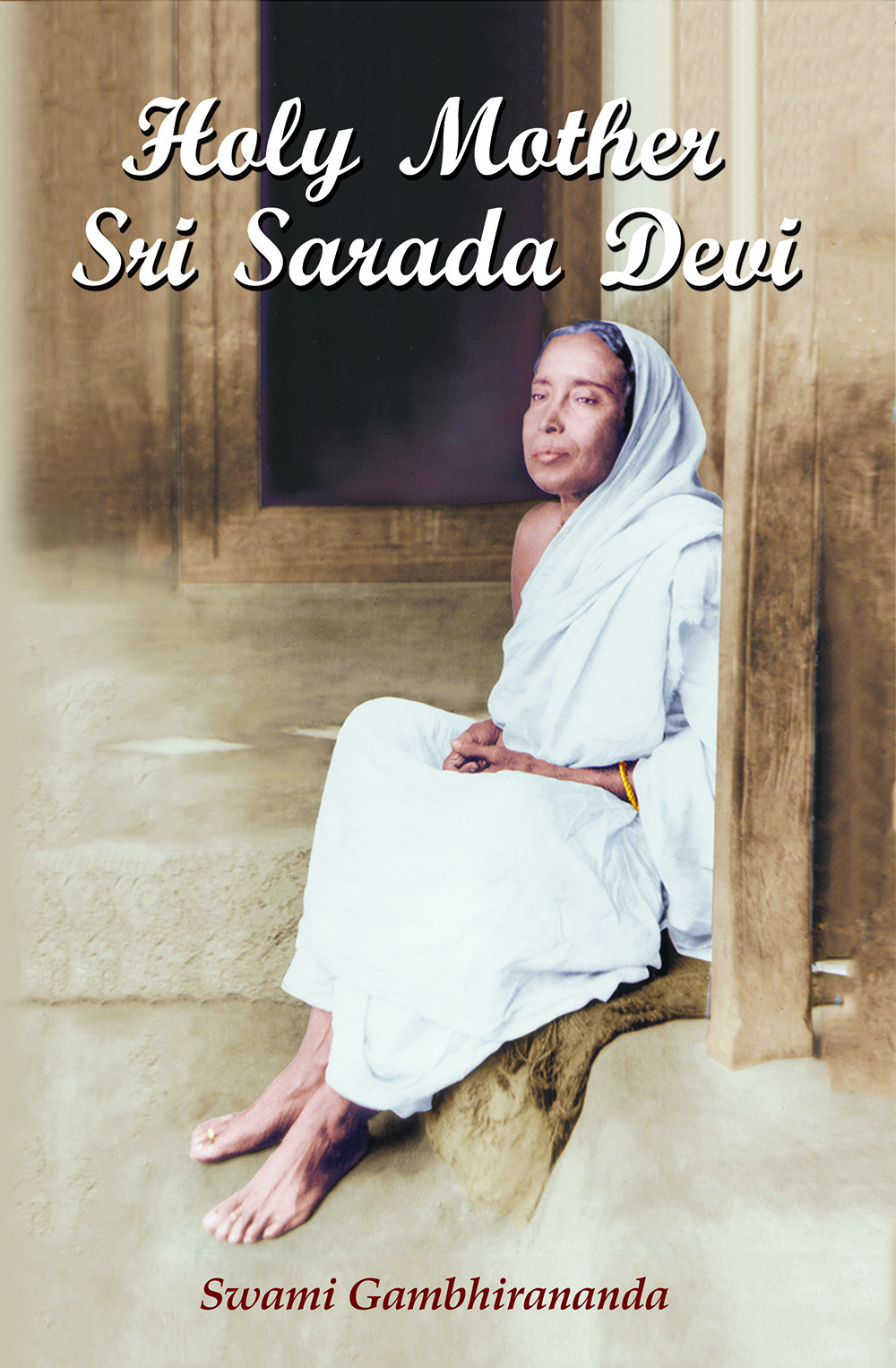
Authored by Swami Gambhirananda, who was a scholar-monk of great eminence and the eleventh president of the Ramakrishna Order, this book is one of the authentic biographies on Holy Mother Sri Sarada Devi. The book presents many interesting facts and incidents of her life gleaned from various authentic sources, both oral and written. Presented in a clear and vivid style, the main narrative is profusely interspersed with conversations of the Holy Mother. The book contains a chronology of the Holy Mother’s life and a genealogy of her family in the appendices. The book is a must-read for all devotees and admirers of the Ramakrishna movement to acquaint themselves with the extraordinary life of the Holy Mother.
God, as associated with His Power, is alone able to set in motion a new cycle of social and spiritual regeneration; else it is impossible to conceive of the Absolute Brahman as involved in any process of evolution. When God incarnates as man, He invokes this Power and then employs Her for the good of men. Divine Power, thus propitiated by the Lord Himself, becomes gracious and suitably rearranges the factors concerned for the advancement of erring and perplexed humanity. Not only this, when God comes down as man, Divine Power also accompanies Him most often as a woman. The descent of Sita with Ramachandra, Sri Radhika with Krishna, Yasodhara with Buddha, and Vishnupriya with Sri Chaitanya emphasizes this fact. In truth, Divine Power, whether on the spiritual or on the material plane, or as the consort of an incarnation, helps Him immensely in His mission. Divorced from Power, His divine drama cannot be enacted, nor can it be comprehended by us.
Swami Saradananda writes, ‘Having discovered the eternal association of Power with Consciousness, the Rishis of India worshipped in all exceptionally energetic things and everywhere the Deity who dances on the prostrate body of Siva. This incomparable, Deity, who promises both blessing and protection with Her hands at the same time that She wears a necklace of heads, was discovered by them as a reality and as such worshipped reverentially in the guru who is the spiritual guide, in women who fascinate the world and in such elevating and degrading qualities as knowledge, forbearance, peace, delusion, torpor, error, etc. Having thus themselves attained all that men can aspire after, they taught others how to be blessed by treading the same path’ (Bhārate-Shakti-pujā, p.20).
Again, Swami Vivekananda realized that this Sakti (Divine Power) had been awakened by Sri Ramakrishna for the rejuvenation of the present age; and hence he sent forth this clarion call: ‘Just imagine in your mind the acme of that resurgence with whose first stirrings the whole world is now resounding, and give up all vain doubt and weakness to which slave nations easily succumb.’ That formless and eternal Power of Brahman which inheres in everything has again descended as the consort of the incarnation for the present age. She has on the one hand helped Him to fulfil His mission, and on the other has spread Her influence on various fields of human relationships, thereby removing obstacles and setting India, and, along with her, the whole world, on a new road to progress. Therefore it is that Swami Vivekananda» who was blessed by them both, salutes them thus: ‘A slave am I to both of you; and to both do I prostrate myself.’
Not only has the descent of God a particular technique of its own, but the manifestation of His Power also has its own mode. Or to put it otherwise, though the time and the purpose are the same for the incarnation of God and His Power, which are inseparable like fire and heat, yet the objective is attained through the masculine body in one way and through the feminine in another. Thus it is that even though the entity cannot be split up, there is a special value in following separately the events that accompany the feminine counterpart.
In the Chandi (XI. 54-55) the Goddess says: ‘Whenever there arises any obstacle from the demons, I shall come down in this way to destroy the enemy In olden times there was constant need for destroying the demons, as they oppressed good and bad men alike. Their destructive power is not however confined to the physical plane. The constant conflict that rages in human hearts between good and evil tendencies is also described in the Upanishads as a battle waged by the demons against the forces of goodness. In the present age, this struggle has assumed the form of a challenge thrown out by disbelief, materialism, and sensuality to belief in God, faith in the immortality of the soul, and adherence to godliness. It is in consequence of this challenge that there has been a growth of irreligion, envy, enmity, and passion which are a constant source of war resulting in the loss of innumerable valuable lives.
The conflict on the psychological plane in the modern age is even more devastating than the old mythological war between the gods and the demons. The old antagonism seldom overstepped the limits of the physical world; but the present struggle has originated in the mental plane and is spreading to all spheres of everyday life, thus laying the axe at the very root of humanity. Hence the action of the Divine Power under existing circumstances has to be mainly on the mental plane. Above everything else, the present-day world needs moral progress and spiritual enlightenment. If faith, purity, and devotion can once attain supremacy’ the outer world is bound to change. The incarnate Divine Power is, therefore, now engaged in fighting internal enemies. The victory may come either by liquidating the sinner together with his sin or by transforming him through the natural attraction of genuine good feelings. The conversion of a heinous heart through moral excellence, presupposes a greater strength than is necessary for killing an enemy outright. So in the present incarnation there is no clanging of weapons or the din of war; but there is an abundance of modesty, humility, purity, goodness, practical love, and spiritual experience. Moreover, the Deity has not only to remove obstacles. She has also to establish new goals and create fresh aspirations; and this is a tremendous task. God Himself need not come down for removing all hindrances from the path of His devotees. This can be accomplished by an inspired soul or by a partial divine manifestation. As the whole of humanity has to be raised to a higher pitch of realization, Divine Power Herself takes the field.
The emergence of the Divine Power today on the hoary background of Indian culture is indicative of a unique reanimation. Particularly is it bound to be so among women, the need of whose advancement is admitted on all hands. We cannot do better than echo the words of Swami Vivekananda who was convinced that India cannot prosper without revitalising her womanhood, just as a bird cannot fly with one wing: ‘And therefore it is that when God incarnated as Sri Ramakrishna, he worshipped God as Kali, the Mother, accepted a woman as his guru (spiritual guide), assumed the role of a woman in some of his spiritual strivings, took upon himself the responsibility of educating and training his own wife, and preached the Motherhood of God’.
In the middle of the last century the womanhood of India was faced with a tremendous problem. India then was being swept off her feet by foreign ideals. A craze for imitating the West set in at the cost of indigenous values. The plan of educational reform envisaged in the despatch of Sir Charles Wood, dated 19th July, 1854, gave only a vague indication of the kind of training that Indian women would get. True it is that India was not entirely wrong in welcoming foreign ideas and practices. On the contrary, it is quite in keeping with Indian tradition to enrich her life by assimilating foreign ideas while still retaining her own individuality. There is need for energizing our woman-hood by drawing a little on foreign sources in order to make national life more vigorous and fruitful, at the same time that the West also learns something of our veneration for motherhood, so that Western civilization may have a stronger spiritual basis and a longer lease of life. But though each civilization has much to learn from another, it will spell disaster if the basic distinctions are ignored. For, though women are honoured everywhere, that honour very often appears in the form of chivalry and appreciation of feminine charms. But India eulogizes chastity and mother-hood, since the ideal aimed at is spiritual freedom which has for its foundation absolute self-control. Our ideal specimens of womanhood are Sita, Savitri, and Damayanti. There is an evident conflict between the two standpoints; and future world civilizations have either to choose sides or seek a rational rapprochement. The problem has assumed an urgency which it never had a hundred years ago. And yet the forces governing the destiny of India foresaw that unless Indian culture was saved from the deluge of modern ideas, the world would have no sure foundation on which the future Eastern and Western social edifices could be erected, while allowing for individual differences. There was need for providing a dependable model in the combined figure of guru, mother and deity from which all could draw the necessary inspiration.
Considered from all points of view, this task of resuscitating and perfecting the Indian ideal could be accomplished by none other than the Mother of the Universe Herself; for in the middle of the last century no other force could succeed in making India conscious of her grand destiny and the world cognizant of her revitalizing message. This is the age-old tradition of India's spiritual ministry. Truly God's advent has been strictly in proportion to the moral degradation during the period beginning from the eighteen fifties and ending with the nineteen twenties. The greater the degradation the greater is the Divine Power's response to the challenge of the times. The new advances of world civilization will commence with the worship of the guru, mother, and goddess as manifested in the recent past.
Sri Krishna hints in the Gita that, though God descends to the human world for the general good, men through the poverty of their intellect fail to gauge His real stature, hidden as He remains under His assumed mundane limitations. And thus, paradoxically enough, the conditions of Divine descent were frustrating His gracious intention. Notwithstanding this drawback, it is only through those human bodies that God can reveal to erring and suffering humanity the means by which life can be made divine; for sunk as men are in their petty selfish pursuits, there is no other method for reinvigorating them for higher achievements. This transmission of fresh vigour and the communication of revitalizing power may follow different channels. In some cases the highest perfection of human ideals may be visibly demonstrated or they may be made more sublime and enduring through achievements of personal life or through grandeur of instruction; in other cases new paths may be opened up by divine decree; while in still others, human hearts may be more powerfully attracted towards cherished traditional human norms through charming divine disports. While all this is true, we must not jump to the conclusion that the mission of an incarnation is confined to a mere heightening of sublimity, or the establishment of fresh ideals, or the attraction of human hearts. For, though we may try to understand his contribution analytically, we have to remember that it is beyond human capacity fully to comprehend or formulate in words the significance of an incarnation, inasmuch as he is the embodiment of all kinds of spiritual moods. Besides, a power that is released for ages, cannot be assessed by contemporary history. Nevertheless, we accept these three standards as a basis for an intellectual apprehension of the life of the Holy Mother, wherein we shall see the qualities of motherhood in their superhuman perfection, and we shall come to know how they acted in the present age for evolving new spiritual values. We shall also see how in her life the feminine virtues consequent on such positions in the family as daughter, sister, wife, or matron, reached their ideal states and above all, how her pristine purity was itself an inspiration to others.
Is this all sentimental ebullition or a faint hint at reality? We invite the reader to raise this question again after finishing this biography; but we are convinced that he himself will discover the truth ere long and be freed from doubt. But he must be forewarned that the life we are dealing with is in many respects extraordinary, and it must be evaluated accordingly. The Holy Mother does not belong to that class of dazzling personalities who suddenly emerge in contemporary history and after assuming superhuman proportion for a while vanish for ever, nor to that category of people who through bustling activity, flaming oratory, or the clatter of arms imperil human civilization and blacken history for ever. She belongs to that galaxy of great characters who, by concretizing the human ideals in their lives raise world civilization to a higher level and whose influence, though seemingly inconsiderable to their contemporaries, lasts longer and expands for ever. In fact, she is to be classed with such memorable figures as Sati and Sita whose advent purified human life and blazed the path for a fresh resurgence.
All this is unquestionable. But still another question remains: ‘If the Power descended for the world as a whole, why should it have selected for its field an insignificant remote hamlet like Jayrambati, detached as it is from all modern influences?’ Who can answer such a question? And, in fact, how many of those questions can we answer that arise in connection with the unpredictable movements of that inscrutable Power that ever creates, sustains, and dissolves the world? And yet human intellect, though aware of its limitations, cannot desist from the quest. So we cogitate, ‘Had Jayrambati any speciality, because of which it had such a proud privilege? ‘Even a close scrutiny does not reveal any such, though the pages of history bear witness to the facts of Krishna's advent in Kamsa's prison and his childlike and boyish disports among cowherds, of Jesus's birth in a stable and his early training in a carpenter's house, and the descent of Ramakrishna in a husking shed and his subsequent life as a poor temple priest. And sociology points to the fact that when, under the impact of an aggressive foreign culture, the learned and moneyed classes in the towns are swept off their feet, indigenous culture maintains a precarious existence in the poor surroundings of remote villages. Moreover, Indian culture discovered a peculiar mode of self-perpetuation by entrusting itself into the hands of indigent Brahmins and penniless gurus. Had Jayrambati these factors in abundance?
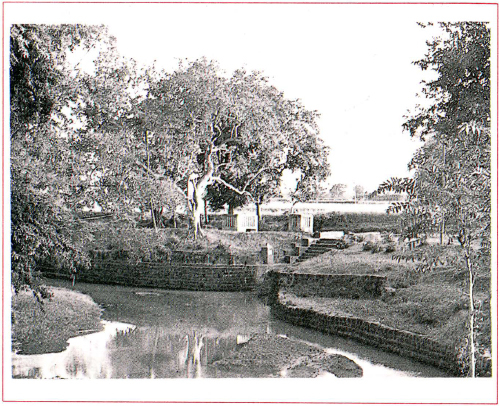
Bankura, though it belongs to the fertile province of West Bengal, is comparatively barren and subject to frequent famine. But the little village of Jayrambati, lying at the south-east corner of the district, is more fortunate and ever smiles with the crops of paddy, wheat, sugar-cane, and vegetables which the industrious farmers grow in its fields. It is about three miles west of Kamarpukur, the native village of Sri Ramakrishna, and is under the Siromanipur outpost of the main police station at Kotulpur within the Vishnupur sub-division of the District. From the north-western corner of the hamlet the small, perennial rivulet Amodar, with its transparent water, meanders eastward for a mile like a playful child, demarcating the northern limits of Jayrambati; then taking a south-easternly turn it washes the boundary of Mukundapur which forms a part of Kamarpukur, and then flows southward. The narrow and shallow stream forms whirpools here and there, which are deep and full of fish, so that small alligators are often attracted there. In the northern side of the village, the streamlet forms a beautiful peninsula, triangular in shape and raised in the centre. The green grass and tall trees which cover it make it a cool retreat for those who want a shelter from the day's heat, and the solitude is heightened by the signs of cremation here and there, inviting those who are sick of the worries of the world. Resounding with the chirping of birds and decorated with fruit and flower trees as it was, it was a favourite place for Swami Saradananda, Yogin-Ma, Golap-Ma, and others who after a dip in the brook sat under the amalaka (emblic myrobalan) tree which adorned its centre in those days; and there they meditated or read the Gita or the Chandi for a considerable time. The Mother in her younger days took her ceremonial bath in this stream on special days.
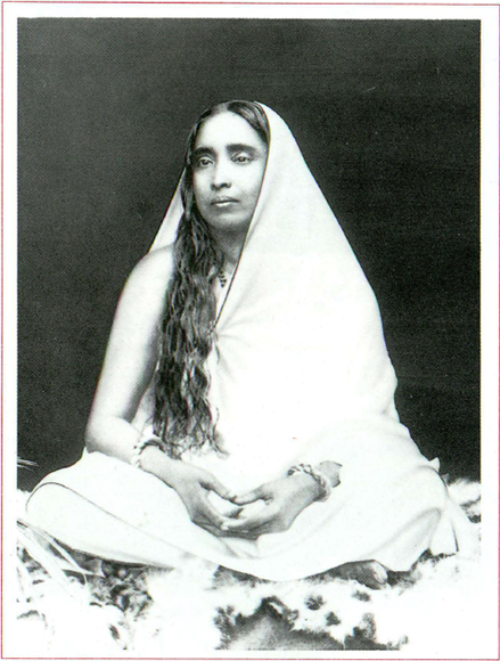
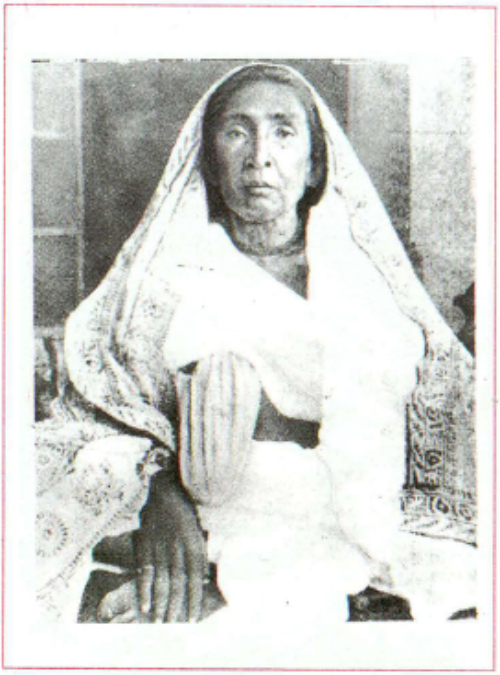
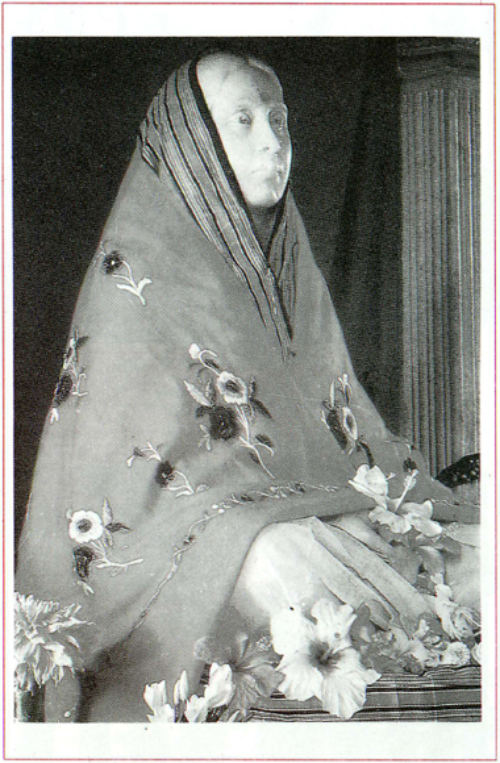
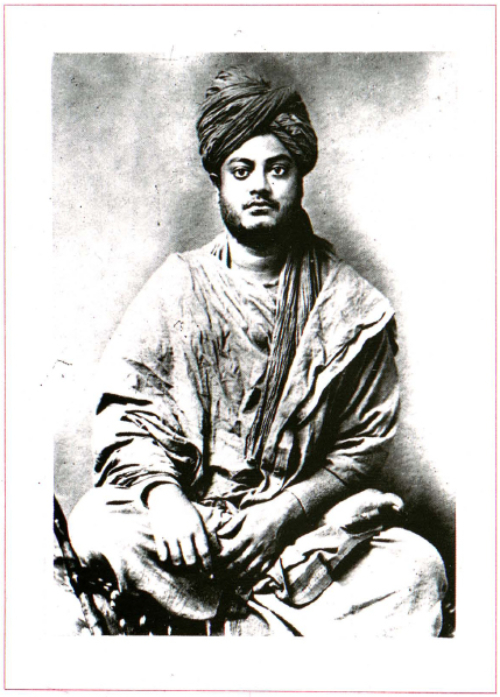
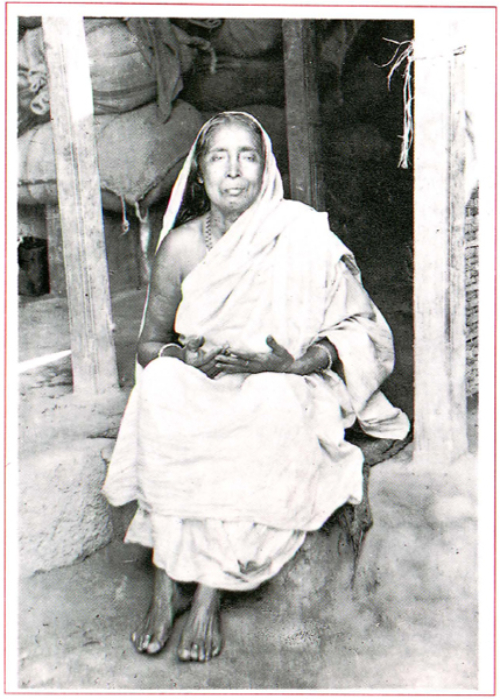
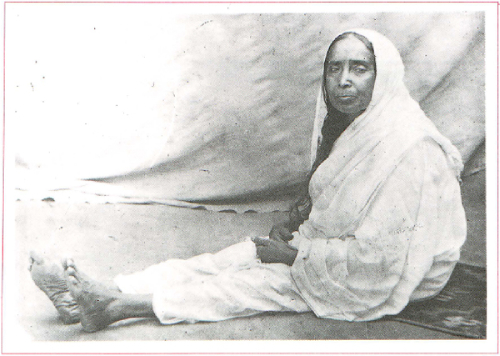
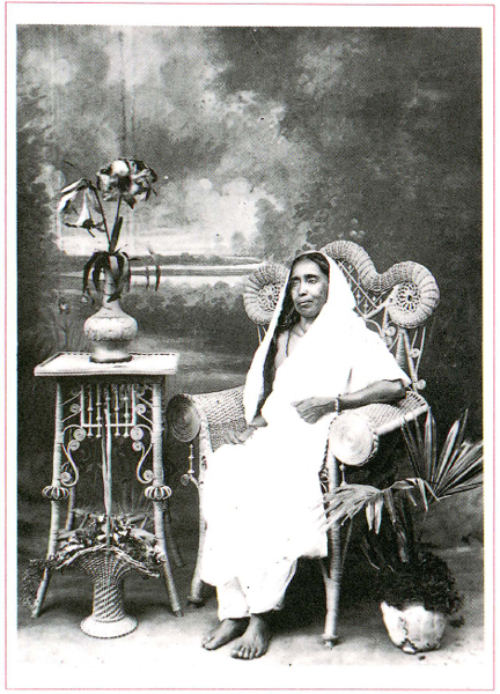
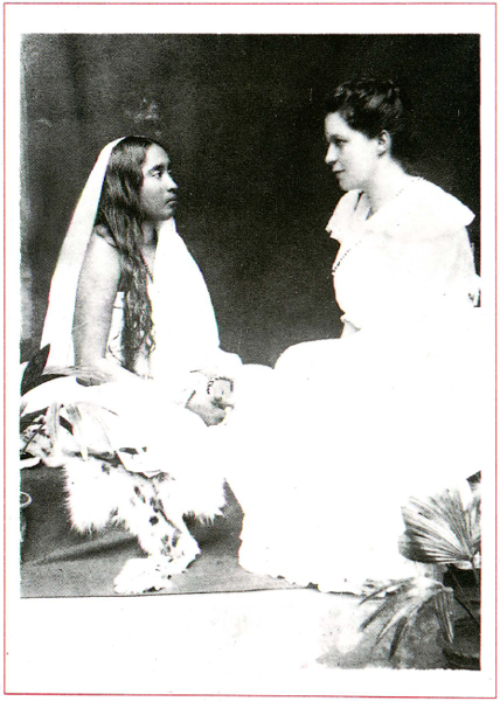
Sri Sarada Devi
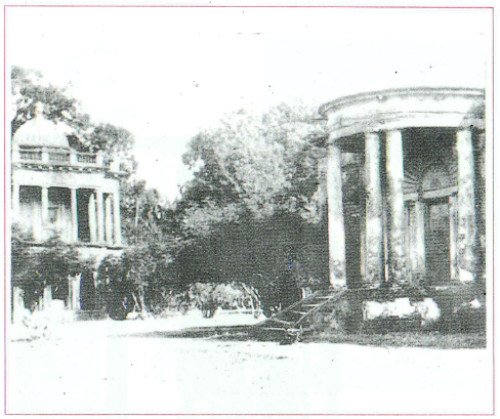
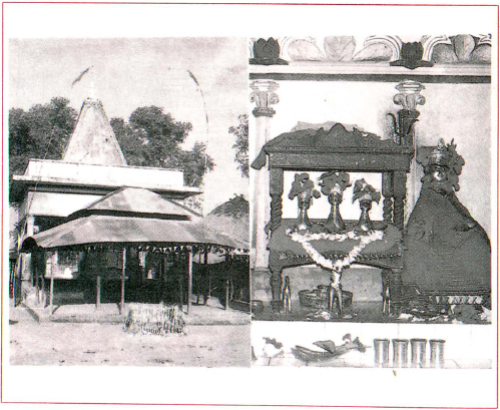
Nahabhat (Left) and Sri Ramakrishna's room
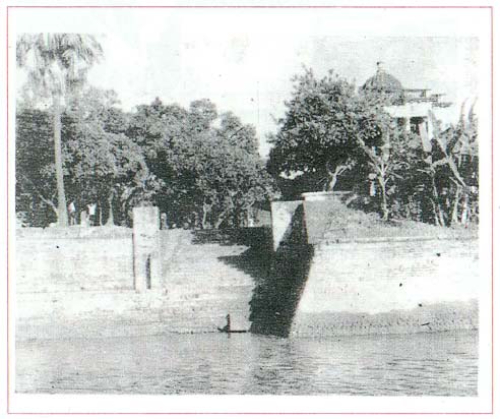
Bakultala Ghat where Mother used to take bath
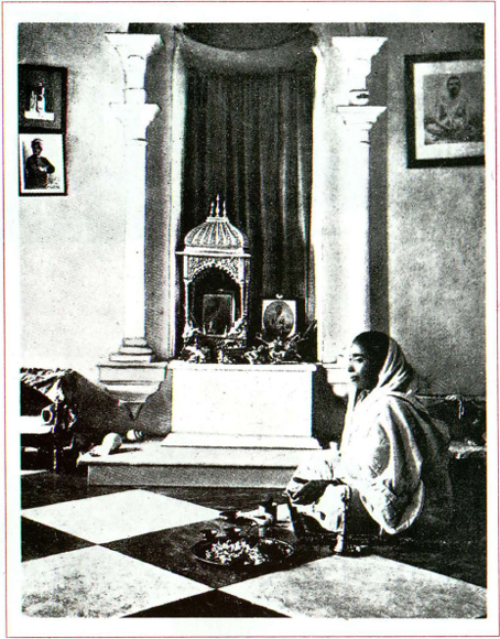
Mother at worship in Udbodhan Shrine
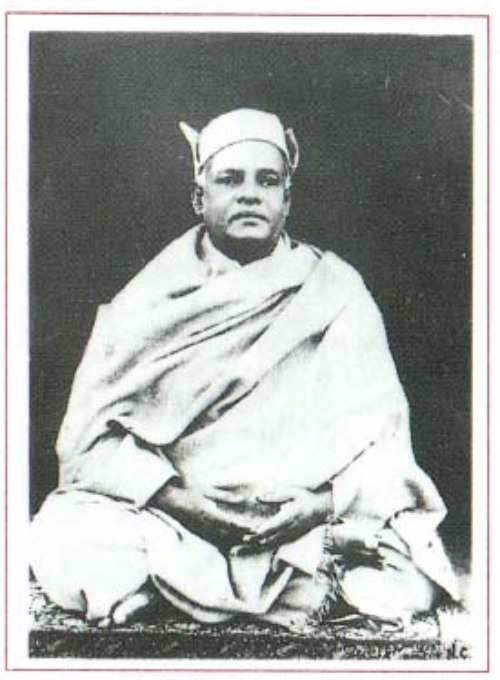
Swami Yogananda
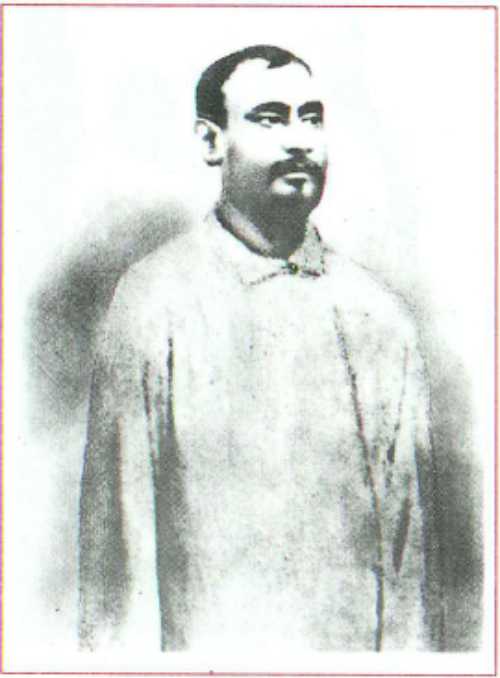
Swami Saradananda
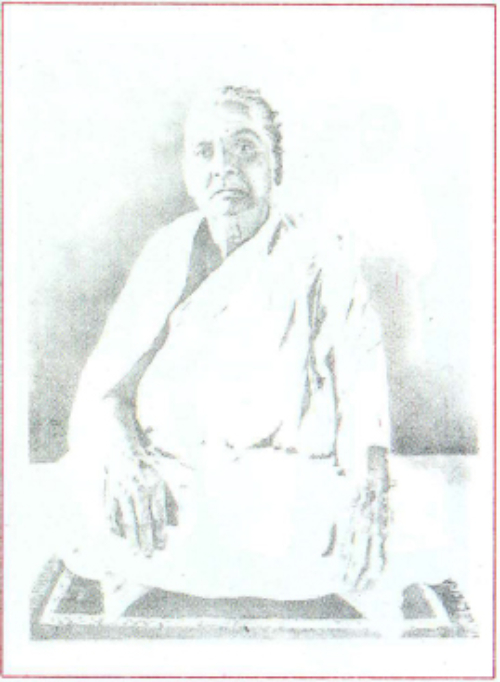
Yogin Ma
Shyamasundari Devi
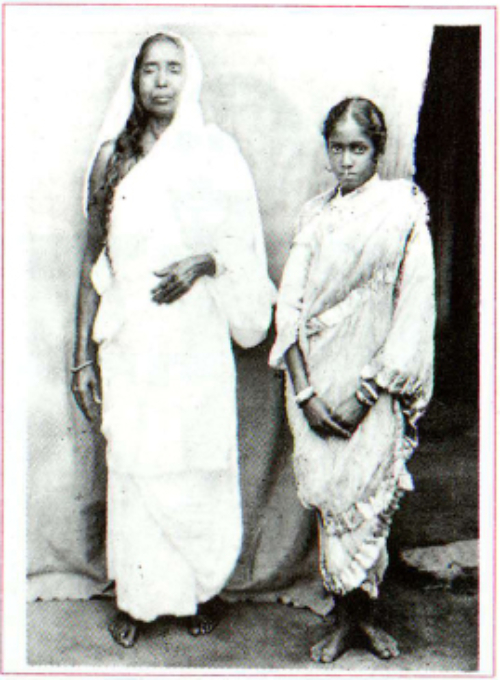
Mother and Radhu
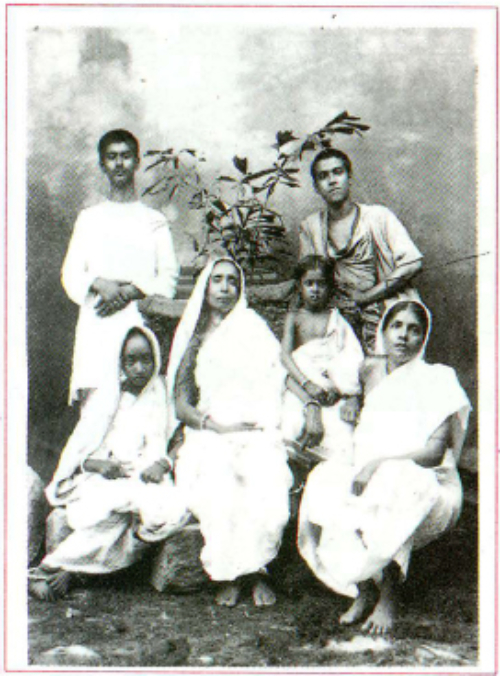
Nalini, Mother, Radhu and Lakshmi
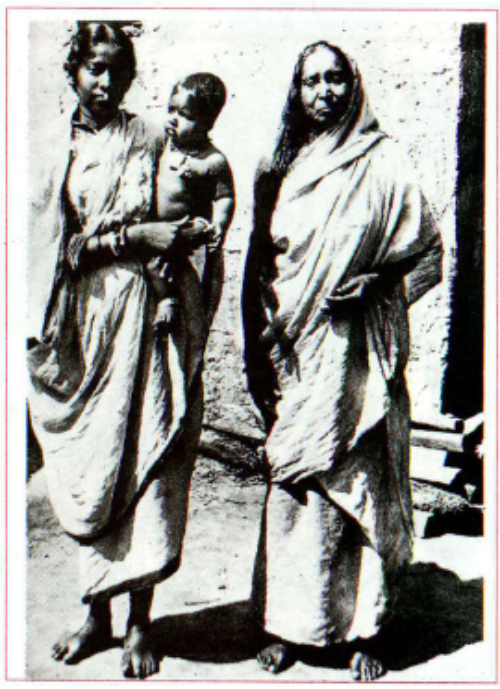
Maku her child and Mother
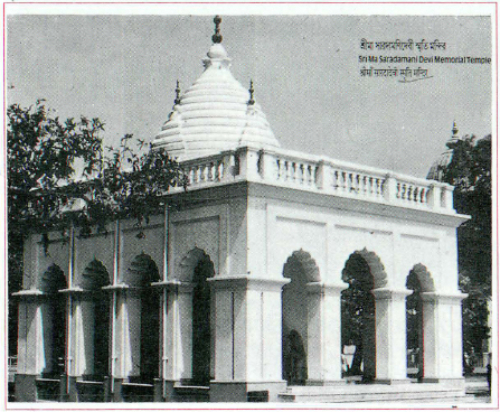
Mother's Temple at Jayrambati
Mother's Temple at Belur Math
Mother's Image at Jayrambati Temple
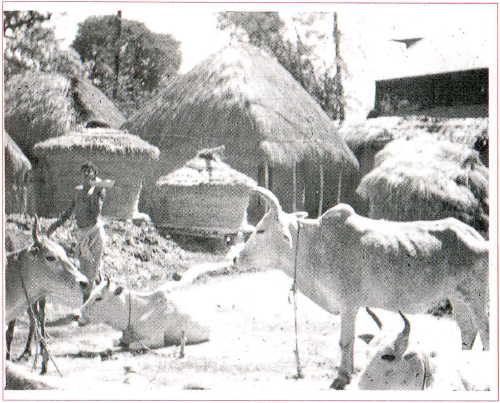
The natural situation of Jayrambati is very fine. It is surrounded almost on all sides by extensive fields. The land between the Amodar and the village is about half a mile in width and is very fertile. Such staple crops as paddy, pulses, chilli, and turmeric, as well as ordinary vegetables, are raised on this and adjacent lands by a diligent peasantry whose wants are few. Cotton, too, used to be cultivated and the ponds had plenty of fish. It is said that the hamlet began to have such abundance only after the birth of the Holy Mother. It had then no shops; and yet the people did not depend on other villages. They were satisfied with what they got from their fields. Whenever necessity arose, they went to the market at Kamarpukur which supplied them with sweets, or to Kotulpur, six miles to the north, from where they got clothes, salt and spices, or to Kayapat-Badanganj, five or six miles to the south-west. At Shihar (or Shiod, as it is locally pronounced), one mile to the west, there were some grocer's shops, and there was another at Pukure, about a mile and a half away, which helped the people of Jayrambati in an emergency. North of Jayrambati, on the other side of the Amodar and across a vast field, is a large village called Desra (pronounced as Deshda). On the east, too, across a vast stretch of paddy fields, one comes to the bank of the Amodar, after crossing which one has to pass through Amarpur to reach Kamarpukur. The track has now been made wider and easier for traffic, and it is dotted on either side by big shady trees under which the cow-boys and pedestrians can take rest or shelter.
The Mukhopadhyaya (or briefly Mukherji) family in which the Holy Mother was born, settled in this village long ago. Apart from these Mukherjis and the Banerjis who are related to the former, there is no Brahmin family there. The rest of the villagers are non-Brahmins bearing such family titles as Vishwas, Mandal, Ghosh, and Samui. The Brahmins, together with a few families of milkmen, one of barbers, one of sweetmeat makers, one of blacksmiths, and a few families of Bagdis, inhabit about a hundred small mud houses where they live their unostentatious rural life. We are not aware of any indisputable theory about the origin of the name of the village, though one may guess that it might have been derived from the name of the tutelary deity or of an ancestor of the Mukherjis.
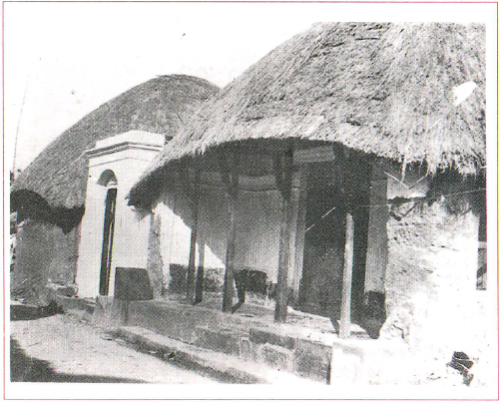
The villagers used to bathe in and draw their drinking water from the big tank with tall palm trees on its banks called the Badujye-pukur (or the tank of the Banerjis) in the southern part of the village. Further south there is an ancient tank with blooming lotuses. On the western side of the village is a big tank called the Aher on which the cultivators depend for water for irrigation. An old pond, called the Punya-pukur, occupies a central position. On its western bank is the ‘new house’ of the Holy Mother, built in 1916. On that bank again at the northern side is a small thatch opening to the south which is the old chapel of the Mukherjis. In one of its rooms there is an emblem of the deity Dharma[1] called Sundara-Narayana, which is of the form of a tortoise and which the Mukherjis worship by turns. The other room is called the Kali-mado where the goddess Kali used to be worshipped every year. This worship ceased subsequently as a result of family differences. In this room, again, sat the village school where the little boys and girls gathered, with leaves for writing under their arms and crisp scorched rice (mudi) for tiffin tied at the ends of their clothes. At the north-east corner of this room was a black-stone, the emblem of the goddess Shashthi who grants children to worshippers and protects them. Newly married couples-used to come to salute this deity; and we fancy that Sri Ramakrishna and the Holy Mother, too, did so. Shashthi now sits in Sundara-Narayana's room. On the southern side of the village road that runs over the southern bank of the Punya-pukur is the Modal-pada, the quarter of the Modals; and to the south of this place is the shrine of Simhavahini[2] who along with two of her female companions —Chandi and Mahamaya—occupies a seat, a separate seat being provided for Manasa, the serpent goddess. The Mukherjis are the hereditary priests of all these deities. At the time that we are writing of, Simhavahini was housed in a thatch; but now she sits in a more substantial house with a cement floor and a corrugated iron sheet roof.
On the southern bank of the Punya-pukur is the homestead of the Banerjis. From the old brick-built temple, parlour, etc., it can be inferred that they were once in an affluent state. But now all these are in ruins.
The main road of the village runs north and south by the western side of the Mother's new house and the Kali shrine, both of which are on the Punya-pukur. As we proceed along this road a little northward, there stands on our left the white brick-built temple on the birth-place of the Mother. Here was the ancestral home of the Mukherjis who, however, spread out south-west with the growth of the family. Their houses lie to the west of the village road and open to the east. The ancient homestead had a thatch on the eastern side, which was divided into two parts, the outer one serving as a drawing-room. On the south were the kitchen and husking sheds. On the southern side of the present dwellings of the Mukherjis there is another road which, starting from the main village road, runs westward along the northern bank of the Kalu-gede (or Kalu's pond) and the southern side of the Ghosh-pada (Ghosh quarter) to join the road to Shihar on the northern bank of the Aher. On the extreme west of the Ghosh-pada is the brick-built temple of Dharma, known as Yatra-siddhi-raya, whose symbol is a small low stool with four legs.
Of the villages round about Jayrambati, with which the memories of Sri Ramakrishna or the Holy Mother are specially associated, mention may be made of Shihar, Koalpara, Anur, and Shyambazar. At Shihar was married Hemangini Devi, the daughter of the paternal aunt of Sri Ramakrishna. It is also the birth-place of Shyama-sundari Devi, the mother of the Holy Mother. These common ties often attracted both the Master and the Mother to this village even from their childhood. The Mother used to halt at Koalpara when in later days she passed through Vishnupur on her way to and from Calcutta. Anur is known for its shrine of the goddess Vishalakshi, on the way to which the Master while still a child passed into ecstasy. At Shyambazar he once joined a kirtana[3] party which sang the glory of the Lord continuously for seven days and nights. To the east of Jayrambati, on the other side of Amodar, is the big village of Tajpur; to the south is Jibta which houses the landlords of Jayrambati; to the south-west is Masinapur (or Masnepur); and to the west is Shihar. All these villages are within a mile of Jayrambati. West of Shihar is Shiromanipur which is inhabited by Mohammedans and which boasts of a police station.
Jayrambati, though not very far from Calcutta, is not easy of access, and roads were more difficult in the times we are writing of. In those days people trudged on through village roads and open fields, frequently infested with robbers. Only the rich few could afford the luxury of carts, palanquins, etc. One of these paths passed through Kamarpukur, Arambagh, and Tarakeshwar, the last place being noted for its Siva temple. Between Arambagh and Tarakeshwar lay a vast field called Telo-bhelo which was not safe even during daylight, so that people never crossed it alone or after nightfall. This was the shorter of the two routes usually followed by the people, the distance by it between Calcutta and Jayrambati being about sixty miles; and this was the path that the Holy Mother usually trod on her way to meet the Master at Dakshineshwar. The other route through Burdwan, which is a railway station, was a much longer one and withal not free from robbers. People now proceeding to Jayrambati usually travel by a night train from Calcutta to Vishnupur where they can get buses which ply up to Jayrambati in the dry months and up to Kotulpur in the west, with the rest of the way, a distance of about six miles, to be covered on foot or by a cart according to convenience. A modern all-weather road up to Jayrambati is now (1953) under construction which may ultimately be extended to Kamarpukur.[4]
Jayrambati, though thus shut out from modern civilization, does not lack in festivities. It has its rounds of annual celebrations. In autumn there is a three-day special worship of Simhavahini, the presiding deity of the village, which draws people from all parts. Besides, other days sacred to other gods and goddesses are duly observed with much eclat. On the Sivaratri day the villagers go to Shihar to offer worship at the temple of Shantinatha (Siva). There are also kirtana songs continued for twenty-four hours at a stretch and rural dramas on mythological subjects which are highly appreciated and largely patronized.
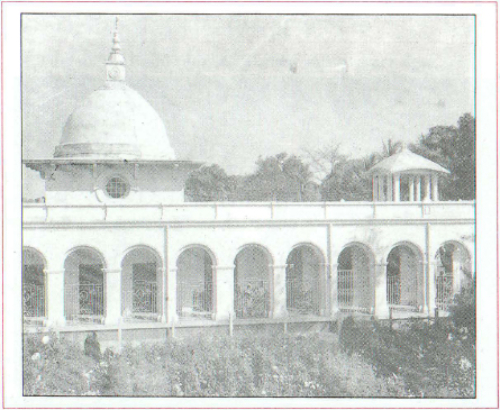
And above all, Jayrambati has been blessed by the advent of the Holy Mother, which has converted it into a place of pilgrimage where people from all over the world come to draw inspiration. The white dome of the temple, flying its metal pennant with the Bengali word ‘mā’ (mother) engraved on it, announces the glory of the village to distant passers-by. The temple was consecrated on the 19th April, 1923 (Akshaya Tritiya, according to the Hindu calendar), which day is still observed and is made joyous by the presence of hundreds of devotees hailing from different places. The worship of the goddess Jagad-dhatri, which was initiated by the Holy Mother's mother and for which the Mother herself made permanent arrangements, is also performed annually and is equally popular with the devotees. The establishment of the branches of the Ramakrishna Math and of its sister institution the Ramakrishna Mission, which cater to the spiritual, mental, and physical needs of the villagers, has also enhanced the popularity of Jayrambati, and easier accessibility is gradually converting it into a centre of attraction. It is a miracle that by the birth of the Holy Mother this insignificant hamlet should have leaped into such prominence within such a short time. The Mother herself placed on her head the dust of this hamlet and saluted it with the Sanskrit adage ‘Janani janmabhūmiśca svarg ādapi garīyasī — mother and mother-country are superior to heaven itself.
ⓘ [1] Literally, virtue or right norm, deified in Buddhism. [2] i.e. one riding on a lion, an epithet of Durga. [3] A particular type 01 religious songs sung singly or in chorus, with musical instruments like cymbals and drums to keep time. [4] This has since been extended to Kamarpukur.
We do not know when the Mukherjis came to Jayrambati. From two old documents it appears that sometime in the middle of 1669 a certain King of Vishnupur, named Sri Chaitanya Simha, gifted about six acres of land, free of all rents, to one Khelaram, a forefather of the Mukherjis, for the maintenance of his family and for carrying on the worship of Dharma. From this it appears that the Mukherjis had been worshippers of the deity even earlier and might have come to the village in that capacity. This was perhaps during the transitional period in the history of Bengal when Buddhism was being absorbed into Hinduism together with its deities of whom Dharma, under various names, was one. But once the Mukherjis had set their feet in the village, they became the family priests of the Hindus near about and thus gradually established the supremacy of Hinduism, owing to which Simhavahini, the Hindu deity, whom too the Mukherjis worshipped, became the presiding goddess.
The site occupied by the Holy Mother temple was perhaps the first place where the Mukherjis settled. This is borne out by the Siva image in black-stone which was found underground when the foundation for the temple was being dug. This must have once been worshipped by the Mukherjis. The Mother lived here till she was nine years old, and this was also the place which witnessed her marriage. ‘My marriage was celebrated in the old house,’ she recounted. ‘We shifted to the new house (which later fell to her brother Varada's share) when I was nine years old— when the old house became too small.’
Ramachandra, a worthy descendant of the Mukherjis, whose tutelary deity was Rama, was respected at Jayrambati for his godliness, suavity of temper, and compassion for all. He married Shyamasundari Devi, daughter or Sri Haridas Mazumdar of Shihar. The wife, too, vied with her husband in the practice of virtue. Her purity, simplicity, and fortitude were the talk of the village. The Holy Mother Sri Sarada Devi was born of this pious couple. The few sentences which occasionally dropped from the Mother's lips with regard to her parents go to show how virtuous they were and in what veneration she held them. ‘My parents,’ she said,’ were very good. My father was a devout follower of Rama. He was very orthodox and would not accept any gift from people of other castes. How kind my mother was; how she would feed people, and how she took care of them! And how guileless she was!’ And she added, ‘My father liked smoking. But as he smoked, he was so simple and humble that he would address in a friendly way any passer-by who crossed his door, and would say, “Sit down, brother, and have a smoke.” And then he himself would fill up pipe after pipe for him. Will the Lord be born where the parents are not self-composed ?’ About her mother she said,’ My mother was Lakshmi (goddess of fortune) herself,. so to say. Throughout the year she would gather all sorts of things and keep them in order. She would say, “ My household is for God and His devotees...”. This household was, as it were, a part and parcel of her being. What pains did she not take to keep it in order!’
Ramachandra had three younger brothers—Trailokyanath, Ishwarchandra and Nilmadhav—all of whom lived together. This family was never prosperous and somehow made both ends meet with the little that was earned by farming and priesthood; and yet Ramachandra was unstinting in his charity, of which we shall have some proof in due course.
Once when Shyamasundari Devi was living with her father in the northern part of Shihar, she had occasion to sit in the dark beside a potter's oven under a bel (bilva, aegle marmelos) tree. There suddenly issued a jingling sound from the direction of the oven, and a little girl came down from the branches of the tree. She laid her soft hands round Shyamasundari's neck, whereupon she fell down unconscious. She had no idea how long she lay there thus. Her relatives came there searching for her and carried her home. On regaining consciousness she felt as though the little girl had entered her womb.
Ramachandra was then in Calcutta in search of some means of earning money for his family. The thought of his family's poverty weighed heavily on his mind. One day, before he had decided to start for the city, he was engrossed in that thought. Then he fell asleep and dreamt that a little girl of golden complexion embraced him from behind by throwing her delicate arms round his neck. The incomparable beauty of the girl, as also her invaluable ornaments, at once marked her as out of the common run. Ramachandra was greatly surprised and asked, ‘Who are you, my child?’ The girl replied in the softest and sweetest of voices, ‘Here am I come to you.’ Ramachandra woke up and the conviction grew in him that the girl was none other than Lakshmi, the goddess of fortune, whose appearance implied that the time was auspicious for him to go out in quest of money. Accordingly he left for Calcutta. We do not know how far Ramachandra was successful in his quest. All that we know is that after returning home he heard what had happened to his wife, and, spiritually-minded as he himself was, he readily believed everything. Henceforth this holy Brahmin couple lived the purest of lives in expectation of the divine child. Ramachandra had the highest regard for his wife and never touched her person till the birth of the Holy Mother. Shyamasundari Devi was conscious of her unique fortune, and long after she said to Yogin-Ma[], ‘How beautiful I looked when I was in the family way, how thick were my tresses, and how many pieces of cloth were presented to me during that time!’
Gradually the time of confinement approached. Autumn had now passed, and it was the beginning of the month of Paush when winter had just set in. This was one of the happiest times in Bengal villages. The harvest was over and the granaries were full. The fields around again began to smile with the shooting forth of the summer crop. The new harvest festival had just been finished, and the little children were counting the days for the festival of the month-ending[2]when they would have a feast of cakes. The Christian world was eargly waiting for the merry Christmas day. The Tantrikas were busy paying visits to the Kali temples, especially as such visits were thought to by very meritorious in that month. And it was the day of winter solstice when the longest night was over and the sun was beginning its northward course—the day on which the Hindu gods and goddesses wake up from their long slumber of six months. During such a time, a little after Thursday evening, on the 8th Paush (22nd December, 1853) when the night had spread her star-spangled cloth over the village of Jayrambati to lay it asleep after the day's labour the blowing of conchshells from Ramachandra's house announced the happy news of the advent of Sri Saradamani Devi. Soon an astrologer was called in and in accordance with the disposition of the stars and planets at the time, the child was ceremonially named Thakurmani. Her more popular name was, however, Saradamani.[3]
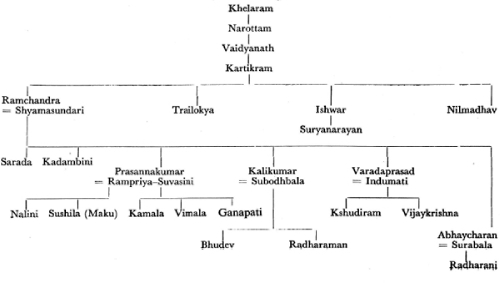
Sarada was the first child of her parents. She was followed by a sister named Kadambini and then by five brothers named Prasannakumar, Umeshchandra, Kalikumar, Varadaprasad and Abhaycharan. Kadambini died childless soon after her marriage with Sudharam Chakravarty of Kokanda. Umesh, too, died before marriage at the age of eighteen or nineteen. Abhay died just after passing out of a medical school, leaving behind him a widow and a daughter, of whom we shall have much to say in future. The other brothers grew up and set up separate houses and reared their own families. Uncle[4] Kali built his house south of the ancestral home. Uncle Varada's house was to the north-west of uncle Kali's. South-west of this house was the Kalu-gede (Kalu's pond) mentioned earlier, which was used by the Mukherjis for cleaning the household utensils. South of the Holy Mother temple and north of uncle Kali's house was the house of uncle Prasanna. The Mother spent a long part of her life in the cottage of uncle Prasanna, which has since been purchased by the authorities of the Ramakrishna Math and added to the Holy Mother temple properties, in which also are included the Punya-pukur and the new house of the Mother. North of this cottage was the gateway of the house of uncle Surya who was the son of Ishwarchandra Mukherji, one of the uncles of the Holy Mother. Her eldest uncle Trailokya was a Sanskrit scholar; but he died in youth soon after his marriage. The youngest uncle, Nilmadhav, remained a bachelor and never parted from Ramchandra.
After the death of Rampriya Devi, his first wife, uncle Prasanna married Suvasini Devi. He had two daughters—Nalini and Sushila (or Maku) by his first wife; and by his second wife he had two daughters, Kamala and Vimala, born during the Mother's life, and a son, Ganapati, born after her demise. Uncle Kali had two sons, Bhudev and Radharaman, by his wife Subodhbala Devi. We have already said that uncle Abhay left behind him his widow Surabala and an only daughter Radharani, affectionately called Radhu or Radhi. Uncle Prasanna had a moderate supplementary income from his priestly services in Calcutta. Owing perhaps to an early life of poverty, he was very frugal in his ways. With the money he saved, he purchased paddy fields and bullocks and thus improved his condition. Kalikumar was irritable by nature. It is said that before his birth his mother became very much overwhelmed by the loss of some children, when with the help of some medicines given by a woman who worshipped the goddess Kali and with her blessings too, she got Kalikumar as her son; and that accounted for the boy's irascibility. Kali stayed at Jayrambati, and as an orthodox Brahmin he attended to his daily worship and the observance of ceremonies, so that he was greatly respected. Uncle Varada generally stayed at Jayrambati, though he often went to assist Prasanna at Calcutta.
The Mother spent her early days in a poor family; but poverty was in a sense a boon and made life sweeter by providing greater opportunity for her to reveal her affection for all around. Ramchandra could not raise enough paddy from his lands to meet the expenses of the family; so he grew some cotton also. Shyamasundari Devi would carry the little girl Sarada to the cotton field where she would lay her down and go to pluck the cotton pods. When Sarada grew up to be a little girl she would help her mother in this work as also in spinning sacred thread with the cotton, which would fetch some cash for cloth and other family requirements. Sarada had also to look after her brothers. ‘I used to go with them,’ she said, ‘to bathe in the Ganges, that is, in the Amodar, which was our Ganges[5]. After finishing our holy bath, I would eat with them some fried-rice there, and then bring them home. The Ganges had always an uncommon attraction for me.’ As for other engagements, she said, ‘As a girl I would plunge into neck-deep water to cut grass for the cattle, and walk to the fields with fried-rice for the labourers. During one year when locusts had nearly destroyed the crop, I went round the fields gathering paddy.’ As regards her education she said, ‘I sometimes accompanied Prasanna, Ramnath (a cousin), and others when they went to school in their boyhood; and thus I learnt a little.’
In addition to these brief and casual references to her childhood days, some information can be gathered from her contemporaries. Thus Sri Raj Mukherji's sister Aghormani Devi, a companion and playmate of the Mother's girlhood days, said, ‘The Mother was very simple by nature; she was simplicity incarnate. Nobody had any altercation with her during childhood sports and games in which she very often played the master or the mistress of a house. She, of course, made dolls and played with them; but she preferred worshipping with flowers and bel leaves Kali and Lakshmi in images fashioned by herself. When other girls fell out, she would mediate, settle their quarrels, and re-establish cordial relations. Once during the worship of the goddess Jagad-dhatri, Sri Ramhriday Ghoshal of Halde-pukur was present. Finding the Mother lost in meditation before the deity, he kept his eyes fixed on her for a long time; but as he could not make out as to who was the deity and who the Mother, he left the place in fear.’ Other old people would say, ‘From her young days, Sarada was as diligent in her work as she was intelligent, quiet, and well-behaved. She had never to be asked to work. Of her own accord and with her own resourcefulness she would meticulously perform her duties.’
The self-identification of the Mother with Jagad-dhatri in her meditation which became pronounced enough to awe a casual observer was not an isolated event in this unique life. The girlhood days of the Holy Mother were made surprisingly singular by a strange combination of divinity and humanity, with a predominance of the former, as it were. Whatever others might think of her in her later life, she then generally revealed herself in her human role. But at the time of which we are writing, it seems as though she stood at the meeting point of heaven and earth and could not decide as to which side she should lean, fresh as she was from the world above; or it might have been that it was ordained from above that those early days should be divinely encompassed. So it is that the Holy Mother said with reference to those days, ‘Mind you, my dear, as a girl I saw that another girl of my age always accompanied me, helped me in my work, and frolicked with me; but she disappeared at the approach of other people. This continued till I was ten or eleven years old[6].’ When she went into the water to cut grass for the cattle, there would appear a girl of the same age to assist her in the work. No sooner the Mother return from the shore after depositing a sheaf cut by the new girl, than she would find another sheaf kept ready in the meantime.
We have now an idea of how busy the Mother was in her early life. From her reminiscences of those days we also gather that she had off and on to undertake such hard tasks as cooking. But though she was a precocious and painstaking little girl, her hands were not strong enough for the whole arduous process, and so she had to call in her father for taking down heavy utensils from the fire-place. She had to fetch pitchers of water from the tank for domestic purposes, and she took this opportunity to learn swimming with the help of the pitcher.
When she was eleven years old (1864), the country-side was ravaged by a terrible famine. Her father had garnered some paddy; and though he was by no means affluent, he was moved so much by the appalling misery around that he opened his granary and started a free canteen. The Hoy Mother described it thus: ‘What a dire famine raged there once and how many starving people came to our house! We had stocked the previous year's produce. My father had the paddy husked into rice and got potfuls of khichudi (hotch-potch) cooked by mixing it with black lentils. “Everybody in this house will eat this,” he said, “ and offer it to whoever may come. Only for my Sarada, a little rice of good variety will be cooked and she will eat it.” On some days the number of people became so great that khichudi ran short. Cooking would restart at once. No sooner was the hot food served on the leaves than I would fan it with both hands so that it might cool quickly. For, alas, the hungry stomachs could not brook delay! One day came a girl of either the (lowly) Bagdi or the Dome caste. The hair on her head had become shaggy for want of oil and her eyes were bloodshot like those of a lunatic. She ran to the tub where some rice-dust was soaked for the cattle and began gulping that. She wouldn't heed the people who were crying out, “ Come in and eat the khichudi.” Only after swallowing some rice-dust did she hear that call. Such, so dreadful, was the famine! After learning the bitter lesson of that year, people began to garner their paddy.’
From the vivid picture drawn up by the simple, unvarnished, and incomparable words of the Mother we find how busy she was seeking to cool by fanning with her soft, delicate hands the hot food for the starving people, she who in future would reign in the hearts of hundreds with the irresistible claim of a mother! And how full of affection for that tender darling of a child was the poor Brahmin! The Mother's life then was like that of any other girl in the village. But in the midst of this rural simplicity, now and then a sudden divine flash dazzles us. This interplay of light and shade could not perhaps entirely escape the notice of her brothers or of her parents who wanted to hug to themselves their small sister or smaller daughter as any other human being did. Perhaps because of the unforgettable impression of such moments of light, Shyamasundari Devi, mother of the Holy Mother, said in later life, ‘My child, I wonder who you really may be, my dear! How can I recognize you, my daughter!’ The daughter, of course, then brushed this compliment aside with apparent dislike, saying, ‘Who am I? Who can I be? Have I grown four hands (like any deity)? If so, why should I have come to you? ‘What Sarada Devi did as a sister becomes clear from a talk that she had one day with her mother. Shyamasundari Devi said, ‘Sarada, may I have a daughter like you in my next life!’ The daughter replied with a show of anger, ‘You will drag me down again! To think that I should come again to bring up your children!’ With the memory of the quiet diligence of her affectionate daughter still fresh in her mind, Shyamasundari Devi repeated with an obvious appeal, ‘May I, indeed, get you again, my darling!’ Uncle Kali, too, once reiterated this compliment when he said, ‘Our sister is Lakshmi incarnate. She spared no pains to keep us alive. Husking paddy, spinning sacred thread, supplying the cattle with fodder, cooking,—in short, most of the household work was done single-handed by our sister.’
ⓘ [1] A lady devotee of the Master, and later a constant companion of the Mother. [2] Paush Samkranti, roughly corresponding to the winter solstice. [3] It is customary to have two names, one for astrological and the other for common use. We have it on the authority of Swami Gaurishwarananda, who had it from the Mother herself, that Kshemankari was the actual common name she was given. But her Mother's sister, who had lost a daughter called Sarada, requested Shyamasundari Devi to change her child's name to Sarada, so that the bereaved lady might imagine that the new child was ncne other than her own, though in another form. [4] The devotees of the Holy Mother consider her brothers and brothers wives as their own uncles and aunts. And so also her nieces are their cousins-whom they call ‘sisters’. [5] The popular belief, supported by scripture, is that all streams become as sacred as the Ganges at holy moments. [6] Much later, after the passing away of the Master, she had another vision of a similar girl (see the chapter on ‘With The Devotees’).
We have followed Saradamani Devi at Jayrambati up to her eleventh year. In the meantime an important event occurred to which we have now to revert.
Sri Ramakrishna's nephew Hridayaram Mukherji lived at Shihar, and the Master often went there. In the same village lived the maternal uncles of the Holy Mother. Besides, Shihar had the distinction of possessing a stone temple, built after old architectural patterns and dedicated to Siva under the name Shantinatha. The annual celebrations attracted the villagers from far and near who came to hear kirtana music or to witness open air country theatres called yātrā. During one such kirtana at Hridaya's house a strange thing happened. Sarada Devi, then a mere child, sat in the lap of a woman who asked her in merriment, after the kirtana, ‘Whom among the great number of people assembled here would you like to marry?’ Sarada Devi at once lifted her two tiny hands and pointed to Sri Ramakrishna sitting not far away. At that time she had no idea of what matrimony was; but the unseen power that guided those little hands saw to the fulfilment of the wishes of that unerring heart.
The Mother had then completed her fifth year and entered the sixth; and there at Dakshineswar Sri Ramakrishna, then completing his twentythird year, was caught in the maelstrom of a spiritual fervour preparatory to the formulation and articulation of his special message for the age. Ignorant people then thought that he had been swept off his moorings and had lost his head. When exaggerated stories of his strange behaviour reached his mother Chandramani Devi at Kamarpukur, the venerable old lady who had hardly got over the shock of losing her eldest son Ramkumar,1had Ramakrishna brought home and had witch-doctors engaged for curing him of his malady. But although medicines and medicine-men failed, Sri Ramakrishna became a little composed owing perhaps to the repeated spiritual visions that were vouchsafed to him at this time. Chandramani Devi was a little reassured thereby; but along with others she diagnosed the cause of the disease to be his apathy to worldly matters. And so with the help of her elder son Rameshwar, she set about searching for a bride for him; but their efforts were of no avail. At last Sri Ramakrishna came to know of this and, strangely enough, he evinced no rebellious distemper, but rather said with boyish acquiescence and gaiety, ‘Go and find the bride marked out with a straw2 in Ramchandra Mukherji's house at Jayrambati.’ Following this meaningful hint the bride was soon found out, and the wedding day was fixed for a suitable date in early May, 1859. On the appointed day Rameshwar went with his brother to Jayrambati and the marriage was duly celebrated.
With regard to her marriage3the Holy Mother said, ‘I was married when the dates ripen. When I went to Kamarpukur within ten days, I picked up dates there. Dharmadas Laha (the landlord of the village) came and said, “ Is this the newly married girl?” Surya's father (her uncle Iswar Mukherji) carried me to Kamarpukur in his arms.’
On the evening after the day of marriage, the groom's party returned to Kamarpukur with the married couple. When they reached there, Chandramani Devi welcomed them home with due ceremonies. The marriage celebration ended with some minor domestic observances and feeding of relatives as a matter of form, on a small scale, for, the poor Chatterjis could not afford to have anything big. Hardly were these over when a sad thought began to oppress Chandra Devi. The Chatterjis paid three hundred rupees as bridal money; moreover, decency and honour demanded that the bride should be duly adorned, for which purpose Chandra Devi took on loan some ornaments from the Lahas, the village landlords. These had now to be returned; and yet Chandra Devi could not think of depriving the person of such a lovable and guileless child as Sarada. Sri Ramakrishna understood his mother's difficulty and assured her that during the little wife's sleep, he would imperceptibly remove the ornaments. This he did so deftly that Sarada Devi could not perceive anything. But next morning when she found her body unadorned, she said pointing to her various limbs, ‘Where are the ornaments gone that were here and here?’ Chandra Devi was moved to tears by these simple words of the child, and placing her on her lap consoled her saying, ‘My darling, Gadai (meaning Ramakrishna) will give you better ornaments in future.’ The girl was consoled somewhat by this, but her uncle who came the next day became infuriated and carried her back to Jayrambati.
This time Sri Ramakrishna stayed at home for more than two years. Some two years after his marriage, he once went to his father-in-law's house. About this visit the Mother said, * When I was seven years old, the Master came to Jayrambati. You know that a married couple go together for a second time to the groom's house. He told me then, “ If anyone asks you when you were married, say that you were married at the age of five. Don't say seven.”’ The Master perhaps warned her thus, lest she should think of this second visit together to Kamarpukur as the marriage itself. The Mother also remembered that the Master's nephew Hridaya, too, came with him and the latter searched out his little aunt and worshipped her feet despite her shyness. Sarada Devi's thoughts were still immature; and yet, without being instructed by anybody, she washed the Master's feet and fanned him, which added to the mirth of the people around. From Jayrambati the Master went to Kamarpukur with Sarada; and not long after, he returned to Dakshineswar to dive headlong into the sea of austerities for the realization of God. Sarada, too, came to Jayrambati and resumed her life under the tender care of her mother in the midst of rural beauty and simplicity.
Her third and fourth visits to Kamarpukur were when she was thirteen and fourteen years old. The Master was then at Dakshineswar, where also lived Chandra Devi, his mother. At Kamarpukur the Mother found Rameshwar and his wife and other relatives. Some five or six months intervened between these two visits. During the second visit she stayed at Kamarpukur for a month and a half. After that she spent about three or four months at Jayrambati till in 1867 news reached there that the Master had come home with Hridaya and Bhairavi Brahmani (the lady who guided him in his Tantrika spiritual practices), so that it became necessary for her to go there. The Mother went and lived there with the Master for seven months.
This long stay amidst the quiet natural beauty and healthy surroundings of Kamarpukur improved the shattered health of the Master, and he returned to Dakshineswar with fresh vigour and drowned himself again in spiritual striving. When calm prevailed again, he resumed his visits to his native village, spending the rainy season there every year up till 1880, in accordance with the advice of physicians who condemned that season at Dakshineswar as too bad for his delicate health, undermined as it had been by long and strenuous disciplines. It is no longer possible to ascertain how many times the Mother went to Kamarpukur or what happened there during this long period from 1867 to 1880. Moreover, it is impossible to determine the exact dates of the few incidents that were related of this period by the Mother and others. Hence we shall relate some of these without any attempt at chronological sequence, and then we shall return to the anecdotes of the Bhairavi Brahmani.
The devotees heard from the Mother of a supernatural incident that happened to her when she was at Kamarpukur at the age of thirteen. Just behind the Master's house was a village road to which a backdoor opened for the use of women. Farther away lay the big Haldar-pukur (the tank of the Haldars) to which they went for bathing and for fetching water. The way lay across the village road and near some houses. In those days women, particularly young women of high caste families, were not allowed to move about freely, so that for the Mother who was shy by nature, it was a problem to traverse this distance alone. Stepping out of the backdoor she mused, ‘I am a newly married young woman; how can I go alone for my bath ?’ As she stood perplexed, she saw eight girls approach her. So she stepped on to the road. Four of those girls walked in front of her, and four behind. Thus they all went to the tank and had their dip; and then they returned in the same manner. This happened during the whole time that the Mother was there. The thought often crossed her mind, ‘Who are these girls who come every day at the time of bath?’ But she could not make out anything, nor did she ever ask them who they were.4
We have already spoken of the Mother's keenness for study during the Jayrambati days, notwithstanding poverty and pressing duties. And we have to remember that in those days even well-to-do families did not think in terms of high academic attainments for their daughters. Sarada Devi's efforts thus bespeak of a wonderful enthusiasm for learning, which was kept up even in the more adverse circumstances while she was in her father-in-law's family. ‘At Kamarpukur,’ said the Holy Mother, ‘Lakshmi5and myself used to read the first primer a little. Nephew Hridaya snatched away my book saying, “ Women should not learn to read and write; will you ultimately turn to reading novels and dramas?” Lakshmi did not part with her book, for being a daughter of the family she clung to it with determination. I secured another copy secretly for one anna. Lakshmi learnt her lessons at the village school and then taught me.’ In passing, we may refer to the Mother's reminiscence to show that this ardour lasted even into her youth. ‘I got real education,’ said she, ‘at Dakshineswar. The Master was then at Shyampukur for treatment; and I was absolutely alone. A girl of the family of Bhava Mukherji came to bathe there. She stayed long and often with me. Every day as she came for bath, she imparted lessons and tested me at them.6I gave her plenty of greens, vegetables, etc., which came here to me from the (temple) garden.’ As a result of this education the Mother could read such books as the Ramayana (Story of Rama), but she could not write much; and at the end of her life she could not even sign her name. In later days a disciple wanted to have an autograph from her, and she agreed to it in a way. But in a vain attempt to sign her name she scrawled and scrawled, and then, failing to produce anything readable, gave up the attempt.
In all references in her talks to the Kamarpukur family there was a genuine ring of love and respect for her mother-in-law and father-in-law. With regard to the latter she said with pride, ‘The father-in-law I had was a spirited and orthodox Brahmin. He would not accept gifts indiscriminately. There was a standing order to refuse anything even though it might be brought to the house. As for my mother-in-law, however, if anybody brought anything to her secretly, she would accept it and then cook and offer it to Raghuvira (Ramachandra, the family deity), and distribute the prasāda (sanctified food) to all. My father-in-law became very angry if he happened to learn of it. But he had a fiery devotion. Mother Shitala (another family deity) ever moved with him. He used to go out plucking flowers long before the day dawned. One day, as he entered the garden of the Lahas, a girl of nine said, “ Father, come this side; the branch this side has plenty of flowers. Well, I shall hold it down and you can pluck them.” He inquired, “ Who are you, my child, here at this time? ” And she replied, “ It is I, I of this Haldar house.’” It is just because he was of this nature that God (the Master) was born in his house.’ Sarada Devi served her mother-in-law like a dutiful daughter, and during that service learnt many anecdotes of the Chatterji family, as also about its various ups and downs. Thus equipped, she contrasted one day the orthodoxy of her father-in-law, of which she came to know when rubbing oil on the back of her mother-in-law, with the liberality of the Master and remarked with a smile, ‘The Master was born in such a strict family, and yet he became the priest of a Kaivarta7 (i.e. Rani Rasmani)!’
During the stay at Kamarpukur, the Mother made perfect what she had learnt earlier about swimming, singing, sewing, embroidery, and cooking. Village girls in those days did not get any training either in these and allied arts, or in cultural subjects in general. They picked up what they could by themselves, and the social set-up was eminently fitted for such self-education. There were the Bauls (a class of mendicants) and beggars who sang from door to door many songs of the highest religious import, and dramas on mythological subjects were frequently staged, through which rural people had their spiritual edification and temporal enlightenment. Many such factors contributed to the early education of the Mother. But the finishing touches came from the Master himself. Her talks with the disciples in later days bore the unmistakable imprint of such a simple but efficient training and the contact of a great personality during the most impressionable and formative period of her life.
When the Mother came to Kamarpukur, the Master began teaching her many things—both temporal and spiritual. He first conquered the heart of the girl through love and then poured into it all that he had learnt through long experience. On the one hand he held before her an integrated life made impeccable through the influence of the renunciation of all thoughts of enjoyment, and he trained her step by step in reaching that glorious pinnacle through a steady moulding of character and heightening of aspiration; and on the other hand he taught her how to perform the daily duties, to serve the deities, the Brahmins, and the guests, to be respectful to superiors, affectionate to the younger members of the family, and in everyway serviceable to the family as a whole. And by basing his instruction on the common sense view of adaptability according to time, place, and person, he taught her how to deal with others, whether within the family or outside it, how to be careful when getting into or out of a conveyance so that nothing might be left behind; and even such petty matters as trimming lamps, spicing curries, preparing betel rolls, were not left out of that comprehensive and wonderful curriculum. The feeling of elation that Sarada Devi, simple, pure, spiritually-minded and full of faith as she was, felt from those delightfully instructive contacts which were full of zest and yet free from all selfishness and passion, can be better understood from what she once told some woman devotees: ‘From that time onward, I always felt as if a pitcher of bliss was kept in my heart. I cannot convey any idea of how much and in what manner my mind feasted on that steady, unchanging divine joy.’
Lakshmi Devi once drew before a monk a picture in these words of how the ever-joyful Master taught the Mother: ‘The Master always alluded to the unreality of the world and its troubles and tribulations, and told the Mother, “ Detachment and devotion are the only things that matter.” He said, “ What would one gain by bearing children, like bitches and vixens? ” The Holy Mother's mother had many children, some of whom had died. The Mother had brought them up in her lap and had witnessed her parents lamenting the death of some of them; she too had had her share of the sorrow. The Master drew attention to all these and said, “ You too have had much first-hand experience, and you must have realized how painful it all is. Why all this fuss? Without all that, you are your own mistress and will ever remain so.” The Mother was ever busy at work. One morning she was bedaubing the ground inside, with a paste of mud and cowdung,8 and the Master was cutting jokes while brushing his teeth with a twig. To the Mother he said, “ You may dance and sing bedecking yourself with ornaments at the first rice-eating ceremony of your son but you will writhe in agony when the son dies.” The Mother, had been listening to the talk in silence; but when the Master went on alluding repeatedly to the death of sons, she at last blurted out in a low tone, “Will all of them really die?” Hardly had the words escaped her mouth when the Master said loudly, “Ah me! Here indeed I have trampled on the tail of a deadly snake.9 Dear me! I thought she was good-natured, and innocent of everything, but she seems to know a lot! How she says, ‘Will all of them really die?’ ” The Mother left the place in a hurry.
Being free from the constrained manners and artificial courtesies of urban society, the Master felt a spontaneous ease at Kamarpukur and moved freely with people. One day the Mother wanted to go with another lady of the house to an open air religious drama (yātrā) which was being staged in a neighbouring village. The Master did not like the idea; but then realizing that they were feeling disappointed, he enacted the whole drama before them without anybody else's help. He had seen it only once; but so sharp was his memory, so realistic his histrionics and so sweet his music, that the ladies soon got over their sorrow and sat spell-bound for a long time, as though they were witnessing the real performance.
About the Master's disposition at Kamarpukur, the Holy Mother said, ‘I never saw him morose. He rejoiced in everybody's company—be he a boy or an old man. Certainly, my dear, I never found him gloomy. Ah! At Kamarpukur he would say after leaving his bed every day, “ I shall have this green today for my meal, please cook that.” Overhearing him, we (i.e., Holy Mother and Lakshmi Devi's mother) would get together some greens and cook them. Sometime later he said, “ Bah! what has happened to me? From early morning I think of eating only! Fie on this! ” And to me he said, “ I have no more desire for any particular dish, I shall eat whatever you cook and whatever you offer.” He used to go to the country for recouping his health; for he suffered very much from digestive troubles at Dakshineswar and said, “ Pooh! The stomach is a store of filth which keeps on flowing out! ” All this made the body repugnant to him, and he took no further care of it.’
The Master was very fond of cutting jokes. One of his jokes is particularly enjoyable. ‘Lakshmi's mother and I,’ said the Mother, ‘cooked at Kamarpukur. One day the Master and Hridaya sat for meal. Lakshmi's mother was a good cook. Tasting the dish that she had prepared, the Master said, “O Hridaya, it is the Vaidya Ramdas who has cooked this.” And tasting the dish that I had cooked, he ejaculated, “ And this has been cooked by Shrinath Sen.” Lakshmi's mother was Ramdas Vaidya, and I Shrinath Sen—a quack. At this Hridaya added, “ That is true; but your quack will be ever ready—even for massaging. She has only to be sent for. As for Ramdas Vaidya, his fees are high, you cannot have him at all times. Moreover, people call in the quack first,—he is ever at your service.” The Master said, “ It's true, it's true. She is ever there.”’
The Master had a curious boyish liking for seasoning spices. One day, he ordered his niece Lakshmi Devi, ‘Lakshmi, buy an anna worth of flavouring spices.’ And to the Mother he said, ‘Cook a soup of mixed lentils and season it with the spices in such a way that the sound will be like the grunting of a pig.’10Another day he heard Lakshmi Devi's mother directing the Holy Mother, saying that as the store was empty of seasoning spices, the cooking was to be done without them. Overhearing this the Master cried out, “How is that, my dear! If the spices have run short why don't you get a pice worth of them? It won't do to eliminate any ingredient from anything. It was for the smell of your seasoning spices that I left my delicious dishes at Dakshineswar and came here; and you now want to deprive me of this! ” Put to shame, Lakshmi's mother at once ordered the spices.’
In 1867, after a long spiritual discipline Sri Ramakrishna came to Kamarpukur and the Holy Mother too came there. Though he had been formally initiated into Sannyasa, his teacher Totapuri had told him, ‘That man is really established in Brahman whose self-abnegation, detachment, discrimination, and realization remain fully unaffected even in the presence of his wife. He is a true knower of Brahman who can ever look upon both men and women as the Self and deal with them accordingly. Those who are conscious of the difference between the sexes may be treading the path of realization, but are as yet far removed from the goal.’ Totapuri, who was a seer himself, added that if a man of the highest realization like Sri Ramakrishna performed his duty towards his wife without any mental deflection, he lost no spiritual value thereby and incurred no demerit. So one can easily understand why a simple, truthful, and bold experimenter in the spiritual field like Sri Ramakrishna accepted his wife with all love when she came to Kamarpukur; and yet this intimacy never affected his mind in the least. But this affected the Bhairavi Brahmani very adversely.
Her first reaction to the Mother's coming was one of love. The Mother was very young then, and respected the Bhairavi as much as she did her mother-in-law, though fear had, perhaps, something to do in the matter. The Bhairavi, who hailed from East Bengal, would use chillies abundantly in the curries, as was the habit in those parts, and she would offer these to Lakshmi Devi's mother and the Holy Mother and await their reaction. The former would say bluntly, ‘Forsooth! how terribly hot it is!’ But the Mother, afraid of the Bhairavi's anger, would say, ‘Good indeed!’— while tears trickled down from her eyes. Unmindful of these the Bhairavi would say to Lakshmi Devi's mother, ‘But my daughter-in-law (Holy Mother) here says that it is very savoury. To you, my dear, nothing is good. I shall never again give you any curry.’—The Mother used often to relate the story with a hearty laugh. The Bhairavi one day decorated the Master like Sri Gauranga11with garlands and called in the Mother to see how charming he looked. The Mother, when she came, found him in a state of divine inebriation which frightened her a little, but when the Brahmani asked, ‘How does he look?’ she replied, ‘Fine,’ and left after a hurried prostration. Perhaps, she was both shy and nervous; for we have to remember that the Holy Mother was still a veiled maiden who could not yet afford to be bold in her relation with her husband in the presence of an elderly lady like the Bhairavi Brahmani; besides, the Mother who was naturally modest entirely lacked such frivolity.
Though the Mother had no lack of awe and reverence for the Bhairavi, the latter still became jealous because of the Master's free association with her. Quite a number of families there are which are made unhappy by this unnatural relation between the mother-in-law and the daughter-in-law. Be that as it may, the Bhairavi, finding no occasion to have a fling at the Mother, gave vent to her jealousy in other ways. She became apprehensive of Sri Ramakrishna's future and warned him that by freely mixing with his wife he was but jeopardizing his spiritual welfare. A man of realization like Totapuri could see no harm in the free play of the blazing fire of Sri Ramakrishna's pure heart; but blinded by her love, the Bhairavi wanted to keep it under her fostering care, not knowing that she would herself get burnt in the process. She refused to realize that the scene was rapidly changing; the little Sarada was steadily but surely coming to the front to take her place as the inheritor of Sri Ramakrishna's spiritual achievements and the propagator of the glory of motherhood in the world. Sri Ramakrishna, too, fully aware of her life's mission, was preparing her accordingly. Failing to grasp the divine plan behind it all, the Bhairavi ran counter to them, thereby heaping miseries on herself and making life intolerable for all. The truth, however, dawned on her at last, and finding herself in the wrong, she confessed this to Sri Ramakrishna, took leave of him, and went away to Banaras. She was henceforth totally blotted out of the Mother's life.
After the departure of the Bhairavi Brahmani, Sri Ramakrishna returned to Dakshineswar and the Holy Mother after a long period of seven months of unalloyed joy, went back to her mother at Jayrambati (November, 1867). ‘We can well understand that henceforward there came a change in her bearing, in her talk and general conduct, etc. But it is doubtful if this was noticed by the ordinary people, for this made her quiet rather than flaunty, introspective rather than obstreperous, and selflessly loving rather than self-centred; and through creating a feeling of unruffled contentment under all circumstances it made her sympathize with people in their trials and tribulations. It thus transformed her into a veritable embodiment of kindness’ (Lilaprasanga, Sadhaka-bhava. pp. 343-44).
ⓘ [1] The Chatterjis of Kamarpukur [2] A figure of speech from the rural custom of marking out a fruit for gods, or a seed by tying a straw round its stem. [3] Sri Sri Ramakriskna Punthi (p. 554) relates, ‘When women went round with twenty-seven burning sticks, the auspicious thread coloured with turmeric and tied round the Master's arm caught fire and was burnt away. The Master's acts were all inscrutable. Accepting his permanent Power (meaning the Holy Mother) he got his thread burnt by a trick, as it were. [4] The Hindu belief is that the Mother of the Universe has eight maids on attendance. [5] The Mother was older by about ten years than Lakshmi Devi, her niece (daughter of Rameshwar Chatterji). [6] From an account in Shri Shri Lakskmimani it appears that at the Master's instance, a boy named Pitambar Bhandari, who was of eleven or twelve years of age, taught Lakshmi Devi and her aunt, the first and second primers, after which the lessons stopped, as that would be enough for enabling them to read the sacred epics like the Ramayana and the Mahabharata. In the recorded talks of the Mother we have no reference to this. [7] Strictly speaking, Rasmani was not a Kaivarta, but belonged to the higher caste of Mahishya, though neither caste could ordinarily expect to have the aristocratic Chatterjis as its temple priests. [8] A practice common in villages where they do not have cemented floors and courtyards. Every morning the housewives mix earth and cowdung in water and then overlay the ground with the paste with the help of a handful of rags. [9] A venomous snake reacts furiously when trampled on, whereas a non-venomous one tries rather to escape. [10] Cumin (jira), aniseed (mauri), fenugreek (methi), black cumin (Kala jira;, and caraway (randhuni) are singed in oil or clarified butter (ghee), and then the cooked curry or soup is poured on the spices while the pan is still on fire, the reaction being a great sound which can he heard from afar. [11] A 15th century Bengal saint, noted for his unique ecstatic love of God and venerated as an Incarnation.
Arrived at Jayrambati, the Mother found the village still the charming old place she had known it to be; the love and affection of parents, brothers, and cousins, and, in fact, of all relatives were as deep as ever; the daily life with its work and recreation, talks and discussions, still flowed on as before; yet in the depths of her heart could be felt the stirring of some muffled sorrow. At Kamarpukur she enjoyed a divine bliss, the memory of which remained for ever fresh in her mind; but finding nothing corresponding to it in the outside world, she turned inward with disappointment, converting life into a brooding, wailing dream. Autumn was followed by early winter, and then came chilly days. But for ever the Holy Mother kept her ears pricked up for any chance news trickling into this village despite the barriers of transmission and rural indifference. Thus passed four long years.
In the meantime some stray pieces of news broke into the quiet sublimity of Jayrambati and stimulated gossip. The villagers concluded from what they had heard that Sri Ramakrishna had lost his mental balance. The Mother had now neither zest in work nor solace in imagination; she only went about her daily round of duties mechanically. The ever-present pang of separation from the Master gnawed at her heart and cast a gloom over her face which drew the instinctive sympathy of the village women. But they, however, owing to their ignorance or narrow outlook, talked in a way that intensified rather than assuaged her agony. Their companionship became intolerable rather than welcome. Though they seemed to share her sorrow, they really pointed to her husband as an object of ridicule. And quite a few said pointing to her, ‘That's the wife of a madman,’ or under the guise of consoling her, inflicted on her a cruel wound by saying, ‘Ah me! Shyama's daughter has been married to a lunatic.’ Loathing such company, the Mother avoided visiting any house and kept herself constantly engrossed in work. To a loving, faithful wife, any criticism of her husband is intolerable. She kept to her home all the time. And when this became oppressively monotonous, she would go to aunt Bhanu's[1] house and there on a verandah she would spread out her cloth and lie down.
The pure-hearted aunt Bhanu had an insight by which she got a glimpse of Sri Ramakrishna's hidden greatness. She said to Shyamasundari Devi, ‘Well, sister-in-law, your son-in-law is Siva,—none other than Krishna Himself. I prophesy that in future you will believe what you don't now.’ When the Master came to Jayrambati for the second time to take his girl-wife to Kamarpukur, aunt Bhanu reminded of the divine couple Siva and Parvati, sang merrily, ‘As thou art beautiful, my little child (Sarada) hast thou got a groom who is both mad and naked.’ We have to remember that in those days the Mother's complexion was bright and fair. Aunt Bhanu recognised even in those early days, and in her own way, the Master and the Mother as Siva and His consort. But people regarded her as too emotional in her nature, and nobody heeded her. Her house was the only place where the Mother got shelter and mental composure.
But obviously a whole life could not be spent thus. True it was that she did not believe in all the gossip that was going on about the Master. For, it was incredible that the Master could be mad,—he whose holy company had conferred on her immeasurable bliss only the other day, whose divine fervour infected her also to some extent and brought about an indescribable elation in her, whose selfless thought for others had charmed her, and whose wise discourse and witty remarks held all spell-bound for hours. But, all the same, the ignorant village people could not evaluate his afflatus; and so their unbridled imagination raced apace, and their criticism was unchecked. The dutiful wife, therefore, came to think at last, ‘When all people talk thus, let me once go and see him.’ At the beginning of 1872, many people of the neighbourhood were going to Calcutta for bathing in the Ganges on an auspicious day[2] which was near at hand. The Mother wanted to accompany them, and yet through fear and bashfulness she could not speak out. At last no longer able to suppress her idea, she divulged it to a woman who communicated everything to Ramchandra. The old noble-hearted father took it in the best of spirits and said, ‘Does she want to go? Very good.’ And he himself escorted her.
Along with other pilgrims the father and the daughter had to travel about sixty miles on foot. On either side of the track there were open fields covered here and there with green crops and dotted now and then by villages shaded by clusters of trees. They came by big tanks with sparkling water, and now and again they took rest under huge shady trees. Some two or three days thus passed uneventfully. The Mother was full of enthusiasm for reaching Dakshineswar soon, but unfortunately her health was not equal to the task. That part of the country was infested with malaria from which she had often suffered. Besides, she was not used to making such long journeys. But, for fear of causing her father and others anxiety and inconvenience, she kept quiet about her growing indisposition for two or three days. At last, she had fever and the temperature rose so high that it was impossible for her to proceed. Ramchandra took shelter with her in a nearby hut. It can well be imagined how great was the Mother's disappointment. Fever was nothing new to her; so she had no worry on that score. Neither had this unknown place any terrors for her. But what caused her the greatest dismay was the delay interposed by all these events in meeting the Master for whom she had been pining away.
A divine vision came to her in this hour of dejection, and cheered her up. As the Mother lay unconscious on the bed, she saw a dark woman of peerless beauty sitting by her caressing the Mother's head and body with her soft, cool hands. It seemed to remove all her pain. The Mother asked, ‘Where do you come from, my dear?’ The stranger replied, ‘I come from Dakshineswar.’ The Mother wondered at this and said, ‘From Dakshineswar! I thought I would go there, see him, and serve him. But as I am laid down with fever on the way, I fear this may never come to pass.’ The dark woman said, ‘Don't you worry! You will certainly go to Dakshineswar; you will recover soon and see him. It is for you that I have been holding him there.’ The Mother said, ‘Indeed! How are you related to us, my dear?’ The woman said, ‘I am your sister.’ The Mother said, ‘Indeed! That's why you have come!’ After this conversation the Mother fell asleep[3].
Next morning she found that the fever was off, and that the divine vision had put fresh zeal and vigour into her. Hence when her father suggested that instead of waiting helplessly in that unknown place it were better to proceed slowly, the Mother readily agreed. Then they moved on. Fortunately, a palanquin was available nearby. She had fever on the way again, but it was not very severe. Besides, she was not then as helpless as before. So she kept quiet without adding to the worry of her father by telling him of her predicament. Slowly, the long journey ended, and by crossing the Ganges, they reached Dakshineswar at nine o'clock in the night.
As the people from Jayrambati were landing from the boat, the Mother heard the Master saying, ‘O Hride(Hridaya), I hope the time is not inauspicious. This is her first visit.’ The Mother had no worry on that score as she knew that she had passed the inauspicious time in the boat itself. That apart, those few words of the Master had such a touch of sincere love in them that, moved by them, she went straight to his room, while others went to the Nahabat (i.e., the orchestra block or the concert house)[4]or other places. As soon as he saw her, the Master said, ‘Ah! You are here at last! That's well done.’ Then he ordered some one nearby, ‘Spread a mat for her.’ A mat was spread on the floor of the room. The Mother sat on it and talked with the Master. When the latter learnt that she was ill, he became very anxious about her treatment and comfort and said with extreme regret, ‘Alas! You have come so late! Would that my Mathur were there now to serve you! My right arm is broken now, as it were.’ Mathur, who was the son-in-law of Rani Rasmani, the foundress of the Dakshineswar temple, and who was the first supplier of the Master's needs, had died only a few months before (16th July, 1871).
After the first greetings, the Mother wanted to go to the Nahabat. But the Master said, ‘No, no, it will be difficult to arrange for treatment there; you stay here in this room.’ So a separate bed was spread for her; and it was arranged that a woman companion of the Mother would also sleep with her. The temple staff had just then finished their meals, leaving no surplus. Hridaya, however, brought some fried-rice for the two. Next day, at the Master's instance, a physician was called in. Through proper care the Mother came round in three or four days, after which she went to live in the Nahabat, where her mother-in-law lived. When the old lady came to Dakshineswar, a room in the building where the proprietors of the temple lived was allotted to her. But a few months before the demise of Mathur, Akshay, a nephew of the Master, died in that room; and as Chandra Devi did not like to live there in the midst of old painful associations, she shifted on to the Nahabat, saying, ‘I won't live there any longer. I shall stay in this Nahabat-room, and shall keep my eyes fixed on the Ganges. I have no need of that bungalow any more.’
Any suspicion that might still be lingering in the Mother's heart about the Master's mental aberration and apathy towards her, was set at nought by direct communication. What exaggerated tales had indeed been circulated among the ignorant villagers! There a god had been equated with a lunatic! And not only so, the gossips had been persistent and vigorous enough to impart even to such a faithful heart as the Mother's a slight touch of doubt! But now she saw that her god was just as he had been. Far from forgetting his wife, he seemed to be even more concerned about her. So it did not take her long to decide; she stayed on at the Nahabat serving both him and his mother out of the fullness of her heart. Her father also, being reassured by the Master's love for his daughter and respect for himself, returned home cheerfully.
Taking his cue from the words of his guru Totapuri, the Master, while at Kamarpukur, had proceeded to test the strength and genuineness of his knowledge and to fulfil his duty towards his wife. After that his mind had been engaged for four years in visiting places of pilgrimage and undergoing austerity. Now, finding his wife again by his side through some divine dispensation, he resumed both the unfinished tasks. But in this he was not guided by the requirements of any commonplace conjugal relationship. He rather took his stand on the spiritual relationship subsisting between the teacher and his disciple or that between the Universal Mother and Her votary, and thereby he brought down to the world a new value by assimilating which humanity could move higher up. All this we write by way of introduction to the worship of the Mother in the form of goddess Shodashi. But before we actually come to that important event, we shall do well to understand more fully the mutual esteem which inspired the conjugal life of this unique couple.
During this time, the Master instructed his wife about everything ranging from such worldly affairs as domestic duties, dealing with relatives, good manners, and the need for adaptability under varying conditions, to spiritual practices like religious music, meditation, service, and self-abnegation. From her talks with him the Mother formed a clear conception of the aim and purpose of human life. Tor instance, the Master one day told her, ‘Just as the moon is equally lovable to all, so also is God the nearest one to all. Everyone has an equal right to call on Him. If you invoke Him, you too will see Him.’ And he did not stop with such instruction; he saw to its fulfilment in the everyday conduct of the Mother. The Mother spent the day at the Nahabat attending to her duties; but at night she had the Master's permission to share his bed with him. During one of these intimate moments, the Master, by way of examining her, suddenly asked, ‘Well, my dear, have you come to drag me down to the worldly level?’ The Mother replied without a moment's hesitation, ‘No. Why should I drag you to worldly ways? I have come to help you in your chosen path.’ The Mother, too, while massaging his-feet one night asked, ‘How do you regard me?’ The Master said in reply, ‘The same Mother that is n the (Kali) temple, gave birth to this body and now resides at the Nahabat, and she, again, is now massaging my feet. Truly do I see you as a veritable form of the Blissful Mother!’ The reader now can very well realize what supernormal characters we have undertaken to paint, and how hard the task is. If we are to follow these holy lives with an amount of understanding, transcending as they did all sensual relationships and carnal contacts, we on our part must for a while free our minds from worldly preconceptions and concentrate on eternal verities.
The Mother, for aught we know, slept every night with the Master. But this was no ordinary matrimonial love. The Master was then in the full vigour of his manhood and the Mother in the prime of her youth. The fiery ordeal that they now undertook, or rather the drama that they were now to enact for the edification of the world, throws, into the shade the hardest trial recorded in history. The Master, free from all sense of body-consciousness, spent the whole night in a state of divine afflatus. During one of the intervals between such moods of ecstasy he looked at the youthful, charming person of the Mother lying asleep by his side, and he engaged himself in a self-examination thus: ‘O mind, this is what is called a female form. People think of this as a thing of supreme enjoyment and wistfully run after it. But if this is accepted, one becomes, enmeshed in body-consciousness and cannot attain God who is Existence-Knowledge-Bliss Absolute. Don't be insincere to yourself: don't have a hidden hankering and yet make false profession. Tell me truly, do you want this or God? If you want this, then here it is before you; take it.’ With such self-inquiry no sooner did he stretch his hand to touch her body than his mind suddenly recoiled and got lost in the higher reaches of ecstasy; it never returned to the ordinary plane that night. Next day it was possible to bring his mind down only after repeating the Lord's name for a pretty long time.
The Mother slept with the Master continuously for eight months. During this long period not only did the Master's mind soar high, but the Mother's also was lost in thinking of eternal verities. So there was no occasion for physical hankering on either side. The Master was so deeply impressed by the immaculate purity of the Mother's character that in later days he bore witness to it in these words: ‘If she had not been as pure as she really was, if she had lost self-control and seduced me, then who can say if I too might not have lost self-control and come down to the physical plane? After my marriage I prayed earnestly to the Mother (of the Universe), “ Mother, do please totally eradicate all passion from my wife.” Living with her at this time I realized that the Mother (of the Universe) had really responded to my importunity.’
Whatever the Master might have said by way of a lesson to others, we know for certain that there was no possibility of Sri Ramakrishna's succumbing to feminine fascination. For, had he not fully established himself in transcendental poise after being freed from earthly cravings? And what need could there be of any solicitude for the purity of the Holy Mother who was purity itself? But there is some meaning in all this when we look at it as a deliberate attempt at setting up a model; and then also the need for a public declaration of a secret truth becomes comprehensible. For only the husband and the wife know each other thoroughly; and so from the worldly point of view a certain intrinsic value attaches to the evidence of each for the other.
Although the mutual relationship of the Master and the Mother found expression in various ways, it reached its acme in the Shodashi[5] worship. This is not the occasion for understanding the mystic import of this rite from the Master's angle of vision. Our endeavour will be to study its implication from the Mother's side.
The Master had accepted the little Sarada as his wife and given her a foretaste of divine love at Kamarpukur; and at Kamarpukur and Dakshineswar he had equipped her mind for domestic as well as divine life. Now was the time for awakening and making active the divine in the woman. Moreover, on the Master's part, there was need for raising her in the estimation of the world by offering his own sincerest worship, so that she might naturally take up the threads of his unfinished task after him; and it was necessary, too, to make that deity conscious of her real stature. That was the meaning of this worship.
After the Master had been assured of Sarada Devi's purity by living with her for a month and a half, he proceeded to offer her his heart's adoration. The new-moon night of 5th June, 1872, was the auspicious time for the worship of Kali in her aspect as Phalaharini (destroyer of the effects of past deeds). In Sri Ramakrishna's mind grew the desire of worshipping that night the Mother of the Universe as Shodashi[6]. The worship was not to be performed in public, but secretly in the Master's room according to his own wishes. The Master usually relied on Hridaya for such odd jobs. But that night, Hridaya had to perform the special worship at the Kali temple; and he left for the temple after doing what little he could. Then Dinu[7],the other priest, came to the Master's help after finishing his daily task at the Vishnu temple. All the accessories of the worship were now duly arranged; and there was in front of the Master an artistically decorated low wooden seat for the deity, though no image had been brought. At last when everything was in order, priest Dinu left the place at nine o'clock.
The Master had asked the Mother to be present at the worship; now she entered the room and looked on intently as the worship proceeded. The Master sat near the western door-way facing eastward. With the chanting of appropriate mantras he sanctified the accessories of the worship and after finishing the preliminaries, he beckoned the Mother to the decorated seat. The Mother had become semi-conscious through spiritual fervour as she had been watching the worship, and now not knowing what or why she was doing, she moved forward as though under a charm and sat on the allotted low stool facing the Master. The Master took some sanctified water from the pitcher and sprinkled it on her body. Then, after uttering the mantras appropriate to the occasion, he prayed to her, ‘O Thou eternal Virgin, Thou Mother Tripura-sundari, the Source of all power, do Thou open the gates of perfection. Sanctifying her mind and body, do Thou manifest Thyself through her (the Holy Mother) and ordain all good.’ Then he mentally identified the different limbs of the Holy Mother with the corresponding parts of the Deity with appropriate sacred formulae (mantras), and considering her as none other than the Deity Herself, worshipped her duly with the usual sixteen kinds of offering. At last the votary took up some sweets in hand and put them in the mouth of the Deity. By and by, the Mother lost all outer consciousness and the worshipper, too, as he proceeded with his ceremonies, gradually lost himself in beatitude. On that level of ecstasy the Deity and the devotee became identified. In this way hours passed; and when midnight was long over, there were signs of the Master's recovery from his absorption. As soon as he regained sufficient consciousness, he offered himself to the Deity; and then laying himself, the fruits of all his disciplines, and his rosary at the feet of the Goddess, he uttered the salutation: ‘O Thou, the most auspicious goodness among all auspicious things, the fulfiller of all aims, the refuge of all, Thou the three-eyed, golden hued consort of Siva, Thou the power of Narayana, I salute thee.’ The worship was over; and this adoration in a human figure of the Divine Mother who is the source of all enlightenment, ended the long course of austerity that the Master had undertaken. And for the Holy Mother too, was opened the door leading to the highest achievement that humanity conjoined with divinity can attain. After the worship she returned to the normal plane and saluting the Master left for the Nahabat.
The Mother had then completed the eighteenth year of her age and entered the nineteenth, though by mistake she often said, ‘I had then commenced my sixteenth year.’ We now put in brief the other details of this incident that the curious women devotees gathered from the Mother. When the Mother said that at the commencement of the ceremony, the Master painted her feet with liquid lac-dye, put vermilion on her forehead, clad her with a new piece of cloth, and put betel and sweets into her mouth, Lakshmi Devi asked with an amused smile, ‘You are so shy, my dear, how did he put clothes on you?’ The Mother simply replied, ‘I was not quite myself then.’ The Mother sat facing the jar of Ganges water which used to be kept at the north-west corner of the room and to her right were the materials for the worship. A night-long festivity was going on outside, and nobody knew what was happening within the closed room, nor did noise from outside reach them. There were only two persons sitting facing each other—the Master and the Mother. Towards the end Hridaya came in. After the adoration, the Mother was faced with a problem,—what was she to do with the conch bangles, cloth, etc., which she had received as offerings. She referred the matter to the Master, who after a little reflection said, ‘Well, you can give them to your mother; but mind you, when making them over, do not think of her as a mortal, but rather as the Universal Mother.’ The Holy Mother did accordingly.
In a state of divine afflatus the Mother accepted the worship as also the result of all the spiritual disciplines of the Master. In fact, she inherited the richest spiritual wealth without any corresponding conscious endeavour on her part; and in addition, she learnt how to look upon all beings as manifestations of the Universal Mother. The Master, too, felt himself quite at ease after discharging the highest duty to his partner in life.
The Mother continued to share the Master's room for about six months more even after this ceremony. This was not for her, however, an unmixed boon; for not being fully familiar with the divine moods of this unique personality who constantly got lost in trances and raptures, she off and on spent sleepless nights sitting by him and anxiously watching the startling, unfamiliar, physical changes. ‘Words can't describe,’ she said, ‘the spiritual states in which the Master remained merged. Often in his divine ecstasy he would be talking of many things; sometimes he would laugh and sometimes weep, and sometimes he would be totally lost in trances. This went on for the whole night. How deep a fervour it was and what an absorption! My whole body trembled at the sight, and I waited eagerly for day-break. I did not then understand much of divine afflatus and ecstasies. One night, seeing his samadhi continuing interminably, I began weeping in fear and called in Hridaya with the help of Kali's mother (the maidservant). He went on repeating the Lord's name in his ears, till after quite a long time he returned to the conscious plane. Learning next day that I suffered from this kind of fear, the Master himself taught me, “ If you notice such a kind of mood in me, then utter such a name; and if such another, then this other Bija (mystic syllable).” After this I was not so afraid; he regained consciousness when those names were uttered. Quite a long time passed in this way and then as he came to know one day afterwards, that in apprehension of his moods I sat up for the whole night and could not sleep, he asked me to sleep apart at the Nahabat.’
But wherever she might be, whether in the Master's room or at the Nahabat, she considered the service of the Master and his mother to be the one duty of her life. The old lady was then too feeble to move about freely, and so she depended much on the Holy Mother, who was well aware of this. Hence, whenever the old lady called her, she rushed to her side. If any one warned her that by such heedless dashing she ran the risk of striking her head against the low door-frame, she would reply, ‘What if I do? She is my superior and my mother. Alas, she is old! If I don't hurry up, it may inconvenience her and so I run.’ The old lady then lived upstairs and the Holy Mother on the ground floor of the Nahabat.
Equally whole-hearted was her service of the Master. The companionship that she had through this medium of service, she considered to be a fortune for herself. The communion through service was not confined to the physical plane alone. Whenever the Master came down to the conscious plane during this period, he was swayed by a feeling of womanliness within himself, so much so that he considered himself, as also the Holy Mother and others, as the maids or handmaids of the Universal Mother. The Mother then clothed and adorned him like a woman and felt elated at the thought that just like the Master, she too was a maid of Kali. Again, she asserted no independence and showed no self-will in this act of service; she felt satisfied by doing the little the Master wanted and that in the manner he favoured.
A year after the Shodashi worship, the Mother fell ill. Shri Shambhunath Mallick had then succeeded Mathur Babu as the supplier of needs (rasad-dar, as the Master put it) for the Master. He called Prasad Babu, a physician, to treat her, but there was no relief. Realizing that then at Dakshineswar, she could be of no use to others and that on the contrary she would be adding to their anxiety, she left for Jayrambati.
ⓘ [1] Aunt Bhanu or Bhanu-pisi was born at Shihar and married in a Ghosh (cowherd) family at Jayrambati. The Mukherjis were their priests at Jayrambati and the Mazumdars, of her father's family at Shihar. Pisi means father's sister, and though this non-Brahmin woman could have no family ties with the Mother, this relationship was established between them according to rural custom. The Master also called her Bhanu-pisi. [2] The Lila-prasanga takes this to be Dola-purnima which fell on 25th March, 1872. But it might have been the Chaitra-samkranti day which is widely observed as an occasion for holy bath. The Mother never spoke of Dola-purnima, but vaguely referred to ‘ some sacred day.’ She also said, ‘ The Master worshipped me as Shodashi a month and a half after my arrival there.’ If Dola-purnima is accepted as the auspicious day in question, the period intervening between the Mother's arrival and the Shodashi worship would be two and a half months instead of one and a half. The Mother was not likely to forget such an important event in her life. In this, as also in subsequent narratives, we take her version as the most authoritative. [3] On another occasion the Mother related the incident thus: ‘Once, when on my way to Dakshineswar in my early years, I had fever. I lay unconscious, when I saw a dark-complexioned girl with dusty feet sitting by my bed-side and stroking my head. Seeing her feet full of dust I asked, “ Dear child, did not anybody offer you water for washing your feet? “ She replied, “ No, mother, I shall leave forthwith. I came to see you. Don't be afraid, you will recover.” And truly, I did recover gradually from the very next day. [4] There are two detached two-storeyed structures on the Ganges on either side of the main temple compound. They were originally meant to be used for playing temple music at stated hours, particularly, early morning and evening. We are concerned only with the northern one, which does not seem to have been used for this purpose. The Master's mother Chandra Devi first used the upper storey as a dwelling room. Later the Holy Mother took up residence on the ground floor. [5] Shodashi is the Mother of the Universe in the form of a most beautiful woman in the prime of her youth, exquisitely attired, and seated on a throne. She is otherwise known as Tripura-sundari or Sri-vidya. In this instance the Master accepted the Holy Mother as a symbol for the deity, to start with, and ultimately established her identity with the deity. This worship of the Mother in human form is sanctioned by the scriptures, though the usual symbols are pictures, pitchers, earthen images, yantras (ritualistic drawings), etc. [6] The Lila-prasanga, Sadhaka-bhava (pp. 553-54) fixes the date for this ceremony as the 25th May, 1873 or more than a year after the Mother's arrival at Dakshineswar. The Mother herself put this as one month and a half (vide foot-note on p. 41); and in Sri Ramakrishna Deva, a biography of the Master by his direct disciple, Shashibhushan Ghosh, we read that the worship was performed ‘ within three months of Sri Sarada Devi's reaching Dakshineswar ‘ (p. 331). The Mother abo says that she returned to Jayrambati one year after the worship (Sri Sri Mayer Katha, II, 130). [7] He belonged to Mukundapur and was the son of a cousin of the Master.
About a year after the Shodashi worship, the Holy Mother returned to Jayrambati (about June, 1873) and visited Dakshineswar for the second time in May, next year. In the meanwhile Kamarpukur and Jayrambati were subjected to two grievous losses. In the second week of December, 1873, the Master's elder brother Rameshwar passed away. Next year, on the holy Rama-navami day (26th April), the Holy Mother's father Ramchandra Mukherji who was a staunch devotee of Sri Rama, breathed his last. That was a stunning blow to the Mukherji family. The incident was all the more poignant because it happened just on the fourth day after uncle Kalikumar had been invested with the sacred thread. To the Holy Mother, who was the first child of her father and had had his affection in abundance, the grief was unendurable; and soon after, she left for Dakshineswar perhaps to free herself from that poignant grief.
The extreme indigence of the Mukherjis might have had something to do with hastening this departure. The bereaved family had no money on hand; the boys were all very young; priestly service, which was a source of supplementary income, had become closed for the time being. Farming suffered because of lack of proper supervision. Though Ishwarchandra, Ramchandra's brother, earned something through priesthood in Calcutta, he had not much to send home after meeting his personal expenses. Finding herself in such straitened circumstances, Shyamasundari Devi became despondent and in utter helplessness proceeded to maintain the family with physical labour. The Banerjis of the village were better off at that time. Shyamasundari husked their paddy in her own house in return for one fourth of the rice produced. In giving some idea of her toil, she told Indumati Devi, one of her daughters-in-law, ‘Leaving the rice boiling on the fire, I went to Shihar to get vegetables. I cooked simultaneously on sixteen ovens put in a row, all for a potful of boiled rice and a basketful of uncooked rice.’ Even then she could not earn enough for feeding the family and educating the boys. Accordingly, the boys took shelter in the houses of relatives in neighbouring villages. Prasanna went to Jibta, Varada got shelter in the house of Hareram Bhattacharya at Shihar, and Abhay went to his maternal uncle's[1] in the same village. The Holy Mother, perhaps for the same reason, went to Dakshineswar, where she took shelter in the Nahabat along with her mother-in-law.
Dakshineswar of those days was an unhealthy place, where dysentery prevailed during the wet season. The Mother suffered from it soon after her going there. Shambhu Babu arranged for her treatment, but she did not recover quickly. Nevertheless, the Holy Mother did not leave the place, for that would deprive her of the opportunity of serving the Master and his mother. She continued there for a full year although still ill[2]. At last when she was a little better, she left for Jayrambati (probably in September-October, 1875). But the dysentery returned a short while after, and it took such a serious turn that she became bed-ridden, nay, her life itself was in danger. When the Master got news of her sad condition, he said sorrow-fully to Hridaya, ‘What is it all coming to, O Hride! Is she destined only to come and go, and not do anything worthy of a human birth?’
During the period of relapse the Mother had to go out again and again and her body was very weak and emaciated. She laid herself down on the bank of the pond, Kalugede. Once when she saw in the water of the pond the reflection of her body reduced to skin and bone, she thought: ‘Bah! Fie on it! This indeed is the body! Why fuss about it? Let it lie down here, let me leave it!’ In later days she said, ‘I was ill then; the whole body was swollen and liquid matter flowed down from the nose and ears. Umesh (a brother) said, “ Sister, there is Simhavahini here; will you make a vow of fasting before her? ” It was he who made me agree and led me by the hand there. To me, then, a full-moon night was as dark as a newmoon one—I had lost sight through continuous tears. Going there I lay down on the basement of the shrine. To crown all, I had the dysentery; three or four times I had to crawl on all fours to go out. There was a woman whom I called ‘god-mother’; her house was near at hand. She cleared her throat off and on, so that I might not get frightened. A little while later, She (the Deity) appeared to my mother in the form of a blacksmith girl of the age of Radhu (twelve or thirteen years) and said, “ Go quick, hasten; raise her up and bring her. Give her this medicine; this indeed will relieve her.” Besides, She said to me, “ Apply to the eyes drops of juice of the gourd flower made into a paste with salt; that will relieve you.” Then I took the medicine that mother had received, and applied to the eyes drops of juice of the gourd flower. As soon as I did so, all the foul matter fell off from the eyes. The eyes were cured that very day, and the swellings in the body subsided. I felt greatly relieved. I recovered. To every enquirer I said, “ Mother (Simhavahini) gave the medicine.” From that time on the Mother's fame spread around. I got the medicine, and the world also was blessed. Formerly nobody knew the Mother so much. My uncle made a vow of fasting before the Mother. But She let loose so many big ants that he was not allowed to stay. She appeared to my mother in a dream and said, “ I am now in sleep;[3] why has he taken the vow of fasting now? He is a Brahmin; does he not know all this? Go quick, hasten; raise him and bring him.” My mother said, “ You have said so many things. Why shouldn't you have revealed the medicine also?”’
When life was despaired of, the Mother came round miraculously by taking refuge in the goddess. Humanity has here a demonstration of the infallibility of divine intervention, though it is not possible for all to rely absolutely on it; only those like the Holy Mother, whose hearts are full of devotion, succeed in this. But if the deity can once be made propitious through the supplication of such rare souls, weaker persons can share in the good fortune. The Holy Mother had a lifelong and incomparable devotion to Simhavahini. With full faith she took some earth from the basement of the shrine, kept it in a case, put some of this in her mouth now and then, asked her niece Radhu to do so, and related the legends of Her greatness to others. Encouraged by the Mother's success, others too offered vows to the Deity and got their wishes fulfilled thereby. This, as also the efficacy of that earth in curing diseases, spread the fame of Simhavahini all around, drawing even to this day numbers of pilgrims to Her shrine.
Chandramani Devi, the blessed mother of Shri Ramakrishna, passed away at the age of eighty-five on the 27th February, 1875, the birth-day of the Master. As the last moment drew near, the old lady was taken to the Ganges, and the Master offered flowers, sandal paste, and tulasi (holy basil) leaves at her feet.
The Holy Mother was then at Jayrambati. She seemed to have fallen on evil days; because, hardly had she recovered from dysentery and family bereavement, when she had an attack of malaria with enlargement of the spleen. For treatment of the spleen trouble, she had to go to Kayapat-Badanganj where it was singed. This was a queer remedy of a bygone age. Its curative effect was disputable, but the suffering of the patient was indescribable. After ablution, the patient was made to lie on the ground and held down by some strong persons, so that he might not escape. Then the medicine-man would take in hand a burning piece of jujube wood and rub it on a plantain leaf laid over the region of the spleen. The skin would get burnt and the patient would shriek and scream. It is said that the Master, too, had his spleen treated thus at the market-place of Kayapat-Badanganj. When Shyamasundari Devi went to the local Shiva temple with her daughter, some other people were undergoing the treatment; and the Holy Mother saw their plight and heard their screams. When her turn came, she stepped forward to the place after bath, and some persons advanced to hold her fast. But she said, ‘Nobody need hold me; I myself shall lie down quietly.’ And in fact she went through that ordeal in silence. The spleen shrank up for some reason and she regained her health.
It is an admitted fact that when God or any of His Powers incarnates, the avatar does not forthwith begin a frontal fight with adverse forces in the shape of existing institutions, but rather diverts them to new channels of usefulness, reorientates them, divests them of their malignant incrustations, or manifests his glory despite them. By thus demonstrating the force of spiritual ideals before erring humanity, the avatar encourages men to make fresh attempts for progress. We do not know what motives prompted such actions of the Mother; but she herself declared, ‘I have done much more than is necessary for setting an ideal.’ From such a standpoint of setting an ideal should we understand some of these anecdotes in the Mother's life, which otherwise seem to us—moderns, as irrational.
Religious writers agree that God becomes merciful through our devotion. We had a verification of this in the awakening of Simhavahini. Religious people are also agreed that any act or process that is taken recourse to by a holy man for the fulfilment of his objective, acquires such an extraordinary potency, that through it is achieved some result which could not otherwise have been predicted. In the contraction of the spleen we had a demonstration of this. The scriptures also declare that if the devotee is really earnest, God becomes gracious and abides for ever in his house. This will be proved by the worship of the goddess Jagad-dhatri in Shyamasundari Devi's house at Jayrambati, to which event we shall now turn.
But before we actually do so, we shall have a peep back at the natural disposition of the Holy Mother. It is astonishing to think that an uneducated village girl like the Mother should not have lost her head or been puffed up with pride either at the sight of her husband being adored as an incarnation by the rich and cultured society of Calcutta, or by herself being worshipped by that most revered saint, who was the doyen of all spiritual giants in that city. On the contrary, she became all the more considerate towards her old acquaintances and more devoted to her village gods and goddesses. Her husband was not resourceless at the time but even so she did not worry or embarrass him by asking for monetary help even in the worst days of her privation. She preferred to endure her lot amidst the poverty of her paternal home; only at times did she lift her heart in prayer to God. It was no wonder, then, that where there was a combination of this absolute surrender on the part of the daughter with the unquestioning devotion of the simple-hearted mother Shyamasundari Devi, the worship of the powerful goddess Jagad-dhatri was possible in a poor mud-house.
Once, at the time of the Kali worship, Nava Mukherji, as a result of some village feud, did not accept the gifts of rice and other things from Shyamasundari Devi, which were her contribution to the joint endeavour at worship. She had gathered together these things with the greatest effort and the utmost sincerity; but another man's cruelty now deprived her of the chance of offering them to the Deity. Her sorrow was so painful that she spent a sleepless night and went on repeating, ‘This rice I prepared for Kali, and this has not been accepted! Who will now eat this? Indeed, it is Kali's rice, and nobody else can eat it!’ Then a Deity appeared to her in a dream and awakened her by patting her body. Opening her eyes, Shyamasundari Devi saw the Deity, red in hue, sitting near the door with one leg placed over the other, who said, ‘Why do you weep? I shall eat Kali's rice. Why do you worry?’ Shyamasundari inquired, ‘Who are you?’ The Deity replied, ‘I am the Mother of the Universe: I shall accept your worship as Jagad-dhatri.’
Next morning, Shyamasundari Devi said to the Holy Mother, ‘Dear Sarada, who is that Deity with red hue, resting one leg on the other?’ The Mother said, ‘She is Jagad-dhatri, to be sure.’ Grandmother then said, ‘I shall worship Jagad-dhatri.’ She went on talking about that worship off and on. She secured from the Vishwas family about 400 lbs. of paddy. It was then raining incessantly. Grandmother said, ‘Mother, how shall I worship you? I can't so much as dry the paddy.’ But through the grace of the Goddess it so happened, that though it rained all around, grandmother's mat, on which the paddy was spread, had plenty of sunshine; and she got it husked and converted into rice. The clay image of the Deity had to be painted after drying it under fire. Uncle Prasanna went to Dakshineswar to invite Sri Ramakrishna for the celebration. But he said, ‘Mother will come, aye! Mother will come! That's excellent. But weren't you in very straitened circumstances, my dear?’ Uncle replied, ‘You have to come, I have come to take you.’ The Master said, ‘I am as good as already there. It's fine. Go, and have the worship. It's fine indeed! It will do you good.’ The worship was duly performed. Many people from far and near were invited and heartily fed. The rice was enough for all. At the time of the immersion of the image grandmother whispered in the ears of the Goddess, ‘My dear, Jagai, do come again next year. I shall be making arrangements for you all the year round.’
Next year, grandmother said to the Holy Mother, ‘Look here, dear, you too should contribute something; my Jagai (Jagad-dhatri) will be worshipped.’ The Mother remonstrated, ‘I can't bear all that trouble. It's enough that you had the worship once; why rake up troubles again? There's no need; I can't do it.’ Then she saw three figures in a dream at night—Jagad-dhatri, with her maids Jaya and Vijaya—who said, ‘Well, shall we go then?’
‘Who may you be?’ the Mother queried in surprise. ‘I am Jagad-dhatri,’ said the Deity. At this the Mother said with great consternation, ‘No, where will you go? No, no, where will you go? Do stay on, I didn't ask you to go.’ Thenceforth the worship continued uninterruptedly for some years. The Mukherji family had not then enough hands to help in the festival. So the Holy Mother had to be present every year for scouring the utensils and doing some other odd jobs.
As the day of immersion of the image on the first occasion happened to be a Thursday sacred to the goddess of fortune, the Holy Mother objected to bidding farewell to Jagad-dhatri on that day. The next day was the last day of the month, and the next the first day of another month. Hence the immersion took place on the fourth day.
The worship in the first four years was performed in the name of Shyamasundari Devi, in the second four, in the name of the Holy Mother, and in the next four in the name of her uncle Nilmadhav. The Holy Mother felt no need for continuing the worship after twelve years, because all had had their names formally proposed as worshippers. That very night after she had made the declaration, the Deity appeared to her in a dream and intimated that the family of Madhu Mukherji's aunt had it in mind to worship Her, and asked her three times, ‘Shall I go then?’ The Holy Mother realized that Jagad-dhatri wanted to leave her after getting her affirmation; and so she took hold of the feet of the Deity and said eagerly, ‘I won't let you go any more, I shall worship you every year.’ With this determination in mind, she later on secured about three and a half acres of paddy land with which she made a trust for the continuance of the worship[4]. With the income from this land and some contributions from devotees, the authorities of the Ramakrishna Math, Belur, perform the worship every year with due pomp, at the Mother's temple at Jayrambati. And as in the first year, so now too, the worship continues for three successive days—on the first day with all ceremonials but on succeeding days not so elaborately as was the custom during Mother's lifetime. One on each side of the main Deity Jagad-dhatri, are placed images of Jaya and Vijaya. The devotees of the Holy Mother believe that as the Mother was none other than Jagad-dhatri Herself, when the latter is worshipped the Holy Mother too is adored as a matter of course.
ⓘ [1] They had five uncles Rambrahma, Ramtarak, Kedar, Shripati, and Vaikuntha and one aunt, Dinamayi. The family is now extinct. [2]‘I had returned to the country after suffering for a year at Dakshineswar’ (Sri Sri Mayer Katha, II, 131). [3] The gods and goddesses sleep for six months following the summer solstice, and keep awake for six months after the winter solstice. [4] The deed of trust was registered at Koalpara on 7-7-1916.
The Mother continued to live at Jayrambati for some time after recovering from malaria and spleen trouble. Perhaps, she returned to Dakshineswar in the winter of 1877 following the first Jagad-dhatri worship. We noted earlier that Providence had led Shambhu Babu to step into the shoes of Mathur Babu as the supplier of the Master's needs, and that he had been serving the Master and the Mother with whole-hearted devotion. His wife, too, adored the Master as God himself; and whenever the Holy Mother happened to be at Dakshineswar, the lady took her to her house every Tuesday to make offerings at her holy feet as she would have made at a deity's. It did not take long for a warm and generous-hearted man like Shambhu Babu to realize that for the Holy Mother who was used to the ease and freedom of the village, living in a small place like the Nahabat, which was nothing better than a cage, would be very uncomfortable. So he purchased for Rs. 250/- a small plot of rent-free land near the temple premises, on which he planned to build a thatched house for her. Coming to learn of this, Captain Vishwanath Upadhyaya, who was a staunch devotee of the Master and was in charge of the timber yard of the Nepal Government at Belur, across the river, offered to supply free of cost, the sāl wood necessary for the purpose. And so three sāl logs were sent with the flow-tide to Dakshineswar. But at night another high tide carried away one of the logs. Hridaya read a bad omen in this and castigated his aunt saying, ‘You are ill-starred.’ He made also some other uncharitable remarks. But Captain Upadhyaya, unmindful of the loss, sent another log. The house was thus completed, and the Mother took her residence there[1] with a maid-servant, engaged to keep her company and help her in her domestic duties. And soon after, Hridaya's wife also joined her there.
The Mother cooked the Master's food there according to his taste and needs and carried it to his room, where she sat till he had finished. For looking after the comforts of the Mother or for her satisfaction, the Master, too, often visited the cottage during the daytime and spent some time with her. One day it rained so heavily just after his arrival there, that unable to return, he had to finish his meal there and then lie down for the night. From the bed he said to the Mother laughing, ‘This is as though I have come home like any priest of the Kali temple going home at night.’
The Mother could not live in this thatched shed for long. She had to return to the Nahabat for attending on the Master who, as we said, had a bad attack of dysentery. As the Master became too weak to walk far away from the room, the Mother used to come from the new house to help him. Just then, fortuitously enough, an aged woman came to the Kali temple from Banaras. Little, or nothing was known about her past, and we know even less of her life after the Dakshineswar days. She came like a flash of lightning for fulfilling a divine duty, and disappeared completely when it was over. The Holy Mother searched in vain for her when she went to Banaras. This aged woman volunteered to serve the Master, but realizing that for various reasons she was not equal to the task, she told the Mother, ‘It's odd, my dear, that you should be staying here when he is so ill there!’ The Mother replied, ‘How can I help it? How can my nephew's wife be left alone? My nephew Hridaya is there with the Master.’ The woman said, ‘ Let them carry on as best as they can. Does it befit you now to be away from him?’ The Mother admitted the force of this and shifted to the Nahabat to engage herself in the Master's service more completely.
Up till now the Mother had remained veiled before the Master. The Banaras woman one night took her to the Master and in his presence removed her veil. The Master, who was in an ecstatic mood, went on discoursing about divine things which kept them spell-bound. It was dawn when he stopped and they took leave of him.
It is not known when the Mother went again to Jayrambati. But about her return to Dakshineswar for the fourth time, she herself said, ‘Well, the next time my mother, Lakshmi, myself and some others went to Dakshineswar. I made a votive offering of my hair and nails at Tarakeswar for recovery from my last ailment. As (my brother) Prasanna was with us, we first went to his rented house in Calcutta. It was perhaps in the month of March (1881). Next day, We all went to Dakshineswar. No sooner were we there than Hridaya for some reason best known to him, said, “ Why have they come? What have they got to do here? ” He showed his disrespect to them in this way. My mother made no reply to all this. Hridaya was a man of Shihar and my mother too was a girl of that village. Hridaya utterly ignored my mother when she said, “ Come, let us go back home; with whom shall I leave my daughter here?” For fear of Hridaya, the Master kept mum all through. We all left that very day. Ramlal called a boat for crossing the river.’
With the deepest disappointment the Mother left,—she could not stay at Dakshineswar even for a day! Apart from this solitary grievance, the unassuming selfless wife had no complaint against the Master at all, or any ill-feeling towards her nephew. But all her sorrows and all her complaints were laid at the feet of the Almighty whose will rules everywhere. And so at the time of departure, she told Mother Kali Who dwelt within her mind, ‘Mother, I shall revisit this place only if You will have me here again.’ If the Almighty rejected a supplicant who had absolutely surrendered herself, whom else could she implore for rights ing the wrong? The futile fourth visit thus ended abruptly.
Hridaya, in the pride of his heart, transgressed the limits of courtesy. May be, he had some satisfaction at this apparent triumph. But the unseen hand of destiny was shaping his future in another way. This was not the first instance of his rudeness to the Holy Mother. On another occasion Sri Ramakrishna who noticed such misbehaviour reprimanded him saying, ‘My dear Hride, you may be talking to this (pointing to his own body) slightingly, but don't you do so to her. If the one that is in this (body) raises its hood, you may still be saved; but if the one that is in her raises its hood even Brahma, Vishnu, and Maheswara cannot save you.’ Egotistic as Hridaya had become, the warning made no impression on his hard heart; and so, through the force of circumstances he had to leave the temple precincts for good to clear the way for the Mother's return. Through his foolhardiness he worshipped on the anniversary day of the opening of the temple (June, 1881), the little daughter of Trailokyanath, a son of Mathur Babu, as the divine Gauri;[2] whereupon Trailokya fearing that some evil would befall the girl, dismissed Hridaya from his service.
Then the Master's nephew Ramlal succeeded Hridaya as the priest of Kali. On getting this promotion he was elated with the thought, ‘How grand! I have become the priest of Mother Kali,’ and became unmindful of his duty towards Sri Ramakrishna. The Master used to be very frequently in samādhi, so that unless somebody reminded him of the prosāda sent from the temple and coaxed him to eat it, it would lie in his room uncared for and become stale or dried up. There was none besides Ramlal who could really serve the Master with devotion. So, the Master suffered, and he sent word to the Mother through people who happened to go to those parts, to rejoin him at Dakshineswar. Thus through Lakshman Pyne he sent the message: ‘I am suffering here; Ramlal has joined the other priests after becoming the priest of Mother Kali, and he does not now look after me properly. You must come, be it by a doli[3]or a palanquin; and I shall meet the expenses, be they ten rupees or twenty.’ This earnest call made the Mother at last come to Dakshineswar (probably in February-March, 1882). This was her fifth visit after staying away for about a year.
The next time she went to Jayrambati, she spent there some seven or eight months, coming back to Dakshineswar in January-February, 1884. It was at this time that the Master tumbled down when in a state of ecstasy, and as a result had a bone in the left hand dislocated. As soon as the Mother entered the Master's room and saluted him, placing the bundle of clothes on the floor, he inquired, ‘When did you start?’ Ascertaining from her reply that she had started in the afternoon of a Thursday, which is regarded as extremely inauspicious, he said, ‘There it is! I got my hand injured because you started on Thursday afternoon. Go back; go and make a fresh start.’ The Mother wanted to leave that very day; but the Master said, ‘Stay today; you can go tomorrow.’ The very next day the Mother left for her village home to recommence the journey on a more auspicious day.
It is not known when the Mother went home from Dakshineswar again, nor when she returned. But it is a fact that she was at Kamarpukur at Ramlal's marriage in 1884 and returned to Dakshineswar in the beginning of the next year. From this time on, most probably she did not visit Jayrambati again during the Master's lifetime.
We have tried to be as accurate as possible about the number and times of the Mother's journeys between Jayrambati and Dakshineswar; but in getting a more accurate idea, we have to take another factor into consideration. During the period beginning with the date of completion of the Master's austerity up to the year 1880, he used to go to Kamarpukur every year during the rains and spend there three or four months. His physicians advised him to go to the country at that time of the year to recoup his health which had been impaired by austerity. It is known that when steamers began to ply from Calcutta to Ghatal on the river Rupnarayana, the Master once went home with the Mother and Hridaya along that route. They got down from the steamer probably at Bandar and then proceeded by boat to Bali-Dewanganj which lies about eight miles south of Kamarpukur. That was a Vaishnava village. A merchant of the Modaka caste of that village cherished the idea of accommodating some saintly man in his new house for three nights. After the arrival of the Master and the Mother, the weather became so inclement that they had to spend three nights at the house. On the fourth day they went to Hriday's village, Shihar. It was during this visit that the Master inspired the people around by joining the kirtana parties at Shihar and Shyambazar, who sang continuously for days.
The Master visited Jayrambati quite a number of times. Whenever he happened to be at Kamarpukur, he used to be taken to Shihar, and he would visit Jayrambati on the way stopping there sometimes for more than a week. During one of these nights at Jayrambati, when all were asleep, the Master suddenly got up and said that he was hungry. The women of the house were in a quandary, for as a consequence of a feast that day, no food was left over except a little rice soaked in a pot of water. The Mother passed on the information to the Master with not a little hesitation, for that was not the kind of food to be offered to a guest at that hour of the night. But the Master said, ‘Fetch it.’ ‘But there's no curry,’ put in the Mother. ‘Why not make a little search?’ suggested the Master. ‘Do see, if even a little of the curry you prepared is left in the pan.’ The Mother found a little bit of curry and placed this before the Master which made him very happy and he satisfied his hunger with the food thus got together.
The Mother usually covered the distance from Jayrambati or Kamarpukur to Dakshineswar on foot. Once when some village women started for Calcutta for a dip in the Ganges on some sacred day, the Mother, too, accompanied them with her nephew Sivaram and her niece Lakshmi Devi. Her idea was to stay on at Dakshineswar after the holy bath. It was settled that their first halt should be at Arambagh which was eight miles from Kamarpukur; for in front lay the uninhabited, notorious stretches of fields called Telo-bhelo which were infested with robbers. People would not cross them alone even in daylight. As a reminder of those fearful days there is still the terrible image of the goddess Kali in the heart of Telo-bhelo which the robbers used to invoke before engaging in their nefarious activities. The image is still called the robbers’ Kali. On the day we are speaking of, the party from Kamarpukur decided after reaching Arambagh that there was plenty of time left for a moderate walker to reach Tarakeswar before it became too dark and that it was not wise to waste a day for rest which was not really wanted. The Mother was well-known even from her early age for her unobtrusiveness; if need arose she would endure discomfort to make it easier for others. In the present instance too, she restarted with them, though she knew well enough that her tired legs could not bear such prolonged strain. Soon she began to lag behind others. Her companions halted three or four times to allow her to catch up with them. But when at last they were convinced that she could not keep pace with them and that such slow movement would expose all to inevitable danger or even death, and when on top of all this the Mother asked them not to worry about her but to go forward, they quickened their steps and were soon lost to sight, while the Mother trudged on all alone.
When the sun set and the darkness of night began fast enveloping everything around, the Mother was still plodding on across the solitary fields of Telo-bhelo, full of anxiety, but finding no way out. Just then she noticed a tall figure emerging out of the darkness and approaching her. When the figure had drawn sufficiently near, the Mother saw that it was a man of deep dark colour and thick long hair who had a stout staff on his shoulder and silver bangles round his wrists. She knew that he was a robber, and terrorstricken, she halted at once. The man had no difficulty in understanding her mind, and with a view to terrifying her all the more he said in a harsh voice, ‘Hullo! Who is that standing there at this time? Where would you go?’ ‘Eastward,’ said the Mother. ‘This is not the way there; you have to go that way,’ said the man. The Mother still made no movement, and the man came very close. But as he looked at the Mother's face, there came a sudden change in his demeanour, and the cruel man-hunter said softly, ‘Don't be afraid; I have a woman with me who has fallen back.’ At this the Mother's eyes were taken off the immediate danger and extended further off where, sure enough, a woman was moving up. Then she got encouraged and said, ‘Father, my companions have left me behind, besides, methinks, I have lost my way. Will you kindly take me to them? Your son-in-law lives in the Kali temple of Rani Rasmani at Dakshineswar. I am on my way to him. If you take me to that place he will treat you very cordially.’ The woman came up before the Mother had finished and the latter took hold of her hand with full confidence and affection and said, ‘Mother, I am your daughter Sarada; I was in a terrible plight having been left behind by my companions. Fortunately you and father appeared; otherwise I can't say what I would have done.’ This simple behaviour, extreme confidence, and sweet disposition conquered the hearts of the robber couple who belonged to the lowly Bagdi caste. As a result they forgot the gulf of social difference that separated them from a brahmin woman and consoling her as though she was truly a daughter of theirs, did not allow her to proceed further because she was tired. They took her to a little shop nearby, where the woman improvised a bed for her with her clothes and other things and the man brought some fried-rice for her to eat. Then she was laid to rest with extreme affection, the man keeping guard at the door with his staff.
At dawn, when they were on their way to Tarakeswar, the Bagdi mother picked up green peas from the field for the Holy Mother. The latter accepted the affectionate gift like a little girl and put them in her mouth. They reached Tarakeswar about an hour and a half after sunrise. Here the Bagdi woman said to her husband, ‘My daughter had nothing to eat at night; finish the worship of the Lord Tarakeswar (Shiva) soon, and bring some good things from the market; she has to be fed properly today.’ When the man was out, the companions of the Holy Mother who had been out in search of her came to that place and were delighted to find her safe. Then the Mother introduced them to her Bagdi mother who had given her shelter on the previous night and said, ‘If they had not appeared and saved me, I don't know what I would have done last night.’[4] It is no longer possible to ascertain how this event was viewed by the pilgrims from Kamarpukur who were uncultured and steeped in caste prejudices. Nor can we gauge how far they realized the full import of that extraordinary drama of affection that was enacted on the solitary field at nightfall, and the intimate relationship that was established between the robber couple who belonged to a very low caste and the brahmin girl who was picked up at that odd hour from a very odd place. Nor do we get any inkling of any light having flashed across the minds of those ignorant villagers with regard to the victory of that sacred, though as yet unfolded motherhood over the cruelty of the robber, or the supremacy of light over darkness when the two came into conflict. As unbiased witnesses, we only find the Holy Mother, the robber couple, and the Kamarpukur pilgrims co-operating like a family in a common endeavour for their noon-day meal, and after finishing it in a very cordial atmosphere, starting for Baidyabati on the way to Calcutta.
The Mother and the Bagdi couple had drawn so close to one another during that single night, that all the three began to shed profuse tears at the thought of separation. As the pilgrims moved onward, the Bagdi couple accompanied them for some distance, and the woman picked up some peas with eager hands from the fields and tying them to the hem of the Mother's garment said in a choked voice, ‘Dear daughter Sarada, when you chew your fried-rice at night, add these to it.’ At last the Holy Mother got a promise from the couple that they would visit Dakshineswar and then managed to take leave of them. The couple kept their promise visiting Dakshineswar more than once with various gifts for the Mother. Sri Ramakrishna, coming to know the whole incident, behaved with them like a true son-in-law. The Mother, however, when relating the incident to the devotees ended it with this significant remark: ‘Though my robber parents were so simple and well-behaved, still it strikes me that they did commit robbery off and on in their earlier days.’ In other words, she never looked upon that thrilling incident on that lonesome plain of Telo-bhelo as an ordinary event.
It is beyond our capacity to imagine an adequate reason for the sudden change of mind of the robbers. It might have been that the uncommon guilelessness of the Mother and her immaculate holiness exerted an irresistible influence on their minds or it might have been that some supernormal factor was at work. That the second surmise is not baseless is apparent from what the Holy Mother told a devotee in the course of a conversation. It had reached the ears of the devotees that when the Mother once asked her Bagdi parents, ‘Why, my dears, are you so attached to me?’ they replied, ‘You are not, in fact, an ordinary mortal, for we saw you as Kali.’ ‘How you speak my dears! How could you have seen me so?’ remonstrated the Mother. Unabashed they said in an aggrieved voice, ‘No, Mother, there was no mistake about what we saw. You want to hide this from us since we are sinners.’ To this the Mother said indifferently, ‘Who knows? I am not in the least aware of it.’[5]
ⓘ [1] For the sequence of events here we rely mainly on the Holy Mother's own account. She says, ‘Then (at the time of Chandramani Devi's death) I was ill—I had gone to my village home after suffering for a year at Dakshineswar. After I had visited (Dakshineswar) twice or thrice...Shambbu Babu had the house constructed...In that house I stayed for some days... At last an aged woman from Banaras persuaded me and had brought me to the Nahabat from the house...Next time (fourth time) myself, my mother, Lakshmi, and some others came to Dakshineswar.’ Shambu Babu gifted the house on 11-4-1876 and he passed away in 1877. [2] It is usual to adore little brahmin girls as symbols of the divine Mother. Trailokya a non-brahmin feared that the worship of his daughter by a brahmin would spell ruin. [3]A litter, being a cheaper and smaller prototype of the palanquin. [4] There is a little controversy in the printed literature whether the Mother had any companion with her. TheLilaprasanga, Divyabhava (pp. 260-64) says categorically that there was none. The controversy seems to have arisen because of the Mother's reluctance to be adequately communicative about the circumstances of the incident. Once when she was questioned about this before Swami Ishanananda, the Mother avoided a direct answer and then told the Swami in confidence, ‘See, what a fuss they make about hearing this robber story again and again. I don't want to talk. Lakshmi, Shibu, and others, though they were with me, left me. Now if that question arises they would feel sore and look small. Howsover that might have been, they are my nephew and my niece. If I go on repeatedly narrating the incident they become dishonoured. So I avoid the point. Others don't understand it. It's no good asking me again and again.’ In fact, the Mother did not admit the presence of anybody ebe. [5] Shri Ashutosh Mitra in the Bengali book, Shri Ma (pp. 31-32) depicts the concluding portion of the event thus: The Mother says, “ The Man was a Bagdi by caste. With a harsh voice like that of a robber he demanded, “Who art thou! “ and he kept on looking at me with his mouth wide agape. ‘A devotee inquired, ‘What did the robber see as he looked at you thus?’ The Mother said, ‘He talked afterwards of having seen me as Kali.’ The devotee said, ‘Then you revealed yourself to him as Kali. Speak out, Mother, don't hide it, Please.’ The Mother said, ‘Why should I reveal it? He said that he saw me as Kali.’ The devotee said, ‘That's all the same—you revealed yourself. The Mother said with a smile, ‘You may take it that way if you like it so.’
Whenever the Mother was at Kamarpukur or at Dakshineswar, she usually had with her either her mother-in-law, or the Bhairavi Brahmani, or her sister-in-law, or Hridaya, who regulated her movements in many ways. Hence, though her relation with the Master was most intimate, its outer expression had some extraneous influence imposed upon it. Now we shall study the divine relationship between the Master and the Mother unencumbered by any extraneous influence whatever. And yet in their free and sweet interchanges there was no meaningless sentimentalism, no mere emotional exuberance. In everything she did, the Mother was calm and collected without being lifeless, and bright and transparent without being blinding. It requires the closest attention to comprehend fully the different forms that the purity and modesty of the Mother took in the midst of this self-regulated freedom.
Apart from the few days that the Mother lived in the thatched house built by Shambhu Babu, she spent the rest of her Dakshineswar days in the small Nahabat[1] Those were extremely uncomfortable days; and the Mother, too, felt similarly. She said, ‘When I was at the Nahabat for serving the Master, in what discomfort I had to live in that small room, and what a lot of things lay huddled together there! Sometimes, I was all alone...Golap, Gaur-dasi and others stayed there now and then. Extremely small though the room was, yet in it were carried on cooking, sleeping, eating,—why, everything. Cooking was done for the Master, for often enough, he suffered from poor digestion, and the prasāda of Kali did not suit him. There was cooking for the devotees too. Latu was there; he came there having quarrelled with Ram Datta. The Master said, “ He is a fine boy; he will knead the dough for you.” There was no end to cooking, night or day. Ram Datta, for instance, came there and called out as soon as he alighted from the carriage, “ I shall take today gram soup and chapāti[2]” No sooner I heard this, than I started cooking here. There used to be chapātis made out of six to eight pounds of flour. Rakhal stayed here (with the Master); very often khichudi was cooked for him. Surendra Mitra used to pay ten rupees every month for the expenses of the devotees. Senior Gopal used to get things from the market[3]...In the beginning my head would strike frequently against the door-frame as I entered the room; one day I even suffered a bad cut. But gradually I got used to it, and my head would bend as I approached the door. Fat women from Calcutta used to come to visit me, and standing at the doorway and holding the door-frame on either side with both hands, they would say, “Alas! In what a room our dear good lady is living—it's like living in banishment ” ..I used to bathe at four in the morning. Whenever there was a little sunshine on the steps in the afternoon, I used to get my hair sunned. There was only one room on the ground floor of the Nahabat, and that was stacked with goods. Overhead were slings on which were hung potfuls of domestic titbits... The worst source of inconvenience was inadequacy of the facilities for bathing and personal cleanliness[4]. Through forced confinement I developed physical trouble... And those fisherwomen were my companions. When they came for a bath in the Ganges, they kept their baskets on the verandah and went down for their dip. They talked a lot with me and took away their baskets when returning home. At night I heard the fishermen sing as they caught fish.’
The Mother lived on the ground floor of the Nahabat and cooked below the staircase. She was too shy to come out during the daytime. Yogin-Ma thus described the Mother's daily routine at the Nahabat: ‘Finishing her bath before four o'clock in the morning the Holy Mother sat for meditation; for the Master used to insist on meditation. Then she commenced her worship after finishing her other duties. The worship, japa (telling of beads), and meditation would take about an hour and a half. Then she sat for cooking under the staircase. When the cooking was over, if she got the opportunity, she would rub oil on the Master's body with her own hands before his bath. The Master sat for his dinner between half past ten and eleven. Whenever he went for his bath, the Mother hurriedly prepared betel rolls for him as she kept on watching for his return. When he retuned, the Mother would spread a small carpet for him to sit on for his meal, and keep ready a glass of drinking water. Then she would carry to him a plate of food. As he sat for his meal, she would converse on various topics just taking care lest his meal should be spoiled by any upsurge of spiritual emotion. None but the Mother could prevent such sudden upsurges during meal time. When the Master had finished eating, the Mother would hurriedly take something herself and drink a glass of water. Then she would make betel rolls. That over, she would sing in a low tone, and that very cautiously lest she should be overheard. Then when the mill blew the whistle at one o'clock, she sat down for her food, so that her lunch was never finished before half past one or two. After food she would take some nominal rest and then would sit down on the steps at about three for drying her hair. Then she would turn to trimming the lights and doing other odd bits of work, and then get ready for evening duties after somehow washing her body and clothes with the little water she kept in the Nahabat. When evening came, she would light the lamps and after waving the censer with the burning incense before the deities, sit for meditation. This was usually followed by cooking for the night, and the Mother would have her supper after all had finished. At last she would lie down after a little respite.’
Once, before dawn, when she was getting down the steps for a bath in the Ganges she almost trod on a crocodile which, taking alarm at the Mother's approach, jumped into the river. Thenceforth, she never went for a bath without a lantern.
Numerous inconveniences and handicaps, heavy duties and troubles were there; but the Mother never really worried about them. In later days, when casually alluding to all these troubles, she would sum up saying, ‘Yet I knew no other suffering.. No discomfort could touch me if it was for his (Master's) service. The day passed on joyously and quietly amidst everything.’ Some may fancy that there was nothing unusual in this her sense of joy. For was it not really good luck to live near the great Master, that fountain of bliss who drew large crowds to Dakshineswar, and whose sweet words charmed thousands into forgetting all the worries and anxieties of life in his presence? This attitude may appeal to those who do not care to look at the matter more deeply. But how many in real life feel that kind of attraction for the Master even after knowing so much of his greatness? How many even during his life did so, and how many among those who felt that love stayed on at Dakshineswar? We have also to remember that the Holy Mother whose life revolved round the Master alone, had seldom even a distant view of him. She said, ‘Sometimes even during as long a period as two months, I couldn't see him even once. I composed myself by saying “O mind, what merit have you earned that you will get his darshan (sight) every day?” Standing erect (behind the screen of plaited bamboo chips, with which the verandah of the Nahabat was surrounded), I used to hear the lines that he sometimes added extempore to the kirtana songs. This produced rheumatism.’ Would but one stop to consider for a while the absolute purity of heart and incomparable love that are necessary for standing long hours behind a screen, just for the sake of having an incomplete glimpse of the Master through a hole and deriving pleasure thereby! Though the Mother was then physically separated from the Master, her heart ever hovered around him. The number of devotees visiting the Master at that time was quite considerable, and throughout the day and till late into the night there was a continuous flow of music solo or choral, dancing, and ecstatic moods. The Mother saw and heard these and thought within herself, ‘If but I were one of the devotees over there, I would then be ever so near the Master, and would hear so many things!’ Here on one side is the new Incarnation giving free and varied expression to his message for the age, and on the other side is the Mother of the Universe keeping herself under the voluntary restraints of a monotonous life; on the one side is sparkling disport and on the other eager gazing—this is altogether a rare phenomenon! Those days might have had their ups and downs. Near as she was, she was still very far; and yet in the memory of the Holy Mother the troubles and tribulations of those days were obliterated as she looked back lingeringly at the bliss that suffused her life as a whole in spite of all impediments; and she said, ‘In what bliss I was! What a curiously mixed crowd of people came to see him then! Dakshineswar used then to be a mart of joy!’
The Master was not, of course, unmindful of her comforts; on the contrary he tried to keep her happy in every way. He called that little room a cage, surrounded as it was by bamboo chips. Lakshmi Devi, his niece, too, often stayed there. The Master called them in fun a pair of parrots. When Mother Kali's prasāda was sent from the temple to the Master's room, he said to his nephew Ramlal, ‘Hullo! There is that pair of parrots in the cage. Carry to them some gram and fruits.’ New comers naturally thought that there were some real birds; even Master Mahashaya[5] laboured long under that wrong impression. When Lakshmi Devi was not there, the thought of the rheumatism and loneliness of the Holy Mother worried the Master very much. He said to her, ‘If a wild bird lives in a cage it becomes rheumatic; you should go out now and then to have a stroll in the neighbourhood.’ He did not stop with this. When visitors had left the temple premises at noon, he would go to her and ask her to walk out through the backdoor to spend some time with the wife of one Sri Pandye. The Mother used to return after the evening services when the Panchavati side became quiet again.
Sometimes the Master created funny situations as though to impress on others the unique intimacy of the relationship that he had with the Mother. Once when a discussion arose whether the Master or a certain devotee had a fairer skin, the Master appointed the Mother as the umpire. He told her that she would have to watch them and formulate her opinion as they walked by the Nahabat northward of the Panchavati. The Master's colour was at that time fair and bright like pure gold and could hardly be distinguished from the gold amulet on his arm. Yet, the Mother, an impartial judge, pronounced her verdict in favour of his rival.
In fact, the current of love of this divine couple was equally strong at either bank; the Master was as warmly attached to the Mother as she was to him. Gauri-Ma once said, ‘Though these two sometimes did not see each other for six months together, in spite of being only about seventy-five feet apart, how deep indeed was their love for each other!’ Once when the Mother had a headache the Master felt extremely anxious and went on asking Ramlal again and again: ‘O Ramlal, why does that headache trouble her?’
The Master saw to it that the Mother was not needlessly overburdened with work, busy as she was the whole day. Once, while on a walk with Rakhal in the garden of Beni Pal of Sinthi, he came across some ghosts who implored him to leave the garden, as the holy atmosphere he diffused around him was too strong for them to bear. It had been arranged earlier that he would spend the night in the garden; but the importunity of the spirits made him change the plan at once. He called a carriage and returned to the temple premises at dead of night when the gate was closed. He got it opened and walked in. The Mother, whose mind was ever eager for any opportunity of service to him, got up at the sound of his steps and said to the maidservant, ‘O Jadu's-mother, how shall we manage?’ They were talking in the Nahabat; but the Master's careful ears caught the sound. He sized up the situation at once and said, ‘Don't you worry, my dears, we have had our meals already.’
The question of the Mother's maintenance after his passing away was also present in his mind. Though detachment from worldly affairs was a point of faith with him, he asked the Mother, ‘How much money would you require for your personal needs?’ The Mother replied, ‘I can manage it with, say, five or six rupees.’ Then he inquired, ‘How many chapātis do you eat in the evening?’ The Mother blushed at this personal question and hung her head in shame without answering. But the Master went on repeating his question and she had to reply at last, ‘Say, five or six.’ On that basis the Master calculated and said, ‘Then it'll be quite enough if you have five or six hundred rupees.’ Afterwards he deposited that amount of money with Balaram Babu[6] who invested it in his own estate and sent her thirty rupees every half year as the accruing income.
It is a wonder to think how a god-intoxicated soul like the Master could keep his attention fixed on so many things. Adored as God by devotees who were ever at his beck and call, he could never be unmindful of her prestige and independence. As for his courtesy towards the Mother, we get an attestation from her own words: ‘I was fortunate to be wedded to a husband who never addressed me as thou (tui). The Master never hurt me even with a flower, never called me “thou” in place of “you” (tumi)[7].’One day the Mother carried to the Master's room his scanty dishes consisting of very thin pieces of cake (made by spreading liquid flour on a flat frying pan) and soojee (semolina) porridge. As she was leaving the room after placing the dishes at the proper place, the Master thought it was his niece Lakshmi and called out, ‘Mind, thou (tui) shuttest the door.’ The Mother said, ‘Yes, here I close it.’ Recognizing the Mother's voice, he became greatly embarrassed and apologized, ‘Ah, it's you ! I thought it was Lakshmi. Don't you mind this.’ Nay, that unintentional disrespect upset him so much that the very next morning he went to the Mother's door and said, ‘Look here, my dear, I had no sleep last night, because of brooding over my rudeness to you.’ As an illustration of the honour in which the Holy Mother was held by the Master who regarded all women as the veritable manifestation of the Mother of the Universe, he told the devotees that he saluted the Mother after she had rubbed his feet with her hands. On another occasion he said, ‘I wanted to go to a a certain place. When Ramlal's aunt (the Mother) was consulted she forbade me; so I gave up the idea.’
Though the Master thus honoured the Mother and treated her with utmost consideration, he knew that there was a wide difference between them in age and experience. Moreover, there was none else to instruct the Mother either about worldly matters or about spiritual practices. So he himself gladly shouldered the duty. For instance, he said to the Mother, ‘One has to work; women should not sit idle, for if one sits idle, many vain thoughts, nay evil ideas, may crop up.’ The Mother once said, ‘He brought me some raw jute and said, “ Twist this and make slings for me; I shall keep (in them) sweets, etc., for the boys.” I twisted it into strings and made slings; and with the waste fibres and a piece of thick cloth I made a pillow. I used to spread a coarse mat over a piece of hessian and put that pillow under my head. I slept as soundly on those things as I do now on these (cots, etc.,)—I don't find any difference, my child!’
In fact, owing to her own nature and the teaching of the Master, she followed his instruction, ‘Adapt yourself to time, space, and person,’ so perfectly, that even the Master once said to Hridaya in wonder: ‘O Hridu, I had great apprehension, lest she, a village girl, should, by her rustic behaviour incur public criticism and put us to shame. But as to that she is so cautious that nobody knows her movements; even I never saw her going out.’ The Master undoubtedly meant this as a compliment. But the Mother became very much worried, thinking, ‘Ah me! The Mother of the Universe actualizes for him whatever idea crosses his mind; and now, methinks, I shall catch his eyes whenever I go out.’ To avert this she prayed, ‘O Mother, kindly protect my modesty.’ That prayer was so fully granted that though she lived at Dakshineswar for a long time, she escaped public gaze so completely that the cashier of the temple, the chief resident officer, when asked about her said once, ‘I have heard that she is here; but I have never seen her.’
Though the Mother was very shy and effaced herself completely, subduing herself to the will of the Master, yet in one respect she maintained her independence and that was in the domain of her motherhood. Of this we shall have many instances; for the present we shall deal with three only. The Mother had not many companions then; the fisherwomen came frequently; a maid-servant too was there for some time; and at times there would be a few women visitors from Calcutta. The number of devotees was not very large. At that time there used to come to her an old woman who had lived a somewhat loose life in her youth; but now like a devotee she prayed to the Lord and came often alone to the Mother who talked in a friendly spirit. Noticing this, the Master said one day, ‘Why is that woman here?’ The Mother expostulated, ‘She talks now only of Hari. What's the harm in that?’ The Mother knew that human nature changes, that even evil characters repent and become good. On the other hand, the Master's sense of duty warned him that the Holy Mother should be protected from the company of persons who might come with impure motives. Besides, intimacy with such undesirable people might rouse adverse criticism from worldly-minded visitors. So he said with disdain, ‘Pooh, pooh! a public woman! To think of chatting with her, whatever the extenuating factors! What a nasty idea!’ The Mother certainly understood the need for caution. Whatever might have been her past, she now trod the path of virtue and looked upon the Holy Mother as her own mother. How could the Holy Mother then drive away one who wanted to be comforted—the Mother whose life was to be a solace to thousands of sinners and spiritual wanderers? And all that cruelty she was to show for the sake of mere social propriety! The conversations, therefore, went on as before even after the Master's observation. The Master too, intuitively understanding the Mother's feeling, did not refer to the matter again.
Subsequently, when visitors became more numerous and fruits and sweets and other offerings were placed at the feet of the Master in plenty, he used to send these to the Nahabat. It was found, however, that apart from the little that was needed for the Master, the Mother did not care to retain them, but gave them away freely to the women and young devotees and the children of the neighbourhood who came to her. Her mother's heart would not allow her to send away any visitor or devotee without giving him or her some fruit or sweet. In this she was liberal to a fault. One day when she had thus used up everything, Gopal's Mother[8] cried out, ‘My dear daughter-in-law, why have you not reserved anything for my Gopal!’ The Mother hung her head in shame. Just then Navagopal Babu's wife alighted from a carriage and handed over to her some sweets and saved the situation. The Mother did not learn her lesson still, or perhaps it was impossible for her to change her nature. The Master too knew of this extravagance, and just because he knew he argued with her one day in his room, ‘How can it be managed if there is such extravagance?’ At this the Mother quietly turned her back and walked away to the Nahabat. The Master now was in a quandary and said to his nephew, Ramlal, ‘Hullo Ramlal, go and pacify your aunt. If she gets angry, everything will be undone with this (pointing to his body).’ This was a voluntary defeat of the Master before the blossoming motherhood of Sarada Devi.
The Mother was one day recounting the memories of those old days to Yogin-Ma and others, when Yogin-Ma suddenly inquired why the Mother seemed to be so wilful in certain matters, even against the Master's advice. The Mother said with a smile, ‘As for that, Yogen (Yogin-Ma), can any one obey another in everything?’ And she added after a little reflection, ‘Well, my dear, whatever you may say, I shan't be able to turn away anybody if he addresses me as Mother.’
One day, she made this abundantly clear to the Master himself. In this last incident there is not only an example of selfless service at its highest, but it is also full of the fragrance of motherhood in its first bloom. As the Mother felt too shy to come into the Master's room in the presence of others, the room was cleared of people at night to enable her to serve the Master his food. One night, when she had just stepped on to the verandah of the Master's room, a woman devotee suddenly came up and snatched away the plate of food saying, ‘Give it to me, Mother, give it to me!’ The woman placed the plate before the Master and left as quickly. The Master sat down for his meal; the Mother too sat by him. But he could not touch the food and said looking at the Mother, ‘What's this you have done? Why did you give it into her hands? Don't you know her? She is immoral. How can I now eat what has been defiled by her?’ ‘I know all that,’ said the Mother, ‘but do please take this tonight.’ The Master would not still touch it, but at the Mother's importunity said, ‘Promise that you won't hand it over to anybody else hereafter.’ With folded hands the Mother replied, ‘That I cannot, Master! I shall certainly bring your food myself, but if any one begs me by calling me “Mother”, I shan't be able to contain myself. Besides, you are not my Master alone, you are for all.’ That cheered up the Master and he began eating.
ⓘ [1] The Nahabat is a two-storeyed brick structure, about 75 ft. north of the Master's room. It is on the Ganges, on the way to the Panchavati where the Master used to meditate. The room downstairs is octagonal in shape, each wall measuring 3’ 3* inside and the maximum distance between the walls across the floor being 7’ 9*. The floor area is a little less than 50 sft. Round the room is a verandha 4’3” in width more or less. The only opening, a door on the southern side, measure 4’ 2”×2’ 2”. On the eastern side of the verandha is the staircase leading upstairs. Under this the Mother had her kitchen. During the Mother's stay, the verandah was surrounded by a thin screen of plaited bamboo chips. [2] Indian bread made of wheat flour flattened into round discs and baked in fire. [3] Of the persons mentioned here Golap (or Golap-Ma) and Gaur-dasi (or Gauri-Ma) were women devotees of the Master, the former afterwards becoming a constant companion of the Mother. Latu, Rakhal, and Senior Gopal (or Gopal-dada) renounced the world, assuming the names Swami Adbhutananda, Swami Brahmananda, and Swami Advaitananda. The last named was older even than the Master and hence had the epithet ‘Senior’. The rest were all lay disciples. [4] There was no bath-room. When Yogin-Ma, a woman devotee of the Master and later a constant companion of the Mother, visited Dakshineswar, she noticed all this and took up the matter with the others. As a result there was some minor improvement. [5] Mahendranath Gupta, the writer of the Gospel of Sri Ramakrishna in Bengali. As he was a teacher in a High School, the devotees called him Master. Mahashaya means a dignified man, and is equivalent to ‘ Mr ‘. [6] A staunch devotee of the Master and one of his rasad-dars (suppliers of needs), who lived in Calcutta but had estates in Orissa. [7] In Bengali tui (thou, Hindi tu) is used for addressing inferiors or little ones, tumi (you, Hindi tum) for friends, equals, parents, brothers, sisters etc; and apani (Hindi ap) for respected persons. [8] An old lady disciple of the Master, who worshipped Krishna in His form of a little child. At the end of her long practice she was blessed with a constant vision of the Divine Child whom she subsequently identified with the Master. The Mother thus became her daughter-in-law.
We have followed the Mother's doings as she moved about busily within the precincts of the Nahabat contented with glimpses of the Master from afar. That self-content with her work and association with the Master was only one side of her life, and not a very important one. She lived at Dakshineswar only for serving the Master meticulously, any personal benefit being only incidental and never her main objective. If that were not so, her mind would some day or other revolt against the monotonous drudgery and the rigid routine of the Nahabat, and would search for an escape from it. The remedy was not quite beyond her reach; for at Dakshineswar itself, not far away, there was the house built by Shambhu Babu, and none at the temple premises could object seriously if she chose to relax herself a little from the shackles with which she voluntarily bound herself. But we are not concerned here with a discussion of the possible means of the Mother's personal happiness; we want to delineate the kinds of service that she rendered primarily to the Master, and incidentally to his devotees as well. With this side of her life we are already partly acquainted, and we shall get more evidence of it as we proceed. We shall confine our attention mainly to the period beginning with the coming of the devotees and ending with the final illness of the Master.
Prior to the Mother's arrival at Dakshineswar and her dedication to the service of the Master, life was rather uneventful with him. But when towards the end of his austerity his power of digestion suffered, the Mother came upon the scene as if through divine direction, Hridaya left the temple premises, and the Master's health improved as a result of the most devoted service of the Mother,—all these factors made the Master depend more and more on her. If she happened to go anywhere, the childlike Master felt helpless, and would become extremely anxious to bring her back. Such solicitude on the part of one who was ever absorbed in spiritual experience, may appear enigmatic to many; but from the Mother's point of view we easily realize that her service was so successful that it could rivet on her the attention of the mightiest spiritual giant that history has witnessed. The Mother massaged the Master's feet even as does Lakshmi sitting at Lord Narayana's feet; before bath she rubbed oil on his person; and prepared nourishing and palatable dishes for him according to his taste and condition of health. In short, she then forgot herself in him. And it was not perhaps possible even for a detached mind like that of Sri Ramakrishna's to be oblivious of such consecrated service, instances of which, as also of the Master's dependence on her, are numerous.
The Master had a weak liver. So the Mother cooked for him soups and curries that were easily digestible. Now, according to Hindu custom, a wife may not do so during certain days when her person is considered impure. During those few days the Master ate whatever came to him as prasāda from the Kali temple and suffered as a consequence. So he asked the Mother one day, ‘Look here, dear, my trouble has increased because you did not cook my food during these days. Why didn't you do so?’ The Mother explained, ‘Women can't cook for anybody during the days of their impurity.’ ‘Who says, they can't?’ asked the Master, ‘Do it for me, you won't incur any sin thereby. Would you explain, which part of your body is impure—skin, flesh, bone, or marrow? Know that purity and impurity reside in the mind; there's nothing impure outside.’ After that the Mother always cooked for him. The Master, highly delighted at this, said, ‘See, my dear, how healthy is my body by taking your dishes.’
Another account of this service the devotees heard from the Mother. Once Kaviraj[1] Gangaprasad Sen of Kumartoli, Calcutta, was called in to cure the Master of an ailment. The Kaviraj asked the patient to give up water altogether during the treatment. Childlike as the Master was, he went on asking everybody, ‘Well, dear, shall I be able to manage without drinking water?’ The Mother said to him encouragingly, ‘Most assuredly you will.’ Still the Master said, by way of caution, ‘Water has to be wiped off even the pomegranate seeds. Try if you can.’ The Mother assured him, ‘Well, that depends on how Mother Kali will have it. By Her grace I shall try my utmost.’ Then he resolved to give up water. The Mother offered him plenty of milk daily and increased the quantity gradually without his being aware of it. The milkman who came to the temple-garden gave her the extra milk left unsold, and said, ‘If I leave the milk there, those people will carry it home after it has been offered to Kali, and will give it to all kinds of people; whereas, if I leave it here, he (the Master) will drink it.’ In exchange he got from the Mother all kinds of sweets and other things that lay at hand. The devotees used to bring those things plentifully, and so there was no dearth. She then condensed the milk to two or three pints by boiling. When the Master asked her, ‘How much milk is there?’ she referred only to the thickened milk and said, ‘How much, indeed? It may be two or two and a half pints.’ Not convinced, the Master would say, ‘No, why then is there that thick layer of cream?’ The Mother nevertheless coaxed him to drink the whole quantity. One day Golap-Ma was present at the meal time and the Master asked her, ‘Well, my dear, what is the quantity of milk there?’ Golap-Ma, unaware of the purpose behind the question gave out the quantity of the unboiled milk. Startled at this, the Master said, ‘Ah, such a lot of milk! That's why I get indigestion. Call her, call her!’ The Mother came and the Master inquired again, ‘How much is the milk?’ The Mother gave her usual reply. But the Master persisted, ‘Why then Golap does speak of there being so much?’ Unabashed, the Mother explained, ‘Golap knows nothing. What does Golap know of our measurement here? How can Golap know how much a pot contains?’ The matter ended there that day. But on another occasion the Master again inquired of Golap-Ma and she said, ‘One bowlful of milk from here and another from the Kali temple.’ The Master started and said, ‘Ah, what a quantity! Call her; ask her.’ As soon as the Mother entered, the Master inquired, ‘How much milk does the bowl contain—how many quarts and pints?’ The Mother replied, ‘I know nothing of quarts or pints. Who indeed cares for so much calculation?’ The Master pleaded, ‘Can any one digest so much? As it is, I shall have indigestion.’ And, in fact, he had it that afternoon, so that he had to forgo his evening meal. The Mother gave him only a cup of sago. Noticing the action of the Master's thoughts and beliefs on his body, fully established in truth as he was, Golap-Ma told the Mother regretfully, ‘Mother, you ought to have warned me. For, his meal is spoiled.’ The Mother explained, ‘A white lie for feeding one has nothing bad in it. I feed him by cajoling him thus.’ That is to say, the Mother's attention was fixed not so much on formal veracity as on the improvement of the Master's health; and as a matter of fact, she found that he was putting on weight by drinking milk in plenty.
A word or two may be necessary by way of explanation for people who are wedded to a mere meticulous observance of conventional standards. When the Mother asked the Master not to be insistent about ascertaining the exact quantity of milk, she was, perhaps, following his own line of thought. Once the cashier of the temple paid the Master less than his monthly allowance through some mistake. When the Mother heard of it she suggested that it might be rectified by bringing it to the notice of that officer, at which the Master simply said, ‘Bah! bah! To think that I should calculate!’ In the present case too, the Mother, perhaps, wanted to defeat the Master through his own psychological approach in order to make him drink the milk. Secondly, when we are discussing this topic, there flashes before our mind's eye the picture of a mother coaxing some dear, specially helpless, unthinking children, to take wholesome food. What a lot of irrelevant talk and fanciful stories they indulge in for feeding their dear little ones! In such cases no one dares charge them with lying or prevarication, nor does such a preposterous idea cross the mind. And what is morality after all? There is nothing absolute about it. We pronounce something good after referring it to a certain background for a comparative study. The rose is not all good, it has its thorns. And yet the blooming flower with captivating fragrance and with dew drops on the soft petals that reflect the morning light, makes us oblivious of its drawbacks and thus leaves only a sweet memory which is ever a source of delight. The loving words of mothers and other dear ones too are only a source of comfort and happiness and their memory also is equally charming. The Holy Mother did not end with mere endearing words; she used to press the rice with her hands to make the quantity appear less, so that the mere sight of it might not scare the Master. So long as the Master's mother was alive, he used to go to her and eat his food sitting before her. But, later on, the food was carried to his room by the Mother.
Whatever the motive of the Holy Mother might have been, her devotion to the Master's service often came into conflict with his naturally high-toned morality and un-compromising practical veracity; for though the two hearts beat in unison, they had to express their feelings through complex human media. And yet such apparent disharmony produced certain remarkable situations which were full of deep import for others. We have noticed how the truthful Master suffered physically on coming to learn that he had been taking more milk than he thought he was actually doing, though as a matter of fact the diet had been improving his health all the time. We adduce another instance of this kind. One day the Master saw that the pouch in which were kept for him some digestive spices to chew at will, was empty, and he went to the Mother to get some. The Mother handed over to him a pinch of aniseeds and jowan (lovage, ptychotis Coptica) and gave him a little more in a packet of paper saying, ‘Take this.’ He took it and started for his room; but as a man of renunciation he had vowed not to stock anything for the future. Hence this slight infringement had an adverse effect on him. Some unknown force carried him to the southern Nahabat on the Ganges. Not finding the way to his room, but rather the river in full tide, he said, ‘Mother, should I drown myself, should I?’ That was in the early days of the Mother's life at Dakshineswar. She was in a predicament for, being extremely shy, she could not rush to his rescue, nor could she stand quiet. Just then a brahmin of the temple happened to pass that way, with whose help she called in Hridaya and had the Master taken to his room. We should ponder a little to realize how difficult it was to serve this god-man. While men have their own methods of being pleased, and the gods have their hymns and worship, in the case of God in human form such as was the Master it seemed as if only a divine woman like the Holy Mother could meet all his requirements.
Though the Mother made the service of the Master the one goal of her life, she did not deprive others of the privilege; on the contrary, when occasion demanded, she made way for others, though such forced separation from the Master meant insufferable desolation for her. She used to carry his food to his room at night. But once the Master asked Golap-Ma to do so. From that day on, the Mother entrusted Golap-Ma with the task. The Mother could hitherto meet the Master at least once in a day; but the new arrangement deprived her of that opportunity. Golap-Ma's nature was such that, though she was a spiritual soul of a high order and had intense devotion for both the Master and the Mother, she could not understand the feelings of others but was led by her own sentiments, and this to such an extent that, even when she meant no harm but rather tried to do a good turn to others, she in fact hurt people's feelings. Once she said to the Mother, ‘Mother, Manomohan's mother[2] was complaining: “He (the Master) is very ascetic, and yet the Mother wears these ear-rings and other ornaments. Does that look nice? ”’ Defeated by worldly wisdom, the Mother laid away that very day all her ornaments except a pair of bangles. When next day Yogin-Ma came and argued against such false sentimentality, she put on one or two pieces, but she never again wore all of them; for, soon after the Master developed cancer in his throat, so that her mind could no longer think of personal adornment. Be that as it may, let us return to the topic of serving food. Golap-Ma used to be with the Master long after evening, sometimes she returned to the Nahabat at ten o'clock. This caused much inconvenience to the Mother; for she had to keep watch over the food in the verandah of the Nahabat. One night the Master heard her saying, ‘It doesn't matter if a cat or a dog eats the food; I can't go on watching it.’ He realized the difficulty of the Mother and warned Golap-Ma. But she followed her own line of thought and said, ‘No, Mother loves me very much and addresses me as she would her own daughter.’ It was not strange, therefore, that it took a woman of her temperament quite a long time to understand the feelings of the Mother and to entrust the duty to her again. For this long period the Mother kept her misery all to herself, remaining content with the glimpses she had of him from afar.
Absolutely selfless though this extraordinary service was, not all could appreciate it. Not only that, but it gave rise to jealousy in the hearts of worldlings, which at times found expression in words, and hence such ignorant criticism did not totally escape the Mother's ears. Once a woman asked her bluntly, ‘Why do you go to the Master?’ The innocent Holy Mother took others’ words at their surface value; moreover she ever tried not to be a cause of annoyance to others. Thus with a view to composing others’ minds, she often invited unnecessary mortification on herself, and this she bore without a murmur. In the present case she readily understood that the woman sought an opportunity of serving the Master, and accordingly she refrained from her part of the work for some time. Those were painful days, for she had then nothing more than fleeting glimpses of the Master as he passed at nightfall by her door on his way to the jhāu (tamarisk) grove in the north; and at times that privilege too was denied.
Nonetheless, life at Dakshineswar rolled on merrily; but Fate would not however allow this. In June 1885, there were symptoms of the Master's throat trouble which the doctors later diagnosed as cancer. The devotees realized that the disease could not be treated properly unless he was removed to Calcutta where alone proper medical care would be available. The Master, having consented, was taken to a rented house in Durgacharan Mukherji Street, in the Baghbazar area of the city. But the sight of the house repelled the Master who left immediately for Balaram Babu's house; for being used to the open spaces of the temple-garden on the wide river, he could not be persuaded to squeeze himself into those dingy rooms. Within a week another house was rented in Shyampukur Street, and the Master took his residence there in the beginning of October[3]. He was placed under the care of the well-known Homoeopath, Dr. Mahendralal Sarkar.
The Mother continued her desolate life at Dakshineswar. Sri Ramakrishna was not there, the opportunities of service had disappeared, and she was constantly put in mind of the evil prognostics the Master had made about his passing away. Four years before the cancer the Master had told her, ‘When I eat indiscriminately from everybody's hand, spend the night in Calcutta, and partake of my food after offering part of it to someone, you will know that my last day is approaching.’ Before the disease began, these omens had been coming true one by one. The Master had been going to various houses on invitation and partaking of all food except cooked rice served by all kinds of people; he had been spending nights now and then at Balaram Babu's house in Calcutta; and when Narendranath (Swami Vivekananda) once failed to visit Dakshineswar for a long time on account of some alimentary trouble, the Master had him brought there and made him partake of some portion of the soup and rice cooked for himself, the remaining portion of which he himself took afterwards. When the Mother objected and wanted to cook again, the Master said that he felt no hesitation in partaking of food of which a portion had been offered earlier to Narendra, and that the Mother need not apprehend any evil consequences or cook again. The Mother observed all this. But when the Divine Dispenser turns the wheel of fortune at His pleasure, others, though aware of the consequences and the remedy, can only watch and shed helpless tears. We can well realize how extremely forlorn the Mother felt at Dakshineswar when the Master was not there; we can understand that now and again the hard question was agitating her mind, ‘Well, then, is he intent on ending his play here?’ But who can believe an unpleasant truth? And even if there were no truth in the omens, what could she after all do in that helpless state? When the beloved disciples of the Master, with his own approval, made the arrangement for his cure, what else could the Mother do but silently smart under that ordeal? But her affliction was not to last long.
Soon after the Master was at Shyampukur, it became clear to the devotees that, side by side with medicines and personal attendance, there must be adequate arrangement for preparing diet. The young disciples could serve but not cook. And so the only way out of the difficulty was to bring the Mother there. But then, there was another insoluble problem. The house had no inner apartment for women; it really formed the outer apartment of a bigger house belonging to one Gokulchandra Bhattacharya. The devotees were at a loss to think how the Mother could live there; and remembering her preference for extreme seclusion, many doubted whether she would come at all. The Mother, who avoided being seen by anybody in spite of her long residence at the Nahabat, could not be expected to get over this habit of privacy all of a sudden and live and move freely among men. And yet they had no alternative. Consequently the matter had to be put before the Master and his opinion sought. He too reminded them of the Mother's habit and said, ‘Will she be able to come and live here? Anyway, you may try. If she agrees to come after knowing everything, let her do so.’ The Master and his devotees based their misgivings on what they had known of the Holy Mothex's temperament, but they forgot her wonderful power of adapting her life to the necessities of circumstances and her readiness to sacrifice all comfort and privacy for the sake of the Master. And as a matter of fact, as soon as the call came, she moved on to Shyampukur with alacrity and took up her duties there.
The house, No. 55, stands on the northern side of Shyampukur Street which stretches from east to west. As one entered the gate northward one found on either side a platform for sitting and a paved terrace. Further ahead on the right side were the stairs leading to the first floor and in front a courtyard, on the eastern side of which there were two or three small rooms. Going up, one found on the right a long room extending north and south, which was allotted to visitors. And on the left was the passage leading to the rooms. The first door that one came across, as one proceeded along the passage, led to the big room in which the Master lived. It had verandahs on north and south, and on the west two small rooms, one of which was the bedroom of the Holy Mother and the other of the devotees. On the eastern side of the passage to the Master's room was a staircase leading to the roof; and by the side of the door opening to the roof was a covered quadrangular terrace, where the Mother cooked for the Master and spent the whole day.
In that house there was only one place where bathing was possible and all had to bathe there. The Mother would finish her ablutions at three o'clock in the morning and go up the terrace on the second floor. When the diet for the Master was ready, she would send word downstairs through Gopal-dada (or Gopal-da) or Latu, and the visitors would then be asked to go out so that she might come down and feed the Master; or if that was not possible the young devotees would carry the food downstairs. The Mother would rest herself on the terrace at noon; and when all were asleep, she would come down to her own bedroom at about eleven o'clock at night. There she would sleep up to 2 a.m. This was her heavy and exacting routine for days on end in the service of the Master. But the wonder of it is that, though hers was the most important part of the nursing, she carried on her work so silently in an unseen corner that not even the regular visitors suspected her presence.
After about two and a half months at Shyampukur, the doctor found that the Master's disease was increasing rather than decreasing, and he advised that he should be taken to some spacious garden house outside the city. Accordingly the devotees hired the premises No. 90, Cossipore Road, from Gopalchandra Ghosh; and the Master, along with the Mother and the young disciples, shifted there on the 11th December, 1885. The garden house lay on the eastern side of the Cossipore Road which runs northward from Calcutta. Almost at the middle of the northern boundary wall of the garden there were some three or four small rooms meant as kitchen and store. In front of these, on the other side of the garden path, stood a two-storeyed dwelling house which had four rooms on the ground floor and two upstairs. Of the lower rooms, the one in the middle was like a hall. North of this were two small rooms side by side, the western one of which had a wooden staircase leading up to the rooms above, and the eastern one was the Mother's bedroom. The big hall, which extended east and west, and the room on the south of it, which had a small verandah on the east, were used by the devotees as bedrooms and sitting rooms. Over the hall there was another big room of equal dimensions, where the Master lived. South of this was an open terrace with a parapet all around where the Master sometimes sat or strolled. North of this was the roof over the stairs, and a room over the Mother's of equal size which was used for the Master's convenience or as a bedroom for some young devotees on duty.
Needless to say that the Mother felt more happy here inasmuch as she could serve the Master while not being hampered by as many constraints as before. The young devotees too continued to attend on the Master, and their number gradually swelled. Thus the malady of the Master became an occasion for the crystallization of the future Ramakrishna Order, at the centre of which naturally sat the Holy Mother as the presiding deity. Here, too, her daily routine remained almost the same; the slight changes that were made were for making it more convenient for the Master. Here also she cooked the usual things. If any special diet had to be prepared, Gopal-da or some one else with whom she could talk freely learnt the process from the physician and duly instructed her. A little before noon and a short while after evening, she carried the food to the Master and returned to her own room when his meal was over. At this time Lakshmi Devi was brought there to help her in the work and keep company. Besides, the women devotees who came to visit the Master spent some time or lived with the Mother for a day or two. It is not known exactly when Lakshmi Devi came there; it is also doubtful if the women devotees visited the Master frequently enough or if they stayed for any considerable period. The following incidents rather go to show that usually the Mother had no one to assist her even in an emergency.
The distance between successive steps of the wooden staircase mentioned earlier was so great that it required some effort even for healthy people to negotiate the ascent, while for weaker people it was a task. One day as the Mother was going up with a bowl containing four pints of milk, her head reeled and she fell down, thus spilling the milk and spraining her ankle. Stunned by the fall she lay on the ground; then Baburam (Swami Premananda) who happened to be there, lifted her up. The ankle became swollen, making it impossible for her to climb the steps. The Master was pained to hear of the mishap; moreover as he depended on her for many things, he became not a little nervous. But he was always noted for his good humour, so that his anxiety and sympathy found expression in words that made the young devotees forget their sorrow for the time being. He started by saying to Babu ram, ‘Now that matters have come to such a pass, Baburam, what will turn up next? What about my food? Who will feed me?’ The Master was then given rice paste to eat, and the Mother cooked and fed him with it. She wore a big nose-ring (nath) at that time. Hence the Master put his hand to his nose and circling a finger round in imitation of the ring, told Baburam with a gesture: ‘O Baburam, can you carry in a basket on your head that person who is such and such?’ That made Narendra and Baburam laugh until their sides almost split. Three days later, when the swelling on the ankle had subsided a little, the young devotees helped her to limp up the steps; during these three days Golap-Ma, who was brought there for the purpose, prepared the rice paste and fed the Master; for the Master did not accept cooked rice from any non-brahmin.
When the Master was completely bed-ridden at Cossipore, the young devotees on attendance planned one evening to drink the juice collected in an earthen pitcher by tapping a date palm at the southern boundary of the garden. The Master knew nothing of this. At the appointed hour, Niranjan (Swami Niranjanananda) and others proceeded towards the tree in a group. Just then the Mother suddenly noticed the Master darting down like an arrow. Startled at this, she thought, ‘Is that possible at all? How can one, who has to be helped even to change sides on his bed, rush down like that?’ And yet she could not totally disbelieve her eyes. Accordingly she had to go to his room to be sure of the matter; but he was not there, the room was empty. In great consternation she searched for him here and there, but failing to find him, went to her own room with extreme confusion and apprehension in her mind. After a while she saw him darting up as swiftly as he had gone down. To satisfy her curiosity she asked the Master, about it later and he said, ‘Did you indeed notice that? The boys who have come here are all young. They were proceeding merrily to drink the juice of a date palm in the garden. I saw that there was a black cobra there which is so ferocious that it would have bitten them all. The boys did not know this. So I went there by a different route to drive it away; and I told it, “Don't enter here again.”’ He warned her not to divulge this to others. The Mother was overwhelmed by these happenings.
From a minor incident we can have an idea of how respectfully the young devotees looked on the Mother even in those early days. The Master once said to them, ‘I have a desire to eat the food you get by begging.’ At this Narendra and others leaped with joy. But before they started on their mission they decided that the first person to be approached should be the Holy Mother. And when they begged her, she dropped full sixteen annas[4] into their begging pot. Thus in every undertaking they sought her blessing; and she, too, had the sweetest and kindest of words for them. If the young men became upset at the continuous emaciation of the Master's body, it was she who consoled and encouraged them, and when any problem about the Master's service cropped up, her advice helped them to solve it. In fact, behind everything there were the loving, spoken words, the blissful, unseen hands of the Holy Mother which put life into every heart.
ⓘ [1] A physician who treats in accordance with the old Indian system of medicines called Ayurveda or science of life. [2] Manomohan Mitra and his mother were devotees of the Master. Rakhal married Manomohan's sister before he renounced the world and became Swami Brahmananda. [3] The Lilaprasanga Divyabhava (p. 257) puts it as the beginning of September. But in the Bengali Gospel of Shri Ramakrishna, he is found to be present at Dakshineswar on the 24th September, and at Shyampukur on the 18th October. So we put it as the beginning of October 1885. [4] Sixteen annas make one rupee and the full moon is supposed to consist of sixteen digits, whence sixteen stands for fullness or superabundance. By giving sixteen annas, the Mother signified her bestowing on them all that they could wish for.
We have given many illustrations to show how courageously the Mother freed herself from conventions and prejudices when duty or occasion demanded it. Such changes often resulted from the advice of the Master, but quite as often the Mother spontaneously made the necessary adjustments; for the single aim of her life was to please the Master. But these remarks relate only to matters of daily routine. In regard to the higher life, the two souls were so similarly attuned that even independent of each other they produced but the same charming strains; in that field the Mother had no effort to make and the Master had no direction to give. This side of their lives has also been partially depicted. Now we shall relate some incidents not discussed earlier.
A great Vaishnava festival, called the Danda-mahot-sava, is held at Panihati on the eastern bank of the Ganges, a few miles above Calcutta, every year in the month of Jyeshtha (May-June). The festival for the year 1885 was near at hand. The Master had taken part in it several times j before he had any ‘English-educated’ devotees at Dakshineswar, but latterly he had not gone there. In 1885 the Master told a group of his devotees, ‘The festival will be a mart of divine joy and you will find the Lord's name bandied about freely. You “young Bengal” have never witnessed such a thing. Let us all go along and see this.’ Accordingly twenty-five devotees reached Dakshineswar in two hired boats at about nine o'clock on the morning of the festive day. A third boat lay anchored in the stream for the Master. Some women devotees reached earlier in the morning for preparing food and all got ready to start at ten. After the Master had finished his meal, the Mother inquired through a woman devotee whether she too might join the party. The Master told the devotee, ‘If she wants to, she may.’ Hearing the Master's words, the Holy Mother said to the devotee, ‘Quite a number of persons are going with him; besides, the place will be filled with people. It will be difficult for me in that great crowd to get down from the boat and see the festival. So I won't go.’ The women devotees took leave of her and got into the Master's boat and left for Panihati. When the Master's boat returned from the festival at 8-30 p.m., the women devotees decided to spend the night with the Mother; and then coming to learn that on the ensuing full moon day there would be elaborate worship and much merriment in commemoration of the consecration of the Kali temple, they decided to stay on till then. When the Master sat down for his supper that night, he said to one of the women, ‘It was so crowded; moreover, all had their eyes riveted on me because of my divine inebriation; she (Mother) did well not to come with us. If people had seen her by my side, they would have said, “A pair of swans[1] has come!” She is very intelligent.’ When the women reported this to the Mother, she said, ‘From the way he gave me leave to go in your party in the morning, I knew that it was not a hearty permission. If he had wanted me to go, he would have said, “Yes, surely she can come too.” When without doing so he left the decision to me with the remark, “If she wants to, she also may,” I decided that I had better give up the idea.’
The Master that night told the women of another instance of her intelligence: ‘When the Marwari devotee (Lakshminarayana) proposed to give me ten thousand rupees, I felt as though my head was under a saw. I said to Mother (Kali), “Mother, Mother, dost Thou come to tempt me again after so long a time?” At that time I called her (Holy Mother) to test her mind and said, “Listen, my dear, this man proposes to give me money. As I have refused the offer, he proposes to give it to you. Why don't you accept this?” At this she replied instantaneously, “How can that be? The money can't be accepted. If I receive it, it will be as good as your receiving it; for if I take it, I shall spend it on you; and hence it will amount to your own acceptance. People respect you for your renunciation; therefore the money can never be accepted.” At these words of hers I felt intensely relieved.’
It was not only in worldly affairs that these two hearts beat in unison, in spiritual matters too the Mother kept in step with the Master. During the Shodashi worship we had a visual demonstration of the essential identity of their outlook. In the Nahabat and in the Shyampukur house we were struck with wonder by a glimpse of the Mother's self-effacement in the service of her husband, exhibiting spiritual discipline of the highest order. Not content with all this, the Mother converted her whole life into a series of austerity in the same way as the Master did. Now, any intense religious pursuit is supernormal, and specially so was it in the case of the Mother. Hence if we study this phase of her life from a mere normal point of view, the reader may well ask: ‘What are you about? At the end of the Shodashi worship, the Mother had received as a free gift from the Master all the fruits of his own long spiritual discipline. Her disposition was naturally so sweet and charming that even if she had had no background of austerity, she could not have failed to impress others; and her physical suffering and strenuous life were in themselves a telling example of great spiritual striving. Is not a life that comprises all these at their best, already established in the highest state that a human being can aspire to? Is it not then unreasonable to say that spiritual progress is dependent on a formal course of discipline as prescribed by the scriptures? What indeed are you aiming at?’ But we reply, ‘Let us not lose our patience. As impartial biographers, we shall state all the facts in the life of this unique character; it is not our function to judge their worth or interpret their purpose; the readers, both of the present and of future generations, may attempt that task. But we feel sure that no effort of a divine woman like the Mother is wholly without meaning. Such an effort flows from a fullness of heart rather than from social need or impulsion. Because of this, each of her acts has a natural splendour and a novelty, which though not obvious to modern minds make them worthy of being recorded. Unfortunately most of the incidents of her silent discipline have fallen into oblivion or are only imperfectly known. For instance, the Mother undertook a vow (perhaps on the 20th May, 1883) called the Sāvitri-vrata, which is mentioned in the notes of Swami Saradananda and the memoirs of Master Mahashaya, but of which we know nothing apart from these casual references. Yet such hints are invaluable in reconstructing our picture of that unknown side of the Mother's life.’
A living touch with spirituality comes through association with those who actually tread the path. The Mother lived virtually in the centre of a spiritual concourse at Dakshineswar, and the lessons she imbibed were many. Not to mention the hundreds of ardent and advanced devotees who gathered round the Master, there was a constant stream of adepts and aspirants, both men and women, who stopped at Dakshineswar on their way to Gangasagar and Puri. About most of these we know next to nothing. And about the other well-known personalities who have been dealt with more fully in other books, we may keep silent. We have referred to the Bhairavi Brahmani, one chapter of whose life became closely linked with that of the Mother. There is mention of another Bhairavi[2] too. One day the Master said to the Mother, ‘A Bhairavi will come today. Get a piece of cloth suitably dyed; we shall give it to her.’ That Bhairavi came that day after the worship at the Kali temple was over, and entered into a long conversation with the Master. She then stayed on at Dakshineswar for some days. She was somewhat hot-tempered. She not only took on herself the duty of protecting the Mother, but also warned her, ‘Do thou keep ready for me some rice soaked in water overnight; if thou dost not, I shall leave thee dead here by piercing thee with my trident.’ The Mother was terrified at this; but the Master said, ‘Don't you be afraid. She is a real Bhairavi and hence her temper is a little high!’ On some days the Bhairavi obtained so much by begging that it lasted her for a week or more. The chief officer of the temple said to her, ‘Mother, why should you go out for begging? You can get it all here.’ The Bhairavi replied, ‘You are my uncle Kalanemi[3]! How can one depend on your words?’
When the Mother and Lakshmi Devi lived together at the Nahabat, the Master on his way to the northern jhāu grove in the small hours of the night would wake them up saying, ‘Get up, O Lakshmi, get up. Awaken your aunt. How much longer will you sleep? It's nearly morning now. Wash your face with Ganges water and call on the Mother (Kali); begin your japa and meditation.’ If the Mother and Lakshmi Devi were already awake, they would leave their beds at once. But in winter, even though the Master called, the Holy Mother, with a view perhaps to ensuring a longer period of sleep for Lakshmi Devi, would say in an undertone, ‘Do you keep silent! His eyes are sleepless. It's not as yet time to get up; the birds aren't chirping as yet. Don't you respond!’ If the Master got no response or had reason to think that they did not wake up, he would, out of fun, pour water over the door-sill; and they jumped up for fear of the beds on the floor getting wet; sometimes their beds did thus get actually wet. As a result of this, Lakshmi Devi became an early riser. The Mother, of course, was always an early riser.
One day the Master wanted to test the Mother's capacity to appreciate his deep spiritual moods. That day he asked Mother to prepare betel rolls, tidy up his bed, and sweep the floor; and then he proceeded to the Kali temple to prostrate himself before the goddess. The Holy Mother had nearly finished her work when the Master entered the room unnoticed, with red eyes, staggering gait, and fuddled speech like those of a man in a state of intoxication. The Mother was so engrossed in her work that she did not notice him even though he came within reach. Then he suddenly pushed her from behind and said, ‘Hullo, my dear, have I drunk wine!’ Though the Mother was taken aback by this unexpected sight, she promptly replied, ‘No, no, why should you be under wine?’ ‘Why do I then wobble?’ argued the Master. ‘Why am I fuddled in speech? Am I tipsy?’ In haste the Mother replied, ‘No, no, why should you have drunk wine? You have drunk of the nectar of Mother Kali's love.’ Highly delighted, the Master said, ‘You have spoken rightly indeed!’
Sometimes the Master imparted to her high spiritual truths. Once after relating the life of Sri Krishna to the Mother and Lakshmi Devi, he said to the latter, ‘You both should discuss between yourselves what you have heard from me. What the cattle eat in the day, they chew over again at night. If you and your aunt discuss these incidents in Krishna's life, you will not forget them. You will remember them well.’ Another day he drew for the Holy Mother on paper a diagram of the six plexuses[4] to illustrate the lessons he was giving her on yoga.
The Master knew that the Mother loved his kirtana; and accordingly, before the music began he asked his nephew Ramlal to keep open the northern door of his room, saying, ‘Should they not witness the divine afflatus and spiritual moods that will find expression here? Should they not hear (the kirtana)? How will they learn else?’ They watched through a hole in the screen of plaited bamboo strips. As this hole gradually became bigger, the Master noticed it and remarked humorously, ‘Hullo Ramlal, your aunt's screen there has got a split, it seems.’ Unable to appreciate the Master's joke, Ramlal replied that the Master alone was to blame for that unwelcome development; for while Ramlal wanted to keep the northern door closed, the Master directed otherwise.
The Mother once learnt an occult formula for curing certain diseases. The Master coming to know of this, asked her to surrender it at the feet of her chosen deity, so that her spiritual life might be absolutely pure. She related the incident to Yogin-Ma when the latter got into an imbroglio, in the Master's presence, on that very score. It was like this. One day, when the Master had rinsed his mouth with the water poured by Yogin-Ma on his palm, he suddenly turned to her and said, ‘Hullo, my dear, I have a pain in my throat. Please utter the mantra that you know for its cure and pass your hand over the affected part.’ Yogin-Ma did as the Master directed. Then she came to the Mother and said, ‘How did he know that I had this formula?’ At this the Mother replied with a smile, ‘Well, dear, he knows everything, and yet he does not hate any one for what one does with sincerity of purpose. You need not have any fear. I too learnt that mantra before I came to him. When I told him of it after coming here, he said, “There's no harm in it. Now you lay it down at the feet of your chosen deity.”’
He looked after the Mother with very great care. About this the Mother herself said, ‘When I was at the Nahabat, the Master forbade even Ramlal to meet me though he was my nephew.’ One morning at nine o'clock, Hriday went to the Nahabat to give the Mother and Lakshmi Devi the fruits and sweets offered in the temples, and spent some time in talking and laughing aloud with them. After his return, the Master reproached him saying ‘You shall return soon after handing over such things. I warn you not to tarry any longer in future.’[5]
In addition to this kind of direct training, instruction, and preservation of a suitable atmosphere for her inner unfolding he also encouraged her in all her voluntary endeavours. The Mother could sing well. One night she and Lakshmi Devi, while singing in a low tone a religious song of a high spiritual order, became absorbed in its soul-enthralling appeal. The Master heard them and told the Mother the next day, ‘You were much enraptured by that song yesterday. Well, that was very fine!’ Another afternoon the Mother collected some jasmine and red rangan (ixora coccinea or purviflora) buds with which she strung a fine stout garland and then put it in a bowl of water for the petals to open out. Then she sent it for being put round Kali's neck, which was done soon after the Master arrived at the temple, and he was so charmed by the beauty that he kept on repeating: ‘Ah! How fine it looks against the black colour (of Kali)!’ When on inquiry he learnt that it was strung by the Holy Mother, he said,. ‘Ah! Have her brought here once. Let her see how beautiful the Mother (Kali) looks with this garland on.’ Coming there with the maid-servant Brinde, she found Balaram Babu, Surendra Babu and others going to the temple. So through her shyness she hid herself behind the hem of the maid-servant's garment and proceeded to climb to the high basement of the temple by the steps at the rear. At this the Master called out, ‘Don't you climb up that side, my dear. The other day a fisherwoman slipped down when going up that side and died. Why don't you come up by the front steps?’ Hearing this, Balaram Babu and others moved away, and the Mother had a hearty look at Kali from the front door.
The Holy Mother and Lakshmi Devi received the sacred mantra[6]of Sakti[7]from an up-country sannyasin named Purnananda, who was stout, fine in appearance, and quiet in temperament, and who happened to be then at Kamarpukur. Later on, when the Mother was at Dakshineswar, the Master wrote something on her tongue, which process is a well-known form of higher initiation. Next day the Mother said to Lakshmi Devi, ‘He wrote on my tongue yesterday. Why don't you also approach him?’ Some time thereafter the Master wrote on Lakshmi Devi's tongue the secret letter (Bija, lit., seed) of Radha and Krishna, and even though he was told that Lakshmi had previously got the Sakti mantra, he said, ‘Let that be so; I have given her the true mantra.’
The Mother left her bed every morning at three o'clock and sat in meditation facing south on the western verandah of the Nahabat. This was almost a rule with her. But one night she felt a little out of sorts and was late in getting up; and this lethargy continued for some days, nay, the time of leaving the bed began to be further put off, till the Mother realized that if one means to do a thing properly, one must have intense earnestness and must apply oneself heart and soul to it. And so she never faltered again. The number of times she made japa of her mantra was very great. One day she told her niece Nalini in the course of a talk, ‘What a lot of a work I did when I was of your age! And yet, in spite of all that work, I repeated my mantra a hundred thousand times.’ Along with such meditation and japa, there went on in her mind a constant prayer. When the moon appeared in the sky at night and was reflected on the placid waters of the Ganges, she prayed to God with wet eyes, ‘Even the moon has its spots—may my mind have no spot at all.’
Through the practice of meditation, her mind, which was naturally turned inward, became fully concentrated even in those early days. She herself said, ‘One has to be up and doing; can anything be achieved without diligence? One should find some time even in the midst of domestic duties. What to speak of myself, my child! I used to begin my japa in those days at Dakshineswar after leaving the bed at three in the morning, and lose all consciousness. One night, when all was absolutely calm around, I sat for japa near the steps of the Nahabat. I did not know at all when the Master went to the tamarisk grove (as he used to do every night at that time). On other nights I used to hear the sound of his slippers. I was deep in meditation. My appearance was not like this then[8]—I had ornaments and a cloth with a red border. The end of the cloth covering the upper part of my body was being blown down; still I was not conscious of it. Boy Yogen (Swami Yogananda), who came with a waterpot for the Master, found me in that state. My daughter, what fine days those were! On moonlit nights I looked up at the moon and prayed with folded hands “Make my heart as white as your rays!” Ah! What a mind I had then! The maid-servant, Brinde, one day (pushed and) set rolling a plate of bell-metal before me, the sound of which seemed to pierce my heart.’ The Mother's mind was then so deeply concentrated that the jarring sound shocked her like a thunder peal.
As her own mind began to be more concentrated through meditation and japa and as she noticed the deepening of the spiritual emotions in others, the desire grew in her to have something of their inebriation. Particularly was she impressed by the devotional fervour and emotional outbursts in the life of Gauri-Ma. So she conveyed her request for this to the Master through Lakshmi Devi. But the Master dismissed the idea saying, ‘She (Gauri-Ma) is a girl of Kalighat; she can withstand all that[9].Women, who are naturally mild and weak, prosper and succeed through softness. Women should be meek and sober; modesty is their forte; otherwise there will be public calumny.’
The Mother often had her moods of rapt absorption, but we do not know whether along with that self-forget-fulness there was any external expression known to herself or others. It would seem, however, that even if there was such a manifestation, she was not aware of it or it was not as overflowing as Gauri-Ma's. Perhaps such exuberance of spiritual ecstasy was kept in check because of the Master's condemnation of it. But for one who would in future become the consoler, guide, and inspirer of many in her aspects of mother, teacher and divinity, there was need for manifestation, though in a secret recess, of that higher type of emotion through which alone common men can measure spiritual heights. So that the desire was not suppressed for ever in the Mother's heart, but it cropped up again; and God, too, it seems, realized that the time was opportune for revealing her spiritual power for the fulfilment of her life's mission; and therefore it is that we find the Mother commissioning Yogin-Ma again with these words: ‘Pray to him, so that I have a little of spiritual ecstasy. I don't get the opportunity of telling him, because he is always surrounded by people.’ Yogin-Ma, in her innocence, took these words at their face value; she could not imagine that no mediator was really necessary for giving concrete shape on the physical plane to the strong, though unseen, spiritual line of communication that subsisted between these two souls; nor could she realize that even from her childhood the Mother's mind was so high-strung that, though others might be unaware, she was ever in the presence of the Lord. Yogin-Ma simply thought, ‘It may be so, since the Mother wants this, I shall tell the Master.’ Next morning she found the Master sitting alone on his cot and broached the subject. The Master heard her but kept silent. As no one dared talk to him when he was in such a mood, Yogin-Ma prostrated herself before him again and left the room silently.
When she returned, the Mother was engaged in her daily worship, and the door was ajar. Through the opening she noticed the Mother laughing—laughing and then again weeping by turns—while tears flowed down profusely. After passing a while in this way she became quite silent, merged in samādhi. Yogin-Ma, then shut the door and walked away. When she returned there after some time, the Mother asked her, ‘Are you just come (from the Master)?’ Yogin-Ma now got an opportunity for twitting the Mother for sending her on a useless errand and said, ‘How so, Mother? Didn't you say you didn't have spiritual ecstasies?’ The Mother smiled bashfully to cover up the exposure.
At times Yogin-Ma spent a night with the Mother. She preferred to have a separate bed; but the Mother drew her to herself, so that they both shared the same bed. One night somebody was playing on a flute. The Mother was in the grip of a spiritual mood produced by that music, and she sat up and began laughing by fits and starts. Yogin-Ma, too, sat up and withdrew herself to one corner of the bed thinking, ‘I am a householder; I should not touch her now.’ The Mother came round after a long time.
ⓘ [1] Hamsa-Hamsi in Bengali. Hamsa means both swan and soul. The word Parama-hamsa means a great soul, and is applied to the world-renouncing monks like Paramahamsa Ramakrishna. Hencehamsa-hamsi means, by a pun, Ramakrishna and his wife. [2] Bhairava is an aspect of Siva. In dress and outer appearance he is terrible; but he is also a protector of the supplicant. Bhairavas and Bhairavis are mendicants who follow his cult. [3] Maternal uncle of Ravana. [4] Much later, when the Mother was asked about it, she replied quite innocently, ‘Ah, my. dear, could I imagine that events would take such a big turn! That thing was mislaid and I couldn't trace it.’ We must remember that during the Master's illness and after, the Mother was in such great trouble that she could not take care of her personal belongings. [5] Bengali society, in those days, did not allow high-born women to leave the inner apartments or talk and sing loudly. That was a matter of propriety and family honour. The Master was here showing his respect for the local custom. Similarly, when at Kamarpukur a big hole wide as a window was made in the bedroom wall, he ordered it be closed at once, since it opened on the public road behind. But the same Master asked the Holy Mother to walk from Dakshineswar to Calcutta to see the ailing wife of Balaram Babu; and at another time sent two ladies to the market place to buy some vegetables. Besides, he arranged for the Mother's literary education. He came to fulfil and not to destroy. [6] A mantra for japa consists of two parts, the seed (Bija) or the special secret letter of the particular deity and a very small prayer or salutation in Sanskirt to the deity concerned. The initiated disciple goes on repeating thismantra at stated hours of the day. The number of repetitions varies according to circumstances, but a thousand or two thousand repetitions are quite common. [7] Literally means power, God conceived as an expression of energy, in all planes of existence—physical, vital, mental, moral and spiritual. Kali and others are particular manifestations of this Sakti. [8] She said on another occasion, ‘Do you think my complexion was like this before? I was very beautiful at one time. At first I was not very stout; then (after the Master's passing away) I became so.’ [9] Kalighat is the quarter where the well-known Kali temple in south Calcutta stands. Pilgrims visit the place in large numbers, and many girls of the priestly families become extrovert by frequent contacts with such strangers and by being worshipped by them as emblems of Sakti.
Gradually it became clear after the Mother's arrival at Dakshineswar that the Master, by imparting transcendental as well as secular wisdom, by deepening her life of divine aspiration, and awakening her dormant power of spiritual ministration, was preparing her for taking up and fulfilling the mission that had just commenced in his own life. We have read of the invocation of the deity at the Shodashi worship, when the Mother received the adoration of the great awakened soul and became conscious of her own divinity, though she did not even then decide whether or not to take up what was to be her life's work. Moreover, that worship took place at dead of night in a closed room. The people probably heard of this long afterwards, but they could not grasp its full import. Now came the time for a clearer call to the Mother to enter into her own domain and to bear witness before the devotees as to her real stature. And hence we find that during the closing years of the Master's life, his work in this field followed a well-defined course. He had been trying to arouse her sub-conscious potentiality through veneration, adoration, and direct references to her divinity. He had been equipping her mind for her future task of guiding spiritual aspirants by teaching her various powerful mantras, pulsating with the life he had breathed into them through his own experiments with them, and telling her of the levels of life for which each mantra was suitable. And he had been creating a field for the expression of her motherhood and vivifying it by introducing his devotees to her and telling her how to deal with them. And as a last step he invited her off and on, in no uncertain terms, to co-operate in the task willingly and at the same time he apprised the devotees of the course of future development. We shall now proceed to a study of these events.
Before we do so, however, we must be careful about one thing; we must not commit the blunder of thinking that the Holy Mother's present-day glory is entirely due to the Master's training and endeavour. It is a basic truth of the art of teaching that unless a student has some latent powers of a very special or high order, the best teacher and the most valuable instruction cannot make him surpass the ordinary run of mankind. And along with those powers is necessary the willing and eager co-operation of the taught. But the Mother was willing even in those early Dakshineswar days to make the Master's effort a success, just as the Master, fully cognizant of her essential divinity, was extremely eager to make her begin her mission.
The Master one day told Golap-Ma, ‘She (Mother) is Sarada, Saraswati[1] she has come to impart knowledge. She has descended by covering up her beauty this time, lest unregenerate people should come to grief by looking at her with impure eyes.’ On another occasion he said, ‘She is the communicator of knowledge, she is full of the rarest wisdom. Is she of the common run? She is my Sakti (power).’ And to his nephew Hriday, he said, ‘My dear, her name is Sarada, she is Saraswati. That's why she likes to put on ornaments.’ The reader may have in mind that when the Holy Mother came to her father-in-law's house as a child and began crying at the sight of her person denuded of ornaments, Chandramani Devi, mother of Sri Ramakrishna, placed her on her lap and consoled her saying that Ramakrishna would adorn her afterwards. The Master had that scene ever before his eyes, and accordingly told Hriday, ‘Just see how much money you have in your safe. Have a pair of gold armlets made for her.’ The Master was then ill; still he ordered those armlets to be made at a cost of three hundred rupees. But the actual cost came up to two hundred rupees only, and so the balance was paid to the Mother in cash. When the Master had been going through his austerity in the early days, he had a vision of Sita at Panchavati when he noticed that her bracelets had diamonds cut on their surface; hence he had such bracelets too, made for the Mother and then he humorously remarked, ‘That's my relationship with her.’
It was not easy to recognize the Mother, behind her rural simplicity, lack of modern culture, and absence of pelf and power. Sri Ramakrishna himself knew that the modern world, rolling in wealth and steeped in enjoyment, could not easily appreciate a character that was made up of the purest material and had nothing of the flash and flourish which appeal to a modern mind; and hence he spoke about the Mother in fun, ‘She is a cat under ashes.’ As the true colour of a cat covered with ashes escapes the notice of a careless observer, so also does the true stature of the Holy Mother elude the ken of ordinary men. Swami Premananda wrote about her in a letter: ‘Who has understood the Holy Mother? There's not a trace of grandeur. The Master had at least his power of vidyā (knowledge) manifested, but the Mother?—her prefection of knowledge is hidden. What a mighty power is this! Glory to the Mother! Glory to the Mother! Glory to the powerful Mother! A poison that we can't assimilate we pass on to the Mother. She draws everyone to her lap. An infinite power—an incomparable grace! Glory to the Mother! Not to speak of us; we haven't seen the Master himself doing this. With how much caution and what testing he accepted any one! And here—what do you see here at the Mother's place? Wonderful! Wonderful! She grants shelter to everyone, eats food from the hands of almost anyone, and all is digested! Mother, Mother, victory unto the Mother!’ And the world-renowned Swami Vivekananda wrote: ‘Brother, I shall demonstrate the worship of the living Durga, and then shall my name be true.. Brother, I tell you, I am a fanatic in this matter. Of Ramakrishna Paramahamsa, you may assert that he was God, man, or whatever you like; but fie on him who is not devoted to the Mother.’ When we read such invaluable appreciations, our pen suddenly stops and in bewilderment we ask ourselves, ‘Are we not engaged in a task entirely beyond us?’ And yet once we are in it, we have to proceed with the Mother's grace as our only strength.
Before proclaiming the divinity of the Holy Mother at Dakshineswar, the Master hinted at it at Kamarpukur, though the uneducated and uncultured village women did not, perhaps, comprehend her greatness. The Mother was then a mere girl of fourteen. When the Master talked to the village women of higher things, the Mother often fell asleep. The others then tried to wake her up and said, ‘What a pity; she misses these fine things! She has fallen asleep!’ But the Master said, ‘No, my dear, no; don't awaken her. Don't think she is asleep without reason. If she hears these things, she will fly headlong away.’ The women later reported this to the Mother. The Master alone knew what he exactly meant by those words. Probably, he wanted to convey the idea that the Mother's mind had such an innate repugnance for this world and was ever so attracted towards transcendental verities, that if she became engulfed in such high thoughts before an adequate environment was ready for the divine part she was destined to play, the very purpose of her birth in this world of ours would be frustrated.
Howsoever that might have been, this much will suffice for the present as an introduction to the comprehension of her divinity. As we proceed further in the delineation of this unique personality we shall find that though her character evolved wonderfully amidst strange surroundings, it reached perfection in one particular field. Though she was divine, the world has seen in her an all-loving Mother. This is a very important phenomenon in human history. In the Srirama-purva-tapani Upanishad (verse 7) it is said, ‘For fulfilling the purpose of the aspirants, the formless Brahman assumes forms.’ In the Gita (IV.ll) Sri Krishna declares, ‘In whatsoever way men approach Me, even so I reward them.’ And in the Chandi (XII.35) the Rishi (Seer) says, ‘O King, that Divine Mother, though birthless, yet manifests Herself again and again for the protection of the world.’ And hence from time immemorial men, particularly Indians, have been worshipping Her in diverse symbols and images. Her hymns and songs too, are innumerable. She is with us under various guises and in multifarious forms. She bestows wealth and wisdom. She removes ailments and grants health, and She affords us protection and kills our enemies. When pleased, She grants faith, devotion, and even emancipation; but when offended She liquidates the sin and the sinner. We have been adoring Her from time of yore in Her aspects as women, as sources of inspiration, as divinity, or as mothers. Drawn by the devotion of mortals She comes down now and again. We meet Her in the person of a Sati, Sita, Radha, or Andal[2] A pathetic cry from a helpless child like the poet-mystic Ramprasad makes Her leave the heavenly throne and come down as a small girl to help the devotee in mending his dilapidated fence. In the forms of daughters and mothers She consoles Her devotees in their trials and tribulations. Men have thus established the sweetest of relationships with the Transcendental Entity. And yet the Devi still remained in Her lofty aloofness as ever. In spite of brief appearances for granting the desires of particular devotees, or Her descent with the Lord as Sita or Radha, She did not incarnate fully as the Universal Mother for bringing about a world regeneration through Her personal endeavour. In the life of the Holy Mother we arrive at the culmination of this line of descent. The deity here is fully recognized as a living human personality receiving the worship of Sri Ramakrishna and being identified by him with Mother Kali in the temple and his mother Chandramani Devi in the Nahabat.
Why did man want the Devi in this particular form and why did She grant the prayer? We have stated that unless the Devi incarnated as the Mother, there would ever have remained a gap in the spiritual world. Man comprehends higher and newer truths in terms of what he already knows. The mother holds the child in her womb and suckles it after its birth. On opening the eyes, the child finds the mother as a sure and the most unique source of all affection, nourishment, happiness, beauty and security. In the field of spiritual striving, too, the aspirant wants to visualize the Deity as the embodiment par excellence of all those fine human relationships. Sri Ramakrishna said, ‘The attitude of looking on God as Mother is the highest form of spiritual discipline.’ Swami Vivekananda eulogizes motherly love thus: ‘The position of the mother is the highest in the world, as it is the one place in which to learn and exercise the greatest unselfishness. The love of God is the only love that is higher than a mother's love; all other love is lower.’ (The Complete Works of Swami Vivekananda, Edn. VIII, Vol. I, p. 66.) If it is the aim of the aspirant to merge the sense of ‘I and mine’ in the universal ego of the Deity, and to taste the bliss of consciousness through unquestioning dependence and refuge in that one reality, then in the motherhood of the Deity lies the guarantee for such a consummation. Through the different attitudes of quietude, service, and sonship to God, we do of course get an increasingly greater degree of intimacy with Him; but the absolute self-absorption of the unquestioning child, perhaps, transcends even this.
And the aspirant wants that the Lord should, through His mercy, forgive all his weakness and inability and draw him to His lap with the fullest affection; he wants to be assured of his future by visualizing in the face of his Deity this dear and dependable smile of affection. From childhood he is used to this kind of assurance; why should he be deprived of this in the field of spiritual advance? The selfless guru, out of his compassion, imparts to the disciple the knowledge of higher things, whereby he can withdraw his mind from the enjoyment of worldly things. The infinitely glorious Deity, endowed with the best of all qualities and transcending the lapses and limitations of life, holds before the aspirant an unsurpassable ideal whereby he is inspired and energized to attain that state. The ever-loving and ever-smiling Mother melts the heart of the child with a touch of affection, wipes away from his mind all traces of past failures and dejection, and exerts an irresistible pull whereby he gets dissolved in an ocean of bliss and freedom from cares. Furthermore, in this transparently pure attitude of the aspirant, there is no room for any bad thought; and there is no touch of selfishness and meaningless emotionalism. This figure of the Mother, shining in Her self-collected poise and compassion is absolutely without a parallel. The aspirant, sitting fearlessly in Her lap or holding on to Her apron, can easily get across this wilderness of the world. God's incarnation as Mother was necessary for fulfilling these needs. And above all, it was necessary for the Deity to come down as the Holy Mother, so that the present sensuous and materially-minded world might be raised to a higher state of aspiration and experience. Humanity is, therefore, fortunate today in having this living and life-transforming Motherhood in a concrete form and in intimate touch with all the ramifications of life.
The Master was aware of this significance of the Mother's life and he apprised her of this. Subsequently, when an inquisitive disciple of the Mother asked her, ‘Mother, other incarnations survived their Saktis (consorts)[3] but why did the Master precede you this time?’ The Mother said in reply, ‘My boy, you must be aware that the Master looked upon all in the world as Mother. He left me behind for demonstrating that motherhood to the world.’ On another occasion she said, ‘When the Master departed, I too felt like going away. But he appeared and said, “No, you stay on; there's much still to be done.” In truth, I find at long last that there's much to do.’
One day at Cossipore the Mother noticed the Master looking at her for a long time, as though wishing to say something. And she said at last, ‘Why don't you speak out what you wish to?’ The Master said in an aggrieved tone, ‘Well, my dear, won't you do anything? Should this (pointing to his own body) do everything single-handed?’ The Mother, conscious of her helplessness, said, ‘I am a woman. What can I do?’ The Master at once corrected her, ‘No, no, you'll have to do a lot.’ When the Mother slipped down from the stairs at Cossipore, thereby spraining her ankle, she took rest barely for three days out of sheer necessity, and then, impelled by an extreme desire for service, she went up the Master's room with his food. Finding the Master reclining with his eyes closed, she said, ‘It's time for your diet; get up.’ The Master seemed to have returned from some far-off land and while still in that mood of aloofness, he said, ‘See, the people of Calcutta appear to be crawling about like worms in the dark. Do look after them.’ The Mother pleaded, ‘I am a woman. How can that be?’ The Master pointed towards his body and continued in the same strain, ‘What after all has this one done? You'll have to do much more.’ The Mother wanted to change the topic and said with some emphasis, ‘That will take its own time. Do take your food now.’ Then the Master sat up.
Even before this, the Master used to sing:
To whom to explain the difficulty
I courted by coming here?
The wearer best knows where the shoe pinches
How can others know?
A maid am I in a foreign land
Where I blush to show my face.
I can't state, can't explain
What a handicap it's to be a woman.
And at the same time he told the Mother, ‘Is this my trouble alone? It's yours too.’
The Master did not rest content with reminding her of her real nature and inviting her openly to shoulder the responsibility; he also presented his devotees to her and thus created a field for the expression of her latent motherhood. At the time of sending young Sarada (Swami Trigunatitananda) to the Mother for initiation he quoted a Bengali couplet to put faith in him:
Infinite is the maya of Radha which defies definition—
A million Krishnas and a million Ramas have birth, and live, and die.
The Mother did not certainly initiate Sarada on that day, for she herself declared Swami Yogananda to be her first disciple, and his initiation took place at Vrindaban years after this. But Sarada's brother, Sri Ashutosh Mitra, maintains that the Mother initiated him. Perhaps, the Mother gave him as well a mantra after she had done so to Yogananda. Be that as it may, for the present we are not studying the Mother's reaction, but rather the Master's efforts at inducing her to active ministration.
With the growth of the Master's circle of devotees the Mother's domestic duties in the form of cooking, preparing betel rolls, etc., began to grow apace. Just then Latu had come to Dakshineswar to live with the Master. At first he spent most of the day sitting at Panchavati and other places made holy by the Master's austerity. One day when the Master was proceeding to the tamarisk grove he noticed the Mother kneading. the dough and a little further on he saw Latu in his meditation. He at once called the young man and said by way of correcting his mood, ‘Hullo Latu, you are sitting here, and she over there can't get anyone to make bread out of the dough!’ Then he conducted Latu to the Nahabat and said, ‘This boy is very pure of heart. When you have need of anything tell this boy; he will do it for you.’ From that day Latu became a member of the Mother's family.
When Rakhal, the spiritual child of the Master, came to Dakshineswar, the Master introduced him to the Mother; and when Rakhal's wife came, he sent her to the Mother with the instruction, ‘Let her (Mother) see her daughter-in-law's face after giving her a rupee[4].’ At the Master's direction Gopal-dada did all the marketing for the Mother and Yogin helped her in various other ways. When Purna, as a boy, began frequenting Dakshineswar, the Mother was one day asked to feed him. As desired by the Master she dressed the boy with garland and sandal paste and then sat by him-to feed him most affectionately with the various dishes she had cooked for him. After the meal she poured water on his palms for washing his mouth. All this time the Master kept on pacing the small distance between the Nahabat and his room. He approached the Mother and gave some instruction as to how Purna was to be treated, then he walked away; but before he had gone far, some fresh idea occurred to him and he retraced his steps to communicate it to the Mother. Thus it went on till the end. As for the Mother, it seems that through this endearing contact with Purna, she had not only her motherly love partially satisfied, but she also learnt how to worship a boy as Narayana.
The Master always took pains to establish abidingly sweet relationships among the devotees and the Mother. When his devotee Balaram Babu's wife fell seriously ill, the Master told the Mother, ‘Go, visit her.’ The Mother was used to long walks and a distance of about five miles from the Kali temple to Balaram's house was not at all too long for her to cover on foot. But then, part of the way lay through the thickly populated city, and the Mother's sense of propriety told her that it would not be commendable for the Master's wife to be seen walking in the streets of Calcutta; and hence she said, ‘How am I to go? There's no conveyance.’ The Master replied, ‘What! You won't go when my Balaram's family is facing disaster? You will walk; go on foot.’ But the Mother had not to walk; for a palanquin was hired and she went in it to the devotee's house. It may be added in passing that during her stay at Shyampukur she visited Balaram's ailing wife once again on foot, and that of her own accord.
There is a funny incident suggestive of the Master's witty way of getting his own ideas expressed and executed through the medium of other people. Gauri-Ma was then a constant visitor to Dakshineswar, and she sometimes spent the night with the Mother at the Nahabat. One day the Master went there and asked her in the Mother's presence, ‘Tell me, Gaur-dasi (Gauri-Ma), whom do you love more, me or her.’ That sprightly lady avoided a direct answer and with a view to adding to the gaiety of the situation, sang in a sweet voice:
You aren't greater than Radha (your sweetheart), O Fluteplayer (Krishna),
People in danger call on You as Madhusudana;
But when it's Your turn to cry, You make Your flute call, ‘O thou Radha, thou young maid.’
The meaning of the song was very clear. The Mother pressed Gauri-Ma's hand in sheer shame, and the Master left smiling in utter discomfiture.
We get another illustration of a similar nature from the Sri Ramakrishna Punthi (pp. 353-355). One day Sri Kalipada Ghosh's wife came to the Master with a sorrowful face and a heart full of distress to tell her tale of woe. Her husband had fallen into bad company and was bringing ruin on the whole family; if the Master could prescribe some remedy, she would be saved from a life of torment. Kali Babu had not visited the Master up till then; and the people of Calcutta had not as yet come to recognize in the Master a prophet of the highest spiritual order who was absolutely free from any show of supernatural powers. Not knowing much of this unsullied saintliness, the lady wanted some kind of charm from him. This was galling to the Master, but for some reason best known to him—it might have been through sheer fun, or real pity for the lady or some inscrutable design—he did not dismiss her outright, but advised her to go to the Nahabat saying, ‘There's a woman there. Tell her everything without reserve, and she will give you the real remedy. She knows such mantras and charms, and in this matter her power is greater than mine.’ The Holy Mother was then at worship with her mind soaring in a domain of extreme compassion. She heard the woman with full sympathy, but did not do anything forthwith; for it appeared to her that the Master was only having a little fun. And yet unwilling to disappoint such a distressed soul, she said, ‘What, after all, can I know, my child? In truth, he knows the charm; do go to him.’ Finding the woman returning, the Master perhaps concluded that the fun had worked; accordingly, to add more zest to it, he sent her again to the Nahabat. When the lady had thus been tossed between the Master and Mother thrice, the Mother took pity on her. She did not want to reduce the whole affair to a merry joke, thus adding insult to injury. Accordingly, she consoled her and taking a bel leaf out of the offerings made to the deity, handed it over to her saying, ‘Take this with you, my child; this will fulfil your desire.’ The lady received the leaf with the greatest reverence and took leave of the Mother. In due course Kalipada Ghosh's mind took a turn for the better, and by stages he became one of the staunch followers of the Master. Through this small incident the Master made the Mother open out her heart in practical benevolence.
Thus, as days rolled on, the Mother was becoming consciously or unconsciously more and more intimately associated with the Master's mission of spiritual regeneration, though the mode of expression of her infinite power was naturally orientated by her predominant mood of mother-liness.
A yearning for children is deep-rooted in the hearts of women. In most cases, motherhood centres on one's own children, thus making it indistinguishable from selfishness. In some cases other children, too, are associated with one's own, when motherly love takes the form of philanthropy. Sometimes, though rarely, this affection transcends physical relationships and expands over the whole of creation, thereby rendering divine the life of the mother. Even more rarely it comes down in the form of spiritual inspiration in the life of a godly woman who remains absolutely untouched by the world, and whose words and acts open up all closed hearts and lead them Godward. But the motherhood with which we stand face to face in the life of Sri Sarada Devi is of a higher order, being coextensive with Divine love, and hence truly unique and incomparable. And yet from a rational point of view there is a gradation in its manifestation; and a rational comprehension presupposes an analytical study of it in stages. But while we try to grasp its working on any particular level, we must not lose sight of the basic unity running through this life as a whole, in the light of which alone these stages have to be traversed.
When and how was this pure and selfless yearning for divine motherhood first kindled in the recesses of the Mother's heart? Perhaps she had it in her to the fullest extent even before she was aware of it. This is the natural psychological process. As a matter of fact, we noticed that in her girlhood she attended on her younger brothers, and helped to cool by fanning the food served to famished people. Events of a similar nature have forced themselves on our attention when studying her relations with the devotees at Dakshineswar. But here we are thinking more of the conscious rise of that sentiment and its operation, rather than its hidden working.
She heard her sympathetic friends condemning all childless women as unfortunate and inauspicious. Her mother too lamented at times thus: ‘To what a mad son-in-law have I married my daughter! Alas, she has no family life, no child, and does not hear any one calling her “mother”.’ The Master one day heard this and said, ‘Dear mother-in-law, you need have no disappointment on that score. Your daughter will have so many children, you will see in the long run, that the distressing call of “mother” will make her bewildered.’
The Master's prophecy apart, the Mother herself related how, by constantly listening to others, the craving for children woke up in her heart: ‘I heard, ever and anon, both here and at Kamarpukur, that a woman, unless she has become a mother, is not fit for any (auspicious) work. A barren woman cannot take part in any auspicious work. I was very young then. These words set me thinking sorrowfully, “Of a truth, should even a single son be denied me?” When I went to Dakshineswar, the question once arose in my mind. When I first had the thought I did not tell anybody; but the Master said spontaneously,’ “Why do you worry? I shall leave you such jewels of children as one can hardly get even if one performs the severest of austerity, to the extent of cutting off one's head. You will find in the end so many children calling you ‘mother’, that you will be unable to manage them all.”’
Women have been cherishing this desire for children in their hearts from time immemorial. True it is that the Mother had some taste of this motherhood even during the lifetime of the Master; but that did not satisfy her infinite yearning. The Mother herself has spoken of her feeling of disappointment: ‘When the Master departed, I thought in solitude—I was then at Kamarpukur—“I've no son and nothing else; what will be my lot?” One day the Master appeared and said, “Why do you worry? You want one son—I have left for you all these jewels of sons. In time many will call you mother.”’ The Master talked of things lying in the womb of futurity. But at present we are studying how far this longing of the Mother and this assurance of the Master bore fruit when the latter was still in the world.
The Mother treated the young devotees at Dakshineswar as her own children and felt a strong affection for them. When the need arose, she could protect them more tenderly than even a mother could or did. A crazy woman used to come to the Master at Dakshineswar. At first all took her to be merely insane and so treated her kindly. Afterwards it turned out that she belonged to that class of spiritual aspirants who consider God as their sweetheart. As she identified Sri Ramakrishna with God, she mentally developed that peculiar attitude towards him. As contrasted with this, the Master regarded all women as veritable manifestations of the Universal Mother. Without considering seriously the consequences of such a contradiction, the crazy woman ventured one day to speak out her mind to him. As a reaction to such an antagonistic sentiment, the Master was thrown so violently into a fit of childlike protest that he jumped up from his seat instantaneously, his cloth dropped down from his loins, and he began to pace the room like a madman, cursing such a relationship in the strongest terms he could muster. The Mother heard all this from the Nahabat. Feeling humiliated by this insult to her daughter, she said to Golap-Ma, ‘Just look at this! If she has been unthinking in her talk, should he not have sent her to me? What's the meaning of abusing her like this?’ She sent Golap-Ma at once to call the crazy woman to her, and when the woman came, she said affectionately, ‘My daughter, you may as well not go to him, since your presence irritates him; you can come to me.’
In those days, many of the young devotees spent some nights at Dakshineswar practising spiritual disciplines under the Master's guidance. As overeating hinders concentration of mind, he kept a strict eye on their regimen, and instructed the Holy Mother to give Rakhal six chapātis, Latu five and Gopal-dada and Baburam four each. The Mother, however, could not tolerate this kind of limitation to her own field of motherly care; and hence she gave to each according to his need, much in excess of the Master's prescription. One day the Master discovered on enquiry from Baburam that he got five or six chapātis at night, and that the Mother was responsible for this. He accordingly went to her and tried to impress on her that she was spoiling their future by her heedless affection. But the Mother protested saying, ‘Why do you get upset because he had just two more chapātis? I shall look to their future. Don't you take them to task for this matter of eating.’ The Master said nothing by way of reply, but in his mind he saluted that all-conquering motherliness and left the place with a smile. He must have been delighted that day to find the Mother consciously entering on her future field of activity.
From Yogin-Ma we learn that the Mother welcomed the women devotees with the utmost affection and this pleased the Master. When that devout lady went to Dakshineswar for the first time, the Master came to learn that she was going without any food; and so he sent her to the Nahabat saying, ‘There's some rice and vegetables inside; go and have your food.’ The Mother hurriedly placed before her all that was available—rice, luchi,[5]vegetables, etc., and fed her with great care. That first meeting ripened into intimacy, so much so, that when a few days later the Mother got into a boat to cross the Ganges for going to Kamarpukur to be present at her nephew Ramlal's marriage, Yogin-Ma kept on looking as long as the boat could be seen and then began to weep. The Master found her in that state and consoled her. When the Mother returned, he told her, ‘That girl with big eyes who comes here, loves you very much. The day you left, she wept at the Nahabat.’ The Mother said, ‘Yes, her name is Yogen[6]. The Mother had so much affection for and faith in Yogin-Ma that she consulted her at every turn. After Yogin-Ma had dressed her hair, the Mother would not untie the chignon for three or four days together and would say, ‘No, it was dressed by Yogen; I shall untie when she comes again.’
Yogin-Ma, one day, noticed the Mother putting spices in some betel rolls, while others were prepared without them. Curiosity impelled her to ask, ‘Mother, why did you not put cardamom and other spices in these? For whom are those meant, and for whom these?’ The Mother replied, ‘Yogen, these (the spiced ones) are for the devotees; I have to make them my own through love and care. And those are for the Master; he is already my own.’
There was then a constant flow of devotees and religious singing in groups or singly was the order of the day. The Mother who had consecrated her life for the service and happiness of the Master, and consequently of the devotees, had no rest. Cooking went on day and night. And yet in the midst of all this, her mind was ever at the feet of the Master. Owing to this incomparable concentration of mind, she seemed to know the Master's thoughts even before he opened his lips, and she arranged accordingly. Sarada, Purna, and others might not have the money to return to Calcutta either because of poverty or because their guardians were opposed to such visits. Therefore, the Master directed them to take the necessary money from the Mother. The fare from the Baranagore bazar to Beadon Square in Calcutta for a seat in a hackney carriage in those days was one anna. The Mother knew that Sarada needed money since he had to come surreptitiouslv eluding his father's vigilance. So whenever Sarada came she kept in advance a one anna piece on the steps of the Nahabat for him to find at the time of departure. As soon as she heard the Master telling Narendra on his arrival, ‘You will stay here today,’ the Mother at once began boiling gram and preparing chapātis, for Narendra liked thick chapātis with gram soup. When the Master came to instruct the Mother about Narendra's food, he found that he had been anticipated. If women devotees came to Dakshineswar late in the evening, it became a problem for the Master to accommodate them during the night. Knowing as he did that the Nahabat was a cramped place, he used to ask them to sleep on the covered terrace outside his room; but the Mother assured them that there would be sufficient space for them in the Nahabat itself. The devotees had their food at the Nahabat and then went to the Master for a little talk. On returning to the Nahabat they found to their amazement that single-handed the Mother had cleaned up the whole place and spread beds for all. Moreover, she drew them all to her side so cordially that they felt no need to go elsewhere.
In this way, the great desire of the Master to give shape to his message on the one hand, and the deep affection of the Mother for her children on the other, combined to attract her more and more to the field that was eminently her own. Through this joint effort, too, the inner circle of devotees of the Mother was selected even in those early days. We have already referred in passing to some of her young sons who became monks afterwards. We have also on occasions referred to Yogin-Ma and Golap-Ma who were the Jaya and Vijaya[7] of the Holy Mother in the present incarnation. We shall refer to some more interesting and illuminating incidents about these two devout souls before we pass on to other topics.
After the Master went to Shyampukur for treatment, the Mother, left behind at Dakshineswar, was passing her days in great sorrow and anxiety. Just then Golap-Ma happened to tell Yogin-Ma casually in the course of a talk, ‘It strikes me, Yogen, that the Master left for Calcutta because he was angry with the Mother.’ When the Mother came to learn of this from Yogin-Ma, she could not control her tears. She at once proceeded to Shyampukur in a carriage and asked the Master, ‘Is it true that you have come here because you are angry with me?’ The Master replied, ‘No, who told you so?’ ‘Golap,’ replied the Mother. The Master flared up at this and said, ‘Is that so? Did she make you cry by saying so? Does she not know who you are? Where is Golap? Let her come!’ Fully consoled, the Mother came back to Dakshineswar. When Golap-Ma next appeared before the Master he reproached her saying, ‘What's this that you said to make her cry? Don't you know who she is? Go at once and beg her pardon.’ Golap-Ma forthwith walked to Dakshineswar and with tears in her eyes said, ‘Mother, the Master is very angry with me. I said it all in sheer thoughtlessness.’ The Mother made no direct reply, but with a laugh she patted Golap-Ma's back thrice saying, ‘O dear Golap!’ Golap-Ma's heart was instantly lightened.
When Golap-Ma first went to Dakshineswar, she was overwhelmed with grief for her only child, a daughter, named Chandi. The Master received her warmly and after more intimacy told the Mother: ‘You should feed her (Golap-Ma) to her heart's content; if the stomach is full, the sorrow will be assuaged.’ On another occasion he told the Mother, ‘You should take care of this brahmin girl (Golap-Ma). She it is who will be your constant companion.’ Needless to say that the Mother accepted her with open arms, and Golap-Ma too, took up her position as the Mother's maid from that very time. There were slight differences of temperament between the two as we have noticed but they did not ever so slightly ruffle the surface of their lives,—so intimately bound to each other did they become.
We now turn to Yogin-Ma. When the Master was ill at Cossipore, she longed to go to Vrindaban for practising austerity, and she informed the Master accordingly. At this his face brightened up and he said encouragingly, ‘So you want to go to Vrindaban! It'll be excellent. Do go there; you'll find everything there.’ The Mother was then present in the room with his diet. He turned his eyes to her and asked Yogin-Ma, ‘Did you tell her? What does she say?’ ‘Whatever was to be said has been said by you already,’ intervened the Mother. ‘What is there to add?’ The Master did not seem to heed this, but advised Yogin-Ma again, ‘My dear child, go after obtaining her consent—you will get everything.’ Unmindful of this, the Mother picked up the empty bowl and started going downstairs. Yogin-Ma followed her.
Next morning Yogin-Ma came to Cossipore to take leave before starting on her pilgrimage. After making her obeisance to the Master she went to the Mother to bow down to her. The Mother then laid her hand on Yogin-Ma's head and as a blessing made japa of her mantra, counting it on her fingers. Two days later Yogin-Ma went to Vrindaban and took shelter in Kala Babu's Kunja (grove) on the Yamuna, which belonged to Balaram Babu's family and which was dedicated to a deity that received their regular worship.
ⓘ [1]Sarada means Saraswati, the mythological goddess of Learning; and etymologically Sarada means ‘the giver of sara or essence’,i.e., knowledge of Brahman. [2] Yogin-Ma says, ‘At that time the Mother lived at the Nahabat like the most revered Sita. She wore a piece of cloth with broad red borders, and vermilion at the parting of ther hair. Her thick black tresses almost touched her knees. She wore a gold necklace, a big nose-ring, ear-rings, and bracelets, those which Mathur Babu gave the Master when he took to spiritual practice by assuming the role of a handmaid to the Divine Mother.’ [3] Sati and Sita were consorts of Siva and Ramachandra respectively; and both of them were noted for their unparalleled devotion to their husbands. Bhu-devi, consort of Vishnu incarnated in South India as Andal (or Kodai), illustrating themadhur bhâva (looking upon God as one's nāyaka or husband). [4] It is an old Hindu custom. [5] Flat pieces of cake made with flour and fried in clarified butter. [6]The Mother called both Swami Yogananda and Yogin-Ma by the same name Yogen; and to distinguish between the two she cften added son or daughter before the name. [7] Jaya and Vijaya are the two maids of the Mother of the Universe. The Holy Mother sometimes referred to Golap-Ma and Yogin-Ma as her Jaya and Vijaya.
It was fast becoming clear from the steady deterioration in the health of the Master that after entrusting the task of spiritual regeneration to the worthy hands of the Holy Mother and the chosen disciples, he was fast approaching the day of final departure. But the Mother could not accept this as inevitable. She had experienced the grace of Simhavahini in her own life, had seen the economic condition of her father's family improve through the favour of Jagad-dhatri, and had received signs of the Lord's mercy in many ways and many a time in the days of stress and strain. Would not that compassionate God cast His benign look at them in this critical hour? Would not the Divine heart melt at the tears of a faithful wife? After long deliberation, the Mother decided to go to Tarakeshwar and lie there fasting day and night at the temple of Siva who is known as the fulfiller of all wishes; for once, at least, she must try and see if the inexorable Divine law had not an exception, if Providence could not be moved by the piteous wail of a creature in distress.
Five years earlier the Master had indicated the omens that would precede his passing away — he would accept food indiscriminately from any one, would spend the night in Calcutta, and would eat food a part of which had been given to somebody earlier — which had all come true even before he left Dakshineswar. On his return to Dakshineswar after spending the night at Balaram Babu's house during the car festival (ratha-yātrā) of 1885, he told her of another sign, ‘When you find many people accepting, honouring and adoring this (pointing to himself) as the Deity, you will know that the time of disappearance is near at hand.’ That portent too, the Mother might have taken as having been already fulfilled; for were there not quite a number of devout souls who looked upon the Master as God incarnate? And while at Cossipore she got a concrete illustration too. A few devotees went with some sweets one day to meet the Master at Dakshineswar. But to their dismay they learnt that he had gone to Calcutta for treatment; so they offered the sweets to the Master's picture and then took the prasāda. When the news reached the Master, he said, ‘Why did they make the offering to the picture instead of to the Mother?’ The Holy Mother and others became upset at the news of this offering to a picture of the Master even while the Master was in flesh and blood; for such adoration of a living person augured ill for him. But the Master removed their consternation by emphatically asserting, ‘Don't you be worried, my dear! I shall be worshipped in every house hereafter; I say this upon oath, so help me God.’ Therefore it became very clear that not only was destiny against her, but that the Master also was determined to bid adieu. From that point of view, in fact, there was nothing to cheer her. And yet hope lingers though belief passes away; and nobody can keep silent without calling on God who is our only source of solace amid blank despair.
The Mother went to Tarakeshwar; the Master did not object. It is not known who were her companions. Perhaps Lakshmi Devi and a maid-servant went with her. She lay down there for two days without food and water — but there was no sign of Siva's blessing. On the second night, the Mother continued there as before, craving the Lord's mercy, when she heard a crackling sound much resembling the sound of some earthen jars piled up together being broken with a stick. That woke her up, and the thought took possession of her mind: ‘Who is a husband in this world and of whom? Who is related to whom here? For whom am I sacrificing my life here?’ It was as though a distant rumbling of the horn of Rudra, the great Destroyer, was ushering in the dissolution of the world, rending asunder all earthly ties, and creating in every heart an incomprehensible vacuum. The Mother got up from her bed and somehow felt her way to the basin behind the temple where the holy water offered to Siva had accumulated, and taking up a little of it in her hand she quenched her thirst. Then she felt relieved. Thus foiled in her attempt to save the Master, she left next day for Cossipore. The finite human mind sometimes shoots upward through some divine inspiration to lose itself in the infinitude of the cosmic mind getting thereby a new and all-encompassing outlook, as a result of which the old worldly ties look ephemeral and meaningless and are, therefore, automatically discarded. This immersion of the microcosm into the macrocosm is what we call renunciation. Through the influence of that overpowering self-abnegation the Mother was deflected from her resolve and returned disappointed to Cossipore. The Master knew all this, and in good humour he said, ‘How now, my dear? Did you get anything? — nothing at all!’
The time of the Master's passing away was fast approaching—to prevent it was beyond human capacity. Mother had premonition of this in various other ways. She said, ‘The Master too saw in a dream an elephant going out to get a medicine. Just as the elephant began digging the earth for the medicine, Gopal came and woke him up. He asked me, “Do you have any dream?” I saw Mother Kali with her neck turned aside, and asked Her, “Mother, why are you in this posture?” Mother Kali replied, “Because of his that thing there (pointing to the Master's sore in the throat) I too have it.”’ The Mother at once realized that if Mother Kali could not or would not cure the Master in spite of her suffering equally with him, then what could mere human beings do? Moreover, the Master also gave an explanation of his disease which was calculated to raise the Mother's mind above worldly considerations to a level of universal compassion. He said, ‘I am being subjected to all the sufferings that there can be; none of you need have it again. I have suffered for all in the world.’ It became quite evident to the Mother that that was the real explanation of the Master's martyrdom; otherwise why should such a sinless body have undergone such torture?
The month of August (1886) was well advanced. Through words and deeds the Master went on dropping hints that the day of final departure was at hand. But human hearts recoil from contemplating the poignant. Hence the devotees refused to believe their eyes and ears; and the Lord too lifted the veil of that mortifying future momentarily and then covered up the devotees’ minds in a shroud of mystery. One day the Master sent for the Mother through Shashi (Swami Ramakrishnananda), remarking that she was very intelligent and would, therefore, understand his condition. On her arrival, he said, ‘Look here, my dear, I don't know why thoughts of Brahman are ever stirring my mind.’ What answer could the Mother make? The sight of that frail, emaciated body was too heartrending for her; hence she uttered a few consoling words and then turned her face round to wipe off her tears. How helpless she felt! It was impossible to hold back the Master's mind in its headlong rush to the quietude of Brahman.
On the day of passing away, the Master sat on his bed leaning against the pillows. It was a sick-bed, and the light of hope had been extinguished; and so all round there was a dark pall of sadness. All thought that the power of speech had left him; but when the Mother and Lakshmi Devi came, he said, ‘So here you are? Look here, it seems I am going somewhere—all through water to a far-off place.’ The Mother began weeping. But the Master continued, ‘You need have no anxiety; you will be just as you have been so long; and they (meaning Narendra and others) will look after you and do for you as much as they have done for me. Do have an eye on dear Lakshmi.’
The sub-conscious of the Mother had been fluttering with trepidation at the black shadows of the imminent calamity passing over it. Everything around her seemed to be out of hinges and full of evil portent. She had been cooking some khichudi for her sons engaged in the Master's service; the bottom portion of it got burnt. She served the upper portion to the boys and ate the lower portion herself. She had spread a piece of cloth on the roof for drying; it was not to be found. There was an earthen goblet; it fell and broke into pieces in the process of being lifted up.
Then came the midnight of the 15th August; and midnight passed into the small hours of the 16th. It was two minutes past one o'clock. That garden house dotted with shrubs and trees, on the outskirts of the city, was steeped in absolute silence; only the devotees sitting by the bed of Sri Ramakrishna kept a helpless vigil as they found him immersed in samādhi, which lengthened into hours till there was no possibility of a reawakening. The physician came to announce that all hope had been shattered. Next day the holy body was consigned to a sacred fire at the cremation ground on the Ganges at Cossipore; and when all was over, the ashes were gathered in a copper vessel which was carried to the garden house and placed on the Master's bed.
In the evening the Mother sat to remove her ornaments one by one; and when at last she was about to take off her gold bracelets, the Master suddenly appeared in his body just as it was before he had the disease, and taking hold of her hands said, ‘Have I died that you are removing the signs of a married woman from your wrists?’ She then desisted from doing so. Balaram Babu had brought a white piece of cloth without any coloured border, to be worn by her as a sign of widowhood. When he gave this to Golap-Ma to be passed on to the Mother, Golap-Ma said with a start, ‘By Jove! Who is going to hand over to her the white cloth without coloured borders?’ Later, when she went to the Mother, she found she had torn a portion of the broad border of her own cloth to make it very thin. From that day she wore clothes with thin red borders and not the absolutely white ones. For, there is really no end to the everlasting play of the Master; and there is really no separation of the Mother from him..
On the third day, food was offered before the reliquary. Now, the older devotees decided that after the Master had shuffled off his mortal coil, there was no meaning in retaining the garden house. But the young devotees like Narendra wanted to continue the lease for sometime more, so as to allow sufficient time to the Mother to get over the shock and to have a place for keeping the Master's ashes. But as they had no monetary backing they could not stand up against the older people. Therefore the final decision was that the house would be given up on the expiry of the lease, the urn containing the ashes would be removed before then to the Kankurgachhi garden of Ram Babu, which the Master had once made holy by a visit, and the Holy Mother would go elsewhere. But some of the young devotees did not readily agree to part with the ashes. For both the lay and the monastic devotees had settled at first by common consent that the copper urn would be interred in a plot of land to be purchased on the sacred Ganges. Considering, however, the great expenditure involved and for other reasons, the householders changed their view afterwards. As this new decision did not appeal to the young devotees, they removed more than half of the ashes and the pieces of bone to a separate vessel which was then sent to the house of Balaram Babu (vide Udbodhan, Vol. XVII. p. 440). Then they heartily co-operated in interring the first copper jar at Kankurgachhi on the 23rd August, which was the holy birthday of Sri Krishna.
The Holy Mother, who heard much of this controversy, took no sides in it because of her extreme mood of indifference consequent on the stunning blow; and she said to Golap-Ma with a sigh, ‘Look at these bickerings, Golap; that precious person, worth his weight in gold, is gone, and they are quarrelling about his ashes!’ How far removed from partisan consideration, indeed, was the clear vision of the Holy Mother even in that moment of agonizing grief! Soon she became ready to leave Cossipore. At the invitation of the great devotee Balaram Babu, she went to his house on the afternoon of the 21st August. It can be well understood that at the passing away of the Master and the thought of her helpless condition, she was very much overwhelmed. Though subsequently she had a direct vision of the Master's permanent divine body and heard the call ‘Mother’ from the lips of her children, and though this assuaged her agony a little, yet the terrible physical separation was not easy to forget. At every turn, and with every thought the Mother was being reminded that the Master was not there just as he used to be. The devotees too knew of this state of her mind. And they, therefore, planned to send her on a pilgrimage to places which had been sanctified by the Lord in his previous incarnations and on which He had impressed His indelible marks, so that by coming face to face with these indubitable signs of the Lord's undying presence she might forget the pangs of separation and by being far away from the places so fresh with the Master's memory, she might somewhat recover from that agonizing grief. Accordingly, she started for Vrindaban on the 30th August, 1886, accompanied by Golap-Ma, Lakshmi Devi, Master Mahashaya's wife, Swami Yogananda, Swami Abhedananda, and Swami Adbhutananda.
On the way they got down at Deoghar to worship Vaidyanatha (Siva) and then they proceeded to Banaras, where they stayed for some eight or ten days worshipping Viswanatha (Siva), goddess Annapurna, and other well-known deities. The Mother climbed the tower of Venimadhava, from which could be seen the city of Banaras. One day, during the evening services at the Viswanatha temple, her spiritual fervour was so highly enkindled that unconscious of what she was doing she walked to her dwelling place with unusually heavy steps. Questioned about this, she explained, ‘The Master had led me by hand from the temple.’ Along with others she visited Swami Bhaskarananda one day. The Swami was naked and He said to them, ‘Mothers, don't you feel shy, for you are all forms of the Mother of the Universe. How can any shame arise?’ About her impression of the Swami the Mother said, ‘What a poised, great soul! In heat and cold alike he sits uncovered!’
From Banaras they all reached Ayodhya, the birthplace of Sri Ramachandra, where they visited some places associated with his divine disport. On the way to Vrindaban from Ayodhya, the Mother got another vision of the Master, under peculiar circumstances. On her arm was the gold amulet which the Master wore in the name of his chosen deity. She was reclining with that arm uppermost near the window of the railway compartment in which she was travelling. The Master peeped in through the window to say, ‘Mind you that the amulet is with you; see that it is not lost.’ She at once took it off and put it into the tin box in which was kept the picture of the Master that she worshipped daily. She never wore it again, but worshipped it along with the picture. On arriving at Vrindavan they put up at the Kala Babu's grove, belonging to Balaram Babu's family, on the Yamuna.
It was about the middle of September when the rains were over and the woods of Vrindaban looked fresh and smiling. The trees had thick green foliage; the ground was covered with grass; the air was saturated with the sweet smell of flowers; all around could be heard the cry of peacocks and the lowing of cattle; there were deer grazing fearlessly by the wayside and taking to flight with raised ears at the sound of human steps; and the Yamuna, full to the brim, was coursing down with a murmuring sound. Vrindaban had still its wonted beauty and those associations of old—the Nikunja grove, the dust made wet by Radha's tears of separation, the fields of Vraja hallowed by the longing lingering looks of the cowherd girls searching for Krishna—all these were there, and everywhere the deep indelible impression of Krishna enkindled an irresistible desire to see him; but he himself was nowhere to be found. So after arrival at Vrindaban, there welled forth from the heart of the Mother, bleeding from the recent wound of separation, an excruciating moan of agony. Before this, she had visions of the Master at least three or four times. But the lack of an inalienably tangible union with him to whose feet all the strings of her heart were tied, oppressed her mind and aroused in it the endless question, ‘Where is he?’ After coming to Vrindaban the Mother was ever in tears, and to these were added the tears of Yogin-Ma who had preceded her there. When the two met, the Mother clasped Yogin-Ma to her heart. Having heard everything from others and having the mournful Mother before her very eyes, Yogin-Ma also began to bemoan the loss continually. Then the Master appeared to them one night and said, ‘Well, my dears, why do you weep so much? Here am I. Where indeed could I have gone? It's just like walking from this room to that.’
Following this vision and assurance, the Mother's flow of tears lessened; but the pangs of separation were still there, and they now found expression through a different channel. In the section of the Bhāgavata, called the Gopi-gita, we read that when Krishna suddenly disappeared from the field of his amorous disport, the cowherd lasses, overpowered with grief and forgetful of everything around, began a long search for him; but baffled in this and therefore lost in anxious longing for him all the more, they gradually came to identify themselves mentally with the object of their intense love, so much so that they started impersonating him in various ways. In the body and mind of the Mother also was now to be seen a similar self-absorption. Forgetful of herself she sometimes walked across the vast sandy shore to the waters of the Yamuna unknown to anybody and she had to be searched out and persuaded to return. One does not know, she might have then thought of herself as Radha, the sweetheart of Krishna, and of Sri Ramakrishna as Krishna, and was thus lost in the bliss of union in the Vrindaban of her heart! It is said that she once told a devotee, ‘I, indeed, am Radha.’ At times, again, rapt in the thoughts of the Master, she became one with him. One day she lost all outer consciousness in a deep samādhi from which she could not be roused in spite of Yogin-Ma's repeating the Lord's name in her ears for a long time. Then Swami Yogananda made a similar attempt, when there appeared signs of reawakening, and she said, ‘I shall eat,’ just as the Master used to say after a deep samādhi. When some food, water, and betel were held before her, she took a little just like the Master; nay, she chewed the betel just like him, after biting off the conical portion with her teeth. At that time Swami Yogananda put several questions to her, to which she replied in the Master's manner. In fact, all her gestures and postures at that time resembled those of the Master. After coming back to the normal plane, she herself admitted that the Master had engulfed her for the time being.
The Mother being thus occupied with the thoughts of the Master, her talks and movements appeared to be unrelated to the actualities of life and rather like those of a simple child. One day, on seeing a dead body, covered with flowers and garlands, being carried to the cremation ground with music, she said with some eagerness, ‘Look there, look, how the man (by dying in Vrindaban) has attained (the eternal) Vrindabani. We came here to lay down our bodies; but we never had so much as fever for a day! You can well calculate how old we have grown — we have seen our fathers, and the elder brothers of our husbands!’
Yogin-Ma and others burst out laughing at this and said, ‘What a strange thing you say Mother: you have seen your father! Who ever does not see one's father?’
The Mother lived at Vrindaban for about a year. A month later Master Mahashaya's wife was attacked with malaria and she had to leave for Calcutta with Swami Abhedananda. Swami Adbhutananda also went to Calcutta after six months on getting some sad news from Ramachandra Datta's house.
The long stay at Vrindaban had the effect of bringing to some extent the Mother's mind down to the normal plane. The Master ultimately granted her a continuous flow of bliss in proportion as he had previously given her grief. She went round the temples daily, seeing the different images and sitting for meditation at suitable places. She must have been blessed with many visions at that time, though she never gave them out. Only of one of these incidents did she tell Yogin-Ma. That day she had been to the temple of Radharamana where she had a vision of the wife of Navagopal Ghosh (both husband and wife being devotees of the Master), standing by the deity and fanning Him. On her return home she said, ‘Yogen, Navagopal's wife is very pure. I had such and such a vision.’
Some time during their stay there the Mother and her party undertook a ceremonial circumambulation of Vrindaban for more than a fortnight. During this walk the Mother seemed to be looking at the roads, fields, and forests of the place with intense interest; at times she stopped altogether lost in her reverie. To Yogin-Ma and others it was clear that she was in a spiritual mood and was having some visions too. So now and then they put questions to her out of curiosity. But the Mother put them off with a simple answer, ‘No, that's nothing; move on.’
Here the Master got one of his unfinished tasks accomplished through the Mother; and in the Mother's life too a new chapter opened. The Master appeared before the Mother and said, ‘Give this mantra to Yogin.’ on the first day the Mother thought that it was a mere phantasy and so did nothing. Besides, she felt ashamed, thinking, ‘People will say, “ Mother has begun to have disciples within such a short period (of her mourning)”’ She did not also pay heed to a second vision of this kind. On the third day she remonstrated with the Master, ‘I don't so much as talk with him (Yogin); how can I impart the mantra?’ The Master suggested, ‘You tell daughter Yogen; she will be present.’ He also told her the mantra. The Mother inquired of Swami Yogananda through Yogin-Ma whether he had his initiation. He said, ‘No, Mother, the Master didn't give me any particular mantra of any special deity. I repeat one according to my own choice.’ He further let her know that he too had been asked by the Master to be initiated by the Mother, but he could not make the request because of his natural modesty. At last the Mother agreed to initiate him. On the appointed day, the Mother had an onset of spiritual fervour as she sat in worship before the picture and the physical remains of the Master. She called in Swami Yogananda and, while still in that ecst atic mood, imparted the mantra, which was uttered so loudly that Yogin-Ma could hear it from the adjoining room. Swami Yogananda was the Mother's first disciple.
Towards the end of this period of stay at Vrindaban, the Mother once went to Hardwar with Swami Yogananda, Yogin-Ma, Golap-Ma, and Lakshmi Devi. On the way, Swami Yogananda was suddenly attacked with high fever in the train. When Yogin-Ma was giving him pomegranate seeds, the Mother saw as though the Master himself was being fed. In a state of unconsciousness resulting from high temperature, Swami Yogananda saw a terrible form standing in front of him and telling him, ‘I would have seen you through but I am helpless. There's the order of Paramahamsa Deva (Sri Ramakrishna), and I have to quit at once.’ When departing, the figure pointed to a deity with red clothes and directed him to offer some rasa-gollas[1] to her. The fever abated at once. At Hardwar the Mother bathed at the Brahma-kunda and visited the temples. She had with her some nail-parings and hair of the Master, a portion of which she intended to offer in the holy water of the Ganges at Hardwar. This she did at the Brahma-kunda. Besides, she crossed the Ganges to climb the Ghandi hill and worship the goddess Chandi there.
Then with her companions she went to Jaipur. After they had seen the main deity Govindaji, they went on visiting the other deities, when suddenly they came to a goddess, on seeing whom Swami Yogananda cried out that this was the very deity he had seen during his last fever. She was Sitala, the goddess of small pox. The goddess was offered half a rupee worth of rasagollas which were fortunately available near the temple gate. From Jaipur they went to Pushkar where the Mother climbed the Savitri hill. Though her right leg had become rheumatic at Dakshineswar, she could still move about freely, so that it was not too strenuous for her to ascend the Savitri and the Chandi hills and walk round Vrindaban for a fortnight.
After spending a year in the holy places of the north, they proceeded to Calcutta by way of Allahabad, where at the sacred confluence of the Ganges and the Yamuna, the Mother offered the remaining portion of the Master's nails and hair. Of this the Mother said, ‘Is the Master's hair an ordinary thing? When I went to Prayag (Allahabad) after his demise, I carried with me his hair for immersion in the holy water. As I took up the hair in hand with a view to offering it in the placid water of the confluence of the Ganges and the Yamuna, a wave leaped up unawares and took away the hair from my hand and hid itself again in the placid water around. That holy place snatched away that thing from my hand for its own sanctification.’
At this place Lakshmi Devi, a widow as she was, had her head shaved clean according to the custom of the place; the Mother did not do so. Before her mind's eye was being played then the drama of her constant union with the Master and through the physical eyes, too, she was having frequent visions of him. Accordingly, she could not remove her hair just as she could not take off her ornaments earlier. Thus brimming with the happiness born of visiting the most sacred places and the repeated visions of the Master, she returned to Calcutta, where she stayed in the house of Balaram Bose.
ⓘ [1] A Bengali sweet made with balls of cheese boiled in syrup, to make them spongy and juicy; whence the namerosa-golla or juice-ball.
The Holy Mother stayed at Balaram Babu's house for about a week and then went to Kamarpukur. Before starting for the place, she visited Dakshineswar to bow down before all the deities and have another look at everything associated with the Master. Swami Yogananda, Golap-Ma, and some others accompanied her up to Kamarpukur. They went to Burdwan by train, from where they walked the rest of the way for lack of money. The first phase of their journey from Burdwan to Uchalan, a distance of about sixteen miles, tired out the Mother very much, and she felt hungry. At Uchalan, Golap-Ma managed to cook a little khichudi on tasting which the Mother said, ‘O Golap, what a delicacy you have prepared!’ Swami Yogananda and others left for their places after staying at Kamarpukur for a few days. Then began the Mother's sorrowful life at that village, during which time she was practically alone, as she had none to sympathize with her or even to talk to her, barring some two or three old acquaintances.
When during the Master's illness at Cossipore, his nephew Ramlal came to see him one day, the Master told him, ‘You will serve Bhavatarini (Kali at Dakshineswar), and so you will not lack anything? He then turned to the Mother and said, ‘You will live at Kamarpukur, and look after Lakshmi[1]a little. You will not have to provide for her food; but see that she does not leave home to go elsewhere! The devotees will have as much veneration for you as they have for me.’ To Ramlal, again, he said, ‘See that your aunt stays at Kamarpukur.’ Ramlal replied, ‘She will stay wherever she wills.’ The Master easily saw through the meaning of that statement, and he reproved him saying, ‘How is that, my boy? Why have you been born a man ?’ Lakshmi Devi had been to Vrindaban with the Mother, but she did not go to Kamarpukur, preferring to live with her brothers at Dakshineswar. As for Ramlal, he not only refused to shoulder any responsibility for the Mother, but also created a tremendous difficulty for her. Trailokyanath Vishwas, son of Mathuranath and grandson of Rani Rasmani, granted a small allowance of seven rupees for the Mother. But during her stay at Vrindaban, Ramlal dinned it into the ears of the cashier of the temple that the devotees of the Master were looking after her, and that there was, therefore, no need for an allowance from the temple. So that contribution was stopped[2].Swami Vivekananda and others argued against such a step, but to no effect. When the Mother heard of it, she said with extreme indifference, ‘If they have stopped it, let them have their way. When even the Master is gone, what shall I do with money?’ The devotees of the Master had decided that they would contribute ten rupees a month for the maintenance of the wife of their guru. But that pious wish did not materialize. Hence the life of the Mother at Kamarpukur was not only solitary, but also one of privation.
Sri Ramakrishna once said to her, ‘You will stay at Kamarpukur; you will grow pot-herbs, eat your rice with greens, and call on Hari.’ This was not an order, but it was a wish of the Master, a hint of a means of her livelihood. As though to fulfil those words, the Mother had to follow that very pattern of life in those days. There were times when she boiled some rice, but had no salt to savour it with. When after some days the state of affairs at Kamarpukur became known in Calcutta, the devotees took her there. But that was long after. In the meantime the Mother continued to suffer, without even informing anybody, in the very mud hut which the Master had bequeathed to her; for even then was ringing in her ears that counsel of the Master, ‘Mind you, don't put forth your hand to anybody even for a dime. You will have no lack of coarse food and cloth. Once you put forth your hand for a dime from any one, you sell your head to him. . . .Even living on charity is preferable to living in other people's houses. Even if any one of the devotees should offer to keep you in his house with love and respect, you should not give up your own home at Kamarpukur.’
Let us for a moment stop here to look around the Kamarpukur of those days. The Kamarpukur of the boyhood days of the Master must have changed a good deal with the change of time, as is quite natural; still the village did not, in all probability) appear new to the Mother's eyes, though there is a world of difference between the Kamarpukur of the later part of 1887 and the Kamarpukur of today (1954). To the south of the Master's house at that time, and contiguous to it, was the house of Shuklal Goswami, known popularly as the Gosain-mahal, which looked something like a land-holder's office establishment with high brick walls around and a brick house in the middle. Near the present well south of the Master's temple was the entrance of the Gosain-mahal which opened to the road on the west. South of the mahal was a small pond on whose bank was the memorial of a suttee of the Pyne family. Further south was the guest house of the Lahas. East of the dwelling house of the Lahas, in the centre of the village, is a big pond called the Kamarpukur (tank of the Kamars), on the south-west corner of which the Kamars (lit., black-smiths) still live. Dhani Kamarni, who acted as the midwife at the birth of the Master, was born among these people. North of the Master's house is the big pond called the Haldar-pukur or the tank of the Haldars, who no longer live in the village, but have shifted to other places. In the Mother's time the two storeyed brick house of the Lahas was still habitable and the family was well off. Near the Master's house there were many sweetmeat sellers and starting from the north-eastern corner of the house up to the market place there were rows of shops on either side of the main village road. The Dome (sweeper) quarters along the road, to the north-west of the Master's house, had not been vacated then. And the Yugis (weavers) still had their homesteads between the Master's house and the Haldar-pukur, and they still conducted worship at their Siva temple. The mango grove of Manik Raja had not been denuded, and the tall palm trees still reflected themselves on the calm and transparent waters of the tanks and ponds scattered everywhere.
The Master's homestead then consisted of three mud houses for dwelling purposes, with thatched roofs, standing in a line on the southern side of the village road running from east to west. The house on the east, outside the courtyard, served as a parlour. The house in the middle, which was the largest and over which another storey was raised later, was used by Rameshwar, the elder brother of the Master. The westernmost house was used by the Master, and in this was spent the Kamarpukur phase of the life of the Mother. Between these two dwelling houses was a small door leading to the northern road. At right angles to the Master's bedroom was the shrine of Raghuvira built of mud and straw. The kitchen house along the southern boundary wall had three rooms, one of which was used by the Mother. In the middle of the eastern wall was the entrance to the court-yard. Along this wall, between the entrance and the kitchen was the husking shed where the Master was born.
The altar of Raghuvira and other deities that existed in those days was built by the Master's father Kshudiram Chattopadhyaya with earth carried by himself on his head. At present there are four deities—the image of Gopala installed by Lakshmi Devi, the white stone emblem of Rameswara Siva brought by Kshudiram from Rameswar, the Raghuvira stone which he got in a dream and a pitcher filled with water, painted with vermilion, and holding mango leaves on its top, which represents the goddess Sitala. About Sitala the Mother said, ‘She, indeed, is our family deity. I heard it related how my father-in-law saw in a dream that the Great Mother, in Her form of Sitala—a little girl with a robe red as vermilion, was sweeping away all calamities, all the refuse, with brooms in her hand, and holding a pitcher at her waist, sprinkling ambrosial water with the (mango) leaves, thereby bringing peace to all beings by removing all cares[3].Sitala is only one of the aspects of the Great Mother; that's why there's that pitcher painted with vermilion and containing water for bringing about peace. The water is changed on special days.’ The Mother also stated that Raghuvira was the same as Ramachandra whose birthplace was in the north-west; and so the Master's father offered him khichudi to suit his north-western taste.
Kamarpukur was then a flourishing, populous, and busy village; and because it was so, it frightened the Mother, full of modesty as she was. Moreover, these people without culture, without liberal ideas and sympathy, remained unmoved at the helpless condition of this widow, and at the same time they lacked any curiosity for imbibing higher ideas from her. It was natural, therefore, for her to be faced with many problems. She continued to wear her bracelets, in obedience to the bidding of the Master. But the rural critics, unmindful of such a vision, became increasingly vociferous; and she took these away from her hands. Her second problem was, how to live so far away from the Ganges, a love for whose holy waters was ingrained in her. We saw her going on sacred occasions with village women to the Ganges for a dip, not to speak of her stay on its bank at Dakshineswar for a long thirteen years. Such maladjustments made her a little nervous, and she thought she would one day go for a bath in that river again. Just then she saw the Master approaching along the road in front, followed by Naŕendra, Baburam, Rakhal, and other devotees. From his blessed feet gushed forth a stream of water which moved before him in waves; and so she thought, ‘I see that he himself is everything; from his blessed feet springs the Ganges!’ Hence she plucked handfuls of red china-roses from near Raghuvira's shrine and laid them as an offering on the waters of this Ganges. Then the Master told her, ‘Don't remove the bracelets from your hands. Don't you know the Vaishnava Tantra?’ The Mother replied, ‘What is Vaishnava Tantra? I know nothing of it.’ Gaur-dasi will come this afternoon,’ said the Master, ‘you will hear from her.’ That very afternoon came Gauri-Ma, who explained to the Mother with the help of the Vaishnava scriptures how there can be no such thing as widowhood for her, since her husband's body was not material but spiritual; furthermore, she was none other than Lakshmi herself, the goddess of fortune and the consort of Vishnu. For her to be without ornaments would mean the deprivation of the whole world of its good things[4]. Later on, when Yogin-Ma went to Kamarpukur, the Mother while describing that incident to her added, ‘The Master then stood at the foot of yonder peepul tree. I saw at last the Master disappearing in the body of Naren...Eat the dust of the place, bow down.’ When this news travelled from mouth to mouth and reached Swami Vivekananda, he said that it would have been better for him not to have heard of the entry of the Master into his body. However that might have been, one cannot but note that the incident made a tremendous impression on the Mother's mind about the mission of the Master and the sanctity of Kamarpukur. She got over the fear of idle gossip and put on the bracelets again; and her cloth also continued to have a thin red border instead of being wholly white. These she never discarded till the end.
The rural critics too became silent. Such problems like these agitate most the womenfolk, and the solutions also emerge from them. When hostile gossip about the Mother reached the ears of Prasannamayi, daughter of the village landlord, Dharmadas Laha, who had been a widow from early life and was respected by all around for her virtue and wisdom, she folded her hands respectfully and touching her forehead with them in token of salutation, said, ‘Gadai (Ramakrishna) and Gadai's wife—they are divine.’ The scurrilous women of the village never afterwards opened their mouths.
Although the two problems of the Mother, viz., wearing of ornaments and living near the Ganges, were thus solved, the other complicated ones defied solution for sometime. Soon after she came to the village, she sought the help of Prasannamayi and Dhani Kamarni for securing a companion to be by her side. Prasannamayi gave her the assurance: ‘As to that, my dear, you need have no anxiety; my maid-servant will sleep with you at night.’ If the maid-servant failed to turn up, Dhani's sister Shankari slept in her house at night, and one of their brothers helped her at odd jobs. Prasannamayi always looked after her needs, and the Mother too relied on her for advice. Prasannamayi then lived in the Gosain-mahal. She was very devotional in temperament and liked to look after the comforts of guests and brahmins. So she and the Holy Mother spent long hours in talking over religious matters.
In spite of this casual help and oral sympathy, the Mother still felt very lonely and unsafe. She was well prepared to spend her days by tying her worn-out cloth in a hundred knots, digging the earth with a spade, and growing pot-herbs for her food; but over the uncertainty of the future, family differences, and social indifference and oppression, she had no control whatsoever. True it was that from the psychological point of view she was quite free from such fears after the Master's vision, as she herself said, ‘Then, as I began to have visions of the Master, that fear gradually subsided.’ These visions again, were intimate. One day the Master appeared and said, ‘Feed me with khichudi.’ The Mother thought that as Raghuvira was identical with Ramakrishna, though they differed in form, it would be enough to offer the khichudi to the former. She did so, thinking all the while in a spiritual mood that the Master himself was having his meal. But despite this spiritual sublimity, the environmental antagonism continued just as before and caused not a little anxiety.
The question crops up here, ‘When the Mother was in these circumstances, what were her people at Jayrambati doing?’ We know that they were not particularly well off. Her mother, Shyamasundari Devi, was having a very hard time. Still, when she heard of her daughter's distress, she sent her son, Kalikumar, to Kamarpukur to bring her to Jayrambati. But the Mother refused to go just then. When she did go after some time, Shyamasundari could not check her tears at the sight of her extreme poverty. We like to fancy that this visit was during the annual Jagad-dhatri worship, for which the Mother had an innate attraction and as such, would not have liked to miss the occasion. Shyamasundari Devi took this occasion to hold her back, but the daughter replied, ‘Now, I am going to Kamarpukur, Mother. Afterwards it'll be as He ordains.’
In the course of a short time, a great change came over the Kamarpukur family. The Mother's nephews, Ramlal and Shivaram, and her niece, Lakshmi Devi, then lived generally at Dakshineswar, though they very often came to their village home to stay there for short periods. We have noted that Ramlal (or Ramlal-dada) was somewhat indifferent towards the Mother. But this cannot be said about Shivaram or Shibu-dada, as he was generally called. Shibu-dada received from the Mother his first alms after his investiture with the sacred thread, and so he regarded her more as his god-mother than as an aunt and the Mother too treated him as a son. Long after, when the Mother was permanently residing at Jayrambati, Shibudada sat for his lunch at Kamarpukur one day; but when he had half finished, the desire grew in him to eat something from his god-mother's hand; and so he walked to Jayrambati and after having been fed by Holy Mother returned to Kamarpukur with a betel in his mouth given by her. We have many such instances of the Mother's affection for all of them.
Once during this period, Lakshmi Devi and many others were present at Kamarpukur. Till then the family was a joint one. But as misfortune would have it, the family was broken up by partition. Lakshmi Devi was a Vaishnava by temperament. Sometimes she sang Vaishnava songs inside the house with a sweet voice, which attracted people of a similar faith. The Mother could not be quite easy about this. She remembered that when Lakshmi Devi sang in this way before the Master, imitating fully the gestures and postures of professional singers, the Master, while enjoying it, was amused; but he warned the Mother, ‘That's Lakshmi's temperament; don't you tread on her footsteps and throw your modesty to the winds. Besides this difference, the divergence of outlook in daily talks and actions between the Holy Mother and the rest of the family became more pronounced as days rolled on. The Mother preferred to spend the rest of her days peacefully in the thought of the Master, while around her others swirled the currents and cross-currents of the world into whose vortex they wanted to draw the Mother as well. The Mother remained unperturbed and unruffled, never uttering a word of protest. But the Chatterji family did nothing to avert the split that is usual under such circumstances. Thus, despite the passivity on the one side, the aggressiveness on the other threw the Mother out of the main body. One day, on her return from Jayrambati, the Mother found that Ramlal-dada had left for Dakshineswar with the others after making some arrangement for the daily worship of Raghuvira. To her share had fallen the little cottage of the Master; she entered therein determined to keep up its sanctity.
On a study of the Mother's life we come to learn that commencing from her arrival at Kamarpukur in September 1887, she lived there for about nine months (up to April, 1888), after which the devotees brought her to Calcutta. From Calcutta she again went to Kamarpukur in February next and lived there almost for a similar period. Most probably, the subsequent periods of her stay there were never so long, though she came to live there quite a number of times[5].It is not possible to determine definitely the time of various incidents that took place during those periods of stay. In the account so far presented, we have made no attempt to date the incidents exactly; and in what follows, too, we shall not try to do more than indicate the dates in a general way.
During the Mother's stay at Kamarpukur, the visits from the devotees were few and far between. Of course, most of them were too poor to undertake the pilgrimage; but the few who went there were received heartily by the Mother, for the meetings of persons that are akin and familiar were always delightful. Such visits rather relieved the monotony of her otherwise dull village life. But all visits were not welcome; on the contrary, some were a source of trouble. Once at least, the Mother had to face such an embarrassing situation. Harish, a devotee of the Master, was a constant visitor at the first Math of the Ramakrishna Order at Baranagore, and this frightened his wife. With a view to counteracting this tendency to renunciation, she surreptitiously applied drugs and charms, which brought about a certain derangement of his mind. While still under the influence of those drugs, Harish visited the Mother at Kamarpukur. The Mother could at once see through the mind of the man and hence wrote to the Math to take him away. Accordingly, Swamis Saradananda and Niranjanananda started for Kamarpukur. But before they could reach there, Harish's lunacy grew out of control, and the Mother had to devise her own remedy for this. We present the incident in her own words:
‘At this time Harish came and stayed at Kamarpukur. One day, I was returning from a neighbouring house. As I stepped into the courtyard, Harish began chasing me. Harish was not in his senses then; his wife had drugged him and madness had followed upon it. There was nobody else in the house; so where could I escape? In a hurry, I began circling round the barn of paddy (near the Master's birthplace). But he would not give up the chase. After going round for seven times, I could run no longer. Then I stood firm working myself up to my full stature (lit., assuming my own form). And then, placing my knee on his chest and taking hold of his tongue, I slapped him on his cheeks so hard that he began to gasp for breath. My fingers became red.’
It is difficult now to ascertain in what sense the Mother used the words ‘my full stature.’ Many believe that, since the Mother was an incarnation of the Mother of the Universe, it was possible for her to assume all kinds of divine forms and attitudes; and in the present context, she became Bagala to punish with heroic hands the demon in the person of Harish[6]. There is no reason why a devotee should not believe this; but even a matter-of-fact man will be surprised to see how the Mother, who was noted all along for her modesty, meekness and mercy, could at a critical moment be on her mettle. When we look more closely into such incidents of her life, it strikes us that the poet who penned the line in the Chandi, ‘Of all beings in the three worlds (heaven, earth and hell), in You alone, O goddess, is seen a kindness of heart combined with heroism in fight,’ was truly a seer. That punishment cured Harish not only for the time being. Later he fled to Vrindaban on the arrival of Swami Niranjanananda, and there became fully normal after some time.
One winter morning, in the beginning of 1888, Krishnabhavini Devi, wife of the great devotee Balaram-Babu, and her mother Matangini Devi, came to the Master's birthplace from Antpur with a brahmin girl and a faithful man as escort. As devout Hindus they knew that their guru's household, and that of a brahmin too, should not be burdened on any account, and hence they placed sufficient money in the Mother's hands for making a suitable offering to Raghuvira, whose prasāda only they would eat. The Mother made suitable arrangements for their comfort, and on the fourth day she took them to Jayrambati, where, too, they spent three nights and then left for Calcutta by way of Kamarpukur[7]
In the midst of fear and poverty, the Holy Mother kept burning the lamp of her spiritual ministry. It was probably during her second stay at Kamarpukur. There lived a monk from Orissa in a cottage attached to the outer wall of Gosain-mahal, inside which dwelt Prasannamayi who looked after the monk's needs. He had incurred the displeasure of some hot-headed and well-connected young men of the locality, so that he was on the point of leaving the village, when the Mother came to his help. The monk commanded the respect of the common folk; and thus with their help she proceeded to build for him a cottage at the south-west corner of Haldar-pukur. The rainy season was then imminent and the sky looked threatening. Hence the Mother prayed fervently with folded hands, ‘O Lord, kindly forbear, kindly forbear! Let his thatch be completed and then You can pour as much as You like.’ After the monk had been given a place to lay his head in, the Mother used to supply him with his foodstuff, though she had hardly sufficient for herself; and inquired of him every morning and evening, ‘Father monk, how are you, dear?’ But the monk did not live there for long; for, as Providence would have it, he expired soon in that cottage.
Though the Mother was in extremely indigent condition in the beginning, matters improved a little in course of time. The devotees, coming to know of her difficulties, organized what help they could. In addition, her share of the land at Shihar, left as a trust by Master in the name of the family deity, and the Lakshmi-jala land which came down from the Master's father, Kshudiram, as a heritage, yielded sufficient paddy not only for herself but also for some charity. Towards the end of the period we are discussing now, there was a maidservant named Sagarer Ma (Sagar's mother) who helped the Mother in her domestic work. From her it has been gathered that she used to do the shopping for the Mother. A portion of whatever the Mother cooked at noon, she kept in a pot for Sagarer Ma, and when the woman came, she handed it over to her saying, ‘Put this in your mouth first and drink some water, and after that begin your work.’ During the three days that the goddess Durga is worshipped annually in Bengal, special worship was done and offerings made to Sitala by the Chatterjis at their Kamarpukur house. Brahmins were fed on this occasion. When the time for the feast came, the Mother used to say, ‘Shibu (Shibu-dada), you spread the leaf-plates and serve salt and water, while I serve rice on all the leaves for the brahmins.’ Sagarer Ma further says, ‘Hers was the store of Lakshmi (goddess of wealth), as it were; nothing ran short. Whatever surplus there remained, she lovingly gave away to us the next day.’ Over and above all this, the Holy Mother fed a number of guests.
We have noticed the Mother's diligence at Dakshineswar, Shyampukur and Cossipore. At Kamarpukur too, the same assiduity was in evidence, rather it increased because of the manifold responsibilities she was burdened with. She got together all that was necessary for cooking food, cooked it, and offered it to Raghuvira with all punctiliousness. If Shibu-dada happened to be at Kamarpukur he performed the worship, otherwise somebody else did it. Before the daily worship commenced, the Mother finished her bath in the Haldar-pukur and started cooking on two ovens, and this was finished before the sun moved away from the verandah (i.e., before noon), it being unbefitting to offer food to the deities after mid-day.
Of a truth, the Mother tried her best to follow the Master's wishes—she was ready to wear herself out at Kamarpukur through toil, tears, privation, and disease. But there is a limit to endurance whether physical or mental. Where the environment is wholly unhelpful or antagonistic, one with a sense of self-respect cannot continue spiritual practices long in a course of strenuous adjustment and compromise. Differences of outlook were there to be sure; in addition, the moral and spiritual atmosphere of the village was unbearable for her. The way in which the influential young men of the village misbehaved towards the monk from Orissa, disregarding the intervention of such a venerable lady as Prasannamayi, set the Mother thinking much about her own future. And on top of all this came the insistent calls from her children in Calcutta, which ultimately proved too strong for her affectionate heart. Ultimately, Kamarpukur ceased to be her main place of residence. This does not, however, mean that she neglected her husband's bequest; it only means that she took up her task in a wider and more effective sense. And though she did not permanently stay at Kamarpukur, she spent money for the proper maintenance of the Master's cottage. If any devotee went that way, she reminded him of its sanctity and advised him to spend the night in it, so that he might imbibe some of its holiness. She helped her nephew Ramlal with money in putting a new storey over their own dwelling house. And she bestowed particular care on the worship of Raghuvira and spent money for the purpose.
Her latter-day disciples were curious for details about her leaving Kamarpukur and plied her with various questions. One devotee asked her, ‘Mother, you don't so much as visit the Master's house; when you come to the village from Calcutta, you go straight to your father's house. Are you, in this, treading in the footsteps of your predecessors?’ The Mother laughed heartily and replied, ‘Not so, my son! Can I forget the Master's house? Shibu is my god-son. But the Master is now no longer in the physical body; I am pained if I go there. That's why I don't go.’ The irremediable pangs of separation was there to be sure, but to that were added the external maladjustments owing to the antagonism, negligence, and inequities of the people around her, of which she seldom spoke as it hurt her to expose others’ faults. On rare occasions only she opened out her mind a little. To a boy devotee who attended on her, she said, ‘When after the Master's passing away I moved about here and there for sometime and then went to live at Kamarpukur, my relatives seemed to be indifferent towards me. And coming to learn of the high-handedness of the villagers, my mother brought me here (to Jayrambati); she did not allow me to live at Kamarpukur any more. From that time on I have been living with my brothers through stress and strain. And now, again, they complain, “She does not look after us.” The human mind is strange indeed.’
ⓘ [1] She became a widow soon after marriage and stayed in her father's house at Kamarpukur. [2] The Holy Mother said: ‘Trailokya used to give me seven rupees. After the Master's death, Dinu, the cashier, and all others conspired to stop that money. My relatives, too, who were there, treated me as an ordinary mortal and joined with them.’ (Udbodhan, Vol. XXVII, pp. 11-12). See also Sri-Sri Lakshmimani devi. [3] In Bengali ‘Shital Karchhen’, making cool or removing the heat. Sitala is feminine of Sital. Sitala is generally the goddess of pox or similar calamities; but the Mother here gives the word a higher meaning, equating Sitala with the Universal Mother. [4] Some Bengali books, for instance, Gouri-Ma (pp. 110-12) place this incident at Vrindavan. But the Mother recounted it as we have presented it (vide Sri Mayer Katha, part II, p. 148). [5] From the notes of Master Mahashaya we gather that she lived at Kamarpukur during the following periods: End of October 1890; February, and July to October 1891, July of 1892, January and July of 1893; 13th May 1895; November 1895 to January 1896; May, and Durgapuja days (September-October) of 1897. [6] Vagala is one of the ten Mahavidyas, forms of the Great Mother. In that form she killed a demon in the very same way as the Mother punished Harish. [7] The incident had an important bearing on the Mother's subsequent life. It can be inferred that, though the Mother tried her utmost to hide her poverty and helplessness from the devotees, their loving eyes penetrated into the truth; and therefore, after their return to Calcutta they told the other devotees all these facts. As a result the Mother was soon brought to Calcutta. The other version is that uncle Prasanna, who then lived in Calcutta, divulged the facts to Ramlal, Golap-ma, and others, and thus the devotees were stirred to action. In any case, Golap-Ma took a leading part in this matter.
It took quite a long time for the news of the Mother's misery at Kamarpukur to percolate to the Calcutta devotees. The young monks were then travelling here and there impelled by the desire for a life of absolute surrender to Providence; they, therefore, knew nothing of this. Swami Saradananda said afterwards, ‘We could not then imagine that the Mother could not even get a pinch of salt.’ After eight or nine months, when the devotees learnt the true state of affairs, they finalized their plan to accommodate her in Calcutta and then transmitted their request to her. The Mother knew what was in the hearts of the devotees. She was aware of the irrationality of rejecting the call of such loving followers and continuing in the adverse atmosphere of Kamarpukur. Yet she could not make up her mind without considering fully a few intricate questions. The Master had reminded her off and on that modesty is the highest virtue of a woman. Would she be able to maintain her habitual seclusion in the new surroundings?
The second question was more serious, or rather it was the first question in a more complicated setting. Her travels between Jayrambati and Dakshineswar were nothing uncommon from the social point of view, so long as the Master was there. But now that he was no more, could the Mother proceed to Calcutta overriding the prejudices and narrow notions of village folk? The Mother herself related how the problem was solved: When my coming here (Calcutta) was being talked of, after the Master's passing away, I was at Kamarpukur. Many there said, “Good heavens! They are young boys, how can you possibly live with them?” I knew in my heart, of course, that I would live here. Still one has to take account of public opinion; and so I consulted many. Some again, said, “Why, of course, you should go; they are all disciples.” I simply listened to all that they said. Now, there is an old widow (Prasannamayi) in our village whose opinion is respected because she is very virtuous and intelligent. I went to her at last and asked, “What do you say?” She replied, “Fancy! You will certainly go. They are disciples, as good as your sons. How can such a question arise? There can be no two opinions about your going.” Hearing of this, others also consented. Then I came.’
Sometime in May, 1888, the Mother came to Balaram Babu's house in Calcutta. Either at this time or near about this, we get a profound insight into the inwardness and God-absorption of the Mother. That day, as she sat for meditation on the roof of Balaram Babu's house, she entered into samadhi. When she emerged from it, she said to Yogin-Ma, ‘I saw, I was in a far-off place. All were treating me there with the utmost love. I became very beautiful. The Master was there, and with great tenderness they made me sit by his side. I can't describe the bliss that I enjoyed. When I regained my consciousness a little, I saw the body lying here. Then the thought came to me, “How can I enter into this ugly body?” I had not the least desire to resume it. At long last, I managed to get into it; and then consciousness returned to it.’ It appears to us as though the discord between the intrinsic divinity of the Mother and her physical vestures became intensely vivid through that vision, at the same time that she became more fully aware of her real identity and felt that through God's dispensation she had to work for the good of the world in and through such uninviting environment.
In a few days, the garden house of Nilambar Babu on the Ganges at Belur was engaged by the devotees, and the Holy Mother went there with Yogin-Ma, Golap-Ma, and some monks as her companions and attendants. She stayed there for six months. Her meditativeness was as intense now as before. One day, as she sat in meditation on the roof with her two woman companions, she became merged in deep samādhi, so that her companions, on rising from their seats, found her body stiff and motionless. After a long time she said while descending to the normal plane, ‘O Yogen, where are my hands, where are my feet?’ The companions, while pressing her hands and feet to make her conscious of them, said, ‘Here, indeed, are your hands and here your feet.’ Still it took quite a long time for her to regain normal consciousness. When the term of the lease expired, the Mother returned to Balaram Babu's house at the beginning of November, 1888, from where she started for Puri after a couple of days.
This pilgrimage attracted quite a number of devotees; and Swamis Brahmananda, Yogananda and Saradananda, as also Yogin-Ma, Golap-Ma, Yogin-Ma's mother, and Lakshmi Devi went with her. The coastal railroad had not yet been constructed; hence they went by steamer from Calcutta to Chandbali (7th November), from where they proceeded by a launch to Cuttack, and by cart to Puri. Arriving at Puri, they visited Lord Jagannatha immediately, for an inauspicious period would commence from the next day. Then the Holy Mother and the women went to live in a house of Balaram Babu, called the Kshetra-basir Math or a resort for the dwellers in the holy place; the monks had their own separate place. The Mother stayed here for a little more than two months, returning to Calcutta in the middle of January next year. We shall relate here some incidents of the Puri visit.
As the Master had never been to Puri, the Mother carried his picture under her cloth so as to show him Jagannatha by showing the deity to his picture; for she believed that ‘the picture and its prototype were the same.’ About Jagannatha she said, ‘I saw Jagannatha as the best of all persons sitting on an altar of gems with myself serving Him as a handmaid.’ At another time she said that she saw the god as Siva[1]. On her visit to the temple, she was delighted to see the great concourse of pilgrims; and with tears of joy she thought within herself, ‘Hey-day! good luck! so many people will be freed (through this vision of the Lord)!’ But the next moment it occurred to to her, ‘No, only those rare few who have no worldly desire will be freed.’ When she shared her thought with Yogin-Ma, the latter, too, concurred.
At Puri the Mother's characteristic humility was revealed in bold lelief. Govinda Shingari, the Panda[2]of Balaram Babu's family, thought that in keeping with the honour of that family a palanquin should be arranged for carrying their guru's wife to the temple. When he placed this proposal before the Mother, she said ‘No, Govinda, you will walk in front as a guide and I shall follow you as a poor humble woman to visit Jagannatha.’ It was thus that she visited the temple. She also visited all the noted places at Puri, and she spent long hours regularly in meditation at the temple of Lakshmi.
From Puri she returned to Calcutta on the 12th January, 1889; and the next day, she bathed in the Ganges at Nimtola. She visited the Kali temple at Kalighat on the 22nd. On the 5th February she went with Swamis Vivekananda, Saradananda, Yogananda and Premananda, as also Master Mahashaya, Sannyal Mahashaya and many others to Antpur, the birth-place of Swami Premananda. After spending about a week there, she left for Kamarpukur by a bullock-cart. Master Mahashaya and some others accompanied her.
Her stay at this time at Kamarpukur was almost as long as the first one. Then she came to Calcutta, and took up her residence on the banks of the Ganga at Belur in the rented house of Raju Gomasta. From there she went on the 5th March (1890) to Master Mahashaya's house at Kambuliatola (Calcutta), from where she went on a pilgrimage to Gaya with the old Swami Advaitananda. After the passing away of his mother, the Master had asked the Holy Mother to go to Gaya to offer oblation at the well-known Vishnu-pada (Footprints of Vishnu). The Mother now carried out that command. She took this opportunity to visit Baidyanatha on the way, and from Gaya she went to Bodh Gaya also. On the completion of this pilgrimage, she returned to Master Mahashaya's house on the 2nd April[3]. Just then Balaram Babu lay gravely ill. The Mother remembered well his services to the Master and the latter's love for him; and, therefore, she shifted to his house to be at his bed-side during his last days. The great devout soul passed away on the 13th April, 1890.
A month later she moved over to a rented house on the Ganges at Ghushuri (Belur), near the local crematorium. When she was there, an irresistible desire to go out in quest of the Unknown was roused in Swami Vivekananda's heart, and he decided to leave the monastery and wander about the country for some time in quest of illumination. But he felt strongly inclined to seek the Mother's blessing before he started. Coming, therefore, to her one day in July, he made a long and reverential prostration, sang to her some devotional songs, and then expressed his heart's desire: ‘Mother, if I can become a man in the true sense of the term, then only shall I return; otherwise this will be my last farewell.’ Taken aback, the Mother said, ‘You don't say so!’ The Swami said, ‘No, no, by your grace I shall soon come back.’ The Mother could understand the depth of her son's aspiration, and to her divine vision appeared clearly the picture of his bright future; hence she blessed him heartily and asked him to return after enlightenment and fulfilment of his mission. Immensely inspired by her good wishes, Swamiji left for a tour of the holy places of India.
The Mother lived in that house till the month of Bhadra (August-September). Then she had to be taken to Saurindra Thakur's house at Baranagore across the river for treatment for dysentery from which she was suffering. The then Ramakrishna Math was not far from this house, so that it was easier for the monks to arrange for her comfort and medical care. After she became well she went to the house of Balaram Babu, preparatory to her departure for Jayrambati by way of Kamarpukur after the Durga worship (sometime in October). Of the events of her stay there[4], the details available are not very clear, though an account of what happened during the Jagaddhatri worship that year (10th November, 1891) shows clearly that the Mother had then been fully established in her Motherhood, and that her divinity, too, had become acknowledged among intimate acquaintances. At that time Swami Saradananda went to Jayrambati to attend the worship of the deity, and with him went Sannyal Mahashaya, Haramohan Mitra, Kalikrishna (Swami Virajananda), Golap-Ma, and Yogin-Ma. They reached Burdwan by train and went from there to Kamarpukur by bullock-cart. After they had seen the Master's birth-place, they covered the rest of the way to Jayrambati on foot. The Mother's joy knew no bounds at the sight of her beloved children. She was ever busy attending to their needs. Every day she dressed the vegetables and prepared special dishes for them, and then served the food and sat by them to see that they were fully satisfied. Her affection touched the deepest chords of their hearts. She was more particularly attentive to the young novitiate, Kalikrishna, who was still in his teens. She received him as a veritable son and kissed him by touching his chin[5]. He ran errands for the elders and had free access everywhere. He had often to go to the inner apartments to fetch betels, tiffin, or fire for their tobacco pipes. As it is not customary to hand over fire directly to a son[6],the Holy Mother placed the burning charcoal or cow-dung cake on the ground for him to pick it up with a pair of tongs.
Shyamasundari Devi was addressed by them as grandmother. She was simple and diligent; there was no end to her daily round of duties. Tending the cattle, feeding the labourers, husking paddy, and such other tasks closely followed one another; and yet she was all smiles for everyone—there was no sign of anger or annoyance. The Mother, also, was always at her side. Grandmother looked upon the devotees as her grandchildren for whose welfare she was extremely solicitous. The call ‘grandma’ pleased her as nothing else. This natural love for the grandchildren continued all through her life; and even those who went to Jayrambati much later had an unforgettable touch of her warm heart. Throughout the year she would be busy laying by things for her grandchildren and declaring, ‘Mine is a family of God and His devotees.’
At that time grandmother narrated many incidents of the Master's life to her grandchildren Kalikrishna and others. One day Haridas Vairagi, a roving minstrel of Desra, came and sang to the tune of his violin:
What a delightful news it is, O Uma (dear daughter)!
(Dear me)! I hear from people—say if that is true, O Siva's wife—
That you've got the name Annapurna (filling all with food) at Banaras.
O Aparna (Uma), when I married you (to Siva),
Siva went about begging for morsels.
Today what a delightful news I hear, O giver of fortune!
Are you the Goddess of the Universe seated at the left of the God of the Universe?
Mad and eccentric they called my naked one (Siva),
Abuses galore have I endured thereafter in houses innumerable;
Now sit door-keepers at the naked one's door, they say;
And Indra, Chandra, and Death get no interview.
Siva had the Himalayas as his abode;
Days there were when begging brought his daily food;
Now he rolls in Kubera's wealth.
Has fortune smiled on him by your good luck?
There's indeed more affluence now, methinks,
Else how is Gauri (Uma) so proud?
She opens not her eyes at her own son,
And turns her face at Radhika's (poet's) name.
The song was, so to say, an exact replica of the Mother's life; and so every one heard it with rapt attention. Yogin-Ma and Golap-Ma who were in the inner apartment wanted to hear the song again, and it was sung again. When at last the beggar left with some presents, grandmother commented, ‘Forsooth, my dears, in those days all called my son-in-law mad, cursed my Sarada's fortune, and flung many a hard word at me; so I felt like dying. And see today, what a number of boys and girls of good families are worshipping Sarada's feet knowing her to be a goddess!’
In accordance with the custom of the family the worship of Jagad-dhatri continued for three days. The Mother was ever busy cooking and doing other works. But at the evening service every day she stood with folded hands before the Deity or fanned Her with the chāmara (yak's tail). People from all around were fed on these days, and on two nights there were yātrās.
Three days after the worship was over, Swami Saradananda and others were laid up with malaria. The Mother became greatly anxious and went on repeating, ‘Mother gracious! What's in store? The boys are all suffering in their beds.’ During her moments of leisure she stood at the door-way looking silently at her sons. Milk could not easily be had in that village; still she moved from door to door collecting it by ounces till she got enough for their diet. As soon as they recovered, they decided that, since their continued stay was so very taxing to the Mother, they had better start for Calcutta without further delay. But the Mother expostulated, ‘You'll go only after fuller recovery and after gaining more strength.’ Nevertheless, they started in bullock-carts on the appointed day. As they were leaving, the Mother looked on wistfully from the backdoor with tearful eyes. Golap-Ma and Yogin-Ma, too, could not restrain their tears; and from Kalikrishna's eyes a few drops rolled down unawares. After they had gone some distance he looked back to find that the Mother had followed them and was standing on the bank of the Badujye-pukur with eyes fixed on them. The wheels of their carts crackled on till the Mother was totally out of sight. Kalikrishna kept on thinking all the way, ‘Whoever could imagine from what one heard that the Mother is really such a mother, that she would take by storm one's heart and soul in this way and make one dearer than the dearest! I loved my own mother very fondly to be sure; but here is one who was and will be a mother for all lives past and future—one's own mother for all time.’
From the October of 1891 to the middle of 1893, i.e., for about two and a half years, the Mother stayed in the country-side; and then she came to live at Belur in the garden house of Nilambar Babu, where among others Swami Trigunatitananda attended to her needs. He was very mindful of his duties to the minutest detail. For instance, he used to spread a clean cloth below a shephālikā (weeping nyctanthes) tree, so that the flowers dropping from it at night might not get spoiled by touching the ground. He then collected these together for the Mother to be used during her worship.
One of the foremost events of this period was the performance of the panchatapa (five-fire) austerity by the Mother. After the Master left the body, the Holy Mother's dislike for life became so very strong that though she performed her duties mechanically, she kept on thinking that, as the Master was no longer in flesh and blood, her life was altogether a meaningless thing. She had no taste for anything, nor any liking for gossip. In order to remove that sorrow, the devotees took her to different places of pilgrimage. When she was at Banaras, there used to come to her a nun who hailed from Nepal and who was versed in diverse esoteric practices. Studying the Mother's mental condition she advised her saying, ‘Mother, you undertake the panchatapa.’ That directed the Mother's thoughts to a new channel. It occurred to her that if the outer fires could be made unendurably hot, the internal fire might be subdued a little. Moreover, the belief began to grow in her that, after all, her life might not be quite useless; for in her ears were still ringing the words of the Master, ‘You must not die; you have to stay on.’ She was still in that vacillating frame of mind when supernormal visions or divine directions egged her on to undertake that austerity. At Kamarpukur she had seen with open eyes a girl of eleven or twelve years of age moving about her—sometimes in front of her and sometimes behind, with hair unkempt, and with an ochre cloth and a necklace of rudrāksha beads on her person. It looked as though the Mother's extreme abhorrence for the world consequent on the Master's demise had taken the form of that young nun. The Mother had another vision also very frequently; a monk, with clean shaven face and head, suggested to her to undertake the panchatapa. At first she ignored such visions; but the Sannyasi (monk) persisted in his advice, till at last the desire for panchatapa became active in her mind during her stay at Belur. She did not know what it meant actually; and hence she consulted Yogin-Ma, who said encouragingly that she too would undertake it. Arrangements, were accordingly made for both of them. The roof of the one-storeyed portion of their house was covered with earth, and over this at intervals of about seven and a half feet (five cubits) four big fires were set ablaze in a square with cow-dung cakes, and overhead was the fiery summer sun. The Mother bathed in the Ganges and then came to the fires, the sight of which filled her with some dismay. But Yogin-Ma cheered her saying, ‘Get in Mother, why are you afraid?’ So with a silent prayer to the Master she got in, and Yogin-Ma sat by her. Once she was there, it seemed as though the fire had lost its heat. Meditation and japa continued within the circle of fires, till the morning sun slowly reached the zenith, poured down its scorching rays awhile, and then as slowly sank below the western horizon. The Mother and Yogin-Ma then came out. This went on for seven days till the scarred skin of the body looked quite black. The mental fire was then appeased a little; and the ochre-clothed girl departed for ever.
The Mother stood the terrible fiery ordeal. But when speaking of this incident in later days, she did not seem to attach any great importance to it. For instance, when a devotee asked, ‘What's the need of austerity?’ The Mother answered, ‘Penance is necessary. Even Parvati did it for Siva. These are undertaken for the good of the people. Otherwise they will say, “Why, she eats, drinks, and lives just like any other person.” As for panchatapa and such other things, these are feminine practices, just like the observance of vows, you know. The Master undertook all kinds of practices. He used to say, “I have made the die; you now shape your metal on them.”’ An intimate devotee asked, ‘Where is the need for your doing so much penance?’ The Mother replied, ‘For the sake of you all, my son. How can the boys do so much? Hence I have to.’
The panchatapa might have mitigated to some extent the internal grief; but still the need for continuing in the body was not becoming quite obvious to her. That conviction, too, was not long in coming as the result of a unique vision. It was a full moon night. The bright moonbeams were dancing on the white ripples of the Ganges like molten silver. The Mother came out to the head of the steps leading to the water to enjoy that beauty without any other thought in her mind. Suddenly Sri Ramakrishna emerged from behind and rushed down by her into the river, and his body of pure spirit got dissolved in the holy waters of the river, which has been washing away the sins of millions of people for ages. The sight made the Mother's hair stand on end. Dumbfounded, she kept her eyes fixed there, when all of a sudden, Swami Vivekananda burst upon the view from nowhere and shouting with elation, ‘Glory unto Ramakrishna’ went on sprinkling handfuls of that water over the millions of people standing around, who, before her very eyes, became freed from this world at the very touch of that water. The vision was so vivid and lifelike, that for days together she could not step into the Ganges for bathing for fear of touching the Master's divine body with her feet. This transcendent vision had another effect; it impressed on her mind indelibly and for ever the true meaning of the new avatar's life; and from a consideration of its implication she came to believe that she had an important part to play in fulfilling his mission.
The intense desire for doing good that was thus taking shape in the Mother's mind through various visions and thoughts, expressed itself in its full beauty in this very house through a touching incident. Nag Mahashaya[7] believed the Mother to be none other than the Mother of the Universe. The day that he came to the Mother's house happened to be the eleventh day of the moon when orthodox Hindus do not eat rice, curries, lentil soups, etc., but take other and lighter things according to convenience. The Mother had sat for her scanty repast when the maid-servant announced, ‘Mother, who is Nag Mahashaya? He is bowing down to you; but he is striking his head so hard (against the pavement) that, methinks, it will bleed. Maharaj (Swami Yogananda) entreats him so earnestly from behind to stop, but there's no answer, as though he is unconscious. Is he mad, Mother?’ In those days men devotees were not allowed to appear directly before the Mother but they bowed by touching the steps with their heads, and the maidservant went in to announce, ‘Mother, they are saluting you.’ On the present day no sooner the Mother heard about this self-forgetful devotee, than filled with affection she said to the woman, ‘My dear, ask Yogen (Swami Yogananda) to send him here.’ When Yogananda himself led Nag Mahashay by his hand to the Mother's presence, she noticed that his forehead was swollen, his eyes full of tears, and his steps unsteady. Because of his tears he could not see the Mother; it was as though he was no longer in the conscious world. The Mother was so much moved by this sight that she forgot her natural shyness and taking hold of the hand of her devout son made him sit by her. Nag Mahashaya was still crying, ‘Mother, Mother'—as though in a state of delirium, and yet he was otherwise so peaceful and unobtrusive! The Mother wiped away his tears. There were the articles of food in front—roots, fruits, and sweets. The Mother ate a little and with her own hand put some of these into Nag Mahashaya's mouth. His mind, however, was then so completely indrawn that he could not eat these, but went on repeating as before, ‘Mother, Mother!’ and sat holding her feet with both hands. The other women suggested, ‘Mother, your meal is being spoiled. Let us ask Maharaj (Yogananda) to take him away.’ But the Mother replied, ‘Let him alone! Let him calm down a little.’ The Mother patted his head and body and uttered in his ears the name of the Master for some time; and then only he came round. The Mother now resumed her meal and went on feeding Nag Mahashaya, too, like a child. When he was being led down after the meal, he kept on telling the Mother, ‘Not I, not I; but you, you.’ The Mother drew the attention of those present there to this and remarked, ‘Look what perfect wisdom!’ Overpowered with the joy of receiving food from the Mother's own hand, Nag Mahashaya said further, ‘Mother is kinder than Father (Master), Mother is kinder than Father.’ The Mother loved this son of hers very deeply and had the confidence that he could do everything for her.
There is another example of the Mother's affectionate dealings with Nag Mahashaya, which belongs to another period of time, and most probably to a different place, but is being introduced here for convenience of treatment. Putting on a dirty and worn out piece of cloth and with a basket of mangoes from his own garden on his head, Nag Mahashaya came to the Mother's house. The mangoes were of a special quality and some of them were marked with lime. At the Mother's house he went on moving about with the basket on his head. He would not give it to anybody, nor would he speak. At last Swami Yogananda sent word: ‘Tell Mother that Nag Mahashaya has come with mangoes; he says nothing nor does he hand it over to anybody.’ The Mother on hearing this said, ‘Send him here.’ Nag Mahashaya came with the basket on head and when a Brahmachari took it down, he made his obeisance at the Mother's feet, who noticed that he was as unconscious as on the previous occasion. He was repeating the name of the Master and while calling on the Mother tears were rolling down his chest. As the Master's worship had not been finished, some of the mangoes were cut and offered to him. When, after the worship, Yogin-Ma gave to the Mother on a leaf a few mango pieces, she took some of them and told Golap-Ma, ‘Bring another sāl leaf.’ On that leaf she placed some of the pieces and asked Nag Mahashaya to eat them. But who was to do so? He had no physical sense; the hands were as good as paralysed. The Mother took hold of his hand and entreated him to eat, but he simply took a piece and began rubbing it on his head. Helplessly the Mother had to ask someone to come up and lead him down. There he kept on striking his head on the steps till the forehead became swollen, and at long last, when consciousness returned, he left for home without partaking of the consecrated food.
When the Mother was living on the top of a godown near the Ganges in Calcutta, Nag Mahashaya visited her there. She gave him some prasāda on a sāl leaf. Through an intensity of devotion he looked upon everything touched by the sacred prasāda as prasāda itself and gulped down the leaf also. On another occasion the Mother gave him a piece of cloth, which he considered too sacred to be dishonoured by wearing; and so he tied it on his head as a turban. The Mother's affection for Nag Mahashaya found expression in a hundred ways even after his demise. A devotee one day noticed on entering the Mother's bedroom that she had hung up on the walls the pictures of Swami Vivekananda, Girishchandra Ghosh, and Nag Mahashaya, each of which she approached one after the other, wiped with a piece of cloth, put a mark of sandal paste, and then patted it with her hand. Last of all she said, keeping her eyes on Nag Mahashaya's picture, ‘Quite a number of devotees come; but not another like this one.’
After passing some months at the garden house of Nilambar Babu, the Mother, most probably, went to Jayrambati. Then, when in the month of Paush (December-January) 1893-94, Balaram Babu's daughter Bhuvanmohini died, her mother Krishnabhavini Devi became so stricken with grief and so emaciated through disease that she had to be sent out for a change to Kailwar, about eighteen miles east of Arrah, in Bihar. But Krishnabhavani Devi agreed to go on condition that the Holy Mother would be with her. Accordingly, the Mother came to Calcutta in the beginning of 1894 and left for Kailwar with Krishnabhavani and her mother, as also Golap-Ma, Swamis Saradananda, Yogananda, and Trigunatitananda, and Swami Yogananda's father Sri Navinchandra Chaudhury. They stayed there for two months. At Kailwar the Mother was delighted to see the wild deer moving in formation like a triangle and shooting away like arrows at the slightest sense of fear. She also noticed a strange device of the local people. Lest the jackals should drink of the date juice from the pots hung from the small palms, they hid themselves in pits in the ground, covering their heads with earthen vessels, and when the jackals approached, they drove them away by raising a cry.
After Kailwar the Mother was again at Jayrambati, where she, as also her mother, fell ill, and Akshayakumar Sen, a devotee of the Master, called in a physician for their treatment. Then she came to stay at Belur till she was invited by Matangini Devi, mother of Swami Premananda and Krishnabhavini Devi, to be present at their home at Antpur where they were restarting the worship of Durga after a lapse of several years. They were all overjoyed to have her in their midst, and along with her Sri Shantiram Ghosh (brother of Swami Premananda), Yogin-Ma, Golap-Ma, and Saradananda. After the celebrations, the Mother left for Jayrambati (October, 1894).
She returned to Calcutta in the beginning (probably February) of 1895. The desire again rose in her mind to go on a pilgrimage to North India. Accordingly, she had her mother and some of her brothers brought to Calcutta, and with them all, as well as Swami Yogananda, Golap-Ma, and Yogin-Ma, she left for Banaras and Vrindaban. At the latter place, they stayed for about two months (middle of February to middle of April); and then they came back to Calcutta, from where her relatives left for Jayrambati. But she spent a month at the Colootola house of Master Mahashaya, after which she went to Jayrambati by way of Kamarpukur (13th May, 1895)[8].
From Vrindabani, the Mother had brought a small image of Gopala (Baby Krishna), which lay at her Jayrambati house without any worship. One day, as the Mother lay on her cot, she saw Gopala crawling to the cot and saying, ‘You brought me here, but have shelved me away—you don't give me any food, you don't worship. If you don't worship me, none will.’ The Mother got up at once, brought out Gopala from where he was and kissed him by touching his chin with her hand, and after offering him some flowers placed him near the Master's picture. From that day Gopala never again missed his daily worship along with the Master's. We have noted that during her stay in the village, the Mother spent some time at Kamarpukur also. Thus in November, 1895, she was there with Golap-Ma who suffered then from malaria.
We next meet the Holy Mother in Calcutta during the marriage of Sri Ramakrishna Bose, son of Balaram Babu, which took place in the second week of May (27th Vaishakh), 1896. As Balaram Babu's house was rather crowded with guests, she was accommodated in the house of Sri Sharat Sarkar, a young devotee of the Master. When the Mother was there, one day, a letter from Swami Vivekananda, urging all to take up the service of Narayana in all beings, was read to her; and she remarked, ‘Naren (Vivekananda) is an instrument of Thakur (the Master) who makes him write these words for inspiring his children and devotees for doing his work, for doing good to all in the world. What Naren writes is true and must be fulfilled hereafter.’ Referring to this stay of the Mother in the house of Sharat Sarkar, his friends and others would say, ‘Sharat, you have performed Durga worship for about a month, while people do it for three days only. Whereas they worship a clay image, you have worshipped a living image of the Divine Mother’.
After a month had been spent here she was accommodated in a rented house near the Ganges on the Sarkar Bari Lane, in Baghbazar (Calcutta). On the ground floor of the house was stocked turmeric, whence it was called the godown (Gudam-badi); the first and second floors were habitable. The topmost floor was allotted to the Mother and other women devotees. The Mother had a wide view of the Ganges from there. On the lower floor lived Swamis Brahmananda, and Yogananda, and a few other monks who attended to the Mother's needs. The Mother lived here for some five or six months, and then left for the village after the worship of Kali in November. During her next visit, which came off in the second quarter of 1898, she lived at 10/2 Bosepara Lane, Baghbazar.
ⓘ [1] There are divergent theories about the identity of the image. It seems that the temple changed hands and the deity too was differently conceived. [2] A brahmin who guides the pilgrims and officiates as their priest at a holy place. [3] The sequence of events from Puri onward, follows the unpublished memoirs of Master Mahashaya, with which the foot-note on, p. 154 ofShri Shri Mayer Katha, part I, as also the account in it on pp. 317-18, are strikingly in accord. [4] Some more accounts will be given in our chapter on Girishchandra Ghosh. A letter dated the 3rd Falguna, 1297 Bengali era, (or February, 1891), written to Master Mahashaya from Kamarpukur, reveals that the Mother had been there even earlier and had been hearing theGita from her brother Abhay, while her niece Lakshmi Devi had gone to Dakshineswar for a dip in the Ganges. [5] The Bengali mothers touch the chins of their grown up children with the tips of their right hand fingers, and then kiss those fingers. The Holy Mother followed this custom in the case of very young disciples. The word kiss in this volume means this only. [6] A dead body is cremated by setting fire to it. Because of this evil association mothers do not directly hand over fire to their children. [7] Durgacharan Nag, a devotee of the Master. [8] On page 319 of Shri Shri Mayer Katha, part I, we read, ‘Returning from there (Vrindavan), the Mother lived at the Colootola house of Master Mahashaya for about a month.’ In his unpublished memoirs, too, Master Mahashaya mentions that the Mother left for Jayrambati from his house at 52 Bhavani Datta Lane (Colootola).
The period of the Mother's stay at 10/2 Bosepara Lane is important in more than one sense. From the second quarter of the year she had been living there. And Swami Yogananda was also there as her attendant. Swami Trigunatitananda went there whenever he could spare time from his duties in connection with the Bengali periodical Udbodhan. Some others, also, lived in the house now and then.
In the previous year Swami Vivekananda had returned from America to Calcutta (27th February, 1897). And after a contract had been entered into on the 3rd February, 1898, for the purchase of a plot of land on the Ganges at Belur for the permanent location of the Ramakrishna Math, the monastery had been shifted temporarily from Alambazar to Nilambar Babu's garden for carrying on the building work on the new land. When the actual construction began in April under the able supervision of Swami Vijnanananda, the Holy Mother was one day brought in a boat to the monastery. She was accompanied by Swami Yogananda, Brahmachari Krishnalal (Swami Dhirananda), and Golap-Ma. As soon as the boat touched the landing stairs, a conch was blown to announce the auspicious event; and when the Mother alighted, the monks washed her feet and with extreme veneration led her to the verandah of the shrine, where she sat, while the monks fanned her to give her relief from the heat of the day. After all had bowed down to her, she entered the shrine to worship the Master; this over, she offered him food and laid him to rest. She herself took some rest after lunch and at four in the afternoon started for the boat with her companions. Just then Brahmachari Krishnalal carried the earnest request of Swami Brahmananda, ‘May the Mother condescend to tread on the new land of the Math before she departs.’ Accordingly, the Mother went to the land by the boat, while Swami Yogananda walked to it. Sister Nivedita, Mrs. Ole Bull, and Miss MacLeod, who were then staying in a house there, came out to greet the Mother and show her round. How delighted was the Mother to see her dream of having a permanent monastery on its way to fulfilment! After she had seen all, she said with joy, ‘At long last the boys have a place to lay their heads in — the Master has cast his benign look (on them) after such a long time!’ At the end, she got into the boat and started for Calcutta.
Swami Vivekananda came back to the Math in October, 1898, after his visit to Amarnath and Kshirbhavani in Kashmir. He was in bad health then. On the second day of the Durga worship he, along with Swamis Brahmananda, Prakashananda and Vimalananda, went to Baghbazar to make his obeisance at the feet of the Mother. There he fell prostrate before her. The Mother stood at a corner, covering her entire body with a wrapper. Her talks with the Swami were in a very low tone, so that they had to be repeated more distinctly by Brahmachari Krishnalal. When the Swami prostrated himself, the Mother blessed him by touching his head with her right hand. Then this loving and world-famous son of the Mother complained with an air of petulance, ‘Such indeed is your Master, Mother! Just because a Fakir's disciple in Kashmir used to visit me, the Fakir cursed me saying, “He shall have to leave this place in three days with stomach trouble.” And sure enough, it happened just as he had said — I had to flee away helter-skelter! Your Master could do nothing whatsoever.’ The Mother had her answer communicated, ‘It's an occult science. One can't but bow down before it, my boy! They didn't, in fact, come to destroy. Our Master heeded even such things as the cry of a lizard or a sneeze[1].And we hear that Sankaracharya too, allowed his body to be afflicted with a disease[2].It is known to you that as the result of a curse from his cousin Haladhari, the Master had haemorrhage from his mouth. Your suffering from disease is the same as the Master suffering from it.’ The Swami, still in a mood of irascibility, protested that he was not ready to accept all this despite the Mother's argument, and in fact the Master was nothing. Then the Mother answered with some amusement, ‘Is there any other way out, my son? For, sure enough, you are tied to his hem-string.’ The Swami knew the truth of this too well, and so he silently bowed down and took leave with tearful eyes.
Sister Nivedita, after returning from Kashmir, took up her residence with the Mother who was very kind to her and treated her like a daughter. But she soon realized that the stay of a foreigner in a brahmin family could complicate matters for the Mother's relations who had to move amidst orthodox people; and hence, though the Mother said nothing, she, of her own accord, shifted to another house on the same lane.
Soon came the day (12th November, 1898) of the annual Kali worship, and the monks at the Belur Math made preparations for the purpose. The Mother went there in the morning with the picture of the Master which she worshipped daily. After alighting from the boat at the monastery at Nilambar Babu's garden house, she proceeded on foot to the newly bought land and after cleaning a spot with her own hands, worshipped the Master there. At noon she returned to the monastery where she took some prasāda. In the afternoon, Sister Nivedita took her along with Swamis Vivekananda, Brahmananda, and Saradananda to 16 Bosepara Lane, where the Sister's Girls’ School was formally declared open by the Mother.
Either during this or some other visit of the Mother to the Math land, Swami Vivekananda went round with her and said, ‘This is your own place, Mother; and here you move about at ease.’ The Mother said afterwards about this land, ‘Of a truth, I always saw as though the Master lived on the land on the other side of the Ganges — in a cottage just where the present monastery and plantain trees are.’ This vision referred to a time when the land had not been purchased.
On the completion of the new buildings, Swami Vivekananda, on the 9th December, 1898, carried on his own shoulders the vessel containing the Master's ashes, placed it on a big altar on the newly bought land and performed worship and homa duly. Some monks began to reside there from that very day, while the whole monastery shifted to the new buildings on the 2nd January of the following year. The Mother had prayed for a lasting habitation for her sons; and here it was.
This happiness was, however, unfortunately marred by a very sad event in a few months. Even while the Sister Nivedita School and the Belur Math were becoming accomplished facts and the devotees of the Master had reason to be proud, Swami Yogananda lay seriously ill at the Mother's rented house in Calcutta. Two physicians of repute, Dr. Bepinbehari Ghosh and Dr. Shashibhushan Ghosh, both devotees of the Master, were in attendance, and both were unanimous that the intestines were dangerously out of order. As the allopathic treatment produced no result, Kavirajas were called in to try the indigenous system. The monks from the Belur Math were constantly in attendance. In fact, every possible step was taken for his recovery; but the patient's condition deteriorated. The Mother was so very anxious for him that any apparent alleviation of the sufferings of Yogananda produced a corresponding elation in her, and she too felt healthier; but as he lost more and more weight she too became correspondingly emaciated. For the proper nursing of the patient the Mother suggested at this time that his wife should be brought there; but Swami Yogananda objected vehemently. The Mother still brought her to him and said, ‘Give her some instruction.’ The monk Yogananda, however, who was free from all worldly shackles and whose vision was more than ever bent towards Infinity, said with extreme unconcern, ‘As to that, you know best.’ As the last day approached, one of the Mother's attendants went upstairs to give her flowers for worship, when he saw her sitting with her face to the west and legs outstretched, while tears rolled down her cheeks. He tried to console her as best as he could but the Mother asked in desperation, ‘My boy, what will happen to my son Yogen?’ The attendant tried to impress on her that there was really no cause for anxiety, for Swami Yogananda would recover. Still she said, ‘But, my boy, I have seen it...At dawn I saw that the Master had come to take him.’ And she burst into tears. Then regaining a little composure she added, ‘Don't you tell anybody. Such things are not to be talked about.’
At noon of the 28th March, the condition of the patient became worse and at three in the afternoon his face shone with a celestial light. Brahmachari Krishnalal, who sat at his head, now began weeping; and the Mother, who was upstairs and whose ears were alert, caught the sound; and she too burst forth into a wail. An attendant, surprised at this piteous wailing of the Mother, who was otherwise so calm and collected, ran immediately upstairs to compose her with entreaties by taking hold of her feet; but she brushed him aside saying, ‘Off with you! My Yogen has left me — who will now look after me?’ Everything was over soon. The Mother next day heaved a long sigh and said, ‘A brick has slipped off the structure; now the whole thing will come down.’
From the subsequent talks and action of the Mother we can have an idea of the depth of her affection for this son of hers, and the extent of her dependence on him. In her reminiscent moods she said at different times, ‘Nobody loves me as Yogen did. If anybody gave him so much as eight annas, he kept it by saying, “Mother will go out on pilgrimages, etc., and then she will need it.” He was always by my side. Because he lived in the midst of women, the boys taunted him. Yogen told me, “Mother you will call me ‘Yoga Yogen passed away saying, “Brahma, Vishnu, Siva, and the Master came to take me, Mother.”...The Master used to speak of him as Arjuna... Sarat (Swami Saradananda) and Yogen — these two belong to my inner circle.’
It should be mentioned here that the Mother referred to Swamis Yogananda and Saradananda as her ‘burden-bearers’. She said, ‘I don't see any one who can now carry my burden (i.e., shoulder my responsibilities). Yogen was there. And there is Krishnalal too, — calm and quiet —a disciple of Yogen.’ On another occasion she said, ‘Boy-Yogen served me very well indeed, none else can do the like of it. Only Sarat is able to render such service. Sarat has been doing so after boy-Yogen. My child, it is extremely difficult to shoulder my responsibilities. None other than Sarat will be able to carry my burden.’ Instances of Swami Saradananda's incomparable service will be plentiful as we proceed. But now we are dealing with Swami Yogananda's.
We have referred to the worship of Jagad-dhatri at the Mother's paternal home. Her family was poor and there were not enough members to assist in the preparations for the worship. Consequently, the Mother had to go to Jayrambati at that time for scouring the metal vessels and such other tasks. To remove this difficulty Swami Yogananda purchased wooden vessels with some money he had collected and said to her, ‘Mother, you won't have to go for scouring the vessels.’
Every memory of Yogananda was dear to the Mother. The Swami had got a quilt made for her. Finding it worn out after long use, she handed it over one day to her disciple Bibhutibhushan Ghosh to have it renewed, by carding the cotton and changing the cover. But soon the thought occurred to her that if the quilt was thus renewed then the memory of her beloved son might be hurt. That was too sad to contemplate and so she corrected herself and said, ‘No, Bibhuti, you need not take the quilt. Yogen gave it to me — the very sight of it reminds me of him.’
Once on coming to the Belur Math during the Durga worship, the Mother saw an oil-painting of Swami Yogananda hung on the wall outside the Master's shrine. She gazed at it intently for a considerable time and then entered the shrine to bow down before the Master as usual; but from there she came out so quickly that to the people present there it seemed as though her mind was engaged in so intense a search after her son in some unseen domain that it refused to be fixed to this world.
The Mother regarded Swami Yogananda as belonging to that galaxy of divine souls who are known as Ishwarakotis, or as Sri Krishna's companion Arjuna, who came down again with Sri Ramakrishna to establish the Kingdom of Heaven on earth. He served the Mother for more than twelve long years (autumn of 1886 to spring of 1899) with unswerving devotion.
Swami Yogananda's successor was selected long before he left his field. Swami Saradananda once said to him, ‘Yogin, I can't really follow all that Naren (Swami Vivekananda) says. In what a diversity of moods he talks! Whatever standpoint he takes up, he makes so much of it that the others pale into insignificance.’ Yogananda said, ‘I tell you one thing, Sarat, you cling to the Mother; whatever she says will be right.’ Not stopping there, he took him to the Mother. And in this way Saradananda gradually got the privilege of serving the Mother which he did in the ideal way and became immortal in the annals of the Ramakrishna Movement. But he did not step into Swami Yogananda's shoes immediately after the latter's passing away. He was then in Western India, collecting money under the instructions of Swami Vivekananda. On his return to the Math, he became busy with multifarious duties. Hence Brahmachari Krishnalal continued as her attendant for some time, while Swami Trigunatitananda, who spent the whole day outside in connection with the fortnightly periodical Udbodhan, stayed in the Mother's house at night and had in his hands the general direction of her household. In fact, he was the Mother's chief attendant till at the end of 1902 he left for U. S. A. Needless to say that he discharged his duties faithfully.
A little over four months after the passing of Swami Yogananda, her youngest brother Abhay succumbed to an attack of cholera. Prasanna and Varada, two other brothers of the Mother, then lived at Chorebagan in Calcutta by turns and earned their livelihood by priesthood. Abhay, too, was then with them. He was studying medicine after passing the Entrance Examination. And just as he had finished his course at Campbell Medical School and was waiting for the result of the final examination, he was attacked by that fell disease. The Mother went to see him in a palanquin, and Swamis Saradananda and Prakashananda nursed him. But destiny was inexorable and Abhay passed away. The Mother's sorrow was so deep and abiding that in later days she used to speak of her little nephews, ‘May these live long, even though they may not be educated.’ When her sisters-in-law protested, ‘Is that really the way you should bless any one?’ she used to reply with a sad countenance, ‘Yes, dear, yes! What do you know? I brought up Abhay, and he is gone!’
After Abhay's demise, the Mother could find little solace in Calcutta; and hence she left for her village by way of Burdwan. After crossing the river Damodar, she got into a cart and Swami Trigunatitananda walked in front with a staff on his shoulder like a bodyguard. When it was the third watch of the night, the Swami suddenly saw that a portion of the road had been washed away by a flood, so that if the cart passed-over the depression it might overturn or get a jolt, as a consequence of which the Mother's sleep might be disturbed or she might even be hurt. Without losing any time, he lay down on the depression and ordered the cart to be driven over his strong muscular body. Fortunately, the Mother woke up and looking ahead understood the whole situation with the help of the moonlight. She got down at once and walked over the place, reproving Trigunatitananda for his rash act.
Here is another instance of Swami Trigunatitananda's devotion to the Mother. Yogin-Ma once asked him to obtain from the market some hot chillies for the Mother. The Swami wanted to get the best, that is, hottest, ones and therefore, walked from Baghbazar to Burrabazar, a distance of about three miles, tasting the chillies at every market till he got the best at the latter place! But by then his tongue had become swollen. Even in America, he remembered her and remitted some money every month to her.
Before we close the chapter we must add for the information of the readers that though the monks looked after the needs and comforts of the Mother all along after the Master's passing away, the services of Yogin-Ma and Golap-Ma were not inconsiderable. They often lived with the Mother not only in Calcutta, but also at Jayrambati. Charmed with their devotion the Mother said subsequently, ‘I can't stay in Calcutta unless Golap and Yogin are there.’
ⓘ [1] At these sounds one must stop doing anything, as they augur evil. [2] At Kamakhya a Tantrika was defeated in argument by Sankara; and in order to avenge this defeat the Tantrika laid a curse on him that he should get fistula, and he did get it.
When the Mother sat by uncle Abhay's death-bed holding his head on her lap, caressing it softly with extreme affection, Abhay kept his eyes fixed on his sister's and said in an appealing voice, ‘Sister, they are all left behind; do have an eye on them.’ The Mother accepted that duty tacitly. Uncle Abhay's wife Surabala was then in the family way and was living at her father's house. She was born to misery; her mother died in her childhood and she was brought up by her mother's mother and sister. Her grandmother died soon after Abhay. On arrival at Jayrambati, the Mother remembered Abhay's request and had Surabala brought to her. A few days later, Surabala's aunt too passed away. Unable to withstand so many bereavements in quick succession, Surabala's mind lost its balance; and while still in that state of mental aberration, she gave birth on the 26th January, 1900, to a daughter, who was named Radharani, or in short, Radhu or Radhi. The Mother's worry was great, for Surabala could not in her then state be trusted to take due care of the child. Fortunately, however, a woman named Kusumkumari came to Jayrambati next month with Swami Achalananda of Banaras. She willingly took upon herself the care of the child and stayed on at Jayrambati till the month of Jyeshtha (May-June).
It was circumstances that forced the Mother to choose Jayrambati as her chief place of residence, though it was not quite a happy choice. By divine dispensation her household worries went on multiplying all the time. We have used the phrase ‘divine dispensation’ with due deliberation — it is not a production of our imagination. With a view to making his incarnation a success, the Master had been forging around the Mother various fetters of love, the strongest of which was Radhu. After the Master's passing away, the Mother's mind found no solace anywhere. It kept on groping in a dark vacuum, as it were, and she prayed, ‘Why should I live any longer?’ Just then she had the vision of a girl of ten or twelve years of age, with a red cloth on her body, frolicking about in front of her. The Master pointed to the girl and said, ‘Let this be your main-stay. What a number of boys will now come to you!’ With this he disappeared, and the girl too was nowhere to be seen. Long after that, the Mother was one day sitting in her brother's house at Jayrambati. Surabala was then unmistakably insane. She went in front holding under her arms some patched clothes which brushed the ground behind, and she was followed by her daughter Radhu at a distance, crawling and crying. The sight sent a dart of horror through the Mother's mind, who thought, ‘Of a truth, who else will look after this child if I don't? She has no father, and her mother is mad.’ She ran and lifted the child into her arms, and the Master immediately appeared to her to say, ‘This is that girl; hold on to her; this is yoga-māyā.’
This fact is borne out by the Mother's own references to it at different times. Her fondness for Radhu gave rise to doubts in critical observers who often blurted out trenchant remarks. One devotee, for instance, asked, ‘Mother, why are you so fond of her? You are uttering “Radhi, Radhi” day and night like any worldling. And yet you pay no attention to the many devotees that come to you. Such attachment! Is this good?’ Such a question was nothing new to the Mother. She would answer modestly, ‘We are women, we are like that.’ But today she warmed up a little and said, ‘Where can you get a parallel to this? Would you find out a second one like me? The fact is, the mind of those who meditate on the Supreme Reality becomes very sharp and pure, and whatever it takes hold of, it clasps with some might. This appears as attachment. When the lighting flashes, it is reflected on the sashes and not on the blinds.’ On another occasion she said, ‘See! They say that I am lost in thoughts of Radhu, that I am greatly attached to her. If that bit of attachment were not there, then this body would not have survived the passing away of the Master. Is it not for his work that he has preserved this body by involving me in the thoughts of Radhu? When my mind is detached from her, this body will perish too.’ And she said, ‘This constant thought of Radhi that I have, is only a delusion which I have accepted for making living possible for me.’ The meaning of such avowals is so palpably clear, that we need not mar their beauty by additional remarks.
Other reasons also might have contributed to the kind of background that was created for the unfoldment of the Mother's life. As some devotees who aspired after material welfare were scared away by the Master's cancer, thinking that it was useless to run after a man who had not himself transcended bodily shortcomings, so also God might have created round the Holy Mother an encrustation of apparent worldliness in order to keep away people who appreciate only exuberance of spirit but are blind to silent and hidden virtues. Furthermore, though the Master set an incomparable ideal for both monks and householders, yet the most valuable part of his life was spent outside family surroundings; and hence we lack here an abundance of examples of how a person, living in the midst of hundreds of daily worries, can yet rise higher through sheer force of will, character, and faith in God. The life of the Mother is woven with the warp and woof of various complicated domestic problems; and the events there are full of tears, troubles, and vexations, even from the worldly point of view. And yet she is not only always entirely above their degrading influence but her every movement is resplendent with a divine grace. This interfusion of divine and human elements makes the Mother's life instructive and its appeal irresistible to men who tread the wonted paths of the work-a-day world, and inspiring and illuminating to others who are in search of a higher ideal. And in particular, her life is of special significance to women who spend their lives with their families in a more real sense than men do. We shall come across these facts over and over again. For the present we are having a passing look at them.
To have an inkling of the many obstacles through which the Mother's love had to manifest itself, let us look at the conduct of her brothers. During the Mother's stay elsewhere, her brothers, the ‘uncles’, pestered her for monetary help or troubled her about family dissensions. When reading their letters out to her, somebody might remark, ‘Give them plenty of money, Mother. Pray to the Master. Let them enjoy to their hearts’ content, so that their hankering may cease.’ To this she would reply, ‘Can their craving ever cease? Nothing will stop them — not even if they are given all and more than they ask for. Will worldly people ever be satisfied? There are only tales of woe at their place. It's that Kele (Kali) who always cries for money. And following him, Prasanna too is now doing so. Varada never wants; he says, “Where can sister get money?” On another day she said about her exacting brothers with a shrug, ‘They are crying themselves hoarse for money only, my son! — “Give us money, give us money.” They never ask for knowledge and devotion even by accident. So let them have what they want.’ Needless to say that through the Mother's grace they were having what they wanted.
From the above account the reader must not conclude that there was no finer element in the mental make-up of the uncles, or that they had no nobler aspiration. The great poet and dramatist Girishchandra Ghosh once commented that the uncles in their previous births had practised terrible penances even to the point of sacrificing their own heads; and that was why they got the Mother of the Universe as their sister. And from different events we can conclude that they were to some extent conscious of her divinity, though it was so overlaid with worldly sentiments that it exerted no perceptible influence over their lives. In illustration of this, let us cite some examples, though they belong to a later period.
When the Mother was returning to Jayrambati after the worship of Durga in Girish Babu's house in 1907, she sent direction to her brothers to post some people with light and other equipment to receive them across the Amodar. But when she went these with her companions, there was no one to receive her. As a result, they had to ford the river somehow and reach Jayrambati in the dark. At dinner time a devotee remarked, ‘Mother, have you noticed their lack of any sense of propriety? You were coming, but they did not send a single man to the riverside.’ At this the Mother asked uncle Prasanna, ‘I came here alone; why did you not send anyone to the riverside? These sons of mine came; but you didn't send any man, nor did you yourself come.’ ‘Sister,’ replied uncle Prasanna, ‘I didn't send anybody for fear of Kali, lest he should say, “He is going there to ingratiate himself into sister's favour.” Do I not understand how high you are and what rare souls these devotees are? I know everything; but I am helpless. The Lord has not granted me that power this time. Kindly bless me that I may get you as my sister in every life just as I have you in this; I don't want anything else.’ ‘Again in your house?’ the Mother cut him short with a shrug. ‘It's enough you had it so this time. Rama said, “May I never again be born in Kausalya's womb after my death.” Among you again!’
Another day, uncle Prasanna argued with the Holy Mother, ‘Sister, I heard it said that you appeared to some one in dream, gave him a mantra, and assured him also of his salvation. And you brought us up on your lap — should we be for ever what we are?’ The Mother said in reply, ‘It shall be as the Master will ordain. And mind you, how often Sri Krishna played with the cow-boys, frolicked with them, and shared the same food with them; yet did they know who Krishna was?’
Not that the Mother was always so indifferent; she was ready to help these dear brothers of her and put hopes in their hearts for this world as also the next. Uncle Prasanna asked her once, ‘Sister, we were born of the same womb; what shall be our lot?’ The Mother said encouragingly, ‘That's true to be sure; what fear need you have?’
In addition to these able but inconsiderate brothers there were the foolish but helpless nieces. We shall see, as we proceed, that the Mother had to shoulder the burden of some of these. And to crown all, there was Surabala, better known among the devotees as the mad aunt. Her aberrations sometimes reached such a pitch, that the Mother was heard to say, ‘Maybe, I offered the bel leaves along with their thorns on Siva's head; and hence there is this thorn by my side.’
So long as the Mother lived at Jayrambati, she had to undergo strenuous physical labour. Times there were when she boiled bushels of paddy all the livelong day; and on succeeding days she was constantly at the husking machine making rice. And along with these were cooking, drawing water, scouring utensils and such other routine works. She was as diligent as her mother, by whose side she was always to be found. At one time the Mother had to work in the family so hard that her legs got swollen and she remarked, pointing this to others, ‘Girish Babu was true when he said that these relatives had performed the severest of penances.’
Let us now turn back to the time of the Mother's stay at Jayrambati in 1900. As it was usual with her in those days to spend some time at Kamarpukur, during her stay in her village home, she went there this time as well but fell ill. We have it on the authority of the maidservant Sagarer Ma, of whom we wrote earlier, that the Mother had an attack of diarrhoea accompanied by vomiting[1], and that the maid nursed her during the illness. Noticing the woman cleansing everything with her hands the Mother asked, ‘Well, my dear, I don't think you feel any repulsion!’ Sagarer Ma replied, ‘Why should I be cleansing with the hand if I should feel so?’ Information was sent to Jayrambati and Belur Math at the commencement of the attack. When the Mother came round a little, uncle Kali took her in a bullock-cart to Jayrambati. Two monks came from Belur Math after some three or four days, but the Mother declined to go to Calcutta. Pleased with the services of Sagarer Ma, the Holy Mother blessed her saying, ‘You will never be in want of food or cloth.’ And Sagarer Ma assured someone after recounting the incident, ‘To tell you the truth, sir, I have never been in difficulty about food and cloth. The Master manages it for me.’
During the time of which we are writing, the Mother spent a year and a quarter at Jayrambati, and then came to Calcutta in October, 1900, with her uncle Nilmadhav, the mad aunt, Radhu, and Bhanu-pisi, a woman acquaintance of the village of whom we have spoken earlier. In Calcutta, she lived for a year at 16-A Bosepara Lane, the Nivedita School having shifted from there to 17 Bosepara Lane.
Next year, Swami Vivekananda celebrated the annual worship of Durga at the Belur Math; and as he felt it imperative to have the Mother's presence at the worship, she was prevailed upon to come to Belur with some women devotees and stay at the garden house of Nilambar Babu for five days (18th to 22nd October, 1901). The worship was performed in the name of the Holy Mother; for Swami Vivekananda declared, ‘We are all penniless beggars; the worship can't be in our names.’ The Mother's attendant Brahmachari Krishnalal officiated as the priest under the direction of (tantradhāraka) Ishwarchandra Chakravarty, father of Swami Ramakrishnananda. Through the Holy Mother, Swami Vivekananda offered twenty-five rupees to the tantradhāraka for his priestly offices.
One night a thief made his way into the kitchen of the Mother's rented house in Calcutta by breaking the window on the narrow lane on which it looked. The mad aunt was in the habit of leaving her bed even while it was dark. As she approached the kitchen with a lamp in hand, she screamed and fainted at the sight of the man. Her consciousness returned through the effort of other inmates, but her brain became all the more deranged, so much so, that the Mother decided to leave with her for the village. Kusumkumari had taken charge of Radhu on the latter's arrival at Calcutta. Yogin-Ma and others, therefore, argued that such a woman should be engaged for looking after the child even at Jayrambati, and the devotees would defray the expenses; the Mother could thus stay on after sending home Surabala with her daughter. The Mother heard all that, but said nothing then. But when she sat for japa in the evening, an agonizing scene floated before her mind's eye which made her restless and made her reverse Yogin-Ma's plan. She saw that the girl was being subjected to such untold suffering owing to the craziness of her mother, that there was grave risk to her life at any moment. The Mother was so overpowered at the thought that she left her seat hurriedly and, communicating everything to Yogin-Ma, said definitely that it would not be possible for her to live in Calcutta separated from Radhu; for the good of the girl the Mother must be by her side at Jayrambati.
The Mother left for the village home with Surabala, Radhu, and Nilmadhav; but Bhanu-pisi stayed back for continuing her holy bath in the Ganges for some time more. The history of the next two years is a complete blank. But as we know that in those days the Mother usually went to Jayrambati before the Jagad-dhatri worship (November) and came back to Calcutta at the end of winter, we may guess that she might have done so during these two years also.
In the month of Magha (January-February), 1904, when the Mother came to Calcutta, she took up her residence at 2/1 Baghbazar Street, which Swami Saradananda had engaged for her. She lived here for about a year and a half. For bringing her to Calcutta this time Swamis Saradananda and Virajananda, and Yogin-Ma went to Jayrambati by way of Burdwan and the Mother came along with Nilmadhav, Bhanu-pisi, and others by the same route. In Calcutta, Swami Saradananda lived in the same rented house with the Mother for taking care of her. From this time onward, Mrs. Ole Bull began to help her with regular remittances.
In the meantime the number of Mother's dependants had increased. Her uncle Nilmadhav, who had been a cook at the Paikpara Raj house, retired in old age on a small pension. But he was unmarried and had nobody to look after him. Hence he spent his last few years under the Mother's care. This was his second visit to Calcutta with her. The Mother took a personal interest in his comforts. If the devotees brought for her some good things—some untimely fruits—from the market she was sure to select the best among them for Nilmadhav. If any one protested, she explained, ‘Dear son, how long, after all, will uncle live? It is best to have his desires fulfilled now. As for us, we shall live pretty long to have many things to eat.’ In words and deeds this natural love flowed not only towards Nilmadhav, but also towards everyone who came into contact with her, of which we shall get plenty of illustrations in future.
During this stay at the Baghbazar house, the Mother continued to be in close relation with the Nivedita School; and the workers of the School, too, tried to serve her in all possible ways. Their carriage was at her disposal for going to the Ganges for bathing, for visiting the zoological garden, the museum, the botanical garden, Kalighat, and other places of interest. She took these opportunities to walk a little to see if her legs could have some relief from the rheumatism which she had developed at Dakshineswar and which became her constant companion, so that she had to limp about.
During the Janmashtami (Krishna's birthday in August) celebration[2]the Mother went on invitation to Kankurgachhi along with her nieces Lakshmi, Nalini, and Radhu, as also Golap-Ma. The Mother was highly pleased with the celebration; but it strained her endurance to the utmost when at the request of Swami Yogavinode, the head of the monastery, she had to sit silently with her body covered all over with a cotton sheet according to her habit to accept the salutations of the devotees, which continued till six o'clock in the evening. She spoke of her discomfort to Golap-Ma only after returning home.
While still at this house she went one night to see the performance of Vilvamangala at the request of Girish Babu who himself played the role of the false spiritual aspirant. When that hypocrite told the woman Thakamani, that he would most assuredly teach her the love of Krishna, the Mother remarked with a derisive smile, ‘It may as well not be done at this age.’ And at the sight of the all-absorbing love of Vilvamangala she said, ‘Aha! Aha!’
At this time Gopaler Ma, the very old woman devotee of the Master, lived in a room at the Nivedita School premises. The Mother revered her like a mother-in-law and sent food for her from her own kitchen. In the closing days, the old lady was very little conscious of anything except her rosary, for which she became restless if it was not at hand. She could not recognize anybody; but when the Mother came she said in a faint voice, ‘Who's that? Is it you, daughter-in-law? Come.’
The Mother could not go to Jayrambati during the Jagad-dhatri worship (November) of 1904, because her household had become so big that moving about with all was an expensive affair. Moreover, she was improving in health and the devotees could not entertain the idea of her going to a malarious village just then. Nonetheless, the worship was so dear to her that she saw to the timely despatch of all the necessary things with her brother Varada and a devotee; and she got over her anxiety only after they returned to assure her that everything had been done properly. Then at the end of November the proposal for her going to Puri took shape.
The Bengal Nagpur Railway had by this time been completed. The Mother travelled in a reserved second-class compartment with Nilmadhv, the mad aunt, Golap-Ma, Sister Lakshmi, Radhu, Master Mahashaya's wife, Chunilal Babu's wife, and Kusumkumari. Swami Premananda and two devotees got into an inter class compartment. The train reached Puri in the morning, and the Mother with her relatives and women companions took residence in Kshetrabasir Math of the Boses, while Swami Premananda and others went to their second house near the sea called Shashi-niketana. The Mother's first duty at Puri was to go to the Jagannatha temple to have a look at the Lord. On subsequent days it was her daily task to visit the temple with others early morning and evening. One day there was arranged at her residence a Kathā by a temple priest, which consisted in relating the story and glory of Jagannatha from the ancient books. On this occasion about fifty temple priests were sumptuously fed. The Holy Mother and others used to obtain on payment the consecrated food from the temple for their daily meals; the feast for the priests also was arranged similarly.
At Puri the Mother had a boil on her foot which gave her intense pain, and yet she did not allow it to be operated on. One day at the temple, somebody's foot touched the boil, thereby causing excruciating pain to her. When Swami Premananda heard of this, he came the next day with a young doctor ostensibly to pay their obeisance to the Mother. She, as was her habit on such occasions, sat covering herself completely with a cotton sheet. The doctor now brought out his knife and, in the act of saluting by touching the feet, opened the boil and then begged her pardon saying, ‘Mother, please don't be offended.’ This unexpected move irritated the Mother a little at first. But when through proper dressing the pain subsided and the wound healed up in a trice, she heartily blessed her sons despite their dare-devilry.
A few days after this, the Mother wanted to bring her mother and a brother to Puri to give them an opportunity to see the Lord. A devotee was accordingly sent to Jayrambati. This had to be done without the mad aunt's knowledge, for she was too envious to brook anybody's sharing the Mother's affection or money which were to be monopolized by or kept in reserve for herself and her daughter. The devotee went via Vishnupur by train, the railway line on that side having been constructed a little earlier, and communicated the Mother's invitation to grandmother and uncle Kali who alone were expected to come. But at the news of the pilgrimage the number swelled till a big party[3] consisting of the grandmother, uncle Kali with his father-in-law, wife, and two sons, and a villager named Sitaram started by way of Garbeta. No sooner did they step into the Kshetrabasir Math than Surabala got into a frenzy, and went on castigating the Mother with all kinds of gestures and postures and doggerel verses.
It is an immemorial tradition at Puri that no caste distinction is observed so far as the prasāda of Jagannatha is concerned, so much so, that prasāda put into one's mouth by even a man of the lowest caste, at the Anandabazar within the temple precincts, may not be refused. The Mother showed her respect for this hoary custom by putting the prasāda into the mouths of the devotees and asking them to put it into hers. While this merry ceremony was going on, Master Mahashaya and uncle Varada came there by chance from Calcutta, and they too joined in it.
All those who came from Jayrambati, except the grandmother, left again in December. The Mother continued there for some time more. Her foot was now cured of the boil, the rheumatism too, was not acute, and the body was healthy. Therefore she moved about happily visiting the sacred places such as the kitchen of Jagannatha, Gundicha Bari, Lakshmi-jala, Narendra Sarovara, Govardhan Math, etc. She also circumambulated the Jagannatha temple and bathed twice in the sea. As her mind was cheerful at this time, she spoke of many anecdotes of the Master's life and of the Dakshineswar days. After spending some time thus in the salubrious, joyous, and holy atmosphere of Puri, she returned at the end of January to Calcutta where she stayed in the old rented house on the Baghbazar Street from where the grandmother left for home a little later.
ⓘ [1] This is how Sagarer Ma puts it in her simple way. In reality it was a case of cholera as we learn from the Belur Math Diary, which further records that Swami Trigunatitananda went to Jayrambati and that another monk went there in October to bring her back to Calcutta. She was present at the Belur Math on the 24th January, 1901, at the birthday anniversary of the Master. [2] There is an annual celebration at the place in commemoration of the interment of the holy ashes of the Master there on that day.There is an annual celebration at the place in commemoration of the interment of the holy ashes of the Master there on that day. [3] According to one authority all the sisters-in-law of the Mother went with the party.
Nilmadhav suffered from asthma, which became unendurable sometimes. Soon after his return from Puri, the disease became so acute that it defied treatment, and he was bed-ridden. Unmindful of her own health, ease and rest, the Mother nursed him day and night, helped by some of her own attendants. But about two months after his return from Puri, his condition became very bad; and everyone was apprehensive of the worst at any moment. Once the Mother finished the worship of the Master and the offering of food to him expeditiously and came down. Then everybody pressed her to have her meal first, assuring that nothing would happen to her uncle in the meantime. The Mother hurried through her meal and then rushed to the patient. But now everyone sat silent around the patient. With great anxiety she cried out, ‘Is my uncle no more?’ Who could answer? The Mother's face then looked flushed with anger and repentance at the thought that she had failed to be there at the last moment just because she listened to the foolish persuasion of others. With extreme bitterness she said, ‘Why did you send me to eat that dirty stuff? I missed a last look at my uncle!’ And she began sobbing like a little helpless girl who had lost her father.
When she had composed herself a little, she asked an attendant to sit near the dead body while she herself went up to bring some leaves and flowers that had been offered to the Master. These she placed on the head and chest of the body and at both the places made japa with her hand. Then came the time for taking out the body for cremation. Of the bearers three were brahmins and another a non-brahmin. Golap-Ma noticed this unorthodox arrangement and drawing the Mother's attention said, ‘Why should a sudra touch the dead body of a brahmin?’ The Mother replied, ‘Sudra? Devotees do not belong to any caste.’ The cremation took place duly at Kashi Mitra's Ghat; uncle Prasanna performed the last rites (April [?] 1905).
Uncle Prasanna then lived in a tiled cottage on the Simla Street. His eldest daughter Nalini had been married at a very early age, in the beginning of January, 1900, soon after the birth of Radhu. The bridegroom was Pramathanath Bhattacharya who belonged to Goghat in the Hooghly district of Bengal. With uncle Prasanna lived his wife, two daughters—Nalini and Maku—and Pramatha. Pramatha fell ill at this time and the disease was diagnosed as double pneumonia. The Mother kept herself informed about Pramatha's condition and often visited him.
The doctor in attendance was still a young man; but owing to some family misunderstanding he had become very morose and had lost all interest in life. To relieve his mind of extreme depression, he took morphia, frequently injecting it into his body at regular intervals. One day an attendant of the Mother, who was also a friend of the doctor, took him to the Mother who had that day gone on an invitation to Master Mahashaya's house at Jhamapukur along with some devotees. When the doctor and his friend arrived, she was in the shrine, where the two were directed to proceed. The doctor had come out only with a loin-cloth on a sudden call from his friend, thinking that something was wrong with Pramatha which required his immediate presence. He had also finished his lunch. Therefore when the friend proposed on the way that he should have his initiation from the Mother, he was rather surprised and pleaded his handicap. But the friend argued that it would be better to leave the whole matter in the hands of the Mother who best knew what formalities were essential before initiation. So the doctor entered the shrine and explained everything to the Mother. Still the Mother initiated him with a mantra. That produced a tremendous change in him. His whole face became radiant, the black tinge at the corners of his eyes disappeared, and his mind was filled with a new light. That day he sat again at lunch with all the devotees, and forgetting caste prejudices and thinking himself to be as good a son of the Mother as any other, shared the same food with his friend, who belonged to a lower caste. Noticing this, the Mother remarked that they looked like two sons of the same mother, to which they added, ‘That's true enough, Mother; for we are your sons.’ The mental condition of the doctor improved so much in course of time that he got over his misunderstanding and mental suffering, set an example to other devotees by whole-heartedly serving the Mother and the monks of the Ramakrishna Math and helping in the work of the Ramakrishna Mission.
Some photographs of the Mother were taken during her residence at the Baghbazar house. Some of these were taken at the studio of Shri B. Datta of Chitpore Road, in the beginning of April, 1905. In one of these the Mother sits amidst Sister Lakshmi, Nalini, and Radhu. Swami Virajananda had another picture taken next month at Messrs. Van Dyke's on the Chowringhee in which the Mother sits with two plants in pots, one on either side. The picture of the Mother that is worshipped nowadays and is the most well-known was taken much earlier at the request of Mrs. Ole Bull in 1898, when the Mother lived in the Bosepara Lane house. At that time Sister Nivedita and Golap-Ma attended to the hair and clothes of the Mother according to their own taste.
Besides the doctor, another devotee named Sri Lalit-mohan Chatterji came to the Mother at this time. When he had become very intimate with the devotees and had known the Mother for some time, he became eager to be initiated by her. The Mother accordingly went to his house at Chhutarpara and gave the mantra to him and his wife. Lalit Babu also became a very sincere friend of the Ramakrishna Math and Mission and made his own life a real success by serving’ the Mother in various ways.
Binodbehari Som, a student of the school where Master Mahashaya taught, was introduced by him to the Master who influenced him very much. But subsequently Som entered a theatre and took to drinking under the influence of which he talked desultorily when returning home at dead of night. He knew Swami Saradananda intimately and used to call him his dost (chum). His friends nick-named him Padmabinode. Now, Padmabinode, when passing by the Mother's house on his way home from the theatre, used to call on his dost, who, however, instructed everyone neither to respond nor to open the door, lest the Mother should be disturbed. One night, getting no answer from inside the house, Padmabinode started singing under the influence of liquor:
Get up, Mother gracious, and open the door;
Nothing is visible in the dark; and my heart ever throbs.
How often do I call on thee, O Tara (Kali) at the pitch of my voice!
And yet, though kind thou art forsooth, how thou behavest today!
Leaving thy child outside, thou sleepest inside;
While crying, ‘Mother’, ‘Mother’, am I reduced to skin and bone!
With proper pitch, tune, modulation, and cadence in all the three gamuts,
I call on thee so often; and still thou awakest not!
Maybe, thou hast turned thy face because of my engrossment in play.
Do thou look at me with upturned face, and I shan't go for play again.
Who but a Mother can bear the burden of such a wretched son?
The plaintive appeal of the song was irresistible. The blinds of the Mother's window went up at once, and then the window itself opened wide. Padmabinode noticed this and said with delight, ‘Have you got up, Mother? Have you heard your son's call? Since you've got up, take this salute.’ So saying he began to roll on the street. Then taking the dust from the street and putting it on his head he went away singing another tune,
Keep Mother Shyama (Kali) carefully concealed in your heart;
O mind, mayst thou and I only see Her, and none else.
and he repeated with some gusto,
May I see Her, and not my dost.
Next day the Mother inquired about him, and learning everything, remarked, ‘See, how firm is his conviction!’ Padmabinode saw the Mother in that very manner at least once again. Next morning, when her attendants remonstrated that it was not proper for her to leave her bed at that unearthly hour, she replied, ‘I can't contain myself at his call.’
Not long after, Padmabinode had a severe attack of dropsy, and he had to enter a hospital. During his last moments he expressed a desire to hear the Bengali Gospel of Sri Ramakrishna, which was read out to him. Tears trickled down the corners of his eyes as he heard the blessed words, and he passed away into eternal silence with the Master's name on his lips. The Mother heard all this and said with evident satisfaction, ‘Why should this not be so? Was he not the Master's son? He was wallowing in mud, and has now returned to the lap to which he belonged.’
The Mother's return to Jayrambati was fixed for Jyeshtha (May-June) of 1905. This was her first journey by way of Vishnupur, where she and her party alighted from the train and had their lunch at a small wayside shop. Then Brahmachari Krishnalal, who had accompanied them, started back for Calcutta, while the others got into four bullock-carts in the evening. Next morning they reached Kotulpur where they cooked and had their lunch at noon. Then the Mother and Radhu got into a palanquin which followed a shorter route to Jayrambati while the others continued in the carts by a longer one via Shihar.
The Mother had not been at Jayrambati during the Jagad-dhatri worship in the previous year; and hence the celebration this year was on a grander scale. Swami Saradananda sent there all the requisites, and the Mother added grace by her presence, and solemnity by her silent prayer.
One incident of this period shows how humble in spirit the Mother was, and yet how much esteemed she was by the local people. One day, when Sri Ganesh Ghoshal of Kamarpukur, who had been a class-mate of the Master, came to visit the Mother, she proceeded to bow down before him in all reverence; but Sri Ghoshal protested vehemently that it would be very harmful for a son to be saluted by his mother; and he himself fell down on his knees and saluted her.
At the end of 1905, Brahmachari Girija (later Swami Girijanarida) went from Kankurgachhi to Jayrambati with his friend Batu Babu. He was a candidate for initiation and had obtained the Mother's permission previously. When they arrived at noon, the Mother said ruefully, ‘My sons, my eldest sister-in-law[1] has got an attack of cholera. Just at noon she had cooked and fed the servants, and then suddenly fell into the grip of the disease.’ Uncle Prasanna was then in Calcutta. There was neither medicine nor a doctor in the village. And so, in the course of twelve hours, the aunt died. Her daughters Nalini and Maku were still very young, and had none to look after them. The Mother, who had given shelter to Radhu earlier, now took these two girls also under her care.
Brahmachari Girija now thought that, under such tragic conditions, propriety demanded his keeping silent over the question of initiation; hence wishing to spend the time otherwise, he approached the Mother for her permission to go out for a visit to the Goddess Vishalakshi of Anur with whose name the childhood days of the Master were associated. The Mother said, ‘With what expectation you must have come! Finish your bath and then come. Let me tell you something at least.’ Most graciously she initiated him that very day. Batu Babu had no idea of taking any initiation just then; but the Mother blessed him also with a mantra.
And now came the month of Magha (January-February) of 1906, when the winter in Bengal is very cold. In the morning many sat on the terrace in front of the Mother's room. The previous day was the market day at Shiromanipur from where a woman had purchased vegetables for sale at Jayrambati. She came today, and grandmother Shyamasundari bought from her some greens and vegetables in exchange for paddy, mustard seeds, etc. Then the grandmother felt somewhat out of sorts. Nevertheless she helped in husking paddy. Soon she felt so weak that she lay down under the porch of uncle Kali's house and called out to an attendant of the Mother, ‘Brother, I feel I am dying; there is a reeling sensation in the brain.’ The attendant was alarmed and called the Mother there; but none could believe that the old lady was really going to breathe her last so soon. The Mother and the attendant did all they could under the circumstances. The old lady said, ‘I have a desire for pumpkin curry.’ The Mother assured her that she had not to worry about such a trifling thing, which would be arranged when she recovered. But grandmother said that the opportunity would never come and that for the time being she wanted a little water to drink. The Mother hurriedly brought some Ganges water and put it thrice into her mouth. Then the grandmother's body became motionless. The Mother knew that the last moment had come and so made japa with her hand on her head and breast. Then Shyamasundari Devi quietly passed away. It was nine o'clock in the morning. The whole household broke into a mourning wail. Uncle Varada, who was in the field, hurried back home on getting the news; and then the body was cremated on the bank of the Amodar.
The virtuous lady Shyamasundari Devi had been blessed by having had the Mother of the Universe in her womb. The Holy Mother once said, ‘My father was a great devotee of Rama, and a generous soul. And how kind was my mother! That is why I was born in this house.’
In the beginning, grandmother, like others, used to think of Ramakrishna as an eccentric. But as days rolled on, this notion was replaced by an indescribable sentiment of affection mixed with awe. Grandmother loved the Master's children dearly. She stocked a good variety of rice and other eatables in anticipation of their coming; and said, ‘My Sarada (Swami Trigunatitananda) may come any day, and Yogen (Swami Yogananda) may come; all these things are necessary.’ She also added, ‘So long as I am here, there's Brahma, there's Vishnu, there's the Univèrsal Mother, there's Siva—all are here. When I depart, they too, will go. For who else can possibly take care of them? Mine is a household of God and godly people.’ The grandmother's love embraced all the little children of the village. Even on the last day of her life, she played with her grandchildren—the little ones of the village—for a very long time.
Grandmother departed from the body fully conscious, with her blessed daughter Sarada by her side. But the Holy Mother wept bitterly like any mortal child. She was motherless now; in fact she had none else to whom she could look up for a bit of affection. Father, husband, uncle, mother,—all had left her one by one. And worse still, her Yogananda, on whom she could depend, was no more; and Abhay, whom she loved dearly, had come to an untimely end. The responsibility now thrust on her shoulders was indeed very heavy. Her sorrow today knew no bounds.
Yet the world has its own norm; and time runs its course relentlessly. Moreover, those who come to lead others possess on the one hand a most tender heart which is pained at the slightest touch of other people's misery, and on the other hand a determination to discharge their duties manfully, without being deflected from the right course under the mightiest pressure. Hence, though the Mother could be overwhelmed with sorrow, she could not be blinded by it for ever. Moreover it devolved on her in particular to arrange for the Shrāddha (solemn obsequies) of grandmother on the eleventh day; for her brothers depended on her in such matters. As soon as the news reached Calcutta, Swami Saradananda made elaborate arrangements for the occasion; and the ceremony was well worthy of the great soul that had presented the Holy Mother to the world. Twenty-five brass pitchers, umbrellas, seats, sandals, and other things, were given away as gifts to brahmins. And the villagers, both brahmins and non-brahmins were sumptuously fed. The last wish of the grandmother was also fulfilled by cooking sufficient pumpkin curry for all.
The intense sorrow and the strain of the obsequies told on the Mother's health heavily. As a result she became emaciated and she took one full month to recover. We do not know when she left for Calcutta after this. Most probably she did so some time in March or April, 1906. when she took residence again at 2/1 Baghbazar Street The venerable lady Gopaler Ma was then in her death-bed at the Nivedita School premises. When the Mother went to visit her a few days before she passed away, that very affectionate lady who looked upon all as her divine child Gopala, said, ‘Is it you Gopala come here? and she stretched forth her hand to take hold of something. The Mother did not understand whom she meant and what she wanted. Then the woman devotee in attendance explained that she wanted the sacred dust of the Mother's feet, who to her was none other than the Master as identified with her Gopala. The Mother had so long been revering Gopaler Ma as though she were her mother-in-law. But at that moment none cared to stand on formalities. The Mother made no objection, and the attendant took the dust of her feet with her apron and rubbed it all over the body of Gopaler Ma. With a heavy heart the Mother returned home. Gopaler Ma passed into eternal silence on the 24th of Ashadha (beginning of July), 1906.
The Mother returned to her native village before the Jagad-dhatri worship of 1907, which was celebrated with due solemnity in the presence of Brahmachari Krishnalal and others.
ⓘ [1] Rampriya Devi, first wife of uncle Prasanna.
Thus far we have followed the sequence of the unfoldment of the Mother's personality from her own point of view. We must now follow by stages the gradual comprehension of that personality from the devotees’ angle of vision. Most of them did not accept her as the Universal Mother from the very beginning of their discipleship. They knew her only as the wife of their guru, and so their love, respect, and responsibility towards her were based on that relationship. As a proof of this we may say that one day a young man went to the drawingroom of Sri Kalipada Ghosh, a staunch follower of the Master, and finding no picture of the Mother there asked for the reason. As an answer Kalipada saluted the picture of the Master with folded hands and said, ‘He is, indeed, our father, and he is our mother.’ Not satisfied with such an explanation, the young man spoke to Girishchandra Ghosh, the well-known actor-dramatist and devotee. The latter said, ‘Did we ourselves recognize her in earlier days? It was Niranjan who opened our eyes.’ The outspoken Swami Niranjanananda not only accepted the Mother as divine, but also openly preached her divinity among the devotees without any reserve. The other world-renouncing young men recognized this divinity thereafter and offered her their hearts’ adoration, but even so they were not so aggressive in propagating their belief. Niranjanananda was of a different temperament; the light he had, he would not hide under a bushel. As a result of this, Girish Babu and others got a faint glimpse of her greatness.
The Master once declared that Girish's faith was more than overflowing[1]. Along with others, Girish had known the Mother as his guru's wife; but from the day he knew her as divine, his reverence for her blazed into white heat. The following incident gives a little insight into his mental make-up at this time. His second wife was still alive. One evening Girish was sauntering on his roof with his wife, while on the roof of Balaram Babu's house, the Holy Mother was taking the air. Girish's wife recognized the Mother and said to her husband, ‘Look there, the Mother is strolling on the roof of yonder house.’ Girish turned his back to that roof saying, ‘No, no, mine are sinful eyes; I shan't thus look at her stealthily,’ and climbed down. The Mother came to know of this later from Girish Babu's wife.
Many believe that it was to the exceptional good fortune of this wife that Girish owed his fame, his wealth, and the grace of the Master. He had two daughters and one son through her. But when she fell ill and expired (26th December, 1888) soon after the birth of her son, Girish found himself quite forlorn. He had relinquished in favour of the Master all his ideas of personal agency even in his own activities, and so he would not even lament for his wife. That would have implied a lack of faith in Providence. And yet the pang of separation was there. To forget this he now threw himself earnestly into the study of mathematics and the upbringing of his child.
There was another reason for this. He had once entreated the Master to be born as his son. The Master had then turned down the request. And yet when this child was born after the Master had left this world, Girish was firmly convinced that the Master had really answered his earnest prayer and blessed him by being born in his house. He, therefore, took the utmost care of the boy whose appearance and deportment so fascinated and attracted visitors that they could not resist the temptation of taking him in their arms and kissing him. And whenever the Holy Mother happened to come to this house, the boy rejoiced in sitting on her lap.
When the Mother was staying at Sourindra Thakur's house at Baranagore at the end of 1890, the great dramatist went there with the boy, taken there perhaps by Swami Niranjanananda. This incident had a certain bearing on the Mother's life. For though her divinity was recognized by a limited number of lay devotees like Master Mahashaya, her glory came to be openly avowed by all the devotees only after Girishchandra had done so. Earlier than that the Mother enforced her privacy so strictly that devotees could not see her, and had to satisfy themselves by saluting her in their own minds.
Girish's son, then in his third year, had not quite learned to speak and expressed himself through gestures. That day, at Sourindra Thakur's house, the boy became anxious to see the Mother who was upstairs. He pointed towards her room and went on saying ‘ooh, ooh’. At first none understood him; but at last one of the Mother's attendants guessed his meaning and carried him upstairs. The boy saluted the Mother by falling at her feet, and coming down pressed his father with his usual gestures to go up. At this Girish burst out crying, ‘O my dear, how can I possibly go to see the Holy Mother; for I am veritably a great sinner.’ But as the boy was insistent, Girishchandra at last took him up in his arms and walked into the Mother's room, shaking and trembling all over. Falling at her feet with tearful eyes and a voice choked with emotion, he said, ‘Mother, it is because of this child that I have had now a glimpse of your blessed feet.’
The boy did not live very long; he died at the age of three. Girish went to Jayrambati some time later in 1891 in search of some consolation, and spent a few months there on the advice of Swami Niranjanananda who accompanied him as his friend and philosopher. With them went Swamis Subodhananda, Nirbhayananda, and Bodhananda, with a cook and a servant. They went by way of Burdwan, Uchalan, and Kamarpukur. At Jayrambati, Girish took his bath in a pond and went straightway to salute the Mother in his wet clothes. He was then full of thoughts of her and his whole frame quivered with emotion. As he looked up after touching the Mother's feet with his head, he saw her face for the first time in his life and exclaimed within himself with extreme surprise, ‘Hey-day! It is you to be sure, Mother!’ This astonishment was derived from an earlier crisis in his life. Once, young Girish, then in the grip of cholera and apparently without hope of recovery, had a glimpse of a radiant motherly figure putting some prasāda into his mouth saying, ‘Eat’. She wore a cloth with broad red borders; her whole being was effulgent with a heavenly light and the face looked wonderfully lit up by a benign smile. The prasāda was very tasteful. When he woke up the taste was still on his tongue. He recovered very soon; but the vivid dream remained ever fresh in his mind. Today he recognized that dream-face in the Mother's, so exactly alike were the two. And today, after such a long lapse of time, he knew that it was this divine Mother who had been protecting him all along. Yet, to make assurance doubly sure, he inquired through another, for the Mother would not speak directly to him, whether she had revealed herself to him in this way on any previous occasion. The Mother admitted of having done so. Girish's doubts were not still laid at rest. Therefore, he asked her again on another occasion, ‘What kind of a mother are you?’ ‘I am your true mother,’ replied the Mother without a moment's hesitation, ‘a mother not by virtue of being your guru's wife, nor because of, any assumed relationship, nor by way of empty talk, but truly the mother.’
After spending two weeks there, all except Girishchandra, Niranjanananda, and the servants, returned to Calcutta. The great poet enjoyed immensely that long stay in the village. Freed from the bustle of the city and its unendurable constraints and never-ending worries, he lived a care-free life. He walked in the fields with the farmers, took plenty of prasāda sitting near the Mother, and remained ever engaged in the thoughts and talks of the Master. In the evening he sat in the open meadow enjoying the beauty of the setting sun. The villagers were quick in discovering that he was the well-known actor-dramatist Girishchandra Ghosh of Calcutta; and hence they wanted to hear from his mouth the songs composed by himself. He argued that though he was a composer, he was not a singer. Nevertheless, the villagers remained importunate, and Girish had to satisfy their curiosity. The Mother overheard him very often and learnt some of the tunes. In later days, she sang the following lines from Girishchandra for the benefit of her inquisitive sons:
(Gopala) turns back and looks, as he crawls away, lest the queen (Yashoda, his mother) should catch hold of him.
The queen says, ‘hold’, ‘hold’ in fun, and Gopala crawls further away.
And one day, Haridas Vairagi of Desra came and sang to the tune of his violin:
What a delightful news it is, O Uma (dear daughter)!
(Dear me!) I hear from people—say if this is true, O Siva's wife—
That you have got the name Annapurna at Banaras... (see also p. 169.)
On hearing this song, so reminiscent of the life of the Holy Mother, neither Girish and others in the outer apartment, nor the Mother inside, could check their tears.
At Jayrambati, Girish one day entered into a vehement debate with uncle Kali as to whether the Mother was divine or not. Uncle knew her only as his sister; and this was nothing untoward for him; for the Puranas tell us that though the people of the Yadu tribe mixed freely with Krishna during play and at the time of eating, yet they could not recognize him as God. On the other hand, Girishchundra's faith was not to be shaken. ‘You call my sister’, argued uncle Kali, ‘Mother of the Universe, Creatrix of the World, and what not! Though we were born of the same womb, I don't, forsooth, perceive a bit of it.’ ‘What do you mean?’ demanded Girish in a firm and deep voice, ‘You are a mere village brahmin's son; you have forsaken your priestly duties of performing sacrifices, reading, and teaching, and are spending your life in farming. If one should promise you a bull, you will be dancing attendance on the man for at least six months. Is it then impossible for the Great Source of all delusion to keep you labouring under the notion that she is merely your sister, for the whole of your life? Go, and if you want freedom here and hereafter, take refuge at the Mother's feet at once. I say, go!’ There was a force in what he said which impelled uncle Kali to go to the Mother and seek refuge at her feet just as Girish had suggested. But the Mother protested saying, ‘O dear Kali, I am evermore the same sister. What's this you are doing now?’ Uncle Kali, therefore, returned with his earlier conviction. But Girish was not so easily to be put off. He tried to send Kali to the Mother again. But uncle Kali refused to go to her.
The Mother's care and affection for Girish was unbounded. Milk was not easily available in that village, but as Girish could not do without his early morning tea, the Mother searched the village through for a little quantity of milk. Girish also noticed that his bed-sheet was always white as snow. He did not know who kept it so clean. At last he found the Mother washing it with soap at the pond. The Mother also cooked delicious dishes for him and sat by him and saw to it that he was fully satisfied.
But if she was all affection for him, she was not blind to his shortcomings. Girish had had such bitter experiences of the world that he threatened to renounce everything. But the Mother did not approve. Girish then resorted to the logical and vehement reasoning of which his keen intellect and poetic tongue were capable, and which was calculated to sweep anyone off his feet. But the Mother successfully withstood all such argumentation, till at last Girish had to admit defeat and give up his idea.
Girish took the opportunity to spend some days at the birthplace of the Master. The Mother also went there with the party. The long association with the Holy Mother and the sacred places of Jayrambati and Kamarpukur brought the much-needed solace to Girish's lacerated heart and he returned to Calcutta to resume his literary work with fresh vigour and a clearer spiritual outlook.
Girishchandra was not only a keen observer whose poetic eyes drew in the pictures of all pure and fine things and kept them ever deposited in his heart, but also when the occasion arose, he could reproduce them vividly in words for the edification, delectation, and inspiration of others. When the Mother lived on the godown of the Sarkarbari Lane in Baghbazar (1896), Girish was a frequent visitor and came to salute the Mother. On the day that the Mother was leaving for Jayrambati (after the worship of Kali) the great poet came, and silently went up with Swami Yogananda. The others, who had gathered there, followed them. Girish prostrated himself before the Mother and said with folded hands, ‘Mother, when I come to you I feel like a little child coming to its own mother. Had I been a ‘grown-up’ son, I would have served my mother. But it is quite different here; you serve us and we do not serve you. You are going to Jayrambati to serve the people, even by cooking food for others in the village kitchen. How can I serve you, and what do I know about serving the Mother?’ His voice became choked and his whole face flushed with emotion as he spoke. At last checking himself a little and turning to the others who stood behind him, he said, ‘It is difficult for human beings to believe that God can incarnate in a human form like our own. Can you realize that you are standing before the Mother of the Universe in the form of a village woman? Yet she is the Mother of the Universe—Maha-maya. Maha-Sakti—appearing on the earth for the salvation of all creatures and at the same time exemplifying the ideal of true motherhood.’ The words were sublime, inspiring, and calculated to electrify the atmosphere. All listened with rapt attention, and then they followed the Mother to the railway station to bid her a respectful farewell.
Girish Babu at first accepted the Mother as his guru's wife, and then as Mother and Divinity. After close observation and acquaintance he not only came to entertain for her a deep devotion that impelled him to cry from the housetop her glory, but he also developed the strength of an innocent mind that enabled him to behave towards her like a guileless child. His solicitude for the Mother's comfort was so great that she said, ‘He at one time defrayed all my expenses for a year and a half. How could he make a large contribution? He was never a rich man.’ Here is another instance of his loving devotion to the Mother. The Mother once returned from home, after a long time, accompanied by Golap-Ma and Yogin-Ma. The train was to have reached Howrah station from Vishnupur in the morning; and so Swami Brahmananda suggested to Swami Premananda that they might go to the station to convey their respects to her. Swami Premananda readily agreed. But at Howrah, the train was late by three hours. The two Swamis were in a fix for a little while, for the problem of transport between Belur and Howrah in those days was a difficult one. Besides, it was a summer day, and all, including the two Swamis, who had come to meet the Mother, felt uncomfortable. Still, undaunted they decided to stay on. The train steamed in long after the scheduled time and Golap-Ma and Yogin-Ma carefully helped the Mother to get down from the train. But as soon as Golap-Ma's eyes fell on the two Swamis, she went to Swami Brahmananda and reproved him saying, ‘Well, Maharaj, have you lost your senses? The Mother has travelled through this gruelling heat; and now if even you create a muddle by coming here to salute her, then what should I say of the others?’ The innocent Swami felt guilty and dared not go a step forward. Seeing him in such a plight, the others naturally stood where they were. The Mother was taken to Baghbazar. The two Swamis now decided that though salutation was thus ruled out, it was quite in the fitness of things for them to follow the Mother to see if adequate arrangements were made for her there. So they got into a carriage and arrived at the Baghbazar house where they sat quietly in a room below. Just then Girish came to the Mother. He was scantily dressed and the half shirt that covered his body was wet with perspiration. Finding the two Swamis there, he made inquiries about the Mother. Though he was talking in a low voice, Golap-Ma heard him and hurried down and began haranguing them again as she had done at the station. But unfortunately the scene had now changed and the chief character now on the stage was no longer Swami Brahmananda but Girishchandra Ghosh. And just as Golap-Ma fired her shots at him saying, ‘I am like a duck in thunder at this wonderful devotion of Girish Ghosh. I say, Girish Babu, you like to see the Mother forsooth! But the Mother has come through this gruelling heat, and when it is but reasonable for her to take a little rest, you come even here to pester her;’ Girish turned a deaf ear to all this, and at once started ascending the stairs calling to the two Swamis, ‘Come, come, Maharaj (Brahmananda), Baburam (Premananda), let us go to see the Mother.’ And as Golap-Ma repeated her vehement protest, Girish Babu looked back and snapped at her, ‘That shrew of a woman argues, indeed, that I have come to pester the Mother; whereas the Mother would feel relieved after seeing the faces of her sons after such a long absence.’ They all went up. The Mother received them cordially and blessed them. In the meantime Golap-Ma too came up and complained with tearful eyes, ‘To think that Girish Babu should talk to me thus!’ The Mother turned to her and said, ‘Have I not warned you off and on not to be critical of my sons?’ Girish Babu went down after saluting the Mother like a victor.
The time for the Durga worship of 1907 was drawing near. Girish and his sister Dakshina requested the Mother, then at Jayrambati, to grace the occasion with her presence at their house, and give it an added charm. They offered to bear all the expenses of her journey. The Mother was then in bad health owing to malaria, but she could not resist the call of such devout souls. So arrangements were made for the journey to Calcutta. On the appointed day she started with Radhu and Radhu's mother. On reaching Vishnupur she found Master Mahashaya and Lalit Chatterji waiting there for them with all arrangements for their food and comfort. At that time, Calcutta was in the grip of a communal trouble and the town was without any light at night. So they had advanced to Vishnupur to be sure of her safe journey. The whole party boarded the train after food and reached Howrah after nightfall. Lalit Babu's carriage was ready at the station. The Mother and her relatives entered it while others sat or stood on the coach-box and the footboards and thus conducted her safely to Balaram's house where she was to stay.
Girish's sister came the next day and saluting the Mother said that by condescending to come she had solved a problem, for Girish was sulky and argued that since the worship would be a meaningless pageant in the Mother's absence, he would not have it that year unless she came.
The worship commenced after a few days, the initial ceremonies being held in the Mother's presence. At the house of Balaram Babu, again, began a second worship. From early morning of the first day of worship began pouring in a stream of devotees with flowers in their hands to be offered at the feet of the Mother, which she accepted sitting quietly for hours together. Then she was requested to go to Girishchandra's house, where she stayed till the end of the day's worship.
On the second day of the celebration also the Mother accepted the worship of the devotees in the houses of Balaram and Girish. She was not well then; still she sat the whole time, covering herself with a cotton sheet. She disappointed none. But the strain of the two consecutive days made her so ill that it was decided that she would not be present at night at the most important worship at the moment of the juncture of the eighth and ninth days of the moon, when the demon Mahisha was killed by the Goddess. That was a sore disappointment to them all and terribly depressing for Girish. But as the blessed moment approached the Mother decided to witness the worship and with the women devotees, she walked to the backdoor of Girish's house, where she knocked and announced, ‘Here I am.’ The news spread with electric speed and created fresh enthusiasm. The maidservant opened the door. Girish heard with the greatest delight that the living Divine Mother was at his door to accept his worship, notwithstanding all personal inconveniences. A little while ago he had been telling his friends in the drawing-room upstairs that his going down to the place of worship was vain inasmuch as the Mother would not be there. Now at the happy news he said with a choked voice and gasping breath, ‘I thought that my worship had come to nought, and just now the Mother knocks at the door and announces, “Here I am”.’ They all hurried down. As the Mother stood at the north-west corner fixing her eyes on the image of the Goddess, the devotees approached her and offered handfuls of flowers at her feet. The third day's worship too passed off merrily. All the three days the Mother accepted the flower offerings of all her children, known or unknown, not excepting even the actors and actresses of Girish's theatrical troupe.
After the celebration, the Mother was eager to return home; but the devotees would not allow her before the worship of Kali. Accordingly, she prolonged her stay and left Calcutta on the 24th of Karlika (10th November). She went home via Vishnupur. The people at Jayrambati were informed well in advance to keep ready a palanquin at Desra. But the uncles did nothing, and as a consequence the Mother and her companions had great difficulty in walking home in a dark night. We have already narrated this event in the chapter ‘A Self-imposed Limitation’. The Mother's health was bad at that time, and yet she had to be busy about her brothers’ household duties. Hence the Calcutta devotees sent Golap-Ma and Kusumkumari with her. Golap-Ma left for Calcutta when the Mother had recovered a little.
ⓘ [1] Literally, ‘five annas over and above five quarters of a rupee.’ Four quarters make a rupee; five quarters make it more than enough; and five annas addeu to them make it more than over-sufficient.
Many years had elapsed since the Master departed from this life, during which period the number of disciples of the Mother had increased considerably. Many of them visited her at Jayrambati. Among them, Dr. Jnanendranath Kanjilal went there in the first quarter of 1908 with some essential medicines for the free treatment of the villagers, many of whom were benefited by his presence. His name having spread to remote villages, every day the crowd at his door was quite considerable. Noticing this, the Mother said with pride. ‘My gifted son has come; why shouldn't people gather?’ The villagers expressed their gratitude to the doctor in various ways, and at the time of his departure the Mother saw him off personally, accompanying him to the border of the village.
The Mother was in indifferent health in those days. She had a renewed attack of her old trouble, rheumatism; and in addition to this, she was attacked by malaria soon after Dr. Kanjilal left. The temperature rose so high that it caused grave anxiety to all. During one night, she was thus talking in a delirium: ‘I have to go. No. Why?—For Radhi. Well, let it be so.’ It seemed as though she was talking with the Master; the Mother wanted release; but the Master asked her to stay on for Radhu's sake. However that might have been, Dr. Kanjilal had left behind certain specific medicines for certain common diseases, one of which was administered to her whereupon she recovered.
Even while the Mother lived in her village home, Swami Saradananda kept himself informed of her welfare through letters or messengers, and sent her money as occasion demanded. Furthermore, he was always eager to keep her in Calcutta; but he would not do anything against her slightest wish. This time too, when she fell ill, he proposed more than once to bring her to Calcutta; but the Mother refused. In the meantime, there had been a great change in Calcutta. When the Mother came to Calcutta, she had often to live in the houses of devotees. She was, of course, noted for her endurance and adaptability; but it pained Swami Saradananda to find her personal freedom smothered in others’ houses. Moreover, of late, many of her relatives and women devotees had been moving about with her; and for most householders it was difficult to accommodate so many people at a time or for any long period. The expenses, too, were not inconsiderable. To arrange for rented houses was not easy for penniless monks like Swami Saradananda; and suitable houses were not always available at the proper time or place. Often enough, the houses were away from the Ganges thereby causing inconvenience to the Mother who had to have her daily bath in its holy waters. Besides, a permanent house was necessary to locate the offices for the Bengali periodical Udbodhan and to accommodate its staff. Taking into consideration all these factors, Swami Saradanana decided to launch on a bold scheme—he would have a permanent brick-built house at Baghbazar.
Kedarchandra Das had gifted away to the Belur Math on the 18th of July, 1906, a small plot of land (measuring about 260 sq. yards.) on the Gopal Neogi Lane, in Baghbazar, not very far from the Ganges. At first it was proposed to have a tiled shed on this land for the Udbodhan. But Swami Saradananda stood for a small brick structure. To start with he had in hand a meagre fund of Rs. 2,700/- got together through the sale of Swami Vivekananda's books, which amount, it was found on calculation, would not carry him beyond the foundation. Still he was sanguine of finishing the structure through loans. Such boldness did not go unchallenged, to be sure. But depending on the Mother's grace, he borrowed Rs. 5,700/- and started building at the end of 1907. But as the work proceeded, he had to borrow more money; and at last through his determination and bold execution, the Udbodhan got, at a cost of eleven thousand rupees, a permanent house to which it was shifted at the end of 1908. This house had then six rooms on the ground floor, three on the first, and one on the second, or ten rooms in all. The lowest rooms were meant for the Udbodhan and the others for the Mother and her companions. The Mother was at Jayrambati at that time and did not like to come even though the news of the completion of the house reached her.
One incident which took place in the middle of March 1909, is worth mentioning here. Swami Yogavinode of Kankurgachhi celebrated the Master's birthday at Kamarpukur at that time, and to make it a complete success took the Holy Mother there. She enjoyed it immensely.
Just after the celebration there arose a new situation at Jayrambati. For meeting it adequately, the Holy Mother requisitioned the services of the most dependable and level-headed of her sons, Swami Saradananda. The Mother had been acting as the guardian of her brothers who lived in a joint family. But as the brothers and their wives grew up and their families expanded, differences and tensions developed, as a result of which the brothers wanted to be separated; and the Mother also found that to be the only logical solution. For bringing about this settlement Swami Saradananda was invited to help with his personal presence.
On the 23rd of March, 1909, Swami Saradananda started for Jayrambati in the company of Yogin-Ma, Golap-Ma, and a Brahmachari and arrived there the next day. Then he spent a few days in visiting such places, as Navasan Kamarpukur, etc. A remarkable trait in the Swami's character to be noticed at this time was that, though he had come evidently for a settlement of worldly affairs, he spent most of his time in talking about the Master or editing the fnāna-yoga of Swami Vivekananda.
The Mother used to be very busy at the time. In addition to her daily normal duty, she cooked some dishes morning and evening for Swami Saradananda. And she attended to such minute details as levelling the unpaved courtyard where water might have created a depression. Seeing her so busy, the Brahmachari wanted to help her. But the Swami, who knew better, warned him that if he did any such thing, it would reflect discredit on the aunts who would be accused of being unmindful of their old sister-in-law.
When some days had thus passed away, Sri Kedarnath Datta[1]of Koalpara was brought there to make measurement of the landed property. Kedar went on with his work, while Swami Saradananda's mind still followed its wonted habit of spiritual aloofness. After the lands had been measured, there arose the question of division, in which Swami Saradananda had to play a vital part. The documents were all in the keeping of uncle Kali; but uncle Prasanna wanted them to be in his own custody. Ultimately he proposed a division of the papers; Swami Saradananda, however, decided that lands and documents would be simultaneously dealt with. Uncle Prasanna was not reconciled to this; therefore, taking advantage of the Swami's momentary absence from the room where the talk was proceeding, he tried to snatch away the papers from his brother, and as a consequence a scuffle ensued. But as Swami Saradananda again stepped in, uncle Prasanna sat down gloomily. In fact, there was a repetition of what usually happens under such circumstances in many a joint family on the eve of disruption. And yet Swami Saradananda remained unruffled like the immobile Himalayas; and relying fully on his judgment and direction, the Mother kept her mind absolutely above these worldly turmoils. Drawing attention to this equipoise of the Mother based as it was on a spiritual insight, the Swami said to the Brahmachari, ‘You have seen us often enough—how we flare up at seeing our slightest wish disregarded. But look at the Mother. What a hell her brothers are creating and yet how calm and collected she is at all times!’
When the terms of the partition had been worked out, they had to be incorporated in a document. The arbitrators were Swami Saradananda, Sri Saradaprasad Chatterji of Tajpur, and Sri Shambhuchandra Roy of Jibta. Sri Chatterji asked the Mother through her brothers which house she would prefer to live in. She sent her answer: ‘Rats bore holes and snakes live therein.’ Sarada Babu, a man of the world, was not impressed by such sentimentalism; and he had it explained to her that the whole property—lands, houses, and all was being partitioned, and so if any house was not set apart for her, where would she live in Jayrambati? This time, too, the Mother's answer was, ‘Some days I shall live in Prasanna's house and some days in Kali's.’ Without further ado, Sri Chatterji allotted to uncle Prasanna's share the house where the Mother lived. The documents were executed and duly registered at Kotulpur. Then the uncles took possession of their respective shares. At last the Mother heaved a sigh of relief and told Yogin-Ma and Golap-Ma that she would go to Calcutta. Accordingly, Swami Saradananda fixed Friday, the 21st of May, as the day of departure.
It was decided that the bullock-carts carrying the party would reach Koalpara at four o'clock in the afternoon, and after a brief halt would proceed to Vishnupur. Of the four carts, one was occupied by the Holy Mother, Radhu and Maku; the second by Golap-Ma and Yogin-Ma; the third by Swami Saradananda; and the last by the Brahmachari and one Ashutosh from Jayrambati. When the carts reached Koalpara at about eight or nine o'clock in the night, the devotees of the village unyoked the bullocks from the Mother's cart and drew it themselves till they arrived at the house of Sri Kedarnath Datta. The Mother was taken for rest to the shrine of Kedar while others went to the local school-house. On inquiry about the delay, it was learnt that the wheels of the carts got stuck up in the mud near the river at Shihar. The devotees had not anticipated such a long delay, and had arranged for light refreshments only. As it did not at all strike them that something should be done for the night meals, they went on talking leisurely with the Mother. The Jayrambati party, on the contrary, took it for granted that even without any suggestion from their side, the Koalpara people would arrange for their night meals. As a result of this misunderstanding time rolled on uselessly, when at last it dawned on the Jayrambati people that they had waited uselessly and it was better to move forward. Therefore, at the instance of the elders, the Brahmachari cried out from the entrance of Kedar's house: ‘It is getting extremely late.’ The whole party at once hurried to the carts, which started immediately for Vishnupur. They halted at Kotulpur at about ten o'clock to procure from a sweetmeat seller some food with which they appeased their hunger in the temple premises of Shantinatha Siva. They reached Vishnupur next morning and entrained for Calcutta at night.
The 23rd of May, 1909, is a red letter day in the annals of the premises No. 1, Udbodhan Lane, Baghbazar, Calcutta; for on that day the Holy Mother set her sacred foot there. Swami Saradananda felt all his labour repaid when he saw the Mother established in her own house. The situation of the house might not have been attractive, but it was after the Mother's mind in many ways. The land in front was then an open field without any hutment, and served as a grazing ground for stray cattle. The Ganges was near at hand, a full view of which could be had from the terrace. And as one's eyes extended far to the north, one could have a sight of the tops of the tall village trees in the outskirts of the city. The Mother was overjoyed to see the house and blessed Swami Saradananda heartily.
On the altar in the shrine was placed the Master's picture over which was hung a silk canopy made by Sister Nivedita. In the adjoining room there was a new couch for the Mother and near it an old bedstead for Radhu. The Mother disapproved of the arrangement saying, ‘I can't live separated from the Master, nor is it proper.’ So the two beds were placed in the shrine-room. The first night passed off this way. But next day, the Mother said that she felt uncomfortable on the couch without Radhu alongside of her, and Radhu, too, did not feel happy when alone. Accordingly, the couch was taken out and only the bedstead remained for both of them to sleep on. Thus in all affairs, big or small, Swami Saradananda considered himself a servant of the Mother and was ever ready to fulfil her slightest wish.
Here we must adduce certain facts to illustrate the devotion that the Swami had for the Mother, and the tenderness she had for him; for otherwise one cannot comprehend the important role that Swami Saradananda played in this divine drama.
In the beginning of 1920, during Swami Saradananda's stay in Banaras, when the Mother's going to Calcutta became imperative, she coolly said, ‘There can be no question of my going to Calcutta unless Sarat is there. To whom am I to go? While I am there, if Sarat happens to say, “Mother, I am going out for a few days,” I shall say, “Tarry a little, my son; let me first step out from this place and then you can start.” Who but Sarat will bear my burden?’ On another occasion she said, ‘I can stay at that place so long as Sarat is there. After him I don't see any one who can shoulder my responsibility. Sarat can do so in every way. Sarat is my burden-bearer.’ The hearer asked the Mother, ‘Can't Maharaj (Swami Brahmananda) do so?’ ‘No,’ replied the Mother, ‘Rakhal is not of that temperament. He can't face troubles. He can do so intellectually or through some one. He is of a totally different make-up.’ The questioner pursued, ‘What about Baburam Maharaj (Swami Premananda)? ‘No,’ replied the Mother, ‘not even he.’ ‘But, as a matter of fact, he is running the (Belur) Math.’ ‘Let it be so,’ replied the Mother. ‘Think of the responsibilities for a woman! He can make inquiries from a distance.’ On another day she said, ‘It is extremely difficult, my child, to stand up against my heavy pressure. Nobody excepting Sarat will be able to shoulder my burden.’
A devotee from Ranchi came and told the Mother, ‘I have come to take you to Ranchi for some days. The fixing up of a house and other things have been arranged for.’ ‘Does Sarat know?’ inquired she. ‘No’ replied the devotee. ‘Then there can be no going for me,’ clinched she. ‘Sarat came and returned disappointed. Let me go to Calcutta first. If he advises, then this will be considered.’ ‘But, Mother,’ pleaded the devotee, ‘we have already made the arrangements.’ The mother answered, ‘Why did you arrange without informing me first?’ When the devotee had left, she said, ‘Look here, my child, people think it is very easy to take me. They know only sensation-mongering. On another occasion they printed leaflets that I would go to Dacca, though I knew nothing of it. They can serve me for a couple of days or so. Is it easy to assume my responsibility? I have yet to see any one except Sarat who can bear that burden. He is my Vasuki (the mythological serpent). What a lot of work he is doing by spreading his thousand hoods; wherever there is any rainfall, he spreads his umbrella (hood) to protect me.’ Sri Surendranath Mazumdar once approached the Mother with his brother Sri Sourendranath Mazumdar for initiation. As the Mother was ill, she asked them to come a few days later. But finding Surendra inflexible, she said, ‘Go to Sarat; it will be as he advises.’ The devotee still expostulated, ‘We don't know anybody else; it is to you that we have come, and you must grant us this.’ ‘What do you mean?’ said the Mother in reply. ‘Sarat is my crest-jewel. It shall be as he will decide.’ The Mother spoke with such emphasis that the devotees found no way out but to obey; and hence they approached Swami Saradananda for his approval. But he too argued that it was impossible to arrange for initiation so long as the Mother was in ill health. Then the devotees related the whole incident, on hearing which the Swami kept silent for a while and then said, ‘You say that the Mother spoke thus? Well, you come prepared on such a day.’
Though Swami Saradananda received so much honour from one whom he considered the sheet-anchor of his life, yet he was never proud. He was then writing his masterpiece, the Sri Sri Ramakrishna Lilāprasanga, with the proceeds of which he hoped to liquidate the debt he had incurred. One day as he opened his papers to begin the daily work, a devotee came and prostrated himself before him. The Swami looked up and inquired with an amused smile, ‘Why this ceremonious salute of yours?’ The devotee replied ‘How you talk, sir? Whom else shall I salute if not you?’ Humility incarnate as the Swami was, he replied, ‘I also implore and wait for her favour by whom you have been blessed. She can even at this moment seat you here in my place if she so desires.’
The Swami considered himself a mere door-keeper at the Mother's house. But this self-imposed duty was not always a pleasant one. One summer noon Sri Surendranath Roy, a devotee from Barisal, walked from his residence on Harrison Road to the Mother's house, a distance of about three miles, and arrived there just when the Mother had come in and was taking rest. Though Surendra was tired and wet with perspiration, he was so eager to see the Mother that he tried to walk straight up the stairs without waiting for formalities. But there stood Swami Saradananda blocking the way and saying, ‘I can't allow you to go to the Mother now; she has just returned and is tired.’ ‘Is the Mother a monopoly of yours?’ blurted out the devotee in a fit of ill humour and walked up pushing the Swami aside. But once in the Mother's presence, he became penitent and thought, ‘Bless God, that I may not meet him when going down.’ He related the whole incident to the Mother, who consoled him saying that neither could her children be really guilty, nor could her sons be offended. Still he descended with trepidation and a guilty conscience to find to his dismay the Swami still there at his post. Surendra saluted him and begged to be forgiven for the offence. But Swami Saradananda embraced him warmly and said, ‘What offence can there be? Can one see the Mother unless one is so earnest?’
Within a few weeks after her arrival at the new house, the Mother had an attack of chicken-pox (middle of June 1909), for the treatment of which she was put under a priest of the Sitala temple in Baghbazar Street. The brahmin came every day and the Mother bowed down before him after throwing the hem of her cloth round her neck like a devout lady, and took the dust of his feet. One day an attendant remonstrated that it ill befitted her to be so obsequious; moreover, the brahmin might as well be loose in character. The Mother merely replied, ‘The fact is that he is a brahmin in spite of everything. One should have due respect for his robes; the Master did not, in fact, come to destroy.’ When she recovered, she told Swami Shantananda, ‘My body is so weak that I can't undertake a fast; you do so on my behalf for Sitala's favour and offer worship to Her.’ The Swami fasted as he was directed and worshipped Sitala near Chitpore.
After recovery, the Mother used to be taken in Lalit Babu's carriage to different places along with Golap-Ma and Yogin-Ma. Thus she visited the Parshwanatha temple, Ramrajatala, Navagopal Babu's house in Howrah and many such places. She went twice to the Yogodyana at Kankurgachhi (21st of August and 6th of September). She was present on the 12th of September at the Minerva Theatre where the Pāndava-Gaurava was staged. When the Divine Mother appeared and the song ‘Look at the goddess who enchants the heart of Shiva’ etc., began, she fell into samādhi. Girishchandra enacted the role of Kanchuki in the performance.
Golap-Ma now shifted permanently to the Mother's new house, and she slept with the mad aunt in the room adjoining the Mother's room to the west. In that room the Mother made betel rolls and rubbed oil on her body before bath. The southern room was then used for dining purposes. Yogin-Ma used to come twice every day and lend a helping hand to Golap-Ma in all kinds of domestic duties such as measuring out stores and dressing vegetables for the kitchen.
During the Mother's stay in the new house there was a Kirtana by Sri Jatindranath Mitra at the house of the Dattas at 1, Lakshmi Datta Lane. The Mother and some women devotees went there on invitation. Jatindra was not a professional singer, but he had a sweet voice. The subject for the kirtana that day was the separation of the gopis, the sweethearts of Krishna, from him. It was all a wail of agony, and all were impressed both by the melody and by the sentiments. The Holy Mother, behind the screen, was in a state of semi-consciousness. The time now came for the performer to depart, for he had to catch a train for another place. Finding that the sitting was about to be closed with a final song of separation, the Mother, still in her spiritual afflatus, had it communicated to the singer that the kirtana should end with a song of union. Jatindra obliged her and took leave. But the last song, with its charming sentiments, tune, cadences, and richness of voice carried the Mother's mind to another level of existence, so much so, that she sat quietly where she was, totally lost to the environment. Golap-Ma, who was acquainted with such inebriation, lifted up the Mother laying hold of her hands and led her to the carriage after some nominal refreshment. She noticed that the Mother had still no control over her feet which faltered at every step; and so she had to be bodily lifted to the carriage. On reaching the ‘Udbodhan’ house, she was led up the stairs by two of her attendants to the shrine-room, where, too, she stood still without a wink in her eyes and any response to outer call. Noticing this, Golap-Ma remarked, ‘I witnessed this mood of the Mother at Vrindaban, and here I see it again.’ Finding that the Mother's mind refused to return to the normal plane, the devotees decided that since she had incarnated as a Mother for the sake of her children, the call ‘Mother’ might bring her round. So one attendant kept on repeating that word in her ears till there was some quivering of the body and then she said in a clear tone, ‘Why, my son?’ The devotees now drew sighs of relief, and the Mother then engaged herself in offering food to the Master in the normal way.
Swami Saradananda's works were multifarious — the service of the Mother, Secretaryship of the Ramakrishna Math and Mission, writing of the Sri Sri Rāmakrishna Lilāprasanga for the repayment of the loan, and courteous reception of the devotees coming to pay their respects to the Mother. Over and above all these, he sang for the Mother whenever ordered by her. When the evening service was over and she had finished her japa, she sent word that she would like to hear a few devotional songs. The musical instruments were near at hand in the drawing-room which also served as the Swami's office. He got hold of somebody to play on them and sang with a sweet voice such songs about the Divine Mother or about Shiva as the Mother liked.
The Mother spent about six months in the new house and then left for Jayrambati on the 16th of November, 1909. In the same year, on the 14th of December, the Swami purchased an adjacent plot measuring about 100 sq. yds. for Rs. 1,800/- for the extension of the house. Later on, at the beginning of 1915, the present house of the Holy Mother was completed by adding a few more rooms to the earlier ones.
On her way home, the Mother got down at Koalpara. The devotees of the place spread lotuses over the path that she was to tread. She walked over them to the place of resting. There she had her bath and some light refreshment and then started for home. She visited Koalpara again on her return journey to Calcutta after some seven or eight months. Kedar's mother accompanied her to Calcutta, and the rumour went round that the Mother intended to go to the South on a pilgrimage.
She stayed in her Calcutta house till the beginning of December. It was very cold then, and the devotees wanted her to put on a warm Guernsey frock. Accordingly, a good frock was obtained from a foreign shop for Rs. 10/- given by Swami Saradananda. The Mother was apparently delighted to have it and used it for three days. But on the fourth day, she spoke out her mind frankly, ‘My son, is it becoming of a woman to wear a frock? And yet I have worn it for three days to please you.’ With these words she took it off and never again wore it. But though she did not use any frock or bodice, she wrapped her cloth round her body and tied it into a fine knot under the arms in such a way that the whole body remained covered. In fact, it was remarkable how she avoided luxury despite her command over resources and how she maintained her old-fashioned, rural simplicity in the midst of metropolitan finery.
ⓘ [1] Later on he became a monk under the name Swami Keshavananda and head of the monastery at Koalpara, which he had started as a lay worshipper.
For one reason or another the date of the Mother's departure for the South Indian pilgrimage was repeatedly being postponed. However, Balaram's wife Krishnabhavini Devi had been cherishing the desire for a long time; and she also entertained the hope of taking the Holy Mother to their estate at Kothar in Orissa and keeping her there for some time. It was finally settled that the Mother would start for Kothar on the 18th of Agrahayana (November-December), 1910, with Golap-Ma, Ramakrishna Babu's mother (Krishnabhavini) and his aunt, the mad aunt Surabala and her daughter Radhu, Brahmachari Shukul (Swami Atmananda), Brahmachari Krishnalal, Sri Ramakrishna Bose, and other devotees. The Mother and her women companions travelled by second-class while the men travelled by inter class. At Bhadrak station Tulasiram, brother of Swami Premananda, was present with men and palanquins and conducted them to Ramakrishna Babu's estate office. After some rest, they went to Kothar, about eighteen miles away. Swami Achalananda joined them there in a few days. The whole party felt immensely happy at this place; but the condition of the mad aunt Surabala worsened owing to the mental strain consequent on living in a stranger's house. Hence she had to be sent back to Jayrambati.
One member of the Mother's party had adopted a very strict regimen for himself for a couple of months, his argument being that he was following the Mother in her austerity. But the Mother one day served plenty of good food on his plate despite his protest and advised him to eat it all. The devotee obeyed for the time being; but in the afternoon he asked the Mother in the course of a discussion, ‘Why do you deny yourself the things you serve me so plentifully?’ The Mother replied, ‘Do I eat through one mouth? Don't be silly. I tell you, you shall eat.’ From that day his hesitation was over.
Because of the Mother's presence, the worship of Saraswati was performed that year with great eclat. On that occasion, Ramakrishna Babu and his wife took mantra from the Mother. Three devotees from Shillong—Surendrakanta Sarkar, Hemantakumar Mitra, and Birendrakumar Mazumdar—were initiated on the same day. Sri Devendranath Chatterji, postmaster of Kothar, who had embraced Christianity in youth under a blind impulse, now felt repentant, and wishing to return to the Hindu fold, consulted many about the possibility of a reconversion. The news reached the ears of the Mother who opined that if he performed a purificatory rite before the image of Radha-Shyama-Chand, the tutelary deity of the Kothar family, on the eve of the Saraswati worship, and then recited the Gayatri mantra and wore the sacred thread he would be re-established in his brahminhood. Following her injunctions, Devendra Babu shaved his head, performed the purificatory rite, and received the Gāyatri mantra and the sacred thread from Brahmachari Krishnalal. Then he approached the Mother in all humility for initiation, which she gladly granted him on. the day of the worship of Saraswati, and blessed him by presenting him a piece of cloth.
On the night of the worship there was an opera in which there was no dialogue but only music, dance, and a little acting. Two boys, who played the leading roles of Radha and Krishna, had such sweet voices and charming poses, that the Mother was highly attracted and wanted the performance to be repeated the next day. Ramakrishna Babu gladly complied. The immersion of the Devi's image was also put off to the third day, worship being performed again on the second.
One incident at Kothar is highly illuminating. The Mother used to take some rest after the midday meal, and then she sat in the rear of the house with an attendant, to have her letters written. A few days after the above incidents, the attendant found on going there for his duty that the Mother sat absent-mindedly with her legs outstretched and eyes looking vacantly at something at a distance. After spending about a quarter of an hour in this mood she woke up to her surroundings and finding the attendant there, asked, ‘How long have you been here?’ ‘Not long/replied he. The Mother then went on in her own mood, ‘To come down again and again! Is there no respite? Siva and Sakti move together; where there is Siva, there is Sakti — there's no escape! Yet people don't understand.’ The talk continued in this strain for a pretty long time. Among other things the Mother said that the Master has to incarnate from age to age for the good of his creatures; for they are his to be sure. In this connection she alluded to one of her personal experiences. She once saw that the Master had become everything — the blind, the maimed, all were he; the miseries of the creatures were his; and so the Mother too had to share in the alleviation of their sufferings. When her heart was caught up in this flow of infinite compassion, she had to forgo her rest and sleep, and it seemed to her then that the only rational course to follow was to give up personal comfort and think out means for the welfare of all creatures. As a consequence, when all were resting, she knew no repose. As the talk flowed on thus on a transcendental level, the vesper bells of the temple apprised her of the time of the day, and she rose hurriedly for the evening services.
It was arranged that from Kothar the Mother would go on a pilgrimage to Rameshwara in the extreme south. When the proposal was first mooted, the Mother said, ‘I shall go; my father-in-law went there.’ When the final decision had been taken, Swami Ramakrishnananda in Madras and Swami Saradananda in Calcutta were informed. Swami Saradananda heartily approved of it, and Swami Ramakrishnananda extended a cordial invitation, intimating at the same time his willingness to shoulder all responsibility. So it was settled that the pilgrims would start in the middle of February. The party consisted of Holy Mother, Brahmacharis Shukul and Krishnalal, Golap-Ma, Ramakrishna Babu's mother and aunt, Kedar's mother, Radhu, and the attendant mentioned earlier, as also the mad aunt Surabala who was brought back by the Mother on the eve of the departure. They started by the south-bound Madras Mail, Ramakrishna Babu accompanying them up to the Khurda Road junction, from where he went to Puri.
Leaving Khurda Road behind, the train proceeded south-west and steamed along the shores of the vast Chilka lake over whose surface ripples danced under the soft morning breeze. Here and there, cranes waking with the dawn were searching for food in shallow water or darting across the blue sky in formation. Round the small islands that dotted the lake, flew various kind of birds such as the nilakanthas (blue-necked jays). At the sight of the latter, the Mother became overjoyed like a girl and saluted with folded hands, for such a sight of the bird augured well. With the appearance of the sun, white masses of vapour of various shapes began to rise up and lend an eerie atmosphere to the scene. The train speeded on, and the passengers looked out through the windows towards the fast changing landscape, the vast expanse of the lake giving place to wooded undulating land. Gradually, at eight in the morning the train reached Berhampore, the head-quarters of the Ganjam district. The Bengali Manager of Messrs Kelner and Company was present at the platform in accordance with Swami Ramakrishnananda's request; and he took the whole party to his house with great courtesy. In the afternoon, a great number of people gathered to pay their respects to the Mother. They prostrated themselves before her after offering her plantains, cocoanuts, and such other fruits. The pilgrims resumed their journey next day and passed by Vishakhapatnam in the afternoon. This health-resort and port town, hanging on the sides of a hillock, attracted the Mother by its beauty; and she said with joy, ‘See, see, it looks just like a picture.’ They reached Madras next day at about noon.
At Madras station, Swami Ramakrishnananda and a number of devotees were present to give a fitting reception to the Holy Mother. As the train steamed in, they raised a loud cry of jay (victory) and elation. A two-storeyed house had been rented near the Ramakrishna Math at Mylapore, where the Mother and her companions were taken. Here she lived for about a month during which period she visited the Kapalishwara and the Parthasarathi temples, the beach, the aquarium which was then still incomplete, and the fort. At the last place she drove in a rickshaw for the first time in her life. She used to go out every evening visiting various places of interest.
At her own temporary residence there was a continuous stream of eager souls who wanted to be sanctified—by touching her feet. One day the girls of a local school came to sing religious songs in Tamil and play on their violins and this pleased the Mother very much. Many were initiated by her at this place. Whether it was due to the basic unity of the Indian culture or the Mother's incomprehensible power of transmitting ideas, she could make the new-comers understand the mantras and the processes of japa and meditation without the help of interpreters, whose assistance she took for other purposes.
In a few days, the Mother's nephew Ramlal arrived at Madras for visiting Rameshwara, and it was decided that the whole party would start for Madurai, famous for its temple of the goddess Minakshi. But just then Ramakrishna Babu's aunt fell ill, and the departure had to be postponed. But it was soon found out that the lady would take a long time to recover. Hence after making adequate provision for her treatment and nursing, the others started on their journey. Through Swami Ramakrishnananda's scrupulous care for providing all possible comfort, the whole party had second-class accommodation in the train, and he himself accompanied them to see personally to their conveniences. The train reached Madurai in the morning, and they were taken to the house of the Chairman of the local Municipality.
Madurai stands on the river Vaigai. The chief temple there, dedicated to the goddess Minakshi and her consort Sundareshwara (Siva), holds a very high place in Indian architecture. Its tall gopurams or gate-towers, rising up in tiers, are very impressive because of their height, grandeur, and sculpture. The mythological anecdotes represented in stone everywhere in the temple precincts keep the devout pilgrims spell-bound for hours together. The image of the goddess appears so lifelike and inspiring that it is difficult to find a second one of its kind. For the disport of the two deities, there are a few permanent stone pavillions (mandapas) of which the sahasra-stambha (thousand pillared) and Vasanta (spring) mandapas are the best. There is a small pond built in stone called the Shivaganga. The Mother and others bathed in it in the afternoon and then visited the deities. Then, in accordance with the local custom, they lighted up lamps on the banks of the pond in each one's name before returning to their residence. During their stay at Madurai, they visited among other places the palace of Tirumal Nayaka and the large tank called Teppakulam (1000′ × 950′). The extensive roof of the palace is supported by 125 stone pillars. In the centre of the tank there is a small island. All these sights made the Mother exclaim, ‘How wonderful is the play of the Master!’
From Madurai they entrained for Rameshwara and reached Mandapam at noon from where they had to cross over in a steamer to the Pamban (or Rameshwara) island. From Pamban, which is also the name of the port across the strait, they again boarded a train and reached Rameshwara at about eleven in the night. As the temple was closed, they saluted the Deity from outside and went to live in the quarters arranged for them by the priest-guide Gangaram Pitambara. Next morning they bathed in the sea and entered the temple, which in its massiveness and extensiveness seems to be unparalleled. It is built of stone. Round the sanctum sanctorum there are three successive encircling corridors. The outermost one is seventeen feet wide and measures 645 feet from east to west and 395 feet from north to south. The middle one is 500 feet and 300 feet respectively. At the entrance of the whole structure is a huge gopuram, every inch of which is full of fine sculpture. The story of Siva, the presiding Deity of the temple, is told in stone pillars and walls that line the corridor. On entering the innermost corridor, one finds in front the stone image of Nandi (Siva's bull) which is as high as a one-storeyed building; and near the Nandi is a tall pillar. The emblem of Rameshwara is placed in a small basin (kunda). As the image is made of soft sandy material, it is kept covered by a golden cap over which the abhisheka (bathing) water is poured. But early in the morning, one can have a look at the uncovered image. For the daily abhisheka and for other rites of the daily worship of Rameshwara, Ganges water alone is permitted. This is brought from North India with considerable effort, and is sold to pilgrims in small quantities to be poured over the covered emblem of Siva.
Then the Pamban island, as also the Rameshwara temple, was under the administrative control of the Raja of Ramnad who was a disciple of Swami Vivekananda. He had instructed the temple staff by telegram that as the guru of his guru would be visiting the shrine, all facilities should be offered to her. As a consequence, the Holy Mother and her party were taken to the sanctum sanctorum, contrary to the general custom, and were allowed to worship the uncovered Siva image to their heart's content with Ganges water, flowers, etc. The Mother offered one hundred and eight golden leaves shaped like the real leaves of the bel tree. During all the three days that they stayed there, they visited the temple every morning and evening. On the third day the Holy Mother arranged for a special worship at the temple, fed the pandas after hearing a recital of the glory of Rameshwara from old scriptures; and she presented to each of the pandas a water-pot. It is customary to sit with betel and betel-nut in hand at the time of hearing Rameshwara's exploits and offer them to the reader at the end. The Mother faithfully observed all the customs.
The temple staff had been instructed by the Raja to show the temple jewellery to the Mother and present her any piece that she might ask for. When the Raja's wishes were communicated to the Mother she was at a loss to think out what she might really be in need of; and so she said after a pause, ‘What can I need? Whatever was necessary has been arranged for by Sashi (Swami Ramakrishnananda).’ And then it struck her that such a refusal might offend them; and hence she corrected herself, ‘Well, if Radhu has any need of anything, she will take it.’ And to Radhu, she said, ‘See, if you can choose anything you may have need of.’ The Mother said so out of courtesy; but when the treasury was opened and the gems and diamonds glittered up, her heart began to throb and she kept on praying, ‘Master, may not Radhu have any temptation.’ The Master heard her. After looking at everything, Radhu said, ‘What is there worth taking from all this stuff? I don't want any of these. I have lost my writing pencil; buy one for me.’ At this the Mother was immensely relieved and came out to purchase from a roadside shop a pencil worth half an anna.
Brahmachari Krishnalal, who was an attendant of the Mother and who visited Rameswara with her, said to Sarala Devi one day, that on looking at the uncovered Siva image the Mother soliloquized, ‘It is just as I had left it.’ The devotees that were near at hand inquired, ‘What did you say, Mother?’ The Mother at once corrected herself and said, ‘A meaningless something escaped out of my lips.’ After the party had returned to Calcutta, one day Kedar Babu of Koalpara asked the Mother at the ‘Udbodhan’, ‘How did you find Rameshwara?’ And the Mother replied, ‘He is just as I had left him, my son.’ Then the ever alert Golap-Ma was passing by the verandah. As soon as these words fell on her ears, she stopped and asked with enthusiasm, ‘What did you say, Mother?’ Taken aback, the Mother said, ‘Why, what should I say? I was only saying that I was very much delighted to see it just as I had heard from you.’ But Golap-Ma was not to be put off so easily, and she said importunately, ‘No, Mother, I have heard everything; it won't do to retract your words now. Isn't it, dear Kedar?’ And she whisked away without waiting for a reply to tell everyone of the good tidings. The devotees believe that the same personage who incarnated in the Treta yuga as Sita, the ever faithful consort of Ramachandra, and worshipped a Siva image made of sand on the sea coast of Rameshwara, descended again as the all-enduring and ever gracious Holy Mother, so that the sudden sight of the uncovered image carried her mind unconsciously across the vast span of thousands of years and the past appeared as a vivid present; and forgetful of her immediate environment she made that spontaneous remark.
Dhanuskoti is another sacred place in the island, from where the bridge thrown across the sea by Sri Rama commences. It is customary to worship the sea by presenting a golden or silver bow and arrow. As the Mother could not go there, she sent two of her attendants with the silver bow and arrow to perform the worship on her behalf.
From Rameshwara they returned to Madurai, where they rested for a day, and then they proceeded to Madras. Now, the birthday of the Master approached; and the devotees took advantage of the Mother's presence to make the occasion a great day of joyful celebration. Some people were initiated by her on that day. After the celebration, she left for Bangalore on the 10th of Chaitra (end of March), 1911.
In those days, the surroundings of the Ramakrishna Ashrama at Bangalore were quiet and charming. And even at the present time the Ashrama with its extensive grounds continues to preserve that solitude in spite of the rapid growth of the city. The compound is dotted with valuable fruit and flower trees. In front runs the wide Bull Temple Road leading to the temple of that name, which enshrines a huge image of Nandi and is visited by streams of pilgrims. The Mother and her women companions were accommodated in the Ashrama building, while the monks and devotees lived in temporary tents outside. As the news of the Mother's visit spread over the town, devotees began to come in great numbers, and the flowers they brought for offering sometimes formed big heaps.
At Bangalore the Mother stayed for about a week. One afternoon she was taken by Swami Vishuddhananda in a carriage to the cave temple of Gavipura, a short distance behind the Ashrama. The Mother got down and visited the temple and then returned to the Ashrama by the same carriage. The whole time spent outside was not long. But, whereas at the time of their going out, there was none there at the Ashrama besides the inmates, when they returned they found the whole compound crowded with a number of visitors. At the sound of the Mother's carriage they stood up instantaneously and then prostrated themselves on the ground. The Mother, who was visibly moved by the sight, alighted from the carriage and stood there motionless for about five minutes, extending her right arm in benediction. Perfect silence reigned all around, and the whole atmosphere was charged with awe. Then the Mother silently walked to the Ashrama and sat in the central room, where the devotees gathered. Here again was enacted that speechless transmission and imbibition of transcendental bliss that the scriptures speak of. There was no question and no answer, and yet all doubts were resolved. Breaking that tangible silence, the Mother said to Swami Vishuddhananda who was by her side, ‘What a pity, I don't know their language! What solace they would derive, if I could but speak a few words!’ When Swami Vishuddhananda translated this for the devotees, they said, ‘No, no; this is all right. Our hearts are full indeed. No words are needed on such an occasion.’ Wonderful are the ways of the Mother and wonderful are those of her children!
Here is another incident. There is a small hillock behind the Ashrama building and within its own compound. A short while before dark, the Mother climbed the hillock along with one or two others and sat on its top enjoying the beauty of the setting sun. When Swami Ramakrishnananda heard of this, he said in amazement, ‘Indeed! The Mother has become a dweller on the mountain (Parvatavasin[1]) and hurried towards the place. He was stout, and began to pant as he climbed that low hillock; but undaunted he went up straight to the Mother, prostrated himself there and laying his head on her feet chanted three well-known verses from the Chandi beginning with Sarvamangala-mangalye which are used as mantras for the salutation of the Divine Mother:
‘O auspicious One, Thou art the source of all auspiciousness-Thou art the accomplisher of all cherished desires. Thou art the giver of refuge. Thou possessest the eye of wisdom and beautiful form. O Thou Power Divine, salutations to Thee.
‘O eternal One, Thou art the energy of creation, preservation and destruction. Thou art the abode of threefold Cosmic energy and Thou art also its manifester. O Thou Power Divine, salutations to Thee.
‘O Mother, Thou art the saviour of the distressed and of the careworn, who take refuge in Thee. Thou art the remover of misery of all. O Thou Power Divine, salutations to Thee.’
And he prayed ‘Grace! grace!’. The Mother caressed his head, as though pacifying an importunate son, till Swami Ramakrishnananda felt himself fully blessed.
There was a funny incident at Bangalore. One day the Holy Mother, dressed in her own simple way, sat at one side of the central room and women visitors came to pay their respects to her. With them came a rich woman wearing fine clothes and costly ornaments. She took her seat in the centre of the room. A little later a group of women came, and finding the wealthy lady in the centre mistook her for the Mother. Therefore, they proceeded to salute her. The lady's protests were of no avail; the new-comers pressed on to touch her feet. At this the aristocratic lady jumped up and remonstrated vehemently. By that time, however, she was completely surrounded, and there was a scamper for the first touch of her feet, so that she had to extricate herself somehow and walk out. The Mother sat quietly at her corner all the while; and though she did not grasp one word of what the ladies spoke, she understood with a quiet smile the farce that was going on in front of her.
After spending some days at Bangalore, the Mother and her companions returned to Madras, where they spent a day or two and then started for Calcutta. On the way they rested a day at Rajahmundry where they were guests at the house[2] of Sri M. O. Parthasarathi Iyengar, District and Sessions Judge. The Mother bathed here in the Godavari. Their second halting place was Puri. This time they did not go to the Kshetra-basir Math, but went to Sashi-niketana, the other house of the Boses, where they spent some three or four days. At last they arrived at Calcutta on the 28th of Chaitra (middle of April), 1911.
The first day that the Mother set her holy feet on the grounds of the Belur Math, after her South Indian pilgrimage, she was given a fitting reception. As a result of the long sojourn, she had returned with better health and a happier mind, which gladdened the devotees also. Moreover, the wonderful news of the enthusiasm created in the South by her inspiring presence and silent ministration had preceded her. And hence all had gathered there to express their devout gratefulness for her unbounded love for her children. The gates of the Math were decorated with plantain trees, under which were placed tastefully painted pitchers, filled with water and with green leaves on the top. On either side of the path stood more than a hundred devotees with folded hands. As the carriage of the Mother came in sight a few crackers were burst, and as the Mother alighted and moved slowly with her women companions, the devotees chanted the mantras from the Chandi. The order of Swami Brahmananda, abbot of the Math, rang out that nobody should break the line to salute the Mother by touching her feet. So the Mother walked unhampered. Her whole body was covered from head to foot with a white cotton wrapper; and it seemed as though a sacred and animated white image had suddenly descended on the Math ground and was moving silently from south to north. Suddenly somebody seemed to dart out of the line and as quickly salute the Mother and disappear. ‘Catch him, catch him. Who's that, who's that?’ called out Swami Brahmananda in great amusement. It was none other than Swami Subodhananda, who, because of his being younger than most of the other disciples of Shri Ramakrishna and his simple nature, was called by the others Khoka Maharaj or the baby monk. This exploit of the Swami amused the company very much.
The Mother was taken to the main monastery building. A kirtana in honour of Kali was then in progress in the courtyard below, and Swami Brahmananda sat there. Suddenly it was seen that the Swami's body had become absolutely motionless and his smoke pipe had dropped from his hand. As he did not come round from this state of divine trance, the Mother was informed, and she instructed some one to utter a mantra in the Swami's ears. This acted like magic, and the Swami came down to the normal plane with words of appreciation for the music, ‘Bravo! Sing on, sing on’, as though he had been unmindful just for a passing moment. The Mother was now offered some prasāda of the Master. She took a little and sent down the rest of it, which the devotees eagerly shared amongst themselves. When in the evening she took leave, a few more crackers were burst to indicate the end of the happy day's function.
ⓘ [1] Which is a name of the Divine Mother dwelling on the Himalayas or the Vindhya hills. [2] The house is no longer in existence, the plot of land having been acquired by the Municipal Water Works.
The Mother was expected to come to the Belur Math on October 16, 1912, on the evening of the Bodhana[1]Evening was advancing, and yet there was no sign of the Mother's coming; and so Swami Premananda was moving about in a flurry. At the gate he saw that the plantain trees and sacred pitchers had not been arranged as yet, and he said, ‘These things have not been done as yet; how can the Mother come?’ No sooner was the ceremonial awakening of the Deity finished than was seen the Mother's carriage at the gate. The monks and devotees led by Swami Premananda ran up at once, unharnessed the horses, and drew the carriage into the courtyard. As the Swami was thus engaged, one could see him trembling with emotion, joy scintillating from his eyes, face, and every limb. When the carriage stopped Golap-Ma carefully helped the Mother out of it. The Mother then looked around with beaming eyes and said, ‘Everything is ready tip-top. It is as though we ourselves have come attired like the goddess Durga.’ From that day the Mother stayed on till the eleventh day of the moon. She stayed in the southern portion of the garden house, north of the monastery. Along with her, there lived in that house Yogin-Ma, Golap-Ma, Lakshmi Devi, and Bhanu-pisi.
On the second day of the worship, more than three hundred devotees bowed down before the Mother, one by one. She was sitting on her cot facing west. As each devotee touched her feet, she blessed him. Four persons had their initiation on that day. The drama Janā was enacted that night, and on the night of the immersion ceremony was enacted the Rāmashwamedhā. The Mother witnessed both these performances from the upper storey of the monastery. After the third day's worship, Golap-Ma informed Swami Saradananda, ‘Sarat, the Mother is highly pleased with your service and sends you her benediction.’ The Swami, hardly knowing how to acknowledge that blessing, was deeply moved and exclaimed ‘Indeed!’. And then looking meaningfully at Swami Premananda he added, ‘Brother Baburam, did you hear?’ The latter had heard it well enough; now in reply to Swami Saradananda's question he clasped him in a warm embrace.
On the tenth day of the moon, when the image was taken away on a boat for immersion in the Ganges, Dr. Kanjilal danced, gesticulated, and made faces at the image like a child, thereby evoking roars of laughter. But one of the Brahmacharis protested against these gestures and postures. The Mother was watching the whole scene from her own residence. When a monk drew her attention to the reaction of the puritanic Brahmachari, she said, ‘No, no! All this is right. The goddess has to be entertained in every way through music, fun, and frolic.’ The Mother returned to the ‘Udbodhan’ on October 22.
This was not either the first or the last visit of the Mother to the Belur Math during the Durga worship. She was there in Swami Vivekananda's time and also in 1916. With Belur she had a long association, and she had a love for the place. Many a time she had come there and stayed at the garden house of Nilambar Babu or at the rented house at Ghusuri; and all those places were sanctified by meditation and japa, religious discussion and practice, spiritual experiences and visions. In a reminiscent mood she said one day, ‘Ah! How well I was at Belur! What a peaceful place it is! Meditation came naturally. And that is why Naren (Vivekananda) wanted to have a piece of land there.’ It was not really Swami Vivekananda alone who wished for a permanent residence there, the Mother's will also exerted its influence in bringing about that happy consummation. The monks were aware of this as also of the reality which had taken human form in the Mother, and hence they could not consider the worship of Durga a success unless She in Her human form came to the monastery to accept their adoration personally. At the commencement of the worship her name was ceremonially announced by the priest as the beneficiary of the celebration, and even to this day, that custom is being followed. The memories of the incidents connected with the Mother's presence at the Belur Math during those festivals are very inspiring to the monks and are treasured by them in their hearts. When the Mother came to the place of worship, the monks offered at her feet handfuls of flowers as they did at those of the Deity; and they did not consider their worship complete without such an offering. And during the celebration they kept their eyes fixed on her face; if she smiled, they thought that the goddess had accepted their worship. During one of these celebrations, Swami Brahmananda, the head of the monastery, worshipped her feet with one hundred and eight full-blown lotuses on the second day of the worship.
During the festival of 1916, the Mother came to Belur on the first day (saptami) of the worship, and lived in the garden house north of the monastery. Shortly after she had returned to her apartment after witnessing the worship, elders of the Math heard that as Radhu had fallen ill, the Mother would have to go back to Calcutta. Brahmachari Krishnalal who brought the message suggested to Swami Premananda to beg her to stay on. But the Swami replied, ‘My boy, who dare dissuade the Great Mother! It shall be as She wills; we cannot do aught against Her wishes?’ As a matter of fact, she did not go, for Radhu's condition improved, and the Mother gave up the thought of going. On the morning of the second day (Ashtami), she came to the courtyard of the monastery. Nearby the inmates were dressing vegetables for the kitchen. At this the Mother remarked, ‘The boys, I see, can dress vegetables well enough.’ And Swami Jagadananda, who was also engaged in the work, said with a smile, ‘Our object is to please the Great Mother, be that through spiritual practice or through dressing of vegetables.’
Some record of the worship that year has been preserved in a letter of Swami Shivananda, a portion of which we translate: ‘Owing to the presence of the blessed Holy Mother, it has altogether been a direct worship (and not merely worship of the goddess in an image). Although there was continuous rain and storm on all the three days, yet by the Mother's grace, no part of the celebration suffered. And it even happened that just as the devotees sat for taking prasāda the rain stopped. All were surprised at this. Afterwards it was learnt from Yogin-Ma that whenever the devotees sat for prasāda and rain seemed to be imminent, the Mother sat down to make japa of Durga's name, and she prayed, “Dear me! How can so many people sit down to eat in this rain? Their leaf-plates and everything will certainly be washed away. Mother, save us!” And Mother Durga did indeed save. It happened likewise during all the three days.’ After the Sandhi-puja (worship that is performed at the sacred moment of the junction of the eighth and ninth days of the moon) was over, Swami Saradananda said to a Brahmachari, ‘Go and offer this guinea piece to the Mother and salute her.’ The Brahmachari was not quite sure who was meant. He thought that the offering was to be made to the goddess. All the same he queried the Swami, who replied, ‘Mother is there in that garden. Go and offer the guinea piece at her feet and salute her. It is she who has been worshipped here.’
For the convenience of the narrative we have skipped over the intermediate years to describe the two celebrations together. Let us now return to 1912. The Mother left Calcutta a few weeks after the worship of Durga that year and arrived at Banaras on the 5th of November. After reaching the Ramakrishna Advaita Ashrama at Banaras at noon, she took a little rest and then went to Lakshminivasa, the newly built house of the Dattas of Baghbazar, Calcutta; and here she stayed for two and a half months. In expectation of the Mother's coming the owners had ceremonially opened the house only a few days earlier. The Mother stayed in the first floor with Golap-Ma, Bhanu-pisi, Kedarnath Datta's mother, and Master Mahashaya's wife and his sister-in-law; while Swami Prajnananda and other male devotees lived on the ground floor. The wide verandah of the house pleased the Mother and she remarked, ‘We are indeed rather fortunate. A narrow place narrows down the mind, while a commodious place expands it.’
The very next day the Mother went to visit the Deities Vishwanatha and Annapurna in a palanquin. On the day following the worship of Kali (i.e., November 9), she visited the Ramakrishna Mission Home of Service, otherwise known as the Sevashrama, where Swamis Brahmananda, Shivananda and Turiyananda, Charu Babu (Swami Shubhananda), Dr. Kanjilal, and others were present. Kedar-baba (Swami Achalananda) accompanied her palanquin and showed her round. When she had seen every department, she sat down and in the course of a conversation with Kedar-baba expressed great delight at all the houses, gardens, etc., she had seen, and the good management she had noticed. She further added, ‘The Master himself is present here and Mother Lakshmi (goddess of fortune) is here in all her majesty.’ Then she wanted to know how the institution took shape and with whom the idea first originated. After hearing and seeing all about the institution she remarked, ‘The place is so fine that I feel like staying on in Banaras.’ Soon after she had reached her residence, somebody came with a ten-rupee note and handing it over to the head said, ‘Kindly accept these ten rupees as the Mother's donation to the Sevashrama.’ That note is still treasured there as an invaluable asset.
That day a devotee asked the Mother at her residence, ‘Mother, how did you find the Sevashrama?’ She said calmly, ‘I saw the Master himself present there, and that is why this work goes on here. These are all his work.’ When this view of the Mother was communicated to Swami Brahmananda, he in his turn told it to Swami Shivananda. Just then Master Mahashaya was seen coming that way. His belief was that it was contrary to the Master's teachings to engage in that kind of social service without first realizing God through spiritual disciplines like japa, meditation, and austerity. Swami Brahmananda, who knew his views, now set some devotees and Brahmacharis to ask him, ‘Mother has said that the Sevashrama is the Master's work, and that the Master himself is present there. Now what do you say to that?’ At Master Mahashaya's approach they crowded round him and put the question all in one voice, and the Swami too joined in. At this, Master Mahashaya smiled broadly and said, ‘It can no longer be denied.’
Swami Brahmananda, in the course of his morning strolls, visited the Lakshmi-nivasa and inquired about the Mother's health from Golap-Ma and sometimes made fun. One morning, as he came there, Master Mahashaya came out of his room and from the upper verandah Golap-Ma said, ‘Rakhal, Mother asks you, why Sakti (Divine Energy conceived of as a woman) is worshipped first (before the male aspect)?’ Swami Brahmananda replied, ‘It is because Mother has in her keeping the key to knowledge of Brahman. There is no other way unless Mother, out of compassion, unlocks the door with the key.’ And he sang a song in the baul tune:
O mind, remain immersed in meditating the feet of Siva's wife;
Be immersed and avoid ail misery.
All these three worlds are vain, and in vain you roam about.
Meditate within you the Coiled Energy that's of none but Brahman.
This is Kamalakanta's (poet's) message, ‘Sing the glory of Mother Kali.
This indeed is a stream of bliss; and paddle on slowly.’
As the song proceeded, he fell in the grip of a divine ecstasy and danced merrily; and at the end cried out, ‘Ho, ho, ho!’ and dashed out of the place. The Mother enjoyed this dance and afflatus from above, and below were Master Mahashaya and a few other devotees who also felt stirred to the depths by it all.
On the 28th of Agrahayana (December 14), she went out to visit the shrine of some of the gods and goddesses of Banaras. On another day when she came to the Tilabhandeshwara temple from the Vaidyanatha temple, she said of the Siva image at the former place that it was a natural one. Afterwards she went to the Kedarnath temple a little before dusk and attended the evening service after having a look at the holy Ganges. About Kedaranath she said, ‘This Kedar and that (on the Himalayas) are the same — they are connected. If you see this one, you as well see the other. He is very much alive.’
She also visited the Sarnath ruins a few miles away. Miss MacLeod, who happened to be at a hotel in the cantonment area then, sent the hotel phaeton for her. But as it did not come in time, the Mother along with Radhu and Bhudev started away by a hackney carriage. When the phaeton came, Swami Brahmananda and some others proceeded by it to the same place. As the Mother was engaged in seeing the Buddhist ruins at Sarnath, she noticed some foreigners observing those things with evident astonishment, and she said, ‘The people who constructed these things have come again; and struck with astonishment are remarking, “What wonderful things they made!”’ At the time of returning, Swami Brahmananda had it communicated to the Mother that he wanted her to drive in the phaeton, while he himself would ride in the carriage. But the Mother protested saying, ‘No, no. Rakhal (Brahmananda) and others came in that one, and they will ride back in it. I shall be all right in this one.’ But she complied at last and drove ahead in the phaeton, while Swami Brahmananda and his companions followed in the carriage. When the Mother was out of sight, the hackney carriage turned turtle while negotiating a bend. The Swami was not hurt much; recovering from the fall he said merrily, ‘Luckily the Mother did not travel by this carriage.’ The Mother on hearing of the incident said, ‘That accident was really in store for me, but Rakhal perforce diverted it to his own shoulders. Otherwise, what, with those young ones in my carriage, might not have happened!’
The Mother visited two holy men this time at Banaras —one of them was a follower of Sri Nanak, and the other was Chameli Puri. The former was new to the place and was seated on the bank of the Ganges. The Mother offered a rupee at his feet and saluted him. The grand old monk Chameli Puri was asked by her companion Golap-Ma, ‘Who arranges for your food?’ And the Puri replied with faith and warmth, ‘It is Mother Durga alone who does; who else does?’ The monk's faith and deportment pleased the Mother immensely and on returning home she said, ‘Ah! The old man's face comes to my mind — it is so very like that of a child!’ Next day she sent him some oranges, sweets, and a blanket. When on a subsequent day there was a talk of her going out to see more holy men, she remarked, ‘What more holy men have I to see! For there indeed I have seen a holy man! Who else can there be?’
She had visited Banaras twice before, but she could not remain long. She took advantage of this long stay to hear the Kāshi-Khanda[2] and visited more temples. She was present one day at the Ramakrishna Advita Ashrama during the enactment of the Rāsa-lilā[3] As was the custom, she saluted the two boys who played the roles of Krishna and Radha, by offering money at their feet. And she was followed in this by others. On another day, she sat there for two hours to hear the exposition of a portion of the Bhagavata. In addition Swami Girijananda went to her residence every afternoon to read to her the same book. On the 30th of December fell the birthday of the Mother, which was duly celebrated in her presence at the Advaita Ashrama.
In the life of the Mother the two currents of spirituality and household affairs were so intermingled that for any new-comer it was difficult to separate the two or to comprehend their separate import. One day some local women visitors found the Holy Mother busy with Radhu and Bhudev, and in addition asking Golap-Ma to mend her cloth. Finding there only a repetition of their usual household scene, one of them could not help blurting out, ‘Mother, I see, you are deeply engrossed in Maya.’ ‘What to do, my good girl,’ answered the Mother, ‘I am myself Maya[4].’ To be sure, the hint fell flat on the critic.
Another day, there came three or four women. The Mother was then seated on one side of the verandah, while Golap-Ma and others sat on the other side. As Golap-Ma appeared to be older and possessed of a more imposing personality, one of them saluted her and tried to enter into a conversation. Golap-Ma saw through the mistake and said, ‘There sits the Holy Mother.’ Not impressed by the simple appearance of the Mother, the woman thought that Golap-Ma was jesting with her; but when Golap-Ma repeated what she had said, the woman had to go to the Mother, who, however, was tempted to enjoy the fun and said with a smile, ‘No, no, she indeed is the Holy Mother.’ The woman was now in a fix — for both talked the same way, and there was no means of ascertaining the truth. So after some hesitation she decided to follow her first impulse and advanced towards Golap-Ma, who, however, rebuked her saying, ‘Have you no judgment at all? Don't you notice whether it is a human or divine face? Does any human being appear like that?’ The Mother had in reality something unique in her simple and yet placid look which revealed its supernormal character to any pure and discriminating mind. But how could that divine light be reflected on the dark and distracted minds which run after sordid worldly vanities?
The Mother left Banaras on the 2nd of Magha (January 16), 1913, and reached Calcutta the next day, where she remained for more than a month and then started for Jayrambati on the 11th of Phalguna (February 26), 1913.
ⓘ [1] According to Hindu belief, the gods and goddesses sleep for six months from summer solstice to winter solstice, waking up for six months on the latter day. As the Durga worship is celebrated in the first period, She has to be ceremonially awakened. This is done on the sixth day of the bright half of the lunar month. The actual worship takes place on the three succeeding days, and the image is immersed on the tenth day of the moon or the fourth day of the worship. [2] A mythological account of the glories of Banaras. [3] Boy Krishna's dance with the cowherd lasses of Vrindavan. [4] Maya may mean delusion, as also the Universal Mother who is its source. The latter is often called Mahamaya, the Great Maya.
After the opening of a railway station at Vishnupur, the Mother always travelled home via Vishnupur. At first she knew no one there and so she halted on the banks of either the Poka-bandh or the Lal-bandh, two /of the big tanks there; and the cooking was done in some small wayside hut. Subsequently, when Swami Sadananda stayed there for two months in the second quarter of 1909, Sri Sureshwar Sen and his family became earnest followers of Sri Ramakrishna through contact with the Swami. From 1911 onward, the Mother usually rested for a while in their house, and sometimes stopped there for more than a day. The Master had once told her, ‘My dear, Vishnupur is a hidden Vrindaban; you must see it.’ The Mother could not imagine at the time that Vishnupur would in due course become an important point on her way, and so she remonstrated, ‘I am a woman; how can I see?’ But the Master just said, ‘No, my dear, you will see, you will.’ Once, while passing through the town, the Mother visited the temple of the goddess Sarvamangala on the bank of the Lal-bandh, and she said, ‘Verily! The Master's word has come true today.’ Although Vishnupur has now lost its former importance, it still holds in its bosom the bright memories of its princes and unfolds before sympathetic visitor a bright chapter of Bengal's history in its old temples, and buildings, some of them in ruins now. The large tanks — Poka-bandh, Lal-bandh, and Krishna-bandh—strike one with wonder even in their present neglected state. The Mother used to enjoy her visits to Vishnupur.
In the middle of February 1913, the inmates of the Ashrama at Koalpara were informed that the Mother would shortly be visiting them. So, on the appointed day, the young inmates prepared to receive the Mother from a little beyond the borders of their place. As soon as the bullock-carts came into sight, one of the boys ran back to the Ashrama to give those behind the happy news. Another boy walked with the Mother's cart and a little later he jumped up to the seat of the cartman and like an expert driver made the team of bullocks move very fast. The Mother was much amused at this and said smilingly, ‘I see, you can drive the cart well enough, indeed. Well, it's good to learn all kinds of work.’ The cart stopped at the Ashrama door, and the Mother was helped down by Kedar's mother; for, the prolonged sitting in the cart had made her rheumatic legs a little stiff. The devotees now saluted her one by one. Then she bathed in the Badujye-pukur and told the above-mentioned boy, ‘You change your cloth for a bath towel and then pluck flowers and make arrangements for the worship.’ The boy picked up the Mother's wet towel and went about his task. But Kedar's mother shouted to him, ‘Hello, my boy, why have you worn the Mother's towel? Change it, change it!’ But the Mother said, ‘What of that? What does it matter if a boy wears my towel? He is a boy: and boys are guileless.’ And to the boy she said, ‘Go and bring the flowers!’
When the flowers were brought, Kedar's mother selected the best of them for worship and the boy engaged himself in making sandal-paste for the worship, Brahmachari Kishori entered the kitchen, and Kedar carried on a conversation with the Mother. He said, ‘Mother, all your sons are learned excepting a very few like us.’ The Mother said tenderly, ‘Fancy! The Master was not at all a learned man. The real thing is to have love for God. Methinks, many things will be accomplished on this side by you. What a lot these boys are doing for me! Why do you worry? The Master incarnated himself this time to save the rich, the poor, the learned, the ignorant, and all. I love you, you are my own boys.’ After lunch she rested a little and then left that very day for Jayrambati in a palanquin.
As the rainy season of 1913 set in, malaria and dysentery spread widely in Jayrambati. In those days the villagers got their mail twice a week from the post office at Anur, across the river Amodar, which at that time was in high flood, thus cutting off communication for a long time. The consequent absence of any news from the Mother caused deep anxiety in Swami Saradananda's mind, and he sent a messenger to her. He reported that the Mother was suffering from dysentery. A wire to that effect was sent from Kotulpur. As a result Dr. Kanjilal arrived with Sudhira Devi of the Nivedita School, and in a couple of days followed Yogin-Ma's sister Kali-dasi and Master Mahashaya's wife. Through their care and treatment the Mother came round in a few days. But, then, it became a problem for her to arrange for the comfort of so many guests from the city to whom a village during rains is most uninviting. The roads are then muddy, and vegetables and other fresh food-stuff difficult to procure. The Mother, therefore, told the Koalpara devotees very frankly that they alone could help her in this difficulty. The devotees responded cheerfully, and they not only supplied her with the necessary things, but also lent a hand in household duties. When the Mother was fully recovered) Dr. Kanjilal and Kali-dasi went back to Calcutta.
But owing to incessant work amid rain and sun, the Koalpara devotees fell ill with malaria. For about ten days the Mother did not hear from Koalpara and she feared that perhaps all the inmates had fallen ill. She knew too well the strict economy practised by the head of the Ashrama, and it made her all the more anxious. Therefore, she made inquiries through a woman and found that her apprehension was correct, the Ashrama inmates were all ill. Hence she sent a letter to Koalpara through the same woman again, which ran thus: ‘Dear Kedar, I myself installed the Master there in the Ashrama. He liked parboiled rice, and ate nutritious food too. So I tell you, you will offer to the Master parboiled rice; and you shall not offer less than three curries, howsoever you may have to manage that. You cannot otherwise fight successfully with malaria.’
On the 13th of Ashwina (September 28), 1913, the Mother went to Calcutta, and the next year she wrote back to Kedar, ‘If you can have a house erected for me at Koalpara, I can stay there now and then when I go to the village. The difficulties in my brothers’ families are ever on the increase; and I can't always endure them. There is no place for me to which I can move in case of illness or in some similar contingency.’ Stimulated by this proposal, the Ashrama inmates built for her a small house in the compound of Kedar's old paternal home. The Mother had now at her disposal a self-contained household with three contiguous bedrooms, a separate kitchen shed, and other necessary conveniences. This was later on called the Jagadamba Ashrama or the Ashrama of the Divine Mother.
On the 6th of Vaishakha (April 20), 1915, the Mother started for Jayrambati from Calcutta. She was overjoyed to see the new house, but said, ‘I shan't be able to stay this time; there are too many (Radhu and Maku and their husbands, etc.) with me. I shall take them all to Jayrambati, leave them there, and then come with Radhu to pass here a few days.’ Then she left for Jayrambati.
Three months later, a date was fixed for her going to Koalpara. It was in the middle of the wet season. On the appointed day, it began pouring from early morning. The first reaction of the Ashramites was that it would not be proper to bring the Mother there in such weather; but ultimately they decided that at least for the sake of keeping their word they should follow the plan, leaving the choice of coming or not coming to the Mother herself. As soon as they fought their way to Jayrambati with a palanquin, uncle Kali brawled out, ‘The monkeys that you are! You pose as sister's devotees! Kedar has, forsooth, a pig's brain! How wonderfully did Yogen Maharaj (Swami Yogananda) serve my sister; with what care Sarat Maharaj (Swami Saradananda) does everything! How wonderful is their devotion! And how could you think of coming to take her in this rain?’ The Mother heard every word and smiled as she looked at the devotees. Encouraged by the Mother's kindly looks, one of the Koalpara devotees said, ‘Do we, in fact, possess the competence to take the Mother or serve her? It was settled beforehand that we should come with the palanquin today, and that is why we are here.’ ‘You can keep your word,’ joined in the Mother with a broad smile, ‘and can't I mine? You take me now; Radhu and others will go later on when they may.’ The Koalpara devotees then admitted defeat and said, ‘How can that be? When none can come out of the house in this shower, should we get you drenched by taking you out and thus make you ill?’ That put uncle Kail also in good humour. And in the darkness of the night the palanquin went back the way it had come.
Next month the Mother went to Koalpara with her nieces Nalini, Maku, and Radhu, and Radhu's mother. But she could not stay there in the new house for more than fifteen days, as she had left Jayrambati in the month of Bhadra (August-September) which is inauspicious for a long sojourn.
The time for the Jagad-dhatri worship (November) now drew near. The man who was to be in charge of the store for the celebrations fell ill; and hence the Mother asked a Koalpara boy to take up the work. But as he was not a brahmin, she cautioned him thus: ‘It will be all right if you are only a little careful so as not to touch prohibited articles.’ Social restrictions were very stringent then; even today they are harder than in towns. Sister Nivedita once said to Shyamasundari Devi, ‘Granny, shall I go to your village, enter your kitchen, and cook there?’ But Grandmother replied, ‘Don't my good grand-daughter; they will excommunicate us if you enter our kitchen.’ Once when the prasāda of Jagad-dhatri was being distributed among the brahmins by uncle Kali, a monk unwittingly approached him and put a ceremonial mark on his forehead after the performance of the homa (sacrifice). This enraged the brahmin landlords who left the place at once for fear of losing caste. They turned a deaf ear to the Mother's entreaty; on the contrary, they extracted a fine of twenty-five rupees. Subsequently, Sri Lalitmohan Chatterji came to the village with a gramophone to entertain the villagers. This was a new thing in rural parts and attracted a good gathering including the people who had earlier extracted the fine. Lalitmohan thought that to be a good opportunity for taking vengeance on those who had been so disrespectful to the Mother; and he threatened to shoot them unless the fine was paid back. Needless to say, the money was immediately repaid. For this and similar other exploits, Lalitmohan earned for himself the title of Kaiser among the devotees.
That was an ingenious little plan contrived personally by Lalitmohan. As for the Mother, she accepted all such restrictions in the field of social dealings; but amidst the devotees she tried to forget as much of them as possible. It was the family custom to worship Jagad-dhatri for three days instead of one; and on all days she went to the place of worship with her sisters-in-law to offer flowers at the feet of the goddess. On the night of the last day (Ekadasi), the monks sang in chorus the glory of the goddess. One of the songs pleased them very much and they repeated it more than once. It ran in part thus:
None need worry any more as to how one will see the Mother;
For, surely, She is not the mother of you or me, but of all in the Universe.
The Mother heard it all. Then she said to the boy devotee of Koalpara, ‘Ah! The song created a deep fervour. Of a truth, how can the devotees really have caste? Children are all equal. I wish I could have them all seated round the same plate for food. But there is this little difficulty; this benighted land brags of caste. Anyway, no prohibition attaches to fried-rice. You will do one thing tomorrow — you will go to Kamarpukur, and bring four pounds of jilapi[1] from the shop of Satya, the sweetmeat seller.’ The jilapi came next morning at about nine. The Mother offered the sweets to the Master; and then putting some fried-rice on a big plate, arranged the jilapis round the heap of fried-rice. This was sent to the devotees who sat round the plate and merrily partook of the food, while the Mother tenderly watched from an adjoining room.
By and by the villagers came to recognize the devotees as a class by themselves. One day, she sat on the porch in front of the main door of the house. Some boys were playing in the open space in front. When some unknown devotees passed by the boys, one of them asked his companion, ‘Who are they?’ The other boy answered with a pose of wisdom, ‘Why, they are devotees, don't you know?’ And when the first boy wanted to know their caste, the wise boy repeated, ‘Why, don't you know? — they are disciples.’ The Mother overheard them and said, ‘Mark you! What comes out of children's mouths is often enough quite true. They have taken it for granted that the devotees form a caste!’
One incident at the beginning of 1916 is not only very funny, but is also illustrative of the Mother's fortitude in circumstances of danger. At that time, Gauri-Ma once went by way Koalpara to see the Mother at Jayrambati. From Koalpara she picked up Brahmachari Varada as a companion. As she rested by the Amodar an idea flashed into her mind. When she approached the Mother's door at nightfall, she tied a turban round her head like a man and advancing a little inside the compound of the house cried out like a beggar, ‘Mother, may it please you to give me alms, mother!’ The mad aunt came out of the verandah and demanded, ‘Who is that?’ Gauri-Ma again begged in a pitiable tone, ‘May it please you to give me alms, mother!’ Finding a man standing there at such an unusual hour[2] the mad aunt shrieked out, ‘O dear sister-in-law’, and she rushed to the Mother who walked out steadily and asked ‘Who is that?’. Gauri-Ma kept standing where she was and repeated, ‘May it please you to give me some alms, mother! I am a nocturnal beggar.’ Gauri-Ma's voice revealed her identity to the Mother at once, and she said, ‘O, it's you Gaur-dasi, come, come. When did you arrive?’ All of them then joined in a hearty laugh, whereas the mad aunt hid herself in shame in a room and did not stir out.
Whenever the Mother came to Jayrambati, she took up her abode in the house of uncle Prasanna. But now her retinue was big, the number of devotees was ever increasing, and her uncle's family, too, was expanding. So the Mother's further residence there became inconvenient from many points of view. So, another home was built for her on the western bank of Punya-pukur, at a total expenditure of about two thousand rupees. At the north-west corner of this homestead was a south-facing mud cottage for the Mother; south of this and facing west was a similar cottage to serve as a drawing-room or for the annual worship of Jagad-dhatri; opposite the Mother's cottage was that of her niece Nalini and the women devotees; at the north-east corner was the kitchen; north of the last cottage, again, there was another cooking shed. The home was ceremonially opened on May 15, 1916. Along with the land purchased for this new home was bought the Punya-pukur, which after necessary excavation formed a part of the homestead. The Mother lived here for about four years.
The opening day of the house was marred by an unhappy incident. The devotees of Koalpara helped in every possible way in the building of the home and arranging for its opening. But they took so much to heart the insolence of a few rich and honoured gentlemen who arrogated to themselves the leadership in connection with the opening celebrations that they decided not to be present on that day. The Mother did not fail to notice their absence and felt ill at ease. She inquiried about them, but got no explanation from any quarter. When a couple of days later they turned up carrying some necessities for the Mother's household, she asked them about their absence from the opening ceremony. Nalini Devi told her why they did not attend. The Mother knew now the cause of their keeping aloof, and she was also told that when she would go to Calcutta this time, those influential devotees would take her by way of Garbeta and not by way of Koalpara. At all this the Mother remarked, ‘What impostors these are! The Koalpara boys there have built a post and have been keeping watch on the way for me and my devoted children. What trouble do they not face for our sake? Those others lack the capacity, and yet how they offend by their heedless words! And shall I have to go with all my companions by way of Garbeta, crossing all sorts of rivers and canals, just because such a one prefers it so? The Koalpara boys are my mainstay. Whatever anyone may say, I shall have to pass ever and anon through Koalpara.’ This warm and affectionate talk of the Mother melted the hearts of the devotees; they knew that the Mother was a real mother.
Swami Saradananda was at Vrindaban at the time of the opening of the new home. He returned to Calcutta after a month and a half and then proceeded to Jayrambati to bring the Mother with him. The Mother had decided that the new house and some paddy fields purchased by her for Jagad-dhatri would be formed into a trust in the name of the goddess and the deed would be registered at Koalpara through the sub-registrar of Kotulpur. By that deed she would make the Belur Math responsible for the maintenance of the property and the continuance of the worship of the deity. After a brief stay at Jayrambati, Swami Saradananda went with the Mother to Koalpara on July 6, 1916, and the deed was registered the next day according to plan. The courtesy shown to the subregistrar by the Swami on this occasion underlined his attitude of stewardship of the Mother. The sub-registrar was a young Mohammedan, well below thirty years of age; yet the old Swami offered him cigarettes and fanned him, as though he (the Swami) was a common man. At last when the registration was over and the gentleman was sent off in a palanquin, he felt relieved.
That very night the party left for Vishnupur by bullock-carts. They arrived there in the morning and spent the whole day at Sureshwar Babu's house, from where they left for Calcutta by the night train. The Mother stayed at the ‘Udbodhan’ for about seven months and then started for Jayrambati on January 31, 1917. On the way she spent a couple of days at Koalpara.
This year the Jagad-dhatri worship was celebrated in the Mother's new home, and in her presence. Soon after the Durga festival, she kept on counting the days for the commencement of the other festival and saying, ‘So many days are left. My mother used to make such and such preparation at this time; with what care did she do it all! Can you guess how things will be managed?’ Ten days before the celebration, on the afternoon of the Kali worship, she said, ‘My mother used to begin twirling off the wicks from today,’ and she started making the wicks for the lights. On the day of worship, she went to the goddess again and again with the end of her cloth placed round her neck in token of extreme humility, and there she prayed with folded hands for the safe accomplishment of the ceremony. The priest was a Bhattacharya from Haldi-pukur, and the tantradhāraka was the family guru[3] of her brothers. At the end of the worship the Mother saluted the guru and placed the dust of his feet on her head. When she approached the priest with a similar purpose, he drew back and expostulated, ‘Mother, how is it that you make obeisance to us? Do, please bless us.’ The family guru seemed to have come to his senses now; but instead of showing any modesty he supported his pose of superiority by quoting a Sanskrit verse which means, ‘I salute that blessed guru through whom has been revealed the Reality by which is pervaded this whole spherical universe of sentient and insentient things.’ The Mother lent support by saying, ‘That's true to be sure,’ and left the place.
Next morning, Lalu, the fisherman of Satbere, came and said, ‘Dear aunt, I shall sing some baul songs.’ The Mother did not agree and pointed out various inconveniences; but Lalu assured her that he himself would get together the canopy, the lantern, and such other paraphernalia, for which none else need take any trouble. The Mother still pleaded, ‘Lalu, why should you invite the ridicule of people? Much better will it be if you simply sit before the goddess and sing to her a few songs.’ But Lalu stuck to his plan. In the evening he spread out the canopy, hung up the lantern, wore the long robe of the bauls, and faced the audience with a small drum dangling from his shoulder. And then he sang some humorous songs, made all roar with laughter, and left the place triumphantly.
The Mother's health deteriorated soon after; and in January 1918, her temperature rose very high. As soon as Swami Saradananda knew of this, he started with his brother Dr. Satishchandra Chakravarty, Dr. Kanjilal, Yogin-Ma, Golap-Ma, Sarala Devi[4]and others and reached Jayrambati on January 21. The Mother said that she would take Kanjilal's medicine. That done, she recovered soon. But, perhaps, the greater result came from the presence of her beloved ones — the Swami and his companions. By getting them down to stay near herself and by being constantly engaged in thoughts of their comfort, she shook off the disease.
Some little trouble cropped up at Jayrambati at this time. To suppress all political activity in the country, the Government had arranged for a strict and elaborate police vigilance. They watched the movements of all people, and came to the Mother's house to note down the names and whereabouts of all new-comers. Among the Mother's disciples could be counted some internees; moreover, the frequent visits of East Bengal people raised the suspicion of the police all the more. In the police records the Mother's house was noted down as ‘Mataji's (Mother's) Ashrama’, which required close attention. The Koalpara Ashrama, too, shared a similar fate. This caused great anxiety to the Mother, and to remedy this Sri Bibhutibhushan Ghosh, a disciple of the Mother; brought to her house a superior police officer from the district headquarters to have personal acquaintance with the actual state of things. The officer was highly impressed by the courtesy and affection of the Mother, and when taking leave inquired whether she was afraid of the police. Bibhutibhushan tried to evade the question just to save the Mother from giving an unpleasant direct answer. But she said frankly, ‘There is fear, to be sure, my son.’ The police officer promised to ease the situation; and as a matter of fact, the police relaxed their surveillance after this visit. They now remained satisfied with noting down names and collecting general information, and the local sub-inspector of police held the Mother in great honour. When Swami Saradananda arrived at Jayrambati, the village watchman (chaukidār) came to note down the names of the whole party. And lest any negligence on their part should embarrass the Mother later on, Swami Saradananda saw to it that all information was scrupulously supplied.
The Swami had planned to take the Mother with him to Calcutta; but the Mother declined; and so he left Jayrambati leaving behind Sarala Devi for the Mother's service and another devotee to accompany the Mother to Calcutta in case she should change her mind. But when even after a fortnight there was no indication of such a change this devotee also took leave of her.
On the eve of the Sivaratri day (some time in late February) 1918, the village watchman Ambika came with the information that on the morrow the sub-inspector of the Shiromanipur police station would visit the Mother's house. Some time earlier Swami Jnanananda, who had been suffering from malaria, had gone to Katihar to Dr. Aghornath Ghosh's house to be treated by him. While staying there he got information of the Mother's illness at Jayrambati and visited her there. On his return to Katihar, the police falsely concluded that Swami Jnanananda was none other than a brother of Dr. Aghornath who had been absconding for political reasons and was now living incognito in the doctor's house under a monk's garb. And thus a silly but vigorous investigation was set in motion for ascertaining the antecedents of Jnanananda. Ambika said that the talks at the police station indicated that the sub-inspector's visit was only a part of that inquiry. That in itself was a simple affair; but nobody could be too sure of the whims of the all-powerful police of those dark days, particularly in the face of the Sindhubala incident which had happened in a nearby village some time back. But though the Mother's household was thus perturbed over the prospect of a visitation from the police, in the Mother's face could be seen absolute peace and assurance; and others, too, kept fairly calm for the being. At night also the Mother sat by her sons at meal-time, as usual, and she seemed totally unexcited.
Fortunately, Sri Manindranath Bose, a lawyer of Arambagh and a disciple of the Mother, came to see her the next day. The Mother was pleased to see him; and her attendant told him everything concerning the forthcoming police inquiry. The sub-inspector came at sunset with his constables, and Manindranath entered into a conversation with him. In the meantime the Mother sent word from the inner apartment that she had arranged for a little refreshment for them. So Manindranath and the sub-inspector went in, saluted the Mother, and ate heartily what she placed before them. The police officer was overjoyed at the Mother's tender consideration for him and ended the investigation in a most friendly manner.
The Mother had not gone to Calcutta, but had stayed on at Jayrambati; and the Koalpara people pleaded that it would please them immensely and would do her health some good if she lived with them for some days. The Mother readily consented and went to stay there for about two months, returning to Jayrambati on the 15th of Vaishakha (April 30), 1918. According to the Mother's direction, Brahmachari Varada lived at Jayrambati during her absence. One noon, at about eleven, on reaching the Jagadamba-Ashrama (Mother's quarters at Koalpara) he found the place rather agitated. On inquiry he learnt that the Mother was in a state of spiritual ecstasy — she had lost consciousness while uttering ‘Master’. When they sprinkled water on her face and eyes and she came to the normal plane, Nalini Devi asked her, ‘Dear aunt, why was it so?’ The Mother replied, ‘Why, what did you see? That's nothing. My head reeled all of a sudden as I was passing the thread through the eye of the needle.’ Long after, during her last illness at the ‘Udbodhan’, the Mother said to Varada with reference to this incident, ‘I had come with a weak body from Jayrambati and was one day sitting on the verandah. A little away, Nalini and others were busy in some sort of sewing. The sun was high up — quite glaring. I saw, as though the Master entered by the main entrance, seated himself on the cool verandah, and at once lay down. At this sight I hurried to spread for him the end of my cloth when I felt a strange sensation. Kedar's mother and others raised a hue and cry; and so I told them, then, that it was nothing.’ The Mother had visions of the Master at Koalpara even after the incident narrated here; for during the same conversation with Varada, she added, ‘I had such high temperature at Koalpara that I lay on my bed unconscious and unmindful of decorum. But whenever I came to my senses and called on him (the Master) for the sake of this body, I had his vision.’
Towards the end of her stay at Koalpara she had an attack of malaria with high temperature which rose to 103 at noon. This was too much for her weak and frail body to bear. When the fever rose, she felt a burning sensation on her palms and groped for something cool to lay them on. But as ice was not available, her hands were often placed on some one's cool bare body. During the height of the fever she inquired about Swami Saradananda who was then in Calcutta. As the fever did not abate, he was informed by wire to which he responded by sending Dr. Kanjilal with attendants for the Mother, and he himself followed them to Koalpara on April 17, with Dr. Satish Chakravarty and Yogin-Ma. The Swami went from the carriage straight to the Mother's bed-side and sat quietly near her head. The temperature was then going up, and the Mother seemed to be feeling for something. The Swami learnt on inquiry that she wanted something cool to lay her hands on. He removed his shirt at once and placed her hands on his cool bare body. The Mother getting relief thereby, said, ‘Ah!’ and looked up at the Swami, but contrary to her habit, she did not draw her veil, so that the people present concluded that she did not fully recognize the Swami owing to her semi-conscious state, for she was known for her shyness before him. The fever left the next day and she took rolid food on April 21, when Dr. Kanjilal left.
The Mother gradually gathered strength; and, then, Swami Saradananda said one morning, ‘Mother, we are not going to leave you behind this time—we shall take you to Calcutta with us.’ The Mother did not object, but said, ‘But my son, I shall have to go to Jayrambati once to re-start on an auspicious day.’ So she went with others to Jayrambati on April 29. As the news of her return spread, the village women flocked there and said, ‘Mother, we had almost despaired of seeing you again. It gives us great joy to find you back here with all others.’ The Mother said, ‘Yes, mother. I suffered very much because of the disease. But then Sarat, Kanjilal, and others came up, and through the grace of Simhavahini, I am spared this time. Sarat asks me to go to Calcutta. If you all agree, I can go and come back after recouping a little.’ All heartily welcomed the proposal.
During the Mother's illness at Koalpara, Radhu had, of her own accord, left all of a sudden for her husband's home at Tajpur. The Mother now sent a messenger to ascertain whether she would go to Calcutta. Radhu declined the offer.
The Mother was to stay at Jayrambati for about a week. On the day before leaving the village, it began to rain heavily when the monks and Brahmacharis sat for their food, the Mother serving them. As the rain splashed on the verandah where they sat, Swami Saradananda drew together all the leaves to a safer place on the west and arranged for a joint lunch from a common heap. The junior Brahmacharis naturally felt somewhat ill at ease in eating jointly with such an august person as the Swami; but his insistence and the happy smile on the Mother's face encouraged them.
On May 5, 1918, the Mother went to Koalpara and had a day's rest there. On the morrow she left for Vishnupur in a carriage and reached Calcutta on the morning of May 7.
One of the saddest events in the Mother's life during her stay at this time at the ‘Udbodhan’ was the passing away of Swami Premananda on July 30. Her eyes were wet from the morning of that sorrowful day; and when in the afternoon came the stunning news of his departure, she wept bitterly and said, ‘Baburam (Premananda) was so very near to my heart! All the energy, devotion, and wisdom of the Belur Math were impersonated in the form of my Baburam and walked there on the bank of the Ganges.’ Recovering a little from the first shock, she laid her head at the feet of the Master's large picture in the middle room and cried out with a heart-rending wail, ‘Master, so you have snatched him away!’ At this scene none present could check his or her tears.
ⓘ [1] Flour is mixed with water to make a thin paste, which is pushed through a small round hole in boiling oil or butter to form into crisp, spiral coils, which are then soaked in syrup. [2] Begging is done in the day-time, begging at night is almost non-existent. [3] Spiritual teachership was hereditary, and still continues to be so in many cases, though the custom seems to be dying out. [4] As a little girl, she came to be known to Sister Nivedita and Sudhira Devi of the Nivedita School. At the age of nine or ten years, she met the Mother for the first time in her rented house on the Baghbazar Street; and from 1913 up to the passing away of the Mother she accompanied and served her at various periods and in diverse places as opportunity arose.
Radhu's health and behaviour were quite good in her early years. Her childlike simplicity pleased everybody. She had no worry for the future and no attraction for money. To her the Mother was ‘Mummy’, and her own mother, ‘Bald mummy’, for the mad aunt had her hair cropped short. As the Holy Mother distributed her things rather liberally, Radhu's mother became jealous, and sometimes cantankerously rapped out, ‘She is giving away everything; what will happen to Radhi in future?’ And sometimes she harangued to her daughter, ‘The sister-in-law is giving away everything to others; she is not laying by anything for you. Why do you stay on there? Come away to my room.’ Radhu showed her annoyance at such advice gratis and scolded and motioned her ‘Bald mummy’ away. She needed little; for the Mother gave her plentifully. She loved those gifts, to be sure. But if others had a share of the Mother's bounty and clung to their presents, Radhu had no reason to be envious.
She was very good-natured indeed. But as ill luck would have it, she fell ill; and after her marriage, her temper degenerated in proportion as her health deteriorated. Noticing this the Mother once said to Kedar, ‘What shall I tell you, my son? Formerly she was quite good. But nowadays she has become physically weak; and on top of everything she is married! Now I am afraid that she might ultimately turn mad as she is born of an insane mother. Have I after all brought up a lunatic?’ In reality the Mother had to put up with not a little worry and suffering because of Radhu, although she had accepted her whole-heartedly at the bidding of the Master who indicated in a vision that Radhu was none other than Yoga-maya come down to provide a downward pull for the Mother's mind which would otherwise be lost in lofty spiritual flight. Indeed, Radhu was fast tending to be a problem-girl and a source of worry and anxiety to the Mother. She became increasingly irascible and incoherent in talk. This becomes clear from some of the casual remarks of the Mother. When a woman devotee proposed to bring up a boy, the Mother drew her attention to her own condition owing to Radhu and said, ‘Don't take up such a burden. Do your duty by every one; but love none but God. One has to suffer much if one loves.’ On another occasion she said, ‘Don't you see, how I suffer because of Radhu?’ And with deeper regret the Mother said at the ‘Udbodhan’ one day, ‘Do you notice, my daughter, how strange is this play of the Master? What a fine lot he has made of my mother's family. See what kind of company I have to keep. As for this one (Radhu's mother) she is rank mad; another (Nalini) is verging on insanity. And see there's another still (Radhu)! My daughter, what a strange being I brought up! She has not an iota of intelligence. She is standing there holding the railing—watching for her husband's return. She is afraid in her mind, lest he should get in where that music is going on. She is vigilant day and night. What an attachment, my daughter! I never knew that she would have so much attachment.’
Radhu really served two purposes in the Mother's life—on the one hand she acted like a bond binding her heart to this world, and on the other she supplied a background for the expression of her motherly qualities. The greatness that manifested itself in the midst of the currents and cross-currents of this world could not otherwise have been easily comprehended. Greatness that is heightened by exceptionally favourable circumstances may evoke the comment from the householders, ‘We have nothing to learn from it; for we cannot hope to command such ideal conditions.’ And, again, when the monks praise absolute detachment from worldly preoccupations, seme wiseacres may laugh in their sleeves and say, ‘These people know nothing of the pleasures of this world, and yet conjure up a doleful picture of the world before their mind's eye to condemn it for no fault of its own.’ The Holy Mother's life is full of meaning for either kind of critics. For she accepted the world in toto and played her game in it faultlessly. Her words are all soaked in life's experience; and yet every move she makes, sends forth bright rays of a light beyond.
In the second week of June 1918, Radhu had a boil on her finger; and she wanted to go to the Mother at Calcutta. The Mother, therefore, wrote to Kedar of Koalpara that Radhu would be proceeding to Calcutta with her mother and husband, and that if Radhu should so desire, Brahmachari Varada should be permitted to accompany the party. Radhu did, of course, want Varada; and he, too, travelled with them. When Radhu recovered, Varada escorted her mother back to Jayrambati. He had to proceed to Calcutta again in the beginning of winter when Radhu's mother wanted to see her daughter who was ailing there.
On December 31, 1918, Swami Shivananda announced at the Belur Math that Swami Saradananda had sent word about the Holy Mother's coming to the Math with Radhu that very afternoon, and that she would live in the adjoining northern garden house, which should accordingly be tidied up. Radhu was in the family way, and her nerves had become so sensitive that she could not bear any sound. The Mother had chosen that quiet house with the idea that it would soothe Radhu's nerves. But that very day further news came that Radhu would not be coming; for she had calculated that the Belur Math would really be a noisy place for several reasons: just on the border of the garden house was located the Math chapel where during worship they would ring bells. In the evening they would sing hymns to the accompaniment of musical instruments; in front there was the Ganges over which plied a number of steamers which have their screaming sirens; and near at hand was the birthday celebration of Swami Vivekananda, which was bound to attract a large number of devotees. The Mother had, therefore, to go to a comparatively quieter place in the city—the boarding house of the Nivedita Girls’ School! The very next morning Swami Shivananda sent Brahmachari Varada to inquire about the Mother's comforts. Finding him, the Mother said dismally, ‘Here I am at last in this sea of trouble. I don't know, Varada, what is in store. And yet wait and see how long after all she continues here. Radhu is in bed all the time; her heart can bear no sound. I don't know, my boy, what disease it is! The Master alone knows how she will be saved.’
After a few days the Mother said, ‘Can you imagine? Radhu doesn't like even this place any longer. She says, “Let's go to the country.” But you know her condition well enough. Is there any good doctor or Kaviraj to be had in the country? What a lot of advantages we have here. But she will always have her own way. Let us wait and see how things shape themselves.’ On the birthday of Swami Vivekananda it was rumoured at the Belur Math that the Mother would be going to her village home the next day. Varada was duly sent for; he would have to accompany the Mother. When the Brahmachari reached the ‘Udbodhan’, he found the Mother busy packing up. At the sight of Varada, she said gloomily, ‘I am going to the country to drift in this unfathomable sea (meaning Radhu). You all will be my mainstay there. Sort out these articles properly, pack and bind them up securely. Nothing has been arranged so far. I was waiting for you till now.’ When Varada got down late at night after finishing the packing, Swami Saradananda told him, ‘It's my wish that you should stay with the Mother as long as she needs you.’ Varada readily agreed, and continued to be at her service till the last day of her life.
Next morning the Mother started by train for Vishnupur with Radhu and Radhu's mother, Nalini Devi and Maku, the widow (Mandakini Roy) of Navasan[1]and others. Two monks escorted them up to Vishnupur, where they lodged at the house of Sri Sureshwar Sen. Next morning at tea-time, Sureshwar brought a young man of about twenty-six or twenty-seven years of age and introduced him saying, ‘This is a good astrologer who has his home here. In Calcutta he studies under and lives with a teacher who is a noted astrologer.’ This aroused everybody's interest, and each wanted the marks on his or her palm to be interpreted. Reading Radhu's palm the astrologer predicted, ‘She won't have an easy delivery.’ And studying Maku's palm he foretold, ‘Several successive children of hers will not meet each other.’ At this Maku hustled to the Mother and began to cry. The Mother consoled her in many ways and then calling the astrologer to herself told him, ‘My boy, you are still young. If you had noticed such a portent, it would have been much better to have told us of it apart. Be that as it may, you now tell me of some remedy that you may have in your astrology. If I don't do any such thing how can I pacify Maku? And then let the Lord's will be done.’ The astrologer said, ‘According to us, she should now either read the Chandi or hear it read for three consecutive Tuesdays; and then there should be a homa and other auspicious rites.’ Maku's son Neda was then two and a half years old, and he was very healthy, intelligent, and lovable. And Maku expected another child in a couple of months. So the prophecy of the astrologer had a very depressing effect on everybody.
Early in the morning on January 29, 1919, the party left in six bullock-carts and after reaching Jaypur at a distance of eight miles halted for cooking for the noon. The rice was being boiled in an earthen pot. When it was ready and the cook wanted to take it down for removing the gruel, the vessel burst and fell down. This created a real problem, for such food could not be offered to the Master, and cooking again would mean great delay. But the Mother remained undisturbed. She carefully removed the rice from the top of the scattered heap to some leaves and adroitly separated the gruel from it Then she washed her hands and brought out the picture of the Master from her box. Along with the rice she served some curry and lentil soup for the Master and said with folded hands, ‘This is how you have ordained it today. Now take some warm food without delay.’ The Mother's talk and movements set all laughing; but nothing perturbed, she said calmly, ‘I have to adjust according to time and circumstances. Come now, do you all sit down for food.’ The carts restarted as soon as all had finished taking their food. But they could not reach Koalpara before eleven o'clock in the night.
According to a previous plan, the Mother was to remain at Koalpara for a day or two; but the solitude of the village brought sound sleep to Radhu, and she insisted on continuing there. And in consultation with uncle Kali and others, the Mother also concluded that all things taken together, Koalpara was preferable to Jayrambati. Accordingly, from that time till the 7th of Shravana (July 22), 1919, the Mother stayed on at the Jagadamba-Ashrama at Koalpara. For the reader's help we should add here a few words about the locality.
The Ashrama at Koalpara stands on the main road from Kotulpur to Desra on way to Jayrambati. The Jagadamba-Ashrama, where the Mother lived, was at the farthest end of the village, and about a furlong east of the monastery. This homestead was in a solitary place and was surrounded by high walls. The cottage meant for the Mother was spacious and had a cemented floor. Near it was the kitchen. A big cottage at the south-east corner could accommodate seven or eight women devotees. And another cottage at the south-west corner served as a waiting room for the men devotees who came to see the Mother in the day-time. On the inner verandah of this cottage was a husking machine. South of this group of cottages, at a distance of about fifty yards, was Kedar's dwelling house. Before the Jagadamba-Ashrama was built, the Mother used to reside here when passing through Koalpara. These latter precincts had a big cottage facing east; east of that was the small family chapel of Kedar. On the north was a cowshed; and the whole place was surrounded by a wall, outside which, on the east and south, were thick bushes of thorny plants; on the west was a small pond, and on the north some quince and tamarind trees. It was a somewhat isolated homestead. Even so, Radhu selected this dreary place for her residence.
Many monks and devotees came to Koalpara as they found the Mother more easily accessible here than in Calcutta. All the men had their food at the main Ashrama, while the women had theirs at the Jagadamba-Ashrama. The total number of inmates at both the places often rose to as high as forty.
After spending there just a few days, the Mother said to Brahmachari Varada, ‘Something has happened to me lately—whatever thought arises in my mind comes true, be it good or bad. Radhu has taken a fancy to this wild jungle, for it is quiet. But it strikes me that though you may have to go out on business throughout the day-time, you should remain here with me from evening and have your food here. I am rather nervous here, my boy! I have told (Brahmachari) Rajen, too; he will be able to come at about ten or eleven after finishing his work at the Ashrama.’ From that day on, Varada returned every evening and sat on a cot under the quince in front of Radhu's cottage. The Mother, too, came and talked in a low tone; for Radhu then lay in her bed and could not bear to hear any sound whatever. The slightest noise set her heart beating fast. And hence all metallic things—the handles of buckets, door chains, etc.,—had cotton wrappings round them. One day the Mother said, ‘Look here, how thick this jungle is! I shouldn't wonder if someday a bear should make its appearance here.’ Varada assured her that that part of the country was free from bears. Yet the Mother added, ‘Who knows, my boy? How dark it is here! I am afraid.’ In a day or two, it was actually reported that in the field of Desra, only a mile away, a huge bear had appeared and mauled to death an old woman as she was picking up cowdung, and that the beast, too, had been shot dead. In the evening the Mother said, ‘So you see what a horrible thing the bear has done today! They say that it has killed the mother-in-law of Ambika (the village watchman). Yet did you not assert that there were no bears in these parts?’
As suggested by the astrologer of Vishnupur, many auspicious rites were gone through for a whole week for warding off the evil portent from Maku. And then in the evening the Mother sat under the quince and said, ‘What a lot of difficulties I had to live in at the Nahabat for the service of the Master; and yet there was no consciousness of any inconvenience, the day passed off merrily without any notice. And here I am now in all sorts of trouble because of these people. The rites for Maku's solace are over today. I am sitting here with you in the jungle to the detriment of all my religious practices, japa, and penances. And now I should thank my lot if, through God's grace, nothing untoward happens to Radhu.’ As the talk went on, the widow of Navasan came up and said, ‘O brother, did you hear? At noon today, I was sitting here on the verandah with the Mother; all was quiet. The Mother said, “Those two crows used to come here till a few days ago to perch on yonder tree and caw. This irritated Radhu. But, well, for some days now they haven't been seen.” Hardly had the Mother finished than the crows came and cawed from the tree.’ The Mother smiled and corroborated the story saying ‘Yes, my boy.’
In the middle of June 1919, it had rained heavily for some days, when one night, at about ten o'clock, they sat under the tree. The Mother said all of a sudden, ‘Look here, that lunatic of Shihar has not been coming here for a long time. He is stark mad. But he is good at singing, for instance. But I am afraid, my boy, lest he should begin shouting.’ The widow of Navasan protested, ‘Why, again, do you mention him, Mother? Suppose he pops out at this dead of night!’ The Mother replied, ‘Who knows, my daughter! And what an apprehension you have! How can he come crossing the river in this rainy season?’ Before silence had dropped over her words, the lunatic made his appearance with a bundle of vegetables under his arm and a large hat of palm leaves on his head. He said to the Mother, ‘Here I am with some vegetables for you.’ The widow of Navasan ran to a room and bolted the door. The Mother said softly, ‘Go away, don't you make any noise at this late hour of the night.’ He replied, ‘How can I go now? The river is in flood!’ ‘Then how did you come?’ queried Varada. ‘I crossed by swimming,’ replied the man. The Mother again said in a very persuasive and sweet voice, ‘My good man, don't you create any disturbance.’ The man at once left the place calmly and slowly. After this event the Holy Mother had a fairly quiet time there.
Radhu's disease, however, showed no sign of improvement, rather it worsened day by day. Sympathetic people were not wanting, each of whom had a remedy to prescribe. The Mother politely listened to them all, and in all possible cases acted up to those suggestions, for she did not want to offend anybody if that could be helped. In the beginning of March 1919, Nalini Devi said, ‘Mind you, aunt, when Radhu's mother became mad, it was you who made her wear the bangle of the “Mad Kali” of Tirol; and only then did she come round. I think, Radhu also will fully recover if she wears the bangle. She also has got a touch of insanity; otherwise how could she be sleeping all the time like that, though she is quite normal so far as food and such things are concerned.’ Accordingly, the Mother sent some one to Tirol, seventeen miles away, to bring the bangle after offering due worship to Kali there. As the bangle arrived at night, it was kept hanging on a tree, for it was not to touch the ground. Next morning Radhu wore it; but there was no result, except that Radhu's mother became all the more quarrelsome and went on abusing Nalini Devi without rime or reason. After a few days, the mad aunt told the Mother, ‘Why did you bring Radhu here from Calcutta? It would have been far better in Calcutta. Here it is hot; and Radhu would recover if ice could be applied.’ To pacify the aunt, the Mother had ice brought from Vishnupur. As this was being applied to Radhu's head, uncle Kali turned up and said, ‘Sister, what a pity that you consented to apply ice on the advice of that mad woman to an enceinte's head! God be thanked, if the cold does not produce something worse. Sister, you don't understand; it's no disease at all, for otherwise the big doctors of Calcutta would not have failed. She is perhaps possessed by some god or ghost. At Sushnegede there is a Chandal[2] who is an adept in the tāntrika[3]cult. Why should we not get him to try his skill on her?’ The ice pack was then given up, and uncle Kali was asked to bring the tāntrika adept. As the uncle and Varada reached the man's place, he scattered some mustard seeds over their bodies and declared solemnly, ‘Yes, I have understood it all; I have got the command, I shall have to go there in a day or two.’
As the tāntrika arrived the following afternoon, the Mother saluted him with the greatest humility and described Radhu's condition with tearful eyes in a way as though the tāntrika alone could save her from the insurmountable difficulty in which she was placed. The man was satisfied on examination of the patient that it was a genuine case of supernatural influence. But the remedy that he prescribed was altogether beyond the competence of anyone to procure. The oil and liver of a rohita fish (cyprinus rohita, carp) weighing more than forty pounds were to be boiled in the oil extracted from black gingili seeds by grinding them in a village oil-press; and with these were to be cooked iron, various scented articles, the dung of a bull, and such other ingredients to be picked up from various inaccessible places. The resulting ointment had to be rubbed on Radhu's body, and she had to wear an amulet. The Mother evinced the greatest interest at first; but when it became clear that it was a wholly absurd prescription, she became despondent and said, ‘There's no gainsaying that I am reverential to all the deities and am craving their favour; but none is kindly disposed. It'll be as the Lord wills, as it is written on Radhu's forehead (by the fingers of Destiny)! Master, you are the only saviour!’ This mood of absolute dependence on Providence renders the Mother extraordinarily attractive.
On the advice of some well-wishers, the Mother also agreed to invoke the help of a Chanda (a fierce spirit) through adequate rites. In an abandoned shed outside the Ashrama, the Chanda was duly summoned by charms, worship, and sacrifice. In the consequent seance the spirit prescribed many queer medicines and gave directions for procuring an oil from the demonologist's house. Everything was done. But Radhu's ailment defied all these attempts at treatment.
Out of a sense of duty and for the solace of all the Mother had many such things done. And yet her faith in Providence never wavered, and her detachment never flickered. One day, when somebody proposed that for Radhu's safe delivery a certain doctor should be called in, she revealed her real mind by saying, ‘Aren't the bitches and vixens of the forests delivered of their litter?’
In the middle of May 1919, news reached Koalpara that the mother of the widow of Navasan lay ill at home without any hope of recovery and without anybody to nurse her. The Mother had her brought to Koalpara and sent for doctor Prabhakar Mukherji of Arambagh, a disciple of hers. The doctor came; but the old woman did not live for long. She breathed her last a few days later.
In the meantime two events had happened: the first was the death of Maku's son Neda on April 20, 1919. This boy of extraordinary qualities was a pet of the Mother, and the blow caused extreme grief. The second event was Radhu's giving birth to a child without any accident. Her protracted neurasthenia had led doctors to opine that an operation might be necessary at the time of delivery; and hence at the bidding of Swami Saradananda, Dr. Vaikuntha (afterwards Swami Maheshwarananda) and Sarala Devi proceeded to Koalpara. But everyone was surprised to see Radhu give birth to a son on the 24th of Vaishakha (May 9), without much trouble. Radhu, however, continued ailing even after this, and her nervous trouble was somewhat aggravated. Neda's death followed by this set-back in Radhu's condition completely overwhelmed the Mother; she wept as she talked of these things. After the death of the mother of the widow of Navasan, Dr. Mukherji came to take leave of the Mother and said with folded hands, ‘Mother, the world is full of sorrows. There's no escape since I am already in it! Mother, how can we get peace? The world is quite galling to me!’ The Mother said very sympathetically and with tears in her eyes, ‘True enough, my son, there's no joy in the world. The Master is our only refuge. But, my son, it is a great sin to lead a worldly life or to live with one's relatives. I committed a blunder by getting Radhu married and now I am suffering.’
The Mother had at first fixed the 4th of Shravana (July 19), 1919, as the date for going to Jayrambati. But as it rained heavily, she went there only on the seventh of Shravana. For some seven or eight months following child-birth, Radhu remained so weak that she could not stand up or walk. She simply crawled along; and she did not wear any clothes, so that her dwelling place had to be screened off with cloth. At times she became so intractable that she had to be forcibly carried to her bed. Some thought that it was all sheer madness; while others believed it to be real weakness. And to crown it all, she had become addicted to opium and pestered the Mother for increasing the dose. The Mother tried all the while to cure her of this by stages; but Radhu would not agree. Recently the Mother had been in poor health, and to add to her suffering there were all these additional troubles. One day the Mother was dressing vegetables, when Radhu approached her. The Mother knew her motive and, therefore, argued with her, ‘Radhi, why do you continue thus? Stand up straight now; I am fed up with you. I am going to lose my religious practices, duties, money, and all for your sake. Can you tell me from where to meet all these expenses?’ Radhu became furious at this and taking up a big egg-fruit from the basket in front, struck at the Mother's back with all her might. As it fell with a thud, the Mother bent her back in pain and the place became red and swollen. But unmindful of this, she turned to the Master and prayed with folded hands, ‘Master, don't be offended at her; she is ignorant.’ Then taking the dust of her own feet in hand, she rubbed it over Radhu's head and said, ‘Radhi, the Master never uttered a harsh word against this body, and you inflict such pain on it! How can you evaluate my worth? How lightly do you mean to deal with me just because I have chosen to live amidst you all?’ Radhu then began to weep. And the Mother continued, ‘Radhi, if I become offended, then you can find no shelter anywhere in the three worlds. Master, don't be offended with her.’
Sometime before Radhu's son was born, a strange transformation had been creeping over her demeanour; and just then the Mother was getting ready for her final departure — there were only two and a half years left for the concluding of that divine drama. The devotees had heard that the day when the Mother's heart would be detached from Radhu, there would remain no means to arrest its natural gravitation towards the state beyond all worldly encumbrances. Then the curtain would drop on her playing her part as a human being. Now through the wishes of Sri Ramakrishna, those affectionate cords which tied her to this world seemed to be snapping one by one.
The Mother's mind had been getting detached from Radhu for the last few years. Even in her early age Radhu had contracted diseases, and there was no end to her malady. In addition, her temper worsened day by day. At this the Holy Mother remarked, as early as the middle of May 1913, ‘I have no attachment to this Radhi. Coming in constant touch with diseases my mind has developed a dislike, but I keep it there by force, and say, “Master, let my mind be a little attached to Radhi, otherwise who will take care of her?” I never have seen such morbidity. She must have died of some disease in a previous birth before she could undertake any expiatory rites!’ Although the Mother tried to keep her mind in this world, the mind refused to be pinned down. As an ostensible reason for this the devotees came to know, only of Radhu's diseased mind and body. The Mother had given her a good training, but Radhu's mental make-up was not high enough to be benefited thereby. The Mother's affection did not soften her, but made her all the more petulant and impudent. And her mother's insanity, too, penetrated somewhat into her character, thereby making her conduct towards the Mother repugnant to others. At last she came to disrespect, abuse, and beat the Holy Mother. Staggered at this development in her behaviour, the Holy Mother once said, ‘Radhi, though you have been fed with the milk of a lioness, you continue to be the vixen that you are. What pains have I not taken to make you a worthy person, but you have imbibed nothing of my goodness; you have taken wholly after your mother.’ Radhu became enraged at this and drew the veil over her face. Amused at this the Mother remarked, ‘You can't do without me, and yet you draw the veil at the sight of my face!’
The matter did not stop here. Once the Mother was going by bullock-cart from Vishnupur to Jayrambati. When the cart was approaching Kotulpur, Radhu, who was also in it, went on pushing the Mother with her feet and saying, ‘Off with you, get away; get you down from this cart.’ The Mother moved away from her to the farthest limit as she kept on saying, ‘If I go, then who will do all these penances for you?’ Another day, as Radhu kicked her, she took the dust of her feet and placed it on Radhu's head saying, ‘What have you done Radhi, what have you done?’
Radhu's oppression of the Mother increased apace, and the Holy Mother by degrees, withdrew her thoughts from her. Now who can say which of these was the earlier? It rather strikes us that by divine dispensation the basic fact of disentanglement antecedent to final dissociation from life was taking shape simultaneously at both ends. At the time of leaving for Calcutta at the beginning of May 1918, the Mother wanted to see Radhu and had her brought from her father-in-law's house. As soon as she got down from the palanquin, the Mother greeted her warmly saying, ‘Come, my daughter, Radhu’, and pressed her to her bosom. But she was now aware that Radhu's individuality was fully developed; she had wilfully gone to her husband at Tajpur leaving behind the Holy Mother in her sick-bed at Koalpara, and later when the Mother had inquired if she would go to Calcutta, she had declined. The Mother took due account of Radhu's wishes and arranged for sending her back to her husband. At the time of parting Radhu wept bitterly and saluted the Mother by falling down at her feet; but the Mother remained totally unmoved, though she blessed her cheerfully, and bade farewell to her quietly as she would have done to anyone else. A by-stander, not knowing them personally, could not believe that they were really Radhu and the Mother!
We now come to the beginning of April 1920. Radhu was then at Calcutta with the Mother, and her son was also there. Regretfully the Mother said, ‘I have lost all for Radhu, my health, my spiritual exercises, money, indeed everything. And she is almost on the point of killing her son. He has somehow been saved on being handed over to Sarala after his coming here. And Kanjilal is treating him. As for Kanjilal he has declared already, “I shan't be able to treat the boy if he is in Radhu's keeping.” I don't know what's there in the Master's mind; what's the meaning of giving her a son when she doesn't know so much as how to take care of her own person? And furthermore, she has developed a disease again. What's all this come to, my daughter? Whatever that may be, I am fed up with them. How outrageous was their conduct at home! Did they care for me at all?’
It is the Bengali New Year's day, in the middle of April 1920. The evening service at the ‘Udbodhan’ is over. It is not yet time to feed Radhu's son; some one has gone to call Sarala Devi for the purpose. But the child is crying; hence Radhu insists on feeding him forthwith. As the Mother forbids her, she flares up and curses the Mother, ‘May you die, may your mouth be on (funeral) fire,’ and so on. The Mother has been fighting for a long time with disease and truculence; and now she is a bed-ridden patient when her life is ebbing away and patience has reached its last limit. She can bear it no longer; and with the greatest pain mixed with the highest affection she says, ‘Yes, you will know what straits you will be reduced to once I am gone[4]. Today, on this New Year's day, I wish it so truly that you may die first and then I pass away in comfort.’ Radhu could, however, hardly recognize the hidden touch of love, she could only see the indifference on the surface. With mortification the Mother said at last to a devotee, ‘Fan me, my daughter, oppression from her burns me to the very bone.’
The Mother continued on this earth only for three months after this.
ⓘ [1] She was married in a Kayastha family of Navasan, a village within the Goghat police station of the Hooghly district and only a few miles away from Kamarpukur and Jayrambati. She had no issue and her husband died early. She became a disciple and then an attendant of the Mother. In the Mother's household she was known as the daughter-in-law of Navasan. For convenience we refer to her as ‘the widow.’ [2] A man of a very low caste. [3] Tantras are scriptures associated in popular belief with occult practices which are supposed to bestow super normal powers to their followers, the tantrikas. [4] Nine months after the Mother's departure, Radhu's husband Manmatha married a second time and, deprived of the love of her husband, Radhu took her abode at Jayrambati. Manmatha's economic condition deteriorated at this time, so that he often visited Radhu to get from her a slice of the monthly allowance that Swami Saradananda had arranged for her maintenance. Radhu could not refuse it to her husband.
As the reader came to the end of the previous chapter, he must have heaved a deep sigh and said with the Bengali poet, ‘You descended on earth for the good of people, and yet what tribulation had you to undergo!’ We are constrained nevertheless to present in this chapter yet another doleful tale. And while on this task, we have to remember that we shall miss the import of the lives of those who descended for the betterment of this world in this age, if we study them merely against the background of the past. For in these lives there is not only to be seen the highest detachment, but also the most earnest desire to do good. In these lives the moral qualities like forbearance and kindness which are associated with saints were not practised in caves or secluded places but in the din and bustle of towns. Sri Ramakrishna, who was renunciation incarnate, never shunned his duty towards his mother, shed profuse tears at the death of his nephew Akshay, accepted his wife when she came to him and trained her up to carry on his message after him, and spent his whole life in the service of needy souls. Swami Vivekananda shed the last drop of his blood for the service of his own mother, motherland, and the God in men. The Mother's mind was never attached to the world in the ordinary sense of the term; and yet the actions and reactions of domestic contacts produced in her life such motherly love, patience, compassion, and endurance as were unparalleled; and because of this rare combination their bearing either on present-day or future society is not easy to assess, though even to us of the modern age there should be no doubt as to their far-reaching influence on ages to come. Hence it is useless to spend our time in discovering any meaning; it is much better to proceed with the life-history as we find it.
Revered Yogin-Ma had once this doubt in her mind: ‘I have seen the Master as a man of extreme renunciation; but I find the Mother so worldly-minded! Day and night she is occupied with her brothers, nephews, and nieces.’ Then, one day, as she sat in japa on the bank of the Ganges, she had a vision in which the Master appeared to her and said, ‘See, see, what is floating down the Ganges.’ Yogin-Ma saw a newly born babe, red with blood and wound round in its navel string, being carried away by the current. The Master commented, ‘Can the Ganges be polluted at any time? Think of her (the Mother) also in that way. Don't entertain these doubts. Know her and this (pointing to his own body) as identical.’
In studying the domestic life of the Mother, the first thing that strikes us is her non-attachment. She does her duties, to be sure; nay, it appears at times as if she was as much affected by the sorrows of the world as any other person; but the next moment an innate serenity that defies all vicissitudes emerges brilliantly like the moon freed from a passing cloud.
At the end of December 1918, the Mother sat on the porch near the main entrance of her house, while the monks sat on the verandah of the parlour. In front moved the loads of paddy towards the farm-yard of uncles Varada and Kali. The fencing put up by the latter outside his threshing floor had encroached a little on the road, so that the paddy bags coming to uncle Varada's barn could not pass through easily. This gave rise to an altercation between the two brothers, and a scuffle was about to ensue when the Mother, no longer able to sit indifferently, rushed to the place and, to pacify them, sometimes said to the one, ‘It's your fault’, and sometimes dragged the other by the hand. She was much older than either of the brothers, who had, in fact, been brought up by her. Hence they could not ignore their sister altogether; her intervention stopped them from coming to blows. Nevertheless, she could not stop them from exchanging hot words. She, however, kept standing between them. Just then the monks came to her rescue, and the brothers walked away cursing each other. The Mother was excited, no doubt; and in a flurry she returned and sat down on the verandah of her house. And then in the twinkling of an eye her anger and agitation were nowhere; on the contrary, the eternal peace behind all clashes of worldly interest on this stage of life's drama revealed itself before her eyes to evoke a hearty laugh; and she said, ‘What a maya (magic) is this of the Mahamaya (Conjuror)! There stretches the infinite earth, and these possessions, too, will be left behind. Can't man understand this simple fact?’ And she burst into a fit of laughter that lasted pretty long.
At noon on the last day of the month of Paush (about January 15), the Mother made her sons sit for eating cakes on the verandah of uncle Prasanna, while she herself sat by them to see that they were properly served. Nearby the mad aunt and Nalini Devi kept busy arranging things to be sent as gifts on that happy day to the houses of the fathers-in-law of Radhu and Maku respectively. Now and then they came to the Mother to consult her and apprise her of the articles being sent. The gifts were being drawn from her store and at her cost. And yet she did not seem to evince any interest; but in an absent-minded way answered ‘yes’ or ‘no’ to their eager questions. This indifference told on the nerves of both the aunt and Nalini Devi. First they mumbled and then began complaining openly. The Mother, too, then said, ‘See, I have so many sons; when they come, one can serve them with food on hands or on leaves as one wills; and they eat with joy. But should one of theirs come, what a number of cups and dishes one will have to bring out! And if you don't, there will be bitter complaints!’ When the devotees finished eating, the Mother got up and gave betels to them, but she did not send any presents to her sons-in-law's houses, and from her mood it was evident that this decision was deliberate.
The astrologer of Vishnupur had prophesied that some successive issues of Maku would not meet each other. Some seven or eight days before the birth of her second son, her first son Neda died at Jayrambati at five-thirty in the afternoon of April 20, 1919, after suffering from diphtheria for three days. The news was carried by Dr. Vaikuntha Maharaj to the Holy Mother at Koalpara. At this she was beside herself with grief and cried as bitterly as any ordinary woman would. Not much later the time for offering food to the Master approached, and yet the Mother remained disconsolate. As a matter of duty, therefore, a devotee reminded her of the Master's worship. At once she was a changed person, as though nothing had happened. She offered the food duly. She did not cry for the whole night, though she talked about Neda and that with the greatest sorrow.
To feed and provide amply for the near and dear ones is a normal obligation of every householder; and society makes allowances for it though to cynics and pessimists such behaviour may appear as nothing better than sublimated selfishness. A man established in the knowledge of Brahman is equally cognizant of the illogicality of the situation. But unlike the cynic, he does not utter a single word of condemnation; on the contrary, he sympathises with the householder in his struggle for the removal of a felt want, and he is ever ready to help him in his effort so far as it lies in his power. Such instances can be found in abundance in the life of the Mother.
Radhu was then ill at Koalpara. Uncle Kali and Brahmachari Varada were returning from their visit to the tāntrika of Sushnegede to whom they had gone for getting some occult cure for Radhu. On the way the uncle said, ‘Narayana Iyengar of Bangalore, who is a disciple of my sister, came here the other day and promised to dig a well on our land in front of sister's house. But now he is quite silent about it. He is a well-to-do man. If he digs the well it will benefit many. And as for the price of the land, is it so much after all? He can easily spare the money if he has a mind to. To be able to provide for sister's drinking water — it's no small stroke of good fortune!’ In other words the uncle wanted to exploit Sri Iyengar to get a few thousand rupees for a tiny plot of land. The uncle went on, ‘Mind you, Varada, if sister saved all the money that she got as gifts, it would come to a good amount. But on the contrary she spends everything for her brothers and Radhi, she does not amass anything. Well, can you say to whom she gives most?’ As Varada kept silent, the uncle changed his tone and said, ‘Mind you, Varada, sister is honoured by people just because she has no passion for money. If she showed any interest in money such as ordinary people show, she would not command so much respect at all. It's just because of this that she is not human but divine — do you understand, Varada? Ah! You are all blessed! You have given up hearth and home at this early age and are running errands for sister day and night.’ In the evening the Mother got a full report of the conversation from Varada and said smilingly, ‘Kali is mad after money. “Food is a problem that makes fool of a wise man.” He seems to consider his sister a money-yielding tree. But he has a little love and regard for me; in stress and strain it is Kali who stands by his sister. As for the others, the more you give, the merrier they are.’
Then came the day for the ceremony when Radhu's son would eat rice for the first time, and the Mother said to Varada, ‘I have not got much in cash this time. To ask Kali to do the marketing means great expense. You purchase the more costly things after proper inquiry from Anur and Kotulpur. Later I shall get some of the smaller items purchased through Kali; otherwise he will fly into a rage.’ The Mother then lived with her dependents and women devotees in a separate house.
Uncle Kali was a man of grave countenance and as such struck all with awe. Sisters Nalini, Maku, and Radhu and Radhu's mother were all afraid of him. If the mad aunt became too turbulent, one had simply to say ‘Call in Kali for a while,’ and she would immediately take shelter in her room. The Mother knew her brother too well to enrage him. Therefore, on the present occasion, uncle Kali had the sole responsibility for going to the market for purchases for the birthday celebration of the Mother. For some days earlier he went on inquiring about all kinds of odd things about the Mother's household. One day he said, ‘Sister, from the number to which the inmates here in your house have swelled, methinks, you can no longer manage with a woman cook; there's need for a male cook. And your birthday is approaching, the gathering will be big, and marketing will have to be done on a good scale. Varada is young and can't manage it all.’ The Mother replied, ‘Look here Kali, I live in this house with a bevy of girls, how can I keep a male cook among them here? As for these boys living with me, you may consider them rather as my daughters than sons. As regards the devotees, they will be there to be sure, and so the purchasing has to be done carefully.’ In the evening the Mother said, ‘Look here, the Kotulpur purchases will have to be done through Kali this time. He has been running after that job for some days. If I don't give him a loose rein now and then, he may fly into a rage and create a situation.’
It should be remarked in passing that at this time the Mother had to depend for some of her cooking on non-brahmins. The two boys attending on her were not brahmins. Nonetheless, as the old brahmin woman engaged in the kitchen was not strong enough for the whole work at night, the two boys had to do much of it except for boiling rice etc., which they were not permitted to assist in. The Mother was afraid lest the villagers should find a loophole here and in collusion with the people elsewhere create trouble for her. She had to be cautious in dealing with them, though as a matter of fact uncle Kali and Radhu's husband Manmatha had often their night meal at this house. At last uncle Varada raised the question openly and gave the quietus to it by saying, ‘As to that, sister, these Brahmacharis are your disciples — they are pure and holy. Even rice would be holy if cooked by them. One has a repulsion in eating from any shop in Calcutta; it does not give one any satisfaction.’ Uncles Varada and Prasanna were somewhat liberal in these matters, moreover, they were not cliquy; hence the Mother had not much to fear from them. About uncle Kali she had to be circumspect; and the hints he dropped about the kitchen made her wary.
Anyway, uncle Kali made all the purchases for the birthday celebration, the entire management of which rested with him. As a result he looked happy, and the Mother was free from anxiety. But in the afternoon she was sitting sadly on the verandah. They all had finished taking their food and were taking rest; but the Mother had no respite even then. On inquiry, Brahmachari Gopesh (Swami Saradeshananda) got the answer from her: ‘My son, this wretch Kali is a constant source of trouble; he worries me without rime and reason. See, for instance, all have eaten, but I am waiting here with his food. He is delaying on one excuse or another; and I, too, can't take rest.’ Uncle Kali wanted an absolutely free hand in the day's affair; but somewhere he must have been baffled, and he was now about to teach his sister a lesson. Gopesh understood the situation and hurried to uncle, whom he found busy heaping up hay on his farm-yard. Finding his face flushed and eyes red with anger, Gopesh dare not utter a word, but instead tried to help in the work. In a little while uncle's anger was cooled, and he said, ‘Dear boy, why have you come here to take this trouble?’ Gopesh got the opportunity he was seeking, and he explained, ‘Mother is waiting for you with your food.’ ‘I never imagined,’ pleaded uncle, ‘that sister was waiting with the food. Let's go.’ The Mother was very glad to get him, and sat by him to serve and feed him calmly as though nothing had happened.
Another remarkable incident of the day may be recorded here. When all the monks were busy with the day's work and merriment — worshipping, cooking, or singing — Gopesh found the Mother busy in her kitchen, arranging for some light diet for uncle Varada's wife who was then expecting a child and was in bad health, but had no other woman in the house to look after her. And, therefore, the Mother had to take care of her, though she lived in a separate house at some distance. The Mother was today the centre of the day's festivity; yet oblivious of the honour, shown to her by others, she thought it her first duty to look after the comfort of her ailing sister-in-law. Accordingly, she quietly dressed the articles for the food, washed them in the pond, cooked them and carried to the patient's house, without any fluster or any sign of dislike in her face.
A few weeks later, and a little while before the birthday of the Master, uncle Kali said, ‘Sister, as you are here this time, we shall have to celebrate Paramahamsa Mahashaya's (Master's) birthday on a befitting scale. Since you are here many relatives and other people will come to meet you.’ The Mother was to start for Calcutta soon after the birthday; and uncle, therefore, talked of many visitors coming to bid her farewell. The Mother replied, ‘Brother, where have I the kind of devotion that you have, and where's that capacity to celebrate the Master's birthday on a grand scale after my heart? Manage it somehow with potatoes, pumpkins, and such things as are available in this village. You can well see the state of my health; I am getting weaker day by day.’ That was enough, uncle girded up his loins, and on the celebration day he was full of energy and enthusiasm, feeding people to his heart's content till dusk.
Not long after the quarrel between the two brothers we referred to in the beginning of the chapter, uncle Kali strengthened the fence round his farm-yard, made it tidy with a coating of cow-dung, and sat happily on the porch near his sister. In front of the Mother's house were being carried some bags of paddy to uncle Prasanna's barn. When they were a little way off, uncle Kali said in a low voice, ‘For how long have not those two stones (in front) been lying there! They have not been fixed on sister's birth-place. How joyous it will be if with Sarat Maharaj's (Swami Saradananda's) consent that plot of land is purchased in sister's name and a temple is put on it during our lifetime!’ Those stones had been brought some time ago by the devotees of Ranchi for marking the birth-place of the Mother; but they had not been placed in position as the uncle could not be made to agree. Turning to the Mother, uncle Kali went on, ‘As for my share, sister, I can transfer it now and here, and the rest you take care of. Sarat Maharaj will pay me as he thinks best. It's my heart's desire that something is done about it right away.’ We have to explain here that the portion of the plot of land that belonged to uncle Kali could not be utilized by him in any way, while the two other brothers put their land to use jointly. The Mother listened to him without much comment. In the evening she said to Brahmachari Varada, ‘Listen Varada, in your today's letter to Sarat you write everything that Kali says now. When good sense has dawned on Kali, it strikes me, there should be no more delay. Prasanna is in Calcutta; Varada too will not refuse. It was Kali who raised objections at every step. As he mentions the matter of his own accord, it can be taken for granted that it will now be done. Didn't you see, how hard Narayana Iyengar begged to be allowed to dig a well (there) and yet he would not agree on any condition?’ In those days Brahmachari Varada, under Saradananda's instruction, wrote daily to the latter informing him of the Mother's condition. Now he appraised the Swami of the new development. Next day the Mother told uncle, ‘Varada wrote to Sarat reporting everything you told me yesterday.’ ‘But, sister,’ uncle corrected her then and there, ‘I shall have to be paid something over and above the price that may be agreed upon. My family is large, and my income is small.’ ‘As for that,’ intereceded the Mother, ‘won't they also demand more if they get any inkling of it?’ Needless to say that as a matter of fact all the uncles demanded and received something in addition to their individual share of the money. Swami Saradananda, who did not want to let the opportunity slip, finalized the deal and had the document registered without caring for the cost. Sri Narayana Iyengar had proposed to sink a well in a corner of this land. This was begun in summer after the Mother left for Calcutta.
Sometime at the end of September 1918, uncle Prasanna had to leave for Calcutta in connection with his priestly duties there, and to the Mother he said, ‘Sister, you have come here now and I have to go to Calcutta. The family is here left behind; do look after them a little. What more can I add? Kali will have the best of it now. He is having a happy time of it, living on his own farm in the midst of his family at home, and you too are here; whereas I have to wander about even in this old age.’ As some of these words reached uncle Kali's ears he turned up and began criticizing his brother saying, ‘He is whining before sister for extorting money.’ Uncle Prasanna, retorted, ‘Look here, Kali, whether you have any respect for me or not, know this for certain, that I come just after sister, and you after me. Where's your devotion for sister? You know far less than I do of sister; you care only for her money.’ The Mother laughed as she heard it all, and she remarked, ‘My brothers are jewels indeed! It's because they had in their previous lives made penances to the extent of beheading themselves that I have been staying in their family.’ The Mother did not, of course, depend on them at that time. She had her own house and establishment, and it was the brothers who looked to her for help.
Uncle Prasanna lived mostly in Calcutta; and his income from priesthood was not negligible. Yet he was miserly and calculating perhaps as a result of the poverty of his boyhood days. When his daughter Kamala was two years old, the Mother was at Jayrambati; he himself was in Calcutta. The girl had fever with some complications. There was need for better treatment, but uncle Prasanna could neither come nor send money. He might have thought that since his sister was there, she would take proper care of the girl. But the Mother could not tolerate this undue dependence, and when she got the news, she said in disgust, ‘He will have children every year, and yet why forsooth should he be spending money if any falls sick?’ And she became so grave that nobody dared raise the topic again. Fortunately, Kamala recovered through the medicines she had been taking.
The Mother had then dealings with her relatives on three levels—the first the brothers, the second the sisters-in-law and the nieces, and the third the nephews and the sons of her nieces. The difference of age among them was great. The brothers had personal incomes, and yet expected their sister's assistance. Three of her nieces Nalini, Maku, and Radhu and Radhu's mother Surabala had become members of her family for various reasons. And on the third level were the little guideless children. The Mother's dealings on all these levels were adjusted according to the age of her relatives. We have studied her relationship with her brothers. Now we shall learn something of her love and affection towards the other two groups. We shall come to see that though she fulfilled her self-chosen duty towards the grown up people without flinching even under provocation, her mother's heart had its softest, warmest, and most charming expression for these unsophisticated little children.
Uncle Prasanna married Suvasini Devi a year after the death of his first wife Rampriya. Suvasini was then a mere girl and very young as compared with her sisters-in-law. Uncle Kali's wife Subodhabala Devi, Varadaprasad's wife Indumati Devi, and Abhaycharan's wife Surabala Devi, too, were much younger than the Mother. We are acquainted with Surabala well enough, though more of her remains yet to be told. We need not refer to her daughter Radhu in this chapter. We have come across Nalini and Maku, both daughters of Rampriya Devi, but we have not known them thoroughly enough. About Kamala and Vimala, daughters of Suvasini Devi, we have not much to say. But we shall have to add some words about Subodhbala's son Bhudev, Indumati's son Kshudiram, Maku's son Neda, and Radhu's son Banu. Nalini and Maku were married before Radhu. Nalini Devi could not live with her husband owing to his poverty and the bad treatment she received in the family; and so she lived with the Holy Mother from the time of her mother's death. Maku, though married in a landholders’ family at Tajpur, lived with the Holy Mother for various reasons—she seldom went to her father-in-law's house; and her husband Pramatha was often found in the Mother's entourage, as also was Radhu's husband Manmatha.
The Mother had a natural softness for Nalini Devi, deprived as she was of the love of her husband's house; and, therefore, she kept this niece with herself, putting up with all her shortcomings. One night, when all were asleep, Nalini's husband Pramatha arrived from his home at Goghat with a bullock-cart to take his wife home. But she was so afraid of going there that she bolted her door and threatened to commit suicide. The Mother entreated her to come out, but to no effect; and then only when the Mother assured her that she would not be sent, did she come out of her room. The Mother had been all along sitting at Nalini's door with a lighted lantern by her side. When Nalini came out, it was dawn. So the Mother put off the light and repeated the holy names, as was her wont in the morning; ‘Ganga, Gita, Gayatri; Bhagavata, Devotee, Deity; Master, Master.’ Later she said in course of a talk, ‘She (Nalini) has got a trace of her aunt's quality, my boy, and that's why she doesn't want to go.’
Nalini suffered from a craze for purity, which was something like a mania and irritated many. She used to say, ‘If aunt (Mother) happens to tread on leaves on which people had eaten their food, she simply washes her feet and walks into the room; she doesn't even wash her clothes. If on any day she says, “Nalini, give me a little Ganges water”, I shall think that she has touched faeces.’ Such was her suspicious mind. One winter evening she told the Mother with tears in her eyes that she had touched something impure. Now, she could not bathe in the cold night; and she could neither enter her room nor eat anything without bathing; and consequently she would have to stand out in the cold with bare body for the whole night. ‘Why did such a thing happen?’ she complained, and she burst into tears. The Mother consoled her, argued with her, but to no avail. ‘There's none in this world,’ wailed Nalini, ‘whom I can call my own; my father has married a second time, and he does not so much as look at me; in my husband's house, too, there are enemies,’ and so on. When the meal-time came she was whining in the same strain. In disgust the inmates planned to teach her a lesson that night — let her stay out the whole night. All went to bed, but before doing so they requested the Mother not to be soft. Yet, at midnight there was the sound of opening of the Mother's door. She came out and called tenderly, ‘Nalini, dear daughter Nalini, get up my dear, go to your room. Why do you suffer in the cold outside?’ But Nalini made no response. The Mother went on in a mood of soliloquy, ‘Ah! Nalini is a child, a little lacking in wisdom, she can't understand and so she flies into a temper and suffers, and others become disgusted with her.’ At last the Mother won; Nalini Devi went to her own room to sleep.
Nalini Devi's mind was full of the prejudices common to villagers. At one time some Domes (untouchables) brought some straw loops used as seats for round-bottomed vessels. The Mother said, ‘Keep them there.’ With great care they deposited the things at the place indicated. Yet Nalini shrieked out, ‘There they have touched everything; throw these away.’ And she went on reviling them saying, ‘Though you are Domes, how dare you keep things in such a fashion?’ The Domes feared they had committed a grievous sin. But the Mother consoled them saying, ‘You need not fear, nothing will happen to you.’ And she gave them some fried-rice to eat.
There was no love lost between the mad aunt and Nalini; they were always at daggers drawn. Still they belonged to the same family; and the Mother had assumed the task of making them live together. She used to say, ‘Whatever you may do, you have, as a matter of fact, to give everybody due attention and consult his opinion. You have to grant a little freedom and watch from a distance so that nothing may go very wrong. Thus, for instance, while I am sending these presents to Radhu's house (at Tajpur) I take counsel from Nalini also. The relation between her and my youngest sister-in-law is that of the snake and the mongoose — the one does not see anything good in the other; and the other does not so much as tread on her shadow. But when I make Nalini my guide and say, “See, Nalini, what things you like; select from these and tell me”, then she says with regard to the list I make, “How can these things suffice, aunt? Howsoever they may deal with you — and as for Radhi, she is as good as mad, having no sense at all — you have surely some dignity; why should you be so illiberal? You do just as it befits you.” She speaks thus and makes the list longer. I, too, laugh inwardly. If I should send the present there without letting her know the two will at once begin to fight a battle of Kurukshetra over that matter. Mind you, one has to give some freedom to each and lower oneself a little. When dealing with these conceited persons, I have to study their moods and move very cautiously; and yet they fall out now and then — as though it's their nature! How can I help that? I think to myself, “It's His world, He is taking care of it.”‘
The Mother assumed responsibility for Maku also; for her sake she had to keep in good humour the people at her husband's house; and she used to say, ‘If they are not very properly taken care of, they get offended at the slightest thing.’ Maku was only slightly older than Radhu. When the Mother lived with Radhu at Koalpara in 1919, Nalini, in her envy, thought that the Mother was spending money un-necessarily on Radhu, while she was neglecting Maku who was in a very advanced state of pregnancy. Nalini at first said, ‘Aunt,’ why are you so worried? Nothing is the matter with Radhu.’ Then she wrangled with the mad aunt in season and out of season. And she advised Maku that it would be much better for her to go away to Jayrambati than to court neglect at Koalpara. Not only that, she had a palanquin brought and she left for Jayrambati with Maku and her son, without so much as consulting the Mother about this move. The Mother was then taking rest after her midday meal; from her bed she heard Nalini shouting to her younger sister, ‘Maku, so you keep standing still! Come away quick.’ Mortified by this unseemly conduct, the Mother said to Brahmachari Varada, ‘She (Maku) did not so much as bring her son (Neda) to salute me when departing. It shall be as they have in store; what else can I do, my dear? But, for you there's this additional task of shuttling between the two places; unless you go every day to inquire about them, the anger will be heightened all the more.’
The Mother wanted and got news every day. When Neda fell ill, she arranged for his treatment. But the boy died after an illness of three days. These facts have already been stated. The Mother was getting ready to go to Jayrambati; but she had not had sufficient time to do so. She cried bitterly at the boy's death, so dear was he to her. That night she could not relish food; but when she knew that others could not take anything unless she did so, she drank a little milk and ate a few luchis. Her sorrow was in evidence the next day also; nay, even long after this, her eyes became wet and her voice choked as she talked of this boy. After his death she said, ‘The boy must have been some spiritual aspirant who died in an earlier life before attainment of salvation, or he might have been some holy man. He had a little (of worldliness) left; that much is over — this is his last birth. One cannot find so many good tendencies in a boy of his age. From somewhere he brought gulancha flowers every day to worship my feet. He called Sarat (Swami Saradananda) “red” uncle He could not read or write, being barely two and a half or three years of age. Yet in imitation of Sarat, he sat with a broken wooden box in front and every day wrote (on it) letters to Sarat; and he said by word of mouth whatever news of this place he was sending.’ When on the evening of the day following Neda's death, Manindra Babu and Prabhakar Babu of Arambagh came to take leave of the Mother, she said with tearful eyes, ‘He (Neda) asked, “Who made the flowers red?” I replied, “The Master has done so.” “Why?” “Because he will put them on.”’ Noticing her eyes wet even eight or ten days after the boy's death, one devotee asked, ‘I think, you too now realize the sorrow that worldly people have when they lose their children?’ the Mother replied, ‘Does it require to be told? I can't free myself from the grief that I suffer because of having nurtured Maku's son.’
We turn to a much earlier incident. Neda was then a child of one year. In the morning the Mother was arranging some fruits and other articles to be offered to the Master, when Neda crawled forward to snatch away one of the peeled plantains. The Mother said tenderly, ‘Tarry a little, my child, you will get it after it has been offered to the Master.’ As the boy did not stop, the Mother pushed him back a little with her hand; but he still pushed forward in the direction of the fruit. The Mother's attendant now volunteered to carry him away. But she prevented him, put a plantain in Neda's mouth, and said, ‘Eat, my Gopala, eat.’ There was then a divine softness in her voice and a transcendental light in her eyes and face[1].
The Mother recollected that Neda called her Sita. She had then lost her teeth, and Neda sat on the steps of a house, dangling his legs and saying ‘Take two of my teeth.’
Radhu's son was born in the jungle (vana) of Koalpara. Therefore the Mother named him Vanabihari or in short Banu. In the morning, while waking up Banu, she sang just as mother Kausalya would have done when rousing her son Ramachandra:
It's morning; get up my child, thou that art merciful to gods, men, and saints.
Do thou bathe and offer as gifts, cattle, elephants, gold, and betel-nuts.
Indumati Devi's eldest son was Kshudiram or Kshudi in short; but as that was also the name of the Master's father; and according to custom, a daughter-in-law may not utter such a name out of respect for him, she pronounced the name as Fudi. As Kshudi loved fruits, the Mother sent these for him in parcels from Calcutta. While at home, she would mix together milk and rice after her meal and wait for the boy who knew of this and turned up in time. Finding him, the Mother would say tenderly, ‘Come, my child, I have been calling you.’ Kshudi's mother complained, ‘It's not good to feed him with so many good things; being a poor man's son, where can he find such things for ever?’ The Mother silenced her saying, ‘You know nothing, my dear, “He that lives high is helped to do so by the Most High.”’ The Mother was to start for Calcutta and Kshudi clamoured to accompany her. To pacify the child, she presented him a gold ring she had from Shambhu Roy's wife, and a lump of candy, telling him to take a bite at it whenever he missed her. When Kshudi went to Calcutta with his mother, the Mother asked the boy affectionately what kind of anklets he would like to have. And Kshudi told her that he liked to have tinkling ones. The Mother said, ‘That's good, my child. Gopala has tinkling anklets; you too shall have the same.’ She got them made for him. One day she asked the boy, ‘What curry had you, my child, with your rice?’ He stretched both his hands to show the size of a huge cat fish (māgur) which his mother had bought. The Mother again asked him, ‘Did she give it to you?’ The boy complained, ‘She gave me only one piece, aunt—she gave away to all others.’ The Mother said with a smile, ‘Let Indu come, I shall straighten it out with her.’ As soon as Indumati Devi turned up in the afternoon, the Mother said, ‘Can you imagine? You bought such a big māgur fish and cooked it; but you gave only one piece to Fudi, and nothing more!’ Indumati explained that they had not purchased any fish whatsoever. The Mother laughed and said, ‘Hello, dear; my brother Umesh used to talk like that. And Fudi does it so today.’ Noticing the devotees worshipping the lotus feet of the Mother, Kshudi placed one tiny hand on her feet, and went on offering handfuls of flowers with the other. The Mother drew him to her lap and said, ‘My child, you are all born free. There's no need of flowers any more.’
Indumati Devi fell seriously ill after the birth of her second son Vijay. The Mother called in doctors from various places, and she herself worked so strenuously that she fell ill. After recovery she said to Indumati, ‘When a son is born to you, I suffer more than you do, under the apprehension that if anything happens to you, then it's I that shall have to take care (of the child). I can't certainly neglect it.’ And she pronounced a queer benediction: ‘I bless you so that you may not have any more male issue.’ As Indumati Devi began to suffer from the time of Vijay's birth, the Mother named him Dukhiram (sorrowful Rama). But Yogin-Ma and Golap-Ma protested, ‘His lot will be cast in accordance with the name you give. Even as it is, how he is suffering!’ Then she changed the name to Vijay.
On the eve of the Jagad-dhatri worship, Vimala, younger daughter of Suvasini Devi, had fever with swelling of feet which rendered her unconscious. Dr. Vaikuntha Maharaj after administering medicine told the Mother, ‘I gave a dose of medicine just because you asked me to do so. It flowed out, for she has no pulse.’ The Mother went to that house on hearing this, and Suvasini grasped her feet, wailed piteously, and taking the dust of those blessed feet mixed it with water to put into Vimala's lips. The Mother passed her hand over the girl's body and then coming to the image of the goddess prayed with folded hands, ‘Mother, there will be Your worship tomorrow. Is it Thy will that my eldest sister-in-law shall be mourning then?’ Vimala recovered consciousness the same night.
At the time of marriage, Bhudev was thirteen years old; and his wife a little girl. Noticing Subodhbala Devi, mother-in-law of the girl, chiding her, the Mother said jokingly, ‘I say, my younger sister-in-law, be quiet, be quiet! “Has the new girl just dropped from nowhere? How much of tomtoming had there been at her marriage how many drums beaten and pipes blown!”’ Then with a solemn voice she added ‘Why do you scold her? How dear is this daughter-in-law of ours!’
The Mother had reason to laugh at the severe attitude of Subodhbala Devi. When these sisters-in-law came to their husbands, they were inexperienced little girls, and the Mother, as the de facto guardian of the whole family, took in hand their training and brought them up lovingly and patiently in spite of their shortcomings. With them she maintained for ever this relation of affection.
Indumati Devi and sister Nalini were then young and did not know how to cook; hence the Mother used to tell them, ‘Come to me and learn to cook. Shall I be cooking at your house for ever?’ In later years, when Indumati became a perfect mistress of her household, the Mother had her own separate establishment. She then used to ask Indumati to cook some simple curries which the Master liked most, with figs and greens like Gimā (mollugo cerviana), Āmrul (oxalis corniculala), etc., and said encouragingly, ‘You cook the fig curry very nicely.’ Once, when Indumati had some digestive trouble, the Mother advised her, ‘Look here! Do some japa and meditation and then the physical ailment will disappear.’ And on another occasion she warned her, ‘Look here! You are all very inexperienced; you should do your duties carefully. My Master is very vigilant; if you are careless, you will incur sin.’
On the occasion of the worship of the goddess Manasa, the mother of Balaram Banerji of Jayrambati fed the devotees sumptuously; and hence on returning home no one felt inclined to cook. Nalini, the cook, said, ‘We all can manage with a tin of fried-rice, instead of setting out to cook now.’ Nevertheless, Suvasini Devi cooked four pounds of rice; and all had their full meals. Next day, the Mother, when engaged in dressing vegetables with others, remarked, ‘Nalini forbade cooking; but sister-in-law did it; that saved a tin of fried-rice. Otherwise we would have to call in Mrigendra's mother again today, though she had made the fried-rice for us yesterday. “Blessed is she that understands, no matter whether she's senior or junior.”’ Once when the Mother was staying at Kamarpukur for a fortnight, Suvasini Devi happened to send some lotuses and some sweets for her, on receiving which the Mother remarked, ‘No one sends me any present in this family—only this one does.’ Suvasini was an initiated disciple of the Mother. One day, when old papers were being cleared, a bundle of currency notes, worth fifty or sixty rupees, was thrown out by mistake. When Suvasini found it and brought it to the Mother, the latter said kissing her by touching her chin, ‘Gaur-dasi (Gauri-Ma) made this one mine, for Gaur-dasi is very clever.’ The Mother at first was against initiating a sister-in-law, saying ‘I shan't impart any mantra to persons within the family.’ But Gauri-Ma argued, ‘How is that so, Mother? Let there be at least one whom you can call your own.’ So Suvasini got her initiation. Subsequently, Maku, Bhudev and his wife, and Radhu and her husband had initiation.
The Mother was full of praise for anything presented to her by her dear ones. Suvasini Devi once prepared a certain kind of tooth-powder which she knew the Mother liked. She then sent it through her husband to the Mother in Calcutta. The Mother remembered this till her return to Jayrambati when she said to Suvasini, ‘The tooth-powder that you sent was highly appreciated by all.’ Suvasini regretted before the Mother that though she had taken the mantra, she was not having adequate practice. At this the Mother said, ‘This work that you are doing is itself a practice—what other practice should there be? Pray to the Master that he may grant you devotion.’
The world has its happiness and sorrow, its ups and downs. In spite of them all the Mother tried to make life joyous for all and to live with all in an atmosphere of cordiality. But there were opposing forces which set at nought all her good intentions. The selfishness of the brothers, the mutual jealousy of the nieces, Nalini's mania for purity, the perversity of Radhu, and the insanity of Radhu's mother—all these combined to produce an intolerable atmosphere in which it was possible for Mother to carry on her self-chosen duty without demur only because of her matchless, patient and forgiving nature. The Mother's domestic life is made up of all this. We have almost come to the end of this sad chapter but for a few words to be added about the mad aunt.
In the beginning of February 1907, Surabala Devi went to her father's house with her box of ornaments. The greedy father annexed the box from his daughter, and this made the aunt all the more unbalanced. One day she went to the shrine of the goddess Simhavahini and bemoaned in this strain: ‘Mother, give me my ornaments, give me my ornaments.’ The Mother was then sitting in her own house and talking with another devotee who heard nothing of the cry of Surabala. Indeed, there was no reason why he should from that distance. But the Mother heard her cries and said, ‘I am going, I am going. My boy, she has none other than myself. The mad one is crying before Simhavahini for her ornaments.’ And she left for the temple. The mad aunt came away with her; but then she changed the burden of her complaint and charged the Mother saying, ‘Sister-in-law, it is you who are holding back my ornaments, and it is you who are not returning them.’ The Mother replied, ‘If I had them I should throw away the trash.’ And turning to the devotee she said, ‘Girish used to say that she is the mad companion that has come with me.’ Some days after this, the Mother sent a devotee with an old servant of the house either to bring Surabala's father or the ornaments. The brahmin came, but not with the ornaments. The Mother implored the old man by taking hold of his feet, ‘Kindly save me from this difficulty.’ But the covetous old man was obdurate. As a last resort the Mother communicated the whole matter to Calcutta, in response to which Master Mahashaya and Lalit Chatterji, nicknamed Kaiser, came in a few days. Lalit Babu was armed with a letter from a high police officer of Calcutta, with the help of which he got a few constables from Badanganj police station. With this posse of policemen following him, and himself sitting in a palanquin in a full European suit, as though he were a police officer, he proceeded to the old brahmin's house on the day succeeding the Sivaratri festival. But the move raised misgivings in the Mother's mind, lest Lalit Chatterji through his youthful indiscretion should dishonour the brahmin. And so she sent Master Mahashaya also after him. They returned with the brahmin and the ornaments before dusk, and the brahmin handed over the box. The incident ended there; but at 2 a.m. at night the news came to the outer apartment that the Mother was passing a wholly sleepless night, and that her head was reeling. On being questioned about the cause of this discomfort, she explained, ‘On the one hand they all went out in quest of the ornaments, and on the other I kept on thinking the whole day, lest the brahmin should be insulted in any way. This made me nervous; and hence this condition.’
In February 1913, when the Mother was at the ‘Udbodhan’ in Calcutta, Surabala concluded that the Mother kept Radhu under her control through the power of drugs, and yet she was spending all she had without making provision for the girl. Surabala's mind was, therefore, very much exercised about Radhu's future; and she abused the Mother. One night the Mother became disgusted at such foul language and said sternly, ‘Don't you consider me an ordinary mortal. I don't take any offence, though you revile me so much, casting slur on my father and mother, just because I think that these are mere words. Do you think you can have any escape if I am really offended? It's all to your advantage so long as I live. Your daughter will be yours only. I shall be there so long only as she is not properly brought up. Otherwise what attachment have I? I can rend all ties asunder this very moment. You won't so much as have an inkling of my disappearing some day like camphor.’ The mad aunt now became a changed person, and explained, ‘When did I abuse you, casting slur on your father? I never did such a thing, I made just a simple statement. The trouble is, when you give, you give away without reserve.’
During the Mother's last stay at Jayrambati, her health became very bad and her body weak and emaciated. She hardly had any domestic peace. There was trouble from Radhu who continued to crawl about for six months after child-birth. And over and above all these there was the mad, cross-grained Surabala who was rather quarrelsome. One day she imagined that her son-in-law Manmatha had been drowned. She explored every corner for him, but could find him nowhere. At last she got into a tank and searched for him there also. Suddenly it flashed in her mind, ‘All this is the work of sister-in-law.’ She hurried to the Mother at once with wet cloth and cried saying, ‘O dear sister-in-law, my son-in-law has been drowned in the Badujye tank. What's to be done now?’ In great consternation the Mother called in everybody. One of them said on hearing the whole story, ‘I saw Manmatha playing cards in the grocer's shop.’ ‘Run,’ said the Mother, ‘and bring him here.’ Manmatha came immediately, and the mad aunt retired abusing the Mother nevertheless.
What followed is extremely sad to contemplate. Mother quite lost her patience. She was perhaps preparing for the final departure, and before her earthly play was over she wanted to take back with her the mad companion also.
On the evening of the above-mentioned incident the Mother was dressing vegetables for the night, when the cranky and cantankerous Surabala burst in upon her with the charge: ‘It's you who have been administering opium to Radhu with a view to crippling her and keeping her under your thumb.’ Whether the devotees believed it or not, the Mother was then really eager to free herself from all bonds, however self-chosen they might have been. And hence with the greatest unconcern she said, ‘Why don't you take away your daughter? There she lies. Have I kept her concealed?’ The mad aunt did not want facts or reason; she was on the war path. This apathetic and calm response of the Mother stirred her mettle. She started abusing violently and her pugnacity blazed up by stages, until at last she was grill red with anger. Then taking in hand a piece of fuel, she tried to strike the Mother on the head. Frightened by that terrible sight, the Mother shrieked out helplessly, ‘Hello, who is there, the mad woman is killing me.’ Brahmachari Varada ran in to find the log about to fall on the head. He snatched it away in the twinkling of an eye, drove the crazy woman out of the main gate, and shaking with anger forbade her to enter those precincts again. When he returned to the Mother, he found her still in a ruffled mood in the midst of which these words shot out of her lips: ‘Mad woman, what were you about to do? That hand of yours will fall off from your body.’ And just as she had uttered these in a state of fury, she regained her own innate composure and biting her tongue as a sign of remorse for an unintentional lapse, she looked at the Master's picture with folded hands and said penitently, ‘Master, what's this that I have done? What's the remedy now? Hitherto no curse against anybody had ever escaped my lips; and yet that, too, comes to pass at last! Why tarry longer then?’ She was weeping then. That compassion and self-reproach kept Varada spell-bound and his own anger melted away.
The mad aunt was attacked with leprosy not long after the passing away of the Mother, as a result of which she lost her fingers. However, she had not to suffer much. She passed away not long after to repair to her own place at the lotus feet of the Holy Mother.
ⓘ [1] It is sacriligious to make a present of things meant for God before the worship. The Mother never did so with regard to the articles brought for the Master. If any emergency arose, she would cook separately, or to pacify importunate children she would give them after a mental offering to the Master-Gopala here means the Lord in His form as a child.
The Mother visited Bodh Gaya at the end of March 1890. On that occasion the contrast between the wealth of the monastery there on the one hand, and on the other the absence of any permanent residence, the indescribable want of food and raiment, and the hard physical labour for running the monastery on the part of her world-renouncing sons, moved very much the Mother of the Order. She said subsequently, ‘Ah! For this, how I shed tears and prayed to the Master! And only then, through his grace has come into existence today the Math (monastery). When the Master left his body, the boys gave up the world and gathered together round a (rented) shelter for some days. Then they scattered about independently and went on roaming about here and there. Then I felt intensely sad and prayed thus to the Master, “Master, you came, played and disported with these few and then went away; and should everything end with that? If so, where was the need for coming down in the midst of so much sorrow? I have seen in Banaras and Vrindaban many holy men who get their food by begging and shifting their ‘residence’ from the shadow of one tree to that of another. There's no dearth of holy men of that type. I shan't be able to bear the sight of my sons, who come out in your name, going about begging for food. My prayer is that those who leave the world in your name may never be in need of bare subsistence. They will all live together holding to your ideas and ideals; and the people afflicted with the worries of the world will resort to them and be solaced by hearing about you. That's why you came. My heart is pained to see them wandering about.” After that, Naren (Swami Vivekananda) began gradually building up all this.’
Every sentence here reveals her infinite motherly love and solicitude for the Order, her firm grasp of and conviction about the uniqueness of the Master's message and its future possibilities and her earnestness for having a permanent habitation for her children. These hopes and desires were not mere idle fancies of her mind; as long as she was on this earth, she did her utmost to see the Order well established and ably managed. Love, according to her, was the life-force of the Order. As every member thereof looked up to her for her benign blessing, so also she wanted each of its units to be tied to others by the bond of affection, so that a solid brotherhood might emerge defying all disruptive tendencies. The head of the Koalpara Ashrama expected work from the Brahmacharis under him; but in return he showed neither active love for them, nor concern for their welfare; and there was no proper arrangement for their food and clothing. The result was that many left the Ashrama to live with the Mother or with Swami Saradananda. Still the head did not mend his ways; on the contrary he approached the Mother in a mood of wounded justice and said, ‘Mother, formerly they were all very obedient; now they have their eyes opened, they are not always willing to continue under my control. Besides, if they go either to Sarat Maharaj (Swami Saradananda) or yourself, you keep them with love and care, and they get advantage of better food. If you don't keep them, but explain things to them and send them back to me, then they will be obedient to me.’ Amazed at such a talk, the Holy Mother, love incarnate as she was, said, ‘How is that so? What's all this you are talking about? Love is our forte. It's through love that the Master's family has taken shape. And I am a mother; how could you talk to me twittingly about the food and clothing of my sons?’
The head of the Ashrama did not take adequate care of even the health of the inmates, though they suffered from malaria. When the Mother came to know of this, she had nourishing food arranged for them. She also expressed her disapproval of the authoritarianism of the head by saying, ‘How so, my boy? If you go on exercizing authority in this way, with diplomacy at the back of your mind, how can the Ashrama go on? May be, the boys are all your pupils, yet even if one scolds one's own son, excess of it results in separation.’
The Mother had the greatest affection for the head, and he too was profoundly devoted to her; but that was no reason why she should wink at callousness. When the Mother was at the Koalpara Ashrama with Radhu, the head informed the Mother one day that the Brahmacharis did not want to stay there, and that they had left for other places, and so the Mother should make it impossible for them to find shelter anywhere else and thus compel them to stay at Koalpara to serve the Mother. This suggestion enraged her and she said, ‘What would you have me say to them? Do you expect me to tell them that they shall not find quarters anywhere? They are my sons, and have come to the Master; the Master will look after them wherever they may be. And you would have me say that they shall be refused accommodation everywhere. I shall never say that.’ All became awed at the Mother's flushed face and loud voice. The devoted head at once fell at her feet and begged for mercy.
Though the Mother corrected the head when the need arose, she also advised the inmates to be disciplined and forbearing. A few days earlier than the incident related above, she said to a Brahmachari, ‘Look here, every one has to be accommodating. The Master used to say, “sha, sha, sa”[1] Forbear everything. He is there to judge.’ In spite of the numerous inconveniences of a corporate life, she advised the monks to live unitedly in the Ashramas and such other places and work there.
Swamis Vishuddhananda, Shantananda, and Girijananda left home through extreme dislike for the world and walked from Calcutta to Jayrambati. They, and particularly Swami Vishuddhananda, wished with the Mother's blessing to become itinerant monks, spending the rest of their lives outside Ashramas in austerity at holy places. The Mother welcomed them affectionately, heard them attentively, and fed them with tender care. Next morning she said, ‘Shave your heads today and have your clothes coloured with ochre; I shall sanction your Sannyasa (formal renunciation) tomorrow.’ Next day (July 29, 1907) she handed over to each of them his ochre garment and prayed to the Master, ‘Master, protect their (vow of) renunciation. Wherever they may be—on hills or mountains, in forests or wildernesses—grant them their little sustenance.’ But she did not at all like the idea of their itineration: and hence on the eve of bidding farewell to them she said, ‘There's no need for you to undergo such hardship. But since you have resolved to be wandering monks, I grant you this much as a last resort—you walk up to Banaras. There I am writing to Tarak (Swami Shivananda); he will accommodate you. Live with him to build up your life of monasticism. Also take your monastic names from him.’ Accordingly, they started for Banaras. The Mother accompanied them to the border of the village and there bade adieu with tearful eyes. When they reached Banaras, Swami Shivananda did as he was directed.
We now come to an event in April 1911, when a monk was staying at the ‘Udbodhan’ after committing a serious offence. Revered Swami Brahmananda and other aged monks wanted him to leave the ‘Udbodhan’ and go to the Belur Math. But he was loth to comply. About him Swami Saradananda one day submitted to the Mother, ‘Should Maharaj's (Swami Brahmananda's) words, our words be totally ignored? Let him go to the Math for at least a couple of days just for the sake of respecting Maharaj's order.’ A few days later the Mother alluded to this talk and said that she herself had advised him to go to the Math, but with no result. About him she said regretfully, ‘To be sure, it concerns a superior's command! The truth is, he has no mind to work. Does the mind remain healthy if one doesn't? Is it possible to do japa and meditation all the twenty-four hours? One should have some other useful engagement. That will keep the mind well.’ But though she tried in vain to change the monk's mind, she never showed any the less affection for him.
A year after this, a son of hers represented that according to some it was not befitting a monk's life to run hospitals, sell books, keep accounts, etc.; that the Master had done no such thing; that if anyone was in need of engagements one should have recourse to such practices as worship, japa, meditation, and singing the Lord's name, as all other works would deflect the mind from God. Having heard it all through, the Mother said finally, ‘If you don't work, with what will you occupy yourself day and night? Is it possible to meditate and make japa all the twenty-four hours? They refer to the Master! He is an exception, and Mathur supplied him his dainty dishes. You get your food just because you have engaged yourself in some work here. Otherwise would you not be moving from door to door for a morsel of rice? Everything shall go on as the Master ordains. The Math will run as it is doing now. Those who can't put up with this will clear out.’
During her stay at Banaras in 1912, the Mother remarked while visiting a widow's home managed by the local Ramakrishna Mission, ‘By serving these helpless old women one serves Narayana (God) Himself. Ah! What a fine piece of work these boys are doing!’ And about this same institution she said on another occasion, ‘All this is His wish, my daughter! He knows best how He is getting His plan executed and through what.’
About japa and meditation she said one day at Jayrambati, ‘How many can carry on japa and meditation all the time? It's much better to work, keeping the mind fixed and without letting it wander about. The mind creates trouble whenever it is let loose. It's because Naren realized this that he started selflesss work.’
The Mother had not a shadow of doubt that the Master would work out his new message through his Order. One day a certain head of a monastery regreted before the Mother that owing to the lack of practical public sympathy, the work was not progressing satisfactorily; for our countrymen knew only how to destroy and not how to build. To this the Mother replied with conviction, ‘My son, the Master said, “When the southern breeze blows, all trees that have developed hard-wood get transformed into sandal.” The southern breeze has blown; now all will be turned into sandal—except bamboos and bananas.’
Many problems of the Ashramas and their inmates either came to her notice or were placed before her by others, and in each case she gave advice and suggested remedies. To the charitable dispensary at Koalpara came many patients who had the means to purchase medicines elsewhere. Discovering this, the head of the centre approached the Mother with the request that she might sanction the discontinuance of such practice. But she stretched her vision beyond that of an ordinary mortal and said that any one who came to beg must be considered needy and as such should not be turned out. So the dispensary continued to be open to all.
Before this Ashrama was incorporated into the Ramakrishna Organization, the inmates of the institution had active sympathy for the Swadesi movement, which aimed at bringing the British government to its senses through boycott of foreign goods and patronage of home-made ones. The Mother noticed that their energy was being frittered away by mere talk, and so she said, ‘Look here, don't you simply move about agitating and shouting “Vande-mātaram” (Salutation to the mother country); have looms and weave cloth. I wish I had myself a spinning wheel. Do something constructive.’ And we have mentioned elsewhere how with a view to basing the Ashrama activities on sprituality, she installed there with her own hands the Master as the presiding Deity.
She was also eager to instil into the Brahmacharis of the Ashrama a thirst for knowledge. To those who served her she said one day, ‘Mind you, many devotees will come from foreign lands: you master the English language.’ For this work she first engaged Swami Dharmananda and then Krishnabhusan Babu of Dacca.
She praised work; but then she was not blind to its evil consequences. Some monks start monasteries with the best of motives, but the contact with the world and worldly people often exerts a baneful influence over their minds and diverts them from the path of God. So the Mother said to Swami Tanmayananda, ‘Should one jump out of a frying pan to enter into the fire! Instead of calling on the Lord after leaving the world one merely occupies oneself with work. An Ashrama is a second household. People leave home for the Ashrama; but they become so much attached that they don't want to leave an Ashrama.’
Another point to be noted in the Mother's life was a charming combination of maternal tenderness with non-attachment. With heart and soul she wished for the good of all her children. Once, at Jayrambati, at the time of the worship of Durga, when all had departed after offering flowers at her sacred feet at the most sacred moment of the juncture of the eighth and ninth days of the moon, the Mother said to a Brahmachari, ‘Bring more flowers, and offer them on behalf of Rakhal, Tarak, Sarat, Khoka (Subodhananda), Yogen (Yogin-Ma), and Golap (Golap-Ma). Offer flowers in the names of all my known and unknown children.’ Accepting the worship, she sat silently for a long time with folded hands before the Master and then prayed, ‘Let all prosper, here and hereafter.’ On another occasion, during her birthday at the ‘Udbodhan’ in 1918, when all went away after adoring her with flowers, she called Brahmachari Varada to herself, blessed him by laying her hand on his head, and then directed him, ‘Offer flowers in the names of all at Jayrambati and Koalpara; for this is a special day.’ When this was done, she prayed to the Master for the weal of all.
Only those with personal experience of that affection will realize how deep and rare it was and through what diverse channels it flowed. Brahmachari Jnan (Swami Jnanananda) suffered at Jayrambati from itches which became so pervasive and painful that he could not eat with his hand; and so the Mother mixed the rice and curries for him and put them morsel by morsel into his mouth. Brahmachari Rashbihari, while busy in connection with the work of the new house of the Mother at Jayrambati, had to go on an errand to a distant village from which he could not return in time for his noon-meal. It was winter when days were short. Returning only a few hours before sunset, he was taken aback to learn that the Mother waited for his return and would not sit for her meal. He remonstrated, ‘Mother, your health is bad, yet why have you kept fasting till this hour?’ The Mother replied, ‘My son, how can I eat so long as you have not done so?’ Rashbihari sat down for his food without further delay; and the Mother and other women, who had been waiting for her, sat only after he had finished. How many mothers are so very considerate for their own children?
Swami Vrajeshwarananda worked heart and soul at the Belur Math and was loved by the older monks. Once it struck him, ‘Instead of gratifying my self-importance in this way by getting the indulgence of the old monks, it is better to go outside to undertake austerity.’ But he knew that he would not get the approval of the Math authorities; and, therefore, he went to Calcutta to obtain the Mother's sanction. He bowed down before her and opened out his mind. The Mother wanted to know where he would go and whether he had any money with him. Vrajeshwarananda said that he was penniless and that he would walk up to Banaras along the Grand Trunk Road. The Mother then said with the tenderest tone.’ This is Kartika (October-November), (when) people say that all the four doors of Yama (Death) are open. I am a mother; how can I say, “My son, you go”? Moreover, you say, you have nothing with you; who will feed you, my boy, when you are hungry?’ Vrajeshwarananda abandoned his plan.
As misfortune would have it, someone was leaving the Order. As he came to bid farewell, the Mother began to weep and so also did the devotee. A little later she wiped her tears with the edge of her cloth and asked the devotee to wash his face in the bathroom. Then she said, ‘Don't forget me. I know you won't; still I say so.’ ‘What about you, Mother?’ asked the devotee.’ Can a mother forget?’ replied the Mother, and she added, ‘Believe me I shall ever be with you. Don't be afraid.’ When the devotee got down on the road, the Mother kept on looking at him from the window till he could be seen no more.
Once the head of the Koalpara Ashrama commented that the boys moved from one monastery to another simply for the sake of good food. Alluding to this the Mother said, ‘Notice what a queer remark it is! Why should my sons, the Master's sons, lack food? They shall not. I myself prayed to the Master, “O Master, may your sons never suffer for want of food.” And he insinuates that they run about because of their greed!’
Brahmachari Rashbihari reached Jayrambati in 1907 with an extreme repulsion for the world in his heart and with a single piece of cloth round his person. On the way, it did of course occur to him that he should return home to get more clothes; but lest some hindrance should crop up, he preferred to move on without any spare clothes in hand. The Mother received him cordially, gave him another cloth which she asked him to take away when leaving Jayrambati, and she offered to pay him his return fare, which, however, he refused as he had no need of it. At the time of departure the Mother said, ‘Write to me after reaching there;’ and added sorrowfully, ‘I could not feed my son properly.’
And yet what a number of people were granted Sannyasa, and were thus helped to leave home, by this very soft-hearted mother! True it is that she did not permit taking Sannyasa indiscriminately; her advice about marriage and celibacy varied according to circumstances. Reading the future of the inquirer with her divine eyes, she said to the monks at times, ‘What a sad lot is that of householders! You'll now heave a sigh of relief and sleep soundly.’ At other times she said to wavering bachelors, ‘I can't venture any opinion about that. If you are unhappy after wedlock you'll say, “Mother, you consented to my marriage.”‘Some devotee would say, ‘Mother, I won't marry.’ And to this the Mother might reply with a smile, ‘How is that? All things in the world are arranged in pairs. Look here, for instance, there are two eyes, two ears, two hands, two feet—just so are husband and wife.’ That devotee got wedded. Some one else would say, ‘Mother I have no desire to marry; my parents want to make me do so per force.’ The Mother would reply at once, ‘See, see, what oppression!’ Once a devotee said to her, ‘Mother, I have tried so long to remain a bachelor; now I see, I shan't be able to continue.’ The Mother said reassuringly, ‘Why be afraid? There were quite a number of householder devotees of the Master. You need not be afraid, you can marry.’
It was not easy to understand the Mother's mind in such situations; curiosity was, therefore, rampant. The widow of Navasan one day expostulated, ‘Mother, all your sons are equal; and yet to one who seeks your opinion regarding marriage, you give your consent for it; and him who wants to leave the world, you advise approvingly eulogizing renunciation. It should rather be your duty to lead all along the path that is best.’ The Mother answered, ‘Will a man whose thirst for enjoyment is great obey me even if I prohibit it? And should I not help him a little who through his immense good luck has seen through this play of maya and clings to Him as the only reality? My daughter, is there any end to the woes of the world?’
Even if we take it for granted that one should assist a monk in the path of his renunciation, the question arises, ‘Who can recognize such a passionless man, and after such recognition who can help him?’ The Mother knew well enough that a layman cannot have the same outlook as a monk. We are not taking into consideration such persons as the widow of Navasan in whom affliction in life and devotion towards the Mother had generated a veneration for the ochre garb; we have here in mind people who have the clarity of vision and are willing to help souls that are free from attachment. How many are there of such a high calibre? When the Mother was at Jayrambati for the last time there came a young man who had obtained the M. A. degree. He said that he was in a dilemma. Understanding that he was desirous of the monastic life, Swami Shivananda of the Belur Math had encouraged him heartily; but considering the shock that his mother would get, Master Mahashaya had been advising delay[2]. The Mother listened without any commitment. Later she told Brahmachari Varada, ‘He has his mother and brother at home, which is near Master's (Master Mahashaya's). Hearing that he wants to become a monk, Master is dilly-dallying and saying, “What harm is there if you don't take orders so hurriedly?” But at the Math, Tarak (Shivananda) is giving him much encouragement. After all, Master is a house-holder, and Tarak an unsophisticated holy man. Ah! To accept the Master's (Sri Ramakrishna's) ideal of renunciation is the result of great good fortune. Tarak has spoken rightly. How many can rise up if they once dive into the world? The boy has great strength of mind.’ When the young man saluted her again the next day, she blessed him heartily and said, ‘May your wish be fulfilled, my boy. What Tarak has said is absolutely true.’
Rammay was then quite young. He was reading for the B.A. degree. Everyone in the Mothers’ household knew that he wanted to become a monk. One noon the Mother was cleaning her teeth with powder, while Rammay stood by her. Suddenly Nalini Devi said, ‘Just see, dear aunt, how fine this boy is. He has passed two examinations, (Matriculation and Intermediate Arts), and is now reading for the third. With what sacrifice his parents brought him up and are now defraying his expenses for education! And here the good boy wants to become a holy man! He should be earning to feed them, but he has no such thought!’ ‘What can you understand?’ interposed the Mother. ‘They are not the crow's fledglings but the cuckoo's. As they grow, they recognize their true mother and fly away from the nursing mother to their true mother[3].’ Rammay became a monk subsequently under the name Swami Gaurishwarananda.
When the Mother was at Jayrambati for the last time, a young man named Manasa got the ochre robe from her; and much elated thereby, he sat in the drawing-room of uncle Kali to sing sweetly some songs on goddess Kali, songs which charmed Maku and Radhu who sat by him, as also the Holy Mother and some of the aunts who heard from a distance. One of the aunts remarked, ‘Sister-in-law has turned that boy into a monk.’ And Maku joined in saying, ‘With what expectations the parents of this boy brought him up; and all these are now dashed to the ground! Marriage, too, is a virtuous act in this world. If aunt goes on making monks in this way, Mahamaya will become angry with her. If they want to take orders, let them do so by themselves; why should aunt be instrumental in this?’ After she had finished, the Mother said, ‘Maku, they are all divine children; they will live on this earth as pure as flowers. What can be happier than that? Haven't you seen into the happiness of this world? I am getting my very bones scorched by the fiery ordeals of your family lives.’
Even though naturally inclined to a life of renunciation, the Mother was very careful about granting Sannyasa. Since Swami Keshavananda was the only son of his mother, she did not at first consent to his renouncing the world; but when she was assured that he had his mother's approval she gladly agreed. As the Swami suffered from asthma and was in bad health, his mother prayed to the Holy Mother before he embraced the monk's life that she might not have to see her son die before her. The Mother granted the boon, which was duly fulfilled.
In 1913, Brahmachari Devendra came to Jayrambati from Banaras and prayed for Sannyasa. The Mother inquired about the condition of his family and when she became satisfied that the family would not suffer by losing him, she permitted him to get the ochre robes from Koalpara and granted him Sannyasa on the next day.
Again, when during her last illness at the ‘Udbodhan’, she was informed of the death of the father of a young man living with her, she inquired of him about his family affairs and said subsequently, ‘Can you understand why I asked you today so much about your family, and your mother? When I first got the news of your father's death from G. I asked him on whom else your mother could depend, whether she had sufficient provision for her maintenance, and whether she could do without you. Having been told that she can manage even if she loses you, I thought within myself, “Good! As the boy has a noble intention, there won't be any great hindrance to his continuing in the holy path.”’
Once she had granted Sannyasa after thorough inquiry, she was not to be swerved from her decision by criticism, nay, not even by tears; for it was her conviction that one who renounced for God was really blessed. Soon after an aspirant had left Jayrambati with ochre clothes granted by the Mother, his mother and wife came there weeping bitterly for securing a cancellation, and complaining that such indiscretion was going to ruin a family. But the Mother firmly told them, ‘He has not done any wrong, he has chosen the right path; and I have been told that he has provided for your maintenance.’ They were pacified by the Mother's affection and persuasion and left Jayrambati in a peaceful frame of mind.
Instances are not rare when she set her face against Sannyasa. Once a woman disciple of hers wrote that her husband had been repeatedly telling her, ‘You go away with your children and live with your parents. I shall not live in the world any longer, but shall become a monk.’ Every line of the woman's letter was full of piteous wail and helpless cry for succour. Hearing the letter read, the Mother said with some emotion, ‘Just see the impropriety of the thing! He will be a monk, forsooth! Why did he marry? If you really want to give up, first make suitable arrangement for the subsistence of your dependents.’
Once there came two devout young men on the first day of the worship of Durga. They offered lotuses at the Mother's feet and prayed for Sannyasa. There was in their talks and demeanour an unnatural sentimentalism at which the Mother smiled; and when they showed their eagerness for Sannyasa she dissuaded them saying, ‘That will come in due course, my boys.’ They went away disappointed.
In her estimation, the ideal of Sannyasa was very high. About a monk she said one day, ‘Why should he live with a householder just because he is ill? There are Maths and Ashramas. A monk is a model of renunciation. If a wooden female doll should lie upturned on the road, a monk shall not so much as turn it with his feet to have a look at it. And it's extremely wrong for a monk to possess money. There's nothing that the round discs can't do, even to the extent of jeopardizing life.’ At times, she was strict with her own sons on these matters. Returning to Calcutta from Rameswaram she made inquiries about a monk and was told that he had been pining to see her for the last three or four months. Instead of being flattered by this, she said with annoyance, ‘How strange! A monk should go beyond attachment. Even a golden chain is no less a fetter. A monk shouldn't become a victim of attachment. What's this that they talk so often of motherly love, and complain, “I haven't been vouchsafed the Mother's love”? What's all that? To have the menfolk always moving about me, well, I don't like all that. The frame at least is human. Consideration of Divinity comes only after that. I have to live with girls and women of respectable families. Ashu used to be always stirring about upstairs in connection with making sandal-paste and such odd jobs; I reprimanded him.’
A man renounces the world in order to be freed from its worries, so that he may more fully adhere to God. Meditation on God is his bounden duty. A monk who had gone to Rishikesh, a well-known place for practising austerity at the foot of the Himalayas, wrote, ‘Mother, you said, “You will see the Master in time.” But I have not been granted this up till now.’ On hearing the letter read, the Mother said with annoyance, ‘Do write to him, “The Lord is not under any obligation to come forward to meet you just because you have gone to Rishikesh.” He has become a monk. What will he do now except to call on God? God will reveal Himself when it pleases Him.’
A monk has to be vigilant about his own dignity of demeanour. Brahmachari Girija went to Jayrambati, some time in 1906. He was not yet a monk in the real sense of the term. Uncle Prasanna was then about to start for his second wedding ceremony and invited him to join the nuptial party. But the Mother intervened and said, ‘He is a monk; he need not go.’ Next day, at meal-time at noon the Mother said to Girija, ‘My boy, shall I serve you curd?’ Girija, out of natural modesty, said, ‘No, I don't need it.’ And the Mother added approvingly, ‘Better not take this curd, since this is associated with the marriage.’
Once when there was a proposal for Swami Shantananda's going to Banaras with a noted devotee of the Master, the Mother said, ‘You are a monk; the railway fare will be so difficult for you to get. They are householders, why should you go with them? You will be travelling in the same compartment; who knows, they may say to you, “Do this, do that.” You are a monk, why should you be doing all that?’ As the news of one of the disciples of the Mother having changed his ochre robe for the white dress of a householder reached the Mother, she said with disgust, ‘An earthen vessel can't hold a lioness's milk. By continuously eating food at the houses of wordly men his mind has become polluted.’
By showing respect towards monks and monasticism, she made people respect them. Although she granted Sannyasa to almost all of the Koalpara Ashrama, she did not give the ochre robe to young Varada because he had to run errands for the Mother and Radhu. When asking him to do certain things, the Mother used to tell him now and then, ‘If you wore the ochre garment, my son, could I order you to do these? I would feel hesitant even if you touched my feet with your hands.’ As this meant delay in becoming a monk, the Mother consoled him saying, ‘You need have no anxiety at all. Afterwards whenever you feel the hankering you have merely to approach Sarat (Saradananda), and he will arrange for it.’ For the same reason the Mother did not give Sannyasa to her boy attendant Brahmachari Hari (Haripremananda).
The Mother was present at a birthday celebration of the Master at the Belur Math. After the midday meal Brahmachari Rashbihari poured water on her hands for cleaning them; and as it was her custom to wash the feet also on such occasions, the Brahmachari poured water on her feet and proceeded to clean them with his hands, when the Mother said, ‘No, no, my son, not you! You are worthy to be worshipped by gods.’ And she wiped her feet with her own hands. Rashbihari was then only a novice.
On another occasion the Mother was at the ‘Udbodhan’ with Radhu. The latter had anklets that jingled as she walked fast. One day as she descended quickly from the second floor to the first, the Mother heard the sound of those anklets; and when Radhu came nearer she said, ‘Radhi, are you devoid of shame? Down there live all my Sannyasi sons, and you run about making your anklets jingle aloud! What will they think? Do take off your anklets at once. These boys and girls that live here, have not gathered here for the mere fun of it; they have come for spiritual practices and discipline. What will be the result if their discipline is undermined?’ Radhu took off her anklets and threw them away in a huff. Another day, after bath, Radhu was seen combing her hair and tastefully arranging the locks by pressing them with a towel. This, too, annoyed the Mother, and she said so. The fact was that though she was the absolute mistress of the house, she looked to the spiritual needs of the monks for whose good she maintained all round the strictest vigilance.
This reverence for monks and anxiety for discipline were evident elsewhere as well. When she was at Koalpara with Radhu, she was dictating a list for the market to Brahmachari Varada. A woman devotee happened to pass that way, and her cloth inadvertently brushed against the Brahmachari's back. The Brahmachari hardly noticed it; but the Mother did and reproved the woman saying, ‘How is this, my dear? Why do you walk about so carelessly? They are Brahmacharis. They are to be honoured. Bow down before him.’
Though the householders were as dear to her as the monks, the monks were in some sense more closely related to her. She used to say, ‘My boy, if the world-renouncing ones were not there, with whom could I live?’ One day an elderly woman devotee had some altercation with some monk at the ‘Udbodhan’ as a result of which she left the house saying, ‘By no means shall I return so long as he is there.’ She defied all persuasion to retrace her steps. When the Mother came to know of all this, she felt vexed and said, ‘What is she? A lay woman! If she wants to leave this place, let her do so. The monks live here after renouncing all for me.’ A monk asked the Mother, ‘Mother, are not all equal who have taken refuge in the Master, irrespective of their being monks or householders, inasmuch as they will all be freed?’ The Mother answered, ‘Good gracious! Can the monk and the householder be equal? The householders are a prey of passions and desires, while the monks have come away leaving everything behind. Whom else have these besides the Lord? Can they be compared with monks?’
Though she revered the monks, she cautioned them against pride. When Arupananda said to her, ‘Mother, Sannyasa brings with it a great conceit,’ the Mother corroborated him with the remark, ‘Yes, a great conceit—“I haven't been saluted, I am not honoured, I have not been treated with the respect due to me!” Compared with all that, I am much better as (pointing to her white cloth) I am (i.e., with internal renunciation).’
In fact, she valued inner detachment more than outer trappings. Brahmachari Sadhan took the ochre robe from her and then inquired about the formalities he would have to go through for becoming a monk. The Mother told him slowly and solemnly, ‘Faith and firmness are the basic things; if faith and firmness are there, then you have it all.’ But as the Brahmachari was not satisfied with the answer, he reverted again and again to the question of ceremonies till at last the Mother was constrained to say, ‘Get those things done by my sons at the (Belur) Math.’
It strikes us as though the Mother drew a line between the wearing of the ochre cloth as a help to spiritual discipline and as a reminder of a new path voluntarily chosen, and the renunciation of everything after formally performing the Virajā-homa, the scriptural sacrifice preceeding life-long monasticism. A clerk in the Bihar Secretariat felt disgusted with the world and came to the Mother for the ochre robe. The Mother having granted his wish, he retired to the Himalayas for austerity. As the other monks there advised him to perform the Virajā-homa, he sought the opinion of the Mother, who wrote in reply, ‘I did not permit you to perform the Virajā-homa as it is a difficult matter.’ The Mother perhaps saw the inmost heart of this devotee, for he returned home after a long time.
In some cases, again, she did not sanction Sannyasa, but sent the candidates to other Sannyasis. In 1911, Swami Ramakrishnananda brought a young man named Surendra Vijay to the Mother at the ‘Udbodhan’ and requested her, ‘Mother, this boy is accompanying me to Madras. Will you kindly initiate him into Sannyasa?’ The Mother answered, ‘Let Sarat do it.’ But Swami Saradananda replied, ‘I can't know anybody's mind; and as for Sannyasa and such things, it is for Maharaj (Swami Brahmananda) to grant it or not.’ Then the Mother said, ‘Then let him have it at Puri from Rakhal.’ Perhaps, in this case also, the Mother knew the young man's mind; for he returned home soon after.
When Swami Jagadananda approached her for Sannyasa, she gave him the ochre cloth after touching with it the feet of the Master and her own head, and then said ‘I am giving you the ochre cloth; but have the Virajā-homa done under Rakhal's guidance at the (Belur) Math and get the (Sannyasa) name from him.’
Her attitude to Brahmacharya (the vow of celibacy) was unique. She helped many in this path. There was nothing of formality here; there was only the compassionate approval of the guru, coupled with the resolution of the disciples born of their unswerving faith and irrepressible longing. They might not belong to the Order, though many of those initiated thus entered the Ramakrishna Order in due course. We give here a single illustration.
In 1916, Surendranath Gupta went to Jayrambati and then to Kamarpukur with Brahmachari Gopesh. In course of a talk Surendranath came to learn that Gopesh was initiated into Brahmacharya by the Mother. Surendranath was then in Government service; but he was full of dispassion. Naturally, therefore, he was attracted towards Brahmacharya and purchasing a new piece of cloth at Kamarpukur he returned to the Mother to get initiation into Brahmacharya. The Mother inquired about his dependants and then showed the new piece of cloth to the Master and handed it over to Brahmachari Jnan saying, ‘You form it into the outer and inner garbs.’ When Surendranath proposed to resign from his post, the Mother advised him to continue for some time more in service pointing out that it was good to help the Lord's devotees with a portion of one's income. He obeyed this direction for some time and then repeated this request; the Mother did not consent even then. At last after the Mother's passing away, he freed himself completely from his domestic obligations and embraced the monastic life under the name Swami Sasangananda.
As in the case of men, so also in the case of devout women seekers, the Mother was of opinion that if there were suitable arrangements for sustenance and protection, they too might lead a celibate life. When the daughter of Narayana Iyengar of Mysore wanted to take up the vow of celibacy, the Mother asked Swami Saradananda to write a letter to that effect to Sri Iyengar. On another occasion, when a girl refused to marry, her mother approached the Holy Mother to persuade the girl to obey her parents. But the Mother said, ‘Is it a small misery to be a slave to another and to pander to his whims for a whole life?’ And then she explained that though a celibate life had its own risks, it was improper to force any girl into wedlock against her will.
Having considered Sannyasa and Brahmacharya in passing, we return to our main topic, the Ramakrishna Order. Though the Mother was not directly associated with its management, still she guided it from a distance through counsel and spiritual influence, and by stengthening the bonds of love. Her relationship with the different limbs of the Organisation under such circumstances is an interesting study. They were all junior to her, being disciples of the Master, of herself, or of the disciples of the Master. That relationship foreshadowed love on the one hand and obedience on the other. Still it is instructive for us to follow the extraordinary way in which she adapted herself to the needs of different types of men and women.
In 1889 Swami Brahmananda had a strong desire for undertaking austerity in some remote and lonely spot and sought the opinion of the Mother who was then at Jayrambati. She wrote to Balaram Babu, ‘I hear that Rakhal desires to go to the western parts. He suffered from cold at Puri last time. It will be better if he goes in February after winter. But if his desire is irresistible, then I have nothing to say.’ That was enough for Swami Brahmananda who left in December.
Although Swami Vivekananda's mind was almost decided about going to the U.S.A. in 1893. he wanted to be absolutely free from doubt and so thought, ‘Well, the Mother is none else than a part of the Master. Why should I not write a letter to her? I shall do as she asks me to.’ With this idea he wrote to her asking for her blessing. The Mother was extremely happy to hear from her beloved son after such a long time. But this presented a problem also for her—should she endorse his plan? About Narendra's real stature she had indubitable proof from a vision she had at Kamarpukur after the Master's passing away. Still in the present context there was a conflict between affection and decision; though Narendra's future was undoubtedly bright, how could a mother permit her son to cross the ocean under the then existing uncertain conditions? When her mind oscillated thus between two alternatives, she saw one night in a dream, the Master walking over the waves and beckoning Swami Vivekananda to follow him. This removed her misgivings, and she blessed the Swami's project whole-heartedly. The Swami, on his part, was elated on receipt of this letter and said, ‘Hey-day, now is everything fixed up; the Mother, too, wished me to go.’
A few years after this, Swami Saradananda went to Jayrambati for seeking the Mother's benediction before starting for the U.S.A[4]. This time also there appeared before her the vision of the vast field of the Master's work; so she wiped her tears with one hand and with the other she blessed the Swami and said, ‘The Master is protecting you for ever, my son; there's nothing to fear.’
When the Mother lived at the Bosepara Lane house in Calcutta, some time in 1898, Swami Brahmananda came there and in consultation with Swami Yogananda drafted a letter to be posted to Swami A. in America directing him in the Holy Mother's name on certain importat personal matters of health and spirituality. Then it was sent to the Mother for her opinion. She heard it through and said, ‘Tell Yogen (Yogananda) and Rakhal (Brahmananda) that the letter is well written and that my wishes have been correctly conveyed. It has my full approval.’
In May 1914, a devotee came to take Swami Premananda to Malda in connection with a celebration there. The Swami agreed subject to the Mother's consent. And so they both proceeded to the Mother at the ‘Udbodhan’. The Mother disagreed, for the Swami was then in bad health and Malda was a far-off and out-of-the way place; besides, a festival was fraught with personal inconveniences. The Swami bowed down to her wishes, but the devotee was in a quandary. They had now to unsettle a settled fact which was by no means so easy. Hence he remonstrated with the Mother, who recalled the Swami and said, ‘Well Baburam, they are so solicitous; should you then go?’ The devout son replied, ‘What do I know, Mother? It shall be as you order!’ At last she said, ‘Go for a while; don't stay there for long.’ The programme was fixed up accordingly.
Swami Shivananda was the manager of the Belur Math. Brahmachari Nagen (junior) did something awkward, because of which his friends warned him that he would be turned out of the Math by the Swami. Full of fear, the Brahmachari at once left for Jayrambati without any notice and without any change of clothes. When he reached the Mother's house with dirty clothes and haggard looks, none could imagine that he belonged to the Belur Math. After he had revealed his identity, the Mother gave him two pieces of cloth and a wrapper and had a letter written to Swami Shivananda to the effect: ‘My dear son Tarak, the Junior Nagen has offended you in some way. Being afraid that you will turn him out of the Math, he has come to me covering the whole way on foot. As to that, my boy, can a mother mind her son's offence? Don't, my boy, take any action against him.’ She kept Nagen with her till the reply came. By the return of post the reply came, ‘We are freed from anxiety learning that younger Nagen is at your place. We had been searching for him. Kindly send him over here; there is a dearth of hands here for the worship. I shall not take any steps against him.’ On receipt of the letter, Nagen went with the Mother's permission to Badanganj with Prabodh Babu who gave him a couple of shirts and railway fare up to Belur. When he arrived there, Swami Shivananda held him fast in an embrace and said, ‘How now, my boy! You went to the High Court to complain against me?’
In 1912, when the Mother was in Banaras, there came a woman who related to her the poverty she was suffering from and then requested her to arrange for some monetary help from the local Ramakrishna Mission centre. The Mother answered, ‘I may tell them and try. But, my daughter, all their collection is from begging. And there's no counting what a lot of people they are helping. They have to disburse what they have as they think best.’
On the one hand there was this freedom, and on the other there was a strict regulation of it. Once it was decided to dismiss the cook at the ‘Udbodhan’: but the manager was shilly-shallying on the plea that this would inconvenience the Mother. Hearing of this the Mother said ‘You are monks whose one aim is renunciation; can't you get rid of a servant?’ Again, when the Mother came to know that a monk at the Belur Math had slapped a servant for disobedience, she commented, ‘They are (homeless) monks who should live under trees. And to think that they have their Math, their house, their servant and the beating of that servant to boost!’
Though such rare occasions evoked a few caustic remarks from her, love for the monks was a dominant note of all her dealings with them. One of the Brahmacharis used to go from Belur to Calcutta in passing boats during ebb tide for marketing at Burrabazar and would return by boat; otherwise he went to the ‘Udbodhan’ for midday meal. Owing to difficulties of communication and uncertainties of tide, he could not intimate his movements and often appeared at meal-time without notice. This irritated Golap-Ma. And one noon, as he put in an appearance, she began castigating him loudly for his indiscipline. The Mother heard of this and, coming out to the verandah from her room, said to Golap-Ma, ‘Now the Master's family is daily on the increase; and one or two like these are to be expected as a matter of course. Can you help that?’ Golap-Ma still argued, ‘He comes just when he likes and without any notice whatever.’ The Mother said, ‘Howsoever that may be, you are now to serve him food without delay, it is already late; my son has come after much rummaging.’ Golap-Ma twitted her by saying, ‘Why so much sympathy for him? Is he your father-in-law?’ Nothing abashed, the Mother asserted, ‘Yes, so it is. They are my fathers-in-law, my all.’
About a fortnight before the worship of Durga in 1919, four Brahmacharis walked from Belur Math to Jayrambati and bowed down before the Mother. She inquired about her sons at Belur and wanted to know if the Brahmacharis had come with the permission of Swami Saradananda. They replied, ‘No, Mother. In the afternoon before yesterday, as we walked out of the Math precincts and came in sight of the Grand Trunk Road, one of us said, “One can reach Banaras if one walks along this road.” No sooner did he say so than the determination came to us, “Well then, let us not return to the Math and right away proceed along this road to Banaras.” And thus we didn't return to the Math, or send any intimation of our action but walked along for some distance, when it struck us that since we had been walking to Banaras, it would be in the fitness of things to come to Jayrambati to take the monastic vow from you and then undertake austerity at Banaras for sometime by living on alms. That's why we have come to you.’ The narration over, the Mother looked pensive for a while and then said slowly, ‘Listen , my boys, it's my wish that you now return to the Math. The Durga worship will come off a few days hence. They will be in great difficulty about the various works. It was not proper for you to have come without telling Tarak (Shivananda). And you have come in this season (of malaria) without so much as informing Sarat (Saradananda). Had you told Sarat, he would not have allowed you to come.’ And she added, ‘Is it any less austerity to live at the Math? You have joined the Math only recently; you should live with them for some time; then everything will come slowly in due course.’ The Brahmacharis were not dissuaded, but they rather kept on supplicating her for Sannyasa. Moreover, their leader asserted that they would perform austerity for a long time at Banaras with the determination of a Buddha ‘to achieve the end or end the body’. The Mother was embarrassed by their doggedness, but she could not be cruel. She granted the ochre cloth to only one of them. Brahmachari Bholanath, the youngest of the group, had been introduced by her to the Belur Math, and so she was at pains to see at least this boy return to the Math; but fidelity to the group dragged him also to Banaras.
In the meantime, Swami Shivananda guessed that the Brahmacharis had gone to Jayrambati, and he appraised the Mother of the whole situation by a letter. In answer, the Mother also informed him of all that had happened at her place. Swami Shivananda now wrote to Chandra Maharaj (Swami Nirbharananda), head of the Advaita Ashrama of Banaras, not to shelter these insubordinate Brahmacharis who had defied all including the Mother. This order was followed by all concerned, except Bholanath (afterwards Swami Amareshananda) who found himself stranded and prayed for the Mother's indulgence to permit him to stay at the Advaita Ashrama. Bholanath's letter moved the Mother and she said, ‘Alas, he has become a prey to his group! Now he realizes how painful it is. Anyway, let us write to Chandra so that he may find refuge in the (Advaita) Ashrama itself.’ And to Bholanath she wrote, ‘I have written to Chandra about you; and to you I say, now that you are at Banaras, if you can live in the Master's Ashrama serving Chandra and the other monks for life, it will be to your own good.’ A similar message was communicated to Swami Shivananda, who obeyed the decision unquestioningly. Bholanath fulfilled the Mother's expectation by spending the rest of his life at the Advaita Ashrama, where he breathed his last on February 4, 1948.
We now come to deal with the preservation of the Master's birth-place and arrangements for a temple to be built on it, in settling which questions the Mother had an important part to play. When she was at the ‘Udbodhan’ for the last time, the Master's nephew and niece, Ramlal and Lakshmi Devi, and Ramlal's daughter came to see her on their way to Entally where they were going to attend the birthday celebration of the Master. In the course of conversation they adverted to the question of the Master's birth-place and the proposed temple on it. Lakshmi Devi wanted to know, ‘When that (temple) is constructed, will it be in our keeping, and will their (Ramlal's and Shivaram's) children themselves carry on the worship etc., and live there?’ The Mother replied, ‘How can that be? These are monks and devotees. Do they observe caste regulations? Innumerable people, and many foreigners from diverse countries will be going and living there and partaking of the prasāda. We have to deal with all sorts of devotees, whereas you are householders; you have your society, your marriages for your children. How can you live with them?’ The conversation proceeded in this way, and the Mother suggested that the monks of the Belur Math should take charge of the birth-place as also of the future temple, and that they should build houses with roofings of corrugated iron sheets for Ramlal and others, and a permanent brick temple for the family deities, Raghuvir and Sitala, whose worship, however, should continue to be entrusted to the family itself. But she also emphasized that Ramlal, Shivaram, and Lakshmi should live in the temple precincts and partake of the prasāda from there whenever they chanced to stay at Kamarpukur. All present endorsed the Mother's proposals heartily and Swami Saradananda, too, was pleased to hear of this arrangement[5].
We have already referred to the arrangement made with regard to the Mother's birth-place and the trust deed registered in favour of Jagad-dhatri. According to the Mother's wishes and the relevant deeds, the trustees of the Belur Math are the absolute managers of all these properties.
ⓘ [1] In colloquial Bengali Sa (saha) means forbear; and in the Bengali alphabet there are three ‘s’ sounds (sibilants), as shown above. Punning on these letters, the Master emphasizes thrice the need of forbearance. [2] Though Master Mahashaya seemed to be a little reserved in this particular case, in actuality he inspired many to take to a life of renunciation. [3] Refers to the habit of cuckoos laying eggs in crows’ nests. The crows hatch the eggs and feed the young cuckoos till they can fly. [4] The Swami left Calcutta in March 1896, and arrived in London on April 1. [5] In accordance with this settlement, the birth-place was handed over to the trustees of the Belur Math, by a document dated the 27th of July, 1918, which was signed by the Holy Mother and others. A little earlier, on December 14, 1917, a small piece of land contiguous to the birth-place was secured by the trustees. The construction of the temple began only after the acquisition of the Master's house on July 16, 1946. The stone temple built on the birth-place was dedicated on May 11, 1951. The trustees have built a permanent structure for the family deities, and have paid adequate sums to the descendants of Ramlal and Shivaram towards the cost of their separate houses.
Finding the Mother engaged in cleaning the orts, sister Nalini, caste-ridden as she was, cried out in horror, ‘Ah me! She's removing the leavings of a multitude of castes!’ To this the Mother retorted, ‘What if they are from various castes? They are all my children.’ How could differences have any significance in her eyes who looked upon all as her children? That all-comprehending affection embraced all people—high and low, rich and poor, brahmin and non-brahmin.
The daily removal of orts was a part of the daily routine of the Mother. She would not allow the devotees to do this, assuring them that there was no lack of hands for the purpose; and then behind their backs she herself would undertake it. One day at Jayrambati, Swami Vishweshwarananda was on the point of carrying away his plate after meal when the Mother stopped him and took it away herself. The monk protested, ‘Why should you carry it? I shall do it.’ But the Mother said sweetly and persuasively, ‘What indeed have I done for you? A child even soils its mother's lap and does so many other things? You are rare jewels to be sought for by gods.’ The other women who lived with the Mother never did such a thing; on the contrary they argued, ‘You are born in a brahmin family, and are a guru to boost, while these are your disciples. Why do you remove their leavings? That may bring evil on them.’ The Mother answered in her own artless manner: ‘Well, I am their mother. If a mother shouldn't do it all for her children's sake, who else should?’
A devotee of the yugi (weaver) caste felt some hesitation in moving about freely in the Mother's house. The Mother said to him one day, ‘Do you hesitate just because you are a yugi? What of that, my son? You belong to the Master's fold—you are of his family, and you have come here.’ She further explained that the very fact of her not inquiring about his caste at the time of initiation showed that he just belonged to the Mother's home; and that, though rural societies were caste-ridden, nobody would raise any question at Jayrambati, nor need he be fussy about it at all.
At one time during the second day of the Durga worship, which is considered specially holy, the devotees were offering flowers at her feet after entering her room. One man, however, stood aloof. The Mother learnt from inquiry that he came from Tajpur; and though he belonged to the lowly Bagdi caste, she asked him to offer flowers just as the others had done. The man complied cheerfully.
When any devotee came to the Mother, she removed his hesitancy in the twinking of an eye—so powerful was her motherly affection. Brahmachari Rashbihari lost his mother in his childhood, and not being used to call anyone mother, he felt shy in uttering the word. One day, as the Mother wanted to send a message through him to a cousin she wanted to be sure of his having grasped her meaning and so asked him, ‘Will you repeat what you will say?’ Rashbihari replied, ‘She has directed me to say such and such things.’ ‘You will say, “The Mother has directed,”’ said she and laid sufficient emphasis on the word ‘Mother’ to impress it permanently on his mind.
The Mother was once lying ill at Koalpara and a Brahmachari lived at Jayrambati. As he was very indifferent about his food and other requirements, she called him to Koalpara and asked him to be more attentive to his physical needs. He was quite young then, and yet was reserved in his dealings with the Mother; moreover, his own health was bad and he feared that this might infect the Mother. Hence he stood at a distance while talking with the Mother. The Mother asked him to come closer; but even so he kept himself at a considerable distance The Mother, therefore, chastised him saying, ‘What's that! Feel my body to see how I am.’ The Brahmachari then sat by her and the Mother talked to him tenderly. At that time they used to send milk for her from Jayrambati. She said, ‘Sufficient milk is available here; don't send any more milk, but you yourself should drink it plentifully.’
In fact, the relationship between the Mother and her sons seemed divinely regulated, and its expression was truly wonderful. There was the same depth and intimacy as in ordinary relationships without their concomitant bondage or attachment. There were tears and smiles, as also unruffled placidity. Sri Dwarakanath Mazumdar got his mantra at Jayrambati and on his way home fell ill with dysentery at Koalpara, to which he succumbed calling on the Master with folded hands to the last moment. When the news reached the Mother, she wept bitterly like any bereaved mother and said, ‘A jewel of a son of mine is gone. Alas! This was my son's last birth.’ She would not call her sons by their monastic names, saying by way of explanation, ‘It's just because I am the mother, it hurts me to call them by their Sannyasa names.’ Sannyasa means separation from all, including parents; and the Mother could not entertain that idea even in thought. Noticing this, Swami Vishweshwarananda once asked her, ‘How do you look upon us?’ ‘As Narayana,’ replied the Mother. ‘We are your sons;’ argued the inquirer, ‘if you consider us as Narayana, you can no longer think of us as your sons.’ ‘I look upon you as Narayana, and as sons also,’ said the Mother. As in this synthesis, the Mother's conception of sonship consists in a fusion of the human and the divine, so also in another case we get a harmonization of the finite and the infinite in her conception of motherhood. A devotee asked one day, ‘I call you mother; but I want to know if you are my mother as a matter of fact.’ ‘If I am not your real mother,’ answered the Mother, ‘what else am I? I am really the mother.’ ‘You may say so,’ argued the unconvinced devotee, ‘but I don't fully understand. Why don't I have the same genuine feeling of motherhood towards you, as I have spontaneously toward my own mother?’ The Mother first deplored saying, ‘Alas, what a pity!’ And then she added, ‘The same entity is the parent of all, my child, the same has taken shape as fathers and mothers.’ It is perhaps sad that the truth did not dawn on the devotee, but that was no reason why her own universal Motherhood should not be clear as daylight to herself. The Mother that was in her, ‘the divinity that manifests itself as mothers among all beings’ (Chandi), satisfied in the forms of the finite mothers the cravings for love in the hearts of finite beings. This infinite and all-embracing Motherhood of hers spoke so sweetly through every word, every movement and every act, that a mere touch of it melted the hardest heart.
Radhu had a pet cat for which the Mother provided half a pound of milk every day. She lay quietly and fearlessly at the Mother's feet; and even if for silencing others’ complaints she feigned to drive it away with a stick, the cat took shelter, between her feet nevertheless, so that the Mother had to throw away the stick and smile, and the others too had to follow suit. Cats are given to stealing. But this did not annoy the Mother who said, ‘To steal is their nature, my boy; who will feed them fondly?’ But Brahmachari Jnan declared a war against the cat. One day, when he flung her away, the Mother looked pale with pain. Beating the cat also was a common occurrence. In spite of this dislike, the family of this cat throve through the care bestowed on it by Radhu and the Mother. And then came the time for the Mother's departure for Calcutta. The Mother called the Brahmachari to her and said, ‘Jnan, you should cook rice for the cats, so that they may not have to go to other houses; for then people will abuse us, my boy.’ This was a common argument, by which, the Mother knew, the lot of the cats might not improve overnight. And hence she added, ‘Look here, Jnan, don't beat the cats; for even in them am I.’ That was enough; the Brahmachari could no longer lift his hand against the cats. And he went so far as to arrange for a regular supply of fish for them, although he himself was a strict vegetarian!
In one sense she was the Mother of all the devotees, and in another she herself was all; her infinite motherhood left none outside its all-comprehensive grasp. Brahmachari Rashbihari asked her one day, ‘Are you the Mother of all?’ ‘Yes,’ replied the Mother. ‘Even of these lower creatures?’ pressed the inquirer. ‘Yes,’ answered the Mother.
But the mother in her was not satisfied even with so many children. She was often heard calling in a low tone, ‘Come to me here, my children.’ When Swami Vishweshwarananda reached Jayrambati, the Mother said eagerly, ‘So you have come, how fine! I have been calling you for the last few days—when calling Rajen I have been uttering your name.’ The Mother was careful never to show her emotion; and that is why this anxiety could often find but partial expression. Yet the little that came out revealed a world of hidden feeling.
As Swami Maheshwarananda was returning to the Belur Math from the ‘Udbodhan’, the Mother gave him a rupee to be handed over to Swami Premananda, and said, ‘This is to be spent for the Master's worship, and for offering tulasi (holy basil) leaves for the welfare of Sarat, by name.’ Swami Saradananda was then down with fever.
The Mother once heard from Sri Prabhakar Mukherji of Arambagh that his son was suffering from measles. When the devotee was returning home from Jayrambati the Mother gave him a rupee, saying, ‘Offer worship to Sitala at Kamarpukur on your way.’ That was meant for invoking the goddess's grace for the boy.
Noticing Bibhutibhushan Ghosh eating lustily at the Mother's house at Jayrambati, his mother Rohinibala remarked, ‘Bibhuti seems to eat here heartily; but at my place he eats only this much (indicating a small quantity with the fingers).’ The Mother at once protested, ‘Don't you be casting an evil eye on my son! I am a beggar; whatever I offer to my sons, they eat with avidity.’
In fact, in her words and manner there was such a genuineness and cordiality that a new-comer felt at once drawn to her. When a woman devotee came to the Mother at the ‘Udbodhan’ (February 1911) the Mother said, ‘How are you? How is my daughter-in-law? You didn't come all these days, and I was wondering if you had fallen ill.’ The devotee wondered how a single meeting for a few minutes could ripen into such intimacy. The matter did not, however, end there. With the greatest affection the Mother made her sit near her on the cot and said, ‘It seems, my daughter, as though I have seen you many a time, as though it's an acquaintance of long standing.’ As the time for the devotee's returning home approached, the Mother brought her some prasāda and holding it to her lips said, ‘Eat.’ The devotee felt rather shy, but the Mother said encouragingly, ‘Why be so shy? Take it.’ So the devotee took the food in her hands. When at last she bade adieu, the Mother inquired, ‘Will you be able to go down? Shall I accompany you?’ And she went to the staircase to see her off. The same devotee came to the Mother in the summer of that year, tired and perspiring. The Mother said eagerly, ‘Take off your blouse and let your body be cooled;’ and as she spoke, she took down a fan and tried to comfort her. The more the devotee protested, ‘Give me the fan, I shall move it myself’ the more the Mother said with affection, ‘Don't you mind that, don't; be a little cooled.’
The same devotee came in October 1912, and after partaking of the prasāda at noon began fanning the Mother, who, however, said, ‘Fetch a pillow from there and lie down by me. I don't require any more breeze.’ Thinking it to be sacrilegious to use the Mother's pillow, no sooner had the devotee fetched one from Radhu's room than the Mother laughed and said, ‘That's the mad one's (Radhu's mother's) pillow, my dear; bring the other one; there's no harm in this.’ And to Radhu she said, ‘Radhu, you too come, and lie down by your sister.’
A woman devotee of the Vaidya caste was permitted to cook and bring from her home some dishes for the Mother. One day in August 1918, as she stepped in with those preparations, the Mother said, ‘Look here, my dear, with how much trouble she has come with all these!’ ‘Why, it is you who want them! That's why they bring them,’ ejaculated Nalini Devi, rather critically. ‘Well,’ asserted the Mother, ‘why should I not ask what I want from them? They are my daughters.’ The Mother was pleased on tasting those preparations that night; and even Nalini, so notoriously squeamish, was forced to say, ‘What wonder! Though I can't relish anybody's cooking, yet I don't feel any repulsion when eating her preparations!’ At this the Mother said with pride, ‘Why should you? For she is my daughter, to be sure.’
A young man sat in front of the Mother on the northern verandah of her room at the ‘Udbodhan’ and confessed, ‘Mother, I've suffered quite a lot in the world. You are my guru, you are my chosen deity, I know nothing else. In truth I've committed so many wrongs, that I blush to speak of them even before you. And yet I continue to live by your grace.’ The Mother caressed his head tenderly as she said solacing him, ‘A son to a mother, a son!’ That melted the man's heart and he said, ‘Yes Mother! But may I never think that your grace is so cheap, just because I have got so much of it from you.’
Some devotees, after reaching the Koalpara Ashrama at sunset during the Janmashtami holidays (Krishna's birthday in August), 1913, decided to reach Jayrambati that very night. It was dark and it began to pour heavily on the way. When they reached Jayrambati, the Mother was not informed. Next morning, as they saluted her, she reproached them saying, ‘My sons, the Master has saved you. In that darkness, slush, and downpour, you must have trampled over many a snake. It pains me to see one walk in that way. It is no good walking recklessly.’ The devotees tried to explain that their leave was short and their desire to see her was great, and that these compelled them to be a bit rash. The Mother still persisted, ‘It's natural to be so on your part; but it pains me.’ She recollected the incident two and a half years later, when the wife of one of these devotees arrived at the ‘Udbodhan’ (December 25, 1915). That day at about nine or ten in the morning, the Mother sat on the floor with some crisp fried-rice and other fried things in the folds of her cloth, from which she took a handful now and then and also offered some to the new-comer saying, ‘Take it, my daughter-in-law, take it.’ That evening when the devotee came to take his wife home the Mother, alluding to the Jayrambati incident, said, ‘It's not good to walk about recklessly.’ The devotee assured her, ‘No, I shall not do so any more.’ The Mother understood this to mean that he would not go to Jayrambati, and so she quickly interposed, ‘Why should you not go? My son, if a thorn pricks your foot, it hurts me like a spear entering my heart.’ And turning to the devotee's wife, she said, ‘Daughter-in-law, dear, you should keep a watch on him, so that he doesn't walk in this way.’
A baby who slept by the Mother's side at the ‘Udbodhan’ soiled her blanket. As the baby's mother proceeded to clean the blanket, the Mother snatched it from her and washed it herself. When the child's mother objected, ‘Mother, why should you wash it?’ the Mother replied briefly but feelingly, ‘Why should I not? Is she (the baby) a stranger to me?’
The number of devotees is swelling. They come to the ‘Udbodhan’ at all hours of the day; their tastes differ and needs vary. The Mother has no rest, and inconveniences multiply. This enrages the outspoken Golap-Ma, who criticizes her saying, ‘What's this that has come upon you, Mother? You put forward your feet to anyone who approaches you and calls you Mother!’ The Mother pleads, ‘How can I help it, Golap? I can't contain myself when one draws near me and calls me Mother.’
This affection of the Mother was not confined to devotees alone; it transcended the limits of all social and family barriers and submerged everybody in its resistless tidal rush. The Mother, while dictating a letter to Sri Bholanath Chatterji, uncle-in-law of Radhu, said without the least hesitation, ‘Write “My dear son”’ ‘How is that, my dear?’ interrupted Radhu's mother. ‘He is certainly related to you otherwise through Radhu.’ Not the least abashed the Mother said, ‘Let that alone; he loves to call me Mother, and I also am so to him.’ Her sisters-in-law, Indumati Devi and Suvasini Devi, also addressed her as Mother.
The villagers, too, had a share of this overflowing love. Once, after the Mother's recovery from an illness, some people wanted to sacrifice a goat before Simhavahini; but the Mother offered rasagollas (juice-balls) worth some rupees. In the afternoon, no sooner was the bell rung twice from the Mother's house than the villagers, who had become trained in such matters by that time, flocked to the place and sat in rows on either side of the road. The monks served the rasagollas to them and the Mother looked on with a sweet smile on her lips.
The devotees had evidences of her motherly heart in every little detail of life, so much so, that they found no difference between her and their own mothers. At the very first contact she became acquainted with each one's taste and attended to him or her accordingly. Nalin Babu sat at meal at Jayrambati with about fifteen other devotees, and thinking all the while that the Mother was most attentive to his needs, felt a little uncomfortable. But on comparing notes with others after meal, he found to his surprise that they too had felt the same tender concern of the Mother for each of them.
At the time of distributing prasāda, it was noticed that she gave each one the particular thing he liked most. The first one that came got the best that he could think of; similarly the second one, and so also the third. Everybody was satisfied that the Mother loved him the most.
And she fulfilled one's desire before one could open one's lips. The Mother was at her meal when a certain monk arrived at Jayrambati. It was his cherished idea to have the Mother's prasada, left from the Mother's own plate. But such was her habit that she sat for meal after feeding all her sons. So the monk had not got any opportunity so far. This time, as soon as he arrived, the Mother sent him some light refreshment and tobacco, for she knew that he smoked, and when she had finished her meal, she called him in and said, ‘Sit down, my son. I have eaten from those leaves.’ She had used sāl leaves and all the eatables were there arranged properly.
The Mother treated all her sons with equal tenderness, for no man is entirely guiltless. Once a direct disciple of the Master was so offended with the conduct of a certain devotee that he requested the Mother not to allow him to get anywhere near her. But she replied, ‘If my son wallows in the dust or mud, it is I who have to wipe all the dirt from off his body and take him to my lap.’
Hundreds of sufferers came to her with their burdens of sins and woes. Their touch often produced pain in her feet, but she bore this knowingly and willingly. One afternoon, when the visitors had left, Brahmachari Rashbihari saw the Mother washing her feet up to the knees again and again. When asked for the reason she said, ‘Don't allow anyone any more to salute me by laying his head on my feet; thereby all the sins enter there, and my feet burn, so that I have to wash them. That's why I fall ill. Ask them to salute me from a distance.’ But she changed her mood immediately saying, ‘Don't tell these things to Sarat (Saradananda), for he will then stop salutation altogether.’
It was palpably evident to her that the touch of a sinner was painful; but though evident, how could she, a mother, refuse her own sons to touch her feet? Besides, she could not so much as see anybody's fault. One evening she said to Brahmachari Varada, ‘When G. and others came to pay their respects to me this morning, they made certain reflections against A. and said that he had quarrelled with the monks at Rishikesh and was trying to give them trouble. And casting some more aspersions against him they added, “How could he have such an evil propensity after having lived with you and served you so long?” I in no longer see or listen to anyone's defect, my son. It shall be as each has earned in his past lives. If they were destined to have a deep wound, they must have at least the prick of a pin. They talked of A.’s fault to me! Where were they in those days? How serviceable he was to me! In those days I linked paddy and did all kinds of work in my brother's family. He started working with me from the morning without caring for sun or rain, and with his body covered with soot he took down big vessels of paddy from the oven. Many are there now who come here as devotees; but whom had I then? Should we forget it all? And yet, mind you, people are not really to blame. Formerly, I also took notice of a lot of other people's drawbacks. Then, by praying for long to the Master with tearful eyes “Master, I can no more bear finding fault” could I at last get rid of the habit of picking holes in other people's clothes. When I was at Vrindaban, I used to visit Bankubihari (Krishna in a bent pose) and prayed to him, “Your form is bent, but Your mind is straight—kindly straighten the windings of my mind.” Mark you, even though you might have a hundred times benefited a man and then happen to do him one wrong, he will take umbrage. People can easily discover others’ defects but few can recognize merit. One should appreciate merit.’
An educated young man belonging to a well-to-do family of a neighbouring village had the good fortune of receiving initiation from the Mother. He used to come to her very often. Through his help an Ashrama was started in that village. But as ill luck would have it, he became involved in a love affair with a near relative who was a widow from her early age. Now, scandals have wings; and the Jayrambati devotees came to know of this very soon. In their, anger they appealed to the Mother to stop his coming to her house. The Mother was visibly moved at this lapse of her son; but to their request she replied, ‘How can I, who am his mother, forbid him to come? Such words will never pass out of my lips.’ The young man continued to come as usual. Not only this, he brought the girl also one day. The Mother reproached her for enticing her son and warned her for the future; but she was as unwaveringly affectionate with her as with any of her other daughters.
We allude to another incident which happened much earlier. The Mother then lived at the 10/2 Bosepara Lane house. A servant had been driven out by Swami Vivekananda for stealing. The man was poor and his family depended on him. Now he found himself in a most difficult position and ran to the Mother at the ‘Udbodhan’ for shelter. The Mother kept him there and fed him. That very afternoon, when Swami Premananda happened to go there to pay his respects to her, she said, ‘Look here, Baburam, this man is very poor. He was impelled by his poverty to do as he did. Should Naren on that score scold him and drive him out? The world is full of misery. You are monks who realize very little of it. Take him back.’ Swami Premananda tried to impress on her that this would displease Swami Vivekananda. The Mother then said with some emphasis, ‘I say, take him.’ As Swami Premananda entered the Math compound at dusk, Swami Vivekananda burst out, ‘Look at Baburam's thoughtlessness; he has brought that fellow again!’ Swami Premananda then explained everything, which silenced the great Swami.
As it became known that even rebellious minds bowed down before the might of her motherly love, the weaker parties defeated in life's struggles used to seek her intervention, and it was found that the stronger ones accepted with alacrity whatever decision she arrived at. One day as she was seated on a cot under a tamarind tree at Koalpara, there came a woman of the sweeper caste who complained that her paramour had suddenly deserted her. She had been living with him after having cut off all her moorings, and now she was stranded. The woman wept bitterly as she related her tale of woe. The Mother was moved very much and sent for the sweeper and rebuked him gently and persuasively, saying, ‘She came to you leaving everything behind; and you have accepted her services so long. If you desert her now, you will incur great sin, you won't find a place even in hell.’ The man's heart was touched at these words, and he took the woman home.
The Mother's infinite love transcended all limitations of caste or colour, merit or demerit, in fact, of all conditions of life. Any one that took refuge in her, was treated kindly, helped with medicines and other necessities, and filled with sympathy. She consciously ignored people's frailties and foibles, and asked others also to do the same. The result was that even criminals behaved decently and sometimes changed their habits.
Mulberry was once widely cultivated and silk-worms reared in many villages of West Bengal. But foreign competition tolled the death-knell of this industry at the beginning of the present century, as a consequence of which many Mohammedan families at Shiromanipur were reduced to penury. No honest means of livelihood being open to them, the hapless Mohammedans took to stealing and robbery, which earned for them the appellation of ‘mulberry-robbers’ (tunte-dākāt). They were a terror to the neighbouring villages, including Jayrambati. Naturally, they were studiously shunned by the Hindus. And to add to the misery of these wretched families, a famine raged in those parts. Just then, the new house of the Mother was being built, and the monks who supervised the work engaged some of these famine-stricken people. The villagers did not take this kindly and often grumbled that the monks were courting trouble for themselves and the villagers. Nonetheless they had to change their opinion soon and declare, ‘Ah! By the Mother's grace, the robbers too are becoming devotees!’ How this happened can be realized from the following few anecdotes.
One day, one of these ‘mulberry-robbers’ brought some plantains to the Mother and said, ‘Mother, here are some plantains for the Master; will you accept them?’ The Holy Mother stretched out her hands for acceptance and said, ‘Certainly I will, my dear; hand them over. Why should I not, since you have brought them for the Master?’ A woman devotee who hailed from a neighbouring village and happened to be there, was taken aback by this strange behaviour of the Mother, and she said warningly, ‘These are thieves, you know. Why should his things be offered to the Master?’ The Mother, apparently unperturbed by this rude interference, deposited the fruits in the store and ordered some fried-rice and sweets for the man. When he had gone, she turned to the woman and administered a stern rebuke, ‘I know who is good and who is not.’ Her mission was to uplift the spiritually fallen, and she used to say, ‘To err is human; but how few know how to lead an erring man?’
Amzad was one of those ‘mulberry-robbers’ who had a hand in erecting the mud walls of the Mother's house. One day the Mother seated him on her verandah for his meal. Nalini Devi served him, but owing to caste prejudices she stood at a distance on the courtyard and tossed the food on to the man's leaf-plate. This displeased the Mother, who said, ‘Can one have any relish for food if it is served in such a fashion? If you can't serve him properly, I shall do it.’ When Amzad had finished his meal, the Mother cleansed the place herself. At this, Nalini Devi loudly denounced the act saying, ‘O dear aunt, you lose your caste thereby!’ But the Mother cut her short, ‘Amzad is as truly my son as my Sarat (Saradananda) himself is.’
The next incident followed soon after. The Mother was down with fever, and many visited her in her sick-bed. One morning, at about nine or ten o'clock, the Brahmachari on attendance saw a Mohammedan of dark appearance, emaciated body, ragged clothes, and sad looks, tottering into Mother's compound with the help of a staff. From his unhesitating movements it was apparent that the man, though unknown to the Brahmachari, was quite a familiar figure there. But curiosity urged him to follow the man. The Mother was inside, lying on a cot in her room, and the verandah in front was covered by a thin screen of plaited bamboo slips, so that the cot was not easily visible. The man tiptoed to look over the screen. Suddenly the Mother's eyes turned in that direction, and she accosted him in a low endearing voice, ‘Is that you, dear Amzad? Come in.’ With beaming eyes and a happy countenance Amzad stepped on to the verandah and standing on one side of the door thrust in his head to enter into an intimate conversation on matters of everyday life. Finding the Mother and her son thus engaged, the Brahmachari went about his own duties.
Not long after, the Brahmachari was called in to offer food to the Master. The Mother herself used to do this when she was well; but now she could not move about, and so the Brahmachari had to undertake this ceremony, which, however, was a very simple one. In the Mother's room, under the Master's seat, was kept some Ganges water which had to be poured into a small ceremonial vessel, technically called panchapātra and with this water the food in the kitchen had to be sanctified for being offered to the Master. The Brahmachari came to take the panchapātra but was in a dilemma finding the Mohammedan standing in the only doorway. He could not be told to move away, lest this should offend the Mother. At the same time, to pass closely by a Mohammedan, with the holy water in hand militated against caste prejudices and conventions ingrained from childhood in this Brahmachari who was a brahmin by birth. He hesitated for a moment and then decided to carry out his duty without minding the man's presence, depending on the Mother to dissuade him if there was anything wrong in his move. He took the panchapātra and stepped out. After the offering he returned with it and placed it where it was. Amzad was all the while at his post. The Mother noticed everything but said nothing. As Amzad was leaving, in the evening, the Brahmachari noticed that the man's face was lit up with a happy smile, and he was altogether a changed person. He had bathed and rubbed oil all over his rough skin; then he had a full meal; and now he chewed betel and areca-nut as he walked home. In his hand was a phial of indigenous medicine, and in his bag were many titbits. The Mother told the Brahmachari, ‘Amzad's brain has become heated as a result of taking stimulants. He has no sleep at night. I had with me for a long time a phial of Narayana oil, which I have given him. By using it his brain will be cooled; it is a very efficacious oil .’ Amzad soon recovered from his illness and was always at the Mother's service. If anything had to be done, the moment word was sent to him, he would faithfully carry it out. For instance, when the Mother lost her appetite as a result of protracted fever, her physician recommended pineapples, which were by no means easily available in those parts and in that season. So Amzad's services were requisitioned, and he soon brought the pineapples, as if by magic.
But in spite of this divine affection of the Mother, Amzad could not free himself wholly from the habit of thieving and robbing; and so the people of Jayrambati were afraid of him, though, as a matter of fact, that village remained free from the attention of those ‘mulberry-robbers’, evidently through Amzad's good offices. Often enough he was in jail, when his wife would run for help to the Mother who would give her whatever lay at hand. This love was heartily reciprocated by Amzad. Once after his release from jail, he found on returning home a number of gourds hanging down from his thatch. He plucked some of them and proceeded to Jayrambati. The Mother, delighted to see him, said, ‘I have been anxious because of your long absence. Where were you?’ Amzad explained that he had been arrested on a charge of cattle-lifting, and so he could not visit her. Unmindful of the explanation, the Mother said with a sigh. ‘Ah me! I have been really worried.’
When the Holy Mother was in Calcutta during her last illness, the news reached her that Amzad had been apprehended on a charge of robbery after having absconded for some time. At this information she said, ‘Ah me! Look here, my dear, I knew that he was an adept in robbery.’ It is said that after the passing away of the Mother, Amzad received a cut from a sword in an act of plundering. This wound developed into a sore and ultimately caused his death. The Mother knew this man's character well enough, and she also knew it to be her duty to protect her household and her village from people of his trade. But the method she adopted consciously through the promptings of her motherly heart was not only unique but also effective. It won the robber's heart and brought for her a result that even mightier people with ampler resources would have failed to achieve. She did not rely on arms or man-power, but on the power of love which softened the hardest criminal and which brooked no interference from caste, prejudice, or fear.
If we illustrate the Mother's life merely with citations from her relationship with cultured, intelligent, and affluent devotees, some may think, ‘This is not very extraordinary.’ Hence it is that we have dealt with Amzad a little elaborately. In support of our view, we shall continue to draw some more examples from common life.
Shortly after the construction of the Mother's house at Jayrambati, a devotee purchased a milch cow for her and arranged for its maintenance as well. At his cost, again, was engaged for tending the cow, a boy named Govinda (or Gobe), aged about eleven or twelve years. He was well-behaved and ever cheerful. But in a few days itches spread over his whole body, defying treatment and causing pain. One night the pain became so excruciating that he had not a wink of sleep and wept all the while. Next morning the Mother sat on her verandah with a grinding stone on which she prepared a paste with green neem (margosa) leaves and turmeric, and making the boy stand before her asked him to apply it to the different parts of his body according to her direction. Govinda obeyed cheerfully and unhesitatingly as he would have done before his own mother; and this treatment cured him ultimately.
Haridas Vairagi of Desra used to sing, in accompaniment of his violin, religious songs which enkindled devotion in the hearts of his hearers, among whom he could count Girishchandra Ghosh, Swami Saradananda and others. But as he grew old, it became increasingly difficult for him to maintain himself. One day he came to the Mother's house a little before noon. The Mother gave him oil for rubbing over his rough skin before bath. When he returned after a dip in the tank, she gave him some friedrice molasses and prasāda. As he ate these, the Mother sat by him, talking on familiar things and preparing betel rolls. The First World War (1914-18) was raging at that time causing great scarcity of cloth. The old man said that he had no clothes. The Mother had spread in the sun after her morning ablution a new piece of cloth which she had worn but a couple of days. She got up at once and handed it over to the Vairagi. Haridas was overpowered with that evidence of the Mother's affection, and touching the cloth reverently to his head he bade her farewell with wet eyes.
We may mention in passing that this love of the Mother extended to dumb creatures as well. One day a calf was restlessly bleating, which made all infer that it had some pain in the stomach. The Mother, satisfied as she was with the little she had, was against multiplying the vexations of a household by purchasing cattle; and hence when the question was put to her, she gave her unwilling consent with a view not to wound the feelings of the proposer, and then said to Brahmachari Gagan (Swami Ritananda), ‘Mark you, what desire!’—as though she was witnessing from a distance, without any personal concern, the intricate workings of people's minds engrossed in worldly dealings. And when the cow came, she remarked, ‘He has only left us in greater trouble by purchasing the cow.’ Nonetheless, she meticulously supervised everything concerning it and its calf. The calf went on making an uneasy noise which set everybody athinking and they tried various remedies without success. The bleating brought the Mother also there; she sat by the calf holding it in both arms and softly pressing its navel and patting it, as though it were her own child. A little later it calmed down and all returned to their respective places.
In the Mother's house there was a maina (a talking parrot) named Gangaram. The Mother herself daily washed the bird, gave it water and food, cleaned its cage, moved it from place to place and talked with it tenderly. Every morning and evening she went to him and said, ‘Dear Gangaram, do talk!’ The bird articulated, ‘Hare Krishna, Hare Rama, Krishna, Krishna, Rama, Rama.’ Hearing the names of the Brahmacharis from the Mother's lips, Gangaram learnt them well enough. And now and then it shrieked out, ‘Mother, O Mother.’ The Mother immediately responded with, ‘Here I am, my son, here I am,’ and she went to it with gram and water, for the bird's call meant that it was hungry. As far the Mother's love for cats, we have mentioned the tact before.
Now, we return to the devotees. In every word and movement, her motherliness was so strikingly evident that any one who happened to come within its orbit had some of his life's wants removed at once without any effort. Brahmachari Rashbihari, having lost his mother as a child, felt an inexpressible void in the deep recesses of his heart. Other children called on their mothers affectionately and had their feelings reciprocated; but he had none to turn to. When as a young man he came to the Mother, he felt as though she had been waiting there all the time with a heart full to the brim with affection for him. A little touch of it changed his whole life.
Cases were not rare when young boys, coming to her, found her features exactly like those of their own mothers. True it is that this was not a matter of daily occurrence with them; but the first, and might be, the single vision spread a lasting influence over the whole of a man's life. When Swami Mahadevananda saw the Mother at Jayrambati he thought that his own mother was seated in front of him. Sri Panchanan Ghosh once went to see the Mother in his boyhood. As he was entering the Mother's room for saluting her, he chanced to look at her feet, which, to his utter amazement, were exactly like those of his mother; and the two hands on her lap with the golden bracelets resembled those of his mother who had then just been widowed. Past memories and present identity crowded over his mind to make him half-conscious. He drew slowly towards the Mother, step by step, urged by an unknown impulse. Once in front of the Mother, he looked again at her full figure, from the feet upwards to the face—all was exactly the same. The Mother noticed his emotional transformation and said affectionately, ‘Why are you looking so, my son? What has happened to you, my dear? Come here, my boy, come.’ Panchanan sat quite close by her and the Mother passed her affectionate hand over his back. That blissful touch made the boy's hair stand on end, and he felt as though he had met his own mother after a long interval.
A certain young devotee came, and finding the Mother none other than his own mother in every way, took it into his head like a child to sit for meal by her, and not stopping at that he said capriciously that he would not eat un. less she fed him with her own hand. The Mother yielded to his importunity. Then he demanded that her veil must be removed before he could eat. Again she complied and also talked with him about his family in the most endearing way. Such an occurrence was not rare. We have related earlier how Nag Mahashaya was fed.
When Swami Prashantananda saw the Mother's picture after the death of his own mother, he came to believe that there was an identity between the two. And hence he behaved towards the Mother accordingly when he first met her at Jayrambati. At that time he was a mere boy, and a doctor used to come on horseback to the Mother's place every day. Prashantananda began clamouring for a ride on that horse which was a naughty one, and therefore the Mother demurred. But Prashantananda's importunity compelled her to take the doctor's permission, which being readily given, Prashantananda sat astride the horse. But to control a naughty animal was no job for a stripling. No sooner was he in the saddle than the horse bolted homeward. At long last when he returned with the animal to the Mother his cloth was found torn and his body bleeding from scratches received while dashing past thorny trees and bamboo groves. The Mother was looking out all the while in great consternation; and when this wilful child returned she chid him and brought out for him a new piece of cloth.
Though the relationship between the Mother and her devotees was regulated by affection, yet the indiscretion of some devotees made it very often taxing, nay, even painful, to the Mother, who however bore it all in silence without changing her mood towards the person concerned. A Brahmachari saw one day that two devotees who had come to Jayrambati were going to the Mother to worship her with water, flowers, bel leaves, etc. The Brahmachari forbade them to pour water or offer bel leaves on her feet since her legs were rheumatic and she had just recovered from an illness; besides, she did not like bel or tulasi leaves being offered at her feet as these were sacred to Siva and Vishnu respectively. The devotees treated his warning lightly and proceeded to do as they had planned. At this the Brahmachari was forced to stop them rudely; but then he was afraid that the Mother had taken it amiss. She, however, told him afterwards, ‘You should be near me and keep an eye on everything. At the “Udbodhan” they save me carefully from trouble in so many ways.’
We shall relate an incident in 1909, when Swami Saradananda was at Jayrambati. A young man turned up one day to see the Mother. The Brahmachari who had accompanied the Swami conducted the young man to the Mother. The stranger saluted her and then began pulling her legs under the foolish impulse of holding her feet on to his chest. Fortunately she then stood holding a post of the cottage and so did not fall down. The Brahmachari quickly took hold of the crazy man and led him out. When Swami Saradananda heard the whole affair he remarked. ‘Yogin Maharaj (Swami Yogananda) never bowed down to the Mother while she was in a standing position; when she left, he took the dust from the place and put it on his head.’
Such queer behaviour was not confined to that remote past. Subsequently, too, some devotee might come to Jayrambati and demand immediate interview defying all persuasion to wait for the Mother's convenience. She had therefore to come out and stand on a low wooden stool like an image to accept the devotee's floral offering after which she had to hurry back to the kitchen to cook some food for that inconsiderate man himself.
A devotee expressed a desire that since he would be leaving for home in three or four days, he would like to have some rice from the Mother's plate, dry it and carry it home as her prasāda. In due time the Mother showed him the rice prasāda and said, ‘That's yours, my dear.’ The food was in a brass plate, and the devotee put it in the sun for drying. The Mother warned him, ‘Mind you that the crows don't peck at it.’ The devotees assured her that he would be returning immediately to watch it, and he went to the outer apartment for a smoke, in the course of which he forgot everything and then fell asleep. When he woke up at three in the afternoon, he remembered the plate and hurried inside to find, to his utter confusion, the Mother still sitting by it. ‘Didn't you have any rest today, Mother?’ faltered the devotee. ‘No, my son’ replied she. ‘I kept watching, lest that thing of yours should be pecked by crows.’
A woman, when taking leave of the Mother, bit her big toe. The Mother shrieked out in pain, ‘Hello, my dear, what kind of a devotion is that! If she wants to bow down, let her do so; but instead, she holds my toe in her teeth!’ ‘It's just to make you remember’, explained the woman. ‘I never saw’, said the Mother, ‘such a device for making one remember,’
Some devotee might hold fast the Mother's feet and plead, ‘Mother, do promise me that you will show yourself to me at least at the time of my death.’ The Mother replied, ‘Very well, I shall pray to the Master that he may vouchsafe his presence.’ But the devotee still kept his firm grasp on her feet till at last the Mother found no means of escape but to say, ‘Yes, my son, it shall be so.’
Brahmachari Varada had gone to a distant village to procure fuel. When he returned to Jayrambati at nightfall, he found the Mother lying on a mat in the verandah. As the Brahmachari approached her she said ruefully, ‘You all are here; and yet you have to go out on business. To day there came a man, somewhat advanced in age. Seeing him from a distance, I entered the room and sat on my cot. He saluted me from outside and then became eager to take the dust of my feet. The more I said, “No, no,” with modesty, the more he pressed. At last he took the dust almost by force. From that time I am suffering from a burning sensation in the feet and a pain in the stomach. I washed the feet three or four times, but still the pain and the burning sensation persist. If you had been nearby, you could have ascertained my wish and forbidden him. The strictness that they enforce in Calcutta with regard to the devotees cannot wholly be dispensed with. You: are too young to understand what diverse kinds of people come.’
The Mother was not entirely free from this kind of unwelcome visitors even in Calcutta. One day, as the Mother rose from her seat after finishing her worship, a devotee came with some flowers to offer them at her feet. As the man was a stranger, she covered herself fully with a wrapper and sat on a cot with her feet hanging down. The devotee got his opportunity and began worshipping her to his heart's content with all the elaborate processes and mantras that the scriptures enjoin, unmindful of the fact that the Mother was perspiring all over, though she could not utter a word. It was nothing unusual to see a devotee offer flowers at her feet, and hence the ever watchful Golap-Ma was a little off her guard when she saw the man enter the room. Without due notice, she went away to attend to her own duties. But when returning after a long time, she found him still there, she became irritated at the man's silliness and said with her naturally loud voice, ‘Are you here before a wooden image that you should invoke her with all your ceremonies (with their meditation on letters[1] and control of breath)? Don't you see that the Mother is sweating uncomfortably?’ And she sent the man out.
It was at the ‘Udbodhan’, again, that a devotee, while bowing down to the Mother, struck his head so hard against her big toe that she had to utter a cry of pain. The others present there asked the man, ‘What's this that you have done?’ The man replied, ‘By thus saluting the Mother I leave her with some pain in the feet, and she will remember me as long as the pain is there.’ The Mother used to regale her attendants with such funny stories when they massaged her rheumatic legs with oil.
At times, the Mother was so unbearably uncomfortable that, notwithstanding her forbearance, she could not but give vent occasionally to her irksomeness to the Master or the faithful attendants. One morning some well-dressed gentlemen came from Calcutta with some fruits, which through negligence had become rotten and so created a problem for the Mother as to how and where they were to be placed. They had forgotten to bring their towels with them; and as the ordinary ones which the Mother's household could boast of could not be offered to these genteel people, she had to search a long time for some presentable ones. And, then, it transpired that they had brought no strings for their mosquito nets, and so Brahmachari Hari had to run about for procuring some. Hard put to it, the Mother was heard soliloquizing. ‘How pestered I am by all these people! I am fed up with it all. Some of the boys come and my household seems to be filled with peace; I have nothing to worry about. They eat without murmur whatever comes to hand and then get up taking along with them the leaves on which they eat. And look at these others! I am all agog from the morning. And now the problem is, what curry should be cooked for the night? Master, do you mind your own family. I am no longer able to cope with this. Radhu is trouble enough and here are these others in the bargain.’
Are such reactions indicative either of a disgust mixed with affection or of demonstration before the attendants of the difference between two types of devotion, the one which delights in show and reveals its ineptitude at every turn and the other which, though quiet and un-demonstrative, yet consists in pure love mixed with faith? Before we arrive at any conclusion let us deal with some more incidents of a similar type. Apropos of this, we may say that under similar circumstances, the Master's attitude also differed in accordance with the mental states of the devotees. Moreover, those who are not fully acquainted with the Jayrambati life of the Mother, will not realize how the Mother, who was adored on the one hand as the Universal Mother by many and who directed the destinies of innumerable others, had yet to court untold physical labour and undergo mental worries, even in her old age, all for the sake of making others contented. And in particular, we have to remember that the incident cited last happened at a time when the passing away of the Mother was not far away, and when she dropped hints off and on about that sad day. It is not difficult for any intelligent reader to see that, though the above soliloquy apparently expresses her vexation, yet below the surface is the covert forewarning of her impending departure. In the chapters ‘Radhu’ and ‘In A Domestic Setting’, we have seen how she had been praying to the Master for release from her earthly mission. The concluding sentences of the above soliloquy only underline that sentiment.
Almost contemporaneously with the above incident, one day, in early winter, a devotee came to Jayrambati with his wife and four daughters. They had started from Garbeta the previous afternoon, by bullock-carts, and after having reached Jibta in the morning, had walked to the Mother's home, a distance of a mile and a half, with the help of a guide. All the children were very young and one was a suckling baby suffering from malaria. The devotee became perplexed in the new place under such circumstances, and extremely worried that he might be causing difficulties to the Mother. She, however, welcomed them with such love and care that they got over their hesitation in a trice, the wife of the devotee began to behave as freely as if she were in her father's house. With deft hands the Mother made all possible arrangements for them in her little home, and even the baby had its milk and a placé to lie down in. At the time of bathing, the devotee's wife went to the tank with other women of the household and returned with a pitcher of water at her waist. The couple were initiated by the Mother after the morning worship. The party had to go to Talit in the Burdwan district, a long way from Garbeta which it takes three nights to cover. So they started on their journey after their midday meal and a nominal rest at Jayrambati. At the time of departure they, as also the Mother, shed tears, and the Mother called on goddess Durga for their safety on the way; and then stood at the place looking out after them till they went out of sight. Then she went inside and sat on Nalini Devi's verandah, saying regretfully that, though her children had come from a distance facing all the troubles of the journey, they had to leave quickly without rest, or even a little hearty talk, or any good food. Just then somebody saw a bath towel left there by mistake. The Mother said with sorrow, ‘It's so natural to forget! They couldn't stay even for a night, and didn't have a chat—does the mind want to go away like this? And so mistakes are inevitable.’ Seeing the Mother sad, Brahmachari Gopesh suggested that as the devotees could not have gone far, he could catch them tip and give them the towel by walking fast after them. He did so with the Mother's consent. But on returning he found a second problem had cropped up. A woman of the household had found a cloth-piece of the devotee's wife-drying in the sun on the tank behind. She brought it in and then went on cutting jokes at the expense of the forgetful wife. A childless woman joined in the joke saying, ‘which one should she take care of—so many are her brood!’ The Mother saw the cloth piece and heard the pungent remark; but she said with a heavy sigh, ‘Dear me! My child will be missing her cloth tomorrow after bath; when she will be searching for it she will recollect, “I left it at the Mother's house.’” Gopesh voluntered to go with the cloth once again, but Nalini Devi disapproved of the idea. The Mother, however, seemed pleased at the idea. So he walked up to Jibta, and caught up with the party just as the carts were starting.
There came a group of devotees from Mymensing, of whom the leader was an initiated disciple of the Mother. As he was in indifferent health and knew that the party's long stay at Jayrambati would inconvenience the Mother, he decided to leave for home soon after visiting the Master's house at Kamarpukur. But as ill luck would have it, he fell ill at Jayrambati just after the Kamarpukur visit. The Mother's attendants concluded that they should send him by a palanquin to Koalpara to ensure better medical care and to free the Mother's house from an avoidable encumbrance. The Mother was informed after the plan had taken shape. She heard all this without a word, creating thereby the unmistakable impression that though she disliked the idea she would not stand in their way. She had recently recovered from an illness, and was under strict regimen. She was given the juice of one pomegranate every day; but as the after-effects of the First World War had made these fruits difficult to procure, they were brought from Calcutta and kept in the custody of the attendants; for it was the habit of the Mother to give away anything that lay at hand. Today she had the desire to give one of the fruits to the ailing disciple. The attendants’ protests went in vain; the disciple had the pomegranate and along with it all the good wishes of the Mother.
The plan was to carry away the patient after the midday meal. But Swami Vidyananda came with a palanquin a little before evening. There appeared at this time a small patch of black cloud in the sky; still the party for Koalpara started with the patient. Not long after, a thunder squall broke out. The Mother had been taking rest after the day's occupations. But the storm raging outside and the rain pouring in torrents startled her. She rushed out to the verandah helter-skelter and said, ‘Ah me! What will happen to my child!’ The attendant persuaded her to re-enter the room. There, again, she went on praying piteously, ‘Master, do save my son.’ As the storm abated, her ferment, too, was somewhat assuaged. But as the squall shrieked again with redoubled fury, the Mother, too, made for the verandah and prayed with a choked voice and tearful eyes, ‘Prithee, Master, do be a little gracious, save my child.’ The whole night passed in anxiety. Next day, when Vidyananda came to inform her that they had taken shelter in somebody's drawing room at Desra during the storm, so that they had no trouble whatsoever, then only was the Mother's heart composed.
Devotees came with diverse demands, and the Mother, with her resourceful ministration and never-failing love, satisfied all these capricious children. Their childish whims were mostly in evidence at Jayrambati, where the Mother freed herself from all the unnatural restrictions of a cultured urban society, and the devotees found her more readily accessible than at the ‘Udbodhan’ where a strict vigilance was enforced. Many devotees, therefore, kept themselves informed of the Mother's movements and flocked to her village home when she happened to be there.
From the point of view of the Mother, there was a difference between Calcutta and Jayrambati. In Calcutta the monks and Golap-Ma and others had charge of household duties and of looking after the comforts of the devotees. Thus the Mother was not directly occupied with these duties. At Jayrambati, on the contrary, everything rested on her. The devotees came to take mantra or see the Mother; but she had to keep a constant eye on all kinds of provision for their food, accommodation, conveniences, and necessities. This service of the devotees became something of a second nature with her. It might not have appeared as anything extraordinary; but we wonder how unassuming and diligent is the life of that unique personage who was none other than the Universal Mother, who was adored as such by thousands of devout people, and through whose mind and body was enkindled in the beginning of the twentieth century a mighty force which has addressed itself to the task of human regeneration and is calculated to be so occupied for ages. And how charming does that life become through a unique mixture of rural simplicity with unquestioning love! In the field of spirituality this is altogether a rare phenomenon. Facts are indeed stranger than fiction.
The devotees came at odd hours, and that also without notice. Often enough they were strangers, though their dress and bearing revealed their culture and high social status. The villagers would look on them with amazement or hang on them with curiosity. But the Mother who was the centre of that mighty force that attracted all these high personages was oblivious of the commotion around her; and like the village girl that she was, she was ever engaged in various duties for them in and about her little cottage. Some of the new-comers were accustomed to taking tea soon after leaving bed, and so she would limp about with her rheumatic feet to get some milk from somebody's house whose cow may have been milked by then. Vegetables were not easy to procure in that hamlet. The little that she had collected from distant villages would sometimes run short because of the sudden influx of devotees. The Mother would go on searching from house to house for some more for immediate use. In the remote place nothing more could be had for refreshment than mere friedrice and molasses. The Mother, therefore, would carefully stock semolina (soojee) with which she prepared halvā. And after offering this prepartion in the morning to the Master together with some fruits, she would deal out the prasāda in small cups for the breakfast of her children. Whenever her stock was exhausted she would hand over to them cupfuls of fried rice, cucumber, and molasses. The cultured devotee would protest, ‘What's this stuff that you give me to eat, Mother; I am not used to it.’ The Mother would persuade him saying, ‘Nothing else is available here, my son, this is all that can be had. Do eat this, it won't do you any harm. I shall feed you nicely when I go to Calcutta.’ The devotees from East Bengal were used to eating fish which, however, was difficult to obtain at Jayrambati. Still there would be no end to the Mother's effort. If she could not procure it, she would feel sad and say, ‘I could not feed my child well.’ And though she was ever busy in this way, there was no disgust, rather she would say to her sisters-in-law with pride, ‘Hullo, my dear, I have no trouble on account of my children. Even though a hundred of my children should come, I can tackle them all single-handed.’
Her motherliness defied all limitations of caste, country and community. Even during the days of the boycott of foreign goods (1905-11) when people's prejudices against the Britishers ran high, the Mother was heard to say, ‘They too are my children, to be sure.’ The authorities of the Kankurgachhi Yogodyana once invited her to visit the place during the Janmashtami celebration and she gladly agreed. But someone who had taken some Umbrage against the people there, did not like the idea and told the Mother so. At this she said, ‘It's your quarrel, my dear; but am I not their mother also?’ A doctor's wife prayed after saluting the Mother, ‘Mother, kindly bless me so that your son (my husband) may have a good practice.’ The Mother gave her a straight look and said sternly, ‘My dear daughter-in-law, to think that I should pronounce such a benediction,—that people should fall sick, that they should suffer! Well, dear, I can never do that. Let all be well, let the world prosper.’ When saluting the Mother of the Universe after bathing, the Mother could be heard to pray, ‘Dear Mother of the Universe, do grant happiness to the world.’ The mad aunt was full of abuse for the Mother who, however, totally ignored her vagaries. But one day the aunt happened to say, ‘Thou ruiner of all!’ The Mother at once warned her, ‘Whatever else you may call me, don't you call me ruiner of all. My children are spread all over the world; such a curse will be harmful to them.’ We have come across many an incident illustrative of this all-comprehensiveness of her Motherliness so far as people of this country are concerned. Let us now turn to a few foreign devotees.
At Jayrambati, in 1906, she said to the young Brahmachari Girija, ‘Mark you! The Master entered into spiritual trance very often. One day, as he came down from a long samādhi, he said, “Listen, my dear, I went to a land where the people are all white. Ah! How sincere is their devotion!” Could I imagine then that these—Ole Bull[2] and others—would become devotees? I was at a loss to think who these white persons could be.’ It might have been incomprehensible to a girl brought up in an inaccessible village amidst rural simplicity and ignorance; but her all-comprehending motherliness, liberal outlook, and stately courtesy soon elevated her to a level where distances and colours were obliterated, yielding place to only an unquenchable affection.
Though a brahmin widow, she could mix freely with the foreigners, even to the extent of eating with them. Swami Vivekananda writes in his letter of March 1898, ‘Sri Mother is here, and the European and American ladies went the other day to see her, and what do you think, Mother ate with them even there! Is not that grand?’
When Sister Nivedita returned from her Kashmir tour, she ‘insisted on being the guest of women’ so that she might become a part and parcel of Indian society, thereby becoming a fit instrument for the uplift of the country. This was no easy problem for Swami Vivekananda to solve. But the Holy Mother promptly came to his rescue. Nivedita was accepted as a daughter and accommodated in the Holy Mother's House in Calcutta[3]. Whenever Nivedita came to the Holy Mother, the Mother seated her by her side and there was no bar to the exchange of genuine feelings which create their own vehicles of communication. One day, when Nivedita came and sat by the Mother, the latter presented to her a woollen fan and said, ‘I made this for you.’ The gift delighted Nivedita so much that she sometimes touched it with her head, sometimes held it to her bosom, and said, ‘How fine, how charming!’ Her happiness made the Mother say, ‘Do you see how glad she is at getting that insignificant thing? Ah! How simple is her faith, as though a veritable goddess! How devoted she is to Naren (Vivekananda)! She has come here after giving up everything and is working here just because Naren was born here. What a devotion for the guru and what a fondness for this land!’ Sister Nivedita presented to the Mother a nickel case, in which she kept the Master's hair, and she used to say, ‘Nivedita said, “Mother, we were Hindus in our previous birth. We are born over there, so that the Master's message may spread.”’
The Mother carefully preserved the gifts she got from her children and said, ‘After all, what's a thing worth by itself; it's the memory that counts.’ We refer to a much later incident. When Rammay (Gaurishwarananda) was taking out the clothes from the Mother's box for sunning them, he came across a fold—rotten wrapper of endi (Assam silk), and said, ‘Mother, what's the need of keeping this one? It's all gone; let me throw it away. But the Mother said, ‘No, my son; it was given me by Nivedita with great love; let it be there.’ With these words she took the wrapper in hand, inserted black cumin seeds in its folds as a preservative, laid it by carefully and said, ‘The very sight of the cloth reminds me of Nivedita. What a wonderful girl she was, my dear! At first she could not talk with me, and the boys acted as interpreters. Later on she picked up the Bengali language. She loved my mother very much.’
When Sister Christine visited the Mother with Sudhira Devi of the Nivedita School, a few days after Nivedita's demise, the Mother remembered the intimate friendship that Christine had with Nivedita and said to Sudhira Devi ‘Alas! They two lived together. Now it will be so sad for her to live alone!’ And to Christine she said, ‘Considering how even our hearts feel so intensely for her, yours will do so all the more, my dear. What a personality she was! And how many are now weeping for her!’ And the Mother began shedding tears. Then she made Christine tell her many things about the School.
From the conduct of Miss MacLeod[4] one evening we can get a glimpse of the kind of absorption the Mother's love could bring about. That day Swami Nirbhayananda had escorted her in a boat from the Belur Math to the ‘Udbodhan.’ When they returned, the evening service at the chapel was in progress. Miss MacLeod made her obeisance at the shrine, meditated for a while, and then started for her own quarters at the guest house of the Math. As it had become dark, Swami Dhirananda asked a Brahmachari to accompany her with a lantern. Miss MacLeod had already advanced a few steps ahead. When the Brahmachari drew near her, she was heard repeating to herself, ‘I've seen her, I've seen her.’ Suddenly she was aware of the Brahmachari's presence, and bringing her face to his ears she, whispered with great emotion, ‘The Holy Mother! I've seen her.’ She covered a furlong in this mood of elation, hardly noticing where her footsteps fell or if her feet touched the ground at all; and every now and then she kept on uttering the word ‘Mother’ and making some soliloquy. In this connection we are put in mind of the high regard that Sister Nivedita had for the Mother. In a letter dated the 11th of December, 1910, written from Cambridge Mass., Nivedita acknowledges that when thinking of Mary, the Mother of Jesus, the Holy Mother's face flashes in her mind.
The Mother did not stop merely by showering her love on these foreign devotees; she sometimes picked up their customs wonderfully well. One summer afternoon in April 1920, when a European woman came to her, the Mother said, ‘Come,’ and stretched forth her hand in the European manner, caught hold of the woman's hand, and then kissed her in the Bengali fashion by touching her chin with the hand. The woman's daughter was ill, and so she came to seek the Mother's benediction. The Mother blessed her whole-heartedly, and then giving her some bel leaves and a lotus flower that had been offered to the Master she said, ‘Touch your daughter's head with these.’ The woman departed thanking her gratefully. The girl recovered; but the woman kept up her acquaintance with the Mother and took initiation from her in due course. The Mother loved her very much.
From Sister Nivedita we quote the following to illustrate the Mother's power to penetrate a new religious feeling or idea:
‘I first realized this gift in the Holy Mother, on the occasion of a visit that she paid us in recent years, on the afternoon of a certain Easter-Day. Before that, probably, I had always been too much absorbed, when with her, in striving to learn what she represented, to think of observing her in the contrary position. On this particular occasion, however, after going over our whole house, the Mother and her party expressed a desire to rest in the chapel, and hear something of the meaning of the Christian festival. This was followed by Easter music, and singing, with our small French organ. And in the swiftness of her comprehension and the depth of her sympathy with these resurrection hymns, unimpeded by any foreignness or unfamiliarity in them, we saw revealed for the first time, one of the most impressive aspects of the great religious culture of Sarada Devi. The same trait came out again one evening, when in the midst of her little circle the Holy Mother asked guru-bhagini and myself, to describe to her a European wedding. With much fun and laughter, personating now the “Christian brahmin”, and again the bride and bridegroom, we complied. But we were neither of us prepared for the effect of the marriage vow, “For better for worse, for richer for poorer, in sickness and in health—till death do us part,” were words that drew exclamations of delight from all about us. But none appreciated them as did the Mother. Again and again she had them repeated to her. “Oh the Dharmi words! the righteous words!” she said. (The Master as I saw Him, pp. 149–50).
ⓘ [1] An image has to be awakened by establishing mentally its identity with the worshipper through certain processes, one of which is Nyasa consisting partly in thinking that the different limbs of the Deity are composed of various letters of the alphabet; She being thus none other than an embodiment of knowledge as expressible in thought and words, or in other words identical with consciousness as embodied in human beings. [2] She was a disciple of Swami Vivekananda and helped him in his work in various ways. She was very much attached to the Mother. [3] The Master as I Saw Him, VII Edn., p. 143. [4] A disciple of Swami Vivekananda who remained unmarried throughout her life and preached the Swami's message in and outside India through her saintly life and impressive talks. She and her sister Mrs. Leggett were called Jaya and Vijaya respectively by the great Swami.
We have already spoken of how the Master revealed the Mother's identity with Saraswati, the goddess of learning, who had come down to impart wisdom. The wisdom that he spoke of had no worldly connotation, but it meant that flowering of the mind whereby it can have a life-transforming vision of Divinity. This awakening of a higher consciousness was one of the main functions of the Mother. But while we analyse this character and compose different chapters just because it suits our convenience to study a magnificent personality from different points of view, we must remember that it is an indivisible whole, which again draws its sustenance from and has its being in a more basic Entity. This ultimate Power defies all attempts at fragmentation; and so our limited intellect cannot grasp this Infinity. Still through our prismatic mind we try to understand Saradamani Devi as the mother, the guru, or the Deity. But a little thought will convince us that all these three aspects are inalienably blended in her finely integrated and harmonized life. Whenever she appears to us as the Mother, we get also a glimpse of her inherent power of imparting that true knowledge that dispels all ignorance; when we approach her as a guru, she draws us to her lap as a mother; and when we want to recognize the mother and guru in her, we find her seated transcendentally in her divine effulgence. In fact, we cannot discern where any of these mutually dependent aspects ends and another begins. And yet, we have to proceed along this ingenious path of analysis, for man cannot do otherwise. To us, then, she is the mother, full of unquestioning affection; Sarada, the bestower of the highest wisdom; and the Deity (Devi), full of purity, glory, and supernormal powers, and granting salvation to all. Of the early manifestation of the power of spiritual ministration and its evolution in her life, we have already got a glimpse. In the present chapter we shall visualize its consummation.
The power of imparting wisdom that we meet with in the Mother is only one phase of the Divine grace that took human form for the good of all. If we approach this from the point of view of ordinary spiritual relationship, we shall merely be depriving ourselves of a fuller comprehension. The true guru is a saviour, who through his unbounded love accepts the entire responsibility of his disciple. Not only this; often enough he transfers to himself the disciple's sins and physical maladies and suffers vicariously. He does this consciously; and though he suffers in consequence, he does not give it up. Such instances are plentiful in the Mother's life; but we shall relate only a few for satisfying the curiosity of the readers. During her last illness at the ‘Udbodhan’, the Mother communicated her inner feelings to a devotee[1] thus, ‘Do you think that even though the Master does not spare this body, I can have any respite till any of the souls whose responsibility I have accepted is left unredeemed? I shall have to be by their side. I have accepted the burden of all their merits and demerits. It is no fun to impart initiation. What a burden one has to take upon one's shoulders, and how much thought one has to bestow on them! See, for instance, when your father died, I too felt sad. I thought, “What a trial the Master has now thrust this boy into!” My anxiety is, how you can struggle out of it. That's why I talked with you so much. How can you understand all this? If you could understand everything, my burden would be less heavy. The Master is making diverse people play in diverse ways; and it is I who have to bear the brunt. I can't possibly leave those whom I have accepted as my own.’
This relationship between the guru and the disciple is not established by any formal process for this present span of life; it is an obligation voluntarily undertaken by the guru out of his compassion and lasts for all eternity. The Mother carried on a constant mental japa. In old age, when owing to physical weakness, she had to spend longer hours in her bed, the attendant noticed that she was doing japa even while in bed. At night her sleep was very light, so much so, that she responded to the first call. The attendant might ask in wonder, ‘Are you not asleep, or don't you get sleep?’ The Mother would reply, ‘What can I do, my son? The boys come and entreat me eagerly. They take the mantra and go home. But nobody does any japa regularly. Some don't do it even once. Yet as I have shouldered the burden, should I not look after them? That's why I do japa and pray to the Master, “O Master, grant them enlightenment, grant them emancipation, and do you take on yourself their care in every way here and hereafter! This world is full of trials and tribulations. May they never have to come back again.”’
Into a devotee's mind the Mother instilled these words of courage and assurance, ‘What fear need you have, my son? Your thought comes to me well enough. You need not do anything; I am doing everything for you.’ The devotee inquired, ‘Do you have to work for all your sons wherever they may be?’ The Mother replied, ‘For all I have to work.’ The devotee further asked, ‘You have so many children; do you remember them all?’ The Mother first admitted that she could not recollect all; and then she explained, ‘I do japa for those whom I can recollect. And for those that I don't remember I pray to the Master thus, “Master, I have many sons in many places. Do you please look after those whose names I can't remember, and graciously grant that they may prosper.”’
Out of a childish heedlessness, Swami Vishweshwarananda once suggested to the Mother that, since it was not possible for her to think personally of the welfare of each of her disciples, it was meet and proper to keep their number within practicable limits. The Mother met the accusation in her simple and guileless way by saying, ‘As to that, the Master did not forbid me. He explained so many things to me; would he not have forbidden this if he had felt the need? I entrust all the responsibility to the Master and to him I pray every day, “Do please look after every one of them, wherever they may be.” And mind you, these mantras have all come from the Master—he gave them to me—and they are of proved efficacy.’ In other words, the good of the disciples did not depend merely on their being remembered by the guru; the mantra had its own intrinsic power.
About the power of mantra and the taking over of sins, the Mother said to Brahmachari Rashbihari on another occasion (February 1913), ‘Energy is transferred through a mantra—the guru's goes to the disciple and the disciple's comes to the guru. That's how sin is accepted through the imparting of mantra and the body gets so many diseases. It's a hard task to be a guru; one has to take over the disciples’ sins. The guru has to take a share if a sin is committed by a disciple. If the disciple is good, the guru also is benefited.’
The Mother was at the Belur Math during the worship of Durga in 1916, when on the second day of the celebration many devotees saluted her by touching her feet. Subsequently Yogin-Ma saw the Mother washing her feet again and again with Ganges water, and she said, ‘What are you at, Mother? You will catch cold as a result of this.’ The Mother replied, ‘How can I explain, Yogen? The body becomes soothed when some people touch my feet, while it is on fire as it were when others do so, and I don't get relief unless I wash the feet with Ganges water.’
The Mother suffered, and she was aware of the cause of the suffering, and yet for the disciples’ good she worked without wincing, though on rare occasions one could get an inkling of the real state of things from such casual remarks as this: ‘My God! It's as though I am having all-day bouts of wrestling—the devotees come in a never-ending stream. It is too much for this body. As a result of my prayer to the Master I have succeeded in keeping the mind constantly engaged here through thoughts of Radhu.’ In reality, however, this was a passing mood in a mind that had willingly taken upon itself the task of universal welfare; and though such sentiments expressed her agonies, they never indicated bitterness. Once a devotee said, ‘Mother, it's said that you have got rheumatism because of your acceptance of the devotees’ sins. I have an earnest prayer to make—don't you suffer for my sake; ordain it so that I myself may suffer the consequences of my own work.’ The Mother replied quickly, ‘How can that be so, my boy, how can that be so? You keep well, and let me suffer.’
Although the Mother thus suffered for her disciples’ sins, her outlook on sinners was one of pity rather than of hatred. A devotee was apprehensive that even after getting a mother like the Holy Mother he might not have his life's objective fulfilled. The Mother encouraged him saying, ‘Why are you afraid, son? Know that the Master is ever behind you. And I am there. Don't fear so long as I am your Mother. For the Master has truly promised to me, “At the last moment I shall lead by the hand all those who will come to you.” Whatsoever any one of you may do, and howsoever any one may behave, the Master will have to come at last to take you. The Lord has given (men) hands and feet (the senses); and sure enough, they will have their play.’
A woman of a respectable family, who had misbehaved through some evil impulse, became penitent and was led by good luck to the Holy Mother. She stood trembling with a sense of her guilt at the doorway and said, ‘Mother, what will be my lot? I am not fit to draw nearer to you in this holy chapel.’ The Mother stepped forward and throwing her holy arms round the woman's neck, said, ‘Come, my daughter, come in. You have realized what sin is, and you are repentant. Come, I shall initiate you. Lay everything at the Master's feet; and cast away all fear.’ The Mother herself explained one day the cause of this unstinted love, ‘Why, my dear, did the Master come only to enjoy rasagollas?’
In association with her vicarious suffering for the sins of others was to be found an unquenchable desire for doing good. If she had no new devotee at her place at Jayrambati, she would often be heard to say, ‘There's no devotee today.’ When Swami Gaurishananda was at Jayrambati, the Mother's rheumatism had worsened, making it difficult for her to move about freely. But even in that state the Swami heard her say one day to the Master, ‘This day, too, is going in vain! No one has turned up today! Did you not say, “You will have to do some thing or other every day?”’ She kept on looking out to see if anyone was coming, saying to the Master with fixed eyes, ‘How is it, Master? Will the day go in vain?’ The Mother's face brightened up when three devotees came the next day.
She used to say, ‘I impart mantra out of pity. They become importunate, they weep, their sight fills me with mercy. Out of compassion I grant initiation. Else what do I gain? One has to take over sins by giving initiation. I think thus, “The body will go anyhow: still let them have something.”’ A devotee one day (January 1912) communicated to the Mother a dream in which a certain man was begging her for initiation and she was refusing him saying, ‘If I do anything to this man just now, then I shall not live, — my body will fall away.’ The dreamer also forbade the Mother; still she did something to the man by touching his chest and neck while repeating those words of apprehension. Hearing of the dream the Mother said, ‘I become so disgusted at times by the supplication of some people that I think, “This body will certainly fall off; so let it go even now; let me give him mantra.”’ At Banaras, the Mother said on another occasion (November 1912), ‘I don't remember to have done any sin from my birth. I touched him (Sri Ramakrishna) when I was five years old. Even granting that my wisdom had not developed then, there's no denying the fact that he touched me. Why should I then have such ordeals? Others are becoming free by virtue of their having touched him; and is my delusion alone so exceptionally great? My mind that tries to soar high day and night, I keep down through compassion for these people.’ At the Koalpara Ashrama, a devotee advised the Mother, ‘Since the touch of your devotees makes you suffer, it is better to avoid it.’ But the Mother replied, ‘No, my son, it's for this that we came. If we don't take over the sins and sufferings, and don't digest them, who else will? Who else will bear the burden of the sinners?’ She said, however, ‘A pure man's touch brings joy.’ But we are at present pursuing a different topic; now we are discussing the unquestioning love of the ever graceful Mother.
One morning three devotees came to Jayrambati with a letter of introduction from Swami Brahmananda. The Mother heard the letter read out and called in the devotees; but she sat with her legs folded, though it was usual for her, because of her rheumatism, to keep them stretched out even in the presence of devotees. After the devotees had saluted her, she was heard saying, ‘So, at last Rakhal has sent me these!’ She refused to initiate them and directed them to go to the Belur Math. The devotees obeyed her for the time being and went to the outer apartment. But their disappointment was too great to be easily assuaged; and hence they approached her for the second time to be more propitious. She, however, was inflexible and spoke to the Master thus, ‘Master, I prayed to you yesterday that the day might not pass uselessly. And at long last you too bring these!’ Inexorability was, however, against her grain; and she yielded at last saying, ‘Master, let me carry on your work so long as the body lasts.’ The initiation was duly finished. A few days later Swamis Brahmananda, Premananda, Shivananda, and Saradananda heard the whole incident sitting on the upper verandah of the Belur Math on the Ganges side. The narration over, Swami Brahmananda sat without a word for a pretty long time. Swami Premananda heaved a long sigh and said with folded hands, ‘Mercy, mercy! It's by this glorious compassion that the Mother is protecting us for ever. We can't express in words the poison that she has accepted. If we had done so, we would have been burnt down to ashes.’
Swayed by compassion, the Mother could not sometimes take care of her own health. Once when she had become very feeble owing to continuous suffering from malaria, and by Swami Saradananda's instruction interviews etc., had been suspended, there came a visitor from Barisal. Then ensued a discussion among the attendants as to whether he should be allowed to see the Mother. She, however, heard something of the talk that was going on and, coming to the door of the house, told Swami Parameshwarananda, ‘Why do you prevent his coming?’ The Swami replied, ‘Swami Saradananda has ordered us to do so.’ At this she said firmly, ‘What has Sarat to say? That's why we have come. I shall initiate him.’ And in truth she did initiate him the next day.
A devotee, however weak he might be, would have an accession of strength, courage and faith, if he could but come to the Mother. A devotee could not have peace of mind although he made japa. The Mother told him encouragingly that the mind would be pacified by practice. But this could hardly comfort him. He had heard that if a disciple failed to make japa, it harmed the guru; hence he wanted to return the mantra to the Mother. At this she said, ‘Now see, how he talks! I lose my sleep in thought of you all; and the Master has blessed you long ago.’ Tears rolled down her cheeks as she spoke; and with emotions she continued, ‘Well, you need not make any japa of the mantra any more.’ The devotee returned to his senses now, and in consternation he ejaculated, ‘Mother, so you snatch away everything I had! What am I to do now? Am I, then, O Mother, condemned to hell?’ The Mother at once uttered these heartening words, ‘What! You, who are my son, will be damned! Whoever has come here, whoever is my son is already redeemed-Destiny dare not throw my children into hell. Free yourself from all anxiety by entrusting your future to me. And remember this always, that there's one behind you who will come to you at the right moment and leads you to the everlasting domain.’ In a similar position she cheered up another drooping spirit with the words, ‘Whatever may be the position now (i.e., even though japa and meditation may not be very regular), the Master will have to come at last (to take you). He himself promised this; can his own words be meaningless? Do as it pleases you.’
On receiving a despondent letter at Jayrambati from a Sannyasin disciple in 1916, she said, ‘How is that, my dear! Is the Master's name such an empty word as to go in vain? That name can never fail. Those who have come here with their minds fixed on the Master, will have the vision of their chosen Deity as a dead certainty. If they don't get this at any other time, they can't but have it at the time of death.’
In the foregoing assurance the Mother has drawn pointed attention to the need of strengthening one's faith for the chosen Deity or for both the guru and the chosen Deity. In the two illustrations we adduce now, faith and reverence for the guru are more prominently emphasized. Sri Mahendranath Gupta, on his arrival at Jayrambati in 1915, imagined that any meditation or japa undertaken at the holy village of the Mother's nativity would lead to greater results. Therefore he overdid these a little one day. When he went to salute the Mother that day, she said, ‘Now that you are with your mother, what's the need of so much japa and meditation? I, indeed, am doing everything for you. Now eat and live merrily, free from all care.’
In 1907, Swami Girijananda, then a Brahmachari, was told by the Mother at Jayrambati, ‘My boy, it's not proper to make any japa in the guru's house.’ And yet a little earlier he had been told by her, ‘The repetition of the mantra for at least one hundred and eight times in accordance with the guru's direction must be done by you every day without fail. Then, again, you are holy men; you will have to do japa always.’ Finding the two instructions rather contradictory, Girijananda asked, ‘Should I then forgo the repetition of the mantra even for one hundred and eight times?’ ‘You will repeat one hundred and eight times as instructed by the guru’, corrected the Mother at once, ‘but nothing more.’
In these invaluable talks one gets on the one hand examples of the promise of redemption coupled with generation of faith, and on the other hand indication of acceptance of the responsibility of the disciple and a fervent appeal for cultivating love for the guru and God. In this connection we recall — first, that the Master asked Girishchandra Ghosh to give up all formal practices and to execute a power of attorney, as it were, in favour of the Master to do everything in his stead; and secondly, that Jesus Christ indicated that as a marriage party spends the time in merriment in the bridegroom's company, so also if Christ's disciples cultivated real love for him rather than punctiliousness for formalities, they would be nearer Heaven. In the Svetasvatara Upanishad (VI.23), love for the guru and God has been eulogized as an absolute necessity. In fact, how can one meditate upon another if one has no love for the entity concerned? And how can one have any faith in any wisdom, if one has it not for the teacher? Therefore it was that the Mother shouldered her children's responsibility, and loved them fondly, and in return expected them to love her equally and to accept her as the one guiding star of their lives.
But the above discussion should not make any reader jump to the conclusion that the Mother decried japa or meditation, or for the matter of that, any formal practice as such. If that were so, why did she initiate hundreds of her disciples, and why did she train them in spiritual practices? In fact, the above examples are extraordinary, and they underline something more fundamental than meets the eye. We introduced them simply because uncommon examples more easily bring into prominence the essential qualities of a rare personality. But if we confine our vision merely to these events, we shall have at best a partial view of the character we are studying. She came for the generality of people and spent her life among them. Hence to understand her fully we must descend to this level of common man. We shall find here that for ordinary men she chose an integrated formal path of faith and devotion, into which she breathed a new life; and she made easy and enjoyable a strict spiritual discipline that was otherwise hard and horrifying.
After initiation, Sri Nareshchandra Chakravarty asked her, ‘Mother, shall I have to become a vegetarian now?’ The Mother replied, ‘What a question! Why should you be a vegetarian? Why should my boys be vegetarians? You should eat plentifully and live cheerfully.’ But when he asked again, ‘Suppose I can't do japa of the mantra of my chosen Deity,’ the Mother said with a firm voice, ‘What do you mean? You won't do japa of your mantra? What a suggestion! If you don't do the japa, you lose; that affects me not in the least!’
To a devotee the Mother said, ‘How can one do without japa, and meditation? These have got to be done.’ When the devotee complained that the impurities of his mind were not being removed in spite of these, she said, ‘Through the practice of japa they will go. How can one afford to do without these practices?’ Another devotee asked the Mother (1907) about initiation, ‘Well, Mother, what's the need of taking a mantra? If instead of doing japa of a particular mantra, one simply goes on repeating “Mother Kali”, “Mother Kali”, (for instance), will that not be sufficient?’ The Mother replied, ‘The mantra purifies the body. A man becomes holy by doing japa of the Lord's mantra ... The mantra is necessary for purification of the body, if not for anything else.’ On another occasion (February 1913), a disciple showed her a tiny seed of the huge banyan tree and said, ‘Do you see, Mother, how small it is — tinier even than the tiniest seed we know, and yet what a huge tree sprouts from it!’ The Mother said, ‘Why should it not be so? Consider, for instance, how small the seed of the Lord's name is; and yet from this sprout in time divine moods, devotion and love.’
A disciple who had developed mental aberration returned his rosary to the Mother. When a monk asked her whether he had returned the mantra also, she replied, ‘Can that ever be? It's a living mantra. Can there be any giving back of it — the mantra that one has once received, the great mantra that it is? If one has but once a love for his guru, can he ever be despoiled of it?’
About the efficacy of japa the Mother once said, ‘By japa and austerity is cut asunder the bondage of Karma (past action). But God can't be realized except through love and devotion. As for japa and such other things, do you know what they stand for? Through them the senses etc., become subdued.’ On another day she said, ‘One should perform japa, meditation, etc., at regular hours giving no room for laziness.’ At other times she declared, ‘If one can repeat the mantra fifteen to twenty thousand times every day, then it will show results. Let him do so first, if he does not get success, let him come and say so. But one has to practise a little attentively. Doing nothing and neglecting everything, they merely complain, “Why does not my japa bear fruit?”’ ‘Work you have to do as a matter of course; work keeps the mind well. But japa, meditation, and prayer are specially needed; one should sit up at least in the morning and in the evening. That is like the helm of a boat. When one sits up for a while in the evening, there comes to one's mind for consideration what one has done throughout the day. Then one has to compare the state of mind one has today with what one had yesterday. Then one should meditate on one's chosen Deity as one goes on doing japa. How can you know how you are conducting yourself unless you have japa and meditation every morning and evening side by side with work?’ ‘It's very necessary to have a fixed time for japa and meditation.’ Again, she instructed certain advanced souls to have a constant remembrance of God. At the time of returning home (April 1919) after initiation at Koalpara, a certain devotee asked her, ‘Mother, what's the secret?’ She pointed to a small timepiece in a niche, and said, ‘As that timepiece is ticking, so also go on repeating God's name, that will bring you everything; nothing more need be done.’
In fact, japa occupied a very high place in her estimation. When instructing a gifted man about the path of knowledge, she might say now and then, ‘That japa or muttering is meant for women; you have your knowledge;’ but if we extend our search beyond such unusual utterances, we shall find her emphasizing the importance of japa again and again, and herself doing japa for the good of her disciples. Nevertheless, from a higher standpoint, she unequivocally decried japa as a mere mechanical process when she said, ‘These mantras and the like are nothing, my daughter; devotion is all. In the Master you will find your guru and chosen Deity. He is all.’ And drawing attention to divine grace she said, ‘You talk of having done so much of japa, or so much of work; but nothing will avail. Who can achieve anything unless Mahamaya opens the way? O creatures, surrender yourselves, just surrender yourselves. Then only will She be gracious and clear the way for you.’ To another devotee she said, ‘Through japa and austerity the bondage of Karma is cut asunder, but God cannot be realized unless through love and devotion. Did the cowherds get Krishna by japa and meditation or by talking to him chummily as “Come here, dear”, “Take this, dear”, “Eat this, dear”?’
Till one attains this attitude of surrender and this passionate love, no spiritual practice is to be neglected; any one aspiring to salvation must have recourse to one of these practices. A consideration of the Mother's instruction about the various disciplines will impress this fact on us. Sri Shyamacharan Chakravarty of Rangoon began practising the control of breath for about three hours a day in accordance with what he had read in the Rāja-yoga of Swami Vivekananda. As a result, he began to have a buzzing sound in his ears of which he could not be cured, so that he had to take leave from his office. On his visit to the Belur Math during this leave, he came to know of the Holy Mother and proceeded to Jayrambati. As soon as he set foot in the village, his ailment left him. Afterwards when he apprised the Mother of his intention to practise yoga, she replied, ‘What energy have you stored up in your body, my boy, and what have you in your mind that you want to practise yoga?’ ‘Have I no way out, then?’ asked the eager devotee. ‘I shall tell you whatever is to be done,’ assured the Mother. After initiation she instructed him to do japa twice daily. Shyamacharan wanted to do it thrice and wished to know if anything more need be done. The Mother repeated her instruction about doing japa twice daily and concluded, ‘That's enough for all you want.’ ‘What shall I do when on a journey?’ inquired the disciple. ‘It will be enough if you think mentally,’ replied the Mother.
A monastic disciple asked her in Banaras (January 1913), ‘I have been practising the control of breath a little; should I continue it?’ The Mother replied, ‘You may do it just a little; it's no good heating the brain by too much practice of it. And if the mind settles down of its own accord, what more need is there of the control of breath?’ This monk told the Mother again (June 1919) at Koalpara, ‘I have been practising asanas (postures) for some time for the sake of health. These postures help digestion and strengthen the vow of celibacy.’ The Mother's instruction was, ‘You may practise after taking into consideration both sides of the question, namely, that the mind may become too much body-conscious, and the total giving up may ruin health.’ This was her opinion about postures as resorted to for the sake of health. As for a suitable posture as a help to a long course of japa, she said, ‘Practise some sort of sitting posture which will help you to sit for two or three hours. When you feel as if pins and needless are pricking your leg, you may change your position. In course of time you will have no discomfort.’ She also urged on her disciples the need for such practices as worship. When the above devotee said in connection with the God Vishwanatha of Banaras, ‘Mother, we have no longer any liking for a stone image of Siva’, the Mother said with surprise, ‘How is that so, my boy? What a number of great sinners are coming to Banaras and getting redemption by touching Vishwanatha! He is taking over everybody's sin without demur.’ She also encouraged many to read the scriptural texts regularly, as for instance, some three or four verses from the Gita every day.
And yet it is true that she constantly warned the sentimental devotees against forgetting the ideals and sticking to rituals alone as the be-all and end-all of life. In a letter to Sri Rajendrakumar Datta (11-11-’16), she wrote, ‘What need I tell you about your proposal to wear the sacred thread?[2]This is no bad thing, though a social institution. With regard to these matters you should do as you think best. If you take up the sacred thread, see to it that it is adequately utilized. Do not adopt anything as a mere fad. You may do japa of any mantra you like after finishing first the japa of your chosen mantra. True it is that there is no hard and fast rule about the time of japa, yet morning and evening are the favourable periods. Whatever the time be, you must do japa every day; it is not good to forgo it any day.’ Once on seeing some one worshipping Siva, a woman devotee felt a hankering to do likewise. When she came to the Mother for instruction and approval, the latter said, ‘All worship — of Kali, Durga, and others — can be performed with the mantra that I have imparted. But if anyone so desires, one can learn other mantras also for those purposes. You have no need of all that.’ When the question arose regarding the offering of food to the Master in accordance with scriptural formalities, the Mother said, ‘There's no great need of scriptural forms. Everything can be done with the mantra of the chosen Deity.’
From an examination of the times and places of initiation, as also of the persons receiving it, we are forced to the conclusion, that as the Mother had her eyes riveted on the one goal of life, viz., the realization of God, she could not possibly allow mere outward circumstances to interfere with her inner conviction. Any good means, be that enjoined by the scriptures, or adopted for the time being out of a sincere eagerness for excellence, that appeared to her as subservient to the main objective, she adopted without hesitation, and drew the disciples’ attention to it. This view is substantiated by her directions to her disciples with regard to the social and religious customs of everyday life.
Orthodoxy requires that the morning prayer and meditation should be done before eating. But Sri Shaurendra Mazumdar could not sit for his japa or meditation until he had his morning tea. Hence after initiation he told the Mother of this difficulty and wanted direction. The Mother told him, ‘My son, can a mother ever be stepmotherly? You may, if you like, first eat and then begin japa and meditation.’ Nalin Babu who had not finished his period of mourning, consequent on the death of his mother, hesitated to eat some cakes offered to him by the Holy Mother and asked for her advice, whereupon she said, ‘What's the harm in that, my son? I too am your mother. I offer it, and there's no transgression here.’ As for food, she advised Shyamacharan Chakravarty, ‘My son you can eat fish, meat, indeed anything you like. But the Master forbade eating the food connected with the first funeral obsequies following any death, or pertaining to a purificatory ceremony (after the main wedding).’
A woman devotee asked the Mother if it was permissible for a woman to perform worship if she happened to be suffering under any temporary social disability. The Mother referred her to what the Master had said to herself under similar circumstances and then added, ‘Yes, my daughter, it is permissible if one has the requisite devotion for the Master ... you can worship; but if you feel any compunction, then don't do it.’ But when another woman raised the same question on another day, the Mother said, ‘How can one do any work for gods and goddesses when in such a state? Well, you don't do it.’
Without ignoring settled norms, but rather giving an enlightened allegiance to them, the Mother wanted to draw the devotees to the path of fervent love. Her process of initiation, followed this middle course. In refusing initiation to a candidate she said, ‘You have your ancestral guru; you can as well have it from him.’ Again, there are instances where she kept intact the mantra of the family guru and adding to it a new one instructed the disciple to repeat first the former mantra ten times and then repeat the new one. Such variations accorded with the dispositions of the candidates as also the Mother's own natural mood. About this double initiation Sri Kumudbandhu Sen one day heard the Mother speak thus at the Sarkarbari Lane house: ‘Sometimes people of little faith and of unsteady mind come for initiation. I mentally read their past history from their very appearance and behaviour and ask them whether they were previously initiated by someone else. When they reply in the affirmative, I tell them, “Strange You have come again for initiation! You have no faith in the mantra already given by your guru. What is a mantra but the holy name of God? Why have you come for initiation again?” Then they beg to be forgiven and again implore me with tears in their eyes. I can't bear anybody's tears. I pray to the Master for strengthening their faith, and through his direction I give them initiation in addition to the mantra already received by them. This additional mantra is given for fresh stimulus and strength in order to increase their faith in the name of God.’ (Prabuddha Bhārata, June 1952, p. 261).
She made a distinction between the teacher who initiates and the teacher who instructs. About this she wrote to a devotee (January 1911) that one might have an instructing teacher for technical yoga processes etc., but the initiating teacher must not be changed. When the letter of an applicant for initiation was read out to her (March 1914), she remarked, ‘The purpose of initiation is to try to realize God through sincere spiritual effort; it's not meant for stopping the allowances of the family guru. I can agree to initiate this boy on condition that he will revere his family guru as much as he will do me and that he will agree to increase the guru's monthly allowances according to his resources.’ The applicant agreed to these conditions and he was initiated. About the initiating teacher, the Mother had very liberal views. On being told that a man who had not much of spirituality was giving mantras to others, she said, ‘These holy men have something of professionalism. But mind you, even this is efficacious. Men will not do anything of their own accord; but the instruction of these people will induce them to call on God a little.’ Yet, in spite of such generous feelings, she was not to be silenced by mere unreasonable demands or assertion of prescriptive rights. To Sri Taraknath Roy she wrote in a letter (March 1913), ‘Pay to the family guru his annual allowance, and something more also if you can afford; but where can you get the wherewithal to satisfy him with money?’ When a woman devotee wrote that she had been cursed by her family guru on being informed of her having been initiated by the Mother, the Mother had it written in reply, ‘Not even a brahmin's curse touches one who takes refuge in the Master. You need have no fear.’
One must have real craving for initiation. Granted that hankering, a way can be found out despite a thousand obstacles. A woman wrote to the Mother that she could not have her initiation because of the opposition of her husband's parents. The Mother intimated to her that God was omnipresent, and that He would respond to all people's calls. Another poor boy came to the ‘Udbodhan’ but went away disappointed without meeting the Mother because she was ill then. So he wanted to ascertain by means of a letter if he would be more fortunate when be turned up next time. The Mother remarked, ‘The point is this: anyone whose time is ripe for getting beyond the world, will come away tearing off all bonds, nobody can keep him back even with fetters. Want of money, waiting for a reply, fear of returning disappointed — all these are meaningless.’ The Mother permitted him to come. Before married women were initiated, the Mother made sure that they had their husbands’ consent. If such concurrence was forthcoming she initiated the wife even though the husband might not be a disciple.
Those who came for initiation to her were seldom rejected unless it was physically impossible for her. If it was a pure soul, she gave the mantra even without being asked for, or she did so on the very first approach. Vaikuntha Babu of Cuttack met the Mother at Kothar. He had no idea of taking initiation at the time and therefore returned home after bowing down to her. But a strong attraction brought him back to Kothar in some four days. When he went to pay his respects to the Mother on the eve of his return this time, she said, ‘Well, stay here for the morrow and go the day after.’ Later he was told that the Mother would bless him, and so he must get ready on the morrow. He understood nothing of this; still at the Mother's call he appeared before her the next day. She asked him, ‘Will you take mantra?’ Vaikuntha answered, ‘Kindly give, if it so pleases you. I know nothing.’ Then the Mother again inquired, ‘Of which deity will you have the mantra?’ Vaikuntha found no answer, for he had not thought over the matter. The Mother, therefore, chose the mantra for him.
The Mother was once staying in Calcutta recovering from a prolonged illness at Jayrambati, which had heavily told on her health. All interviews were, therefore, stopped. At that time there came a Parsi youth to meet her. He had read some of Swami Vivekananda's books and felt drawn towards Vedanta. Being impressed by him, Swami Saradananda allowed him to go upstairs to the Mother's presence. Once there, he implored, ‘Revered Mother, give me some great mantra through which I may realize the Lord.’ At this the Mother turned to Brahmachari Rashbihari and said, ‘Shall I give? Yes, let me do so.’ Rashbihari intervened, ‘How can that be so! You have just recovered from illness, nobody is allowed even to see you! What will Sarat Maharaj think when he hears of this! Not now, it can be in future.’ The Mother said, ‘Very well, go and consult Sarat.’ When the Brahmachari returned with Swami Saradananda's unquestioning consent, he found the Mother waiting ready with Ganges water and two small carpets spread for herself and the Parsi youth. After the initiation she said, ‘He's a fine boy; he understood what I said well enough.’
In fact, the Mother imparted initiation because of a felt inspiration. She used to say, ‘The Master is sending these (candidates),’ or ‘No, no; I am nobody. It's the Master who graciously blesses them. I am only his instrument.’ During such initiation, difference of languages created no real difficulty. She spoke in Bengali, but the disciples understood her. When she was in the South, the local people came and begged, ‘Mantra, please!’ ‘Instruction, please!’ There also she knew that to be the apt mantra for a particular candidate which welled up from her heart spontaneously. She used to say, ‘As soon as I am about to impart a mantra to some people, there arises in the mind such a thought as “Give this”, “Give this”, whereas in other cases, it appears as though I know nothing, nothing comes to my mind. I keep on sitting. Then after a long cogitation I can visualize the mantra. In the case of a good aspirant the mantra springs up from the mind instantaneously.’
At times the Mother initiated small boys. A boy of twelve years began to cry after saluting her at the ‘Udbodhan’ saying, ‘I want the Mother's grace.’ Everybody threw cold water on such sentimentalism, considering it nothing more than a childish whim or imitation. Next day an attendant of the Mother saw the boy sitting on the verandah outside the building. Such a sight was nothing unusual. Therefore he went to the market without heeding him. But while returning, he became curious to see the boy departing with a smiling face, and on asking him the reason for this, he was intrigued to learn that the boy had been initiated. Returning to the ‘Udbodhan’, he learnt about the whole incident. The Mother had sent Radhu downstairs saying, ‘You will find a boy sitting below the porch; bring him up.’ And thus she had given him the mantra; and now the boy was on his way to the market to get some fruits and sweets to be offered to the Mother as guru-dakshinā[3]The attendant asked her, ‘Mother, how strange it is that you have initiated such a small urchin What does he understand?’ The Mother replied, ‘Howsoever that may be, my son, he is a boy; and yesterday he cried so much holding on to my feet! Tell me, whoever weeps for God? How many have such strong inclination?’
Two or three days before the Janmashtami that followed the Mother's return from Rameswaram, a young Brahmachari of Koalpara wanted to take mantra from her. He was then thirteen years old and was a favourite of the Mother. But the proposal evoked great opposition from Golap-Ma, who said, ‘Strange that such a small boy, who will forget the mantra in a couple of days, should want initiation even now! The Mother hails from your parts. Take the mantra later, after due consideration of everything, when she goes that side.’ So saying she left the place. The Mother, however, said, ‘See, how Golap talks! Does anyone forget what one learns as a boy? Let him do whatever he can even from this time. And then I am there, to be sure.’ The initiation took place on the Janmashtami day. Finding the boy making his japa exactly as the Mother had shown, she said, ‘There you are! Why should not this little thing stick to his mind? It certainly will. In future when the need arises, I shall show you everything over again.’ The initiation over, the Mother gave him two sweets to eat, which had earlier been offered to the Master, and said, ‘Don't be shy; one should partake of some prasāda after the initiation.’
And yet, this was not the general custom. One day when somebody raised the question of the initiation of a boy of some seven or eight years of age, the Mother said, ‘He is too young still; how can there be any initiation now? The boy is a devotee. Let him have long life, let him be a servant of the devotees.’
We have said that if the candidate was a desirable person, and if the Mother felt the inspiration, she did not take time and circumstances much into consideration. A devotee from Shillong resolved within himself that he would not go to the Mother unless he saw her seven times in dreams which would establish for him her divinity. Having been blessed with the seven visions through the Mother's grace, he went to Jayrambati to see her. When he was about to take leave of her, she said, ‘It is best to have your initiation before you go.’ The devotee suggested that it might as well take place in Calcutta. But the Mother said, ‘No, my son, let this thing be finished; it can be done even today.’ The devotee reminded her, ‘But I have partaken of prasāda.’ The Mother did not consider that any bar to the initiation and imparted the mantra. In truth, the grace of a true guru cannot be delimited by conditions.
One evening, a boy who had just been released from police vigilance, came to Koalpara to seek initiation. The Mother took a natural pity on him and agreed to bless him the next day. But since the Koalpara Ashrama was then in the bad books of the police, and the harbouring of an erstwhile suspect would give them another excuse for harassing the inmates, he was lodged in a house outside. Early next morning as the Mother was going from her own residence, the Jagadamba-Ashrama, to Radhu's house, the boy met her in the open field after his morning bath. Being ordered by the Mother, the Brahmachari brought for her a glass of water. Then it seemed as though she was searching for something to sit on. Hence the Brahmachari inquired, ‘Shall I bring carpets for you?’ ‘Never mind,’ said the Mother. ‘You need not go again; get some straw, and let us both sit down.’ Thus seated the Mother washed her lips ceremonially and gave him the mantra.
The Mother was waiting on the railway platform at Vishnupur for her train to Calcutta when an up-country porter discovered her and hurrying to her said fervently, ‘You are my mother Sita; what a long time I have been searching for you! Where had you been so long?’ And he began weeping. The Mother took mercy on him, consoled him, and asked him to bring a flower. The man offered that flower at her feet, and she gave him the mantra.
Under the eaves of her house at Jayrambati the Mother stood one day accepting the salutations of her sons. Last of all came one who held her feet and wept profusely without explaining why he did so. The Mother understood his tearful prayer and signalling all to move away, gave him initiation, even while standing where she was.
From Ranchi there arrived a boy along with others to witness the Jagad-dhatri worship at the Mother's place at Jayrambati. But owing to the busy programme of the days of celebration, he found no opportunity to beg for initiation, nor did anybody else create any scope for him to do so, since he was considered to be too young for the purpose. When the day of bidding farewell came, the Mother was in indifferent health and remained indoors. The Ranchi boy, along with other devotees, went to the verandah of the room and waited there for his turn to go in and prostrate himself before her. When all had finished, he stepped in and began weeping so bitterly with his head on the Mother's feet that they became wet. The Mother lifted him up and asked, ‘Why do you weep my son? What do you want? Will you take mantra?’ The boy nodded. The Mother then closed the door and initiated him then and there.
The Mother had a girl-friend of her childhood days in the village. As they lay side by side one day, the Mother imparted the mantra to this friend.
Though it was true that under special circumstances the Mother forgot time or places, it is not to be inferred that such was the normal procedure. Usually she abided by tradition. For instance, she did not give initiation at Banaras, saying, ‘Siva is the guru here.’ She was not ordinarily willing to initiate anyone on the birthday of the Master, though she made exceptions to this rule. For instance, she initiated two persons on that day during her stay in Madras. On another occasion a sickly young man came to Jayrambati to be initiated on that day. He had not birth or wealth to back up his prayer. But the Mother looked into one's heart rather than at one's appearance; and when the man pleaded that unless he was initiated on that very day, he would consider himself extremely unfortunate inasmuch as he would not be able to come again in his whole life, the Mother became gracious and although earlier she had intimated her unwillingness, and the attendant too now pleaded against her waiving her rule, she initiated the man that very day.
There are many examples to prove that the Mother selected the mantras in accordance with the mental makeup of the candidates. A young woman married to a cultured family went to her husband's house soon after initiation. There she meditated and did japa regularly; but she was ever in doubt as to whether the mantra was being properly pronounced. When she met the Mother after three years, she wanted to get the doubt resolved. Hearing of the difficulty, the Mother said, ‘Well, my dear, that happended long ago. Can I have it in mind even now? Anyway you don't say anything, but wait a little; let me ask of the Master.’ With these words, she entered the shrine, and coming out after a while said, ‘Well, my daughter, did I give you this mantra?’ The disciple admitted that she did. ‘Then you repeat it,’ said the Mother, ‘there's no error in it.’
When Sri Rasiklal Roy approached the Mother for initiation, she wanted to ascertain from him his hereditary mantra. Rasiklal did not know this. The Mother kept quiet for a moment and then spoke, ‘This is your family mantra,’ and initiated him with it. On inquiry afterwards, it was proved that the Mother had not made any mistake.
When Sri Shashibhushan Mukherji of Bagda prayed for initiation in the mantra of the Sakti cult, the Mother corrected him by saying, ‘My son, I see Rama in you. Do the people of your family do japa of Rama's mantra? Rama and Sakti are identical, to be sure. Then why should there be any hesitation in accepting the Rama mantra?’ In fact, the whole family was devoted to Sri Ramachandra.
Though most often, family traditions and personal predilections coincided, in certain cases people ignored the tutelary deities and chose other aspects of God; and instill others, family tradition differed from individual disposition. In such circumstances the Mother relied on her crystal clear mind and as such correctly reflected for them the requisite mantra. Though the ancestors of Sri Saradakinkar Roy were worshippers of Sakti, he came under Vaishnava influence. Hence when he got a Sakti mantra from the Mother, he became a little perplexed. The Mother understood this and assured him that very afternoon out of her own accord, ‘I have given you the right thing.’
In some cases the Mother asked the candidates about their preferences before the mantras were selected. If the candidates’ choice tallied with her own, she used those mantras; otherwise her own vision got the pride of place. Sri Surendramohan Mukherji, when asked by the Mother, said that he had an attraction for Kali as seated on the lap of Siva. The Mother asserted, ‘Can Sakti (Kali) ever exist without Siva, my son? Yours is the Sakti mantra.’ After receiving initiation in that mantra, Surendramohan felt as though an electric current darted through his frame which began to quiver, so that he had no longer any doubt regarding the appropriateness of the mantra.
From Sri Karnatkumar Chaudhury we heard a charming anecdote which confirms much of what we have written so far. He had taken a mantra from another guru, but found no peace of mind. While in such a predicament he went to make obeisance to the Mother at the ‘Udbodhan’ in 1914 before he started for an assemblage of Vaishnavas at Vrindaban. The Mother was then seated for worship in the shrine. As Karnatkumar saluted her from outside, she motioned him to enter the room and salute her by touching her feet. This done, the Mother blessed him saying, ‘Govinda (Krishna) will bless you.’ This put new strength in him; but his old doubts persisted. After that his first wife died and he married a second time. As this wife was a woman possessed, he had her initiation by his own guru. This, however, had no effect. At last the couple came to the Mother at Calcutta in 1916 for re-initiation. The Mother agreed to their proposal. But Golap-Ma got wind of this and objected, so that Karnatkumar had to come to the Mother again for reassurance. The Mother raised her hand as a sign of re-affirmation and said, ‘I have already given you the word.’ On the day of initiation the wife got fever. Nonetheless, they bathed in the Ganges and came to the Mother. Karnatkumar got his initiation first. In the meantime his wife's temperature shot up and she began shaking all over. In that room there were Golap-Ma and Sudhira Devi with her. Seeing the condition of the wife, Golap-Ma began admonishing her in her blunt way, ‘She has come to reject her old guru. She has forgotten her mantra, and to crown all, she has got fever. There can be no question of initiation at all.’ The Mother waited in the shrine-room for some time for the wife to turn up, and in the meantime she heard all that Golap-Ma said. Unmoved by Golap-Ma's arguments and impatient of delay, she called out at last, ‘Sudhira, do bring her.’ Thus the wife also was initiated. After this she got rid of her trouble.
Sometimes people got initiation in dreams and approached the Mother for confirmation or re-initiation. When one such devotee came, the Mother heard from the person the mantra received in the dream, explained its meaning, asked him to use it in his japa, and then imparting a new one said, ‘Then do japa of this one and meditate.’ The Mother was seen meditating a while before explaining the dream mantra.
Another devotee got a mantra from the Master in a dream. The Mother told him, ‘Repeat the mantra that the Master has given you. I shall give you something too,’ and she gave him a new mantra.
A boy saw in a dream that the Master seated him on his lap and imparted a mantra. The Mother did not give him any other mantra but said, ‘You have succeeded in obtaining his grace. You will attain your goal through the japa of this mantra alone.’
As soon as a certain woman devotee uttered the Bija (seed) of a mantra she had received in a dream, the Mother said, ‘Yes, you belong to that fold. Well, well, you are fortunate.’ She did not add any fresh mantra, but instructed her to do japa of this very mantra.
But a mantra, just because it was received in a supernormal way, had no appeal to the Mother unless it conformed to scriptures and her own unerring vision. Sri Jatindranath Roy used in his japa a mantra he had received in a dream. The Mother said, ‘Well, dear boy, can there be a mantra without a Bija?’ So she gave him initiation again with a fresh mantra. Kusumkumari Aich desired to be initiated by the Mother; but one thing or another hindered her from doing so. In the meanwhile, she got a mantra in a dream, which, however, brought her no peace of mind. Hence she went to the Mother and related to her the whole history, on hearing which the latter said, ‘Some being is trying to encompass your ruin and to that end has given you that mantra in the name of three deities. You need have no fear any longer. Try to forget those few words as early as you can.’ Then she gave her initiation with an altogether different mantra.
Though she was ever merciful and her life's mission was to save and help people, yet for their own good she often made them wait for some time or refused them at first, so that their eagerness might be intensified or they might repent by detecting their faults through self-analysis consequent on dejection. Sri Nareshchandra Chakravarty went to Jayrambati in the middle of January 1920 with a candidate for initiation at the bidding of Swami Dhirananda; and with them joined another gentleman. As the Paush-Samkrānti day is observed in Bengal with the eating of many kinds of cakes, and their visit took place near about that time, there arose on the way a desire in Nareshchandra's mind to eat some cakes at the Mother's house; but he kept silent about the matter. After they had reached Jayrambati and finished their bath, the proposal for initiation was communicated to the Mother through Kishori Maharaj (Swami Parameshwarananda); but the Mother refused. And when she was told that Swami Dhirananda had sent them, she said with a little irritation, ‘What of that? My health is extremely bad; should I initiate in spite of that?’ This refusal made the two candidates weep, but Kishori Maharaj could not gather up courage enough to approach the Mother again. However, at meal-time at noon Nareshchandra saw that he had on his plate the desired cakes; but as soon as he thought, ‘Why has Mother sent this dry stuff; could she not procure a little milk?’ he heard the Mother saying, ‘Kishori, why have you served dry cakes to the boys? Send them some milk soon.’ This emboldened Naresh; hence after siesta, he himself went to the Mother at the suggestion of the friends and interceded on their behalf, whereupon she said, ‘So you also advise me to initiate them?’ ‘Yes, Mother, I do so,’ said Nareshchandra with some emphasis. ‘But what of the extreme impurity of their bodies?’ argued the Mother. And she herself added, ‘Well, ask them to live here for three nights. A three nights’ stay will purify their bodies; for verily this is Siva's domain.’ And as she spoke, she turned her forefinger around to indicate the entire sacred area.
At the ‘Udbodhan’ when Sri Vasantakumar Sarkar's wife begged to be initiated just after her husband had been blessed with the mantra, the Mother directed her for initiation from some monk at the Belur Math. As Vasantakumar's wife persisted in her importunity, the Mother refused again with some annoyance and sat down for worship. This cut her to the quick, and she fell down on the floor with extreme grief and then began singing piteously,
Can She that is the stone-built mountain's daughter have any pity at heart?
Unless She were pitiless, could She kick Her husband on the chest?[4]
The sweet voice and pathetic tone distracted the Mother's attention from the worship. She ordered the wailing woman to sing a few more songs and then asked her to stop, for she could not begin worship so long as she sang. The worship over, the candidate made her request again, which was readily granted. The Mother fixed a date for the happy day and as a present put a betel roll in the devotee's mouth.
Another point to be noted is that, though the Mother was ever merciful, all frivolity and all irrational demands were silenced before her august presence. Sri Navadvip-chandra Roy Varman, who obtained permission for the initiation of two young men, produced them at the ‘Udbodhan’ on the appointed day. The older of the two was initiated first, and then came the turn of the younger one, who, however, was nowhere to be found. The Mother said sorrowfully, ‘The poor fellow is unlucky!’ Subsequently, being asked about this flight, the younger one said that his mind was seized with an inexplicable fear.
Sri Chandramohan Datta, who belonged to the salaried staff of the ‘Udbodhan’, did many odd jobs for the Mother such as going to the market, in which connection he had free access to her. One day in the morning, Swami Shuddhananda, while going to the Ganges for bath with Swami Prajnananda, said to Chandramohan, in mere fun, ‘Well, Chandra, you go to the Mother often enough and get from her prasāda to eat. I tell you something; can you put this to the Mother?’ ‘There's no question of not being able,’ assured Chandramohan. The Swami said, ‘Can you tell Mother, “Mother, I want salvation”?’ ‘You wait a little,’ said Datta with bravado. ‘I shall go forthwith and return in a trice after telling her.’ When he went up, the Mother was at her worship. Slowly he walked in, but he felt that for some reason his body shivered. Soon the Mother looked at him and wanted to know the reason for his coming. His heart still palpitated and something seemed to choke his throat. As a matter of sheer habit, however, he said, ‘I want prasāda.’ The Mother showed him by a sign the prasāda kept covered under the cot and again engaged herself in the worship. It took him about an hour to get over that nervousness.
ⓘ [1] He was then a Brahmachari, but left the Order after remaining in it for some years. [2] Refers to a movement for the wearing of the sacred thread by certain classes of non-brahmins who assert themselves as really belonging to the twiceborn castes—Kshatriyas and Vaishyas—though their forefathers discarded the thread for some reason. [3] Offering in kind or cash to be given to the guru after one's initiation. [4] Uma, identical with Kali in another form, was daughter of the god of the Himalayas, a heartless mass of rocks. Kali on one occasion stood on the chest of her husband Siva.
As a sign of cognizing the Lord when He incarnates Himself on this earth it is said in the Gitā (X. 13):
All the saints declare you, as also does the divine saint Narada
Thus also do Asita, Devala, and Vyasa; and you yourself admit this to me.
We saw how the Master worshipped the Mother as a goddess, how he showed reverence towards her in various ways, and how he pointed out her divinity to the devotees. This was also declared times without number by Swami Vivekananda and the disciples of the Master. We shall adduce one more illustration of Swami Vivekananda's respectful reference to her, and then pass on to a consideration of the admission of this fact by the Mother herself.
When seated for initiating Sri Surendranath Sen, the great Swami refused, saying that he had known from the Master that Surendranath would be initiated by one mightier than himself. A few days later, Surendranath dreamt that he was seated on the Master's lap and was receiving the mantra from a motherly woman. Long after this in 1911, Surendranath went to Jayrambati during the worship of Durga; and there he was initiated by the Mother. Finding the new mantra and the mantra of the dream identical and the woman of the dream the same as the Holy Mother in front of him, Surendranath almost lost his outer consciousness. Later, he told the Mother everything about his dream.
The Master spoke of the Mother as the goddess Saraswati come down to impart wisdom, of which we had enough proof in the last chapter. But though this may succinctly describe one of her very important aspects, her personality is by no means circumscribed by this. Generally speaking, she was shy and soft by nature; but at times she could be bold and hard too. This aspect cannot be called terrific, but it can be described as ‘softer than a flower and yet harder than flint’, which phrase was used by an Indian poet to mark the characteristics of the supermen. In this connection the reader may remember the incident of the mad Harish, and a few more are presented here to make the point clear.
On a summer evening, the Mother sat telling her rosary on the upper verandah of the ‘Udbodhan’ overlooking an open space across the road in front, where some people of the labouring class had set up some huts for their families. In one of those huts a man was beating his wife mercilessly. He started with fisticuffs and slaps; then he gave her such a kick that she rolled down into the courtyard with the babe in her arms. There again came down upon her a volley of heavy kicks. The Mother's japa stopped. And though she was noted for her suavity and soft, low voice, which could hardly be heard from the ground-floor, she now stood up holding the railing and scolding the man at the top of her voice, ‘I say, you wretch, will you kill your wife outright? Alas, what a pity!’ The man had lost his balance out of extreme anger, to be sure; but a look at that motherly figure acted on him like a charm on a hooded snake; he lowered his head and retreated at once. The Mother's sympathy made the woman now burst into a torrent of tears. Her fault was that she had not cooked rice at the proper time. A little later, the man's anger subsided, and he came to the woman to console her. At this, all the people who had gathered there on the Mother's verandah, moved away to their respective duties.
Taking advantage of the absence of the Master's nephew Sivaram from his village, his wife wanted, in collusion with the village potentates, to marry her little daughter Panchi to a family supposed to be comparatively lower in social position; and lest someone should undo her plan, she kept the child locked up in a room. Finding Ramlal, the other nephew of the Master, in an embarrassing position, Sri Prabodh Chatterji of Arambagh and another devotee of Jayrambati skilfully released the child and carried her to Jayrambati before nightfall. They had done this without the Mother's knowledge; but after arriving there, they related everything to her to free their conscience from the sense of guilt. The first thing that the Mother wanted to know from them was whether this had the support of her elder nephew Ramlal. When they replied in the affirmative, she said that they need not worry any more. In the course of the conversation Prabodh Babu expressed his misgiving that the village dignitaries might take offence and create difficulties in future about the construction of the temple of the Master at Kamarpukur. Of course, that was not a very serious matter in his estimation, for the Master did not care for temples and memorials; besides there was no dearth of either even in those days. This remark hurt the Mother, and she said, ‘How do you speak, my dear boy? The birth-place of the Master is a sacred place, a seat of his constant presence, and a holy resort for pilgrims. Should one speak of it in such a strain?’ Prabodh Babu again apprehended that brother Sivaram's wife might go off her head and set fire to the houses. This made the Mother remark in an unusually sharp, drawling tone, ‘It will be fine if it happens; it will be fine if it happens! It will be just as the Master liked. He liked funeral places, and all will be turned into a crematory.’ And she burst out into a peal of laughter, in which the others present also joined at first; but as it persisted for long and by stages developed into a side-splitting roar, the others, filled with a supernatural awe, stopped and looked on with trepidation. The very next moment she stopped and broached other topics to divert their attention.
Many are the devotees who were struck with wonder by the sudden expression of the Mother's transcendental moods in the midst of ordinary human preoccupations. These emerged so unawares, like flashes of lightning, and the Mother composed herself so quickly that the devotees got hardly any time to fathom them adequately. And yet the impression became irresistible that divinity was the essential component of that extraordinary character over which there was a veneer of womanishness to make her life a going concern. Brahmachari Gagan (Ritananda) noticed more than once that, whenever her divine side had the upper hand, it created all around a supernatural atmosphere which by an irresistible magnetic force transported all within its orbit to a higher plane for the time being. One morning, at about nine o'clock, he sat on the Mother's verandah at Jayrambati, chewing some fried-rice, while the Mother swept the verandah. Just then somebody was heard calling from outside, ‘Mother dear, may it please you to give me alms!’ At this the Mother said aside, ‘I can't finish my duties, working though I am with innumerable hands!’ Attracted by an ethereally soft and compassionate voice, no sooner did Gagan look up at her face than she stopped her broom and bending forward with one hand on her knees she said with a beaming face, ‘Look at the fun; I have only two hands; and here I speak of having infinite hands!’
The Mother's life of motherliness and spiritual ministration may be considered from one point of view as only emanations from the basic fact of her divinity. True it is that the Hindu scriptures enjoin the worship of mothers and spiritual teachers as divinities. But in the life we are pursuing, the devotees came face to face with such superhuman pity, piety, purity, protective power, etc., that irrespective of what the scriptures might enjoin, they instinctively offered their heart-felt devotion and allegiance at the feet of this extraordinary personage who appeared to them as none other than the Universal Mother. Naturally, these expressions of love and adoration had nothing in them of deliberate formalities, but only of a spontaneous hankering for taking shelter under her and opening out their minds for her to read and to guide them as she would.
Some saw the Mother as a goddess in dreams, whicl however appeared to them nonetheless real on that account. A woman disciple named Sumati dreamt that she was worshipping the Mother as the goddess Chandi by offering her a cloth with a broad, red border. She then came to the Mother with such a piece of cloth, but as she could not express her desire out of shyness, she communicated the anecdote to the Mother through an intermediary. On hearing this the Mother smiled and said, ‘The Universal Mother sent you the dream, don't you agree, my dear? Well, give me the cloth; it has to be worn anyway.’ She wore it that very night (third week of October 1918) as it was holy to Lakshmi, the goddess of fortune. In the evening there came an old woman with all the accessories for the worship of the goddess and with these she adored the Mother, and then saluted her after offering an anna at her feet. The Mother said to the others present, ‘Alas! She is in great tribulation, my dears, she is very poor.’ The woman's only son had become insane after graduation and was nowhere to be traced; and the husband too was as good as mad because of that shock. The Mother blessed her sincerely.
Some may argue that though the Mother practically admits her divinity in the two foregoing instances, yet this avowal is so inextricably mixed up with her solicitousness for avoiding any disappointment in the minds of the devout or afflicted souls, that such examples should not be cited as indubitable proofs of her admission of divinity. Still we have to remember that we are engaged in this book in depicting the Mother's character in full; and we ask our devout readers not to leave this interesting pursuit all of a sudden, but to comprehend her personality in all its variety and amplitude. We are in the presence of a life above and beyond the human level, in the comprehension of which reverence is more helpful than rashness, and faith more than a frivolous display of one's intelligence. That is how our progress will be ensured, and we shall be vouchsafed more eloquent revelations.
The Mother was once coming to Jayrambati from Kamarpukur long after the passing away of the Master. Her nephew Sivaram, who was then very young, followed her with a bundle of clothes. When they reached the field in the vicinity of Jayrambati, some idea crossed Sivaram's mind and he stood still. The Mother, not knowing his mood, proceeded a little and then, missing the sound of his footsteps, looked back to find him motionless. She said with amazement, ‘What's the matter, Sivu? Come forward.’ ‘If you tell me one thing,’ said brother Sivaram, ‘then only shall I proceed.’ ‘What's that?’ inquired the Mother. ‘Will you tell me who you are?’ put in Sivaram. ‘Who should I be? I am your aunt,’ pleaded the Mother. ‘Then go,’ said Sivaram nonchalantly. ‘Here you are near your house. I won't proceed further.’ The sun was setting; and so in a worried tone the Mother said, ‘Look at that! Who can I indeed be, my dear? I am a woman, your aunt.’ ‘Very good,’ persisted Sivaram. ‘You can as well go.’ Finding Sivaram still standing at his post, the Mother said at last, ‘People say, I am Kali.’ To be doubly sure Sivaram asked, ‘Kali? Truly so?’ The Mother said, ‘Yes.’ That delighted Sivaram, and he said, ‘Now, come, let us go.’ Then he followed her to the village.
On hearing that the Mother would be starting for Calcutta in the middle of February 1920, Sivaram came to her one day at about eleven o'clock and told her after saluting her that he would not return that day to Kamarpukur, as he had finished all work for the day at the shrine of Raghuvira including worship and laying Him to sleep. This displeased the Mother, and she asked him to return that very day to do those things over again according to traditional form and in proper time. And she told Brahmachari Varada to pack up for him some fruits and vegetables. At three in the afternoon she called Varada again to instruct him to accompany Sivaram with the bundle up to the river Amodar. This he did. But a little later, Sivaram was seen crying with his head on the Mother's feet ‘Mother, tell me what will be my lot? Do tell me.’ The Mother said, ‘Sivu, get up; why should you worry? You have served the Master so much, and how greatly he loved you! What anxiety need you have? You are already free even in this life.’ But Sivaram persisted, ‘No, you take over my burden, and tell me if you are really what you earlier told me you were.’ The more the Mother consoled him and patted him touching his head and chin, the more he cried and said, ‘Assure me whether you have accepted all my burden, and whether you are Mother Kali Herself.’ The Mother had been moved by Sivaram's tears and tenacity; now his yearning produced so great a change in her that it struck Varada standing by her, that she was at that moment no human being. In that elevated state she laid her hand on Sivaram's head and said solemnly, ‘Yes, that's so.’ Sivaram at once lifted his head and kneeling before her chanted with folded hands the mantra of salutation from the Chandi, ‘Sarva-mangala-mangalye, etc. The Mother kissed him by touching his chin with her hand; and he wiped away his tears and started for Kamarpukur, his eyes beaming with delight, and the bundle of fruits and vegetables under his arm. At the Mother's bidding, Varada went for the second time to help him with the bundle up to the river. Outside the village Sivaram turned happily towards Varada and said, ‘Brother, Mother is Kali Herself. She's the wielder of people's destiny; through her grace comes freedom. Do you understand?’
At this stage, the Mother declares her divinity not only indirectly through action, but also by word of mouth. If it be contended that even here the avowal is not voluntary inasmuch as it was occasioned by Sivaram's obstinacy, then we may point out that the third person who happened to be there did not understand the Mother's declaration as mere empty words for mollifying Sivaram. Rather he accepted it as a solemn and sincere avowal. Moreover, on the second occasion the Mother was not helpless; she could afford to deny; and such denials were not quite unknown. Whenever a devotee's assertion seemed to be nothing more than idle fancy or baser sycophancy, the Mother never stooped to encourage such morbid sentimentalism, but rather denounced it severely, though there too a discriminating mind could discern the underlying truth that her depreciation was not tantamount to a denial of divinity, but emphasized her preference for playing the human role more thoroughly for some reasons best known to herself.
In her everyday dealings, the unassuming Mother claimed no higher position for herself than that of an ordinary mortal consecrated to the service of the Master; and that fact she impressed indelibly on all who came into contact with her. After initiation she pointed to the Master and said, ‘He it is that is the guru.’ In the course of conversation her divine mood might steal upon her surreptitiously; yet in the work-a-day world she never consciously allowed it any sway. When one day during her last illness, an old woman devotee began eulogizing her by saying, ‘You are the Mother of the Universe, you are all’, there descended on the devotee this burst of harsh rebuff, ‘Tut, tut, “Mother of the Universe!” I am what I am just because he granted me refuge at his feet through his mercy. “You are the Mother of the Universe, you are such-and-such!” Get out of this place.’ In fact, though she was too soft to touch anyone in matters of belief, she could never tolerate flattery.
One day at Jayrambati, the portion dealing with the Master's marriage was being read from the Bengali poetical work Sri Sri Ramakrishna Punthi before the Mother and some others, on the verandah of her house. As that portion depicted her as the Mother of the Universe and was eloquent with her praise, she left the place.
Before starting for the South, the Mother was, one noon, sitting absent-mindedly at Kothar and thinking alone about the miseries of the world and the Master's repeated incarnations for its redemption. When an attendant came there, she said to him, ‘So the Master comes again and again — the same moon every night. There's no escape, he is caught in it. As they say,
Coming many a time and oft, you get sorrows upon sorrows;
And how long still would you endure this pain?
Is that the lot only of men? It is that of the Master as well. So I have been thinking. I see no end to this. What suffering for the Master! Who will understand?’ The attendant suggested, ‘Why of the Master alone, Mother? It's yours, too. The Master and you are really one.’ ‘Fie!’ admonished the Mother. ‘Should one utter such a thing, my foolish boy! I am only his servant. Did you not read, “You are the mechanic, and I the machine; you the housewife, and I the house; I work as you make me do”? The Master is all; there's none but he.’
Some readers may be thinking, ‘This much is enough for us to draw our own inference: “The Mother did not think of herself as an avatar nor did she preach this. The Master alone is the avatar. But the Mother deserves a very high position in the religious history of the world by her being the consort of the Master, the spiritual guide of many, and a dynamic centre of inspiration for the life divine.”’ We would plead with such readers for a little more patience and indulgence; for the logic of events forces us further ahead. In illustrations of this we may cite the case of Sailabala Chaudhury who asked the Mother, ‘Mother, you instructed me as to how I should do the japa of the Master's name; how shall I do yours?’ The Mother replied, ‘You may do so (thinking of me) as Radha or any other (goddess) — in fact, under any guise you find convenient. If you can't conceive of me as anybody else, it will do to think (of me) as simply the Mother.’ On another occasion she said to a disciple, ‘Now that you have come here, you must have done so with some special attitude; you might have come thinking (of me) as the Universal Mother.’
There are many instances of such tacit disclosures in the course of events or of conversations. In 1919, when Varada was bringing Doctor Prabhakar Mukherji from Arambagh for the treatment of the mother of the widow of Navasan, then on her death-bed at Koalpara, Sri Manindra Bose of the same town accompanied them in a bullock-cart. The scorching midday sun made them all thirsty and so Manindra requested Varada to obtain from the adjoining village some cucumbers and watery roots. Varada searched from door to door, but failed to get these fruits or roots; and then he plucked some green mangoes from a wayside tree, which were so sour that none but village-fclk could touch them. ‘Where are the roots?’ inquired Manindra. Varada replied in fun, ‘When no cucumber or root could be had even after ransacking the village, then suddenly the memory of the Treta-yuga bounced upon my mind, and I threw stones to pluck the mangoes[1].Now you can quench your thirst at will.’ Needless to say, that without salt nobody could utilize those fruits. When they reached Koalpara and related the whole incident to the Mother, she smiled broadly and said, ‘Yes, my boys, “Each belongs to his own (fold) and incarnates as such in every age.” How can I have all these works of mine done unless they are there? Depending on them I have been living here in this forest, amidst dangers, with Radhu in her present condition.’
One day at the end of 1909, a monastic disciple was regretting to the Mother that even after so much of experience and experiment, he had not been able to believe her to be his own mother. The Mother assured him, ‘If not your own (mother), why should you be coming so often? “Each belongs to his own (fold) and incarnates as such in every age.” (I am) your own mother, as you will recognize in time.’
In domestic dealings or conversations with common people there were sudden disclosures of this real nature of the Mother. During her last stay at Jayrambati, the woman who served as cook came to her one night at nine o'clock to say that she had touched a dog. As touching the dog is polluting according to the Hindus, she would have to bathe in that winter night. The Mother said, ‘Don't bathe so late in the night. Wash your hands and feet and change the cloth.’ But she protested, ‘How can that suffice?’ The Mother suggested, ‘Then take Ganges water,’ But as this too was not adequately purifying according to the cook, the Holy Mother, who was holiness itself, said at last, ‘Then touch me.’ This opened the eyes of the cook, and for the time being she was saved from her mania for purity, as also from an uncomfortable cold bath.
When the Mother was engaged in her worship at the ‘Udbodhan’, the mad aunt went on abusing her. After the worship, the Mother looked at her and said, ‘What a lot of persons there are who meditate and perform austerity and yet can't get me; and you miss me even though you have got me!’ At Banaras the mad aunt had cursed the Mother the whole night, saying, ‘Let my sister-in-law depart, let my sister-in-law die.’ With reference to this the Mother said in the morning, ‘My youngest sister-in-law does not know that I am deathless.’
Self-revelation and self-concealment alternate in the unfolding of the Mother's life. From distant parts people pour in to worship her as a goddess and yet the villagers understand nothing of this — to them she is ever their aunt, their sister, or niece, and nothing more. Once a villager put the question to her, ‘So many people come to see you from such distant lands; and yet why can't we understand you?’ The Mother replied, ‘What does it matter, if you can't? You are my friends, and so I am yours.’ The village watchman Ambika said, ‘People call you goddess, deity, and what not; as for us, we understand nothing of that.’ The Mother said, ‘Why need you understand? You are my brother Ambika and I am your sister Sarada.’ She kept herself informed of the weal and woe of the villagers and identified herself with these. Once a monk, who had just returned from famine relief activities in the Bankura district, was giving to the Mother an account of the work done by the Ramakrishna Mission. After hearing him through, she moved her hand in a circle around and said, ‘Mind you, my son, by the grace of Mother Simhavahini, there's nothing of all this (distress) within this area (Jayrambati).’ The monk said, ‘I know nothing of Simhavahini. It's becáuse of your presence that there is nothing of that here.’ The Mother kept silent.
Harassed by the tyranny of her relatives, she said one day at Jayrambati, ‘I warn you, don't you molest me too much. If the being that is within this body should once raise its hood, then not even Brahma, Vishnu, or Maheshwara will have any power to save you.’ At another time she said to a devotee with reference to Radhu's behaviour at Koalpara, ‘I tell you, my daughter, know this body (pointing to her own) to be divine. How much mere of mortification can this put up with? Can anyone but the Deity endure so much? I tell you, my dear, none of them will understand me so long as I am here; they will understand everything hereafter.’
How can mere mortals cognize the Goddess who descended as a woman, unless She Herself made it known? The Great Mother descends on earth to teach people love and devotion; but in consideration of the limited faculty of man, She has to cover up Her divinity sufficiently to make it appealing and comprehensible to the human heart and intellect. And as a result of the interplay of these opposing factors; She continues to be unrevealed to the generality of men; and only a fortunate few can understand Her. One day (September 1918) Nalini Devi asked the Mother before two women disciples, ‘Well, aunt, people call you the Indwelling Entity; are you really so?’ The Mother only smiled a little. But when Nalini pressed her question again, she said, ‘They say so out of devotion. Who indeed can I be, my dear? The Master is all. You pray to the Master so that I may not fall a victim to egotism.’ This humility and attempt at self-concealment made one of the women devotees burst out laughing, and in the course of the conversation she remarked, ‘There are many who call the Mother, the Universal Mother; but the Master alone knows how deep anyone's faith is. In the mouths of unbelieving people this sounds like parrot-like repetition.’ The Mother joined in the laugh and said, ‘That's true enough, my dear.’ The woman further said that none could understand the Mother unless she made herself known out of her mercy. And then she added, ‘And yet the Mother's divinity consists in this that in her there's no trace of egoism. All mortals are full of self-conceit. See, for instance, how thousands of people prostrate themselves at her feet calling her, “You are Lakshmi, you are the Mother of the Universe.” If the Mother were a mortal, this would puff her up with pride. Can a mere mortal digest so much of honour?’ The Mother only cast a smiling glance at the devotee.
We now turn to an incident of the old Dakshineswar days. Yogin-Ma had then become very intimate with the Mother. One day the Mother asked her, ‘Yogin, do you worship with dry bel leaves?’ Yogin-Ma used to pluck green bel leaves from the trees at Dakshineswar and offer them in her worship even after they became dry; and hence she replied, ‘Yes, Mother. But how could you know this?’ Cheerfully the Mother said, ‘This morning during meditation I saw you offering dry bel leaves to m ...’, and without completing the word she quickly concluded, ‘during your worship.’ The intelligent Yogin-Ma looked astonished at the Mother, who blushed and held her in a warm embrace. That created in the latter's mind the impression of her own daughter Ganu holding her in her arms; and not knowing what she did, she held the Mother fast to her bosom and kissed her. When she returned to her senses she saluted the Mother and took the dust of her feet. The Mother also left the place and stood out on the verandah of the Nahabat.
When the inquirer belonged to a high level of spirituality, the Mother admitted her divinity without reservation. Once Swami Tanmayananda worshipped the Mother's feet at Jayrambati and placed them over his head. But the Mother forbade him to do so, explaining that the Master stays in the head, God Himself sits on the thousand-petalled lotus there. The Swami at once asked her, ‘If the Master is God Himself, who are you then?’ Without the least hesitation the Mother replied, ‘Who else should I be? I, too, am the Divine Mother.’
In this connection we recollect her placing her own photograph by the side of the Master's at Koalpara and worshipping both, of which we have written earlier.
During the Christmas holidays of 1910, a candidate for initiation offered flowers at the Mother's feet at Kothar and then presented her a piece of cloth and a rupee. The Mother declined the gift saying, ‘You are in straitened circumstances and have your own wants. Why then, this offering?’ The devotee explained that the money belonged to the Mother; and if a little portion of a son's earning could be utilized for the service of his mother, he should feel thankful.’ At this the Mother said, ‘Ah! What love, my dear, what love!’ The devotee had heard from others, ‘The Mother is Kali Herself, the Primal Energy, the Deity.’ He wanted a confirmation of this from the Mother herself; for the Gita speaks of such a self-avowal. Hence he said to the Mother, ‘I believe what I have heard of you. Yet if you yourself tell me so, I can be free from any lingering doubt. I want to learn from your own words, whether that is true.’ The Mother said, ‘Yes, it is so.’
In 1913, at Jayrambati, Radhu fell ill after Bhudev's marriage, and the Mother was by her side, feeding her with milk, when the mad aunt came and sat near by. Radhu did not want her ‘Bald mummy’ to be there and so she pushed her a little, when, as chance would have it, the aunt's feet touched the Mother's hand slightly. This disrespect shown to the Mother, unintentional though it was, made the aunt uneasy, and instead of laying the blame on herself she shifted it to the Mother and said, ‘Why did you touch my feet with your hand? Dear me! What will now be my lot!’ The Mother laughed heartily at this queer expostulation. Brahmachari Rashbihari, who was there, said, ‘Though the mad one abuses and dishonours the Mother, she is yet afraid of touching the Mother's hand with her feet!’ The Mother explained, ‘My son, didn't Ravana know that Rama was none other than Brahman in Its fullness — Narayana Himself; and that Sita was the Primal Energy — Mother of the Universe?[2] Yet he came to play that part! Does she not know me? She knows everything, and yet she comes to play this role.’
Out of consideration for certain devotees she seemed to be unconsciously revealing her true stature. When Vaikuntha went to see the Mother at Kamarpukur, Ramlal and Lakshmi Devi were also there. At the time of bidding good-bye to the devotee the Mother suddenly said, ‘Vaikuntha, call on me!’ and the next moment she checked herself and said, ‘Call on the Master; calling on him means calling on all.’ Lakshmi Devi, who heard it all, protested, ‘No, Mother, should you speak thus? This is very wrong on your part. If you wheedle the boys thus, what will they do?’ The Mother pleaded, ‘Why, what have I done?’ Lakshmi Devi replied, ‘This very moment you told Vaikuntha, “Call on me,” and again you say, “Call on the Master.”’ The Mother argued, ‘Calling on the Master is certainly as good as calling on all.’ Not silenced by the Mother's logic, Lakshmi Devi impressed it on Vaikuntha that what he had heard that day from the Mother was very valuable; it was a declaration as well as a direction by the Mother herself, so that Vaikuntha should call on the Mother. The Mother listened without further objection.
A woman devotee asked, ‘Why can we not realize that you are the Goddess?’ The Mother replied, ‘Can all and sundry do so, my dear? There lay a piece of diamond on a flight of steps (of a tank). Every one took it for an ordinary stone, rubbed his feet against it after bath and went away. One day a jeweller came to those steps and discovered that it was an exceptionally large and priceless diamond.’ How few discovered the real stature of the Mother! To whom, therefore, was she to disclose her identity; and even if she did so, who would believe her? Hence her references to this fact seemed, often enough, halting or ambiguous. And yet at times, there was no hesitation, she avowed her divinity then frankly enough. Kedar said once, ‘Mother, nobody will care for the goddesses Shashthi, Sitala, etc., after you.’ The Mother replied, ‘Why should they not? They are only my own parts.’ Another day, Kedar was talking with the Mother at the Jagadamba-Ashrama at Koalpara, when some people came to offer worship to Shasthi under a nearby banyan tree to the accompaniment of beating of drums. As this interfered with the conversation, Kedar said in disgust, ‘Ah! Why don't you stop, my fellows!’ The Mother at once interceded, ‘How you behave, Kedar! I indeed am all! Why do you get irritated?’
Now we proceed to record some incidents from the Mother's life which were not only authentic evidences of her divine power according to the devotees who personally witnessed them but were calculated to intensify other people's faith and devotion and thus help their spiritual development. These may not appear as so very presentable or noteworthy to people who are swayed by modern rationality and so-called scientific outlook; they may be considered devitalizing and interdictable by the shrewd politicians who aim at basing society on mere ethics and utility. We are also aware that in the lives and teachings of the Master, the Mother, and their blessed children, spirituality in its purest form had the pride of place while supernormal powers were considered as unwelcome intruders. Yet, as impartial biographers, we cannot ignore these facts. While presenting these, we leave the readers free to evaluate them and ascertain their meaning according to their personal likes and dislikes. Such anecdotes are to be met with in superhuman characters all over the world and in all ages. People round whose lives spread such ideas and beliefs must have something unique in them. We frankly admit without any hesitation that we cannot prove to others’ satisfaction the genuineness of these facts. But if some people cannot be convinced of the truth, there is no reason why we should reject the testimony of others. This is the only excuse under which we take shelter here.
Professor Gokuladas De, then studying for the B. A. degree, once fell ill and as a consequence stopped going to the college for some time. Master Mahashaya took this opportunity to teach him to read the Chandi in a sweet musical tone; and Gokuladassoon learnt it. One day, when out on the morning walk by the Ganges, he found the Mother sitting rapt in japa and meditation on the lowest of the steps leading down to the water. Gokuladas began chanting the verses of the Chandi in his newly acquired tune in such a low voice that there was no possibility of his being heard by the Mother from so far below. When he intoned the verse, ‘Saumya – saumya – tarasesha – saumye – bhyas – tvatisundari’[3] the Mother turned back to find the devotee there, raised both her hands in token of blessing, and then got merged in her japa again.
The professor records another experience thus: ‘During the few years that I had acquaintance with her (Mother), she never asked me such questions as where my house was, how I was engaged, how many brothers we were, or who my father was. But one day when I went to salute her, it was astonishing to hear her mention by names my two brothers and ask how they were. As she referred to one of them as Nalin instead of Lalit, I thought that it was a slip of tongue and I smiled. But when I told this fact to my mother on returning home, she said, “The Mother of the Universe has spoken correctly. His name as a boy was Nalin which was afterwards changed to Lalit”.’ (Udbodhan, Paush, December-January, 1937-38).
R. one day prayed, as he massaged the Mother's rheumatic feet with an oil, that the disease might be transferred to his body and the Mother be cured. The Mother smiled indulgently and said, ‘What are you thinking, my boy? May you live long. I have grown old; how much longer should I live? Should one think like that? May the Master grant you a long life.’ And she blessed him by touching his head.
At one time in 1918, Sri Lalitmohan Saha became so depressed in mind that, becoming angry with the Master and the Mother, he resolved not to visit the Mother any more. But pressed by friends, he had to go to the ‘Udbodhan’. That day many devotees saluted the Mother, with none of whom she talked. Last of all she saw her petulant devotee and asked him, ‘Are you well?’ Ironically he replied, ‘Yes, Mother, very well, indeed!’ In answer the Mother smiled benignly on him and said endearingly, ‘How's that, my boy! That is the nature of the mind. Should one behave like this just because of that?’
In 1915, when Sri Mahendranath Gupta reached Jayrambati, he had it in his mind to worship the Mother's feet with flowers and sandal-paste, though he could not imagine how he could procure these in an unknown place. Just then the Mother sent him some flowers and sandal-paste through a little niece of hers, through whom also she told him, ‘If that boy wants to offer flowers, he can come now to do so.’
Swami Tanmayananda, while on his way from Koalpara to Jayrambati, thought within himself that if he could do some little service to the Mother he would be fortunate. Reaching there he found her sitting with her legs stretched and a pot of oil nearby. Tanmayananda began massaging her feet with the oil, and the Mother instructed him as to how each part of the legs was to be rubbed. When the devotee had served her in this manner to his heart's content for about twenty-five minutes, the Mother said, ‘I hope you are now satisfied. Let me now go in for bath; I have to worship the Master.’
One afternoon, Prafullamukhi Bose found on reaching the ‘Udbodhan’ that the widow of Navasan was bringing in the Mother's quilt, mattress, etc., from the terrace, inserting them into their covers and then spreading the bed. She thought within herself, ‘If I could but get this work to do!’ As soon as the widow of Navasan left, the Mother entered the room and glancing at the bed said, ‘Do you notice, my daughter, how she has muddled everything! She has used one cover for another. You, my good girl, change the covers and do the bed over again.’ Prafullamukhi had her wish fulfilled.
One day, in July, Swami Mahadevananda went to Haldi-pukur at the Mother's bidding to purchase some kerosene oil, flour, etc., weighing altogether more than eighty pounds. As the Mother had not asked him to engage any bearer, he carried the load on his head. The road was slushy and slippery and the load seemed to become heavier at every step, till at last he could bear it no longer. Nevertheless, he resolved not to yield to any weakness; and astonishingly enough, as he stepped forward with this determination and cleared a hurdle immediately in front, the burden became lighter, so that he covered the remaining distance without any trouble. But this sudden change set him thinking about the cause; and as he entered the Mother's house in a pensive mood, he found her pacing up and down her verandah with a flushed face and scared eyes, and saying to herself, ‘Why did I not ask him to engage a porter?’ When Mahadevananda took down the burden, she said, ‘You should have taken a porter. What did it matter if I had not said so? Should one walk that way?’
Some incidents prove her foresight and premonition. When Vaikuntha was going away from Jayrambati after paying his respects to the Mother, she said, ‘You go home straight from here; you needn't now go to the (Belur) Math or anywhere else. Go home and serve your parents; this is the time for serving your father.’ At the time of leaving home Vaikuntha had seen his father in normal health; but on returning there, he found him on his deathbed. The old man passed away in a week's time.
Swami Mahadevananda went to Jayrambati from Koalpara with a basket of vegetables. When he was about to return, the Mother forbade him saying, ‘Don't go; it will rain soon.’ The Swami paid no heed and started after some light refreshment. The Mother followed him outside to show him the clouds in the sky; but there was not a single patch, Mahadevananda saluted her and laughed heartily as he walked on. But as he crossed the Amodar and was in the open field of Desra he was caught in such a heavy shower that he was completely drenched and had to run for shelter into the house of a low-caste poor man.
The Mother was busy packing her things on the day preceding the Durga worship of 1912; for she was to start for Banaras just after the festival. At noon the sister of the poet-dramatist Girishchandra Ghosh came to make her obeisance. When taking leave she said, ‘Good-bye, Mother.’ Absent-mindedly the Mother replied, ‘Yes, you can go.’ As soon as she had descended the steps, the Mother thought, ‘What an evil thing I have uttered, I said “go[4]! I never speak to anybody thus.’ As ill luck would have it, that lady passed away that very night. The news made the Mother extremely sorry and she said, ‘What a pity that such a thing slipped out of my lips!’
The Mother initiated Sri Hemchandra Dasgupta at Jayrambati and taught him how to keep count of the number of japa with the fingers. But as he could not master the process, she said, ‘You will learn it from Suren.’ Suren Babu then lived at Ranchi and Hem Babu would be going to his own post at Chittagong, the two places being diametrically opposite. Hence he said, ‘How can that be?’ The Mother simply said, ‘Well, it will somehow come to pass.’ And most astonishingly, they met each other in the steamer at Goalunda—Suren Babu was going from Ranchi to Dacca.
Before the passing away of the Master's disciple Purnachandra Ghosh, the Mother remarked at seeing his mother coming to her at the ‘Udbodhan’, ‘There she comes. What does she mean by coming to vex me everyday saying, “Mother bestow your blessing, cure Purna”? I know it as a certainty that Purna won't recover; yet to console them I have to say that he will.’ That day, too, Purnachandra's mother saluted the Mother, repeated her prayer and had in return a few words of solace. When she left, the Mother remarked, ‘The Master had warned, “He won't live long if he is married.” She didn't mind it then; she hurriedly married him, lest he should become a monk.’ Some days later, the Mother, Yogin-Ma, and others lay down for rest after the evening service, and the Mother fell asleep. Suddenly she started up and said, ‘Is Purna dead, Yogin?’ Much astonished, Yogin-Ma asked ‘Who told you, Mother?’ The Mother replied, ‘I was asleep and I suddenly heard somebody saying that Purna had died.’ Yogin-Ma then confirmed that the mishap had really occurred in the afternoon (November 1913) though she had not been informed. That night the Mother kept on sorrowing for this beloved disciple of the Master.
The Mother's blessing for her disciples was infallible. Sri Pumachandra Bhaumik was once in some great difficulty in his service, which might lead to his being gaoled. He related the whole affair to the Mother, who, however, held out the hope, ‘There's no cause for fear; you need have no anxiety.’ He soon overcame the difficulty.
Sri Surendranath Roy of Barisal was once attacked with a deadly disease which was diagnosed as tuberculosis and his life was despaired of. But he had a strong desire to see the Mother before he left this world. Accordingly, he invited her through a letter. In response the Mother sent him a photograph of hers with a bound volume of the Bengali magazine Udbodhan; and she wrote that though it was not possible for her to be personally present, he should look at her pohotograph and read the volume; furthermore that he would recover from the disease. Surendranath found the real Mother there in the photograph, which he kept at his head. He soon came round.
Owing to continuous drought the crops in the fields of Jayrambati and the neighbouring villages began to be scorched away. The helpless and scared farmers told the Mother, ‘This year, Mother, there's no hope of keeping our children alive—all will have to die of hunger.’ Their distress moved her, and she went with them to look at the fields. There she could not control her feeling of dismay, and supplicated with extreme humility, ‘Alas, Master! What's this that you have done! Should every one die of starvation after all?’ That very night rain poured down in torrents and the crop was so successful that year that the peasants had no such happy memory for many years past.
In November 1918, a Brahmachari from Koalpara came down to the groundfloor of ‘Udbodhan’ at about 10 p.m. at the call of Swami Saradananda to find Sri Nafarchandra Kole of his village waiting to make obeisance to the Mother. According to the Swami's direction the Brahmachari informed the Mother and led the old gentleman to her. There Napharchandra held the feet of the Mother with both hands and with his eyes full of tears said, ‘Mother, I have come to you as I am in imminent danger. Some of my grand-daughters and a grandson have died of influenza. And now some more granddaughters and the only surviving grandson are in precarious condition. Mother, you will have to so ordain it that my line is not broken.’ The Mother said, ‘Dear me! Why should you be so apprehensive? You are a blessed and fortunate man.’ But he still pleaded, ‘No, Mother, I don't want to hear such platitudes. May I not have to suffer the pangs of separation from my grandson.’ Thus he spoke and wept holding on to her feet all the time. The Mother said, ‘Don't you be overwhelmed; please get up. Very well, I shall pray to the Master.’ Napharchandra still implored till at last the Mother uttered in a solemn voice, ‘No, you need have no fear.’ That comforted the gentleman; he wiped his tears and went down. The Mother sent two sweet dishes for him, which he accepted, and departed happily. He had his wish fulfilled.
Kshirodebala Roy was a widow from an early age. About a year before she became widowed, she was one day dressing some green papaw for the kitchen, when the juice of the fruits affected her fingers which had been injured a little earlier while getting the nails pared by a barber; so that the fingers became swollen and later developed sores which lasted for some twelve years. Though at times the sores seemed to subside a little, they flared up virulently when in contact with water. After she became acquainted intimately with the Mother she had one of those attacks. She decided, on coming to the Mother one day, that she would not touch her feet with the hands while bowing down to her. But as she noticed another lady wrapping up her hands with the hem of her cloth and touching the Mother's feet reverentially with those covered hands, she too decided to follow that method, though with herself this was a novelty. This unusual procedure, however, did not escape the careful eyes of the Mother, who questioned Kshirodebala and found out the truth. But instead of taking offence, she said tenderly, ‘My daughter, such is the condition with me nowadays, that I am ever engaged with myself and do not look much to your needs. You worship the Master with this hand, and that's why the sore persists. Anyway, come with me. Be quick, for they will soon carry away for throwing into the Ganges the flowers etc., that were offered to the Master and the water in which his feet were washed.’ Going to another room she said, ‘There you see, there are all those things in that Kamandalu (ascetic's water-pot). Insert the whole palm into it.’ That being done she said, ‘The hand will have no more ailment. But try to avoid touching fish, meat, garlic, and onion as far as you can; for you can't avoid touching these altogether[5]. If you handle these things, there may be a little recurrence of sores. You will be worshipping the Master daily, as a matter of course. When there are those sores, apply the water with which you wash the Master's feet.’ Kshirodebala got cured by following this treatment. Whenever there was a recrudescence later on, the touch of the holy water cured her immediately.
When Brajeshwari Devi went to Jayrambati for initiation, she had on her arm a silver amulet as a preventive against hysteria. She had fits whenever anybody reminded her of the disease, which lasted for a week or so, the fits starting at evening and continuing long into the night. The sight of the amulet roused the inquisitiveness of the mad aunt. But, intervening, the Mother said that the devotee might have worn it because of some disease, and she should not be embarrassed by useless questions. Then she said to Brajeshwari, ‘My daughter, you need not wear the amulet any longer. This disease will leave you even without your wearing it.’ In fact, she had no attack after this, not even when attending cases of hysteria.
ⓘ [1] According to Hindu mythology there are four ages—Satya (golden), Treta, Dvapara, and Kali (iron). Ramachandra and his wife were born in the Treta-yuga and had the monkeys as their followers and soldiers. Varada here likens himself to one of those tricky monkeys. [2] Ravana, the demon king of Sri Lanka abducted Sita, and Rama killed him. In his previous birth Ravana was a door-keeper of Narayana in heaven, but owing to the curse of an offended brahmin he fell and was born as Ravana. Narayana incarnated as Rama and killed him. [3] ‘Charming, more charming than all charming things; yea surpassingly beautiful.’ Chandi (I. 81). [4] Indians, when taking leave, say, ‘May I come now?’ and the answer given is, ‘Yes, you may come.’ They do not use ‘go’ in this context under the belief that to permit ‘to go’ is as good as asking one to depart from this life. [5] She had to cook for her relatives, though she herself was a strict vegetarian like all orthodox widows.
We have discussed how the Master looked upon the Mother. Now we shall try to understand how the Mother estimated the Master. For this we have no great need to turn back to the Dakshineswar and Cossipore days though for bringing out the essential idealogical factors we may have to retrace our steps a little. For the rest we shall keep our vision directed in front.
One day, as the Master sat on his smaller cot in his room at Dakshineswar, and there was none except the Mother who was sweeping the floor, she suddenly asked him, ‘Who am I to you?’ Without the least hesitation the Master replied, ‘You are my Blissful Mother.’ Again, when Hridaya one day asked the Mother banteringly, ‘Aunt, don't you call my uncle your father’, the impromptu answer came from her lips, ‘Why do you speak of him as father only? He is mother, father, friend, relative, acquaintance, my nearest and dearest, and everything.’ As the Master considered the Mother to be the Divine Mother, the Master was to her the embodiment of all the gods and goddesses; and this she once openly declared by saying, ‘He is the goddess Manasa and Ganga, and all.’
It was the second week of June 1913. Dr. Durgapada Ghosh and Sri Surendranath Bhaumik were having a little talk with the Mother before leaving her village home. Surendranath submitted that he had a little difficulty in worshipping the Master, for though he had a vague idea about the identity of the Master with his own chosen Goddess, and so he could worship his chosen Goddess in the picture of the Master, yet he was faced with an incongruity every time he tried to utter the mantra, ‘With your grace, O Great Goddess, etc.,’ at the time of dedicating the fruits of his japa to the deity on the completion of the worship. The Mother replied with a hearty laugh, ‘Well, my boy, he himself is both the Great God and the Great Goddess. He is in all the deities and he dwells in all the creatures. One can worship all the gods and goddesses in and through him. You may as well call him the Great God as the Great Goddess.’ Another day (end of March 1920), she said to a lady devotee, ‘He is everything. He is the Purusha (the Supreme consciousness) and he is the Prakriti (the Primordial Energy). From him everything will flow.’ At Jayrambati the Mother at the time of initiating a devotee, asked him to offer at the Master's feet all his works, virtues and vices, merits and demerits; and then pointing to the Master as his guru she gave him the mantra. But the devotee thought, ‘If the Master is the guru, what is the Mother then?’ For he could not realize that the two were but one. And hence he asked her, ‘How am I to think on the Master?’ The Mother solemnly reiterated, ‘He is all—Purusha and Prakriti. If you think on him, you have thought of all.’ To a lady devotee the Mother said, ‘In the Master are all the deities—not even (the goddesses) Sitala and Manasa excluded.’
At one time they used to bring for her from the temple of Siddheshwari at Baghbazar the water with which the deity had been bathed. One day, after the worship of the Master, Swami Vasudevananda brought to the Mother in two separate pots, the bath waters of the Master and Siddheshwari. ‘Why two?’ inquired the Mother. When the matter was explained she said, ‘It's all one.’ As Vasudevananda still held before her the two pots, she said, ‘Mix them up.’ ‘I shall do so from tomorrow,’ said the Swami. But the Mother insisted on these being poured into the same pot then and there, and she drank that mixed water.
We read in several Bengali works[1]that though the Mother was so very shy that she never went to the Master's room when any gentleman or even a devotee was there, yet when the Master passed away at Cossipore, she could contain herself no longer, but rushed to the room and cried out, ‘Mother Kali, dear, for what fault of mine have you left me’
From such statements and incidents, it appears clear to us that the Mother did not look upon the Master as a mere husband or man, nor even as an ordinary immortal; according to her, he was none other than the all-pervading God Himself. Hence her instruction to the devotees was, ‘The Master is everything—he's the guru, he's the chosen Deity.’ And about one of her experiences she told Sudhira Devi, ‘I was in such a state at one time that I could not even drive away an ant from the food offered (in front of the Master), under the belief that the Master himself was eating it.’
She identified the Master with all the deities and all creation, including even an ant. And her conception of him transcended all forms and ascended to the formless Brahman. Though the Advaita Ashrama at Mayavati on the Himalayas is dedicated to non-dualism, the great Swami Vivekananda, during his visit there in early January 1901, found that a shrine-room containing the picture of Sri Ramakrishna had been established and that regular worship was being conducted with flowers, incense, and other paraphernalia. The Swami vehemently denounced this dualistic tendency but he did not order the discontinuance of the worship, as that would hurt the feelings of others. He rather believed that they would realize their mistake and rectify accordingly. The Swami's criticism had the desired effect, and the shrine was broken up. One who still doubted if it was right for him to profess himself a member of the Advaita Ashrama when he leaned towards dualism appealed to the Holy Mother as a final resort, only to receive the reply, ‘Sri Ramakrishna was all Advaita and preached Advaita. Why should you not also follow Advaita? All his disciples are Advaitins.’
Just as the Master, though himself a doyen of Advaitins and ever established in non-dualism, found nothing incongruous in having apparently diverse attitudes towards Reality—non-dualistic, qualified non-dualistic, or dualistic—according to the level on which his mind worked for the time being, so also the Mother could offer worship to the Master at the same time that she knew him as the supreme Brahman. From her own account it appears that the first real worship of the Master originated with heiself, just as the worship of Sri Chaitanya began with his wife Vishnupriya who had the first image of her consort carved out of margosa wood and had it installed in a shrine. The Mother said that the first copy of the photograph of the Master that is now worshipped in thousands of homes, became so black that it had to be rejected and given to a brahmin of Dakshineswar at his request. When some time later the brahmin went away from the village, he left the photograph with the Mother, who placed it along with other deities and went on offering flowers and food. One day the Master entered the Nahabat and noticing the picture there, said, ‘Hullo, dear, what's all this you are doing here?’ The Mother, who was cooking under the staircase, came in, attracted by the Master's voice, to find him offering once or twice to that picture some of the bel leaves and other things that were there for worship. The owner of the picture never returned; and so it became the Mother's constant companion. It was dark at first, as we have said but gradually it became lighter. The Master got her daily worship. Even during long journeys, she had the picture with her, and made it a point to offer something to it. There was no sanctimoniousness about this worship, though there was enough of love and earnestness. At the time of worship it seemed as though she was sitting in his living presence and acting accordingly, with the greatest intimacy. We quote from one who witnessed this worship day in and day out:
‘The framed photograph of the Master rested on a wooden seat in a niche in the wall; and by its side were the image of the child Gopala, and one or two more pictures of other deities. In the morning after taking a little of Ganges water in hand the Mother roused the Master from his sleep—kept erect the picture that lay in sleep. Under the Master's seat in a small brass Kamandalu was Ganges water, and near it were sandal-wood, a stone piece on which to make sandal-paste, a panchapatra, and some more paraphernalia for worship. After finishing the domestic duties, the Mother sat at about nine'o’clock in the middle of the room, placing the Master in front. She bathed and worshipped him there with offerings of flowers, sandal-paste, fruits, sweets, syrup of sugar-candy, and halvā (a sweet preparation made with sugar, butter, and semolina). Then she sat erect in meditation for some time with her hands on her lap. She devoted more time to this worship whenever she had no other special engagement; but she never took too long. She seemed to lose her ordinary consciousness during meditation, after which she made her obeisance to the Master and kept his picture in its previous position. At the end, she took a little of the water with which the Master's feet had been washed, and little bits of tulasi and bel leaves, if there happened to be any. As flower was a rarity at Jayrambati she used them as often as she could get them. In the absence of flowers, tulasi leaves and water served her purpose. For tulasi she had a certain predilection which she expressed thus, “Tulasi is very pure; everything is sanctified if tulasi is there.” At noon rice, soup of lentils, and vegetable curries were offered in the Master's name in the kitchen. In the evening, again, she offered to him luchi, chapāti, vegetable curry, milk, molasses, etc. There was no regularity as regards offerings in the afternoon. If any special thing came there by chance, it was offered at about four.’
This was all the formality. And then, as to intimacy, we learn that when she was leaving Koalpara for Calcutta for the last time, Brahmachari Varada went to her room at five in the morning to find that she had finished worshipping the Master with fruits and sweets and was then saying to him while wrapping the picture with a cloth, ‘Get up, it's time to start.’ At another time, when the Mother was at Jayrambati, during. Jagad-dhatri worship, a devotee found the Mother finishing the Master's worship early in the morning and then at the time of offering food to him saying, ‘Mind you, Mother (Jagad-dhatri) is to be worshipped today. Do finish your meal early, for I shall have to go there.’ On a third occasion, when there was talk of the Mother's going to her village from Calcutta, but because of the sickness of one or other of her retinue the date was being repeatedly deferred, she was heard saying to the Master, ‘Let us go to Jayrambati. Don't you have any liking for the big tank and the tulasi leaves there?’
After the dedication of food to the Master, she actually saw him tasting it. When Dr. Lalbehari Sen was on a visit to Jayrambati in 1911, he fell ill. When convalescent, he was given a little khichudi as diet by the Mother. As the doctor hesitated, fearing that the food would do him harm, the Mother assured him that he need have no apprehension since the Master had partaken of it. At this the doctor querried, ‘Can the Master be seen?’ The Mother replied, ‘Yes, nowadays he comes at times and wants to eat khichudi and cheese.’ As somebody regretted at Koalpara that though food was offered to the Master, one could not know whether he accepted it or not, the Mother averred emphatically, ‘There's no doubt that he does eat, my boy; if the dedication is made from the bottom of one's heart, he surely eats it.’ And she added that when she calls the child Krishna for his meal, he goes to her jingling his anklets and eats with a childish clamour. In November 1914, a woman devotee on entering the chapel heard the Mother addressing the Master thus like a bashful newly married maiden, ‘Come, come for food,’ and then approaching the image of the child Krishna she called him, ‘Come Gopala, come for food.’ As the Mother's eyes fell suddenly on the woman devotee, she smiled and explained, ‘I am taking them all with me for their meal.’ And as the Mother proceeded towards the kitchen, the devotee felt as though the deities were actually following her.
In truth, the Mother visualized the Master's physical presence in the picture, which consciousness of living communion persisted even in her sleep. One day, the worship was done by somebody else. As the Mother rested in her bed after lunch, she dreamt that the Master lay on the floor. In wonder she asked, ‘Why do you lie down here?’ and as she spoke, she woke up to find to her horror that the worshipper had left the flowers touching the Master's picture, so that the ants had crept on to his body from them. She got down from her cot immediately, removed the ants and the flowers, and warned the worshipper for the future.
When staying at the Nivedita School premises owing to Radhu's malady, the Mother was asked one day by Sarala Devi regarding the method of consecrating food. The Mother replied, ‘Look here, my dear, consider the Master as your very own and say, “Come, sit, take, eat.” And you should think that he has come, is seated, and is eating. What need is there of mantras and such formalities with regard to one's own? Those things are like the courtesies and considerations one has to show when one's friends and acquaintances come on a visit; for one's own, no such thing is necessary. He will accept your gift whatsoever way you may offer it.’ Of course, she taught some mantras and also a little ceremonial, when a devotee showed much eagerness for these. For instance, she taught Sarala Devi the mantra for dedication of food after drawing the latter's attention to the fundamental attitude of love. To another devotee she said (June 1914), ‘One should be careful not to be guilty of neglecting the rules of service. There should be no hard particle in the sandal-paste, and the flowers and bel leaves should not be worm-eaten. One should not touch one's limbs, hair, or cloth with the hands when one is engaged in the worship or in the duties connected with it. These should be done with extreme care. And food and other offerings have to be made in proper time.’ But she did not forget to modify such statements thus: ‘But one thing you should know. He always forgives men knowing them to be ignorant.’
Sri Ramakrishna
Swami Vivekananda
Jayrambati: a scene
Mother's new house
Amodar river
Simhavani Temple and Deities
Mother at Jayarambati
Mother at the age of fifty-eight
A Studio Photograph
ⓘ [1] Sri Sri Latu Maharajer Smriti-Katha (p. 278), Sri Sri Sarada Devi (p. 56), Sri Ma (p. 81), which slightly differ in unimportant details.
She impressed indelibly on her disciples’ hearts that the Master is all. To Swami Kapileshwarananda, she said, ‘Mark you, I haven't given you the mantra; it's the Master who has done so.’ Such statements naturally aroused curiosity in the minds of the devotees. ‘What exactly is the relationship between the Master and the Mother?’ In exceptional circumstances the Mother herself intimated their identity. To Sri Manadashankar Dasgupta, she wrote in a letter dated the 5th of Chaitra (March) 1917, that if he felt more inclined towards meditating on her, he could do so, because there was no difference between the two personalities except that of form, and that in fact the same entity that indwelt the Master's body inhabited the Mother's also. The letter that she sent three weeks later also affirmed, ‘He who is the Master, am I.’ To make the point clearer, Sri Dasgupta asked the Mother on meeting her, ‘Mother, should I do japa of the Master's name during meditation?’ The Mother replied, ‘Yes, you should.’ ‘Why, where is the need?’ he asked again. ‘You and the Master are but one.’ ‘No, no,’ hastily corrected the Mother. ‘Though one, I can never advise the omission of the Master's name.’ One day the Mother was talking with a monastic disciple who asked, ‘Does the Master appear to you always, does he eat from your hand even now?’ The Mother posed a counter question, ‘Are we distinct?’ and simultaneously she bit her tongue with her teeth, as if retracting, saying at the same time, ‘What's this that I have uttered!’
In the course of a conversation, no sooner did Swami Keshavananda express his sorrow at not having been able to see the Master when he incarnated than the Mother pointed to her own person and said, ‘He is here in the body in a subtle form. The Master himself declared, “I shall live within you in a subtle form.”
At the time that Sri Nareshchandra Chakravarty went to Jayrambati with two candidates for initiation, the Mother, wishing to accept his worship, directed him to bring flowers with the words, ‘I love yellow flowers and the Master white ones. Ask Kishori (Swami Parameshwarananda) to bring both kinds of flowers.’ Having secured the flowers from the Swami, Nareshchandra ran back to find the Mother still standing at the former place. In accordance with a faint hint from the Mother, he offered the white flowers at her right foot and the yellow ones at her left and then he said passionately, ‘Mother, I offer you all the results of all actions here and hereafter.’ By accepting his worship that day of her own accord, the Mother disclosed indirectly to him the truth of the unity of Siva and Sakti in her holy person. That is why she wanted the white flowers for the snow-white Siva as identical with Sri Ramakrishna and the yellow ones for the golden-coloured Sakti as embodied in herself.
But if she explicitly asserted this unity in special cases, it is not to be inferred that she promulgated it as a dogma for the acceptance of all her disciples, though as a matter of fact, the Hindu background of most of them led them to believe this without being told so. In the case of the sceptics, instead of asking them to believe outright, she waited patiently. To a monastic disciple she said after initiation, showing him the Master's picture, ‘He is the guru.’ The disciple asked, ‘Mother, you assert that the Master is the guru; what are you then?’ The Mother replied, ‘My boy, I am nobody—the Master is the guru, and he is the chosen Deity.’ In another case, on the contrary, as soon as the Mother said pointing to the Master's picture, ‘This is your guru,’ the disciple added, ‘Yes, Mother, he is the guru of the Universe.’ And when she said pointing to the image of Bhavatarini, ‘This is your chosen Deity’, the disciple asserted, ‘Mother, why should I go for an unseen entity, when I have one before my very eyes?’ In other words, when it was possible to worship the Universal Mother in Her form as the Holy Mother, there was no need for him to take the help of an image. The disciple's insight and sincerity pleased the Mother, who said, ‘Very well, my boy, let it be so.’ She laid a little emphasis on the word, ‘so’.
But though she was very outspoken when talking with sincere souls about her identity with the Master, any suggestion of eliminating the Master and installing herself in his place militated against her whole outlook. Any mention of this pained her intensely. When a disciple said in answer to an enquiry, ‘Mother, with your blessing, I am quite well,’ the Mother at once admonished him saying, ‘Why do you drag me in everywhere? Can't you mention the Master's name? All that you see belongs to the Master.’
The truth is that such a rebuff was evoked only when there was an undertone of differentiation between the two to the disadvantage of the Master. Riveting his attention on this fact of the identity of the two souls, Swami Premananda declared one day, with the greatest fervour, that those who would make any distinction between them, would fail to achieve anything in spiritual life, since they were but the obverse and reverse of the same coin.
Two devotees went one day to pay their respects to the Mother at the ‘Udbodhan’, where a third person also happened to be present. The Mother took three leaves on which she arranged some prasāda of the Master; and then touching each share slightly with the tip of her tongue, she handed them over to the three visitors. At this the third person blurted out, ‘Mother, I don't take anybody's prasāda except the Master's.’ The Mother replied impassively, ‘Then don't eat.’ A little later, the gentleman's doubts cleared up and he said with delight. ‘Mother, now I have got it; you are the same as the Master—identical.’ With the same serenity the Mother again said, ‘Then eat.’
The Master comes down in every age and his Sakti, the divine Mother, accompanies him. She often pointed out this eternal relationship to the chosen few. Nalini Sarkar of Midnapore asked her once, ‘Mother, did you come with all the incarnations?’ ‘Yes, my son,’ replied the Mother.
When the Master comes to us again, his retinue will follow, and his Sakti, the Mother, will again incarnate, though this is by no means a happy development to contemplate. In the course of a conversation Gauri-Ma said one day (February 9, 1912) at the ‘Udbodhan’, ‘The Master said that he would come down again twice; once in the form of a baul[1]. The Mother confirmed her by saying, ‘Yes, the Master said, “You will have in your hands (my) hubble-hubble.” The Master will have a broken stone vessel in hand. Maybe, the cooking will be done in a broken iron pan. He walks on and on—neither looking to the right nor left.’
Ashutosh Roy, a devotee of Ranchi, had a vision of the Master, by whom he was called at night; and after opening the door he found the Master standing on the road with ochre cloth, wooden sandals on his feet, and a pair of tongs in his hand. A disciple reported the incident to the Mother at Jayrambati, in May 1913, and asked, ‘Mother, why did he see him with wooden sandals on his feet and a pair of tongs in his hand?’ The Mother replied, ‘That's the outfit of a monk. For has he not said that he will come in the trappings of a baul? In the attire of a baul—with a long robe, matted hair on the head, and beard so long. He said, “I shall go home by way of Burdwan; somebody's son will be easing himself on the road; in my hand will be a broken stone vessel, and a bag dangling under my arm.” He will be walking on and on, and eating all the time—without looking in any particular direction.’ The questioner asked, ‘Why the Burdwan road?’ The Mother replied, The home lies that way.’ Again the question was put, ‘Is he a Bengali then?’ The Mother said, ‘Yes, a Bengali. Hearing him I said, “How strange, my dear! What a strange fancy you have!” He smiled and said, “Yes, you will have my hubble-hubble in hand.”’
Being told that the Master would again incarnate together with his companions and associates, Lakshmi Devi, his niece, swore, ‘I will not be coming again even though I be chopped to pieces like tobacco leaves.’ At this the Master replied with a smirk, ‘Where will you be if I come away? You will be ill at ease. It's like a float of (the interlocking aquatic plant) Kalmi; if one pulls at one end, the whole mass moves.’ The Mother, too, disliked the idea. At Vrindaban, when the Mother and the devotees had alighted from the train and Golap-Ma was reaching out their belongings from inside the compartment, she found the hubble-bubble of Latu (Swami Adbhutananda) lying in a corner. So she took it up and handed it over to the Mother. At once Lakshmi Devi twitted the Mother saying, ‘There you have already taken in hand the hubble-bubble.’ The Mother, too, said, ‘Master, Master, here I have finished holding the hubble-bubble,’ and she dropped it instantaneously to the ground with a thud.
The Mother told the disciples, ‘He (the Master) said that he will live for a hundred years with his children.’ According to her, the golden age began from the advent of the Master. He came with some extraordinary souls as his esoteric circle. For instance, the Master himself told her that Swami Vivekananda belonged to the group of the great seven seers of old and that Arjuna came as Swami Yogananda. Ordinary people are born and they die; but these highly gifted and illuminated souls accompany an incarnation to advance his mission. About their extraordinary spiritual calibre, she said ‘All those who came earlier have come again.’ And to her hearers she spoke with pride about the devotees of the inner circle, ‘Don't you notice how childlike is Rakhal's (Brahmananda's) behaviour? Even now he is like a little boy. And look at Sarat (Saradananda); what a lot of work he does, how many difficulties he shoulders, and yet he never complains. He is a holy man; why should he be doing all this? If they want, they can keep their minds fixed on God day and night. It's only for your sake that they continue on a lower plane. Keep their characters before your eyes, and serve them.’ She considered these direct disciples of the Master as her own sons and said, ‘Rakhal, Sarat, and others — all of them issued out of my very body.’
From a very remarkable statement about the Master's life as a whole it seems as though in the Mother's estimation the three phases in the Master's life — his Lila (play) as an incarnation, his spiritual practices, and his mission after realization — could be arranged in a graded scale. Of these, the first seemed to occupy the pride of place and last came his mission. An incarnation plays out of the fullness of spirit and every word or movement of his is calculated to stir up similar underlying emotions in gifted souls. Here there is no motive, but only living inspiration for others. In the second phase of spiritual practices, his movements seem to be more concretely correlated to, and circumscribed and determined by, his environment; and hence though his divine glory cannot find free play here, the very fact of conformity to human standards makes his life more widely appreciated. In the third phase of encompassing the general weal, all kinds of human factors intervene to shut out and refract the inner light; and here, though his divinity becomes deeply overlaid with humanity, his real mission as the incarnation of the age is more widely fulfilled. On these matters the Mother said one day to Swami Keshavananda, ‘I tell you, my son, it never occurred to me that he practised all the religions with the express motive of preaching the idea of spiritual harmony. He was always in his mood of divine ecstasy. He practised all the methods through which the Christians, Mohammedans, Vaishnavas, and others worship God and realize truth, and thereby he tasted God's disports in diverse ways. Days and nights passed by him without any notice. But what you should note, my dear, is that renunciation is his special message in this age. Did any one see such natural renunciation any time before? As for the harmony of religions you speak of, that also is true. In previous incarnations, all other spiritual moods looked insignificant because of the emphasis on a particular one.’ The truth revealed is higher and more fundamental than either its method of realization or its subsequent promulgation and application. On another day she said to a second devotee, ‘Men are ever forgetful of God. And hence, whenever the occasion demands, He comes down now and then to show the way to the worldly by following it Himself. This time He showed renunciation.’ In fact, no attempt at world-regeneration can succeed unless it has selflessness as its basis; and without it the realization of God can never be dreamt of.
ⓘ [1] Baul is derived from the word vātula, meaning crazy. The hauls are a community of god-intoxicated mendicants who sing mystic songs to the accompaniment of ektārā, an one-stringed musical instrument. They wear long robes often torn to pieces and almost touching the feet; and they do not pay heed to social customs and fineness of manners.
It was April 1919. Seeing that the Mother wailed like the common people at the death of Maku's son, Neda, the minds of the devotees present at Koalpara were troubled with doubts. Hence, when saluting her next morning, Sri Narayana Iyengar, a great devotee from Mysore, asked her, ‘Why did you cry like an ordinary mortal at the death of Neda?’ The simple answer of the Mother was, ‘I am in the world, and have to taste the fruit of this tree. That is why I cry.’
This world, which is a creation of God, has a way of its own that all embodied beings have to follow. The Master declared, ‘When God incarnates Himself as a man, He has to behave just like any other human being. That's why it is difficult to recognize Him. He has all these, — hunger, thirst, disease, sorrow, and oftentimes fear — just as men have.’ He further said, ‘Caught in the trap of the five elements, Brahman moans.’
This dual aspect of divinity and humanity was expressed through many talks of the Mother. At the ‘Udbodhan’ she said one day (September 1918), ‘People call me Goddess, and I too think, “That may be really so. Or else how could there be all the strange things that have happened in my life?” Yogen, Golap, and others know much of this. If I should but think, “Let this happen”, or “I shall eat this”, the Lord somehow fulfils all these.’ On another occasion (August 1919) the Mother was at Jayrambati with Radhu. One day she sat after evening to hear the letters being read out to her by a Brahmachari. In one of these, a woman devotee had praised her variously. Hearing this, the Mother said, ‘Look here, sometimes it Sets me thinking that since I am merely a daughter of Ram Mukherji and there are many other girls of my age at Jayrambati, how do I differ from them? Devotees come to pay their respects from places unknown to anybody here. Besides, on questioning them I learn that some are magistrates and some are lawyers. Why do these come at all?’ She simply drew attention to the problem, but suggested no solution. The Brahmachari, however, had no difficulty in diving deeper and discovering the truth. Hence he pushed the line of thought a step further and inquired, ‘Well, don't you always remember your real stature?’ The Mother replied, ‘Can that always be so? How then could all these works be done? But even in the midst of work, whenever the desire arises, I can get the inspiration with a little thought and then the play of the Great Maya stands revealed.’
We turn back to an earlier time, February 1, 1907, when the Mother was at Jayrambati and a devotee wanted to know if the Master was the ever-present Brahman in Its fullness. As the Mother confirmed the view, the devotee put in again, ‘As to that, all husbands are to their wives the ever-present Brahman in Its fullness[1].I don't ask from that point of view.’ The Mother replied, ‘Yes, he is the ever-present Brahman in Its fullness — as a husband as also in that other sense.’ The devotee then fell to thinking that just like the unity of Sita and Rama or of Radha and Krishna, there must be a unity between the Mother and the Master; and yet as a matter of fact he saw before his very eyes the Mother engaged in domestic duties. To remove his doubt he asked, ‘Then why do I see you as though making chapāti like any ordinary woman? What are all these? Are these māyā?’ The Mother replied, ‘What else but māyā? Why should I be in such a state if not because of māyā? I should have been sitting by Narayana as His Lakshmi in Vaikuntha. It's just because the Lord likes to disport as a man.’ The devotee again asked, ‘Doesn't your true nature flash in your mind?’ The Mother replied, ‘Yes, it does at times and then, I think, “What's this that I am doing? What's this I am engaged in?” Again all these things (pointing in front)—houses, children, etc.,—come to the mind and I forget my essential nature.’ And as she had accepted that sport or māyā out of her free will, she said, now and again. ‘It's only by accepting an illusion that I am so’, or ‘This is nothing but continuing in the midst of an illusion.’
The disports of an incarnation are only apparently human. In the Master's life it strikes one that though he was ever in divine moods, all his activities on the normal plane had a charm and orderliness of their own. On whatever level of existence his mind might be at a given time, it only revealed moral and intellectual perfection of an ideal order to which others might well aspire to rise. This is a special gift to mankind from Sri Ramakrishna who finished his earthly play only a few years ago. In studying the Mother's life also, we are forcefully reminded of this fact. Furthermore, just as in the Master's life there is no lack of ideals for the work-a-day world in spite of his constant state of spiritual ecstasy, so also in the Mother's life there is piety, renunciation, selflessness, and divine afflatus and serenity. Alongside of these are her affection, service, liberality, modesty, humility, and other soft human qualities which bring into prominence a much desired corrective to the individualistic and self-centred civilization of the modern age. In fact, even a casual pursuit of this life makes it clear that while the life divine is ever dedicated to general goodwill, the life human is busy with personal welfare.
Bearing all these facts in mind, Swami Premananda once told Swami Keshavananda and other devotees, ‘You have seen with your own eyes, how the Mother, who is in reality the Great Goddess ruling over those who wield the destinies of kings and emperors, has yet elected to become a poor woman plastering the house with cow-dung, scouring utensils, winnowing rice and clearing the leavings of the devotees after their meals. She undertakes all these tasks to teach the householders their domestic duties. What infinite endurance, limitless mercy and absolute absence of egotism are there!’ And in a letter he wrote, ‘Who has understood the Mother? There is not the least trace of splendour. The Master had at least the brilliance of wisdom. But what about the Mother? For her even that glow is wanting. What a great power is that! Glory to the Mother! Victory to the Mother! Glory to the powerful Mother! The poison that we cannot assimilate, we pass on to the Mother. The Mother takes every one on her lap. Infinite power, limitless pity! Glory to the Mother! Not to speak of us, we have not seen even the Master do so. With how much caution and testing would he accept a man! And here? What do we see here in the Mother? Astonishing, astonishing! She is giving shelter to all, eating everybody's food, and assimilating all. Mother, Mother, victory unto the Mother! Remember that mercy of the Mother, that infinite compassion of the Mother, in weal and woe, in success and failure, in famine and pestilence, in wars and revolutions. Glory unto the Mother! Victory unto the Mother!’
The Mother, too, spoke one day in this very strain. When a disciple said, ‘What an abundance of spiritual trances and ecstasies had those who went to the Master! But nothing of that is being done by you to us the Mother replied, ‘As to that, to how many indeed did he do such things, and how selectively at that? Even so his body fell down quite early. To me he has pushed on a line of ants. If I do just as he did, how long will my body last? What a number of children I have to tend!’
The fields of application for the spiritual power being different, a certain disparity will be noted in the behaviour of the two personalities. But close scrutiny will reveal their fundamental similarity, nay identity. The renunciation and selflessness which charmed all concerned by their unrestricted expression in and through the life of Sri Ramakrishna, who spent his days in the precincts of a holy temple in the midst of devout souls, did also enlighten the dark labyrinths of domestic duties by being reflected in a thousand ways against the background of family relationships in and through the life of the Holy Mother. Whereas the Master resorted to such petty desires as ‘I shall smoke ‘I shall drink water’, in order to chain down to the common plane his mind that ever tried to be lost in transcendental heights, the Mother accepted Radhu for keeping within limitations a mind that would otherwise expand and merge in the Infinity beyond. This may appear as a bondage, but on closer observation we find it as a proof of the limitless will power of the Mother. The Master gave up gold, whose touch caused him pain; the Mother touched it with her head under the belief that it was nothing but the goddess of wealth and good fortune in another form. Rejection of a thing as non-Brahman, and acceptance of it as Brahman, are both fundamentally indicative of enlightenment and non-covetousness. In the light of all such spiritual truths we proceed to a study of the Mother's life in a purely human setting; and in doing so we remind the reader, again, that in any attempt at an analytical comprehension of this character, we must not totally lose sight of her divinity and accept the purely feminine characteristics as a measure of her greatness.
The facts that we shall consider in this chapter fall under two categories: some of them are interlinked with her life, while of others she is but a witness. Her personal acts, sometimes interpreted by herself, are very valuable indeed but the opinions she expressed from a distance are no less so, since any evaluation made by an extraordinarily gifted, cultured, and saintly lady, steeped in the age-old tradition of her race, has its own special appeal. And when we remember that her whole life was meant as a beacon to future generations, these illustrations, through life or comments by word of mouth, become all the more significant.
For the little hamlet of Jayrambati, the Mother had a lifelong fondness. Once when she was on the point of leaving for Calcutta, her aunt said, ‘Sarada, do come again.’ The Mother said, ‘It goes without saying that I will.’ And to emphasize that promise she touched the floor of the house again and again and laid its dust on her head quoting a line from a Sanskrit verse: ‘Mother and mother-country are superior even to heaven.’
She had some sort of relationship established with every villager, aged or young, whatever their social standing. Even people of other villages had a share in that love. On the day of the immersion of the image of Durga, when all came to prostrate themselves before her and to receive her blessing, she never forgot to inquire about and show the utmost consideration for her ‘uncle’ Kunja who belonged to a lower caste of a different village and was noted for his skill in making images of deities. In such social contacts she did not let her high caste stand in her way.
The great devotee, Girishchandra Ghosh, once declared that ‘in the present age Sri Ramakrishna conquered all through his weapon of salutation (humility)’. The Mother's life too was eloquent of this attitude of being lowlier than the lowliest. When as a result of advancing years it became impossible for her to cook for all, an old brahmin woman was engaged in the kitchen. The Mother called her ‘aunt’. When the Mother was about to salute this aunt on the evening of the immersion of the Durga image, the old woman protested saying, ‘That's unthinkable, Mother! You're the Mother of the Universe; all salute you. I am an ordinary woman; I can't possibly pocket such high honour.’ The Mother, however, could not be dissuaded; she saluted the cook and added, ‘That can never be; you're my aunt, to be sure.’
There was not the slightest affectation in these dealings. Once Suryanarayana, a cousin of hers, found on reaching Vishnupur from Calcutta with her that he had left back an article without which he could not go home. Accordingly, a telegram was sent to Calcutta advising its despatch by the next train. Till the thing came, the Mother refused to go away leaving behind her cousin alone, and said, ‘Is Surya a stranger to me?’
We have mentioned earlier a number of facts concerning the Mother's attitude to caste. The Master once declared, ‘Devotees have no caste.’ The Mother seemed to follow this literally in the field of spirituality, though in social dealings she never advocated revolution, but rather conformed to the established norms. In refusing initiation to a certain candidate who had his own family guru, she said, ‘One should follow one's family tradition; one has to oberve caste so long as one is in society.’ When during her last illness it was proposed to feed her with bread, she declined saying, ‘My boy, don't you feed me with things touched by Mohammedans during these closing days.’ Accordingly, she was given bread made by brahmins. Later on she agreed to eat milkroll loaves on being told that these had been prepared by machines. At this time she developed a distaste for food, so that she had to be allowed a little quantity of rice for which alone she had some appetite. One day Dr. Kanjilal happened to be present at the meal-time. Noticing that the quantity of rice was in excess of what he could allow, he took Sarala Devi, the attendant, to task and said that from the next day he would arrange for paid nurses as Sarala could not be relied on. When the doctor left, the Mother said, ‘Forsooth, I shall accept the service of those women in shoes! Does he imagine I shall? I won't be able to do so. Please go on doing the work just as you have been doing.’ Actually, the professional nurses never came.
If we are to reconcile the apparent contradiction between her conformity with caste restrictions and her loving relationship with Amzad and others, we have to scrutinize a few more incidents. The Mother had no hesitation in showing honour to non-brahmins, who were otherwise cultured, highly placed, and respectable in every way. When Kaviraj Shyamadas Vachaspati came to the ‘Udbodhan’ to examine Radhu (September 1918) the latter saluted the Kaviraj at the Mother's bidding. After the physician had left, someone present there asked, ‘Is he a brahmin?’ ‘No,’ replied the Mother, ‘he is a Vaidya.’ Again it was asked, ‘Why then did you ask her to salute him?’ The Mother posed the counter question, ‘Why should she not?’ and then explained, ‘How very erudite! They are as good as brahmins. If she's not to salute him, whom should she?’ A devotee of the Kayastha caste went to Jayrambati with four others. The Mother's new house was then under construction. She called Radhu and pointing to the Kayastha devotee said, ‘Radhu, your elder brother has come; salute him.’ The devotee then thought, ‘What's this? I am a Kayastha, to be sure.’ At the same time this assurance also came to his mind, ‘The Mother won't certainly do anything harmful to me.’ At last Radhu and the devotee both saluted each other. A devout woman came to the ‘Udbodhan ‘to tell the Mother that she had been initiated in a dream. The Mother confirmed the mantra that the devotee had received. And then coming to know that she was the wife of a disciple of the Mother, the latter said, ‘Why did you not tell me earlier? O Radhu, O Maku, come to. salute the Manager's wife.’ Dumbfounded, the devotee objected, ‘Mother, what's this that you say? I am a Kayastha by birth, and how can they, who are brahmins, salute me?’ The Mother said, ‘One shouldn't speak thus. You're a pious soul; devotees have no caste. They stand to gain by saluting you.’ When Radhu and Maku came, the devotee grasped their feet, and the Mother said, ‘No need of that; she won't allow you to salute. Of a truth, they are devotees, and as such they see the Master in all beings.’ On such a high pedestal she wanted to place all human relationships; but weak humanity could hardly have that divine outlook, and hence adapted its dealings to social requirements even while in the house of God.
During the Christmas holidays of 1912, the Mother was at Banaras, and with her there was Bhanu-pisi of Jayrambati. When Golap-ma heard that two brahmin girls had touched the feet of Bhanu-pisi, she flew into a rage, because honouring a woman of the milkman caste (to which Bhanu-pisi belonged) in that fashion, was, according to Golap-Ma, tantamount to pampering the egotism of all low-caste people, as a result of which they would care little for others. When the Mother came to know of the whole incident she said to the girls, ‘Look at Golap's thoughtlessness. When all should be happy on a festive occasion, here she is hurting other's feelings. Don't you mind this, my good girls. All can be saluted as devotees.’
As a solution for the mania for purity, the Mother took help of this same inward vision. Her niece, Nalini, came one day (July 1913) with a wet cloth and explained that she had to bathe since a crow had urinated on her cloth. To this the Mother said, ‘I have grown old; I never heard of such a thing as urination by a crow! The mind doesn't become impure unless one has committed many sins, heinous crimes! Mania for purity! The mind baffles all attempt at purification!.. As for this mania for purity, one can go on intensifying it without limit; in fact, all things go on multiplying in proportion, as you allow them to do so.’ On another occasion (July 1912) she said to Nalini Devi. ‘In the village, I oftentimes tread on dry faeces. Then I utter (the Lord's name) “Govinda” twice, and at once everything becomes pure. All is in the mind—purity, as also impurity, is in the mind.’
There was no end to such problems that she had to face. In a changing society there are always unchanging customs of long standing which make life intolerable at every turn; and only progressive minds that are firmly rooted in spirituality and yet have a sympathetic vision stretched forward can show the way at such crises. The Mother used to say, ‘One should follow local customs.’ But when she said so, she did not connive at brutally suppressing all human aspirations in the name of customs. In certain parts of Bengal, widows observe very stringent rules about food, dress, and other things. Coming to learn of such rigour in the life of a widow, the mother said, ‘You should eat chapāti, parāta (chapati baked in butter), etc., at night. Take these after dedicating them to the Master.’ In other words, if it was not allowable, according to local customs to eat rice, there should be found some other reasonable method for the sustenance of the body.
In this respect the natural sympathy and discriminating wisdom of the Mother must have been reinforced by what she saw the Master do one day. That was an Ekādasi day, the eleventh day of the moon, when widows of high castes refrain from cooked food in general. Yogin-Ma came with her old aunt to Dakshineswar. The aunt had been fasting that day without taking even water; and on the previous day also she went without food owing to some ceremony in the house. She was very old, and the fasting for two consecutive days made her extremely weak. Arrived at Dakshineswar, as they advanced towards the Nahabat, the Mother noticed the old aunt panting. So she came out to help her, and said, ‘Shall I give you a little syrup?’ The old lady shook her head in disapprobation. When she had recovered a little, Yogin-Ma led her to the Master's room followed by the Mother. As the old lady climbed the steps of the Master's room, he found to his great concern that she almost crawled. He hurried to the place, and taking hold of her, he asked Yogin-Ma, ‘Why is she gasping for breath thus?’ Yogin-Ma told the reason, whereupon the Master looked at the Mother and said, ‘Could you not give her a little syrup to drink?’ The Mother replied, ‘I suggested it, but she declined.’ The Master at once took down some sugar from a sling and mixing it in a tumbler of Ganges water held it before the old lady saying, ‘Drink.’ She stared at him meaningfully for a while, then drank it without further ado. Then touching her bosom she said, ‘My heart is cooled, father!’ In later days, when Kshirodebala Roy, a widow from childhood, went to the Mother for initiation, she asked her, ‘Dear girl, what do you eat on an Ekādasi day?’ Kshirodebala used to eat sago at first; and then being told that it was adulterated with things that are banned for widows, she went without any food on those days. Such austerity told upon her health, and she looked emaciated. The Mother was moved on hearing her account, and she said, ‘No, no, I tell you, you eat sago; this will help to tone up the system.’ Later she added, ‘My girl, you have practised enough of rigour; now I tell you, don't do so any more. Your body is now lean like a log of wood. If the body is destroyed with what will you undertake spiritual discipline, my dear?’ Kshirodebala had her hair cropped short according to local custom. Golap-Ma and Yogin-Ma, out of their sympathy for her, argued against such unreasonableness. But the Mother intervened to say, ‘It is good that she has done so. If one has hair, there creeps in a sense of luxury, one has to take care of it. However that may be my daughter, you have crossed over that bridge of hair and reached here. You have reached the goal for which all that austerity was needed. Now, I tell you, don't you undertake any more austerity.’ What a fine combination we get here of pity with divine outlook, and of avoidance of luxury with eagerness for the protection of the body as an instrument for spiritual endeavour! The succeeding illustrations also are replete with the same spirit.
A devout brahmin widow of Chandrakona, who was a disciple of the Mother, lived with her at one time at Jayrambati. Like the widows of old she wore a white piece of cloth without any border, cropped her hair short, and did not even chew betel, leave alone wearing ornaments; and yet she served the Mother silently and cheerfully. For this service, self-control, and avoidance of luxury the Mother loved her and waxed eloquent in her praise.
Finding the child-widow Shavasana Devi intent on rigorous fasting, the Mother said to her, ‘What will you gain by hurting the body? I tell you, drink water at least.’ When Surabala Devi after her widowhood proposed to eat nothing for the rest of her life but simple boiled rice and butter, the Mother said, ‘If the soul hankers after any food, that should be offered to it. Else you incur a sin. The soul cries out saying, “She has deprived me of food.”’
Although the Mother did not eat rice on Ekādasi days, she took a few luchies. She was heard to say, ‘Call on God when the body is calmed after eating.’ Her companions, Yogin-Ma and Golap-Ma, also did not fast without food and water on those days. We noted earlier that under a belief that the Master could not die, the Mother did not discard fully the signs of her married life even after the passing away of her consort. Still her natural simplicity in food and dress, along with her reverence for tradition brought about an austerity that could not escape notice. Fish and meat she never tasted, bodice or jacket or any such thing she never put on, and instead of a cloth with broad and fabricated borders, she wore one with a very thin red outline.
The Mother's denunciation of child-marriage was unequivocal. There were two unmarried girls from Madras in the Nivedita School, who were of about twenty or twenty-one years of age. Referring to them the Mother said, ‘Ah! How they have learnt arts and crafts. And as for our girls! The people of these wretched parts go on clamouring when a girl is hardly eight years old, “Send her to a new family! Have her married!” Alas! If Radhu had not been married, she wouldn't have come to grief so early.’
Uncle Kali married his sons Bhudev and Radharaman very early. Bhudev was tied in wedlock at the age of thirteen (May 7, 1913) and Radharaman at the age of eleven. The Mother was then in Calcutta. When she got the intimation there, she remarked very caustically, ‘He's marrying his little sons, and extracting money from me. He doesn't know that ultimately he will have to suffer.’
Knowing that in wedded lives there was a pitiable lack of self-control, she deplored that some people seemed to take the multiplication of their families as the be-all and end-all of life. In this connection she added, ‘The Master suggested a controlled life after the birth of one or two children. Sense-control is a necessity. All those austerities enjoined for the widows are meant for sense-control.’
As she warned men against being lured by women, so also she cautioned women against men. To a woman she said, ‘Never have any faith in men, not even if God Himself should come to you in the form of a man.’ This was, of course, an extreme case. The woman concerned was beautiful and had become the owner of vast properties after her widowhood in the prime of life. On another occasion the Mother thus advised a woman devotee not to frequent monasteries or other places where holy men reside: ‘Look here, my daughter! It's true that you will be going there with pious motives and devotion; but if that should affect their minds, you too will have to bear a part of the burden of the sin.’ This, too, was an unusual case. But the trend of both the instructions is obvious.
The Mother had no literary education. But that did not curb her enthusiasm for making others learned. She educated her nieces Maku and Radhu in a general way, made them read out religious books for her, and had her letters written by them. Radhu was at a Christian school. As she was a grown-up girl according to contemporary opinion, Golap-Ma said that her attendance at school should be terminated. At this remark Radhu began to weep. But the Mother said, ‘She's not quite grown up. Let her go to school. She can do immense good to others if she gets education and learns some useful arts from the school. She has been married in a backward village. Through education she will not only improve herself, but will be able to help others.’
With the Nivedita School she had a sweet relation, and she was full of praise for the administrative capacity of Sister Nivedita. Sudhira Devi, who succeeded the Sister and dedicated her life for the bringing up of the girls in accordance with the ideals of her predecessor, earned the sincerest encomium of the Mother. Being told by a certain devotee that she was greatly worried because she had five unmarried daughters at home, the Mother advised her, ‘If you can't marry them, why should you worry so much? Put them in the Nivedita School where they will learn and live well.’ The woman did not act up to this advice; but the Mother's advice has its own intrinsic value.
She knew darning, embroidery, etc., and did not generally depend on others for such sundry things. She was full of appreciation when anyone brought her woollen fabrics, with patterns of temples and deities, for being hung up on her walls, or carpets, with creepers, trees, and flowers finely embroidered on them, for her to sit on. In fact, her admiration for the good qualities in others was very remarkable. Whatever appealed to her, she showed to others to heighten the estimation of the artist.
Speaking of the education of women she said one day at Koalpara that she had the greatest desire to see the girls of the village educated; but that the difficulty was about securing the right type of women as teachers. The few that were available were fashionable; and it is a human weakness to imbibe more easily the outward spruceness than the prudence of a teacher. Such a contingency would be more harmful than beneficial to a village.
She hated luxury. A woman whose husband was seriously ill came to seek the Mother's benediction, dressed in her best trappings. The Mother asked her to bow down at a distance and dismissed her with a few sweet words. When the woman had left, the Mother remarked, ‘There's such a calamity ahead of her, and she came to the Master. Whereas she should have made vows to him with sobs and tears, you noticed, how she came with perfumes and fripperies instead? Should one come to the shrine of any deity in this manner? Everything in these days looks so odd!’
In all her talks and deeds a godliness based on perfect self-discipline was what caught the eye of the most casual observer. Her life expressed itself through the rites, manners, and customs of her environment; but the touch of spirituality was unmistakable all through. After bathing in the Ganges, for instance, the Mother offered the priest there a mango, a plantain, and a pice and said, ‘I give the fruits to be sure, but the fruit of the gift is yours.’
Naturally, she set her face against social non-conformity. Yet instances are not rare of her overlooking customs when a more basic need demanded it. One day, as she was given a mango and some milk and sweets, she mixed them together, and then tasting a little of it said, ‘I leave it (as prasāda) for my son’, and went out for washing her hands and mouth. On her return, she found a woman devotee eating the whole stuff and saying in a tone of wounded love, ‘Her sons will eat everything, while we shall starve!’ The Mother was taken aback at first, but without any protest, she ordered some rice, soup of lentils, and vegetable curry, mixed all these together, tasted a little of it, and said, ‘I leave it (as prasāda) for my son.’ Another woman who stood by had then the doubt in her mind, ‘How could she, a brahmin woman as she is, eat twice?’ As the objection was not voiced in words, the Mother's reply remained unknown. But in a similar case, another woman devotee could not help saying, ‘Well, Mother, how is it that, though you are a brahmin's daughter, you have eaten rice twice and you have polluted your lips?’ The Mother replied, ‘I can do everything for the good of my children. No guilt is incurred thereby. And if it is prasāda there's no fault in taking it even five times; for prasāda is not to be classed as ordinary food. Don't you disturb your mind with such petty questions; these things make you forget the Master. In the name of the Master, do whatever you think right, notwithstanding what others may say.’
Still we repeat that, though such events were not infrequent, every act of hers in the social sphere was above criticism. Once, at Kamarpukur, a disciple wanted to take the impression of her feet on a piece of cloth. But as widows are debarred from painting their feet with scarlet dye, the Mother dissuaded him saying, ‘This is not the proper place. All people don't look upon me in the same way as you do. For instance, many from the Laha family frequent this place; in consequence I shall have to hide myself, for there will be the colour of lac-dye under the feet.’ During her stay at the ‘Udbodhan’ a woman devotee happened to bring for her a cloth with a broad red border. The Mother accepted it with a smile and wore it, but soon put it away saying, ‘How can I possibly wear it, my dear? People will say, “The wife of the Paramahamsa (Ramakrishna) wears a red-bordered cloth.” Anyway, since you have brought it, I shall wear it when going to the Ganges for bath.’ During her last illness, a monk came to see her at the ‘Udbodhan’, The Mother was in her bed, and her head had no veil. The monk massaged her feet a little and went away. The Mother then turned to the woman attendant and said, ‘I had no veil on my head; why did you not draw it down? Am I dead that you are behaving so even now?’
When the Mother was going to the Ganges for her bath, Golap-Ma advised her to apply oil to her body; but she said, ‘I won't rub oil. If I do, others also will; it's not proper to go for a dip in the Ganges with the oil on.’ When one day the Mother tied an amulet to Radhu's body and set apart a pice in the name of a deity, so that Radhu might recover from her sickness, a woman disciple was perplexed to see her behave thus, since the Mother could by her mere will cure Radhu without having recourse to such means or intermediaries. The Mother explained to her, ‘If any one falls ill, one can get cured by vowing things to deities. Besides, each should have his due.’
At that time (August 1911) the Mother bathed at the Raja's ghat, for Durgacharan Mukherji's ghat had not then come into existence. When returning from the Ganges, she carried some water in a small pot, a little of which she poured at the roots of the wayside banyan trees and saluted them. Once, when a devotee wanted to take her to Ranchi, she declined saying that one should not go anywhere in Chaitra (March-April). When a certain Kaviraj suggested to her, as a remedy for rheumatism, to take a piece of garlic boiled in milk, she said, ‘No, my son, I shall not be able to eat garlic.’ The Kaviraj argued, ‘Mother, the garlic will have no smell when boiled in milk. This is an efficacious remedy for rheumatism.’ The Mother still said, ‘No, my son, I can't do that.’ So the proposal had to be dropped.
Then we come to the Mother's social outlook and patriotism. The very topic may seem queer in this context. But people who live in society, who are nurtured by the food and air of a country, imbibe certain ideas consciously or unconsciously about society and country, which continue throughout life; and though they remain generally unnoticed, still they make their presence felt at crucial moments. We have had some acquaintance with this side of the Mother's character in connection with the Sindhubala incident, the agitation for boycott of foreign goods, and the relief of the poor and the distressed. We shall now briefly refer to a few more incidents.
A disciple of the Mother, who was noted for his quiet life and religious temperament, was unnecessarily harassed by the police. One day, just as he stepped out of his chapel, he was arrested and whisked away; he was not allowed time even to take a little prasāda or to drink a glass of water. When the Mother heard of this, she said sorrowfully, ‘Just see, how iniquitous the English are! My honest boy! He has been oppressed for no reason whatsoever, and he has not been allowed to take a little cf the Master's prasāda. Can the rule of the English last?’
During the First World War, when there was a scarcity of cloth in the country, and the Koalpara Ashrama was busy plying its spinning wheels and looms, the Mother said encouragingly, Bring me a spinning wheel; I shall also spin.’ When Swami Jnanananda was under police vigilance and was compelled to live in Dr. Aghorenath Ghosh's house at Katihar, he came to learn that the Mother was seriously ill at Koalpara and he visited her there. Fearing that his host, the doctor, who was a government servant, might be implicated by the police for this absence of the Swami, all at Koalpara advised Jnanananda to leave soon; but the Mother was unwilling to part from him so soon. At last she was prevailed upon to let him go; but at the same time she prayed for the eradication of that oppressive system. In 1913, when many people lost their all in the Damodar flood, the Mother, told one of her disciples, ‘My boy, do good to the world.’ At the Mother's behest the disciple girded up his loins for the service of the God in the form of suffering humanity and went to the Mother to take leave of her. On entering the room he was astounded to hear her saying to herself, ‘Only money, money, money!’, for he thought that the Mother had read his thoughts, which then centred round the problem of collecting funds for the service of the afflicted. The Mother perhaps understood the disciple's perplexity and explained, ‘No, my son, money also is a necessity. Look at Kali, for instance; he only talks of money.’ The Mother encouraged the members of the Ramakrishna Math to engage in social service. One day in 1916, she was resting at the house of Sri Sureshwar Sen at Vishnupur on her way to Calcutta when on that very day Brahmachari Varada arrived there to purchase rice for distribution among the famine-stricken people near about Jayrambati. His plan was to carry the rice in bullock-carts which had brought the Mother and her party to Vishnupur. Now, finding the Brahmachari there, Radhu wanted him to accompany the party to Calcutta; but the Mother silenced her saying, ‘So many people will have food only after he carries the rice from here; so many lives depend on him — have you any idea of that?’ So Radhu was overruled, and Varada returned to Jayrambati.
The Mother was always busy, and liked to see others equally so. One evening Brahmachari Gopesh saw the Mother kneading some wheat flour on the verandah of Nalini Devi's house. At that time there was no lack of hands to give her relief from such jobs in her old age. And so the Brahmachari found no sense in the Mother's busying herself in this way. Accordingly, he asked her for the reason, whereupon she said, ‘My son, it's good to be diligent.’ And then she added solemnly after a little pause, ‘Bless me so that I may work as long as I live.’
She kept herself constantly busy. At Jayrambati she tirelessly went through her daily routine. Looking to the comforts of the devotees, dressing vegetables in the morning for about two hours, taking out stores for the kitchen, arranging for the worship and then worshipping with her own hands, distributing the prasāda, making at least a hundred betel rolls, kneading flour and preparing chapāti and luchi, boiling milk, cleaning lamps, and such other works followed one another without intermission and without anybody else's help, as if they were duty alone. She used to say, ‘On the one hand, the body is becoming weaker, and on the other, work is increasing.’ During the rainy season one day the inmates of the ‘Udbodhan’ spread their wet clothes in the sun and then went about their own works or rested in their rooms below, when suddenly it began to rain and the Mother came out to take the clothes away. In spite of her rheumatism, she had to stand pretty long on the wet verandah, taking the clothes one by one, rinsing them and spreading them carefully to dry in a room. When somebody protested and reminded her of her rheumatism, she simply said, ‘Presently I shall stop, my boy; just a little remains to be done.’
Coming to know that certain monks were going out for austerity, Swami Parameshwarananda told the Mother, ‘It doesn't seem good to continue in the midst of these works. Kindly permit me also to go out for austerity.’ The Mother replied, ‘How strangely you speak, my boy! You are doing my work, the Master's work. Is this anything less than austerity?’
At Banaras, the Mother instructed Swami Shantananda, ‘Do the Master's work and undergo spiritual discipline. When one does some work, the mind remains free from vain thoughts. When one stays alone one may be subject to various thoughts.’ Of course, she permitted suitable persons to undertake austerity; but here we are dealing with incidents of a different category.
Even trifling matters had a due share of her attention, and she could not tolerate disorderliness. One day at Jayrambati, a woman happened to cast away carelessly a broom after cleaning the courtyard. Noticing this the Mother told her that even such an insignificant thing as a sweeping mop should have the consideration due to it, that the smallest work should be done with proper attention and that nothing should be neglected as of no consequence.
She detested waste and extravagance. One day a servant brought some custard apples from Balaram Babu's house in a cheap wicker basket and having deposited the fruits in the shrine-room asked the monks below as to what he should do with the basket. Somebody said, ‘What purpose will it serve? Throw it out on the road.’ The Mother heard this from above and going to the verandah overhanging the road, she found it to be serviceable. She, therefore, condemned this wastefulness, and had the basket brought and washed for some future use.
Rammay used to go to Jayrambati from Badanganj every Saturday. Hence if any good food came to the Mother's house, she kept apart a share of it for him. One day somebody prepared some delicious khichudi with plenty of ghee and other costly ingredients. When Rammay came, she gave him a great quantity of it. As he could not do full justice to it, he ate as much as he could and then wanted to throw away the rest. But the Mother said, ‘My boy, don't throw away such good stuff’, and directed him to call in a girl of the Sadagopa caste from a neighbouring house, who came and carried away the remaining food with great delight. Then the Mother said, ‘Each should have his due. What men can eat shouldn't be wasted on cattle; what cattle can eat shouldn't be thrown away to dogs; what cattle and dogs can't eat can be thrown into ponds for the fish — nothing should be wasted.’ As for. herself, she kept even such useless stuff as waste vegetables and fruit peels for cattle.
Prone to follow tradition as human society is, there crop up strange problems for it which refuse to be fitted into any existing pattern, and hence society reacts either by ignoring or by suppressing them. But on the transparent hearts of supermen is reflected even under such circumstances a new light by which society is able to discover fresh avenues of approach to such baffling situations. In front of the Mother's house in Calcutta, there lived a man with his paramour. When the woman fell ill, the man tended her with the fullest care, and the Mother once said in praise of this man, ‘How splendidly he attends on her, my dear! I never saw the like of it. This is real service, this is real love.’ The person spoken to kept silent before the Mother, though she entertained the greatest repugnance for the pair and thought, ‘Fancy, that there can be any such thing as service for a paramour!’ It is naturally difficult for ordinary women to appreciate readily this catholicity of the Mother.
Up till now we have noticed the Mother in the midst of serene and solemn surroundings. But we should not conclude that there was no girlish simplicity or feminine joviality in her. In fact, her homeliness and conviviality screened off her greatness so often that those who came in contact with her, thought of her more as a near and dear one than as one who was superhuman. Where others would resort to blustering for concealing their ignorance or ineptitude, the Mother readily admitted her shortcoming or inability to the extent of making herself the laughing-stock of all and joining heartily in the resulting hilarity.
During an early visit to Calcutta she found on entering a bath-room and opening a tap that a hissing sound issued out of the water pipe. This scared her away and she told others that some snake had entered into the pipe. At this, her hearers burst out laughing, for it it a common experience to the Calcutta people that when the water supply is cut off for some time, air enters into the pipes, and when the supply is resumed, the air pressed out by the water produces a hissing sound. Not abashed by that laugh at her expense, the Mother used to recount the incident to her disciples in later days and make fun of her own rural simplicity.
The hurricane lantern that the Mother had at Jayrambati was of an old pattern with some wire loops around to protect the chimney. As the Mother used the lantern carefully, the chimney had a long life. But to take it out of the encircling wires was difficult for her and she said innocently, ‘There's too much of complicated mechanism; I can't take it out.’ In order to praise the intelligence of a Calcutta girl she said, ‘The daughter-in-law of such a family can wind a timepiece!’, as though that was a very dexterous job. Mathematics perplexed the Master, and machinery puzzled the Mother. This peculiar attitude to science and its achievements of these twin souls, who incarnated to lead the modern world out of its psychological chaos, is worth serious notice.
Let us now look at her knowledge of conjugal relationship. One day her niece Radhu complained to her that her husband Manmatha had given her a slap. When the Mother inquired about the cause, Radhu said that she had thrown a towel at Manmatha. At this, the Mother seemed to side with Radhu and find fault with Manmatha's conduct. But a woman devotee present there argued that if Radhu had flung the towel at her husband, it was nothing unnatural for him to retaliate with a slap. That changed the Mother's mood, who said, ‘Is that really so, my daughter-in-law? Do you have such altercations? I had no such problem with the Master, and hence I have no experience.’ And to Radhu she said, ‘Listen! Now then, it is you who are to blame — that's what the daughter-in-law here says.’
Often enough she deliberately played the little girl with others. Though she had many attendants, she importuned a boy saying, ‘Do pluck some flowers for me, my son — the fine, good boy that you are!’ The boy refused again and again; and yet the Mother would not give in. At last she got the flowers plucked by him. She had many women disciples near at hand to attend to her personal needs, but she told an old village woman, ‘My daughter, do massage my feet a little; there's a gnawing pain there.’ The old woman would not agree under the plea that she had been working the whole day, and that there could be no question of massaging at that late hour in the night when her fatigued body wanted rest. The Mother still persisted, ‘Do rub it with your hand a little; tell me, what else you can do now, my good girl!’ The woman had to yield at last.
Rammay, then a young boy reading at Badanganj, came to the Mother's house on Saturdays, and went back on Mondays, spending two days there in doing all kinds of petty works for the Mother. The Mother initiated him and loved him very much. One day there were many devotees present at the house. The Mother and Rammay sat near the hearth preparing chapātis on small wood pieces with rolling-pins, while Nalini Devi baked them. Rammay could roll three pieces at a time and turn them round with the rolling-pin itself. The work progressed thus when Nalini suddenly remarked, ‘Aunt, Rammay's chapātis are getting better inflated than yours.’ Like a petulant girl the Mother at once pushed off the rolling pin and the flat wood piece and said, ‘Then I won't roll any more; let him do it all. I have grown old in the work, and he is just a suckling, from whose throat milk spurts out if one but presses it. Fancy, that he can roll better than I do!’ Rammay also pushed off his rolling pieces and said, ‘Mother, I won't roll unless you also do so.’ And to Nalini he said, ‘How could you know which is mine and which Mother's?,’ The Mother then resumed her work.
There was no lack of fun either. One day Nivedita and Christine came to her. The former had mastered a few Bengali words with the help of which she said, ‘Mother divine, you are our Kali.’ Christine also repeated the same idea in English. Hearing them, the Mother said with a simper, ‘No, my dears, I can't become Kali or any such deity. In that case I shall have to keep my tongue protruded.’ When her words were interpreted to Nivedita and Christine, they said, ‘The Mother need not undergo that trouble at all; we look upon her as our Mother. And Sri Ramakrishna is our Siva.’ That being explained to the Mother, she tittered and said, ‘That much can somehow be seen to.’
The Mother had fever at Jayrambati and, therefore, while drinking sago she told the disciples, ‘How is it, my dears, you seem to have no attraction for the prasāda today!’ On another day, as she sat inside uncle Prasanna's house with her legs hanging down, Prakash Maharaj went in and after prostrating himself said, ‘Mother, don't make me ramble about any more.’ The Mother replied, ‘You could forget me and wander about so long, and should I not now make you wander a little more?’
The Mother might make fun; but when others ridiculed anybody for his foolishness, she did not unnecessarily add to his embarrassment by joining in the giggle; but rather she would show sympathy. During her last stay at Jayrambati, some devotees from Ranchi came with many fruits for her. There sat by her a widow named Bhavini Devi who was distantly related to her as a cousin, and as such she was known to the devotees as aunt Bhavini. The aunt's old mother was then ill and hence the Mother had given the aunt earlier two pomegranates for her mother. Later came the fruits from Ranchi, out of which the aunt expected a good share. And so she said with a deep sigh, ‘Alas! At first it was I who was proposed to be married to Paramahamsa Deva (Ramakrishna). My father did not wed me then to him thinking that he was mad. If the wedding had taken place, all these things would have entered my house.’ This made all laugh. There was a smile on the Mother's lips but it did not denote ridicule but rather friendship. She said to the aunt, ‘Why, then, take whatever you want.’ And to her attendant she said, ‘O Hari, put aside something for the Master and then give some more papaws, pomegranates and other fruits to Bhavini.’ To the aunt she said, ‘Don't you give the papaws to your mother to eat; they are rather bad for her.’
Her ideas of money and ornaments differed somewhat from the Master's. As soon as these came to her hands she touched them to her head. If anybody happened to remind her of the Master's very different treatment of them she used to reply without any subterfuge or prevarication, and yet in words full of meaning, ‘To compare me to the Master! My son, I am after all a woman! The Master himself went so far as to make me wear golden ornaments.’ She had some regard for precious metals as symbols of the goddess of good luck. But she had no attachment for them. Once, before starting for Jayrambati from Calcutta, the Mother gave her attendant a ten rupee note for purchasing a wrapper for a poor woman in the village. The cloth cost two and a half rupees, so that the attendant wanted to return to the Mother the balance of seven and a half rupees. But she refused saying that she had given only a five-rupee note. The attendant then wanted to ascertain how many five-rupee and how many ten-rupee notes she had in her box. The Mother did not remember. Then he asked, ‘Do you at least remember how much money you had in all?’ ‘No,’ replied the Mother. At last the attendant said, ‘Now you can well realize the truth. Why should I be returning more? And where can I get the extra amount?’ Only when the matter was thus pushed home to her did she agree to accept the money.
This non-attachment was an inborn virtue. The Master then lived at Dakshineswar. Desiring that some provision for the maintenance of the Mother should be made, he arranged for a sum of two hundred rupees to be paid to the Mother. She tied it up in a piece of cloth and put it by in an earthen vessel meant for storing spices. The Master, coming to know of this, asked her, ‘Is it wise to keep money thus?’ Referring to this incident the Mother said smilingly to a disciple, ‘And now, by his will, what a lot of money is flowing in and out!’ In fact, the Mother was wholly a disinterested witness of the inflow and outflow of money. In the beginning she did not even touch the money offered by the devotees at her feet; Golap-Ma and others who happened to be near at hand looked after all that. Subsequently when, for the good of this world, her mind was tied by divine ordinance to this plane through Radhu, and her household became larger, she was forced to take more active interest in the day-to-day management. Even during the first years of this new situation her brothers received all the money that came by postal money orders and she only fixed her thumb impression on the receipts when the occasion demanded it. Still later, one of her attendants wrote the Mother's name, while she put the thumb impression. She then picked up the amount as a whole without counting or examining the genuineness of the coins and deposited the sum in a box. She did not like giving too much of attention to money, saying as she did, ‘The jingling of coins lures the minds of poor people’ The money was kept in an ordinary box and drawn out of it without any account for receipt or disbursement. She used to hand over the key to her attendant and ask him to take out the necessary sum; or she herself opened it and said, ‘Here it is, take it.’ When any balance was returned after shopping, she kept it in the box without counting. Sometimes she herself purchased some vegetables from the mother of Satish Samui who came to her door with them. After the purchase, she took out a handful of coins and held them before the woman, so that she might count out her due. Sometimes there was an over-payment which the woman discovered after reaching home, and came back to return.
But this should not be construed to mean that the Mother was either a spendthrift or that she; lacked worldly wisdom. Perfect indifference to mundane affairs might be ingrained in her; but she who had accepted the responsible duty of leading others in all walks of life could not afford to be wholly oblivious of worldly trends. Besides, after the construction of a separate home for herself at Jayrambati, she, as the sole mistress, had to pay more attention to everything concerning it.
The village committee fixed a tax of four rupees per annum on the new house. The tax for the first year was paid without her knowledge when she was in Calcutta. When the village watchman came to collect the tax for the second year, she instructed the attendant not to pay, but to try to get an exemption by applying to the village council. The attendant was a little surprised at this earnestness in the Mother for saving such a paltry sum, though he dared not speak out his mind. But in due course she herself explained, ‘I am here now and I may be able to afford to pay the tax; but in the future there may be some monk or Brahmachari residing here, who may have to maintain himself by begging. Where will he get the money for paying the tax?’ Howsoever that may be, the President of the council directed the tax to be paid for the second year, as it was too late to grant exemption, assuring them at the same time that he would stop the levy from the third year. The gentleman kept his promise.
When Swami Jnanananda was at Jayrambati, he tried to procure pure milk even at a high cost. To the milkman he used to say, ‘You can charge as high as a rupee for thirty-two pounds. But I want pure milk.’ Hearing this the Mother said, ‘What is this you are saying, Jnan? Here milk is available at a pice for a pound so that poor people also can drink it; and you are raising the rate thus! As for a milkman, it's his habit to mix water with the milk. If you raise the rate he will be tempted to mix more water for earning more money.’ When the Swami lived at the Ashrama at Navasan, he procured one day some of his ‘pure milk’ at an exorbitant rate, for the Mother's house at Jayrambati. Brahmachari Gopesh went with the milk; but on the way, he found to his horror that there was a little fish in it. He then thought that as the milk could not be offered to the Master, he might as well throw it away. But on second thought he preferred to carry it to the Mother and abide by her decision. The Mother was told everything, but at the suggestion of throwing it away she said, ‘Why should you waste it? If it can't be offered to the Master, there are the children who can drink it.’
One day a woman came to sell blankets at the ‘Udbodhan’, and Nalini Devi fell to chaffering with her. The woman demanded a rupee and four annas, whereas Nalini would not agree to more than a rupee. This went on for a pretty long time, when the Mother said to Nalini, ‘You have been haggling for such a long time for a petty sum of four annas! Fie! She moves from door to door with the load on her head in the hope of earning a little money; and here you detain her so long for a trifling sum! Besides, what need have you of a blanket? You have everything and still you are out to buy one! It would have been better if one were given to my daughter-in-law (meaning her disciple Kshirodebala, who was there). She does not use anything but blankets; of these, too, she has but one. Though she has to manage with that single blanket even in these cold days, still she doesn't beg from anyone.’ Kshirodebala was moved to tears to think that the Mother kept herself so well-informed.
As vegetables were not easily available at Jayrambati, Satish Samui's mother procured them from other places and sold them to the Mother at prohibitive rates. When the Mother's attention was drawn to this she said simply, ‘She is mindful of my needs; in times of difficulty we can get our requirements from her just for the asking. She is my store-keeper.’
The Holy Mother was the mother of all; her acts and advice were for all. Hence, though she was full of the spirit of renunciation in personal life, she asked her householder disciples to earn money and accumulate it. We have already referred to Surendranath Gupta. There is also the instance of Prabodhchandra Chatterji, the headmaster of the Badanganj High School, who once came to the Mother with a good supply of fruits, sweets, and vegetables at a considerable cost. At this the Mother scolded him saying, ‘Why did you spend so much money? You have your wife and children. You should lay by something for them. I am not in any want, thanks to the Master's grace.’ This made Prabodhchandra sad, since he thought, ‘Have I no right to serve her just because I am poor?’ The Mother read his mind and said, ‘What you have to consider, my boy, is that if you put by something, there will be some provision for your family and the future. Besides, you will be able to serve the holy men too. If you have nothing, what will you give to the holy men, my dear?’ When he once proposed to buy a horse, the Holy Mother said, ‘No, my son, don't! Buy a treadle-car (bicycle) instead.’
Now we turn to the Mother's social dealings. Sri Sajani Roy, a nephew of Sambhu Roy, a landholder of Jibta, was appointed in the charitable homoeopathic dispensary attached to the Mother's house, as a salaried physician. At the time of his initiation he offered two rupees at the Mother's feet, who, however, refused this, though she used to gladly accept the greens and vegetables that he brought from his garden. The Mother realized that this behaviour appeared to her attendant as an enigma; and hence she explained the matter thus on that very evening, ‘Mark you, I didn't keep Sajani's money. That he brings from his own garden certain things is altogether a different matter. If the people at his home come to know of our acceptance of money, they will be scared, lest I should ultimately lay my hands on their property. They are very worldly-minded people! They will naturally be suspicious.’
Brahmachari Gopesh, while at Jayrambati, came to know that the devotees of Dacca had published an appeal for collecting one thousand and five hundred rupees to defray the expenses of the Mother's visit to East Bengal. Without mentioning the appeal for subscription, Gopesh casually asked her whether she was planning to go to East Bengal. The Mother replied, ‘How can I say, my son? The Master knows where I shall go.’ Then Gopesh informed her in a general way that the devotees of Dacca were making efforts to take her there. At this the Mother said, ‘They will raise some money, to be sure!’ After a pause she continued, ‘They always have maggots in their brains. Look here, for instance, there's a new craze for the Master.’
When two Brahmacharis from Garbeta came to Jayrambati, the Mother gathered from them that they were going round collecting money from the big villages in the country-side. She at once cautioned them saying, ‘Mind you, my boys, don't collect any money from this side in the Master's name, be it for a home of service or any other purpose. You can do as you like in a town or in far-off places.’
Sri Lalit Chatterji was present at Jayrambati during the ceremonial opening of the Mother's new house. Being enthusiastic about opening a charitable dispensary and a free school there, he explained to the Mother, ‘Mother, if an appeal is issued in your name to the devotees, the poor people will be immensely benefited.’ Though the Mother disliked such a method of raising funds, she could not reject the proposal forthwith out of consideration for the gentleman's susceptibility. Just then Brahmachari Rupachaitanya (Hemendra) came there and condemned the idea with all the vehemence he could command. The Mother heaved a sigh of relief and told Brahmachari Rashbehari afterwards, ‘Methinks he saved me like my Yogin (Swami Yogananda). Fie! For shame! To beg for money!’ Subsequently Lalit Chatterji himself met the expenses for the dispensary.
Next we come to the Mother's courtesy. A young man of the Roy family of Jibta came to Jayrambati on some business at about two o'clock in the afternoon, and finding Rammay and others, who were of the same age and his old acquaintances, he sat in the Mother's outer house to have a chat. The Mother somehow coming to know of his presence, lighted the hearth and sat down to prepare a little halva with semolina. When Rammay protested ‘Mother, he has not come to you; he is of our age and has come to confabulate. Why need you take so much trouble for him?’ The Mother replied, ‘How can that be so, my boy? They are our landlords, our rulers. We have to do something for them.’
The language used by the Mother and the method of her instruction had their own distinctiveness. When talking to the people of Calcutta, she adopted their vocabulary; but with her relative she talked in her native dialect. But the two forms of words got mixed up at times, and the rural accents were often easily discernible. Every word she spoke was soft and sweet. Instead of ordering a disciple to do this or that she would say, for instance, ‘My boy, won't it be better to have it so?’ But for the good of very young disciples she might often use such expressions as, ‘I say, you do this.’ At times she lingered on some words in order to emphasize them. One day, as Bibhuti Babu was returning from Jayrambati it rained heavily and this made the Mother anxious for the whole day. When Bibhuti Babu next visited Jayrambati she said, ‘So you went away. But it began to rain; and I thought my Bibhuti must be—crossing the river by—now.’ She interjected charming proverbs into her talks, thus making them all the more impressive. Sri Akshay Kumar Sen, the composer of the Sri Sri Ramakrishna Punthi— in epic style, came to her one day and called her, ‘Mother’, to which the Mother replied, ‘Yes, my son.’ The poet then said, ‘Mother, I called you “Mother”, and you responded saying, “Yes.” What more fear need I have?’ The Mother corrected him saying, ‘No, my boy, don't you speak thus. “He that is diffident wins in the end.”’ One day the Mother was explaining to a woman devotee, that since human gifts do not last long, one should not beg from men, nay, not even from one's father or one's husband. Then she added, ‘When the Master gives, it overflows all limits. The Master's gifts know no limitation. “He that begs gets nothing, and he that begs not, gets everything.”’ In connection with Nivedita's death she said one day. He that is a great soul, for him cries the inmost soul.
In addition to the command of such pregnant proverbs she chose and used her words with such skill that, though they were simple, they always revealed a cultured and thoughtful mind. After the conclusion of the First World War, Jatindranath Ghosh one day tried to explain to her the fourteen clauses of peace as adumbrated by President Wilson of the U.S.A. After hearing some of these the Mother commented, ‘Their protestation is only lip-deep (mukhastha, meaning memorized or resting on lips).’ As he did not seem to have grasped the meaning, she elaborated her point thus: ‘If it issued from their hearts antahstha), it would mean a world of difference.’
And there were the apt analogies. In order to explain the idea that God-realization can come through His grace alone, though spiritual discipline has its own worth inasmuch as it purifies the mind, she said, ‘His grace alone avails. Yet one must practise meditation and japa. The impurities of the mind are removed thereby. As the fragrance of the flower comes out when it is moved about, or that of the sandal issues forth when it is rubbed, so also enlightenment dawns when one goes on thinking on God. By transcending desires, one can get it at once.’ Coming to learn once of the misunderstanding between two persons, she said, ‘There are times when everything has to be endured. At times (i.e., before sacrificing to gods) you have to offer flowers even at the hoofs of goats.’ There were many devotees who regretted that though they had a rare guru like her, they had no enlightenment. She consoled such people thus, ‘Whatever I had to give, I gave once for all at that very time (of initiation). But if you want immediate peace, you must take recourse to spiritual discipline; otherwise you will get it after death.’ To explain the difference between this acquisition of grace and becoming conscious about the acquisition, she said to a devotee, ‘Suppose, my son, that you are asleep on a cot, and somebody has carried you along with your cot. Will you be conscious of this fact just after awaking? Or will you realize that you have reached a new place only after fully shaking off your drowsiness?’
Extremely gentle by nature as the Mother was, she would not hurt anybody's feelings, and such was her nature that where people magnified others’ faults, she took notice of the little bits of merit that there might be and waxed eloquent in recommending these to others. The devotees therefore got nothing but blessing from her. A devotee brought some mangoes to the Mother's house in Calcutta depending on the recommendation of the dealer and without tasting them, since he thought it improper to eat from anything meant for the deities before they were actually offered to them. When they sat for meal at noon, and prasāda including the mangoes was served, none could eat the fruits as they were extremely sour. None the less, the Mother tasted one of them and said, ‘No, it is a good enough fruit with a mixture of sweet and sour tastes.’ The Mother indeed had a bias for sour things; but that was not the only cause for her praising in this instance; the real motive was to save the devotee from embarrassment. Indeed, whenever the sweetmeats brought by the devotees proved to be bad, she tasted one or two by way of encouragement.
Whatever she had, she distributed with a free hand among the devotees. The prasāda that was set apart for her breakfast, she used to give away to the devotees. And if she herself began distributing the prasāda, then even the little syrup of sugar-candy that she had for her morning drink would be exhausted, or a very little of it would be left over for her use.
Though she had no education in the modern sense of the term, yet her manners, and conversation were so dignified, liberal, instructive, and charming that a cultured foreign woman like Sister Nivedita once wrote about her: ‘To me it has always appeared that she is Sri Ramakrishna's final word as to the ideal of Indian womanhood. But is she the last of an old order, or the beginning of a new? In her one sees realized that wisdom and sweetness to which the simplest of woman may attain. And yet, to myself the stateliness of her courtesy and her great open mind are almost as wonderful as her sainthood. I have never known her hesitate to give utterance to large and generous judgement, however new or complex might be the question put before her. Her life is one long stillness of prayer. Her whole experience is of theocratic civilization. Yet she rises to the height of every situation. Is she tortured by the perversity of any about her? The only sign is a strange quiet and intensity that comes upon her. Does one carry to her some perplexity or mortification born of social developments beyond her ken? With unerring intuition she goes straight to the heart of the matter, and sets the questioner in the true attitude to the difficulty’.(The Master as I saw Him, p. 147)
We shall now give a brief account of the daily routine of her life. Her habit of leaving the bed in the small hours of the night persisted throughout her life. At 3 a.m. she woke up with the names of the deities on her lips and the first thing for her to do was to have a look at the Master's picture. After attending to her personal cleanliness, she woke up the Master and then sat for japa. This routine she followed even in ill health, though at times when the body appeared too weak, she lay down again after washing her mouth. About early rising she said, ‘Wherever I might happen to be, when it struck three at night, I felt as though somebody blew a flute near my ears.’ After arranging flowers, bel leaves, and fruits for the Master with her own hands, she sat down for worship at about nine o'clock. This would be over in an hour. Then she distributed the prasāda for all on sal leaves. During the closing years of her life, the women devotees at the ‘Udbodhan’ helped her, and the monks performed the worship. If any one took too much time for worship and chanting of hymns, she expressed her disapproval saying, ‘After finishing, the offering of food, let him chant the hymns as long as he can. What's this? People don't get their breakfast, it becomes late.’ She did all her duties quickly, diligently, efficiently, and in due time, and she expected others also to do likewise.
It struck two before her lunch was finished. Then she rested awhile. But that was also the time when the women devotees freed from household duties found opportunity to visit the Mother. The Mother talked with them as she lay on her bed. She got up at about 3-30 p.m., changed her clothes and offered light refreshment to the Master. Then she sat for japa, and talked with the women devotees at intervals. The men came at about 5-30 p.m., when the women devotees moved away to another room. The Mother, with a wrapper all over her body and her feet dangling from the cot on which she sat, accepted the obeisance of her sons. If any one asked her, ‘How are you, Mother?’ she would indicate by a motion of her head that she was well, or say so gently in a low tone which was communicated more loudly, if it were necessary, by another who stood by her. If any devotee had any special problem, he waited till the last. If he happened to be intimately known, the Mother would answer him directly, but if a new-comer, she would take another's help. Before dusk, she would again sit for japa which would continue till after nightfall. Then she would be down on the floor till the Master was served with his night-offerings. As she lay there, some woman disciple would step in to massage her feet with oil. She usually retired to bed at about 11 p.m. after food.
She had some speciality about her food. Among greens she liked gram leaves and radish leaves. When she lost appetite after any attack of malaria, she was given radish leaves. She liked brinjals and other vegetables fried in oil with a thin coating of pasted lentils, or boiled potatoes. On winter mornings, the Master was often offered these things along with fried-rice and fried pulses. She also had a taste for sweet balls made out of mūg or lentils. As she suffered from dysentery, Kaviraj Durgaprasad Sen prescribed for her āmrul leaves, which she often ate in her closing days, and which Swami Premananda sent her from the Belur Math whenever he found an opportunity. Among the different varieties of sandesh (dry sweetmeats from cheese) she liked rātābi and among cakes rasapulis. In the morning she drank a little of the syrup of sugar-candy. Among mangoes she preferred those which had a bit of sourness rather than those that were all sweet, as for instance, Pearafuli, Langra, and Alfonso. Because she was rheumatic she did not take much of curds. On medical advice she drank milk twice daily. Each time she was given a pound of milk, half of which she drank, and left the other half with rice mixed with it as prasāda for her children who came to see her. In the afternoon she took nothing but betels and water. Her night meal consisted of two or three luchis, a little vegetable, and milk. She cleaned her teeth four times a day with a powder made of tobacco and cocoanut leaves burnt together.
So long as the Mother lived with her brothers’ families at Jayrambati, she used to dress vegetables, sitting on the verandah, from seven in the morning till nine. The devotees sat by her then and talked while helping her with cleaning and sorting the greens and vegetables. After bath, she sat for worship at about nine o'clock and then distributed prasāda among the devotees. They generally got fried-rice, halvā, and sweets, to which were often added fruits and roots brought by themselves. This over, she entered the kitchen to relieve the cook for her breakfast. In curries she used salt, chilli, and spices very sparingly, as that accorded with the Master's taste.
Whenever a devotee went inside to bow down before her, she gave him a sweetmeat with a glass of water and at least two rolls of betel. Whatever the devotees brought from Calcutta or other places for her, she accepted with readiness and subsequently distributed these among the devotees as though they were meant for themselves only. The village people too came to pay their respects to their ‘grandmother’, and in return got handfuls of the good things brought from afar. Whenever Swami Saradananda and Krishnabhavini Devi, wife of the Master's devotee Balaram Babu, sent any good thing, she set apart the first shares for Simhavahini, Dharma, and other village deities. Her relatives and disciples also got their shares. Again, if any devotee happened to be absent, she kept his share reserved for him. During a festival some cakes were prepared in the Mother's house, some of which she kept away for Bibhuti Ghosh who used to come there regularly. But for some reason, he could not turn up at the expected time; nevertheless, the Mother went on placing the cakes over the fire every day to keep them fresh, and every time she did so, she said, ‘May be, he'll come tomorrow; if he does, then I shall be sorry to think, “Alas, he could not get it to eat!”’ Thus when after four days Bibhuti went to the Mother's house he found his own share still intact.
In the new house at Jayrambati, the tenor of her life was almost the same; any difference that was noticeable was owing to her old age and weakness. At that time she had to cut down her activity and spend more time in bed. But even so, her habit helped her to carry on her japa as usual. When the sun went up in the morning she came out, drank a little medicated water and then sat for dressing vegetables, talking the while with her disciples. At about nine o'clock, she sponged her body with tepid water and worshipped the Master and the child Krishna. Then she initiated any candidate that might be there. After that she distributed the prasāda and supervised the kitchen. Then she prepared two hundred betel rolls in the manner which the Master had taught her. On some days the mail was read out at this time, and the Mother gave orally the answer to each letter, which the attendant then put down in writing. When the cooking was over, she invited the Master to his meal in the kitchen. After that she sat down for food with the attendants. As she suffered from biliousness which produced a burning sensation all over the body, she had a liking for a soup of black lentils. Here also she mixed some rice with milk, just as at the ‘Udbodhan’ for the devotees to eat as prasāda. At about three in the afternoon she washed her hands and feet and sat down for dressing vegetables, during which time the village women gathered round her and poured forth the tales of their weal and woe. There was a brahmin woman cook; still the Mother cooked a few dishes with her own hands for her children, which she herself served. If on any day the daily mail could not be dealt with in the morning, it was taken up in the evening. At 9 p.m. food was offered to the Master by the Mother herself; or if she could not, through indisposition or illness, by somebody else. She could retire only at eleven o'clock after providing for the comforts of all.
ⓘ [1] According to the Hindu belief, husbands are to be looked upon as Siva or Narayana and wives as Sakti or Lakshmi. They are all divine, for they are essentially Brahman.
The Mother was at Jayrambati. The devotees decided to celebrate her birthday on December 13, 1919. To see the Mother on that auspicious occasion many devotees gathered there, while others sent offerings of clothes, flowers, fruits, and sweets. Owing to indisposition, she sponged her body with tepid water and wore the cloth sent by Swami Saradananda. When she had finished worshipping the Master, the devotees put vermilion and sandal-paste on her forehead and garlands round her neck. She sat there on her cot with her legs down, and the devotees came in one by one to worship her feet. It was not her custom to sit for her meal before her sons had finished theirs; but today she made an exception. At the request of all, she partook of the prasāda after offerings had been made to the Master. Then the devotees and villagers were served with the prasāda.
For some time the Mother had not been in good health. The strain of the birthday celebration brought about a relapse of the fever. At first all thought that it was her usual ailment which would soon yield to local treatment. But in spite of all that local physicians could do, the fever recurred intermittently and this made her extremely weak. It was noticed then that even a little temperature brought about complete prostration. Notwithstanding this, the Mother kept on initiating people during the intervals of the disease. As the devotees came from distant parts with great hopes, the Mother could not disappoint them even though such continuous strain drained away quickly her diminishing vitality.
Matters soon came to such a pass that no further reliance could be placed on local treatment and information had to be sent to Swami Saradananda, who, however, was then at Banaras in connection with some important work; and, as we have already mentioned, the Mother was loth to go the ‘Udbodhan’ in his absence. To add to the difficulty of the situation, the Swami had to hurry to Bhuvaneshwar just after his return from Banaras. When he next came to Calcutta, he realized that the Mother's condition could brook no delay, and he, therefore, promptly sent Swami Atmaprakashananda with two others to Jayrambati to take the Mother to Calcutta. The Mother readily consented to accompany them, and it was settled that at ten o'clock on Tuesday, February 24, the Mother would start for Calcutta with Radhu, Radhu's mother, Maku, Nalini Devi, the widow of Navasan and Brahmachari Varada.
The Mother was then so weak that when she went to the chapel of Simhavahini two days before the day of starting, she became absolutely exhausted and said later, ‘It made me perspire like one on one's death-bed.’ On the day of journey, she fell down on the landing steps of the tank (Punya-pukur) behind the house. The arrangement was that the Mother and Radhu would travel by two palanquins, while others would walk up to the Amodar and get into bullock-carts on the other side of the river. But Radhu refused to get into one of the palanquins, which the Mother allotted to Maku and her child without further ado. Early in the morning of the appointed day all left for Vishnupur except the Mother and Maku. The Mother got ready to start after finishing the Master's worship. And then the villagers gathered round her and said with tearful eyes, ‘Come back soon after recovery. Don't you forget us for long.’ ‘Everything is in the Master's keeping;’ replied the Mother, ‘can I really forget you?’ And she wrapped the Master's photograph in a piece of cloth, put it in a box, made a last salutation, and stood up to start. Crossing the outer gate, she saluted with folded hands in the names of Simhavahini and other village deities and walked slowly westward by the houses of her brothers. She would get into the palanquin after crossing the bounds of the village, as out of respect for the village deities she did not use any vehicle within its limits. Uncle Prasanna's wife was standing there at their door with a pot of water and a basin to wash the Mother's feet when she sat in the palanquin. The Mother said to her, ‘You need not carry the water; hand over these things to Hari (Haripremananda); he will wash my feet.’ The aunt obeyed and went in to get a glass of water, some sweets, and some pasted betel, with which she proceeded towards the Aher, the irrigation tank of the village. The Mother saluted the deity Yatra-siddhi-raya at Ghoshpara and turning back saluted the village of her nativity. Then she sat in the palanquin, when Hari washed her feet and the aunt handed over the sweets, the glass of water, and betel. The Mother took all these, and gave one of her cotton wrappers to Hari, as a memento, saying, ‘Hari, keep this.’
Varada moved along on a bicycle by the Mother's side, and he intended to proceed thus to Vishnupur. They went westward while the villagers looked on with wet eyes. As the river could not be forded at the usual place because of the flood there at the time, their way lay through Shihar, which meant some two or three additional miles. At Shihar the palanquin was stopped by the Mother, who then washed her hands and feet and went to bow down to Shantinatha (Siva) at His temple, where she made an offering of some sweets, sugar, and molasses. As many boys and girls had gathered there, the Mother distributed some of the prasāda among them as also to Maku and others, tasted a little herself, and the rest she kept aside in her hem for Radhu. When they reached Koalpara it was past eleven o'clock.
As soon as they reached there, Varada was told that the money for their expenses on the way had been left by mistake at Jayrambati in the house of uncle Kali, from where he was expected to fetch it without the Mother's knowledge. After Varada's departure the Mother found a mosquito-net missing, for searching out which she wanted him. As he was nowhere to be seen, she asked him on his return as to where he had been. So he had to divulge everything. The net, however, was not to be found. Hence the Mother said, ‘All the signs appear to be inauspicious.’ According to the belief in those parts, the losing of anything on the way forebodes some evil.
It had been arranged that five of the bullock-carts would leave for Vishnupur that afternoon, the two palanquins with the Mother and Maku would start next morning, and the sixth cart would follow them in the afternoon Next day at sunrise the Mother went to the shrine-room at the Ashrama to salute the Master. Afterwards, when the attendant met her at the Jagadamba-Ashrama, she said, ‘So you are here! Why are you so late? It will be hot. Take this flower as a blessing for the start.’ And she picked up a flower from the feet of the Master, touched it on to her head and then giving it to him said, ‘Tie it to a corner of your cloth.’ When the attendant bowed down before her, she made a little japa on his head and chest and kissed him touching his chin. At last she took leave of all and got into the palanquin. She had in her hand a stick with which she had been walking. This she now gave to Gagan (Swami Ritananda) for handing it over to uncle Prasanna, for it belonged to him. She also gave him a mosquito-net for the uncle. And she said as she departed, ‘My son, there's Sarat (Saradananda) to look after you all.’ As Gagan found no occasion for such a remark in the present context, he went on musing over it with some apprehension.
The palanquin moved on. After passing Kotulpur the Mother called Varada to her side to say, ‘Be always by my side, and keep your eyes open as you proceed. All the ornaments of Radhu and Maku are in the latter's palanquin.’ This made Varada circumspect, and knowing as he did that the leader of the bearers was a devotee of the Mother, he called him to a solitary place to say, ‘Mother is apprehensive; you will have to be cautious on the way, particularly in the forest near Vishnupur.’ The leader said reassuringly, ‘We are thirty-two strong with a stout staff for each under the palanquins.’
At Jaypur the Mother ordered the palanquins to be lowered. The hut in which they had cooked last time when on their way to Jayrambati was now almost broken. The sight of it evoked a smile on the Mother's face and she said, ‘Hey-day! That's our hut, my boy.’ She went near it, sat on a blanket under a tree, and brought out two rupees for fried-rice for a light repast for the bearers. Then she heated the milk for Maku's son and went to the tank nearby to wash her hands and feet. Then she ordered a piece worth of fried-rice for herself and some more of the same stuff as also some fried things for Varada and Maku. When the fried-rice came, the Mother munched a little and then passing it on to others, she said, ‘I can no longer chew it.’ The journey was resumed after all had finished their meals.
The eight miles of the road from Jaypur to Vishnupur runs through such thick forest that one is afraid to pass through it even in the day-time. In the centre of the forest about four miles from Jaypur, there is a place called Tantipukur where a shop caters to the needs of the passers-by. When the party arrived at the shop they found some people of the labouring class chatting there. If they could get clear of the place somehow, they would come across scattered houses after another two miles, and hence there would be no cause for anxiety. But as soon as the Mother saw the shop, she said from her palanquin, ‘Ask them to lower the palanquin for a while; my feet are aching because of sitting long in the palanquin. Get from that shop half a pice worth of oil in a sāl leaf. Let me rub it on the feet.’ Varada was alarmed to hear her speak thus, and he said in a whisper, ‘Some doubtful characters are sitting there; you should not get down; you sit there; I shall bring the oil for you.’ Then, again, Maku said, ‘I am feeling thirsty by eating the fried-rice; I shall drink a little water.’ The Mother said, ‘Why not drink? Go and do so from yonder pond.’ ‘To think that she should drink that water!’ remonstrated Varada quickly. But the Mother said, ‘So many passers-by are drinking there. It won't do any harm, go! You accompany her and help her to drink.’ So they could leave Tantipukur only after purchasing the oil, and getting Maku's thirst quenched.
The party reached Sureshwar Sen's house at Gadadarja in Vishnupur at about two o'clock in the afternoon. Swami Atmaprakashananda and others had preceded them there by bullock-carts at about eight in the morning. They asked, ‘Why this delay?’ and began laughing at hearing that fried-rice eating was the cause; for the unusual liking for fried-rice of the people of Bankura is a matter of amusement for others. Sureshwar Sen had died a few months ago. The Mother said about him very feelingly, ‘Alas! Whenever I came here, my Suresh used to keep standing there with folded hands; he never even got up on the verandah. How great was his devotion!’ About him she used to say at times, ‘Suresh was a second Girish Babu, as it were.’ The party stayed there the next day also, and started for Calcutta on the third day. They travelled in a third class bogie and reached the ‘Udbodhan’ at about 9 p.m. on Friday, February 27.
Yogin-Ma and Golap-Ma were extremely concerned to find the Mother's body reduced to a skeleton and accused her companions saying, ‘Dear me! How thin she looks! We could never realize that the Mother's health was as bad as this.’ Swami Saradananda made all necessary arrangement for treatment from the very next day.
Dr. Kanjilal treated the Mother with homoeopathic medicine from February 28; and the fever subsided on the fourth day. But on the seventh day the temperature again went up to 101°, and the treatment showed no results. Kaviraj Shyamadas Vachaspati was called in on the fourteenth day. This new treatment bore fruit after about a week, from whence the Mother had no fever for a fortnight. This was extremely reassuring, so much so, that the devotees were one day allowed to come in and salute her. But after fifteen days there was a relapse, and along with that there arose a new difficulty. The Kaviraj prescribed an infusion of several drugs boiled together which was to be taken every morning. This was so bitter that the taste lingered till noon, so that the Mother could not relish any food, and therefore ate very little. The Kaviraj being informed of this said that he was helpless since his system of medicines knew of no drug that was not bitter for this disease. As a last resort Dr. Bepin Behari Ghosh, an allopath, was entrusted with the treatment from April 8. He treated her for about a month; but as no definite result was visible, Dr. Pranadhan Bose, a noted physician, was called in on May 1, and the help of Dr. Sureshchandra Bhattacharya and Dr. Nilratan Sarkar was also taken for a proper diagnosis of the disease. At last on May 16, Dr. Bose declared that it was a case of kala-azar. The doctor tried his best to bring the disease under control, but by June 1, it became apparent that the allopathic physicians had given up all hope of recovery. As a last resort, therefore, the indigenous system of treatment was resumed on that date by Kaviraj Rajendranath Sen who was helped by Kaviraj Kalibhushan Sen. Kaviraj Shyamadas Vachaspati, too, came again. His pupil, Kaviraj Ramachandra Mallik, visited the Mother every day and prepared the medicine with his own hands. During the last three days Dr. Kanjilal administered homoeopathic medicines once again.
In fact, from the day that the Mother came to the ‘Udbodhan’, Swami Saradananda did all that lay in his power to get the Mother restored to normal health. Apart from medical treatment, he tried to enlist in the cause the supernatural agencies also. But there was no sign of improvement in her condition. Her temperature rose three or four times each day, and when it went very high up, she lost consciousness. It was summer, and the excess of bile produced such a burning sensation all over the skin that the Mother used to say, ‘I shall dip my body in the water of a pond covered with weeds.’ The attendants cooled their hands over ice and passed them over her body. If there was no ice, the Mother placed her hands on the bare bodies of those who had low temperature. The continuous suffering turned her into a veritable little girl. As she felt no comfort on her bed, she called in her attendant Rashbihari one morning and said, ‘Seat me on your lap.’ Sarala Devi, another attendant was near at hand, and so Rashbihari said to her, ‘Seat the Mother a little on your lap, you are a woman.’ As she kept silent, a few pillows were arranged in a pile and the Mother was seated reclining on them; and she was otherwise consoled.
Even in the midst of this ordeal, her tender motherly heart was ever solicitous for the welfare of all. Indeed, it had an even more charming expression at that time. When the attendant came to the Mother in the morning, before going to the Kaviraj's house, to inquire about her condition, she would invariably say, ‘Eat before you go; for you will be late in returning.’ When the Kavirajas went down after seeing her, she used to say, ‘Give to the grandson (Kalibhushan Sen) of the old man (Durgaprasad Sen) some refreshment — some sweets, some mangoes. Give to Ram Kaviraj, and the old Kaviraj (Rajendranath Sen).’ The Mother showed the same affection to Drs. Jnanendranath Kanjilal, Durgapada Ghosh, and Shyamapada Mukherji whenever they came; and she made tender inquiries about them and their families. One day, when Prabhakar Mukherji and Manindra Bose of Arambagh came, she asked them in a faint voice, ‘Are you well, my dears? Shall I live? I can't eat anything and am very feeble.’ Then she inquired about that part of the country, ‘Has it rained?’ Manindra Bose had sent some green palm fruits with a woman named Ramani who was known to the Mother. The Mother remembered the fact and said, ‘I didn't know when Ramani came; I was unconscious owing to the fever. Tell her not to be sorry on that account.’ Swami Adbhutananda (Latu) was then seriously ill at Banaras. The Mother was aware of this, and hence she used to ask any one coming from there, ‘How is Latu?’
Many were present at the ‘Udbodhan’ who would feel blessed if they could serve the Mother in any way; but the Mother avoided such service so scrupulously that it was hard to get an opportunity. One day, as she lay down to have a little rest after taking her noon-day diet, an attendant thought that to be an excellent opportunity for fanning her so that she might have a good nap. But he had moved the fan for some four or five minutes only, when the Mother said, ‘It's no more necessary; your hand must be aching.’ The attendant explained that a hand-fan does not tire one out so easily and that he would stop as soon as it became tiresome. But after a few minutes the Mother reopened her eyes to repeat, ‘No, my son, your hand will ache; you stop; I shall sleep without it.’ As the attendant did not stop even then, she said soon after, ‘My dear boy, I can't have any sleep thinking that your hands will ache. You stop the fan, then I can sleep without any anxiety.’ The fan had to be stopped at last; the attendant could serve hardly for ten minutes.
On his first visits Dr.Pranadhan Bose was paid sixteen rupees daily as his fees over and above his taxi fare. One day somebody sent for the Mother plenty of fruits, flowers, sweets, and curd. In the evening, when the doctor was talking downstairs with Swami Saradananda after examining the patient, some of these things were placed in his car according to the Mother's direction. Seeing these presents the doctor looked happy. Next day, when he came for his daily visit, he looked round the room a little more closely to find a picture of the Master there. He was a Christian, but had a very liberal mind, which was moved by all he saw. Going down he asked Swami Saradananda as to who it was that he had been treating all those days. The Swami explained everything and in the course of the conversation told him that the expenses were being defrayed by the devotees. From that day the generous doctor stopped charging fees; nay, when the treatment was changed a few days later, he kept coming every day, paying the taxi fare himself and spending a good deal of time at the ‘Udbodhan’ inquiring about his patient.
Equally with her kindness and politeness for all was noticeable her loving behaviour towards all her relatives during the early stages of her illness. In the middle of March, her nephew Ramlal came to see the Mother with his sister Lakshmi Devi and others while on their way to a celebration at Entally in Calcutta. After some time had elapsed in conversation, the Mother told Lakshmi Devi of Yogin-Ma's illness. Lakshmi Devi then went to see her and from there proceeded to Entally without revisiting the Mother, who had, however, been expecting her. Finding at last that they had departed, she told Brahmachari Varada, ‘Look here! In the course of the conversation I forgot to give a cloth and some money to Lakshmi. You now go to Entally with Kestolal (Swami Dhirananda) to witness the celebration and give the cloth and money to her. They decorate the Master tastefully at Entally.’ With this she ordered somebody to take out two rupees and a piece of cloth with a fine border to be handed over to Varada for presentation to Lakshmi Devi.
In the midst of this suffering, again, she helped her disciples in the path of spirituality and initiated at least one fortunate man. In these matters she paid no heed to warnings that she should not strain herself.
On her sick-bed she had to sustain three shocks. Swami Adbhutananda passed away on April 24, and Ramakrishna Bose, a disciple of the Mother and son of the noted devotee Balaram Bose, departed on May 14. It was decided that in consideration of the Mother's condition, the news should be withheld from her. But Golap-Ma inadvertently divulged it all, with the result that the Mother wept sending up her temperature. She had little sleep that night. A week after the death of Ramakrishna Bose, uncle Varadaprasad succumbed to pneumonia at Jayrambati. This was also kept back from her. She knew that he was seriously ill, and therefore inquired now and then, ‘How is Varada?’ But after her brother's passing away, she put a different question. ‘Is Varada no more? I saw him standing near the railing (on the verandah) and looking at me.’ Then the truth had to be told. This was very poignant to the Mother; she could not control her tears at the loss of this beloved brother.
But we must not merely give attention to her tears and sorrow; we must also take note of her non-attachment. She wept for her brother; but from Brahmachari Gopesh we have an account of what happened only a few days later. Writes he: ‘At that time I was very much surprised to hear what the Mother said one day. A few days earlier, uncle Varada had died. Although the Mother was momentarily overwhelmed with grief at that, she soon wiped it away from her mind. She passed on the news to me thus with absolute unconcern, “Did you hear? Varada is dead.” At first I failed to understand whom she was talking about, for it was altogether beyond my imagination that she could tell of the death of her very dear brother without any emotion. So I kept on looking at her quizzically. Then the Mother explained, “Father of Fudi (Kshudi) of Jayrambati.” The news made me extremely sad; but my surprise at the absence of any pang on the Mother's part was even greater.’
Some still more astonishing events followed to convince the devotees very rudely that the Mother was gradually gliding out of this world of attachment, and that the sweet snares, which she had voluntarily woven round herself, were being rent asunder one by one. When in the middle of March a devotee said, ‘Mother, your health has deteriorated badly this time. I never saw your body so weak’, the Mother replied, ‘Yes, my son, it has become very weak. Methinks, whatever work of the Master was to be done by this body is over. Now the mind hankers for him only, and likes nothing else. See, for instance, how I loved Radhu, and how much I have done for her happiness and comfort; but now my mood is changed. When she comes to my side now, I feel unhappy and I begin thinking, “Why does she come here to try to drag down my mind?” The Master kept my mind bound down by all these things for the sake of his work, otherwise could it have been possible for me to stay on after he left?’
The mind was really getting detached. When tossing about in her bed owing to the intense fever, she was often heard to say, ‘Take me to the side of the Ganges; I shall feel cooler near the Ganges.’ It seemed as if she wanted to be freed from all old associations. Swami Saradananda searched for a house on the bank of the Ganges, and there was talk of taking her to Banaras. But the physicians said that removal at that stage was inadvisable.
So there could be no change of place. But that could not certainly prevent her from getting rid of entanglements. Gauri-Ma and Durga Devi used to visit the Mother every day while returning from their bath in the Ganges. They then sat by her for some time and fanned her. But one day as they came there, the Mother said, ‘Don't touch me. Why do you come every day to annoy me—for what purpose, and to see what?’ This unexpected indifference came like a bolt from the blue, and Gauri-Ma said imploringly, ‘Mother, you are lying ill, and we find no peace of mind. We want to be always by your side, but can't find time. That's why we come once in a day to you.’ The Mother still persisted in the same strain, ‘What will you gain by coming to me? I can no longer bear to hear anybody's problems.’ Then she cooled down and added, ‘Even if you come, don't enter my room, See me from outside that door and depart; and don't make me talk on any matter.’ Gauri-Ma was thunder-struck! She could speak no more, but shed profuse tears and took leave with a heavy heart. From the next day they came at the usual time, but without entering the room, sat for an hour at the place indicated by the Mother, and through silent tears communicated the grief in their hearts. The Mother saw all this, but remained remorseless.
Next came Radhu's turn. Yes, Radhu too, was rejected, though this may sound unbelievable. A few days before the Mother passed into Life Eternal, she said to Radhu, ‘Look here! You go away to Jayrambati; don't stay here any longer.’ And to her attendant Sarala Devi, she said, ‘Ask Sarat to send them to Jayrambati.’ Sarala Devi inquired, ‘Why do you want them to be sent? Can you live without Radhu?’ ‘I can do so well enough,’ replied the Mother firmly. ‘I have dissociated my mind (from her).’ When Sarala Devi communicated this to Yogin-Ma and Swami Saradananda, Yogin-Ma asked the Mother, ‘Mother, why do you want them to be sent away?’ The Mother answered, ‘In future they will have to stay there as a matter of course. Hari is going; send them along with him. I have withdrawn the mind, and there's no more need for them.’ Yogin-Ma implored, ‘Don't you be saying so, Mother. If you withdraw your mind, how shall we live?’ But the Mother whose vision was now directed towards the Infinity beyond all delusion, said with disconcerting indifference, ‘Yogin, I have discarded all attachment, no more of that.’ What more could Yogin-Ma add where pleading was of no avail? Morosely she went to Swami Saradananda and related the whole affair. He drew a deep, heavy sigh and said helplessly, ‘Then we can no longer hold back the Mother. Now that she has taken off her mind from Radhu, there's no further hope.’ He then said to Sarala Devi who was near at hand, ‘All of you try if the Mother's mind can be brought back a little to Radhu.’ But their efforts bore no fruit. On the contrary, understanding their motive the Mother said without any ambiguity, ‘Know it for certian that the mind that I have turned back will not come down again.’
As days rolled on, this resolution of the Mother became all the more pronounced and filled everyone with desperation. Soon after Brahmachari Hari left for Jayrambati, the Mother asked Varada, ‘Why did not Radhu, Nalini, and others go away to Jayrambati with Hari? You escort them all there.’ Swami Saradananda being informed of this development was quite at a loss to fix upon any course of action. Other devotees, too, thought, ‘Radhu is dear to the Mother as the apple of her eye; she is so fond of Radhu that it is hard for her to live one moment without her. Even while on sick-bed she often inquired about Radhu and her son. And now she is eager to send them away to Jayrambati, even though her own condition is so very bad. It all passes one's imagination.’ But if people could not understand the Mother's disposition at that time, or they refused to believe what they witnessed, in a short while her determined attitude dispelled all doubts from their hearts. Noticing the Mother's irritation, Nalini Devi dared not approach her any longer, and she shed silent tears. At last she said in dismay, ‘If our presence is galling to aunt, we may as well go away. But what will people say? They will think, “Look at this! The Mother is so seriously ill, and these have come away deserting her at this time!”’ Swami Saradananda therefore, pleaded with the Mother, ‘It will pain them to go away during this illness of yours. They will leave as soon as you recover a little.’ The Mother still persisted, ‘Well, it will be better if they are sent away. In any case, see that they don't come to me any more. I have no desire to see so much as their shadows any longer.’ So completely free had she become! For ten days before the final departure, the Mother slept on a bed spread on the floor. One day at noon when Radhu was asleep and an attendant was sitting by the Mother, nursing her, Radhu's baby Banu got up from sleep and crawling to the Mother's side tried to climb on to her breast, as was his wont, when the Mother said to him, ‘I have totally freed myself from all fondness for you. Go, go, you can no longer succeed.’ Then to the attendant she said, ‘Lift him up and keep him on that side. I don't like these any longer.’
The attendant took the baby into his arms and left it with its grandmother in the adjoining room.
The Mother's condition was worsening. Her frame became so shrivelled that it seemed to be indistinguishable from the bed. The physicians gave up all hope and the Mother, too, realized this. When she suffered similarly on the previous occasion she had said, ‘I shall have to suffer likewise over again.’ This time, when her affectionate attendant supplicated, ‘Mother, you can certainly stay on if you just wish to do so’, she simply said, ‘Who indeed wants to die?’ She had no will of her own then, she had resigned herself entirely to the Divine wishes; and keeping her ears pricked up for the last call she said, ‘I shall go, whenever he takes me.’ She incarnated for the good of all; and in order to establish contact between her free mind and this world of small interests, she adopted Radhu as a medium with whom she had a tie of affection. Now that tie was cut asunder; and when Radhu came to the Mother's room one day, she said to her, ‘I have let loose (my mind) from its post. What will you do to me? Am I a human being?’ These were the last words she spoke to Radhu. As Radhu knew the Mother only as a mortal, she did not so much as try to comprehend the meaning of those words uttered so unexpectedly; and the Mother, too, gave her no opportunity to do so.
About a month before the last day, she asked the picture of the Master that she worshipped at the shrine to be removed to some other room, for she explained that it would be presently impossible for her to go out even when necessary, and that a sick-bed and shrine could hardly be in the same place. Her direction was obeyed.
Seven days before the passing away, she sent for Swami Saradananda at about 8-30 a.m. He came and knelt near the Mother's feet on the left side and tried to caress her hand with his. She promptly held his right hand under her left and said, ‘Sarat, I leave them all with you’, and as quickly drew away her hand. Swami Saradananda suppressed his tears with difficulty and with a heavy heart moved out of the room, walking slowly backward and keeping his eyes fixed on her.
There were then two classes of attendants—the monks and Brahmacharis, and the women devotees. The monks went to the doctors, brought medicines, procured milk, prepared liquid diets, and fanned the Mother. The women cooked rice, administered the diets, washed clothes, cleaned the bed, and did other things in general. The Mother then behaved like a little girl—she was simple, importunate about trifles, and yet totally without any interest in anything. One midnight as Sarala Devi wanted to feed her, the Mother said petulantly, ‘I won't eat. You have only two sentences, “Mother, eat”, and “Mother, apply the stick (thermometer)”.’ Sarala had learnt a trick to make her change her mood under such circumstances. She had only to suggest that it would be best to call in Swami Saradananda to rectify any defect that there might have been; and the Mother would at once become reasonable and behave like a good girl. So she tried the remedy tonight and said,’ Mother, should I then call in Maharaj (Swami Saradananda)?’ The Mother still remained intractable and said, ‘Call Sarat. I won't eat from your hand.’ Swami Saradananda came immediately. Making him sit by her, the Mother said, ‘Do pass your hand over my body a little, my son.’ And taking hold of both his hands she added, ‘See my son, how much they vex me; they can only say, “Eat, eat”, and they can only apply that stick (thermometer) under the arm. Tell her not to pester me any more.’ Swami Saradananda said softly, ‘No, Mother, they won't vex you any longer.’ Having consoled her in this way, he said after a little while. ‘Mother, will you eat a little now?’ The Mother said, ‘Give.’ When the Swami asked Sarala Devi to bring the diet the Mother said, ‘No, you feed me; I won't take from her hand.’ The Swami took the feeding cup in hand and held the nozzle to the Mother's lips. When she had drunk a little milk from the cup, the Swami said, ‘Mother, rest a while and then drink again.’ Greatly pleased at this consideration, the Mother said, ‘Just see, how finely he speaks, Mother rest a while and then drink again!” Don't they know how to speak such a simple thing? Just see how she has worried my son at this dead of night! Go, my son, and sleep.’ And with these words she patted his back a little. The Swami arranged the mosquito-net and said, ‘Good night, Mother.’ The Mother said, ‘Good night, my son. Alas, how my son has been disturbed!’ Up till then the Swami had been cherishing a desire to render some personal service to the Holy Mother, whose shyness, however, stood in the way. But before she finally took leave of him, she gave him an opportunity to have his desire fulfilled.
That an infinite affection influenced all that the Mother did up to her last moment is proved by her extreme consideration for Swami Saradananda as revealed in the last incident. Her love for Sarala Devi was equally tender as the subsequent event proves. Sarala Devi could well understand the vexation of such a patient at being asked to take diet and to use the thermometer so frequently; and hence she suggested to Swami Saradananda to change the duties. He complied and accordingly Varada and the widow of Navasan did Sarala's duties for two days during which time Sarala Devi kept herself studiously aloof. The Mother did not fail to notice this and made constant inquiries about her. At last at noon of the second day the Mother had Sarala called to herself, and placing the latter's head on her bosom, she said, ‘Are you angry with me, my daughter? Don't you mind, my dear, if I have said anything.’ Sarala could say nothing, but began shedding tears, and she resumed her duties.
As a result of the disease, the Mother's hands and feet became swollen and she could not move out of the bed. Sudhira Devi of the Nivedita School with her girl students stayed by the Mother's side by turns to fan her and help the attendants in other ways. There were now only five days left, when a woman devotee known as Annapurna's mother came to see the Mother. But as admission was prohibited to outsiders, she stood at the door-way. Just then the Mother turned over to a side and noticing her there, beckoned her to enter. The devotee came in and said with a choked voice, ‘Mother, what will be our lot?’ In a very tender but feeble voice the Mother said, ‘What fear is there? You have seen the Master. What fear can there be for you?’ She stopped for a while and then added slowly and softly, ‘But one thing I tell you—if you want peace, my daughter, don't find fault with others, but find fault rather with yourself. Learn to make the world your own. Nobody is a stranger, my dear; the world is yours.’ These were the last words of the Mother of the Universe to those afflicted souls for lightening whose burden She incarnated Herself out of Her infinite compassion undergoing all these ordeals of life on earth.
For three days preceding the departure, she hardly spoke, but remained merged in her Self; she felt disgusted at any attempt to drag down the mind to the physical plane. Gradually she stopped talking altogether. To a weeping attendant her last consolation was, ‘There's Sarat (Saradananda); don't be afraid.’ At last at 1.30 a.m. on July 21, 1920, she drew a few heavy breaths and then entered into Mahāsamādhi. The long disease had made her frame skeletal, the eyes sunken, and complexion dark. But in the peace and silence of the final departure her face became free from all signs of affliction and regaining its usual fullness shone with ethereal lustre which lasted even when the body became cold, so much so, that owing to that placid brilliance, many on-lookers could not believe that life had become extinct.
Next morning (July 21), under the leadership of Swami Saradananda, the devotees decorated the body with flowers and garlands and carried it on their shoulders singing in chorus the Rāma-nāma kirtana. The procession started at about half past ten and proceeded from the ‘Udbodhan’ northward to Baranagore, just opposite the Belur Math. There they crossed the Ganges in boats and laid the body on the bank of the river at the Math. A large number of devotees had gathered there by that time. The women now took charge of the body and bathed it in the sacred water of the Ganges. The pyre of sandal wood was lighted at about three o'clock in the afternoon, on the bank of the Ganges, a few yards north of Swami Vivekananda's temple. The body was offered there as a sacrifice. In the meantime the other bank of the river was overcast with clouds. Then followed a shower. The devotees apprehended that this might interfere with the funeral fire. But nothing happened on the western bank till nightfall. When at dusk all was finished and Swami Saradananda poured out the first pitcher of Ganges water for putting out the fire, a heavy shower came down to extinguish it completely without any further human endeavour. The Mother's corporeal body was there no more, the fire was out, and the devotees slowly returned home with a natural shower of benediction pouring on their heads.
On that sacred spot was erected a small temple and on the Holy Mother's birthday on December 21, 1921, it was duly consecrated. The Holy Mother is still there receiving daily adoration from her sons and daughters and attracting many others from countries all over the world and filling their hearts with bliss and plenitude.
Peace!Peace!!Peace!!!
If you want peace, don't find fault with others, but find fault rather with yourself. Learn to make the world your own. Nobody is a stranger, my dear; the world is yours.